Quirky hotel in Stockholm deserves a mention

Gamla Stan Stockholm Old TownI have been very rude about some hotels encountered on my travels this year (click hotels tag below for more!) but to be fair I have had a good run lately.

All credit to the Hotel Sienna in Verona and the Dream House Hostel in Kiev which were excellent and really cyclist friendly.

However I just had to write about the Lord Nelson in Stockholm.

It is a tall narrow building in the old city fitted out with maritime themed antiques, especially those linked to the 19th century British navy. Yes that is a ship’s wheel on the first floor and the corridor to the rooms feels like a ship’s deck with its blue and brass theme and portholes.Gamla Stan Stockholm Old Town

Gamla Stan Stockholm Old TownBreakfast should have been served on deck, but actually was in a blue and wood panelled based on a cruise liner’s bar.Gamla Stan, Old Town Stockholm Sweden

Each room is designed as a cabin, which is a neat trick for disguising that the rooms are tiny, but I thought it was great.

Just to capture the mood here it is in black and white, feels really period apart from the TV. Apparently their chain in Stockholm called the Collector’s Hotels and Apartments; if you go there I recommend them. Actually I doubt they have room to store a bike, but in this case they are forgiven.Gamla Stan, Stockholm Old Town

Not despairing in Stockholm

SwedenI have only cycled once before in Sweden, and that was three years ago after Velo-city Copenhagen when my son and I took our bikes across the strait to Malmo. It was clear to see that there has been an extension of Copenhagen riding culture across the bridge because cycling levels were really high and well catered for.

So I was very interested to see what the capital city was like away from that influence, especially as I was doing an evening talk with the Dutch Cycling Embassy to a group of municipalities from the Stockholm region. It certainly helps to have ridden just a little bit before speaking to a cycling audience, if only to see where we have things in common, I am always reminded of the famous situation when the Beatles landed in the US and as they got off the plane a reporter said “So what do you think of America?”

Sweden cyclingFirst discovery was yet another design of bike in use for the public bike sharing, a rather odd looking beast with a small front wheel, and what turned out to be horribly uncomfortable saddles.

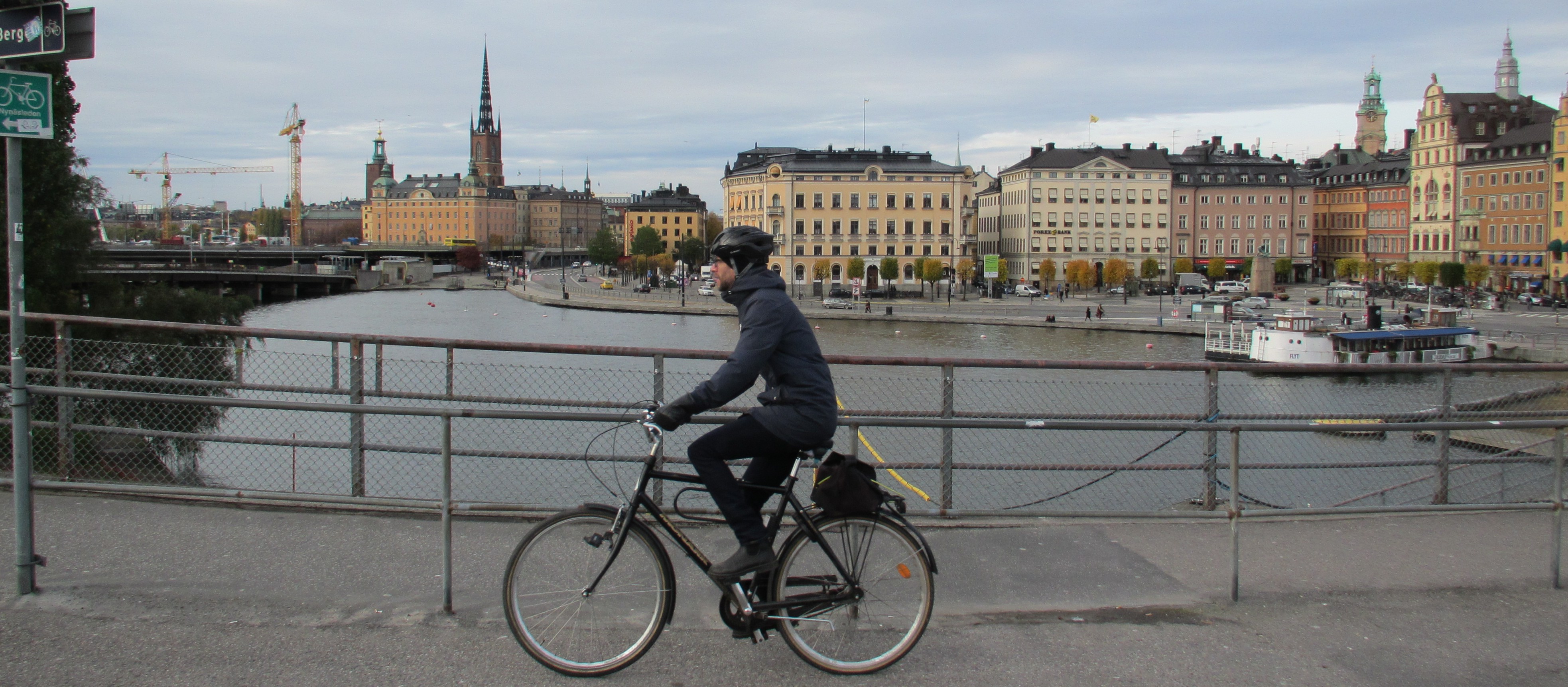
Throughout the two days I saw consistent streams of riders, obviously higher numbers than many places I know in the UK or Belgium, up there with parts of Germany but not quite reaching the critical mass of the Netherlands or Denmark. I was quite pleased with myself when I guessed a mode share of 10% as that turns out to be about right, I think I am starting to tune in now as I increase my exposure to different cycling environments. Swedish cycling

I was told that this is actually well behind many other Swedish cities and Stockholm may be holding the country back. It certainly was a mixed culture full of contradictions.

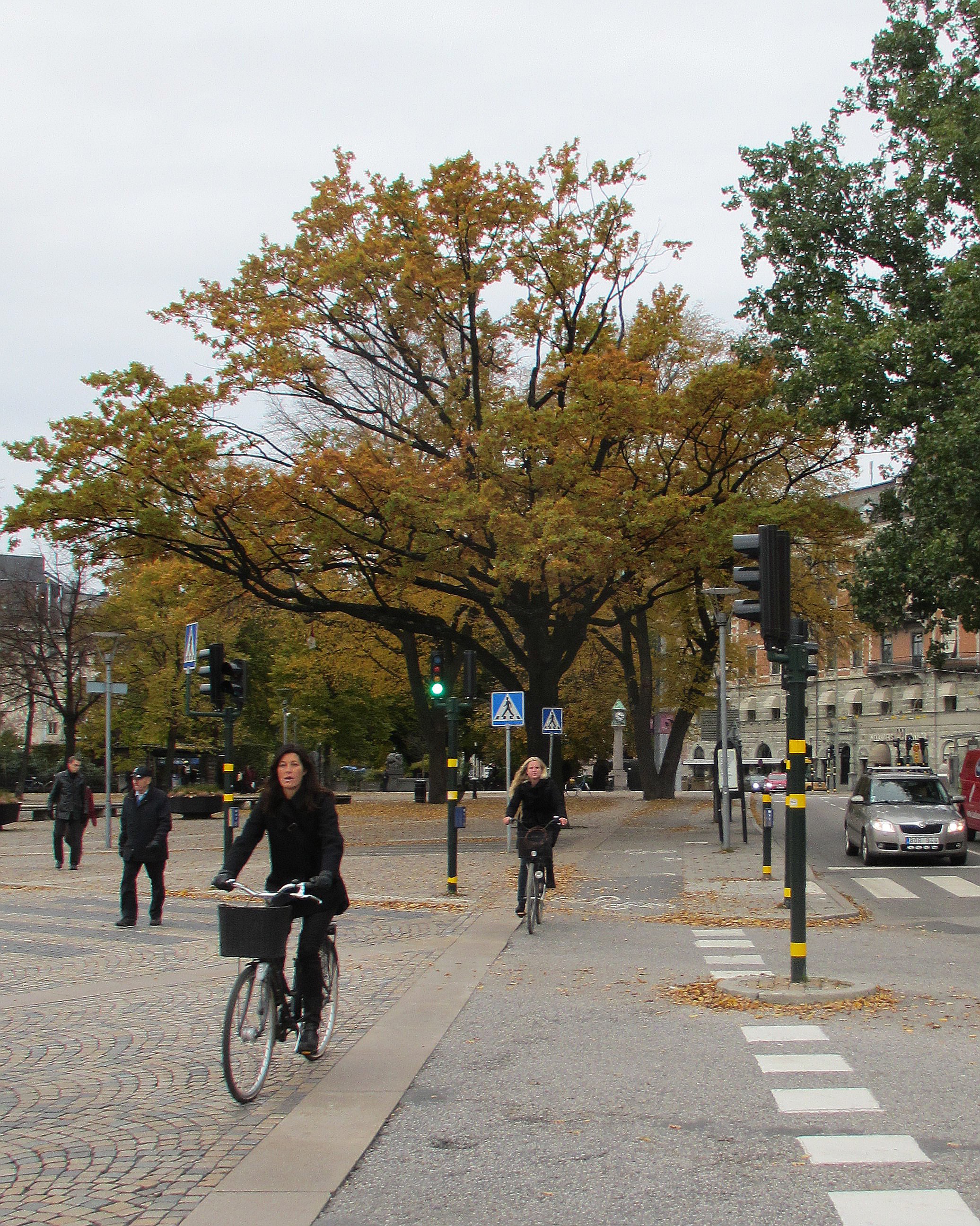
Encouragingly high numbers of women cycling which is always an indicator that cycling has been normalised and taken back from us macho types, but then more helmets than I have seen anywhere that doesn’t have a compulsion policy.

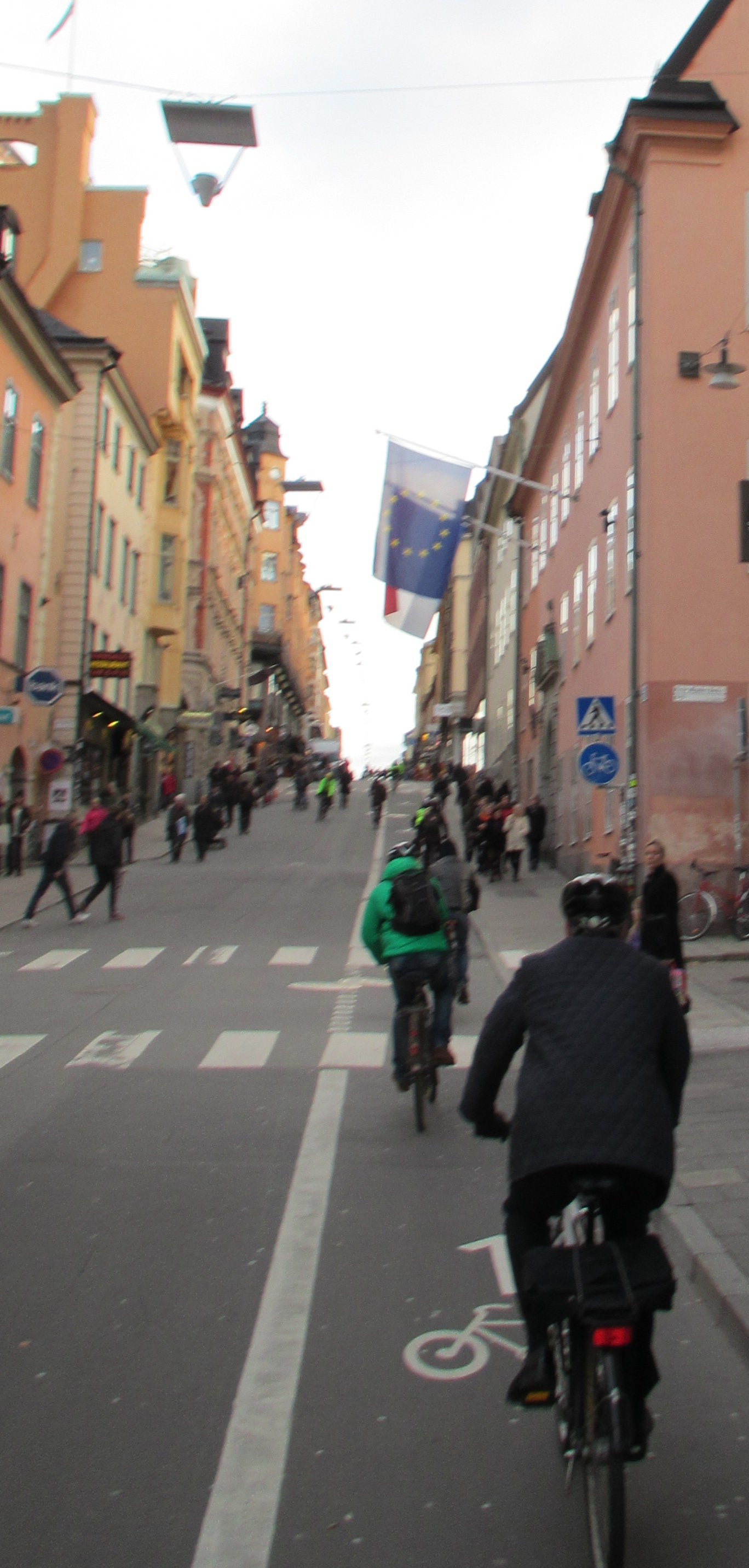
As we rode around we encountered every kind of cycling facility, without any rhyme or reason as to which would come next.  On road, on paint, segregated and shared use all in a small area and without any apparent strategy, or if there was I missed it. And almost no car free areas except a few streets in the touristy part of the old city, that really is a bit of a rarity now in forward-looking cities now.

Swedish cycling

Quality of the cycling facilities was pretty good when they existed, often wide and smooth, but there were some totally chaotic and confusing junctions to a newcomer.

SwedenI am glad I was following Christian on my first day. The routes around the waterfront were lovely, the sort of ride that makes me want to get up in the morning.

And that’s a point – did I mention mornings? I had my usual hotel problem of waking up really early so I went out for a walk around 6.30. Big shock to the system, pitch dark without a hint of dawn and a wicked wind cutting through the buildings, suddenly you know you have come a long way north.

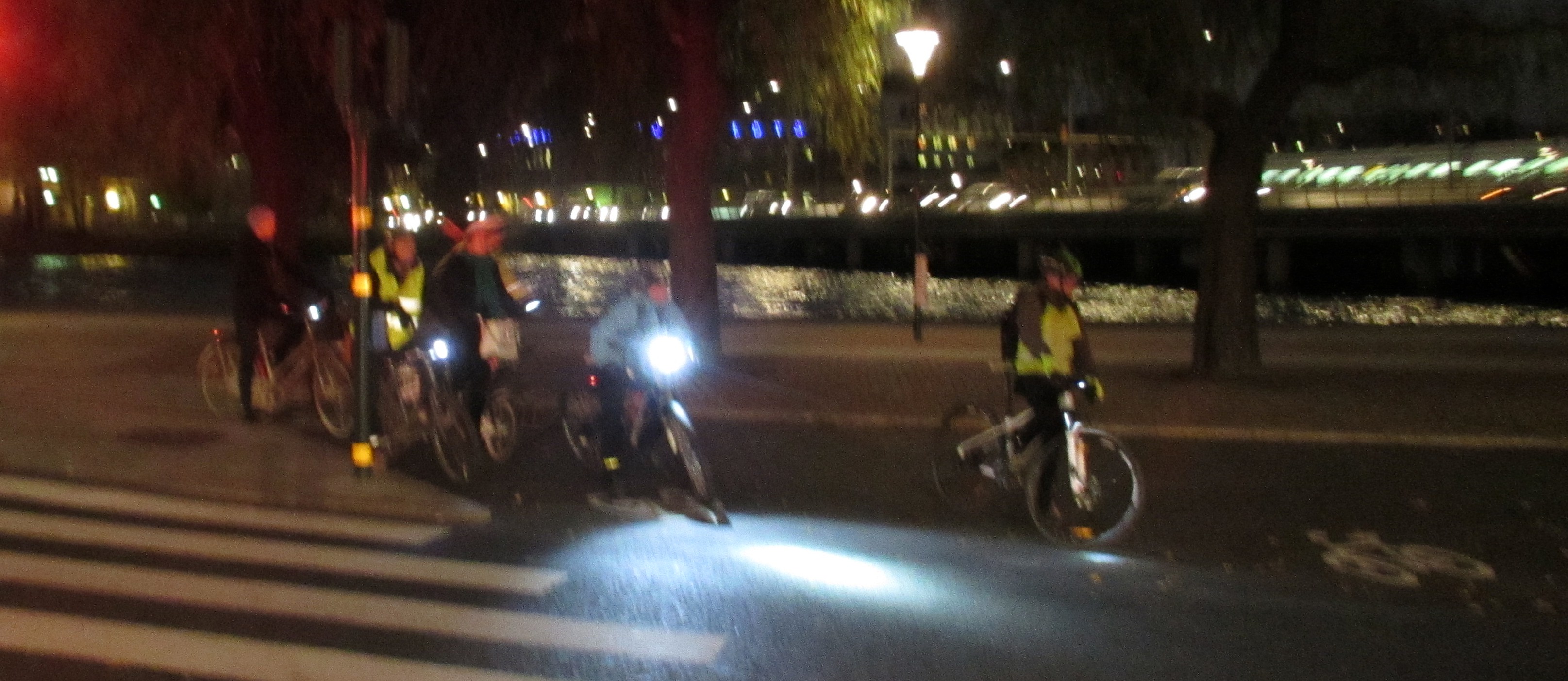
But as I wandered out of the old city towards the main roads I became aware of lots of traffic noise and discovered that rush hour seemed to be well underway, not just for cars and trains but for cyclists. I was later told that Sweden has quite a long-hours culture; or one where people like to start early so they can get home early. Whatever it was I don’t think I have seen quite so many early riders anywhere. I guess if you get used to cycling through a Scandinavian winter you are used to doing a lot of riding in the dark, but this was quite striking.Morning rush hour

Given that I see no cyclists on the roads in Brussels before 8am it was encouraging to see them out there.

Another nice feeling came around the Dutch Embassy, which conveniently happens to be on the busiest cycle route in Stockholm. As the street outside is car free and mingles bikes and pedestrians it could almost be home for the staff. Although the hill is a bit bigger than many of them would ever encounter! Great thing the embassy has in common with any Dutch organisation: When the ambassador talks about cycling in his welcome speech at least he hasn’t been handed the notes on a piece of paper, he has actually ridden a bike around most of his life, as they all have. Gives them enormous credibility as hosts and ambassadors for cycling culture.Netherlands Embassy Sweden

I’m looking forward to further invitations, this Dutch – Swedish relationship could go well and I hope to be back to see the results.

Bicycle dog basket designed in a wind tunnel?

Spotted in Stockholm.

A most unusual attachment for a sporty road bike. Speculation as to purpose welcomed.


A cyclists view of Stockholm in autumn

Gallery

This gallery contains 16 photos.

I went to Stockholm a few times in my business career. I can honestly say I don’t remember anything except an amazing boozy harbour cruise at mid-summer. But charging into meetings and dashing around in cabs left me with no sense … Continue reading

Frustration and hope – cycling experiences in Ukraine. (Or “clueless Kev in Kiev”)

Randy Neufeld SRAMFlashback to last Tuesday. I am stuck at the side of a large road junction. I know I shouldn’t be here, I wanted to go straight on, but lacking confidence I have pulled over to the right and I am stuck against the barriers. Now there are two lanes of cars swinging across my line and I can’t get back to my lane.

And this traffic cop is giving me the eye. I don’t think I have done anything illegal, it’s just that I am an alien being in this landscape. He certainly isn’t going to help, that’s for sure. What I really need is another cyclist to follow, somebody who knows the ropes and does this regularly.

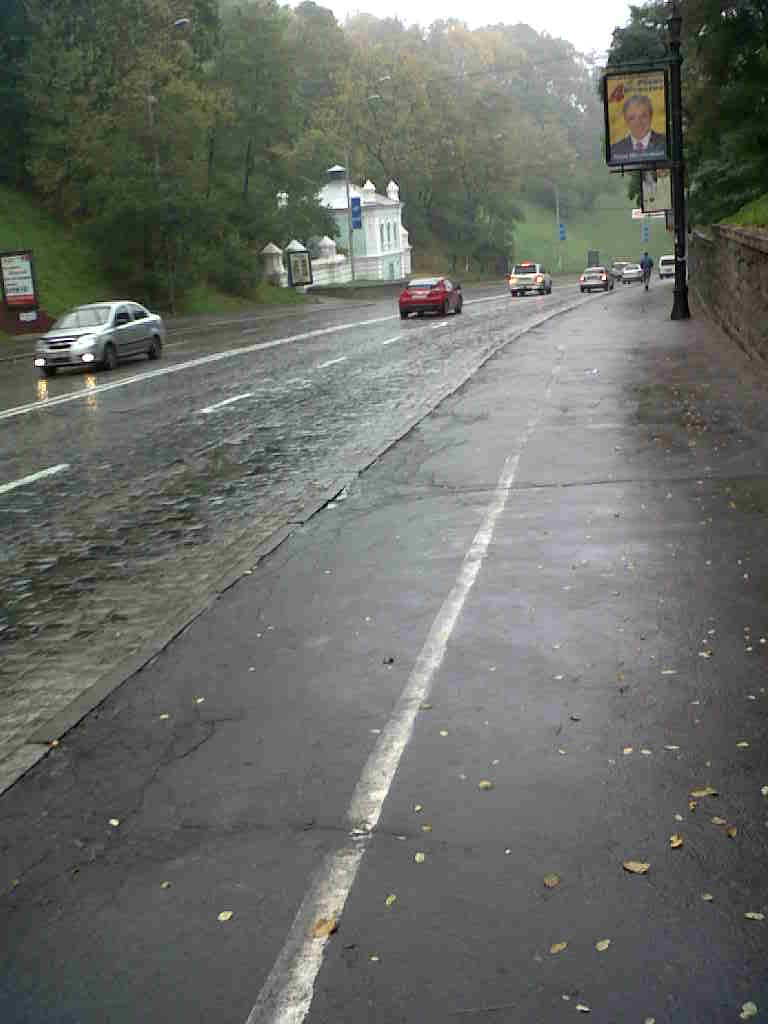
But there’s the catch. There aren’t any. This is Khreschatyk, the main street in upper Kiev and I am on my own. I’ve been out riding for over an hour and I have seen one other cyclist, and he was on the pavement (sidewalk). One of the fun parts of writing a blog that starts “When I see an adult on a bicycle…” is that I play a sort of game in every new city, being cheered by the first rider I see. However in 2 ½ days I saw just 10 cyclists, that’s like being back on the dark ages of cycling in Britain. The best comparison I could make was when as a student in 1980 I first tried to cycle from Durham into central Newcastle upon Tyne, a lonely and exposed figure on a morass of high speed roads and aggressive driving.

Before this turns into a rant I will say there are some positive things to say about cycling in Kiev, but it isn’t easy.

Generally I’m a pretty positive cyclist, maybe not in the category of the messengers but I have mixed it out in the fast lane of a lot of cities. And actually I don’t particularly feel in any danger here. It’s just that I am baffled and bemused. The previous day I rode with Randy Neufeld, Director of the SRAM Foundation from Chicago and he said that he felt hampered by not knowing what the rules or conventions were. I had mainly been frustrated by lack of continuity on that ride, but on my own I am just as destabilised.
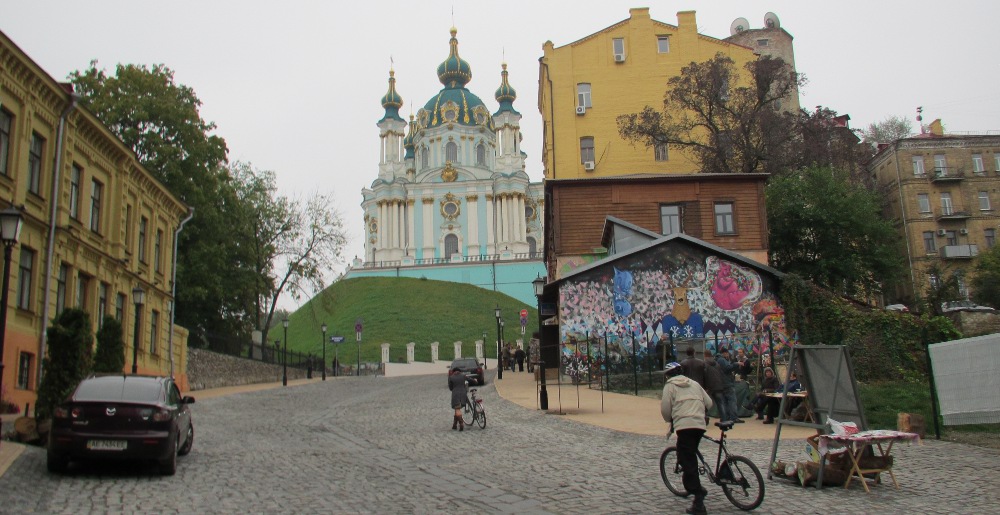
To be fair I don’t feel like this down in the low town. The low city area of Podil has narrower streets and more congestion so it just feels like most older European cities that have yet to grasp cycling. If you can cope with London and Brussels you can cope with this. And the cobbled streets in the restoration area around Adriivsky may be hilly but they are much slower and tamer. 40 years of cycling instinct just kick in and I am happy taking my place in the traffic flows. But in the upper city the big roads are just un-navigable to a stranger.
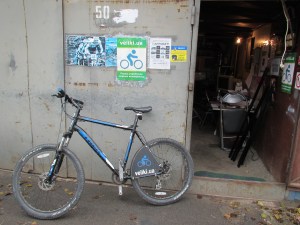
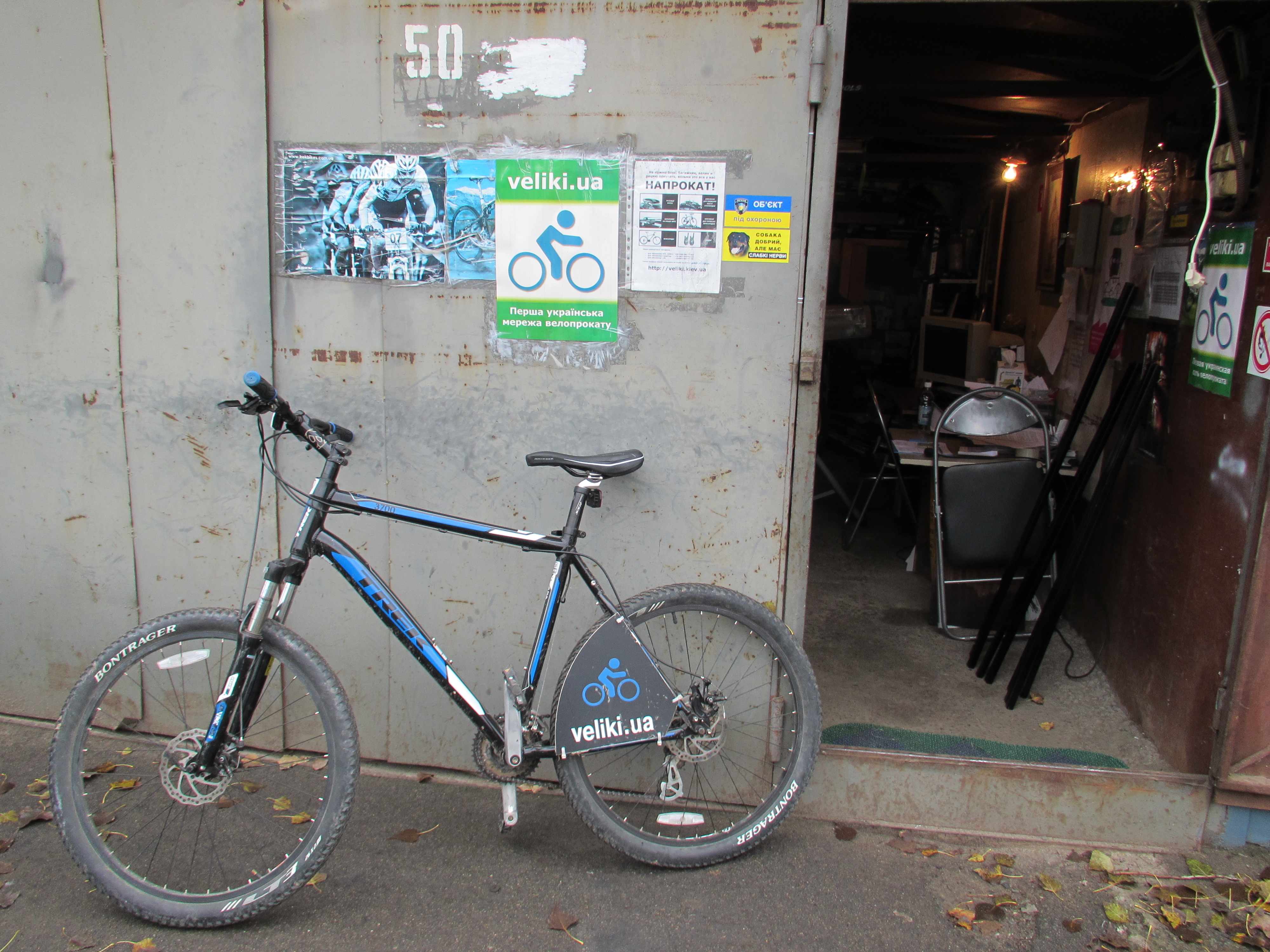
The source of most bafflement from both days was how to make progress in a straight line. Having not seen any cyclists when walking the city centre Randy tracked down entrepreneur/activist Alexey Kushka  and his business Veliki  to hire some bikes out in the suburbs. From there we decided to try and head back to the city, allowing ourselves some exploratory diversions into the surrounding neighbourhoods and parks. The advice we were given was to stay off the trunk roads and ride on the pavements or try and get through the minor roads.
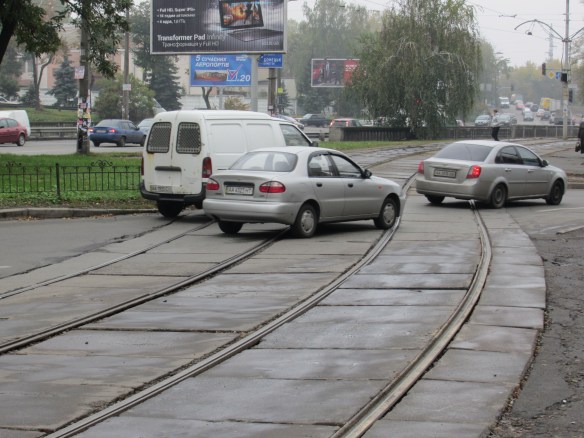
Initially that was fine, two experienced riders shouldn’t have a problem. But quickly we hit the issue of big junctions. When the major roads meet there are apparently no ways across. Pedestrians are sent off down underpasses, but that doesn’t work for us. If we want to turn left across the traffic flows it is illegal for cyclists under the Ukrainian Road Code if the road has more than one lane, and frankly I wouldn’t want to do it, far too exposed. Cycleable neighbourhoods and pavements are like islands cut off from each other by treacherous torrents. So we zig-zagged our way along looking for pedestrian crossings to make a very indirect way to the city.

In addition to the frustration of leaving our islands we had the challenge of the pavements. They are potentially good news because they are wide and quite inviting, the basis of a great cycling network. Only we got there too late. Many bits of the pavement not covered in cars are dedicated to the apparent backbone of the Ukrainian economy, small stalls which serve every possible need.

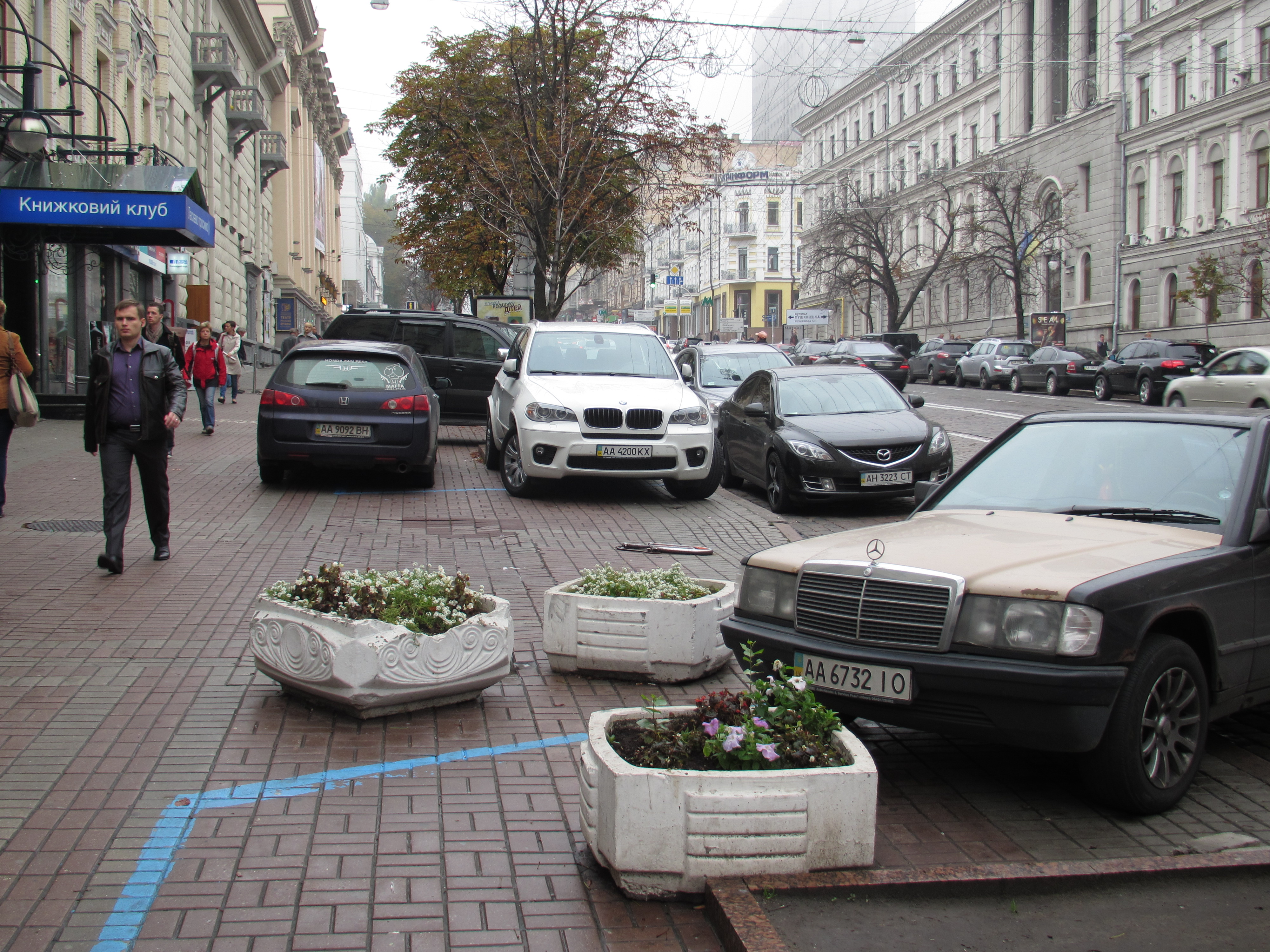
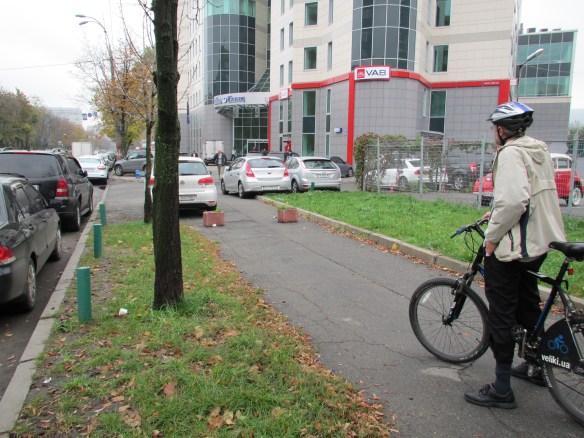
And there is no visible parking restriction whatsoever. We were just standing on corners checking navigation when we were honked at by cars being driven straight up the kerb to head for a parking space. And all this appears to be not only legal but policy, certainly a lot of the pavement bays were marked out with white lines and “managed” by bulky figures in dark coats.
Randy Neufeld, SRAMwww.avk.org.uaBut I have to admit I loved it. Taking on a new city is always a buzz and when I did fly down to Podil or had my photo taken by a tourist on Adriivsky as I battled the cobbles I felt like young Malcolm in the surprise Youtube hit of the last two weeks. “Dad I did it”. And it was good to follow hosts and activists Ksenia and Ira as they moved in confident Dutch style around their city.

So what’s the good news? ”I do not despair for the future of Kiev despite not seeing an adult on a bicycle”? This dangerously close to a policy manifesto which I don’t do in my personal blog, but I feel strongly that I want to say something positive for the people I met in Ukraine.

The best hope is always those people. Margaret Mead, American anthropologist says “Never doubt that a small group of thoughtful, concerned citizens can change world. Indeed it is the only thing that ever has.” The city is full, stuffed by the free-for all on the roads, the dreadful congestion and parking and everyone told me that the majority of society accepts that it cannot go on. That is fertile ground for change.

The energy and passion of the Kiev Cyclists Association members and all the activists, entrepreneurs and civil servants we met in Yevpatoria and Kiev was infectious and they are determined to bring cycling to their country. The evening talk I gave in Kiev was well attended and apparently we attracted a lot of new faces. The quality of questioning was as knowledgeable and passionate as any other country I visit even if there is an acknowledgement that this is a really tough environment to promote cycling.

Kiev, UkraineSo a few thoughts, not just for them but maybe for anyone thinking of doing some cycling when they visit.

It was clear that we had really not seen the best of the cycling community in the city centre. There are green shoots, popular cycling parks and some suburbs where there are regular cycling numbers. I was told Trakhaniv island is not only the cycling mecca at weekends it is a good commuting short cut and could be a place to start building a cycling culture for all types of users, I certainly found it beautiful and welcoming even in the mist. It also wouldn’t take a huge amount of sharing for Kiev Ukrainethe current cyclists to tell others how they get around. By sharing their routes and shortcuts so much of the complete bafflement I felt could disappear and a little critical mass could emerge. Given that there is almost no regulation some informal waymarking could be put in place and would last for years. Kiev Cyclists Association have already painted their own cycle lane in one spot and nobody has erased it, how we would love to get away with that in some other countries.

And no city can be so bad if it has a cyclists’ cafe!http://dream-family.com/en/dream-house/

Kiev activists can also take hope from the rest of the country. Crimea is a potential hot spot for tourism but there is clearly progress in places like Lviv. We know in many countries the capital city came to the party late simply because of size and inertia, but they can show there is nothing in Ukrainian culture that makes cycling impossible. For international cycle tourists and mountain bikers you can find lots of great places to go like Big Yalta.

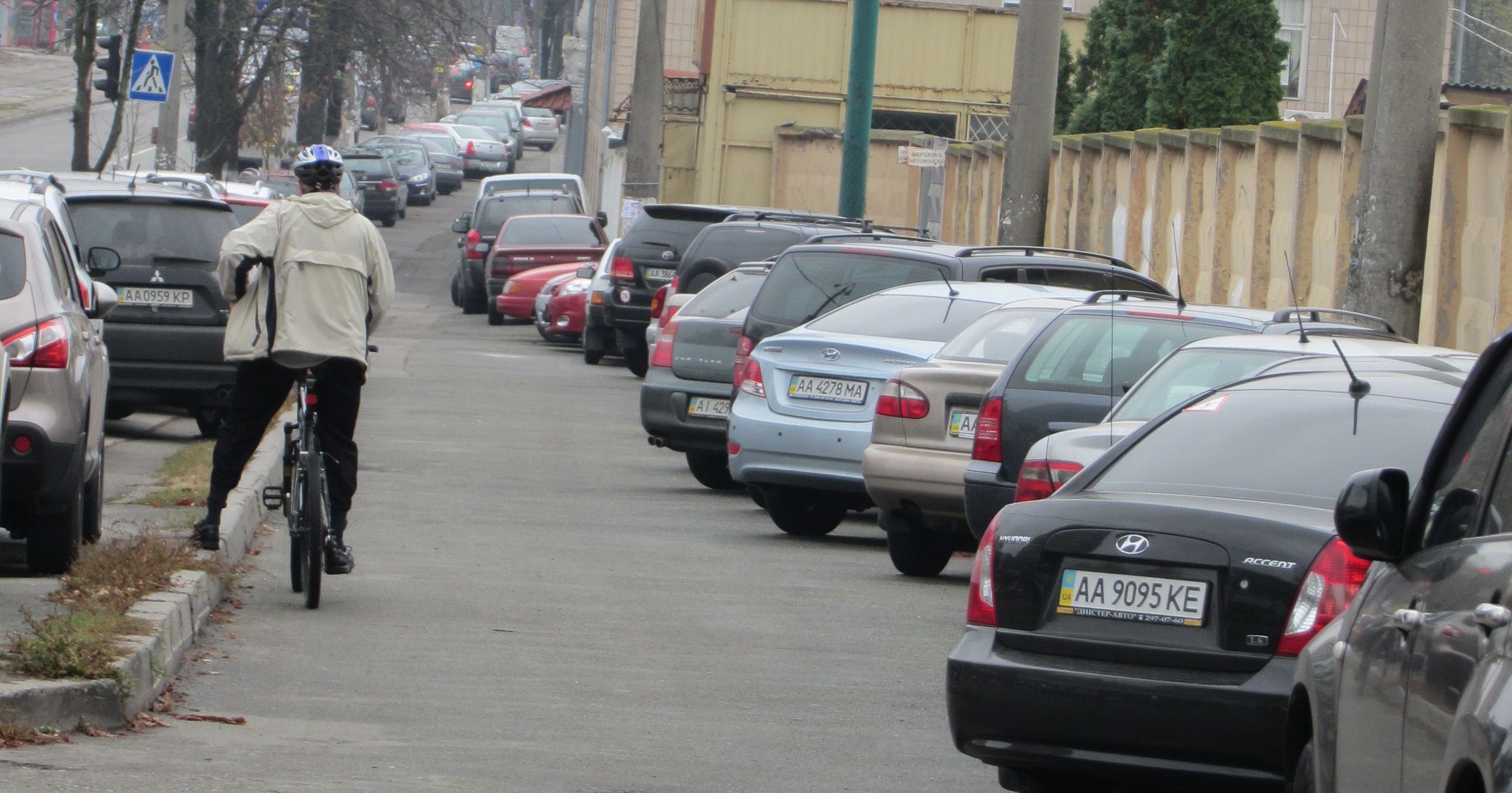
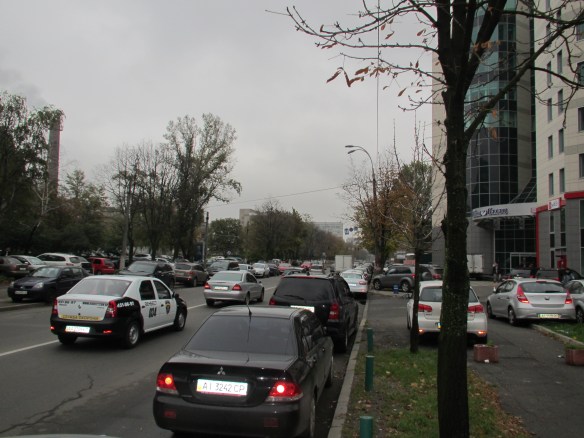
Lastly Kiev has one extraordinary asset that most world cities would beg for, something money cannot buy. It has space. The streets are incredibly wide, the pavements and roads are wide enough for segregated bike lanes, there are plentiful parks and boulevards connecting them. But the space is just unmanaged. Look at this: four lanes of cars on the road – and six lanes of parked cars. Two lanes on the road, two on the near pavement, one on the other side and somebody double parked. Get hold of that and the potential for rapid change is high.

Right now it is a tough call to be an urban cyclist in Kiev, or a cycling activist but here is hope and enthusiasm not despair.

Cпасибі. Thank you.
Play about the life of cycling legend Beryl Burton to be broadcast in November

Those who have been following my blog since the spring will know that a radio broadcast featuring actress Maxine Peake gave me two great posts.

“Beryl Burton, Radcliffe and Maconie, Working Class Struggle in 30 minutes – Maxine Peake you are my new star” on May 1st

“Books and reflections – Eddie Merckx and Beryl Burton” on May 28th.

This is because Maxine was writing a play about the life of Beryl. I am now absolutely delighted to discover that it is going to be broadcast on BBC Radio 4 on 27th November at 2.15 because maxine was back on the Radcliffe and Maconie show again on Monday.

Link to the show http://www.bbc.co.uk/programmes/b01p0fpl

Interestingly she says it has now become “Beryl – a love story on two wheels” with a strong emphasis on the relationship between Beryl and Charlie. I hope it gets a huge audience, in these awful times for cycle racing Beryl stands out like a beacon. If you don’t know the story have a read of the blog post and buy her biography.

Link to the BBC6 radio show on Monday is available until next Sunday, Maxine Peake is on after about 30 minutes. (And another plug for my favourite show!)

Hovis bread advert recreated in Kiev

Just for my British followers. Having cycled up Andriivsky in Kiev I realised that only one photograph could do it justice. For those from outside the Uk this advert is part of our cycling heritage, it advertises bread. It has been recreated a number of times using celebrated cyclists including Chris Boardman and most recently Victoria Pendleton. In both cases – its a great hill.

Kevin Mayne recreating Hovis advertGold Hill Shaftsbury England

Although I have to say Ira from the Kiev Cyclists’ Association campaign does it better justice than me, better bike, more style.

Ira Bondarenko Kiev Cyclists' Association

Bike fan? Rubbish week? Need reminding that this isn’t all drugs & road danger? 3 reasons to be cheerful

You need to have your head in the sand to have missed the pretty awful week many bike fans have had. Even travelling in Ukraine the twitter feed and blog posts have been pretty down in the dumps.

But the whole purpose of my blog is to remind me on on the down days that this is the transport of delight, and to try and share.

So it is just as well that this week I have seen three videos that brought me out in the widest smile. Winter may be coming in the north, so if you need just a small pick up to get you out on your bike next week here are three positive films about the sporty side of cycling, each with a little reminder why“I do not despair”

The first time, (see also previous post) the company and the sheer exuberance of cycling.

For more fun videos please go to my video library page where these will end up long term.


Yevpatoria, Crimea. Impressions, contrasts and amazing light

Beach sceneI am in Yevpatoria, which is a holiday resort on the Black Sea in Crimea, Ukraine as the first stage of a two part trip to Ukraine promoting cycle advocacy. Tomorrow I’m on the night train to Kiev which according to Lonely Planet is one of the top 10 things to do in Ukraine, so that should be fun.

We are here because the Black Sea is one of the primary holiday destinations for what was the old Soviet Union because of its climate and beaches and has loads of infrastructure for tourism. It still attracts a big summer market of Ukranians and Russians but this leaves a lot of hotel capacity off season so it is a great spot for a conference about cycling and cycle tourism. So I’m here representing ECF with one of my colleagues trying to help the local cycling movement share some ideas from around Europe.

As “I not despair” is my private blog I’ll stick to my rules about not mixing the work stuff, our agenda is here and I have been tweeting from the conference on @maynekevin so you can find out more there.

But to the Yevpatoria today. Most British people only know some vague reference to the Crimea as a disastrous war which involved Florence Nightingale’s revolution in hospital treatment. This post is just some thoughts, photos and musings about my first two days in Ukraine, in fact my first visit to any part of the former Soviet Union. It has been great to walk and get hold of a bike to tour around this moderately sized but ancient city which I gather has a very distinctive feel compared to much of Ukraine.

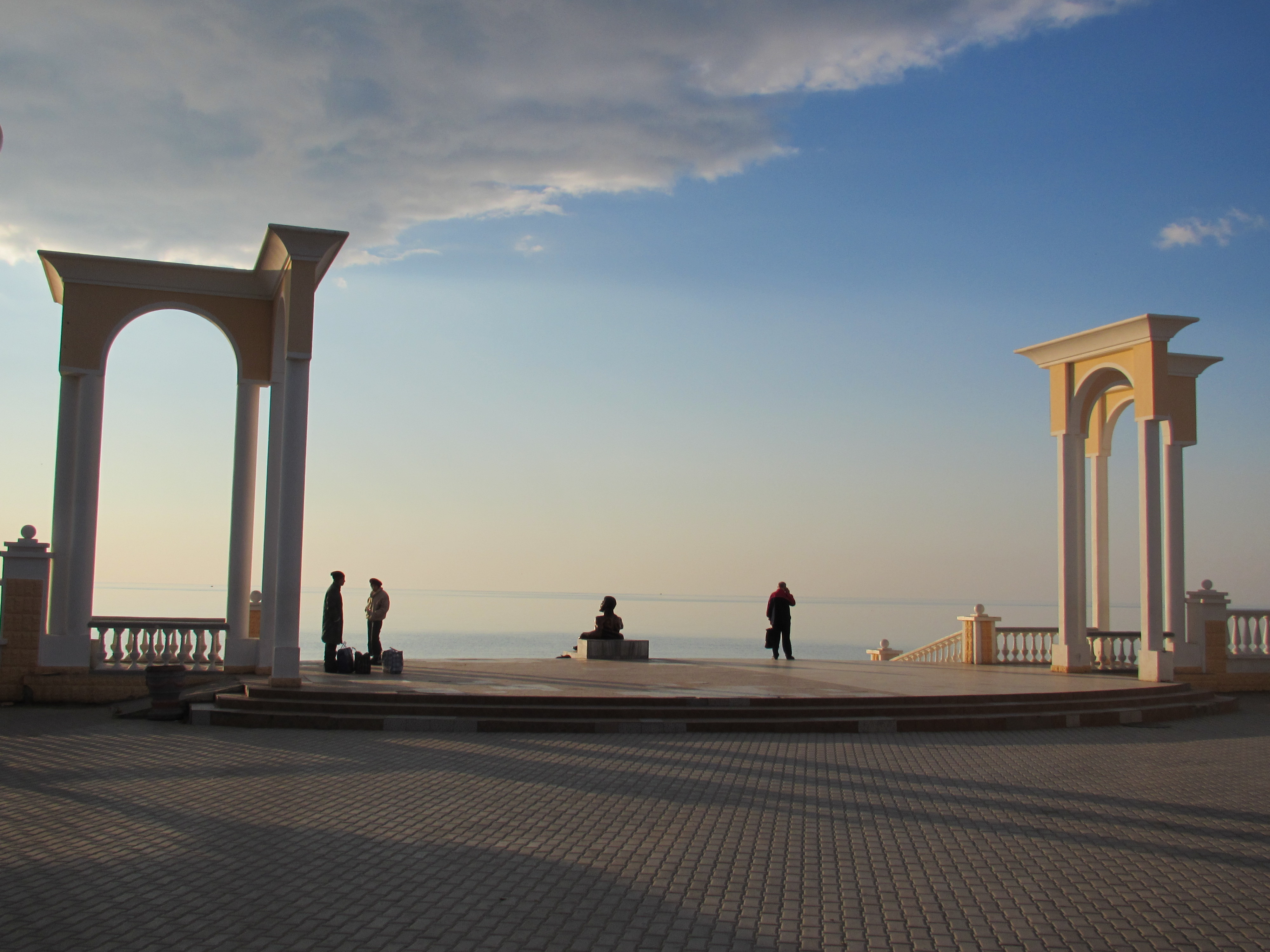
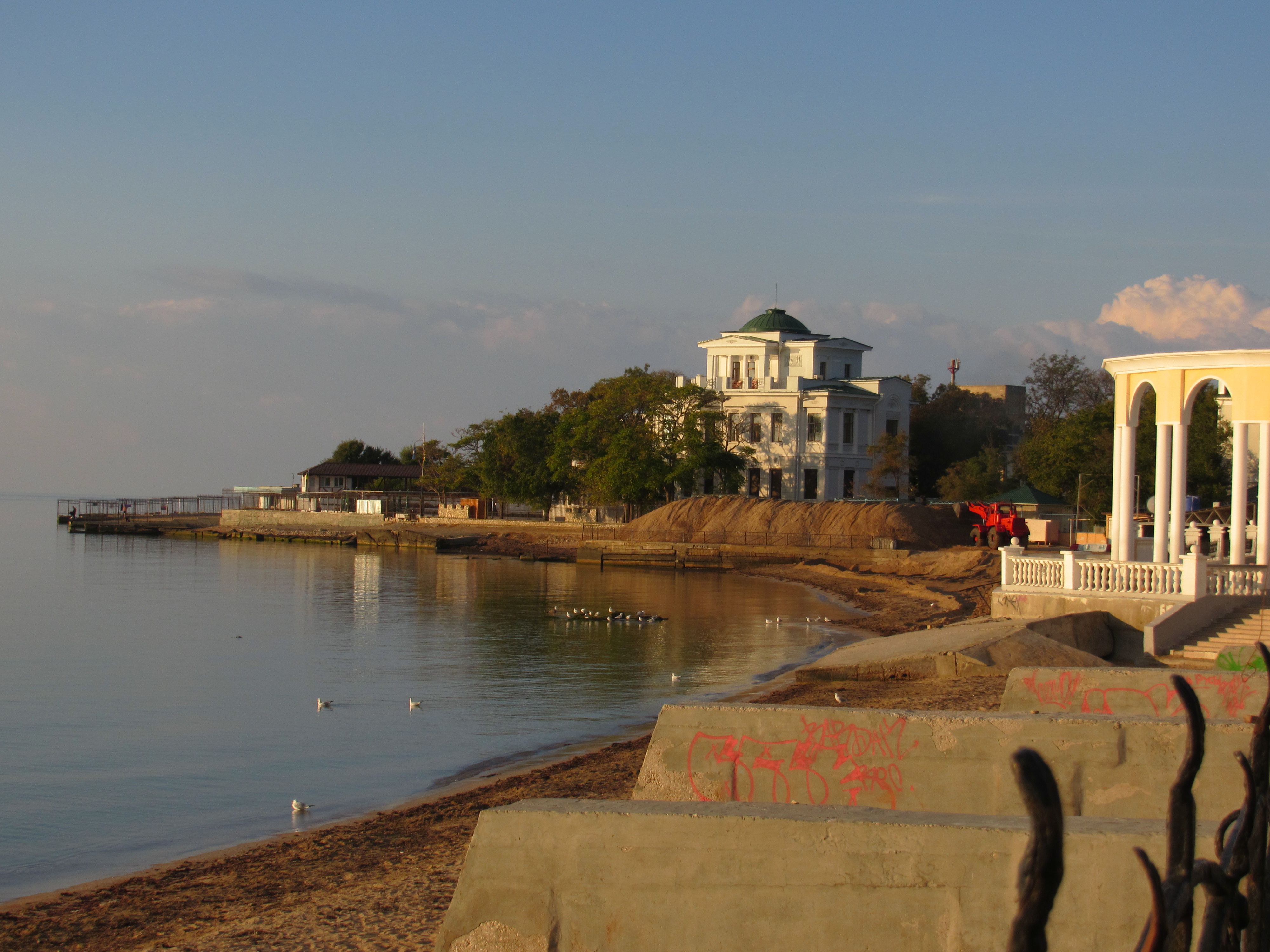
Imperial hotelWhat this place certainly delivers on is balmy autumn weather, it is just glorious outside and the first impression in the morning is to look from the balcony of my hotel across to the tree lined promenade to a still and silent sea with warm sunshine around.

The second impression is then silence. This is a seaside resort out of season and just about a ghost town. When our taxi arrived the first night I’ll swear we never saw another vehicle and even in the morning I can walk or cycle whole blocks without seeing a movement except the odd stray dog.

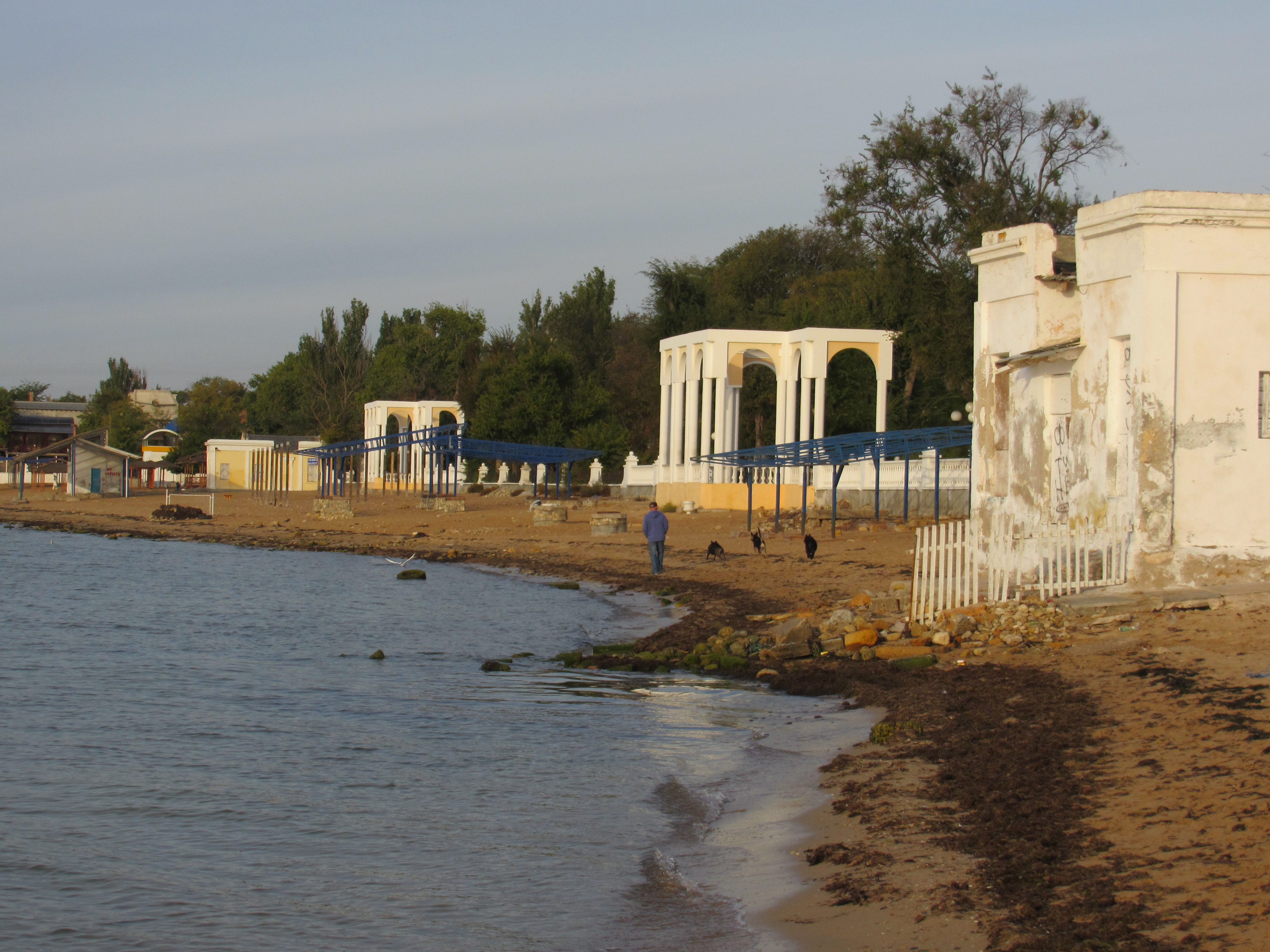
Down on the beach there is a gentle quiet broken by the occasional gull and some older folks who come down to the sea to swim, probably every day.

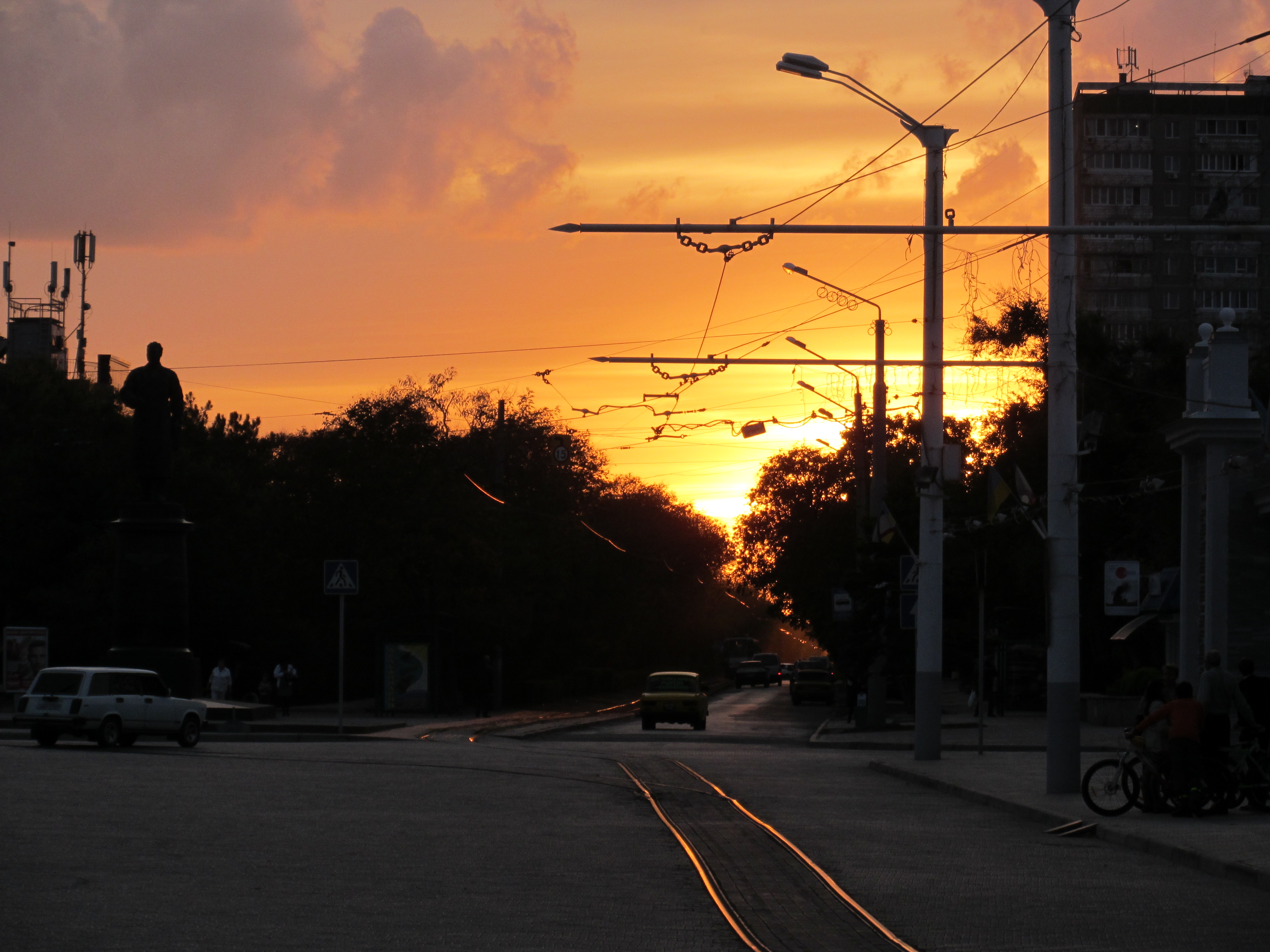
Electric Trolley or Tram carThe main town is a bit busier but it is very easy to wander or cycle out into the streets without fear. The ancient electric trams are a delight rattling their way about town.
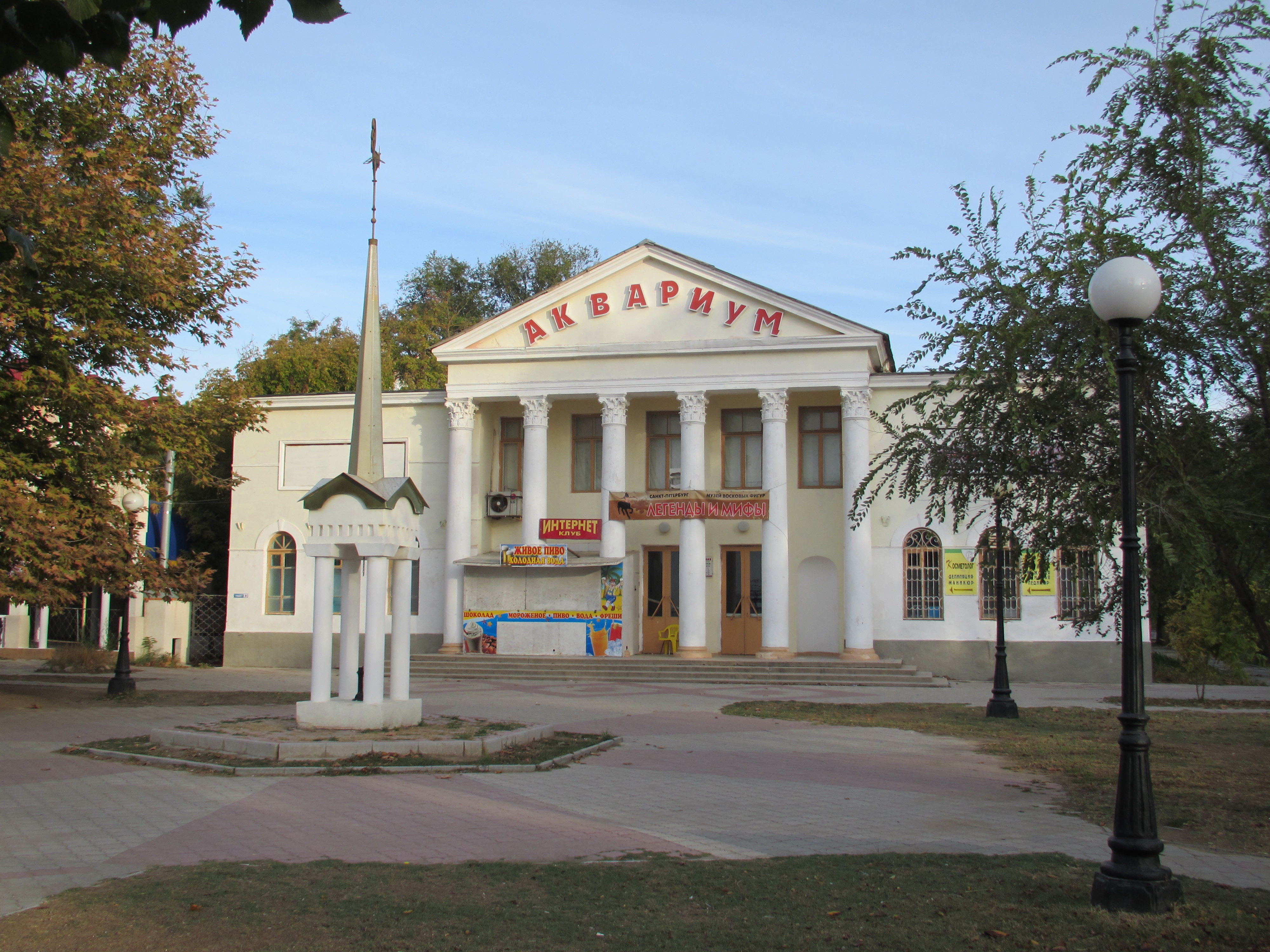
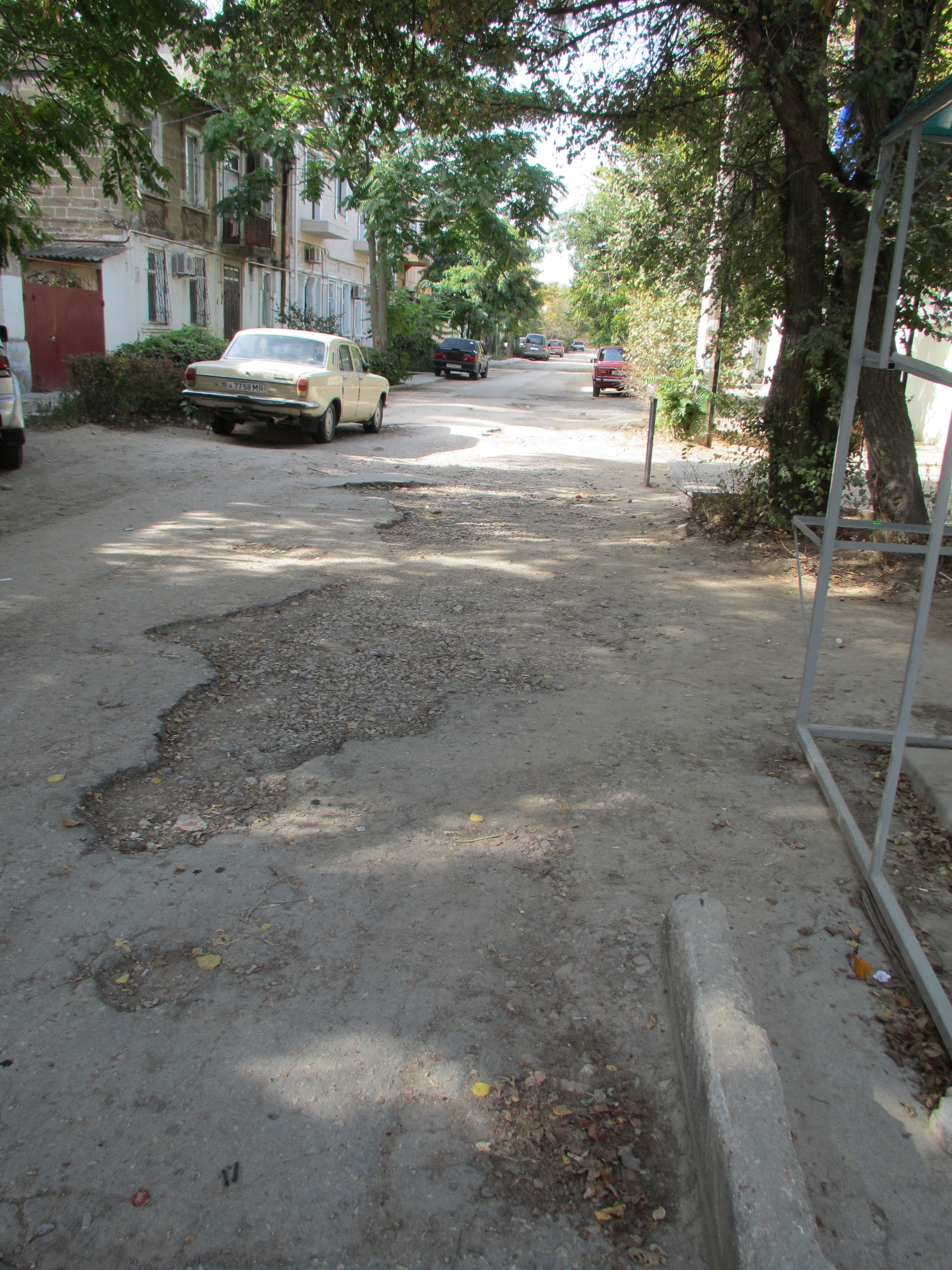
Everywhere there are contrasts. Some of the facilities are decrepit and crumbling, others obviously well cared for.
Some of the hotels appear to be modern and discrete while others would not look out of place in Blackpool or other garish seaside resort of your country. The architecture runs from authentic to garish seaside fake that seems universal the world over. I didn’t realise that the 1930s fake Mediterranean/Spanish white architectural look that runs from the north of England across the English speaking world to Australia (St Kilda?) and across to the US was actually so universal in seaside towns it was adopted here too but there is no doubt that some of the styling has that heritage.

White houseGeenery lined streetSome streets are well kept and well used while others are a joined mess of potholes that played havoc even with mountain bikes.

Brutalist styling, then masses of greenery and lots of dusty parks and open spaces in between with banks of plants and hedges along the roads.

Derelict building and wastelandThis morning I cycle out to the Eastern edge of the town along the sea front and I was struck by this contrast. To my right a building waiting to be condemned set amongst wasteland and scrub. To my left a section of beach and a lovingly cared for beach hut used by the beach attendant which almost glowed in the early morning light.Beach attendant's hut

And the morning light on the sea front is amazing. It just has that golden glow that makes whites stronger and colours brighter, brilliant for photography.Beach scene

As ever I am grateful to friends Google and Wikipedia for a bit of research into Yevpatoria which  helped on my two trips away from our beachfront haven into the main town. We also had the guided tour from a local tour guide last night which was great apart from the somewhat significant flaw that we had 40 people on bikes and the tour guide was on foot. I’m also ever so grateful to the Ukrainians like Olga who stepped in to translate at key moments!

What a heritage. In one paragraph the Wikipedia potted history runs from Greek settlement in 500BC to settlement, invasion or occupation by Khazars, Cumans, Mongols, Khans, Tartars, Ottomans, Russians, British, French, Turkish, Germany and the spiritual residence of a branch of Judaism called Crimean Karaites. Just shows the strategic importance of the Crimean Peninsula to the Black Sea and all the countries around it.

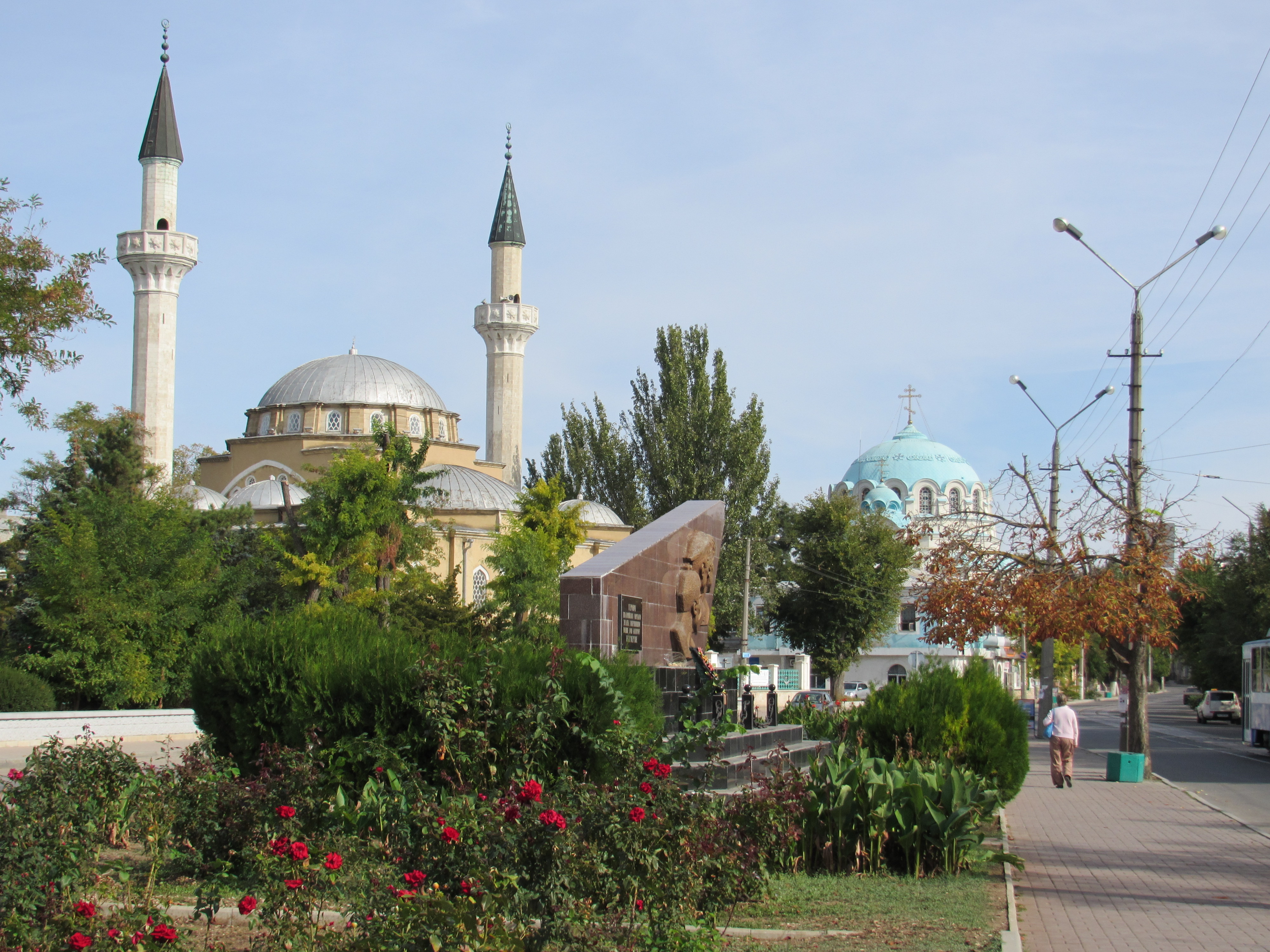
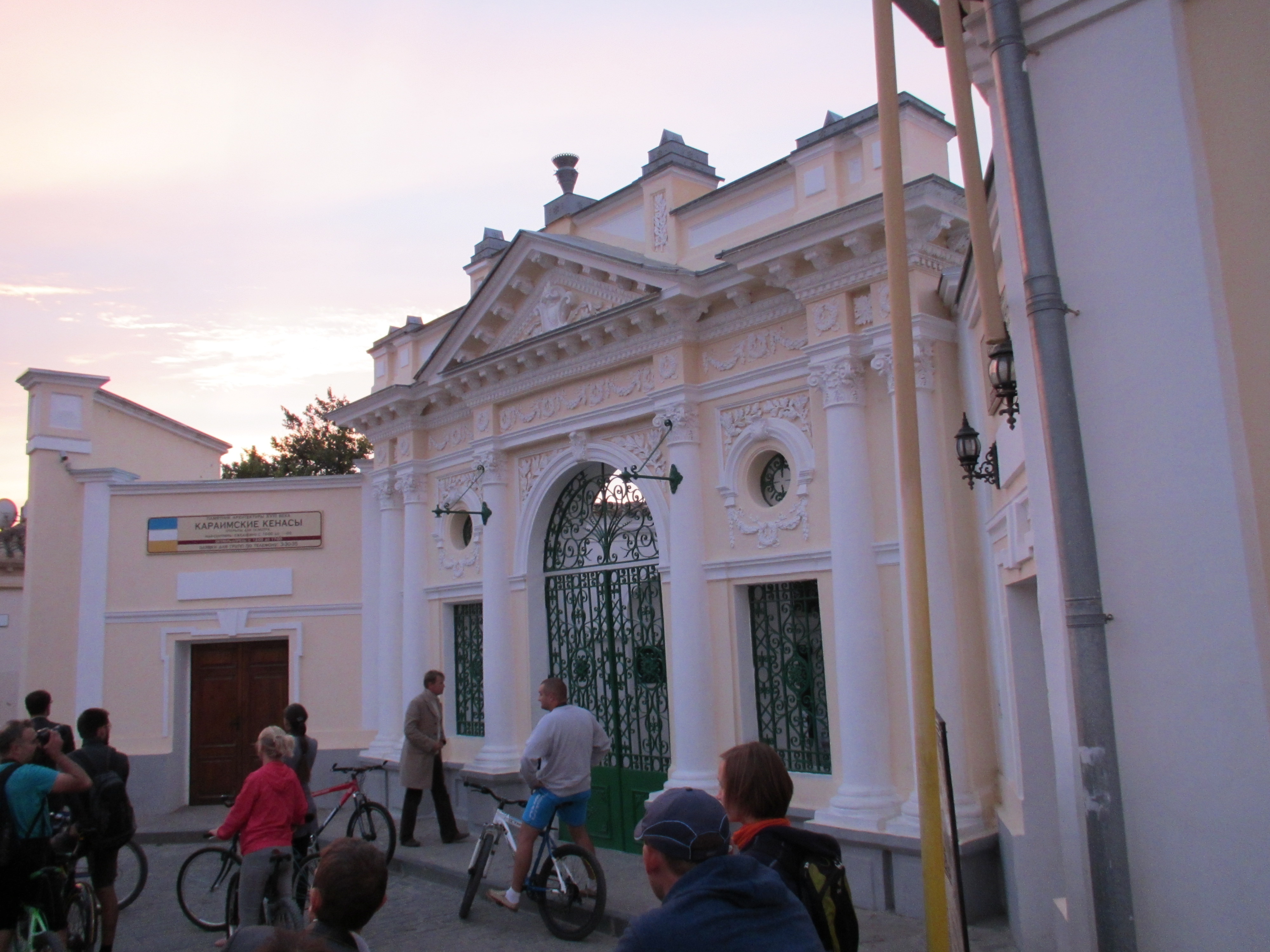
This melting pot of cultures has left a wonderful assortment of religious buildings which stand out as a contrast to the tat and simulation of the beach areas. St Nicholas Cathedral, The 400 year old Juma Jami Mosque, the recently resorted historic quarter of the Karaites known as Little Jerusalem with the restored Kenassa or temple as its main feature. These buildings are in the best condition of anything in town, even the repair scaffolding in the cathedral was being dusted by one of the ever present women with a brush that seem to be in every street. For all the challenges of infrastructure and economy this is a fascinating place to visit.

Mosque and cathedralEntrace to Little Jerusalem

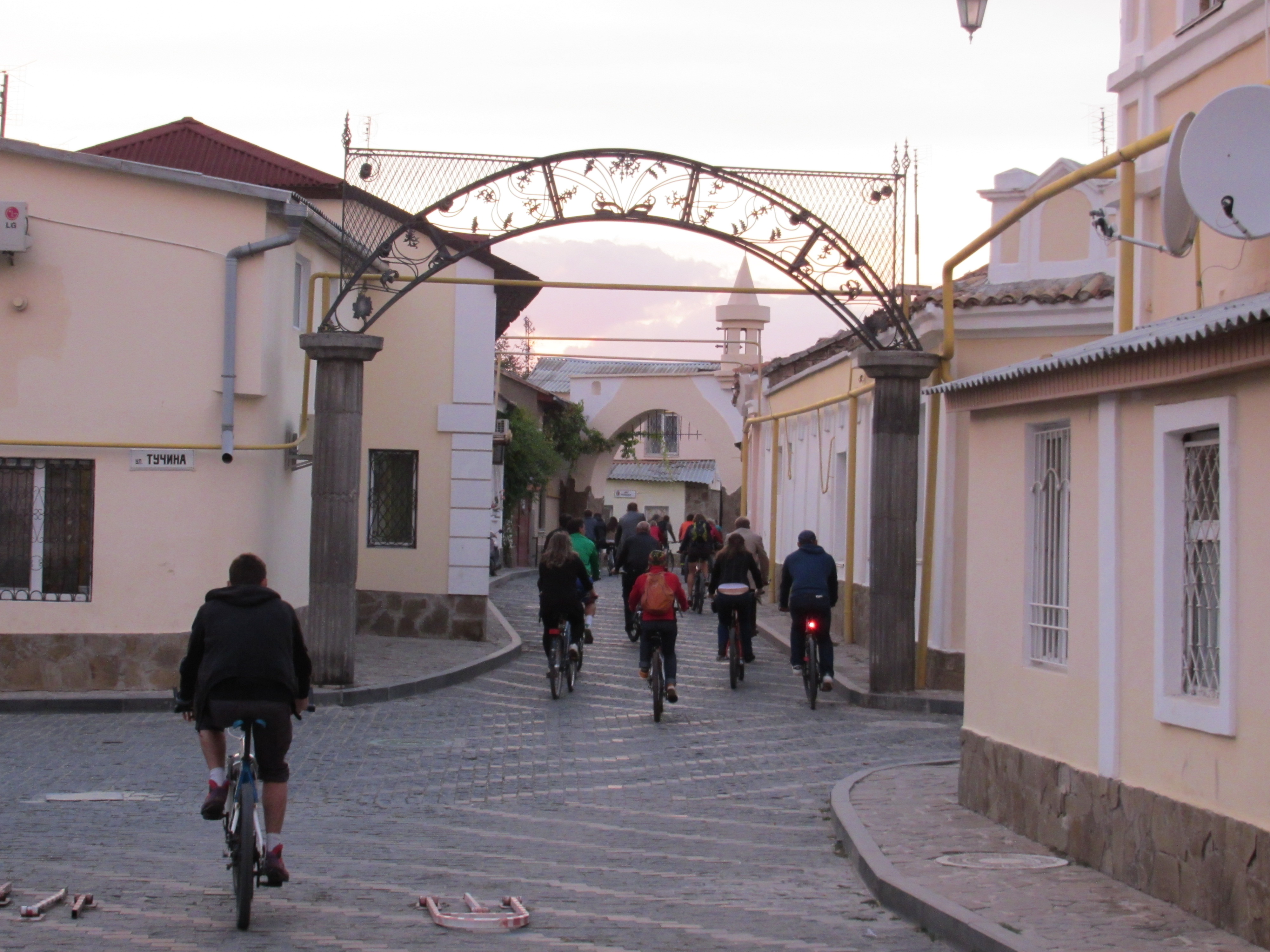
Sunset cycle tour Yevpatoria, Crimea, Ukraine

No time for a detailed blog post today, but just back from a sunset tour of Yevpatoria with the rest of the Veloforum delegates.

Fascinating.Veloforum Cycling 2012

Veloforum Cycling 2012

veloforum cycling 2012Veloforum 2012Veloforum 2012 Cycling TourVeloforum 2012 Cycling at Little Jerusalem

If you ever forget why you ride a bike – watch this!

This video on Youtube may be mountain biking. But don’t turn it off if that isn’t your thing. Don’t look, just listen. Take in the voice of four year old Malcolm in the clip and remember that this is what we bring to lives.

When I do presentations on cycling one of the things I often tell my audience is to remember that they do something really special.

You never, ever forget your first bike ride. And for so many people that is the closest they will ever get to flying, a brief moment when they take wings. And once you discover the “transport of delight”, the “wings of desire” then a bicycle is a passport.

It’s why I have had a tear in my eye so many times when I have attended cycling programmes for people with disabilities and seen them light up when they discover freedom and movement. It’s why I never tire of saying that the magic is not 100miles, its 100 metres.

Today, somewhere someone is taking their first bike ride, riding up a hill they never thought possible, discovering a new and wonderful place.

Thank you Malcolm and Malcom’s dad for reminding us what that feels like.

(I’ll avoid airing the sneaking suspicion that his bike-handling might be about as good as mine already, as the guys at Whistler found out in July!)

“I do not despair” makes it into Italian national media

Hey “I Do Not Despair” made it into national Italian news about cycling. Sadly I think my two appearances on stage at Italian bike shows were not the cause for the use of the quote that headlines my blog. But it was good news all the same.

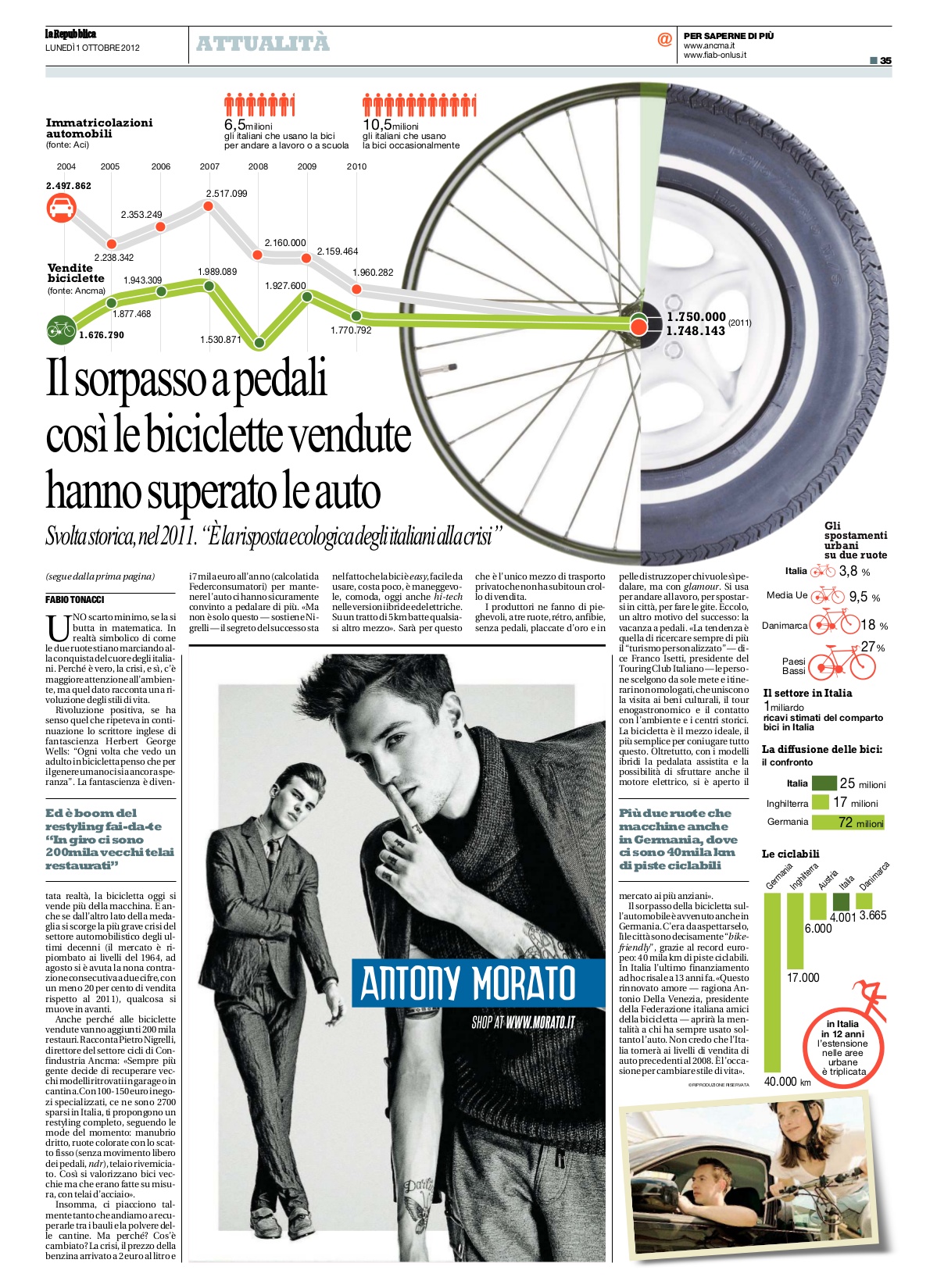
National newspaper La Repubblica reported yesterday that in recently published figures 2011 bike sales beat car sales for the first time since the second world war. “Le biciclette sorpassano le automobili”. Print version below, with good graphic.

But more importantly for “I do not Despair” I learned H. G. Wells might have said “Ogni volta che vedo un adulto in bicicletta penso che per il genere umano ci sia ancora speranza.”

Although Google Translate doesn’t offer the word “despair” anywhere I was really pleased to see the quote in use, it felt so topical after my recent trips to Italy.

I hope the Italians are able to use this momentum too, The President of my hosts FIAB is quoted saying “I do not think that Italy will return to the levels of car sales prior to 2008. It is an opportunity to change lifestyle” Because this is almost old news in northern Europe, even less confident British cyclists bought about a million more bikes than cars last year.

Lots more work to do in Italy!