
 Sitting on a sun soaked terrace overlooking the Danube Valley. Careful not to drink too much wine before a flying descent! The high spot of a two day, 18 person, multinational cycle tour to follow the ECF AGM . What a great mix – Bulgaria, Poland, Russia, Ireland, Spain, Cyprus, Netherlands, Austria, Portugal, USA, UK and Germany, all brought together by cycle advocacy.
Also see my gallery of houses and gardens from the ride here
Day 1. Vienna to Tulln an der Donau on the Danube Cycleway. 45km.
Leaving Vienna on the city cycle network and then joining the side of the Danube Canal until it joins the main river about 7km out of the city.
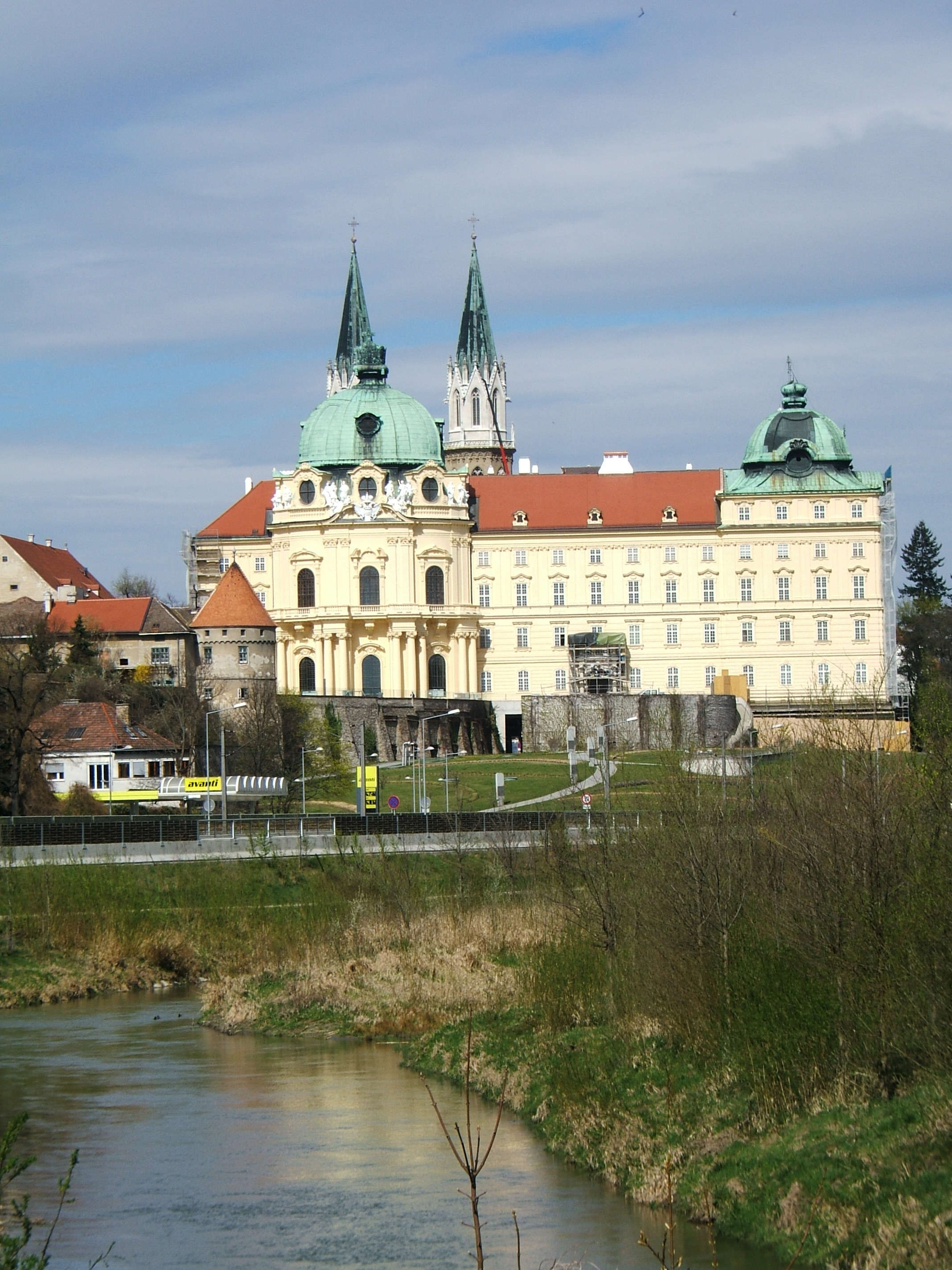
Klosterneuberg
Then a mixture of paths by the river and minor roads until suddenly we turn a nondescript corner and the striking Klosterneuburg appears in front of us. A leisurely lunch in the café and a wander through the artworks in the gallery.
Back onto the minor roads and a wind through the summer houses which appear all the way along the river. These range from wooden shacks to large houses but almost all are in great condition and show a real affection by the owners for these properties.
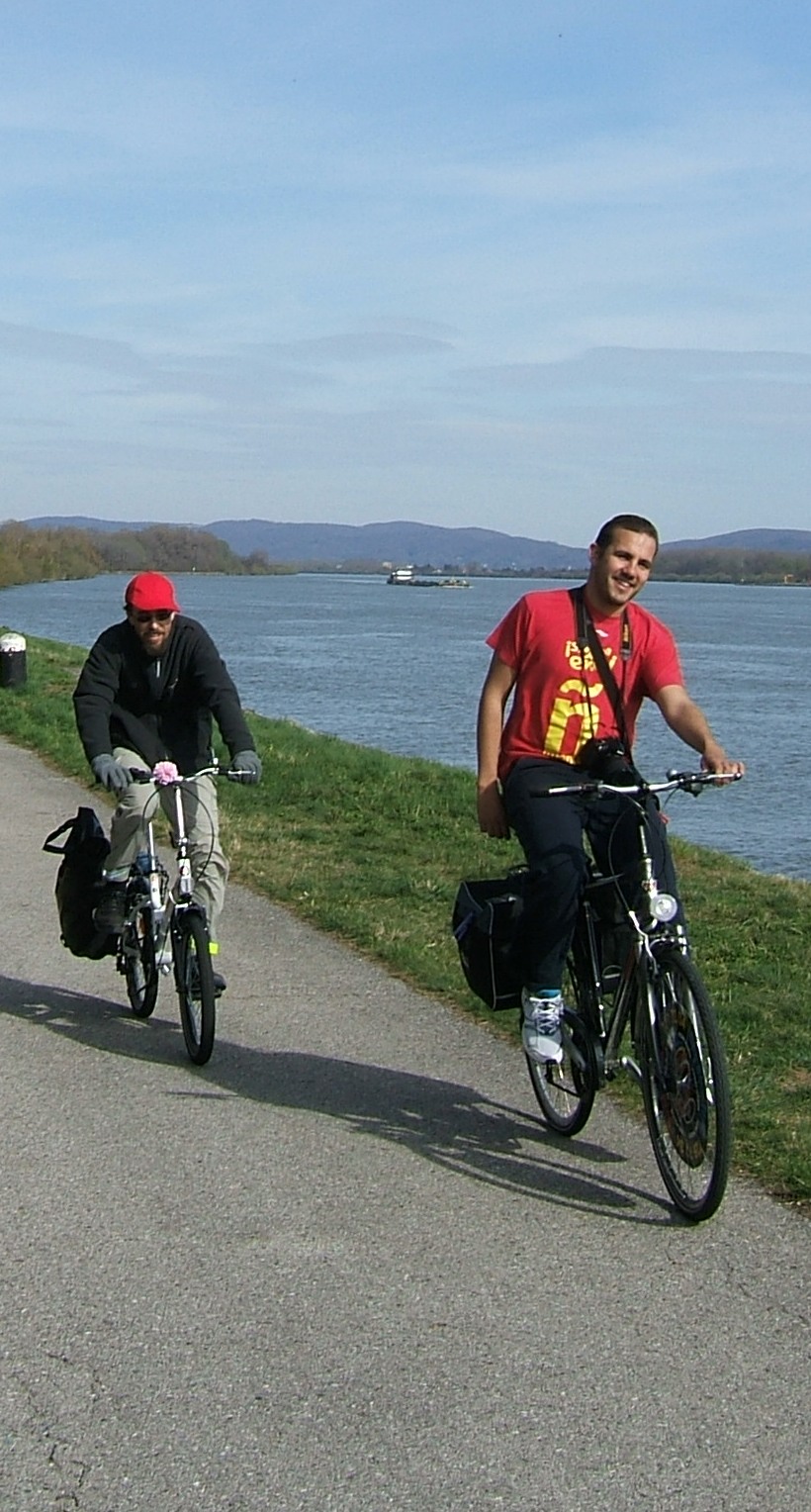
Danube Radweg
Then emerging onto the banks of the river again for a push on to Tulln. This was actually quite hard for the members of our group who are not regular tourists. A bit tired and we had moved to the north bank which exposes us to the full breeze from the east.It just proved the point that wind is a far greater enemy of the cyclist than hills.This stretch of the river was actually a bit of a disappointment, it really does look like an enormous canal but it is a really easy ride. It is also clearly popular with local riders who seem to really enjoy heading out down one side of the river and returning on the other.
It was also good social cycling territory for us because we could ride socially after being hassled by drivers a number of times.
However the light was stunning and it brought out smiles on all the faces, especially as we swung over the last bridge to Tulln.

Tulln an der Donau Marcus Aurelius
Boldly looking out over the river is Marcus Aurelius – provincial governor who protected the Danube frontier against the Barbarians before later becoming Roman Emperor.
Day 2. Tulln to Krems. Mostly the Franz Schubert cycleway – 55km
Named after the area where trendy citizens of Vienna would come for summer break in the early 19th century including the fashionable young Schubert.
Particularly famous for its wines, the Lower Austrian wine route celebrates hundreds of years of winemaking on the fertile flood plains that border the Danube.
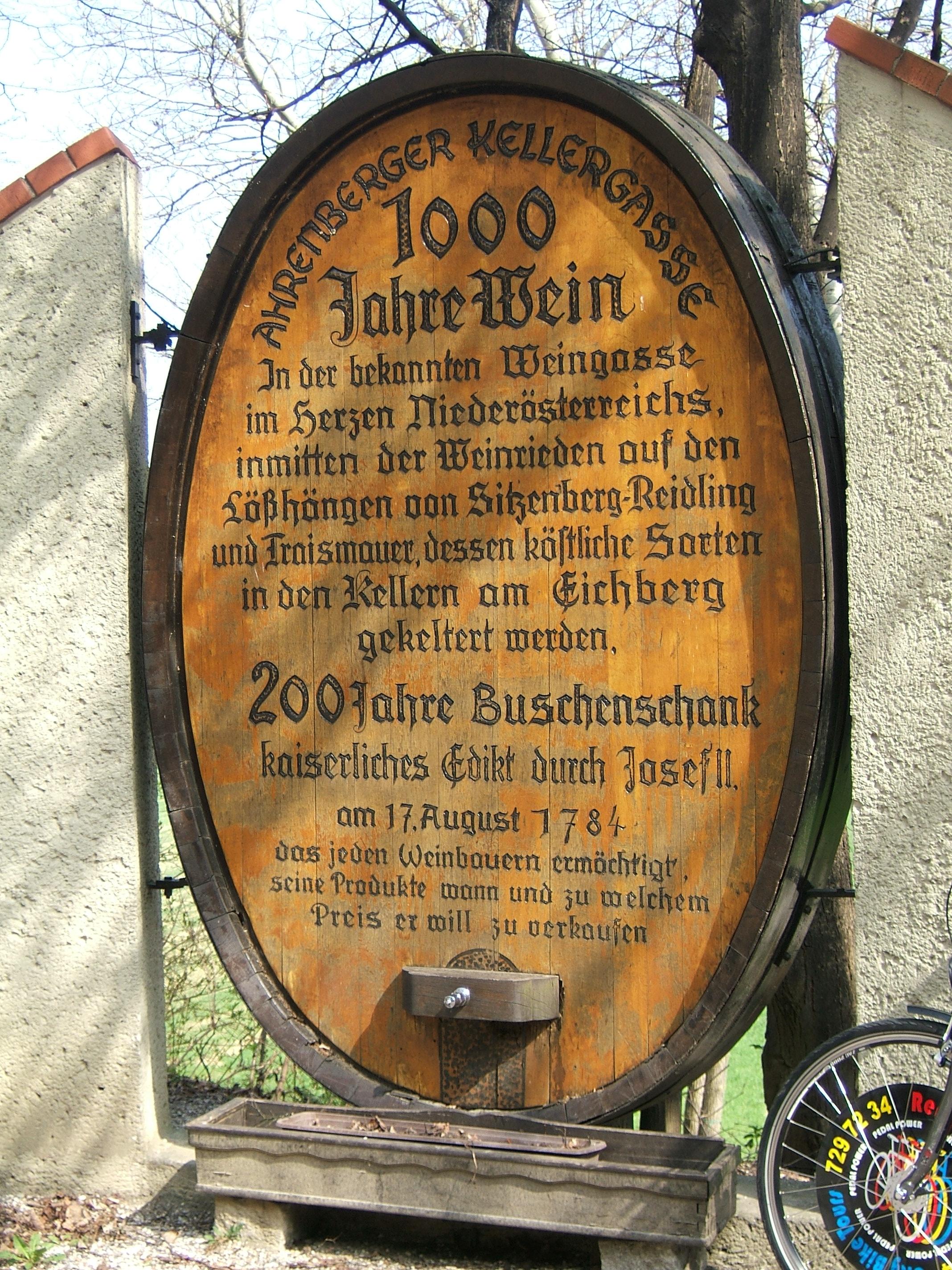
Celebrating 700 years of winemaking
This route started pancake flat, sticking to the floodplane of the Danube despite swinging south of the river for a more scenic route. It was lovely. Spring was everywhere and the stunning light brought out the colours in the architecture, the gardens and the villages.Blot on the landscape was the big ugly scar of the new high speed rail line connecting Vienna to Germany. Time for a few photos to send off to the anti-HST campaigners in the Chilterns.
But the stars of the first part of the ride were the little wine shops set into the bluffs at the edge of the floodplain. These have existed for hundreds of years, behind each house is a deep cellar running into the hillside. For two hundred years they have had a unique licence granted by the Hapsburg dukes. This allows each vintner to open for just six weeks a year and sell an agreed amount of wine. By arrangement the farmers have set up a roster which means that they don’t all take the same weeks.

Schubert Radweg gets hilly
After we end the wine route we cross a tributary of the Danube at Traismaur and set ourselves up for the final 20km which are very different – two substantial climbs, the only ones of the ride. But it’s well worth it for me because we get up to some stunning views over the Danube. Our group of commuter cyclists and campaigners did rather find it hard going, lots of walking for this last leg. But hats off to Yurgos from Cyprus – rode everything on his Brompton with great style.
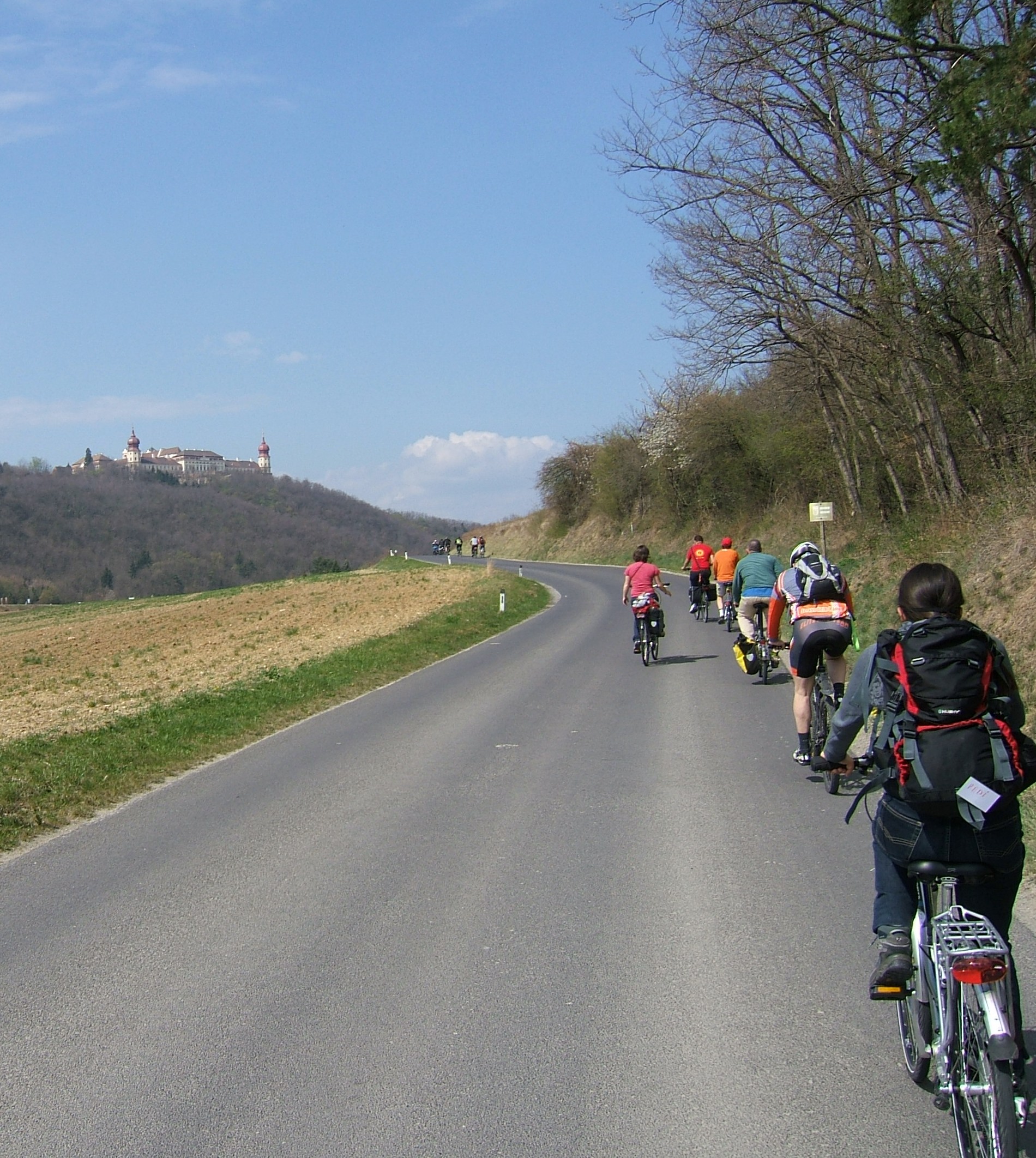
We have to climg that?!
We are headed for Göttweig Abbey (Stift Göttweig) which is a Benedictine monastery set in a most amazing position on a hill above the town of Krems. The monastery was the dominant economic force in the region for hundreds of years owning the land, the farms and of course all the rights to the surrounding vineyards.
Now that produce can be celebrated in the restaurant which must have one of the best views in Austria, especially on a spring day. Having a hard hot ride to the top justified a couple of courses and a half bottle of the fruity white from the surrounding hills.

Gottweig Abbey descent
White knuckle descent but well worth it. Thanks to Wilhelm of Elite Tours for the entertaining leadership and efficient organisation.

 I Do Not Despair