A visit to the War Memorials of Ypres and Tyne Cot – places of remembrance and reflection.

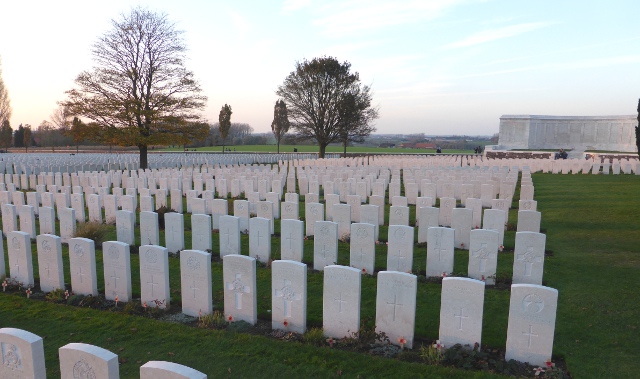
Tyne Cot Graveyard Flanders

Prompted by the arrival of Armistice Day in this 100th year since the start of World War 1 we visited the Flemish town of Ypres (Ieper), at the heart of commemoration of the war for many British and Commonwealth countries because of its position close to some of the bloodiest battles of that war.

This blog post has emerged in two parts. There is the tourist report of Ypres itself and one of the Commonwealth war cemeteries as part of my “Life in Belgium” series.

But this was a very moving experience and I was reflecting on why in particular this has such a different effect on us compared to other military history we see all over Europe, whether it be castles or ramparts or the Waterloo Battlefield close to where we live.

Ypres unveils itself slowly. Coming in to town it is a typical Flanders market town with its solid brick houses set into gently rolling West Flanders farm landscapes. It has the expected grand square with a gothic looking town hall and church spires.
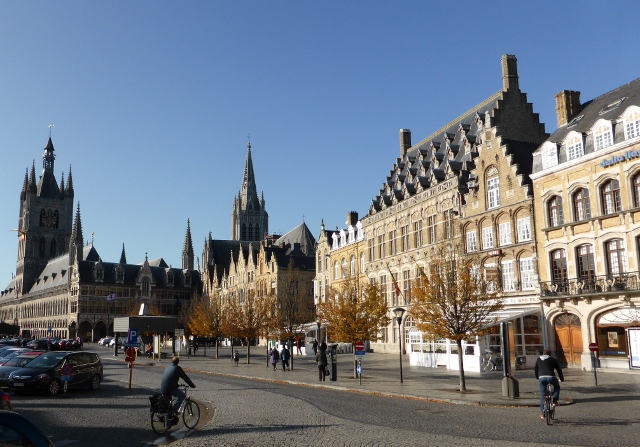
Photo Kevin Mayne Photo Kevin Mayne

There were many groups over from the UK and other countries but the town was not too busy on a chilly November morning.

However a visit to the “In Flanders’ Fields” museum in the town hall brings the whole scene into a sudden sharp perspective.  In the museum are the photographs of the town as it was in 1918 after it was the centre of no less than five major offensives of the First War. This left it ruined and deserted by civilians. Everything we could see on the streets around us has been reconstructed since then.

Copyright free from National archives

Winston Churchill, then Britain’s First Lord of the Admiralty, suggested at the end of the war that the whole town of Ypres should be left as a permanent memorial to the dead. But in a triumph of human resilience the residents of the town started moving back to their homes and farms the first winter after the end of the war and started rebuilding which meant that Winnie’s idea had to be scaled back to a memorial and the town’s major buildings were rebuilt to match their heritage.

Photo Kevin Mayne

There were great views from the bell tower of the town hall which showed the layout of the town’s old street pattern and way out across the Flemish countryside. Old juxtaposed with new in the form of windmills out in the industrial areas.

Photo Kevin Mayne

From this high vantage point there is also a clear view of the main centre of memorial for the city, the Menin Gate. The town had historic outer walls and the gate towards the Menin Road was where many troops left the town to travel to the front. So it was chosen as the site for the main memorial after the war. From a distance it is a relatively flat, plain structure built into the restored ramparts.

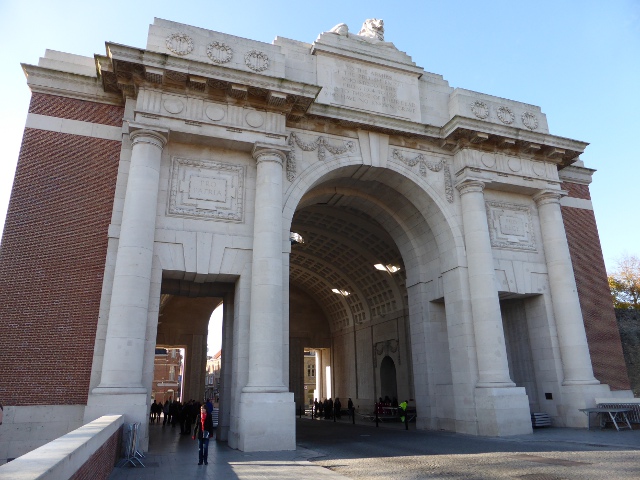
Photo Kevin Mayne

Photo Kevin Mayne

Only when passing under the arch into the main hall does the impact of the arch take shape.Photo Kevin Mayne

On it are carved the names of nearly 55,000 men whose bodies were never found.

Photo Kevin Mayne

The impression of the main hall was impactful enough but then we realised the names carry on through side arches and up onto a second set of balconies that run around the outside of the arch. Photo Kevin Mayne

Then up on the ramparts there was a field of memorial poppies which had been left by visitors. Written on each was a personal message, many of them to lost relatives.

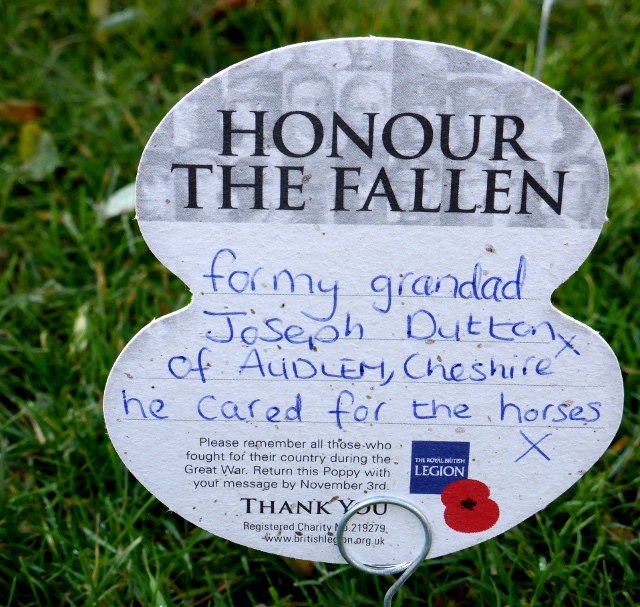
Photo Kevin Mayne


Photo Kevin Mayne

By the time we got to that point we were feeling overwhelmed and extremely subdued. For me I think it was the way the names were listed regiment and country. This means you can really see just how many men were missing from one area. For me it was the Norfolk and Suffolk regiments that I looked for but it could equally have been Surrey, Lancashire, Yorkshire, Australian states or Canadian provinces.
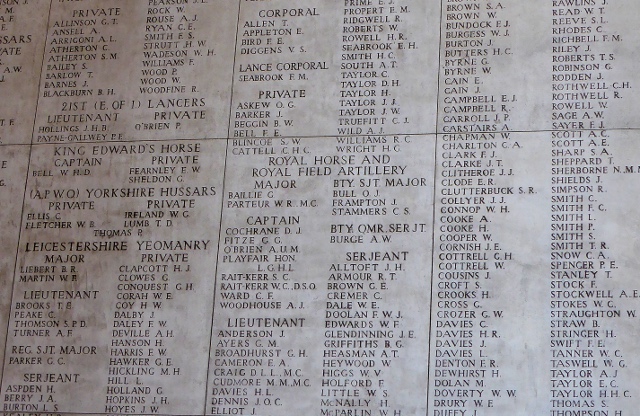
Photo Kevin Mayne

From Ypres we decided to head outside the town to visit the largest of the actual war graves in the area at Tyne Cot, a low hill about 10km from Ypres, close to one of the other most evocative names of the period – Passendale.

Photo Kevin Mayne

Tyne Cot is the largest Commonwealth war grave and is particularly significant for Australians and New Zealanders. The cemetery was originally created for a few hundred graves in an area captured by Australian and New Zealand troops in 1917. After Armistice in 1918 many other graves were consolidated there, with nearly 12,000 now on the site. Of these almost two thirds are unknown, identified only by their country and the words “Known unto God”.

Photo Kevin Mayne

As if that were not enough Tyne Cot is the memorial for the missing names that could not be incorporated in the Menin Gate memorial due to lack of space and because the New Zealand memorial is here. From the cutoff date of 15th August 2017 at Menin Gate to Armistice Day a further 34,000 men died without their bodies being found, an incredible number.

Photo Kevin Mayne

We were there in the late afternoon as the sun began to set over this most poignant of locations bringing a sharp highlight to the shapes of the graves. The spires of Ypres were just visible on the horizon.

Photo Kevin Mayne

We drifted home in quiet reflection. But in the following days I was still mulling over what we had seen. As I said at the start of the blog nobody with an interest in European history can miss the military history that surrounds us. Belgium is a really special case, the anniversaries of WW1 and the Battle of Waterloo made it one of Lonely Planet’s best in Travel 2014.

But within this setting the First World War memorials and commemorations just seem to be different. It seems that the huge loss of life in the fixed trenches with only small gains on either side somehow established the “the pointlessness of war” as a concept, especially as this war could be attributed by many to an imperial game rather than a war of liberty or values. The emergence of the War Poets and other writers who were not afraid to tell the story of the horrors tells us that values were changing.

And from these different attitudes to war came a different attitude to the dead, lost because of the failings of the leaders and the murderous nature of the new weapons of 20th Century warfare. In individual 19th century battles the numbers of dead were enormous – 65,000 killed in one day at Waterloo alone. But after WW1 we put up war memorials in every town naming the men who died individually and at Ypres there are no statues of generals, the memorials carry the names of every man, there is a grave for every un-named soldier. And like the war memorials at home they have a location through their regiments which in those days were locally based.

I didn’t have any relatives that I know of in the First World War dead, our histories haven’t turned up the family stories that we saw on the poppies in Ypres. So which entries at the Menin Gate left me blinking back tears?
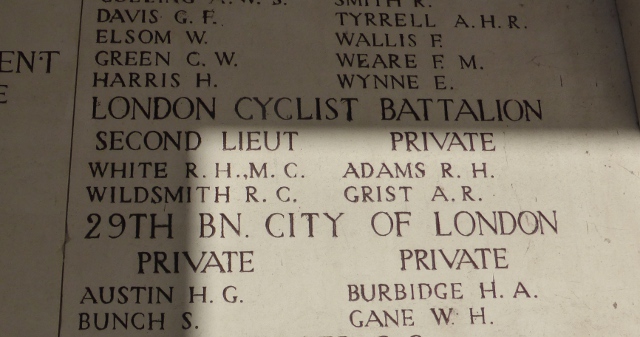
Photo Kevin Mayne Photo Kevin Mayne

The Army Cyclist Corps, the London Cycling Battalion. Two of the smallest entries on the memorial. There were cycling regiments in various forms in most of the armies with the British having 14 regiments by the start of the war. They didn’t see much service at the front because they were valued as couriers and support troops, but clearly they were close enough for many to be killed and lost around Ypres. Belgian cycling troops were represented in the photographs in the Museum.
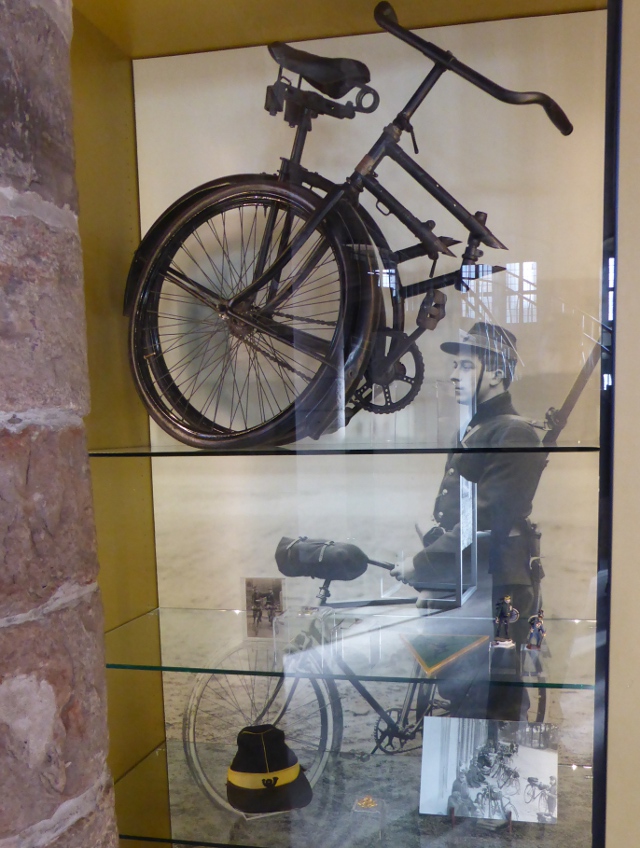
Photo Kevin Mayne Photo Kevin Mayne

Of course it’s personal because they were identified as cyclists. But it goes deeper than that. I know the role that the Cyclists’ Touring Club played in recruitment of these soldiers throughout the war, encouraging active cyclists “to do their duty”. One of my private hobbies while I was CEO of CTC was to wander to our archives and seek out historical references in our 130 year old library of CTC magazines and I have read many of those articles that were actually written by my predecessors. Whenever I could I went to the annual service at the Cyclists’ War Memorial at Meriden, a very special place in the history of cyclists at war. When it was unveiled in 1921 over 20,000 cyclists came to the service.
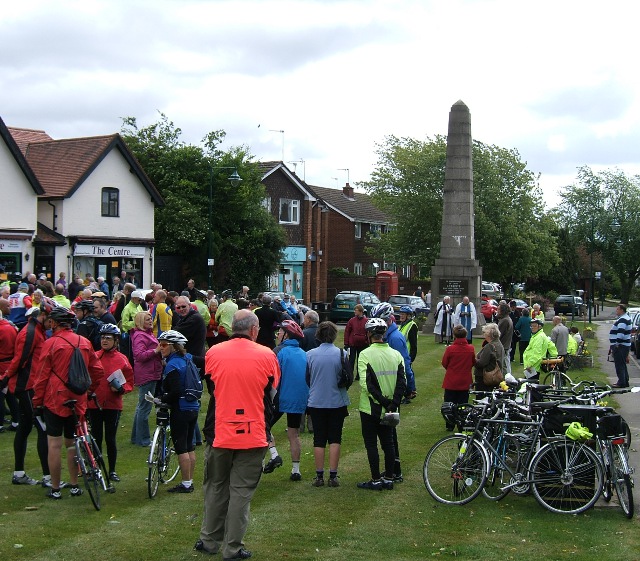
Photo Kevin Mayne

But having been exposed to that history I just could not walk away from those memorials at Ypres without thinking “what would I have done?” As someone who recoils from modern warfare I feel deeply uncomfortable about militarism and wars as a symbol of nationalism. It is challenging enough to wonder whether I would have fought at that time in that culture. But to have played a role in sending people from our club into the war is unimaginable. It hit me with force that day in Ypres as I saw the names of those missing men and it still plays on my mind as I write this.

The battlefields and memorials of Flanders are an interesting and thought provoking visit. I am sure we will return, as will the questions.

For more on cyclists and CTC in WW1 there are some links here, here and here.

There is a very good podcast to download here

The mind is willing, but the flesh is weak – summary of today’s bike ride. Good job it was a lovely day!

In my mind’s eye I jumped out of bed this morning to knock a quick three hours of enthusiastic riding and to test a replacement winter bike.

Completely separately my body announced that it was willing to tolerate 2-3 hours of gentle touring but foolish notions of energetic prancing about were not going to be tolerated.

This message was delivered about 200 metres from our gate when I hit the first short stretch of cobbles that marks the edge of the village.

Photo Kevin Mayne

It is a good job it was a lovely day. Stunning views from the Chapelle du Try-au-chêne above the valley of the Dyle at Bouseval. And the bike rode well.

So never a day wasted.

El Botroul – glorious Autumn mountain biking in Belgium

Gallery

This gallery contains 15 photos.

Last Sunday I got up early and rode off into a misty Autumnal sunrise to take part in El Botroul, my club’s big annual mountain bike randonnee. The day was glorious and there was a lovely early autumn feel to … Continue reading

The perfect song for cycling and singing out loud – thanks to the BBC and the Beach Boys

I do not despair is currently distracted from blogging.

It is bid-writing season again – the process of developing a sales pitch to funders that part exam revision, part interview, part dissertation, part speech writing and a lot of hours locked away with the laptop. There is sadly little capacity left for the blog for another few days yet.

My saving grace is the bike ride to work, an hour or more of tranquility to reorganise my thoughts.

And there is music. This isn’t just while writing. As my regular readers know “Music to Ride bikes by” celebrates the songs that come into my head while riding and just won’t go away.

Today I just have to celebrate the work of the BBC Music department that has just produced a brilliant version of “God only Knows” to celebrate the joy of music. In time to a pedalling rhythm it is even better.

The original was already 3 minutes of pop perfection, but listening to this video has joyously uplifted my morning ride for three days now. My apologies to anybody in the woods near Brussels who has been terrified by a tuneless English cyclist singing out loud to the trees.

How did your Sunday start? Beautiful Autumn mists over Wallonia for me

Stunning views over the Brabant Wallon valleys at the start of my Sunday ride.Photo Kevin Mayne

Special Olympics Europe 2014 Opening Ceremony – a celebration of inclusion

Photo Kevin Mayne

On Saturday my wife and I had the pleasure of being guests at the Opening Ceremony of the European Summer Special Olympics which are taking place this week in Belgium.

It was an enjoyable and at times moving experience, the Special Olympics is a really distinctive movement that is well worth celebrating and Belgium did a great job with the launch.

The Special Olympics are the separate movement for people with Intellectual Disabilities which keeps the games separate from the much bigger and more extensively funded Olympics and Paralympics.

It began in the 1950s and 1960s when Eunice Kennedy Shriver (the fifth of the nine Kennedys from the renowned US political family) began working to introduce sports and physical activities in to summer camps for children with Intellectual Disabilities. In 1968 they became the Special Olympics which formed a part of her much wider work in the field.

There are now Special Olympics for continents as well as world summer and winter games. This year’s event in Belgium was for the Eurasia region so it included not only most European countries but also many participants from the central Asian countries that used to be part of the Soviet Union.

The Paralympics have grown in profile and stature since they were linked to the Olympic Games but the Special Olympics are by far the smaller player in the sport scene and they are much less well known internationally. I was delighted to discover that Belgium has one of the best established national Special Olympics programmes in Europe which meant it was a very proud host of the games. The city of Antwerp is actually the host city however because of their support the European Union and the national Belgian supporters were invited to celebrate the opening of the games in the national capital with the Belgian Queen, Prime Minister, outgoing President of the European Council Hermann van Rompuy and a range of other guests and supporters.

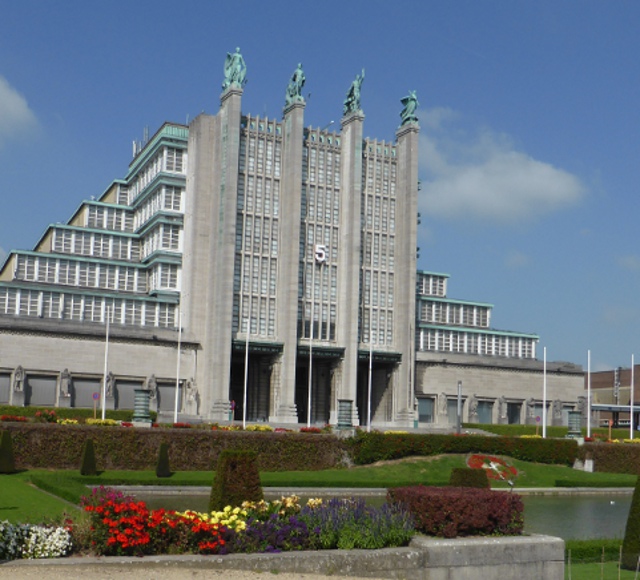
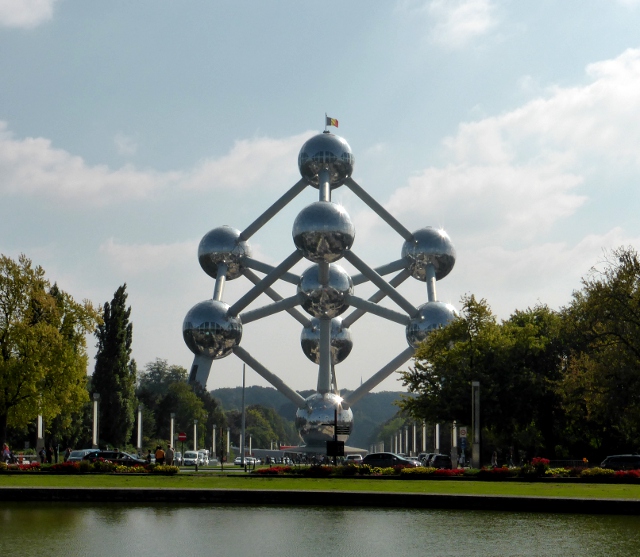
So that is how we ended up on a lovely summer afternoon at Heysel, the part of Brussels that hosts the national stadium, national Expo Centre and our old friend the Atomium which was glistening brightly in the sunshine.

Photo Kevin Mayne Photo Kevin Mayne

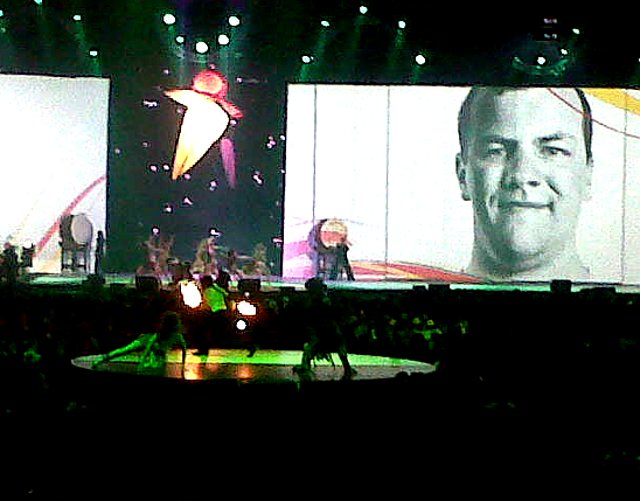
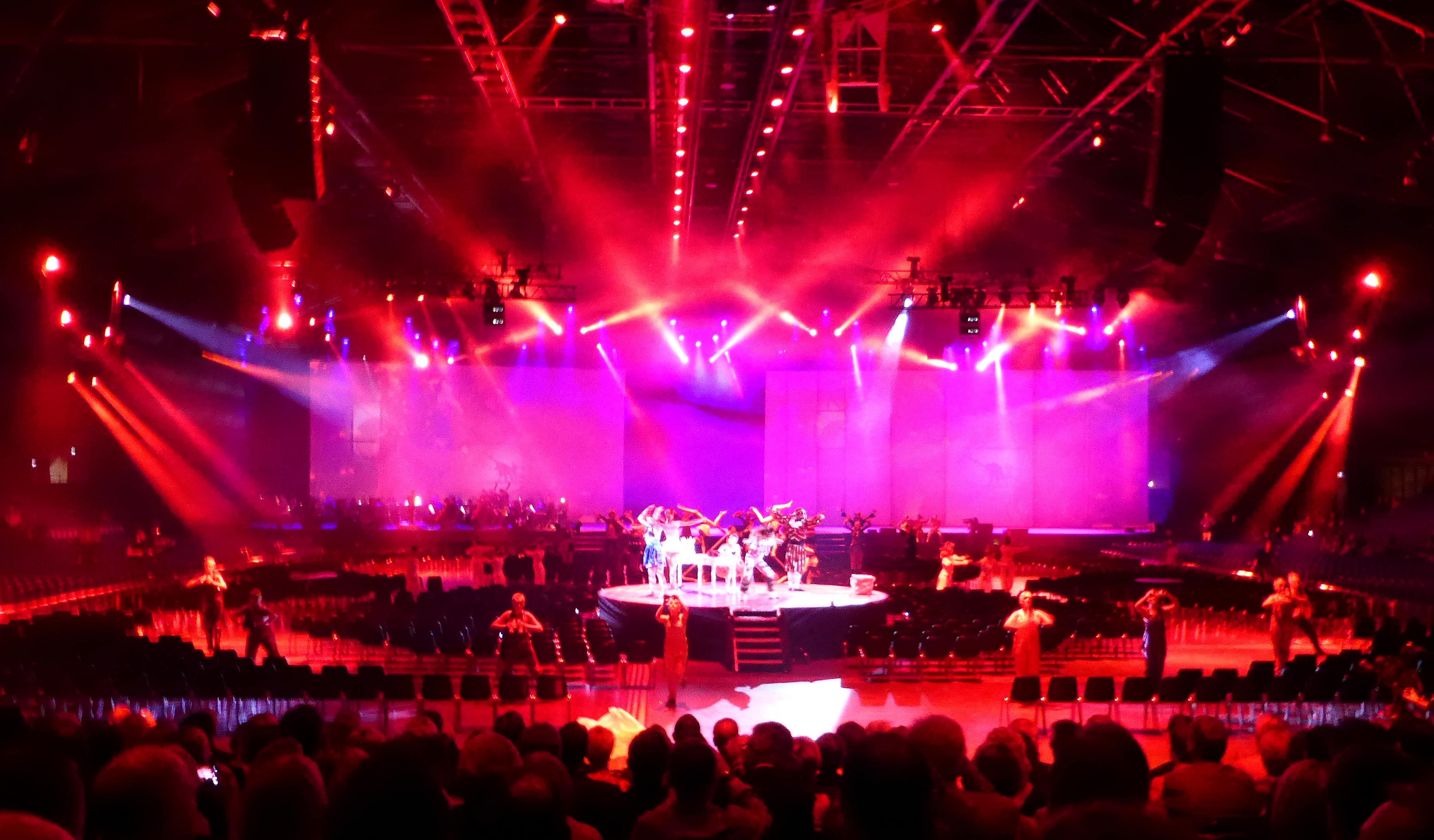
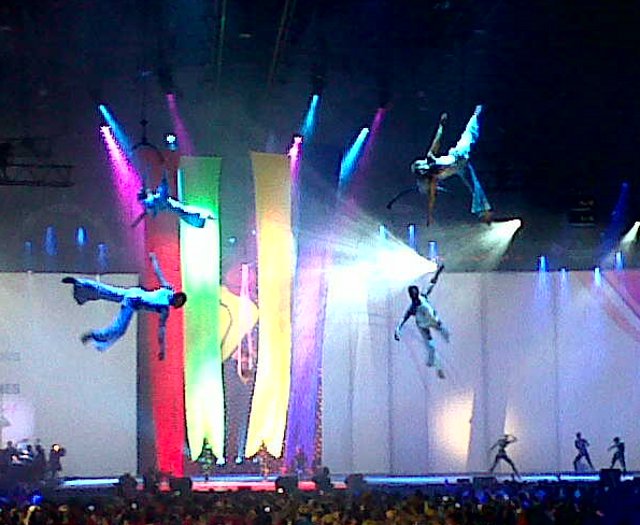
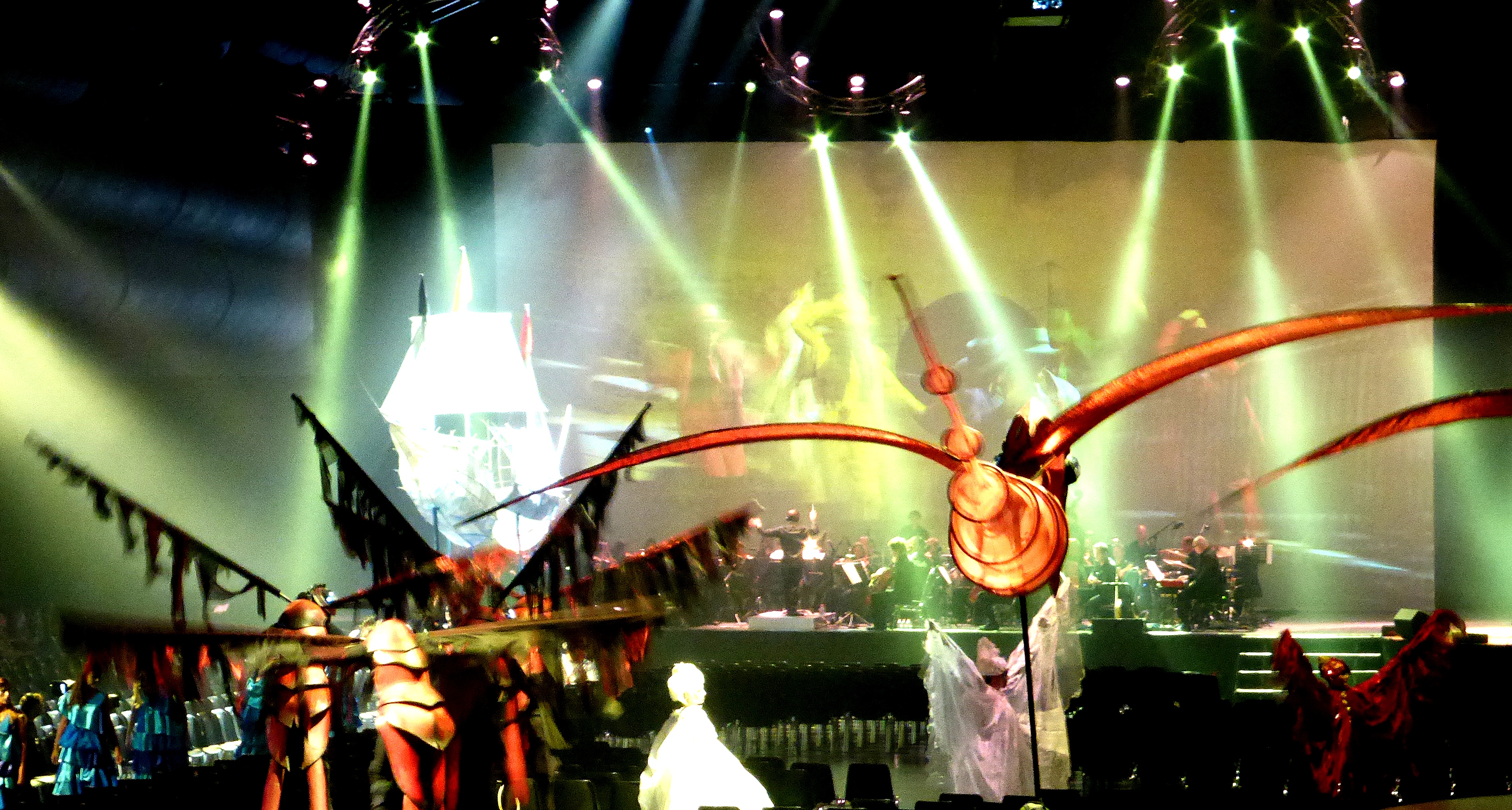
Our ceremony took place in one of the indoor halls which gave it a nice intimate feeling suitable for the “inclusive games” and enabled the show to be all about light and music. Unfortunately my little camera is really not up to the job of indoor photography in this environment so you can see some of my blurry impressions here but I have also linked to the very excellent 7 minute highlights film of the ceremony below and some of the official photographs can be found on the official web site here.

We were treated to an extended dance and acrobatic show that threaded its way through the two hour event and kept the whole thing bouncing along.

Photo Kevin Mayne Photo Kevin Mayne Photo Kevin Mayne

A Belgian flavour was given by the giants and puppets which are a feature of the celebrated Belgian carnivals and parades of Mardi Gras.

Photo Kevin Mayne

But my far the most impactful moments were perhaps the simplest, the ones that were most about the people the games are celebrating.

The teams were accompanied into the room by lively music, applause and cheering that never stopped. You could see the teams just burst with enjoyment at the welcome, dancing and waving their way to their seats. There was a huge welcome for all Belgium’s neighbours like Luxembourg and the Netherlands and of course a massive welcome for the home team, biggest of the whole event.

The raising of the games flags and the EU flag were accompanied by the EU Hymn, “Ode to Joy” but instead of the full orchestra the music was played by a young German man with an Intellectual Disability who played the tune on a harmonica to barely a dry eye in the house. You can see him in the video.

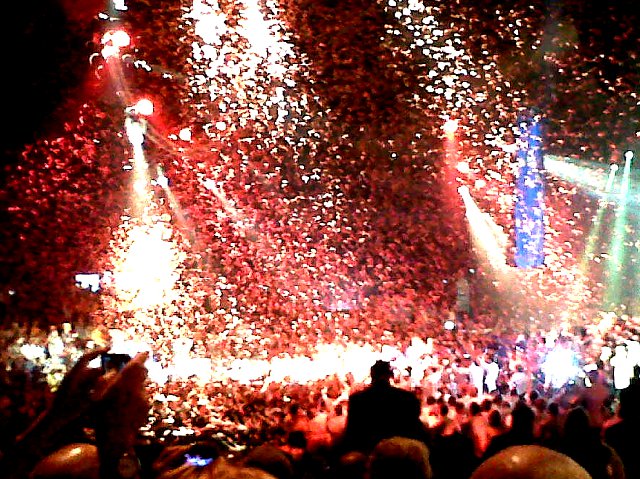
And finally there was just a ticker tape snowstorm over the heads of the athletes who were up and applauding their welcome. Joyful and celebratory.

Photo Kevin Mayne

Please enjoy the video of the event, it was a special occasion. (If the link to a video does not appear here please read the original post in your browser.)

During this week one of the 10 sports taking place will be the cycling events in Antwerp including time trials and road races with the rules allowing for tandems and trikes as well as modified bikes.

I am really delighted by that, both personally and professionally. When I worked at the national cyclists’ charity in the UK one of my proudest achievements was raising money to launch an inclusion programme for cycling which meant we could run development activities at centres right across the country. Almost every time I found myself visiting one of our special sessions for people with Intellectual or physical disabilities I was moved by the enormous sense of achievement that the simple bike ride many of us take for granted can bring to so many lives. This could be a life transforming change as participants found mobility or health through cycling.

There is a brilliant gallery of the cycling at the Belgian Special Olympics pre-event held last September that just brings out the best of that spirit. There is something special in almost every image. Many similar programmes exist all over the world, almost all run by volunteers, they should all be applauded and supported.

I have no doubt whatsoever of the transformative work that the whole Special Olympics movement does. The games themselves are the pinnacle and it was a pleasure to celebrate them with everybody here in the country we now call home.

Yet another “what were they thinking” moment – a beautiful Belgian cycle route with a bonkers twist.

Cycle route to lasne

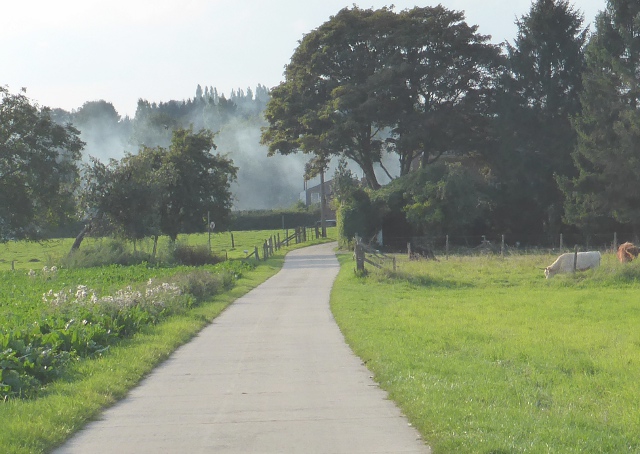
Close to where I live there is just one cross country cycle leisure route that mimics the best farmland routes that I found on my recent tour in Flanders.

Lasne cycle route signFrom the Ottignies suburb of Mousty there is a former farm track that has now been covered by a perfectly smooth surface to make a car free cycle route, signposted to our town of Lasne, seven kilometres away.

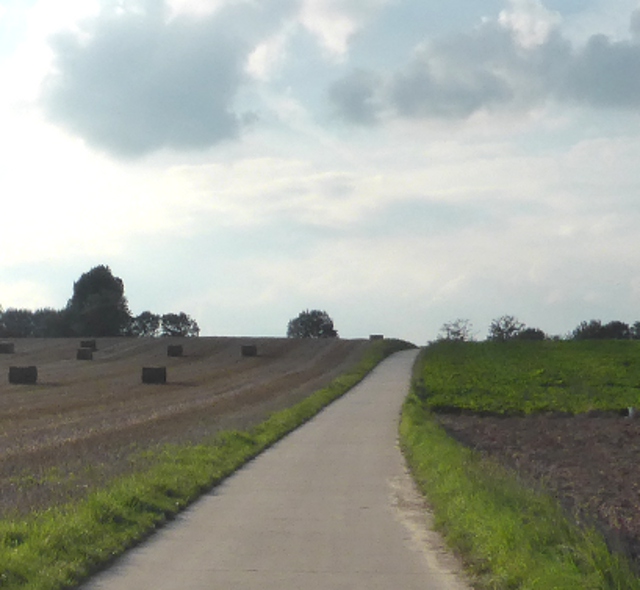
It runs up across the open farmland with wide open views that I thoroughly enjoy, especially on these late summer evenings when the sun is low and yellow.

Looking towards Mousty on the cycle path

And then.

After winding through a few cottages we come to a small valley.

Mousty Lasne cycle path

For some unimaginable reason the planners decided to go straight down, so steeply that they then had to insert barriers which theoretically might stop unsuspecting cyclists shooting out without warning onto a Route Nationale (main road) at the bottom.

Steep hill on the Lasne Mousty cycle route

However as there is no indication that the RN is there, why would you stop? Assuming that you can ride down at all. I will just about ride down it on a day when the path is clear and dry. Which isn’t very often, because it is tree lined and usually covered in leaves or damp, so I have to walk.

From the bottom looking up it is just possible to believe that the barriers are there to aid pedestrians in fixing their climbing ropes before tackling the ascent. It certainly isn’t rideable except for the most competent of mountain bikers.

Cycle path from Mousty to Lasne

So at some point, somewhere, somebody thought it was a good idea to make a cycle route from a slippery descent with tricky chicanes and a blind entrance onto a main road. Even when they had an alternative which could take about an additional kilometre and connect to the rest of their network, actually bypassing the valley completely.

Given that the commune of Ottignies Louvain-la-Neuve is actually one of the more cycle friendly municipalities round here I say it again “what were they thinking?”

Sighs deeply,

Flanders cycle tour day 3 – Bicycle Paradise.  Geleen, Maasmechelen, Hoge Kempen National Park, Genk and Hassalt.

Gallery

This gallery contains 17 photos.

I keep wanting to write that that this trip was a “Tour of Flanders”. However the cycling traditionalist part of my brain keeps telling me that the name Tour of Flanders is reserved for Ronde Van Vlaanderen the great one … Continue reading

Day 2 of our Round Flanders Cycle Tour: “A tale of two Limburgs – Belgian and Dutch” From St Truiden to Tongeren then across the border to Maastricht and Geleen.

Gallery

This gallery contains 21 photos.

Today’s route was multinational. We started aiming to cycle round Flanders but it was impossible to cycle past the famous Dutch city of Maastricht without paying a visit and after that some minor navigation errors saw us spend the afternoon … Continue reading

Cycle touring East Flanders – Discovering Leuven, Hoegarden and St Truiden

Gallery

This gallery contains 22 photos.

This was our first day riding together, very much finding out the pace and rhythm that would suit us both. It was also a really good taste of the Flanders Cycle Route because we were treated to a wide variety … Continue reading

Ingredients for our perfect cycle tour on the Flanders Cycle Route.

Belgium Flanders cycle touring

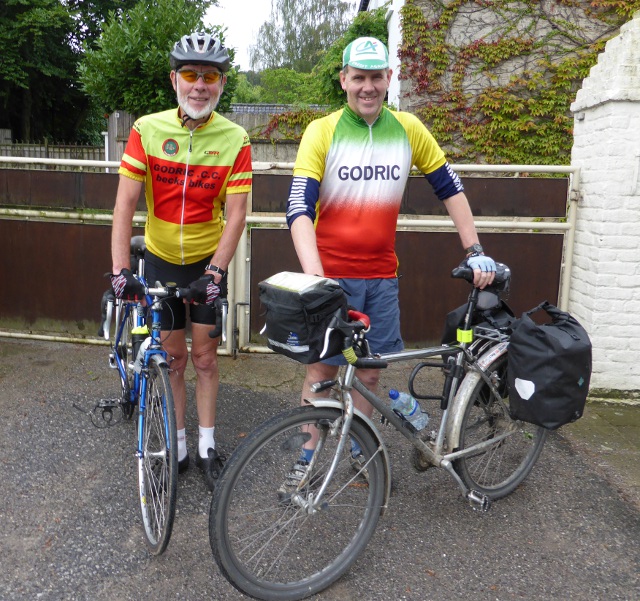
My Dad and I have just returned from three days really excellent cycle touring in East Flanders and its borders with the Netherlands. Before writing up a typical travelogue I was musing on what made it particularly successful.

We have both done a lot of touring over the years and we had a very clear idea of what we didn’t want. We didn’t want the sort of trip where the cycling gets in the way of the touring. Or more probably the cyclists got in the way of the touring, the sort of trip popular with cycle tourists who have a very fixed view of what constitutes a day’s cycling.  I have of course done these rides, and enjoyed them enormously, especially afterwards. The trip where there is a consensus that we are going to sixty miles a day come hell or high water. Or where the organiser has booked hotels exactly xx miles apart in a straight line and we are just going to have to get there, even if we arrive in the dark when the chef went home hours ago. Other symptoms include arriving at a place of beauty and riding straight past because we are behind schedule, or probably worst of all discovering a set menu of exquisite local food for just €15 and going in the café next door because we can see the bikes from there.

Legends are born on trips like that. But that isn’t what we wanted.

We wanted the other sort of cycle tour, where the cycling is a means of exploration and an excuse to spend a few days just chatting and putting the world to rights. And for various reasons we both needed something that was entirely relaxing. As we haven’t actually toured together overnight for many years we also had to work out something that made sure we were on the same wavelength too.

So we compared notes on some important ingredients and then discovered that East Flanders was absolutely perfect recipe for our needs. This was only a relatively short trip, others may indeed set off to cycle round the whole of Flanders, of Europe or indeed the world. But for us it was just right. If the Mayne rules ever help you design a future tour then please feel free to steal them.

1. If the plans get in the way of the enjoyment, ditch the plan.

2. It’s not about the cycling, it’s about the trip. Stop lots. Especially in the proximity of a café. (see 7)

cycle touring in Belgium

3. Don’t go anywhere.

Yes seriously. A few days before we were due to set off I was beginning to worry about where we should go. Maybe the Ardennes, maybe a Eurovelo route? Somewhere by train, car or bike? We need to get out and see some more of Belgium don’t we?

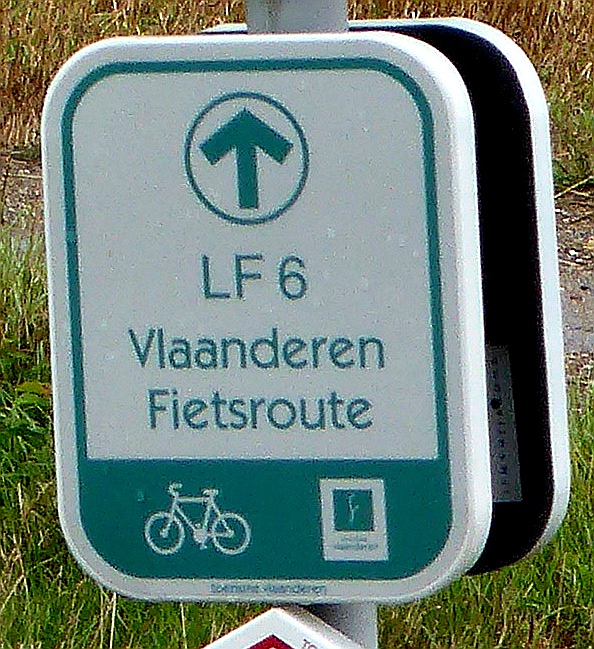
And then a booklet for the circular Flanders Cycle Route which meanders some 800km through the five Flanders provinces sort of fell off a shelf into my hand and I made two important discoveries. Firstly that it passed just 10km from my house and secondly that I hadn’t actually ridden any of the areas in that Easterly direction. So I thought “why bother doing anything else?” It is mapped, signposted and starts on the doorstep. Wherever we end up we can get a train back. Let’s just give it a try.

Flanders cycle route sign Photo Kevin Mayne

4. Distances are to be measured at the end of the day, not set at the start.

This was a particularly successful strategy. I had predicted roughly where we would end up each night based on the straight line distances between some of the towns but we discovered that the winding route added a considerable distance on each stretch so my predictions were way out. But because we had neither planned nor booked anything it really didn’t cause any stress at all.

The wonderful Knooppunt navigation points* help with that too because at each junction you are pointed to the next Knooppunt but no distances are given. So you just potter on to the next number, and then choose a new one depending on how you feel.

Photo by Kevin Mayne

5. If one person is a stronger cyclist than the other – they take most of the luggage and a heavy bike.

Touring bikes for Flanders tour

No equality required. (How many times is it that I see groups of cycle tourists where the person struggling is always overladen and on a heavy or unsuitable bike? Does nobody see how wrong that is?)

6. Ride anything.

Looking back it is actually quite hard to work out a type of road or cycle path we didn’t find en-route. If at any point one of us was a bit bored by the flat or terrorised by the cobbles we found that five minutes later it would change. So there really was no point even commenting. (Much)

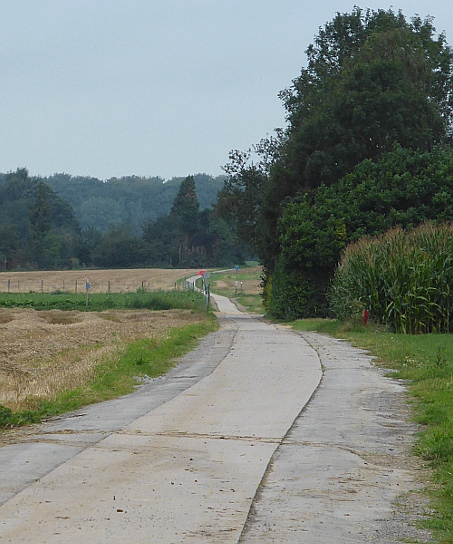
Narrow concrete tracks across farm land and rolling orchards were quite common and delightfully quiet. We followed dirt tracks surrounded by trees and wonderful purple heather.Flanders cycling photo Kevin Mayne Off road cycle route cycling Flanders

Urban cobbles, floral bridges and giant canals with the smoothest, widest cycle paths imaginable.

Photo by Kevin Mayne Photo by Kevin Mayne

Flanders cycle routes

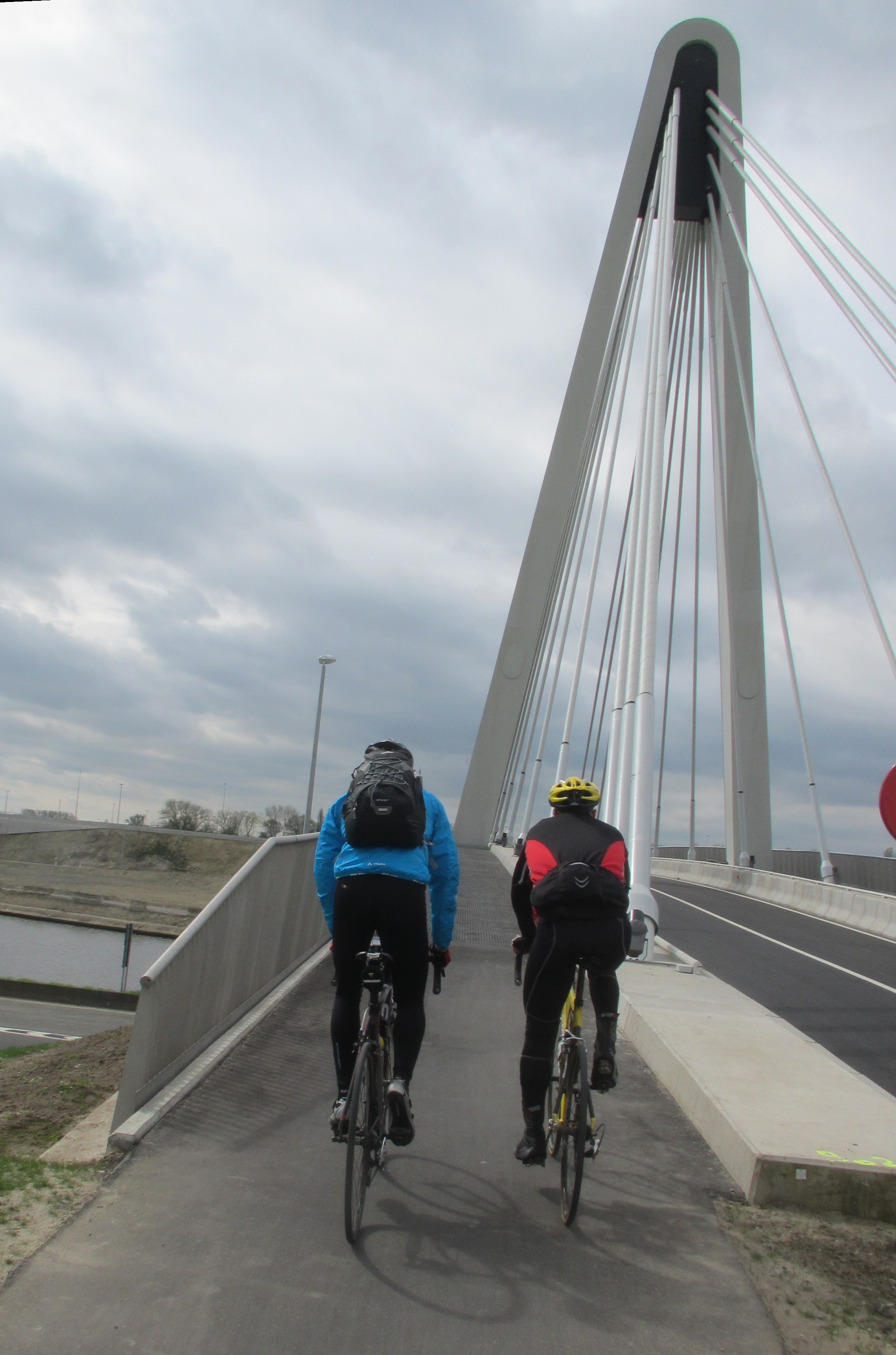
Even a motorway bridge at one point. You have got to love the Dutch, they do build bike paths on an industrial scale!

Cycle route motorway bridge

7. It is always worth ten minutes more at the café.

When one person really wants to go and look at the bravest of the Gauls, the Belgae warrior Amborix whose statue was rather too like comic book hero Asterix to be taken seriously then the other person is equally free to take a second coffee.

Cycling in Flanders

And conveniently on this trip every time we took a bit longer it started to rain, but in this year’s Belgian summer it was soon gone again soon. We rode on a lot of wet roads, but only in a bit of drizzle in the whole 3 days. Very, very lucky.

Geoff Mayne by Kevin Mayne

And finally item 8.

Go home while you are still having fun.

Cycling in Flanders Kevin Mayne

When we set out we didn’t actually decide whether we were going for two days or three. The weather was probably going to be the defining factor, but we both knew that we had to work out whether we were going to enjoy each other’s riding style and the route.

At the lunch stop in Maastricht a conversation took place that roughly said “when are we going to get the chance to do something as good as this again?” and the matter was very quickly decided in favour of the extra day. Unanimously.

*Knooppunt are a system of nodes or junctions on a network of recommended cycle touring roads, paths or route sections.

They are all numbered and you plan your route by selecting a sequence of numbers that you want to connect on a map, on-line or on a GPS unit. The excellent signposting takes care of the rest as each road or trail junction has a signpost pointing to the relevant numbers. They started in the Netherlands, now cover Flanders and are gradually beginning to appear in specific areas of Germany and Wallonia.

Where we went the Dutch and Flemish signs linked up over the border – so useful.

Some more information here.


Follow the arrows for a Belgian magical mystery cycle tour

Gallery

This gallery contains 17 photos.

My last Sunday in Belgium before I head off for Australia and New Zealand for Velo-city 2014 and some overdue holiday. So it was fitting that the weather turned on a spectacular day, the Walloon countryside was beautiful and we … Continue reading

Another beautiful spring day in Wallonia – what else could I possibly want to do with my morning off?


Belgium Wallonia Lasne Geoff Mayne

Riding the lanes with Dad and dog.

Doesn’t get any better!

Watching the Tour of Flanders by bike – great day out

Kevin and Vincent at the Koppenberg

Tpor of Flanders riders Haaghoek

I was not sure how to watch the Tour of Flanders this year. As I was going on my own I had concluded that this was probably a good day for a long spring ride from home. I would then rest at a vantage point and ride home, making perhaps my first 100 mile ride for a long time.

But with a couple of days to go Vincent from Ghent was on the email – “any plans for Sunday? I will probably bike from “hotspot” to “hotspot” between Oudenaarde and Ronse. In this way I can work on my personal condition and watch the race.”

I probably should have looked a bit more closely at the “work on my personal condition” part of the invitation as Vincent is a faster rider than me, but the prospect of company and somebody to map out a route between vantage points was too good to miss. I also knew that it would be great to ride with real fans, local riders with a passion not only for the Flemish riders but “their race”, the culmination of a season of Flanders mini-classics on their roads which build up over several weeks and culminate in the Ronde.

The arrangement was quickly made that I would go by train to Ghent, meet the guys and we would ride down to the course. This is relatively easy in Belgium because once you have bought your 24 hour bike ticket you have unlimited access to the rail network for the bike, it is not the lottery experienced in many countries. So I could plan to jump on a train home from any number of stations in the area without hassle.

Watching the race

The Tour of Flanders is one of the most spectator friendly races in the professional cycling calendar. Many of the great bike races flash by from place to place and the only way to watch is to chase the race by car or soak up the atmosphere and watch the rest of the race in a bar.

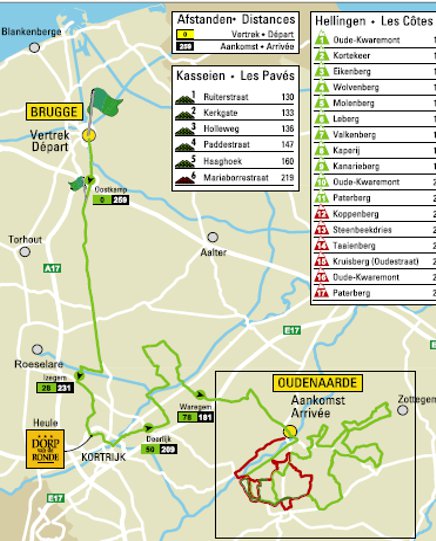
Official Route Map (from Flanders Classics)

Official Route Map (from Flanders Classics)

With the Tour of Flanders the organisers give flat West Flanders a taste by sending them off into the flat country for 100 or more kilometres, then they bring the race into the Flemish Ardennes and pack 150 km of racing into a small range of steep sided hills just 20km long by 10km wide. This is done by a complicated set of loops and laps which mean that cars find it hard to move almost anywhere in the network of lanes but by bike it is easy to plot a route to see the race several times if you have some local insight.

The organisers also cater for the spectators brilliantly by running shuttle buses up to three spectator villages with food, bars and big screens at the main vantage points. It is quite unique in sport, the crowd encouraged away from the towns into fields beside tiny villages. And instead of grumbling about the inconvenience and the intrusion the local communities fill many of the gardens with their friends, get out the beer and the barbeque and welcome their race.

Tour of Flanders

(I published several posts last year from the Paterberg that can be found under the Tour of Flanders tab below)

Our route

Our ride was a bit of a mini version of the race route which I have crudely sketched on to the map below (Blue line) By starting from Ghent we would mirror the elites by riding straight into the stiff south westerly breeze. Near to Oudenaarde we swing south into the hills to the Molenberg. From there apparently there was just enough time if we hurried to catch them again on the cobbled section at Haaghoek before a 10-15km ride to the Oude Kwaremont where we should see them twice and watch the race unfold on the big screen. About 80km/50miles I estimated for that part, my whole day was around 75miles/120km.

Tour of Flanders our route

Tour of Flanders Molenberg

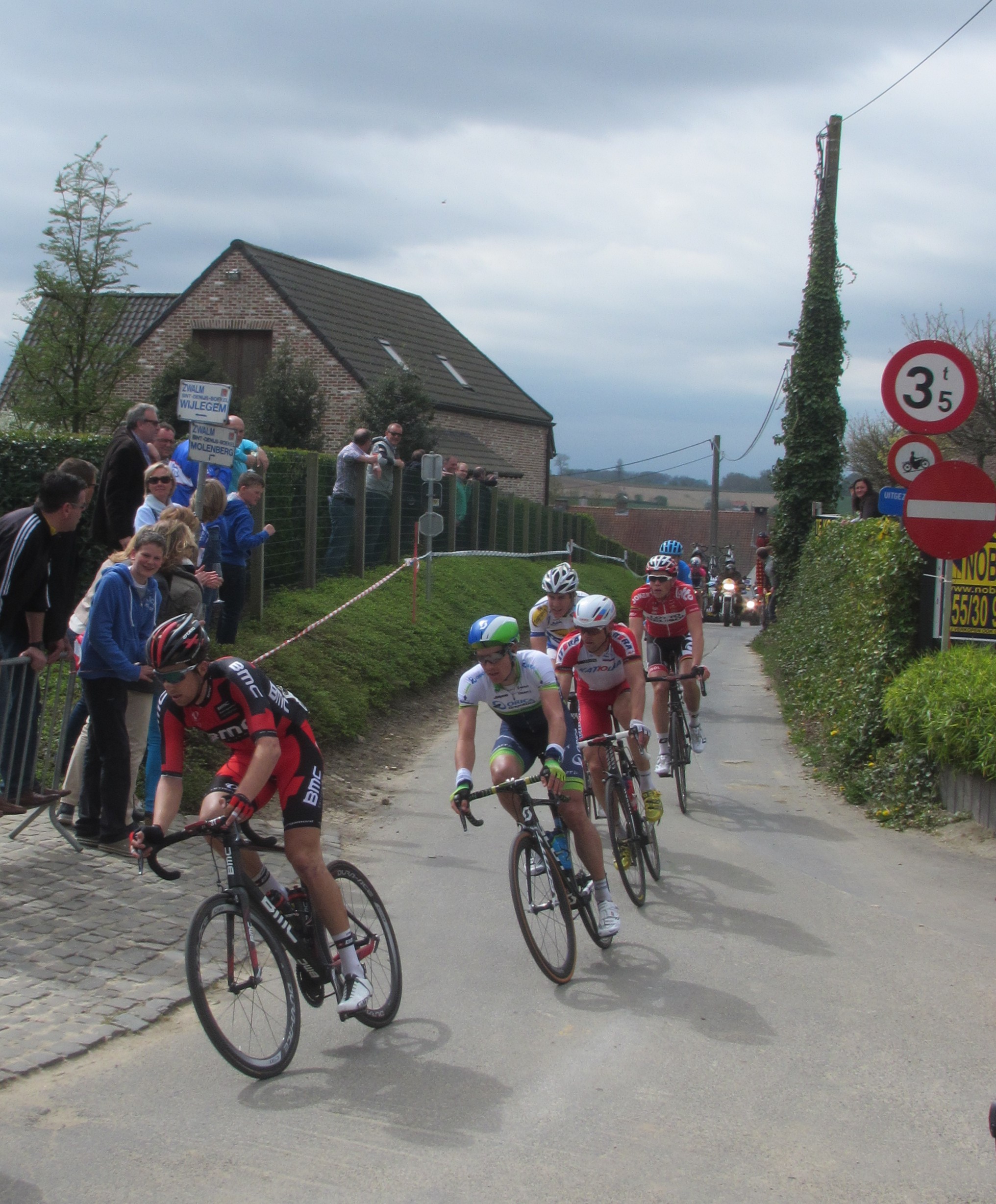
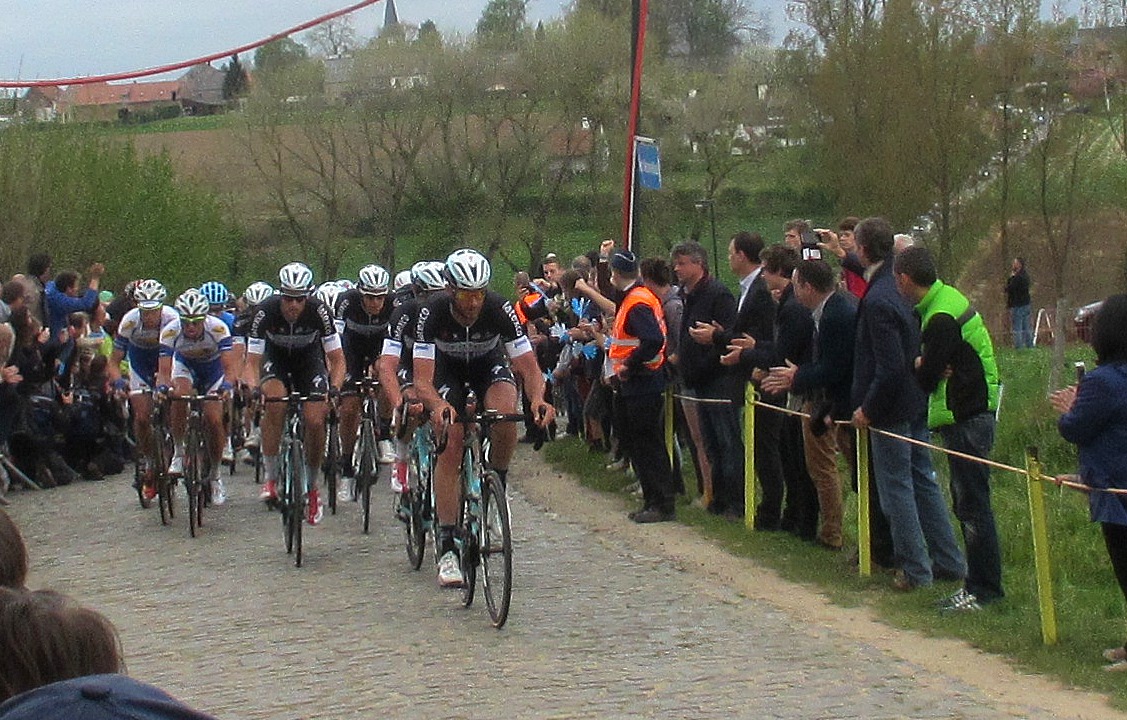
This route was really good because I would never have chosen the Molenberg or Haaghoek to watch, I just didn’t have the knowledge of what to expect and they come early in the action. As it turned out they gave me some new experiences because the top of Molenberg was a tiny lane with the bunch funnelled down right in front of people’s gardens whereas the section at Haaghoek was a wider cobbled road across a shallow valley with a great view of the whole race cavalcade rattling down the stones and sweeping up in front of fans two deep on the railings.

The Oude Kwaremont is at the other end of the spectrum, one of the famous and decisive climbs with just 20km to go in the race. I have ridden it and it is nowhere as steep as the Paterberg or the Koppenberg but it just seems to go on for ages, all cobbled. It is ridden 3 times and at the end it is a great place to see the favourites impose themselves. For that reason it is of course popular, with a big spectator village at the top and you have to fight for a view at the roadside, but then we can all watch the finale.

Oude Kwaremont summit

Our ride.

Cyclists Suspension bridge GhentTo get out of Ghent we nipped through the suburbs and then up and over a superb new cyclists suspension bridge which has been built over the motorway as part of the access to a new football stadium. The stadium itself has an impressive mobility plan which encourages local fans to come by bike with lots of cycle routes and cycle parking.

We quickly joined the flat car free route beside the Scheldt river (hope of the infamous ribbelstroken) and soon knocked off the kilometres towards Oudenaarde. I was already grateful for the company given the surprising strength of the wind, especially when I realised that my original plan would have seen me riding 50 miles into this on my own.

IMG_4018Leaving the riverside we were quickly zig-zagging through a maze of lanes that I would never have found on my own and relatively rapidly came up a tiny side road to the top of the Molenberg. Everything seemed very quiet, then suddenly the final climb was covered in parked cars, telling us the race route must be nearby. Great navigation because we popped out right at the top of the village and joined a mix of locals and visitors by the roadside, all being handed flags with the black lion of Flanders.

The next part of the ride was the hardest because after standing around for half an hour we suddenly had to dash across several small folds in the landscape and by the time we reached the top of the final one my legs were groaning and my lungs gasping to keep up with Vincent and Wouter. We actually got to ride a very short stretch of the course just ahead of the race as we cut through but we were mainly on some lanes which looked lovely with the spring blossom everywhere, a year ago I watched under snowflakes and spring seemed quite distant.

A good crowd was gathered at Haagenhoek because of the excellent views and the extremely well placed bar where the party of Dutch cargo bikers were refuelling.

Tour of Flanders Haaghoek

We weren’t there long before the race came through so this time I didn’t stiffen up so much before we were back on the bikes to ride a longer section to the Kwaremont. Again the benefits of local knowledge were apparent, would I have gone down an apparent footpath between two houses without Vincent leading? No chance!

Short cut to Tour of Flanders

Cycle touring path near OudenaardeThe stiff wind was still in our faces but by now it was clear that Wouter is a strong rider into the wind so I was happy to be tucked up behind them when we cleared the lanes and joined an excellent cycle route that ended up on an former railway line that sliced across the open fields in the flat valley of the Scheldt. This was a good way of taking in the topography of the area because as we rolled west the hills of the Flemish Ardennes were lined up to our left and we could look across and spot the bergs, knowing the riders were out there somewhere sweeping up down and around the fiendish final 100km of the race. Our route cut right across the foot of the awesome Koppenberg that completely defeated me earlier in the year so we stopped for a photo-call to prove we were there, but maybe another time for the climb.

Shortly after the foot of the Koppenberg we were into Berchem, the small town below the village of Kwaremont which looks down over the valley. We were running a bit tight for time to get up the climb before the riders so the suggestion was a detour to watch the field come down the new main road which bypasses Kwaremont. This turned out to be inspired because again we saw another aspect of the race that none of us had seen before. The bunch was jockeying for position before the key climb which means that they spread out across the whole road and descended past us at just extraordinary speed. (80kmph/50mph at least) Given that they were only a few metres from a road narrowing and a sharp right hand bend the sight was even more terrifying. As bike riders ourselves we appreciated how much skill and confidence in each other the pros must have to do that. The day was dark, gloomy and threatening rain so the lights of the cars and motorbikes only emphasised the impression.

Tour of Flanders Kwaremont

Once they were past us Wouter suddenly suggested that if we were quick we might actually catch them again at the top of the hill because they had to go down, through Berchem and up the long cobbled climb while we “only” had to go up the main road to the top. My legs were aching again from the combination of riding and standing so the other two soon left me behind even though the slope was not steep. However I was soon bumping my bike across the field with the big screen to get to the barriers and see the bunch in time.

We were then able to hang out, refuel (essential frites) and watch the race unfold on the big screen. Then with just 20km to go it was a rush to get a great spot by the barriers and hopefully see the decisive moment, then back to the screens to watch them climb the Paterberg and then the run in to the finish at Oudenaarde.

Tour of Flanders on the big screen

The race

The race itself was a cracker. For the first time in three years the two strongest riders of recent years were both fit and the Flemish were very excited about Tom Boonen’s prospects. There were also a host of strong riders from what might be called “the new generation” sniping at the heels of the favourites and several of them are Belgian.

The break of the day went away early and held on for a long time but it was clear that on home soil Boonen’s Omega Pharma Quickstep team meant business, they were massed at the front every time we saw them and the crowds were getting very excited.

Look its Tom Boonen at Tour of Flanders

In the final 30km it was the new generation that appeared charge and home fans were excited to see Greg van Avermaet of BMC pulling away in front of us on the Kwaremont with his Quickstep shadow Stijn Vandenbergh, also Belgian, and more excitingly for the locals he was from a village nearby.

Belgians attack on the Oude Kwaremont

But ominously a pair of riders came up just behind them and one of them was Spartacus, Fabian Cancellara towing Sep Vanmarcke who had pushed him so hard in last year’s Paris Roubaix.  In the final 20km we almost saw Van Avermaet get away on the Paterberg and the other Belgians took it in turns to attack but they could not shake off the Swiss master. Every Belgian attack was greeted by cheers and shouts, but to a huge groan from the crowd Cancellara took the sprint from the three Flemish young pretenders.

However what I liked is that even as we walked away the talk turned to what a great race it had been and respect for Cancellara. Not only because he is a great rider but because it is clear he respects the race and its traditions. One press report I saw said that he even apologised to the host Belgian broadcaster in his post-race interview for beating three Belgians! A real nice guy by all accounts and one of my favourite riders. (Click here for a video of one of his greatest descents – awesome stuff)

In summary?

I am sure I had something complicated to say, but it’s all here. Put simply – every bike fan should come to the Tour of Flanders at least once. And if you can do it riding in the company of knowledgeable Flemish bike fans you will enjoy it all the more.

Thanks Vincent and Wouter – great day out.

Ahhhh, good to be back in the comfort of the peloton. The club cycle touring season kicks off in Belgium

Photo Kevin Mayne

After its winter break the Belgian cycle touring season kicked off again on the first weekend of March. Unlike the UK where I have done most of my cycling the clubs here don’t ride through the winter.

So this means that the March rides are a bit if a “get to know you” and find out who spent the winter doing the kilometres and who were doing the kilogrammes. And it brings a little trepidation, a slight return of cyclingclubaphobia until I have checked that that I can fit in to the club.
I missed the first two weeks in Taipei so this was my first ride of the year with my ambition to drop into group 2 and hide quietly in the slipstream. With the hazy sunshine I was optimistic that there might be a good few riders out so I could chose my level. And wow – 75 starters resplendent in the new club kit.

There were about 35 in group 2 and my hopes worked out quite well, because in a stiff breeze the enthusiasts that had been riding regularly were happy to take the lead, and the big lads provided what might less politely be called a solid wall of Belgian beef that provided excellent shelter!.

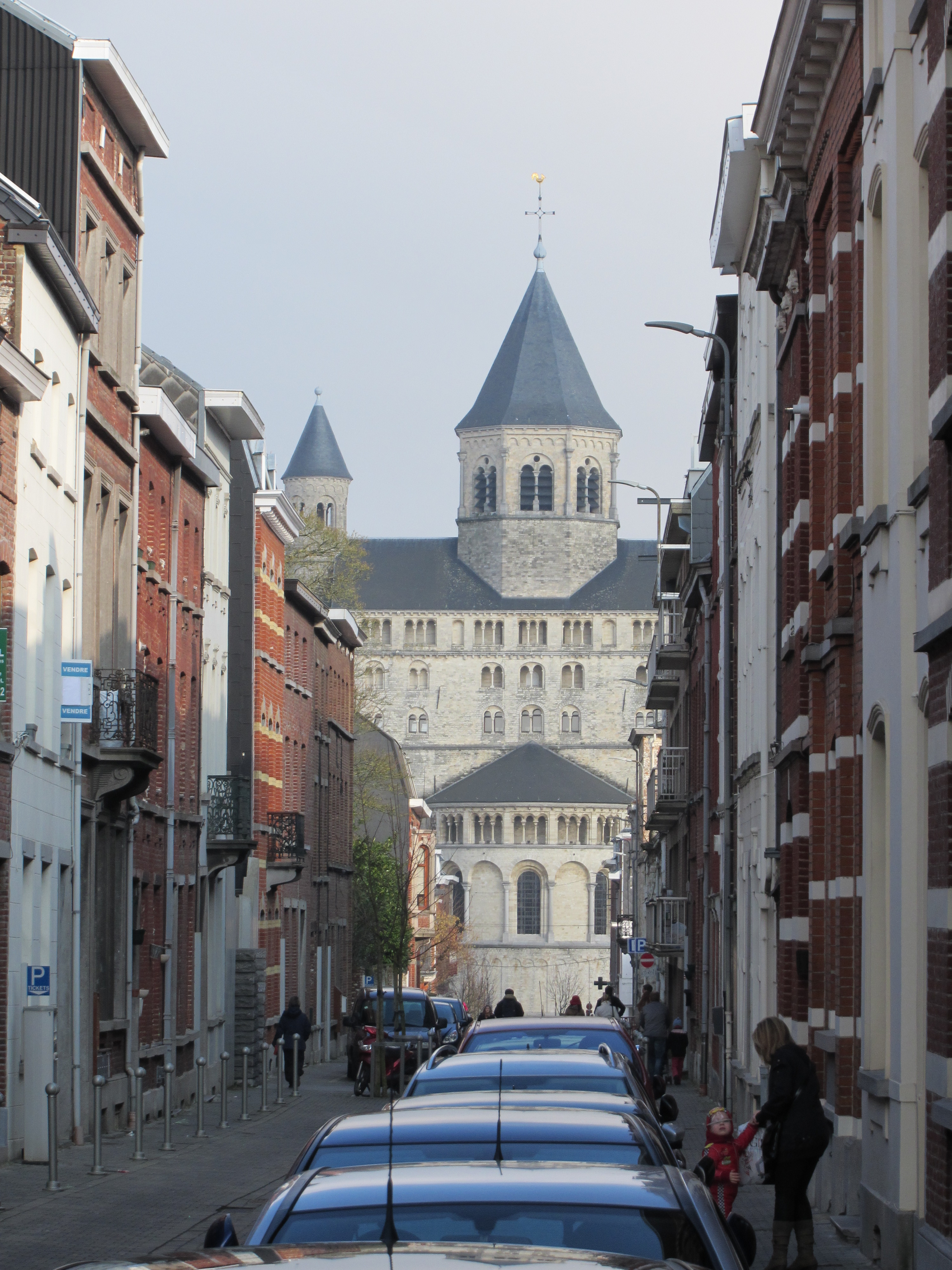
Collegiate Church of Saint Gertrude NivellesWonderful spring day, I could have stopped and taken hundreds of views of blossom and open fields as we skimmed the open countryside. In Nivelles the splendid Church of St Gertrude was ringing out its bells with great energy as if to welcome us, or just to celebrate the day.

Good to have the first club ride under my wheels.

Cycleottignies March 2014