
As visiting “foreign expert” I have been asked if these almost unused coast roads look good for cycle touring. Hmm, tough one!
Image

This gallery contains 17 photos.
Catching up on the last details of my March trip to Taiwan here is a gallery of photographs from the One Resort, an amazing complex set high in the hills above Hsinchu, a city about 30 minutes travel south from … Continue reading

This gallery contains 21 photos.
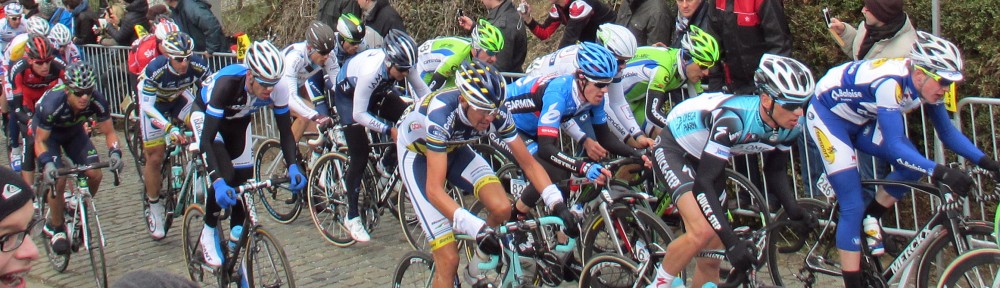
I have just received my links to the official photography provided by the organisers of the Tour of Flanders Cyclo on Saturday. As well as individual rider photos they also throw in a nice collection of atmosphere shots which show … Continue reading

This gallery contains 21 photos.
I promised I would flesh out my two earlier posts about riding in Taiwan with a bit more of the story of the rides. This was a special opportunity for me because despite this being my fourth trip to Taiwan … Continue reading

This gallery contains 18 photos.
It is going to be very hard in the next few blog posts to not just turn this into”101 reasons why you should visit Taiwan in 2016.” We have our major international cycling conference there in March 2016 so there … Continue reading

This gallery contains 5 photos.
I am assured that the three peaks of the mountain circuit from Taichung are the measure by which all local riders are judged, with the local clubs and pro-groups regularly thrashing round in a form of survival of the fittest. … Continue reading
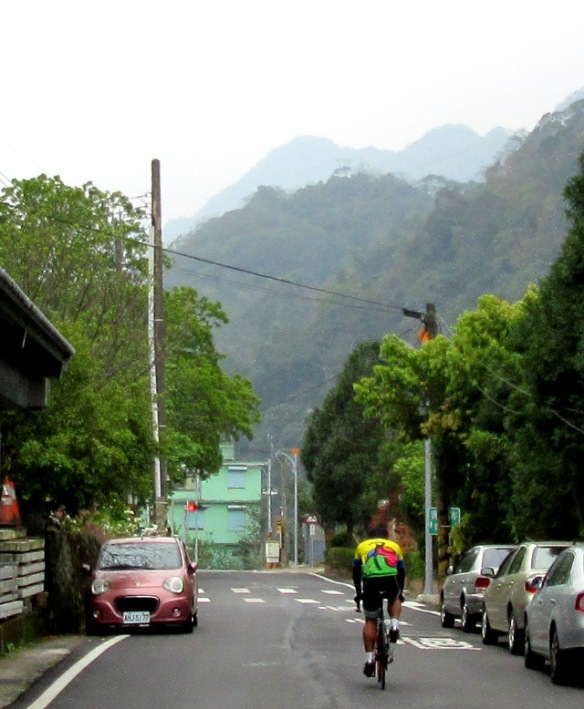
There will be time for better edited, clearer photos.
There will be more time for ride and route information.
And there will be special thanks to my friends at the Formosa Lohas Cycling Association who delivered me a great day cycling today. Over 140 km south from Taipei to the smallish town of Dongshi near the bigger city of Taichung.
But as I sit in my hotel room tonight I can reflect on great company:
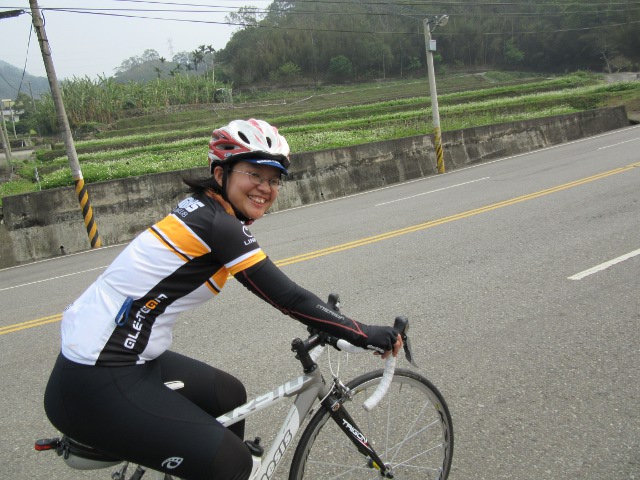
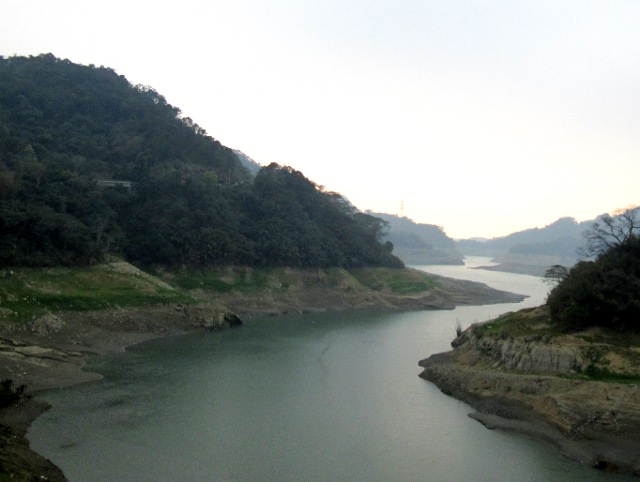
Super riding and some great views;
Use of a very tasty titanium road bike that I really would like to own;

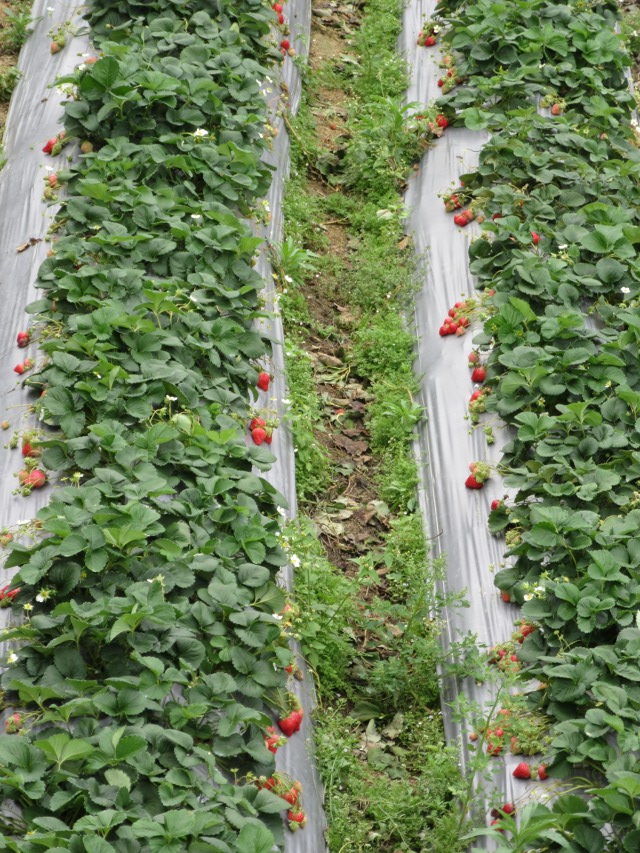
Riding through the strawberry harvest (in March);
But above all else…….. the food.
I must have sampled thirty dishes today, most of which I have never tried before. At some point I will try an inventory but I will just capture a touch of the variety with the Hakka style hot pot, the excellent steamed meatball in a dumpling and the incredibly weird drinkable jelly tea.


No danger of losing any weight on this tour.
And tomorrow I am told we hit the mountains for real. As if my legs don’t ache enough.
This gallery contains 16 photos.
This was the cycling excursion that was never going to happen. It was the result of a three day process that went from “no way”, through “maybe” and “what the heck” and ended up as “that was good”. A chilly … Continue reading
A small diversion away from cycling on my travels, and a tribute to my Nan’s knitwear output.
I have written numerous times about my visits to bike shows around the world, but this week I have taken a detour to one of to one of the world’s most important sporting goods shows, ISPO Sport in Munich.
I am actually here to attend meetings and events on the side of the show that have been extremely useful for learning about trends in health and physical activity and the business climate in which the global bike industry is working.
But of course I went for a walk around the show. It was enormous, bigger than all the bike shows except maybe Eurobike. There were no specific bike exhibits but lots of familiar outdoor brands and many of the companies that make outdoor and sports gear also cross over into cycling.
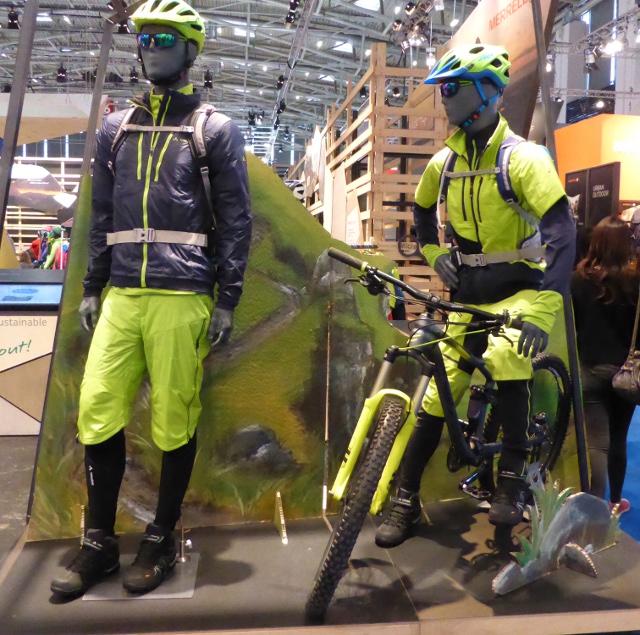

But inevitably my eye is drawn to the unexpected. This is especially true of trade fairs where the major purpose of the show is to convince manufacturers, wholesalers and retailers to take a particular range, not really to reach the individual consumers.
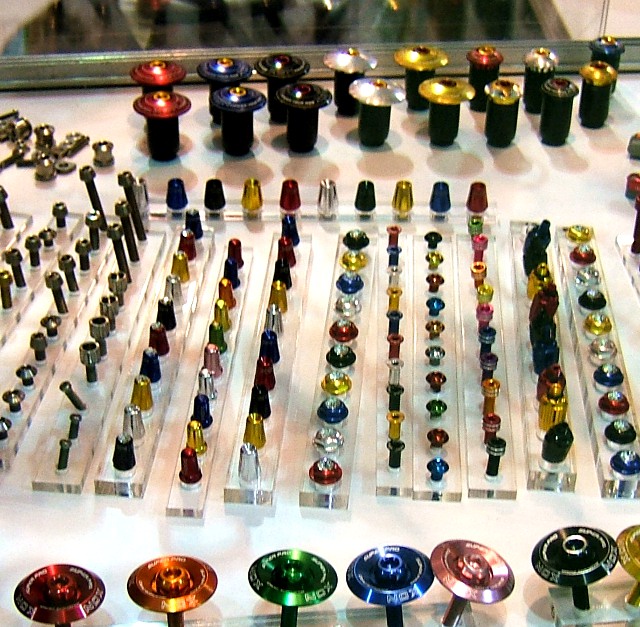 When I first went to Taipei Cycle Show I was drawn to the booths that just exhibited a single item like bells, or a huge display of carefully colour coded bolts, there so that assemblers could order just the right part to match their bicycle designs. No reason why they should not be there, but the care and attention to detail put in to displaying the humble washer just caught my imagination.
So what was it at ISPO?
Bobble hats.

Walls of bobble hats.

Fields of bobble hats.

Colour coordinated bobble hats.
The biggest bobble hat I have ever seen.
Who knew? If you want to convince the winter sports buying community that your product is the height of technical achievement you top off your display….with a bobble hat, lovingly designed and created by people who have invested a great deal of craft in their product.
Maybe it’s because I don’t come from a winter sports country, but somehow I was highly amused by the status given to the sort of clothing that represented the height of uncool in England because it was knitted by your grandmother in strange shapes and colours. The only exception was your football supporter’s hat that you wore on a Saturday.
Good luck to them all, if colour coded bolts matter to someone then why not bobble hats? My Nan would have seen it as a challenge to turn out another batch from her extraordinary selection of leftover wool.
This is quite fun, Late last year I was invited to contribute a guest post on cycling for the blog www.discoveringbelgium.com and the forst part has been published today.
Denzil Walton is a freelance wrote and author of some good books of walks in the towns around the Brussels area. He has an excellent blog which has a diverse range of Belgian content from walking to crafts, history and countryside.
He asked me for some ideas on cycling content and I suggested that I quite liked the idea of a New Year piece with some of the cycling things I want to do and see in 2015.
I suspect some of my Belgian cycling friends will rush to tell me about dozens of great rides that I missed, but this was written with a bit of a visitor’s perspective. There will be room for lots more stories on this blog – maybe you just need to invite me for more bike rides.

Wednesday’s bike ride was enjoyable enough because of the cycling.
But there was one other feature that made the day memorable, not least because it came upon me completely by surprise and gave me unprecedented access to a Belgian transport landmark.
I was cycling along the Charleroi-Brussels Canal that makes up Ravel 1, one of the longest off-road cycle routes in Belgium. It was deserted and a thick mist had come down so there was a sense of riding along a narrow closed corridor.

I got my first surprise when I realised I had started cycling out onto a huge viaduct with the ground disappearing away to the mist on my side. As someone who sometimes suffers from vertigo this was more than a little un-nerving but the infrastructure was big and wide so I was quite relaxed.

Then out of the mist came the shape of a lock gate so I cycled up to the edge for a look, but the view made me stop in amazement. There was no lock gate. In fact there was not even a canal. Below me there was a something resembling a huge railway yard sloping into the distance, with not a drop of water in sight.
Then I realised that projecting down the hill was a boat sitting in a massive tank of water. The tank was on wheels and it was waiting to descend the slope.

I had stumbled onto The Ronquières Inclined Plane, a boat lift that can carry up to 5600 tonnes of water and boats between the two levels of the canal almost 70 metres apart in height. It is a notable local landmark and visitor attraction but I hadn’t paid enough attention to the maps to realise that it was on this section. Taking 8 years to build in 1968 it replaced 18 lock gates and is still the largest boat lift of its kind in the world.
After a few minutes taking in the view of the long slope disappearing in to the mist I rolled my bike down only obvious route out, a steep ramp down the side of the structure. To my amazement I popped out almost under the giant tin bath carrying the boat, right beside the huge cables that pulled and lowered them down the ramp.
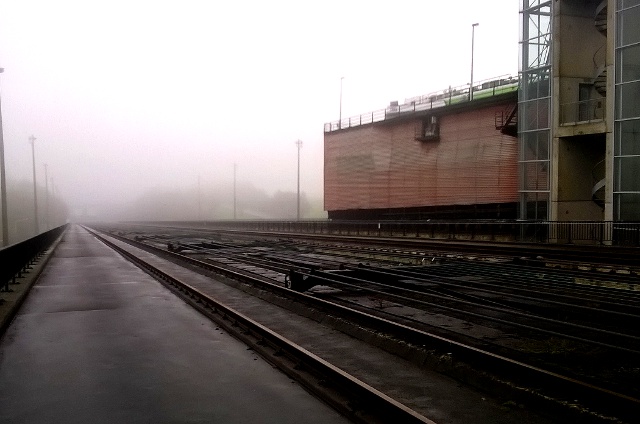
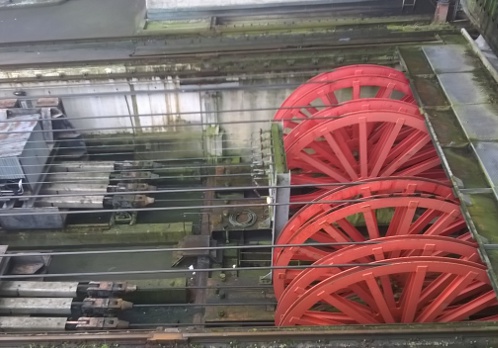
It was canal infrastructure on an enormous scale, made all the more impressive by realising the weight of water that was above me. I was having a close encounter with one impressive piece of engineering.
I was a little surprised to discover the cycle route ran right down by the works but I enjoyed the descent, it was amazing.

I now know that it is over 1400 metres long, which is why I could hardly see the end in the mist. However there was a shock at the bottom when I found it came to a complete dead end against a huge wall and some locked gates. Ooops, I had the dawning feeling I was not meant to be there and I had come into a part of the works that was really not for visitors. And now I had to climb back up the 1400 metres of steep incline, although it did give me a spectacular and imposing sight view of 5000 tonnes of boat and water creeping down from above me.
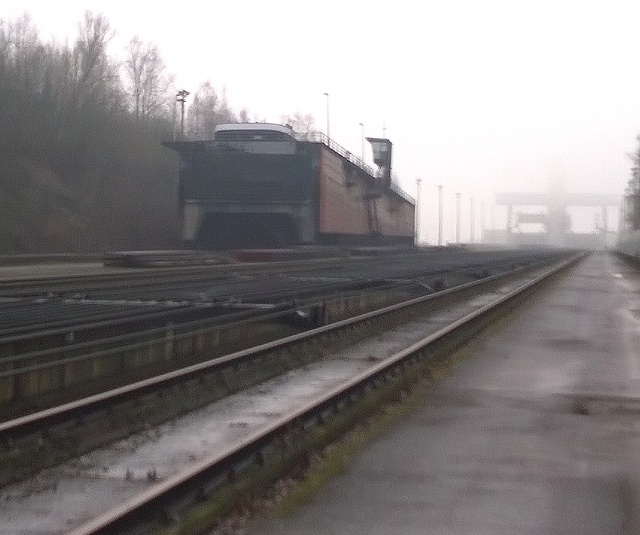
I puffed my way almost back to the top when I noticed a side gate where I was pleased to throw my bike over the top and get out on to a service road and back to ground level. From there I was able to ride round the sides of the embankment and reappear at the bottom and look back up to the top shrouded in mist once again, only this time from the right side of the fences. And in all that time I never saw a human being and I was never challenged by a security guard or anything. A remarkably laid arrangement that gave me a privileged access.

In the summer it is possible to ride a cruise boat up and down the lifts and to go into a panoramic tower that looks down over the spectacular works and the surrounding countryside but I rather enjoyed the way this monster came to me out of the winter mist. I may not have had a railway set as a child, but I am a bit of a sucker for spectacular engineering and by chance I had a very special view of Le plan incliné de Ronquières.
Now I know it is there I may well go back, but I very much doubt I will get anywhere near the workings. As well as my dull and misty photos the incline has its own supporters association with some spectacular photos and a fuller history, I shall read up on it properly before I go next time!

This gallery contains 14 photos.
I promised myself at least one long touring ride over the Christmas break and yesterday was “the day”. It didn’t start out with a blog post in mind, but it turned into an interesting taste of Belgium’s long distance cycling … Continue reading
Prompted by the arrival of Armistice Day in this 100th year since the start of World War 1 we visited the Flemish town of Ypres (Ieper), at the heart of commemoration of the war for many British and Commonwealth countries because of its position close to some of the bloodiest battles of that war.
This blog post has emerged in two parts. There is the tourist report of Ypres itself and one of the Commonwealth war cemeteries as part of my “Life in Belgium” series.
But this was a very moving experience and I was reflecting on why in particular this has such a different effect on us compared to other military history we see all over Europe, whether it be castles or ramparts or the Waterloo Battlefield close to where we live.
Ypres unveils itself slowly. Coming in to town it is a typical Flanders market town with its solid brick houses set into gently rolling West Flanders farm landscapes. It has the expected grand square with a gothic looking town hall and church spires.
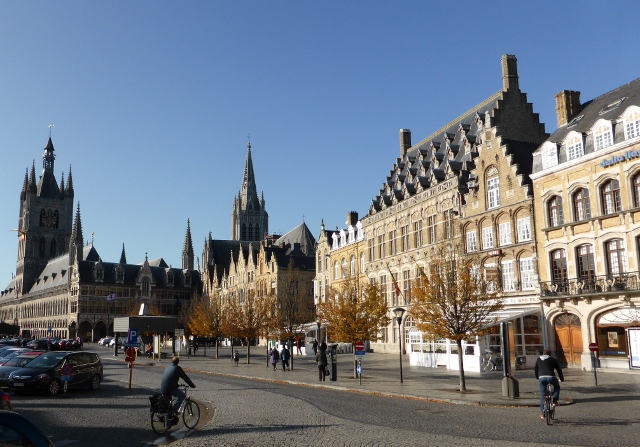

There were many groups over from the UK and other countries but the town was not too busy on a chilly November morning.
However a visit to the “In Flanders’ Fields” museum in the town hall brings the whole scene into a sudden sharp perspective. In the museum are the photographs of the town as it was in 1918 after it was the centre of no less than five major offensives of the First War. This left it ruined and deserted by civilians. Everything we could see on the streets around us has been reconstructed since then.

Winston Churchill, then Britain’s First Lord of the Admiralty, suggested at the end of the war that the whole town of Ypres should be left as a permanent memorial to the dead. But in a triumph of human resilience the residents of the town started moving back to their homes and farms the first winter after the end of the war and started rebuilding which meant that Winnie’s idea had to be scaled back to a memorial and the town’s major buildings were rebuilt to match their heritage.

There were great views from the bell tower of the town hall which showed the layout of the town’s old street pattern and way out across the Flemish countryside. Old juxtaposed with new in the form of windmills out in the industrial areas.

From this high vantage point there is also a clear view of the main centre of memorial for the city, the Menin Gate. The town had historic outer walls and the gate towards the Menin Road was where many troops left the town to travel to the front. So it was chosen as the site for the main memorial after the war. From a distance it is a relatively flat, plain structure built into the restored ramparts.

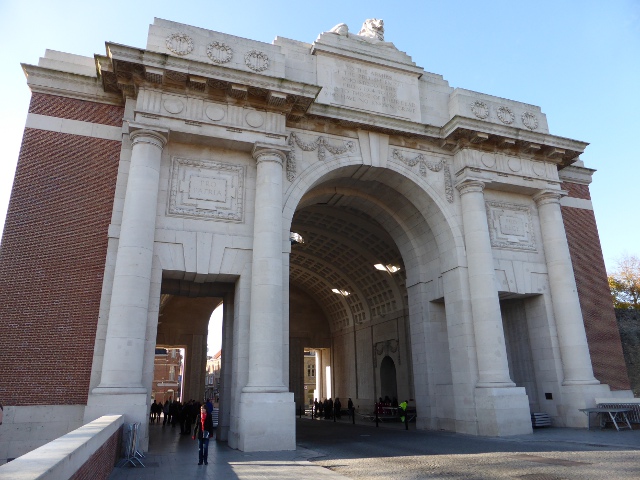
Only when passing under the arch into the main hall does the impact of the arch take shape.
On it are carved the names of nearly 55,000 men whose bodies were never found.

The impression of the main hall was impactful enough but then we realised the names carry on through side arches and up onto a second set of balconies that run around the outside of the arch. 
Then up on the ramparts there was a field of memorial poppies which had been left by visitors. Written on each was a personal message, many of them to lost relatives.

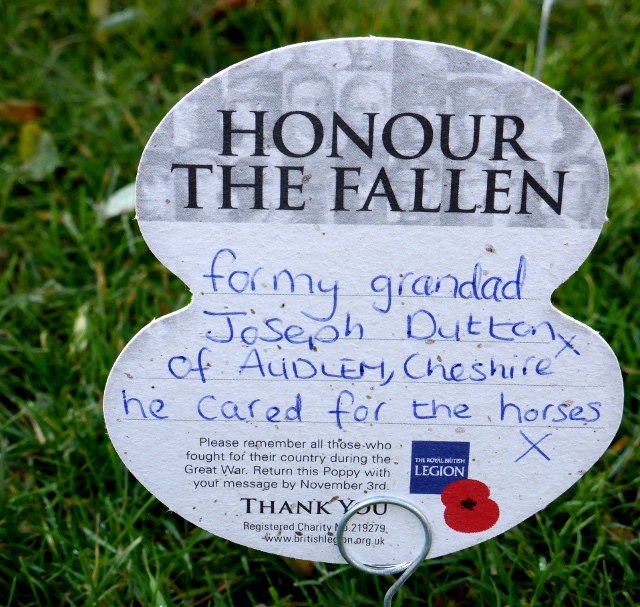
By the time we got to that point we were feeling overwhelmed and extremely subdued. For me I think it was the way the names were listed regiment and country. This means you can really see just how many men were missing from one area. For me it was the Norfolk and Suffolk regiments that I looked for but it could equally have been Surrey, Lancashire, Yorkshire, Australian states or Canadian provinces.
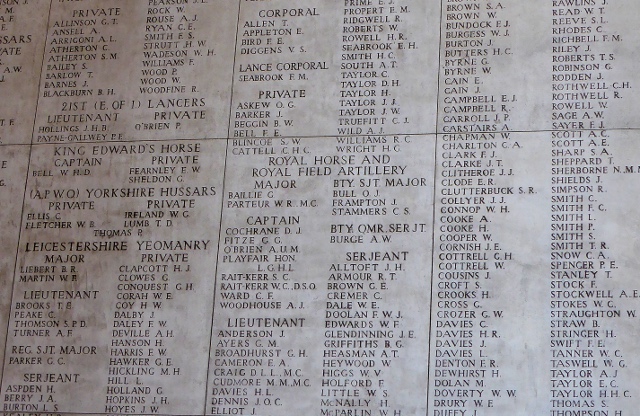
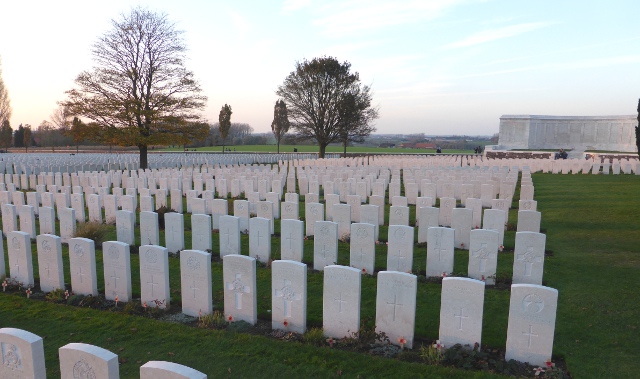
From Ypres we decided to head outside the town to visit the largest of the actual war graves in the area at Tyne Cot, a low hill about 10km from Ypres, close to one of the other most evocative names of the period – Passendale.

Tyne Cot is the largest Commonwealth war grave and is particularly significant for Australians and New Zealanders. The cemetery was originally created for a few hundred graves in an area captured by Australian and New Zealand troops in 1917. After Armistice in 1918 many other graves were consolidated there, with nearly 12,000 now on the site. Of these almost two thirds are unknown, identified only by their country and the words “Known unto God”.

As if that were not enough Tyne Cot is the memorial for the missing names that could not be incorporated in the Menin Gate memorial due to lack of space and because the New Zealand memorial is here. From the cutoff date of 15th August 2017 at Menin Gate to Armistice Day a further 34,000 men died without their bodies being found, an incredible number.

We were there in the late afternoon as the sun began to set over this most poignant of locations bringing a sharp highlight to the shapes of the graves. The spires of Ypres were just visible on the horizon.

We drifted home in quiet reflection. But in the following days I was still mulling over what we had seen. As I said at the start of the blog nobody with an interest in European history can miss the military history that surrounds us. Belgium is a really special case, the anniversaries of WW1 and the Battle of Waterloo made it one of Lonely Planet’s best in Travel 2014.
But within this setting the First World War memorials and commemorations just seem to be different. It seems that the huge loss of life in the fixed trenches with only small gains on either side somehow established the “the pointlessness of war” as a concept, especially as this war could be attributed by many to an imperial game rather than a war of liberty or values. The emergence of the War Poets and other writers who were not afraid to tell the story of the horrors tells us that values were changing.
And from these different attitudes to war came a different attitude to the dead, lost because of the failings of the leaders and the murderous nature of the new weapons of 20th Century warfare. In individual 19th century battles the numbers of dead were enormous – 65,000 killed in one day at Waterloo alone. But after WW1 we put up war memorials in every town naming the men who died individually and at Ypres there are no statues of generals, the memorials carry the names of every man, there is a grave for every un-named soldier. And like the war memorials at home they have a location through their regiments which in those days were locally based.
I didn’t have any relatives that I know of in the First World War dead, our histories haven’t turned up the family stories that we saw on the poppies in Ypres. So which entries at the Menin Gate left me blinking back tears?
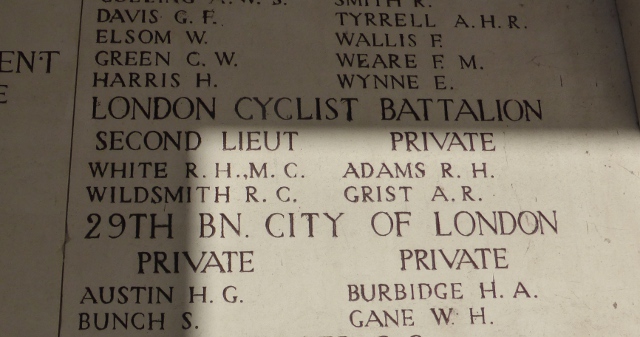

The Army Cyclist Corps, the London Cycling Battalion. Two of the smallest entries on the memorial. There were cycling regiments in various forms in most of the armies with the British having 14 regiments by the start of the war. They didn’t see much service at the front because they were valued as couriers and support troops, but clearly they were close enough for many to be killed and lost around Ypres. Belgian cycling troops were represented in the photographs in the Museum.
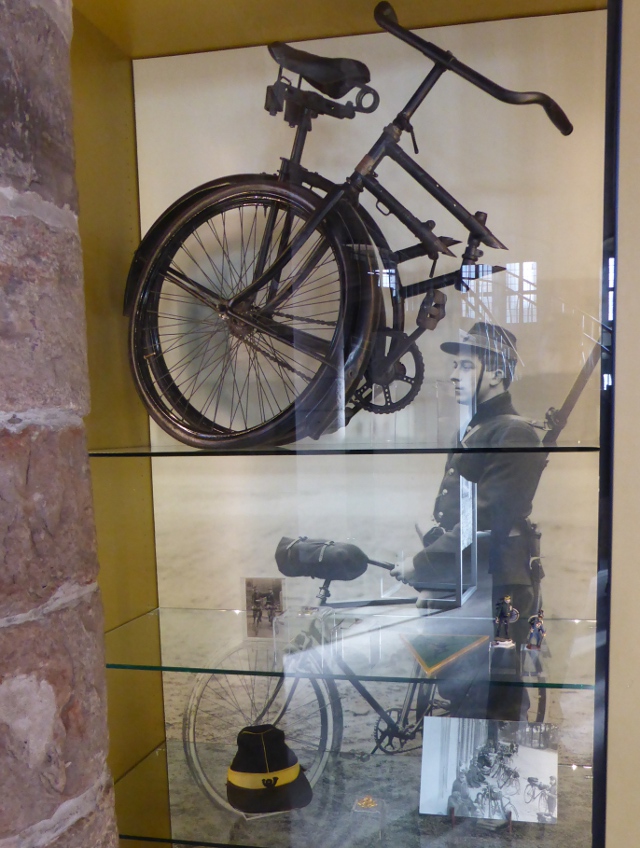

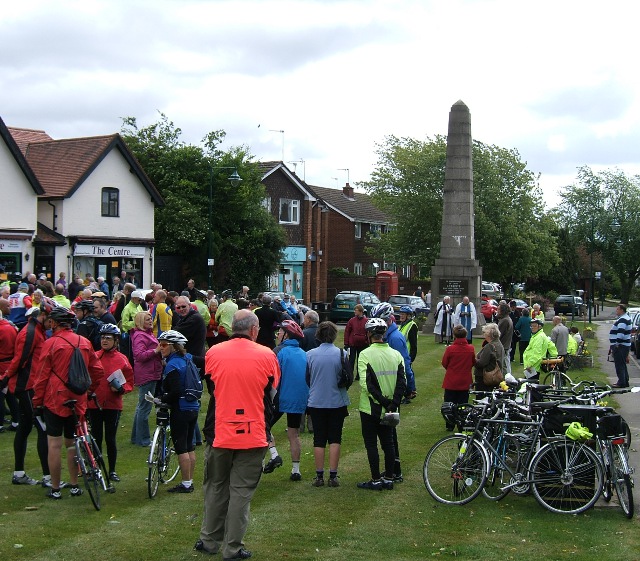
Of course it’s personal because they were identified as cyclists. But it goes deeper than that. I know the role that the Cyclists’ Touring Club played in recruitment of these soldiers throughout the war, encouraging active cyclists “to do their duty”. One of my private hobbies while I was CEO of CTC was to wander to our archives and seek out historical references in our 130 year old library of CTC magazines and I have read many of those articles that were actually written by my predecessors. Whenever I could I went to the annual service at the Cyclists’ War Memorial at Meriden, a very special place in the history of cyclists at war. When it was unveiled in 1921 over 20,000 cyclists came to the service.
But having been exposed to that history I just could not walk away from those memorials at Ypres without thinking “what would I have done?” As someone who recoils from modern warfare I feel deeply uncomfortable about militarism and wars as a symbol of nationalism. It is challenging enough to wonder whether I would have fought at that time in that culture. But to have played a role in sending people from our club into the war is unimaginable. It hit me with force that day in Ypres as I saw the names of those missing men and it still plays on my mind as I write this.
The battlefields and memorials of Flanders are an interesting and thought provoking visit. I am sure we will return, as will the questions.
For more on cyclists and CTC in WW1 there are some links here, here and here.
There is a very good podcast to download here

This gallery contains 25 photos.
It is hard to identify what the symbol of this bike ride should be. One of the many broken umbrellas littering the ground? The cars driving through flooded roads? Or just about any blurry photo with rain on the lens … Continue reading
At its heart this blog has a simple message. Seeing a cyclist is something to cheer, an uplifting feeling from HG Wells’ experiences of cycling in the 1890s right through to today.
So it was all a bit worrying in Malta this week when I took 89 hours from arrival to see a single sign of cycling life, other than our visiting group. My colleagues said they saw one cyclist on the second day, but I missed him or her and from that point onwards the search became a bit like a birdwatcher seeking an elusive rare species. I almost cheered when I saw my first rider on day four, he must have wondered why this passing rider had such a silly grin on his face as he passed. This is indeed the only cycling post on Idonotdespair so far where I don’t have a single picture of a local cyclist, except our host Roberta on our group ride.
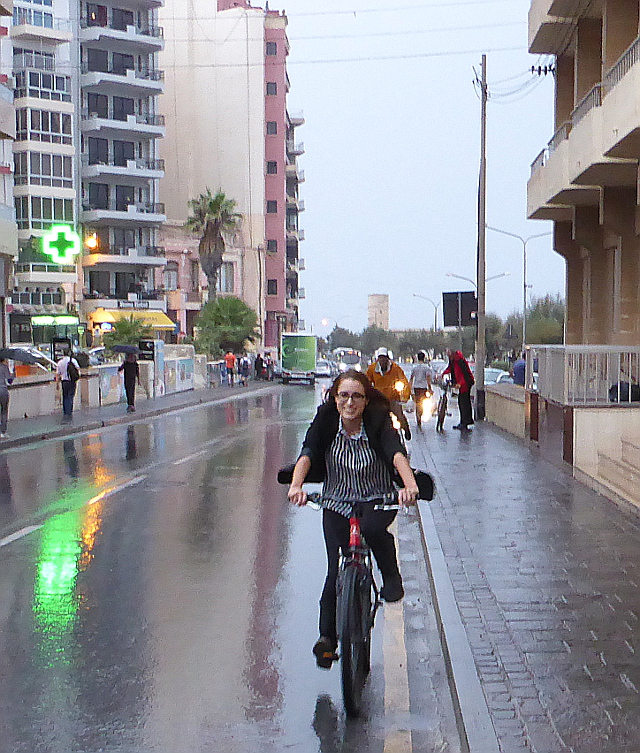
I was in Malta for a workshop as part of an international project to boost cycle commuting which has a Maltese partner as part of a 12 nation consortium. While we were discussing the high potential for further growth by learning from countries like Denmark and the Netherlands we were all sensitive to the huge challenge face by our Maltese friends to get cycling going here, especially at our press conference on the final day.

All week the local paper was full of stories about congestion on the roads and that is hardly surprising given that Malta has the second highest level of regular car use in the EU, one of the lowest levels of public transport use and very definitely the lowest level of cycling, by a large margin. When it comes to cycling it is congested, hilly, hot and has inherited many of its attitudes to cycling from that well known cycling laggard and former colonial power, Britain. I understand that it was probably the Brits who advised the Maltese on their transport policies in more recent years, not a recommendation from cycling point of view.

In fact we seem to have left such a great legacy that our other Mediterranean colony Cyprus joins Malta at the bottom of the cycling league tables. Not a good trend is it. British heritage = rubbish at developing daily cycling, British transport heritage and driving on the left, even worse, a special club combining the UK, Australia, Malta and Cyprus.
But knowing that we just did what we always do. We went for one of our multi-national bike rides to explore the reality on the ground, 20 foreigners forming a sort of critical mass in the late afternoon gloom. Then the following day I went for a solo ride despite a very stormy afternoon. So as usual I give you the I Do Not Despair snapshot of another country, with perhaps a bit less “adult on a bicycle” than the normal observations. The photography was even more challenging in the half light, wind and rain so apologies for the blurry edges.
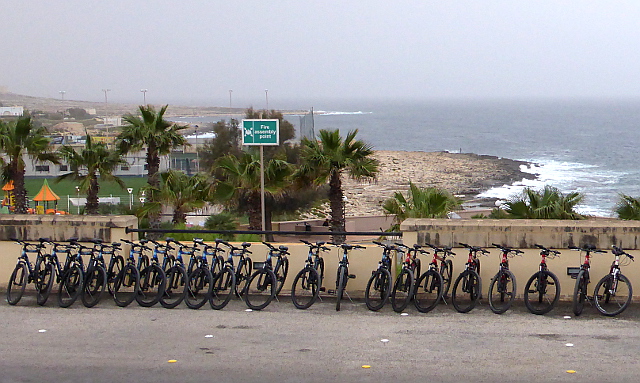
Our group ride left our hotel at St George’s Bay to ride around the coast and inlets of St Julian’s Bay and Sliema, cutting across the steep headlands on the return. Only a few kilometres as the night closed in but a real taste of some of the challenges of Maltese roads. And doing it as a group we had a safety in numbers effect and lots of visibility. Lots of smiles


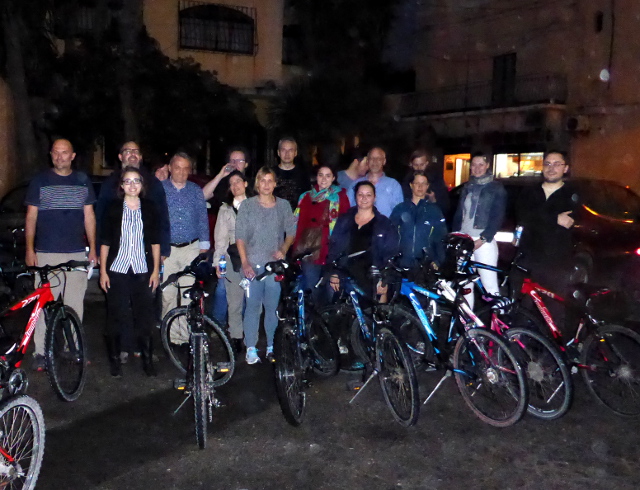
There were some attractive vistas across the bays, especially the capital Valetta which was tantalisingly close across the harbour.


Riding on my own to Valetta a day later I was less confident and spent a bit of time hiding on pavements and promenades which seemed more sensible, but the conditions that night were a bit extreme. (Post to follow)
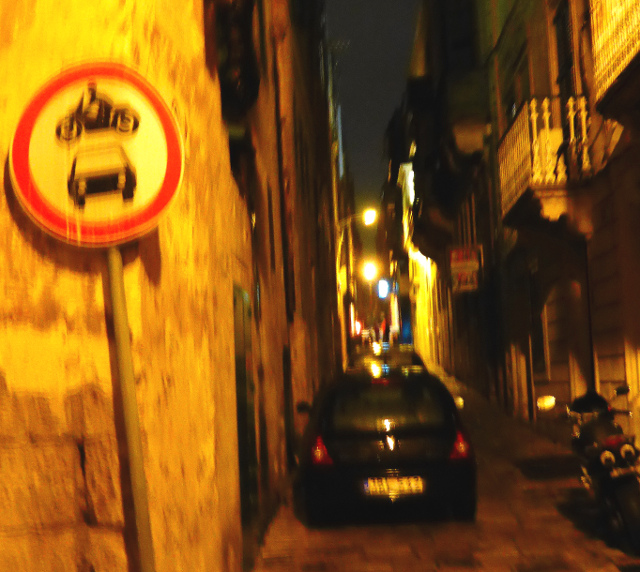
What was it that led to this reticence? Yes there were no cycle paths and the roads were a bit hilly and narrow, but that is not exactly unusual in many of the places I ride, not least Brussels. No the main problem here was the cluelessness of the drivers. I wouldn’t call them super aggressive, it’s just that they had absolutely no idea how to drive around cyclists because clearly they hardly see any. In fact they weren’t particularly dangerous on the busy city and coast roads because their congestion and the narrow side streets acted as excellent traffic calming.
We got honked at a few times when we were actually doing nothing particularly obstructive or when it was absolutely clear that the street was only just about wide enough for a cyclist so there was no way a car would come past even if we pulled over to the side. When there was a gap the drivers didn’t hang back, they tended to pull up beside us which was disconcerting for our less experienced riders and pushed everyone in to the edge.
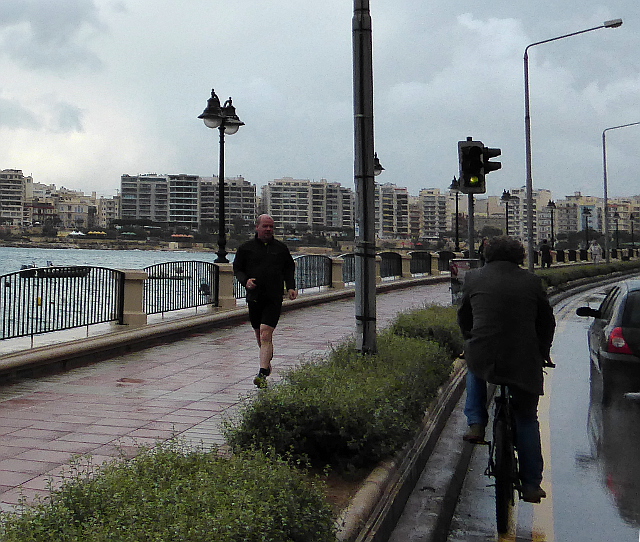
I tried to hang at the back of the group on the bigger roads a few times and take my preferred “primary position”, hanging out into the carriageway to try and deter their encroachment into the group but without much luck.

On my own in the dark and the wet I wasn’t trying the primary position but there was further evidence that motorists hadn’t much experience of cycling or walking when the roads got really wet. The dreaded bow wave, a wall of water sometimes over metre high when the cars accelerated into the puddles instead of recognising that there were people outside the car as well!
I don’t think the roads were so much worse or unforgiving than many other towns and cities with higher cycling levels. But as well as no cycle lanes there was very little other help from the authorities. For example the older areas were a wonderful maze of narrow streets, especially in the capital city Valetta. To cope with cars they have mostly been made into one way streets but that makes navigation around the city somewhat complicated. A simple adoption of universal contraflow cycling across the cities would open up huge networks of streets instantly.

And some parking restraint wouldn’t go amiss either, that could open up a hell of a lot of space and start changing an attitude that the car is king.
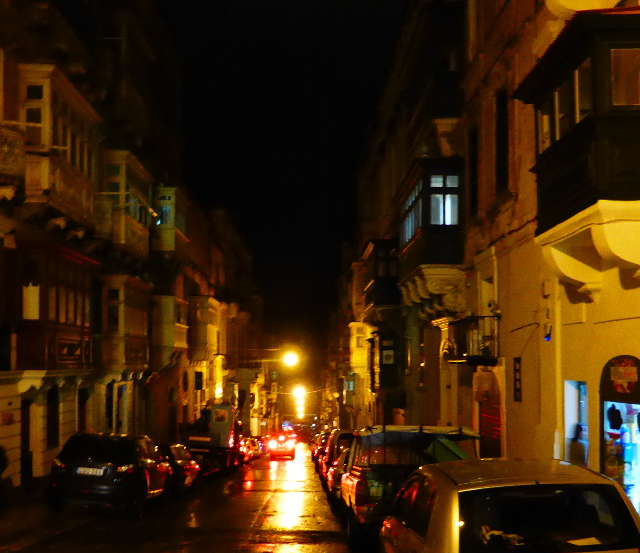
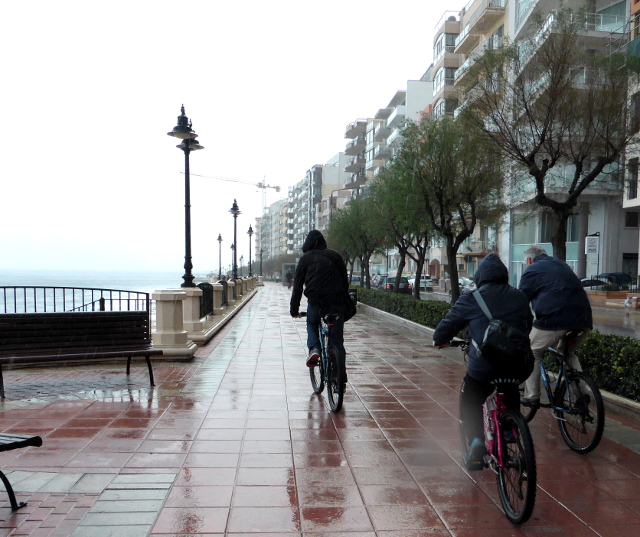
Off season the wide promenades are also perfectly good shared use spaces too, we were advised to use them by our bike tour operator and that was definitely a good call. Great views too.
There are undoubtedly some seeds of change and as usual we met some really committed people who want cycling on the island to succeed. Above all the congestion is reaching a point where the citizens and public authorities know something has to happen. And we know from other countries that part of the human rebellion that set cycling going was a reaction to congestion, when cycling is so much quicker and easier than other transport. A chap from the ministry of transport that I met at our press conference also suggested that e-bikes could be part of the solution, probably not a bad move in a hot hilly country. (Our rainy days were far from usual.)
I also heard that local cycling events can get up to 5,000 participants which is great, the cyclists must be out there somewhere and there are groups of cyclists coming here on tour which must raise its status. But it is going to be a long haul, there has to be a critical mass of cyclists that emerges in at least one town or city somewhere on the island to give it some profile and start educating the local drivers. And despite everyone at our press conference agreeing that it wouldn’t be easy they all then went off into little groups discussing great ideas and places where perhaps it would be possible to get people cycling to work.
My thanks to our hosts who made it an excellent trip and a special thanks to Denis Debono from Bybike who provided possibly the friendliest bike hire service I have come across. He provided the bikes, guide and running commentary on Thursday, then he dashed halfway across the island to bring us bikes on Friday afternoon’s ride and made himself available for a call when the storm caused most of the group to give up our ride to Valetta. Highly recommended and a good reason to cycling in Malta.
 I Do Not Despair