“So long, and thanks for all the fish”*

While I have been on holiday for the last couple of weeks I have been trying to summarise my thoughts about leaving CTC, and asking myself if it is fair to them (and me) to comment while looking back.

But then tonight I read a quote from Eddie Merckx in William Fotheringham’s new book “Half man, half bike” Half man, half bike book cover

 “When something is your passion and you can make it into your profession that is the most beautiful thing anyone can have”

So not only was he the greatest cyclist we have ever seen, this man of Belgium produced a quote that sums up far better than my mumblings what I tried to say to the Council, staff and members of CTC in various forums as I left.

When I was a kid I had Eddie Merckx posters on my wall alongside the 1970s stars of Ipswich Town FC, he was a godlike figure. And while it was quickly clear that this spindly asthmatic kid was never going to be a top bike racer I could dream a bit. And in 1998 CTC gave me that chance to be a professional cyclist in my own way, to have what Merckx calls the “most beautiful thing.”

So thank you to the Council members who took my breath away in 1997 when Tom Lamb phoned to offer me the job, and to everyone I worked with over the last 14 years. To my amazing staff team, I meant what I said at my leaving gig, never for one moment did I doubt that every one of you places the interest of cycling at the heart of what you do. Of all the bits of management training I have had over the years the bits on motivation theory were totally wasted on you all, it was stopping some of you working too hard that was a bigger problem.

And to the members and volunteers I mean what I said in the CTC magazine, it is your enthusiasm that makes all this possible.

Thanks. I look forward to working with you and for you in other ways, but few of us ever get to say that they truly got to do their dream job. Spot on Eddie.

*Douglas Adams “Hitchhikers Guide to the Galaxy” 1978 and subsequent books, films and plays. Another godlike genius.

So long, and thanks for the bike – see below

Multinational Cycle Tour from Vienna – Danube Cycleway and Franz Schubert Cycleway

Göttweig Abbey (Stift Göttweig) TerraceSitting on a sun soaked terrace overlooking the Danube Valley. Careful not to drink too much wine before a flying descent! The high spot of a two day, 18 person, multinational cycle tour to follow the ECF AGM . What a great mix – Bulgaria, Poland, Russia, Ireland, Spain, Cyprus, Netherlands, Austria, Portugal, USA, UK and Germany, all brought together by cycle advocacy.

Also see my gallery of houses and gardens from the ride here

Day 1. Vienna to Tulln an der Donau on the Danube Cycleway. 45km.

Leaving Vienna on the city cycle network and then joining the side of the Danube Canal until it joins the main river about 7km out of the city.
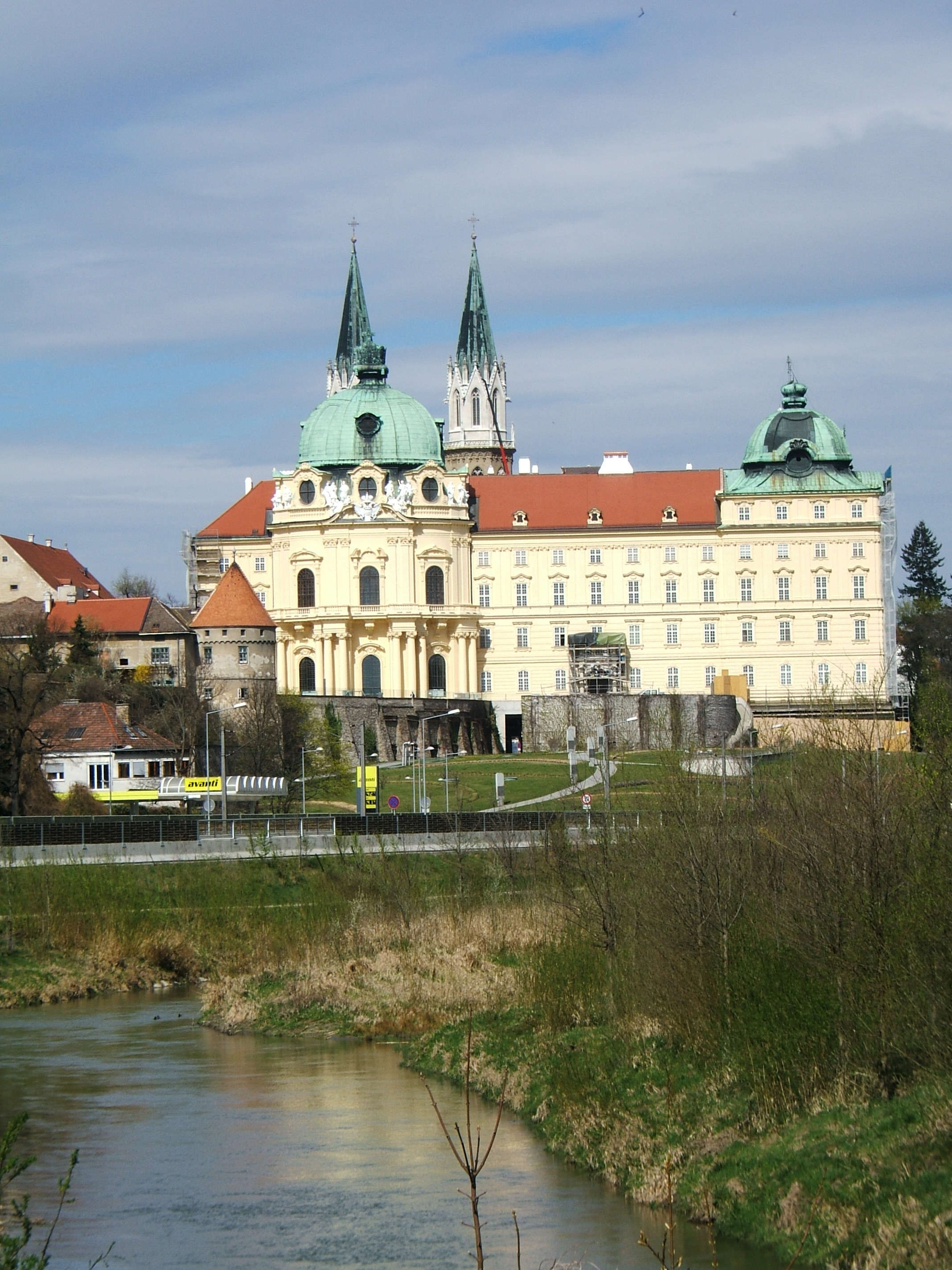
Klosterneuberg

Klosterneuberg

Then a mixture of paths by the river and minor roads until suddenly we turn a nondescript corner and the striking Klosterneuburg appears in front of us. A leisurely lunch in the café and a wander through the artworks in the gallery.

Back onto the minor roads and a wind through the summer houses which appear all the way along the river. These range from wooden shacks to large houses but almost all are in great condition and show a real affection by the owners for these properties.
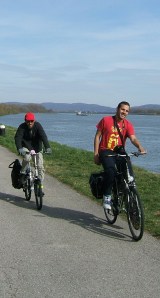
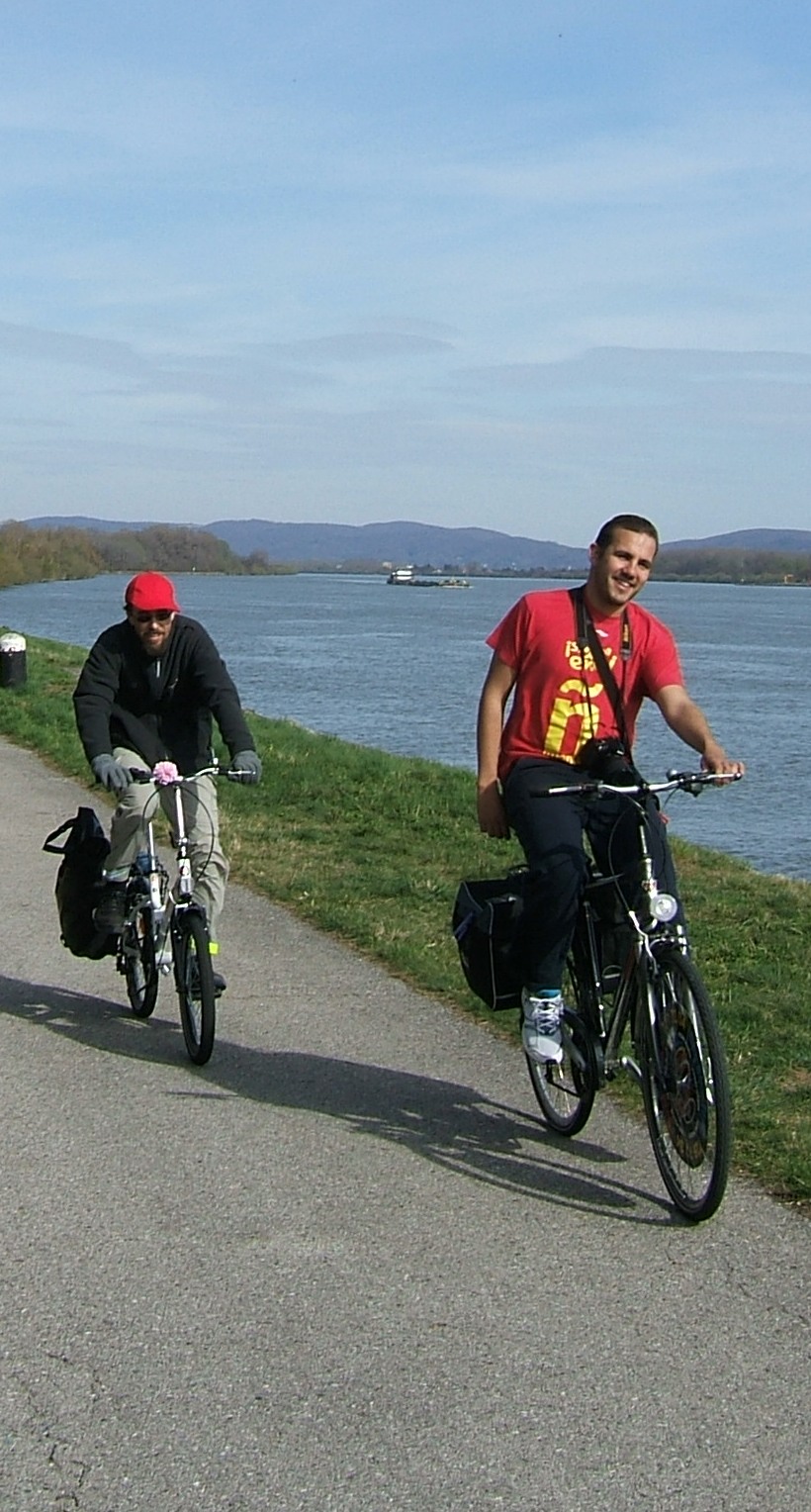
Danube Radweg

Danube Radweg

Then emerging onto the banks of the river again for a push on to Tulln. This was actually quite hard for the members of our group who are not regular tourists. A bit tired and we had moved to the north bank which exposes us to the full breeze from the east.It just proved the point that wind is a far greater enemy of the cyclist than hills.This stretch of the river was actually a bit of a disappointment, it really does look like an enormous canal but it is a really easy ride. It is also clearly popular with local riders who seem to really enjoy heading out down one side of the river and returning on the other.

It was also good social cycling territory for us because we could ride socially after being hassled by drivers a number of times.

However the light was stunning and it brought out smiles on all the faces, especially as we swung over the last bridge to Tulln.

Tulln an der Donau Marcus Aurelius

Tulln an der Donau Marcus Aurelius

Boldly looking out over the river is Marcus Aurelius – provincial governor who protected the Danube frontier against the Barbarians before later becoming Roman Emperor.

Day 2. Tulln to Krems. Mostly the Franz Schubert cycleway – 55km

Named after the area where trendy citizens of Vienna would come for summer break in the early 19th century including the fashionable young Schubert.

Particularly famous for its wines, the Lower Austrian wine route celebrates hundreds of years of winemaking on the fertile flood plains that border the Danube.
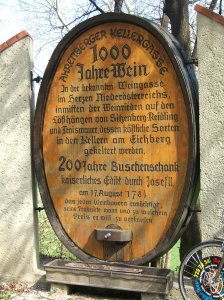
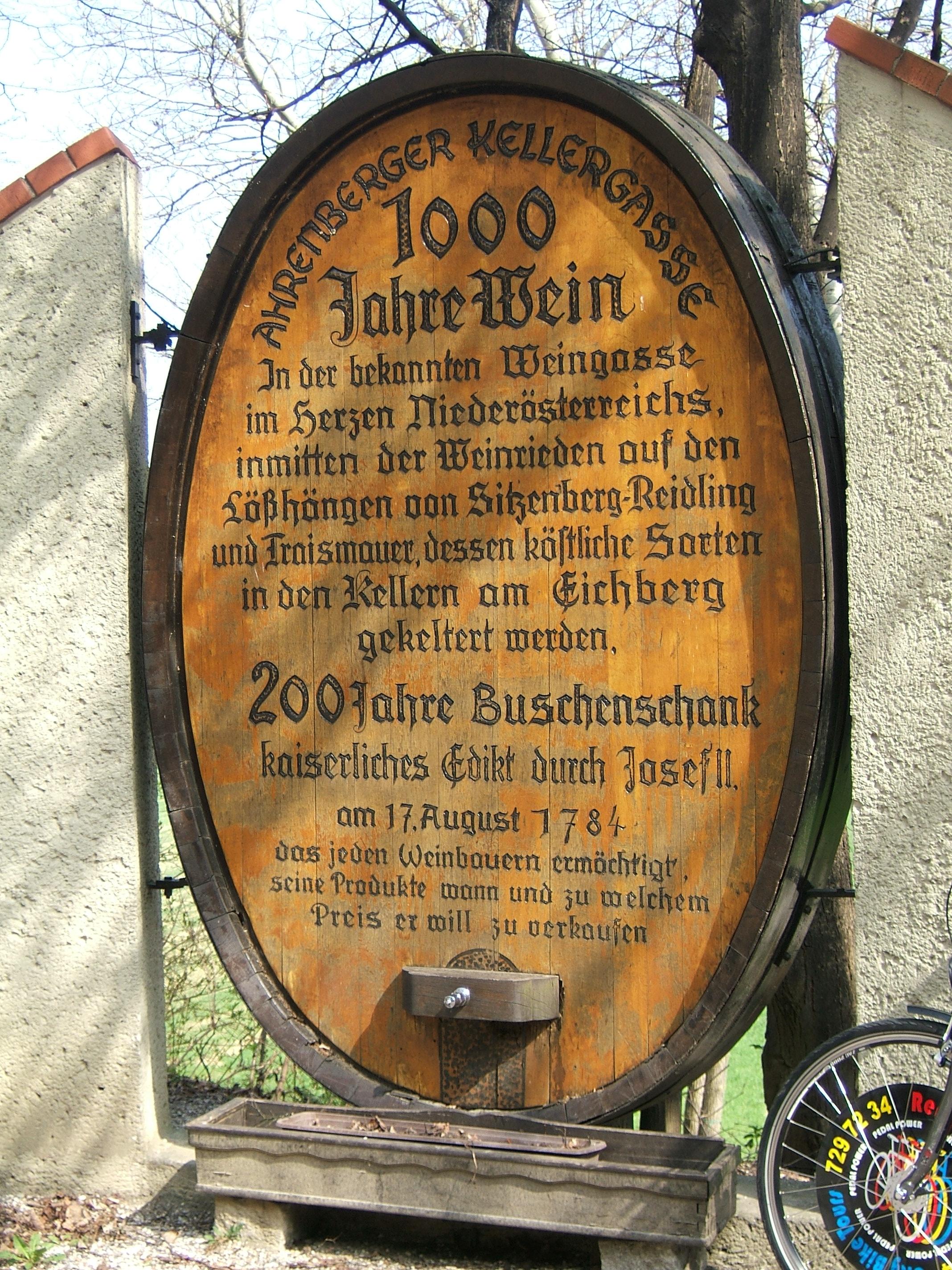
Celebrating 700 years of winemaking

Celebrating 700 years of winemaking

This route started pancake flat, sticking to the floodplane of the Danube despite swinging south of the river for a more scenic route. It was lovely.  Spring was everywhere and the stunning light brought out the colours in the architecture, the gardens and the villages.Blot on the landscape was the big ugly scar of the new high speed rail line connecting Vienna to Germany. Time for a few photos to send off to the anti-HST campaigners in the Chilterns.

But the stars of the first part of the ride were the little wine shops set into the bluffs at the edge of the floodplain. These have existed for hundreds of years, behind each house is a deep cellar running into the hillside. For two hundred years they have had a unique licence granted by the Hapsburg dukes. This allows each vintner to open for just six weeks a year and sell an agreed amount of wine. By arrangement the farmers have set up a roster which means that they don’t all take the same weeks.
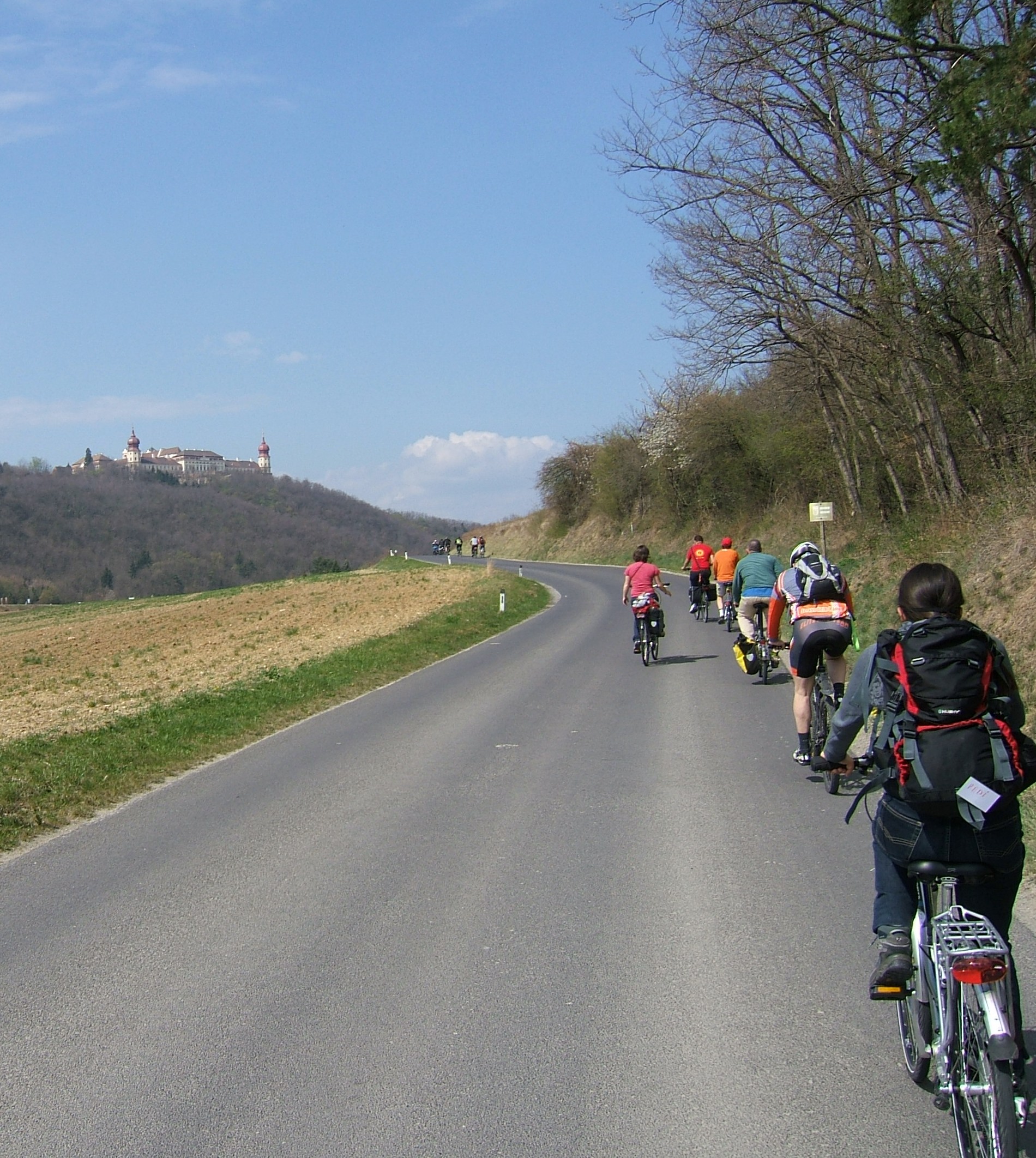
Schubert Radweg gets hilly

Schubert Radweg gets hilly

After we end the wine route we cross a tributary of the Danube at Traismaur and set ourselves up for the final 20km which are very different – two substantial climbs, the only ones of the ride. But it’s well worth it for me because we get up to some stunning views over the Danube. Our group of commuter cyclists and campaigners did rather find it hard going, lots of walking for this last leg. But hats off to Yurgos from Cyprus – rode everything on his Brompton with great style.
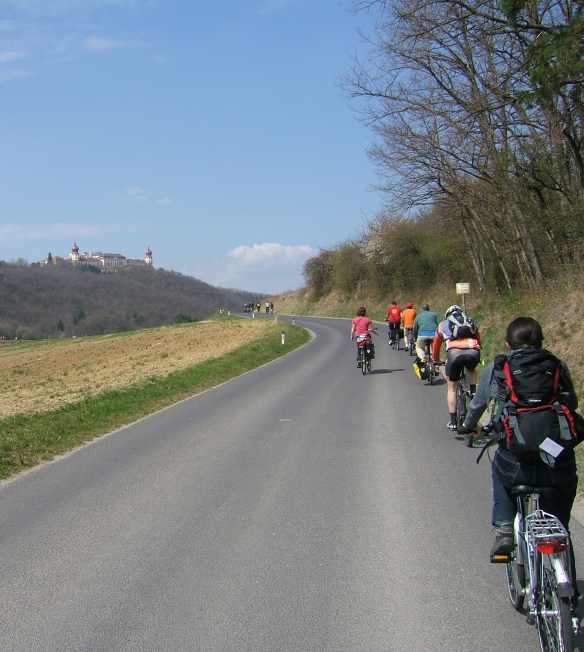
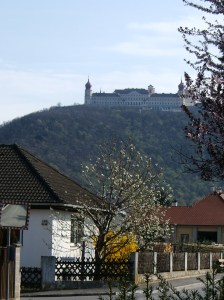
Approaching Gottweig Abbey from below

We have to climg that?!

We are headed for Göttweig Abbey (Stift Göttweig) which is a Benedictine monastery set in a most amazing position on a hill above the town of Krems. The monastery was the dominant economic force in the region for hundreds of years owning the land, the farms and of course all the rights to the surrounding vineyards.

Now that produce can be celebrated in the restaurant which must have one of the best views in Austria, especially on a spring day. Having a hard hot ride to the top justified a couple of courses and a half bottle of the fruity white from the surrounding hills.
Gottweig Abbey descent

Gottweig Abbey descent

White knuckle descent but well worth it. Thanks to Wilhelm of Elite Tours for the entertaining leadership and efficient organisation.

Hands up everyone who thinks Vienna’s public rental bikes are rubbish?

So who thinks the city bikes are rubbish?

Is it still acceptable for a major city to have a public bike sharing scheme with rubbish bikes?

Do not despair’s message is that there is nothing that cannot be made better by a bike ride and that any bike is better than no bike. But come on folks, you want to be a world leading cycling city with these?Vienna City Bikes

To be fair the current pro-cycling administration in Vienna inherited the current fleet. But if they really want to make a good impression at the Velo-City conference in 2013 then this should be an easy victory.

The booking and hiring system works well enough, all hired by credit card. But the bikes them selves are really poor. In particular 80% of the fleet has no gears and is set to a stupidly high single gear ratio which leaves even a stronger rider labouring and novices wobbling away from stops. Hardly something to make the casual rider think cycling is easy and comfortable.

Add solid tyres, tired and rattling equipment and regular breakdowns – could do better.

I’m quite looking forward to one of London’s fat monsters, they may be heavy and slow but they are comfortable and reliable.

Houses, gardens and architecture of the Danube valley – Lower Austria

Gallery

This gallery contains 12 photos.

Spring sunshine, sharp sunlight. The colours of the buildings, houses and gardens are brought into sharp focus while cycling along the Danube Cycleway and the Franz Schubert Cycleway between Vienna and Krems. I especially like the old wine houses and … Continue reading

Vienna – centre of cycling cultures

An important focus for our hosts in Vienna was cycling cultures. This meant several things:

  • The heritage of Vienna as a cultural capital
  • A growing bike culture and counter culture in the city
  • A relatively newly elected city administration that is determined to build a cycling culture by all means possible
  • A parallel workshop at the ECF AGM for young volunteers from new cycling organisations – the VOCA programme

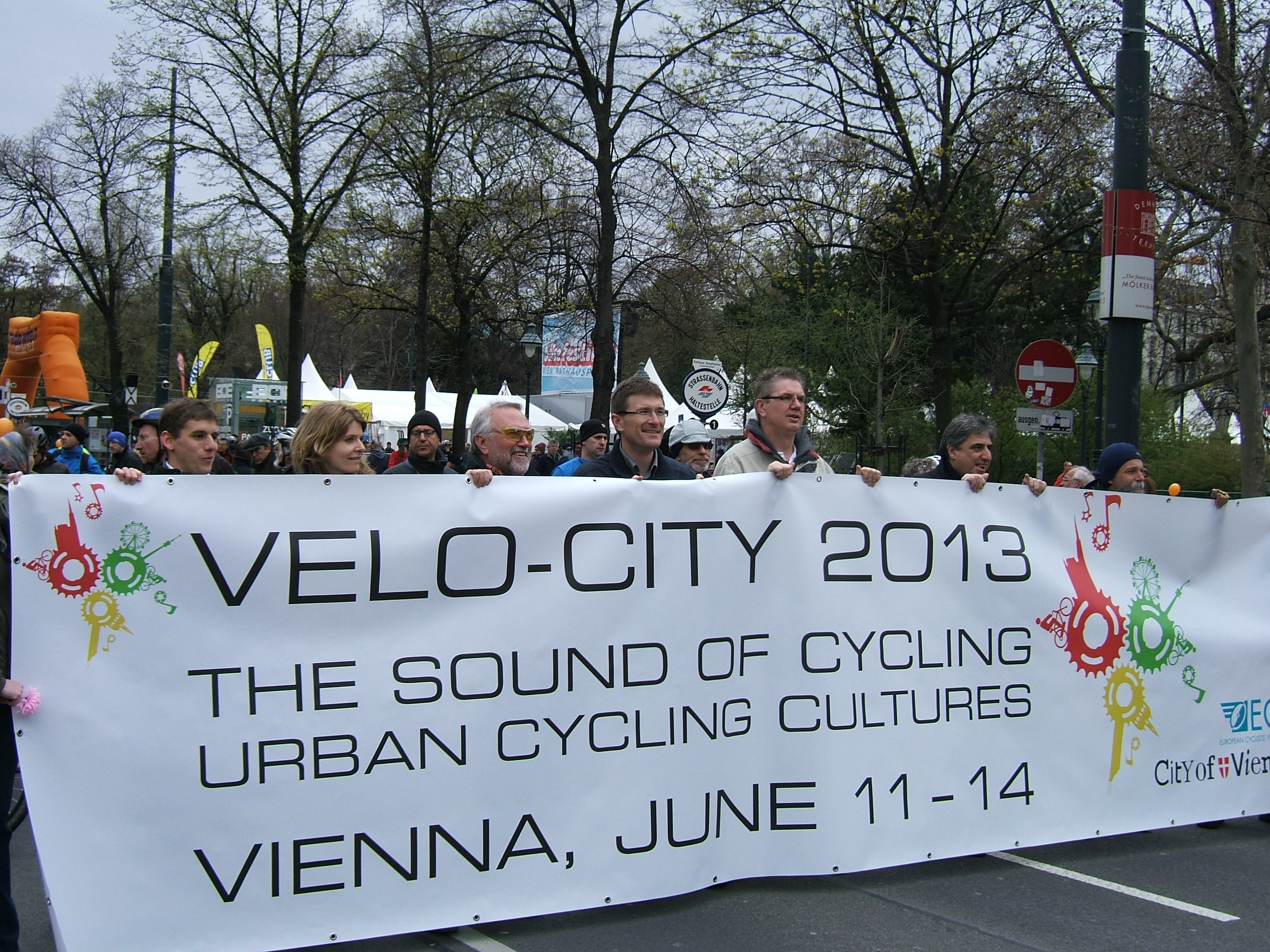
This element is so strong they decided to make it the theme of next year’s Velo-City conference and announced it while we were there.Velo-City 2013 theme

As a self confessed old git cyclist I have to say the best of this was being exposed to the new advocates group on the VOCA programme and counter cultures tour led by Alec Hager of campaigning group Radlobby IG Fahrrad and Gudrun of the Bike Kitchen.

Ending up in the Bike Kitchen late afternoon enjoying some food and a beer and hearing the enthusiasm of everyone involved was just refreshing. I felt a bit sorry for friend Doretta who thought she had signed up for a culture tour and ended up with a tour of workshops and bike shops, but I was really at home. And a big shout out for their inclusive, supportive, collective values – not much of that survives in a material society.

I wonder whether there is a point when the counter culture becomes the new orthodoxy because none of the elements on the tour were at all unique to Vienna, but I guess you can’t really describe a city as having a vibrant cycling culture without them so Vienna is making important strides.

My thanks to all the places that hosted our visits, here are a few photos of variable quality – and special thanks to Bikelager for outstanding coffee served amongst a gallery of classic bikes laid out like an art show. And of course the scene stealers were the fabulously painted Colnagos on the scalloped frames. At the time we just knew they would become classics.

Bikelager Wien

Bikelager Wien - coolest bike shop in town

Vienna Fixie - great paint job

Vienna Fixie - great paint job

Cargo fixie at Fix Dich

Cargo fixie at Fix Dich

Heavy Lifting Cargo Bikes

Heavy Lifting Cargo Bikes

Vienna bike workshop - build your own

Vienna bike workshop - build your own

Colnago frame feature

Colnago frames feature

Rant time – Austrian drivers

My big wake up call. I have never seen cars and buses routinely used for deliberate intimidation on the scale of my last four days in Austria.

I have cycled all over the world. Most of the time driver behaviour doesn’t worry me too much. I get annoyed by rank stupidity, unnecessary speed, impatience and incompetence, but so do drivers and walkers. Abuse comes, but the threat is minimal and not physical.

Four days ago in Vienna was the first time I saw a car driver partially overtake a group and then steer into the side of the group to force us out of the lane. I thought it was a mixture of incompetence and impatience, someone unable to realise that the group was 50 metres long.

But then several times more over the next three days, including hand gestures to make the intention quite clear. A city bus – like the hated bendy buses of London, but this driver deliberately trapped five riders against the kerb by pulling across us.

While most drivers waited politely to let our groups turn to the left across the traffic flow together yesterday there was a guy who sped towards the group to scatter it out of his way.

I wish I had the presence of mind to take photos or get the bus number, at least in Vienna. I think there would have been some local government embarrassment about intimidation of a visiting cyclists’ group, but the drivers clearly had no such fears.

Maybe I’m naïve – riding companion Vladimir from Moscow said he was not at all surprised by the drivers, but he felt safer in Russia because most roads had shoulders which the cyclists use and he did feel uncomfortable in a group out on the carriageway on rural roads. But I guess I expected Austria to be more benign, at least like Germany.

Most Austrian cyclists I met were positive about the direction of cycling in the country, and especially the potential for tourism with the stunning scenery and iconic routes like the Danube cycle route. Clearly their drivers have a lot of catching up to do and it would be a shame if this put visitors off.

Rant over – later I’ll follow up with some more positive Austrian stories.

Pass or fail the cold weather test?

I was going to put down some of my thoughts about cycling in the cold weather that hit Europe last week, especially after experiencing Germany at -15C and Brussels-9C.

However I have to take my hat off to this great film put together by David Hembrow which steals the show. It passes every test you can set for a cycling clip “Do I want to be there?” “Do I want to try that?” Oh yes, on every count. If you do you can look at his holidays and study trips here

The man I defer to on all things cold weather is Morten Kerr, President of SLF (Syklistenes Landsforening) the cyclists’

Morten Kerr demonstrates winter cycling in Norway

Morten Kerr demonstrates winter cycling in Norway

organisation of Norway. He seems to ride his 15km to work whatever the weather, studded tyres and all. Although having spent time in North America he apparently rates Canadian gear as the best, especially his amazing gloves.

I was impressed on my visit to Memmingen in the Lower Allgau region of Germany last week. Memmingen is a few hundred metres above sea level so the combination with the cold weather system across the whole of Europe dropped the temperature at the station to -15C, as far as I know the lowest temperature I have ever experienced. And just like the cycle lanes in the Netherlands shown in

Memmingen Cycle Route, still clear at -15C

Memmingen Cycle Route, still clear at -15C

David’s film the cycle routes here were completely clear. I don’t think it was particularly about the cycling, the pavements, roads and station platforms were all immaculately clear. I’m not sure what they use, it doesn’t seem to have the properties of the salt and grit we have on our streets in the UK, but that may be because the temperatures were too low for the wet salty coating that we always get which covers your bike in a corrosive film. What it did mean was that all the cyclists were flying around full tilt without any apparent concern for a hidden ice patch.

I failed the cold weather test miserably. I don’t really cycle on icy roads in

Bike covered in snow in Memmingen

Not everyone in Memmingen got away from the snow!

the UK if I can help it, I love cycling in snow on a mountain bike if I can. My stepfather had a badly broken hip after he went out once too often in February, I really could do without it.

I had planned to spend an evening cycling around Brussels to check out a couple of communes as possible places to live. I’d prepared double gloves, socks, hat etc but I failed miserably after 40 minutes when it was my hands that couldn’t take any more and I shot back to the hotel for dinner.

However after the clothing failure I was put firmly in my place when I dared roll out the Danish expression “No such thing as bad weather, only bad clothing” which has become such a feature of every presentation on cycling in Denmark. “I hate that expression” said my Danish colleague to the amazement of our lunch group. “I’m Danish, and I like to be warm”.

The following day I was keeping a careful eye out the window around lunchtime when the snow started to fall. By the time I set off for the Eurostar there was a slushy mess on the streets of Brussels. I’d like to say I shot off confidently taking cobbles, traffic and pavement cyclepaths in my stride. What I actually did was fold the bike and walk to the Metro. I am sure I have let the side down somehow, but something tells me that I was not going to enjoy the small wheel experience in those conditions.

So hats off to the cold weather cyclists, a pair of proper Nordic gloves needed for me to join you next year.

In praise of cycling in Suffolk

This post celebrates my cycling roots. It was triggered by a request by Dennis Kell, editor of Winged Wheel, the magazine of CTC Suffolk, for 200-300 words to mark the 250th edition of the magazine.

CTC Suffolk- Winged Wheel magazine is 250!

Hi Kevin,

Congratulations on your new position. All in CTC Suffolk wish you well.

Our local group magazine has just reached its 250th  edition (First Published in 1947 and still going strong.) I’m sure you must have seen it in the past and I can send you an anniversary edition if you let me know an address.

As a Suffolk boy, we wondered if you might be able to give a couple of lines to this special edition before you set off for pastures new. Any personal memories of the magazine, the Birthday Rides or cycling in Suffolk generally would be fantastic. I’ve managed to get hold of several former editors going back to 1959 who have added a few comments and we shall have a couple of articles from edition 1.

Sorry for the late notice, but we are hoping to go off to the printers in the middle of February to ensure it gets out on time. 

If you are able to send us something, it will be really appreciated.

Once again, good luck with the new position.

 Best wishes,

Dennis Kell Editor

Suffolk is the eastern most county of England. It’s the low lying bulge in the coastline that sticks out into the North Sea, facing the Netherlands. It shares something of a heritage with our neighbours, our mediaeval economy was built on shipping wool to Flemish weavers and it was Dutch engineers that introduced many of the water management systems that helped control the ingress of the sea and drain the fields around the Norfolk boards to our north. Nothing like the extent of the drainage in the Netherlands itself or the Fen Country in Cambridgeshire, but the influences were enough for some of our architecture to feature Dutch gable ends.

The other thing we share with the neighbours is that Suffolk and Norfolk kept a higher residual level of cycling than most other parts of the UK. Still nothing like real European levels, but still one of the few rural parts of the country where it is not unusual to see an elderly lady on a bicycle cycling in to the town to collect her shopping. My late grandmother used to cycle 15 miles each way to her nursing shift so the culture was well established.

Lots of factors come together to make it possible, not least the relatively flat terrain and low rainfall. But the main factor must surely be the amazing collection of minor roads and the relatively low volumes of traffic in the towns which mean fewer people driven off the roads as cars and speeds got faster. It also seems to tap a residual demand, Kesgrave School in Ipswich, our country town was one of Sustrans early successes with their Safe Routes to Schools programme.

I grew up a Suffolk cyclist because my father was (and is) a keen club cyclist and racer who brought the whole family up inside his club, the Godric Cycling Club. We rode everywhere of course – to school, out with our mates, doing the paper round, but it was the Godric that provided my cycling culture.

When I became CTC Director in 1998 one of my very first speaking invitations was to speak at the CTC Suffolk and Wolsey Road Club Annual Dinner. They treated me a real surprise, digging out a cyclo-cross race programme from Holywells Park in Ipswich with my name on it, probably aged about 13.

In summer 2011 I returned to ride with Suffolk CTC again because they organized the CTC’s annual festival of cycle touring “The Birthday Rides”. (So named because they celebrate the anniversary of CTC’s founding at a similar rally in 1878). We had a brilliant week.

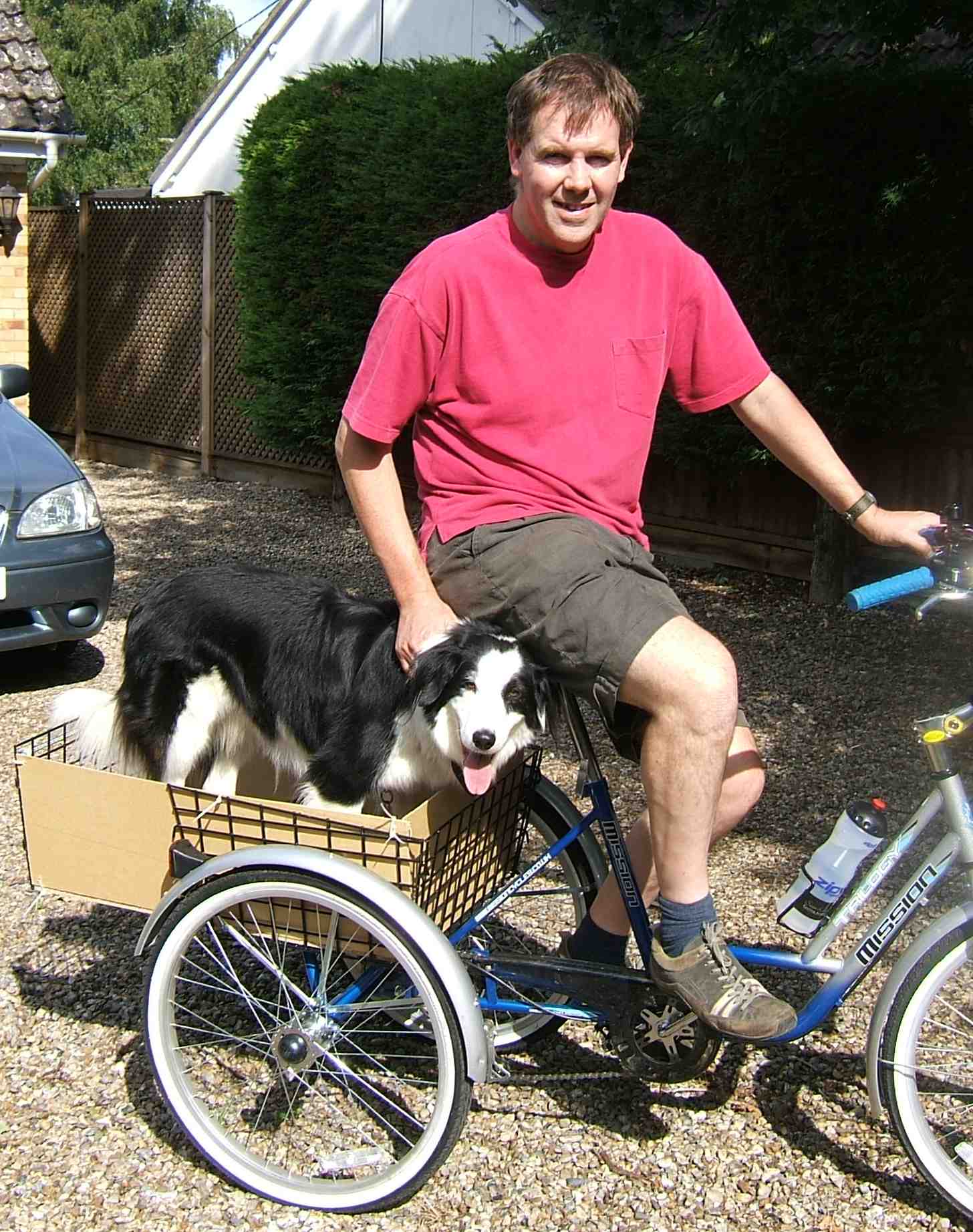
Kevin and dog Murphy on an adapted tricycle

The Dogmobile - Kevin Mayne and Murphy on adapted tricycle

I camped on the main site with Murphy because the others were away and I constructed the dogmobile out of a disability trike from the CTC fleet at Reading. The Suffolk posse were amazing, they compiled hundreds of miles of routes, refreshments, social events and of course amazing weather.

So it was my pleasure to give Dennis some words that sum up how I feel about cycling and Suffolk:

At the end of the CTC Birthday Rides last year I was fortunate enough to be able to say a few words to everyone about how I felt about the event. It was relatively easy to sum it up. “Never have I felt prouder of being from Suffolk”.

Of course I was thanking CTC Suffolk for the event you had put on, but it was far more than that. The beauty of our countryside, the warmth of the welcome, even the relatively considerate behaviour of the drivers made a lasting impression on everyone who came and I have little doubt that it will boost the numbers of returning cyclists for years to come.

The other really important thing about cycling in Suffolk for me is that it where I discovered the sense of community which provides my real motivation. In Ipswich and Bungay my childhood was surrounded by cyclists, my extended family. And we learned to ride together in these lanes, not jammed to the side of the road escaping busy traffic. I was recently at a presentation where a mental health professional was asked why CTC’s programme of rides for those recovering from mental illness was so successful at boosting patients’ wellbeing and stopping them from being readmitted to hospital. He replied “Professionally I can’t define it. But they just ride, then they ride together and they talk, and then they feel better”

 I think he was speaking for all of us.

I am now going to be based in Brussels working for the European Cyclists Federation. The most important part of my new job is to support new and emerging cyclists’ groups and help them get established at the national and regional level. Most of them will be transport campaigning groups who can get awfully serious about the intricate details of cycling infrastructure.  But I know what I will also be telling what I learned in Suffolk. We do this because we want to share the special quality that cycling brings to lives. I will be trying to capture that feeling on my blog www.idonotdespair.com Magazines like Winged Wheel are essential to that sharing too, I wish you every success for the next 250 editions.

Kevin Mayne, CTC Chief Executive 1998-2012.

New page – the library

Just started fleshing out the blog with some new material.

If the theme of this blog is uplifting cycling then I need all my uplifting moments here. In the library I’ll be adding my favourite cycling clips, books, links and articles.

Just added – Latin Lovers, Inspired Cycling (of course) and some raindrops. tell me you didn’t sing along.

Go to the library for the latest update

New year, new blog

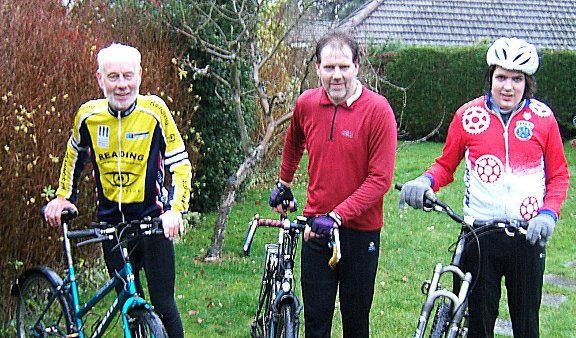
Geoff Mayne; Kevin Mayne; Ben Mayne

New Year's Day Ride by three Maynes

Following a long tradition in the Mayne family we celebrated the new year with a bike ride. The ritual matters to us, we know that under the skin, no matter how overstuffed we are by the Christmas period we are at heart cyclists.

Getting the blood moving, opening the lungs and feeling the pedals turn over means that the year will be OK because riding a bike will be the physical and mental therapy that we fall back on when we are jaded.

This year we were three generations.

Geoff, Grandad, Dad – call him what you will. At 74 years old he has just completed a 14,000 mile year, one of his highest ever. Riding almost every day back in Bungay, Suffolk he is the picture of health. Those miles will have moved him still further up the league table for mileaters, the 300,000 Mile Club. You wonder why I became a cyclist – look no further.

And at the other end of the spectrum is son Ben, who as a student has managed to dedicate himself far more to his computers than his bike this term, but with no miles in his legs can still jump on a bike and join me for a couple of hours yesterday and over an hour today.

As the weather looked a bit mucky we did my byways route around Finchampstead, linking together dirt roads and minor tracks through Barkham and Arborfield until the increasing rain forced us home after about 90 minutes. Job done, honour satisfied, we have reaffirmed ourselves.