And the world didn’t end – more cycling lessons from Germany

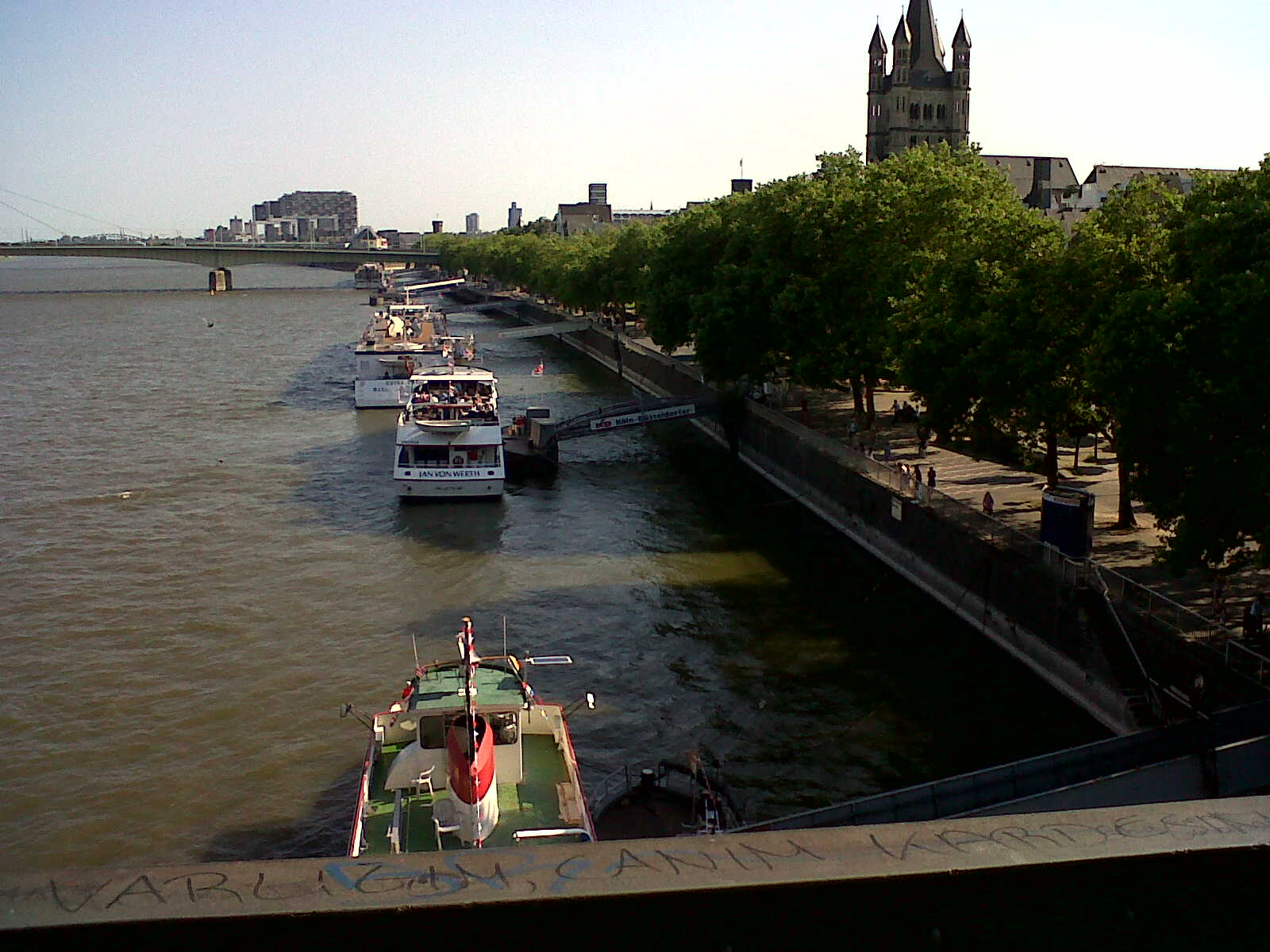
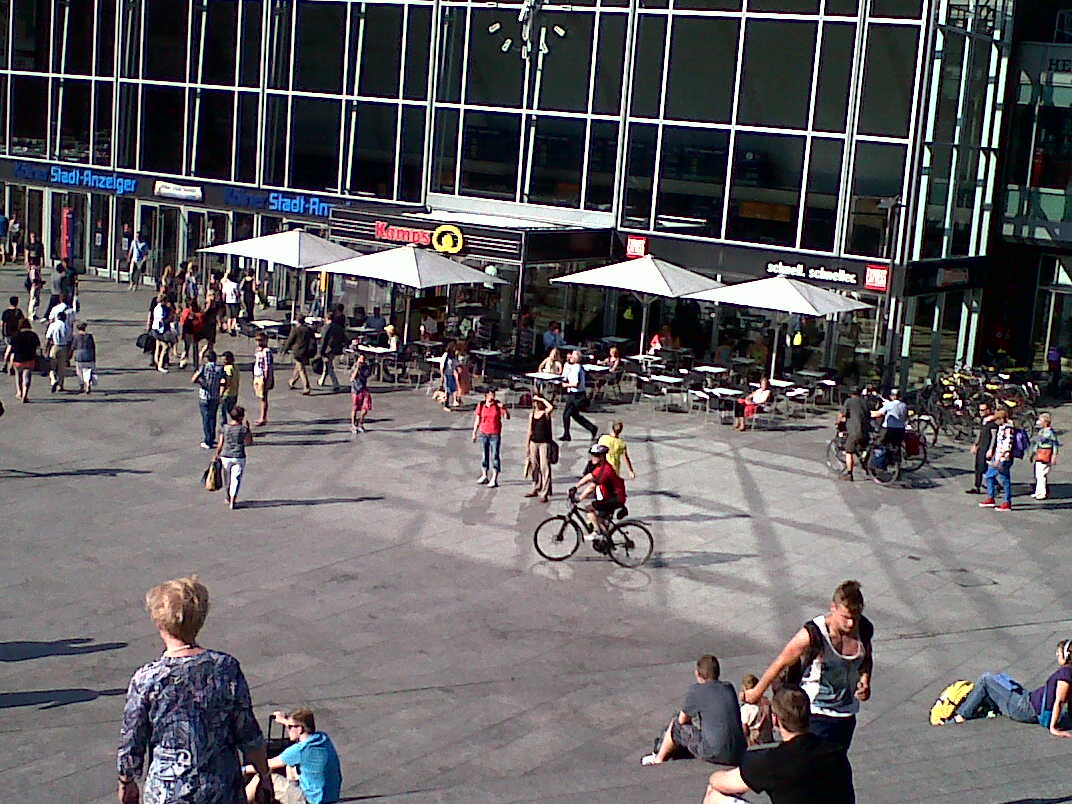
Shared use bridge over Rhine CologneHaving a chat DomplatzShared use DomplatzKoln Germany

I have just had to kill an hour between trains in Cologne.

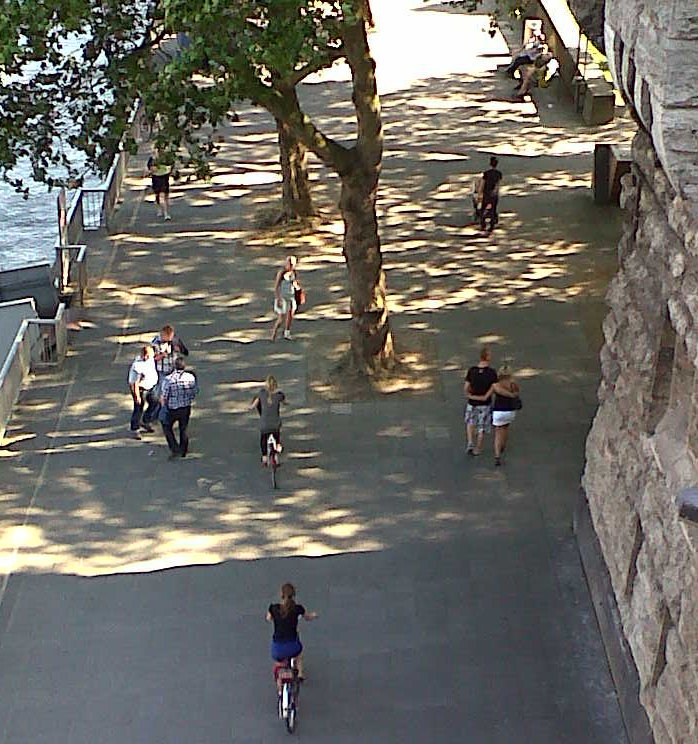
As it is a lovely day I wandered outside the Hauptbahnhof to the Cathedral Square (Domplatz), up onto the pedestrian cyclist bridge over the Rhine and looked back at the leafy path car free route along the river bank.

Disgrace. Unacceptable. Impossible. Out of control. Can’t be done. What do they think they are doing?

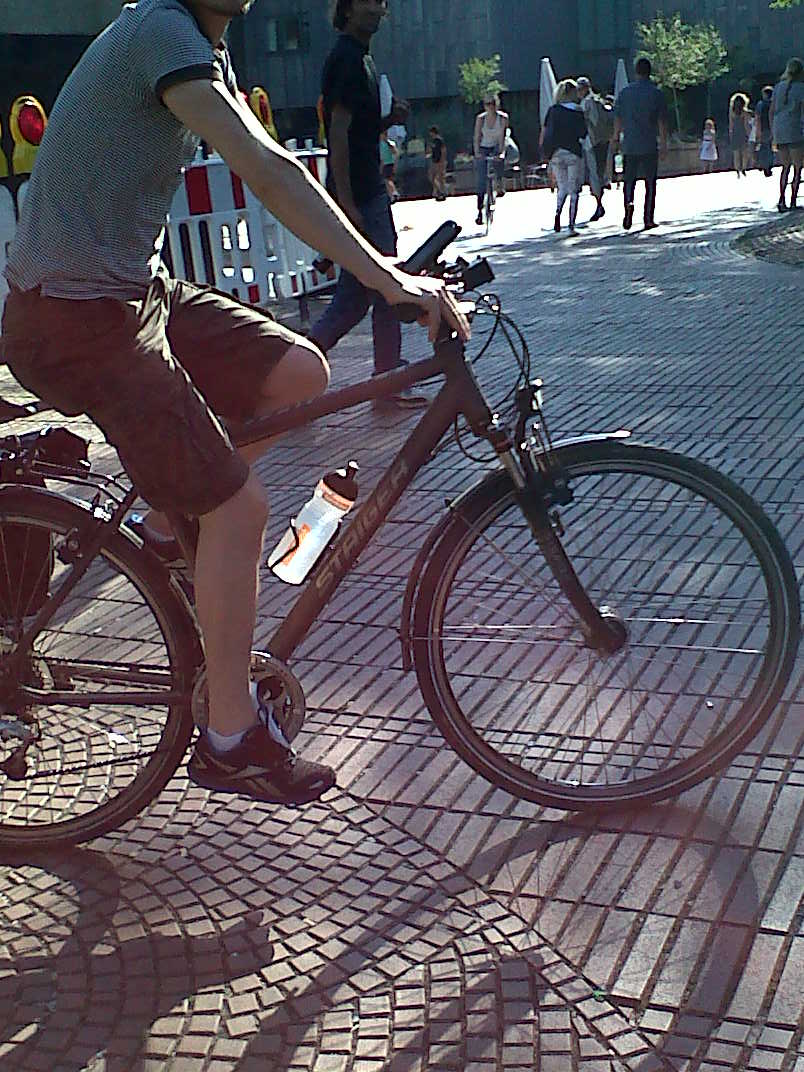
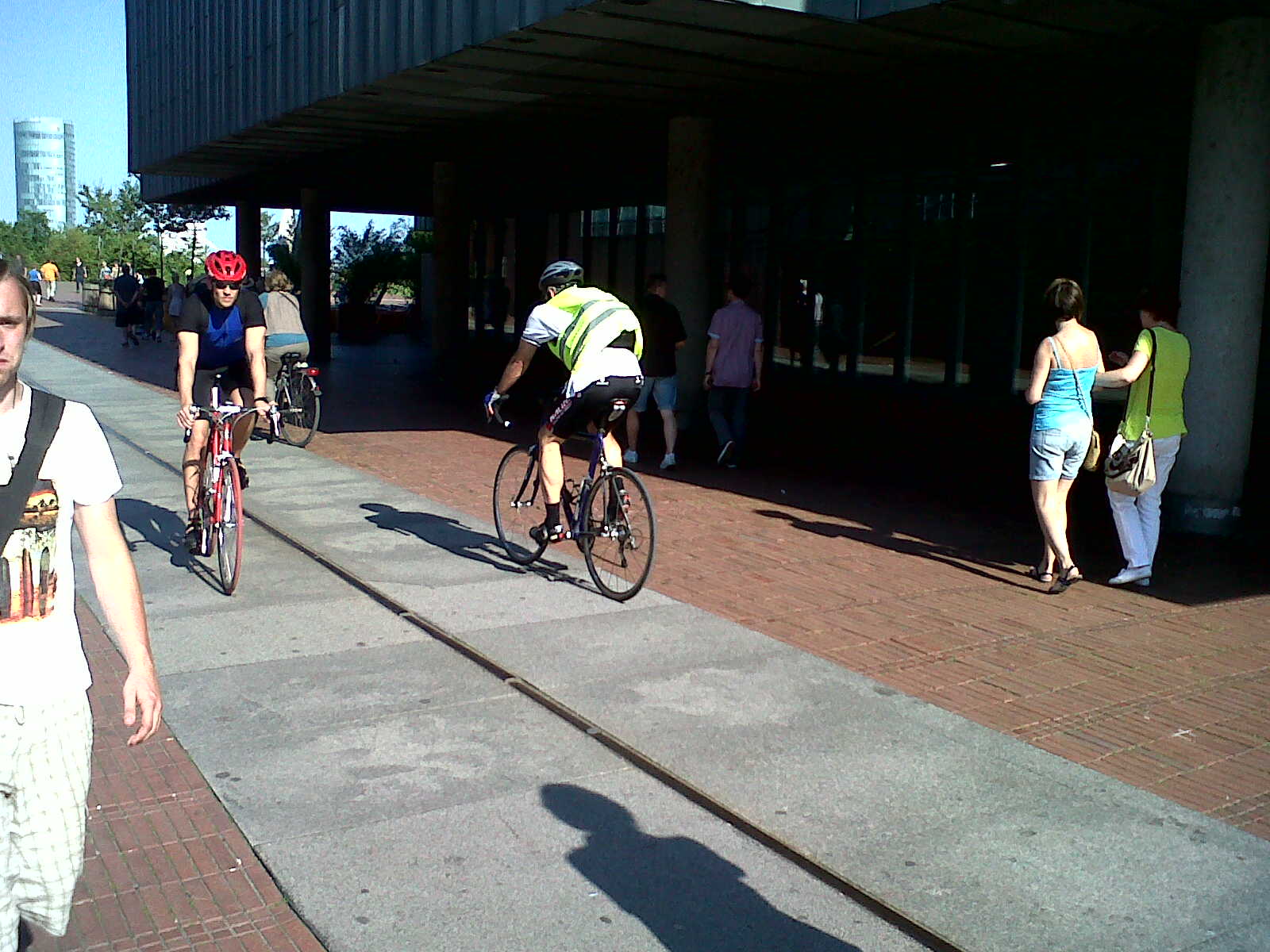
Cyclist on bridge over Rhine CologneDomplatz cyclist and pedestriansRhine bank cycle access KolnCyclists Domplatz Koln CologneRiverside cycling Cologne KolnGermany cycling

Yes hundreds of cyclists and pedestrians are inhabiting the same space. Politely. Without conflict. Without the world coming to an end. And its official – this is a major corridor across the river for all users.

Young ruffians on BMX bikes. Lycra louts. Parents setting a bad example. Old and young; male and female.

Oh, and you know what – that bridge rail isn’t specially raised to stop the lemmings with pedals throwing themselves off. So that bridge will have to be closed off immediately. The signs industry can celebrate as hundreds of “Cyclist Dismount” signs are ordered and the economy is saved.

Enough cynicism Englishman. Just because you come from a country that is frequently clueless about creating great cycling places doesn’t mean you have to infect the whole of Europe!

In fact it is a wonderful sight as the quiet German cycling revolution continues. Personally I am convinced that the large areas of car free permeable city and town centres that people actually want to walk and cycle in are as big a contributor to the growth in cycling here as many other measures. I must get round to posting the photos I took in Leipzig recently that showed just the same pattern as I have seen throughout the country.

In fact the more time I spend around Germany’s cycling stories the more I do not despair for the future of the human race. To my long suffering cycle campaigning friends in Britain can I just offer a suggestion that there is far more to creating a cycling culture than going Dutch, and there are fantastic examples right here.

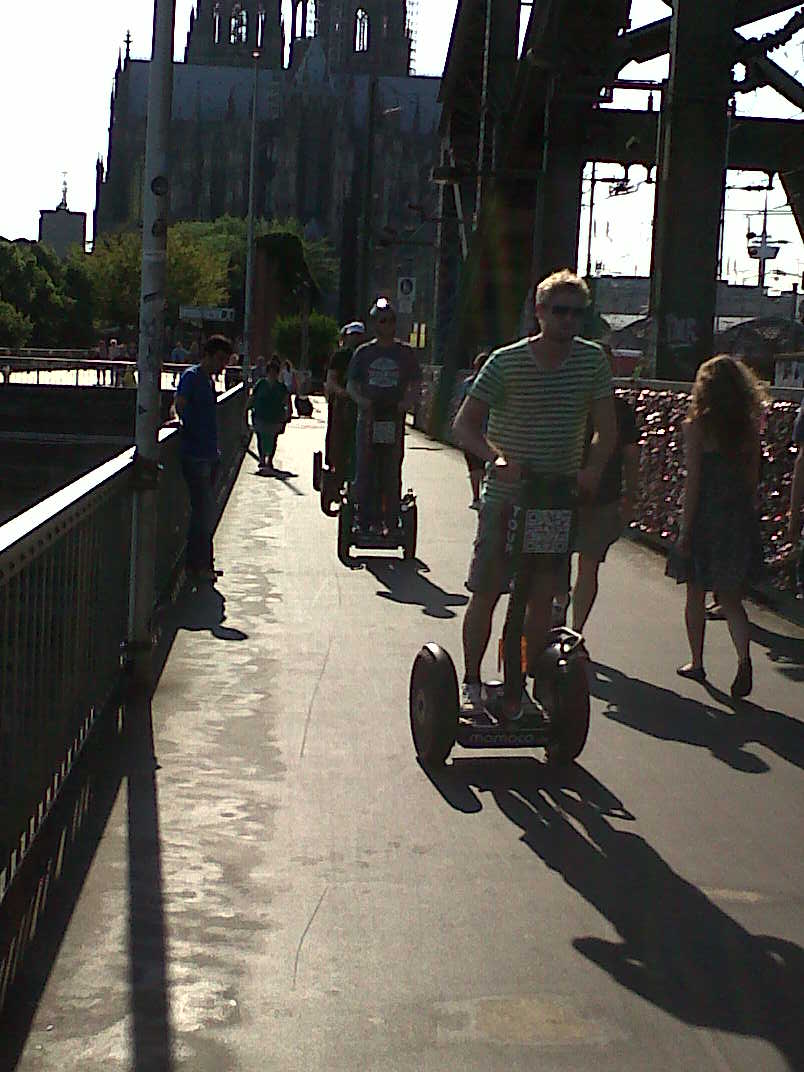
PS Some things are however crimes against nature. I have saved them to last, to avoid upsetting the sensitive among you.

Segway Tour Cologne

Martians attack and wipe out cycling population of Netherlands town

Almere Cycle paths Almere cycling Almere bridge for cycling Almere cycling bridge Almere dedicated cycling bridge Almere cycle pathsAlmere access bridge

I am assured by ECF board member Frans who delivered a Brompton by trailor to Almere station for me to use today that things are “quiet” because the whole of the Netherlands is on holiday or celebrating to welcome the coronation of the new King.

But it is all a bit scary – I even saw empty cycle parking at a station.

Do not despair gentle reader – here is what we expect – Dutch people being exceptionally normal on bikes on fantastic infrastructure. Enjoy.

AlmereFrans Van Schoot

When I join 100,000 Parisians on a Velib I do not despair for the future of the human race

Gallery

This gallery contains 13 photos.

Time to join the French revolution and get a proper taste of Europe’s biggest bike sharing scheme. 100,000 bike trips will have been made today by Velib, and one of them was mine. I was on a work trip to … Continue reading

Cycling in Taipei 2013: a roundup of the “I Do Not Despair” experience

Taiwantaipei taiwanThis post rounds up some of my experiences from a week in Taipei and it gives me the chance to bring together the thoughts of people I met and my own observations. I wrote about this a bit last year but this time there are three key differences.

Most importantly I rode a bike myself – the basis for the “Not despairing in…” series of posts on this blog. I also know that the experience of combining walking, writing and talking to activists in 12 countries in 12 months has improved my cycling observation. It is much like when I used to benchmark factories in my previous career, if you do it often enough you develop a more finely tuned sense about what is happening and you have much better references to use for judgements. The third element is that I got to do a lot more talking to people in the cycling industry and advocacy this time which gave my views better balance, on my first visit I was almost a tourist by comparison.

Taipei cycle Show taiwanI was formally in Taiwan to attend the Taipei Cycle Show and to speak at the International Bicycle Design Forum which gave itself the title “Forging Taiwan to be a Bicycling Island”. (News report here.)

After hearing the words from the conference and having my discussions with the cycling community my personal observations reinforce what the cycling world here is saying. The underlying commitment to cycling here is huge. It already had a massively successful and world leading bike industry which has been strategically planned as a key national economic interest for years.

However this was largely built on the back of a static or declining local cycling market.

The first stage of trying to address that has been largely leisure and tourism focussed. This approach that would be widely recognised in the English speaking world – something you do in your sporty clothes at the weekend or in your spare time.

This has been improving vigorously with the influence of the industry and the support of academics in tourism and economic development like Associate Professor Hsin-Wen Chang who is working in association with eight counties on their cycle tourism product.
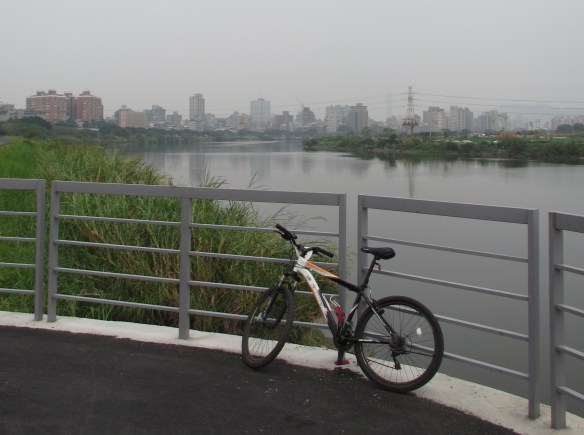
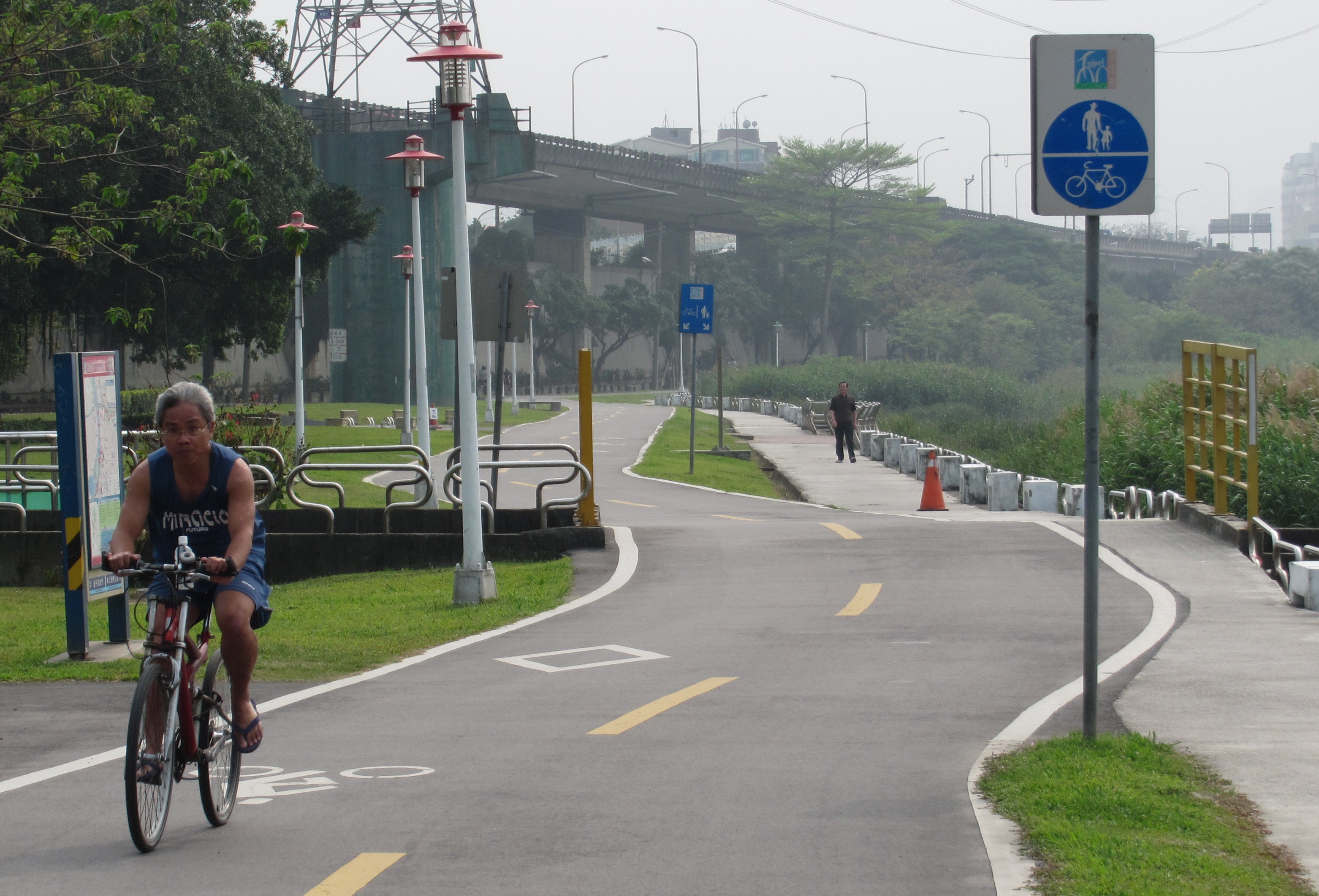
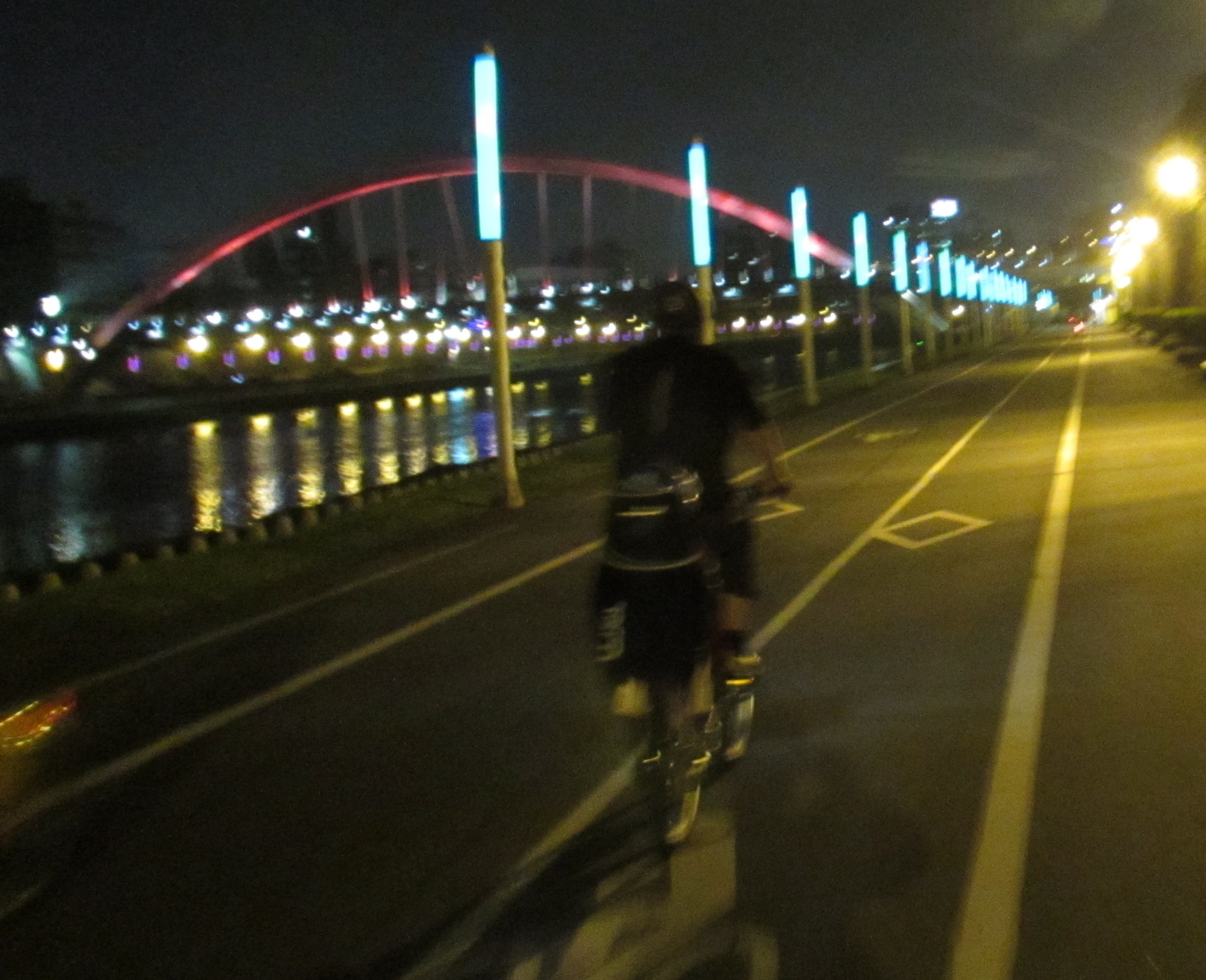
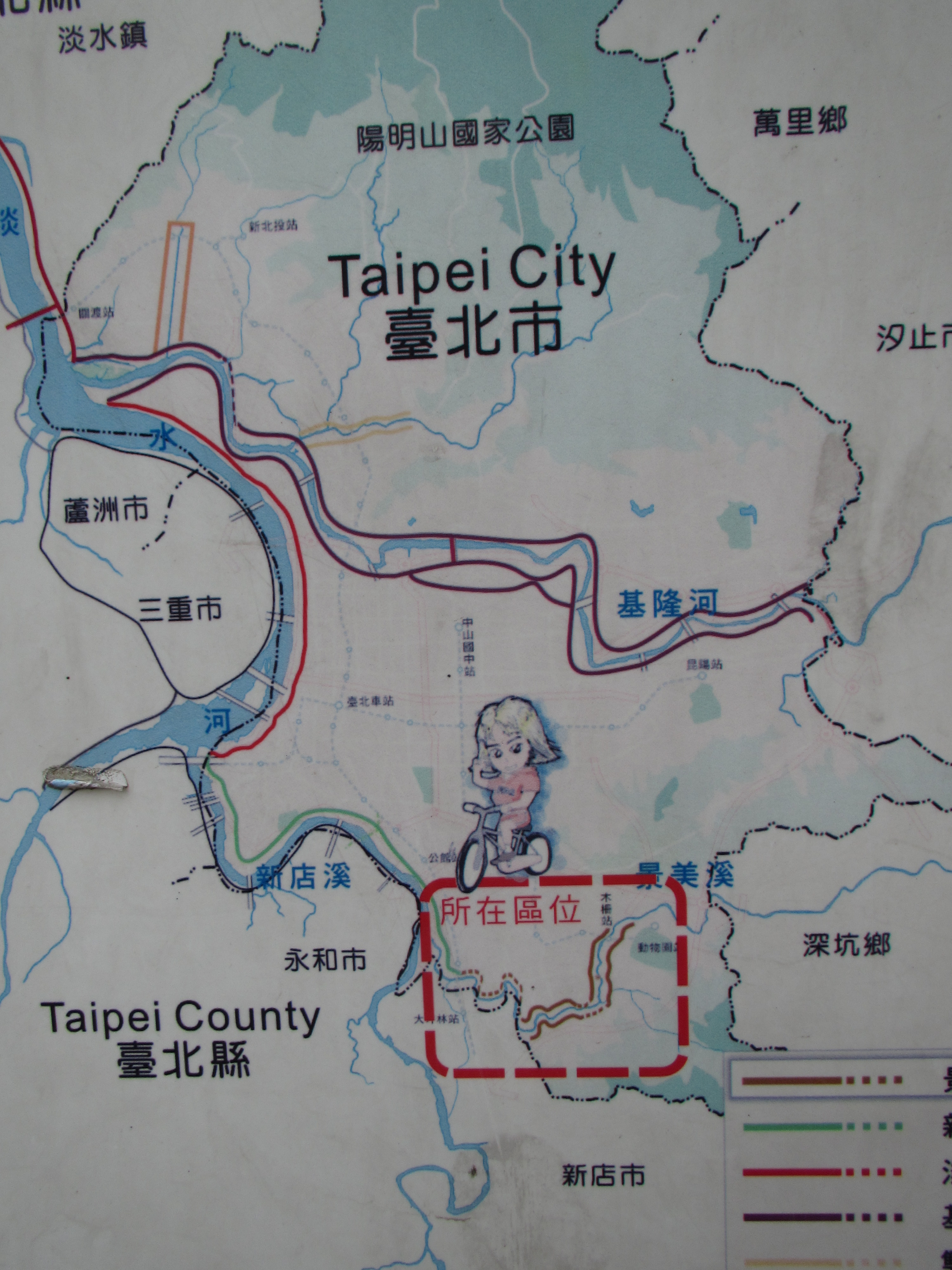
TaiwanI really must try to get out and try some of their rural routes another time because Lonely Planet and CNN have listed Taiwanese experiences in their top ten in the world and I saw some stunning pictures. Cycle tourism holidays are growing and there are lots of “round the island” promotions and charity rides which are being used to try and build cycling lifestyles. I sampled this ambition Tern Social Taiwanjust by trying some of the extensive and well-engineered riverside cycle tracks in Taipei which now reach over 100km virtually traffic free. I was really delighted to be invited on the “Social ride” promoted by the local staff and friends of Korean folding bike specialists Tern who took a big group of us along the paths after dark. That was great fun as social rides usually are and it was complemented by the fact that the routes through the parks and the river bridges are brilliantly well lit at night.
So leisure is going in the right direction. That leaves transport.

The relative affluence and successful economy of Taiwan means that they have high levels of car use and recent massive investment in motorways and road capacity sitting alongside successful high speed rail and a mass rapid transit (MRT) in Taipei.
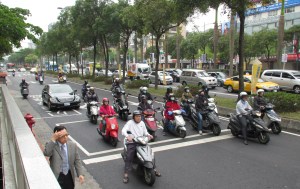
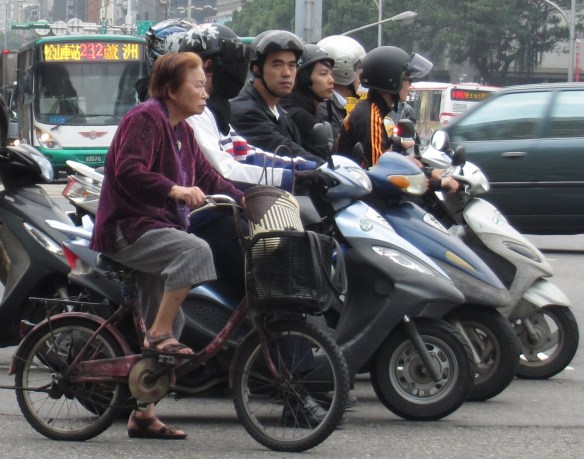
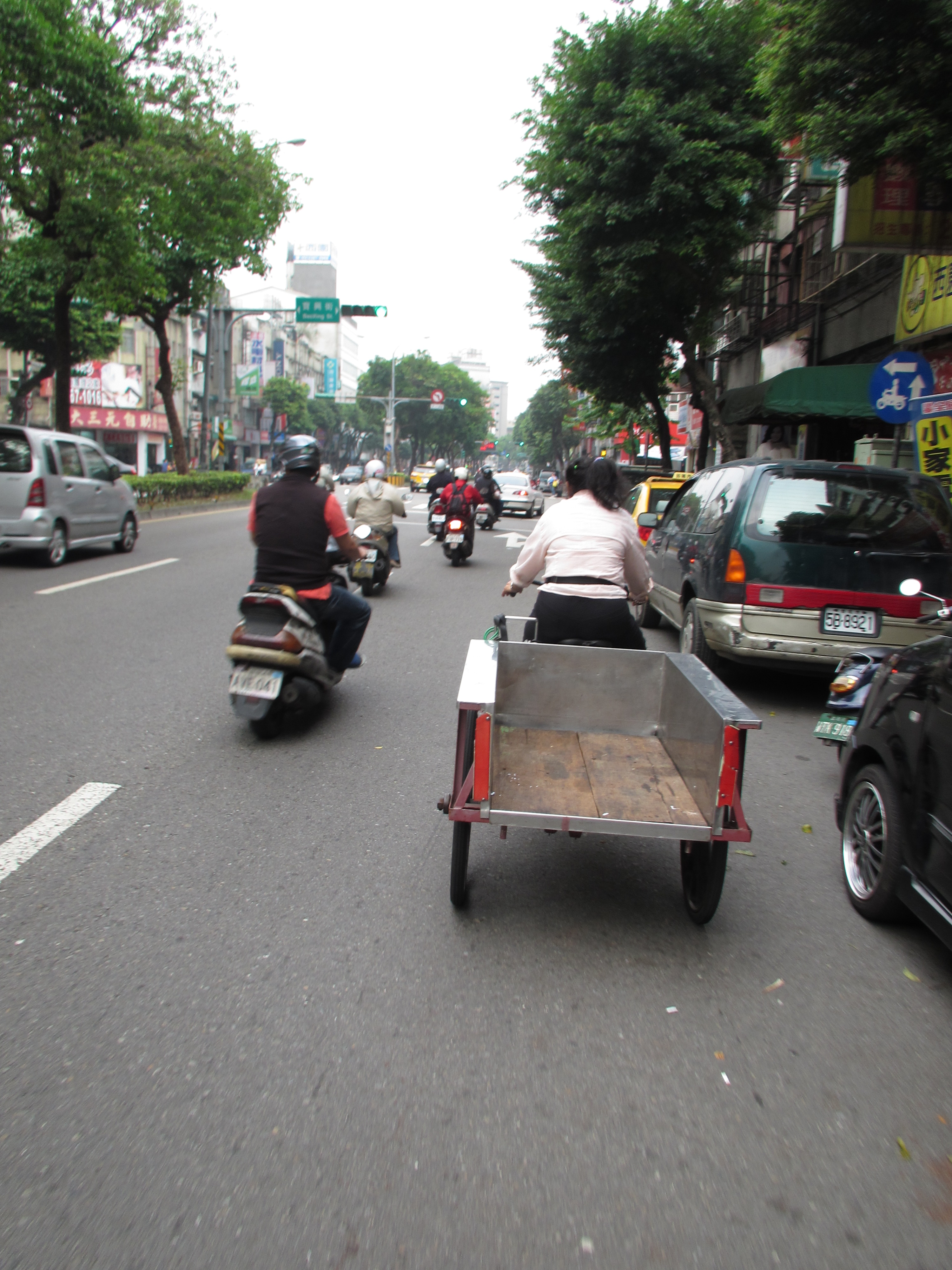
Taipei Scooters 1Most of the writes and bloggers online agree with the people I met.  (Example here by Carlton Reid) Transport cycling in Taipei has been neglected, there is a lack of cycling infrastructure except cycling on the pavements and there is almost universal concern about the swarming buzzing scooters anywhere on the island. They are about 30% of traffic in Taipei, a huge proportion. The main perceived threat to cyclists is that they fly around in swarms at what seem very high speeds, all across the roads and swerving around the cars, a combined deterrence of speed and noise. The cars themselves are very scooter aware but that doesn’t stop the average driver from getting the foot to the floor on all the roads around the city, and from what I could see out in Hsin Chu and Taoyuan they are just as fast.

And this is where the contradictions start.

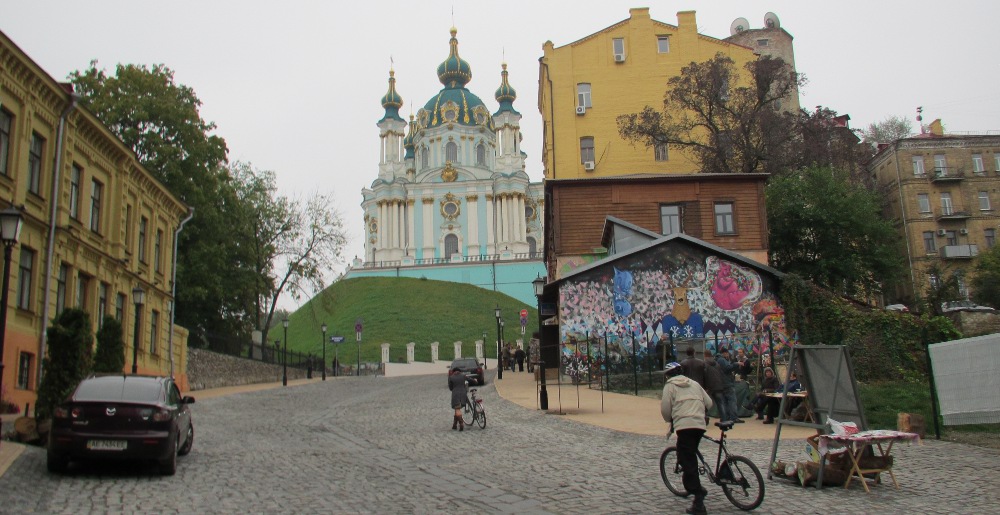
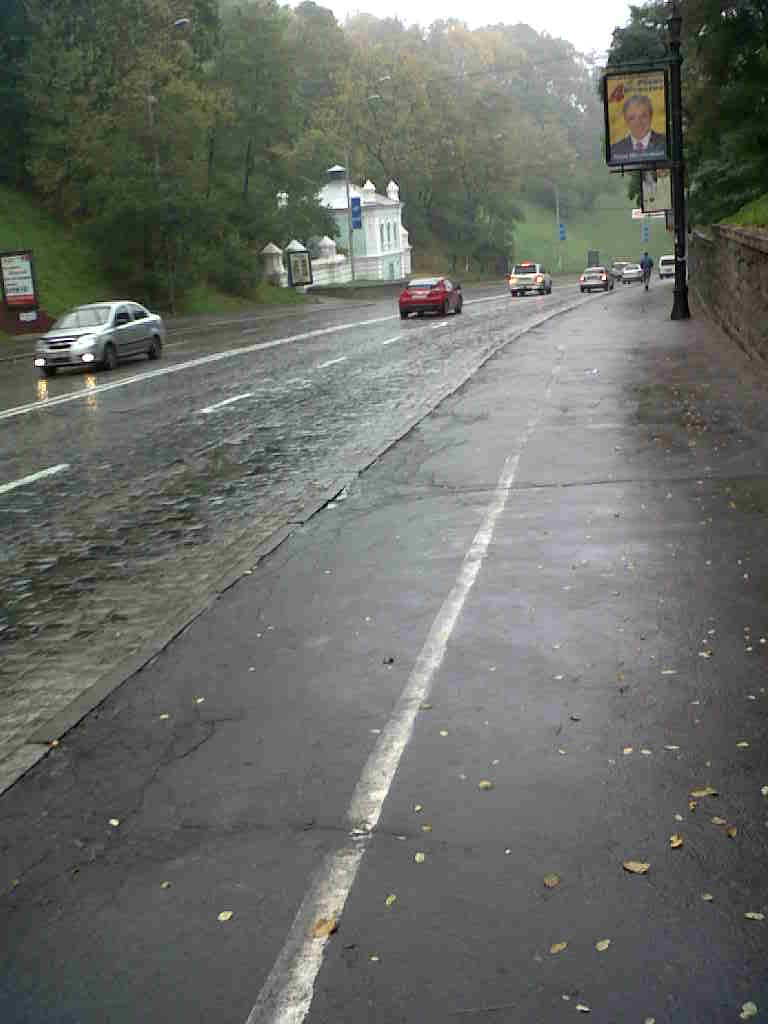
These road conditions and driver speed easily put Taipei on a level with somewhere like Kiev as a really cycling unfriendly city. The Invisible Visible Man did an excellent recent post about his discovery of Staten Island in New York describing similar challenges and the lack of cyclists as a result.

Therefore I would expect to see almost no cyclists whatsoever on the roads and last year I didn’t. However this year I felt I saw more riders, perhaps because I was out a bit more in daylight but I think there is a change going on.

Taiwan cycling

This was confirmed by King Liu, founder of Giant and his daughter Vicky Yang who is CEO of advocacy and promotional NGO the Cycling Lifestyle Foundation.

I can confidently say that if the driving conditions were like this in any European city I cannot imagine seeing any but the fiercest cyclists out on the streets, the fore-runners, the fixies, the messengers. However as I have already posted the
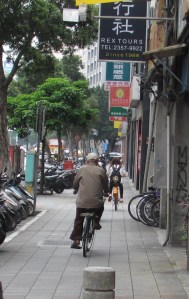
Cycling Taiwancyclists I kept seeing out on the highways were women of all ages, from the young and trendy to the “mature”. (here and here) Yes there were men but

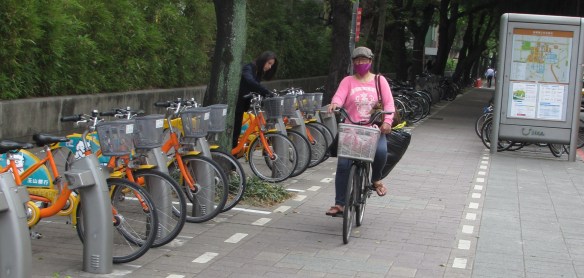
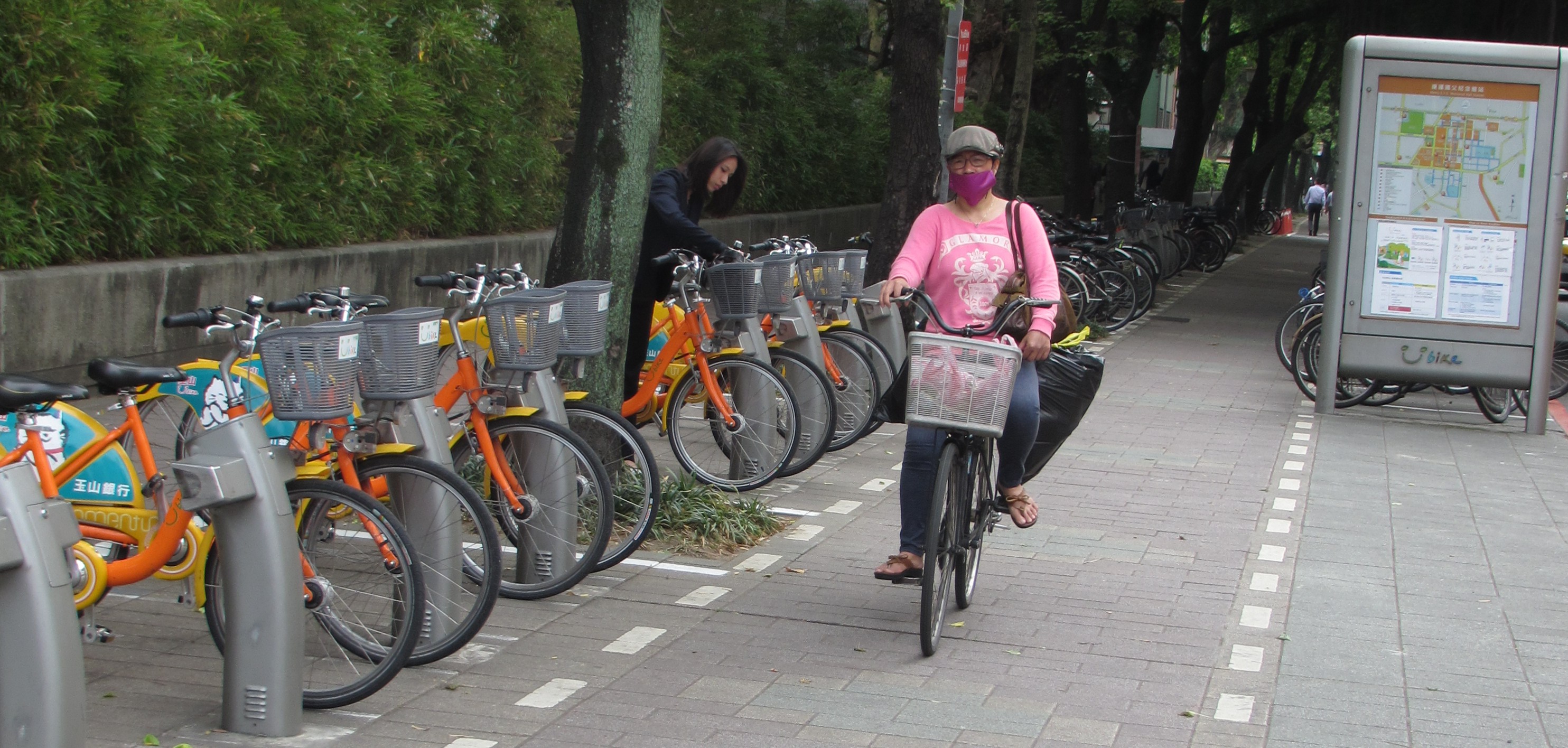
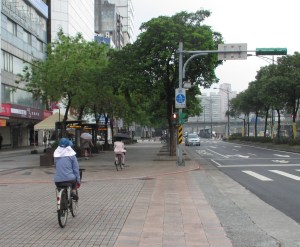
Cyclists Taipei 5as often as not they were often the ones on the pavements.This was an unexpected result and I think it hints that there is a supressed cycling culture just waiting to burst out. King Liu said that the ambitious Youbike bicycle rental scheme had recorded a record 25,000 trips on a single day the previous week, even before they had expanded the scheme from its current base of 2,000 bikes up to the expected 5,000. Vicky confirmed my observation that a big proportion of the users were young professional women who are seeing cycling and Youbike as a lifestyle choice.
Cyclists Taipei 1

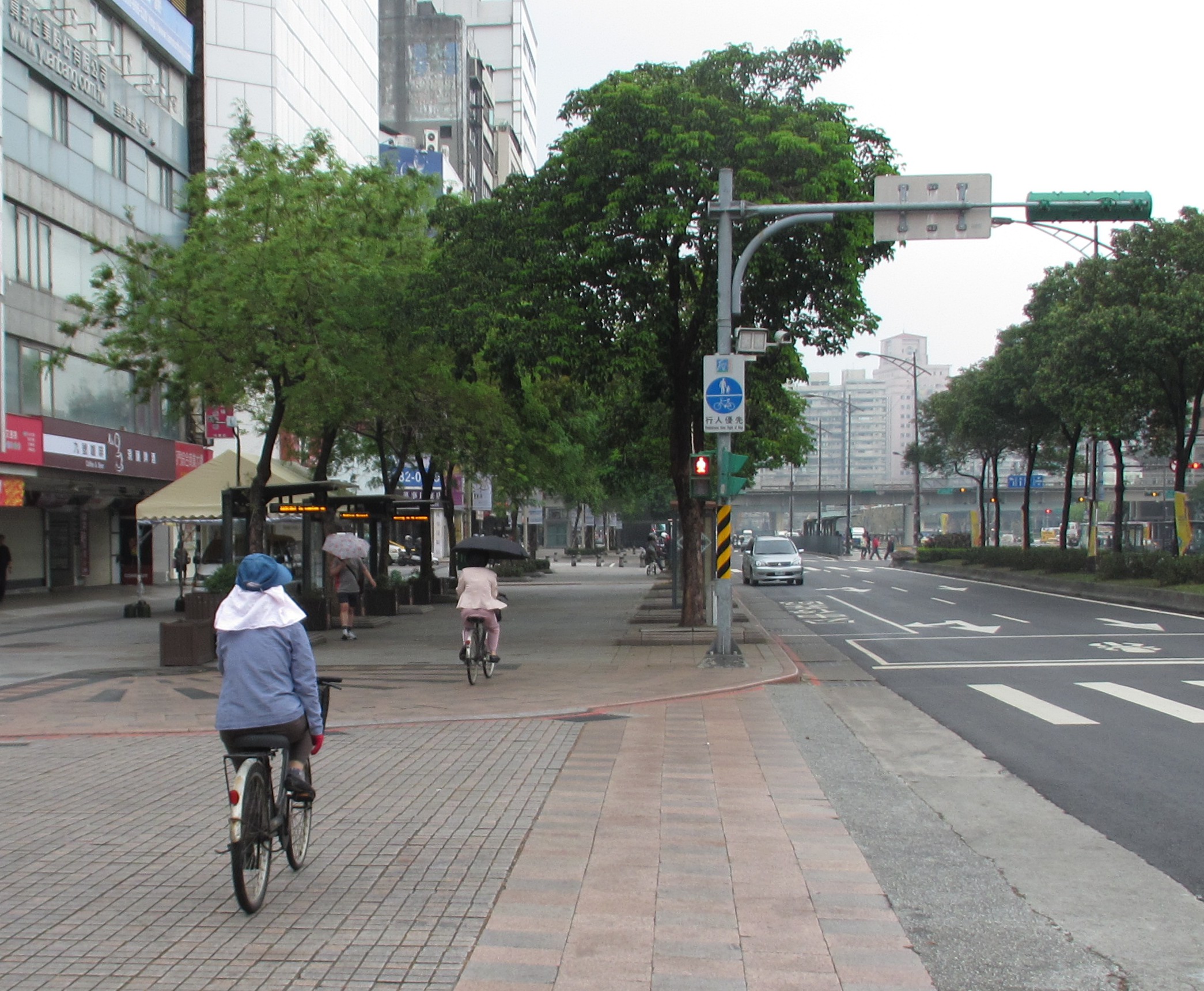
Taipei has the space to copy New York and start taking space on the streets for segregated cycle lanes and I have no doubt that this is the big political choice now facing the city. They are putting in lanes on the pavements on some streets but I cannot imagine it will be enough if the demand really takes off and it is a political soft option, not a proper solution. I said as much in my presentation, highlighting the need for a proper joined up network that is accessible to all. The quality of the riverside routes shows that the engineering knowledge is there. Giant and the China Lifestyle Foundation are equally confident that Youbike is meeting a suppressed demand that will enable Taipei to follow Paris and London by getting cycling numbers up in the urban heart while the battles for urban space continue with the city authorities.

In my comments to the press I focussed on speed because I felt so uncomfortable with my own experience on the roads and because it is a “right now” opportunity which will complement Youbike.  However in my speech to the Forum I emphasised that the city could and should see cycle lanes move from the pavements to the streets if the city and the country really wanted to forge a cycling island.

I think it will happen, cycling is too important to be neglected here and the right people are probably in position to make a difference. You can add the names of Tony Lo, Chief Executive of Giant and Robert Wu, Chairman of KMC to the mix of key players involved in the Forum. With that sort of influence from big companies working with the academics and advocates governments tend to listen. It won’t become the Netherlands overnight, no other country has even got close in forty years but there will be significant strides if they can get true political will.

I expect this will become an annual series of posts, I am quite excited about observing the changes, not least because the Taiwanese I met are such open and welcoming hosts who could talk cycling forever. What finer praise can there be for a nation?

Some personal highlights:

Riverside cycle paths by day and by night.

TaiwanRiverside Cycle Path TaipeiMap of Taipei Cycle paths Taiwan

Cycling in Taiwan

With thanks to Tern for the night ride and the very nice bike!

Tern Bicycles Social Ride Taiwan

Photo Credit Tern


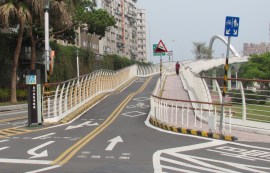
Cyclists bridge taipei Riverside

Cyclists' bridge Taipei

What I call a Grimshaw bridge. Any high quality cycling bridge I see anywhere around the world I subconsciously attribute to John for his passion about cycling bridges and design.

The cyclists of Taipei: their Youbikes and bikesTaipei Cyclist 10

Cyclist Taipei 8 Taipei Taiwan Cyclist Taipei 7Taiwan

Not despairing in Budapest

Eurovelo 6 Danube Hungary

Eurovelo Danube Hungary

cannot believe two weeks have gone by since I was enjoying the sunshine of Budapest – it has a sort of “last summer” feel already with the mini-winter that has hit Belgium.

I realised that while I was musing on the Danube and food I didn’t finish my post about the cycling, which is somewhat of an oversight for a cycling blog. I thought I should complete the process because Budapest is such an important milestone in the Danube Cycle Route and a major part of Eurovelo6, the rivers route linking the Loire, the Rhine and the Danube so it may be of interest to fellow travellers. And I want to thank the campaigners at the Hungarian Cycling Club (Magyar Kerekparosklub) for their hospitality.

Whenever a league table of European cycling levels is published many people are surprised to see Hungary competing with Denmark in second or third place. In fact when I showed the graph to some Hungarians in Budapest they were surprised too.

This is because there are still really high levels of cycling in the rural areas of Hungary, largely driven by economic circumstances. But Budapest itself followed the trajectory of most of the Eastern European capitals after the Iron Curtain came down by embracing the car with enthusiasm. Not long later they had the joys of congestion and cars had overwhelmed residual levels of cycling. Unfortunately this rush to the car was also supported by the economic engine of the EU which financed a whole load of so called improvements in the form of new roads.

When I was first in Budapest in the winter of 2008 with the ECF board we were taken on several bike rides around the city which showed the first signs of a counter-revolution. There were lots of plans to improve the infrastructure and particularly to create attractive riverside routes for the Danube Cycle Route.

Eurovelo 6 Hungary

However back then it was very hard to imagine because what was in place was disconnected and dysfunctional.

Five years later you can see the benefits of that investment. It’s not a wholesale transformation of the whole city but it is clear that there is a really big change, especially along the river. OK, there is a heck of a difference between freezing December and sunny March too but there were also a lot more cyclists everywhere I walked and cycled. The confidence of the bike industry seems to be up too, the cycle show Bringaexpo which was hosting my visit has just moved to a bigger venue.

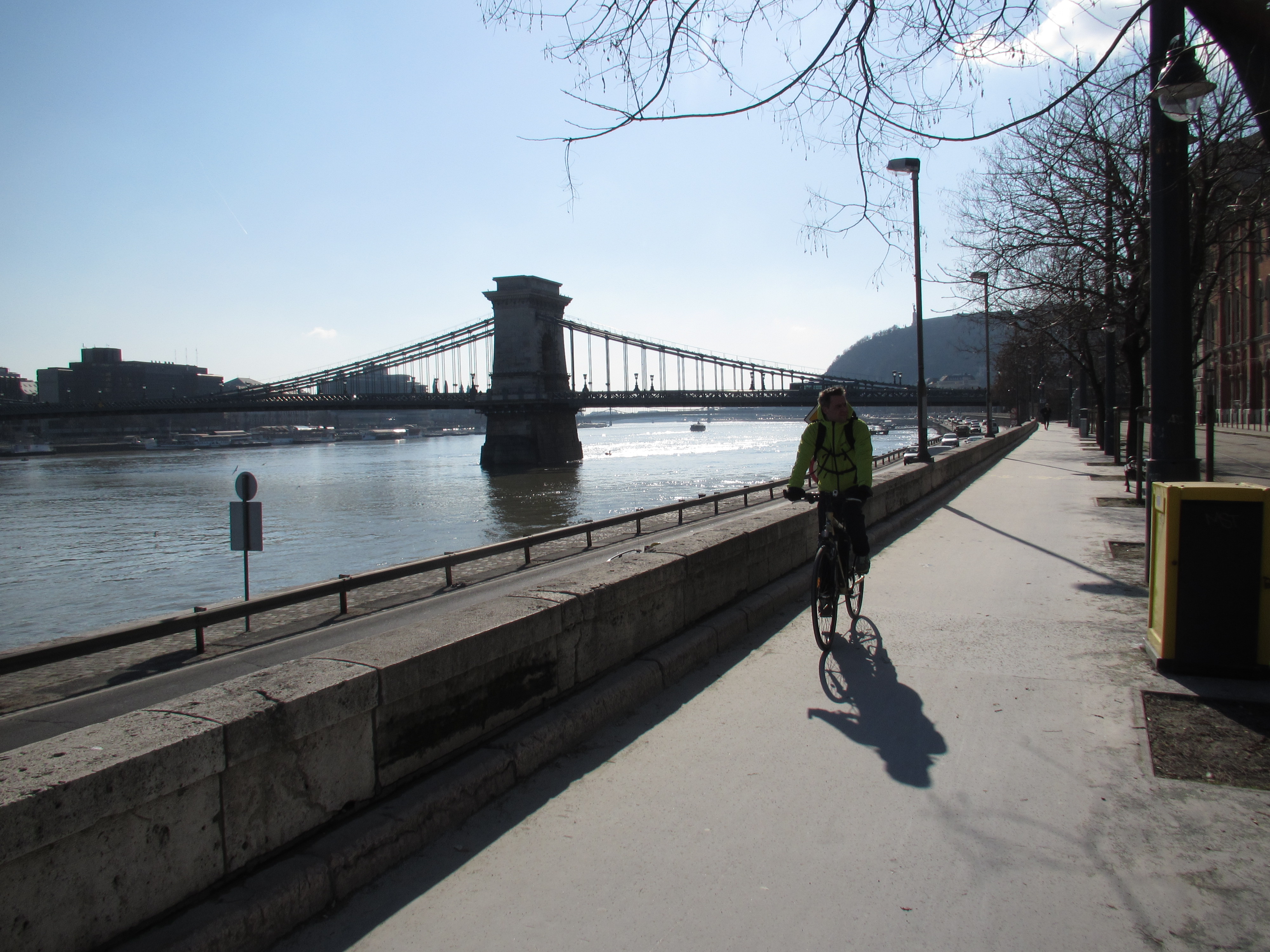
Eurovelo 6 HungaryAnd credit to the EU funding programme too, from previous spending on “roads to nowhere” a significant proportion of the EU infrastructure subsidy to Hungary has now started going on cycling facilities, especially where it can boost tourism. It means the job can be done properly, for example the Margit Bridge is a protected heritage structure so this tunnel through the bridge footings cost around 3 million Euros so the EU share meant it could be done safely and in keeping the integrity of the structure. There were also wide paths across other bridges, cyclists shared with pedestrians but with plenty of space for both.

HungaryIn the city areas there were fewer segregated facilities but the on-carriageway routes were wide, direct and seemed to be respected by the drivers.

Once we got further east towards the exhibition centre there was a nice ride through parkland which is symbolically important to the advocacy community here because it is the final point of the Budapest Critical Mass. This amazing gathering is not the underground movement of other cities, at its peak it had over 80,000 participants and was joined by significant politicians. Interestingly 2013 will see the last ever CM here because the leaders feel it has achieved as much as it can as a protest movement and it is now joining forces and trying to bring its energy to the broader cyclists groups. It was great to be at a meeting with them and see the injection of passion that comes from that direct action side of campaigning. Diary date 20th April if you happen to be able to get to Budapest – should be a good party.

HungaryAs a visitor who really appreciates the Danube and as someone who has always loved cycling and walking by water I can perhaps permit myself one moan. Like so many countries and cities the waterway is a corridor for other modes of transport.

Hungary Eurovelo 6 In the really bold cities like Paris we see city administrations trying to claim that space back for people. I think the authorities here have bottled it in places, for example south of Margit Bridge they have let fast roads keep the river bank and pushed

Hungary Eurovelo 6pedestrians and cyclists up onto a raised embankment. This means the views are nice enough but distanced from the calm of the water. Just look at these two photos. Stunning view of the Parliament building – then pull back the lens to see what the actual view shows.

t isn’t like this all the way along, but I can’t help but feel that was an opportunity lost.

However if you are planning a ride down Eurovelo 6 or even just a short stretch of the Danube Cycle Route can I recommend you include the Budapest stretch and do take a few diversions across the bridges and out to areas like Hero Square, it is becoming a good place to ride a bike again. See my earlier post for just  taste of the architecture and history in Budapest and from what I heard the ride round Lake Balaton is a treat for future occasions..

And credit to the cyclists organisations and their friends and supporters. The movement is relatively small and underfunded compared to many in Western Europe however they have lots of creativity, bags of energy and a real willingness to work together to go forward. And they do some rather amusing campaigning, always good to see advocacy with a smile.

I look forward to more chances to visit them too, it really feels that I am among friends


Bike to Heaven

Memorial to Jan Bouchal Prague

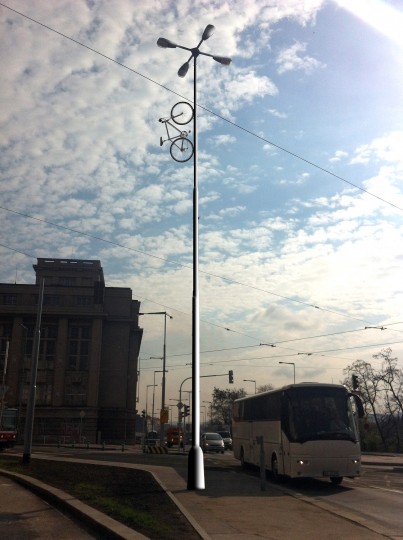
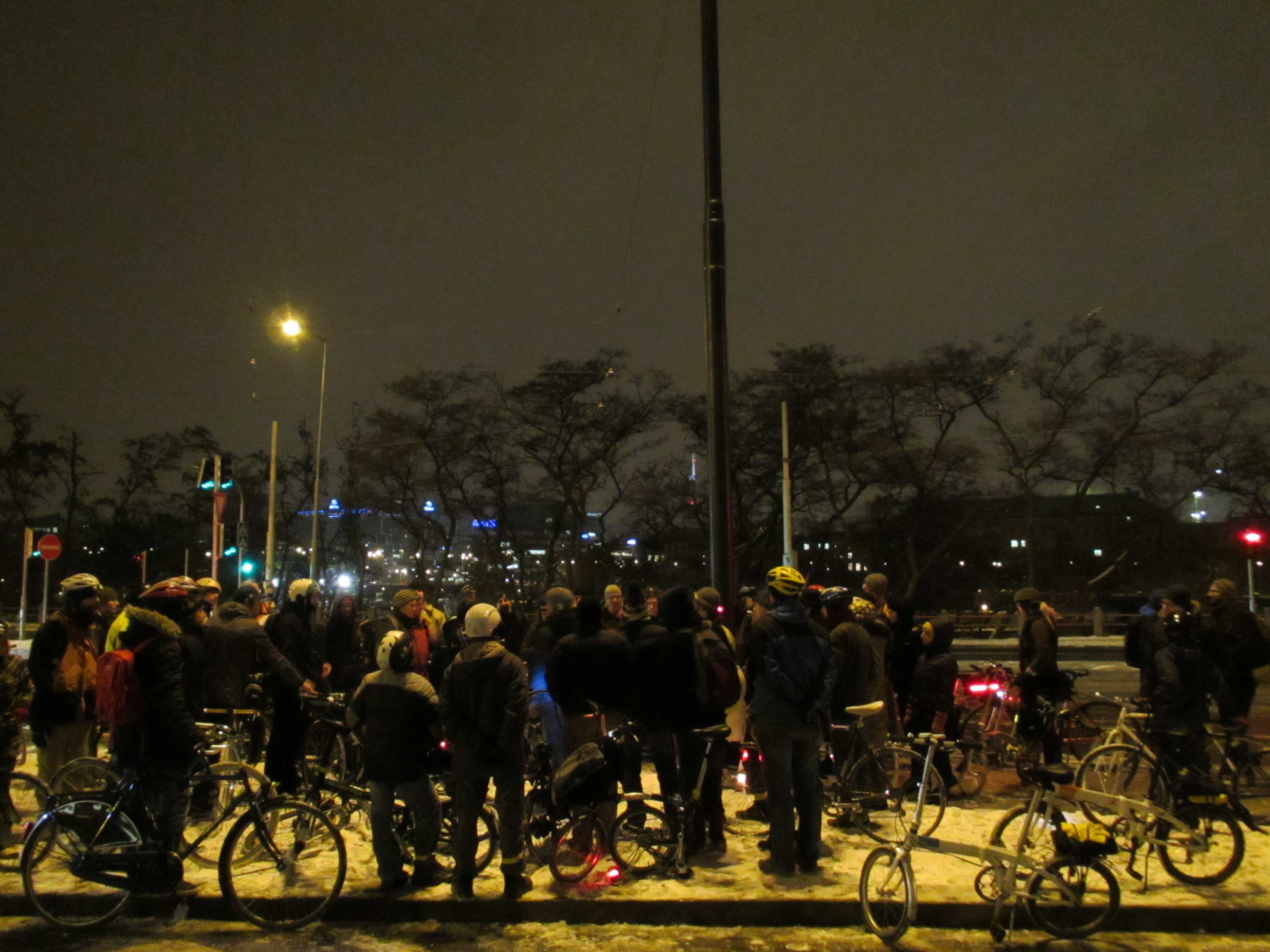
On a relatively undistinguished junction in Prague a small but moving ceremony took place Thursday night. Under gently falling snow around seventy people gathered around a white bike mounted on a lamp column and a small group of candles.

Memorial to PupThe group consisted of local cycle activists, critical mass riders, walkers and supporters of sustainability group Auto*Mat. Speeches of friendship were made with quiet dignity and a minute’s silence was held, bareheaded in the cold near the banks of the Vltava River.

Every January for seven years they have gathered on this corner  to commemorate the life of one of their friends and colleagues Jan Bouchal, killed by a car on this corner in 2006. But this year the gathering had special meaning. After six years of campaigning the city council finally remodelled the junction to make it safer for cyclists and this year they have agreed to a permanent memorial to “Pup“ as he was known.

An open competition has been held amongst local artists to create a design and following a public fundraising campaign the design will be permanently installed on the spot. Echoing the spirit of the ghost bikes that have become a symbol of unnecessary cyclists deaths around the world a suspended bicycle will rotate around the column high in the air, called “Bike to Heaven”.http://www.auto-mat.cz/2013/01/pupuv-pomnik-jiz-na-jare-podporite-jeho-vznik/

I was invited because I was in Prague working at a conference to share the findings of the BICY Project, a three year project to develop cycling in central Europe. Daniel Mourek, our Czech ECF board member invited us to ride with the local critical mass and share the occasion with them, something of an honour to be a guest on their occasion.

But it was easy to feel at home with this group. As in so many countries and cities where cycling and sustainability is hard to promote the activist community is tightly bound and the cyclists fill a tribal niche. On the critical mass I recognised the forerunners that I have seen all over the world, riding fixies, cargo bikes, folders and recycled bikes in a number of designs. Prague is not an easy cycling environment. On average only 2% of local traffic is cyclists which in winter means almost none are seen on the streets and it is a battle to get the council to do positive things for transport cyclists. The city centre should be a great place for cycling as it is largely traffic free but I saw only a single cyclist while I was there apart from the group I was with.

Critical Mass Prague
In this tough environment Jan Bouchal was a real leader of the group, one of the founders of the Auto*Mat and it was clear by the way he was described as “our friend” that he was a very valued person. I wish his friends every success in their campaign to raise the money they need for the memorial but even more so I wish them every success in their campaigns to make Prague a cycling city.

Memorial for Jan Bouchal Prague

Not despairing in Stockholm

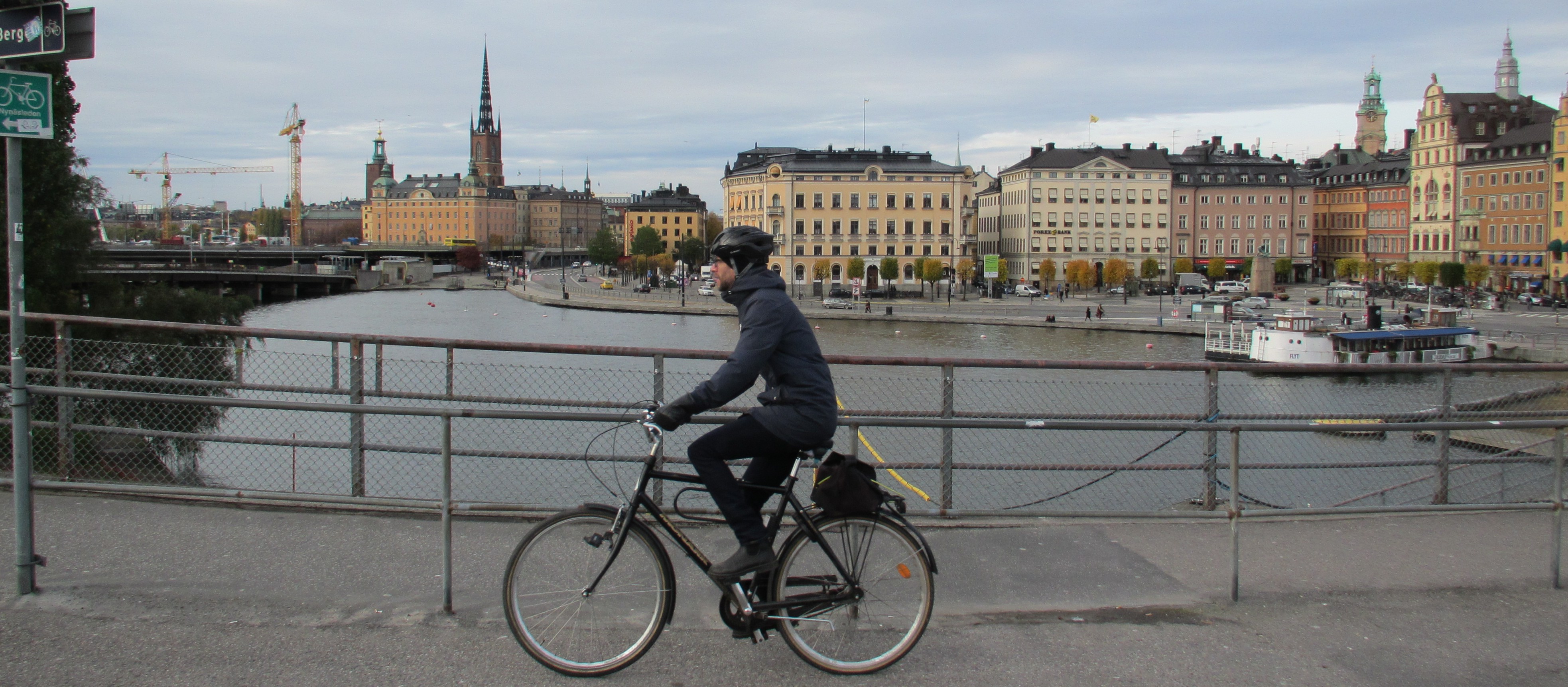
SwedenI have only cycled once before in Sweden, and that was three years ago after Velo-city Copenhagen when my son and I took our bikes across the strait to Malmo. It was clear to see that there has been an extension of Copenhagen riding culture across the bridge because cycling levels were really high and well catered for.

So I was very interested to see what the capital city was like away from that influence, especially as I was doing an evening talk with the Dutch Cycling Embassy to a group of municipalities from the Stockholm region. It certainly helps to have ridden just a little bit before speaking to a cycling audience, if only to see where we have things in common, I am always reminded of the famous situation when the Beatles landed in the US and as they got off the plane a reporter said “So what do you think of America?”

Sweden cyclingFirst discovery was yet another design of bike in use for the public bike sharing, a rather odd looking beast with a small front wheel, and what turned out to be horribly uncomfortable saddles.

Throughout the two days I saw consistent streams of riders, obviously higher numbers than many places I know in the UK or Belgium, up there with parts of Germany but not quite reaching the critical mass of the Netherlands or Denmark. I was quite pleased with myself when I guessed a mode share of 10% as that turns out to be about right, I think I am starting to tune in now as I increase my exposure to different cycling environments. Swedish cycling

I was told that this is actually well behind many other Swedish cities and Stockholm may be holding the country back. It certainly was a mixed culture full of contradictions.

Encouragingly high numbers of women cycling which is always an indicator that cycling has been normalised and taken back from us macho types, but then more helmets than I have seen anywhere that doesn’t have a compulsion policy.

As we rode around we encountered every kind of cycling facility, without any rhyme or reason as to which would come next.  On road, on paint, segregated and shared use all in a small area and without any apparent strategy, or if there was I missed it. And almost no car free areas except a few streets in the touristy part of the old city, that really is a bit of a rarity now in forward-looking cities now.

Swedish cycling

Quality of the cycling facilities was pretty good when they existed, often wide and smooth, but there were some totally chaotic and confusing junctions to a newcomer.

SwedenI am glad I was following Christian on my first day. The routes around the waterfront were lovely, the sort of ride that makes me want to get up in the morning.

And that’s a point – did I mention mornings? I had my usual hotel problem of waking up really early so I went out for a walk around 6.30. Big shock to the system, pitch dark without a hint of dawn and a wicked wind cutting through the buildings, suddenly you know you have come a long way north.

But as I wandered out of the old city towards the main roads I became aware of lots of traffic noise and discovered that rush hour seemed to be well underway, not just for cars and trains but for cyclists. I was later told that Sweden has quite a long-hours culture; or one where people like to start early so they can get home early. Whatever it was I don’t think I have seen quite so many early riders anywhere. I guess if you get used to cycling through a Scandinavian winter you are used to doing a lot of riding in the dark, but this was quite striking.Morning rush hour

Given that I see no cyclists on the roads in Brussels before 8am it was encouraging to see them out there.

Another nice feeling came around the Dutch Embassy, which conveniently happens to be on the busiest cycle route in Stockholm. As the street outside is car free and mingles bikes and pedestrians it could almost be home for the staff. Although the hill is a bit bigger than many of them would ever encounter! Great thing the embassy has in common with any Dutch organisation: When the ambassador talks about cycling in his welcome speech at least he hasn’t been handed the notes on a piece of paper, he has actually ridden a bike around most of his life, as they all have. Gives them enormous credibility as hosts and ambassadors for cycling culture.Netherlands Embassy Sweden
I’m looking forward to further invitations, this Dutch – Swedish relationship could go well and I hope to be back to see the results.

Frustration and hope – cycling experiences in Ukraine. (Or “clueless Kev in Kiev”)

Randy Neufeld SRAMFlashback to last Tuesday. I am stuck at the side of a large road junction. I know I shouldn’t be here, I wanted to go straight on, but lacking confidence I have pulled over to the right and I am stuck against the barriers. Now there are two lanes of cars swinging across my line and I can’t get back to my lane.

And this traffic cop is giving me the eye. I don’t think I have done anything illegal, it’s just that I am an alien being in this landscape. He certainly isn’t going to help, that’s for sure. What I really need is another cyclist to follow, somebody who knows the ropes and does this regularly.

But there’s the catch. There aren’t any. This is Khreschatyk, the main street in upper Kiev and I am on my own. I’ve been out riding for over an hour and I have seen one other cyclist, and he was on the pavement (sidewalk). One of the fun parts of writing a blog that starts “When I see an adult on a bicycle…” is that I play a sort of game in every new city, being cheered by the first rider I see. However in 2 ½ days I saw just 10 cyclists, that’s like being back on the dark ages of cycling in Britain. The best comparison I could make was when as a student in 1980 I first tried to cycle from Durham into central Newcastle upon Tyne, a lonely and exposed figure on a morass of high speed roads and aggressive driving.

Before this turns into a rant I will say there are some positive things to say about cycling in Kiev, but it isn’t easy.

Generally I’m a pretty positive cyclist, maybe not in the category of the messengers but I have mixed it out in the fast lane of a lot of cities. And actually I don’t particularly feel in any danger here. It’s just that I am baffled and bemused. The previous day I rode with Randy Neufeld, Director of the SRAM Foundation from Chicago and he said that he felt hampered by not knowing what the rules or conventions were. I had mainly been frustrated by lack of continuity on that ride, but on my own I am just as destabilised.

To be fair I don’t feel like this down in the low town. The low city area of Podil has narrower streets and more congestion so it just feels like most older European cities that have yet to grasp cycling. If you can cope with London and Brussels you can cope with this. And the cobbled streets in the restoration area around Adriivsky may be hilly but they are much slower and tamer. 40 years of cycling instinct just kick in and I am happy taking my place in the traffic flows. But in the upper city the big roads are just un-navigable to a stranger.

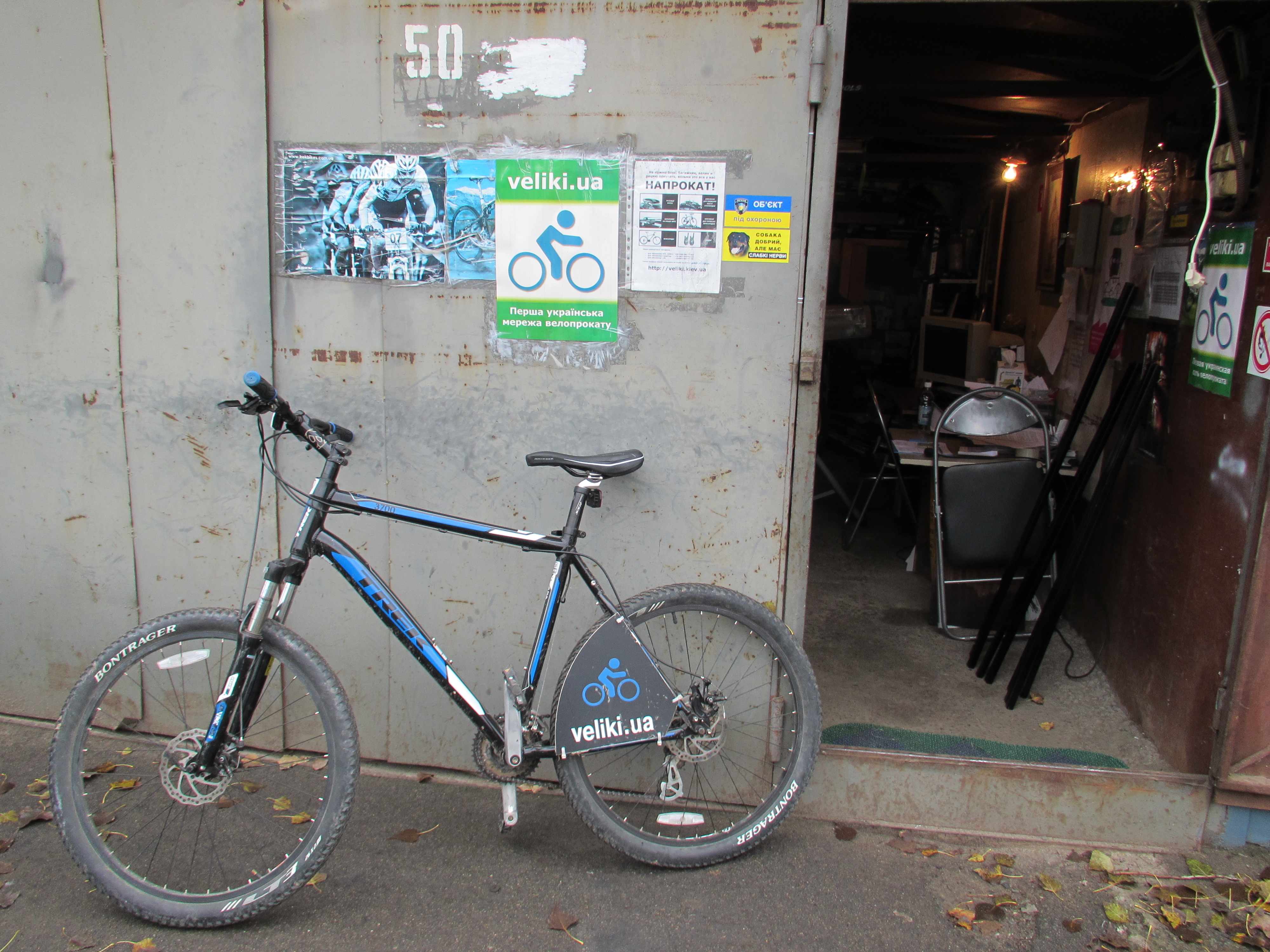
The source of most bafflement from both days was how to make progress in a straight line. Having not seen any cyclists when walking the city centre Randy tracked down entrepreneur/activist Alexey Kushka  and his business Veliki  to hire some bikes out in the suburbs. From there we decided to try and head back to the city, allowing ourselves some exploratory diversions into the surrounding neighbourhoods and parks. The advice we were given was to stay off the trunk roads and ride on the pavements or try and get through the minor roads.

Initially that was fine, two experienced riders shouldn’t have a problem. But quickly we hit the issue of big junctions. When the major roads meet there are apparently no ways across. Pedestrians are sent off down underpasses, but that doesn’t work for us. If we want to turn left across the traffic flows it is illegal for cyclists under the Ukrainian Road Code if the road has more than one lane, and frankly I wouldn’t want to do it, far too exposed. Cycleable neighbourhoods and pavements are like islands cut off from each other by treacherous torrents. So we zig-zagged our way along looking for pedestrian crossings to make a very indirect way to the city.

In addition to the frustration of leaving our islands we had the challenge of the pavements. They are potentially good news because they are wide and quite inviting, the basis of a great cycling network. Only we got there too late. Many bits of the pavement not covered in cars are dedicated to the apparent backbone of the Ukrainian economy, small stalls which serve every possible need.

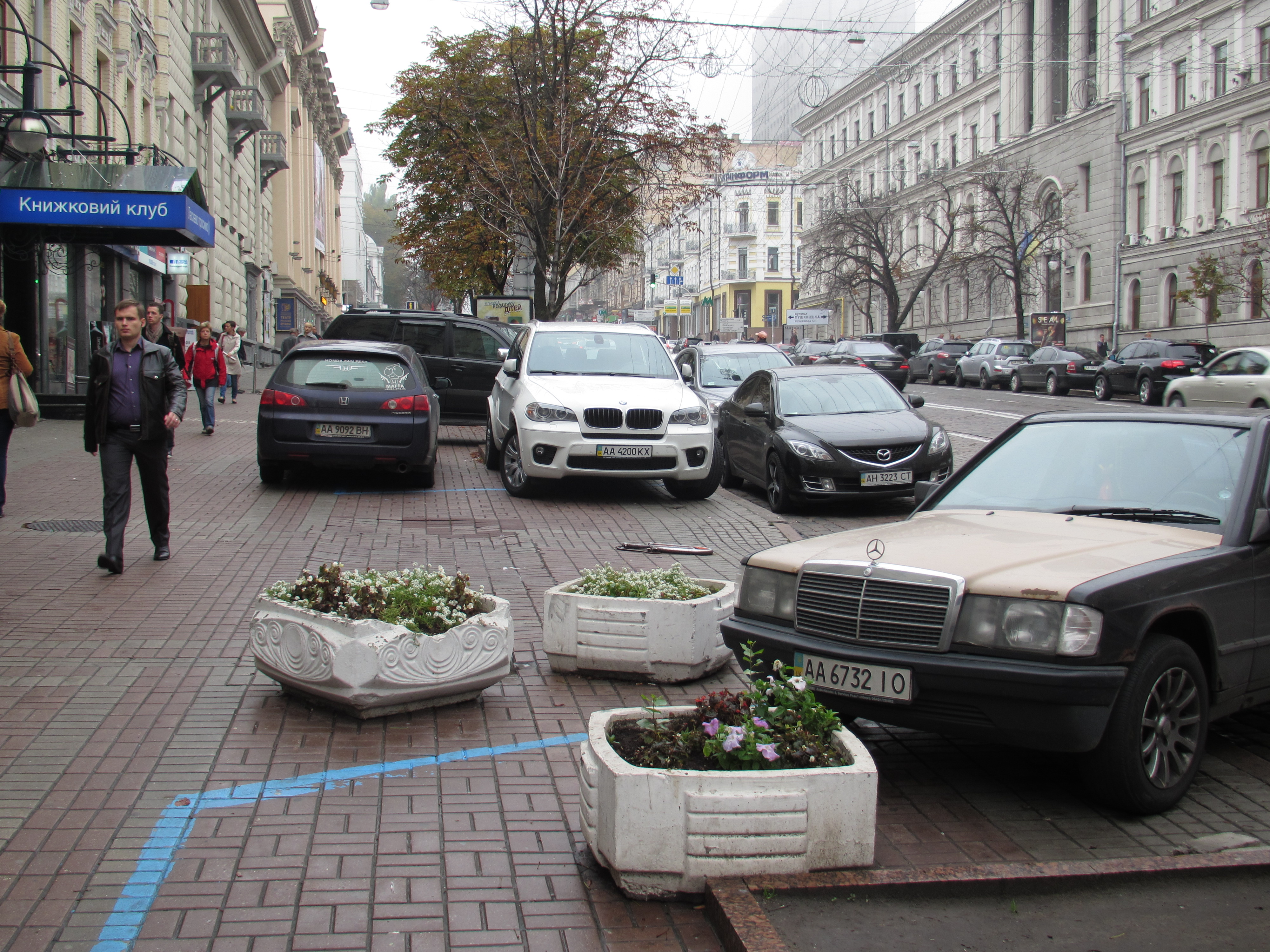
And there is no visible parking restriction whatsoever. We were just standing on corners checking navigation when we were honked at by cars being driven straight up the kerb to head for a parking space. And all this appears to be not only legal but policy, certainly a lot of the pavement bays were marked out with white lines and “managed” by bulky figures in dark coats.

Randy Neufeld, SRAMwww.avk.org.uaBut I have to admit I loved it. Taking on a new city is always a buzz and when I did fly down to Podil or had my photo taken by a tourist on Adriivsky as I battled the cobbles I felt like young Malcolm in the surprise Youtube hit of the last two weeks. “Dad I did it”. And it was good to follow hosts and activists Ksenia and Ira as they moved in confident Dutch style around their city.

So what’s the good news? ”I do not despair for the future of Kiev despite not seeing an adult on a bicycle”? This dangerously close to a policy manifesto which I don’t do in my personal blog, but I feel strongly that I want to say something positive for the people I met in Ukraine.

The best hope is always those people. Margaret Mead, American anthropologist says “Never doubt that a small group of thoughtful, concerned citizens can change world. Indeed it is the only thing that ever has.” The city is full, stuffed by the free-for all on the roads, the dreadful congestion and parking and everyone told me that the majority of society accepts that it cannot go on. That is fertile ground for change.

The energy and passion of the Kiev Cyclists Association members and all the activists, entrepreneurs and civil servants we met in Yevpatoria and Kiev was infectious and they are determined to bring cycling to their country. The evening talk I gave in Kiev was well attended and apparently we attracted a lot of new faces. The quality of questioning was as knowledgeable and passionate as any other country I visit even if there is an acknowledgement that this is a really tough environment to promote cycling.

Kiev, UkraineSo a few thoughts, not just for them but maybe for anyone thinking of doing some cycling when they visit.

It was clear that we had really not seen the best of the cycling community in the city centre. There are green shoots, popular cycling parks and some suburbs where there are regular cycling numbers. I was told Trakhaniv island is not only the cycling mecca at weekends it is a good commuting short cut and could be a place to start building a cycling culture for all types of users, I certainly found it beautiful and welcoming even in the mist. It also wouldn’t take a huge amount of sharing for Kiev Ukrainethe current cyclists to tell others how they get around. By sharing their routes and shortcuts so much of the complete bafflement I felt could disappear and a little critical mass could emerge. Given that there is almost no regulation some informal waymarking could be put in place and would last for years. Kiev Cyclists Association have already painted their own cycle lane in one spot and nobody has erased it, how we would love to get away with that in some other countries.

And no city can be so bad if it has a cyclists’ cafe!http://dream-family.com/en/dream-house/

Kiev activists can also take hope from the rest of the country. Crimea is a potential hot spot for tourism but there is clearly progress in places like Lviv. We know in many countries the capital city came to the party late simply because of size and inertia, but they can show there is nothing in Ukrainian culture that makes cycling impossible. For international cycle tourists and mountain bikers you can find lots of great places to go like Big Yalta.
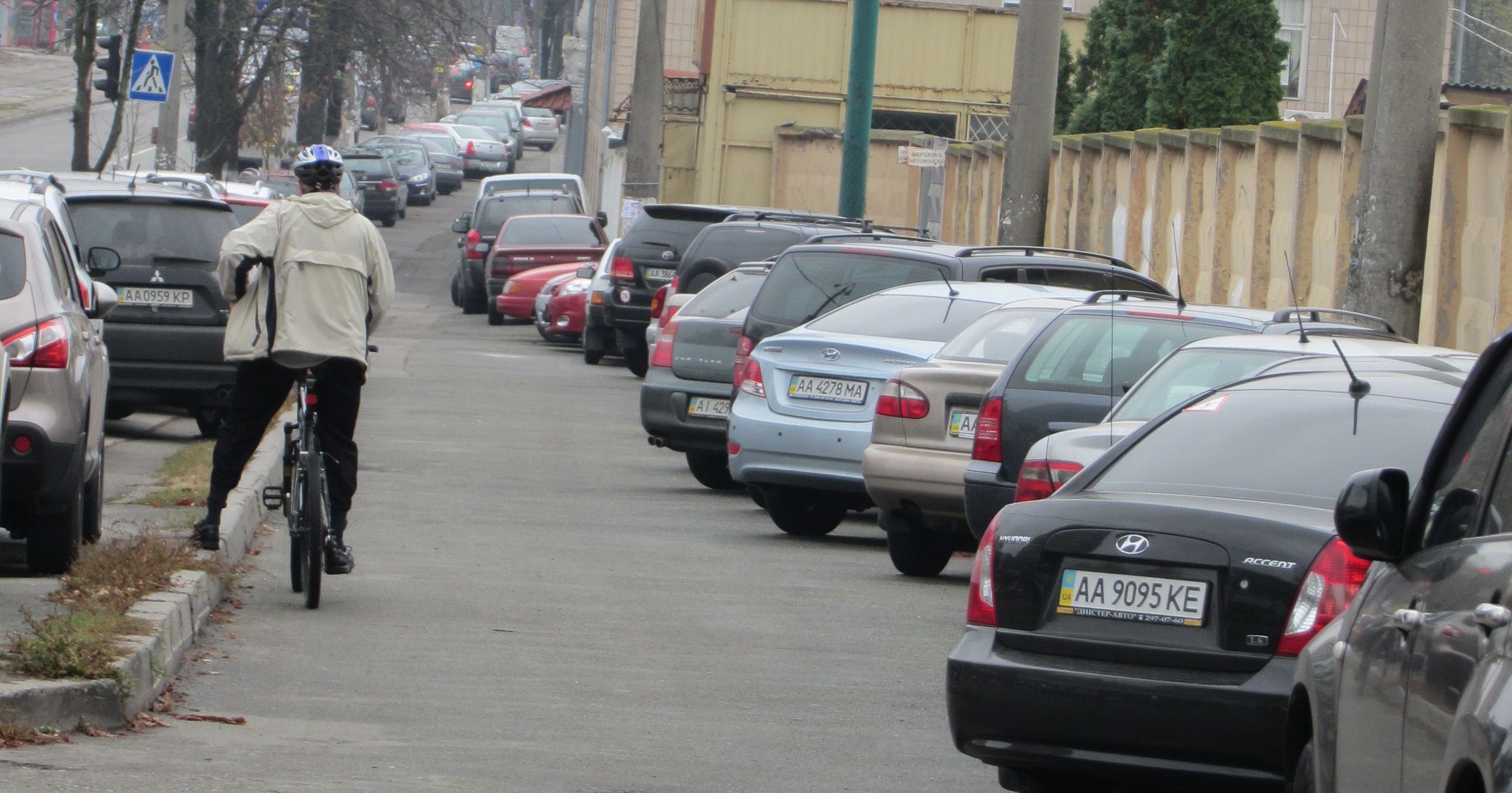
Lastly Kiev has one extraordinary asset that most world cities would beg for, something money cannot buy. It has space. The streets are incredibly wide, the pavements and roads are wide enough for segregated bike lanes, there are plentiful parks and boulevards connecting them. But the space is just unmanaged. Look at this: four lanes of cars on the road – and six lanes of parked cars. Two lanes on the road, two on the near pavement, one on the other side and somebody double parked. Get hold of that and the potential for rapid change is high.
Right now it is a tough call to be an urban cyclist in Kiev, or a cycling activist but here is hope and enthusiasm not despair.

Cпасибі. Thank you.

A tale of two Italian cities – removing the tyranny of the car transforms the visitor experience

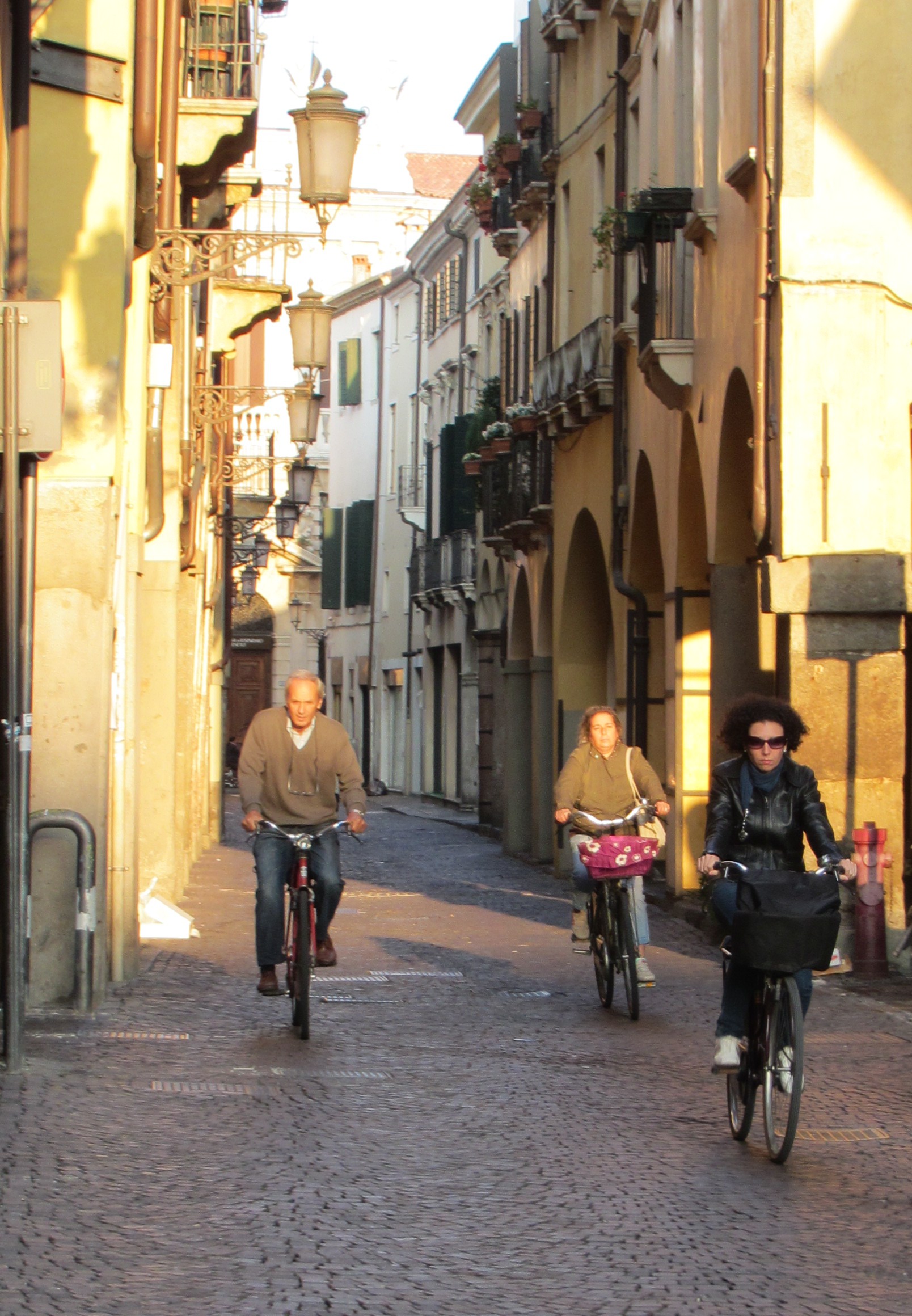
Padova cyclingI am currently processing a whole sequence of photos and stories about my visits to the two Italian cities of Verona and Padua (Padova).

But here is an opening thought. They are only 50km apart, they share many aspects in common in terms of size, culture, antiquity. But in just one aspect of policy one has been returned to us as a liveable, likeable vibrant city. The other is being strangled to death by laissez faire.

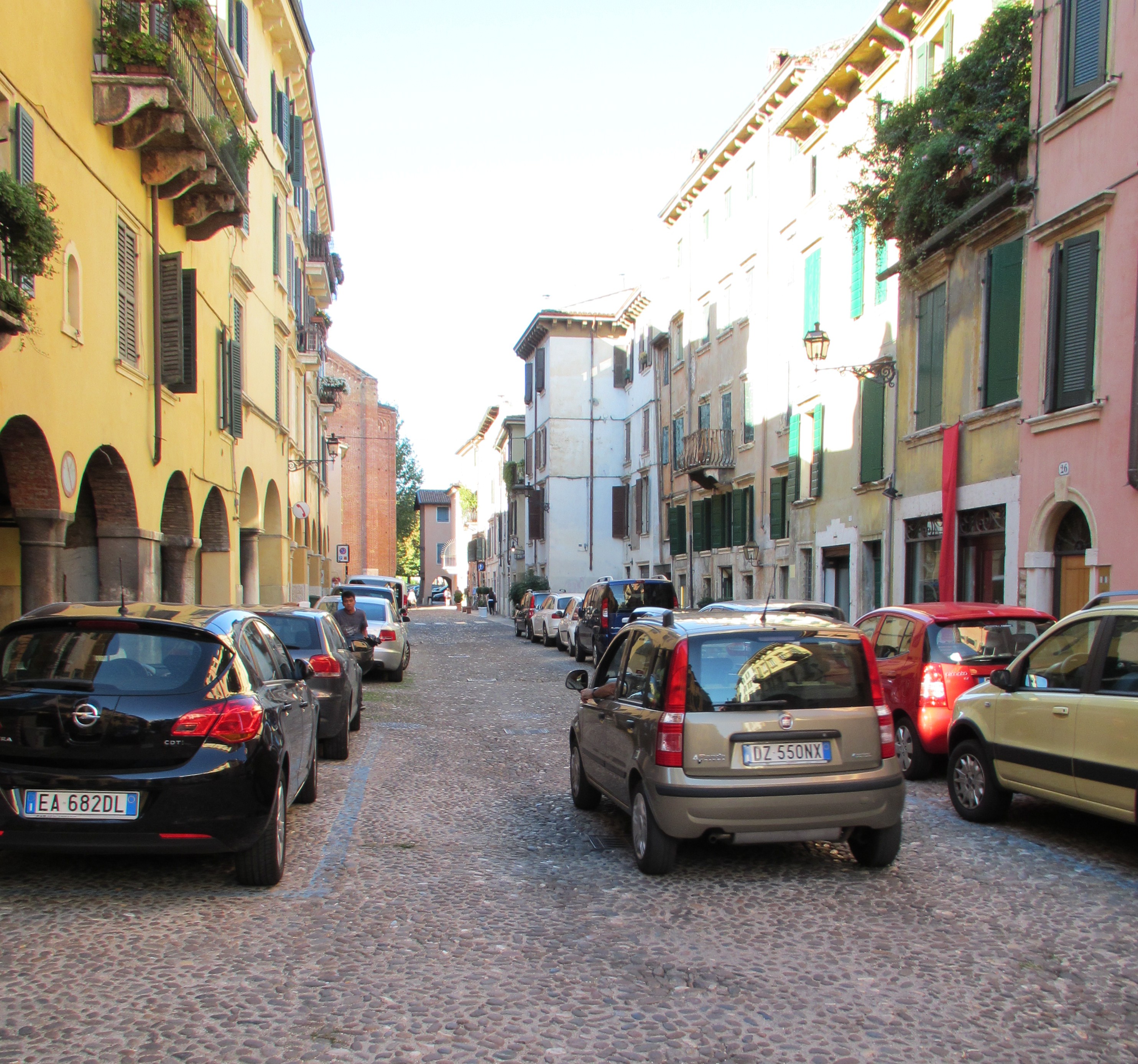
Verona is still gripped by the absolute tyranny of the car. There has been almost no attempt to restrict the disfigurement of the city by congestion, parking, noise and fumes. The restricted area in the city centre for motorised traffic is tiny and any priority given to alternatives is minimal. There are almost no cycling and bus lanes. All but one main square has full access to cars all day.

But of course in true “I do not despair” spirit this doesn’t stop me finding cycling in and around the city being an uplifting feeling, not least because it is a beautiful place, but by far my best moments were quite roads and corners, where I could find them.

A week later Padua. Nowhere near as celebrated as Verona internationally and with much fewer tourists.

Yesterday morning I wandered into the city early on foot and last night I was able to shoot around the streets on a borrowed bike from my local hosts.

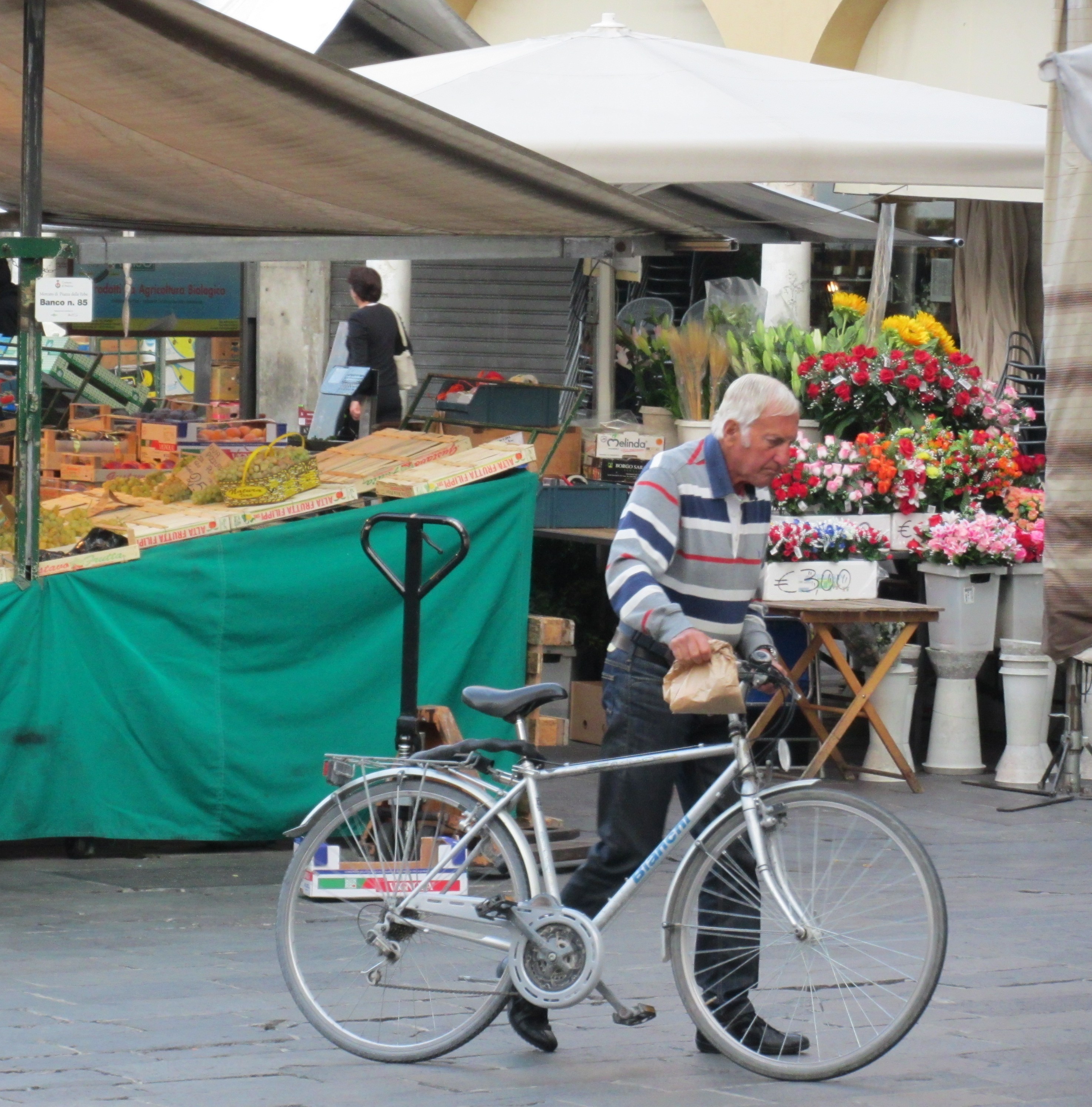
Immediately outside the hotel I came across the first of 150km of cycle paths. And then once I had slipped past the boundary of the old city walls I was almost immediately into the extensive pedestrianized centre. It isn’t entirely car free, there are designated through routes and access is allowed to some areas. But at 8 o’clock on a Saturday morning the contrast is just incredible.Padova market

The streets were not silent – oh no. But the sounds were precious. Firstly people talking – as they walked and cycled and opened the many market stalls. But best of all the almost permanent sound of rattling metal – bicycles on cobbles – the endless array of cheap town bikes that dominate the Italian domestic cycling market bouncing their way around the streets.

It reminded very much of my trip to Bologna in May, again not such a celebrity city as Verona but one where civic pride manifests itself in giving the streets to its people and its visitors. As an international advocate for cycling and sustainability the most important lesson I keep being given is that we spend a lot of time addressing national and even international policies that affect cycling. But within the same country, the same funding climate, the same road laws, the same culture local political will is the determining factor in whether a city wants to be liveable or not.

I will be posting a few more highlights from my visits in the next week or so, but I’ll complete this post with two photographs.

Both are cathedral squares. Which one would you like to spend time in?


Dublin cycling – deserves a fair chance

Dublin Promotional magazine for National Bike Week

The promise – promotion for National Bike Week in Dublin

I feel really sorry for my hosts for the last few days.

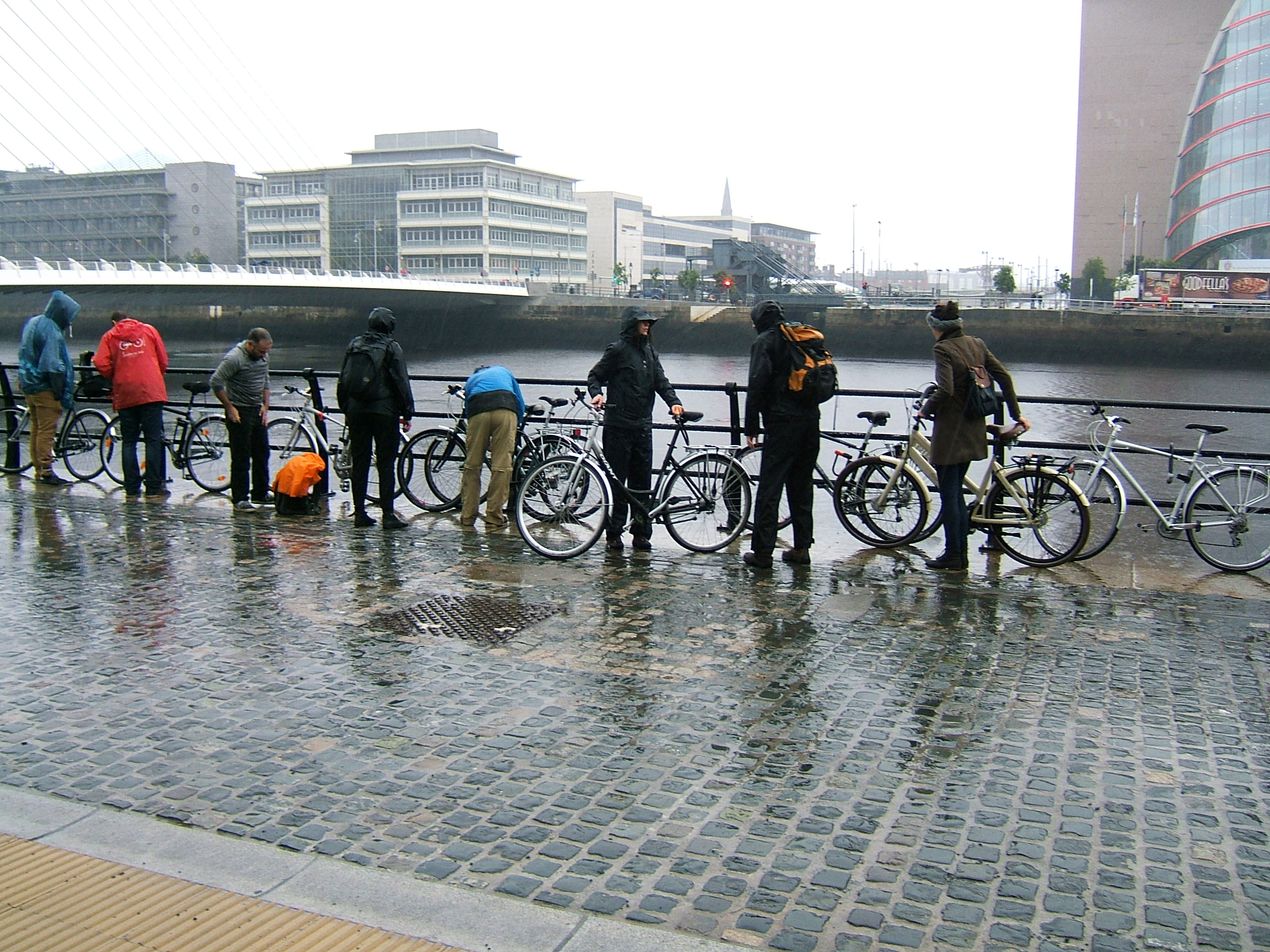
To be fair they did put on an excellent cycling conference. But to invite an international cycling group to your city and have every possible weather cliché come true is really sad, there is really no reason why a storm should wreck everything in June.Wet day in Dublin

To give it some science.  Those outside northern Europe may not know that the Atlantic Jetstream is bringing storms across the Atlantic hundreds of kilometres further south than is normal at this time of year which brings record rainfall since April.

And global warming means these storms are wetter and windier than we really should expect. When I got back to the UK last night the country was covered in flood warnings and Brussels has been awful for weeks too.

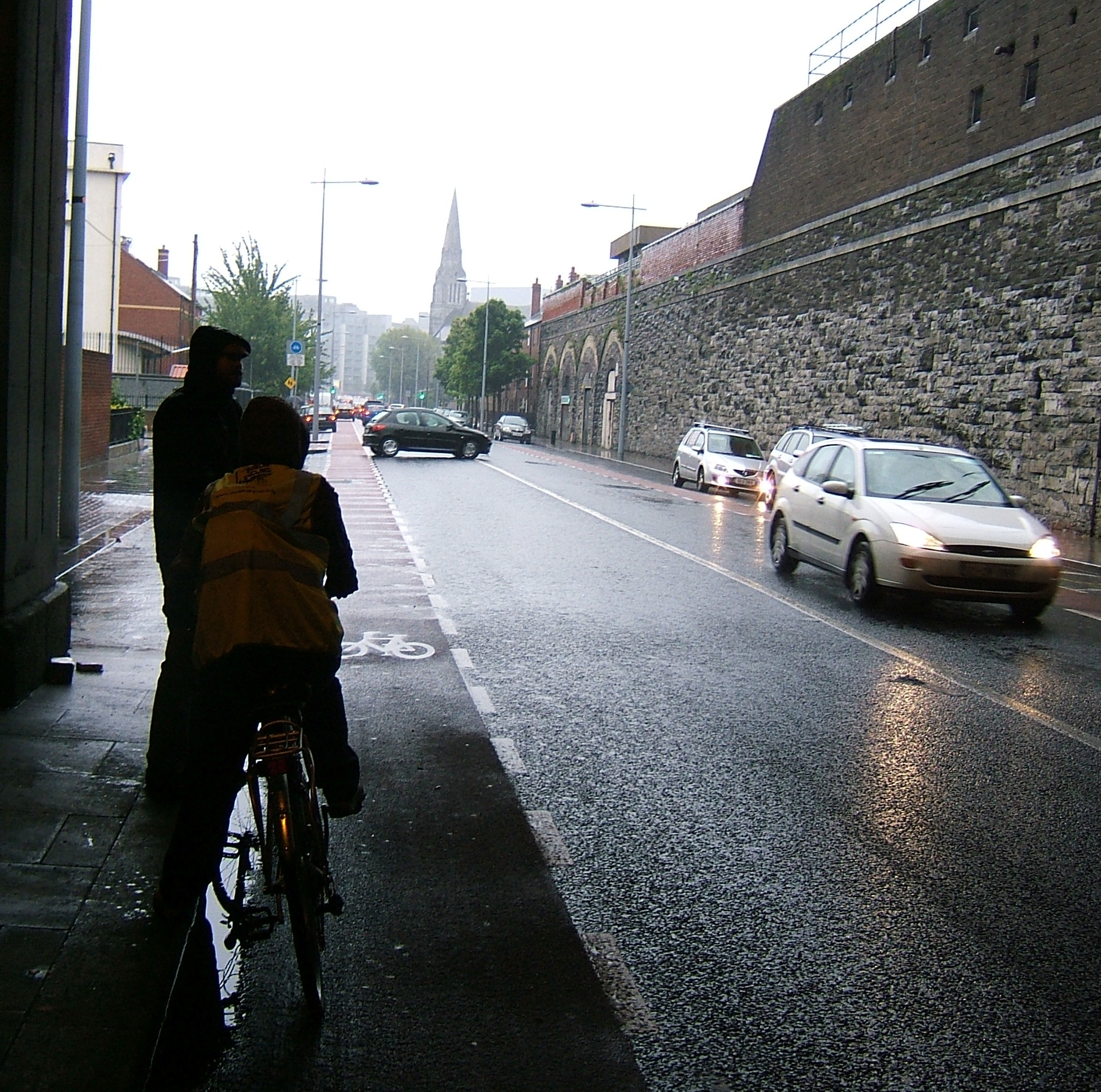
So sadly the Dublin cycling tour to look at what the city has done on cycling just became a mess, unprepared riders in difficult gloomy conditions. By the time we set off to ride to the conference on Friday I had every sympathy with people from Slovenia or Romania who had run out of dry clothes.

So this trip’s photo record reflects the experience. All I can promise is that I will go back.

“Do not despair” message of the day?

Despite the rain being on a bike was just so much better than being in the congested car traffic. And credit to the hardy Dublin cyclists who replicated Copenhagen’s Green Wave – but as a small wave of high viz bowling in to town.Hi viz in Dublin

I hope Vancouver gives me some respite next week. And as a Brit I really hope the weather doesn’t do to the Olympics what it just did to Dublin Cycling Campaign. Fingers crossed.

Dublin Quays

Dublin Cyclist

Colm in Dublin

Dublin Cyclist

Any port in a storm

Beer

Plan B – the only viable alternative

Brussels cycle lanes – taking the rough with the smooth

Last week’s trip to Amsterdam prompts me to revisit one of my pet rants.

The surface of cycle lanes in Brussels.

Rue des Sables - Brussels

Typical state of Brussels cobbles

There was lots of cycling on cobbled streets in Amsterdam and in Brussels. I like a nice cobbled street, even if it does play havoc on a small wheeled folding bike. Cobbles are part of Belgian cycling folklore, you can’t be a Flandrian icon without that background as a hard man of the pavé. So I’ll forgive the truly diabolical state of repair of the cobbles in what is supposed to be the capital of Europe.But why, oh why do so many Brussels cycle lanes have to be made of tiled surfaces? It’s an awful surface, effectively a pavement for bikes. And mostly built beside smooth, welcoming tarmac.

Tiles on the Avenue de Tervuren cycle path at the Tervuren end

Avenue de Tervuren cycle path

Harder to ride on, difficult and expensive to maintain, really unwelcoming.The most frustrating stretch I have found was on Avenue de Tervuren, the Tervurenlaan. Direct cycle route all the way to Brussels, nicely segregated from the main road. But every bone in my body wants me to move to the welcoming tarmac beside me rather than stay on the tiles.

Avenue de Tervuren cycle path at the Tervuren end

This looks really inviting, doesn’t it?

I am house hunting out here at the moment but the idea of this being the first 5km of my daily commute is a bit depressing.It’s not as if there is a design standard that stops them.

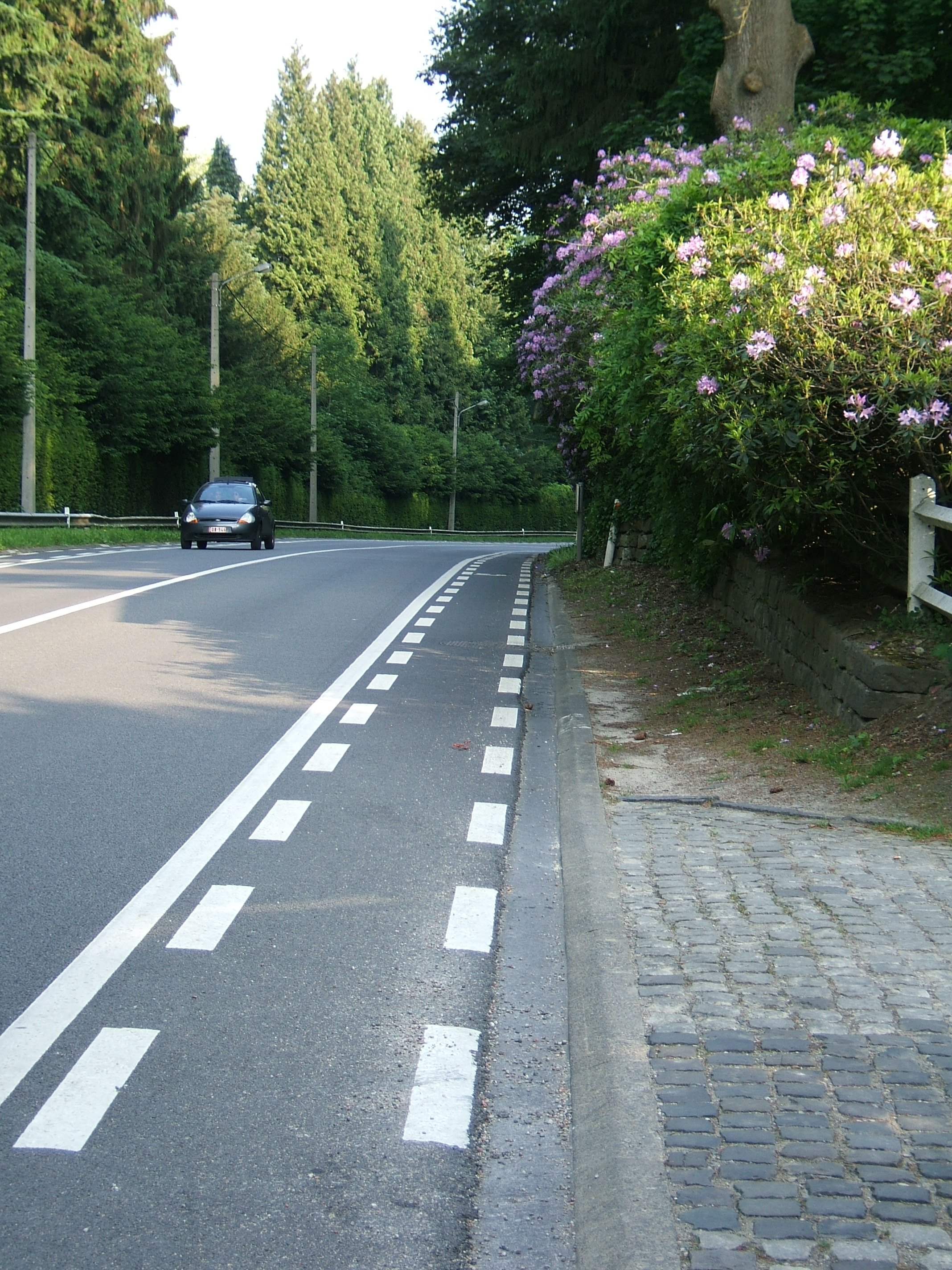
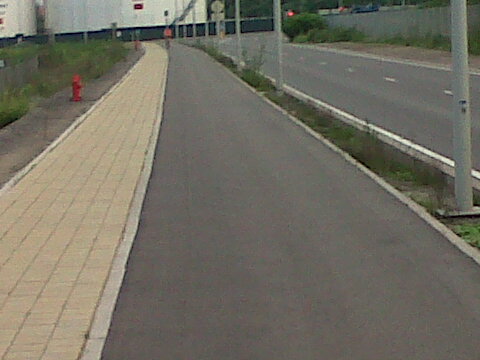
There are much better examples – to the north of Brussels a new section around an industrial estate and to the south in Walloon Brabant a lovely smooth descent through the rhododendrons near Chateau de La Hulpe which is more common out in this province.  Critics will say that it is deficient because it isn’t properly segregated, but frankly this is supposed to be the transport of delight, you shouldn’t need to be hard man of Flanders to bike to work.

Cycle lane on road to La Hulpe

A welcoming cycle lane on road to La Hulpe

Proper tarmac cycle lane in Brussels

Proper tarmac cycle lane!

Taipei Cycle Show (1)

Never saw this one coming when I signed up for the ECF job. Taipei Cycle Show, the world’s biggest bike show – apparently thousands of metres of bicycling bling, the one nobody in the trade can afford to miss. I’m here because most of ECF’s sponsors are here, so I will be on best behaviour for the rest of the week. But I’ve just got here, its Monday afternoon and the blasted hotel won’t let me in to my room until 6. So of course I’ve been for a walk seeking first impressions and cycling. Now I have time to post a few first impressions from the lobby before I get the room.

I came in to the city on public transport. Most of the western looking people at the airport set off for the taxi rank and its extensive queue. I have a hotel to the north of the city and a little bit of research showed I could combine bus and metro – called the MRT here. So I paid about 5 Euros to get to town, only westerner on the bus, made me feel a bit more like an authentic traveller. However the bus did hit a real traffic jam on the route to the city which gave me a birds-eye view of a massive aerial construction project running out to the airport. I hope it’s the extension of the MRT in have read about, I’d hate to see a modern city not learning the lesson and still trying to build freeways to solve congestion. At the moment its really weird, there are these odd disconnected shapes on the skyline which made me come over all Blade Runner, their shape doesn’t sit right on the eye.

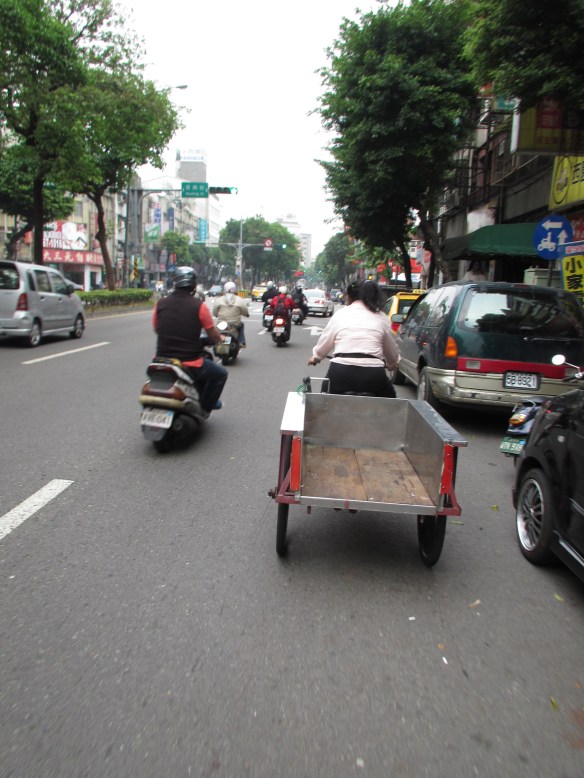
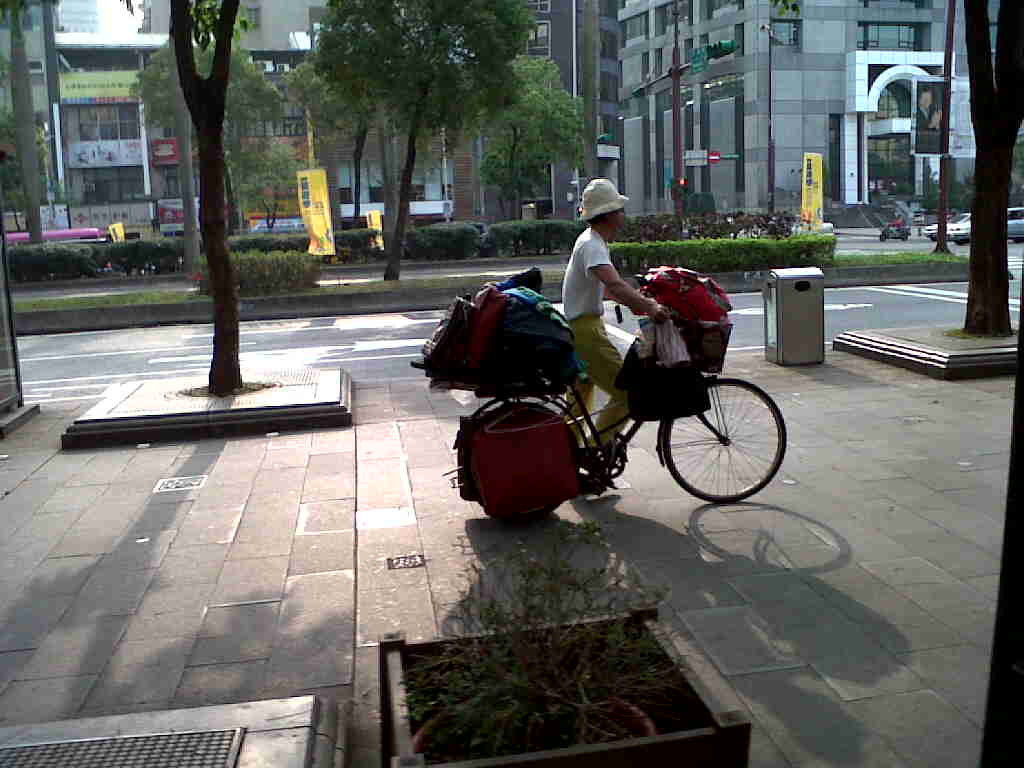
Hardly saw a single cyclist as we drove through the city, but then the first one was a classic little old Chinese lady on a cargo trike. Yippee – if little old ladies haven’t been driven off the roads then life is OK – we do not despair.

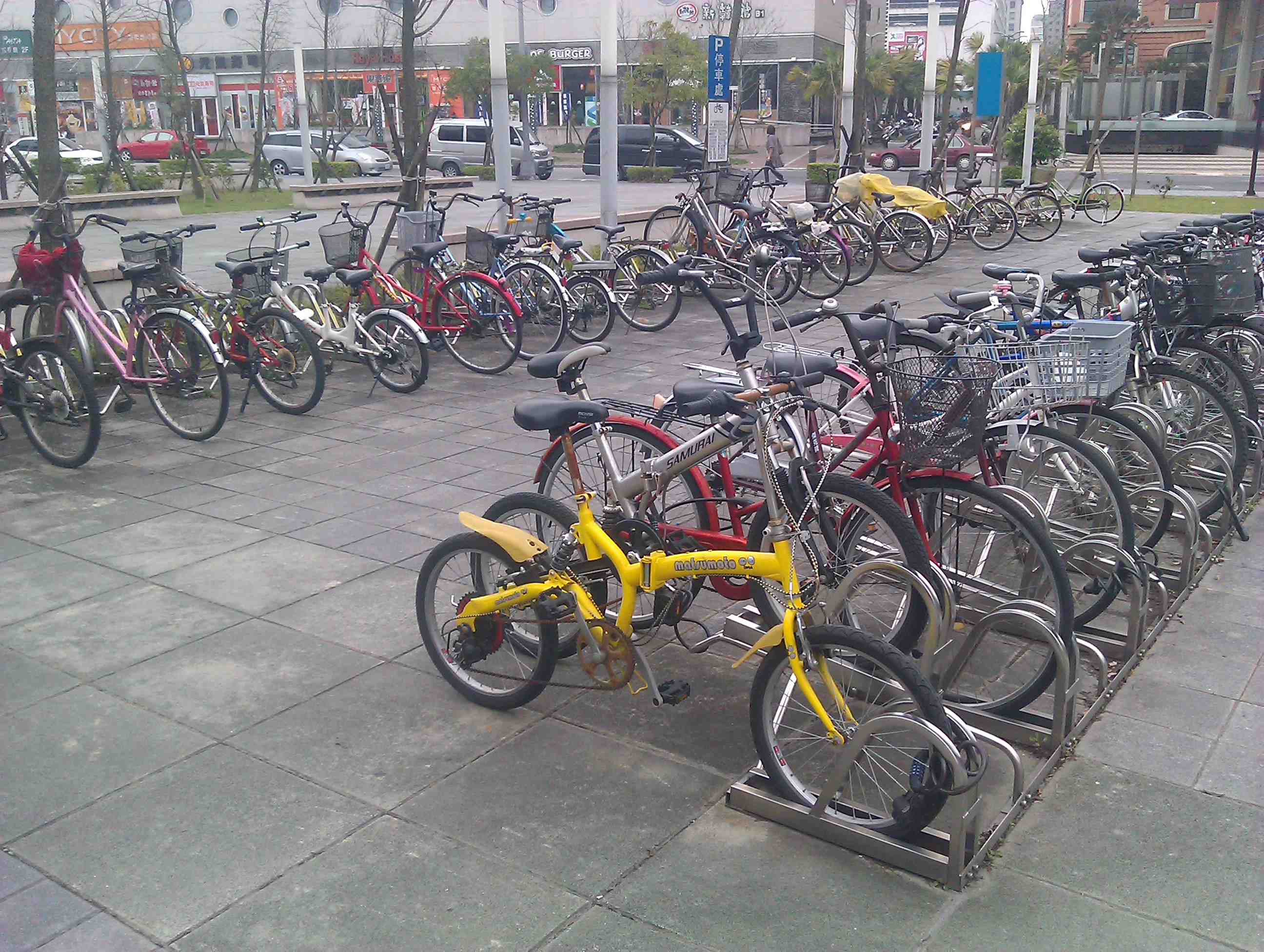
Taipei Jiannan Road Station Cycle parking

Taipei Jiannan Road Station

And it is pretty cycle friendly out here by the hotel near Jiannan Road station. Immediately outside the station a good selection of bikes parked.

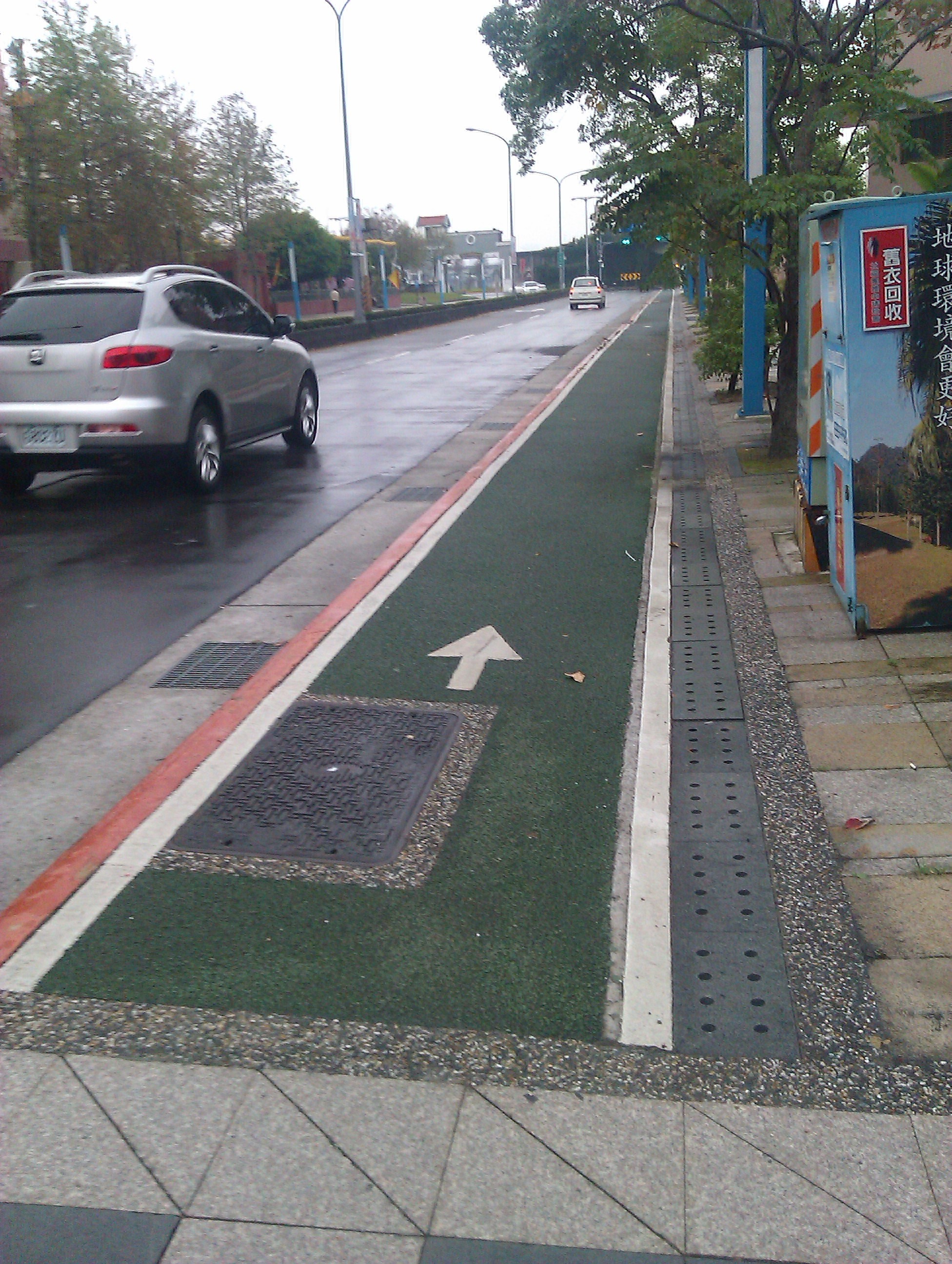
And as soon as I got 100 metres from the hotel door on my walk I came across my first virtually new bike lane, and even better a large road sign

Taipei New Cycle Lane

Taipei New Cycle Lane

saying “Bikeway”. 5 minutes later and I was in a wide windswept park by the river and despite the muggy rainfall a small but steady stream of cyclists were out getting some exercise on a leisure route that looks like it goes a few miles. Mixture of rider – all male – from older chaps on city bikes to young blokes in lycra on some serious kit.

Some nice touches on the cycle lanes too. Every property exit has its own personal give way sign painted on the tarmac – now wouldn’t we like some of that back home.

Warning stencilled at property exits to protect cyclists on cycle lane from leaving cars

Warning at property exits to protect cyclists on cycle lane in Taipei

Having sated my initial desire to get in touch with my inner cyclist I then did the only thing a cyclist can really do on a damp muggy afternoon when you are not riding. Tea and cake of course. I was dismayed to see the ubiquitous Starbucks and McDonalds but then I found a tea house serving proper Chinese teas and food make with tea flavours. Not quite sure about the tea flavoured dried tomato, I’m sure that is an acquired taste but I enjoyed the freshness of the tea and mousse cake enormously. I’m going to enjoy this.

When I have recovered from 24 hours without sleep I’ll have to track down a hire bike, got to go out to the show to register so may as well ride if I can.

More on bike shows tomorrow.