Christmas Eve cycle ride – cobbles and battles

WaterlooChristmas Eve was one of the few times since I started working in Belgium that I have been for a bike ride that was “just a spin”, a proper touring ride through the local lanes.

Previous rides have almost all had a purpose – exploring areas to live, visiting houses and more recently plotting routes to work or to local services. I feel as if I have been waiting weeks for free time to coincide with some gaps in the rain or snow and it just happened to be the afternoon of Christmas Eve.

I decided to cut though the lanes in the general direction of Waterloo, partly because the network of roads look interesting on the map and also because I wondered how much I could ride around the historic site of the 1815 battle.

It was really refreshing to be pottering about and with time to take some photos. When I returned three impressions were left on my mind.

Firstly I was good to be moving at bike speed through the villages and hamlets rather than by car so I could enjoy the vernacular architecture glowing in the winter sunshine, especially the white painted farmhouses which dot the fields and the solid brick churches marking the village centres.Lasne, BelgiumPlancenoitLasne

Waterloo Chemin des CosaquesBattles are not really my thing but I want to know more about my new home and the Battle of Waterloo is by far the biggest deal in this region, undoubtedly one of the most pivotal battles in European history. The main Waterloo battlefield is actually south of the town itself and include the communes of Braine L’Alleud and Lasne while the events leading up to the battle stretch many kilometres away to Wavre and Genappe, right across the area I am now living.

I was first aware that I had hit the battlefield proper when I came across the first of many roads named after the troops and leaders of in the battle. And then bouncing across the cobbles and potholes I looked up from my concentration on the road ahead to see the Butte de Lion, the huge pyramid -like mound built by William 1st of the Netherlands to mark the event.Waterloo Belgium
It isn’t the most attractive memorial in the world but it is certainly a major landmark in the surrounding agricultural landscape which only dips away gradually. At least around its base there is only a limited amount of tourist exploitation while the older buildings mark their association with the flags of all sides and not much other adornment.

Waterloo BelgiumHowever the thing that really struck me was that I could ride right up beside the monument and then head out across the fields on my bike, I am sure in most countries this would be closely guarded and only accessible by paying customers. Alongside the path were interpretation boards in multiple languages which set out the main features of the battle. I was able to swing across the ridge defended by the British against the French cavalry charges accompanied by several joggers and the car we collectively pushed out of the mud in a burst of international collaboration.

Battlefield path WaterlooSo I can mark that one down as somewhere to bring cycling visitors with an interest in history, a bike is a really good way to move around the big area covered by the battle and get a sense of the topography.

Ah, but there is a catch. My third and final discovery was the state of the roads in this direction. I may have moaned a bit about rough cycle paths earlier in the year but for the first time on this trip I hit some of the real stuff, proper domed pavé with deep ruts down either side. Front lamp lasted about a minute before it had to be removed but the rest of the bike and I rattled bumped and bounced all over the place with little semblance of control or momentum. Only a relatively short section fortunately but it caught me by surprise.
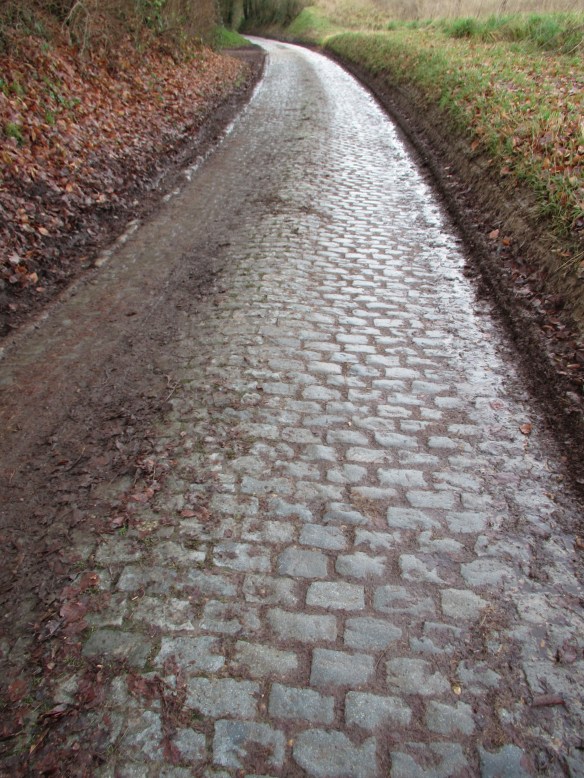
Cobbles of LasneLater I tried my best to imitate Tom Boonen, going full bore down the centre crest on a similar section which seemed to work better but it was tough keeping it going and no fun at all when momentum was lost. A few of the minor roads are theoretically smooth now but when the tarmac wears away the thinly covered cobbles are exposed and make impressive potholes, a tricky combination after all the wet weather.Waterloo cobbles

In other areas the cobbling is more decorative, in fact it looks like it is used as a sort of traffic calming because many of the road junctions and village entrances had short sections in just the right places to discourage car speed. These more modern sections are relatively tame for a cyclist and in general the drivers show a lot of respect to cyclists, certainly better than in Brussels.

All in all I loved my return to pottering about the lanes and the discovery of the countryside, the history and even those cobbles. I look forward to much more, but for the moment I was refreshed for Christmas.

I wandered lonely as a cloud

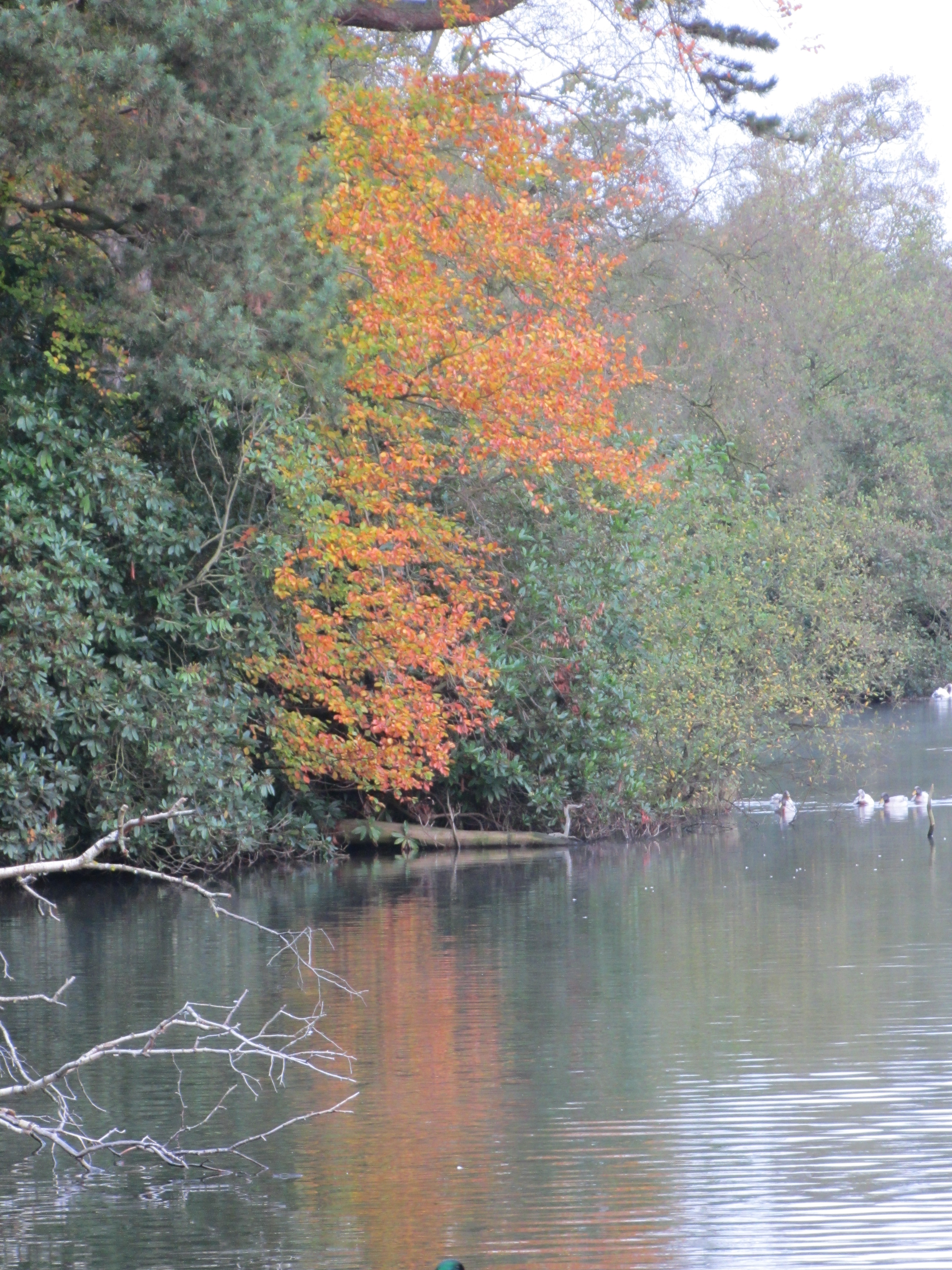
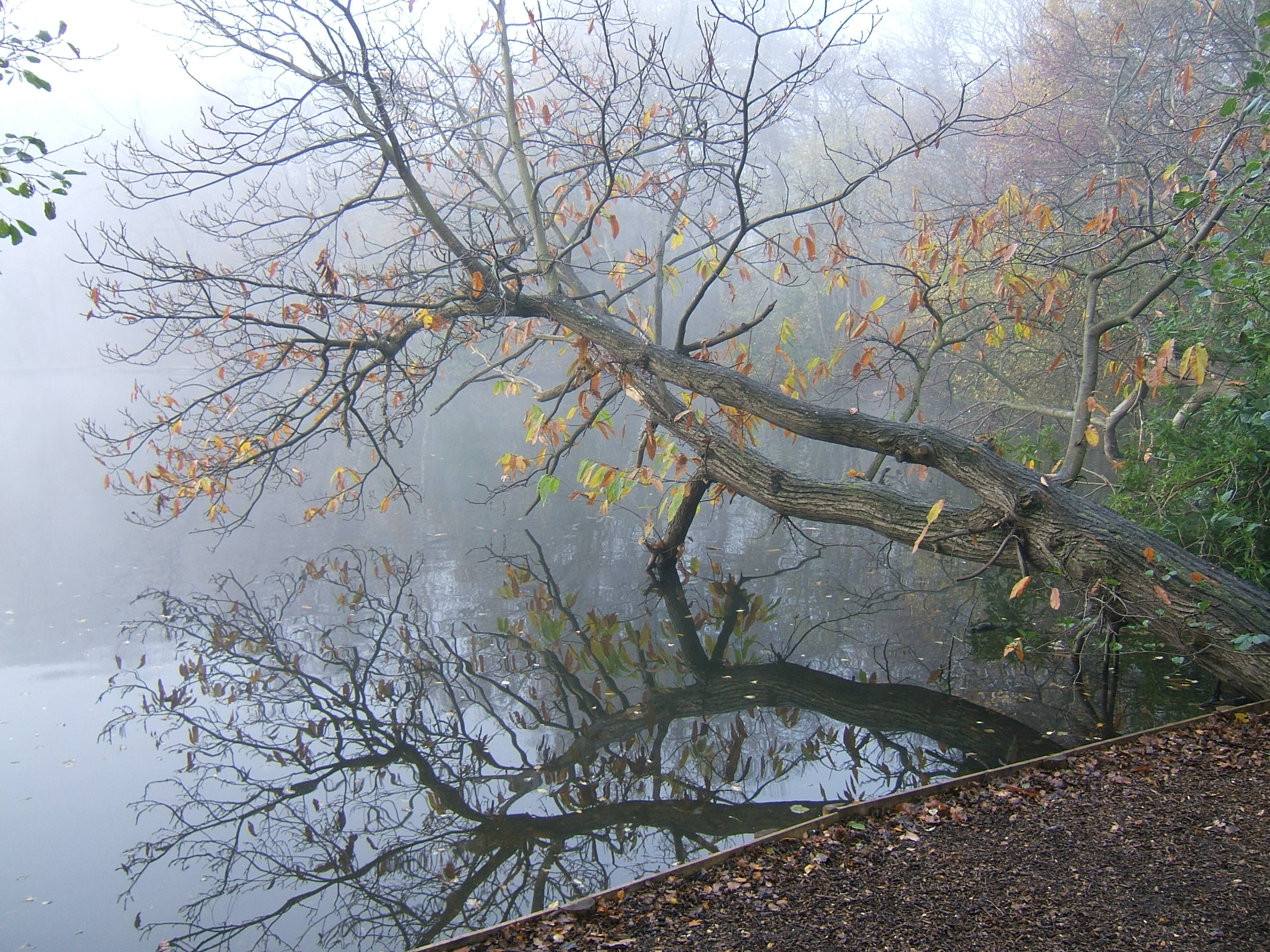
Autumn skyBeautiful skies on Sunday’s walk.

And the temptation – because the tiny sign to the left of the trees means there is a path up there. One I haven’t walked or ridden yet. One for the future.

Promise you won’t tell anyone?

BerkshireI wanted to publish a small gallery of favourite photos from the Berkshire village where I have lived for the last ten years as a farewell and a memento.

I had never heard of Finchampstead when I got a job in Guildford but friends encouraged us to consider Wokingham as a place to live because of its environment and its schools. Quite by chance my wife found a house and a school place for our son out in Finchampstead. It was formerly a tiny village with origins as a hamlet in the Royal Windsor hunting forests. But in the 20th century it grew rapidly as housing was carved out of the woods but there is a real legacy of woodland with its country parks and National Trust woodland, not to mention the remaining Crown estates which provide the magnificent mountain biking at Swinley Forest, just a few miles away.

As well as all the great things that go with family life I found one really unexpected thing in Finchampstead. Don’t tell anyone but I actually started enjoying walking. The environment has a lot to do with it but of course the most important stimulant was my furry sidekick. So just a few seasonal favourites from the last five years of walks , culminating with the leading actor himself in the autumn’s leaves, our last walk before we packed the car.

Finchampstead, Wokingham BerkshireBerkshire AutumnBerkshire, Wokingham

California Country Park, FinchampsteadCalifornia Country Park WokinghamBerkshire, EnglandDog California Country Park Finchampstead Wokingham Berkshire

Cannot beat cycling to work on a forest road with a layer of golden beech leaves #magiccarpet

Brussels Belgium Chemin Des Tumulii

The middle of one of my new commuting routes, before I hit the roads of Brussels (sigh)

Not despairing in Stockholm

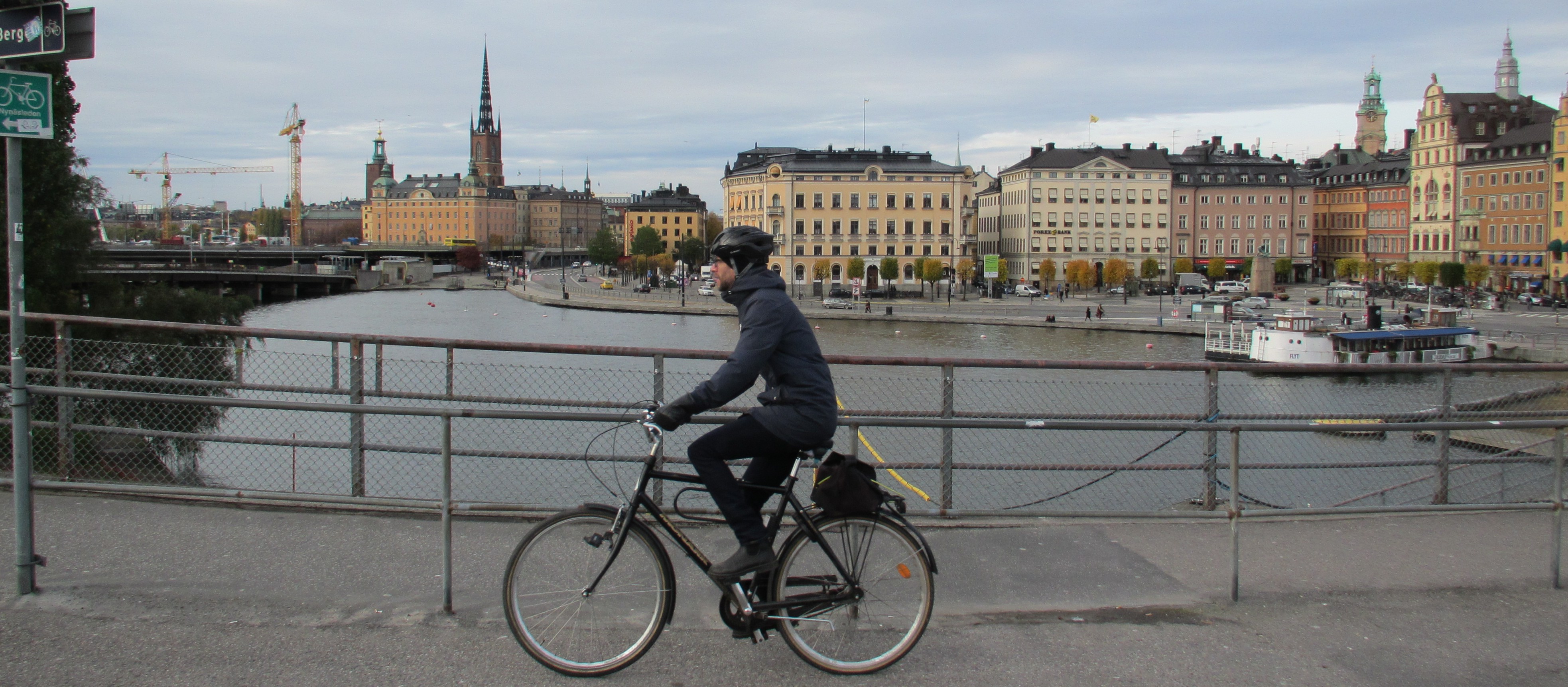
SwedenI have only cycled once before in Sweden, and that was three years ago after Velo-city Copenhagen when my son and I took our bikes across the strait to Malmo. It was clear to see that there has been an extension of Copenhagen riding culture across the bridge because cycling levels were really high and well catered for.

So I was very interested to see what the capital city was like away from that influence, especially as I was doing an evening talk with the Dutch Cycling Embassy to a group of municipalities from the Stockholm region. It certainly helps to have ridden just a little bit before speaking to a cycling audience, if only to see where we have things in common, I am always reminded of the famous situation when the Beatles landed in the US and as they got off the plane a reporter said “So what do you think of America?”

Sweden cyclingFirst discovery was yet another design of bike in use for the public bike sharing, a rather odd looking beast with a small front wheel, and what turned out to be horribly uncomfortable saddles.

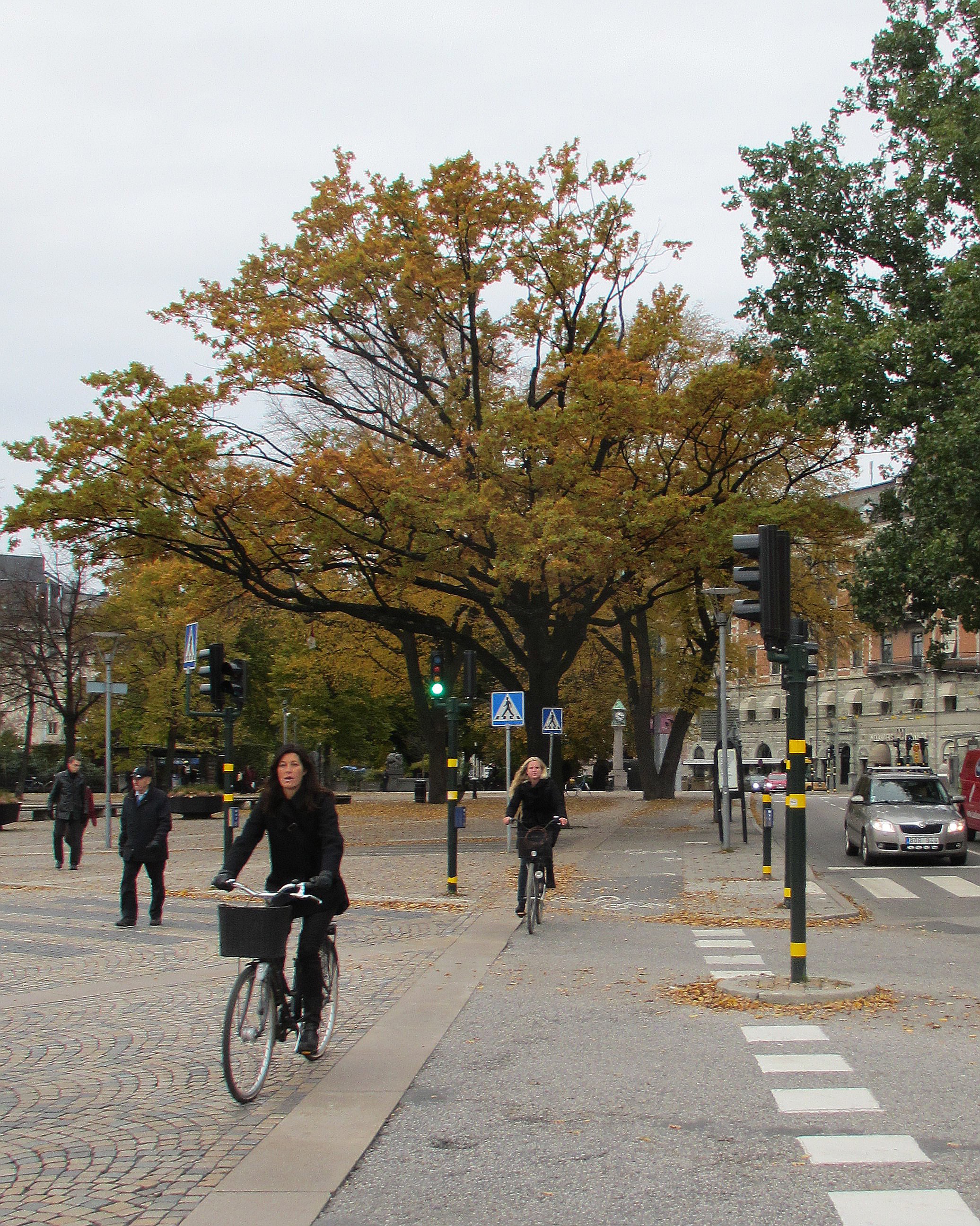
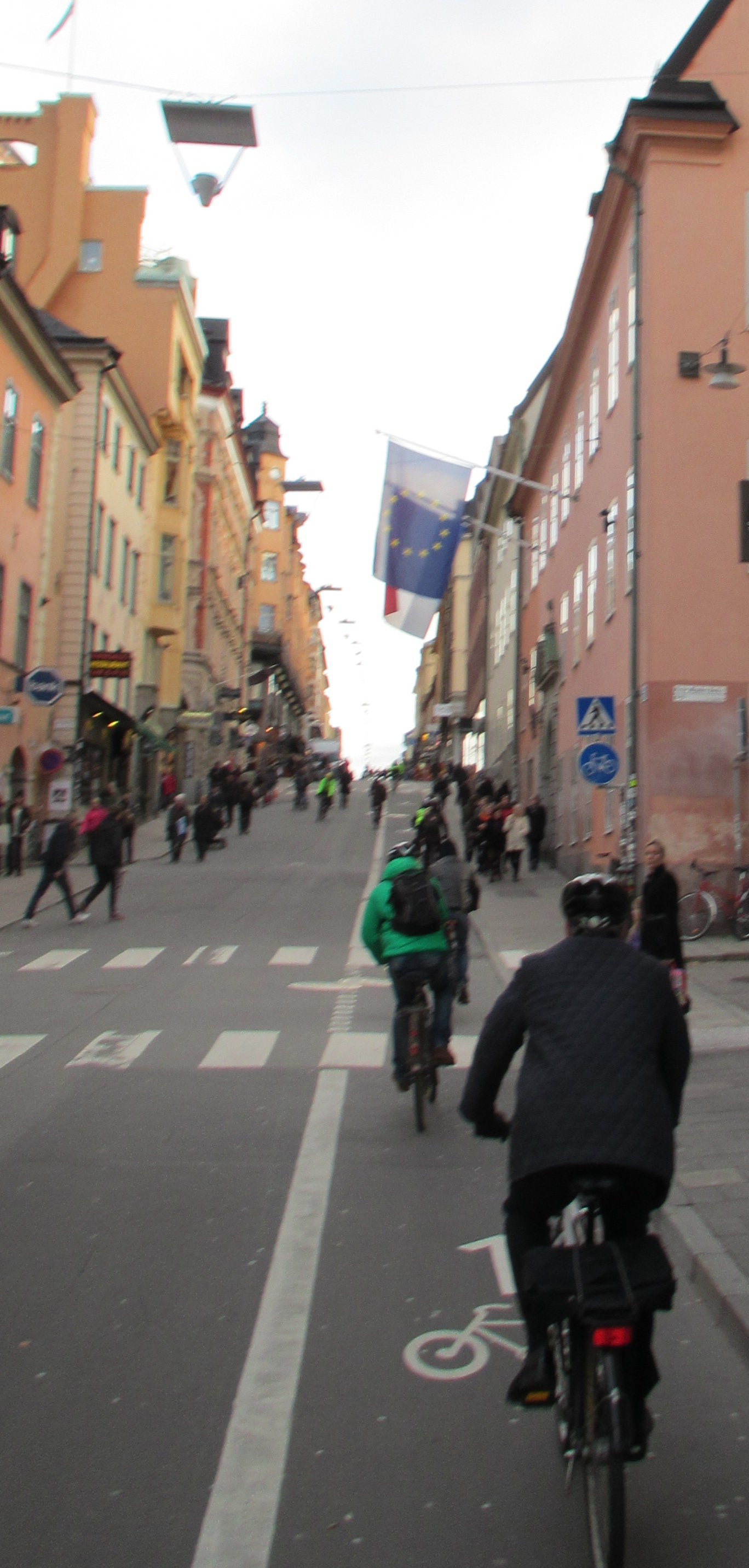
Throughout the two days I saw consistent streams of riders, obviously higher numbers than many places I know in the UK or Belgium, up there with parts of Germany but not quite reaching the critical mass of the Netherlands or Denmark. I was quite pleased with myself when I guessed a mode share of 10% as that turns out to be about right, I think I am starting to tune in now as I increase my exposure to different cycling environments. Swedish cycling

I was told that this is actually well behind many other Swedish cities and Stockholm may be holding the country back. It certainly was a mixed culture full of contradictions.

Encouragingly high numbers of women cycling which is always an indicator that cycling has been normalised and taken back from us macho types, but then more helmets than I have seen anywhere that doesn’t have a compulsion policy.

As we rode around we encountered every kind of cycling facility, without any rhyme or reason as to which would come next.  On road, on paint, segregated and shared use all in a small area and without any apparent strategy, or if there was I missed it. And almost no car free areas except a few streets in the touristy part of the old city, that really is a bit of a rarity now in forward-looking cities now.

Swedish cycling

Quality of the cycling facilities was pretty good when they existed, often wide and smooth, but there were some totally chaotic and confusing junctions to a newcomer.

SwedenI am glad I was following Christian on my first day. The routes around the waterfront were lovely, the sort of ride that makes me want to get up in the morning.

And that’s a point – did I mention mornings? I had my usual hotel problem of waking up really early so I went out for a walk around 6.30. Big shock to the system, pitch dark without a hint of dawn and a wicked wind cutting through the buildings, suddenly you know you have come a long way north.

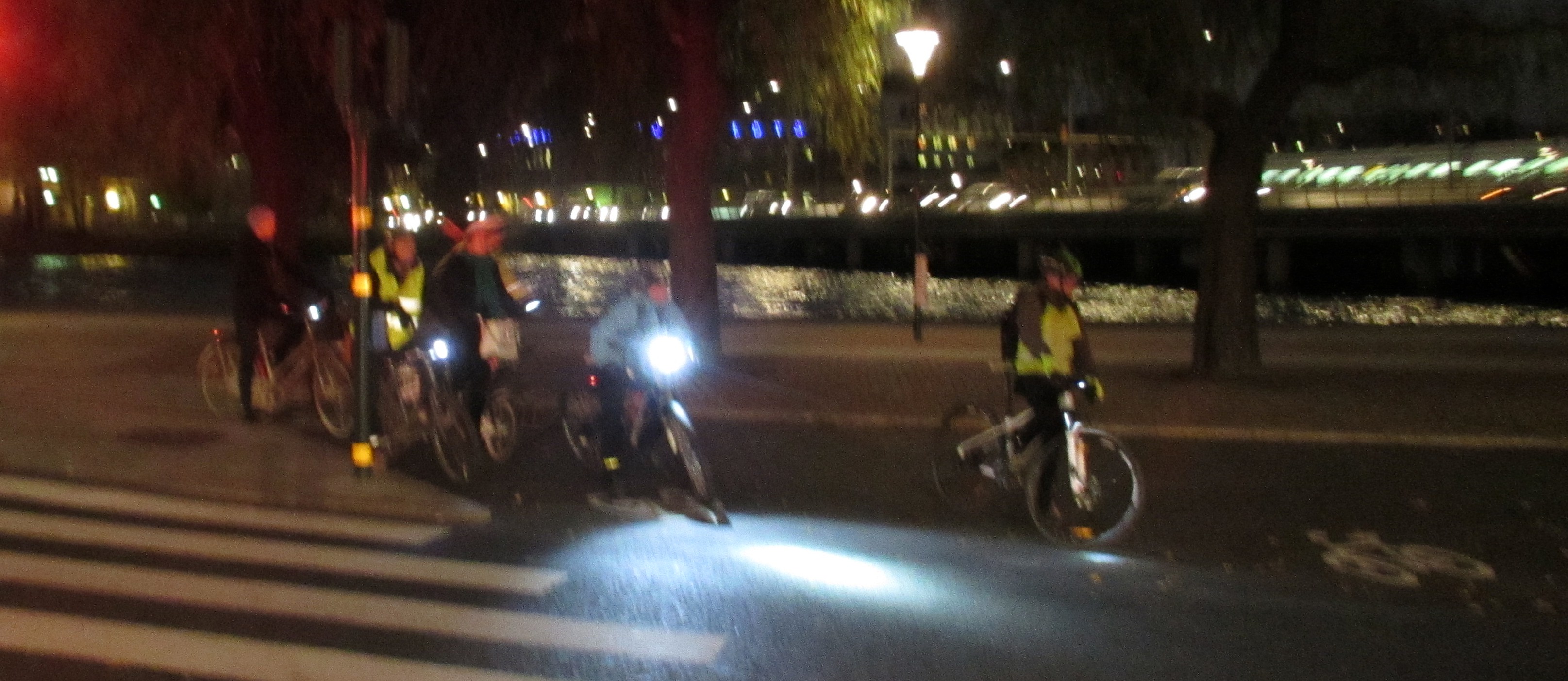
But as I wandered out of the old city towards the main roads I became aware of lots of traffic noise and discovered that rush hour seemed to be well underway, not just for cars and trains but for cyclists. I was later told that Sweden has quite a long-hours culture; or one where people like to start early so they can get home early. Whatever it was I don’t think I have seen quite so many early riders anywhere. I guess if you get used to cycling through a Scandinavian winter you are used to doing a lot of riding in the dark, but this was quite striking.Morning rush hour

Given that I see no cyclists on the roads in Brussels before 8am it was encouraging to see them out there.

Another nice feeling came around the Dutch Embassy, which conveniently happens to be on the busiest cycle route in Stockholm. As the street outside is car free and mingles bikes and pedestrians it could almost be home for the staff. Although the hill is a bit bigger than many of them would ever encounter! Great thing the embassy has in common with any Dutch organisation: When the ambassador talks about cycling in his welcome speech at least he hasn’t been handed the notes on a piece of paper, he has actually ridden a bike around most of his life, as they all have. Gives them enormous credibility as hosts and ambassadors for cycling culture.Netherlands Embassy Sweden

I’m looking forward to further invitations, this Dutch – Swedish relationship could go well and I hope to be back to see the results.

A cyclists view of Stockholm in autumn

Gallery

This gallery contains 16 photos.

I went to Stockholm a few times in my business career. I can honestly say I don’t remember anything except an amazing boozy harbour cruise at mid-summer. But charging into meetings and dashing around in cabs left me with no sense … Continue reading

Frustration and hope – cycling experiences in Ukraine. (Or “clueless Kev in Kiev”)

Randy Neufeld SRAMFlashback to last Tuesday. I am stuck at the side of a large road junction. I know I shouldn’t be here, I wanted to go straight on, but lacking confidence I have pulled over to the right and I am stuck against the barriers. Now there are two lanes of cars swinging across my line and I can’t get back to my lane.

And this traffic cop is giving me the eye. I don’t think I have done anything illegal, it’s just that I am an alien being in this landscape. He certainly isn’t going to help, that’s for sure. What I really need is another cyclist to follow, somebody who knows the ropes and does this regularly.

But there’s the catch. There aren’t any. This is Khreschatyk, the main street in upper Kiev and I am on my own. I’ve been out riding for over an hour and I have seen one other cyclist, and he was on the pavement (sidewalk). One of the fun parts of writing a blog that starts “When I see an adult on a bicycle…” is that I play a sort of game in every new city, being cheered by the first rider I see. However in 2 ½ days I saw just 10 cyclists, that’s like being back on the dark ages of cycling in Britain. The best comparison I could make was when as a student in 1980 I first tried to cycle from Durham into central Newcastle upon Tyne, a lonely and exposed figure on a morass of high speed roads and aggressive driving.

Before this turns into a rant I will say there are some positive things to say about cycling in Kiev, but it isn’t easy.

Generally I’m a pretty positive cyclist, maybe not in the category of the messengers but I have mixed it out in the fast lane of a lot of cities. And actually I don’t particularly feel in any danger here. It’s just that I am baffled and bemused. The previous day I rode with Randy Neufeld, Director of the SRAM Foundation from Chicago and he said that he felt hampered by not knowing what the rules or conventions were. I had mainly been frustrated by lack of continuity on that ride, but on my own I am just as destabilised.

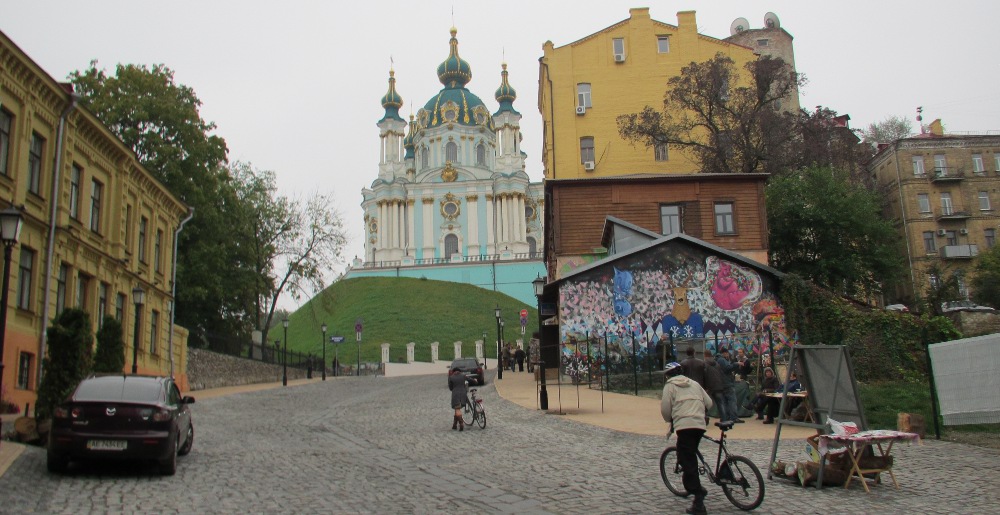
To be fair I don’t feel like this down in the low town. The low city area of Podil has narrower streets and more congestion so it just feels like most older European cities that have yet to grasp cycling. If you can cope with London and Brussels you can cope with this. And the cobbled streets in the restoration area around Adriivsky may be hilly but they are much slower and tamer. 40 years of cycling instinct just kick in and I am happy taking my place in the traffic flows. But in the upper city the big roads are just un-navigable to a stranger.

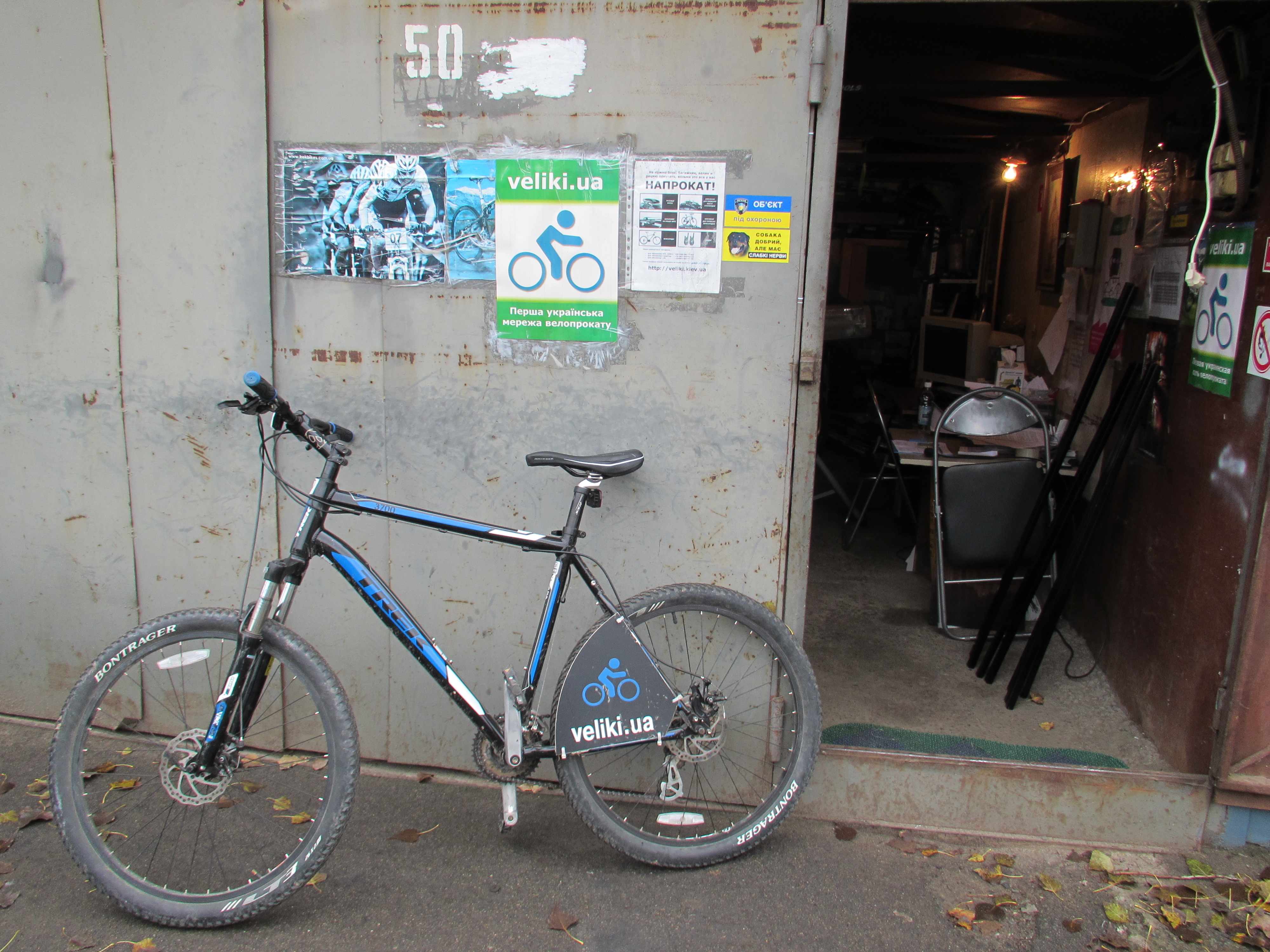
The source of most bafflement from both days was how to make progress in a straight line. Having not seen any cyclists when walking the city centre Randy tracked down entrepreneur/activist Alexey Kushka  and his business Veliki  to hire some bikes out in the suburbs. From there we decided to try and head back to the city, allowing ourselves some exploratory diversions into the surrounding neighbourhoods and parks. The advice we were given was to stay off the trunk roads and ride on the pavements or try and get through the minor roads.

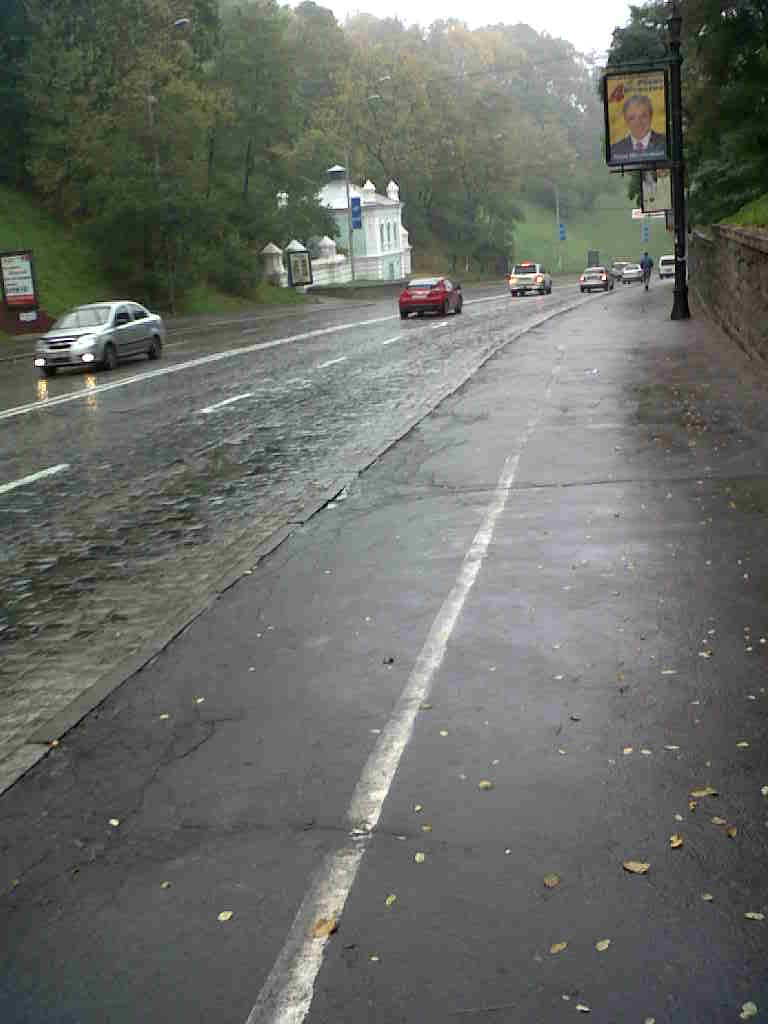
Initially that was fine, two experienced riders shouldn’t have a problem. But quickly we hit the issue of big junctions. When the major roads meet there are apparently no ways across. Pedestrians are sent off down underpasses, but that doesn’t work for us. If we want to turn left across the traffic flows it is illegal for cyclists under the Ukrainian Road Code if the road has more than one lane, and frankly I wouldn’t want to do it, far too exposed. Cycleable neighbourhoods and pavements are like islands cut off from each other by treacherous torrents. So we zig-zagged our way along looking for pedestrian crossings to make a very indirect way to the city.

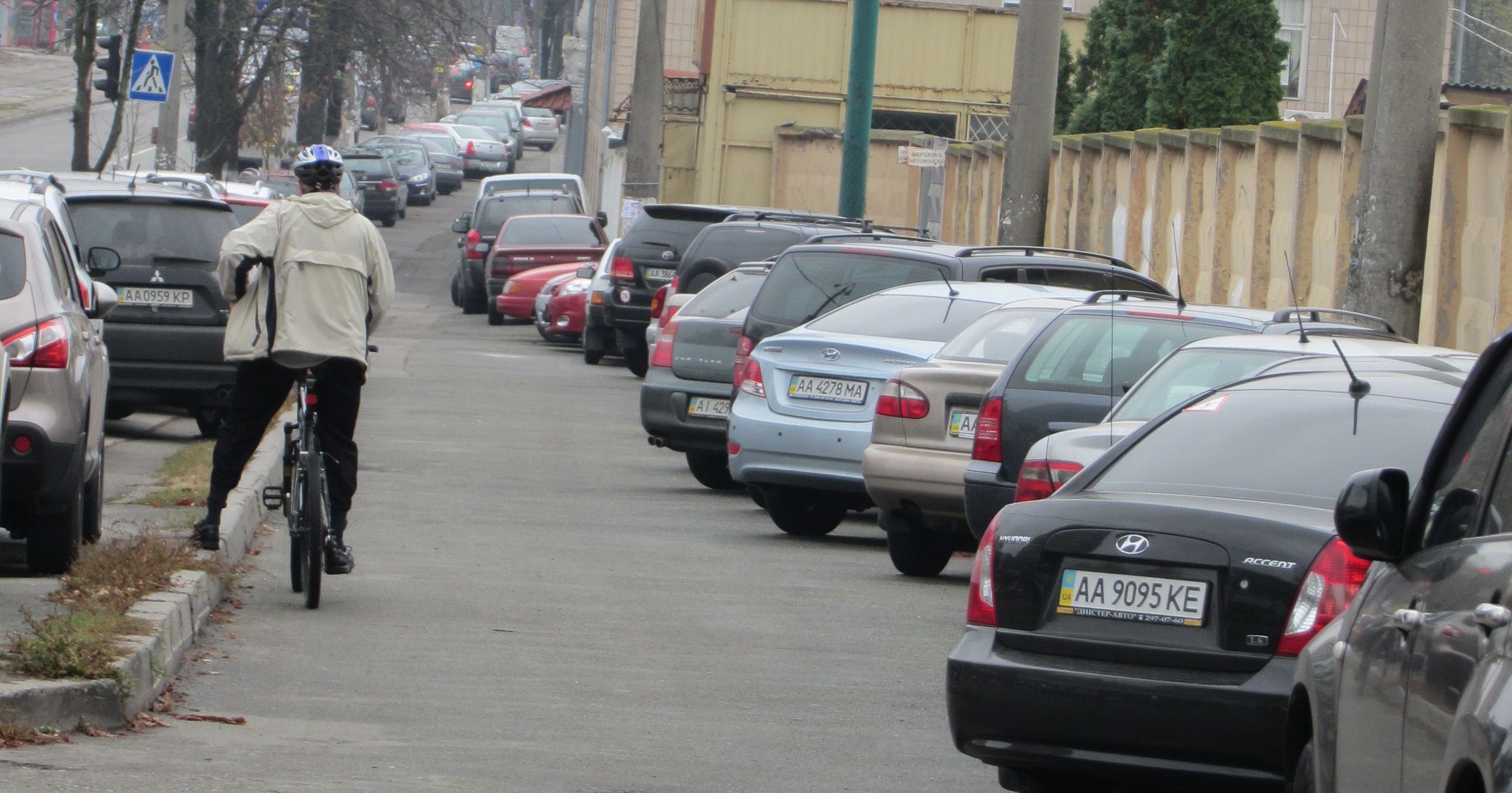
In addition to the frustration of leaving our islands we had the challenge of the pavements. They are potentially good news because they are wide and quite inviting, the basis of a great cycling network. Only we got there too late. Many bits of the pavement not covered in cars are dedicated to the apparent backbone of the Ukrainian economy, small stalls which serve every possible need.

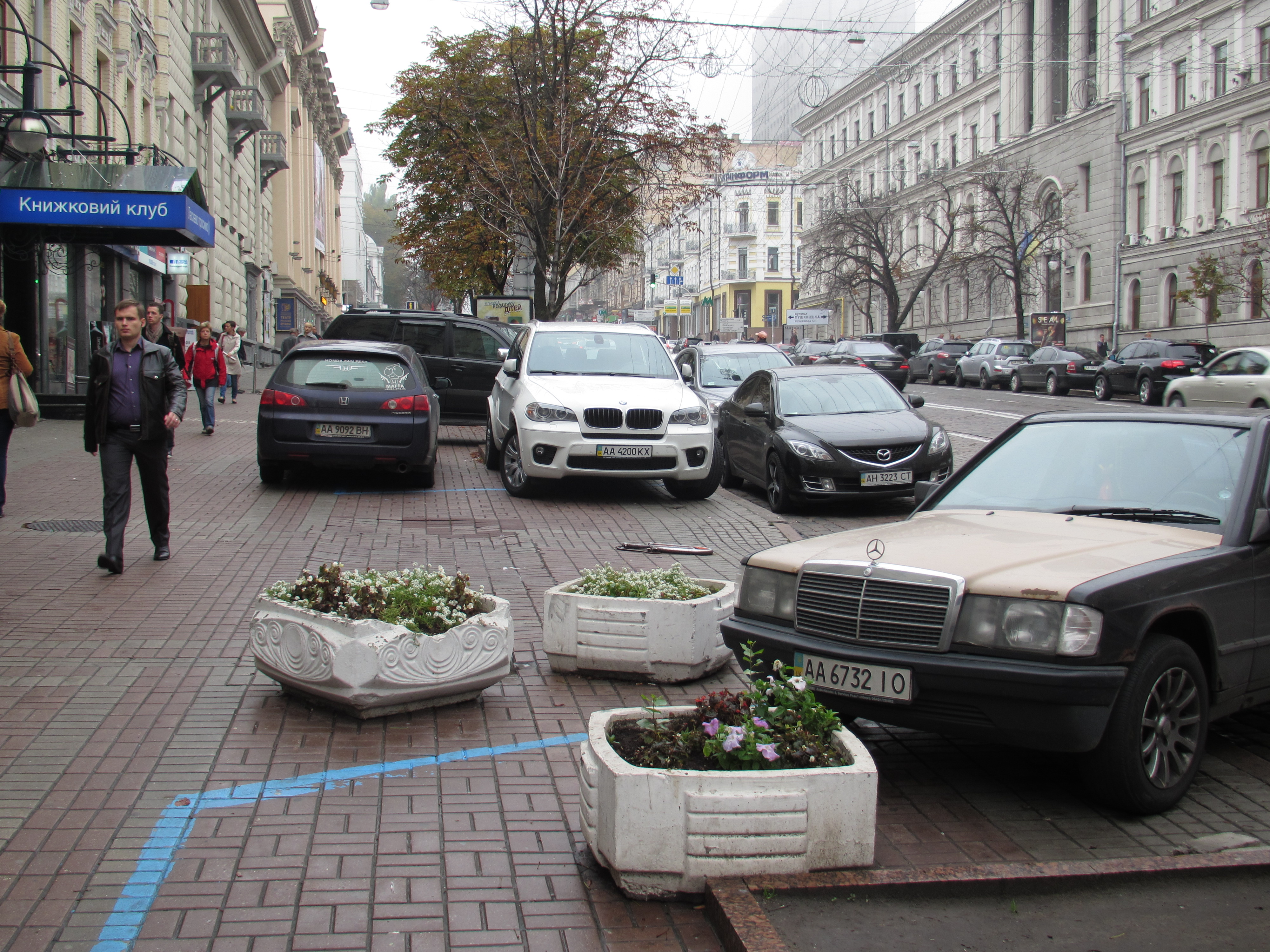
And there is no visible parking restriction whatsoever. We were just standing on corners checking navigation when we were honked at by cars being driven straight up the kerb to head for a parking space. And all this appears to be not only legal but policy, certainly a lot of the pavement bays were marked out with white lines and “managed” by bulky figures in dark coats.

Randy Neufeld, SRAMwww.avk.org.uaBut I have to admit I loved it. Taking on a new city is always a buzz and when I did fly down to Podil or had my photo taken by a tourist on Adriivsky as I battled the cobbles I felt like young Malcolm in the surprise Youtube hit of the last two weeks. “Dad I did it”. And it was good to follow hosts and activists Ksenia and Ira as they moved in confident Dutch style around their city.

So what’s the good news? ”I do not despair for the future of Kiev despite not seeing an adult on a bicycle”? This dangerously close to a policy manifesto which I don’t do in my personal blog, but I feel strongly that I want to say something positive for the people I met in Ukraine.

The best hope is always those people. Margaret Mead, American anthropologist says “Never doubt that a small group of thoughtful, concerned citizens can change world. Indeed it is the only thing that ever has.” The city is full, stuffed by the free-for all on the roads, the dreadful congestion and parking and everyone told me that the majority of society accepts that it cannot go on. That is fertile ground for change.

The energy and passion of the Kiev Cyclists Association members and all the activists, entrepreneurs and civil servants we met in Yevpatoria and Kiev was infectious and they are determined to bring cycling to their country. The evening talk I gave in Kiev was well attended and apparently we attracted a lot of new faces. The quality of questioning was as knowledgeable and passionate as any other country I visit even if there is an acknowledgement that this is a really tough environment to promote cycling.

Kiev, UkraineSo a few thoughts, not just for them but maybe for anyone thinking of doing some cycling when they visit.

It was clear that we had really not seen the best of the cycling community in the city centre. There are green shoots, popular cycling parks and some suburbs where there are regular cycling numbers. I was told Trakhaniv island is not only the cycling mecca at weekends it is a good commuting short cut and could be a place to start building a cycling culture for all types of users, I certainly found it beautiful and welcoming even in the mist. It also wouldn’t take a huge amount of sharing for Kiev Ukrainethe current cyclists to tell others how they get around. By sharing their routes and shortcuts so much of the complete bafflement I felt could disappear and a little critical mass could emerge. Given that there is almost no regulation some informal waymarking could be put in place and would last for years. Kiev Cyclists Association have already painted their own cycle lane in one spot and nobody has erased it, how we would love to get away with that in some other countries.

And no city can be so bad if it has a cyclists’ cafe!http://dream-family.com/en/dream-house/

Kiev activists can also take hope from the rest of the country. Crimea is a potential hot spot for tourism but there is clearly progress in places like Lviv. We know in many countries the capital city came to the party late simply because of size and inertia, but they can show there is nothing in Ukrainian culture that makes cycling impossible. For international cycle tourists and mountain bikers you can find lots of great places to go like Big Yalta.

Lastly Kiev has one extraordinary asset that most world cities would beg for, something money cannot buy. It has space. The streets are incredibly wide, the pavements and roads are wide enough for segregated bike lanes, there are plentiful parks and boulevards connecting them. But the space is just unmanaged. Look at this: four lanes of cars on the road – and six lanes of parked cars. Two lanes on the road, two on the near pavement, one on the other side and somebody double parked. Get hold of that and the potential for rapid change is high.

Right now it is a tough call to be an urban cyclist in Kiev, or a cycling activist but here is hope and enthusiasm not despair.

Cпасибі. Thank you.

Hovis bread advert recreated in Kiev

Just for my British followers. Having cycled up Andriivsky in Kiev I realised that only one photograph could do it justice. For those from outside the Uk this advert is part of our cycling heritage, it advertises bread. It has been recreated a number of times using celebrated cyclists including Chris Boardman and most recently Victoria Pendleton. In both cases – its a great hill.

Kevin Mayne recreating Hovis advertGold Hill Shaftsbury England

Although I have to say Ira from the Kiev Cyclists’ Association campaign does it better justice than me, better bike, more style.

Ira Bondarenko Kiev Cyclists' Association

Yevpatoria, Crimea. Impressions, contrasts and amazing light

Beach sceneI am in Yevpatoria, which is a holiday resort on the Black Sea in Crimea, Ukraine as the first stage of a two part trip to Ukraine promoting cycle advocacy. Tomorrow I’m on the night train to Kiev which according to Lonely Planet is one of the top 10 things to do in Ukraine, so that should be fun.

We are here because the Black Sea is one of the primary holiday destinations for what was the old Soviet Union because of its climate and beaches and has loads of infrastructure for tourism. It still attracts a big summer market of Ukranians and Russians but this leaves a lot of hotel capacity off season so it is a great spot for a conference about cycling and cycle tourism. So I’m here representing ECF with one of my colleagues trying to help the local cycling movement share some ideas from around Europe.

As “I not despair” is my private blog I’ll stick to my rules about not mixing the work stuff, our agenda is here and I have been tweeting from the conference on @maynekevin so you can find out more there.

But to the Yevpatoria today. Most British people only know some vague reference to the Crimea as a disastrous war which involved Florence Nightingale’s revolution in hospital treatment. This post is just some thoughts, photos and musings about my first two days in Ukraine, in fact my first visit to any part of the former Soviet Union. It has been great to walk and get hold of a bike to tour around this moderately sized but ancient city which I gather has a very distinctive feel compared to much of Ukraine.

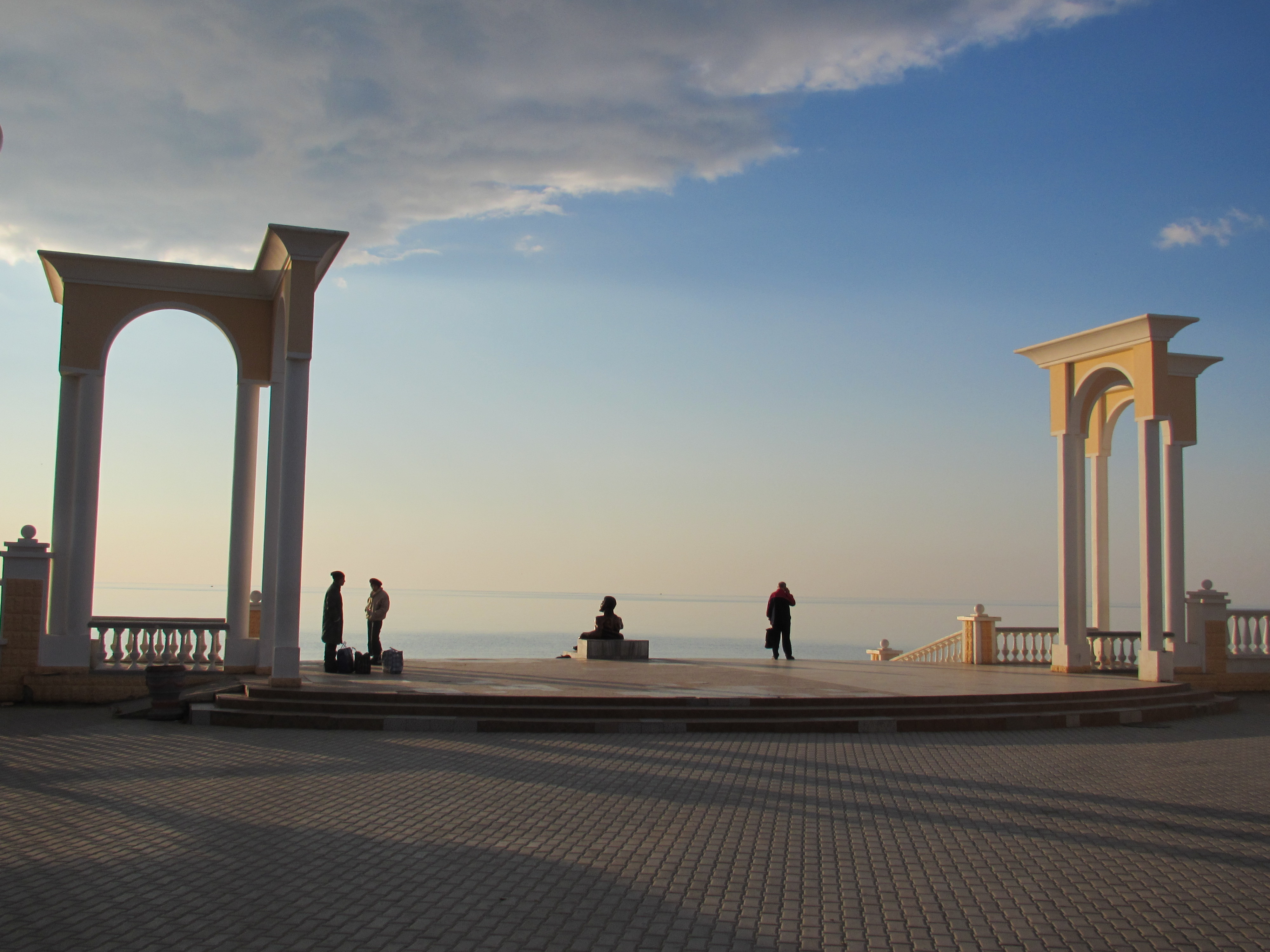
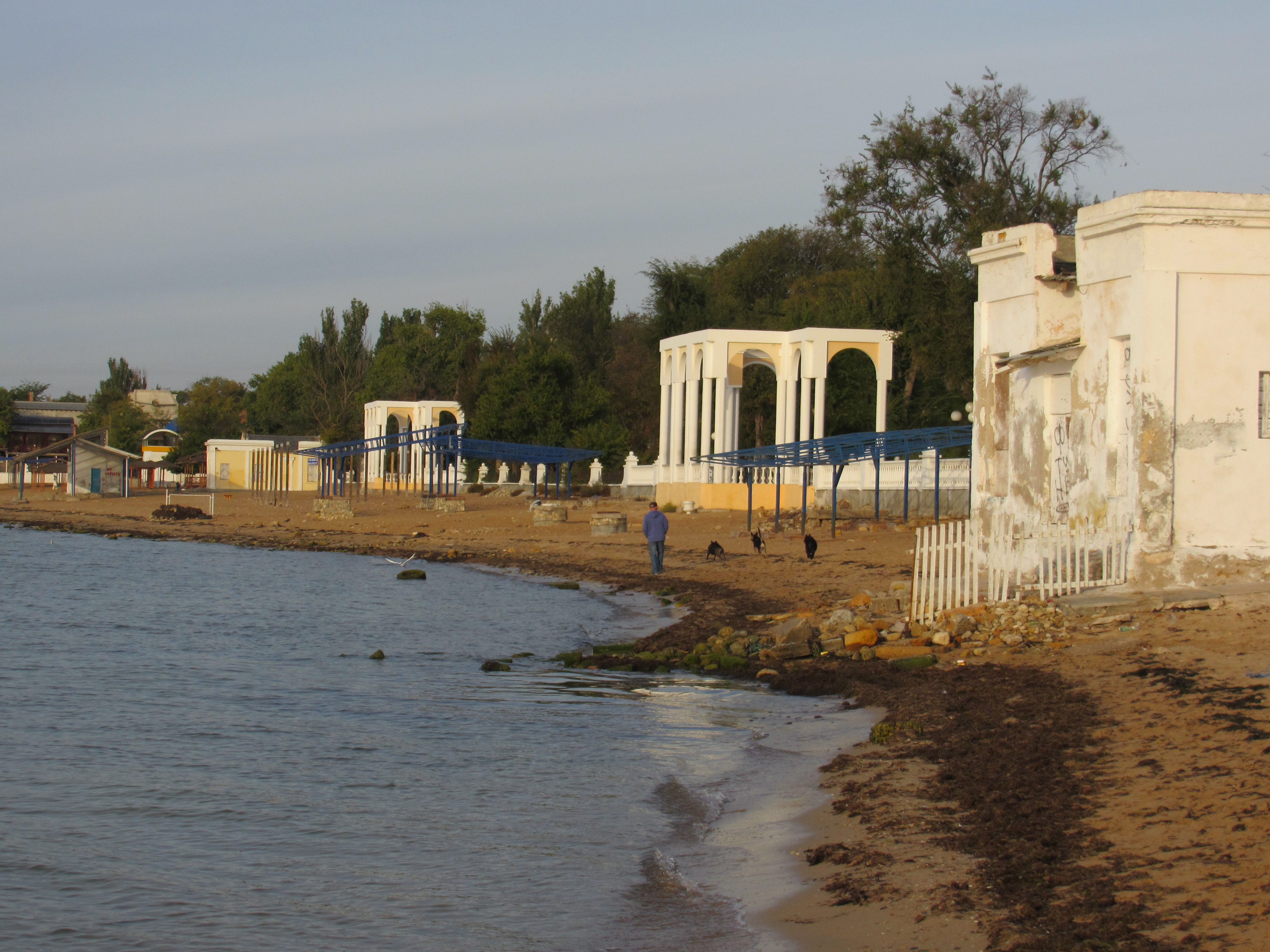
Imperial hotelWhat this place certainly delivers on is balmy autumn weather, it is just glorious outside and the first impression in the morning is to look from the balcony of my hotel across to the tree lined promenade to a still and silent sea with warm sunshine around.

The second impression is then silence. This is a seaside resort out of season and just about a ghost town. When our taxi arrived the first night I’ll swear we never saw another vehicle and even in the morning I can walk or cycle whole blocks without seeing a movement except the odd stray dog.

Down on the beach there is a gentle quiet broken by the occasional gull and some older folks who come down to the sea to swim, probably every day.

Electric Trolley or Tram carThe main town is a bit busier but it is very easy to wander or cycle out into the streets without fear. The ancient electric trams are a delight rattling their way about town.

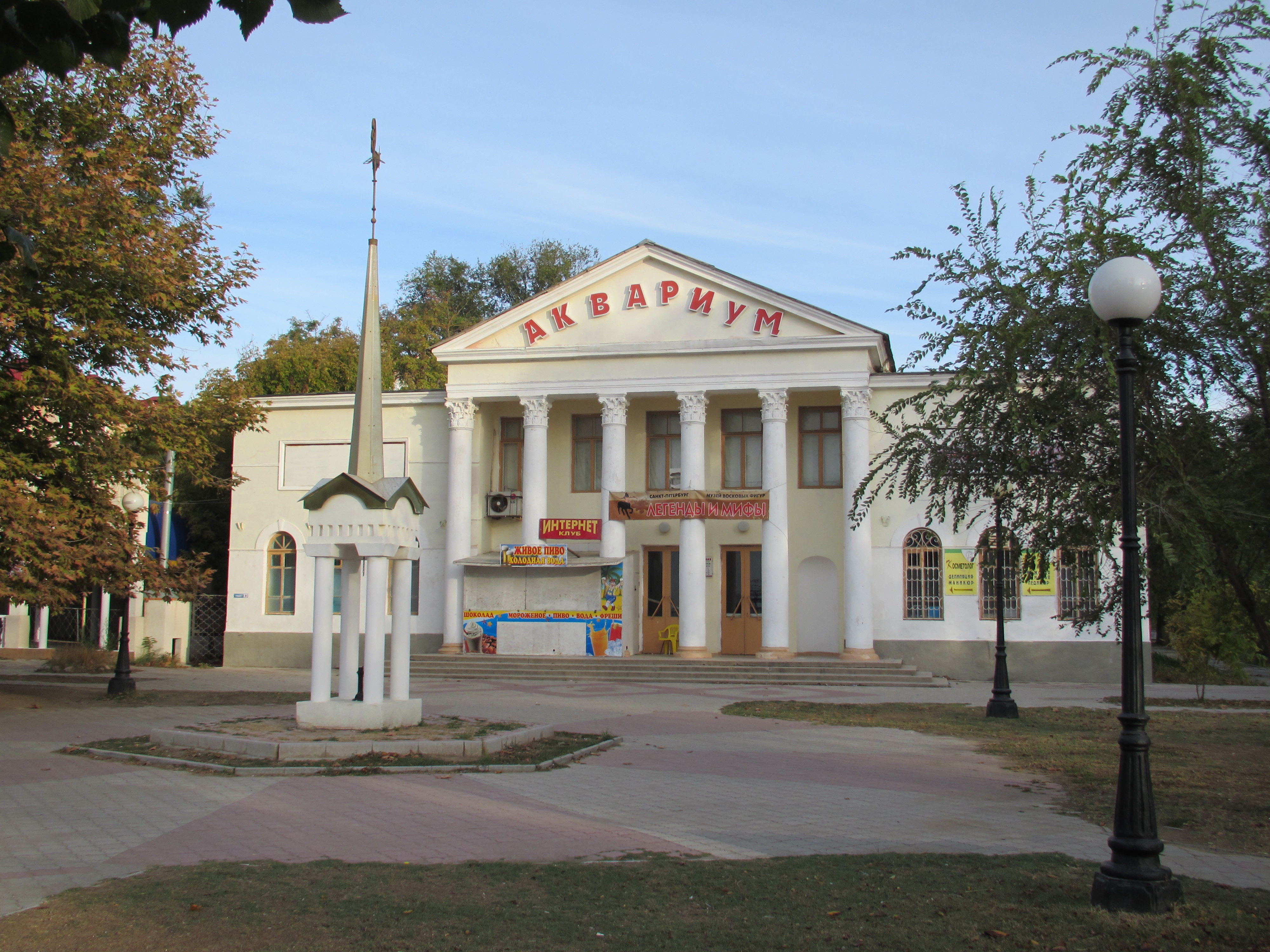
Everywhere there are contrasts. Some of the facilities are decrepit and crumbling, others obviously well cared for.

Some of the hotels appear to be modern and discrete while others would not look out of place in Blackpool or other garish seaside resort of your country. The architecture runs from authentic to garish seaside fake that seems universal the world over. I didn’t realise that the 1930s fake Mediterranean/Spanish white architectural look that runs from the north of England across the English speaking world to Australia (St Kilda?) and across to the US was actually so universal in seaside towns it was adopted here too but there is no doubt that some of the styling has that heritage.

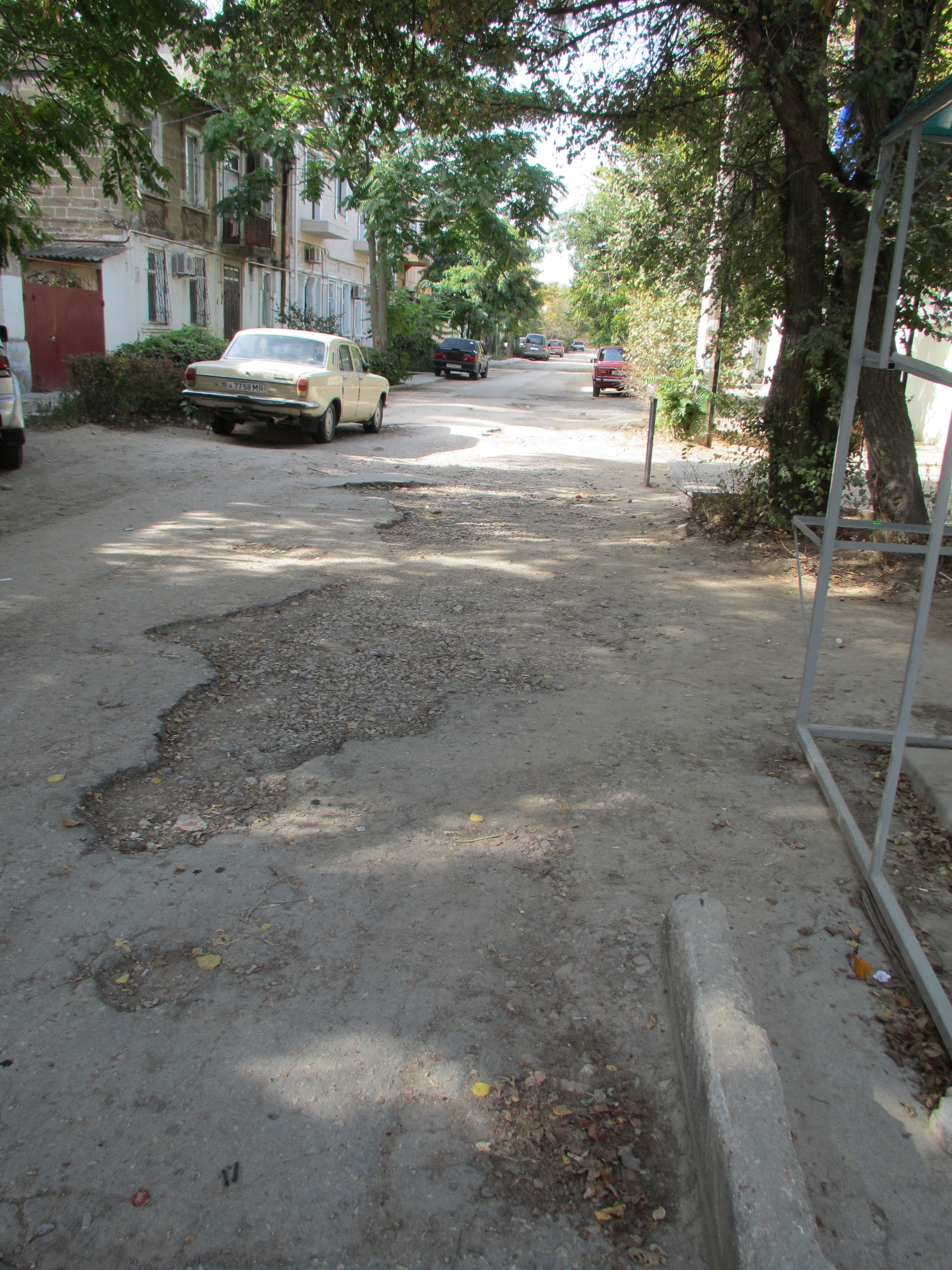
White houseGeenery lined streetSome streets are well kept and well used while others are a joined mess of potholes that played havoc even with mountain bikes.

Brutalist styling, then masses of greenery and lots of dusty parks and open spaces in between with banks of plants and hedges along the roads.

Derelict building and wastelandThis morning I cycle out to the Eastern edge of the town along the sea front and I was struck by this contrast. To my right a building waiting to be condemned set amongst wasteland and scrub. To my left a section of beach and a lovingly cared for beach hut used by the beach attendant which almost glowed in the early morning light.Beach attendant's hut

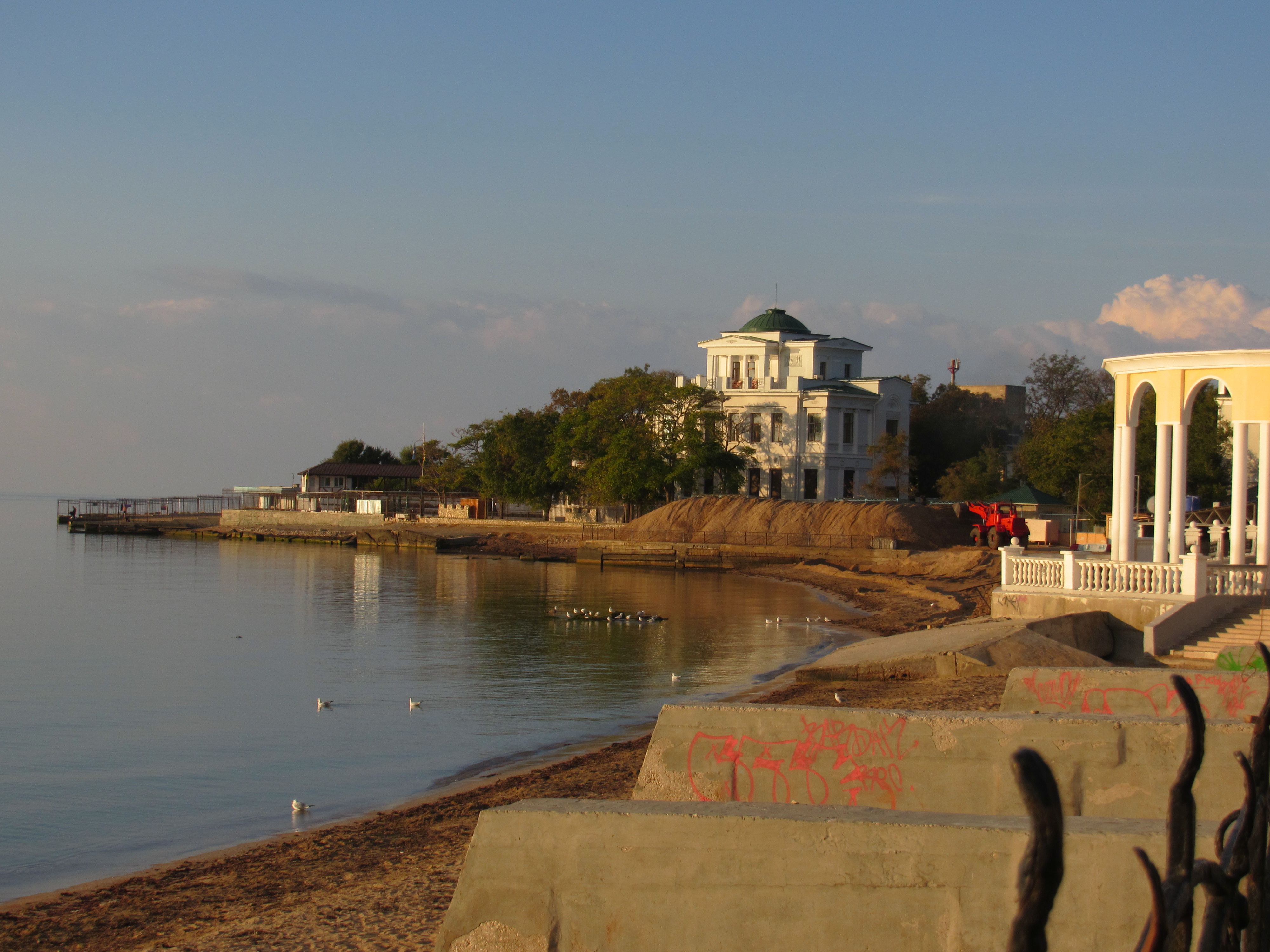
And the morning light on the sea front is amazing. It just has that golden glow that makes whites stronger and colours brighter, brilliant for photography.Beach scene

As ever I am grateful to friends Google and Wikipedia for a bit of research into Yevpatoria which  helped on my two trips away from our beachfront haven into the main town. We also had the guided tour from a local tour guide last night which was great apart from the somewhat significant flaw that we had 40 people on bikes and the tour guide was on foot. I’m also ever so grateful to the Ukrainians like Olga who stepped in to translate at key moments!

What a heritage. In one paragraph the Wikipedia potted history runs from Greek settlement in 500BC to settlement, invasion or occupation by Khazars, Cumans, Mongols, Khans, Tartars, Ottomans, Russians, British, French, Turkish, Germany and the spiritual residence of a branch of Judaism called Crimean Karaites. Just shows the strategic importance of the Crimean Peninsula to the Black Sea and all the countries around it.

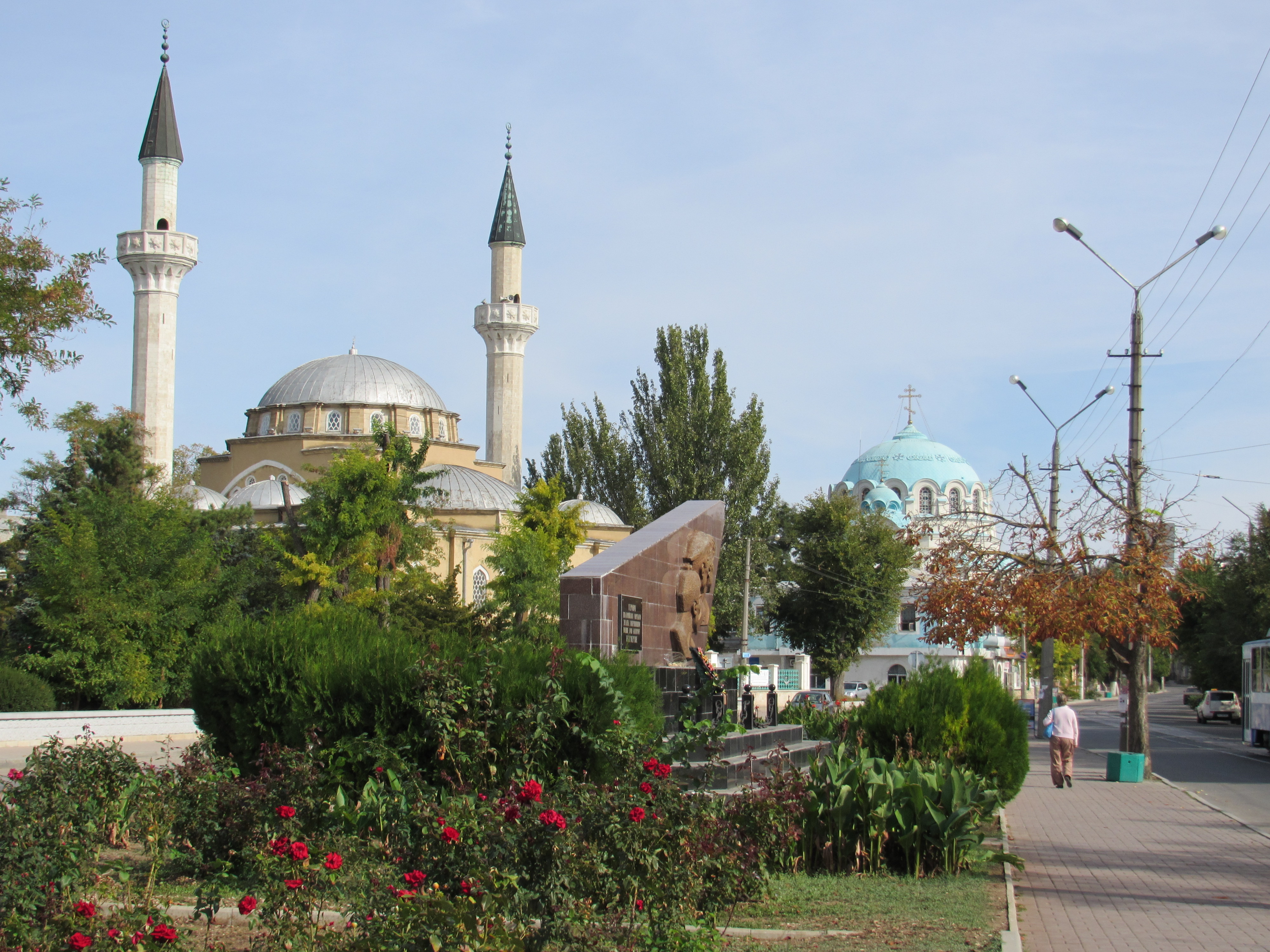
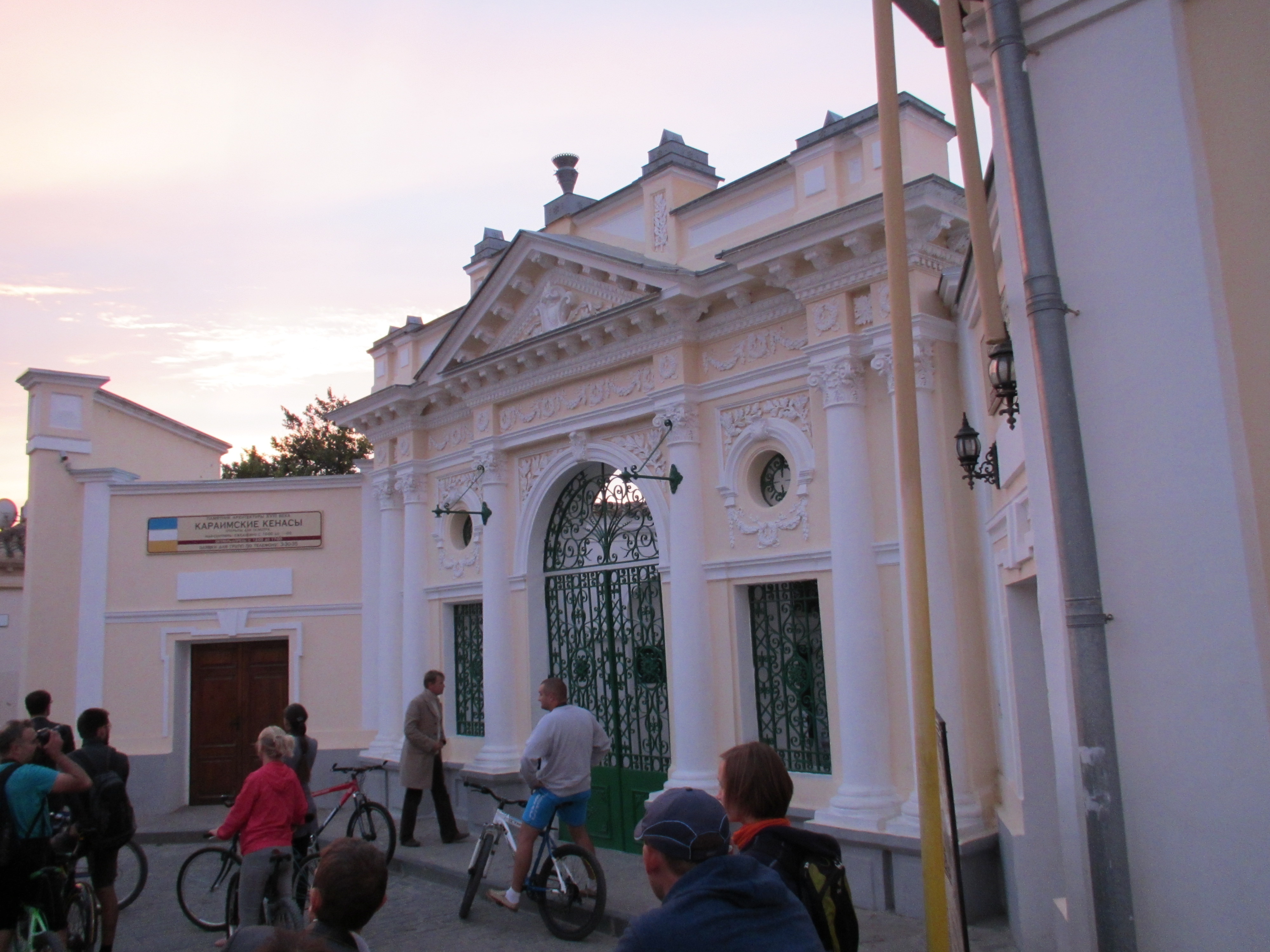
This melting pot of cultures has left a wonderful assortment of religious buildings which stand out as a contrast to the tat and simulation of the beach areas. St Nicholas Cathedral, The 400 year old Juma Jami Mosque, the recently resorted historic quarter of the Karaites known as Little Jerusalem with the restored Kenassa or temple as its main feature. These buildings are in the best condition of anything in town, even the repair scaffolding in the cathedral was being dusted by one of the ever present women with a brush that seem to be in every street. For all the challenges of infrastructure and economy this is a fascinating place to visit.

Mosque and cathedralEntrace to Little Jerusalem

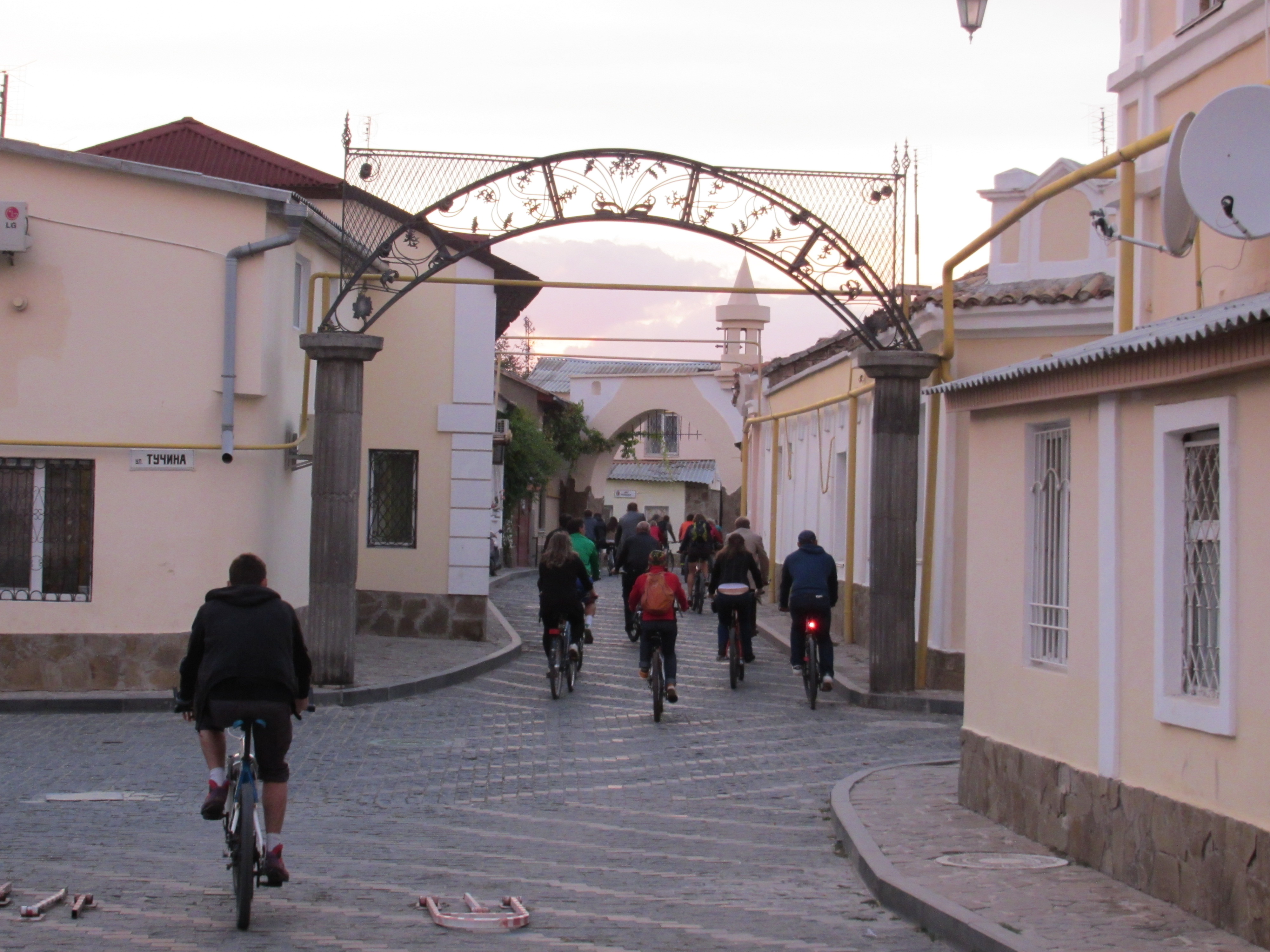
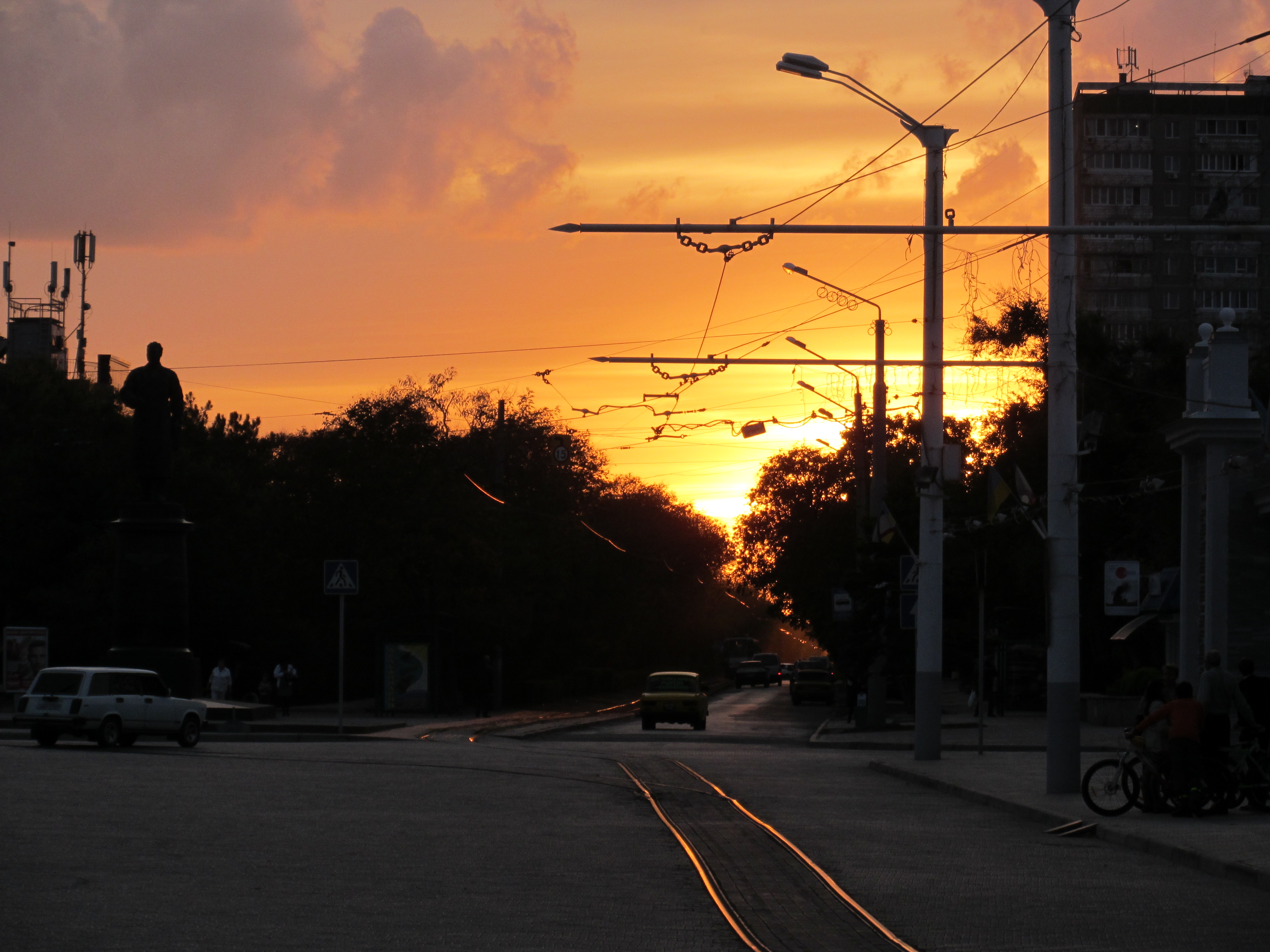
Sunset cycle tour Yevpatoria, Crimea, Ukraine

No time for a detailed blog post today, but just back from a sunset tour of Yevpatoria with the rest of the Veloforum delegates.

Fascinating.Veloforum Cycling 2012

Veloforum Cycling 2012

veloforum cycling 2012Veloforum 2012Veloforum 2012 Cycling TourVeloforum 2012 Cycling at Little Jerusalem

Padua is a great place to be a cyclist – and with added Cycle Chic

Padua cycle rideAlthough it is much less well known than some of its more famous neighbours Venice and Verona I think Padua is a great place to ride a bike and should make a good stopping point for any passing cycle tourists or advocates interested in seeing a fully traffic calmed city in Italy. (Thinks out loud “Padua for my English readers or Padova out of respect for its proper name? No idea – use a bit of both.”)

Last week in Verona I was lucky enough to be guided and helped by the cycle tours organised by local volunteers but here in Padua the local FIAB volunteers were flat out proving cycling fun for children visiting the Padova Expobici cycling show so I was a bit more on my own.

However they did provide the equipment, a mountain bike that was a reasonable steed for the cobbled streets throughout the city centre. Unfortunately when I first collected it from the hotel baggage room it had a flat which did lead to one of the most entertaining misunderstandings of my ventures into Italian.

My hosts asked me to bring the bike to the children’s try out area at the show where the volunteers had said they would stick in a new tube. So of course along I pop pushing the bike and wander up to the desk. Unfortunately the chap on the desk was the one person not in the know and he was convinced I was a 50 year old juvenile who wanted to play on the kids track! I was sent off to play with the big kids despite all my attempted explanations.  It was all resolved with considerable amusement a bit later by the rest of FIAB Padova.

Arch in PadovaAnyway back to my trips into the city.

The photos here come from two excursions into the town which I fitted around my work at the Expobici. On Saturday morning when the flat tyre was discovered I walked the city which led to my early discovery of the great contrast with Verona that I blogged about last week.

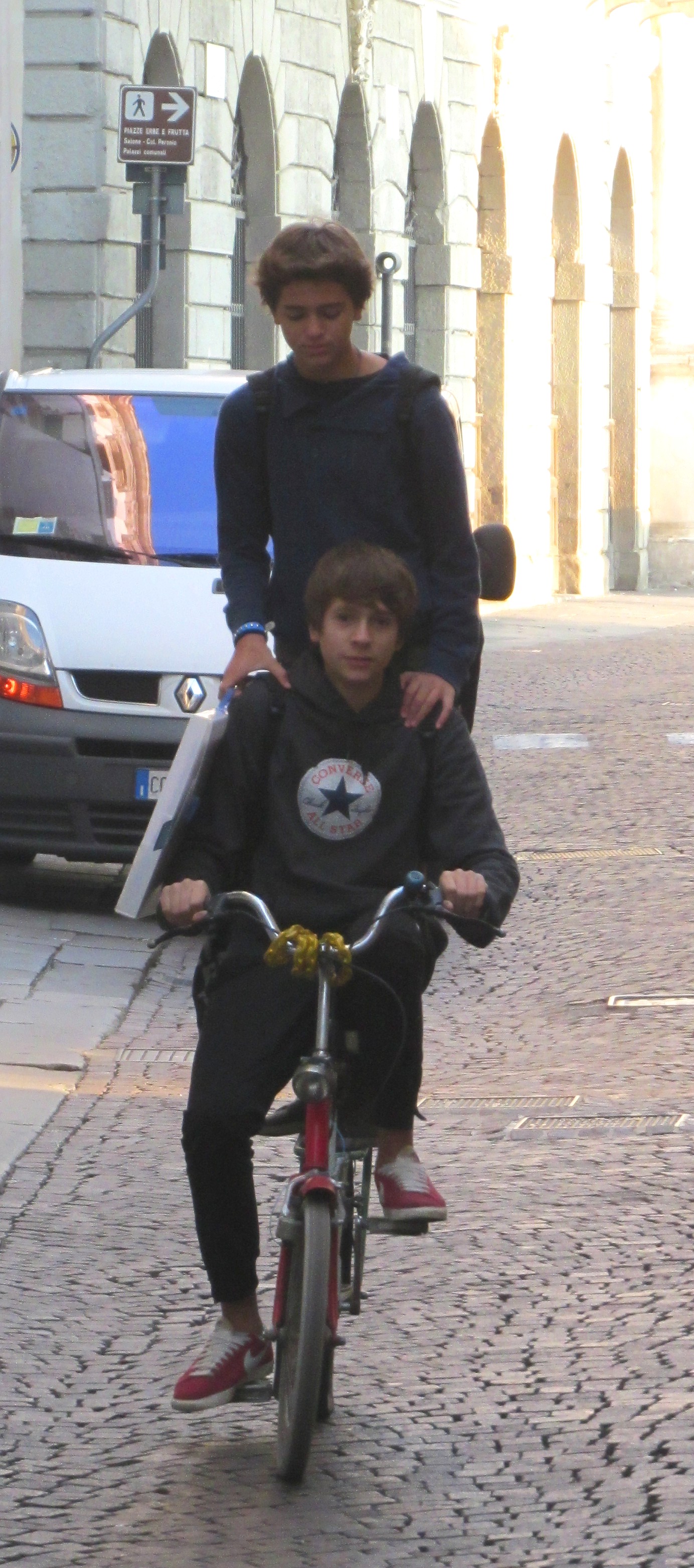
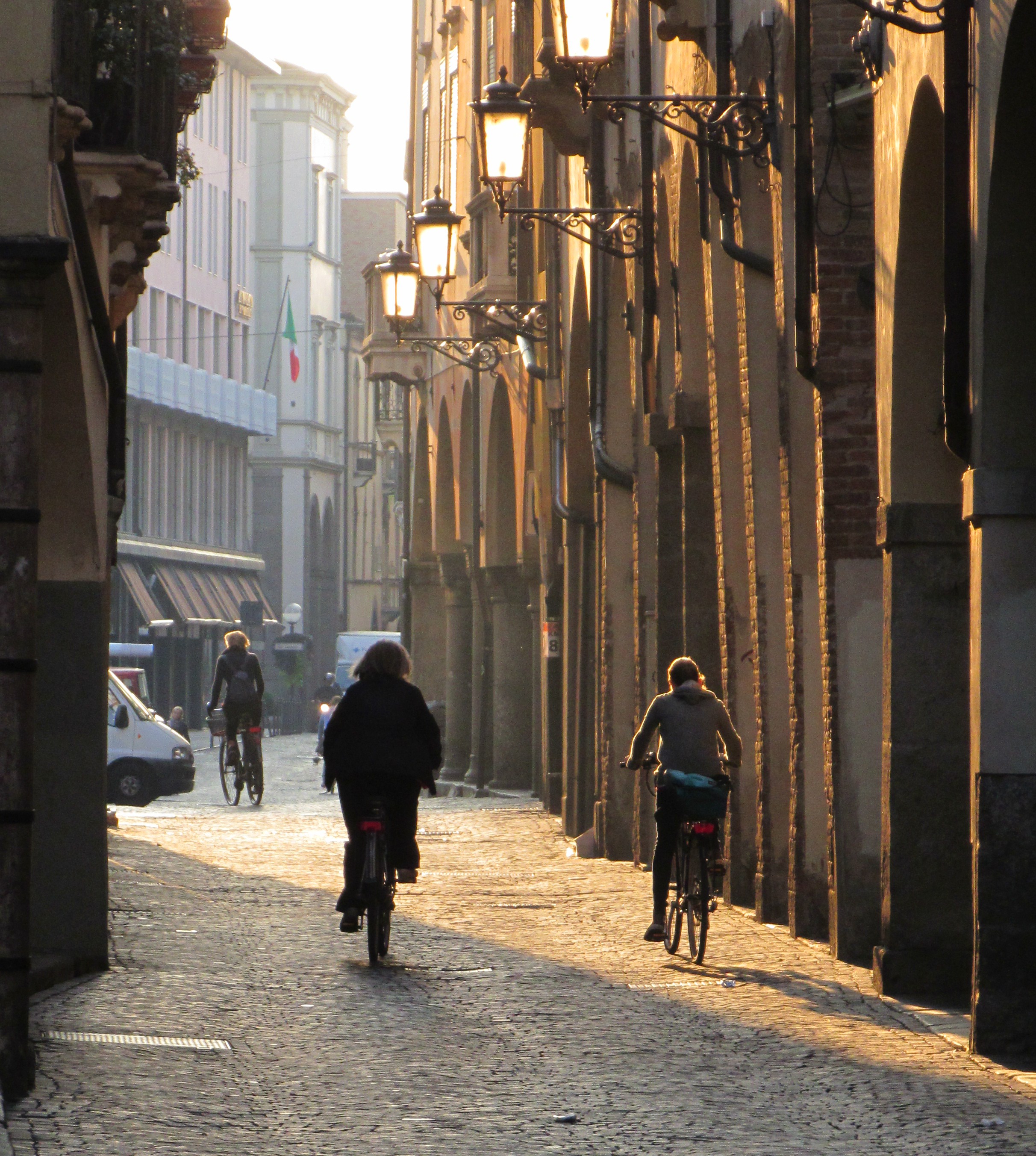
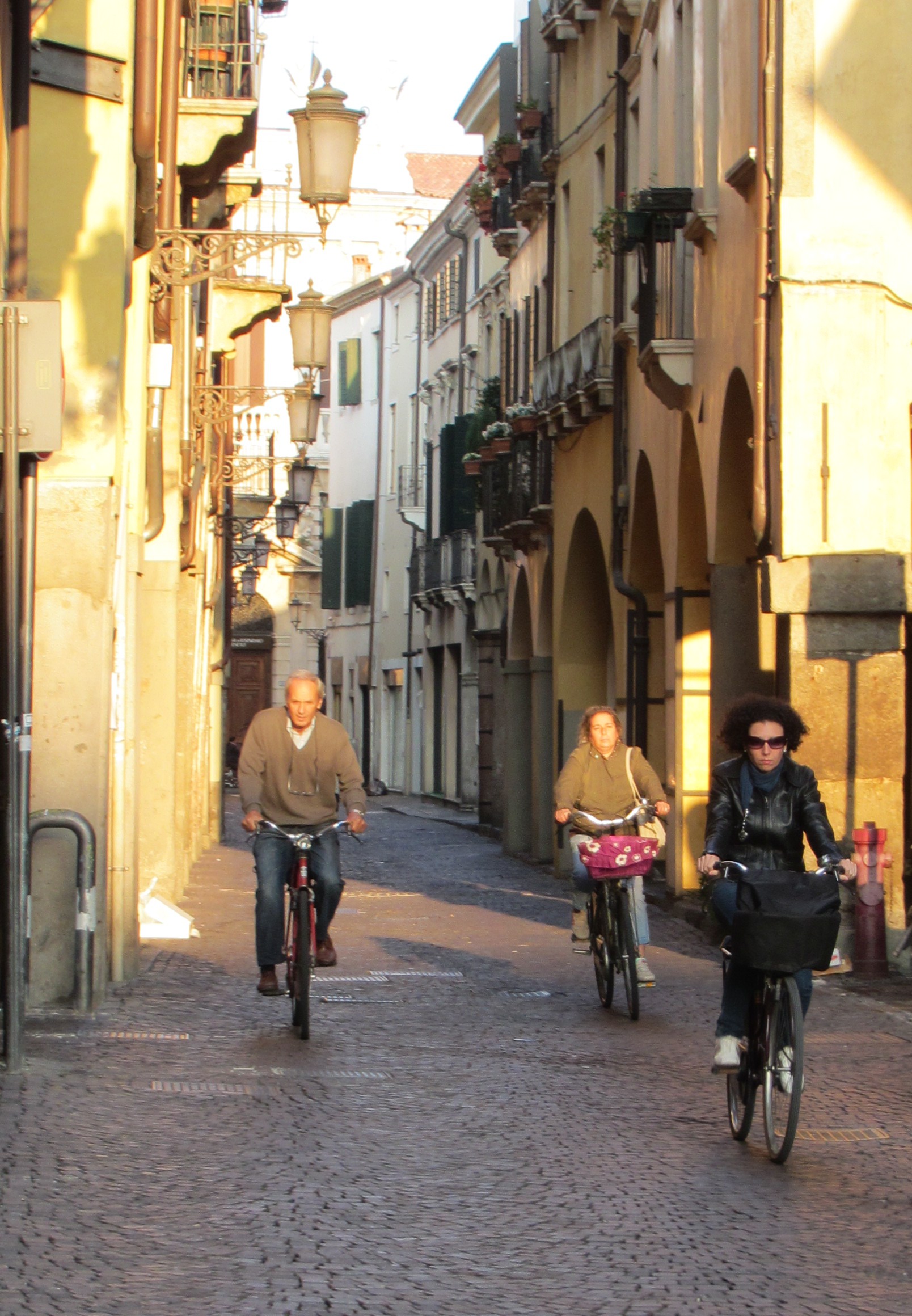
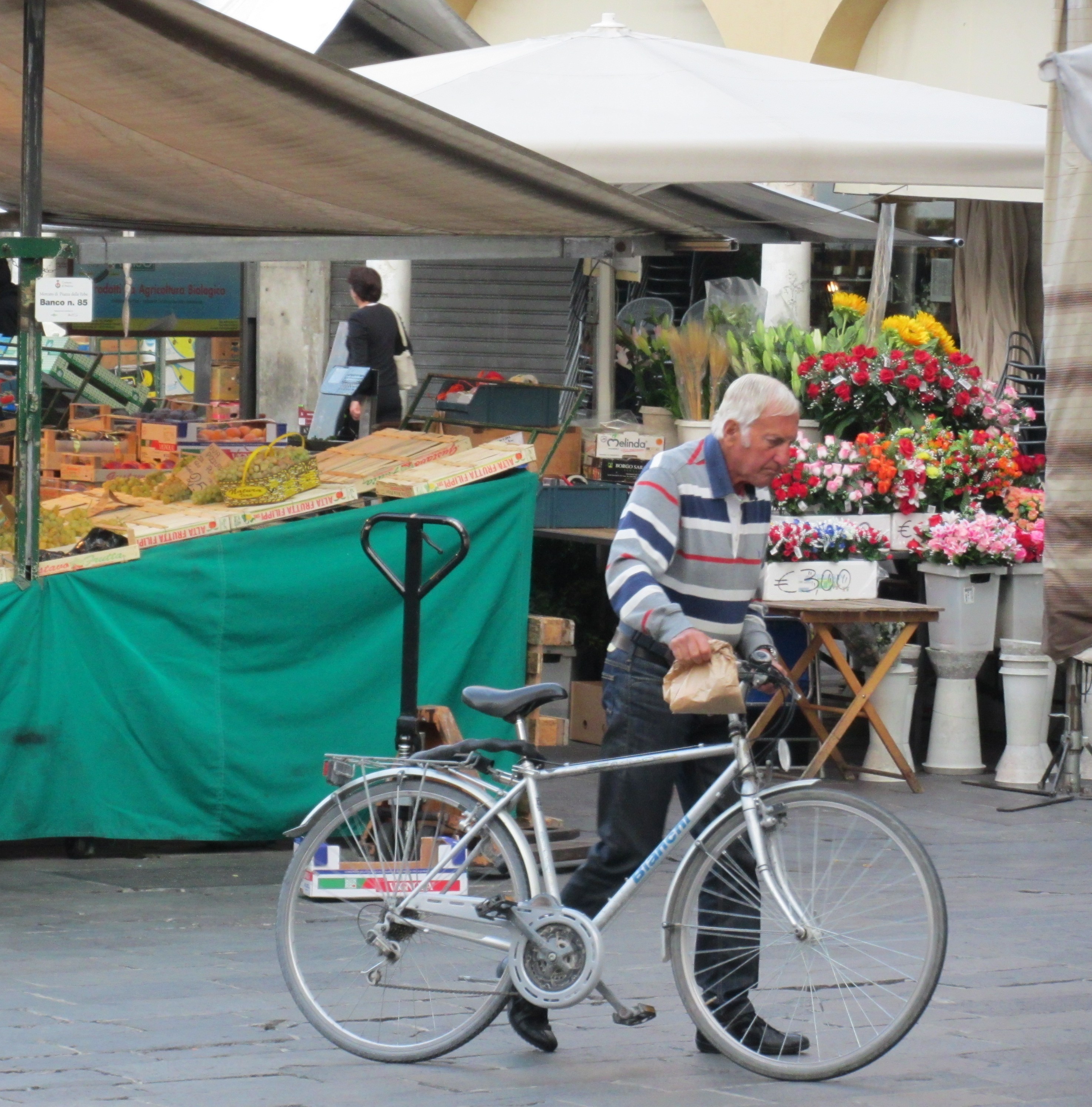
I keep mentioning in my posts how much  I like mornings, there is something quite different about a city waking up, especially when the dominant noise is the rattling of bicycles and the shouts of the market traders , not to mention the fact that you can actually smell pastries and coffee everywhere.Padua cobbles

On Saturday evening I also had a ride into town but unfortunately no time for photos as I was off to dinner with my hosts. This gave me a ride through the city from north to south and a great chance to zig zag around the narrow alleys and short cuts. However I was stopped in my tracks when I emerged into Piazza Prato della Valle. It is the most enormous open square that I have ever seen in a city of this size. I was immediately reminded of Plaza de Espana in Seville but this seemed even bigger.

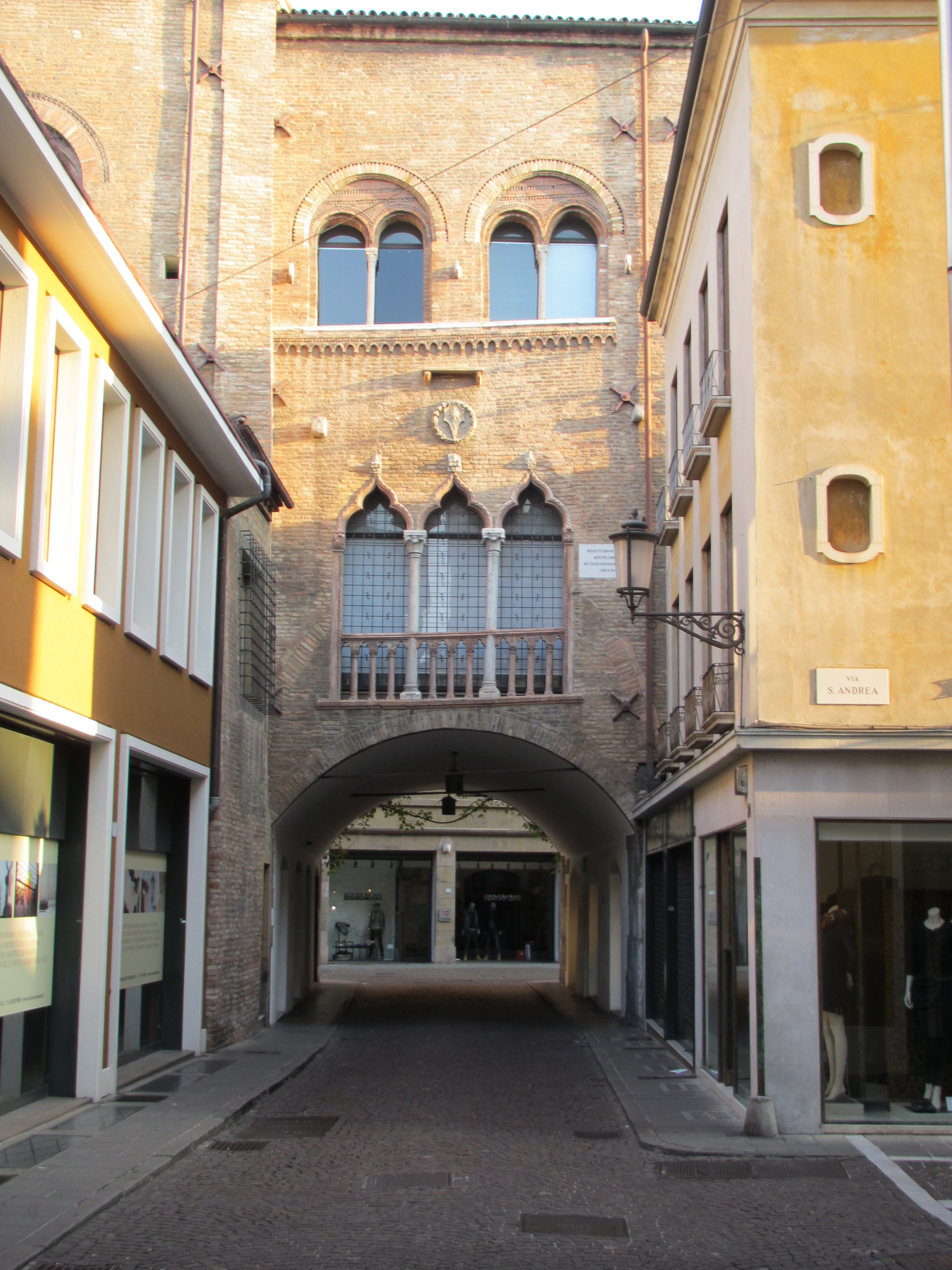
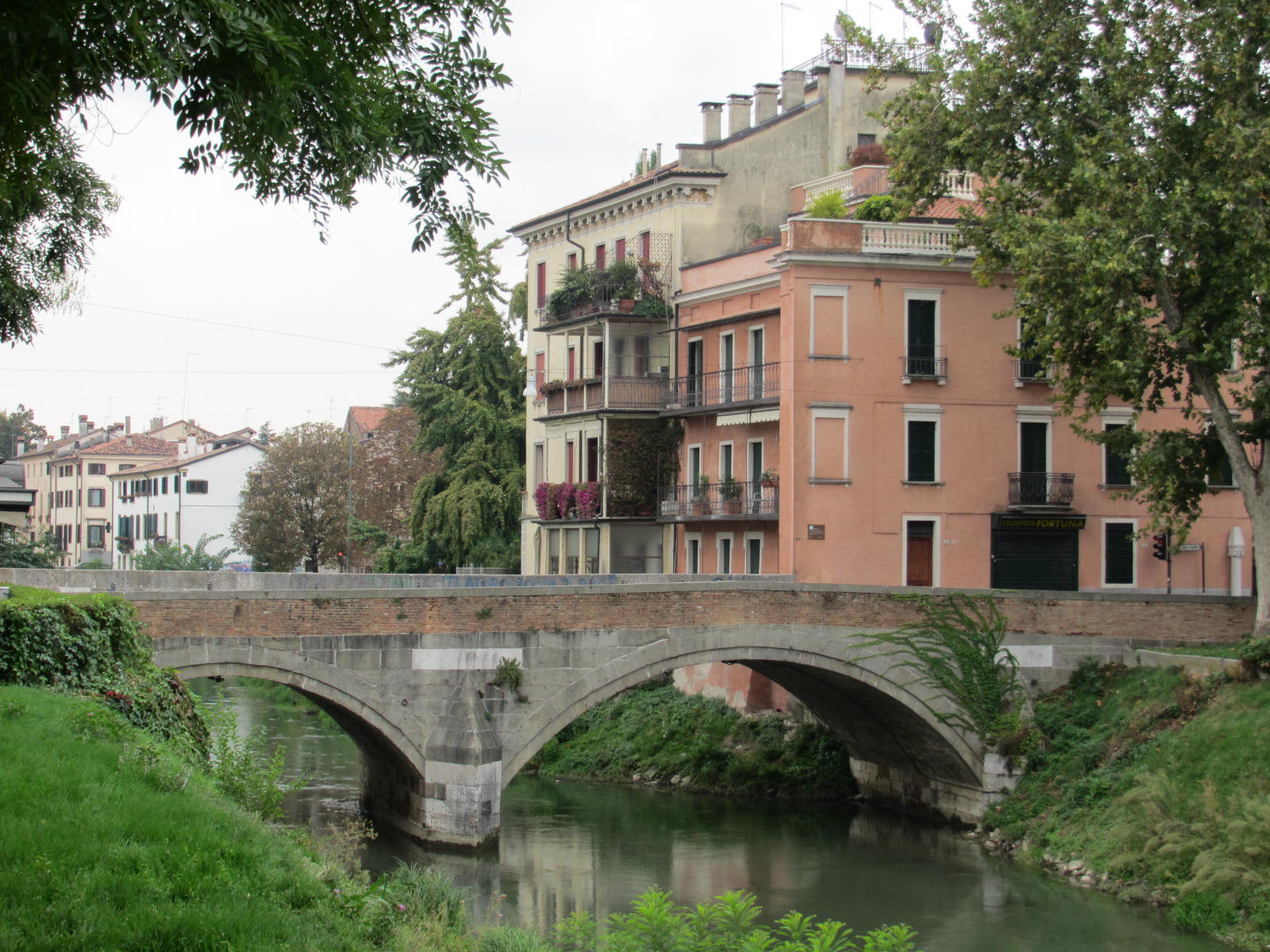
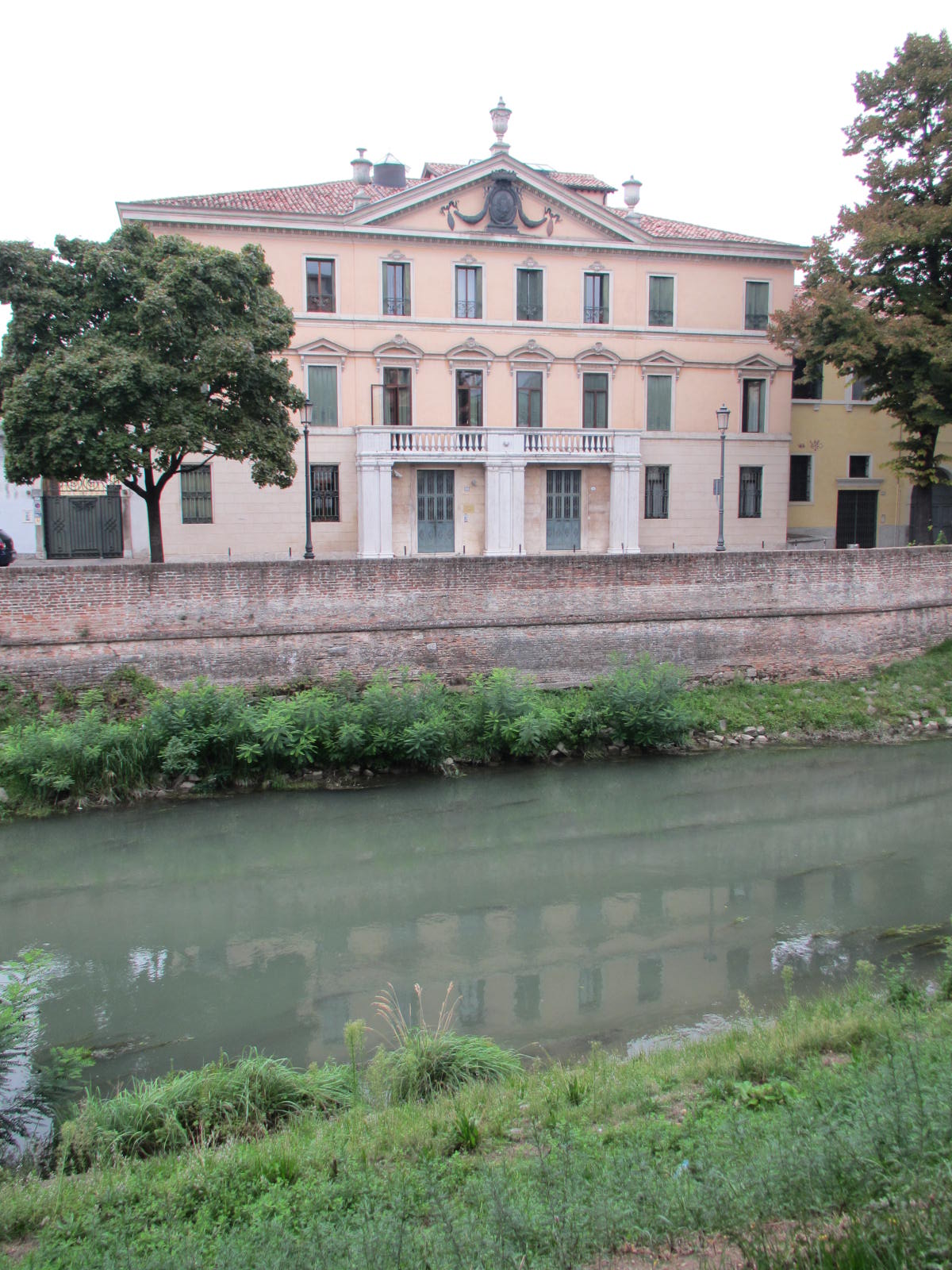
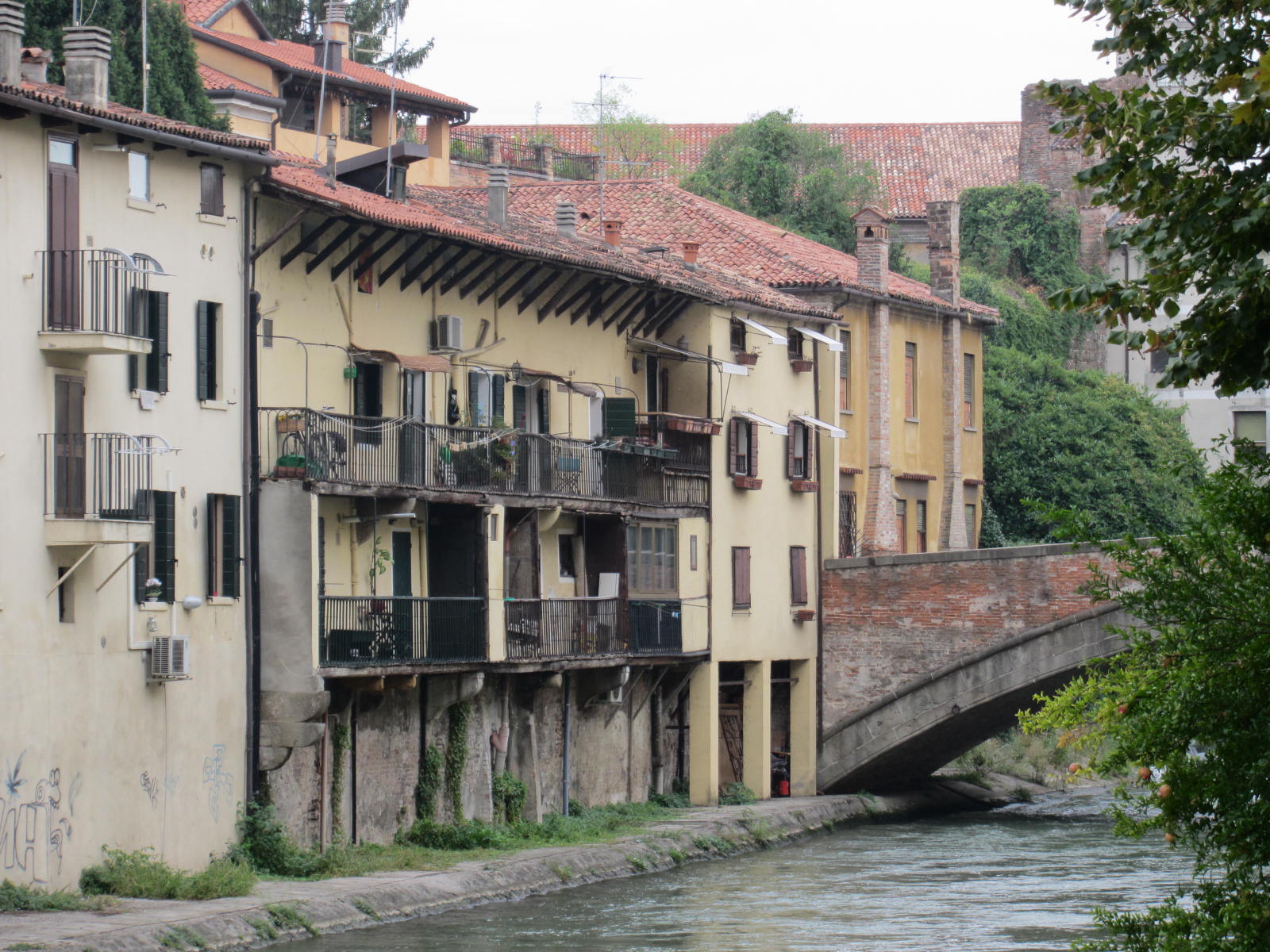
This gave me the itinerary for my Sunday morning ride because I really wanted to see the Piazza in daylight, even if the morning was a bit gloomy. But this time because I had a bike I was able to take a slightly longer route and I decided to circle around the branch of a river which serves as a historic moat around the inner city. Riding along waterways you often see bits of architecture and heritage that survive from different eras and the water itself can be great. Turned out that Padova was no exception, the western branch of the river took me along quiet streets with some gorgeous old bridges, buildings and perspectives on the city.Padua cycle ride by river

padua architecturePadua housesPaduapadua by bikeWith time running out I swung back towards the centre of the city along the ample cycle lanes and came to Piazza Prato della Valle again. The translation is “Meadow of the Valley” so I can only imagine that at one time this was a vast open space leading to the river. Today it is a formal square with a ring of water features, statutes and seats in the middle and a vast open expanse of walking and cycling space. At one end Abbazia di Santa Giustina is a huge church and abbey but even it seems lost in the corner of the open space.Padua

The cyclists mooching through the square just showed the scale, they looked tiny and even a club group of 20 road riders turned out in immaculately matching club colours could not make it look busy.Cycling Club group Padua

A check on Wikipedia after returning tells me this is indeed the largest square in Italy, some claim when you consider something like St Peter’s in Rome.

Great place to ride a bike. And on a human level some final thoughts. When Venice was a city state Padua was its university town, a tradition it keeps up today. So the first thing I noticed about the cyclists and pedestrians was the large numbers of young people, something cycling shares with other great university centres, surely something we must keep building on throughout the world. Padua

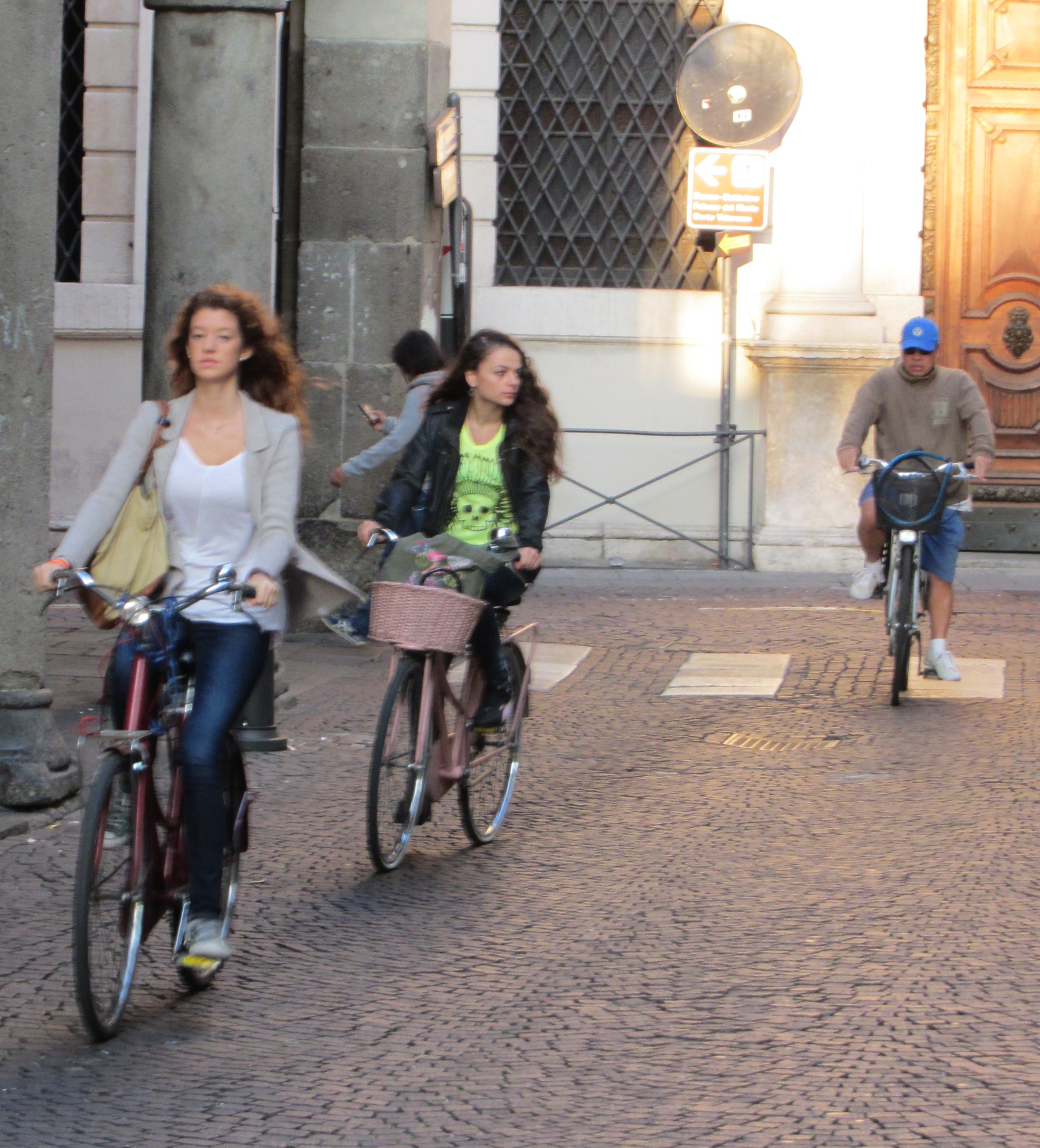
And also in keeping with the great cycling centres of Amsterdam and Copenhagen I am sure that a significant majority of the cyclists I saw were women. Padua

PaduaAs advocates we are always told that when you make your cycling cities female friendly you are on the right path, Padua cycling culture must be a great example because it is young, female and wearing ordinary clothes.. The Cycle Chic movement writ large, excellent.

Now if only the cycling shows could understand that ….. But that is another story.

A tale of two Italian cities – removing the tyranny of the car transforms the visitor experience

Padova cyclingI am currently processing a whole sequence of photos and stories about my visits to the two Italian cities of Verona and Padua (Padova).

But here is an opening thought. They are only 50km apart, they share many aspects in common in terms of size, culture, antiquity. But in just one aspect of policy one has been returned to us as a liveable, likeable vibrant city. The other is being strangled to death by laissez faire.

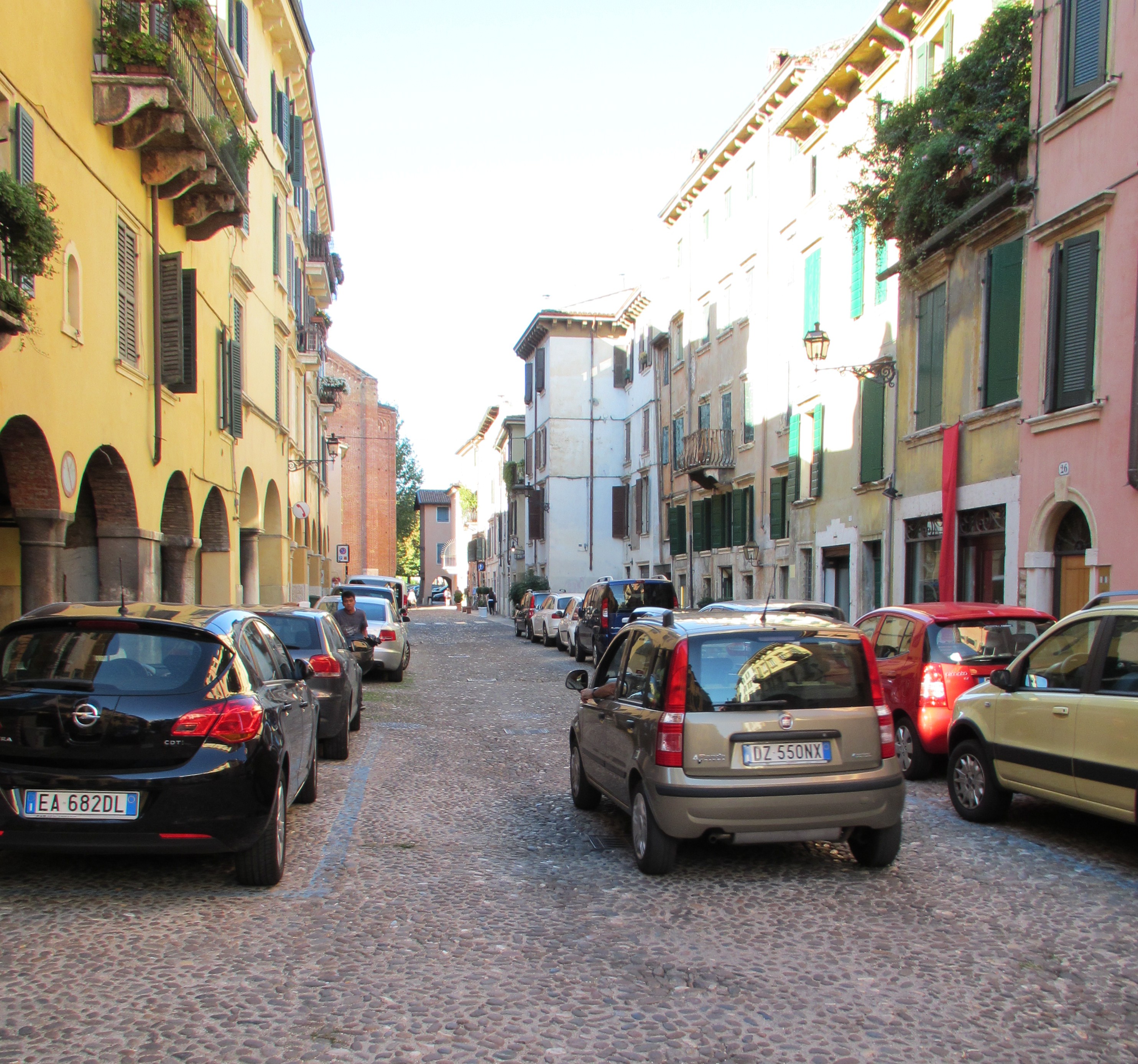
Verona is still gripped by the absolute tyranny of the car. There has been almost no attempt to restrict the disfigurement of the city by congestion, parking, noise and fumes. The restricted area in the city centre for motorised traffic is tiny and any priority given to alternatives is minimal. There are almost no cycling and bus lanes. All but one main square has full access to cars all day.

But of course in true “I do not despair” spirit this doesn’t stop me finding cycling in and around the city being an uplifting feeling, not least because it is a beautiful place, but by far my best moments were quite roads and corners, where I could find them.

A week later Padua. Nowhere near as celebrated as Verona internationally and with much fewer tourists.

Yesterday morning I wandered into the city early on foot and last night I was able to shoot around the streets on a borrowed bike from my local hosts.

Immediately outside the hotel I came across the first of 150km of cycle paths. And then once I had slipped past the boundary of the old city walls I was almost immediately into the extensive pedestrianized centre. It isn’t entirely car free, there are designated through routes and access is allowed to some areas. But at 8 o’clock on a Saturday morning the contrast is just incredible.Padova market

The streets were not silent – oh no. But the sounds were precious. Firstly people talking – as they walked and cycled and opened the many market stalls. But best of all the almost permanent sound of rattling metal – bicycles on cobbles – the endless array of cheap town bikes that dominate the Italian domestic cycling market bouncing their way around the streets.

It reminded very much of my trip to Bologna in May, again not such a celebrity city as Verona but one where civic pride manifests itself in giving the streets to its people and its visitors. As an international advocate for cycling and sustainability the most important lesson I keep being given is that we spend a lot of time addressing national and even international policies that affect cycling. But within the same country, the same funding climate, the same road laws, the same culture local political will is the determining factor in whether a city wants to be liveable or not.

I will be posting a few more highlights from my visits in the next week or so, but I’ll complete this post with two photographs.

Both are cathedral squares. Which one would you like to spend time in?


Wandering Verona – first impressions

I wandered Verona in the late afternoon – still probably 25 degrees temperature and a glaring sun.

Odd mixture of a place – the main central attractions were interesting enough, but slightly lost in people and traffic, not least the terrible tourist trap that is Juliet’s house and balcony.

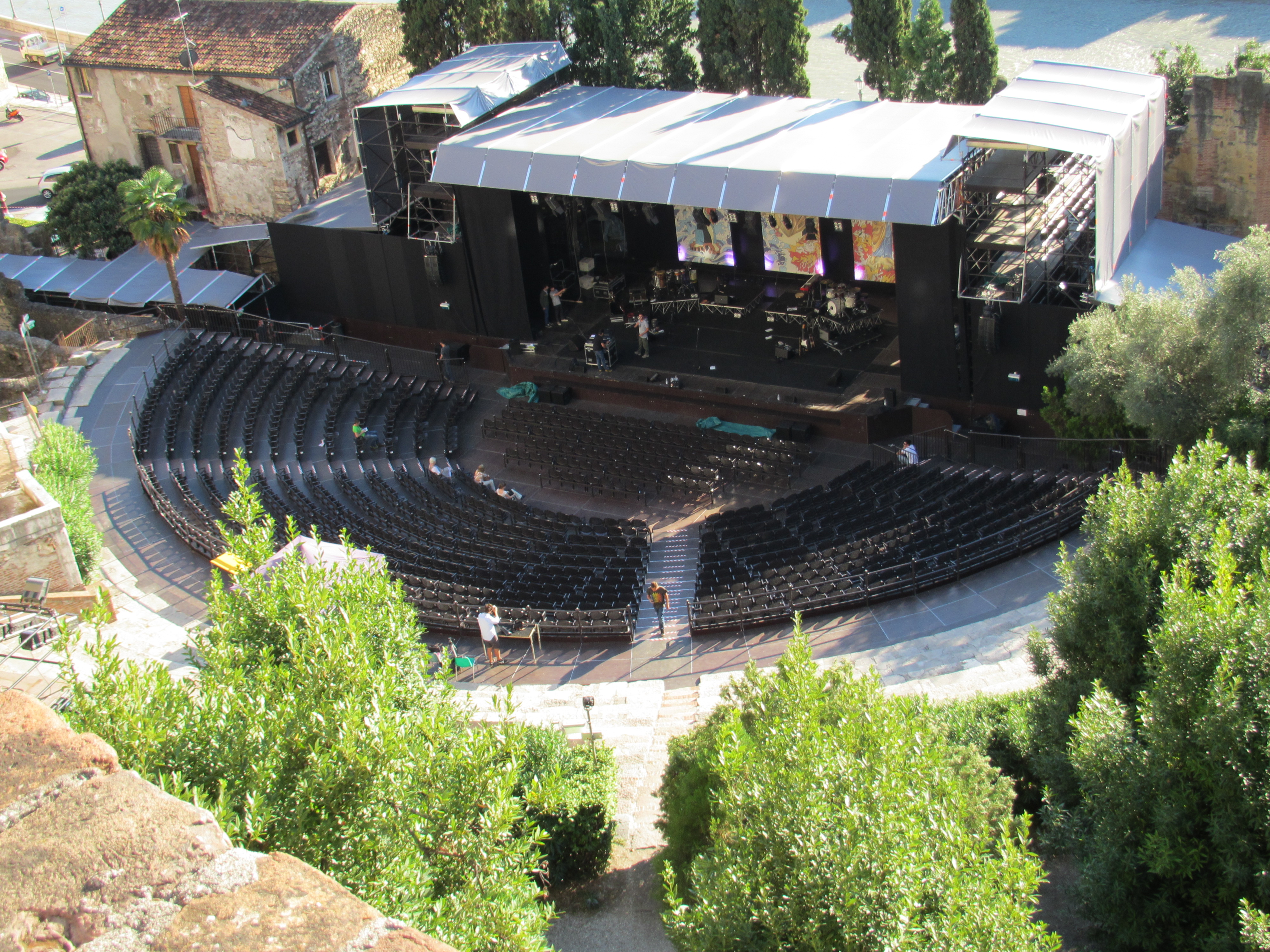
But on the banks of the river Adige I found some wonderful spots – the old roman theatre clambering up the hillside with multiple layers of medieval development on top of the roman base. Views across the river to St Georgio church and a tower way up on a hill beyond. The Castelvecchio with its calm inner courtyard and then access onto the delightful walled bridge the Ponte Scaligero which was wonderfully picked out in the evening light and thronging with walkers and cyclists using it to get home. If I lived here I would go a long way round to use this traffic free route on my way home to avoid the busy streets.

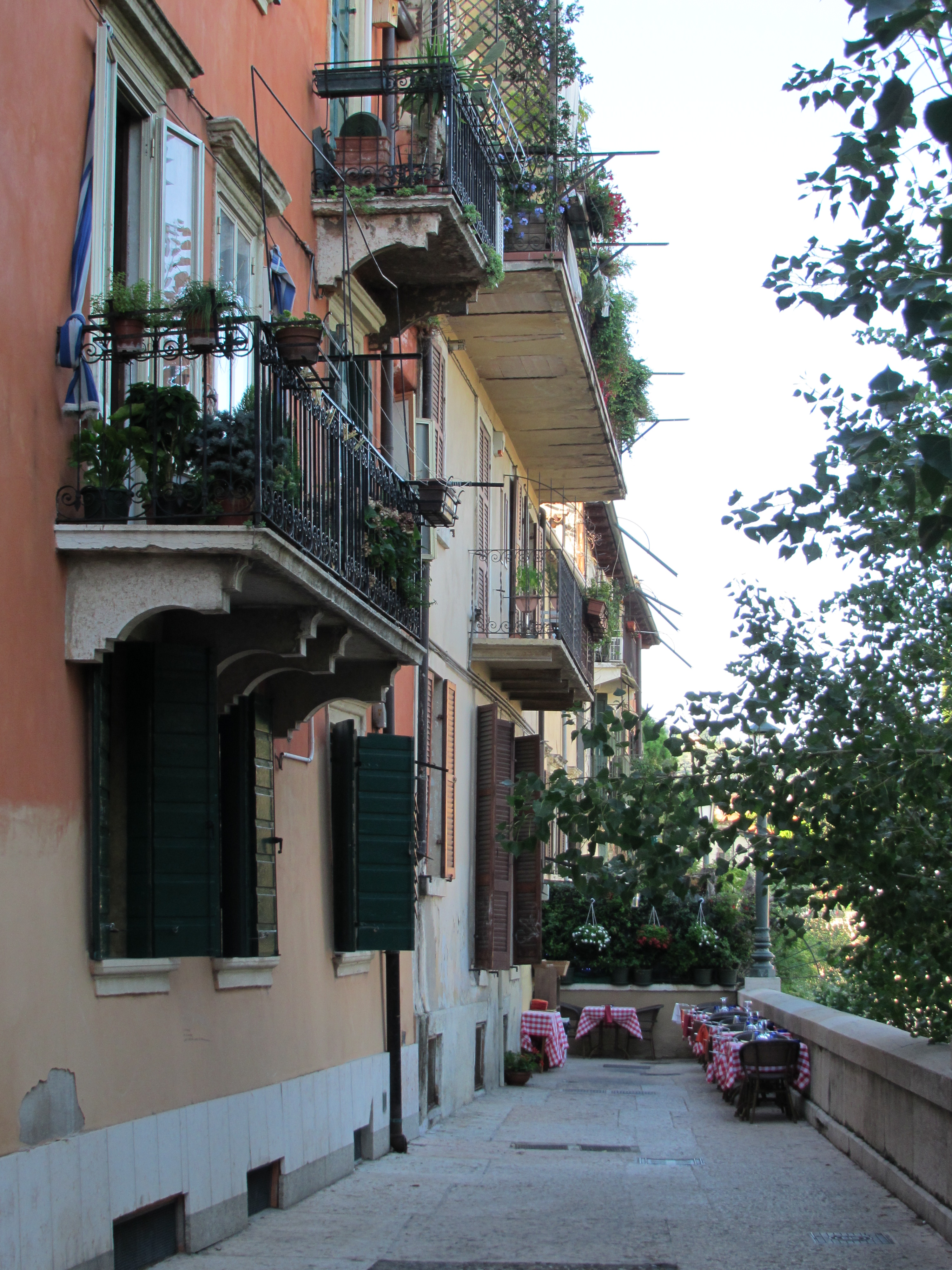
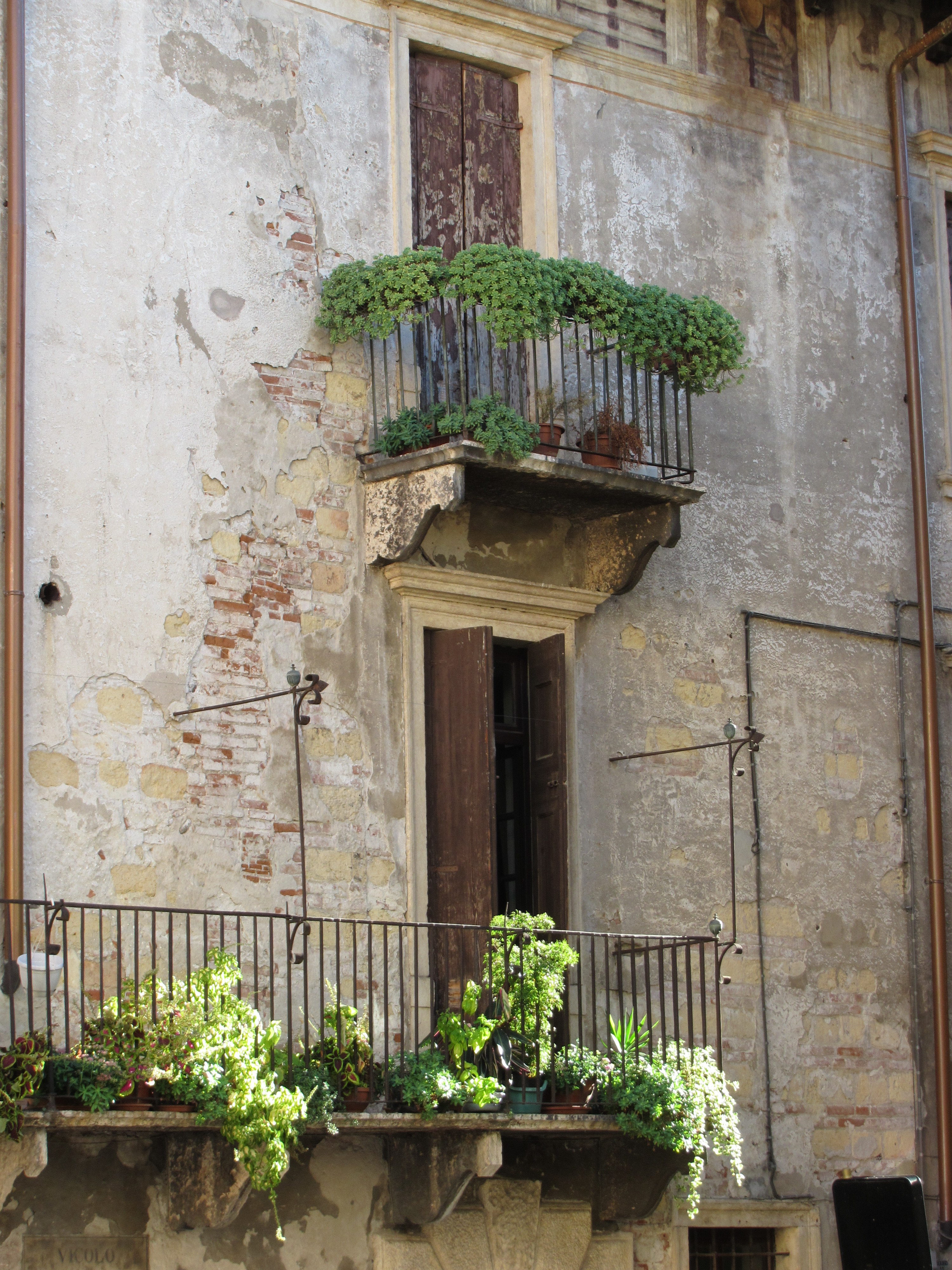
View across River AdigeAnd of course as always in Italy the gems. Tucked away in side streets are tiny scenes of calm, balconies and porticoes with tables to eat and swathes of greenery.

My favourite so far? The Roman Theatre is set up as an amphitheatre for plays and music and while I was wandering up its many layers a band was doing sound checks and playing odd tracks through the speakers. The sound was muffled outside, but as I climbed up the many chambers, cloisters and secret gardens the perfect acoustics of the theatre forced it to well up and drifted through windows, around corners and into private corners where I was almost alone and away from the city. Precious.

Verona