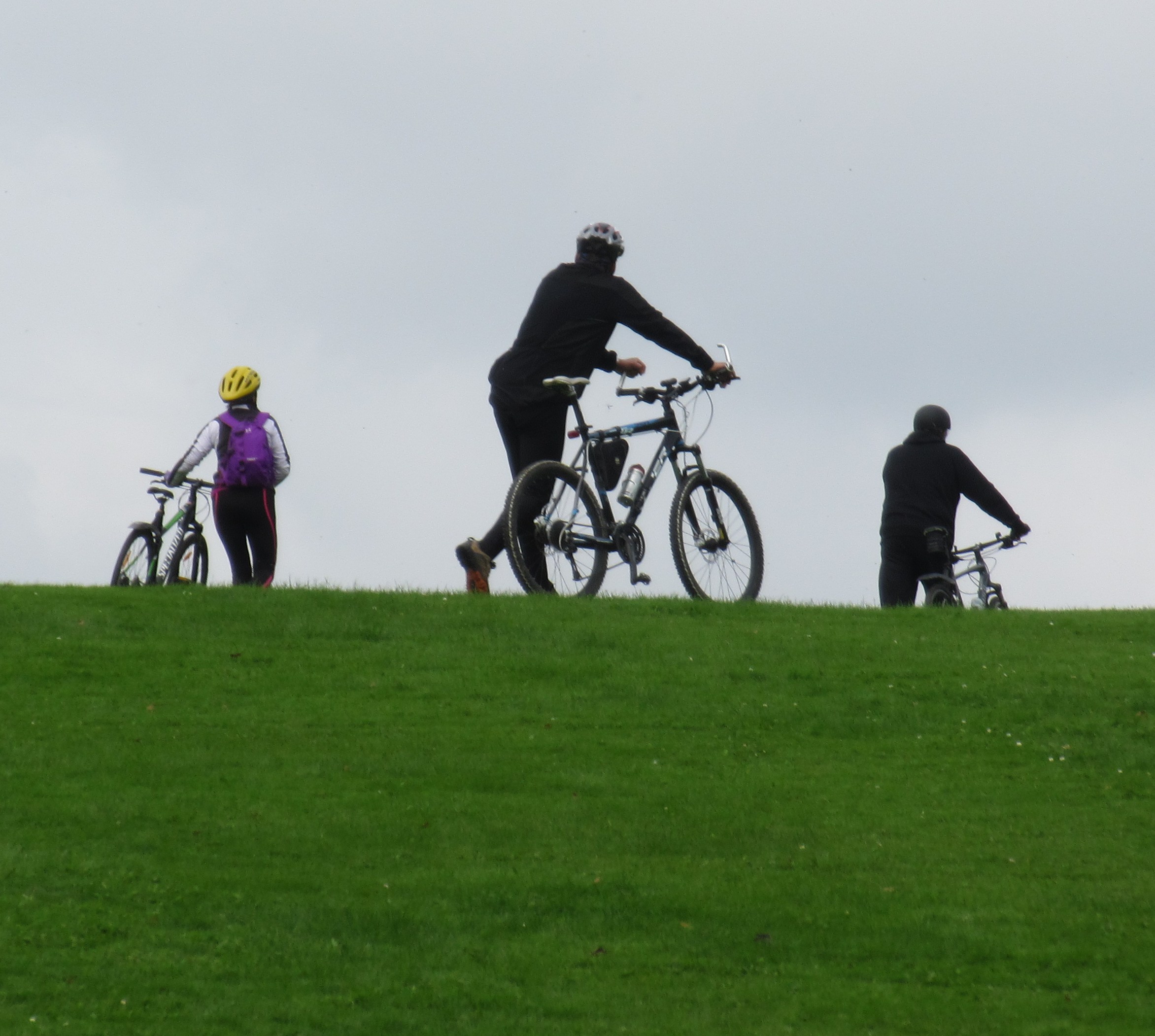

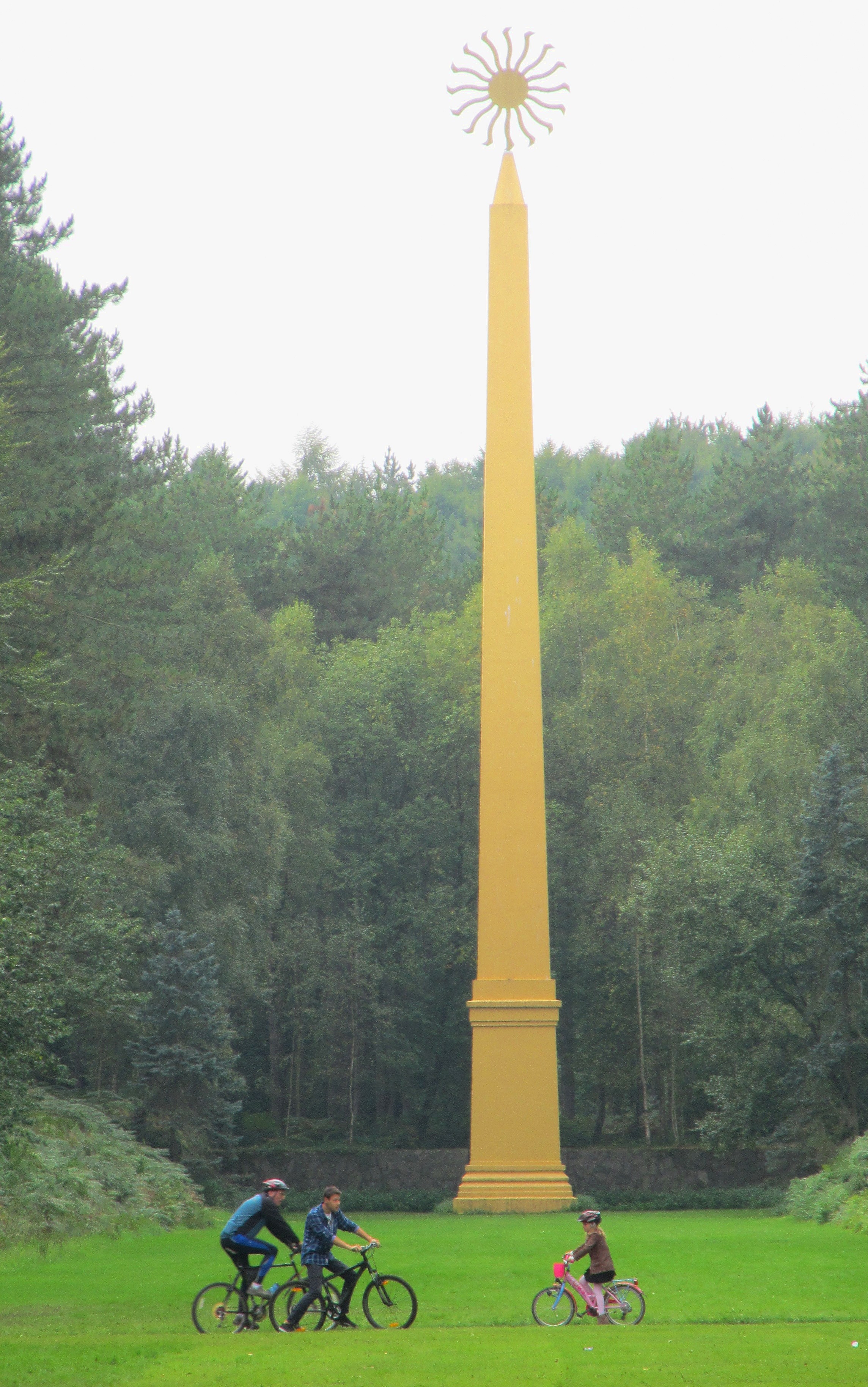

Another lovely hazy autumnal weekend in Wallonia – shall we do the same as last week then?


Another enjoyable Belgian summer day out at the Jardins d’Annevoie.
This delightful place is a few kilometres north of Dinant, in the valley of the Meuse as it runs north between the French border and Namur.
Since the eighteenth century the gardens and chateau have been in the hands of the same family who have built an elegant network of gravity fed lakes, ponds, waterfalls and fountains in various styles representing the various fashions of formal gardening in the intervening 250 years.
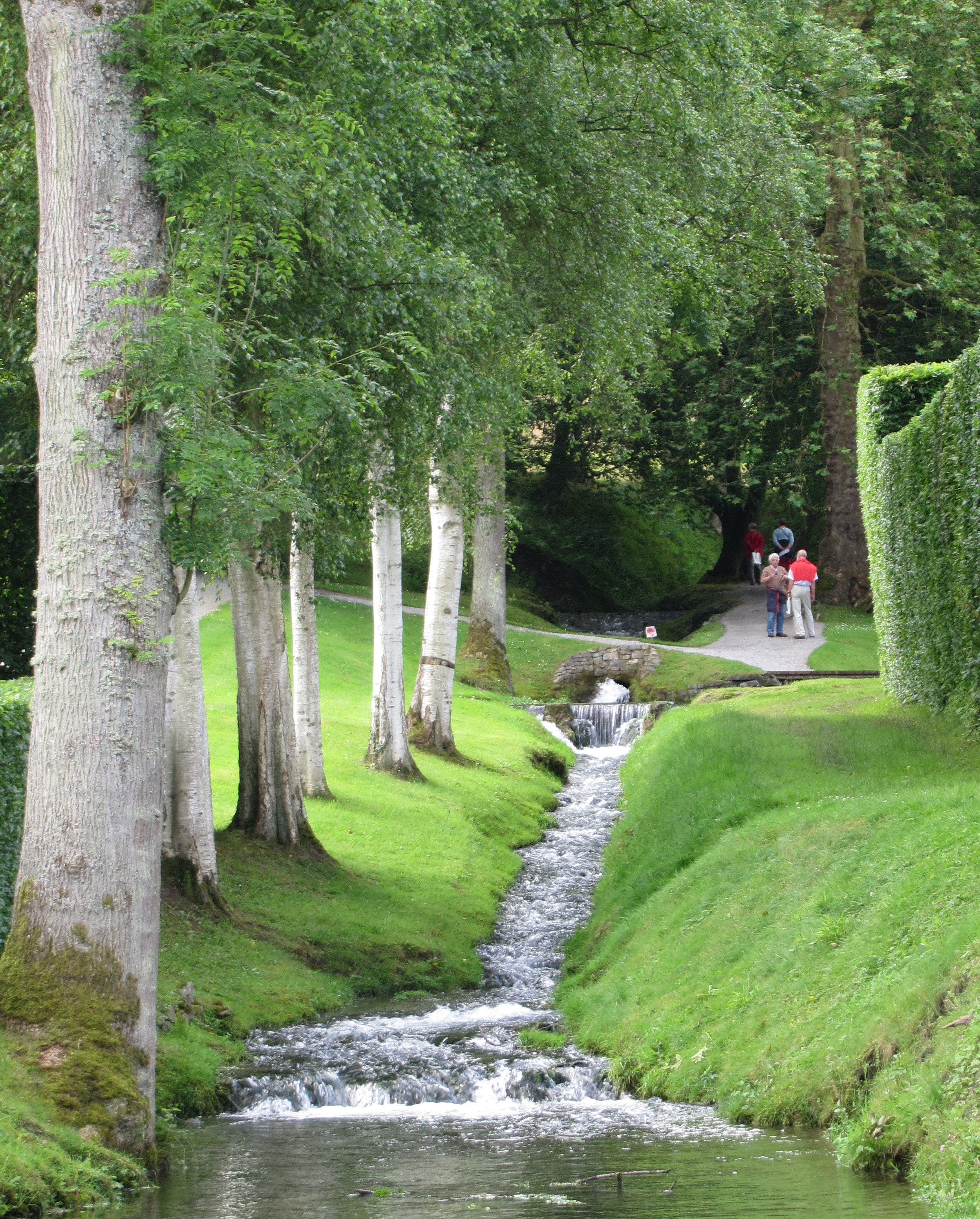

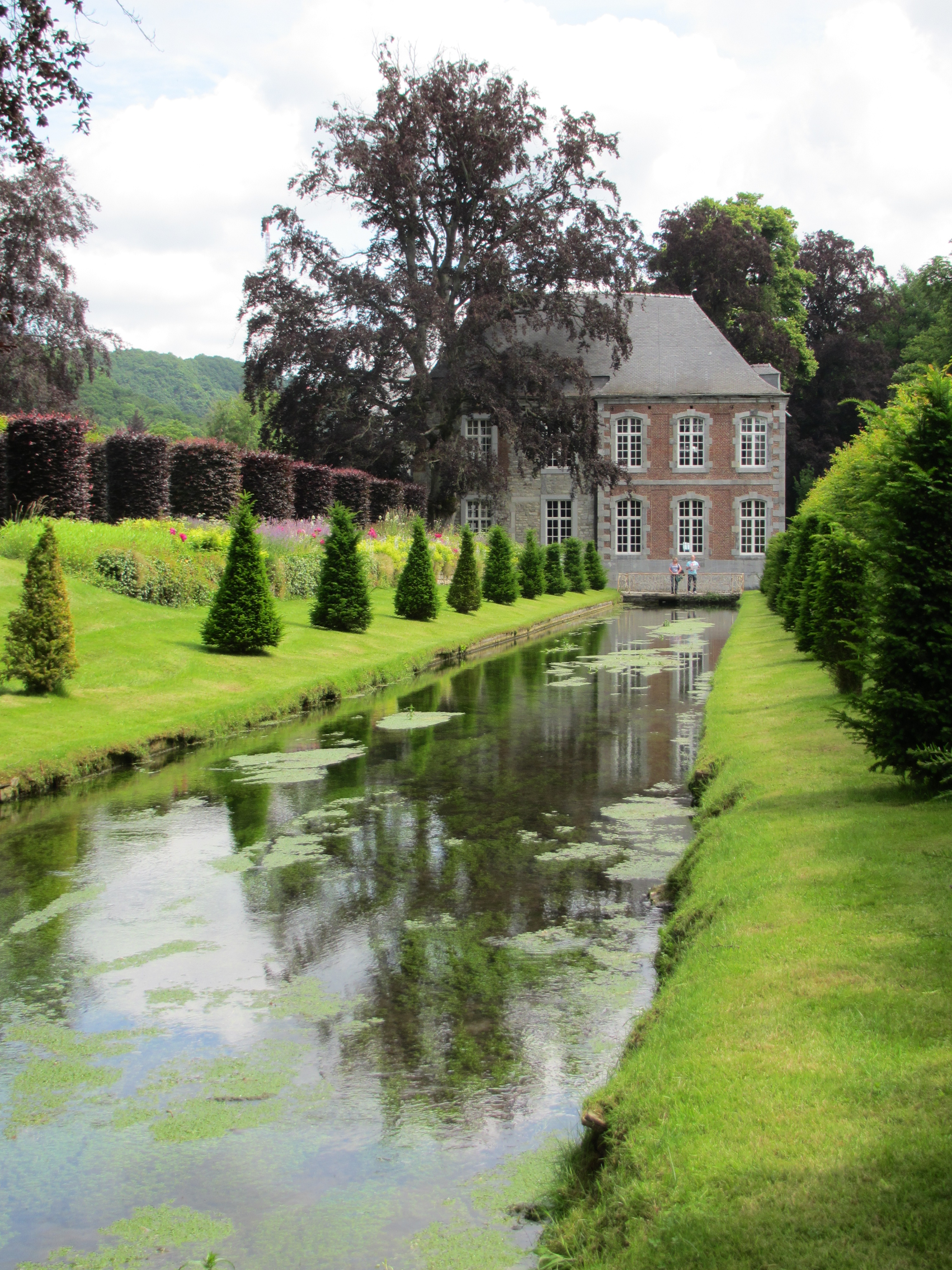
 It was tranquil and relaxing when we took friends to visit, like so many places in Belgium it is largely unknown outside the country and only gets busy in the height of summer.


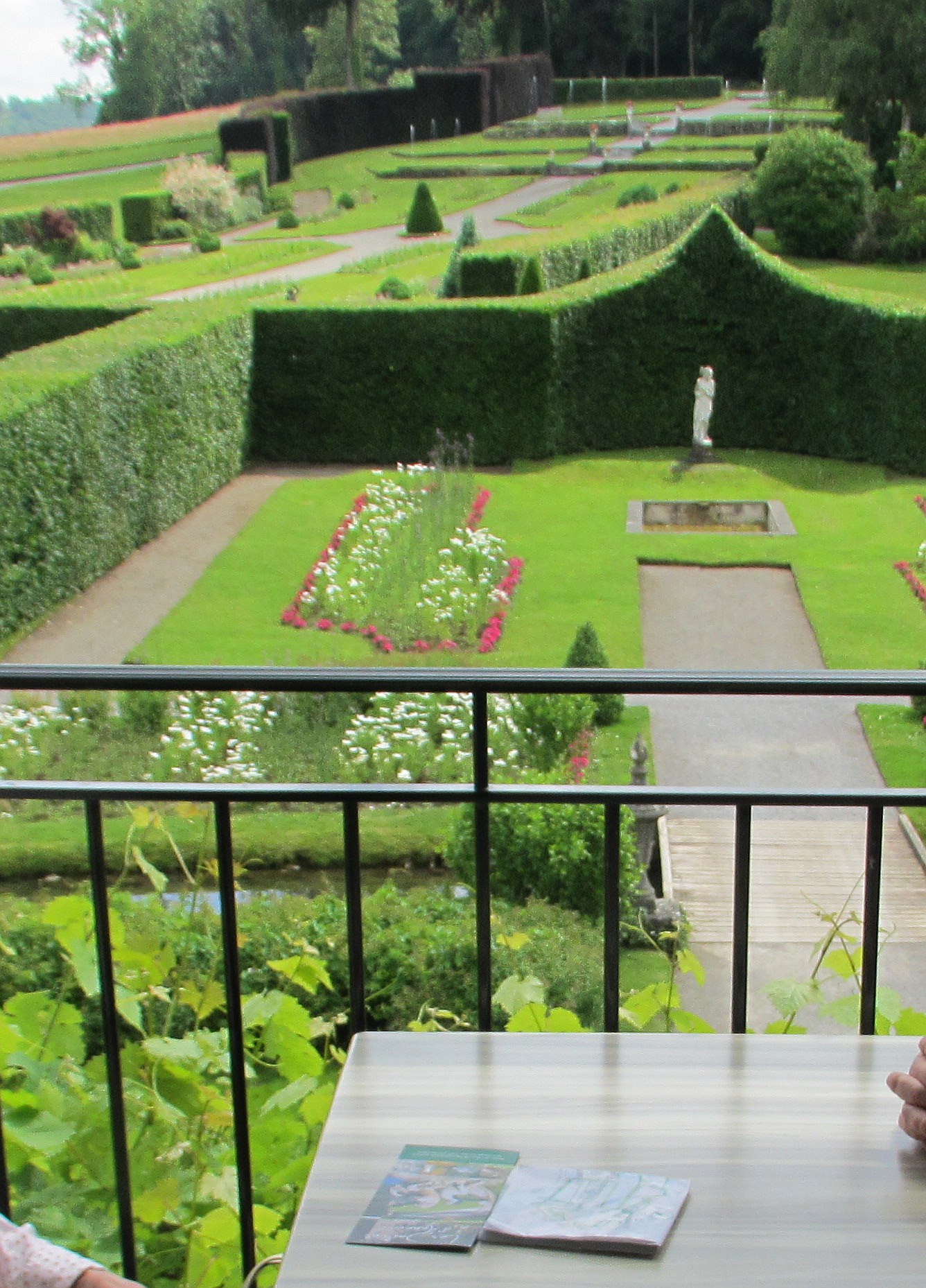 I have to recommend the restaurant with its terrace overlooking the gardens too, the locally caught trout was delicious.
Web site here
There is a cruel and extremely patronising saying in English “bet you can’t name five famous Belgians” which is a rude way of decrying the impact this country has had on the world.
However when tested sadly most of us can’t. Especially when we discover detective Hercule Poirot doesn’t count because he is fictional and cyclists are banned from rattling off anyone other than Eddie Merckx on the grounds that nobody outside our world has heard of Rik Van Looy.
Hergé, Rene Magritte?
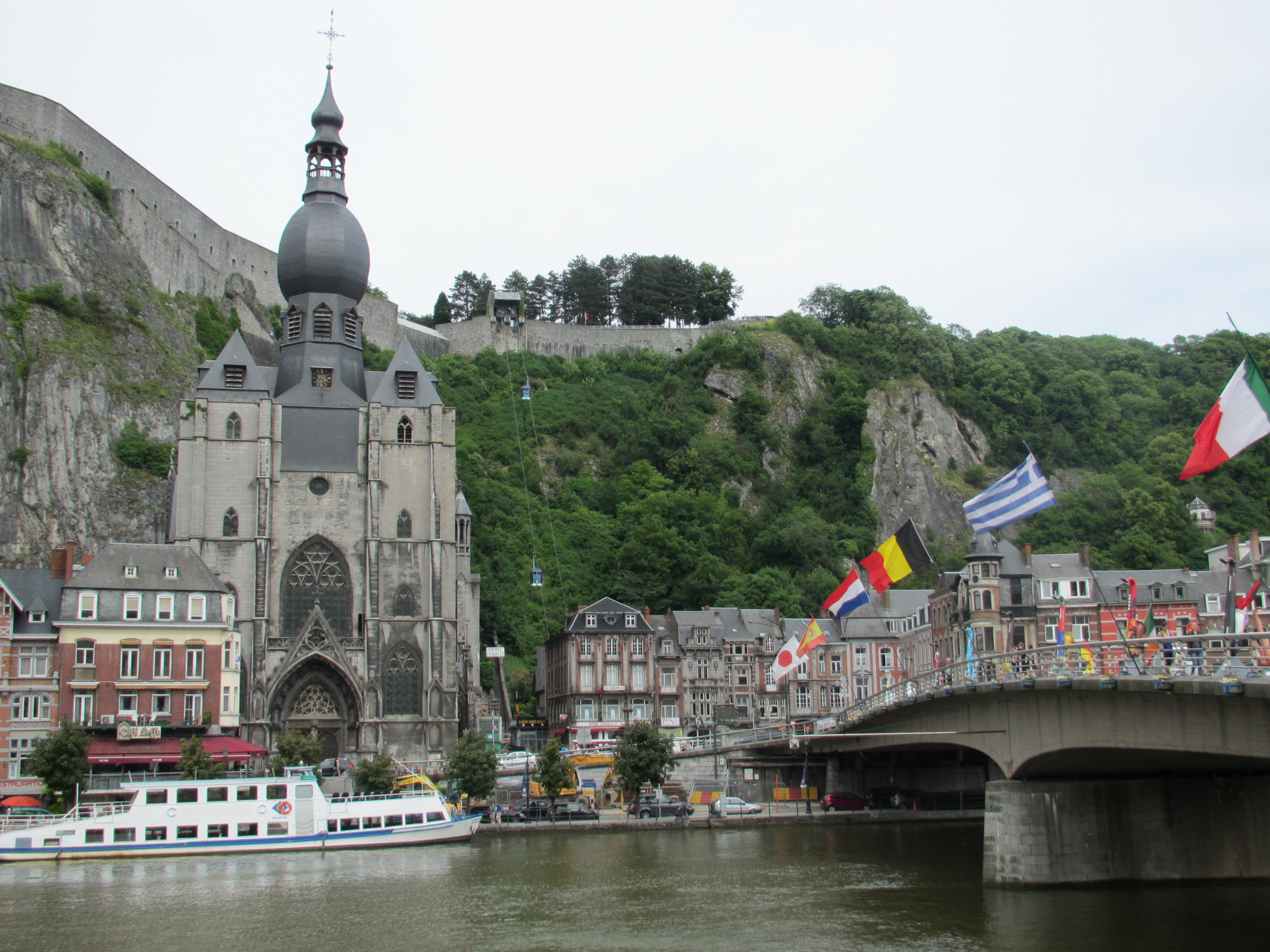
A recent trip to Dinant in Wallonia threw up a name who deservedly needs to be on any list of people who have made an impact on the world far beyond their shores.
Where would my “Music to ride Bike By” be without Gerry Rafferty’s “Baker Street”, Pink Floyd’s “Us and them” and the Clarence Clemen’s solo on Bruce Springsteen and the E Street Band’s “Jungleland”?
What links these seemingly disparate pieces of music? The saxophone. Invention of Alolphe Sax from Dinant in 1846 which makes him by far this region’s most famous son. Best saxophone solos ever? That’s a topic that keeps lots of lists going on the blogosphere.
Dinant itself should be an attractive place in the valley of the Meuse south of Wallonia’s capital Namur but it has a slightly down-at-heel atmosphere which reflects the economic reality of southern Belgium. Things are fairly tough in a region that once depended on coal, steel and shipping down the river which still acts as a freight route. Tourism is doing its best and the riverside is being gentrified to complement the Notre Dame Church and the imposing Citadel which overlooks the town. 

The dark grey stone doesn’t help the scene, it looks slightly overcast even on a bright day. By far the most colourful scene in the town was the bridge named after Charles de Gaulle because the future French president picked up a war wound here during the first World War.

Here Sax was being celebrated with a colourful display of 28 painted saxophones, each painted to represent a country of the EU and the EU itself.
 It is nice to go somewhere else this year where you just end up smiling and humming to yourself, it gives Dinant that something special, and I would much rather be in a place that should burst into a chorus of “Jungleland” than the “Sound of Music”.
Web site Famousbelgians.net agrees, they have Sax at number 2 after Eddie Merckx in their role of honour. That is almost perfect for Idonotdespair –cycling followed by music. Bring it on boys.
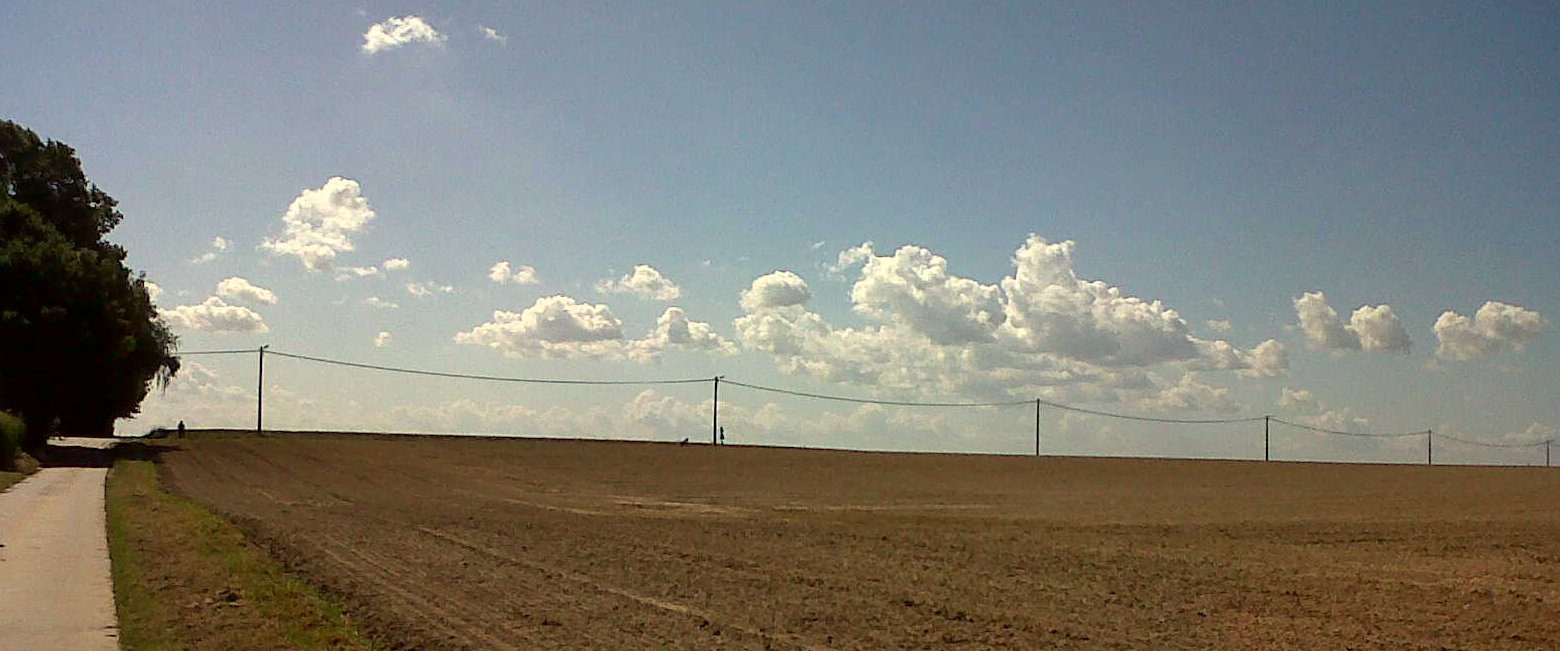

There’s nothing unique about today. We didn’t go further than usual, it wasn’t especially hilly. We just cruised the rolling countryside to the South West of where we live. But it was just the perfect way to spend a cycling morning.
 Just over 90 minutes into today’s club ride a thought popped into my head. I couldn’t recall us passing any moving cars, from the front or the rear. There might have been one in Ottignies at the start of the ride by the station, but after that I think we opened up with about 30 traffic free kilometres.
It was almost windless so that the even the giant turbines out in the flatlands were still. And if there is sound I can recall beyond the clicking of freewheels it is the sound of skylarks above the fields which are almost ready for harvest.

Some of that was definitely the wonderful network of tiny lanes found by our ride leader but also it reflects how sleepy rural Belgium is on a Sunday morning, especially a hot summer’s day when so many people are on holiday. The villages and farms were no more active than Spain during siesta. Imagine that just 50km from London, or indeed most big cities.
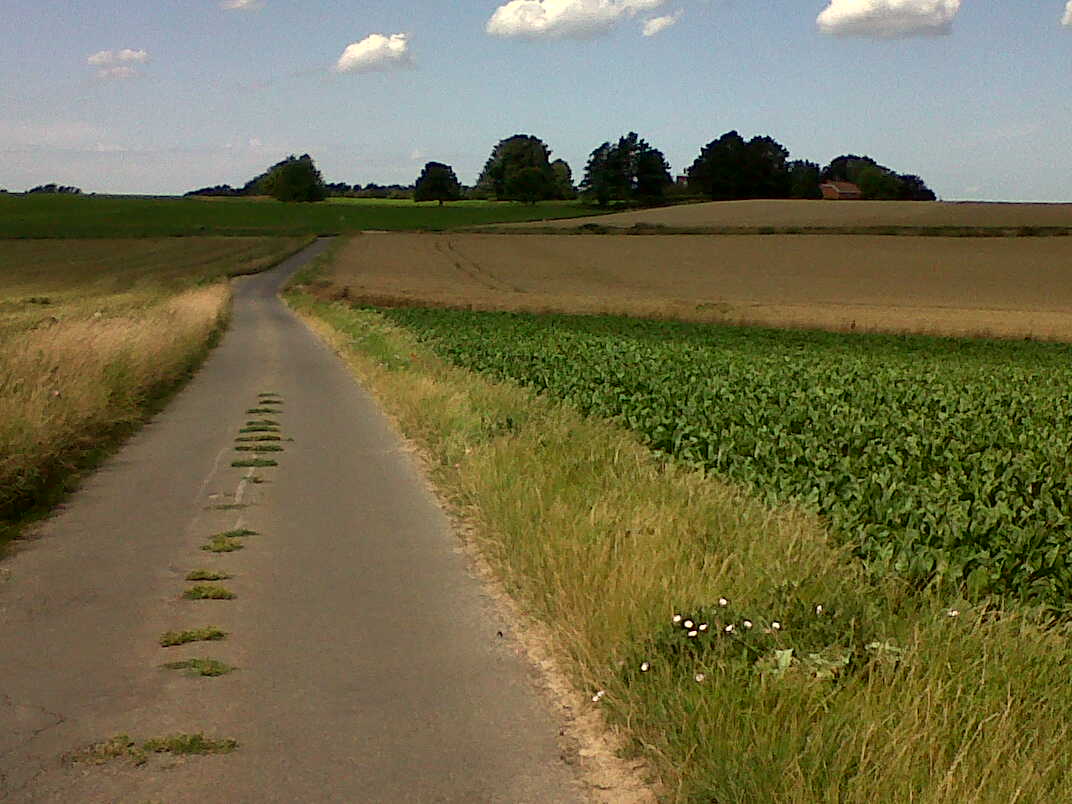 When we first came here it all seemed a bit old fashioned. No Sunday shopping. A ban on noisy implements on a Sunday – so no diy, lawnmowers or hedge cutters. Now we welcome the wonderful tranquillity and the fact that there is no incentive at all for anyone to get up early.
 Except the cyclists. I wondered if our group would decline during holiday season but when I rolled up to the station meeting point for 8am if anything it was bigger than usual, well over 60. So in addition to the wonderful riding conditions there was lots of company for our 85km spin.
Not much chance for quality photography in a cruising club-run  so only a few atmosphere shots on the mobile as usual.
Music of the day? When I am spinning in a group I am usually concentrating but to today I was so relaxed the music just flowed. What to recommend for “Music to Ride Bikes By”? Lou Reed and Perfect Day seems a bit obvious, but I did manage a few verses. So that’s a good start.
Much better “Summer’s here and the time is right, for cycling in the streets”. At least that’s what Martha Reeves and the Vandellas could have sung. For sheer exuberance let’s take the 1985 Live Aid version which was running through my head for hours today.
Over to you Mick and David.

A few weeks ago I took a day off work to ride much of the way across my newly adopted home region of Wallonia – the French speaking bit of Belgium. I was headed south to Huy to watch the Fleche Wallonne cycle race (post here) but what I also wanted was to stretch my cycling boundaries and explore. And in doing so I was able to unravel a previous confusion about the cycling landscape and prove to myself that cycling in Wallonia is indeed upside down.
I also found brilliant riding. I don’t think I have never met anyone who has told me about touring round Belgium so I had no idea what to expect when I came here. A few people had done trips to the WW1 battlefields over in Flanders and I know the odd person who has made the pilgrimage to the big bike races but I just don’t recall “cycle touring in Belgium” being a common discussion point amongst my UK cycling community.
People seeking flat and cyclist friendly riding go to the Netherlands. And to our south France is the biggest cycle touring market in Europe, possibly the world. But as in so many other things dear Belgium gets, well a little bit lost.
On this particular day I experienced two, maybe three very distinctive landscapes which in their own right would provide part of a brilliant tour, both of which show off some of the distinctive elements of Wallonia. It isn’t perfect, cyclists don’t get anywhere near as much help with routes as in Flanders, the Netherlands or France and some of the road surfaces are abominable, but there is no reason for southern Belgium not to be a great cycle touring destination.
Above all else it is completely deserted. Again I have say it, come here fellow cyclists, it is so quiet. A normal Wednesday, a weekday when people are going about their business, the commuter routes into Brussels were as congested as ever and yet I rode for hours and hours on apparently empty roads, hardly seeing a car except when I crossed busier main roads. 
Farmers were busy, but apparently nobody else.
And there is a tolerance for cyclists that far exceeds any experience I have had in the UK, and is a complete contrast to Brussels. Maybe it is the lycra, as if lby ooking like a sporty cyclist you seem to spark a certain recognition in the Walloons, but whatever it is I love being treated like a valuable property not an inconvenience.
Upside down country?
I knew that I was heading for the hilly bit of Belgium. Not massive climbs but clearly from descriptions of the Ardennes and the profiles of the bike races it was going to be an area of steep sided hills. Not so different from Brabant Wallon where I live, but probably steeper and bigger. As I like hilly country for cycling I was looking forward to it.
But what I didn’t know much about was the terrain in between, a 50-60km section between the main towns of Wavre and Namur. My previous excursions had touched on flatter terrain and open farmland, but the maps didn’t show any transition to the Ardennes which was a bit odd, I assumed it must start to climb somewhere.
That was almost how it turned out. I had half a ride on gently rolling but exposed farmland. And then I hit the valleys at the very edge of the Ardennes and I was suddenly plunged into steep sided gorges with rock walls and dark stone cottages that could have been plucked out of the English Peak District or the French Perigord Nord.
But the key to understanding the Walloon landscape revealed itself to me as I made that transition. I hit valleys, not hills.
When that realisation dawned suddenly I could make sense of a whole lot of landscapes, not only on that day, but around where I live south of Brussels. I appear to have got this whole region upside down.
I haven’t studied the geology in a text book, so go with me here, it might make sense to a cyclist.
Through Northern France and into Belgium is a wide coastal plan that gradually rises as it heads inland. There are ripples and lumps and bumps, but this is largely flat country. Further north in the “Low Countries” it stays close to sea level however further inland from the coast this plain rises to 100, maybe 150 metres above sea level. In the East in what is now the Ardennes the plain must have been pushed up by geological forces higher and forms a plateau around 700 metres high, but still these are not really mountains thrust up into the landscape, it’s geology was pretty flat when it was laid down.
So there should be no real hills.
Except that there are rivers, which have cut downwards into the soft soils and rocks over thousands of years. So instead of ups, there are downs. Instead of peaks we have flats, when you complete a big climb you end up back on the flat land. It is like the reverse of everywhere I have ever cycled, when you come off a flat section you go down, then you climb back up. That is a right pain if you feel like a bit of freewheeling after a long hill climb!
Where I live in there are many small rivers like La Lasne, Smohain, l’Argentine and La Mazerine, each of which has carved out one of our steep valleys 50-70 metres deep. This makes it feel like constant climbing if you have to travel north to south as I do every time I ride to Brussels.
On my cycle tour across Wallonia I started with a few of these dips and climbs of Brabant Wallon however I was quickly into the an area without significant streams or rivers, so when I climbed out of the last valley to Mont St Guibert there was nearly 50km of gently rolling flat farmland in front of me which will appeal to any lover of cycle tourism on tiny agricultural roads between old farms and sleepy historic villages. Think the Netherlands, think East Anglia, think the Vendee depending on your previous cycling experiences. Dramatic it isn’t, delightful it is.  The little towns and villages like Chastre, Walhain, Grand Leez, Waret-la-Chausée just slipped by with the spires of their churches and manor houses making attractive punctuation points on the horizon.
However it is pretty exposed and a nagging headwind really took the edge of my pace, I would really rather have had some variety at times.
I only really understood how this fitted together with the Ardennes this when I reached the valley of the Meuse just east of Namur and a great vista opened out in front of me. But instead of looking up as I had expected to the forthcoming hills I looked across?
Ahead of me the plain could have continued climbing gently and eventually reach the 600 metres of Belgium’s highest point. But it was deeply cut by the many rivers and streams feeding into the Meuse and what I could see from my vantage point was not a series of hills but a tumbling mass of valleys.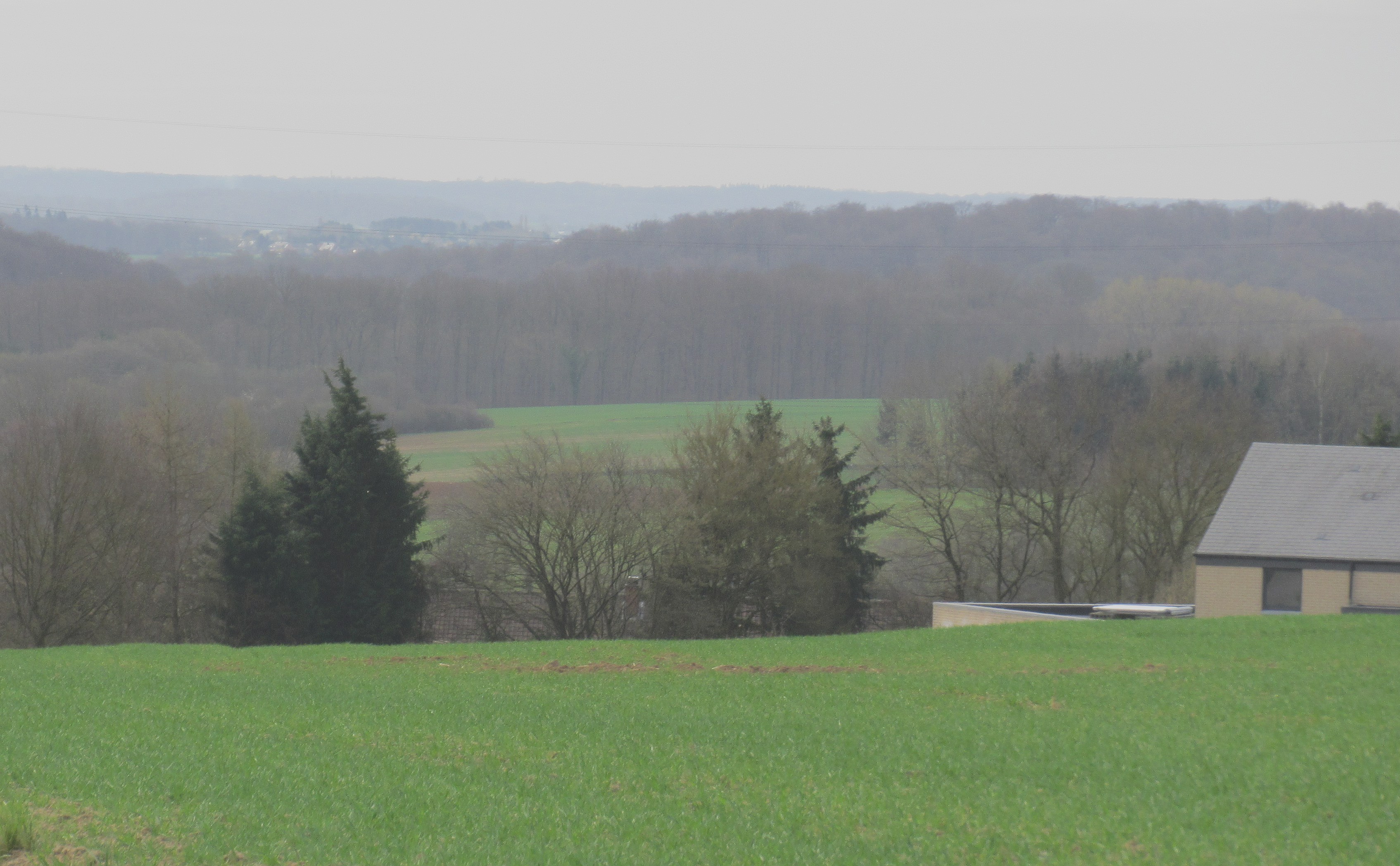
The hills of the Ardennes are hills of sorts, but their main shape comes from crossing the valleys, not climbing hills. They do end up a lot bigger than around Brussels because the plain has been rising all the way so the valleys can cut deeper over time, but the much of the landscape is still just open and flat, just that it is 200-300 metres above sea level. This became even clearer when later in my ride I kept climbing out of the valleys and discovering more wide open farming land at the top instead of the peaks of hills I had expected. But the depth of the valleys makes them like another place. The houses are built of stone not brick, the sides are heavily wooded and the villages are just cute as anything, especially as spring blossom was just appearing.
The exception to the cuteness was the valley of the Meuse which forms the boundary of this new area. Initially I dropped very fast and steeply down a lovely side valley alongside a stream, passing mills and cottages in dark stone which reminded immediately of the English Peak District.
At the end it was almost a shock to burst out onto the side of the Meuse. This is a big river, one of the workhorses of Europe and it suffers from its heritage as an industrial canal with big cement works, railways, boat moorings, main roads and a railway line all exploiting its history as transport corridor, especially on the northern bank where the main towns in this section are. The south bank looked a lot pleasanter thank goodness..
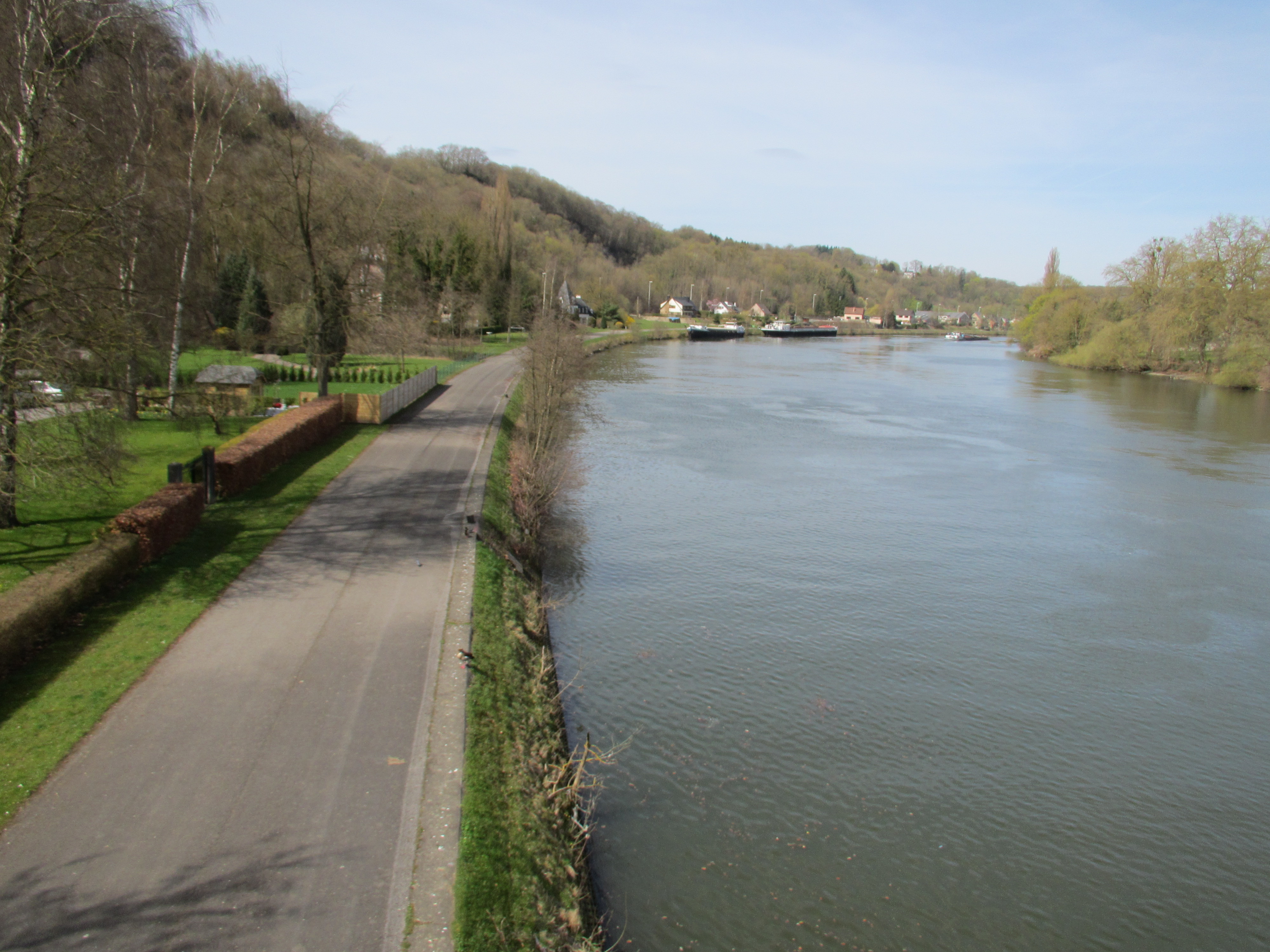 I only rode a few kilometres along the only busy road of my day until I could get to the first bridge and across into the quiet countryside again. However I had noticed on the maps that there is a Meuse cycle route and when I rode over the bridge at I could see a flat riverside path winding away into the distance which clearly was the sort of long distance car free route that crosses Europe by the great rivers. So even a third sort of cycle touring was on offer had I wanted just to nip along the river to Huy on flat car free trails.
But I had come for the Ardennes, or at least the edge of the Ardennes, so I had planned a further30km route south of the Meuse and the route of Fleche Wallonne, circling round and come back to Huy from the south, arriving at the top of the Muy de Huy with about 100km under my wheels. I had expected constant climbing and descending but the reality was quite different.
As with the earlier section of the ride I was quickly into a network of minor roads with hardly any traffic on them. South from Namèche I was able to wind my way gradually up a lovely valley past Faulx les Tombes for several kilometres.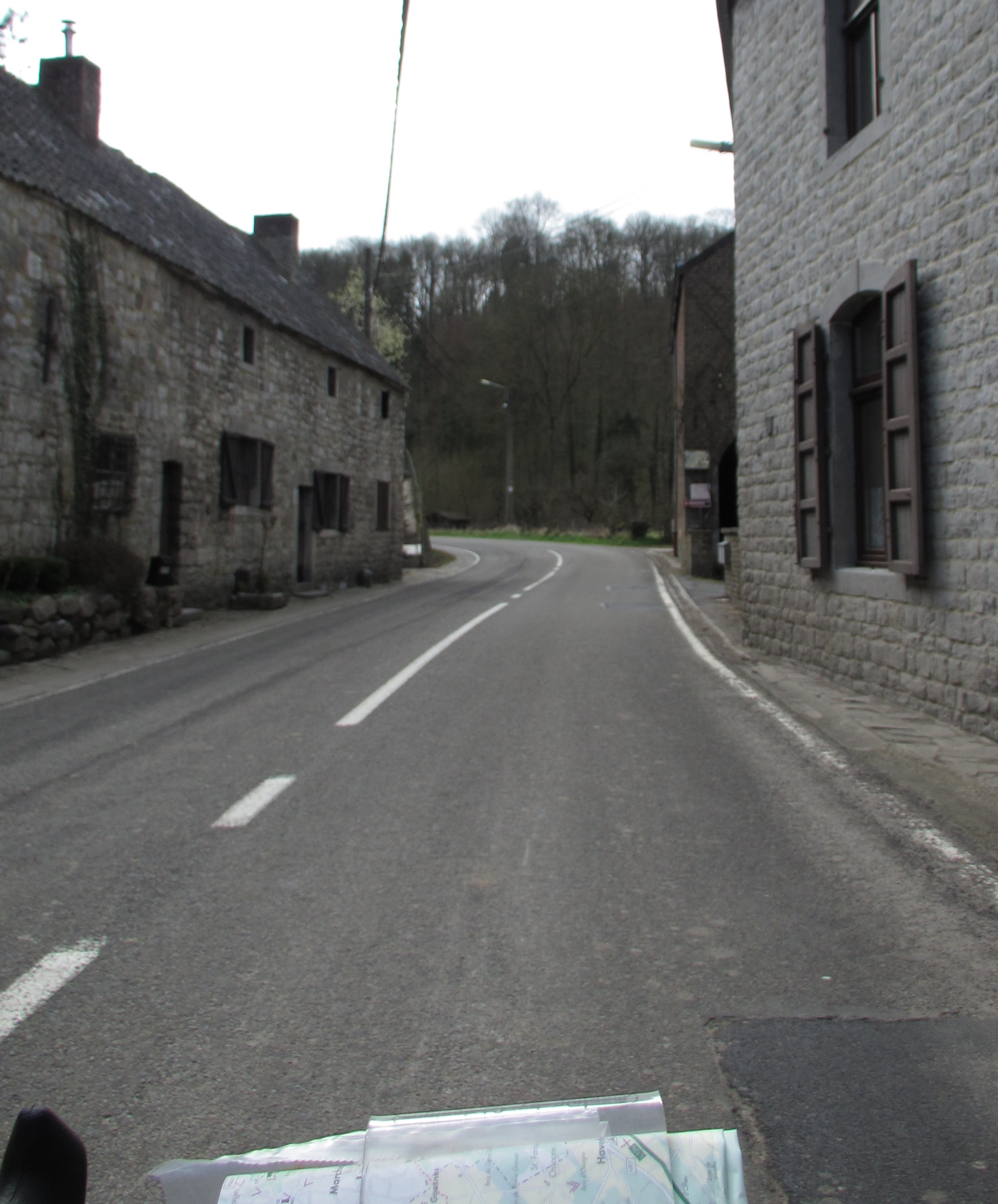
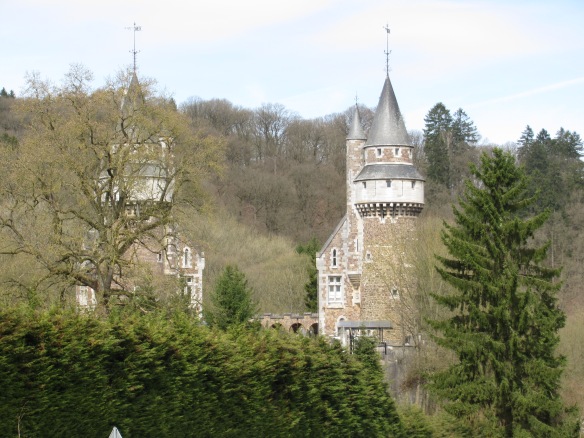
I didn’t gain much height but then I turned east and climbed fairly vigorously up Gesves which it turns out is very much a plateau town, looking across high open farmland. I was getting pretty tired at this point and as I was at the top of one of my main climbs of the day I really rather hoped for a nice sweeping decent.
In fact I then had another flattish ride of about 15km northeast on plateau landscape, not what I had expected at all. However I was rewarded when I approached Modave because there was a great decent down and I made my first encounter with the Fleche Wallonne route. A relatively short steep climb out the other side took me back onto the plateau and I was finally working my way in towards Huy. Once again it was deceptive, I appeared to be riding towards a village on a low hill above the farmland. When I encountered the race publicity caravan just south of Huy it seems impossible to imagine they had just come up one of the most famous climbs in cycle racing.
Only when I got to the very top of Mur de Huy could I see that the road effectively “fell off a cliff” falling steeply down through the suburbs and then at the bottom the town is a bustling place by the Meuse. You can get a good impression of the Mur de Huy from here just by looking up at the hill behind the town.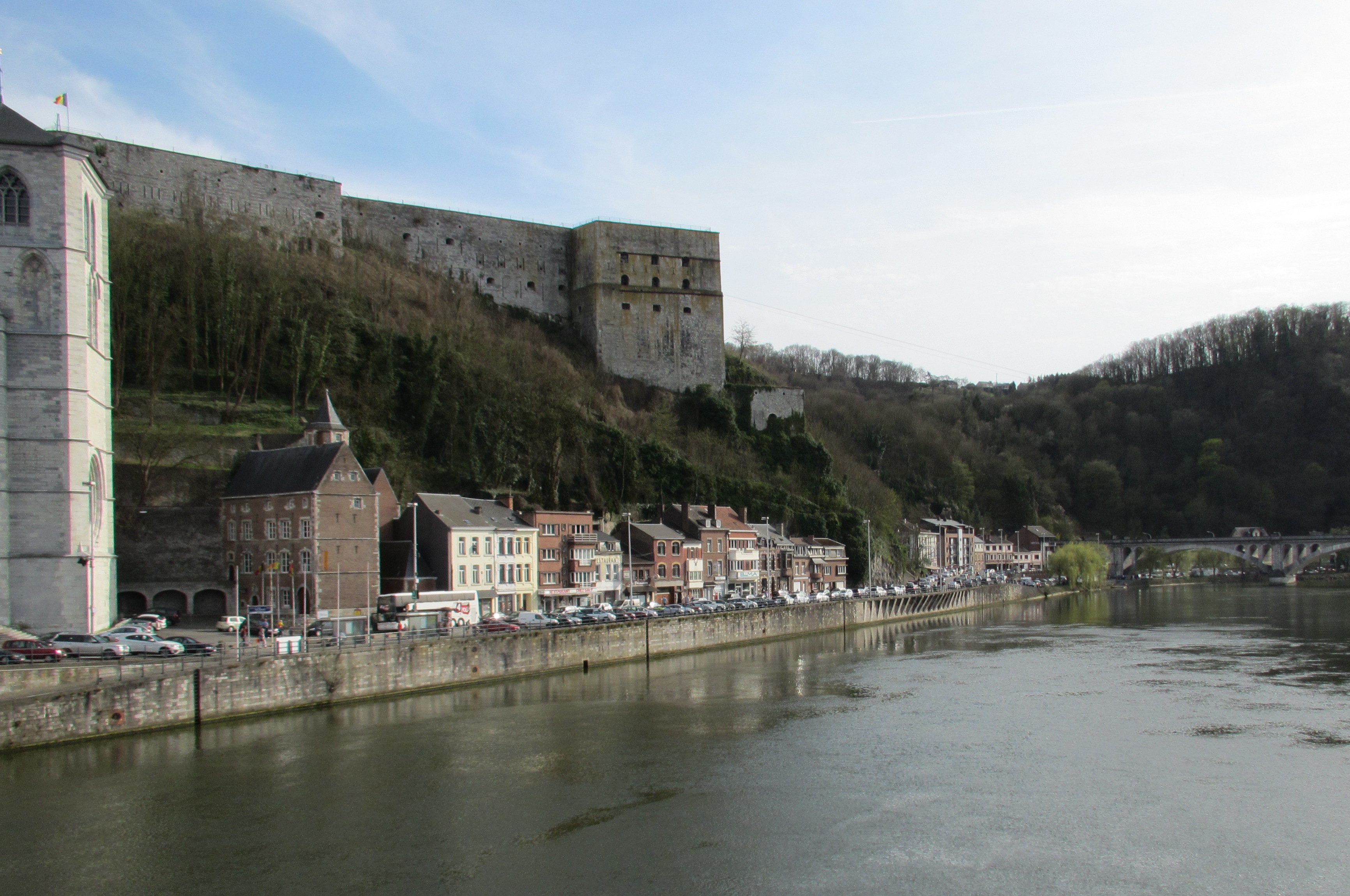
The distinction between the plateau and the valleys is so contrasting it is almost like two worlds, even the architecture and the building materials are different between high and low, as are the farming patterns and woodlands.
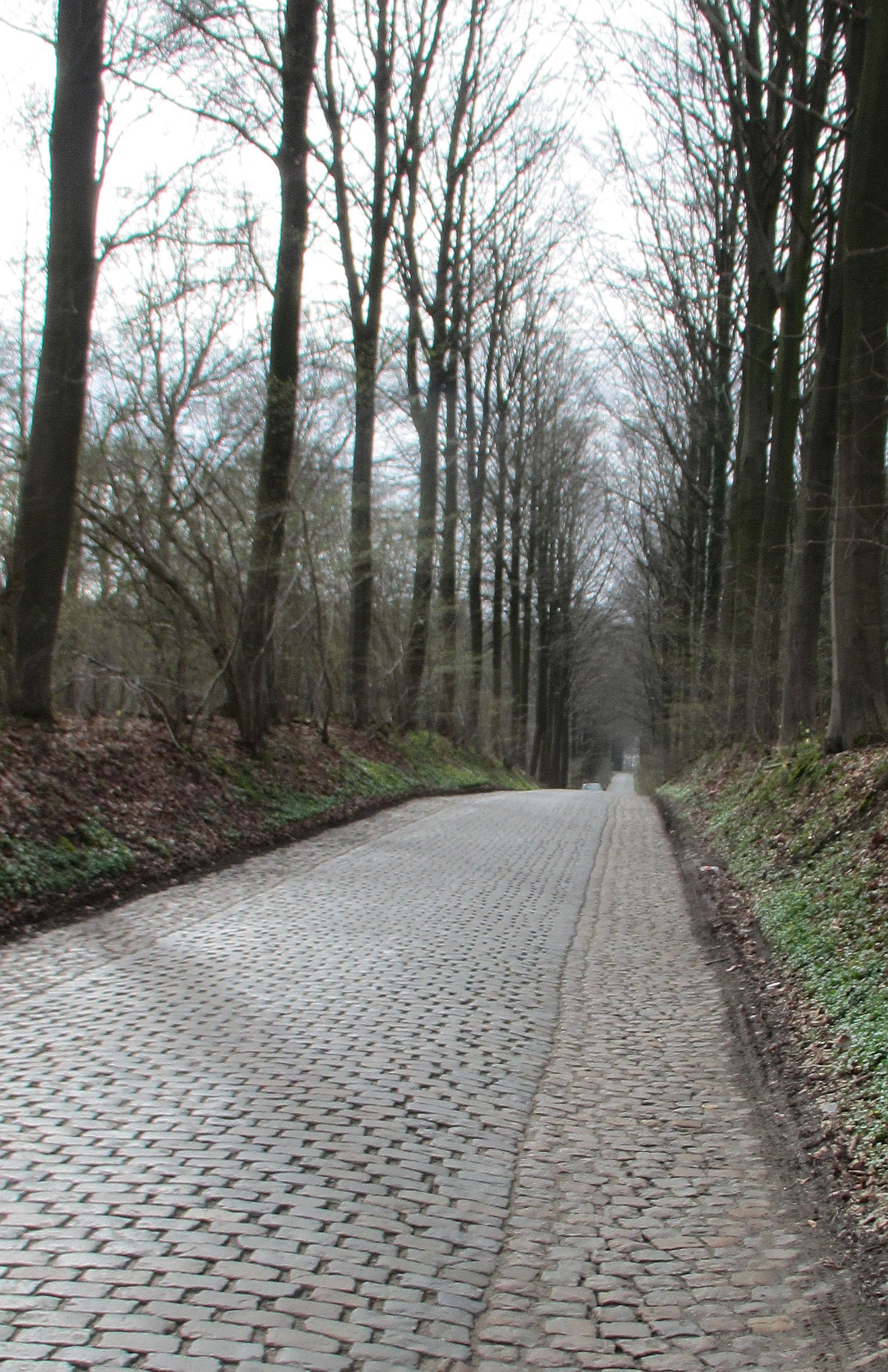 Those low traffic volumes, driver respect and contrasting terrains should make Wallonia one of cycle touring’s undiscovered gems instead of something just for the Belgians and a few bike race fans. Maybe it suffers from the fact that it does offer “a bit of everything” because someone describing just one part of my ride on this sunny spring day would had told a completely different story to the next person. The downside is certainly that it isn’t easy to navigate, the theoretical Randonnee á Velo shown on some of my maps have no signposting whatsoever so you need to be confident with a map and reasonably well organised to decide if you wanted to stick to a hilly scenic ride or a meander through the lanes. And
  the Belgians have an extremely relaxed attitude to what constitutes a road for cyclists, in some cases we are talking almost cart track. However that is always preferable to a kilometre of cobbles, that really does knock back your energy and your speed, however it is so much part of the infrastructure there is just no way of knowing until you get there what you are going to be offered. Cycle lanes are almost redundant except by the main roads but they were generally reasonable quality and occasionally real gems.
All in all a brilliant day’s exploration, topped off with beer, frites and bike racing. It doesn’t get much better than that does it? Do come a visit Wallonia, there is something for every sort of cyclist here, even if it is upside down.
 I Do Not Despair