Celebrating cycling in Bruges

Gallery

This gallery contains 18 photos.

This post is a photo gallery of cyclists and cycling taken while I was wandering the streets on our recent visit to the lovely city of Bruges. My wife calls this sort of behaviour “stalking” and seems permanently worried that … Continue reading

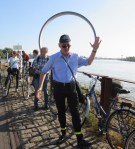
Artist and bicycle – Bruges

One of my favourite images of the weekend.

Photo by Kevin MayneArtist, bicycle, trailer and the wonderful canals of Bruges.


When I am warned that my bag is falling off my bicycle I do not despair for the future of the human race

When you live in a foreign country one of the subjects that often comes up is “how to break the ice with the locals”, especially where language is a barrier.

I have found an unexpected source of conversation that lets me meet someone new almost every week.

My briefcase.

I use an Altura Urban 17 bike briefcase, a design that suit me because it is a big baggy number that can absorb laptop, papers, lunch, waterproofs and even a change of clothes.

To allow for its size it has one particularly distinctive feature – it is mounted on the pannier rack at 45 degrees to horizontal to give heel clearance. That is a really sensible adaption.

Photo by Kevin Mayne

I think it must be my second or third version of the bag and until I came here the angle hadn’t really crossed my mind. But it seems to have a really unsettling effect on passing Belgians, whether they be cyclists, pedestrians or even car drivers.

Hardly a day goes by in Brussels without someone approaching me with a look of real concern on their face and saying “your bag is coming unhooked”.  This includes behaviour like chasing me down the road even when I am thrashing along in my lycra and pedestrians rushing off the pavement waving.

Perhaps most unnerving of all for me is to be shadowed by cars and vans who hover just off my back wheel until they can pull up beside me, wide down the widow and gesticulate furiously until I recognise the magic words “sac” and “décroche” over the noise and realise I have found another good Samaritan, not a nutter.

Initially I was really surprised and slightly thrown because I don’t recall a single comment in the many years I rode with a similar bag in the UK and I really do not expect to be approached when riding. Perhaps us Brits don’t do that sort of thing, there are legends of two Englishmen castaway on a desert island who didn’t speak to each other for forty years because they hadn’t been introduced.

Now I have got used to it I am really rather charmed by the concern of the Belgians for my safety, and even the fact that they could look at a passing stranger in enough detail to notice the angle of my bag. It is a nice feeling that they care enough to make a real effort to look out for my welfare.

My alternative title for this post “Invisible cyclist? Get yourself a wonky bicycle bag.”

So that’s it – most important job of the week done. Fantasy Tour de France Team submitted

There may be lawns to mow, bikes to ride and repair, dog to walk, emails to send.

But the week before the Tour de France the annual challenge has been issued and only one task matters. Building a Tour de France team to beat my brothers and my son.

This is a great way of bringing some extra entertainment to our watching, even if we really want the British riders to do well we can add some spice by hoping for a daily win. Not that I need any incentive, it looks like the most exciting Tour in years.

So here, unveiled for the first time is this year’s I Do Not Despair roster over on www.velogames.com , our chosen platform.

fantasy velogames

On Monday I will be reporting in from the top of the Muy de Huy as the race goes for an exciting stage finish at the top of the climb used for the annual Fleche Wallonne classic race in the spring time. With temperatures over 30 degrees at the moment it might be a long hot ride down there, but I have had this day in my diary all year, so I’m going, cooked or not.

Not much prospect of a Belgian winner on the Mur as Philippe Gilbert is injured, but apparently they are expecting over 100,000 spectators to this little town for the finish in this ampitheatre of sport.

Velo-city 2015 – the bike parade photo gallery. You had to be there! Merci Nantes

Gallery

This gallery contains 25 photos.

If I do not despair when I see an adult on a bicycle is an uplifting thought then the annual parade at the Velo-city conferences is the an evening for having your despair blown away for months to come. Host … Continue reading

Taiwan – Taipei and Taichung rides with the Formosa Lohas Cycling Association

Gallery

This gallery contains 21 photos.

I promised I would flesh out my two earlier posts about riding in Taiwan with a bit more of the story of the rides. This was a special opportunity for me because despite this being my fourth trip to Taiwan … Continue reading

Brilliant day’s cycling in Taiwan – brief report

Taiwan Bike tour

There will be time for better edited, clearer photos.

There will be more time for ride and route information.

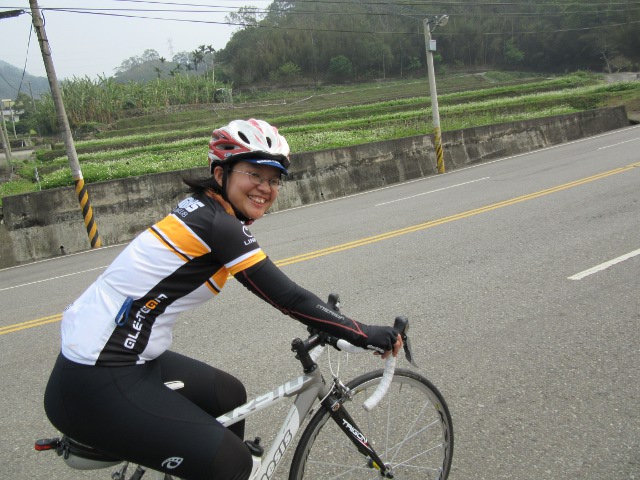
And there will be special thanks to my friends at the Formosa Lohas Cycling Association who delivered me a great day cycling today. Over 140 km south from Taipei to the smallish town of Dongshi near the bigger city of Taichung.

But as I sit in my hotel room tonight I can reflect on great company:

FLCA ride taiwan

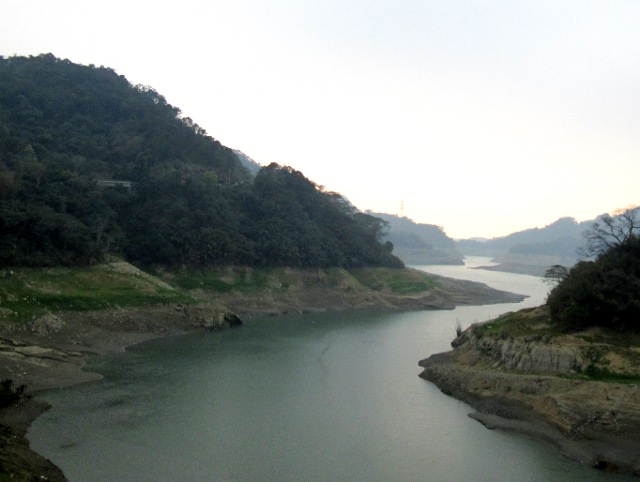
Super riding and some great views;

reservoir view Taiwan cycle tour

Use of a very tasty titanium road bike that I really would like to own;

Phil's bike

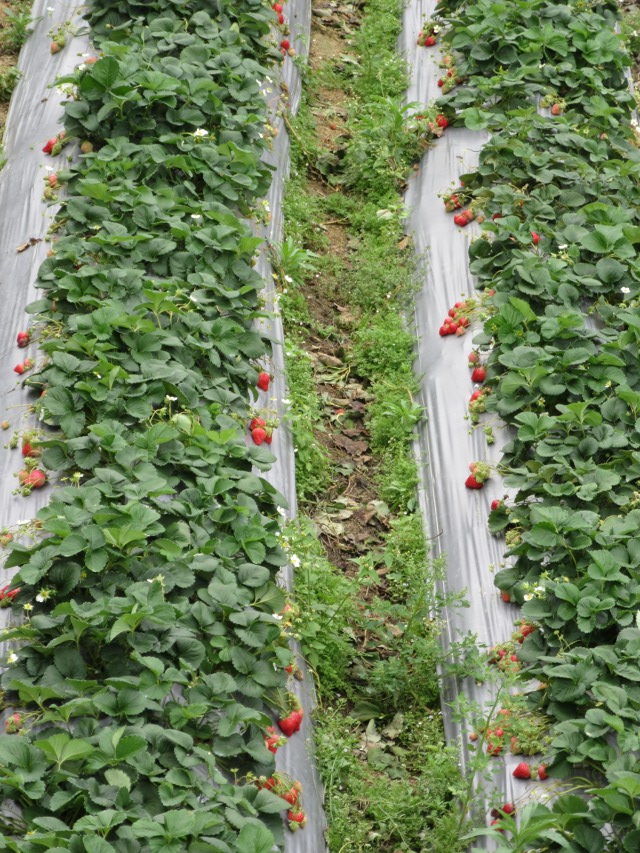
Riding through the strawberry harvest (in March);

Strawberry harvest taiwan

But above all else…….. the food.

I must have sampled thirty dishes today, most of which I have never tried before. At some point I will try an inventory but I will just capture a touch of the variety with the Hakka style hot pot, the excellent steamed meatball in a dumpling and the incredibly weird drinkable jelly tea.

Traditional Hakka style hot pot Taiwan

Steamed dumpling meatball Taiwan


Wierd jelly drink Taiwan

No danger of losing any weight on this tour.

And tomorrow I am told we hit the mountains for real. As if my legs don’t ache enough.


Great days out – more fantastic mountain biking in Belgium

Gallery

This gallery contains 18 photos.

Belgian cycling delivered another wonderful day’s riding last week. I went south to the hills and valleys around Namur to ride a mountain bike event called VTT de Malonne that showcased some of the best of the landscape, countryside and historic … Continue reading

Bike story: Cycling reminiscences provoked by the restoration of my fixed wheel friend Freddie Grubb 11773. (Chapters 3 and 4)

cropped-freddie-grubb-31.jpg

This is the third installment of my fixie story, the restoration of Freddie Grubb frame number 11773 to its rightful condition as an example of classic British bike design from the middle 20th century.

In the previous two chapters I wrote about the bike’s life as a part of typical cycling club life in 1960s and 70s East Anglia, featuring grass track racing and roller cycling.

This third blog post brings us up to date covering the period 1980 to the present day. It’s a long time period, but for much of that time not much happened, except the creep of decline, and then in the last three years the restoration process bringing it back to life. It won’t call this the final post because I hope that it is just step towards another life, so we can call the two chapters Decline and Restoration.

If you have no interest in bike parts and history…well you can probably stop here!

Chapter 3. Decline

As I wrote in the last chapter I continued to use Freddie as an occasional racing bike to the end of the 1970s when I set off for university in Durham. So the bike was generally kept in reasonable condition up to that point.

My treatment of my bikes fitted many clichés of student life. I was always a bit short of cash so I bodged and bent my various combinations to keep myself on the road for three years, and I certainly didn’t have much sense of care, the bike was just “my old hack”.

I know for one year I took the fixed to Durham because I needed a spare bike, the catch being that instead of flat Suffolk the county of Durham is extremely hilly. I was definitely much, much, stronger then because I rode everything on fixed, including the legendary Stang climb out of Teesdale with its 20% opening section. But I must have gone soft because I even bodged a set of gears onto the bike by hanging a derailleur off the rear wheel for a few months.

From Durham I started work and I continued to use the fixed as a commuting bike for the next few years in places such as Cambridgeshire, Hertfordshire, Bristol and Birmingham. It was my workhorse, taken out in all weathers and stored in all sorts of places on a weekly basis, a role for which it was perfectly suited with the low maintenance needs of a fixed bike.
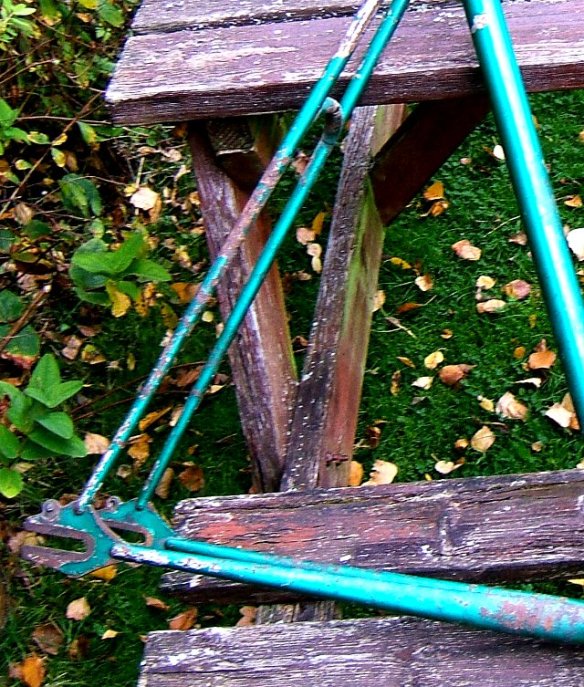
Photo Kevin Mayne

And that damage wasn’t just wear and tear. Frames from that period have almost no fixing points for any accessories. I have a modern touring bike that has about 12 fixing points for racks, bottles or pumps. Next to it stands a 1970s Mercian road bike that has mudguard eyes and almost nothing else, so it has everything else bolted on to it, with appropriate damage to the underlying paintwork. Well Freddie Grubb had all of that abuse, and some. Over the years I fitted bottle cages, pannier racks, saddle bag supports, lights, those gears, cable stops and levers, each of which took off its own souvenir section of paint.

Photo Kevin Mayne

And at some point I just stopped using it, I think when we moved to Cardiff. It was hung up in the garage, not to be used for another twenty years. The best that can be said is that it probably didn’t get any worse in that time, except that a few bits got corroded in place. I probably could have got rid of it a few times when space pressures kicked in, but I probably never did because I couldn’t actually work out that it had any value to anyone else.

Chapter 4. Restoration.

So what changed? Why rebuild and treasure the previously unloved machine.

Two things I think. Firstly I had a growing awareness that my bike was perhaps a bit more than the wreck I had allowed it to become, especially as I was more exposed to some classic bike collectors and web sites.

Secondly I was looking for a good idea for my 50th birthday. I guess I might be typical middle aged bloke, whenever I am asked “is there anything you want?” for birthdays and Christmas I have no idea. However the Freddie Grubb just crept up on me as a “project”. Instead of something new and shiny I could celebrate by bringing something almost 50 years old back to life.

A bit of online research and before long it was a reality which I announced to family and friends.  However from that point onwards it was a long slow crawl, not least because minor events like moving to Belgium got in the way.

So taking my cue from Rob Penn’s “It’s all around the bike” here is a brief run through of the restoration process and some of the stories behind the bits and pieces that ended up on the final machine.

First steps.

The very first part I got came on my 50th birthday. Dad handed me a cardboard package still showing the original price in pounds, shillings and pence. An unused fixed wheel chain from PFK Ling of Bungay. Lord knows where he had it stashed in his bike sheds, but it was almost a perfect connection back to the bike’s roots in the Godric CC. The most unnoticed and abused part on a bike, but precious in this context.

However the main job was the frame and I quickly concluded that there was only one company I felt comfortable doing the job, especially as I wanted a few “non-standard” modifications, a confession I will pass over quickly because it will horrify classic bike purists.

Photo Kevin MayneThe company was Mercian of Derby, specialists in this area and still making traditional road and touring bikes of their own. When I worked at CTC our tech guru always said Mercian had the best paint treatment in the country, so that was endorsement enough. And because so many traditional bike owners use Mercian they also had a relationship with the suppliers of bike decals from traditional brands so I knew I could get proper replica Freddie Grubb decals. That in itself was tricky, because as part of the research I discovered that the Holdsworthy company gave the Grubb image a makeover in the early sixties and I had to get just the right badges to match my bike’s original design or they would be the wrong year. The “crossed flags” image was meant to bring a touch of Italian class to the badge apparently.

When I sent the bike off to Mercian I asked for three main things. Firstly a colour to keep close to the original, something close to the emerald green of the club.

Photo Kevin MayneSecondly I wanted fixing bolts for a bottle cage. No need to cover the bike in new fixtures, but I cannot imagine riding these days without a bottle and I didn’t want to tarnish the frame with a clamp on cage. They are discreet, but will be useful.

However my final mod is the one to upset legions of fixie purists. I wanted a back brake. Yes I know that it is entirely possible to brake using only the back wheel and yes I used to be able to do all those kinds of antics like almost locking up the real wheel. But my knees are shot, I have already had two sessions of keyhole surgery on the left one and I find that the hard “anchoring back” you have to do to use the real wheel as a brake really makes my knee ache. So two cable stops were added to enable me to ride with a back brake.

I have made my confession, it is done and the changes work for me. I am entirely comfortable that a future owner will go back to a frame restorer and say “get rid of these abominations” but at least the provenance of the modifications is public. The order was placed for an amount of money eye-wateringly more than I had planned and far more than the frame is probably worth and Freddie set off to Derby. Never to be seen again.

Well, not quite. Mercian may be wonderful, but quick they are not. Let’s call if “craftsmanship”. It took a series of plaintive phone calls over several weeks for the frame to make it back to me just before I relocated to Belgium, several months after I sent it to them. The unveiling of the shiny, immaculate new look took place just days before moving to Belgium, forcing me to reluctantly put it back in its packaging because it did look great.  (As I wrote at the time.)

Wrapped bicycle frame

The hiatus of moving stopped an entire winter of activity in the bike shed, so it was only in the summer of 2013 that I began to contemplate the rest of the rebuild. This delay was also a result of my indecision. I couldn’t quite decide whether to modernise the bike with parts that looked retro but would arrive bright and shiny or whether to put in the hard work to sort, polish and shine my ragtag collection of bike bits into a something that resembled my original steed.

However once I started the build the decision came easily. Like a kid with a new box of Lego I wanted to get it done and that meant only buying the parts I couldn’t find at home. I am not one of life’s polishers, but restoration was the choice, which brought another trip down memory lane.

I thought about fitting some nice modern dual pivot brakes that actually work and stay where they are bolted. But looking at me from a box were the pair of Weinmanns that I used for nearly 20 years on my race bikes, something I had bought new with some money saved from my paper round in the late 70s. Old friends indeed. I do remember that the bloody things would never end up in exactly the same alignment from one week to the next but the drilled levers were the height of fashion at the time and they polished up really well.

Weinmann brakes on Freddie Grubb

Contact points – bars and saddle.

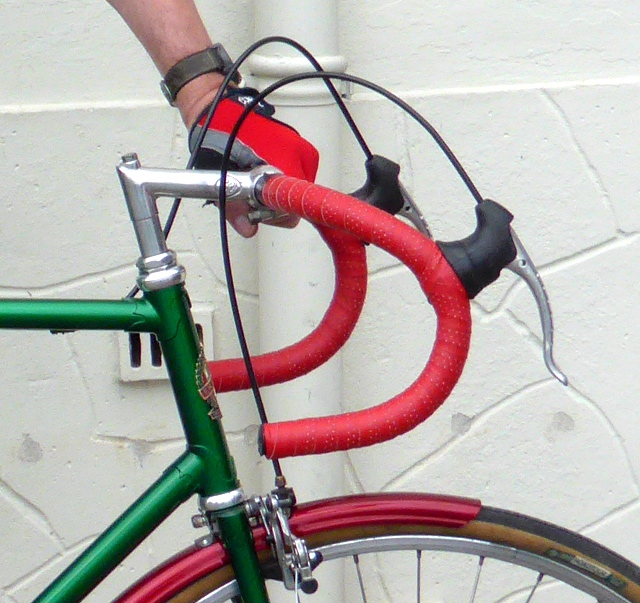
There was never any doubt about the handlebars. I had the pair of deep, rounded steel track racing bars that I always remember being with the bike, the real track rider look. However they are bars for just one purpose, getting down on the drops and sprinting. There is no real flat point on top of the bars to provide a hand rest for a road touring position so I am sure we used to switch to more traditional touring bars when the bikes were not used for grass track. But they look the part and I don’t see myself doing long road rides on the bike, so it’s a small compromise. Red bar tape, of course, club colours.
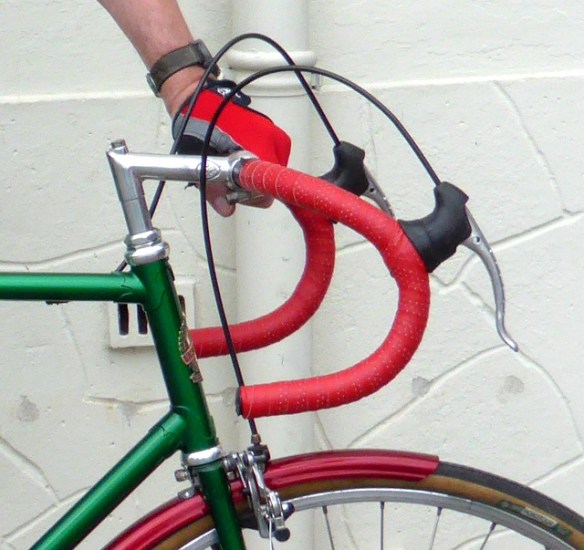
Track handlebars on Freddie Grubb fixie

The saddle was more of a dilemma. I have never owned a Brookes saddle and I wondered if this might be the time to go for the authentic look. I know lots of fixed wheel bikes from the 60s were ridden on the Brookes Professional and this might be my time to give it a try.

However I don’t recall anybody at the Godric ever using Brookes and there were certainly none in our house. By the time I widened my horizons they had become deeply unfashionable except for die hard CTC cycle tourists, you would never see one on a race bike.

What I do have however is an original Unicator plastic saddle. Now these were the saddles I saw every day as a kid on race bikes. Apparently they were a real Cinelli innovation in the 1960s, the first plastic saddle. They are light and unlike a leather saddle they don’t change shape and needed no maintenance. And as if forecasting today’s trend for brightly coloured bike parts they came in all sorts of colours. I remember a particularly unappealing tangerine orange one appearing at some point and I had a green one on the Freddie Grubb. To those who have become used to saddles with a bit of foam padding the hard plastic shell looks like an instrument of torture but I never recall any issues. Pairing up the black Unicator saddle with a nice fluted Campagnolo seat pin that I had used on a variety of bikes over the years seemed to add a touch of Italian class, after all this had been a racing bike and a world record holder. I don’t remember when I got the pin, second hand in the early 80s but it’s been with me a long time.

Photo Kevin Mayne

Wheels

Most important for this discussion is the rear wheel. I had two or three scruffy looking wheels that I had scavenged off my Dad, but none of them offered much encouragement that they would shine up to complement my new machine. They were much more from the “hack bike” tradition with a good layer of grime, spiders’ webs and surface corrosion. I started an online search for a retro looking pair of fixie wheels but never quite got round to buying so to get the bike on the road I went back to the old wheels. After a lot of prodding and spinning I found one seemed to be still in true and definitely had a nice smooth running hub so I decided to polish it up “just for the moment”.

It was a chore but I actually got a nice shine, apart from some tarnish on the hub. However the focus on the hub exposed a discrete trademark a bit like the Campagnolo mark and some initials that I didn’t recognise.

Photo Kevin Mayne

Just out of curiosity I looked it up and discovered I had stumbled upon a rare gem. Fratelli Brivio was an Italian firm making high quality bike parts from about the 1930s, just around the time that the Campagnolo business was growing. I also found numerous references to the possibility that FB made at least part of Campagnolo’s hubs, although exactly what and when seems to be unsure. But there is no doubt that for most of the 50s the FB hub was one of the very best around and I had accidentally chosen the very best wheel to fit my rebuild. Unfortunately I don’t have the pair, but what a great find.

Chainwheel treat

Along with these Italian parts what I coveted was an original Campagnolo Pista chain set, the perfect complement. But I really didn’t want to fork out over €100 or more on top of what I had spent on the frame for a second hand part. Fortunately I spotted a lovely retro styled chainset from London firm Brick Lane Bikes at a reasonable price, so the next time I was visiting London on a work trip I made a diversion by Boris Bike down to the East End and bought just about the only new item on the bike, capping the other choices off nicely.

Brick Lane Bikes single speed chainset on Freddie Grubb

Finishing touches

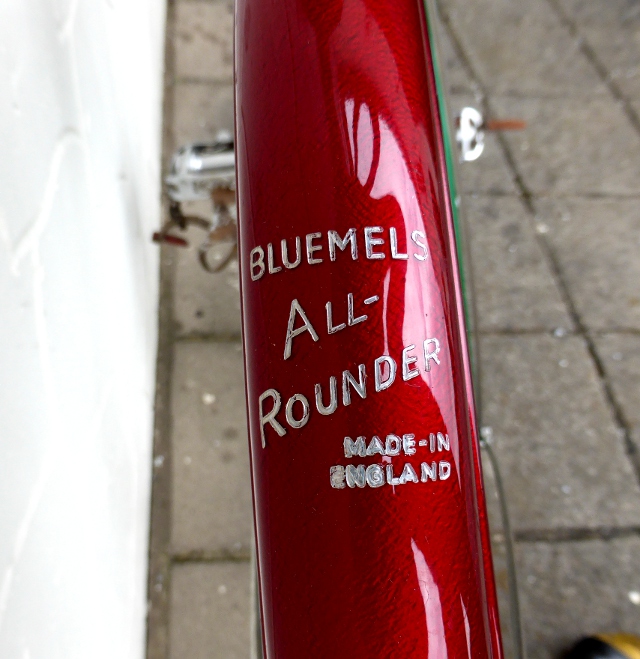
And that was almost it. The bike was almost ready. Almost. It passed a small test ride with flying colours. But I wanted just one more item to take it right back to its roots. Bluemels mudguards.

I could buy lots of modern mudguards, mostly from German firm SKS, owners of the historic British brand Bluemels. They are undoubtedly easier to fit and more robustly constructed than the old guards that wobbled, warped and chafed requiring almost constant adjustment. However the modern guards seem to be available in just 3 colours, black, white and silver. Surely somewhere there is an innovative manufacturer producing colour matched guards, because I wanted a nice red to go with the rest of my look?

It is probably a reflection of the low longevity of those old mudguards that nobody seemed to be offering a secret store of old-style guards, except one dealer in Cyprus who occasionally put a pair on E-bay at over €100 a pair, something I just could not be drawn into. Once a month I dipped into the online world to see what was out there and put posts on retro web sites, a depressing process that lasted almost a year with nary a sniff of a purchase. I had just about resigned myself to boring black when a pair of original burgundy Bluemels Clubman guards appeared on Ebay in the English Midlands. I leapt in and secured them, the final piece in the equation. They were the perfect look and were just as useless as their predecessors in sitting nicely on the bike, so really authentic.

Photo Kevin Mayne

Which brings us back to the beginning, the re-launch of Freddie Grubb on to the streets of Belgium last summer, almost 3 years after the project was conceived.

Photo Kevin Mayne

Now I can look forward to those summer days when I can spin him around the lanes and maybe he can be introduced to one or two retro-bike events. And in the long, long term he will hopefully one day travel back to East Anglia where he will have an extended life as the treasured steed of the next generation of Godric CC members. But I hope that is a long way off, I have lots of rides to do before then!
The chilly cycle tourist – a short winter cycle tour of Munich

Gallery

This gallery contains 16 photos.

This was the cycling excursion that was never going to happen. It was the result of a three day process that went from “no way”, through “maybe” and “what the heck” and ended up as “that was good”. A chilly … Continue reading

Bike story: Cycling reminiscences provoked by the restoration of my fixed wheel friend Freddie Grubb 11773. (Chapter 2)

Photo Godric CC

Chapter 2 Roller Racing and Record Breaking

In Chapter 1 of the story of my restored Freddie Grubb I wrote about its life in the Godric Cycling Club, a small but successful cycling club based around the Suffolk towns of Bungay and Beccles, an area known as the Waveney Valley.

These are small towns in a rural area so the population catchment isn’t large and apart from the occasional footballer who has a trial with a professional team the area hasn’t turned out a line of sporting heroes to put it on the map. Therefore relative to its size the cycling club has been a bit of a standard bearer, turning out a regular crop of local champions and occasionally a national level competitor.

But in one field of cycling the Godric CC made an impression far beyond the reaches of the Waveney Valley, picking up not one but two world records. And my Freddie Grubb was part of at least one of those records, if not both.

That is entirely in keeping with the name that it carries, because Frederick Henry Grubb (b 1887) was one of the prolific record breakers of his era. www.nkilgariff.com lists 14 of his British records from 60 miles to 24 hours, mostly broken before he won two silver medals at the 1912 Olympics in Stockholm and then turned professional. He did not take to professional racing so he turned to bike building to exploit his fame.

Which brings us back to the record breaking story of this Freddie Grubb.

In chapter 1 I wrote about grass track racing in East Anglia which helped sustain use of fixed wheel bikes for many years. The other branch of the sport that carried on in splendid isolation in a few clubs around the country was roller racing.

Today most bike racers and even some enthusiastic hard tourists will have a turbo trainer at home. One of the most unloved instruments of cycling torture imaginable, I was delighted the day I decided I would never do that again.

Prior to turbo trainers we used rollers for indoor training and you still see riders warming up on them before races.

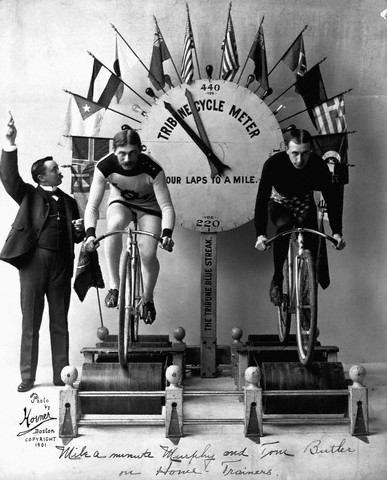
Much less common are the sets of racing rollers where two or four bikes were put onto special rollers connected to a measuring clock.

Inevitably it falls to cycling author Carlton Reid, author of “Roads were not built for cars” (reviewed in December 2014) to provide a comprehensive history of indoor trainers since the 1880s on his web site. He says roller-racing really took off in the 1930s and its popularity as entertainment continued until the 1950s. The great draw for riders is that the lack of wind resistance means you can fit a huge gear to your bike and routinely do speeds well over 50 miles per hour, with a world record of over 130 miles per hour. Short sprints are very fast and very furious. Hard to imagine now but the most famous venue for roller racing in the 50s was the Royal Albert Hall, perhaps the most prestigious concert hall in London.

Carton’s history matches my understanding because the founding generation of the Godric CC were all familiar with the roller races they had seen in the fifties, but quite quickly it had almost died out, not least because the equipment was very scarce. However (and I have no idea why) the Godric were a club that kept a roller tradition. In 1968 the club broke the world 12 hour roller relay record and in the early 70s a Bungay Modern School team from the club set a national schools record at 12 hours too.

Godric CC World record Roller racing team 1968

I am not sure, and I really must ask Lindsay Wigby, whether the star of this story was used in the 1968 attempt, but Lindsay was in the team so it seems quite possible that my Freddie Grubb was a world record breaker in 1968.

The roller tradition suited these fixed wheel bikes well. Just like the grass track racing the bikes were only a tweak away from being ready to ride at all times. There were many lightweight narrow fixed wheels with racing tyres around because the bikes had been used for time trialling. The single front brakes could be slipped off and the bike was about ready, apart from the fact you had to turn your handlebars up.

Why? Well one might say “because everyone else did”. Like so many things in cycling this habit was part of roller riding lore and was mixed in practicality and probable bull dung. One reason given was that “it opens up your chest and you breath better”. Given that people were doing phenomenal speeds on the road bent like hair pins without apparently suffering from breath problems this seems about as likely as a sticky plaster on your nose helping you play football better. Much more realistically the upright position kept your weight firmly on the rear drive of the rollers. Because you tended to bounce about at high pedal rates this made sure every pedal stroke counted and kept you stable.

However roller riding did test the mechanical creativity of the riders in one way. If you want to ride steadily at over 50 miles an hour you need pretty enormous gears, and even then a high cadence is needed. In those days 11 tooth sprockets were not even available on geared bikes, a 13 was very daring indeed and the smallest fixed sprockets were occasional 14s. But because the Godric were a roller club there was a secret squirrel store of relevant bits, including the near mythological 8 tooth rear sprocket. Old roller riders had abtained huge chainwheels, usually made by TA of France, that could go up to 64 teeth. When combined with a 14 sprocket suitable gears could be reached.

The 8 tooth sprocket was a near myth because whenever it was discussed there was always some doubt about who had it last time and quite where it had come from. I was always told that it was a lawnmower sprocket that had been filed down to the correct width for a bike chain and then welded to the side of a conventional sprocket so it could be fitted. With this baby even a normal 54 tooth road chainset gave enormous gears. In legend it could be combined with one of the giant chainsets to reach record breaking speeds but only heroic men with thighs like tree trunks could get it moving. When I saw it you could only describe it as one of the ugliest and most functional pieces of equipment ever put on a bike.

Both Freddie Grubb and the 8 tooth sprocket definitely found their way to to a Guinness World Record in 1977.

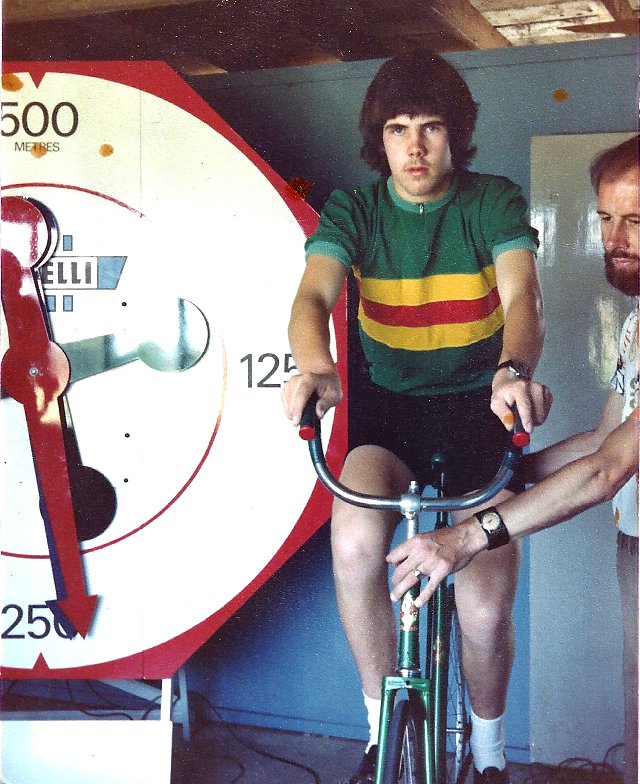
A team of four young guys from Bungay High School were set up to go for the schools’ record held by our clubmates. However we had a secret weapon. The club had been fundraising and bought a set of the newest, smoothest rollers ever made with bearings and drives of incredible quality from Cambridge firm Barelli.

Barelli almost deserve a blog entry in their own right. In the 1970s a high quality engineering firm based just outside Cambridge, England decided to make possibly the finest engineered pedals made in England, perhaps in the world at the time. They came with a lifetime guarantee and retailed from an amazing £50. But cyclists wouldn’t believe that a product was top quality unless it was continental, preferably Italian. So a nondescript industrial estate out on the Huntingdon Road gave its name to a special product. Bar Hill became “Barelli”.

But owner Geoff Chapman was also convinced that there was a place in cycling for the revival of rollers if they could be built to the same outstanding quality as his pedals. The very first prototype even featured electronic counting instead of a mechanical drive, a revolutionary concept that preceded the modern cycle computer by a good five years, but unfortunately couldn’t be made to run reliably. How do we know that? Because it was the set of Barelli prototype rollers that the Godric CC bought. Until a few weeks before the record attempt we had a lot of failures so Chapman replaced the electronics with a nylon drive cable in an oil bath, a design that still put the Barelli rollers low resistance into a different class to all the old sets.

They were, very, very quick as our trials had already proven. However we also had another secret weapon in the older club riders who had been there before and actually knew exactly how to plan a record schedule, especially ride manager John Pugh. I was actually number 5 in the squad in terms of ability and got in because my mate Dale blew up in the trial, but I got my chance from there.

I rode Freddie of course, and during the run up to the event the magical 8 sprocket was rediscovered and probably because I was the last choice for the squad the other guys had the huge chainsets and I had the 8 tooth. And here we are!

Photo Godric CC

So in a village hall near Bungay we set out as four 16 and 17 year olds to break the world record for adults, not just the school distance. And the rest, as you might say is history, as my Guinness World Record certificate will attest. 657 miles, a shade under 55 miles per hour for the whole 12 hours.

Guiness World Record Roller Cycle Racing

I have to admit I had a bit of a personal bad day. Nerves, a touch of asthma, I have no idea why but I had a shocker. I did my part for the whole day but I am very grateful that my much stronger team mates were absolutely on top of their game that day so we had a good margin over the old record.

We held it for about two years until a team of top adult riders from Hounslow Wheelers took it, but to be fair they didn’t smash our time into oblivion. We probably still hold the schools’ record because the discipline has become so rare, maybe one of the modern promoters could encourage a hopeful team to give it a proper thrashing now.

Freddie Grubb is a world record breaking bike. Not the celebrity of the bikes that have broken the world hour record on the track or the Fausto Coppi world championship Bianchi I saw at the Padua bike show in 2013, but there cannot be so many bikes out there that have this claim to fame. And like the first part of the story it is one wrapped up in the club life of the Godric.

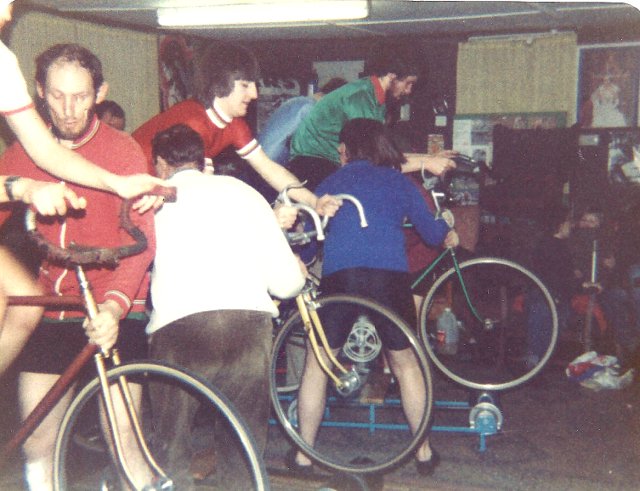
Roller racing Godric CC early 1980s

I carried on track and roller racing for another year or two (above in green) until I left for university at the age of 19, making it a part of cycling I too left behind. It has taken this restoration project to bring it all back.

Roller racing too has made a bit of a comeback too thanks to the public relations skills of companies like Rollapaluza and Goldsprint, they have really modernised with the right mix of noise, lights and music. if you get a chance to go to a roller night I recommend it.

Chapters 3 and 4 “Decline and restoration” here.

Bike story: cycling reminiscences provoked by the restoration of my fixed wheel friend Freddie Grubb 11773. (Prologue and Chapter 1)

Photo Kevin Mayne

Prologue

Late last summer a small ceremony took place at our house. Photographs were taken and an old friend took to the roads.

I dressed for the occasion. Traditional striped cycling jersey, matched with black shorts, white socks and a pair of old-school leather cycling racing shoes polished up for the event.

Photo Kevin Mayne

Freddie Grubb Fixie in Godric CC colours

I then rode on a circuit especially selected for the occasion, mainly flat but with sweeping undulations that encouraged my legs to spin the pedals smoothly. It should have been Suffolk, England, but the lanes of rural Wallonia made an excellent substitute.

Lanes of Lasne Belgium

This was the christening ride for my restored 1963/4 classic English fixed wheel bike, made by renowned London cycle maker Holdsworthy under the brand Freddie Grubb.

Some readers of idonotdespair.com may recall occasional mentions of my long term project to restore the bike, indeed one of my followers even contacted me to offer help finding the missing parts, he seemed quite frustrated that it was taking so long. Well I can tell you now Chikashi  that it is done.

Now I also feel the time is right to tell you the story of Freddie Grubb 11773 and to explain why this machine could no longer languish as a scruffy wreck at the back of my bike shed. A bike so ill-treated that one of my college mates renamed him “Grubbie Fred”, a nickname that stuck for years.

Freddie Grubb original

At the same time that I am writing this post I am reading the excellent “It’s all about the bike” by Robert Penn. Conceptually he is searching the world to build the perfect bike, his dream bike. That could be an incredibly boring except for bike fanatics, but in the hands of a good author it is a chance to weave together an entertaining collection of stories about the people and places from the history of cycling technologies, from the hoax Leonardo da Vinci bicycle to the founding fathers of mountain biking in Marin County California. And I realised that this is what I want to do with the Freddie Grubb.

The restoration has also made me think about a whole series of cycling places and memories that should be shared. That doesn’t mean a piece by piece breakdown of all the parts on the bike, rather it means spreading Freddie’s story over a few pieces that capture some of cycling’s past, and my own. Because this bike does have a story to tell and perhaps that is why I gradually became guiltier about its decline under my stewardship.

This bike has spent its life in one cycling club, and mostly in one small area. It is a representation of a certain time and place, the fading tradition of fixed wheel bikes in East Anglian cycling. And it is one of a tiny number of bikes on the planet that can claim to be a Guinness World Record breaker – and that does make it special.

Chapter 1. Godric CC and grass track racing.

In my mind this bike represents Godric Cycling Club, my club, the one I grew up with and formed my cycling experiences. (I wrote about the Godric earlier this year here)

I bought the frame sometime around 1973 or 1974 when I had become a gangly teenager and grown out of whatever previous fixie Dad had knocked up for me, and I had a little bit of money saved from my paper round.

I bought it from older club colleague Ross Mullenger, who I think was selling some bits because he had drifted away from regular club riding. It probably cost about £15. I learned later that it was already a club hand-me down from Lindsay Wigby, long standing family friend and club member. It was only when researching the provenance of the bike for the restoration that I identified it as a Freddie Grubb Comet probably made in 1963 or 1964. The brilliant www.nkilgariff.com has a complete history of the Holdsworth and Freddie Grubb marques and even has a catalogue of the 1964 Comet on line.

Freddie Grubb Comet catelogue on http://www.nkilgariff.com

I then went back to Lindsay to ask if he had got it as an original because he was riding with club then.

He filled in the gaps by telling me the original owner was Pete Gilding, one of the few Godric names I didn’t know, but someone who had been actively racing with the club at that time. A quick dip into the published club history and I found a picture of Pete with my Dad after they won the impressive Norwich CU grass track team pursuit shield in 1958.Images by Godric CC

Too early for my bike to have been one of the winning steeds, but a great link to the origins of the Freddie Grubb because they would all have been using grass track bikes like mine, perhaps handed round in just the same way.

But I now knew that this is a one-club bike which throughout its life has carried the green colours of the Godric CC. Hence my selection of the green, yellow and red banded Godric cycling shirt for the christening ride. And here we are, a photo of another Godric ride and in the middle is that sprouting teenager in blue stripy bobble hat with the green bike. It must be around the time I bought the frame and first fitted it out. Previous owner Lindsay is three places to the right in black.

Photo Godric Cycling Club

Elsewhere a teenager buying a fixed wheel bike in 1974 might raise a few eyebrows, but it really would not be a surprise for anyone who was in Norfolk or Suffolk club cycling. Many riders round there had a “fixed” or “track bike” set up for road riding despite the fact that their use as club riding bikes had almost died out across the rest of the country. (We never called them “fixies”, that is an entirely modern phrase).

Because no, the couriers and hipsters did not take fixies straight from track racing to the road in the last 10 years. In British cycling the racing scene excluded mass start road racing until the late 50s and cyclists in most racing clubs thrived on a mixture of time trialling and club riding with occasional diversions into grass track racing and roller racing. Most time trialling was done on fixed wheel bikes that could be converted from one use to another with a change of wheels. These were not the steep angled, aerodynamic track machines used on today’s velodromes, these were machines that could fit mudguards one day and race the next.

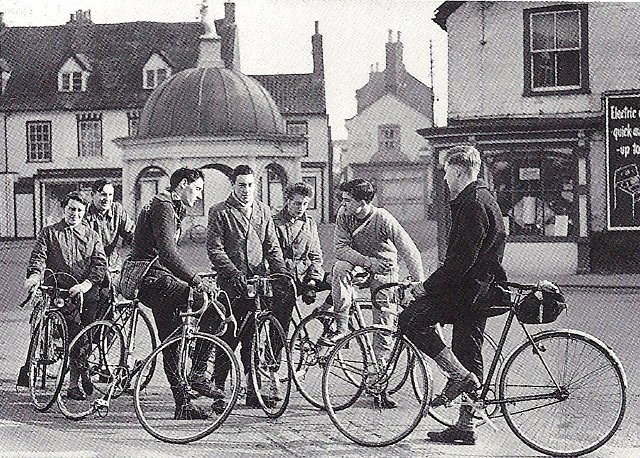
Godric CC on fixies 1950s

I think this tradition carried on much longer in Suffolk and Norfolk than almost anywhere else for a number of reasons, not least of which could be that it is one of the flattest places in the country so a simple single gear is really not a handicap for spinning around the countryside. Almost the first “proper” bike Dad put me on was a fixed wheel, not least because it would be ”good for my pedalling.” They were also a lot simpler to maintain and a lot less prone to problems on mucky roads so they were popular winter road bikes, often referred to as the “hack bike”.

Another possible reason fixies stayed on in our area was that we still had opportunities to race on fixed bikes while other parts of the country converted almost completely to road riding using 10 speed derailleurs. In particular there was grass track racing which only survived in a handful of places across the UK. East Anglia was one of the hotbeds and as a child in the 60s I can remember being taken to a whole series of carnivals and rallies where the cycling crowd would come together.  I probably rode my first bike race in the kiddies’ handicap events at a grass track meeting. The adults would pull out another pair of wheels with rubber studded tyres, put them in their fixed bike and race round a single white line painted on the field, sometimes with fields of 20-30 riders. Hopefully it was a nice cricket ground or school sports field, at worse it could be like riding in slow motion across a lumpy paddock.

By the time I bought the Freddie Grubb in 1974 many of the meets had died out, but we could still expect to race several times a year on grass and we would train every Wednesday on our club track at the Ditchingham Meadow sports grounds. So it was essential that I had a track bike of my own.

Photo Beccles and Bungay Journal

This photo is one of my favourite cycling pictures, taken by the local paper at one of our regular races in Bungay, probably our club championship in about 1976/77. I love the sense of competition and motion in the two riders at the front. Andy Warne being shadowed by Richard Avery, probably about to try and pounce for the win. I am the white helmet in third and that’s about as far forward as I got in most races.

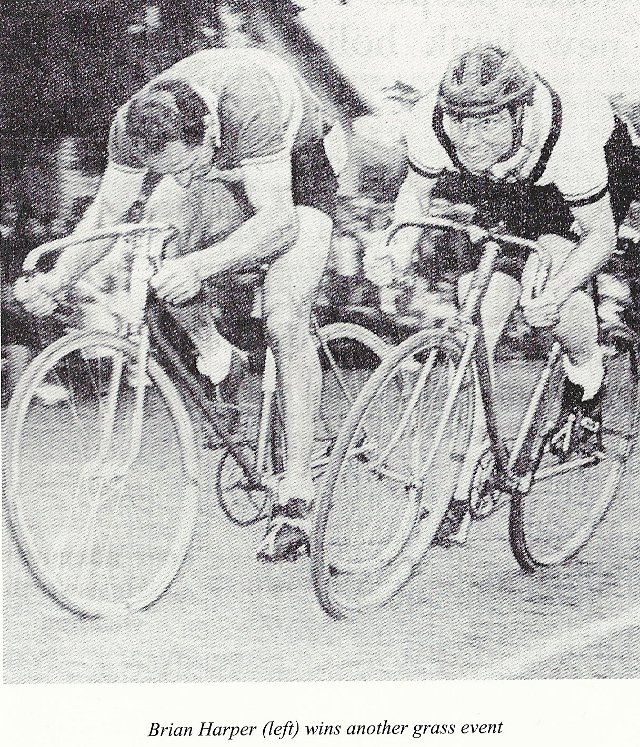
Brian Harper Godric CC winning grass track race 1960sActually Freddie and I did sneak an Area Championship win once with some highly tactical riding. In the short one-lap race I got the perfect draw for the final, number 1 on the inside. I then asked canny track star Brian Harper (right) to be my pusher off, the builder with the strongest arms in cycling. As we waited on the start line Brian whispered in my ear “I am going to push on the whistle, don’t wait for the gun”.

Spectators would have observed a metaphorical greyhound race where the rabbit shot out ahead of the dogs before they even moved. Somehow the judges neglected to call it a false start, just as Brian had guessed. Jet propelled by Brian’s shove I had a ten yard head start at the first corner which was reduced to the width of a tyre as four of us hit the finish line 400 yards later, but I held on for a very rare win.

All I can say is “track craft”. Anything goes in grass track racing.

Chapter 2 “Roller Racing and record Breaking” here

Chapters 3 and 4 “Decline and Restoration” here

How embarrassing, a New Year’s Day bike fail. I had to get the rescue squad out! 2015 can only get better.

New Years Day in Wallonia

I was thoroughly enjoying my icebreaker ride for the year. Nothing was stirring on the club message board and there was still a lot of ice and snow about so I set off for a solo ride using my mountain bike again.

Bright sunshine over Wallonia on New Years Day

It was a lovely day. Where the sunshine had reached the soil we had warming conditions with melting snow turning to mud while elsewhere the bitter cold was keeping a firm grip.

Icy trails in Lasne Mountain biking

Chapelle du Try au Chenes New Years day 2015

All was going nicely until my rear derailleur disintegrated 10km from home. That shouldn’t be a problem, I just shortened the chain to ride home on a single gear. Except that the chain splitter decided to snap too, leaving me without a working bike.

New Years Day Bike fail 2015

Some cursing may have taken place.

Then I ate humble pie and phoned home.

Maybe I have got my bad luck out of the way for the year already. Hope so.

Impressions of Eurobike 2014 – cycling with style

Gallery

This gallery contains 11 photos.

Fortunately I am not a cycling writer, at least not one who has to write about bikes and bits for a living. There are over 1300 exhibitors at the world’s biggest bike show so it is hard to get an … Continue reading

“It’s the end of the world as we know it. (And I feel fine.)” A special last ride in New Zealand. Thanks to everyone that made the cycling on this trip possible.

Bluff Point sign

So this was the final day of my six weeks in Australia and New Zealand. It has taken me almost that long again to write it all up, but the last day’s ride was so good it feels vivid and fresh right now.

It was not only a symbolic end, I physically reached the end of New Zealand’s South Island, spending my last morning riding on Bluff Hill, a rocky dome of a hill that rises 265 m (870ft) straight from sea level at the very southern tip of New Zealand’s South Island. It has 360 degree panoramic views along the coast, inland towards Invercargill and even to the mountains far beyond. The Maori name for the hill is Motupõhue which means “island of põhue flowers”, because from the sea it appeared to be an island rising before the rest of the land could be seen. Despite its remote location Bluff has a claim to be the longest permanently settled European town in New Zealand, the first trader and farmer bought land off the Maori here in 1824. Today it is still an active port although many Kiwis will be much more interested in the seasonal Bluff Oysters, considered the finest of delicacies and craved by exiles.

I knew about Bluff Hill from my previous trips to Invercargill. Everywhere has a hill like this. The one you have to go and try when you think you have become a cyclist. The local cyclists talk about it in that tone that tells you it is a place of legend. When you are even part way up your legs are burning and you are frantically looking for a lower gear that you don’t have any more. Bluff Hill’s reputation is enhanced because the Tour of Southland, New Zealand’s toughest bike stage race regularly finishes at the top.

Flagstaff Road Bluff New Zealand

However I had never actually cycled there on my previous trips, mainly because it is 25 km south of Invercargill and the access is an open stretch of main road that I had never fancied riding. However this time I was updating my knowledge about what was going on locally when I saw a link to Bluff Hill trails on the Southland MTB Club web site.

Within moments I knew that this was a “must do”. A bucket list item almost. To know I had ridden on what is possibly the most southerly set of planned and maintained mountain bike trails in the world? To ride up above the countryside and sea and take in the landscape at this unique place. To know I could spend an hour or more playing on good mountain bike trails rather than just head-banging down a main road. You bet I was going to try and go there.

I hadn’t really planned on it being the last day but that is the way that time escapes on a short visit. So to maximise family time and get in my special ride I compromised and got up at 6am to drive my in-laws’ car out to the foot of the hill, ready to ride at first light.

Bluff Hill Flagstaff Road in the dark New ZealandThat part of the plan went perfectly. Too perfectly. I arrived just as there was a glimmer of dawn on the far horizon, but I couldn’t actually see a yard in front of my face at the trailhead so any prospect of riding up the hill off-road had to wait.

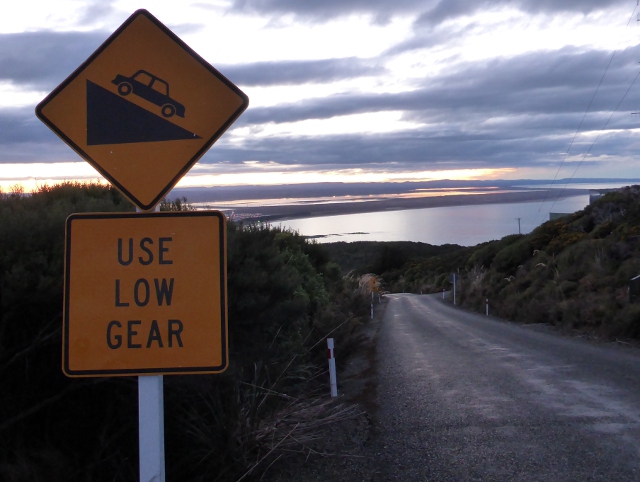
Instead I took the route of most pain and climbed the almost straight road to the top of the hill. It is 22% at the steepest point and an average of 11% so I certainly needed the mountain bike gears, doing that without any sort of warm up at 7.30 am in the morning would have had me walking for sure on a road bike.

But then my timing turned out to be absolutely perfect. As the light crept in under the clouds the landscape changed magically, second by second. Each time I lifted my head deep blues turned to pinkish hues behind me and the road surface became more visible.

Bluff Hill view New Zealand

Buff Hill sunrise New Zealand

Dawn from Bluff Hill mountain bike tracks New Zealand

As I got to the top a soft yellow glow was driving away the shadows right across the landscape.

Bluff Hill Sunrise over south coast of New Zealand

Way in the north Invercargill was visible a series of light spots on the flat plain.

Lights at dawn Invercargill from Bluff Hill New Zealand

I was also blessed by the weather. The start of winter and I was wearing a light cycling top and shorts in almost windless conditions, an incredible stroke of luck for the views and the riding. Despite it being winter clumps of hardy gorse were in bloom, the yellow flowers seemingly sucking up the rays and glowing against the grey-green backdrop.

Gorse flowers on Bluff Hill New Zealand

I don’t know how long I hung around at the top taking in the rising sun and the changing views but I had to pinch myself to remember I was there to ride as well.

Bluff Hill viewing point at dawn

I looked momentarily at the entrance point to the “Downhill route” which descends a terrifying straight line and is graded “Black” or “expert”, but knowing that it was not for me I dropped down the shallower side of the hill and played for an hour on the intermediate trail network. It weaved its way up, down and around the hillside, offering me a good variety of riding. But what made this set of trails special today was that every corner offered a different sea view, and when I was sure I had gone round a section more than once it didn’t really matter because the effect of the sunrise was to make it feel subtly different each time.

Bluff Hill Mountain Bike Trails New Zealand Bluff Hill Mountain bike tracks New Zealand Bluff Hill Mountain bike track with sea view New Zealand

All the time in my head I was revelling in where I actually was, at the far end of the world and at the end of my holiday. Throughout the ride a song played in on permanent repeat in my head. REM’s “It’s the end of the world as we know it” was the song of the day. Inevitably? Maybe, in the odd way my mind works.

Then time was up and I let the bike flow its way down the lumps and bumps in the track to the parking where mine was still the only car, another joy of riding on a winter dawn. It was indeed the end of the trip, and fate intervened to tell me so in no uncertain terms. As I freewheeled into the car park there was a horrible rending noise, all pedalling ceased and I looked down to discover a very distressed gear mechanism in quite the wrong position. My last seconds, my last ride and my only mechanical failure of the whole trip.

Time to go home, but what a way to finish.

My huge thanks to everyone who made the cycling on this trip possible. The mountain bike trail builders of New Zealand and the local authorities building bike paths all over Australia and New Zealand. The friends, family and commercial companies that made it possible to beg, borrow and hire eight different bikes in six weeks. Jason I am really sorry about the last day mishap on your nice mountain bike – I hope you have it fixed now.

Last and by no means least the family, friends and hosts who indulged me once again while I went off at all times of the day to get my cycling fix. I had come to see you all, of course, but a bit of pedalling made me a nicer human being – trust me. As my favourite travelling companion knows best of all.

If you cannot see a link to the REM song here in the email version of the post click “View in Browser” for a working link.