Brussels cycle lanes – taking the rough with the smooth

Last week’s trip to Amsterdam prompts me to revisit one of my pet rants.

The surface of cycle lanes in Brussels.

Rue des Sables - Brussels

Typical state of Brussels cobbles

There was lots of cycling on cobbled streets in Amsterdam and in Brussels. I like a nice cobbled street, even if it does play havoc on a small wheeled folding bike. Cobbles are part of Belgian cycling folklore, you can’t be a Flandrian icon without that background as a hard man of the pavé. So I’ll forgive the truly diabolical state of repair of the cobbles in what is supposed to be the capital of Europe.But why, oh why do so many Brussels cycle lanes have to be made of tiled surfaces? It’s an awful surface, effectively a pavement for bikes. And mostly built beside smooth, welcoming tarmac.

Tiles on the Avenue de Tervuren cycle path at the Tervuren end

Avenue de Tervuren cycle path

Harder to ride on, difficult and expensive to maintain, really unwelcoming.The most frustrating stretch I have found was on Avenue de Tervuren, the Tervurenlaan. Direct cycle route all the way to Brussels, nicely segregated from the main road. But every bone in my body wants me to move to the welcoming tarmac beside me rather than stay on the tiles.

Avenue de Tervuren cycle path at the Tervuren end

This looks really inviting, doesn’t it?

I am house hunting out here at the moment but the idea of this being the first 5km of my daily commute is a bit depressing.It’s not as if there is a design standard that stops them.

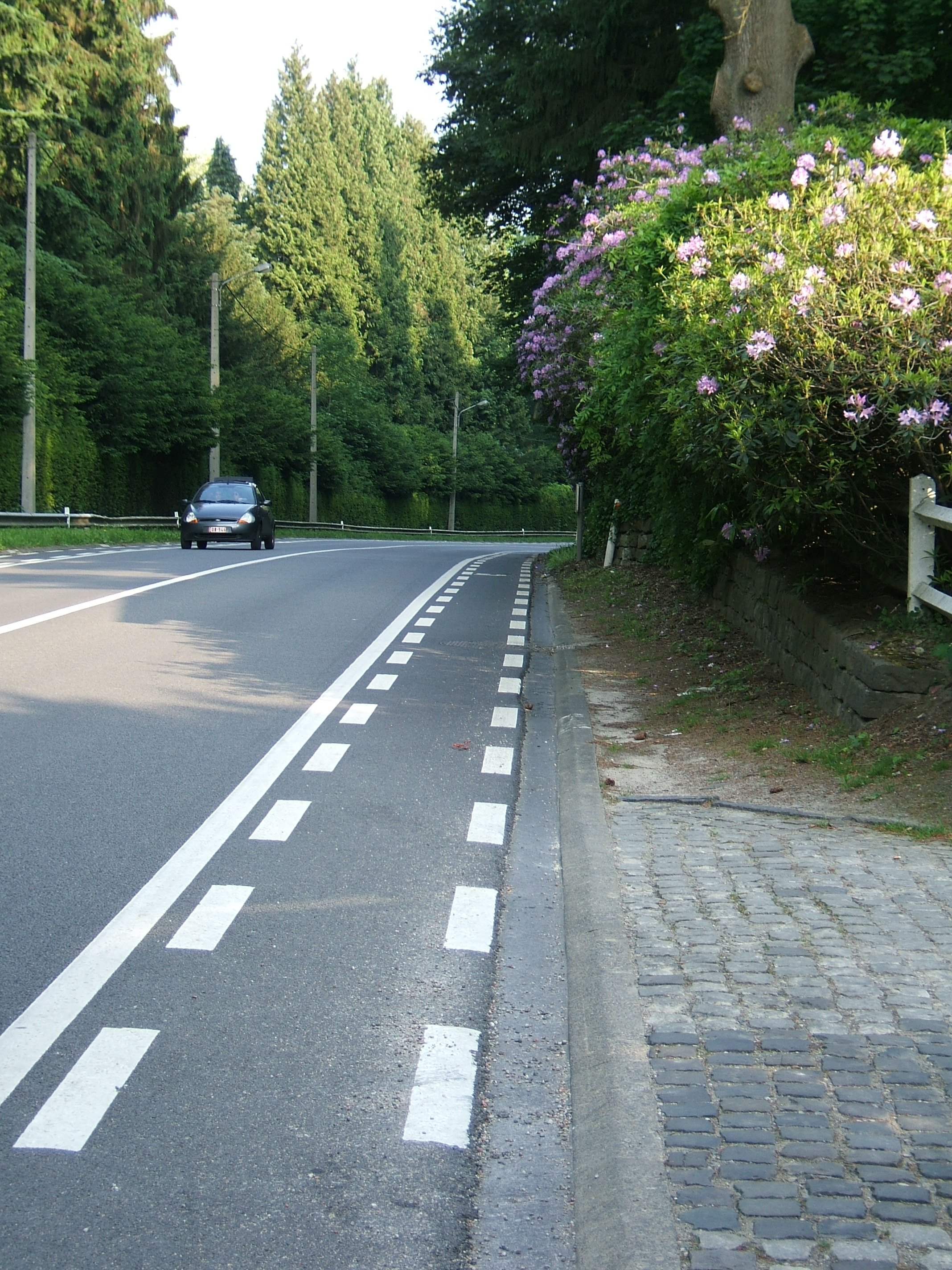
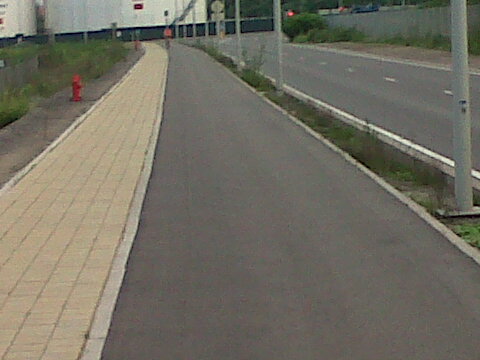
There are much better examples – to the north of Brussels a new section around an industrial estate and to the south in Walloon Brabant a lovely smooth descent through the rhododendrons near Chateau de La Hulpe which is more common out in this province.  Critics will say that it is deficient because it isn’t properly segregated, but frankly this is supposed to be the transport of delight, you shouldn’t need to be hard man of Flanders to bike to work.

Cycle lane on road to La Hulpe

A welcoming cycle lane on road to La Hulpe

Proper tarmac cycle lane in Brussels

Proper tarmac cycle lane!

Amsterdam reflections

I have now had 24 hours to reflect on yesterday’s trip to Amsterdam.

In particular I have been trying to think about the elements I noticed that made it stand out so much. I cannot help but make comparisons with Copenhagen too, a city where I have spent more time and perhaps been given more formal introductions to Danish cycling culture. It isn’t enough to say “there were just so many”, it is more.

I cannot compete with the Dutch Cycling Embassy for technical knowledge, Fietsersbond for advocacy or Amsterdamize for cool, but for what it’s worth here are five first reactions to Amsterdam cycling that support my own thesis “When I see Amsterdam cyclists I do not despair for the future of the human race”.

1. Bikes belong

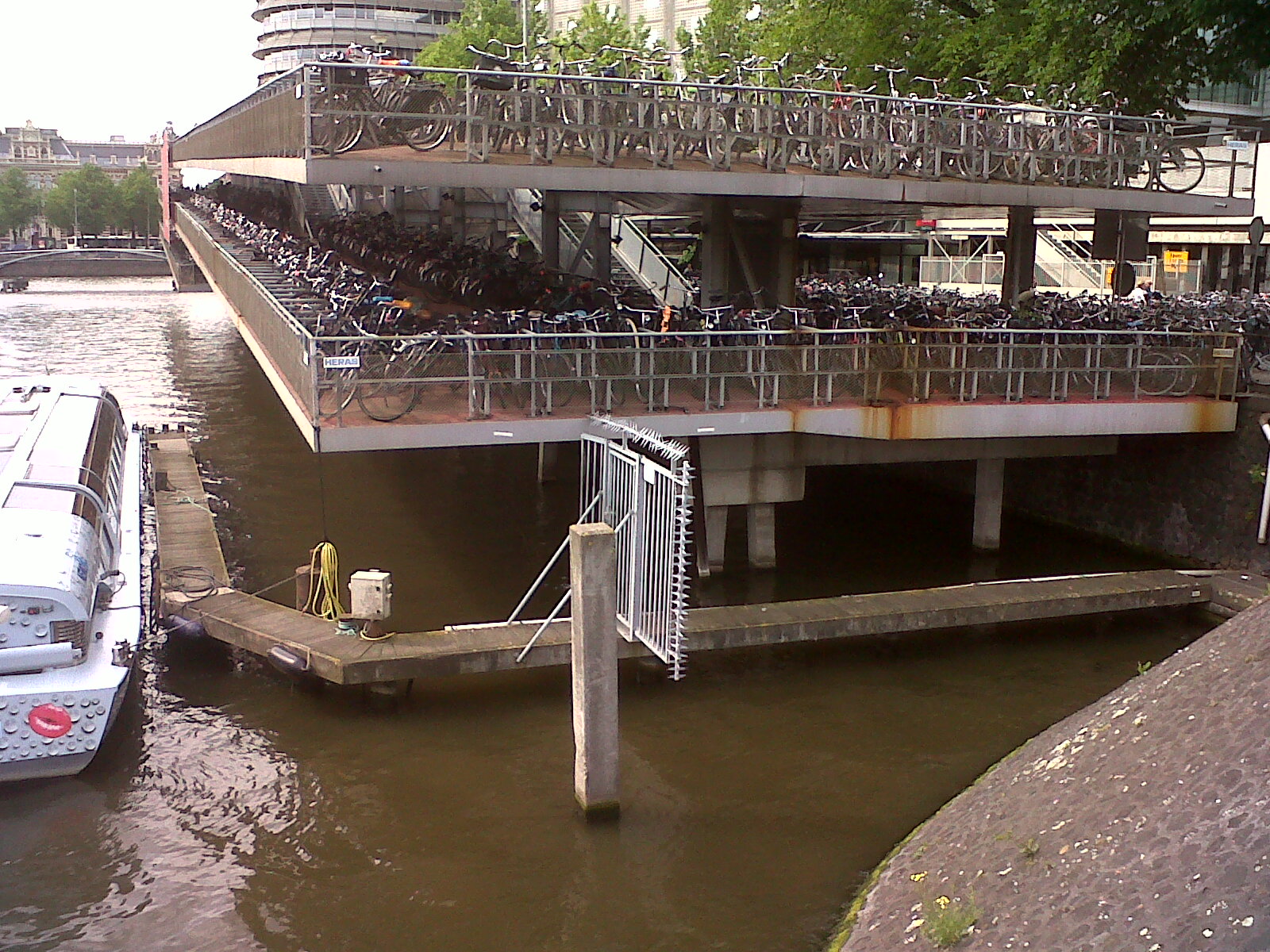
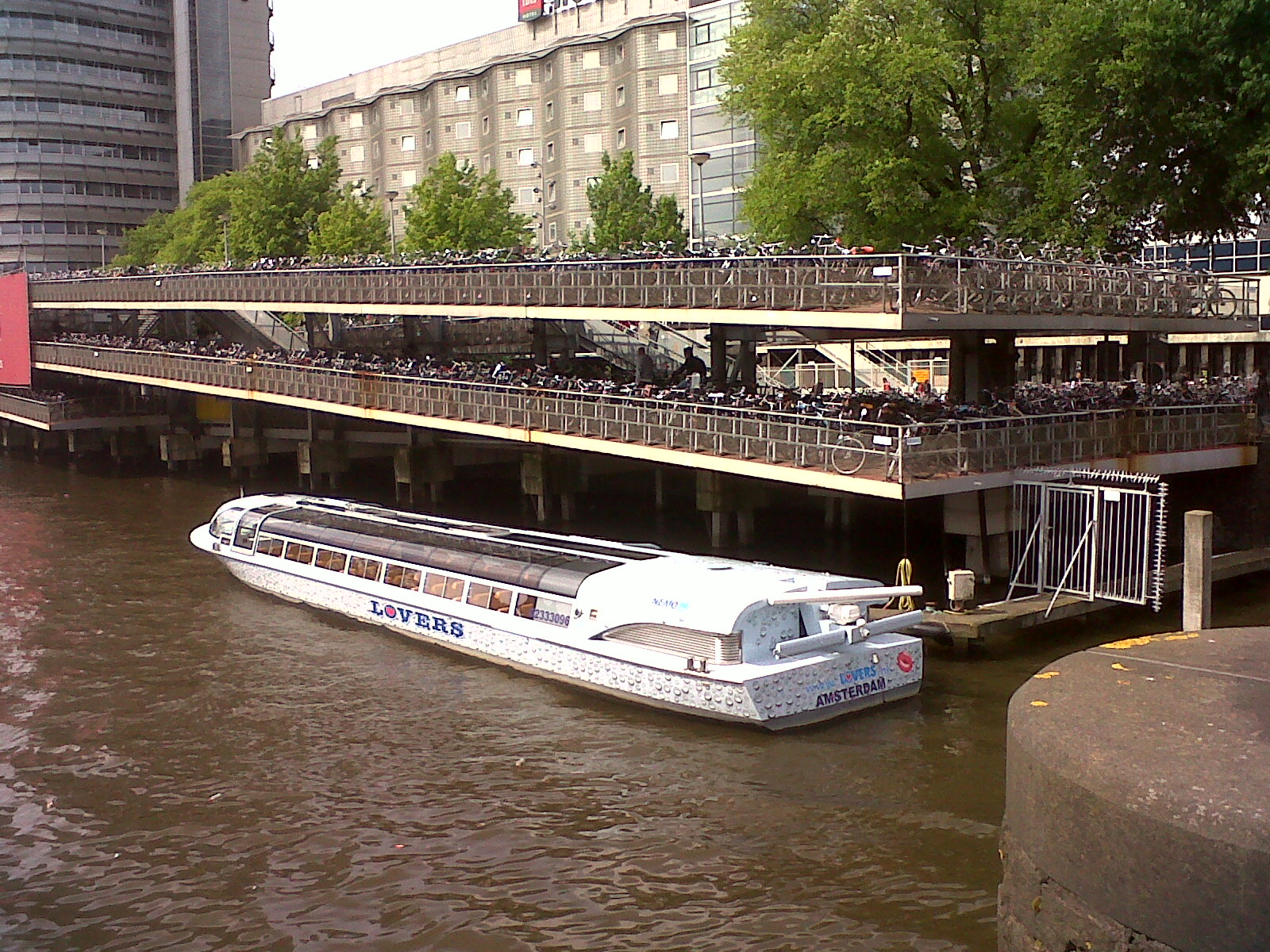
It starts immediately at the station with the brilliant multi-deck parking which has been a feature of many city cycling presentations but you really do have to see it to believe it. Amsterdam Central Station Cycle Parking DecksBut to my eyes it is the bikes in the streets that blow me away, just extraordinary volumes. There is just not a section of street in Amsterdam that doesn’t have its collection of bikes. In many cities there would be refuse trucks cruising the streets taking them away, but not here. They are not an addition to the fabric of the city, they are part of it. But now I do know why the Dutch are fixated by cycle parking.

Amsterdam Cycle Parking

Amsterdam Cycle Parking Amsterdam Cycle Parking

2. Backgrounds.

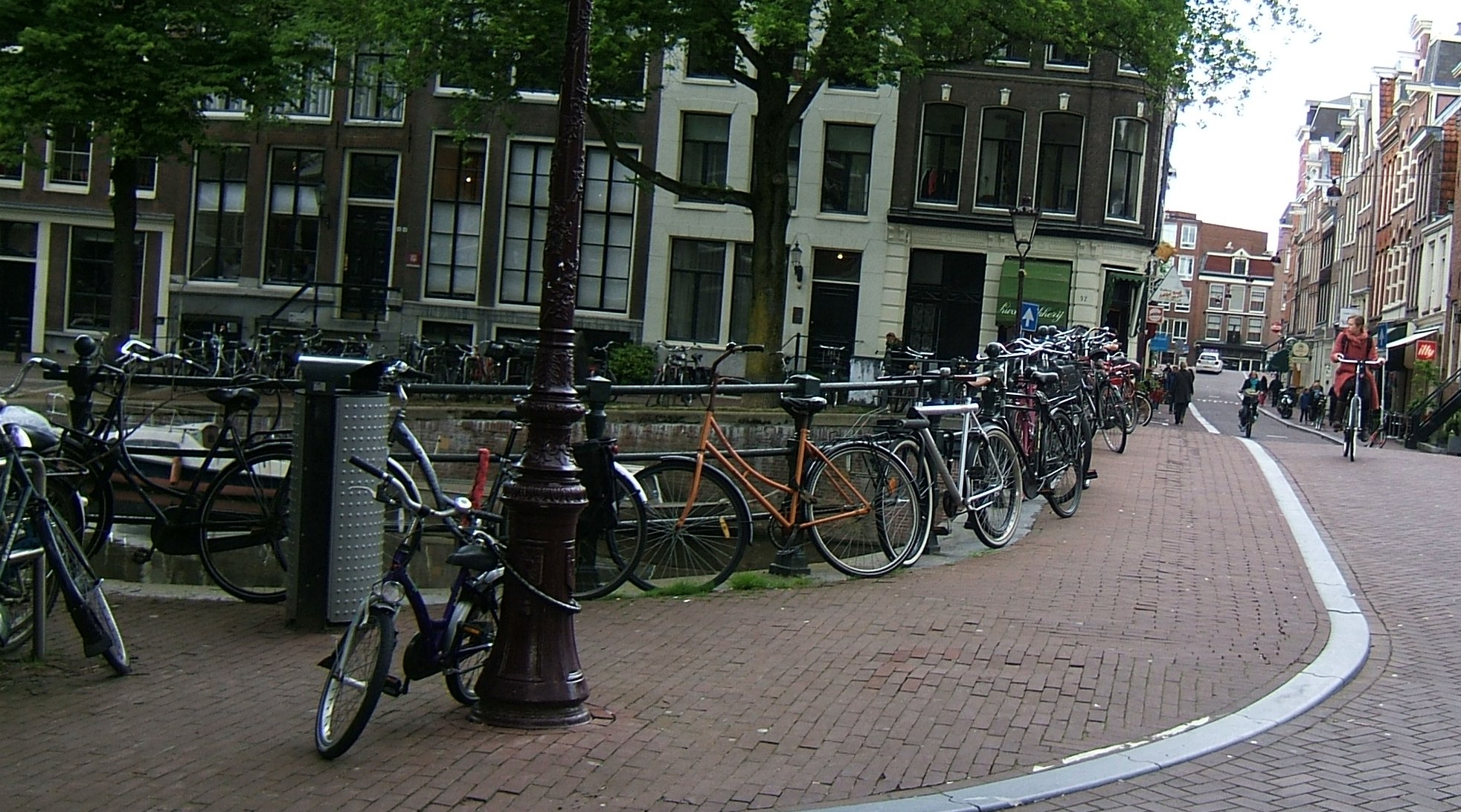
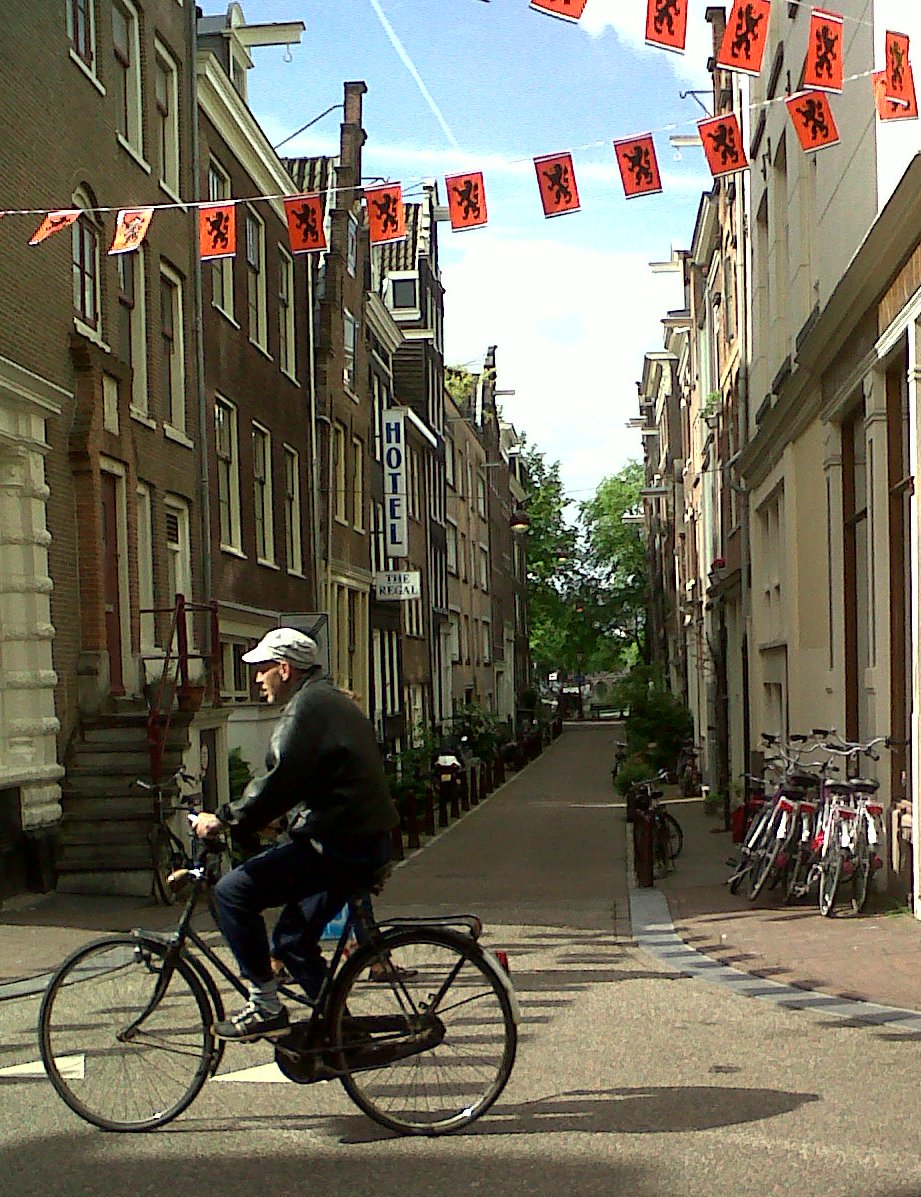
Bikes and canals. Just beautiful settings for cycling, enhanced by the rattle of bikes on the cobbles and not the engines of the cars. Cycling belongs here.Amsterdam and bikes

Amsterdam and bikes

Amsterdam and bikes

Amsterdam and bikes

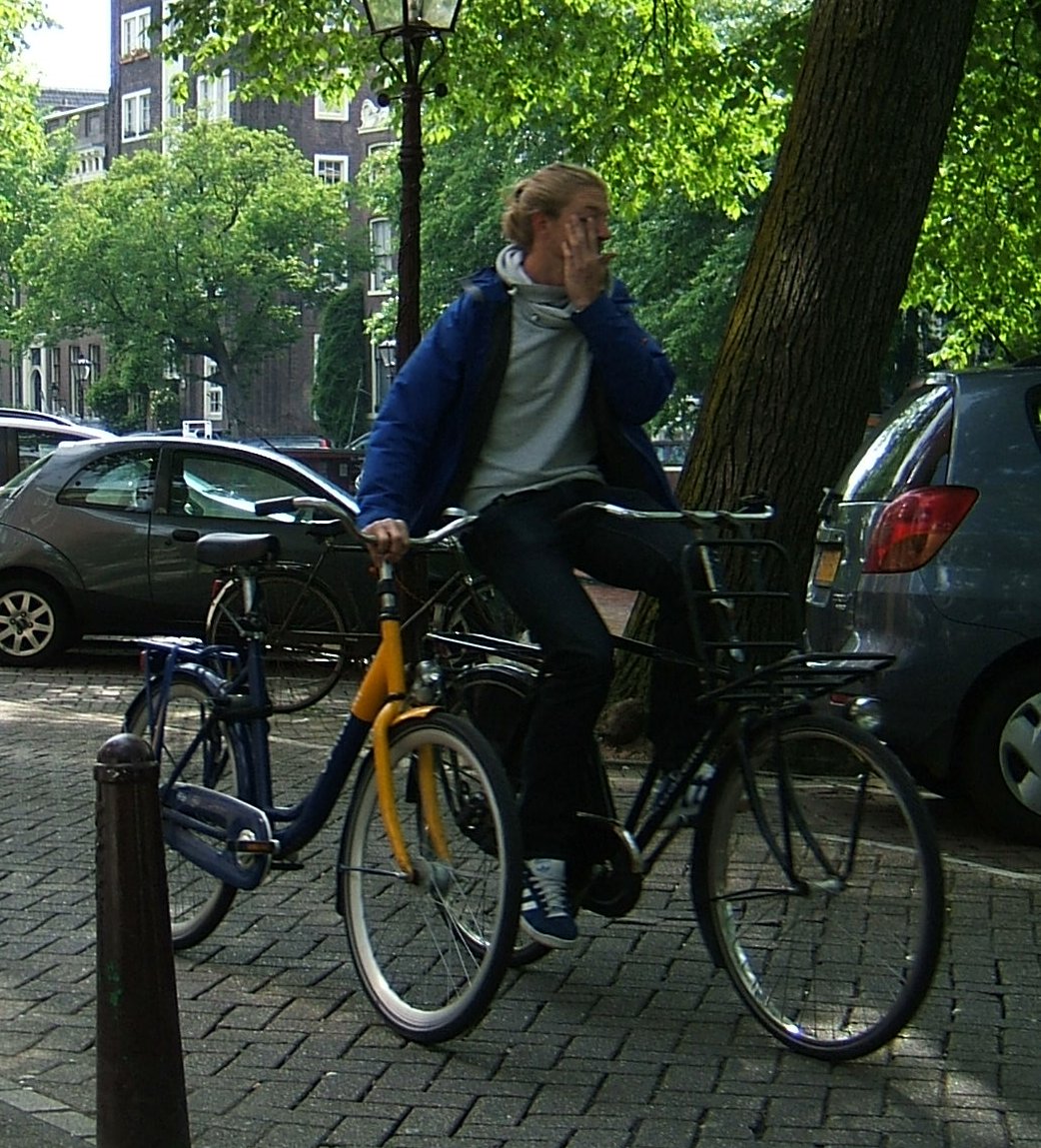
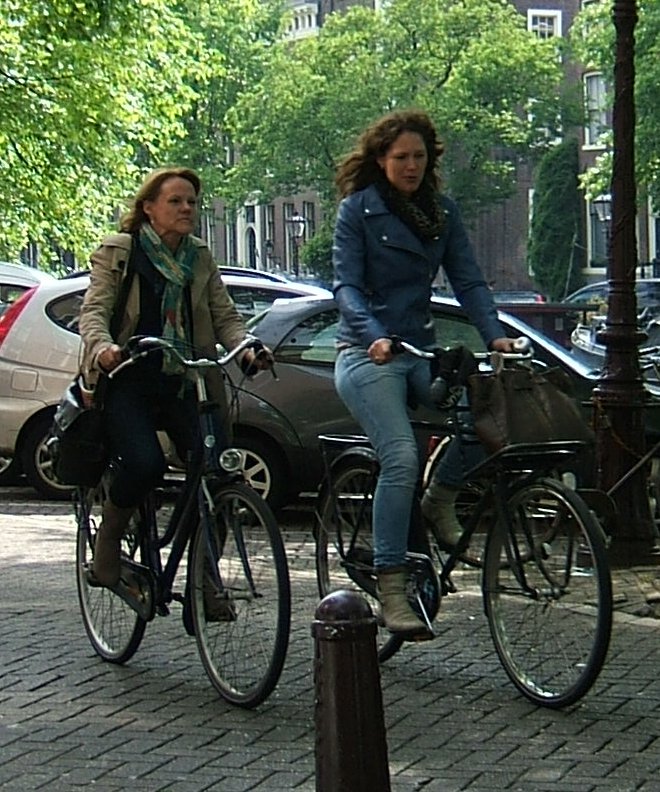
3. AttitudeAmsterdam CyclistAmsterdam Cyclist

Even in the most successful cycling cities I think cycling carries a certain tension. Cyclists in Copenhagen always seem to be in a hurry to me and the cycle lanes feel like race tracks at times.

I am sure this is true in the Amsterdam rush hour. But generally cyclists here are so totally relaxed they routinely switch off all the defensive worries, even on the roads. Texting, phoning, headphones, one hand, luggage swinging, riding in pairs, chatting, passengers on racks. Everything your mother told you not to do.

It is another world where cyclists really don’t have to worry about the environment around them. (And almost helmet free!!!!!!)

Amsterdam CyclistAmsterdam CyclistAmsterdam Cyclist

4. Practicality

I know carrying loads on bikes is easier than most people think. I know there are loads of brands of cargo bikes and luggage carriers. But I would have to bore you with dozens of photos to show all the ways I saw things being carried, and how. The plastic crate seems almost ubiquitous as a carrying tool so that a wooden box stood out. And day clothes.Amsterdam Cyclist

Amsterdam CyclistAmsterdam CyclistAmsterdam Bike

5. Diversity

As you can see from the photos above even a randon selection shows a higher proportion of the riders were women than men. And if the Dutch have got a general problem encouraging their new immigrant communities to ride I didn’t see it here, they must have done a great job with their promotional campaigns, or the message is really spreading. A Muslim woman in a headscarf with her bike is still pretty much a rarity in most cultures, but I saw several here.

That is really encouraging, it shows that this is not DNA, it is cultural and can be learned.

Is there anything new to say about Amsterdam cycling?

Heineken box on Amsterdam bike

27th June inserted comment: Thanks to a number of twitter followers and bloggers who have linked to this page since it was published. Please note that this was a short introductory post – my main post on Amsterdam is tagged “Amsterdam” and was posted on 6th June. I’d welcome your comments!

I have just got back from Amsterdam and I am struggling with dozens of photos and lots of words.

A small confession is in order. During the last 15 years working in cycling I have actually not been to the city that claims to lead the world in cycling numbers. Four times to Copenhagen which challenges for that lead, the up and coming German cities, London, York and lots of other cycling towns and cities.

I thought I would be hard to impress, but as a cyclist how could I not be blown away? I have put up a couple of photos tonight and I’ll add a bit of a gallery tomorrow. And as I do I’ll struggle to add anything to the insights of many other bloggers and advocates, but for now:

“When I see cyclists in Amsterdam I do not despair for the future of the human race” – Kevin MayneAmsterdam Cycle Parking

Porticoes of Bologna – symbol of a city

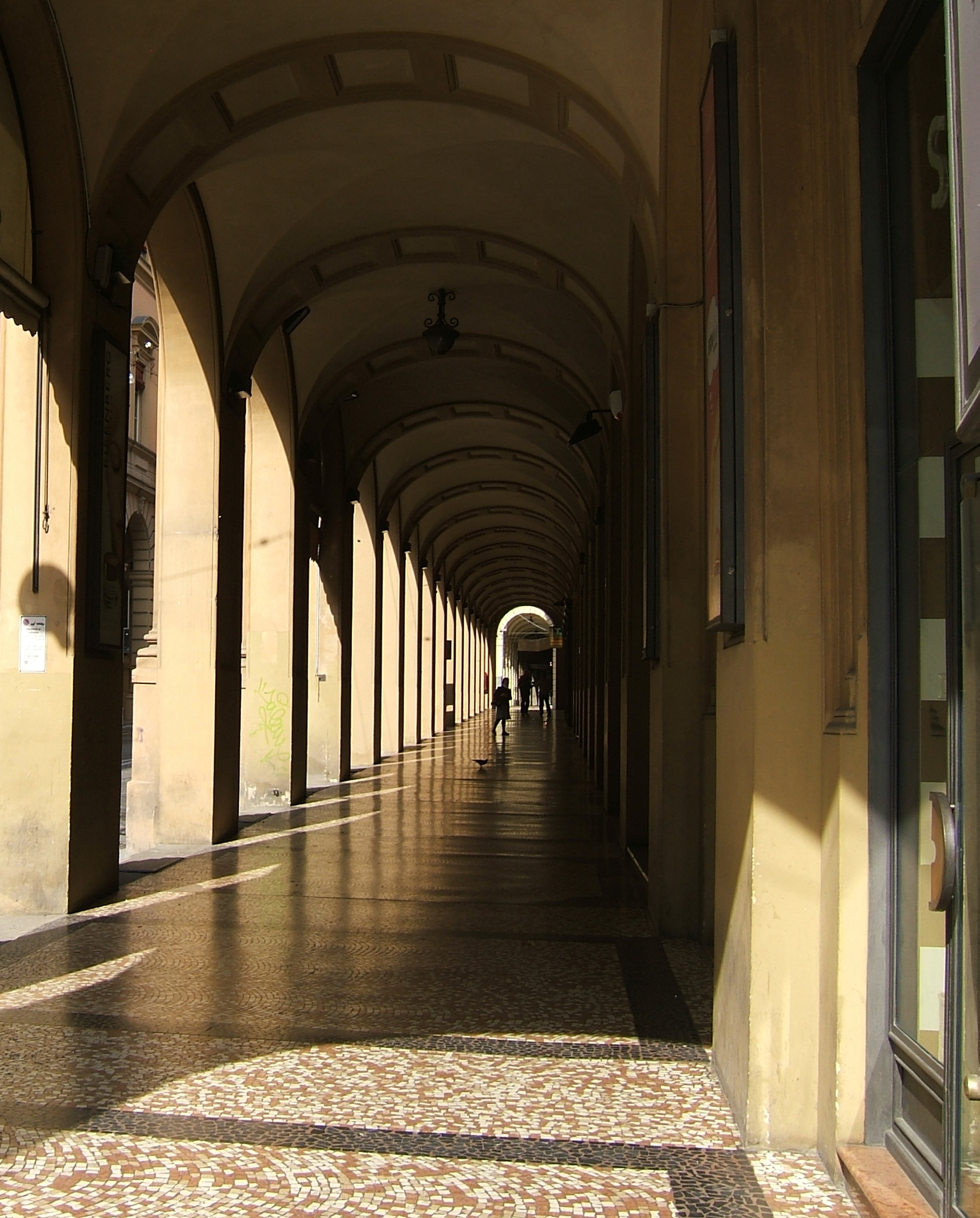
Bologna portico

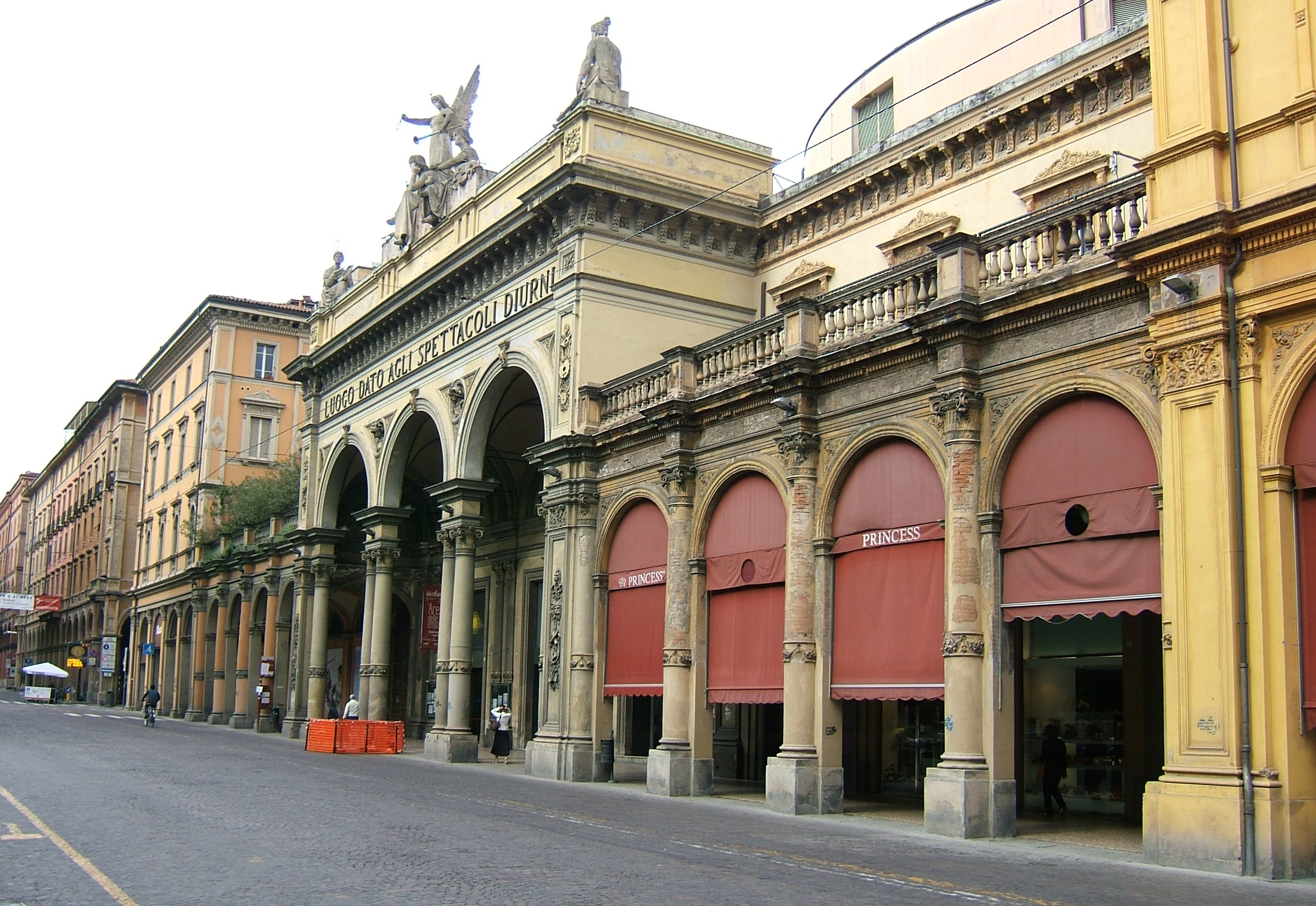
The city of Bologna has over 30km (20miles) of porticoes, the covered walkways in front of its shops and city buildings, perhaps the most distinctive feature of this former walled city which grew rich on trade routes of northern Italy. I had always heard of Bologna as an industrial town, giving it a somewhat dreary image that meant I had missed it for Rome, Venice and Florence.

But of course I have been distracted by guide book tourism. Outside its old centre Bologna is part of Italy’s industrial north and the roadsides have many factories and warehouses. But in a country like Italy, bursting with gems of antiquity and culture, it is easy to overlook places that in any other country would be star attractions. It was only after visiting the centre this weekend that I found so much more.  As a morning person I loved the tranquillity and the hazy sunshine as the city came to life. Bologna Portico

At the weekend Bologna’s mediaeval streets are closed to traffic and after slow relaxed early morning the city gradually starts to bustle and then bursts out into lively evenings as the student population of the oldest university in the world hits the streets. The porticoes themselves create an interplay of light and shade which lends itself to photography and the weekend scene is wonderfully undisturbed by engines.

My host was proud Bolognese Moreno who was determined not only to give me the tour but to represent the sights as a symbol of the city’s population – hard working and business-like, none of your fancy types of Florence or Milan here.

Bologna porticoes

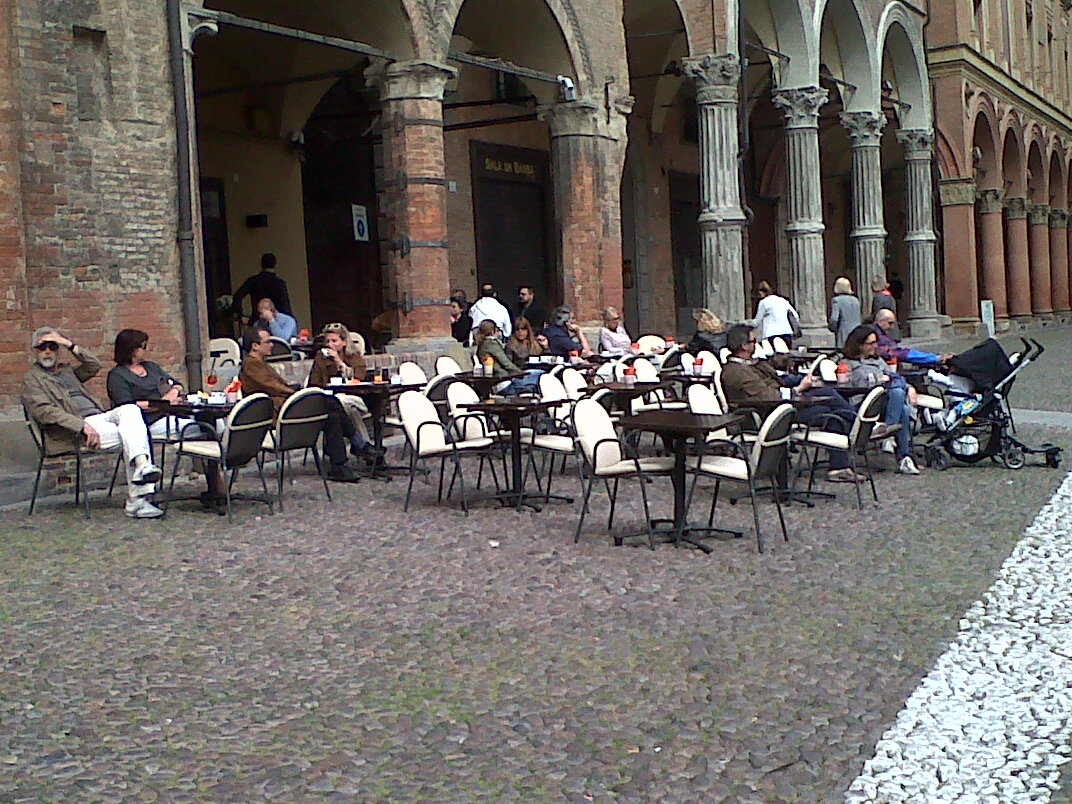
He identified the porticoes as the symbol of this industrial culture. Today they are shopping heaven. Each portico has its own character, differing slightly in the height of the arches, the spacing of the columns of the colour of the plaster. But they provide the model for the shopping mall of the 20th Century – cool in the heat, dry in the rain or snow, cover for eating and drinking. Bologna Cafe and porticoes

Their origins actually are in sales, but the portico itself was the sales space, craftsmen acquiring a bit of the street to lay out their wares while the building behind was the workshop and store for each craft. Fed by the trade routes between the many cities there was an abundant supply of material which the craftsmen converted for sale. Each street has its own trade, from fishmongers to jewellers, bakers and woodworkers.

Bologna Sala Borsa - original stock exchange

Bologna Sala Borsa – original stock exchange

This trading pattern also brought us other features of modern commercial life. Bologna has one of the first stock exchanges in the world, financing the business ventures of the larger families and merchants, not to mention the towers they built to show off their power and status. And I learned the origin of two of the most feared phrases of commercial life – “bankrupt” or “broke”. When you defaulted on your debts in mediaeval Italy the bankers would come to the display in front of your workshop and break your shelves to stop you trading. The bank “ruptures” your shelves and you were indeed “broke”.

Bologna - Older portico in wood over traditional shop

Older portico in wood

The very oldest porticoes surviving today didn’t have the more modern columns, they have just timbers or arches supporting the lodgings above the store. You can see examples down some of the narrower side streets and over the older shops. But gradually the city insisted that property owners build and maintain the columned walkways which feature today. However to underline the workmanlike image which Bologna cultivates the columns here were built of brick, not the marble that adorns Rome and Florence.

Heavily damaged in the Second World War many have been restored.The more pretentious arcades are clearly prized by the most aspirational brands, but of course there are just a few that really feel like they shouldn’t be here.Bologna Disney PorticoGucci Bologna shopfront

OK call me a culture snob if you must, but it just isn’t right – is it?

After trade the other cultural icon of the Bolognese is food. The city has apparently been called la Grassa or “Fat one” and all food lovers know Bolognese sauce. But other pasta such as filled tortellini have equal billing here. Without understanding a word of the Italian it was enough to listen to Moreno and our waiter argue about whether it was ever acceptable to serve tortellini with sauce to know that this really matters in Bologna. Moreno lost the argument too, a rare occurrence.  The restaurant would clearly rather we left than defile the tortellini with sauce, but the broth in which they came was exquisite, a delicate clear consommé.

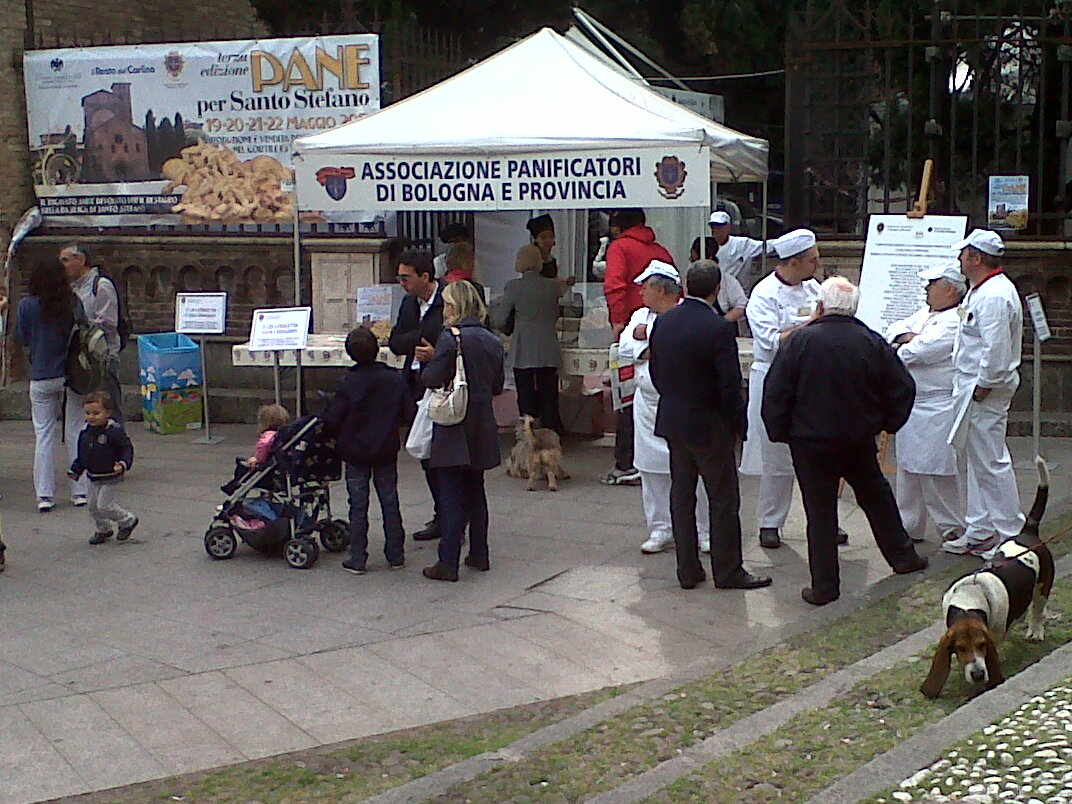
Bologna bakersBologna "Cross" LoafThese bakers making the craft breads in front of the old church on Sunday morning were representing the artisan bakers of the whole district with a constant bustle of locals buying by the bagful to go with Sunday lunch.

I could get very, very attached to a historic and attractive city that has thousands of bicycles, clears its streets for its people and places such value on community, work, food and education.  Bologna has clearly been hard-done-by in the competition for guide book reviews, it provided a thoroughly enjoyable weekend.

Earthquake in Bologna, 5.9 on the Richter scale…er, that would be here then!

4 am this morning I woke up to a weird experience.

It appeared that somehow in the night I had managed to turn on a vibro-massage feature in my hotel bed that I didn’t know I had. Given the running feature on this blog about dodgy hotels I was really willing to blame the fact I was in an overly pretentious design hotel that I got cheap for the weekend.

And it wasn’t the vino, I had a relatively early night in watching the football and sorting out photos for the blog.

It dawned on me somewhat slowly that this was possibly an earthquake, or just possibly something to follow the bomb in Brindisi yesterday.

I heard a bit of shouting in the corridor, and then I went back to sleep because it didn’t seem to come to much.

Bit of a shock to turn on the news and discover that the news is saying earthquake in Bologna, I was 20km from the epicentre of a 5.9 quake, 4 dead up in Ferrara where a factory collapsed and lots of old buildings damaged.

All seems extraordinarily matter of fact here in Bologna, I have wandered the streets of Bologna for a couple of hours, sipped an espresso in the square and the town is coming to life and filling the streets. No damage at all.

Very odd, it seems normal doesn’t come with this job.

Trust you are all well and having a boring Sunday!

Cafe in Bologna after earthquake

Just another Sunday in an earthquake zone?

Where else could I be?

Milan Cafe May 2012

9.am.

The cool people are gathered for an expresso. From old to young kisses and handshakes are exchanged. Anywhere else in the world this would be just a local, but here it has that extra touch of elegance, even down to the tablecloths.

And the expresso is outstanding.

Welcome to Milan.


Yippee – I’m off to Campagnolo

Bit quiet on the blog for the last week or so, lots brewing in the background.

And today it is is confirmed. On Monday I will be presenting in the Campagnolo presentation suite in Vicenza. The home of the finest brand of cycling componentry in history. The legend – uncountable numbers of Tour de France wins, Giro wins – just everything. Ridden by just about every cycling hero one can name.

Presenting or begging – not really sure, but I will be talking to Italian cycle industry head honchos about the need to spend money on cycling advocacy.

But inside stand by for slathering, drooling hero worship, bended knees at the alter of alloy. Got to keep it together Mayne.

OK so I will be meeting other bike companies and more from the trip to Italy will be posted, but for you bike fiends you know this is the one.


Madness Motel – the sequel

What is it with me and mad hotels this year?

Back in March In blogged about the wierd converted car park in Taipei – Madness Motel. Now thanks to Colm Ryder from Dublin Cycling Campaign sending me this photo I was reminded of the motel our Austria tour stayed at in Krems.

Cycle tour participants at the Motel in Krems

Motel - Krems AustriaThe idea must have seemed sensible to someone. The walkways outside the rooms look a bit unsafe, so we just add some industrial fencing.

I mean who says modern design is dead.

Strong suspicion that this might be related to the recent EU egg crisis – the banning of battery chicken farming may be the cause. Or is it to reassure cycle tourists about their bikes?

Multinational Cycle Tour from Vienna – Danube Cycleway and Franz Schubert Cycleway

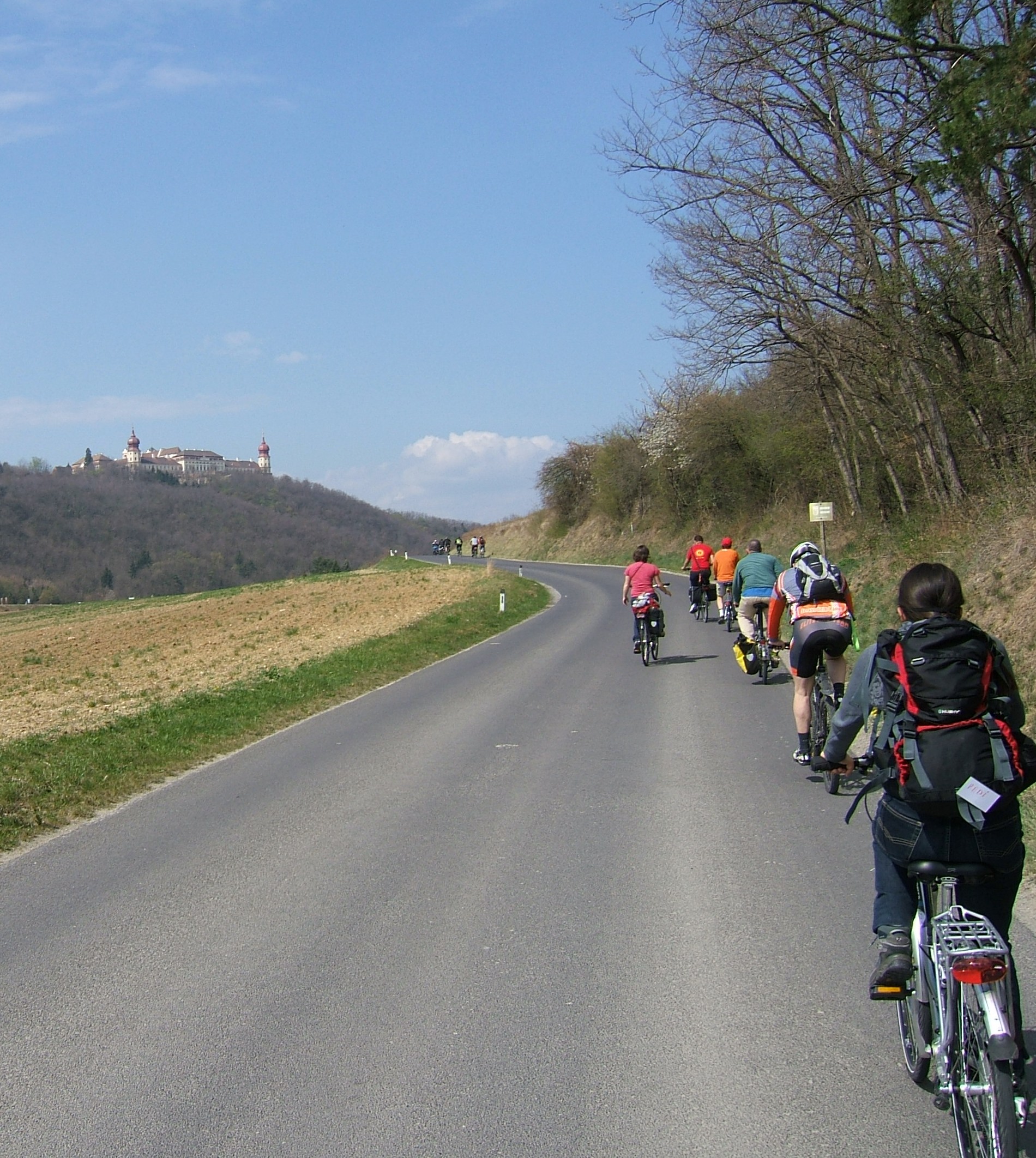
Göttweig Abbey (Stift Göttweig) TerraceSitting on a sun soaked terrace overlooking the Danube Valley. Careful not to drink too much wine before a flying descent! The high spot of a two day, 18 person, multinational cycle tour to follow the ECF AGM . What a great mix – Bulgaria, Poland, Russia, Ireland, Spain, Cyprus, Netherlands, Austria, Portugal, USA, UK and Germany, all brought together by cycle advocacy.

Also see my gallery of houses and gardens from the ride here

Day 1. Vienna to Tulln an der Donau on the Danube Cycleway. 45km.

Leaving Vienna on the city cycle network and then joining the side of the Danube Canal until it joins the main river about 7km out of the city.
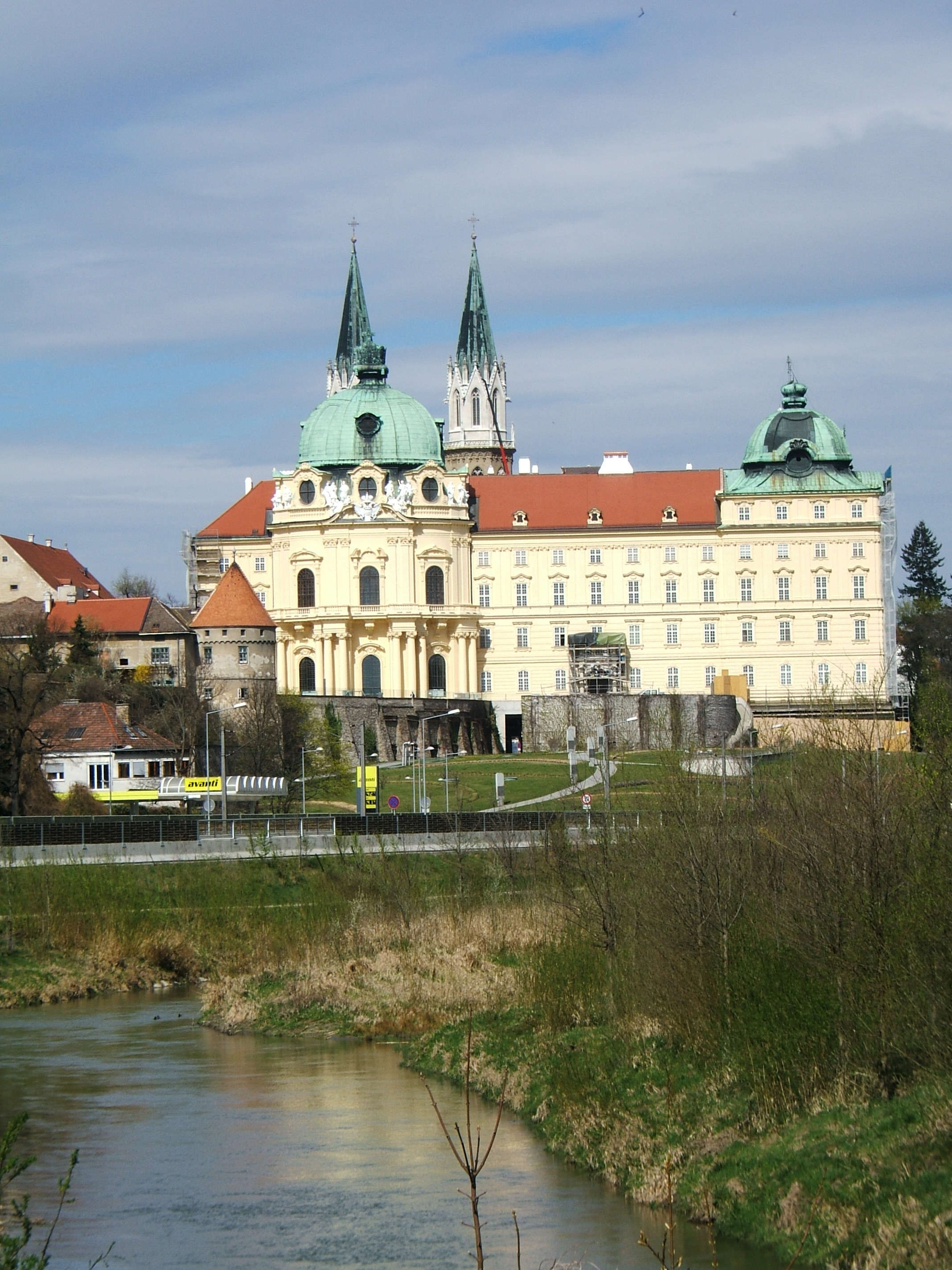
Klosterneuberg

Klosterneuberg

Then a mixture of paths by the river and minor roads until suddenly we turn a nondescript corner and the striking Klosterneuburg appears in front of us. A leisurely lunch in the café and a wander through the artworks in the gallery.

Back onto the minor roads and a wind through the summer houses which appear all the way along the river. These range from wooden shacks to large houses but almost all are in great condition and show a real affection by the owners for these properties.
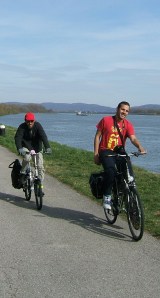
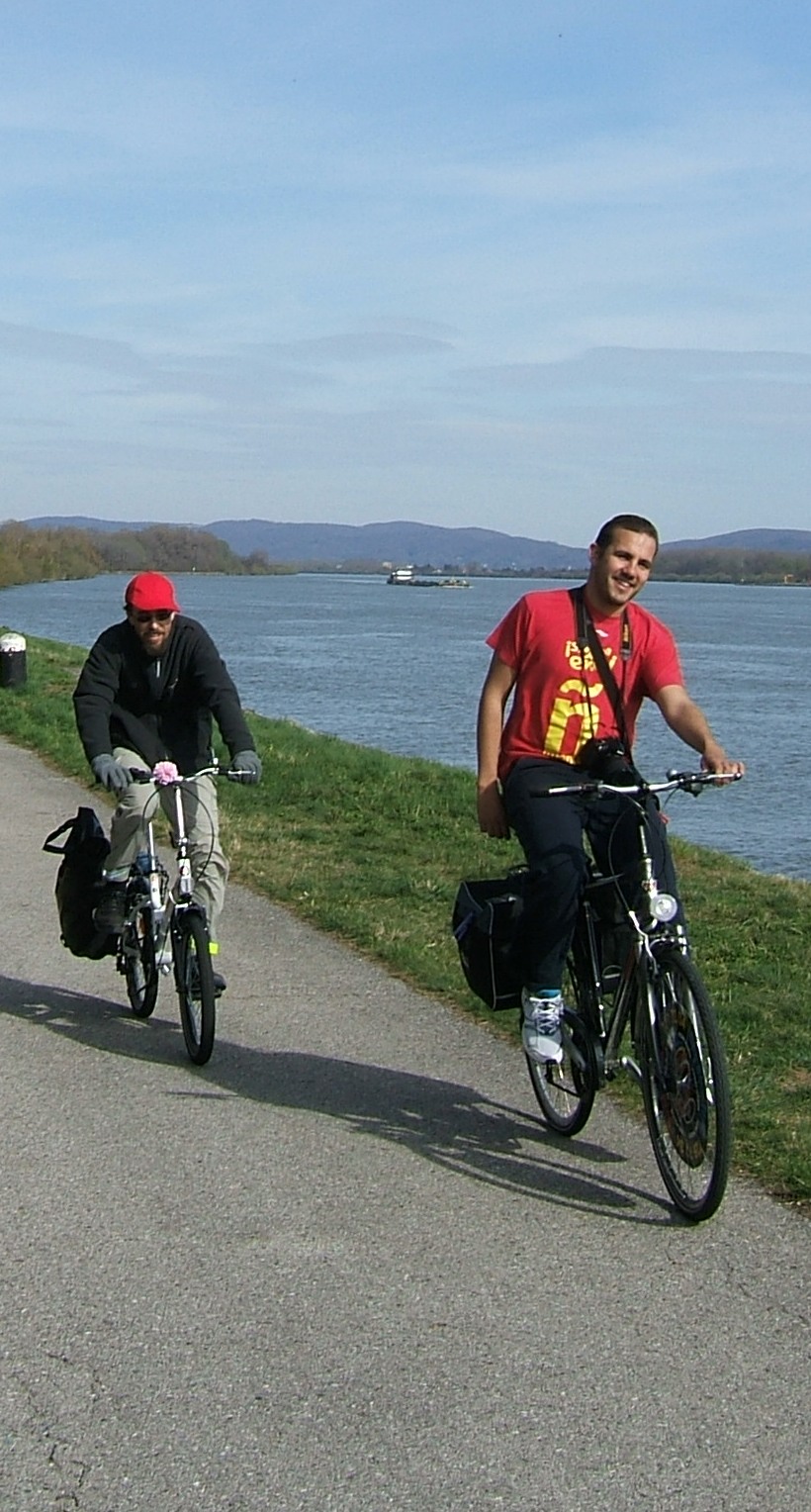
Danube Radweg

Danube Radweg

Then emerging onto the banks of the river again for a push on to Tulln. This was actually quite hard for the members of our group who are not regular tourists. A bit tired and we had moved to the north bank which exposes us to the full breeze from the east.It just proved the point that wind is a far greater enemy of the cyclist than hills.This stretch of the river was actually a bit of a disappointment, it really does look like an enormous canal but it is a really easy ride. It is also clearly popular with local riders who seem to really enjoy heading out down one side of the river and returning on the other.

It was also good social cycling territory for us because we could ride socially after being hassled by drivers a number of times.

However the light was stunning and it brought out smiles on all the faces, especially as we swung over the last bridge to Tulln.

Tulln an der Donau Marcus Aurelius

Tulln an der Donau Marcus Aurelius

Boldly looking out over the river is Marcus Aurelius – provincial governor who protected the Danube frontier against the Barbarians before later becoming Roman Emperor.

Day 2. Tulln to Krems. Mostly the Franz Schubert cycleway – 55km

Named after the area where trendy citizens of Vienna would come for summer break in the early 19th century including the fashionable young Schubert.

Particularly famous for its wines, the Lower Austrian wine route celebrates hundreds of years of winemaking on the fertile flood plains that border the Danube.
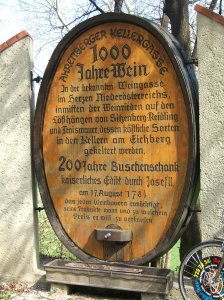
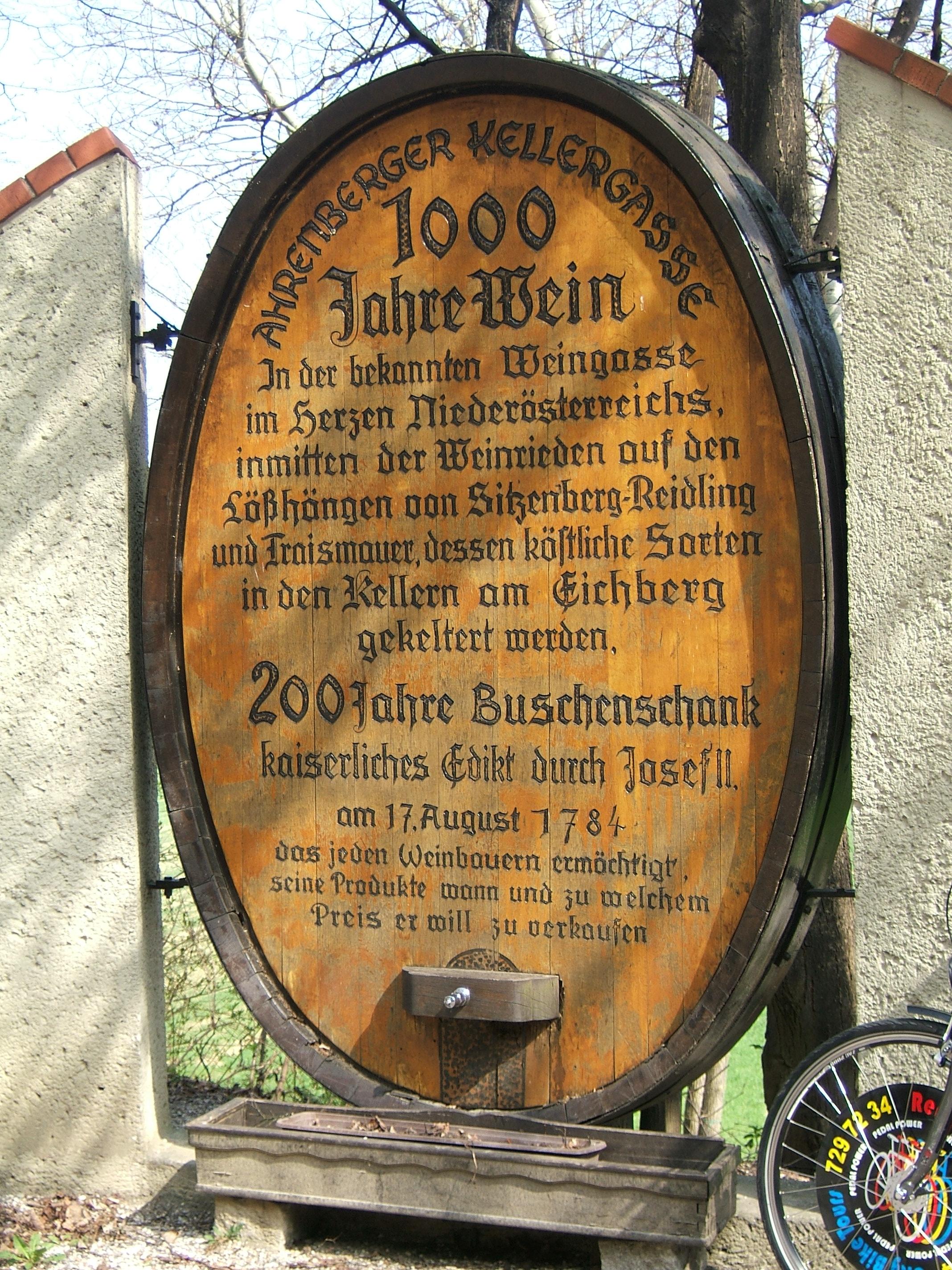
Celebrating 700 years of winemaking

Celebrating 700 years of winemaking

This route started pancake flat, sticking to the floodplane of the Danube despite swinging south of the river for a more scenic route. It was lovely.  Spring was everywhere and the stunning light brought out the colours in the architecture, the gardens and the villages.Blot on the landscape was the big ugly scar of the new high speed rail line connecting Vienna to Germany. Time for a few photos to send off to the anti-HST campaigners in the Chilterns.

But the stars of the first part of the ride were the little wine shops set into the bluffs at the edge of the floodplain. These have existed for hundreds of years, behind each house is a deep cellar running into the hillside. For two hundred years they have had a unique licence granted by the Hapsburg dukes. This allows each vintner to open for just six weeks a year and sell an agreed amount of wine. By arrangement the farmers have set up a roster which means that they don’t all take the same weeks.
Schubert Radweg gets hilly

Schubert Radweg gets hilly

After we end the wine route we cross a tributary of the Danube at Traismaur and set ourselves up for the final 20km which are very different – two substantial climbs, the only ones of the ride. But it’s well worth it for me because we get up to some stunning views over the Danube. Our group of commuter cyclists and campaigners did rather find it hard going, lots of walking for this last leg. But hats off to Yurgos from Cyprus – rode everything on his Brompton with great style.
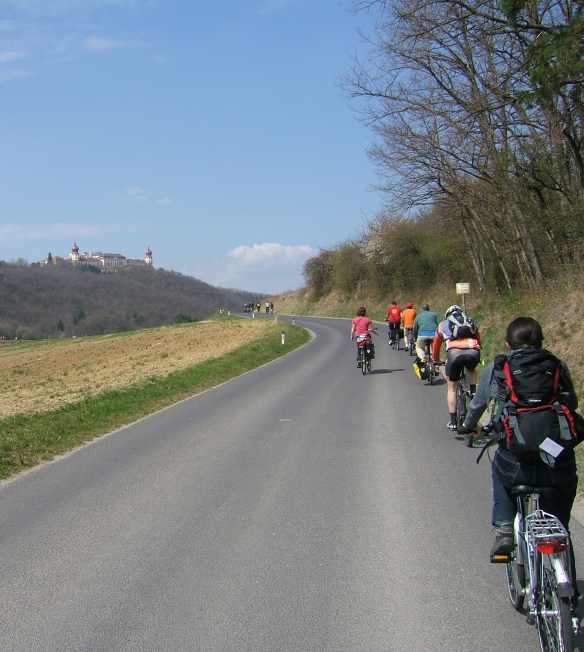
Approaching Gottweig Abbey from below

We have to climg that?!

We are headed for Göttweig Abbey (Stift Göttweig) which is a Benedictine monastery set in a most amazing position on a hill above the town of Krems. The monastery was the dominant economic force in the region for hundreds of years owning the land, the farms and of course all the rights to the surrounding vineyards.

Now that produce can be celebrated in the restaurant which must have one of the best views in Austria, especially on a spring day. Having a hard hot ride to the top justified a couple of courses and a half bottle of the fruity white from the surrounding hills.
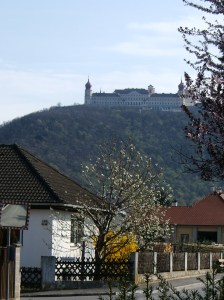
Gottweig Abbey descent

Gottweig Abbey descent

White knuckle descent but well worth it. Thanks to Wilhelm of Elite Tours for the entertaining leadership and efficient organisation.
Hands up everyone who thinks Vienna’s public rental bikes are rubbish?

So who thinks the city bikes are rubbish?

Is it still acceptable for a major city to have a public bike sharing scheme with rubbish bikes?

Do not despair’s message is that there is nothing that cannot be made better by a bike ride and that any bike is better than no bike. But come on folks, you want to be a world leading cycling city with these?Vienna City Bikes

To be fair the current pro-cycling administration in Vienna inherited the current fleet. But if they really want to make a good impression at the Velo-City conference in 2013 then this should be an easy victory.

The booking and hiring system works well enough, all hired by credit card. But the bikes them selves are really poor. In particular 80% of the fleet has no gears and is set to a stupidly high single gear ratio which leaves even a stronger rider labouring and novices wobbling away from stops. Hardly something to make the casual rider think cycling is easy and comfortable.

Add solid tyres, tired and rattling equipment and regular breakdowns – could do better.

I’m quite looking forward to one of London’s fat monsters, they may be heavy and slow but they are comfortable and reliable.

Houses, gardens and architecture of the Danube valley – Lower Austria

Gallery

This gallery contains 12 photos.

Spring sunshine, sharp sunlight. The colours of the buildings, houses and gardens are brought into sharp focus while cycling along the Danube Cycleway and the Franz Schubert Cycleway between Vienna and Krems. I especially like the old wine houses and … Continue reading

Vienna – centre of cycling cultures

An important focus for our hosts in Vienna was cycling cultures. This meant several things:

  • The heritage of Vienna as a cultural capital
  • A growing bike culture and counter culture in the city
  • A relatively newly elected city administration that is determined to build a cycling culture by all means possible
  • A parallel workshop at the ECF AGM for young volunteers from new cycling organisations – the VOCA programme

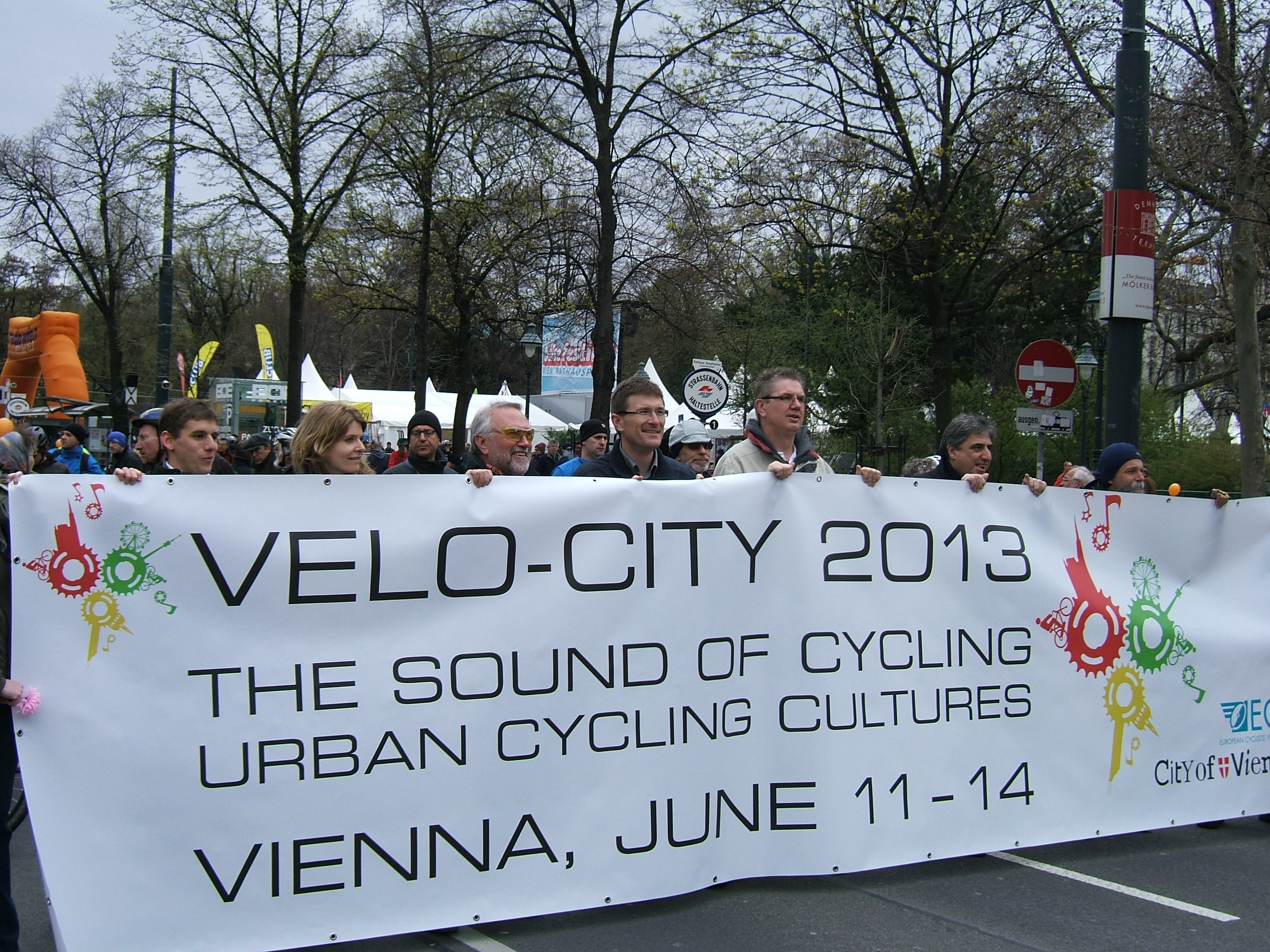
This element is so strong they decided to make it the theme of next year’s Velo-City conference and announced it while we were there.Velo-City 2013 theme

As a self confessed old git cyclist I have to say the best of this was being exposed to the new advocates group on the VOCA programme and counter cultures tour led by Alec Hager of campaigning group Radlobby IG Fahrrad and Gudrun of the Bike Kitchen.

Ending up in the Bike Kitchen late afternoon enjoying some food and a beer and hearing the enthusiasm of everyone involved was just refreshing. I felt a bit sorry for friend Doretta who thought she had signed up for a culture tour and ended up with a tour of workshops and bike shops, but I was really at home. And a big shout out for their inclusive, supportive, collective values – not much of that survives in a material society.

I wonder whether there is a point when the counter culture becomes the new orthodoxy because none of the elements on the tour were at all unique to Vienna, but I guess you can’t really describe a city as having a vibrant cycling culture without them so Vienna is making important strides.

My thanks to all the places that hosted our visits, here are a few photos of variable quality – and special thanks to Bikelager for outstanding coffee served amongst a gallery of classic bikes laid out like an art show. And of course the scene stealers were the fabulously painted Colnagos on the scalloped frames. At the time we just knew they would become classics.

Bikelager Wien

Bikelager Wien - coolest bike shop in town

Vienna Fixie - great paint job

Vienna Fixie - great paint job

Cargo fixie at Fix Dich

Cargo fixie at Fix Dich

Heavy Lifting Cargo Bikes

Heavy Lifting Cargo Bikes

Vienna bike workshop - build your own

Vienna bike workshop - build your own

Colnago frame feature

Colnago frames feature

Rant time – Austrian drivers

My big wake up call. I have never seen cars and buses routinely used for deliberate intimidation on the scale of my last four days in Austria.

I have cycled all over the world. Most of the time driver behaviour doesn’t worry me too much. I get annoyed by rank stupidity, unnecessary speed, impatience and incompetence, but so do drivers and walkers. Abuse comes, but the threat is minimal and not physical.

Four days ago in Vienna was the first time I saw a car driver partially overtake a group and then steer into the side of the group to force us out of the lane. I thought it was a mixture of incompetence and impatience, someone unable to realise that the group was 50 metres long.

But then several times more over the next three days, including hand gestures to make the intention quite clear. A city bus – like the hated bendy buses of London, but this driver deliberately trapped five riders against the kerb by pulling across us.

While most drivers waited politely to let our groups turn to the left across the traffic flow together yesterday there was a guy who sped towards the group to scatter it out of his way.

I wish I had the presence of mind to take photos or get the bus number, at least in Vienna. I think there would have been some local government embarrassment about intimidation of a visiting cyclists’ group, but the drivers clearly had no such fears.

Maybe I’m naïve – riding companion Vladimir from Moscow said he was not at all surprised by the drivers, but he felt safer in Russia because most roads had shoulders which the cyclists use and he did feel uncomfortable in a group out on the carriageway on rural roads. But I guess I expected Austria to be more benign, at least like Germany.

Most Austrian cyclists I met were positive about the direction of cycling in the country, and especially the potential for tourism with the stunning scenery and iconic routes like the Danube cycle route. Clearly their drivers have a lot of catching up to do and it would be a shame if this put visitors off.

Rant over – later I’ll follow up with some more positive Austrian stories.