Should have been a horrible day for cycling – but got to make the most of it.

Oh my. Can I say again – I am so over snow.

Woke up this morning to almost the worst possible scenario for a road ride – snow and sleet beginning to lie on the fields. The road outside looks clear of ice, but it is soaking wet.

I am not free again on Sunday again for several weeks and after all the psyching up of yesterday there is no way I was going to back down from my first Belgian club ride unless it was truly unrideable so I put on my thickest winter layers including the neoprene overshoes and set off.

Unfortunately the prospect of a soggy cold day had a much bigger deterrent effect of the rest of the club because there were a grand total of two other riders out. I was assured that I was “unlucky” because there are usually up to twenty riders per group.

However no-nonsense Philippe was waiting for nobody and set off bang on 9.30. I was told this was planned to be a ride of around 55kmph at a speed of around 25kmph. Amazingly despite the conditions and the newcomer he delivered me back to the start point at exactly that time, just by riding at a well paced and constant effort throughout the whole ride, regardless of which of the other two of us was riding beside him.

What should I say? By all normal standards it should have been horrible. The sleet never stopped, stinging our faces on the downhills. The roads were awash and the minor roads were covered in mud and grit. From following Philippe’s wheel a few times I am afraid I will be getting the grit out of my teeth and eyes for the rest of the week.  The bike looked like a mountain bike when I got back.

Brabant Wallon Belgium

But inevitably I loved it. The roads were almost car free, a combination of the foul weather and the fact that there is almost no Sunday shopping in Belgium (yippee!). It made a great cycling route with the knowledge of a local guide and every road was new. We stayed away from the steep sided valleys nearer where I live so it was all rolling farmland which made the pace about right for me, no need to worry about saving something for climbing. In fact with the open fields, strong cold easterly wind and lack of hedgerows it could almost have been my native East Anglia except that the architecture of the farms and small towns and villages was unmistakably Wallon Brabant. The villages themselves just about managed to look attractive and well kept under the grey skies although I cannot say that for the road surfaces which were potholed and badly broken.

For the record: From Ottignies to Saint-Géry, Chastre, Walhain, Tourinnes St. Lambert, Nil St Martin and Corry Le Grand, my first Belgian club run.

I haven’t done that for nearly nine months. Boy I missed it.

Thank you Club Cyclotouriste D’Ottignies. I’ll be back.

Is this the finest railway station in the world?

It’s been a bit of UK week. Speaking about UK cycling at a public enquiry by video link on Monday, then the slightly odd feeling of being a returning visitor to London on a lovely spring day yesterday. Only six months away, but it did feel strange.

I’ve got a couple of posts that will come from both those experiences but first a travel thought.

So many visitors that arrive in London by Eurostar train just head for the underground (the Tube) so they leave their arrival station without ever stepping outside. Because I walk and cycle I always get to take in the wonderful Victorian buildings of St Pancras station which I regard as the finest railway station I know, an opinion apparently shared by travel writer Simon Calder who apparently called the redeveloped terminus  “the world’s most wonderful railway station”.St Pancras Station London

Yesterday the low afternoon sun picked out the gothic detailing almost perfectly. I have never stayed at the Renaissance Hotel which took over the refurbished Midland Grand Hotel in the main frontage but one day I am going to treat myself. However even if you are just visiting London don’t dash off to the West End or the City without appreciating London St. Pancras.

For the history of this great station the Wikipedia entry is here

Spring at last – a beautiful day in Budapest

Danube Budapest Hungary

Searing bright light, forcing me to squint, making sightseeing almost painful.

And it was absolutely wonderful. After weeks of overcast cold weather this spring day in Budapest was like a huge injection of life.

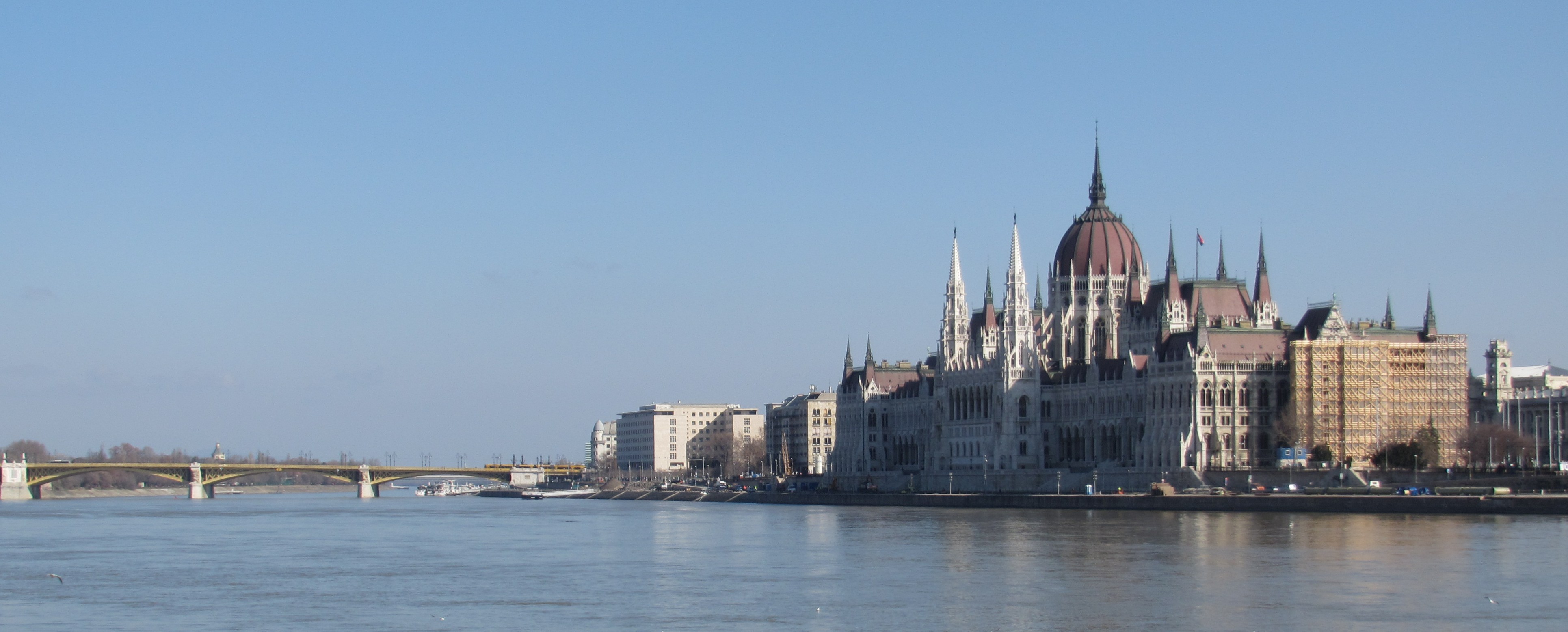
I wrote on Friday how much the Danube always impresses me. But now in the stunning sunlight with the architecture of Budapest on either side I just didn’t want to stop wandering and taking photos. Almost a shame that I had to go and talk cycling!Parliament Building Budapest Hungary Danube Budapest Hungary Church by Danube in Buda Hungary

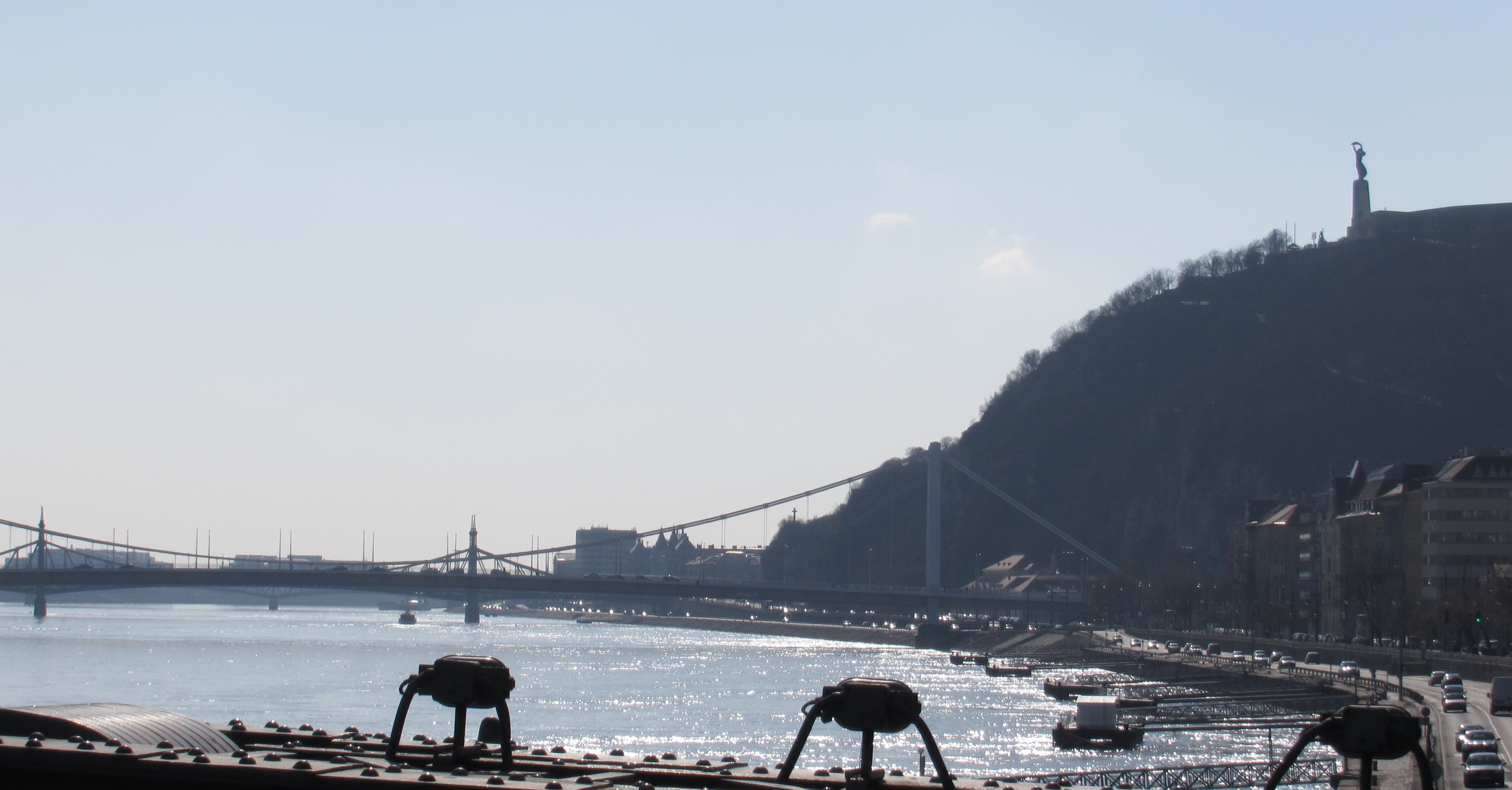
Last time I was here was December 2008. It was freezing, overcast and we spent quite a bit of our time cycling in the dark. But even then I remember being impressed by the buildings and bridges of several eras overlooking the water, but today they were resplendent in spring sunshine.Chain Bridge and Buda castle Budapest Buda Castle, Budapest Hungary


As well as the riverside I had a short time to go into the centre too and I enjoyed the quiet squares just beyond the busy thoroughfares. These grand buildings and statues are typical of these central European cities that were once part of one of Europe’s greatest empires.

Budapest Hungary

Hungarians are a warm hospitable people too, with an extraordinary compulsion to fill visitors with enormous quantities of food. It doesn’t get much better for a hungry cyclist.

If you’ve not been, go.

The Danube always makes a huge impression on me

Margit Bridge

Even  though I am stepping out on a cold misty morning today the Danube never fails to excite me.

Partly it is the huge size, partly I can look down river and catch a first glimpse of the buildings of Budapest along the banks. But it has always done this whenever I have come to it on trips.

But also I think about this amazing corridor that links so many capital cities and countries, running from Germany to the Black Sea. How much human history has been seen along these waters. Something of the exotic perhaps? As a Brit we are often far removed and sadly uneducated about much European history, but when I get the Danube I always feel I should know more.

It is a long standing ambition to cycle the eastern section. Today I will have to content myself with this first view and some cycling along its great cycle paths later.

Reminding visitors why water controls matters in the Netherlands – in three photos

Travelling around the Netherlands you are rarely far from water. Looking from train windows, cycling or walking the drainage systems are often evident and to my eyes they always seem to be brim full of water, even in the summer. We grew up on stories of the drainage and polders in our 1970s geography lessons.

But when I was in Dordrecht last week I captured three images that really brought home to me how the development of land and housing are all wrapped up in this system.

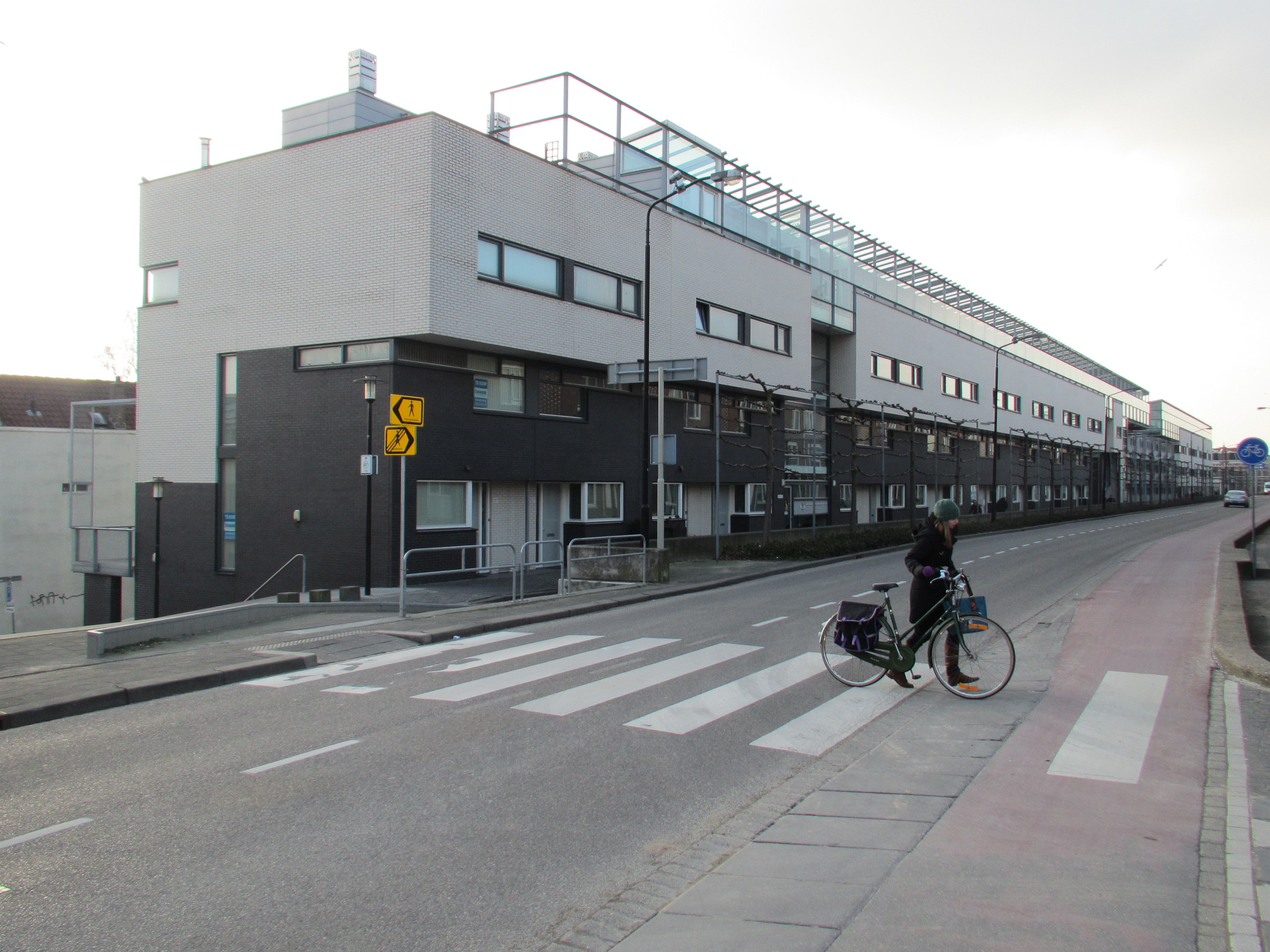
A row of houses.Dordrecht

The same street forty years ago – the floods coming down the same street. Impressive juxtaposition.Dordrecht 1953 floods

But look again at the original. There is a gap in the houses to the left where those yellow signs point. So turn left to look back to the street we have just come from on our bikes.

Dordrecht

I suddenly realise that the street we have just cycled along is way below the level of those 1953 floods and every house we have passed is in effect outside the protective barrier. The 1953 floods would have come almost to the roofs.

How comfortable would I feel there? No idea, but my discomfort tells me I’m definitely not Dutch.

A tale of two sheds – or why my great new bike shed suddenly feels inadequate

http://www.flickr.com/photos/bouval/8474784196/in/pool-platform-duurzaamheid-dordrecht

Photo RienVal (All rights reserved)

I have never given a talk in a stables before.

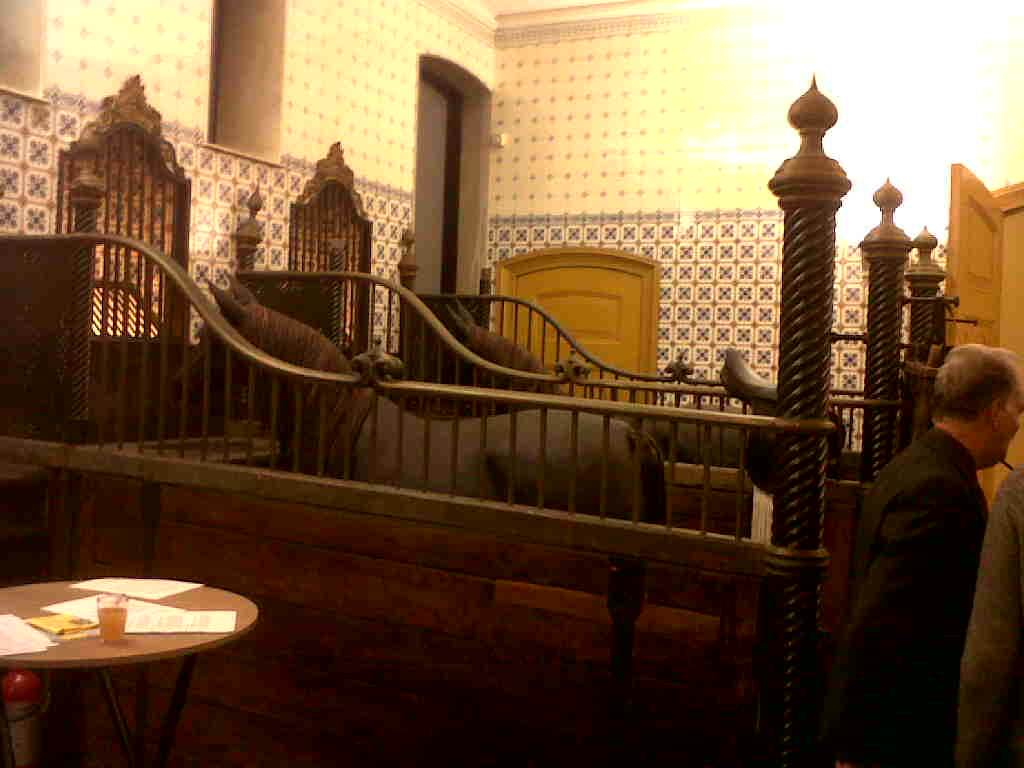
But at the Dordrecht Sustainability Café (Duurzaamheidscafé) last week I was speaking in the former stables of a rich merchant’s house which is now the Weizigt Sustainability Centre. Next door was an even bigger and grander room which used to park the carriages when the house was built in the 19th Century.

To keep the integrity of the space there were even two fibreglass horses in the end stalls.Dordrecht Weizigt

Dordrecht Weizigt Sustainability Centre

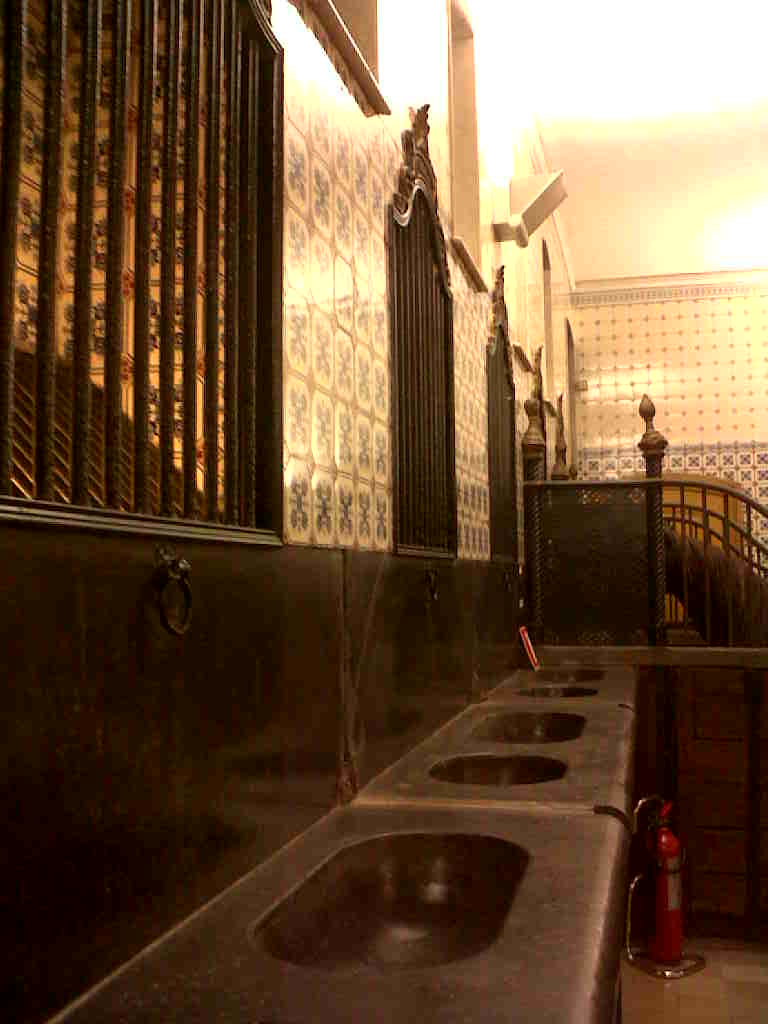
And how those horses must have lived. Look at this place! Expensively tiled walls and each horse has its personalised drinking trough. I’d hate to say that these were from marble, but this was a carved solid stone trough out of something impressive. If you wanted to carve a trendy modern work surface for your designer kitchen then this is the sort of stuff you would use.

It was a great environment for the informal and interactive series of sustainability talks (the café) held each quarter where local groups can come together and hear presentations and discuss topical sustainability issues.

Dordrecht Duurzaamheidscafé

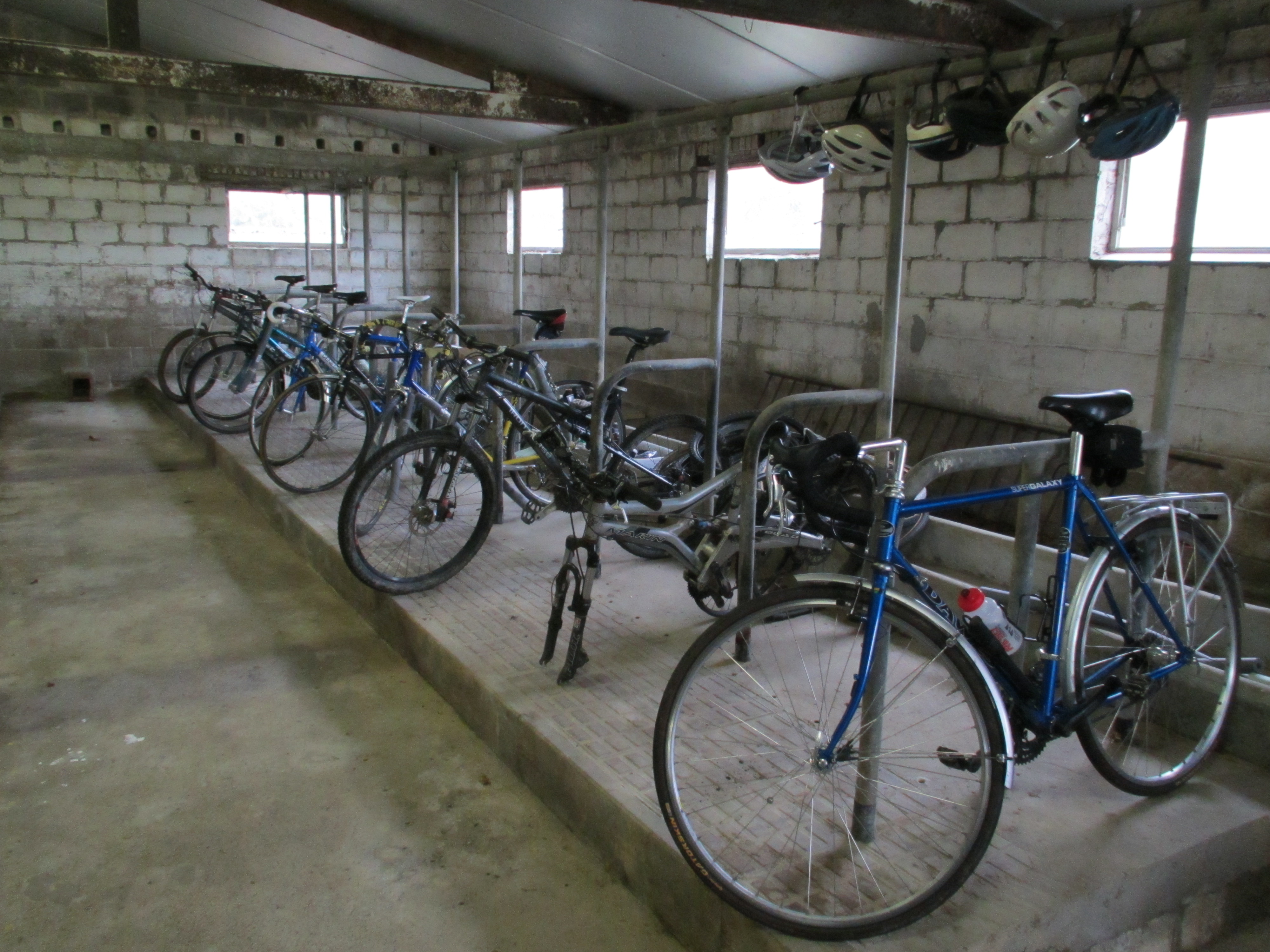
But I couldn’t help but think of my own animal shed. I have been over the moon since I moved to Belgium because the house I am renting comes with old farm buildings, including a milking shed with the cow stalls still in place.

So my bikes have been given their own stalls too.Kevin Mayne's Bike Shed

Only problem is that in this one the roof leaks and there is a howling wind blowing through the space, but it is the best bike shed I have ever had. I even had this sneaking temptation to start giving the bikes appropriate names like Daisy, Buttercup and Ermintrude.

However now I have seen the Weizigt centre all that is behind me.

How could I possibly match up when those Dutch horses each had a personalised brass name plate over their stall. Now that would be some bike shed.Flora's Stall Dordrecht Weizigt


The unprepared tourist – an afternoon cycling in Berlin

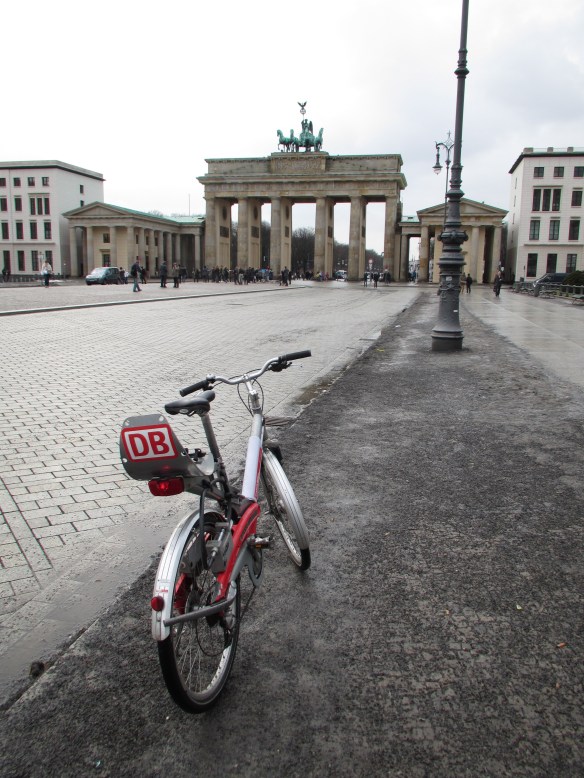
Brandenburg Gate Deutschebahn call bike

Last week I paid my first visit to Berlin. Fortunately around my schedule of meetings I had a few free hours to myself for an afternoon and the freezing rain relented just enough to make sightseeing a realistic opportunity.

I was horribly unprepared to be a tourist having done almost no prior reading. When I checked my usual source on such matters Tripadvisor’s main recommendations were all places that needed at least an hour each to do them justice. Given that my knowledge of Berlin is entirely made of fragments from spy movies and occasional news footage, not the soundest of starts.
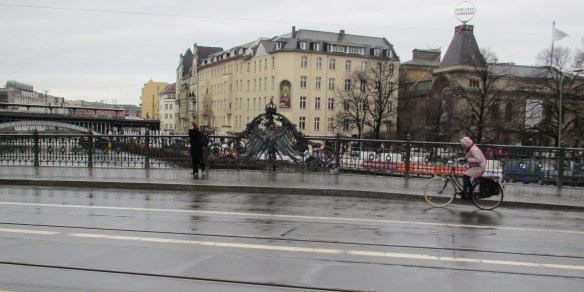
Solitary woman cyclist Berlin

So it should come as no surprise to any reader of this blog that I hired a bike and pottered about with my camera just trying to get some impressions of the city.

I was able to top up my knowledge by chatting to colleagues the following day so I was at least able to answer some of my immediate questions, but here is a brief snapshot of thoughts and feelings from a first afternoon cycling and sightseeing in central Berlin.

First orientation issue – am I in East or West Berlin? I am starting from the middle (Mitte), but checking the map tells me I am in the former East because the Berlin Wall actually encircled the old centre like a bump in its alignment. Not obvious to my eye which was which or that the East had been the poor half because my walk down Friedrichstrasse to hire a bike passed parades of shops and offices indistinguishable from any modern city.

Once a bike was obtained from one of Deutsche Bahn’s many bike hire stations I realised that the layout was very compact and it was a matter of minutes to turn down the main street of East Berlin Unter den Linden and head for the must see monument, the Brandenburg Gate. (above)

Not only an impressive monument but important for my orientation because this was one of the symbols of divided Berlin and I could follow the former line of the Berlin Wall from here, especially as so many tourism landmarks appeared to be along its route.

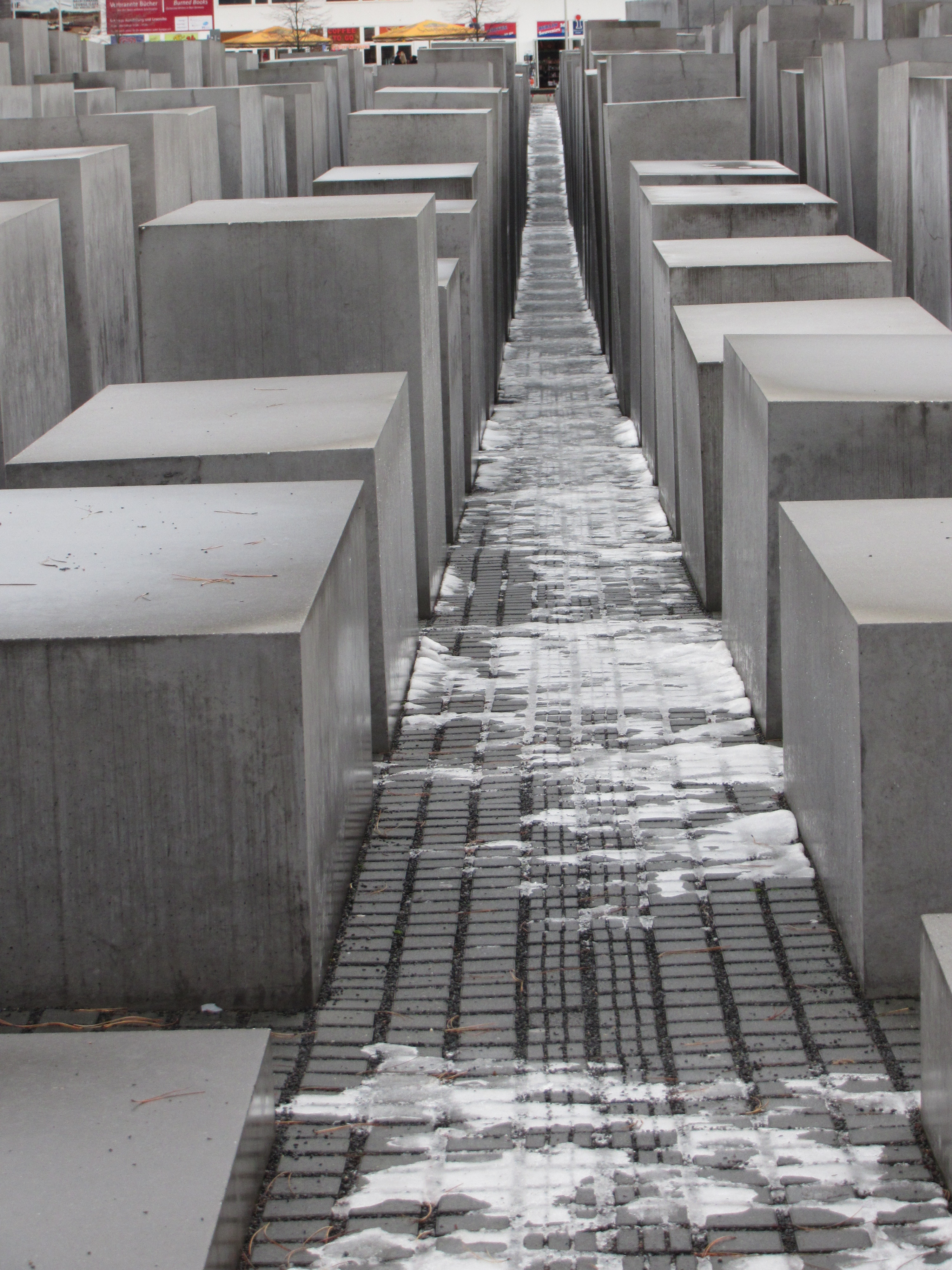
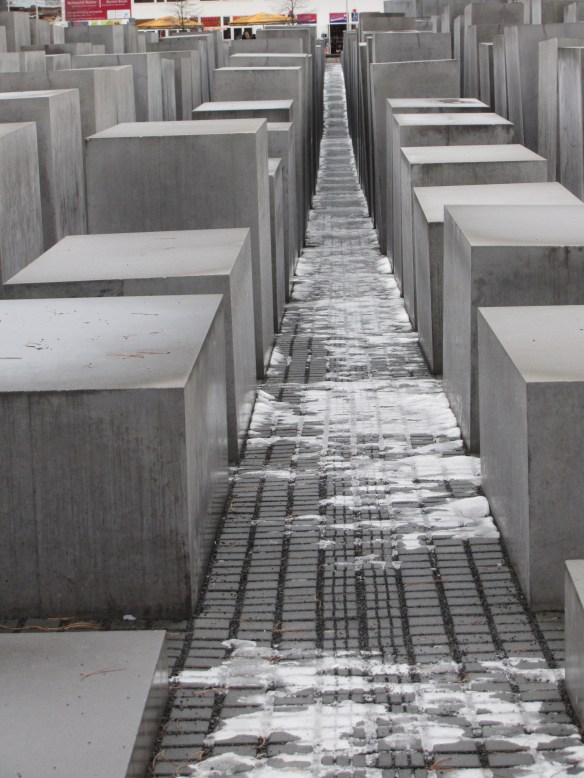
It turned out to be quite an odd ride, as if the city doesn’t quite know what to do with its legacy, or indeed it’s cycling. Heading south from the Brandenburg Gate towards Potsdamer Platz the road was obvious but almost all suggestions of the wall’s existence were gone. Instead the first landmark was the Holocaust Memorial, a sombre grey feature of large blocks laid out in a grid, completed in 2004. A moody place in the overcast sky and slushy snow.Holocaust Memorial Berlin
At PotsdamerPlatz I encountered my first evidence of the wall with some retained segments placed on the square covered with interpretation materials about the wall and its legacy. This explained more about what I was, or indeed was not seeing. In the transition after the wall came down many sections were demolished leaving the wide open spaces that used to be the former killing zone, the space left for the guards to see anybody trying to cross. Some are still undeveloped over 20 years later and appear as waste land, some quickly got developed or incorporated into road schemes and a few make the site of memorials and museums.

As I left Potsdamer Platz the cycle lane on the pavement disappeared, the road narrowed and I appeared to be on a very ordinary city street with no indication of history. My map said I was following the wall and should take the first left into another very nondescript small side street heading for the famous Checkpoint Charlie and a site called “Topography of Terror”.  It was all very quiet, few cars, few tourist trappings and not unpleasant cycling at all.

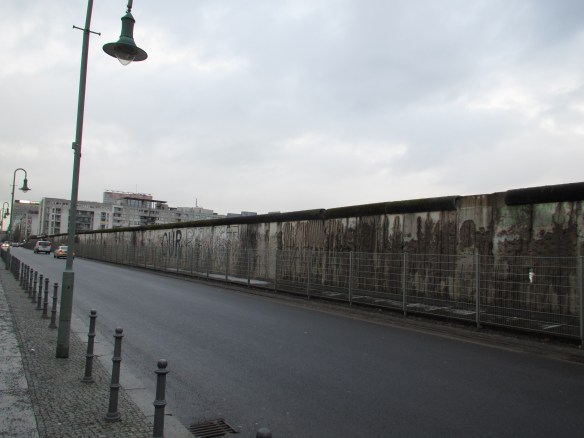
I quickly knew I was on the right road because a much longer section of original wall came up beside me. Behind it was a flat plain containing a low grey modern building and some open building foundations. No signs, no obvious clues as to what was going on until I found that “Topography of Terror”  was the site of the core of former Nazi control in Berlin, the seat of the Gestapo and the Propaganda Ministry and the building footings I could see were Hitler’s Bunker and Gestapo rooms. I found out later that the surface buildings had been demolished by Allied bombing during the war and its proximity to the wall meant it was just left as open space for over 40 years. Another uncomfortable memory to be incorporated into the city and the museum was perhaps suitably understated.Berlin wall NiederkirchnerstrasseDisplay Board Topography of Terrors Berlin
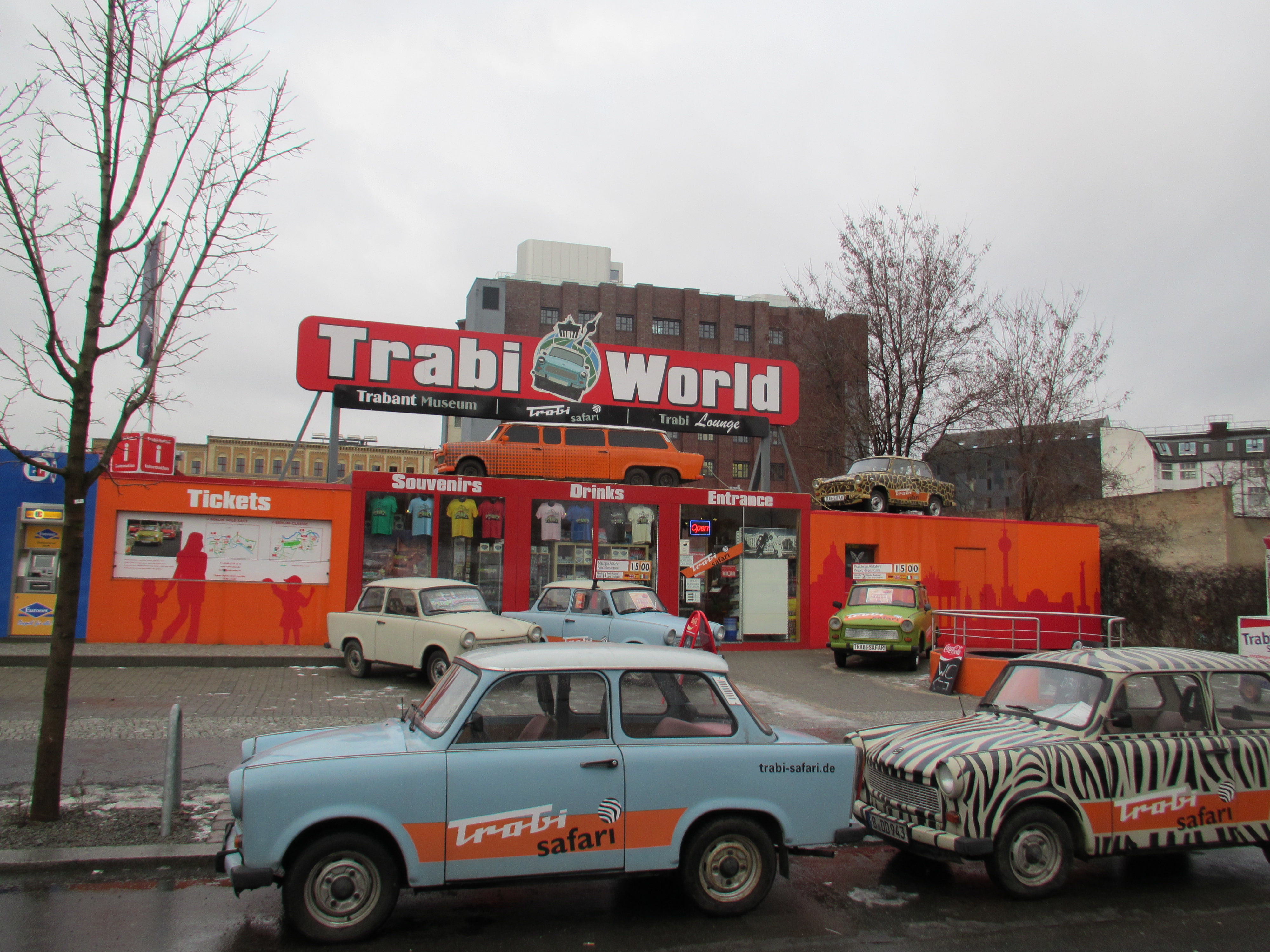
Its neighbour across the street could hardly be more of a contrast!Berlin

Shortly beyond was Checkpoint Charlie, the main gateway between the American and Russian sectors which had appeared in many iconic Cold War images and is certainly more of a tourist hot spot now.  visiting Berlin by bike
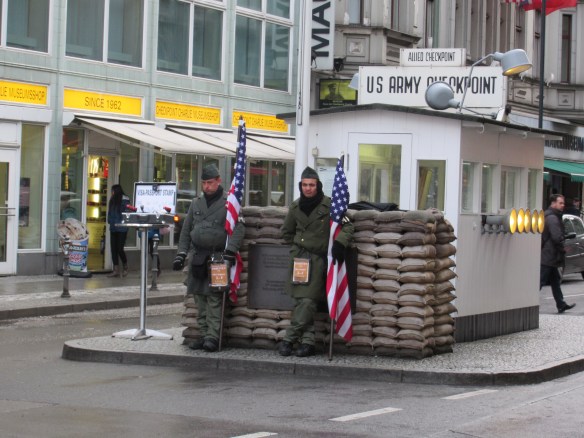
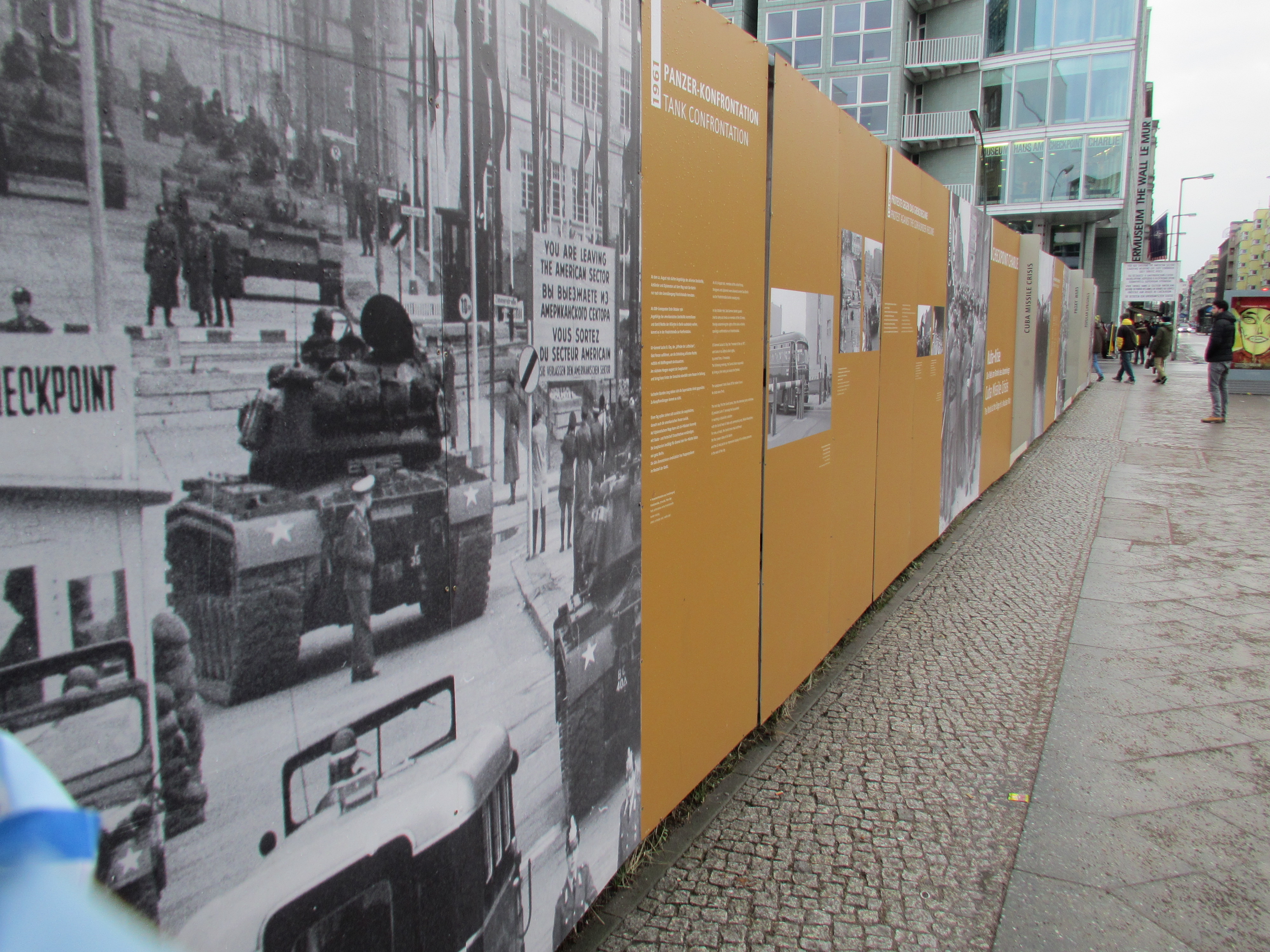
The motif of the wall was used well to provide photographic displays on the approaching streets which gave the history of divided Berlin in news photographs and information boards.Berlin wall displays

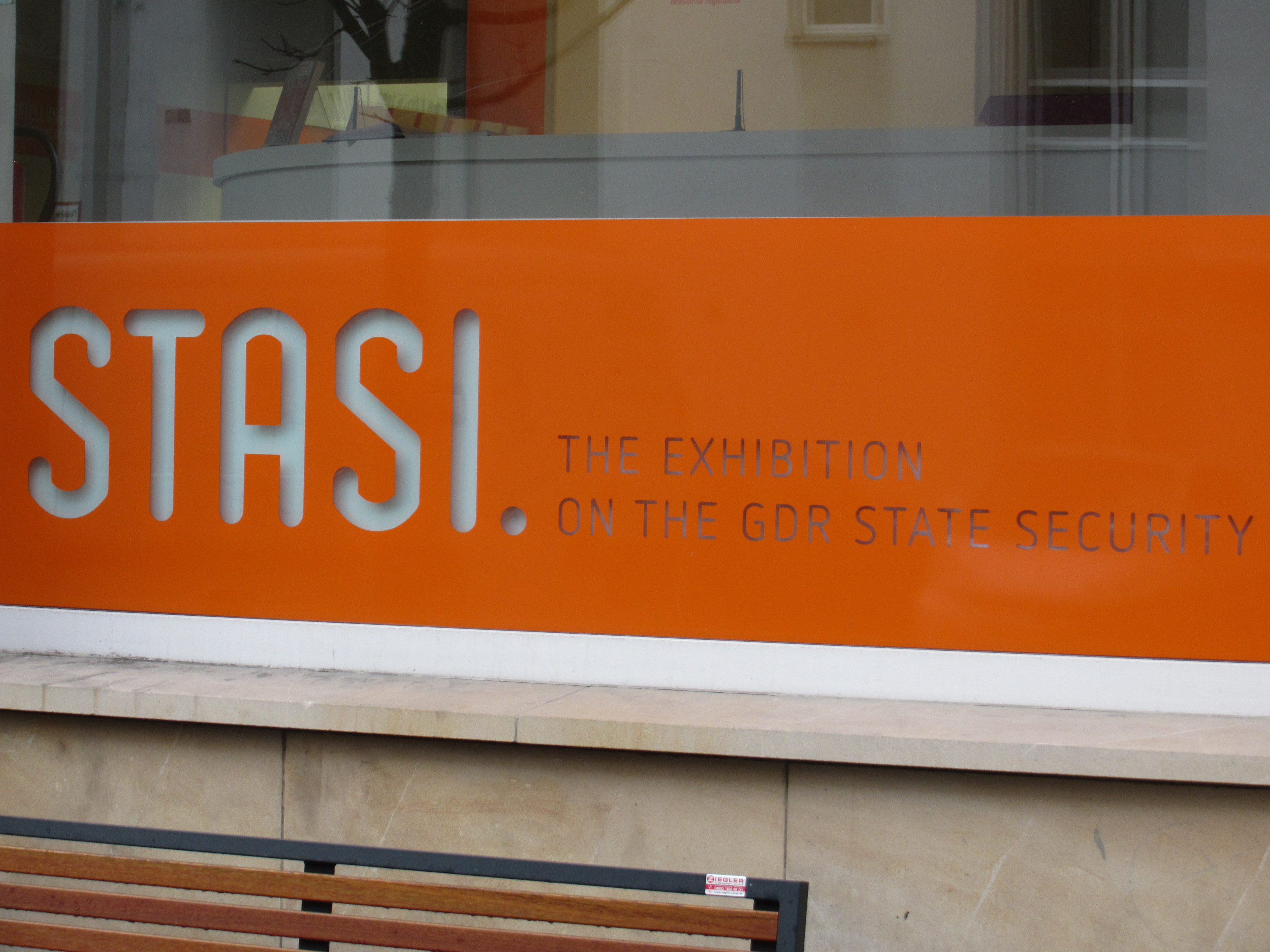
But yet again nearby was one of those ambiguous memorials that really set me thinking – this time the museum of the infamous STASI, the East German secret police.Berlin

I spoke to a colleague later about these many memorials to difficult subjects. He said that because Berlin had stagnated for so long after the war there had been no systematic attempt to “move on” and certainly no civic regeneration programme to remove evidence of difficult subjects. And then after reunification it became recognised that Berlin should not be allowed this past so the city had begun to establish them as part of education and reconciliation. I had the feeling it was a sort of pact – you can become the capital city again but you cannot be allowed to forget.

There is certainly no avoiding the subject of the wall. I had assumed that when I left the central area some of the references would go diminish but later that evening on the S-bahn railway I learned about the ghost stations where North-South trains ran under East Berlin from two sectors of the West but didn’t stop at the pre-war stations. And the sections of that line that ran almost along the wall with platforms only open on the West side.

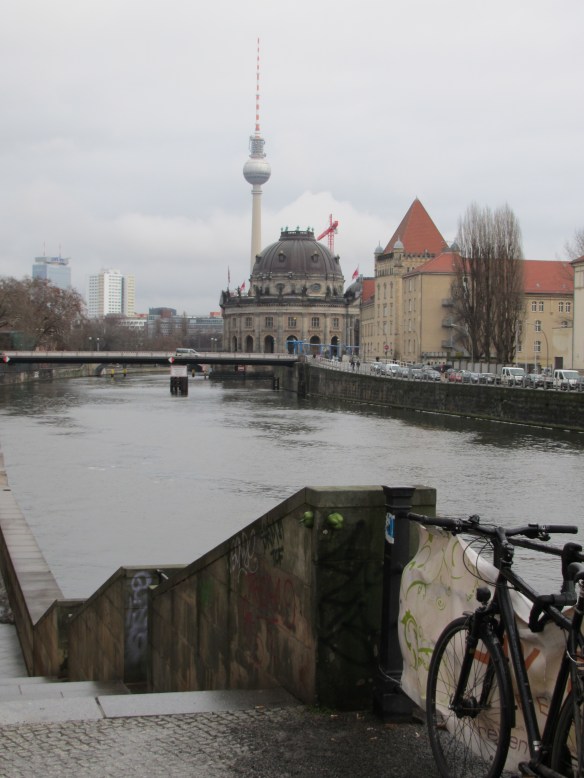
Back to my ride. Having passed Checkpoint Charlie I had my fill of wall sites so I swung North East to see more of the older city. First I followed a relatively large road across to Alexanderplatz which was a pretty nondescript public space in the growing gloom but I was then able to pick up the banks of the River Spree and circle around the hugely impressive Museum Island. What actually caught the eye here too was the amount of building going on, this looks like a city going though a construction boom.Museumsinsel BerlinRiver scene Berlin

I then used the river bank to retrace my steps back to a building I wanted to see, the Reichstag.  The historic parliament building became the seat of German government again when its modern dome designed by British architect Norman Foster was finally built into the older frame. Reichstag Berlin

Around it I discovered a huge modern civil service quarter built on the river bank and a series of waterways and parkland which looked really nice environment. If I had been organised I would like to have booked a visit to see the inside of the Reichstag because everything I have heard about it looks amazing. But for now the space in front of the Reichstag was vast, open and increasingly cold so I didn’t linger, I needed to keep moving.

From the Reichstag it was a quick trip through the Tiergarten park back to the Brandenburg Gate and the return of the bike to its hire station as the gloom came in.

Fascinating place – so many questions about the attitude to history, to culture, to monuments and a potentially days to spend. That is without touching the arts, culture, nightlife and even some of the suburbs – so many other things form which the city is known.

And what about the cycling?

Well I found as many oddities about cycling in Berlin as I did about the city itself.

I had been told that about 13% of trips in Berlin are made by bike. That’s in line with the German average which means well above the rest of Europe and especially the places I usually ride. But I have convinced myself I am getting the hang of this mode share business, I am beginning to be able to see what the differing levels look like.

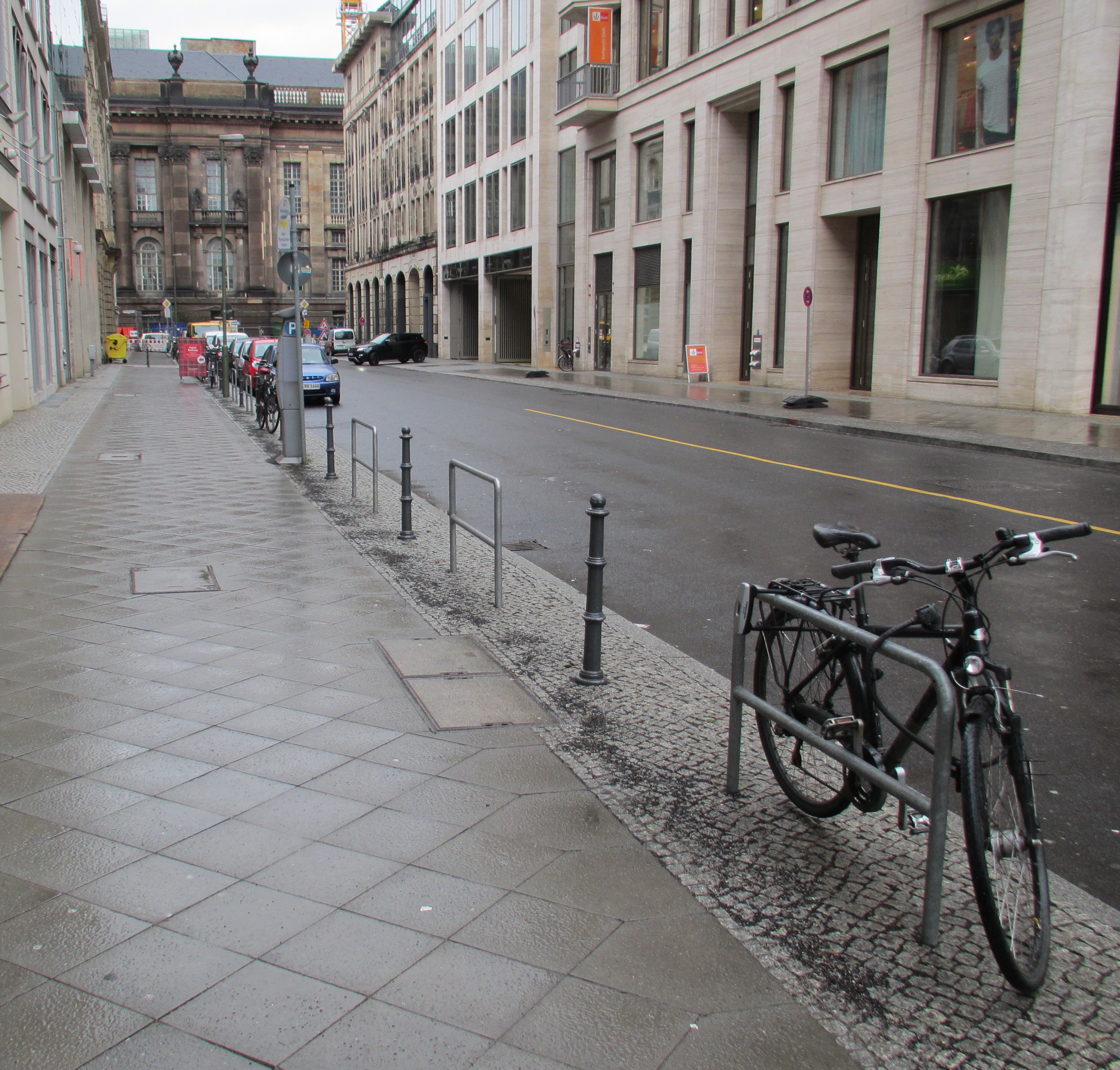
empty cycle parking - February in BerlinBut in Berlin I couldn’t. Whether on my ride or looking at the rush hours I couldn’t see the significant flows I was expecting. Cyclists visible on most streets, yes, but not huge numbers. There were lots of bikes parked round the city but in fact much of the cycle parking was empty. So maybe the weather meant that cycling was quite seasonal I asked? Apparently not, but perhaps I was in the wrong place because the levels of cycling are highly dependent on the routes in from certain suburbs.

Fixie rider Checkpoint Charlie Berlin

Just like everywhere else in Europe it is the middle classes and intellectuals who cycle the most and in Berlin it is the areas where the alternative cultural movement established itself in the sixties that cycling levels are highest. If this is the case then it might explain why cyclists in the city centre really did feel quite isolated.

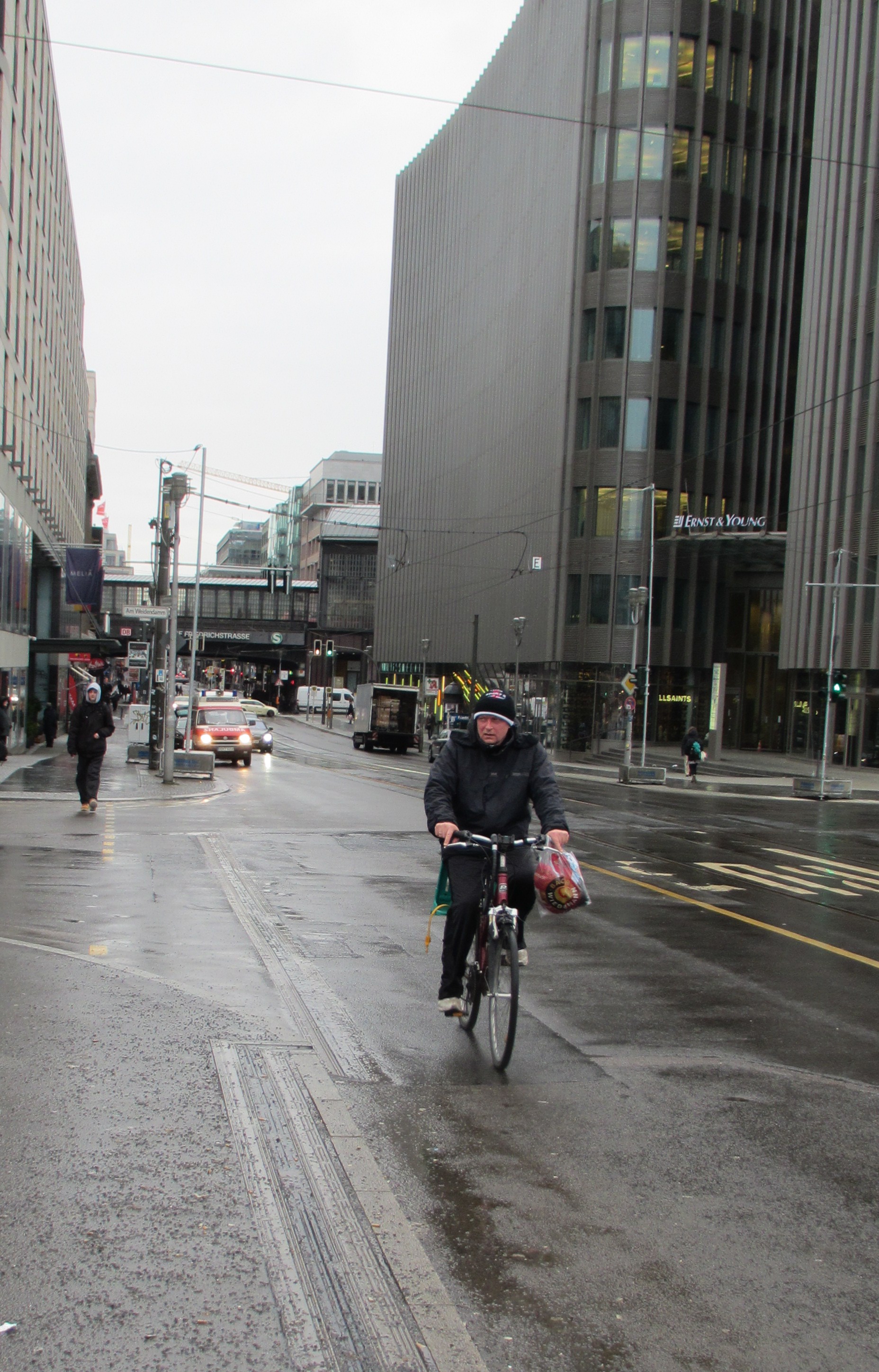
However in the city centre what I could see was that other indicator of cycling health. Women on bikes are universally recognised as a sign that the population thinks cycling is safe. However maybe they think they are not quite safe enough because I did notice that nearly all the women wore the dreaded cycle helmets – but none of the men!Friedrichstrasse Cycling Berlin
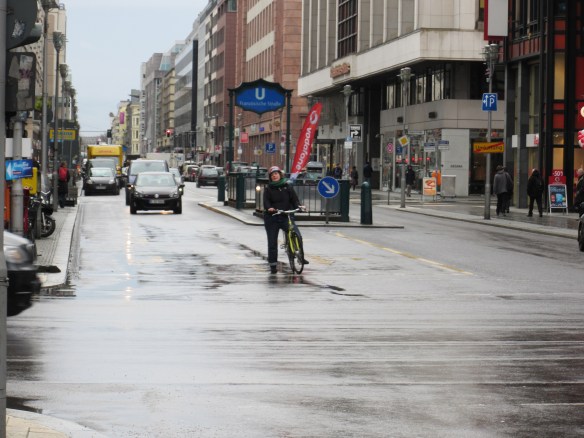
Cyclist Berlin 1The other thing that will be a bit confusing for many cycling advocates was the lack of segregated cycle routes. The vast majority of cycling I did was on the carriageway – I could have been in Brussels or London. That certainly contradicts the message that you need a big segregated network to get cycling levels above 10%. However I rarely felt worried, the drivers were largely respectful of the cyclist and the cycle lane – now that is a big difference. Possibly my view was distorted by the time of day, I was just before the afternoon rush hour, but even the following morning I felt general traffic volumes in the city were really low compared to most large cities in Europe. Maybe Berlin drivers are less stressed than their equivalents stuck in traffic across the world? I still instinctively believe that cycle lanes are just one way of changing the relationship between rider and driver and Berlin seemed to support the notion that respectful driving is a valuable way to create a cycling environment too.

So Berlin by bike?

Flat, compact, interesting, well behaved drivers, loads of bikes on hire. Something I definitely want to do again. But better prepared and able to use the Call Bike system properly, jumping on and off to visit the main attractions properly!

Bike to Heaven

Memorial to Jan Bouchal Prague

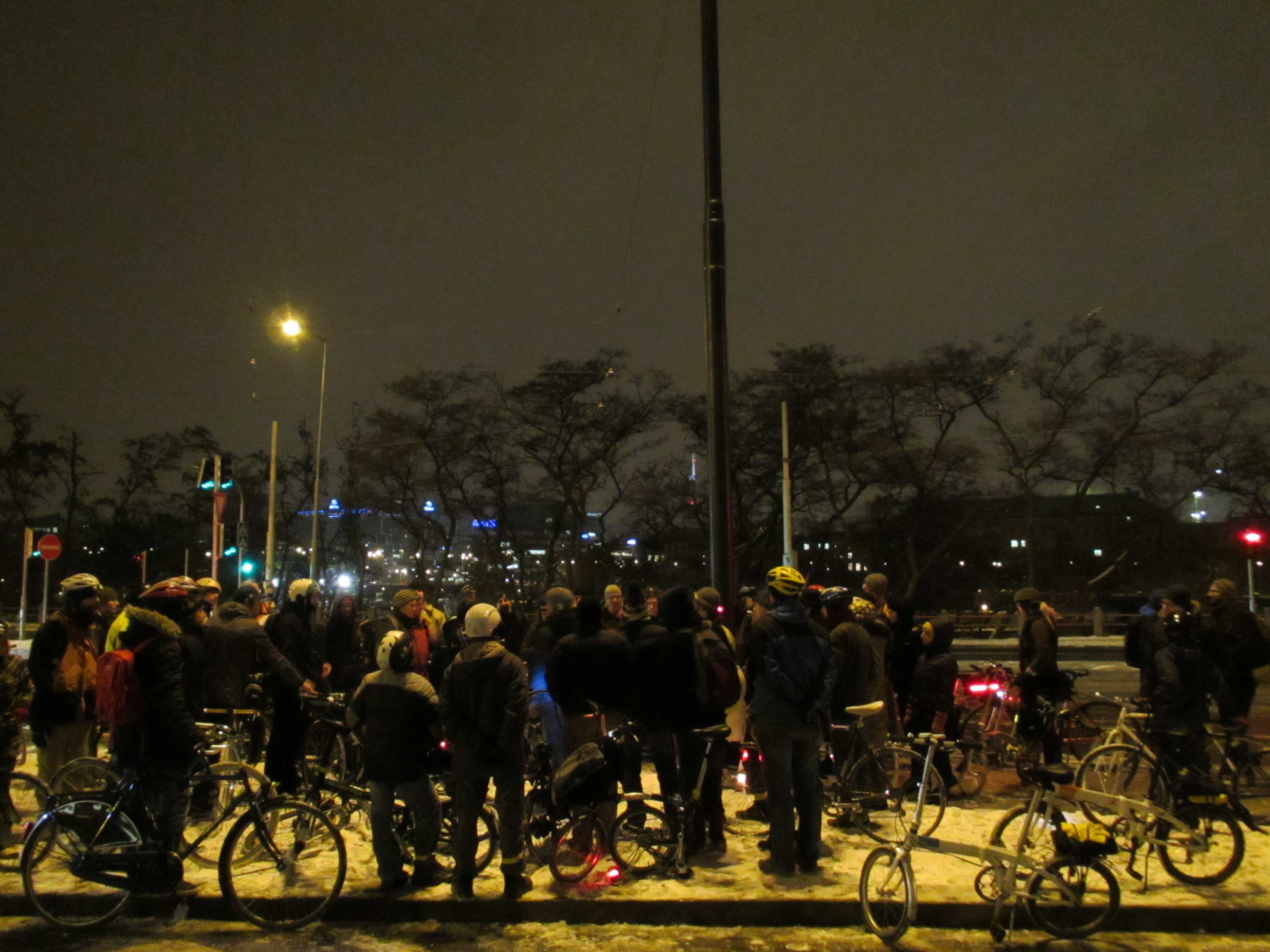
On a relatively undistinguished junction in Prague a small but moving ceremony took place Thursday night. Under gently falling snow around seventy people gathered around a white bike mounted on a lamp column and a small group of candles.

Memorial to PupThe group consisted of local cycle activists, critical mass riders, walkers and supporters of sustainability group Auto*Mat. Speeches of friendship were made with quiet dignity and a minute’s silence was held, bareheaded in the cold near the banks of the Vltava River.

Every January for seven years they have gathered on this corner  to commemorate the life of one of their friends and colleagues Jan Bouchal, killed by a car on this corner in 2006. But this year the gathering had special meaning. After six years of campaigning the city council finally remodelled the junction to make it safer for cyclists and this year they have agreed to a permanent memorial to “Pup“ as he was known.

An open competition has been held amongst local artists to create a design and following a public fundraising campaign the design will be permanently installed on the spot. Echoing the spirit of the ghost bikes that have become a symbol of unnecessary cyclists deaths around the world a suspended bicycle will rotate around the column high in the air, called “Bike to Heaven”.http://www.auto-mat.cz/2013/01/pupuv-pomnik-jiz-na-jare-podporite-jeho-vznik/

I was invited because I was in Prague working at a conference to share the findings of the BICY Project, a three year project to develop cycling in central Europe. Daniel Mourek, our Czech ECF board member invited us to ride with the local critical mass and share the occasion with them, something of an honour to be a guest on their occasion.

But it was easy to feel at home with this group. As in so many countries and cities where cycling and sustainability is hard to promote the activist community is tightly bound and the cyclists fill a tribal niche. On the critical mass I recognised the forerunners that I have seen all over the world, riding fixies, cargo bikes, folders and recycled bikes in a number of designs. Prague is not an easy cycling environment. On average only 2% of local traffic is cyclists which in winter means almost none are seen on the streets and it is a battle to get the council to do positive things for transport cyclists. The city centre should be a great place for cycling as it is largely traffic free but I saw only a single cyclist while I was there apart from the group I was with.

Critical Mass Prague
In this tough environment Jan Bouchal was a real leader of the group, one of the founders of the Auto*Mat and it was clear by the way he was described as “our friend” that he was a very valued person. I wish his friends every success in their campaign to raise the money they need for the memorial but even more so I wish them every success in their campaigns to make Prague a cycling city.

Memorial for Jan Bouchal Prague

Not cycling – need some inspiration

Oreti Beach, Invercargill, New ZealandBeen a bit unwell, not riding my bike much except to the station.

Weather grey and horrible.

Maybe a bit of inspiration on line? No, the twittersphere and blog world are full of Lance Armstrong and his forthcoming appearance on Oprah.

I just need a couple of memories to cheer me up.

Number one above is for the bucket list I am slowly compiling. Something everyone must do is ride your bike on a remote beach. Even better let it be Oreti Beach near Invercargill, New Zealand. Ride some of the singletrack trails on nearby Sandy Point (world’s most southerly singletrack?) and then roll onto the hardpacked beach when there is a wind whipping up the whitecaps from the Southern Ocean.

Number 2 – mountain biking in Spain. Just because I love this photo and remember being there.

Near Amer, Girona, Spain

The Kingdom of Bicycles in video – flashback to an earlier China

Kingdom of Bicycles StillThis post originates from one of those unexplainable coincidences that life throws up. And once they have occurred I know I just have to talk about it.

I was thinking about a “bucket list” post for New Year, reflecting the many cycling experiences I would like to have or to share. I know it has been done many times, but it is a great concept.

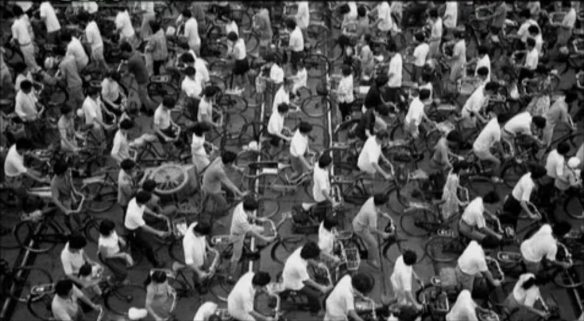
On my “done it” list was one item that I feel is probably now impossible to replicate and I was going to challenge readers to suggest an alternative. In 1985 I had the privilege of hiring an upright black bike and riding the streets of Peking with my father. (Now more correctly called Beijing of course).

The only way I can capture the feeling today is to imagine a flock of black birds. The flock wheels and turns, seemingly at random, but somehow the birds do not collide and as a collective the flock becomes a thing of beauty. We two clumsy westerners were almost certainly a break in the harmony, but it didn’t stop it being a magical experience.

I have cycled the rush hours in Amsterdam and Copenhagen but it doesn’t feel the same even today. Maybe it was the touch of the exotic, the scale of the streets, huge highways full of bikes, or perhaps that there were so few cars in 1985 Beijing that the cyclists felt like kings. We certainly weren’t pinned to the side of the road in token lanes, we were the traffic.

I had gathered these few thoughts together in my head as part of this possible “bucket list” post when out of the blue Patrick Keating from Velocapital Partners circulated a report on cycling traffic in China, together with a link to this lovely film from China Central Television English Language service. It is 25 minutes long, so take a glass of something or more appropriately a cup of tea and enjoy the film and photography.

http://english.cntv.cn/program/storyboard/20120124/112052.shtml

Of course much of that cycle traffic has gone now and the rush for cars has driven cyclists off those boulevards in Beijing. Even in 1985 we found the centre of Shanghai to be so congested it was almost gridlocked by buses and taxis and by all accounts the transition in Beijing was rapid. Sadly I haven’t been back since 1985 but I doubt any experience can replace that day. However the film was a great reminder.

By the way Julian – riding your Flying Pigeon in Brussels doesn’t even get close. Sorry mate.

Christmas Eve cycle ride – cobbles and battles

WaterlooChristmas Eve was one of the few times since I started working in Belgium that I have been for a bike ride that was “just a spin”, a proper touring ride through the local lanes.

Previous rides have almost all had a purpose – exploring areas to live, visiting houses and more recently plotting routes to work or to local services. I feel as if I have been waiting weeks for free time to coincide with some gaps in the rain or snow and it just happened to be the afternoon of Christmas Eve.

I decided to cut though the lanes in the general direction of Waterloo, partly because the network of roads look interesting on the map and also because I wondered how much I could ride around the historic site of the 1815 battle.

It was really refreshing to be pottering about and with time to take some photos. When I returned three impressions were left on my mind.

Firstly I was good to be moving at bike speed through the villages and hamlets rather than by car so I could enjoy the vernacular architecture glowing in the winter sunshine, especially the white painted farmhouses which dot the fields and the solid brick churches marking the village centres.Lasne, BelgiumPlancenoitLasne

Waterloo Chemin des CosaquesBattles are not really my thing but I want to know more about my new home and the Battle of Waterloo is by far the biggest deal in this region, undoubtedly one of the most pivotal battles in European history. The main Waterloo battlefield is actually south of the town itself and include the communes of Braine L’Alleud and Lasne while the events leading up to the battle stretch many kilometres away to Wavre and Genappe, right across the area I am now living.

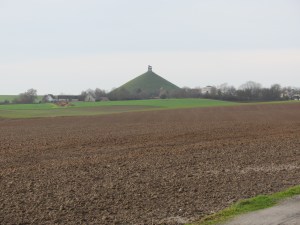
I was first aware that I had hit the battlefield proper when I came across the first of many roads named after the troops and leaders of in the battle. And then bouncing across the cobbles and potholes I looked up from my concentration on the road ahead to see the Butte de Lion, the huge pyramid -like mound built by William 1st of the Netherlands to mark the event.Waterloo Belgium

It isn’t the most attractive memorial in the world but it is certainly a major landmark in the surrounding agricultural landscape which only dips away gradually. At least around its base there is only a limited amount of tourist exploitation while the older buildings mark their association with the flags of all sides and not much other adornment.

Waterloo BelgiumHowever the thing that really struck me was that I could ride right up beside the monument and then head out across the fields on my bike, I am sure in most countries this would be closely guarded and only accessible by paying customers. Alongside the path were interpretation boards in multiple languages which set out the main features of the battle. I was able to swing across the ridge defended by the British against the French cavalry charges accompanied by several joggers and the car we collectively pushed out of the mud in a burst of international collaboration.

Battlefield path WaterlooSo I can mark that one down as somewhere to bring cycling visitors with an interest in history, a bike is a really good way to move around the big area covered by the battle and get a sense of the topography.

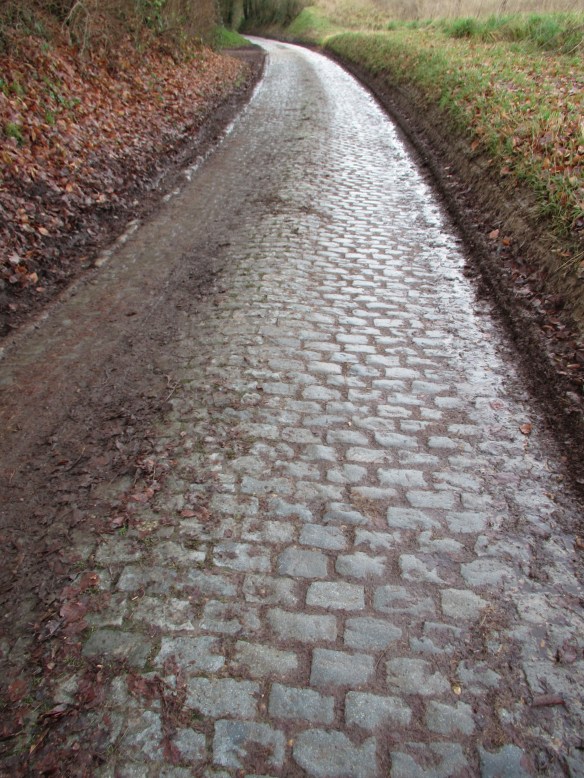
Ah, but there is a catch. My third and final discovery was the state of the roads in this direction. I may have moaned a bit about rough cycle paths earlier in the year but for the first time on this trip I hit some of the real stuff, proper domed pavé with deep ruts down either side. Front lamp lasted about a minute before it had to be removed but the rest of the bike and I rattled bumped and bounced all over the place with little semblance of control or momentum. Only a relatively short section fortunately but it caught me by surprise.

Cobbles of LasneLater I tried my best to imitate Tom Boonen, going full bore down the centre crest on a similar section which seemed to work better but it was tough keeping it going and no fun at all when momentum was lost. A few of the minor roads are theoretically smooth now but when the tarmac wears away the thinly covered cobbles are exposed and make impressive potholes, a tricky combination after all the wet weather.Waterloo cobbles

In other areas the cobbling is more decorative, in fact it looks like it is used as a sort of traffic calming because many of the road junctions and village entrances had short sections in just the right places to discourage car speed. These more modern sections are relatively tame for a cyclist and in general the drivers show a lot of respect to cyclists, certainly better than in Brussels.

All in all I loved my return to pottering about the lanes and the discovery of the countryside, the history and even those cobbles. I look forward to much more, but for the moment I was refreshed for Christmas.

Not despairing in Stockholm

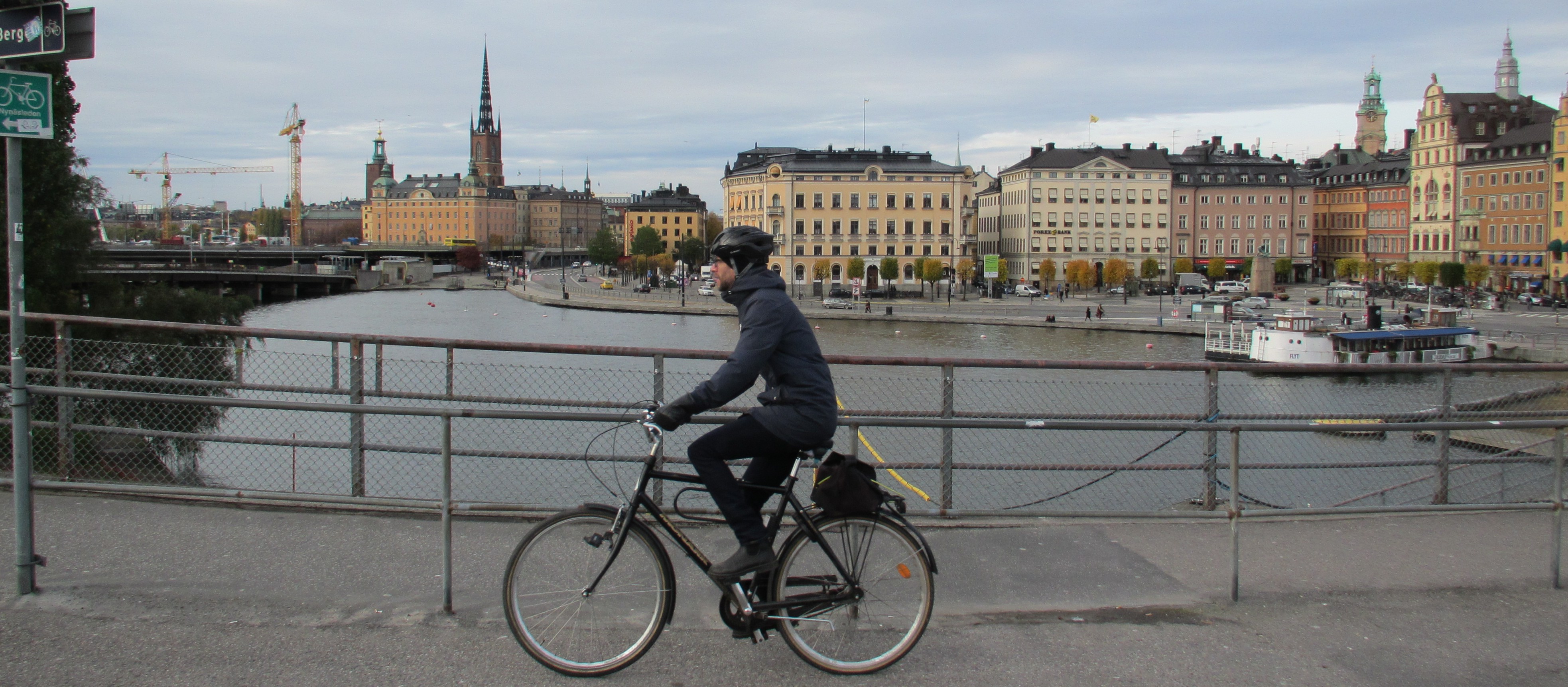
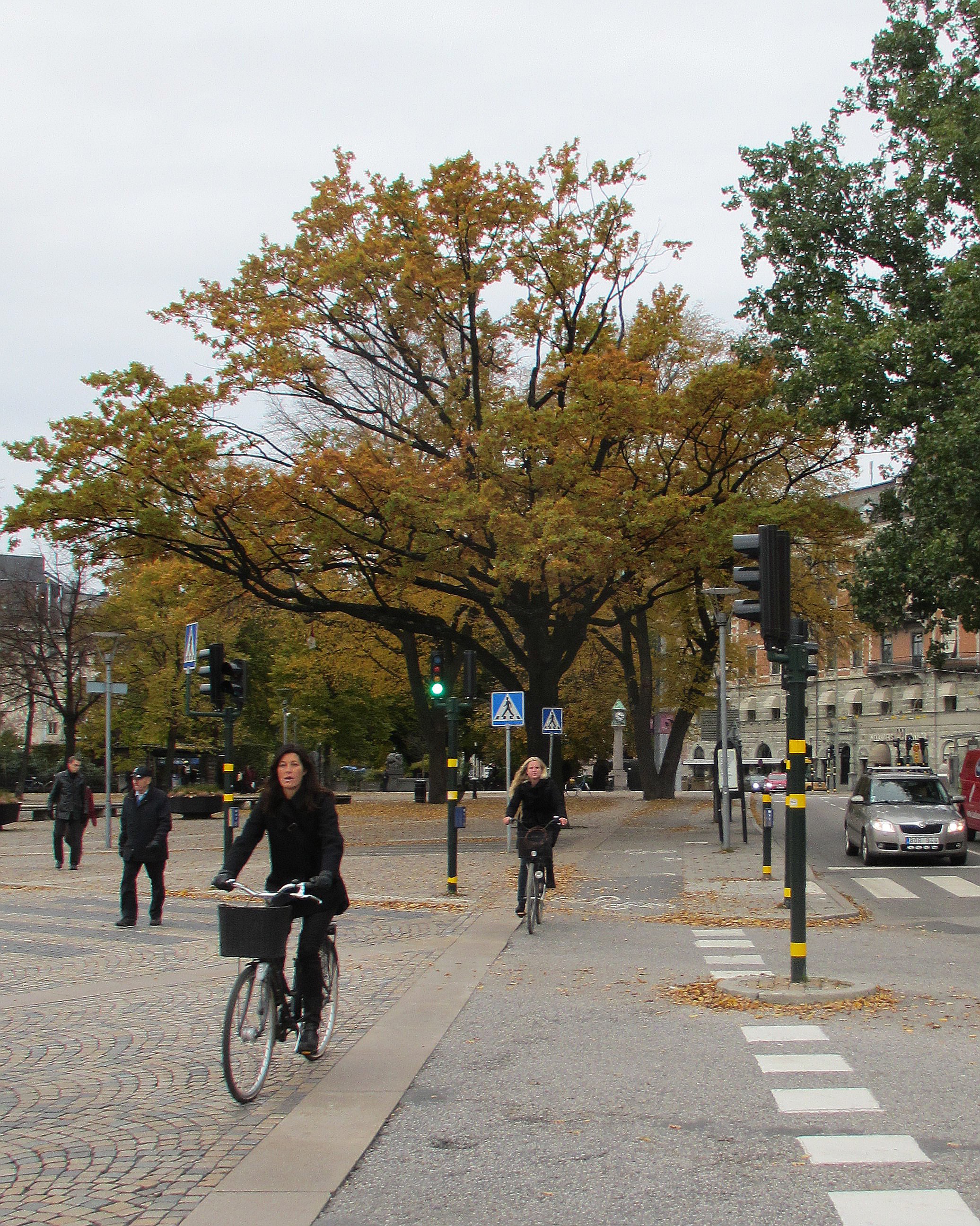
SwedenI have only cycled once before in Sweden, and that was three years ago after Velo-city Copenhagen when my son and I took our bikes across the strait to Malmo. It was clear to see that there has been an extension of Copenhagen riding culture across the bridge because cycling levels were really high and well catered for.

So I was very interested to see what the capital city was like away from that influence, especially as I was doing an evening talk with the Dutch Cycling Embassy to a group of municipalities from the Stockholm region. It certainly helps to have ridden just a little bit before speaking to a cycling audience, if only to see where we have things in common, I am always reminded of the famous situation when the Beatles landed in the US and as they got off the plane a reporter said “So what do you think of America?”

Sweden cyclingFirst discovery was yet another design of bike in use for the public bike sharing, a rather odd looking beast with a small front wheel, and what turned out to be horribly uncomfortable saddles.

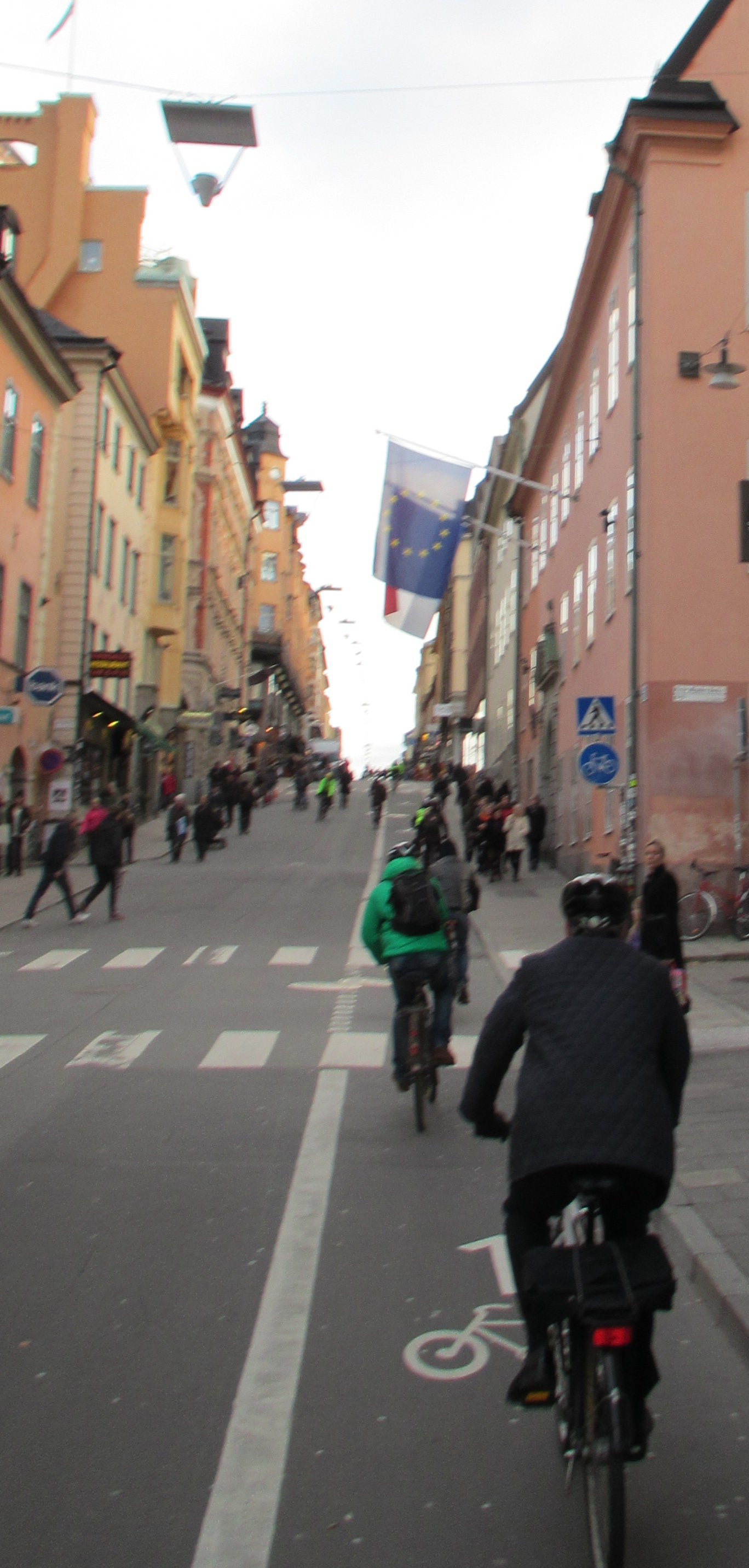
Throughout the two days I saw consistent streams of riders, obviously higher numbers than many places I know in the UK or Belgium, up there with parts of Germany but not quite reaching the critical mass of the Netherlands or Denmark. I was quite pleased with myself when I guessed a mode share of 10% as that turns out to be about right, I think I am starting to tune in now as I increase my exposure to different cycling environments. Swedish cycling

I was told that this is actually well behind many other Swedish cities and Stockholm may be holding the country back. It certainly was a mixed culture full of contradictions.

Encouragingly high numbers of women cycling which is always an indicator that cycling has been normalised and taken back from us macho types, but then more helmets than I have seen anywhere that doesn’t have a compulsion policy.

As we rode around we encountered every kind of cycling facility, without any rhyme or reason as to which would come next.  On road, on paint, segregated and shared use all in a small area and without any apparent strategy, or if there was I missed it. And almost no car free areas except a few streets in the touristy part of the old city, that really is a bit of a rarity now in forward-looking cities now.

Swedish cycling

Quality of the cycling facilities was pretty good when they existed, often wide and smooth, but there were some totally chaotic and confusing junctions to a newcomer.

SwedenI am glad I was following Christian on my first day. The routes around the waterfront were lovely, the sort of ride that makes me want to get up in the morning.

And that’s a point – did I mention mornings? I had my usual hotel problem of waking up really early so I went out for a walk around 6.30. Big shock to the system, pitch dark without a hint of dawn and a wicked wind cutting through the buildings, suddenly you know you have come a long way north.

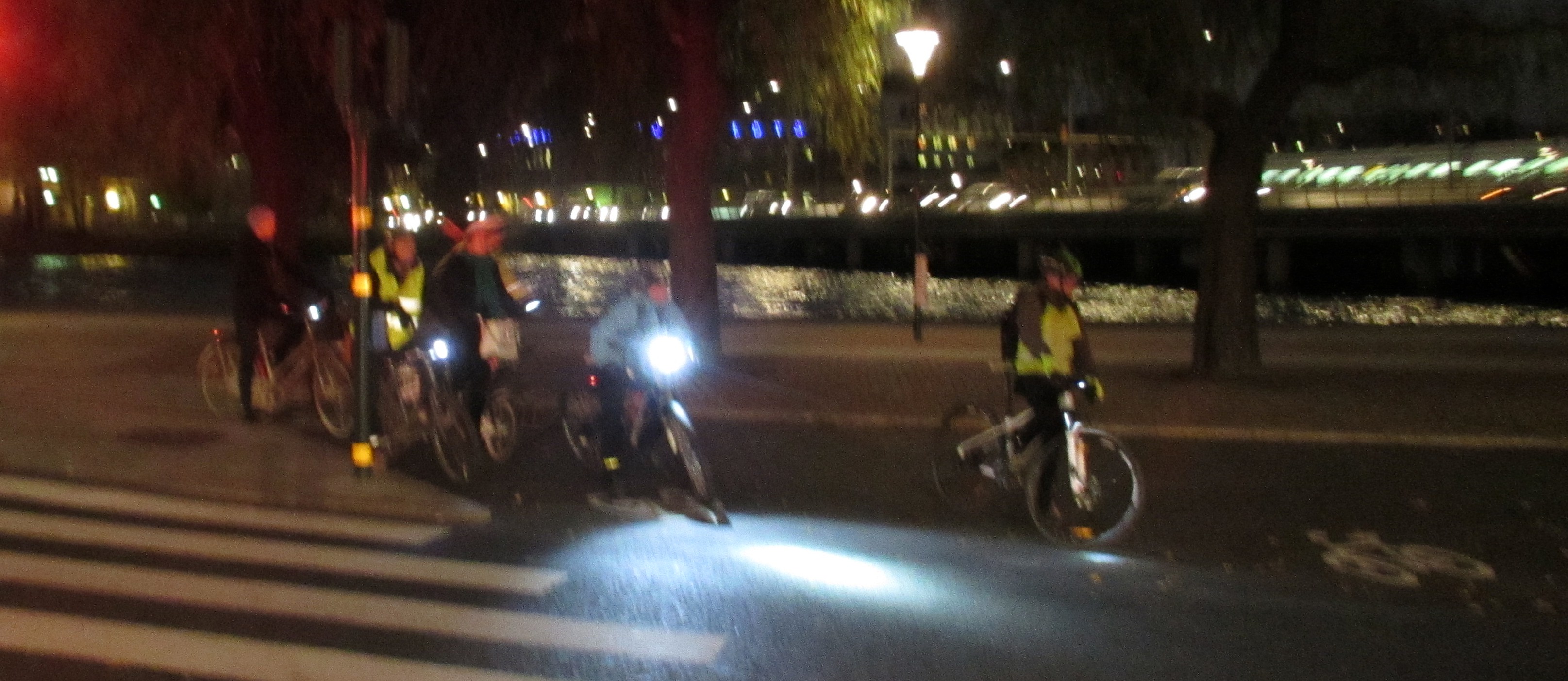
But as I wandered out of the old city towards the main roads I became aware of lots of traffic noise and discovered that rush hour seemed to be well underway, not just for cars and trains but for cyclists. I was later told that Sweden has quite a long-hours culture; or one where people like to start early so they can get home early. Whatever it was I don’t think I have seen quite so many early riders anywhere. I guess if you get used to cycling through a Scandinavian winter you are used to doing a lot of riding in the dark, but this was quite striking.Morning rush hour

Given that I see no cyclists on the roads in Brussels before 8am it was encouraging to see them out there.

Another nice feeling came around the Dutch Embassy, which conveniently happens to be on the busiest cycle route in Stockholm. As the street outside is car free and mingles bikes and pedestrians it could almost be home for the staff. Although the hill is a bit bigger than many of them would ever encounter! Great thing the embassy has in common with any Dutch organisation: When the ambassador talks about cycling in his welcome speech at least he hasn’t been handed the notes on a piece of paper, he has actually ridden a bike around most of his life, as they all have. Gives them enormous credibility as hosts and ambassadors for cycling culture.Netherlands Embassy Sweden
I’m looking forward to further invitations, this Dutch – Swedish relationship could go well and I hope to be back to see the results.

Bicycle dog basket designed in a wind tunnel?

Spotted in Stockholm.

A most unusual attachment for a sporty road bike. Speculation as to purpose welcomed.