My guest post on discoveringbelgium.com has been published. “New Year’s Revolutions: The Best of Belgian Cycling for 2015”

This is quite fun, Late last year I was invited to contribute a guest post on cycling for the blog www.discoveringbelgium.com and the forst part has been published today.

Denzil Walton is a freelance wrote and author of some good books of walks in the towns around the Brussels area. He has an excellent blog which has a diverse range of Belgian content from walking to crafts, history and countryside.

He asked me for some ideas on cycling content and I suggested that I quite liked the idea of a New Year piece with some of the cycling things I want to do and see in 2015.

I suspect some of my Belgian cycling friends will rush to tell me about dozens of great rides that I missed, but this was written with a bit of a visitor’s perspective. There will be room for lots more stories on this blog – maybe you just need to invite me for more bike rides.

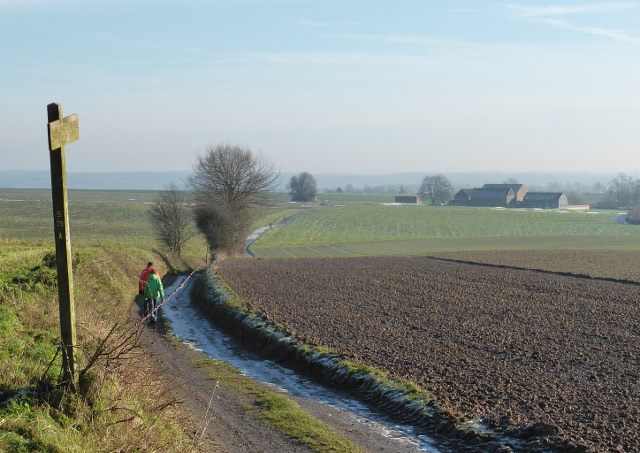
Anyway here it is, in the first of two parts, with Blue Bikes, city rides, the Limburg Fietsparadijs, Pays de Famenne, and the Forêt de Soignes/Zoniënwoud.

discoveringbelgium.com

Riding The Ronquières Inclined Plane. One of the world’s largest canal-boat lifts – by bike – from the inside!

Wednesday’s bike ride was enjoyable enough because of the cycling.

But there was one other feature that made the day memorable, not least because it came upon me completely by surprise and gave me unprecedented access to a Belgian transport landmark.

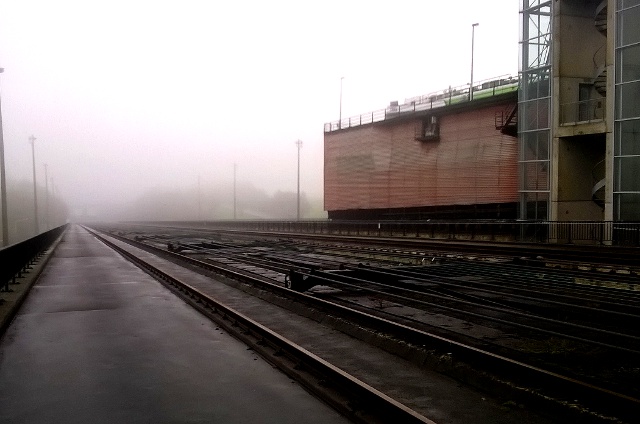
I was cycling along the Charleroi-Brussels Canal that makes up Ravel 1, one of the longest off-road cycle routes in Belgium. It was deserted and a thick mist had come down so there was a sense of riding along a narrow closed corridor.

Photo Kevin Mayne

I got my first surprise when I realised I had started cycling out onto a huge viaduct with the ground disappearing away to the mist on my side. As someone who sometimes suffers from vertigo this was more than a little un-nerving but the infrastructure was big and wide so I was quite relaxed.

Photo Kevin Mayne

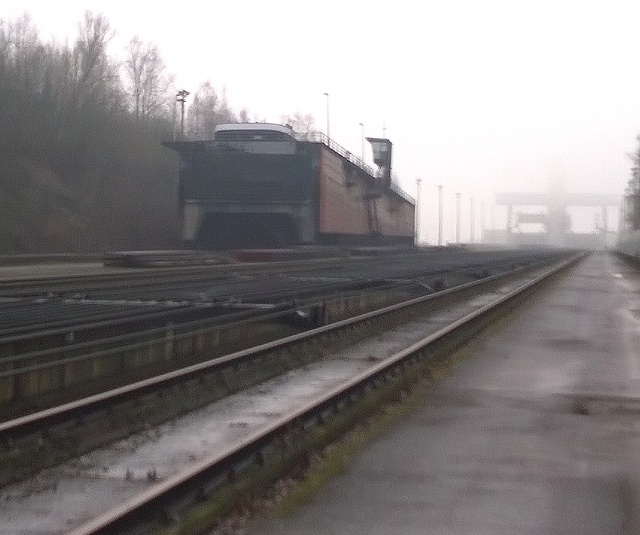
Then out of the mist came the shape of a lock gate so I cycled up to the edge for a look, but the view made me stop in amazement. There was no lock gate. In fact there was not even a canal. Below me there was a something resembling a huge railway yard sloping into the distance, with not a drop of water in sight.

Then I realised that projecting down the hill was a boat sitting in a massive tank of water. The tank was on wheels and it was waiting to descend the slope.

Photo Kevin Mayne

I had stumbled onto The Ronquières Inclined Plane, a boat lift that can carry up to 5600 tonnes of water and boats between the two levels of the canal almost 70 metres apart in height. It is a notable local landmark and visitor attraction but I hadn’t paid enough attention to the maps to realise that it was on this section. Taking 8 years to build in 1968 it replaced 18 lock gates and is still the largest boat lift of its kind in the world.

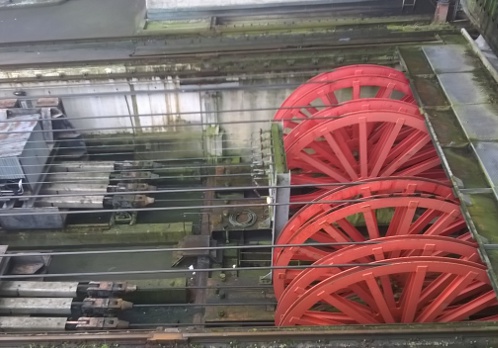
After a few minutes taking in the view of the long slope disappearing in to the mist I rolled my bike down only obvious route out, a steep ramp down the side of the structure. To my amazement I popped out almost under the giant tin bath carrying the boat, right beside the huge cables that pulled and lowered them down the ramp.

Photo Kevin Mayne

Photo Kevin Mayne

It was canal infrastructure on an enormous scale, made all the more impressive by realising the weight of water that was above me. I was having a close encounter with one impressive piece of engineering.

I was a little surprised to discover the cycle route ran right down by the works but I enjoyed the descent, it was amazing.

Photo Kevin Mayne

I now know that it is over 1400 metres long, which is why I could hardly see the end in the mist. However there was a shock at the bottom when I found it came to a complete dead end against a huge wall and some locked gates. Ooops, I had the dawning feeling I was not meant to be there and I had come into a part of the works that was really not for visitors. And now I had to climb back up the 1400 metres of steep incline, although it did give me a spectacular and imposing sight view of 5000 tonnes of boat and water creeping down from above me.

Photo Kevin Mayne

I puffed my way almost back to the top when I noticed a side gate where I was pleased to throw my bike over the top and get out on to a service road and back to ground level. From there I was able to ride round the sides of the embankment and reappear at the bottom and look back up to the top shrouded in mist once again, only this time from the right side of the fences. And in all that time I never saw a human being and I was never challenged by a security guard or anything. A remarkably laid arrangement that gave me a privileged access.

Photo Kevin Mayne

In the summer it is possible to ride a cruise boat up and down the lifts and to go into a panoramic tower that looks down over the spectacular works and the surrounding countryside but I rather enjoyed the way this monster came to me out of the winter mist. I may not have had a railway set as a child, but I am a bit of a sucker for spectacular engineering and by chance I had a very special view of Le plan incliné de Ronquières.

Now I know it is there I may well go back, but I very much doubt I will get anywhere near the workings. As well as my dull and misty photos the incline has its own supporters association with some spectacular photos and a fuller history, I shall read up on it properly before I go next time!

Sampling three types of Belgian long distance cycle touring routes in one January day.

Gallery

This gallery contains 14 photos.

I promised myself at least one long touring ride over the Christmas break and yesterday was “the day”. It didn’t start out with a blog post in mind, but it turned into an interesting taste of Belgium’s long distance cycling … Continue reading

Sunrise in Wallonia. I may have said this before – but I love my morning view.

I don’t know what it is about this corner of Belgium but we just seem to have gorgeous mornings and particularly colourful sunrises.

Smiles inside….

Photo by Kevin Mayne

How embarrassing, a New Year’s Day bike fail. I had to get the rescue squad out! 2015 can only get better.

New Years Day in Wallonia

I was thoroughly enjoying my icebreaker ride for the year. Nothing was stirring on the club message board and there was still a lot of ice and snow about so I set off for a solo ride using my mountain bike again.

Bright sunshine over Wallonia on New Years Day

It was a lovely day. Where the sunshine had reached the soil we had warming conditions with melting snow turning to mud while elsewhere the bitter cold was keeping a firm grip.

Icy trails in Lasne Mountain biking

Chapelle du Try au Chenes New Years day 2015

All was going nicely until my rear derailleur disintegrated 10km from home. That shouldn’t be a problem, I just shortened the chain to ride home on a single gear. Except that the chain splitter decided to snap too, leaving me without a working bike.

New Years Day Bike fail 2015

Some cursing may have taken place.

Then I ate humble pie and phoned home.

Maybe I have got my bad luck out of the way for the year already. Hope so.

A Happy New Year to Steve Abraham as he sets off to break the world annual mileage record – either the craziest or greatest ride in history!

On January 1st a British cyclist called Steve Abraham sets off to attempt one of cycling’s most challenging records.

He aims to ride more than 75,000 miles in a year, breaking a record that has stood since 1939. He needs an average mileage of 205 miles a day, every day. If he misses even one day he then has to get that mileage back in future days.

The record has for many years been regarded as almost unachievable. If nothing else the sheer mental task has scared potential candidates, but there is the need to stay fit and healthy every day for the whole year while putting that stress on the body. It is four times further than the cycling round the world record. There is even a suggestion that the Guinness Book of Records regards the record as too dangerous and discourages other attempts. Since 1939 many have considered it, a few have tried and only one man got there but his record was annulled because of concerns over validity.

Tommy Godwin set the current record in 1939. He rode a heavy steel steed with just four gears and towards the end of his ride he had to carry on at night during the blackout of the early months of the Second World War. He also carried on to be the fastest man to reach 100,000 miles.

So a modern rider with a lightweight bike and modern smooth roads should have huge advantage, even if our roads are more clogged by traffic lights and other bothersome features.

But anyone taking on his record is not just racing the milometer, they are chasing the mythology of a man regarded as one of the hardest men ever to ride a bike, supposedly winning his first race at the age of 14 on a butcher’s bike.

However in the community of long distance cyclists there is just a small sense that “If anyone can, Steve can.”

He is one of the most prolific mile-eaters in the community of long distance riders represented by the form of riding called Audax or randonneuring. He already has a year where 25,000 miles were chalked up in recognised Audax UK events, the record number ever recorded, while holding down a full time job. This means he has regularly completed rides of over 1000km, riding through the night. So when it comes to the long summer days when he will need to build up a lot of distance Steve is one of the most experienced riders around.

My mind just boggles at the prospect. And I say very quietly to my friends and family “Its Ok”.  You know whenever I see a great cycling challenge I say “Wow, I’d love to ride that”? No. No, no, no, no. Not this one. Not ever. I have every respect for the incredible distances Steve has already chalked up, they are unimaginable to the average person in the street. But this could just be the maddest, most crazy, daft challenge possible. Or the greatest.

Like most others I will be watching from a distance, quietly crossing my fingers and wishing him the most extraordinary luck, because in terms of health, safety, weather and fair winds he is going to need it, even if he has the personal fortitude to do the record. In these days of social media and on line coverage every mile of success and failure will be laid out for all to see, a huge burden. And yet because of that it can be also one of the greatest achievements in cycling.

Happy New Year Steve Abraham.

Its snowing – of course childish enthusiasm wins over mature common sense!

Photo Kevin MayneI had been seeing tweets and news stories all day about the snow hitting Britain and Northern Europe.

In Yorkshire there were typical shots of closed roads up on the hills while the Dutch were being oh so smug about the clearing of snow from their bike lanes.

And here it rained, and it rained and it rained.

Until about 2pm when the rain turned to slush, then sleet and finally slow.

Of course I had to go out – its like a rule isn’t it. It may have been mainly slush on top of mud but it was beautiful. (Even if I did have to clean the signs)

Photo Kevin Mayne

Photo Kevin Mayne

To Namur for the World Cup Cyclocross. Belgian cycling delivers another spectacular day out.

Gallery

This gallery contains 21 photos.

It is the weekend before Christmas and we are standing in a historic rock fortress overlooking a Belgian city. Fantastic views across the river Meuse, even on a bleak day. This is Namur, capital of Wallonia, the French speaking region … Continue reading

Christmas, cooking and cycling – combined. “It doesn’t get any better than that!”

Photo Kevin Mayne

My colleagues came up absolutely trumps for the ECF Christmas party this year.

We set off in convoy under the Christmas lights of Brussels for a group bike ride to a mystery destination, known only to a select few.

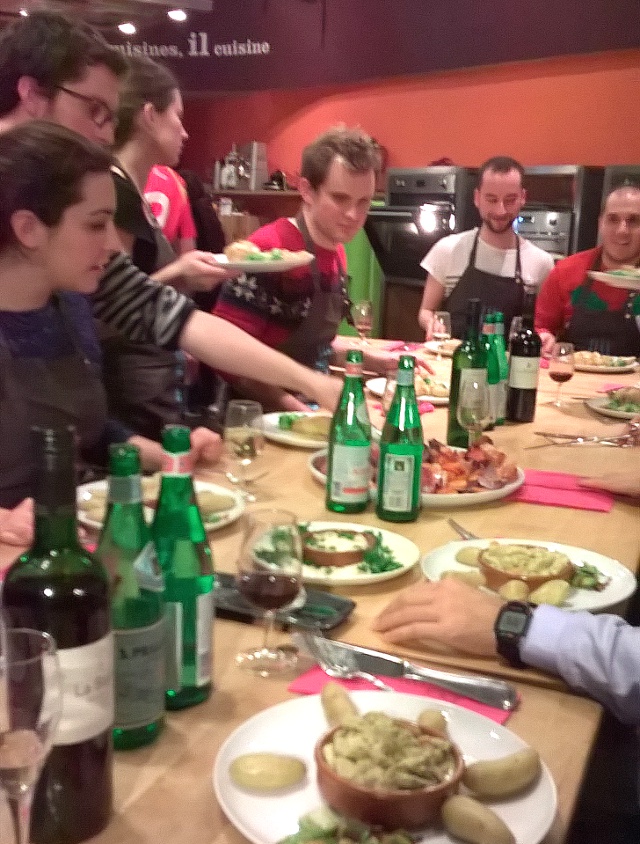
After about twenty minutes we ended up at the brilliant Mmmmh! in Chaussée de Charleroi where we were ushered in to a large professional kitchen and handed aprons.

Photo ECF

Oh yes, it is an episode of Masterchef and in our teams we have an hour to invent and cook three dishes.

What a laugh. Even the self-confessed non-cooks chopped and stirred with vigour, perhaps encouraged by the free flowing wine.

Photo Kevin Mayne

And due respect, we found out that we have some superb cooks on the team, there wasn’t a failed dish on the table.

Given that a group of cyclists can often resemble a plague of locusts, devouring its own body-weight in food in a day this could be the perfect cycling outing.

In the British version of the TV show Masterchef there are two lead presenters who regularly shout lines at each other like “Cooking doesn’t get tougher than this!” I can only say “Christmas, cooking and cycling – combined. It doesn’t get any better than that!”

Photo Kevin Mayne

“Roads were not built for cars” – Book review. Essential reading for cycle campaigners and a chance to unravel some myths and legends

I have written this review in two parts. The first is what you might call the “official review” which I have given to the ECF web site for our cycle campaigning community. It should appear on ECF.com shortly. But reading it I discovered some interesting content relating to my past role at CTC, the UK cyclists’ charity which prompted me to add some additional reflections which I have added here in my personal blog.

The “official review”

Anyone wanting a comprehensive review of how our roads entered what we might call the “modern era” should look no further than this highly enjoyable read from British cycling journalist Carlton Reid. He has taken an investigation of the role cycling played in road modernisation in the late 19th and early 20th century and extended it to cover the origins of road construction, the engineering of cars and how this period of change was influenced by politics, business and social class.

This is also very much a book for campaigners. It is the most thorough examination I have read of how the battles for influence were fought by cyclists and motorists across the Victorian and Edwardian period, particularly in the UK and the USA. From a modern perspective we might assume that these were battles between driving and cycling lobbies but the book is fastidious in showing that for much of this period these were often the same people fighting to improve the roads for both modes of travel.

But Carlton is happy to call himself a revisionist. He does have a clear mission in this story. This book wants to reclaim a piece of history on behalf of cycling, correcting the way that the motoring lobby subsequently grabbed the road space and made it a “space for cars”, especially Henry Ford’s later claim that it was the motorists that created modern roads. This makes the book essential reading for modern campaigners who are challenging some of the attitudes and values from that period almost 100 years later. For many ECF members and supporters we can trace our roots back to those early campaigners in the Cyclists’ Touring Club (today’s CTC) and the League of American Wheelmen.

The great pleasure of the book is that the reader can almost sense Carlton digging away in libraries and on line and uncovering gems that he just had to share. The role of cycling in the design and manufacture of early cars. The business tactics of the early cycling and motoring companies. He is particularly good at discussing the personalities of the period and their influences from pioneer roads campaigners like Rees Jeffreys to businessman Henry Lawson. There is a whole chapter on ten of the key names where one can sense the journalist in Carlton almost interviewing them to find out their cycling origins and how it influenced their careers.

This book must be regarded as essential reading for anyone with an interest in cycling advocacy even if it is mainly focussed on the UK and the USA.  Perhaps it leaves the door open for new chapters from contributors in other countries to add their story in later editions.

To buy an electronic copy of “Roads Were Not Built for Cars” go to the book’s website.

Some extra personal thoughts

A few weeks ago I reflected on this people who came before me in my role as Chief Executive of CTC, the UK’s cyclists’ charity. On that occasion I was considering how I would have reacted if I was at the Club during the First World War when cyclists were being encouraged to join the Cyclists’ Regiments.

A few days later I read Carlton’s book which triggered other thoughts about how CTC’s leaders reacted at various times in the history of cycling, and how we see them with the benefit of hindsight. The Club was a key player for most of the period of the book and its Council members and staff populated many of the campaigns and activities, something that still makes me enormously proud.

This meant I paid special attention to the CTC figures in the book, especially two who filled the same post as me, Secretary, the position which became Director and then Chief Executive. When people want to critique anything CTC is doing their names are dragged out as examples of what the current generation might be doing wrong. What was really interesting to me was how Carlton’s neutral eye balanced some of the myths we have built up around these two inside and outside CTC.

Ernest Shipton was Secretary from 1883 to 1907. As “Roads Were Not Built for Cars” points out it was very common for our leaders of that period to be as passionate about cycling as motoring and Shipton was no exception. He was a founder of the Automobile Club, later to become the Royal Automobile Club.

He is largely remembered by cyclists as the man who engineered a vote at the 1906 CTC AGM to allow the Club to admit motorists. This decision was overturned at the high court despite Shipton’s evidence that cars had made cycling no longer attractive and the Club needed to change. Within months of the court decision he had left his post and his 24 year career is only remembered in one line – the man who tried to turn CTC into a motoring organisation.

In the other camp during that debate was George Herbert Stancer.  He was already an influential figure as editor of Cycling, one of the biggest magazines of the time (and still around today as Cycling Weekly). Several years later he became Secretary of CTC, taking on a position he would hold for over 30 years, then continuing as President until 1964. To many in the Club (including me) GHS is the man who probably did more than anyone else to reform cycle campaigning as a defence against the encroachment and danger of cars. His predecessors fought for road improvement as equals, but by Stancer’s time as Secretary motorists dominated the politics of transport.
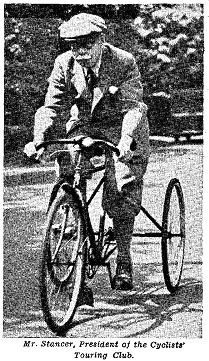
George Herbert Stancer GHSThe classic Stancer photo is an elderly GHS on his beloved tricycle, but the younger Stancer was altogether something more formidable. He is almost our Churchill, fighting back with his speeches, thunderous editorials and fierce letter writing. And like Churchill such strong opinions made him a divisive figure.

I have been told numerous times by people outside CTC that the Club in the 1930s sold UK cycling down the proverbial river, in particular by its opposition to cycle paths. Within days of becoming CTC CEO in 1998 I was told by one of the most influential figures in UK cycling that if it wasn’t for Stancer and his colleagues the UK today would have a network of cycle lanes as good as any in the Netherlands. “CTC has a lot to answer for” I was told.

“Roads Were Not Meant for Cars” does a lot to balance those myths and legends about Shipton and Stancer.

Shipton may be damaged goods inside CTC but the book makes it clear that his views were mainstream at the time, nearly all the leading motoring figures had cycling roots and this golden period of “Road Improvement” they represented both modes on committees and campaigning bodies. CTC members voting 5:1 in favour of admitting motorists suggests he was in touch with the feelings of his constituency inside CTC too. In that context his actions look a lot more rational.

Stancer too benefits from a detailed look at the situation faced by CTC in the 1930s. In particular the book has a detailed account of the now notorious Alness Report, published in 1939. This committee of Lords was stuffed with pro-motoring figures which made it impossible for the cycling witnesses to make any progress. However for many a belief that Stancer’s statements to the committee that cyclists didn’t want cycle lanes is a damning critique that undermines his place in history.

The story looks very different in this book. Seeing the wider content of that report I realise now just how much the concern of the day for the cyclists was whether they should be removed from the roads entirely to allow speedier passage of cars.

“In evidence given to the Alness committee, CTC officials had stressed that the main objection was to the quality of cycle paths and not just the principle of being able to continue riding on the carriageway, the hard-won right of cyclists since 1888. The CTC feared that legislation would be brought in that would make it compulsory to use cycle paths even before a useable network had been built, and that, going by the poor provision of paths in the previous five years, there was little likelihood that the paths of the future would be of decent quality.”

“witness after witness – from surveyors to arch motorists – attested to the dire nature of England’s experimental cycle paths but, apart from cyclist witnesses, most wanted cyclists to be forced to use the paths.”

At the end of this section of the book is an exchange from the report which should probably be printed out and stuck to the wall over the desk of every construction engineer, cycling official and cycle advocate in the world.

Earl of Iddesleigh:

“If we could enable you to avoid the great motor roads and provide for you really satisfactory roads on which you would not have to compete with a great deal of fast moving traffic, there would be a gain in enjoyment?”

Stancer:

If it were possible to provide facilities that are equal to those that we enjoy now, with the additional advantage that they would not be shared by motorists, I think that cyclists would have no objection …

Earl of Iddesleigh:

Are the two grounds upon which you are against cycle tracks these? First, because the cyclist insists on his abstract right to the use of the highway, and secondly, because it is less pleasant to use a cycle track than a highway?

Stancer:

The second one you have mentioned is far more important. Cyclists would never insist upon their abstract rights if it were not that they are losing the chief pleasure of cycling by being forced on to the paths. If the paths are by any miracle to be made of such width and quality as to be equal to our present road system, it would not be necessary to pass any laws to compel cyclists to use them; the cyclists would use them.

I have to say that even today it is very hard to disagree with GHS. Nearly 80 years later I am living in a country that has cycle lanes such “width and quality” in parts of Flanders that it is indeed unimaginable that we wouldn’t use them. Sadly we also have some parts of the country where the lanes are so bad they are almost unrideable for most of the year. The use of both is compulsory.

But most of all I thank “Roads Were Not Meant for Cars” for bringing a thoroughly researched narrative and a clear context to those debates. Shipton and Stancer may have been made decisions that are not judged well by some in cycling today. But this well balanced narrative suggests that they were doing what they thought was right in the norms, the knowledge and the resources of the time.

I am sure things we campaigned for and against in my time at CTC will look very different in the year 2114. I can only hope that we have a narrator like Carlton Reid to disentangle myth from legend when the time comes.

A day at the Ghent 6 day cycle race – cycling as pure entertainment

Photo Kevin Mayne

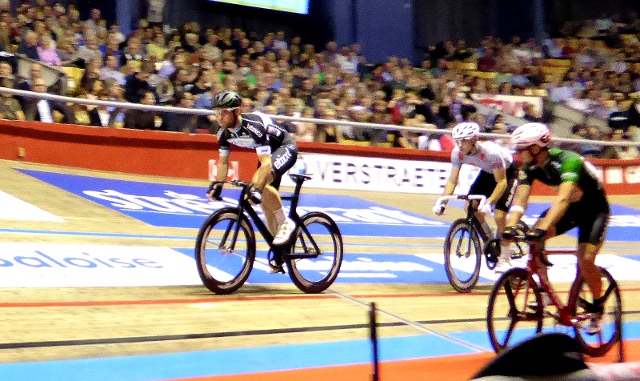
I have completed my hat-trick of watching Flemish cycling. First the cobbled classic one day races. Then the muddy delights of winter cyclocross. Now I have completed a long held ambition to go to the Ghent 6 day cycle race, possibly the most celebrated track race in the world.

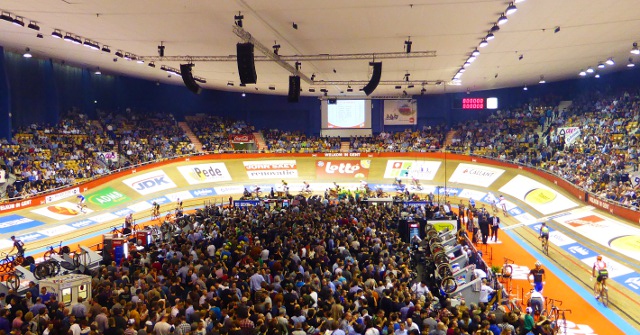
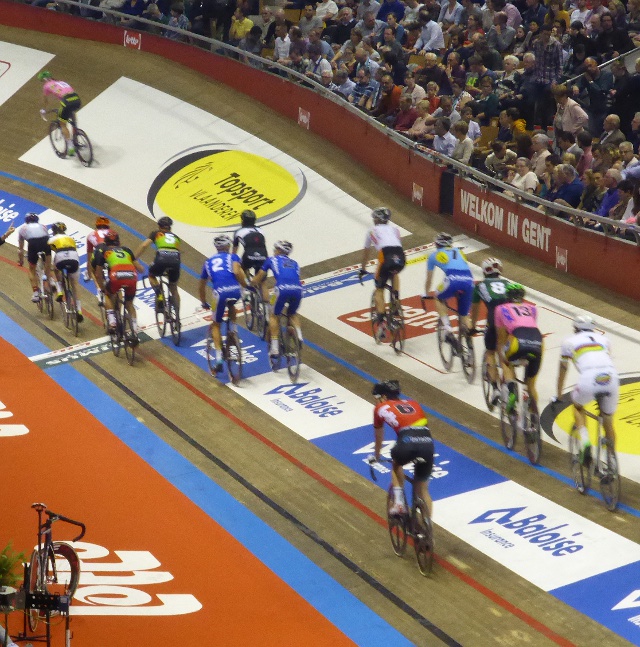
Modern 6 day racing is six hours of cycle racing per day on an indoor banked velodrome where teams of two riders compete to cover the most distance in a series of team races and other events. In between the elite races there is an undercard of promising under 23 riders and top women track riders, each with their own series. It is a spectacle that combines fast and furious bike racing with a touch of professional wrestling. Music, lights, colourful costumes, man to man combat, speed and risk. In short, cycle racing as a variety act, but with real speed and strength too. Not surprising that it is loved by the Flemish, cycling’s most passionate fans.

Photo Kevin Mayne Photo Kevin Mayne

British fans have been starved of a home 6 day cycle race since 1980 so a weekend in Ghent has become a favourite weekend break for many club riders over the last 30 years, although as Ghent has been the spiritual home of British and Irish riders breaking into the continental scene since the 1950s there has been a British cycling presence at the racing for many years longer.

Today this is a European spectacle that provides winter entertainment for cycling fans in traditional cycle racing countries but its origins are largely American. A few individual six day challenge races took place in the 1870s in Britain.  But the breakthrough was in 1891 when six day races were started in Madison Square Gardens in New York and became a big money spectacle that stayed popular right through to the Second World War. These also started as individual challenges with riders competing round the clock for six days, reducing them to shells by the final days. They would stop and sleep as little as they could to maximise distance, but apparently it wasn’t much of a spectacle towards the end. Organisers then realised that two man teams would enable the riders to be competitive for a whole week and the six day format was adopted to avoid racing in Sundays.

Within this format the unique spectacle of tag racing with both team members on the track at the same time was devised. While one races the second rests for a few moments, then when they catch each other the speeding rider transfers his momentum to his team-mate by means of the handsling, one of the most distinctive manoeuvres in cycling. It is made all the more amazing because the riders do it with up to 30 riders on the track, at 70kmph with riders going in all directions. It is difficult to describe in writing, trying to portray a manoeuvre like a bunch sprint in a road race, but just as half the field is going forwards at full speed the other half are slamming on the brakes – and they almost never crash.

Photo Kevin Mayne

This racing format has been known in English as the Madison ever since, or the American in French.

The format with racing round the clock continued until the seventies with riders getting up to all sorts of antics while the crowds were not watching. It is sure that this was also a hot-bed of drug assisted riding because the riders were expected to perform to demand no matter how they felt.

In the late sixties a rebellious organiser called Ron Webb started running the London Six Day race on a new format with just afternoon and evening racing in an entertaining format. The other organisers said it wasn’t a proper six day race but the formula was popular with riders and the public so it stuck and today the few remaining “sixes” all use the same format.

And that’s what I wanted to introduce my son to, just as my dad took me down to the London sixes in the 1970s. We decided to take in the final day of the six and the special atmosphere of the track centre where the racing swirls around a boisterous crowd who were hitting the bars with enthusiasm.

Photo Kevin Mayne

It is an intimate scene, the crowd and the bars are pressed right up against the riders and support staff. The elite riders get tiny cabins to hide in, but the staff, women and under 23s are forced to do everything in public.

Photo Kevin Mayne

Photo Kevin Mayne

Photo Kevin Mayne

As Brits we were especially spoiled because not only were we there to take in the atmosphere this year we had some British talent to support. Early in the evening we saw young riders Matthew Gibson and Christopher Lawless won the Under 23 continuing a tradition that includes a certain Bradley Wiggins.

Photo Kevin Mayne

But the star turn for me was Mark Cavendish. He is super popular in Belgium, not just because he rides for Belgian team Omega Pharma Quickstep but also because he respects the traditions of the sport and rides in a way the Flandrians can respect. Photo Kevin MayneHaving an elite road rider of his reputation riding their six day was a huge coup for the organisers, a throwback to the sixties when riders like Eddie Merckx mixed it with the track specialists. Cav was paired with his Flemish team-mate Iljo Keisse, hugely popular himself with the Ghent crowd for his five previous wins in the event.

Great news for us was that as we came into the final day four teams were still in contention including Cavendish and Keisse, but they were up against wily local experts Kenny de Ketele and Jasper de Buyst. De Ketele and De Buyst had a strong lead in the points competition, scores picked up throughout the week in the supporting competitions. That meant Cavendish and Keisse could only win overall if they finished a lap ahead of their rivals, a result that could only be achieved by lapping the whole field more times than their opponents during the Madison races.

Photo Kevin Mayne

So the scene was set, and the racing was brilliant. All four leading teams went at it hammer and tongs in the two madisons of the evening, reducing the other seven teams to supporting roles. We stood in the middle as they swirled around us in dizzying flashes of lycra and chrome, trying to keep track on move and counter move.

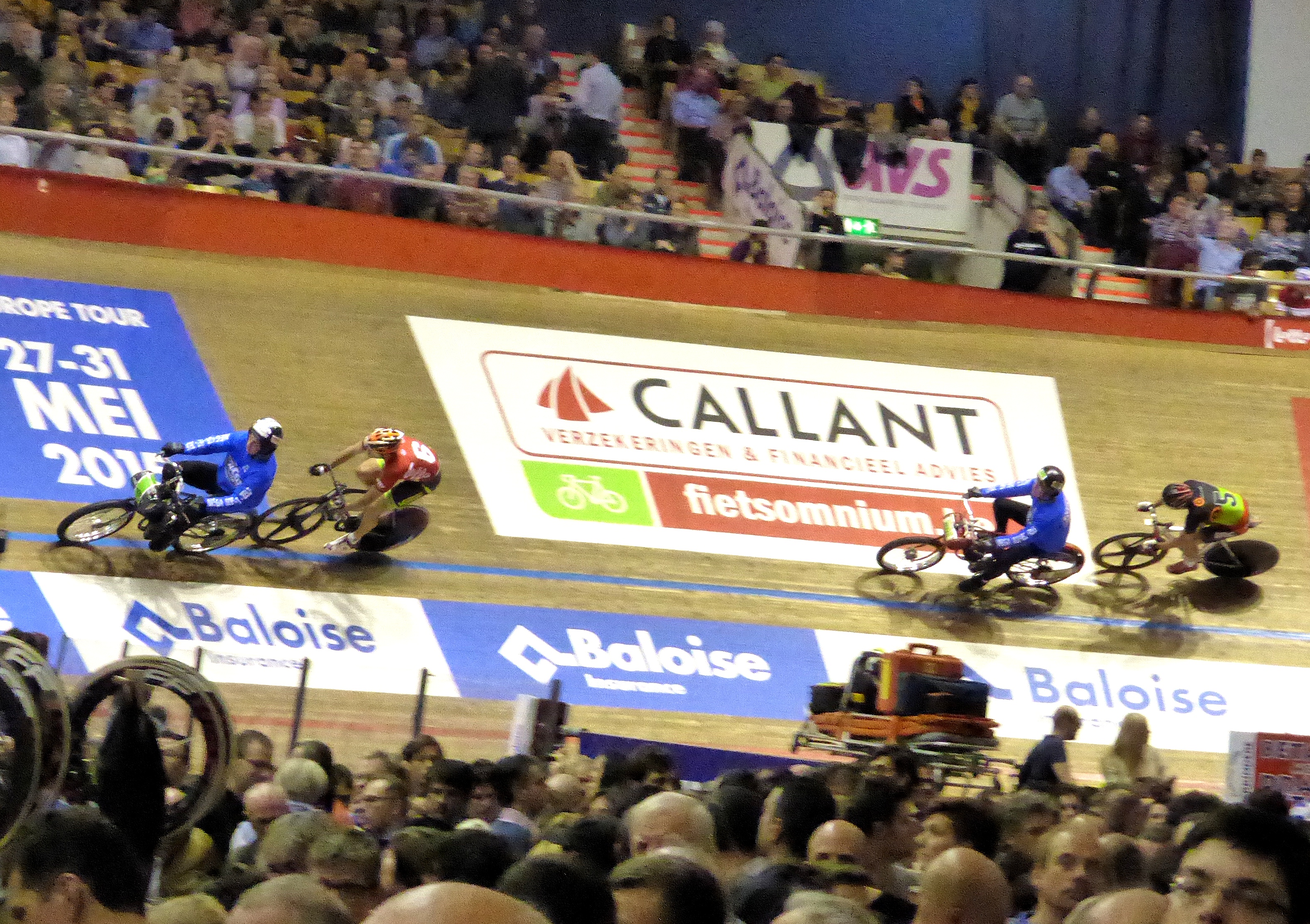
When they were not doing the madisons they were battling it out in the other staples of six day racing, formats designed to entertain. Sprint races were accompanied by rock music countdowns that saw the teams race off against the clock for the fastest times. Only six teams at a time were allowed up on the track for the legendary denys, racing behind motorcycles, a scene that needed no musical accompaniment because the motors roar to a crescendo when the final laps hit full speed.

Photo Kevin Mayne Photo Kevin Mayne

My personal track favourite has always been the elimination race. But who gave it the boring name? When I started going to grass track races as a kid it was always the “Devil”, or officially “Devil take the hindmost”. Who couldn’t love a race with such a great name, each lap the last rider across the line is eliminated until just two are left rolling. It was always a crowd pleaser, especially if at last one of the riders decides to play the crowd pleasing role of hanging around the back and sneaking up on the rest just as they cross the line.

In the end Cavendish and Keisse battled almost to a standstill taking lap after lap but at the very end they were marked out by De Ketele and De Buyst who sneaked away for the win by the narrowest of margins.

Photo Kevin Mayne Photo Kevin Mayne

What a great day’s entertainment, we thoroughly enjoyed it from start to end. Flemish cycling delivered once again, there really cannot be a better a better place to be a bike fan.

A visit to the War Memorials of Ypres and Tyne Cot – places of remembrance and reflection.

Tyne Cot Graveyard Flanders

Prompted by the arrival of Armistice Day in this 100th year since the start of World War 1 we visited the Flemish town of Ypres (Ieper), at the heart of commemoration of the war for many British and Commonwealth countries because of its position close to some of the bloodiest battles of that war.

This blog post has emerged in two parts. There is the tourist report of Ypres itself and one of the Commonwealth war cemeteries as part of my “Life in Belgium” series.

But this was a very moving experience and I was reflecting on why in particular this has such a different effect on us compared to other military history we see all over Europe, whether it be castles or ramparts or the Waterloo Battlefield close to where we live.

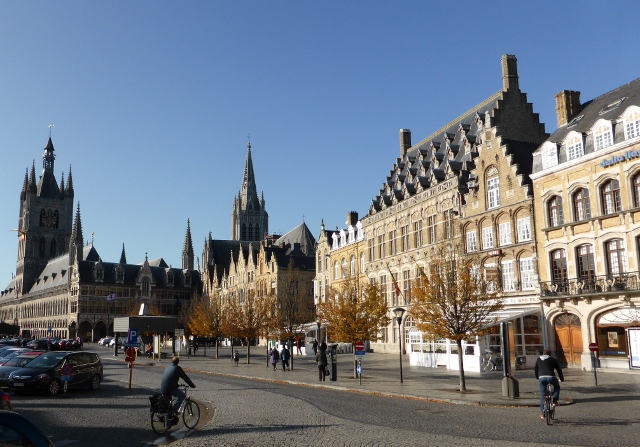
Ypres unveils itself slowly. Coming in to town it is a typical Flanders market town with its solid brick houses set into gently rolling West Flanders farm landscapes. It has the expected grand square with a gothic looking town hall and church spires.

Photo Kevin Mayne Photo Kevin Mayne

There were many groups over from the UK and other countries but the town was not too busy on a chilly November morning.

However a visit to the “In Flanders’ Fields” museum in the town hall brings the whole scene into a sudden sharp perspective.  In the museum are the photographs of the town as it was in 1918 after it was the centre of no less than five major offensives of the First War. This left it ruined and deserted by civilians. Everything we could see on the streets around us has been reconstructed since then.

Copyright free from National archives

Winston Churchill, then Britain’s First Lord of the Admiralty, suggested at the end of the war that the whole town of Ypres should be left as a permanent memorial to the dead. But in a triumph of human resilience the residents of the town started moving back to their homes and farms the first winter after the end of the war and started rebuilding which meant that Winnie’s idea had to be scaled back to a memorial and the town’s major buildings were rebuilt to match their heritage.

Photo Kevin Mayne

There were great views from the bell tower of the town hall which showed the layout of the town’s old street pattern and way out across the Flemish countryside. Old juxtaposed with new in the form of windmills out in the industrial areas.

Photo Kevin Mayne

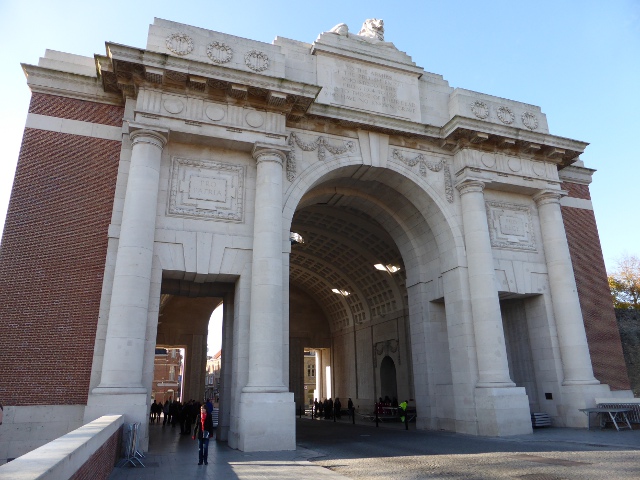
From this high vantage point there is also a clear view of the main centre of memorial for the city, the Menin Gate. The town had historic outer walls and the gate towards the Menin Road was where many troops left the town to travel to the front. So it was chosen as the site for the main memorial after the war. From a distance it is a relatively flat, plain structure built into the restored ramparts.

Photo Kevin Mayne

Photo Kevin Mayne

Only when passing under the arch into the main hall does the impact of the arch take shape.Photo Kevin Mayne

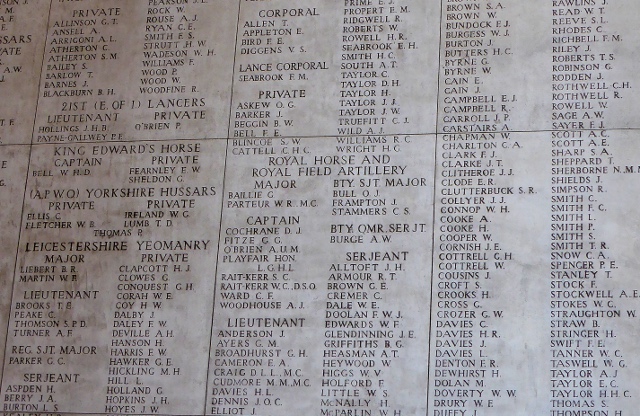
On it are carved the names of nearly 55,000 men whose bodies were never found.

Photo Kevin Mayne

The impression of the main hall was impactful enough but then we realised the names carry on through side arches and up onto a second set of balconies that run around the outside of the arch. Photo Kevin Mayne

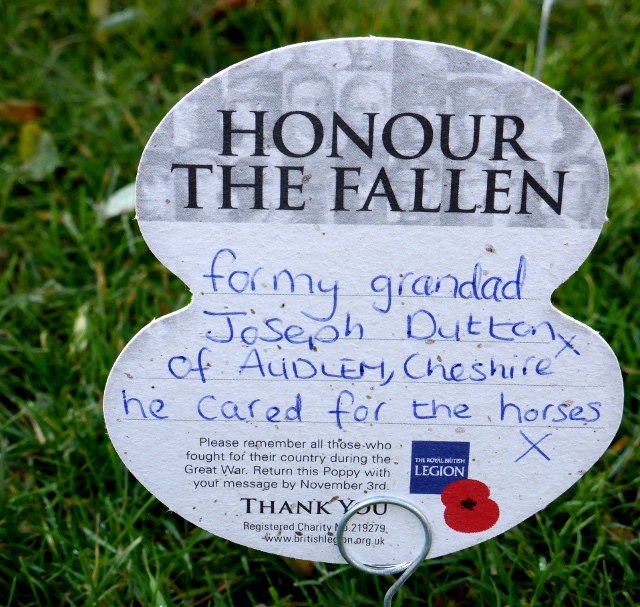
Then up on the ramparts there was a field of memorial poppies which had been left by visitors. Written on each was a personal message, many of them to lost relatives.

Photo Kevin Mayne


Photo Kevin Mayne

By the time we got to that point we were feeling overwhelmed and extremely subdued. For me I think it was the way the names were listed regiment and country. This means you can really see just how many men were missing from one area. For me it was the Norfolk and Suffolk regiments that I looked for but it could equally have been Surrey, Lancashire, Yorkshire, Australian states or Canadian provinces.

Photo Kevin Mayne

From Ypres we decided to head outside the town to visit the largest of the actual war graves in the area at Tyne Cot, a low hill about 10km from Ypres, close to one of the other most evocative names of the period – Passendale.

Photo Kevin Mayne

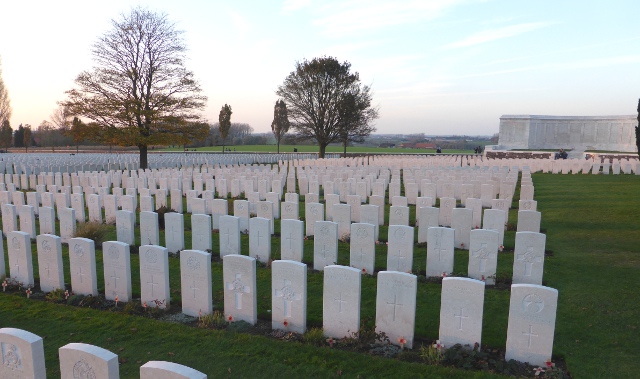
Tyne Cot is the largest Commonwealth war grave and is particularly significant for Australians and New Zealanders. The cemetery was originally created for a few hundred graves in an area captured by Australian and New Zealand troops in 1917. After Armistice in 1918 many other graves were consolidated there, with nearly 12,000 now on the site. Of these almost two thirds are unknown, identified only by their country and the words “Known unto God”.

Photo Kevin Mayne

As if that were not enough Tyne Cot is the memorial for the missing names that could not be incorporated in the Menin Gate memorial due to lack of space and because the New Zealand memorial is here. From the cutoff date of 15th August 2017 at Menin Gate to Armistice Day a further 34,000 men died without their bodies being found, an incredible number.

Photo Kevin Mayne

We were there in the late afternoon as the sun began to set over this most poignant of locations bringing a sharp highlight to the shapes of the graves. The spires of Ypres were just visible on the horizon.

Photo Kevin Mayne

We drifted home in quiet reflection. But in the following days I was still mulling over what we had seen. As I said at the start of the blog nobody with an interest in European history can miss the military history that surrounds us. Belgium is a really special case, the anniversaries of WW1 and the Battle of Waterloo made it one of Lonely Planet’s best in Travel 2014.

But within this setting the First World War memorials and commemorations just seem to be different. It seems that the huge loss of life in the fixed trenches with only small gains on either side somehow established the “the pointlessness of war” as a concept, especially as this war could be attributed by many to an imperial game rather than a war of liberty or values. The emergence of the War Poets and other writers who were not afraid to tell the story of the horrors tells us that values were changing.

And from these different attitudes to war came a different attitude to the dead, lost because of the failings of the leaders and the murderous nature of the new weapons of 20th Century warfare. In individual 19th century battles the numbers of dead were enormous – 65,000 killed in one day at Waterloo alone. But after WW1 we put up war memorials in every town naming the men who died individually and at Ypres there are no statues of generals, the memorials carry the names of every man, there is a grave for every un-named soldier. And like the war memorials at home they have a location through their regiments which in those days were locally based.

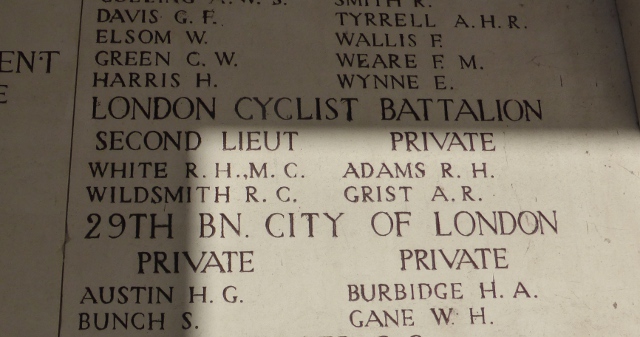
I didn’t have any relatives that I know of in the First World War dead, our histories haven’t turned up the family stories that we saw on the poppies in Ypres. So which entries at the Menin Gate left me blinking back tears?

Photo Kevin Mayne Photo Kevin Mayne

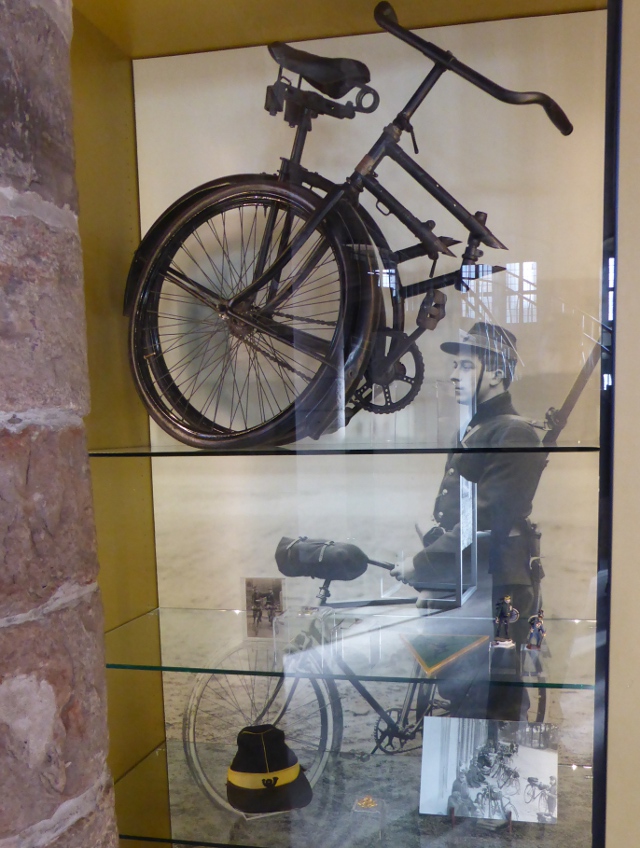
The Army Cyclist Corps, the London Cycling Battalion. Two of the smallest entries on the memorial. There were cycling regiments in various forms in most of the armies with the British having 14 regiments by the start of the war. They didn’t see much service at the front because they were valued as couriers and support troops, but clearly they were close enough for many to be killed and lost around Ypres. Belgian cycling troops were represented in the photographs in the Museum.

Photo Kevin Mayne Photo Kevin Mayne

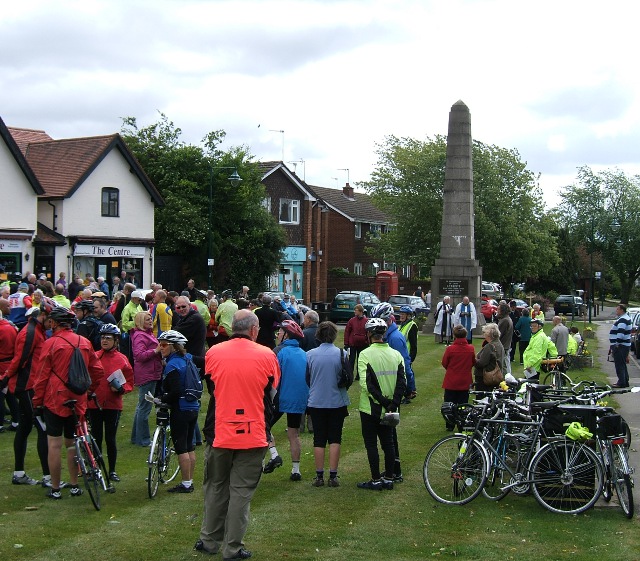
Of course it’s personal because they were identified as cyclists. But it goes deeper than that. I know the role that the Cyclists’ Touring Club played in recruitment of these soldiers throughout the war, encouraging active cyclists “to do their duty”. One of my private hobbies while I was CEO of CTC was to wander to our archives and seek out historical references in our 130 year old library of CTC magazines and I have read many of those articles that were actually written by my predecessors. Whenever I could I went to the annual service at the Cyclists’ War Memorial at Meriden, a very special place in the history of cyclists at war. When it was unveiled in 1921 over 20,000 cyclists came to the service.

Photo Kevin Mayne

But having been exposed to that history I just could not walk away from those memorials at Ypres without thinking “what would I have done?” As someone who recoils from modern warfare I feel deeply uncomfortable about militarism and wars as a symbol of nationalism. It is challenging enough to wonder whether I would have fought at that time in that culture. But to have played a role in sending people from our club into the war is unimaginable. It hit me with force that day in Ypres as I saw the names of those missing men and it still plays on my mind as I write this.

The battlefields and memorials of Flanders are an interesting and thought provoking visit. I am sure we will return, as will the questions.

For more on cyclists and CTC in WW1 there are some links here, here and here.

There is a very good podcast to download here

The mind is willing, but the flesh is weak – summary of today’s bike ride. Good job it was a lovely day!

In my mind’s eye I jumped out of bed this morning to knock a quick three hours of enthusiastic riding and to test a replacement winter bike.

Completely separately my body announced that it was willing to tolerate 2-3 hours of gentle touring but foolish notions of energetic prancing about were not going to be tolerated.

This message was delivered about 200 metres from our gate when I hit the first short stretch of cobbles that marks the edge of the village.

Photo Kevin Mayne

It is a good job it was a lovely day. Stunning views from the Chapelle du Try-au-chêne above the valley of the Dyle at Bouseval. And the bike rode well.

So never a day wasted.

“If you only have one day to ride you take what comes”. A stormy ride to Valetta, Malta

Gallery

This gallery contains 25 photos.

It is hard to identify what the symbol of this bike ride should be. One of the many broken umbrellas littering the ground? The cars driving through flooded roads? Or just about any blurry photo with rain on the lens … Continue reading