My Eurobike hotel room – in Weingarten Abbey, Church and Shrine of the Holy Blood, Weingarten, Germany

One of the great pleasures of travel is when you are given a totally unexpected treat.

I have just spent the week at Eurobike, the great bike industry frenzy at Friedrichshafen on the banks of Lake Constance. That in itself is a bike lover’s indulgence of which there will be more later. But this year I got a bonus.

As far as I knew our German colleagues had booked us into some sort of college near Ravensburg which was offering a good package for the week. I thought no more of it, and I had certainly not checked anything other than the directions when I arrived at Ravensburg train station.

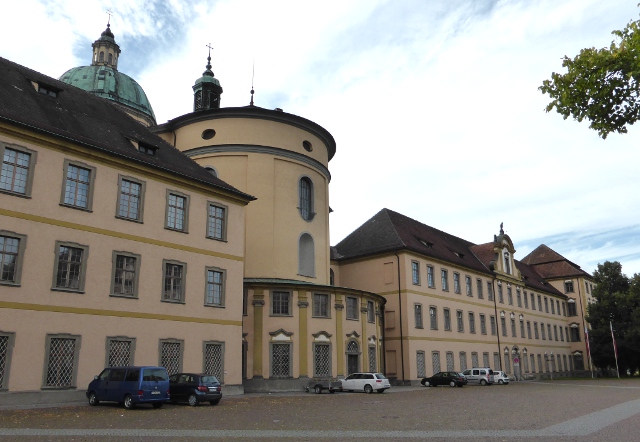
When the taxi driver pulled up on the forecourt of a huge church complex overlooking the neighbouring town of Weingarten I was quite convinced I must have misread something, until I was warmly welcomed at the Conference Centre in the Benedictine Abbey and Basilica of Weingarten, the largest Baroque church north of the Alps and an important religious site for over a thousand years.

Photo Kevin Mayne

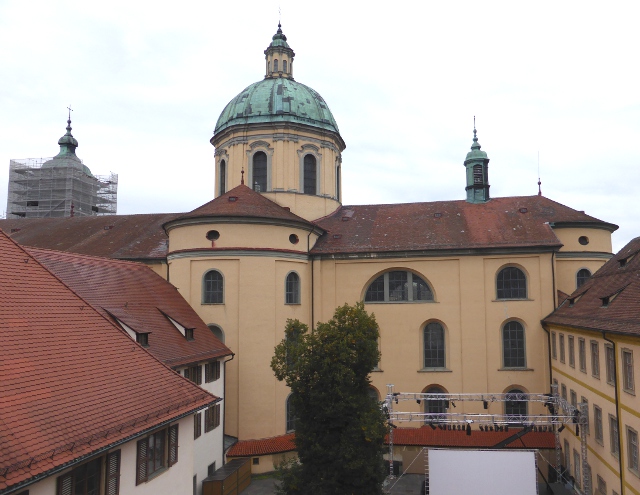
One wing of the former Abbey is now a training centre and conference suite for the Diocese. So that is why I found myself throwing open my room window to discover I had a view over a courtyard and the great dome of the Basilica, nicknamed “Swabia’s St Peter’s”. It may have been a bit cloudy and gloomy but the setting lifted me up after ten hours of train travel.

Photo Kevin Mayne

The next evening after work I was able to wander the grounds and discover more about where I had ended up, especially with the help of a little guide book I bought in the Basilica.

Photo Kevin Mayne

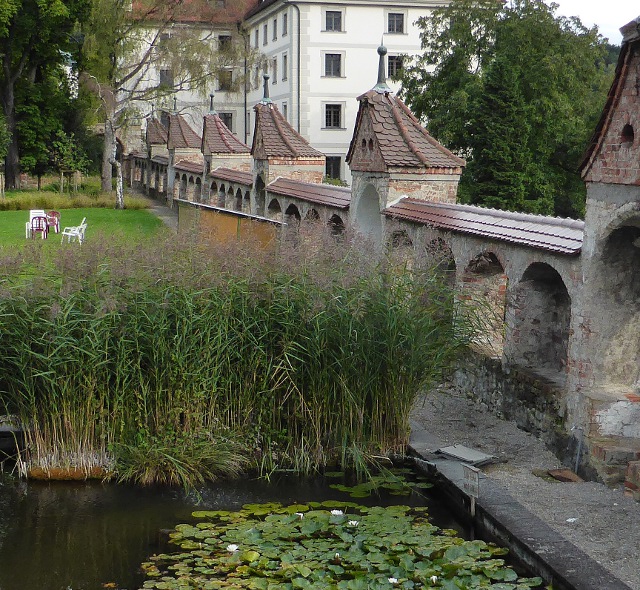
It was hard to step back far enough to get a clear view of the buildings because they were constructed on a huge scale and the Basilica itself was flanked by two large wings, each around a courtyard which would have formed the cloisters of the abbey when it was at its peak. From ground level this inner perspective was of one of somewhat severe and austere walls, probably not what it was like before its final phase of building in the 18th Century.

Photo Kevin Mayne

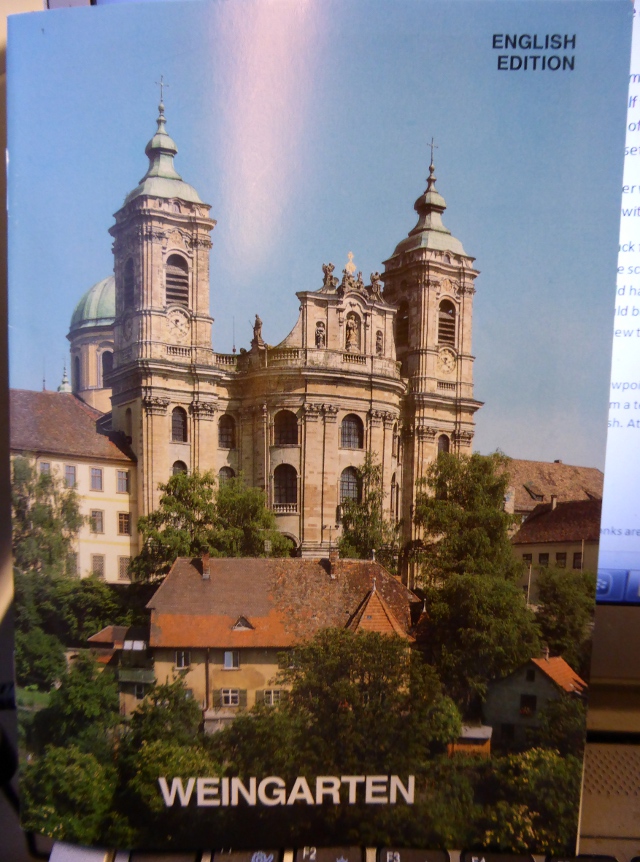
Photo Kevin MayneThe only way to see its original style and scale properly was looking up from the town below. Unfortunately ugly restoration work and grey weather deprived me of that view this time so I had to rely on the image from the guide book to help me imagine it.

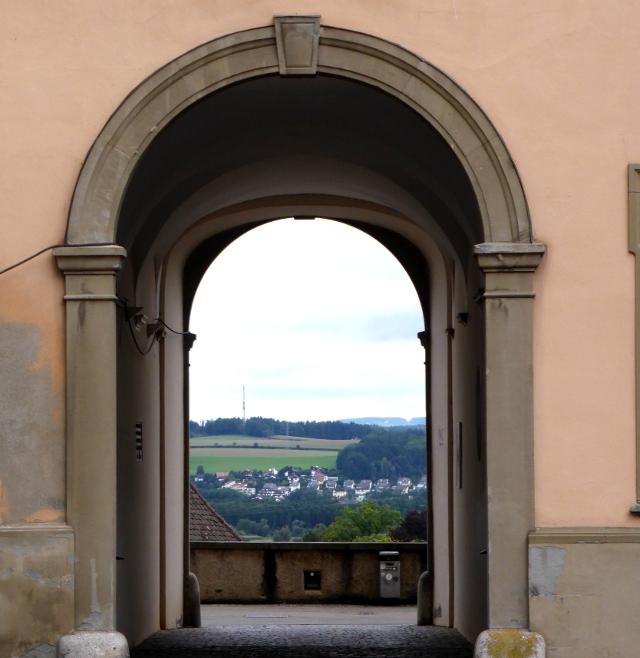
Looking out from that viewpoint at the front of the church I did have an excellent view down over the town itself, looking from a terrace that has been planted with vines to recognise the town’s name – “Wine garden” in English. At dusk groups of young people gathered here to chill out, have a beer and watch the sun set.

Photo Kevin Mayne

Photo Kevin Mayne

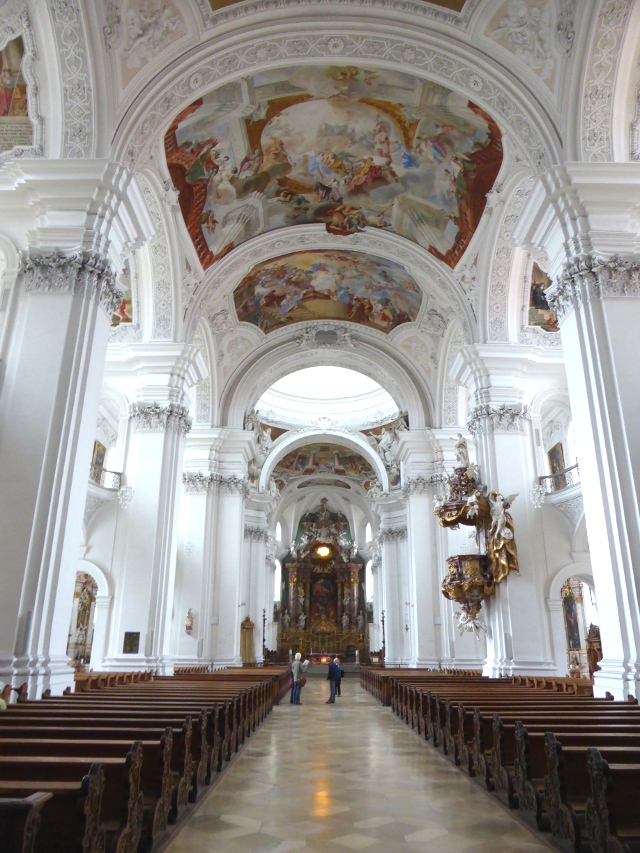
Inside the Basilica there is a totally different perspective. Firstly I could really sense the scale which I had found it hard to identify from outside. Apparently it is over 100 metres long and the dome goes up over 60 metres.

Photo Kevin Mayne

And there was certainly nothing plain about the inside, the white masonry made it seem light and bright and contrasted with the splashes of gilding and paint in all the alcoves and up onto the ceiling.

Photo Kevin Mayne

I have no particular religious affinity with any of the churches and temples I visit when I am travelling but particularly in Europe these buildings are a vital part of our landscape and heritage, it was a rare treat to be able to say I was staying in the “spare room” at the Weingarten Abbey.

There is however a footnote to my tale.

One of the nice features of my first night was to see the courtyard in front of my room being used as an outdoor cinema for the town, a great setting with a nice atmosphere, towers above and bats flitting around. It is apparently a summer season feature of Weingarten and a nice symbol of the multi-functional use of the complex by the regional government who now own it.

Photo Kevin Mayne

But the volume was incredibly high and I did wonder to myself just how long they might be going on when I wanted to go to bed. It was nice when it stopped, but only then did I appreciate that the cinema sound had to overcome the church bells which rang out every 15 minutes. We had a discussion later amongst our group whether they actually continued all night; the lighter sleepers were convinced they did. From the third floor, not so far from the bell tower itself I can categorically say they chimed 12 times at midnight and for sure they were going again at 5.30am.

I think we have to assume that the bells are part of the setting. Personally I am not complaining, but I am not so sure about some of the others!

Further post-script – last year’s accommodation wasn’t bad either – this is a great area to visit. Click here for more about my stay in Ravensburg.

Flanders cycle tour day 3 – Bicycle Paradise.  Geleen, Maasmechelen, Hoge Kempen National Park, Genk and Hassalt.

Gallery

This gallery contains 17 photos.

I keep wanting to write that that this trip was a “Tour of Flanders”. However the cycling traditionalist part of my brain keeps telling me that the name Tour of Flanders is reserved for Ronde Van Vlaanderen the great one … Continue reading

Day 2 of our Round Flanders Cycle Tour: “A tale of two Limburgs – Belgian and Dutch” From St Truiden to Tongeren then across the border to Maastricht and Geleen.

Gallery

This gallery contains 21 photos.

Today’s route was multinational. We started aiming to cycle round Flanders but it was impossible to cycle past the famous Dutch city of Maastricht without paying a visit and after that some minor navigation errors saw us spend the afternoon … Continue reading

Cycle touring East Flanders – Discovering Leuven, Hoegarden and St Truiden

Gallery

This gallery contains 22 photos.

This was our first day riding together, very much finding out the pace and rhythm that would suit us both. It was also a really good taste of the Flanders Cycle Route because we were treated to a wide variety … Continue reading

Ingredients for our perfect cycle tour on the Flanders Cycle Route.

Belgium Flanders cycle touring

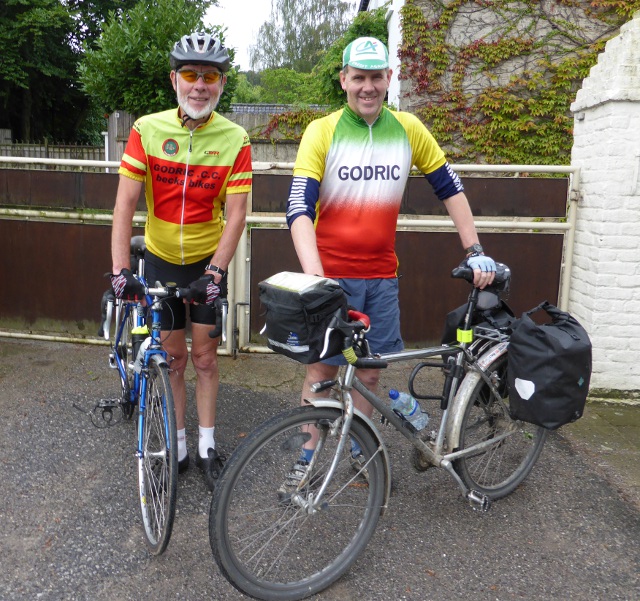
My Dad and I have just returned from three days really excellent cycle touring in East Flanders and its borders with the Netherlands. Before writing up a typical travelogue I was musing on what made it particularly successful.

We have both done a lot of touring over the years and we had a very clear idea of what we didn’t want. We didn’t want the sort of trip where the cycling gets in the way of the touring. Or more probably the cyclists got in the way of the touring, the sort of trip popular with cycle tourists who have a very fixed view of what constitutes a day’s cycling.  I have of course done these rides, and enjoyed them enormously, especially afterwards. The trip where there is a consensus that we are going to sixty miles a day come hell or high water. Or where the organiser has booked hotels exactly xx miles apart in a straight line and we are just going to have to get there, even if we arrive in the dark when the chef went home hours ago. Other symptoms include arriving at a place of beauty and riding straight past because we are behind schedule, or probably worst of all discovering a set menu of exquisite local food for just €15 and going in the café next door because we can see the bikes from there.

Legends are born on trips like that. But that isn’t what we wanted.

We wanted the other sort of cycle tour, where the cycling is a means of exploration and an excuse to spend a few days just chatting and putting the world to rights. And for various reasons we both needed something that was entirely relaxing. As we haven’t actually toured together overnight for many years we also had to work out something that made sure we were on the same wavelength too.

So we compared notes on some important ingredients and then discovered that East Flanders was absolutely perfect recipe for our needs. This was only a relatively short trip, others may indeed set off to cycle round the whole of Flanders, of Europe or indeed the world. But for us it was just right. If the Mayne rules ever help you design a future tour then please feel free to steal them.

1. If the plans get in the way of the enjoyment, ditch the plan.

2. It’s not about the cycling, it’s about the trip. Stop lots. Especially in the proximity of a café. (see 7)

cycle touring in Belgium

3. Don’t go anywhere.

Yes seriously. A few days before we were due to set off I was beginning to worry about where we should go. Maybe the Ardennes, maybe a Eurovelo route? Somewhere by train, car or bike? We need to get out and see some more of Belgium don’t we?

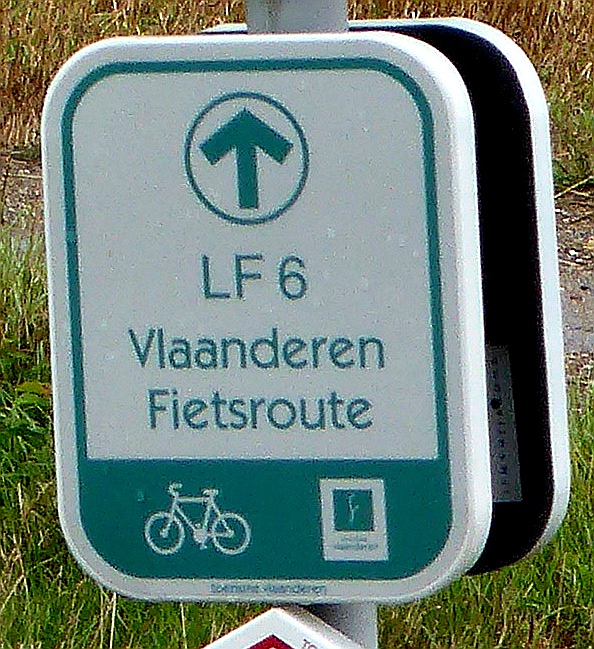
And then a booklet for the circular Flanders Cycle Route which meanders some 800km through the five Flanders provinces sort of fell off a shelf into my hand and I made two important discoveries. Firstly that it passed just 10km from my house and secondly that I hadn’t actually ridden any of the areas in that Easterly direction. So I thought “why bother doing anything else?” It is mapped, signposted and starts on the doorstep. Wherever we end up we can get a train back. Let’s just give it a try.

Flanders cycle route sign Photo Kevin Mayne

4. Distances are to be measured at the end of the day, not set at the start.

This was a particularly successful strategy. I had predicted roughly where we would end up each night based on the straight line distances between some of the towns but we discovered that the winding route added a considerable distance on each stretch so my predictions were way out. But because we had neither planned nor booked anything it really didn’t cause any stress at all.

The wonderful Knooppunt navigation points* help with that too because at each junction you are pointed to the next Knooppunt but no distances are given. So you just potter on to the next number, and then choose a new one depending on how you feel.

Photo by Kevin Mayne

5. If one person is a stronger cyclist than the other – they take most of the luggage and a heavy bike.

Touring bikes for Flanders tour

No equality required. (How many times is it that I see groups of cycle tourists where the person struggling is always overladen and on a heavy or unsuitable bike? Does nobody see how wrong that is?)

6. Ride anything.

Looking back it is actually quite hard to work out a type of road or cycle path we didn’t find en-route. If at any point one of us was a bit bored by the flat or terrorised by the cobbles we found that five minutes later it would change. So there really was no point even commenting. (Much)

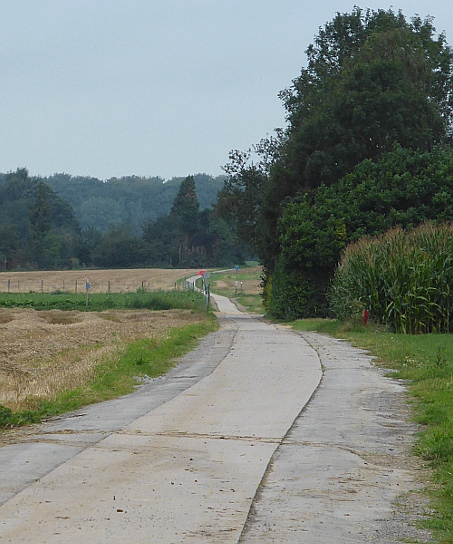
Narrow concrete tracks across farm land and rolling orchards were quite common and delightfully quiet. We followed dirt tracks surrounded by trees and wonderful purple heather.Flanders cycling photo Kevin Mayne Off road cycle route cycling Flanders

Urban cobbles, floral bridges and giant canals with the smoothest, widest cycle paths imaginable.

Photo by Kevin Mayne Photo by Kevin Mayne

Flanders cycle routes

Even a motorway bridge at one point. You have got to love the Dutch, they do build bike paths on an industrial scale!

Cycle route motorway bridge

7. It is always worth ten minutes more at the café.

When one person really wants to go and look at the bravest of the Gauls, the Belgae warrior Amborix whose statue was rather too like comic book hero Asterix to be taken seriously then the other person is equally free to take a second coffee.

Cycling in Flanders

And conveniently on this trip every time we took a bit longer it started to rain, but in this year’s Belgian summer it was soon gone again soon. We rode on a lot of wet roads, but only in a bit of drizzle in the whole 3 days. Very, very lucky.

Geoff Mayne by Kevin Mayne

And finally item 8.

Go home while you are still having fun.

Cycling in Flanders Kevin Mayne

When we set out we didn’t actually decide whether we were going for two days or three. The weather was probably going to be the defining factor, but we both knew that we had to work out whether we were going to enjoy each other’s riding style and the route.

At the lunch stop in Maastricht a conversation took place that roughly said “when are we going to get the chance to do something as good as this again?” and the matter was very quickly decided in favour of the extra day. Unanimously.

*Knooppunt are a system of nodes or junctions on a network of recommended cycle touring roads, paths or route sections.

They are all numbered and you plan your route by selecting a sequence of numbers that you want to connect on a map, on-line or on a GPS unit. The excellent signposting takes care of the rest as each road or trail junction has a signpost pointing to the relevant numbers. They started in the Netherlands, now cover Flanders and are gradually beginning to appear in specific areas of Germany and Wallonia.

Where we went the Dutch and Flemish signs linked up over the border – so useful.

Some more information here.


“It’s the end of the world as we know it. (And I feel fine.)” A special last ride in New Zealand. Thanks to everyone that made the cycling on this trip possible.

Bluff Point sign

So this was the final day of my six weeks in Australia and New Zealand. It has taken me almost that long again to write it all up, but the last day’s ride was so good it feels vivid and fresh right now.

It was not only a symbolic end, I physically reached the end of New Zealand’s South Island, spending my last morning riding on Bluff Hill, a rocky dome of a hill that rises 265 m (870ft) straight from sea level at the very southern tip of New Zealand’s South Island. It has 360 degree panoramic views along the coast, inland towards Invercargill and even to the mountains far beyond. The Maori name for the hill is Motupõhue which means “island of põhue flowers”, because from the sea it appeared to be an island rising before the rest of the land could be seen. Despite its remote location Bluff has a claim to be the longest permanently settled European town in New Zealand, the first trader and farmer bought land off the Maori here in 1824. Today it is still an active port although many Kiwis will be much more interested in the seasonal Bluff Oysters, considered the finest of delicacies and craved by exiles.

I knew about Bluff Hill from my previous trips to Invercargill. Everywhere has a hill like this. The one you have to go and try when you think you have become a cyclist. The local cyclists talk about it in that tone that tells you it is a place of legend. When you are even part way up your legs are burning and you are frantically looking for a lower gear that you don’t have any more. Bluff Hill’s reputation is enhanced because the Tour of Southland, New Zealand’s toughest bike stage race regularly finishes at the top.

Flagstaff Road Bluff New Zealand

However I had never actually cycled there on my previous trips, mainly because it is 25 km south of Invercargill and the access is an open stretch of main road that I had never fancied riding. However this time I was updating my knowledge about what was going on locally when I saw a link to Bluff Hill trails on the Southland MTB Club web site.

Within moments I knew that this was a “must do”. A bucket list item almost. To know I had ridden on what is possibly the most southerly set of planned and maintained mountain bike trails in the world? To ride up above the countryside and sea and take in the landscape at this unique place. To know I could spend an hour or more playing on good mountain bike trails rather than just head-banging down a main road. You bet I was going to try and go there.

I hadn’t really planned on it being the last day but that is the way that time escapes on a short visit. So to maximise family time and get in my special ride I compromised and got up at 6am to drive my in-laws’ car out to the foot of the hill, ready to ride at first light.

Bluff Hill Flagstaff Road in the dark New ZealandThat part of the plan went perfectly. Too perfectly. I arrived just as there was a glimmer of dawn on the far horizon, but I couldn’t actually see a yard in front of my face at the trailhead so any prospect of riding up the hill off-road had to wait.

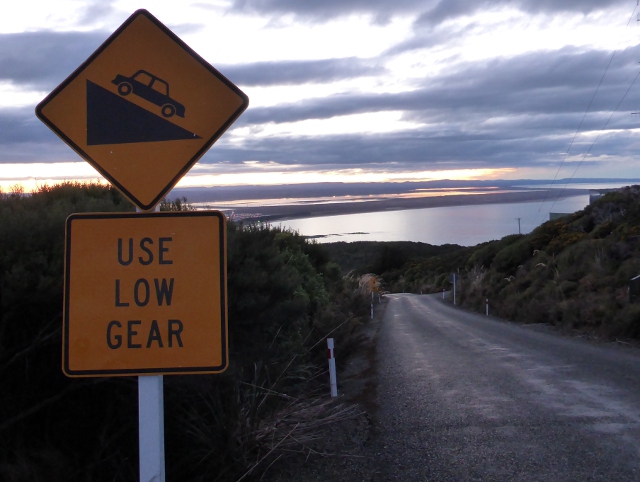
Instead I took the route of most pain and climbed the almost straight road to the top of the hill. It is 22% at the steepest point and an average of 11% so I certainly needed the mountain bike gears, doing that without any sort of warm up at 7.30 am in the morning would have had me walking for sure on a road bike.

But then my timing turned out to be absolutely perfect. As the light crept in under the clouds the landscape changed magically, second by second. Each time I lifted my head deep blues turned to pinkish hues behind me and the road surface became more visible.

Bluff Hill view New Zealand

Buff Hill sunrise New Zealand

Dawn from Bluff Hill mountain bike tracks New Zealand

As I got to the top a soft yellow glow was driving away the shadows right across the landscape.

Bluff Hill Sunrise over south coast of New Zealand

Way in the north Invercargill was visible a series of light spots on the flat plain.

Lights at dawn Invercargill from Bluff Hill New Zealand

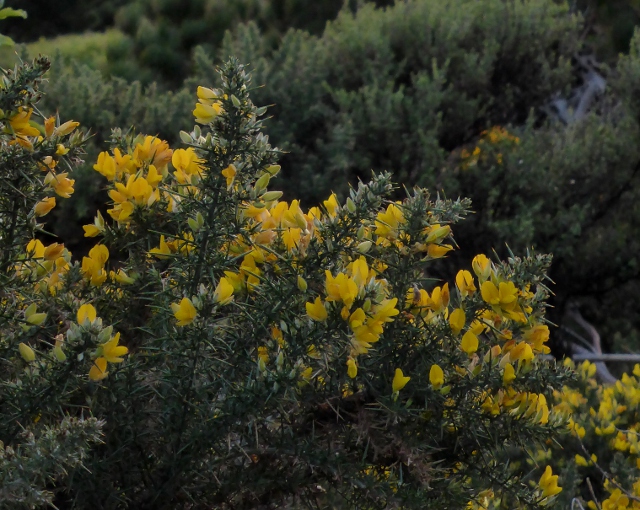
I was also blessed by the weather. The start of winter and I was wearing a light cycling top and shorts in almost windless conditions, an incredible stroke of luck for the views and the riding. Despite it being winter clumps of hardy gorse were in bloom, the yellow flowers seemingly sucking up the rays and glowing against the grey-green backdrop.

Gorse flowers on Bluff Hill New Zealand

I don’t know how long I hung around at the top taking in the rising sun and the changing views but I had to pinch myself to remember I was there to ride as well.

Bluff Hill viewing point at dawn

I looked momentarily at the entrance point to the “Downhill route” which descends a terrifying straight line and is graded “Black” or “expert”, but knowing that it was not for me I dropped down the shallower side of the hill and played for an hour on the intermediate trail network. It weaved its way up, down and around the hillside, offering me a good variety of riding. But what made this set of trails special today was that every corner offered a different sea view, and when I was sure I had gone round a section more than once it didn’t really matter because the effect of the sunrise was to make it feel subtly different each time.

Bluff Hill Mountain Bike Trails New Zealand Bluff Hill Mountain bike tracks New Zealand Bluff Hill Mountain bike track with sea view New Zealand

All the time in my head I was revelling in where I actually was, at the far end of the world and at the end of my holiday. Throughout the ride a song played in on permanent repeat in my head. REM’s “It’s the end of the world as we know it” was the song of the day. Inevitably? Maybe, in the odd way my mind works.

Then time was up and I let the bike flow its way down the lumps and bumps in the track to the parking where mine was still the only car, another joy of riding on a winter dawn. It was indeed the end of the trip, and fate intervened to tell me so in no uncertain terms. As I freewheeled into the car park there was a horrible rending noise, all pedalling ceased and I looked down to discover a very distressed gear mechanism in quite the wrong position. My last seconds, my last ride and my only mechanical failure of the whole trip.

Time to go home, but what a way to finish.

My huge thanks to everyone who made the cycling on this trip possible. The mountain bike trail builders of New Zealand and the local authorities building bike paths all over Australia and New Zealand. The friends, family and commercial companies that made it possible to beg, borrow and hire eight different bikes in six weeks. Jason I am really sorry about the last day mishap on your nice mountain bike – I hope you have it fixed now.

Last and by no means least the family, friends and hosts who indulged me once again while I went off at all times of the day to get my cycling fix. I had come to see you all, of course, but a bit of pedalling made me a nicer human being – trust me. As my favourite travelling companion knows best of all.

If you cannot see a link to the REM song here in the email version of the post click “View in Browser” for a working link.

A morning’s cycling in Invercargill, New Zealand. Not despairing in the deep, deep South

After two days in Invercargill I was getting quite desperate for a bike ride. Then my first ride delivered a special day that brought back old memories and created some new ones, combining favourite Idonotdespair riding elements in to one package. At the extreme end of the developed world I found dawn riding, waterside cycling, exploration, stunning scenery, almost car free and some playtime. It may have been a bit grey and overcast, but what more is there in a cycling morning?

My big problem for the first two days wasn’t only that I needed my regular fix of pedalling, but because I was seeing so many people out riding in bright winter sunshine I was just plain jealous. That surprised me, from previous trips I know there is an active club cycling scene here but I had no recollection of regular leisure cycling on a day to day basis.Cycling Waihopai river path Invercargill

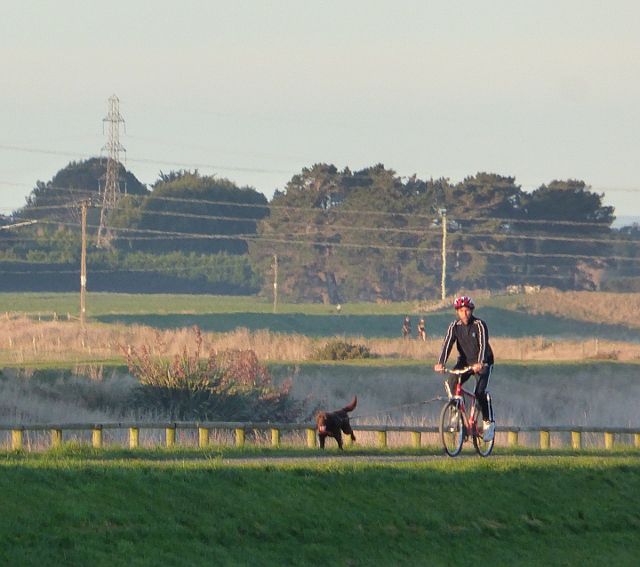
I was out for a walk each day when I found that the Waihopai riverside path near my in-laws’ house is now regular spot for many people having a late afternoon spin. This included lots of people out riding with their dogs which made me even more jealous, my furry riding companion was 12,000 miles away.

Bike ride with dog Invercargill Cycling with dog Invercargill

Complementing this nearly all the big wide roads seem to have gained a cycle lane and those were in use too. Enforced 50kmph speed limits and no cycling fatalities since 2008. Why wouldn’t you cycle? Even in winter. Good news indeed.

Cycling in Invercargill

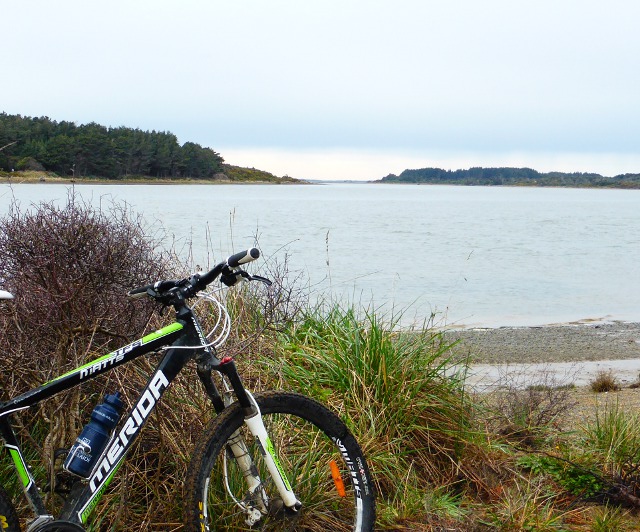
Fortunately I didn’t have to wait long to lay my hands on a bike. Invercargill being the close-knit community that it is the word was soon out and a nice guy called Jason loaned me his very tidy Merida mountain bike so I could sample the mountain bike tracks that were beckoning me.

Invercargill winter sunrise Winter rainbow over Invercargill

The first thing that delivered was the dawn sky with a lovely sunrise and rainbows. I then picked up the riverbank path which let me completely bypass all the city roads and took me quickly to the open banks of the estuary and spectacular views of the Southern Alps in the far, far distance.

New River Estuary Invercargill New Zealand Southern Alps from the Oreti River Invercargill

My destination was Sandy Point, a 5km long sandy headland across the mouth of the Waihopai and Oreti Rivers. It is a long, low lying area that was originally just sand dunes, forest and open heathland. Today it is Invercargill’s playground with about 20 sports fields and most importantly for me it has the Sandy Point Mountain Bike area, a fun section of twisty trails cut into the forest that were going to make my playground for the morning.

It was almost an hour’s ride each way to the MTB area but I loved every pedal stroke because I was treated to water views, wild birds and plenty of wide safe cycle lanes.

Oreti Cycle Way Invercargill

By contrast when I got into the woods for my mountain biking it was a dark maze of interconnected paths, up, down and around every lump, bump and hillock in the area. I know many of my readers are daily cyclists and cycle tourists who may wonder about the attraction of this stuff mountain bikers call “singletrack”.

Sandy Point Mountain Bike Area Invercargill

When I started mountain biking it was really just a sort of cycle touring but across hills and forest tracks instead of roads. Only when my skills improved did I learn to throw myself in and out of the trees slalom style, making me smile as the bike dips and roll with the terrain. Being low-lying and sandy this site didn’t offer the volunteers who built the trails an opportunity to do anything rocky or terrifying which suited me perfectly, this was “just for fun”. Once again my thanks to the local volunteers, this time Southland MTB club who have been working on trails on Sandy Point for over 20 years.

Sandy Point Trail map

I guess I played for about an hour without exhausting the trail network, but I was beginning to tire with the constant changes in direction and gradient. So I decided to finish my Sandy Point ride with the icing on the cake. This place is already unique because it is one of the most southerly mountain bike trails in the world. But it has another wonderful feature that makes it stand apart.

Oreti Beach sign Invercargill

Oreti Beach.

On the seaward side of Sandy Point is a spectacular open beach that runs for kilometre after kilometre around the huge bay between Invercargill and the coastal town of Riverton, some 40 kilometres away to the west. Out to sea is Stewart Island, New Zealand’s third island which makes a stunning backdrop to the beach and the waves of the Southern Ocean. I don’t know how I can give the sense of space that I get on Oreti Beach, winter or summer. I guess there is something in my head that tells me that this is no ordinary sea, there is almost nothing out there beyond Stewart Island but one of the greatest and most feared expanses of water on the planet, the wild Southern Ocean.

Oreti Beach in winter Invercargill

The fine sand is packed hard by the wind and tide which means not only is it beautifully flat but it is firm enough to take the weight of bicycles, motorcycles and indeed cars. It is an Invercargill institution to drive out in the summer for days on the beach but I have never seen it look busy because the area is just huge. In the middle of winter it was completely deserted, I had it entirely to myself. If I had the time I could have ridden for hours.

Some readers may also have seen Oreti Beach before. If you are a film fan you may recall a 2005 film called “The World’s Fastest Indian” where Anthony Hopkins played an eccentric Kiwi from Invercargill called Bert Munro who broke world records on his Indian Scout motorcycle. Oreti Beach plays a key role in the movie because it is here that Bert comes to test the speed of his bike and gets into a race with some local youths. Bert did test his bikes here and parts of the film were made locally.

Or, for my British readers who are also members of CTC, the cyclists’ charity. Open your copy of the CTC magazine this month to page 76, the members’ page. Down on the bottom right you will see a nice photo of a cyclist riding on a sunny beach that appears regularly on this page.

I’ll give you a better view of an original.from the same day.

Oreti Beach - Invercargill - New Zealand

My son, Ben, riding on Oreti Beach on our last trip in 2005. I gave the picture to the CTC editor to use some years ago, I am pleased he likes it too because he has thousands of pictures to choose from. I just wish more people knew the wonderful spot where the picture was taken.

On this trip it was just me, a bike and the memories, some old, some newly minted. What a great place to ride a bike. Not despairing in Invercargill.

Ruins and reconstruction – a moving visit to Christchurch – New Zealand’s earthquake city

Gallery

This gallery contains 17 photos.

Christchurch is the major city of the South Island of New Zealand, an attractive place that I have visited a few times. It is one of the most anglicised places in the Southern Hemisphere, designed with parks and squares around … Continue reading

Mountain biking at Hanmer Springs, New Zealand – playtime in a stunning location

Gallery

This gallery contains 9 photos.

I seem to be starting a bit of a tradition by taking in some excellent mountain biking on my holidays after Velo-city conferences. Perhaps it is all that earnest urban energy, a country boy needs his escape to the green … Continue reading

Hanmer Springs New Zealand – a place of rest, relaxation and recovery for over 150 years

Gallery

This gallery contains 16 photos.

After the hustle and bustle of Sydney we set off for the South Island of New Zealand for a complete change of pace. Before heading to my wife’s home town in the far south of the country we decided to … Continue reading

Not despairing Down Under – I do not despair’s reflections on a cycling month in Australia

Bike at West Head Lookout Sydney

Photo Kevin Mayne

So Aussie is done. 28 days, 3 cities, about 20 bike rides and many more trips by train, tram, ferry and car.

And like all travellers I will come back to the question “how was it?”

Of course I am going to say “brilliant” – because what will stick longest in the memory will be the high points. Velo-city Global 2014 was full of inspirational people and I met many more en route. And I had some excellent rides that will always be fond memories.

I had hopes for a strong cycling presence on the streets because I had heard that there has been something of a renaissance of cycling levels, especially in Melbourne and Adelaide.  But when I reflect further on my overall impression of cycling and cycling culture in the three cities I visited I am more inclined to say “curious” and even “challenging” because there are many aspects that present our Australian cycling friends with big challenges.

First the good news.

If there is going to be great cycling in cities the opportunities don’t fall in to place by accident. Things happen because there is some mix of advocates, politicians and technicians who have vision, passion and influence. And faced by the challenges of their cycling culture they are willing to stand up and be different, starting to promote cycling as a mass activity not just a sport.
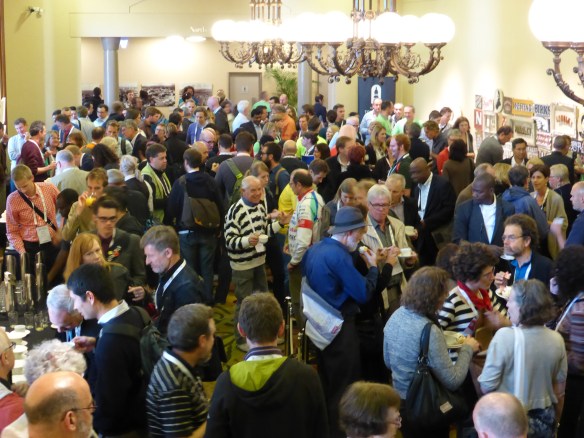
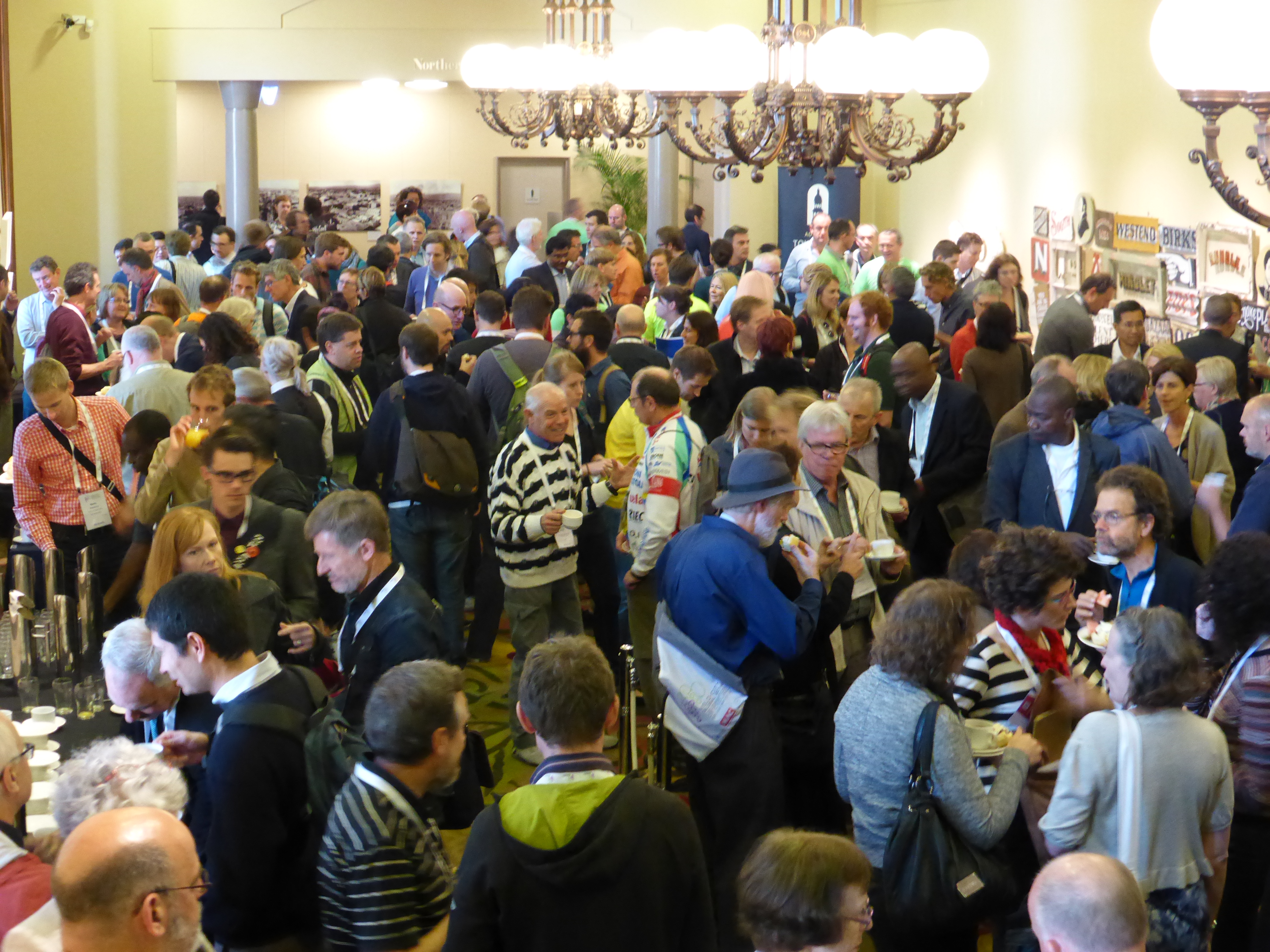
Velo-city crowd

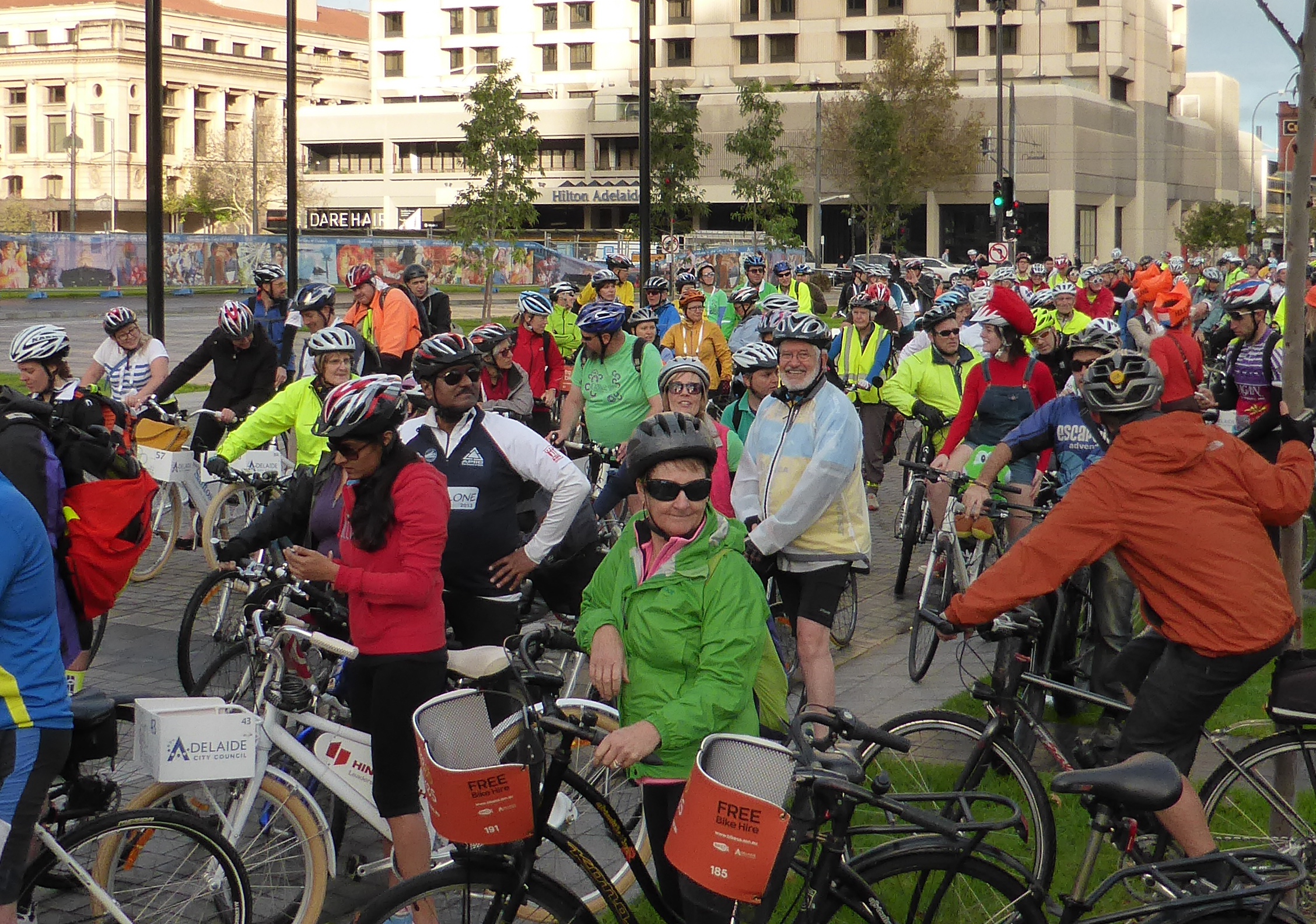
There is no doubt in my mind that those people were at Velo-city and across Australia. Politically our Adelaide host was Lord Mayor Stephen Yarwood who was a role model on the podium and at events like the Big Bike Brekkie where he seemed more like the Europeans by turning up in his day clothes and just riding.
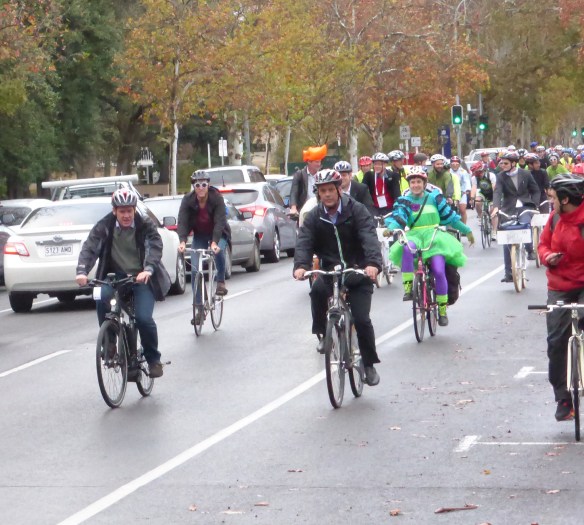
Mayor and CEO of Adelaide on the Bike Brekkie Ride

Most advocacy organisations in Australia are not huge and are heavily reliant on events to boost membership and pay the bills. But Bicycle Victoria is per capita possibly one of the biggest cycling advocacy organisations in the world with over 40,000 members from a population of just 5 million, hugely impressive. The other organisations are no less passionate if perhaps not as big.

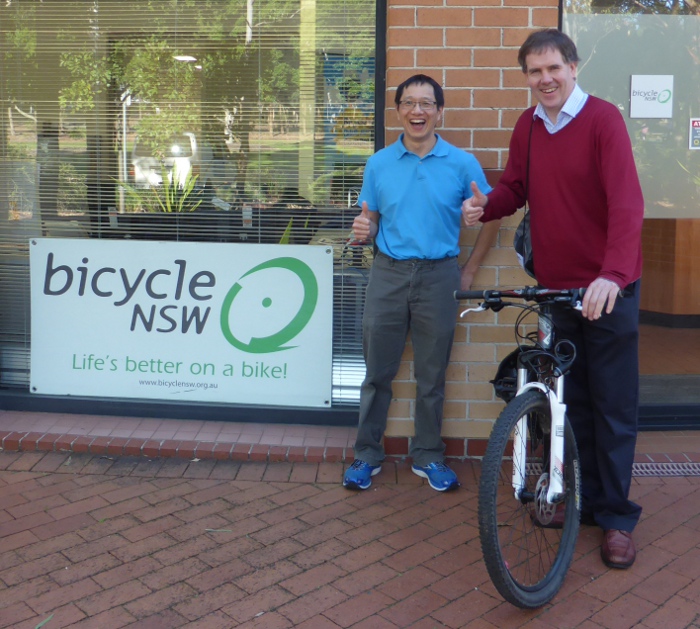
Bicycle New South Wales

The other community we met were the local promoters, entrepreneurs and activists who were great fun and great to be around. And of course in that community a huge shout out to Tina McCarthy our ride host in Melbourne. Her boundless energy and enthusiasm is infectious.

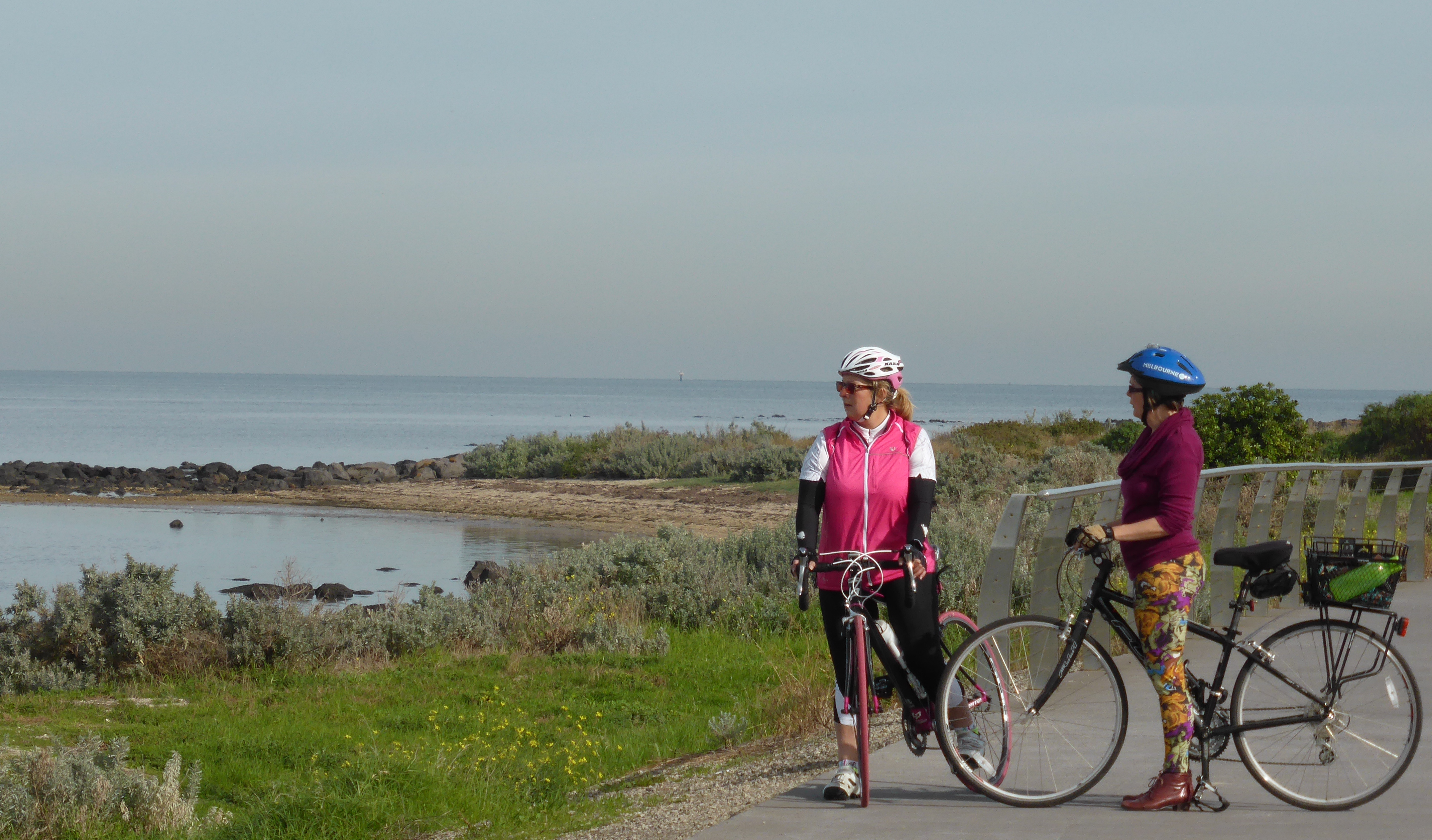
Altona ride in Melbourne

There are lots more people I could mention and many more who I didn’t meet but heard about and read their valuable contributions to the Velo-city discussions. I have no doubt that I was among friends and fellow travellers on the road to more cycling and I have to thank them for being great hosts.

The second bit of good news is that things are happing on the ground. At the moment the amount of really high quality cycling infrastructure is very limited so the signs have to be considered “green shoots”, especially because the quality infrastructure in the cities is far from established. The one high quality cycle route in Adelaide was only part finished and already there is a vote at the state parliament to try and get rid of it.

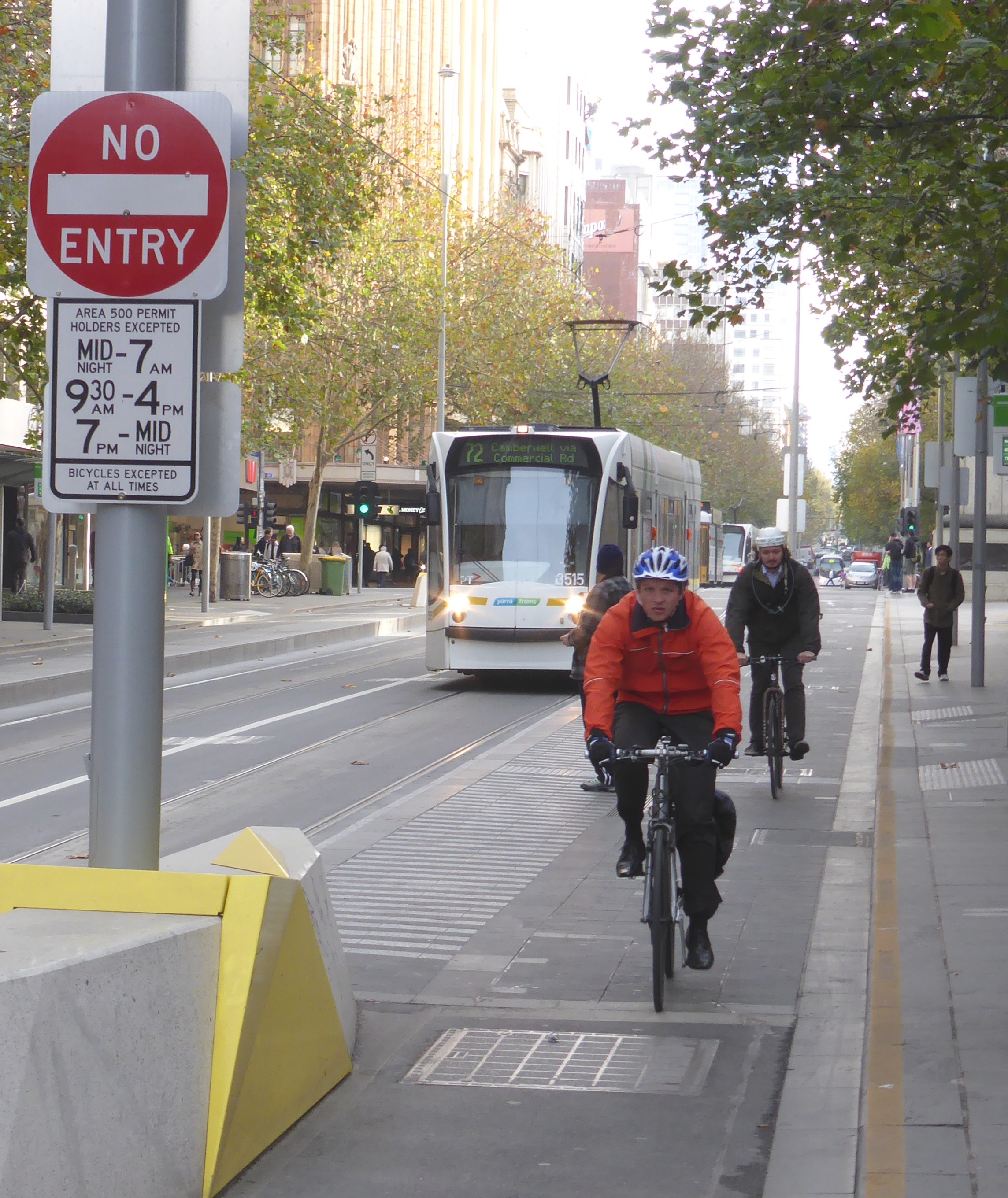
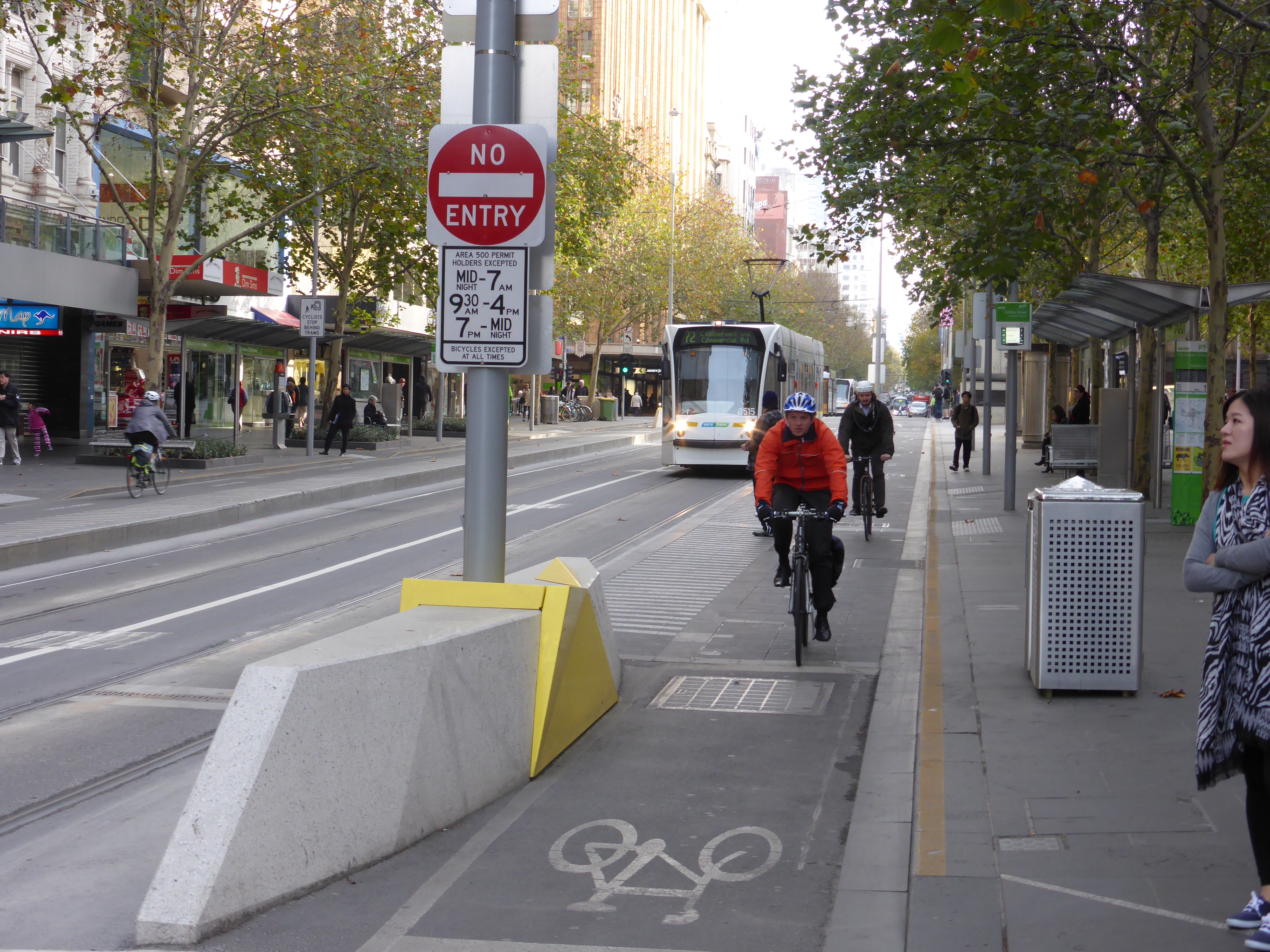
However in central Melbourne I saw that the much more established infrastructure was working because there were many more riders and some of them were not the usual suspects in lycra, this felt much more like a cycling city with a wider selection of riders.

Partly protected cycle lane in Melbourne Cyclists in Melbourne

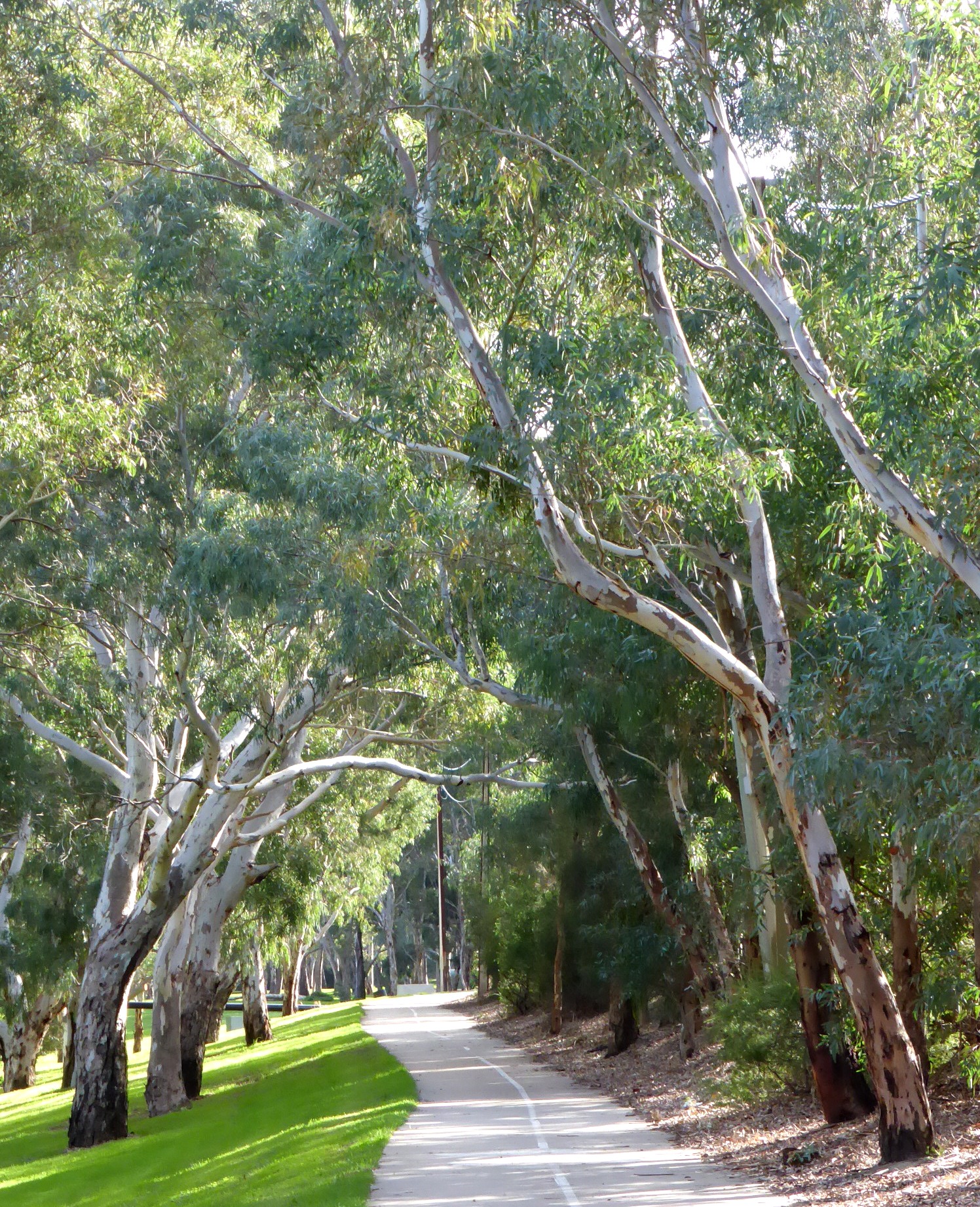
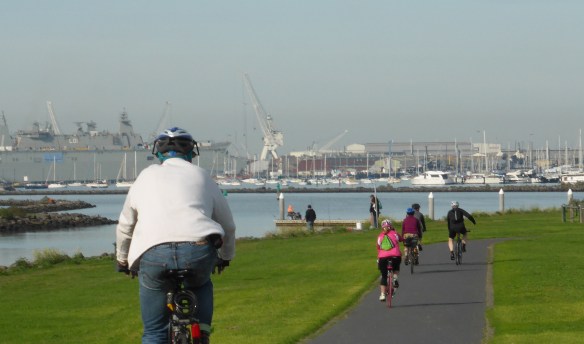
The urban leisure infrastructure is well established and well used. I have posted how much I enjoyed the River Torrens route in Adelaide, the round the bay routes in Melbourne and the Olympic Park in Sydney.
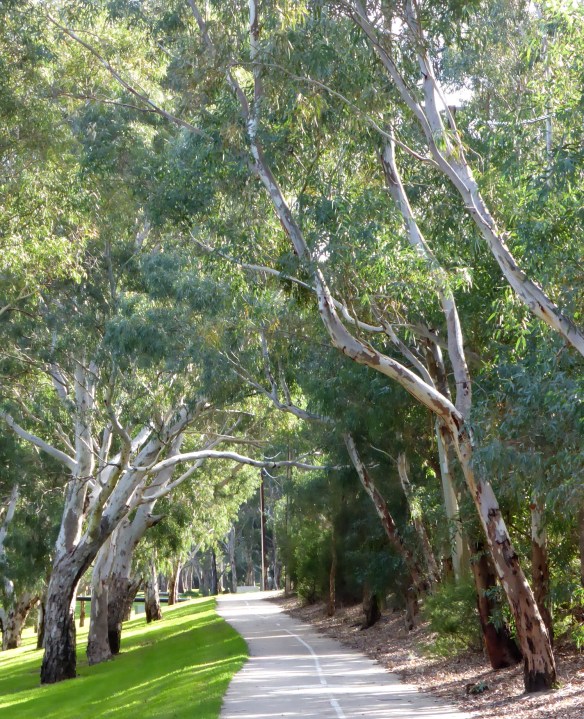
Avenue of Gum trees River Torrens Linear Park Adelaide

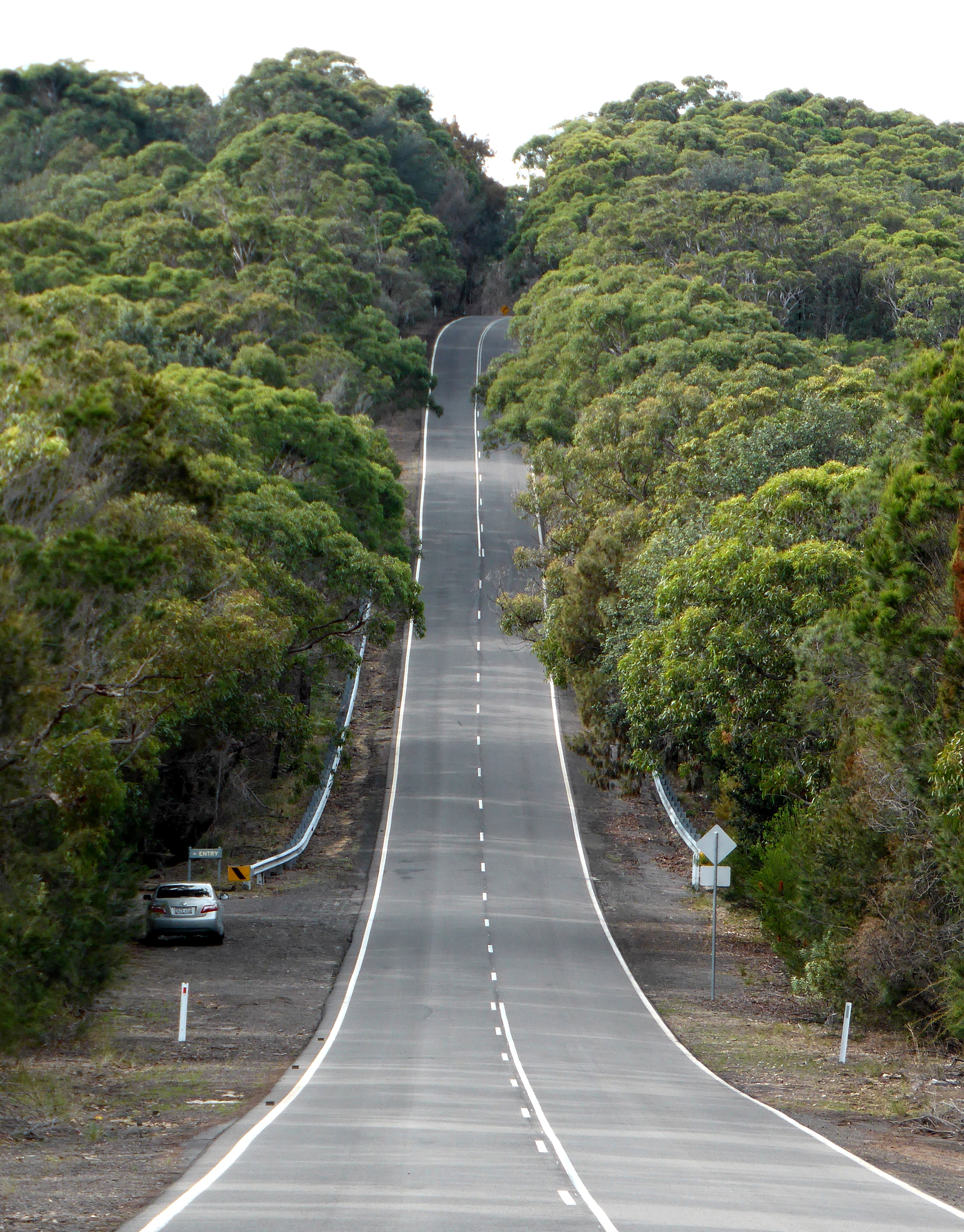
As well as the urban routes I will long remember my ride out to West Head in Sydney’s Ku-Ring-Gai Chase National Park, it was spectacular.Hills on the West Head Road Sydney

And these leisure routes were being used, there was a steady drip-drip of cyclists on all of them.

So on reflection I can report that these three Australian cities gave the impression that they could be joining the international group of “starter” cities that have begun their cycling revolution and could move up to next level where cycling starts to take a proper place in transport.

But, but, but……

This revolution currently looks different to anywhere else I have been. It isn’t Dutch or Danish, that’s for sure, but it is also different from the other low level cycling countries I have visited.

Just as Australia is inhabited by different looking animals as far as I could see Australian cycling culture is really all about different looking people, manly MAMILs  (Middle Aged Men in Lycra). Yes there are hipsters on fixies. Yes there are some women and young people and even people in day clothes just pottering about on bikes. But it seems to me that they are having almost zero impact on the understanding, reporting and promotion of cycling. Throw in the image of the Prime Minister thrashing about on a road bike with his mates to show his machismo and you can see what cycling promoters are up against. The Bike Brekkie in Adelaide was supposed to promote city cycling and most people turned up in lycra. Doh!

The start - bike brekkie Velo-city 2014

Some of the Australian advocates were also getting just a bit frustrated with the European delegates who they said were “obsessed with helmets”.  Having spent a month here I think I understand that much better. Helmets really don’t matter as much if the vast majority of cycling is a sport you dress up and something you do as an “activity” because you could take away the helmets and not much else would change. So the helmet issue is really the tip of a much bigger iceberg, the problem that so few people have any concept of cycling as a daily activity, as a normal mode of transport for short trips. I may have photographed a few people in Melbourne in normal clothes but when i observed evening rush hour the vast majority of riders were dressed for sport, not travel.

And I am really not sure some of the advocates are actually helping this situation either. I reported on the “extremist” cycling infrastructure in my last post, but it is much more than that. For example almost all the advocacy organisations rely hugely on leisure events for their income. That means their image, their web sites, their brochures and their exhibition stands are covered in images of people who look like cycle racers on fancy bikes and wearing lycra, sunglasses and helmets. To me the idea that these organisations represent what we would recognise as daily cycling just seems to get lost.

The other reason any possible cycling revolution looks different to me is because Australian cities really are really challenging places to promote cycling. As an English cyclist I didn’t enjoy cycling much 30 years ago when I lived in Australia and I still find the city layouts and transport patterns alien. In the central business districts there are grid pattern roads around huge tall modern buildings. Wide multi-lane highways leading right across the cities.Adelaide Post office

And then there are the suburbs, spreading and sprawling over a huge footprint because of the amount of space commanded by both houses and the huge wide roads that links them and the many out of town shopping malls. Car use and car parking dominated every aspect of the streetscape then and it is much worse now. In Sydney that is worse because it is steeply hilly, and hot.
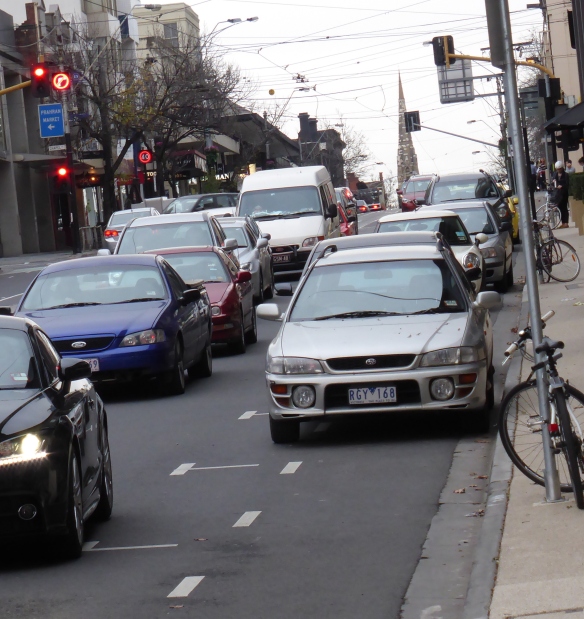
Tookak Road cycle lane

Because of the colonial heritage I know some people thought Australia would be a version of Britain or Europe, just a long way away. In transport terms Britain is the easy comparison to make: they speak English, they drive on the left and they have failed to grow cycling for 30 years. Pretty obvious really. But wrong.

To my eyes there is almost nothing European about this urban form, it seems to have shaped itself on similar lines to North American cities which have developed over a very similar time period. In much of Europe we constantly battle over space, here there is almost too much of it and the cities have run amok. The few cities we have like this are more likely to be in Eastern Europe than anywhere else.

So whenever you cycle on road in Australia you have to be able to cope with extended distances because of the urban sprawl and I had to cross or turn on big multi-lane highways several times on every ride, a process that varied from challenging to terrifying, in particular in Sydney.

Beecroft Road Pennant Hills Road cycling facility

That is an impossible for all but the brave and it strikes me that without comprehensive national or state strategies for junction management cycling in Australia will be forever stuck with just the most fearless of cyclists. The existing on-road cycle lane network is frankly worse than useless as I wrote here.

I’ll make just one final observation that I found seriously disturbing.

One of the most important motivations for getting people cycling and keeping them cycling is the fact that cycling makes you feel better. It is fun. It makes us smile. We know there are mental health benefits of cycling. We know that according to research the health benefits outweigh the risks by factors as much as 20:1.

But probably because of the compensation culture in Australia parts of the cycling world somehow seems to have let their lawyers squeeze the joy out of cycling.

Take this sign beside a beautiful, smooth, car-free cycle track.

Trail safety notice Williamstown

Or this wording on the web site of a cycling organisation.

Welcome

Whatever happened to joy, spontaneity, freedom……..?

And when the cycle helmet discussion flared up in the media in Adelaide I was astonished to see on television that instead of the usual trauma doctors that we always debate with the entire debate in favour of helmets was being conducted by accident compensation lawyers.

It was all deeply depressing.

So what do I conclude overall?

From this evidence promoting cycling as a mass activity in Australia looks like a doomed enterprise. The advocates are probably right, the cycle helmet compulsion that we Europeans see as a huge barrier is actually as more a symptom of an underlying culture where cycling is a sport and leisure activity operating in a suffocating legal climate.

One international expert at Velo-city was so frustrated by all the lycra, the helmets and the accepting attitude of the advocates he said to me “I give up on this country”.

I disagree. Against the background of cycling in Australia the change agents at all levels demand our respect, our support, maybe even our sympathy and certainly our encouragement because every bit of progress that they make to “normalise” cycling is a bigger victory than it would be almost anywhere else.

And it can be done. The new lanes are going into the centre of the cities despite the opposition. And almost at the end of my trip I went out to Sydney’s seaside suburb of Manly. I found bikes at the ferry terminal like at a European station. And I found a whole community of laid back people just pottering about on bikes, carrying surf boards and children and generally living a bike friendly life. No special clothing, almost no helmets.
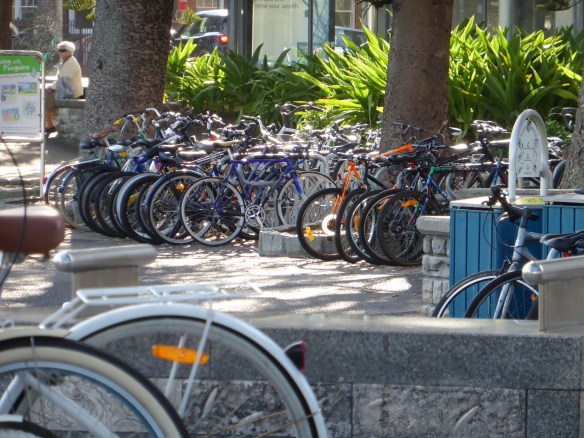
Bikes at the Manly Ferry terminal lady cycling with dog in Manly Cyclist with child at Manly Cyclists in Manly

It was lovely, a breath of fresh air, a real cycling treasure. If here, why not everywhere in Australia? C’mon Australia, every cycling day could and should be like this.

I do not despair.

The Blue Mountains of New South Wales – beautiful Australian landscapes

Gallery

This gallery contains 9 photos.

As we almost reached the end of the Australian leg of our journey we spent two days in the wonderful Blue Mountains of New South Wales. Running right down the Eastern coast of the Australian continent is a range of … Continue reading

Cycling on freeways and major highways in Australia – Cycling for extremists?

M2 cycleway from above Sydney

This is the second of my “what were they thinking?” posts about cycling in Australia. In my last post I looked at cycling facilities that seemed to benefit absolutely nobody.

I have ridden on all sorts of roads and transport conditions over the years and I cannot say some of them were at all pleasant. But I have never seen cycle lanes for fanatics built into the cycling culture as they were here. So this is today’s subject.

I’ll start the post with some examples.

Sydney’s M2 Freeway cycle route

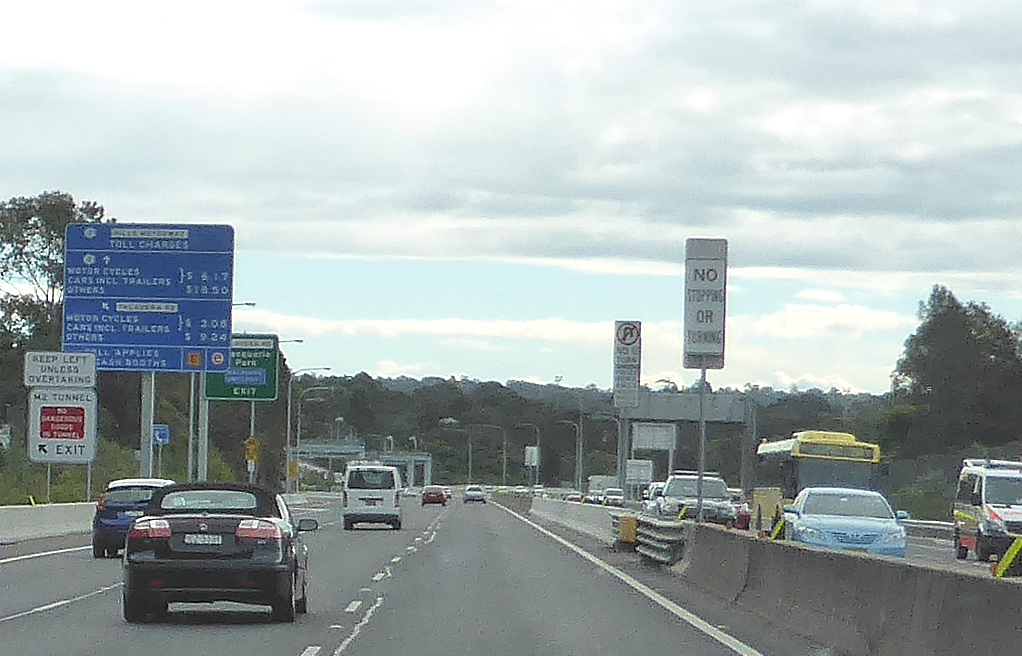
Look at the photo below. Perfectly normal picture in most countries of the world, the access to a major freeway. (motorway, autoroute etc.)

M2 Freeway Sydney

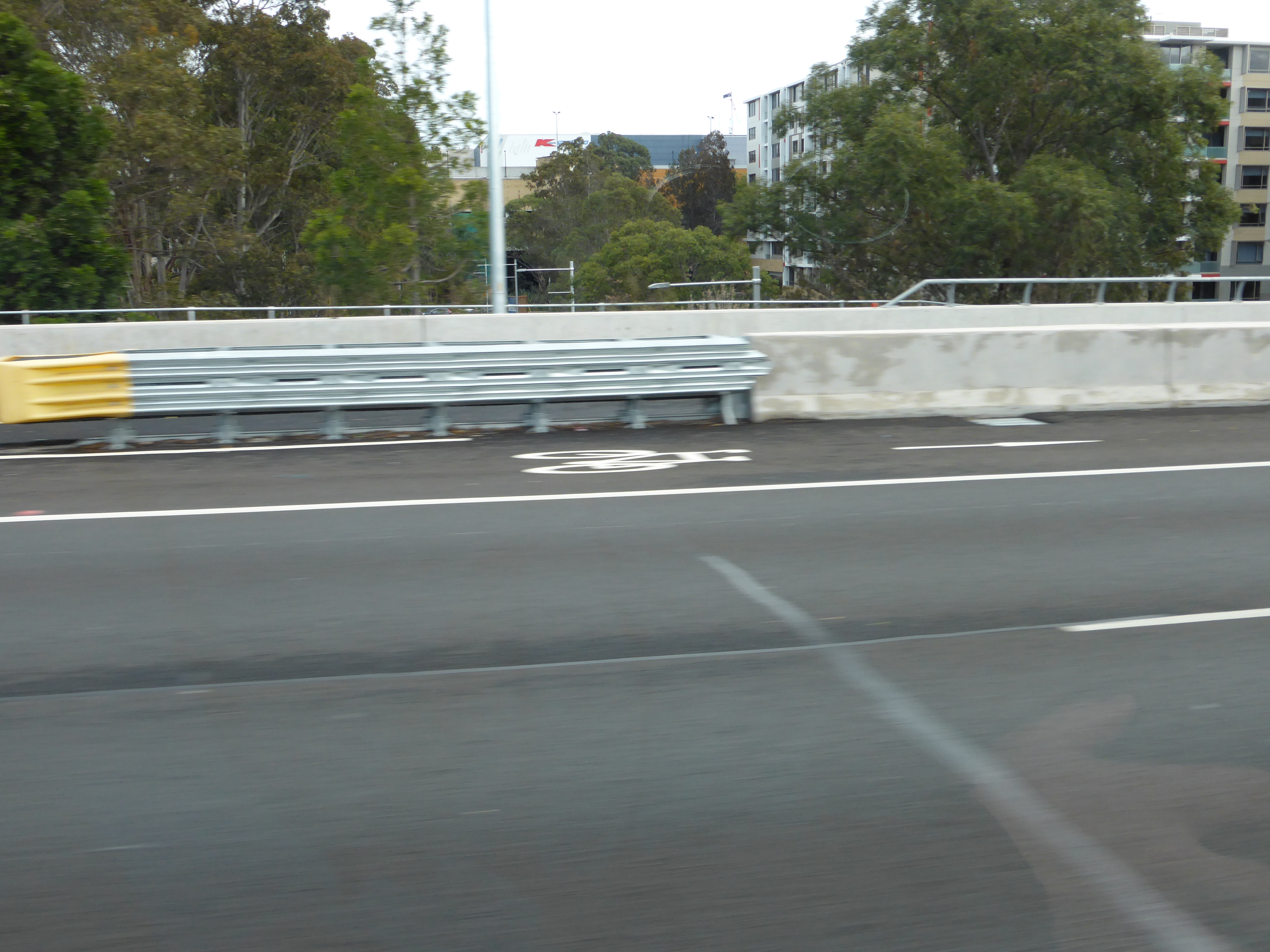
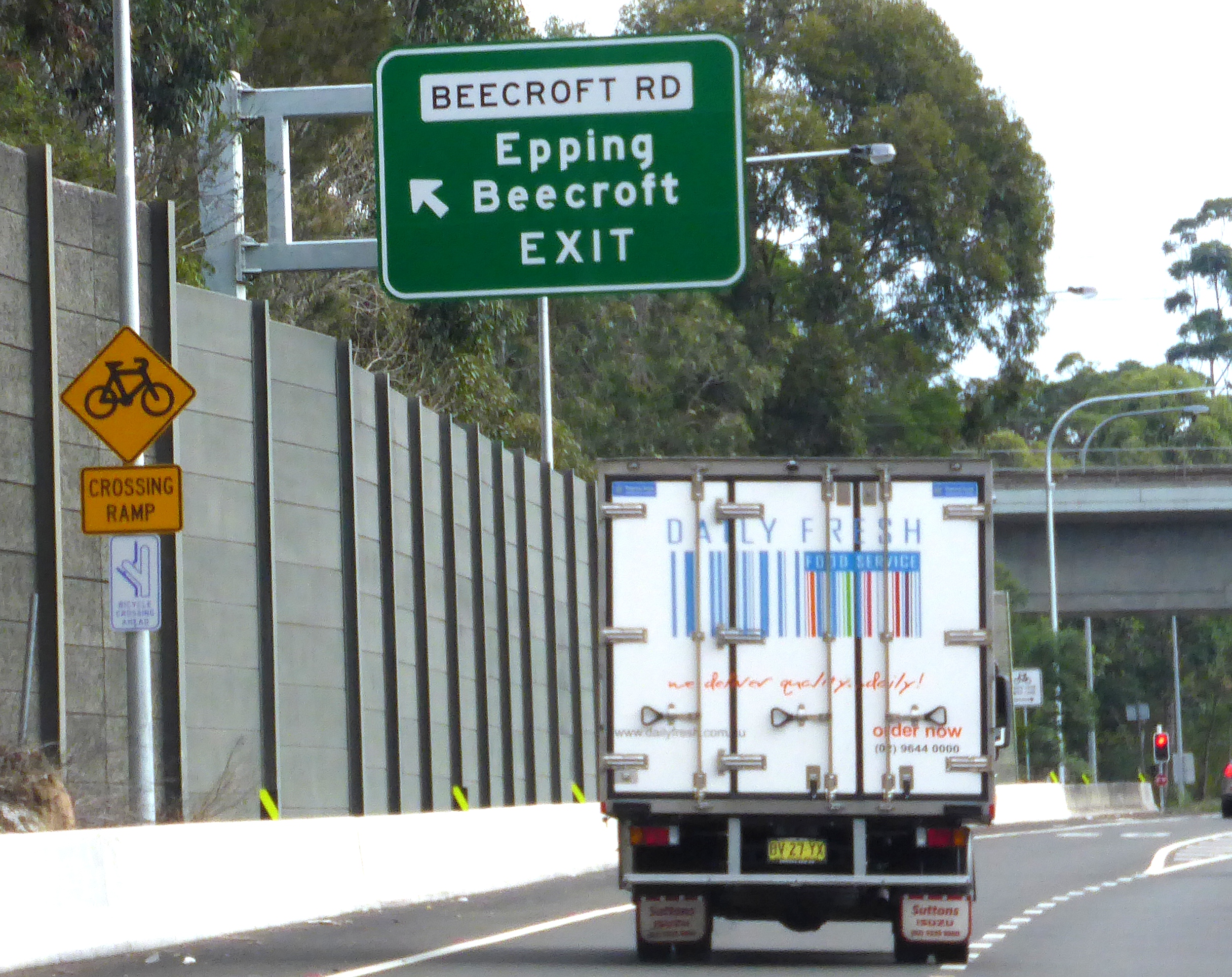
M2 freeway cycle path SydneyBut then as we were driving along an odd image caught my peripheral vision. I grabbed my camera because I couldn’t quite believe my eyes, apparently in the emergency lane was a cycle lane marker.

Not only that, further on there were signs clearly showing that this was an officially designated cycle route. I was stunned.

M2 Freeway crossing ramp sign

It wasn’t until the third or fourth time that I travelled that freeway I saw an even more unusual sight. Just in the distance I could see this tiny yellow dot.

M2 freeway Sydney with cyclist

And of course as we got closer it turned into a cyclist, the only one I saw on the route.

M2 freeway cyclist Sydney

On other train and cycling trips I crossed the M2 and I managed to capture some additional pictures of this remarkable cycle route along one of the busiest highways in Australia. I never did see another cyclist on it, yet later on I actually found it listed on the New South Wales cycle routes map and it is the very first listing on the Wikipedia page for Bike Paths in Sydney.

M2 cycleway at junction Sydney

I almost laughed out loud when I read the description of the M2 Hills Motorway route on that Wikipedia page. It said cyclists were “poorly served” by the route. That’s the kind of language Dutch cyclists use to describe a cycle lane that has a less than perfect surface. “Poorly served” does not mean “left exposed in conditions so frightening almost nobody dare use them”, except perhaps in the mind of this small group of Australian cyclists who just don’t see this as abnormal.

Melbourne’s magical mystery cycle lanes.

Sydney wasn’t alone in catering for cyclists on its major highways. Although the Victorian freeways were clearly cyclist free I did see similar “facilities” for cyclists on some of the other major multi-lane highways around Melbourne. Allied to this were some very odd cycle lanes on larger suburban multi-lane highways. I have absolutely no idea whatsoever what this marking is for, but it was relatively common on the sort of road where I would think no sensible cyclist would want to be.

Cycle lane marking Williamstown Melbourne

In one case the strange markings even existed in parallel to a segregated cycle way. Ok, “sporty” cyclists may have wanted to be on the smooth asphalt but why they needed a 2 metre occasional paint splash to tell them that I have no idea. So why?

Riding with the trucks on Sydney’s major highways

I was staying in the North Sydney suburb of Beecroft which gave me access to some great rides in the Sydney’s Ku-Ring-Gai Chase National Park.

The only problem was that these suburbs are traversed by some of the most hostile roads I have ridden in years, even if I stayed off the M2. However it appears that others in Sydney regard these roads as perfectly cycleable, in fact there are encouraging “facilities” to make this possible.

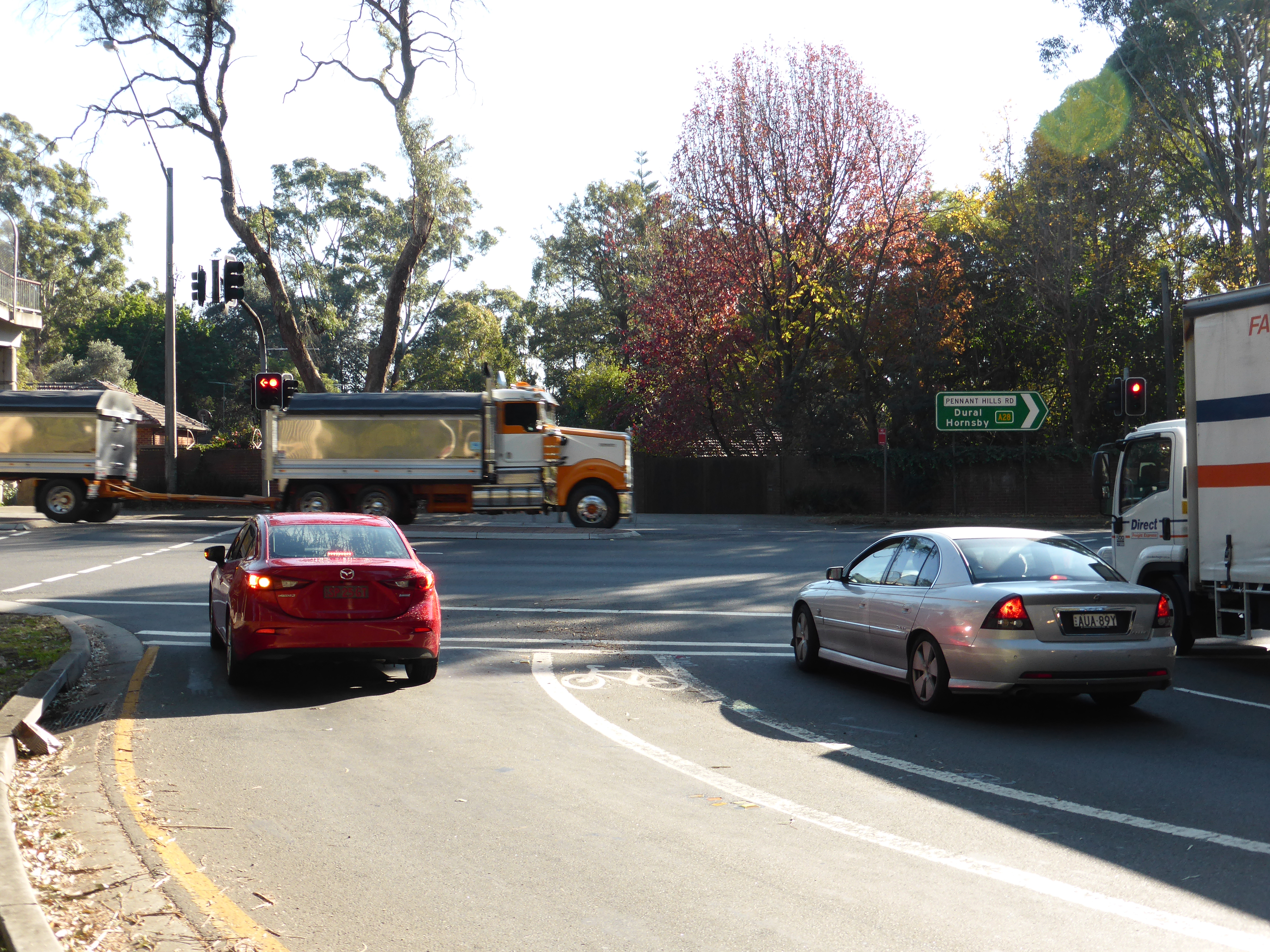
Beecroft Road SydneyMy first experience was the access from Beecroft Road onto the Pennant Hills Highway.  Beecroft Road itself was pretty horrible, but it was the only realistic way out of where I was staying so I gritted my teeth and rode up it.

I was more encouraged when I got to my first junction because there was a warning sign for vehicles to look out for cyclists and then a cycle lane. Hopefully that meant better cycling on the other side because clearly this had been planned?

Beecroft Road Pennant Hills road junction

How innocent I was. Sydney readers will have got a clue from the photograph itself. This was a junction with Pennant Hills Road, one of the most unpleasant and unwelcoming roads in Sydney, six lanes of nose-to-tail commercial traffic.

Beecroft Road Pennant Hills Road cycling facility

Once I crossed that junction there was just nowhere to go except a six lane highway which was just horrible. I stayed only a few hundred metres before I took the first available turning off and reconsidered my options. I had no choice but to follow Pennant Hills Road for a short distance on a number of my rides and on each occasion I used the sidewalk (pavement) to get between junctions even though I was on a quality skinny-tyred road bike.  I later spoke to quite a few people and was told that almost all cyclists used the pavement, including group rides from Beecroft.

So why anyone felt it was worth putting a cycle lane on any junction that joins Pennant Hills Road I have no idea, clearly what was needed was some realistic guidance and help to get across and away from this monstrosity, not an invitation to ride?

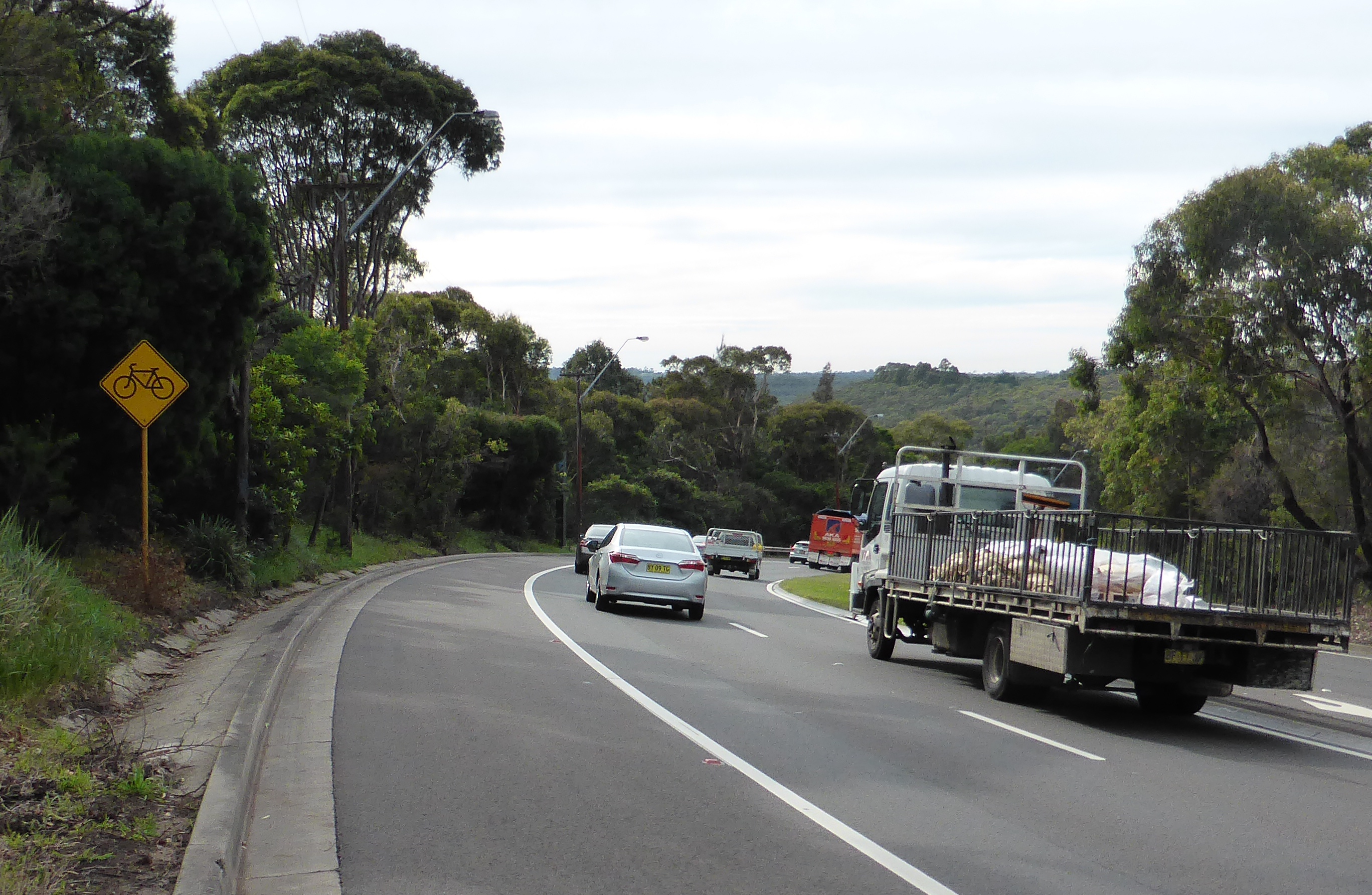
I also mentioned Mona Vale Road in my write up on three great rides in Sydney. As well as having to cross Pennant Hills Road this was my main access to the fantastic West Head Road in Ku-Ring-Gai Chase National Park. It is a bit different to the other examples because this was recommended to me as a “popular cycling road” because “you always see cyclists up there”.

Mona Vale Road cycle path Sydney

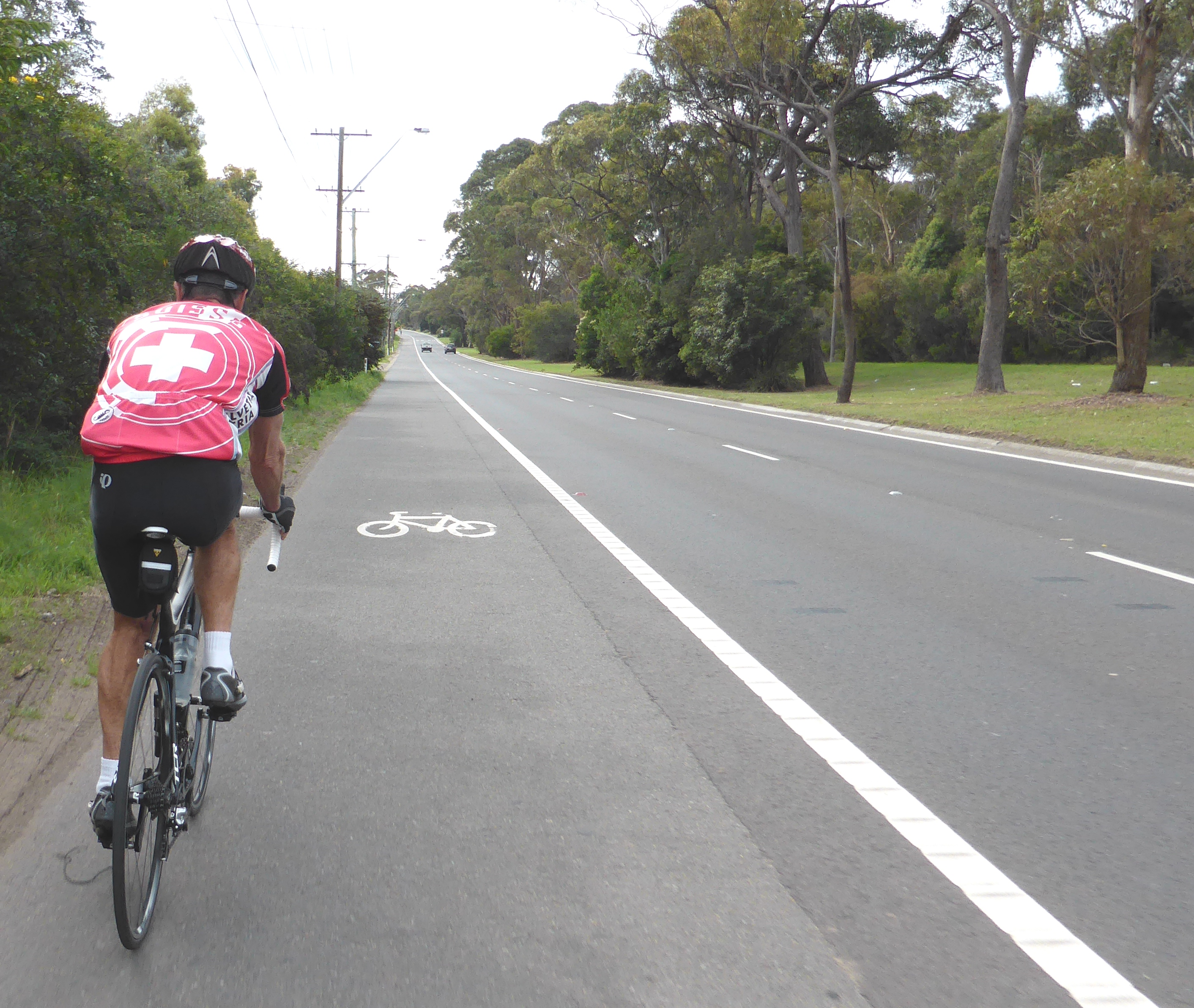
It was actually the “no choice whatsoever” route because getting from Beecroft to the national park or the nearby bays and coast offers no alternatives for cyclists, cars or commercial vehicles. So of course we all go together. That’s sort of ok when there is a big wide safety lane on the left, although it’s not exactly enjoyable.

But when the lane just disappears, the only protection is a small sign and traffic is doing 100kmph past your elbow.

Watch for cyclists sign Mona Vale Road Sydney

Cyclist on Mona Vale Road SydneyI saw some cyclists and I slipstreamed one chap for a short while. He stopped just before I turned off and said “I turn back now”. I now realise that his choice of bike ride was to thrash up and down Mona Vale Road and he actually turned back just before the opportunity to ride an attractive, quiet car free route. I couldn’t do it, I would lose the will to live if that was one of my regular rides. The second time I cycled in this direction I got a lift to the start of my ride.

My final example doesn’t have any photographs.

At around 6am on a Saturday morning we got our final lift from Beecroft to Sydney’s international airport. It was pitch dark and overcast, not a great day.

As we moved along the main dual carriageway towards the airport around 7am we pulled over to pass a slow moving vehicle driving with flashing lights. In front of it was a group of cyclists clearly out on a training ride. Just nearby was another group precariously stopped by the roadside, this time without support vehicle. I had heard that some racing cyclists in Australia go to extraordinary lengths to get some training before the roads get busy. Now I had seen them in action. Absolutely terrifying. Apparently 7 riders were hurt in a collision with a car on one of these rides recently. I hope last Saturday’s riders did have somewhere better to go, and that they got there and back safely.

So in the immortal words of Marvin Gaye “What’s goin’ on?”

I spoke to cyclists in Melbourne and Sydney including advocates and sports cyclists as well as leisure riders. Nobody at all said they used the roads where cycling is combined with high speed traffic. In particular the M2 Freeway attracted a “no way” response. I know elsewhere in Sydney and Melbourne they are gradually building high quality segregated cycle routes, even along the major highways. In particular the cycle route that follows Sydney’s M7 freeway gets rave reviews for being high quality, well designed and entirely protected from vehicles.

Interestingly most cyclists I spoke to in Sydney said they knew people who did use the unpleasant routes and there are even cycling advocates who regard the M2 Freeway cycle route as an essential part of their commute. This had once been a segregated parallel route to the motorway but the segregation had been lost during road widening and other changes leaving only the emergency access lane. Some cyclists fought to keep use of it because the motorway actually provides one of the only fast, direct and relatively flat routes into the centre of Sydney. The alternative is apparently much slower and in their eyes more dangerous, but is extraordinary to me that advocates will campaign for a facility that is usable by just a tiny rump of the cycling community.

I have to say a tiny minority because cycling is not a major means of transport in Australia. Mode share in Sydney reaches 3% in some suburbs but overall is just 1%. There is a bigger recreational community but it is still small compared to many European countries. But within this group majority of people who cycled that I spoke to were not going to use the high speed routes. So the number of major highway users must be very small indeed.

Every time I think about this I am drawn back to an excellent analysis of cycle users and potential cycle users that came originally from Portland in the US. It is now widely used because many people in the cycling world believe it is a very useful indicator of people’s attitudes to cycling on a much wider basis.

Image courtesy of Bikes Belong

Image courtesy of Bikes Belong

According the analysis about 1% of cyclists will cycle under almost any conditions. They include many sports cyclists but also include urban warriors who handle challenging traffic anywhere in the world. A further 5-6% are enthusiastic about cycling and have the confidence to tackle a lot of different riding conditions so they will cope with vehicular cycling but prefer some provision.

Then there are the vast bulk of the population who actually have a positive or at least passive view about cycling. They would ride if conditions are safe, but generally they have concerns that must be dealt with before they will ride.

Now in here in Melbourne and especially in Sydney I have found that the fearless cyclists group has at its head another even smaller minority. We have a comparison in mountain biking, they are the extreme downhillers, doing stuff even the brave decline. If they were a Tour de France mountain they would be “Hors category” – beyond measurement.

I am sure in Sydney some would argue “we have no choice” and from what I saw of suburban North Sydney I would have some sympathy with that view. After 10 days I could only conclude it was one of the most unwelcoming cycling environments I have ever experienced. However these cycle lanes made absolutely no difference to that impression, so I have no idea why they exist and even less understanding of my public authorities were convinced that these cycle lanes were worth spending money on.

I cannot help but feel that any effort to incorporate extreme cycling into the highway system undermines the possibility that cycling could ever be treated as “normal”. Surely it competes directly with the great efforts being made elsewhere to create high quality infrastructure that can be used by 60% of the population, not 0.01%. Ihope that all the work we did at Velo-city in Adelaide has encouraged and inspired the people who are making the new cycling facilities because they really are working against an extremist cycling heritage that will take a lot of unravelling before cycling can be an enjoyable activity for the majority of people.

But it can be done!

Melbourne CBD cycle path

The worst of Australia’s cycling infrastructure – “dooring zones” and part time cycle lanes

Useless cycle path in Sydney

I Do Not Despair is about being positive about cycling, travelling to places by bike and enjoying the company of cyclists.

But sometimes I just see things that make me ask “What were they thinking?” In Australia I had some great rides but I found many examples of cycling facilities that seemed spectacularly ill-conceived and designed.

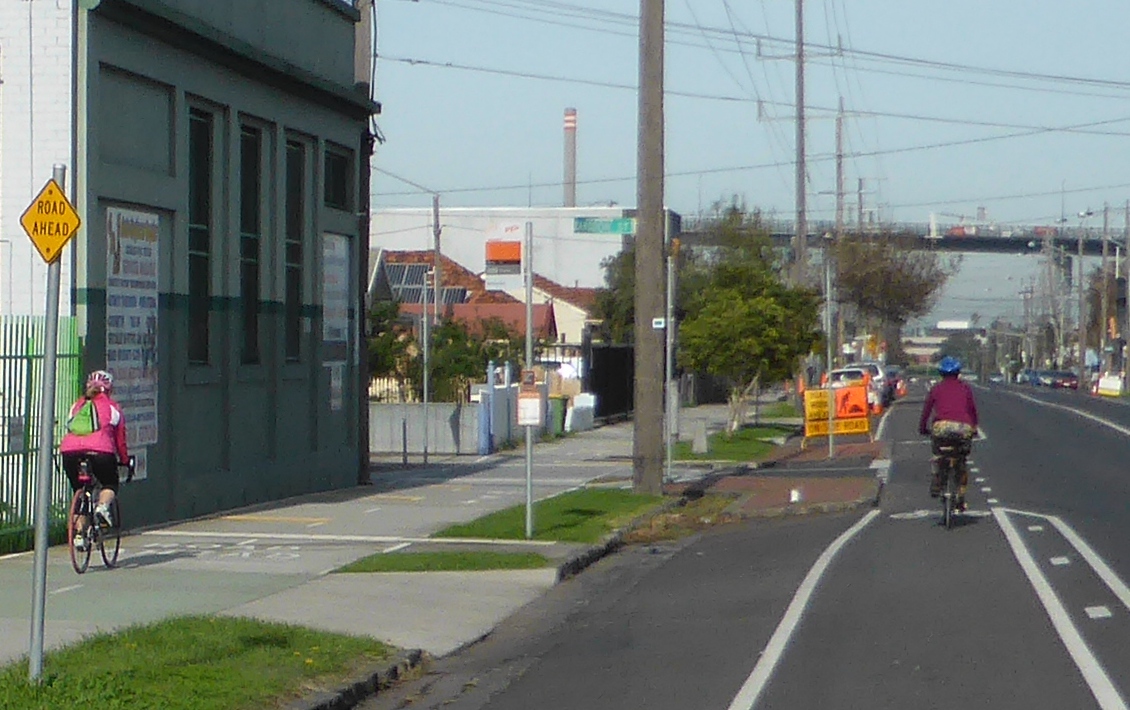
In both Melbourne and Sydney the most common example was “dooring zones” and in Melbourne they were joined by “part time” cycle lanes.  They probably have some other official term in the minds of the people implementing them but these were my phrases, although I could have called them a lot worse.

I think they fail the test for cycling provision in the most important way of all. They are of absolutely no benefit to anyone – there is no “design user” and as far as I can see no road safety benefit at all. In fact even worse, these sorts of facilities create user conflict and badly educated cyclists which in the long run makes the cycling experience worse for everyone else.

Highly experienced vehicular cyclists don’t need them because they are confident riding on roads and should be riding out in the middle of a carriageway to protect themselves from close passing cars. New or less confident cyclists get absolutely no benefit whatsoever because they offer almost no psychological or real protection from busy traffic, leaving the cyclist exposed and afraid. And if that is the case they are a surely waste of public time and resources?

Dooring zones.

Sydney

Let me take the “dooring zones” first. During side chats at Velo-city and even more in my reading of Australian cyclists social media and blogs I kept coming across lots of comments about “dooring”, the highly dangerous practice where a car user opens the door of a parked car into the path of a cyclist.

Most regular cyclists know about this one.  I have had it happen twice in fourty years of riding and got away with minor injuries but I know of some horror stories. And there is no doubt dooring plays on your psyche when you ride again, indeed many people never go back to riding, but after a near miss or two you learn to keep your distance.

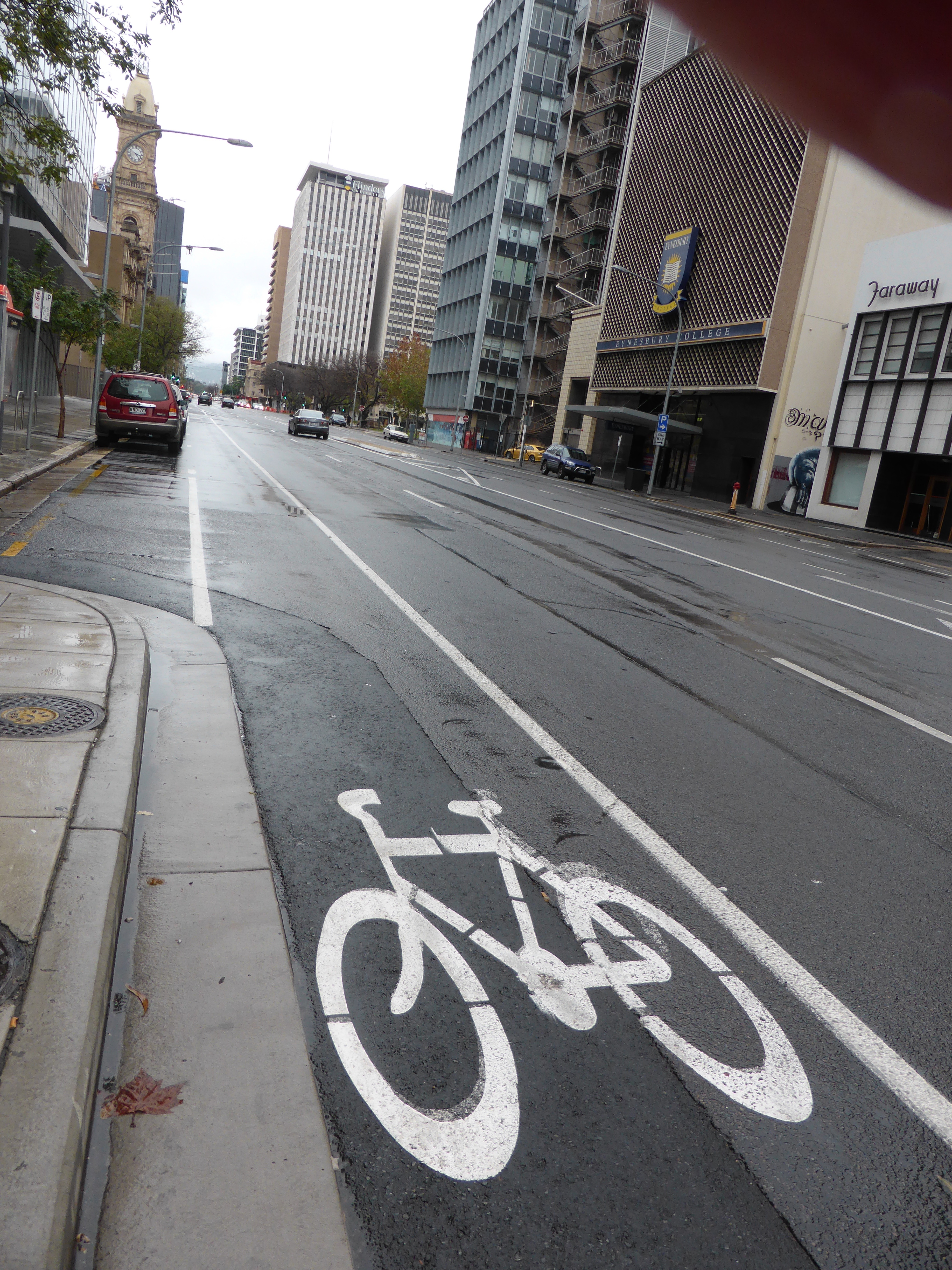
Cycling AdelaideI saw one or two examples of bike lanes outside parked cars in Adelaide, but generally they were wide enough to allow the user to ride well outside any risk. I couldn’t really understand the high profile concern about the subject among the Aussies.

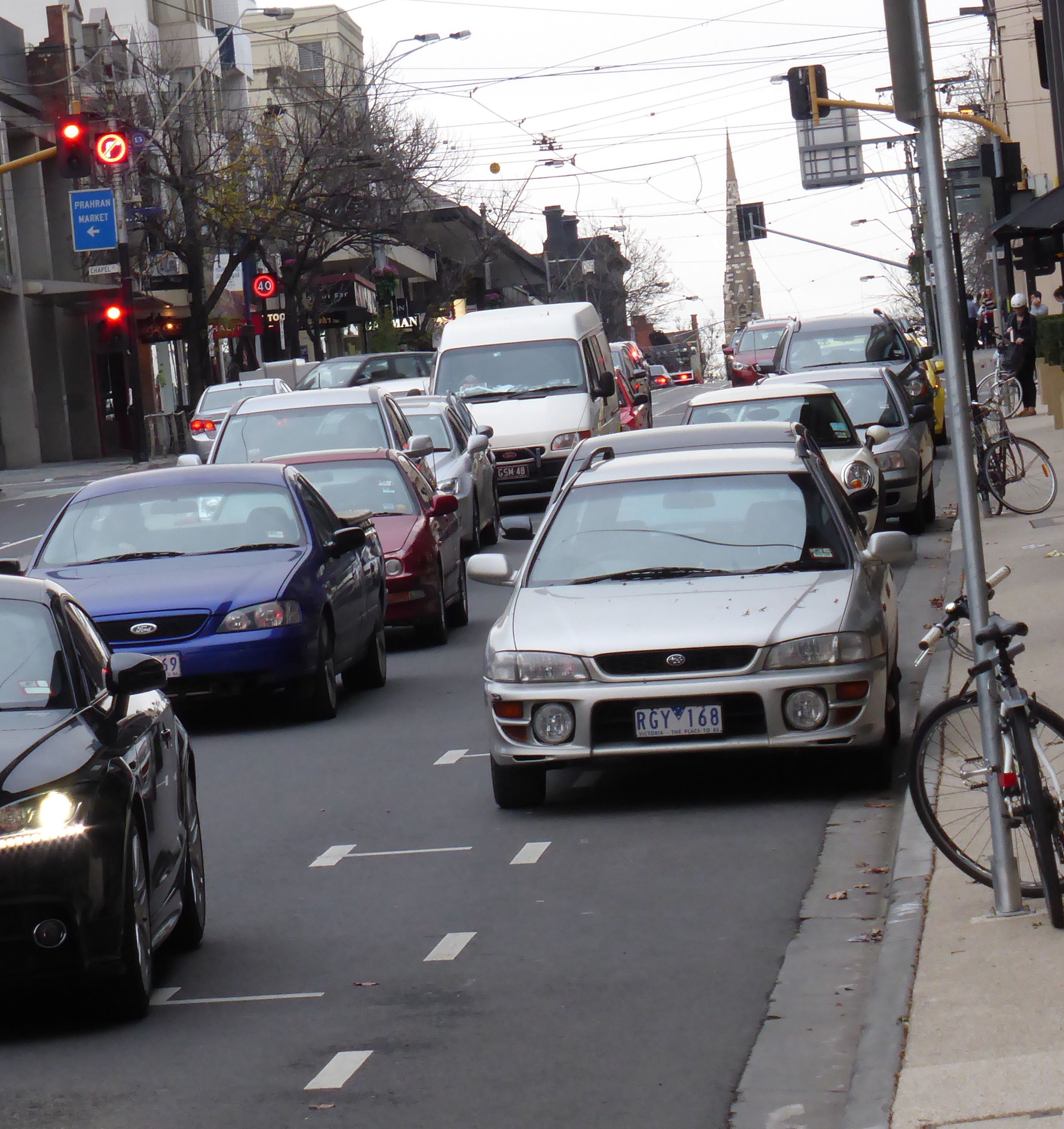
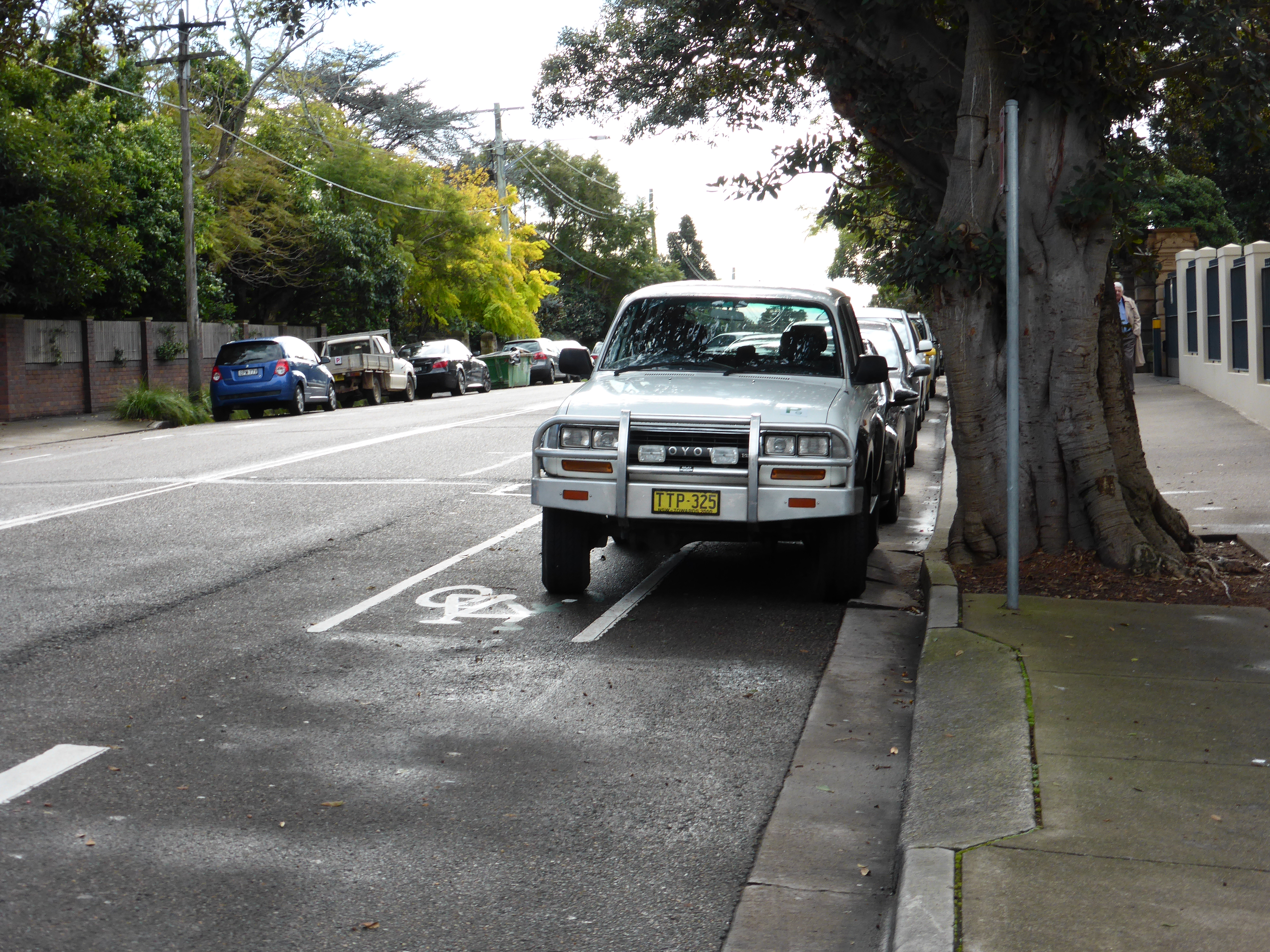
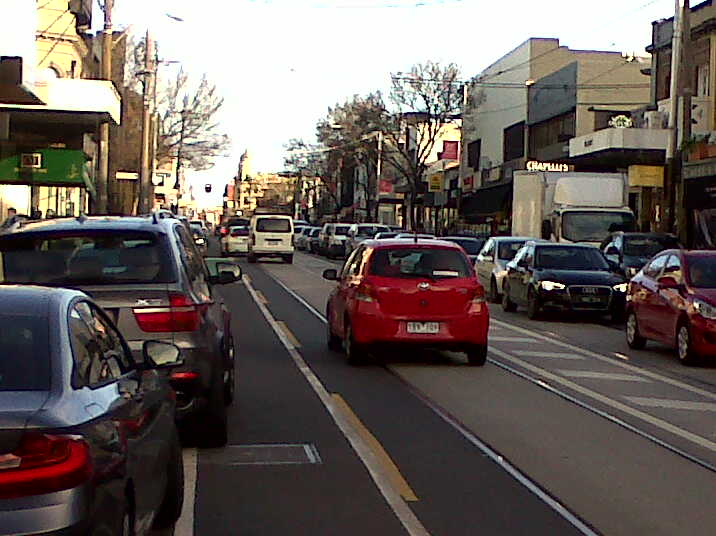
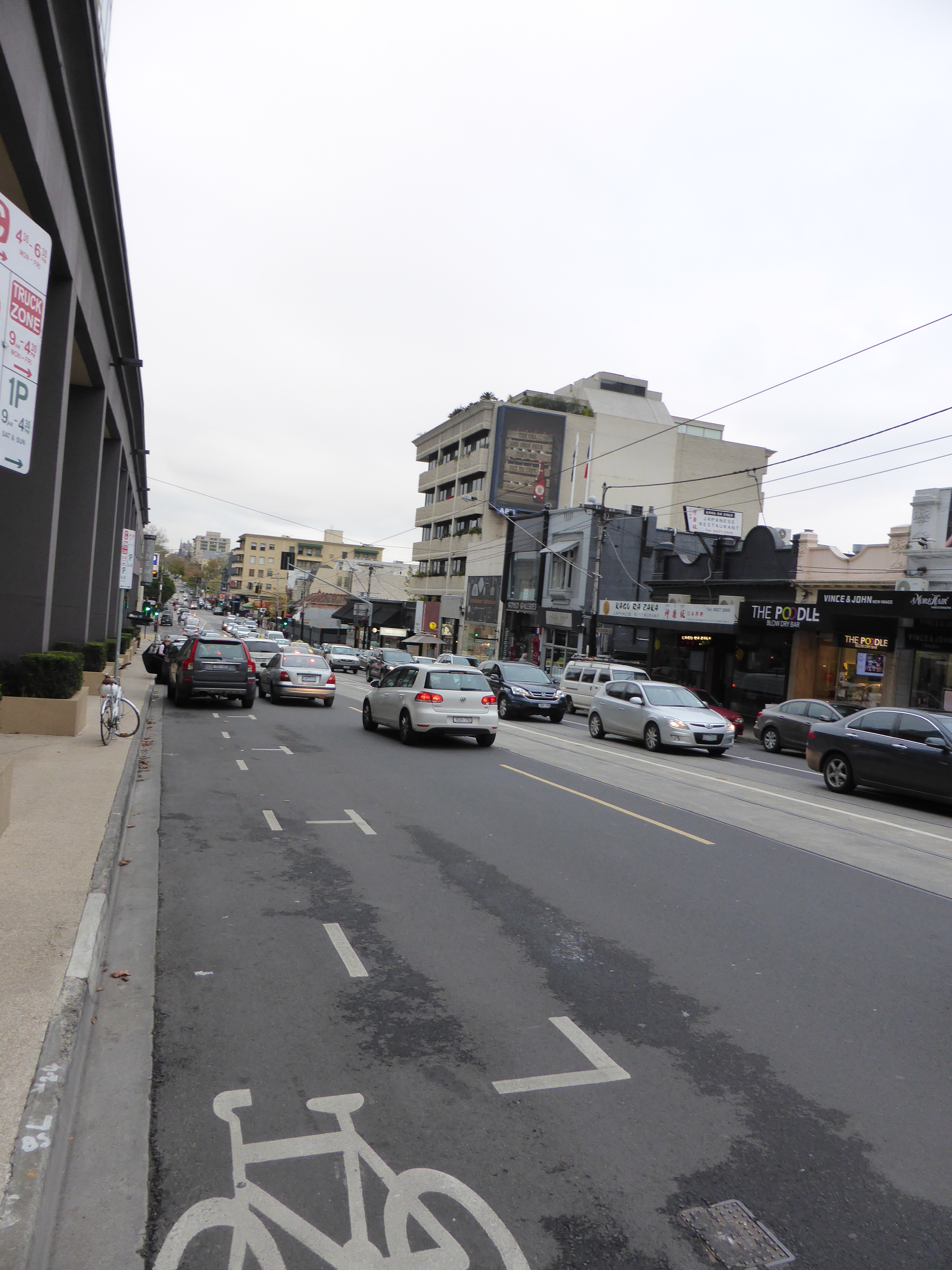
Then I got to Melbourne and I was astonished to see with “dooring zones” on my very first day and subsequently I saw them all over the place. Then on many of the roads I cycled in Sydney they were like a plague and of consistently dangerous designs.

Melbourne cycle lane - dooring lane on Chapel Street

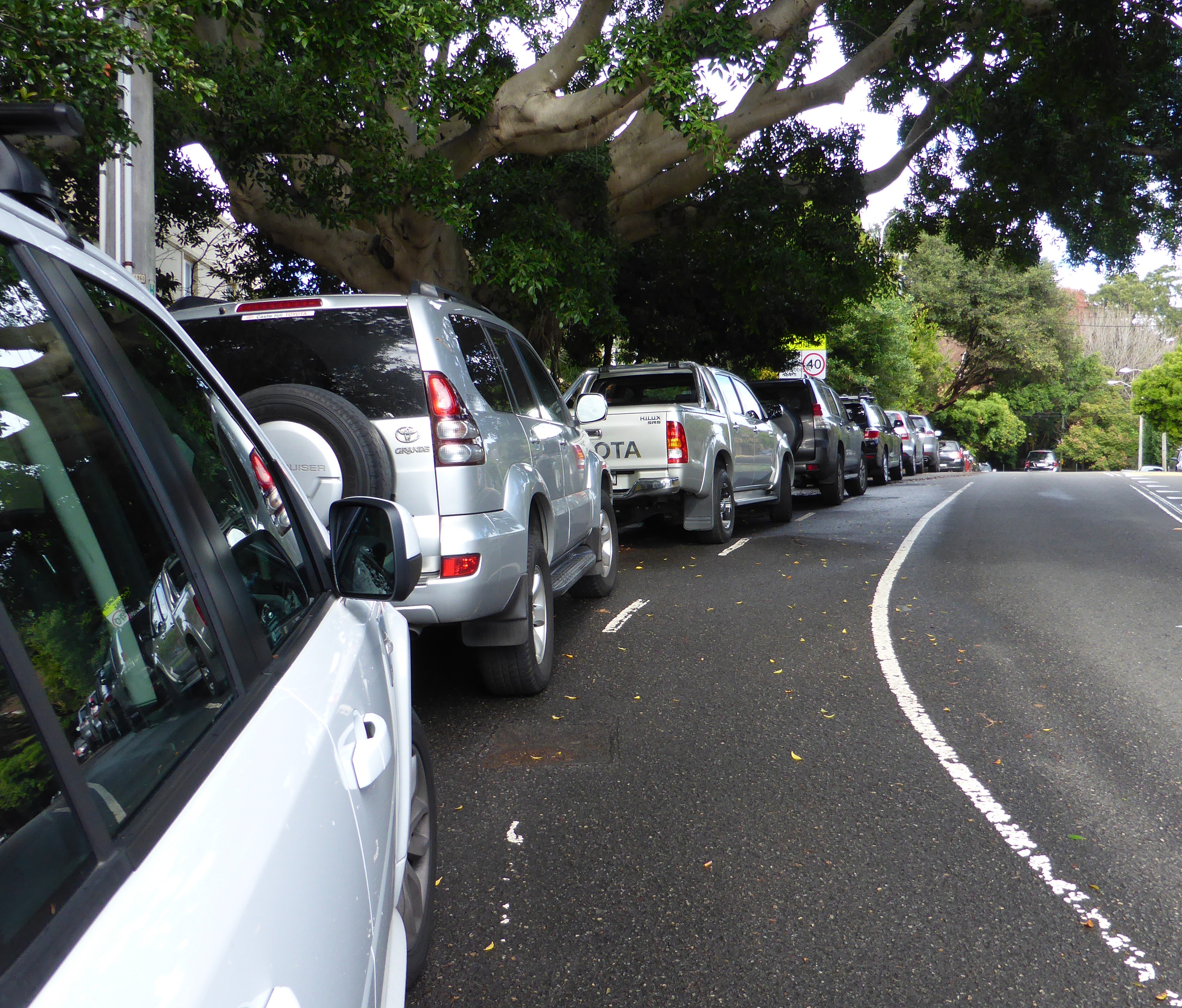
In Sydney I didn’t only find a defined cycle lane outside the parked cars, in most cases the bike lane was just a parking lane, only slightly wider than usual. This means a great space some of the time but an unpleasant slalom course around the parked cars that are present most of the time, again risking the ire of motorists on the main lane who don’t know how to interpret my moves when I had to pull a bit wider round the vehicles (which was most of the time.) I got shouted and hooted at a couple of times. No pictures? Sorry, too busy surviving.

No wonder this is a major topic among Aussie advocates, these are appalling, almost to the point of being lethal. Why motorists and cyclists alike have not succeeded with legal cases against the councils involved for causing risk and harm to road users is beyond me.

Putting a bike lane right up against the side of parked cars, and indeed allowing it to be further narrowed by cars parking badly is an official signal to cyclists that this is where they are supposed to be, despite the fact that this is completely and utterly wrong practice in every sense.  And to compound the problem any sensible cyclist who avoids the risk of dooring by moving out into the main lane is seen by motorists as being “in the wrong place” invoking further antagonism between users. It could only be worse if this were somewhere like Belgium where the bike lanes are compulsory.

I even found one dooring zone retained on the roads when a reasonable quality separated lane cycle lane had been built adjacent, so somebody must think they a continued place in cycling. I don’t get it.
Parking lane cycle lane Williamstown Melbourne

Part time cycle lanes.

Tookak Road cycle lane

Crazy design number 2 is the part-time cycle lane. I first discovered these on Toorak Road in Melbourne. At first couldn’t work out what I was seeing, I could see a cycle lane but it was covered in parked cars. So naturally I assumed this was an old fashioned parking enforcement problem, a lack of political will to enforce the rules. Ok we all get those, but this looked particularly bad.

Then I saw a sign that said the parking was prohibited at rush hour, opening up a third lane on the inside of the road and enabling the cycle lane to appear. As if a magic rabbit has been drawn from a hat the cyclists are now welcome and indeed encouraged on this road, but only if they are prepared to take on two or three lanes of rush hour drivers who are the real and intended beneficiaries of the removed parking.Toorak Road Melbourne part time cycle lane

So in the eyes of the transport planners there must be two presumed states of cycling here. There is the 22 hours per day cyclist who needs no cycling facilities. And then for 2 hours per day these poor lambs suddenly are given a bit of paint and a metre of the lane. This is of course complete and utter nonsense, cyclists don’t just exist two hours per day and they don’t need bad protection in rush hour, they need good facilities, or continue with none at all. These stupid lanes were just no use to anyone.

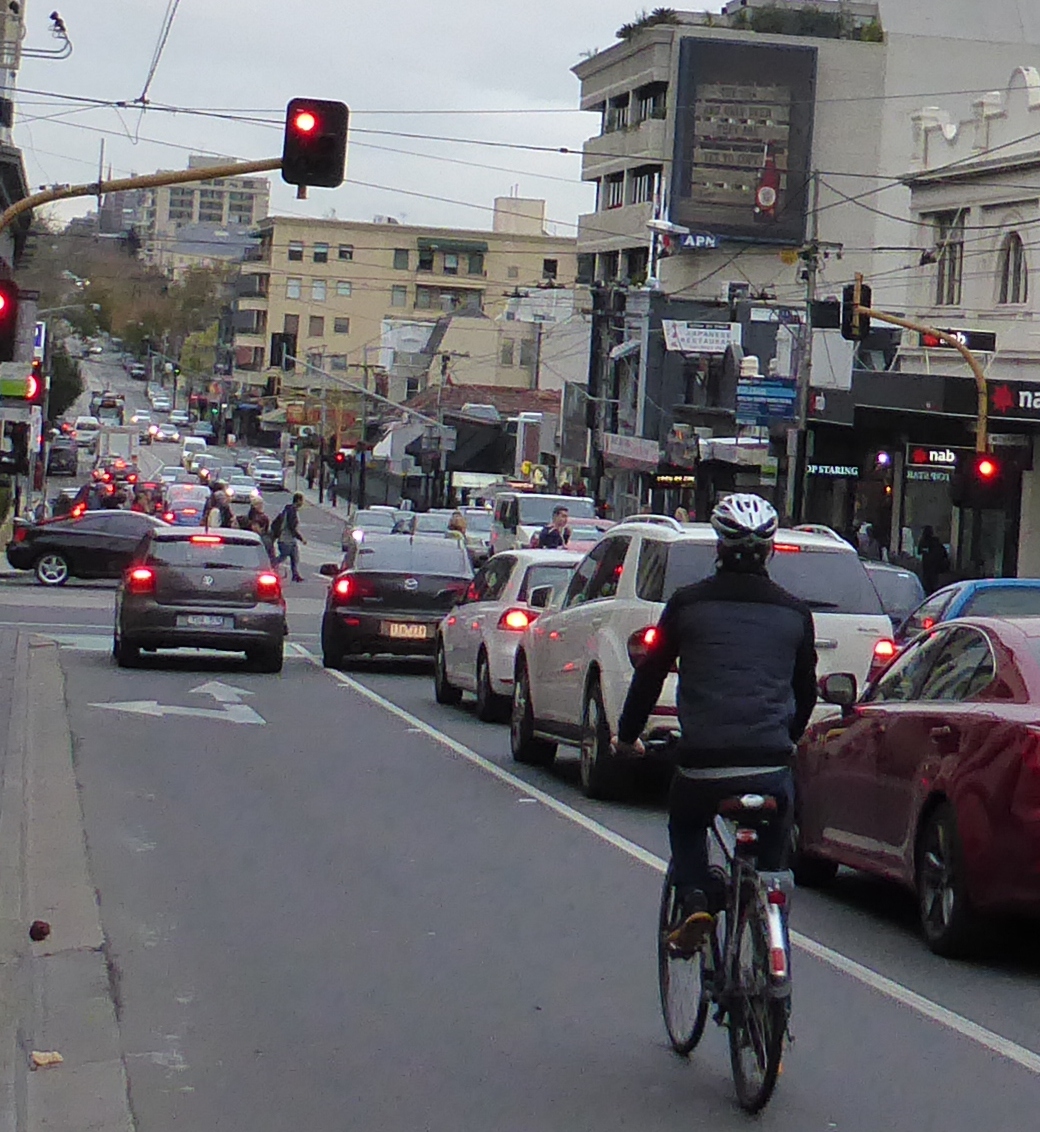
As far as I could see they were sensibly being ignored by the few cyclists using these roads who were generally confident and took the whole lane to keep themselves safe from motorists trying to squeeze by.  I saw nobody who I could categorise as a less confident cyclist. The photo below is a perfect example.
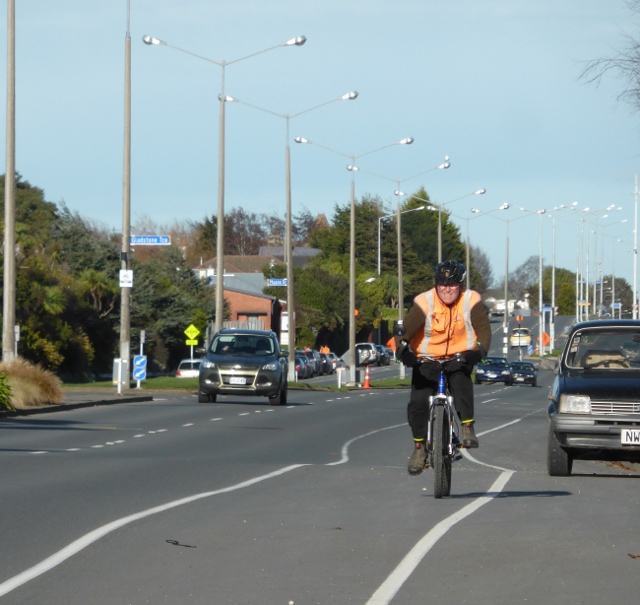
Melbourne

I would regard the positioning of this cyclist as exemplary for this sort of multi-lane road. But look ahead and his lane disappears actually into nothing, while underneath the cars there is a paint line that supposedly will push him to the left during rush hour. Useless and dangerous.

In conclusion?

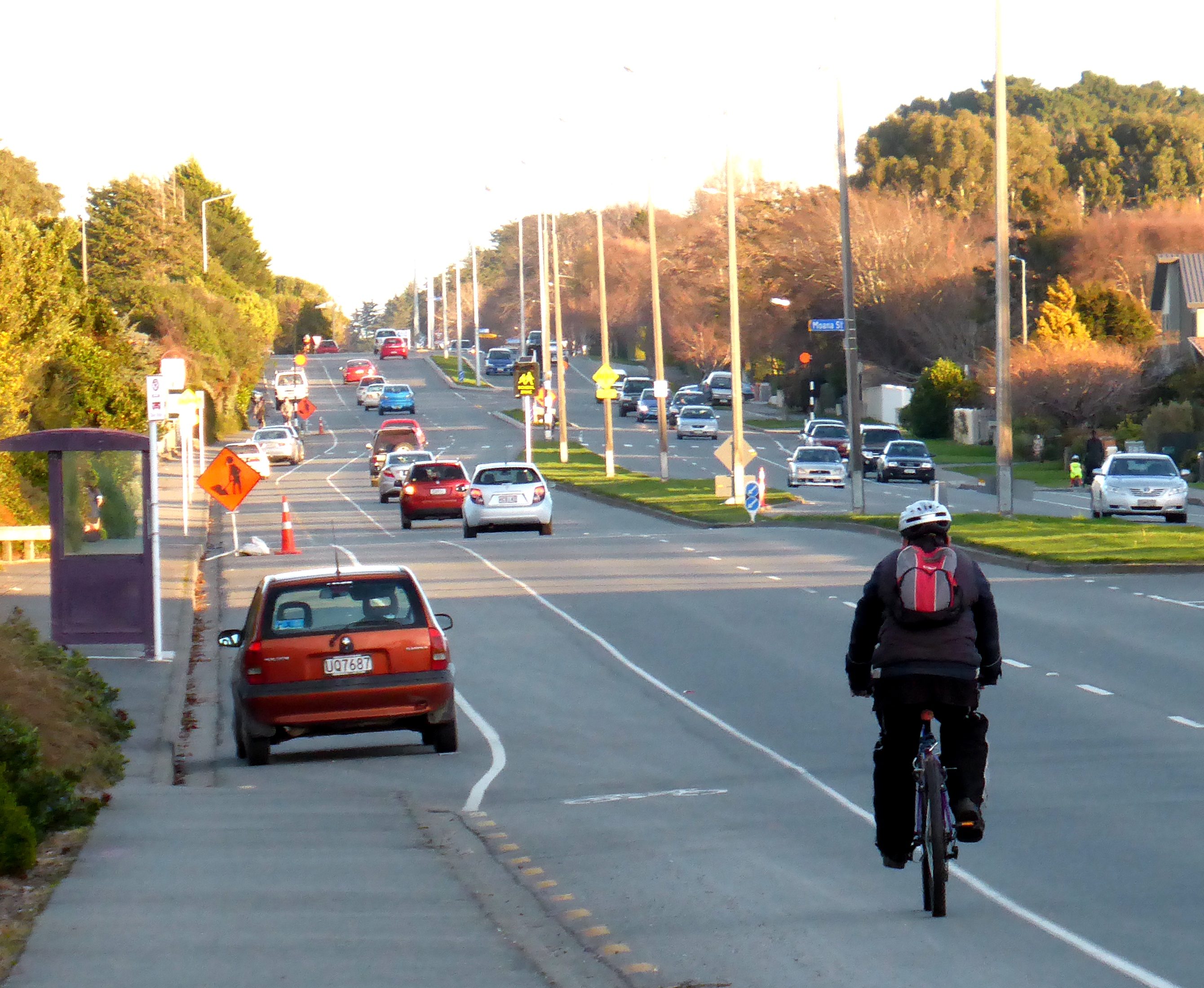
I know there are many out there in cycling advocacy who have become absolutist about cycling facilities and will condemn any and all cycling facilities without complete segregation as useless. I don’t share that view, I see that cycling is growing where the relationship between vehicle traffic and cyclists is managed through a mixture of measures such as car free areas, cycle lanes, speed control, traffic laws and in some cases just culture. For example in other Australian cities and in the last few days in New Zealand I have seen similar cycle lanes outside parked cars, but they had much greater width, the passing cars had wider lanes and they were travelling much more slowly. I found the cycle lanes a positive support and they were being used by much less experienced cyclists than the lycra types and occasional hipsters in the big Australian cities. example here:

Photo by Kevin Mayne

But I cannot see how anybody in Melbourne or Sydney could possibly better off with the dooring zones and part time cycle lanes I saw.

Sadly I believe they probably make the environment for most cyclists much worse. Some high quality facilities are being installed in the centre of both cities but it doesn’t take away the problem of what you have to ride through to get there, after all a safe cycling trip is only as good as its weakest link.

The question remains. “What were they thinking?” I do despair – sometimes.

Coming next “Cycling on Freeways”. Seriously.