A cycling oasis in Sydney’s Olympic Park


Photo Kevin Mayne

I found that much cycling in Sydney is not for the fainthearted.

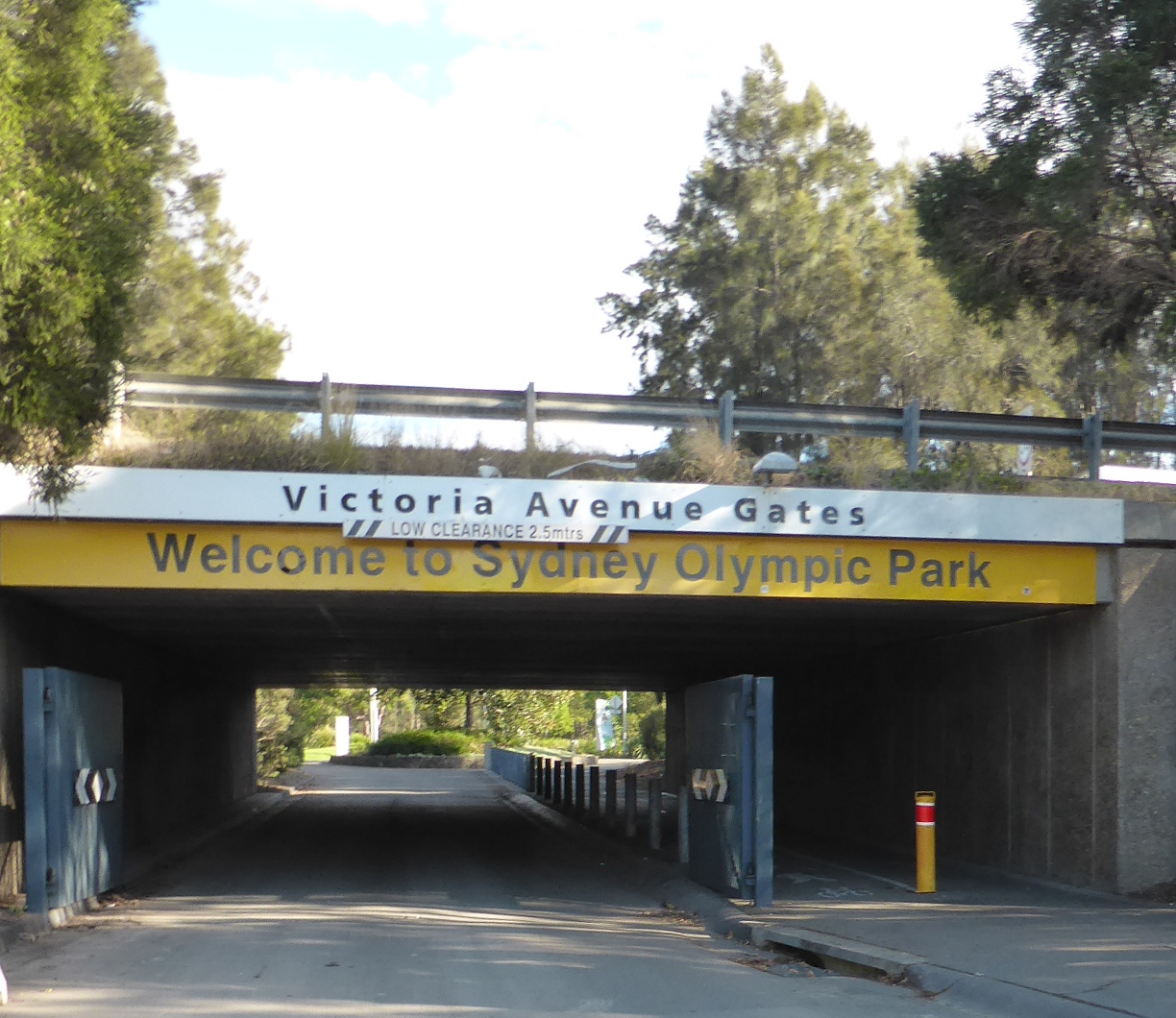
However when I went to visit Bicycle New South Wales to catch up with advocacy chat I discovered a cycling oasis around their offices in the Olympic Park site.

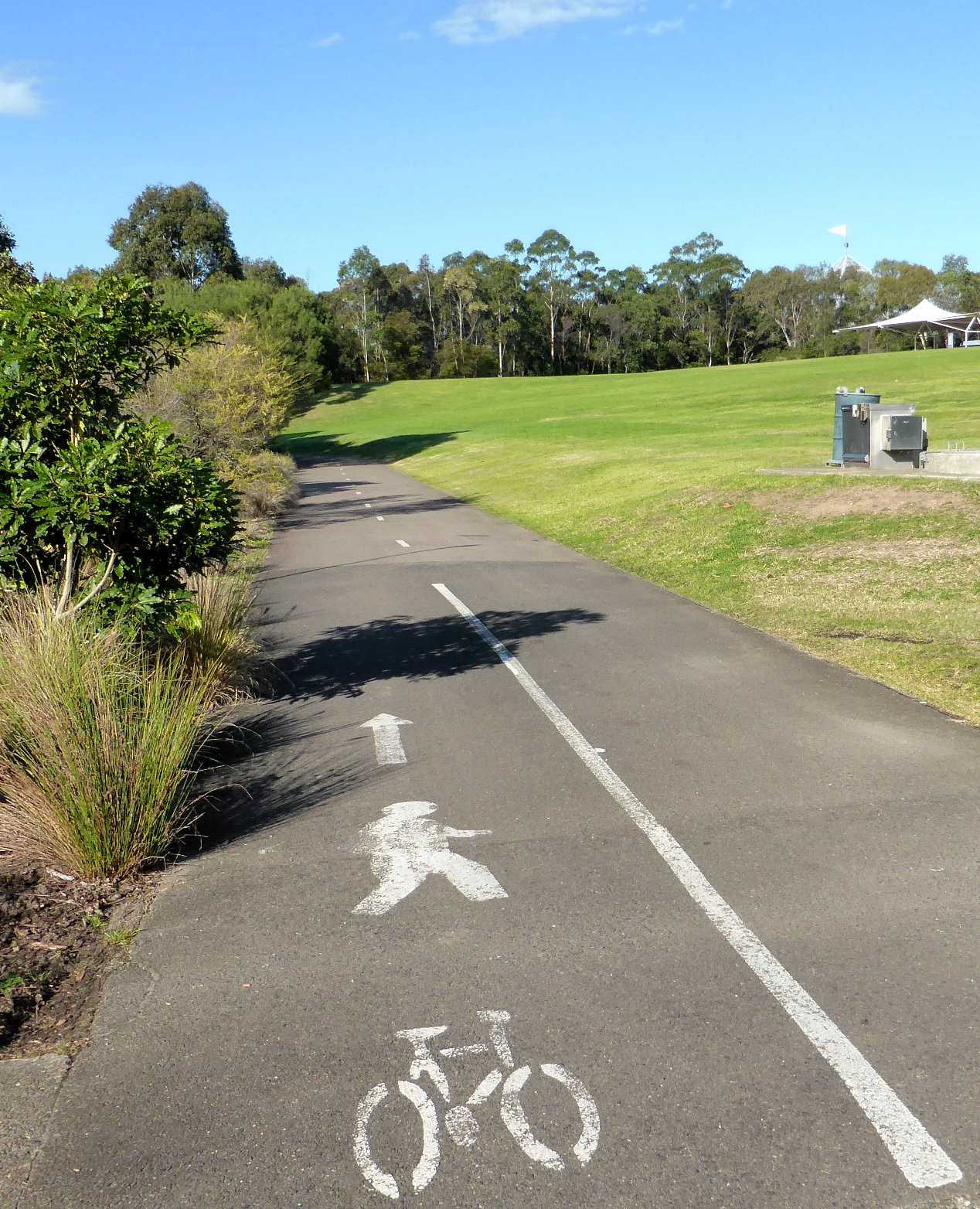
Shared use cycle path Olympic Park Sydney

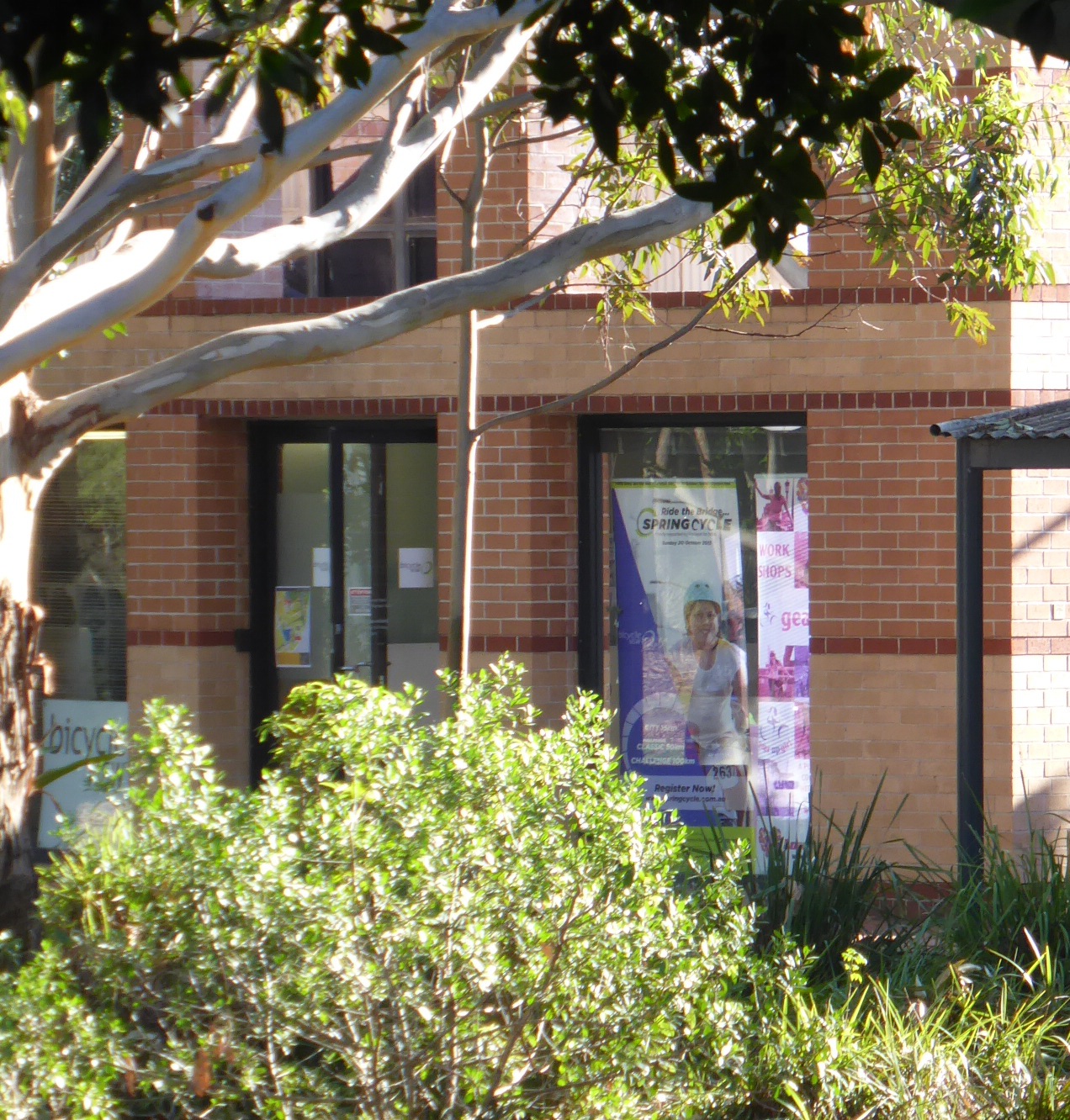
As a not for profit organisation Bicycle New South Wales have a great deal to use legacy buildings on the site of the 2000 games which puts them in an attractive leafy spot on the edge of the park.

Bicycle New South Wales Offices

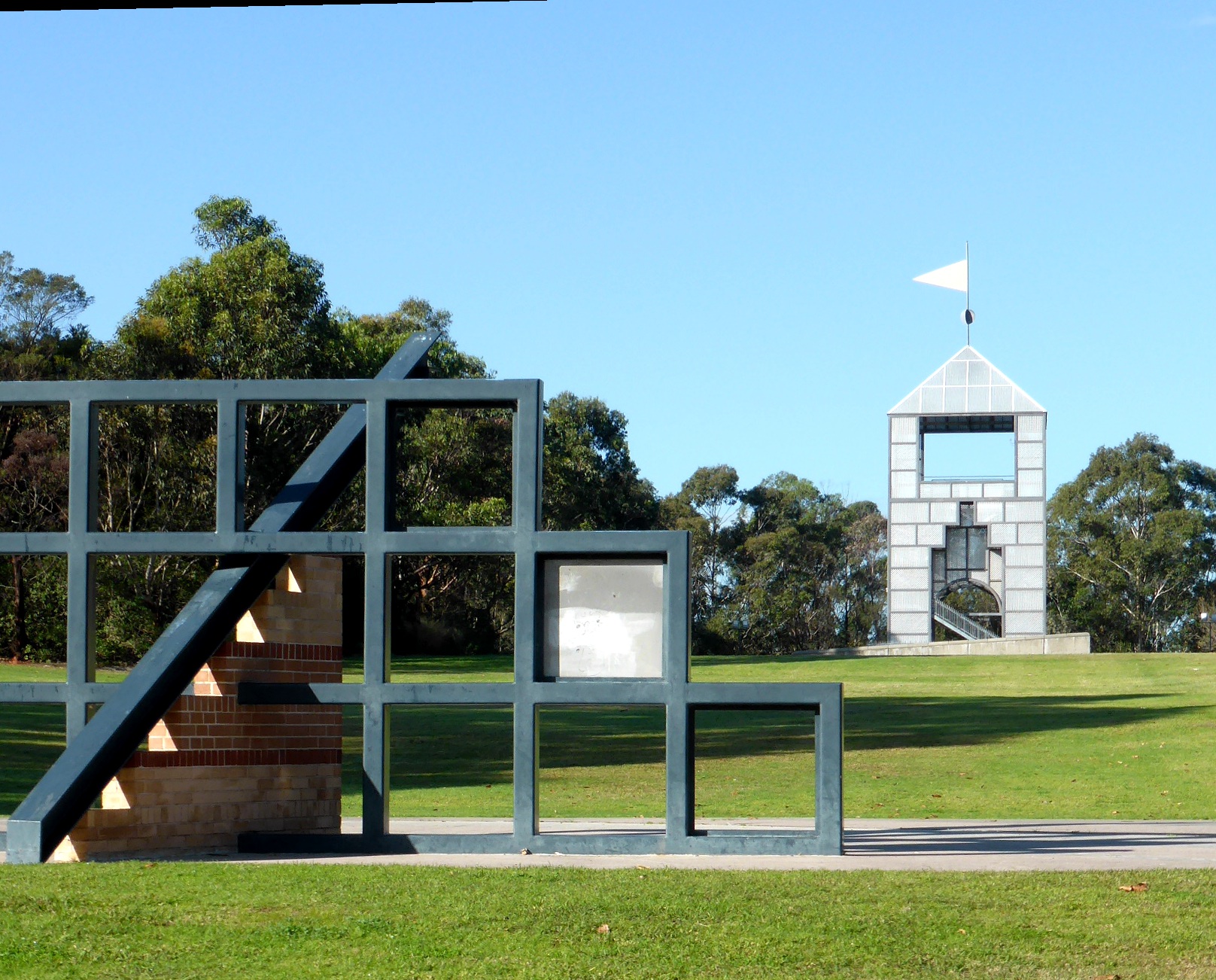
And perhaps more importantly they are at the heart of one of Sydney’s hot spots for cycling because the other legacy is a network of car free and quiet roads that encourage riders of all abilities. I read that there are 35 km of cycle paths in the Park and the background of parkland, sculpture and outdoor activities is an attractive and inviting background for a spin.

Photo by Kevin Mayne

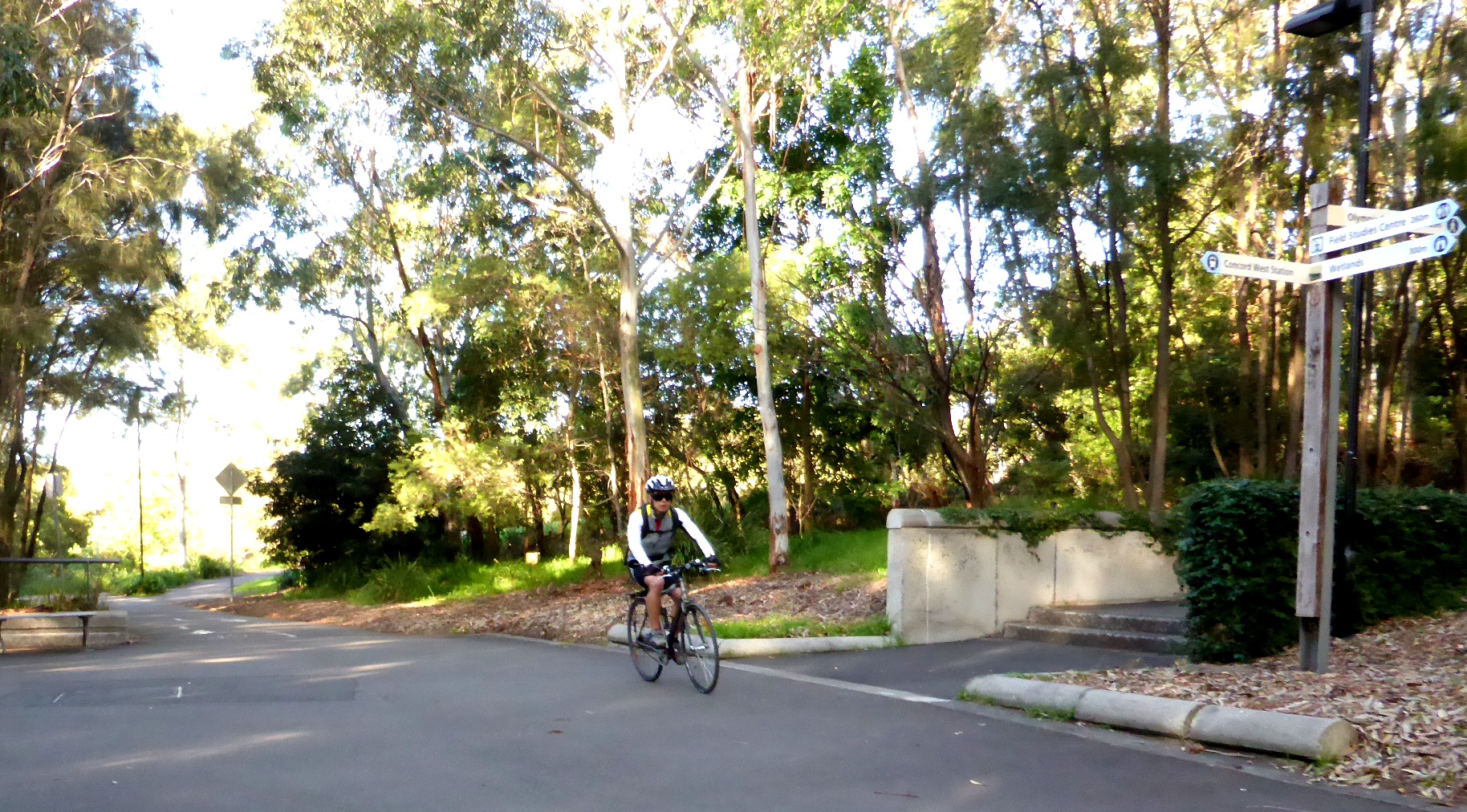
Apparently the fast riders get in here very early in the morning and big pelotons thrash the access roads at high speed while the shared use tracks on the parkland are much more popular with beginners. Throw in a good coffee shop for the post ride chat and it is all here for a captive cycling audience.

Photo by Kevin Mayne

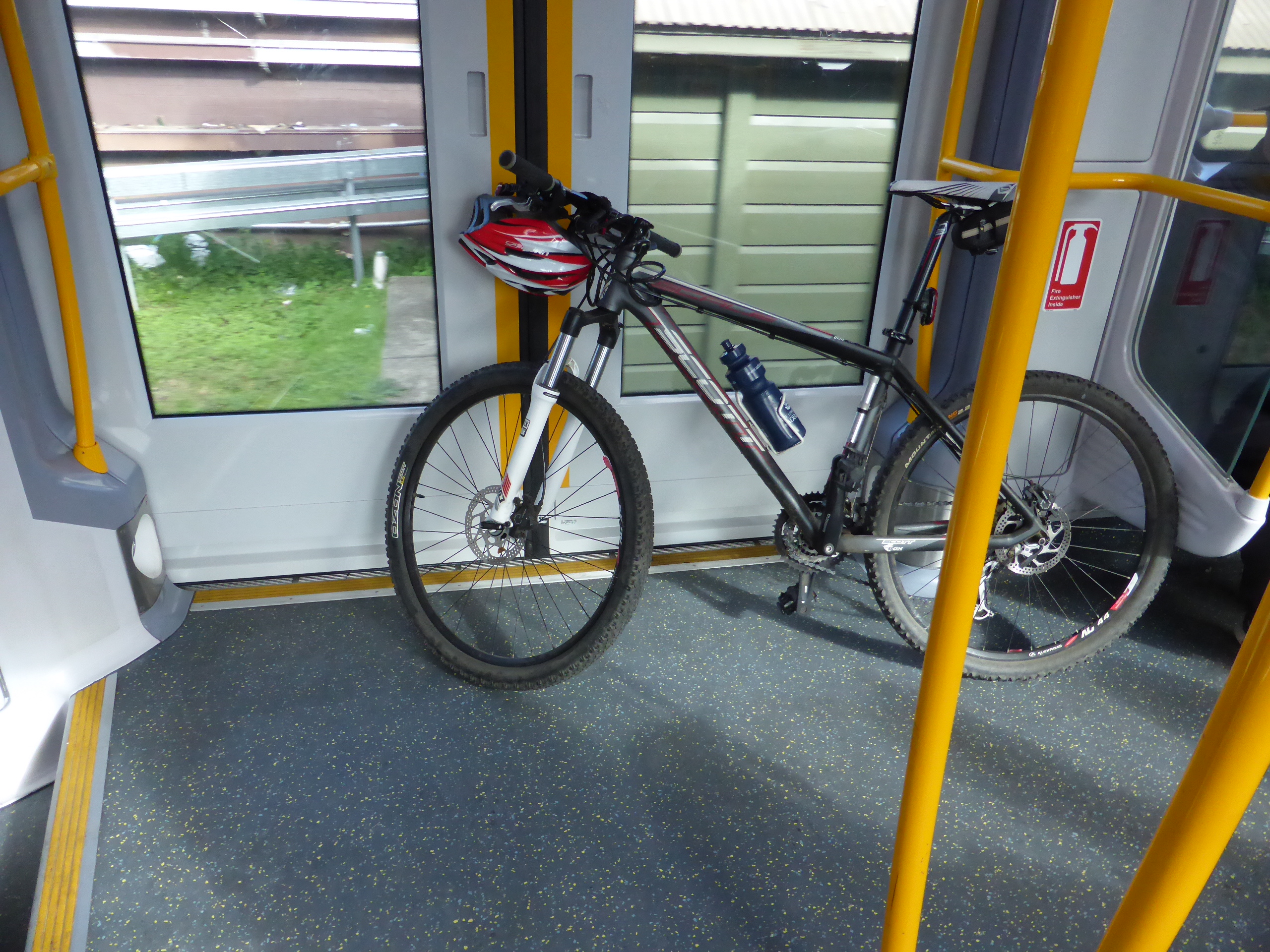
Bike and Train in SydneyI am not sure about the access to the park by bike but on my route there I found another bonus – almost all Sydney trains and ferries carry bikes free, or at the price of a child ticket during peak hours. There are no special cycling places that I could see but every train has a large number of open sections and wheelchair access so it was really easy to use.

As Olympic Park has its own ferry terminal and several nearby stations that was a real bonus. A flexible arrangement like that should be recommended for all cities, and it is especially essential where the highways that link many Sydney suburbs really are not bike friendly. Alternative access opens up resources like Olympic Park to so many more people.

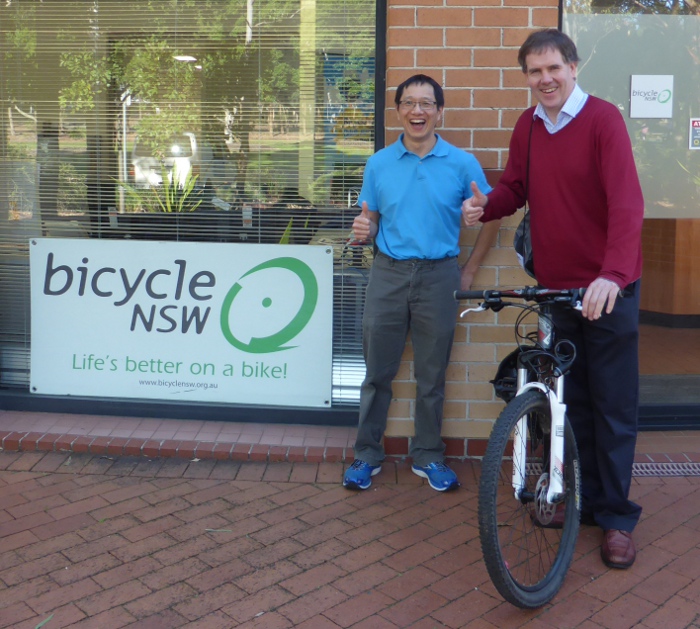
Bicycle New South Wales Thanks to Brian Fong and his colleagues for making me welcome at Bicycle New South Wales.


Beautiful time lapse cycling video from Australia – one for my library

I was pointed to this beautiful time-lapse video sequence of a long distance cycle ride in Australia by Cycleclips, the weekly email from CTC, the UK’s cyclists charity. It seemed even more timely because I was in Australia when I watched it.

The newsletter said:

Audax Alpine Classic, a short film shot over four days and nights which captures in extraordinarily detailed time lapse photography the 2000 cyclists taking part. The riders in the 250km audax event look like miniature models as the stunning scenery looms above them.

It is only four minutes long but worth every second. Email recipients of the blog may need to read this post in your browser to see the film, or click on the link below to go to the page on Vimeo.

Film on Vimeo here

If you like an eclectic selection of other cycling videos then try my Video Library page

Sydney’s Ku-Ring-Gai Chase National Park – the backdrop to three outstanding bike rides

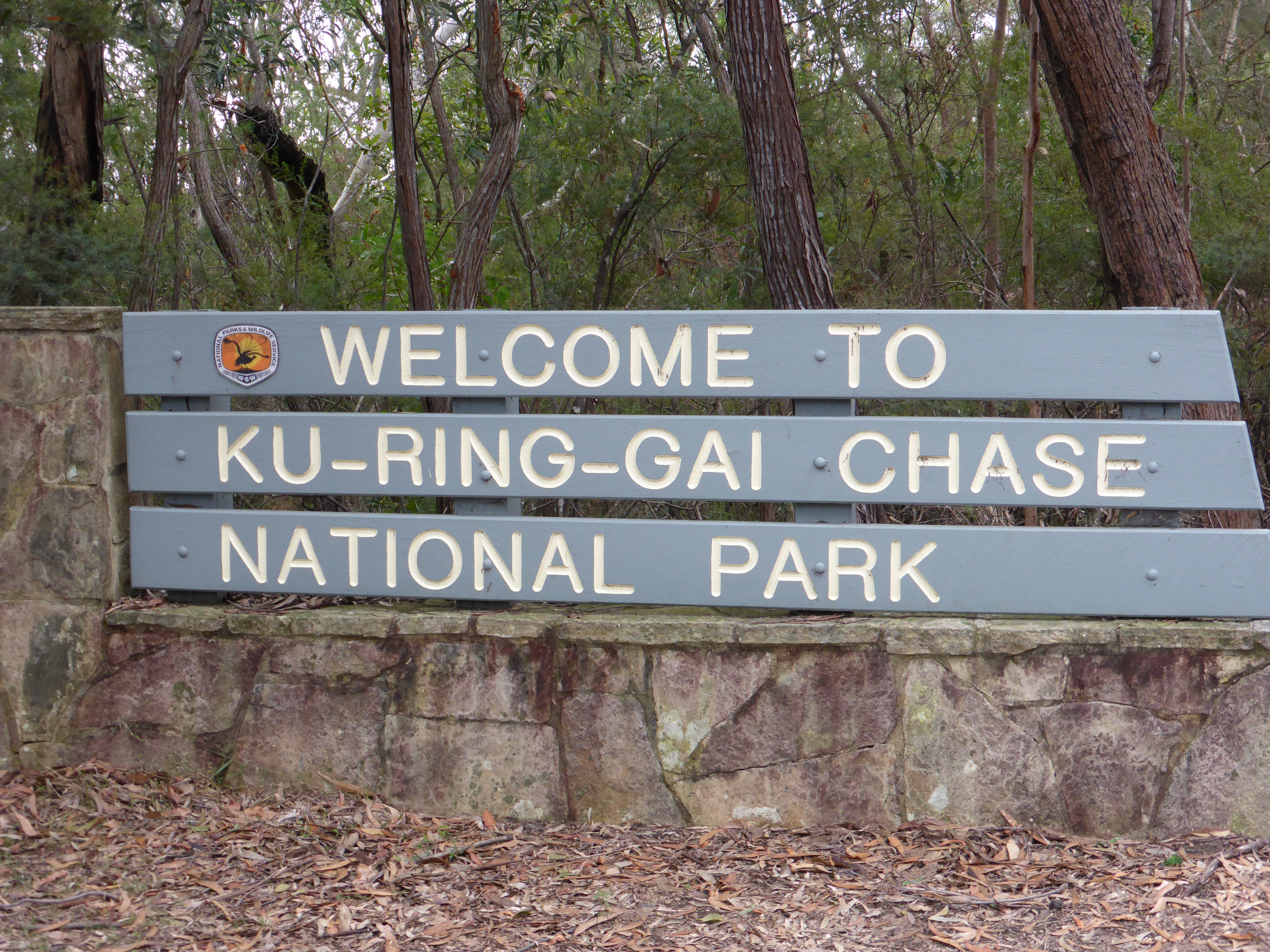
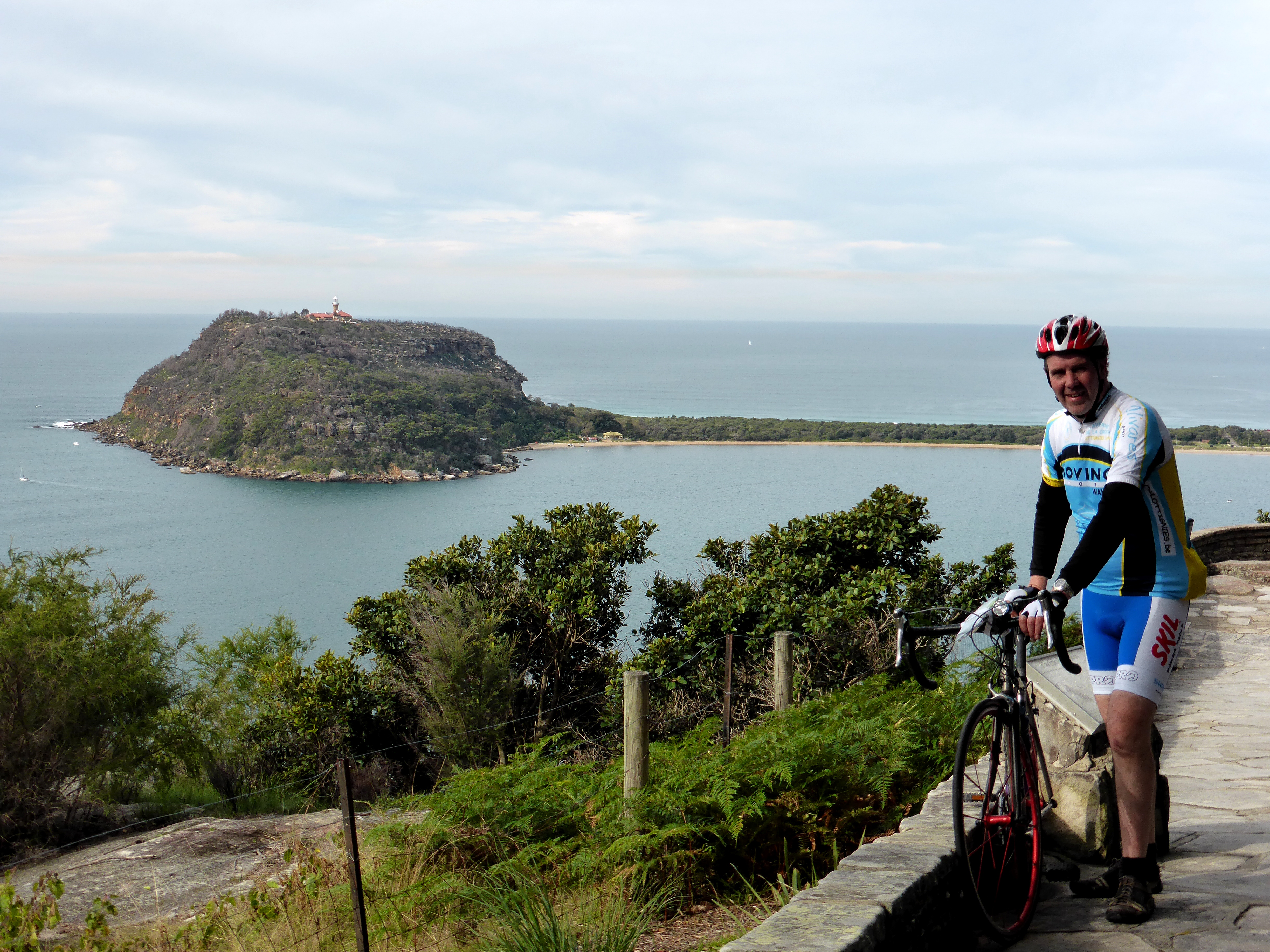
Bike at West Head Lookout Sydney Welcome to Ku-Ring-Gai Chase National Park

As soon as we arrived at my in-laws house in the northern suburbs of Sydney I was looking at the map working out where to get in a ride or two, especially as I had a very nice road bike on loan. My expectation was encouraged by knowing that the landscape is really interesting and the amazing weather forecast was promising around twenty degrees and mostly dry weather every day. You cannot do better than that for a winter holiday and I certainly wanted to get some kilometres in because the weather prospects for New Zealand were much less promising.

The map was extremely enticing. To the north of my start point in Beecroft is the Ku-Ring-Gai Chase National Park and it had some brilliant looking roads running up to the coastal inlets that define this area. However I was less clear about the actual topography or the road quality and to get there it seemed I had some busy highways to navigate so I was a little hesitant before my first attempt.

I can report now that over a week I found three outstanding rides which offered the low traffic volumes, spectacular views and exciting riding that I was looking for. The numerous cyclists I saw on each route confirmed that I must have dropped on to some real local favourites.

Hills on the West Head Road Sydney

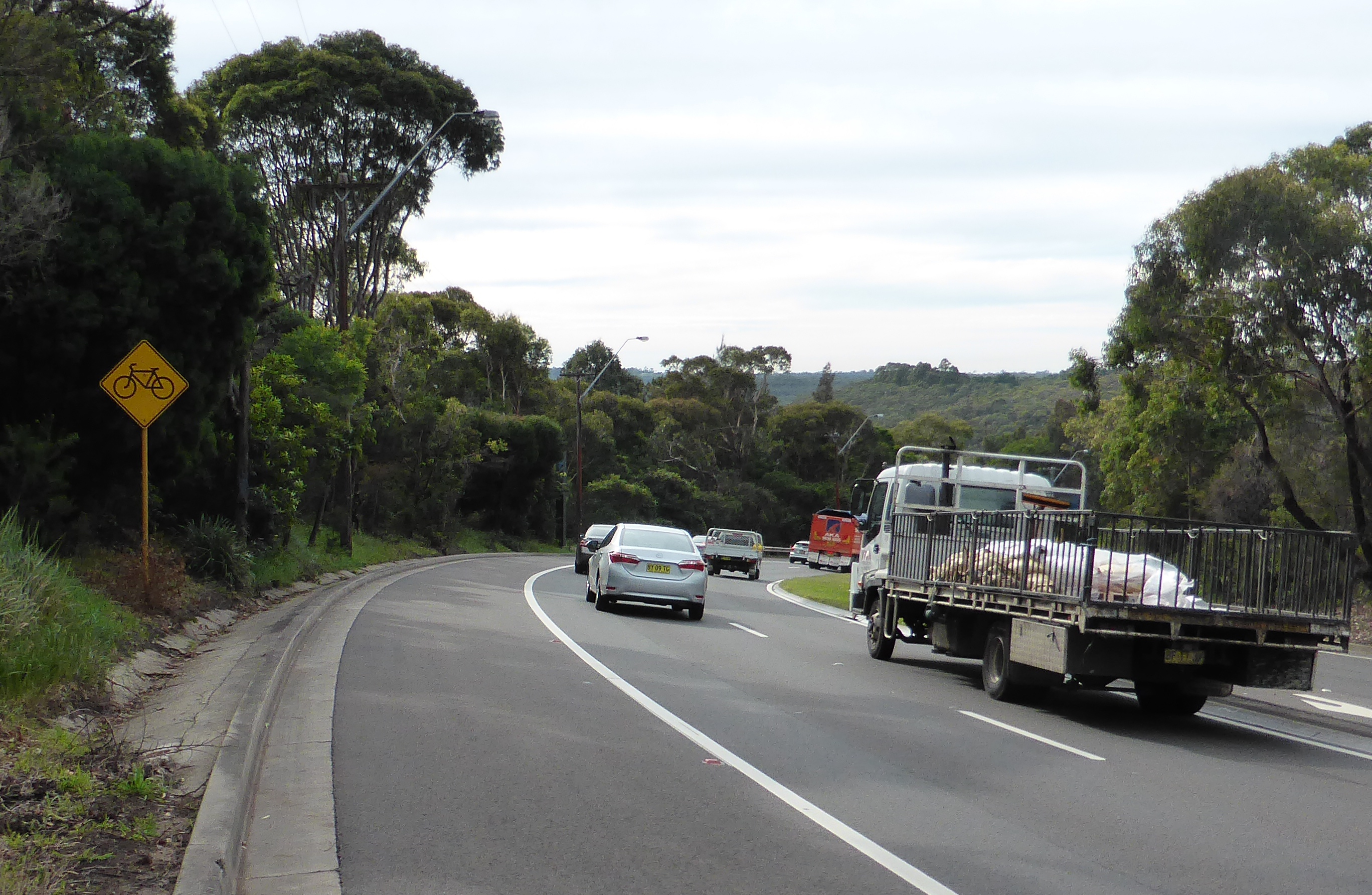
My health warning is that while the scenic roads were brilliant the access was much less so. I was exposed to more high speed traffic and unpleasant riding conditions than I am happy with. This may explain why many locals seemed likely to have driven out to the National Park before riding. It was also my first exposures to the fact that any  in suburban Sydney are a very distinctive group with a completely different perspective on what constitutes a good bike ride to anywhere else I have been. However that will be a later post, for now let’s concentrate on the positive.

Bobbin Head reserve Sydney Bike ride

My first ride was about an hour and a half through a feature on the map called the Galston Gap. The attraction on the map was an area of green adjoining the National Park called the Berowa Valley Regional Park with a very wiggly road running across it which could only be hairpin bends – oh yes please!  The ride up to Hornsby was a bit of an induction, it involved a very nervy crossing of the multi-lane Pennant Hills Road and then a road that can only be called a roller coaster, there wasn’t a flat bit on it. I was puffing like a steam train by the time I even thought about the Galston Road.

However I was then rewarded by a 4 km descent and a 3km climb on quieter roads through a wooded valley which cheered me enormously.

The next ride was my longest and by far the most spectacular. I was quite sure that I wanted to ride the road right through the Ku-Ring-Gai Chase National Park out to the great looking headland at West Head but I decided to Google a bit to see if a dead end road like that would be worth it. I was very pleasantly surprised when almost top of the Google ranking was a very positive 2010 description of the ride on the excellent “Richard Tulloch’s Life on the Road” blog which I follow.

West Head Road

Richard and his son went by car but I was determined to make a half day ride of it so I wanted to ride out. My sister-in-law assured me that the long link via the Mona Vale Road was a popular cyclists’ route because “there are always cyclists on it” so I decided that it was all quite possible.

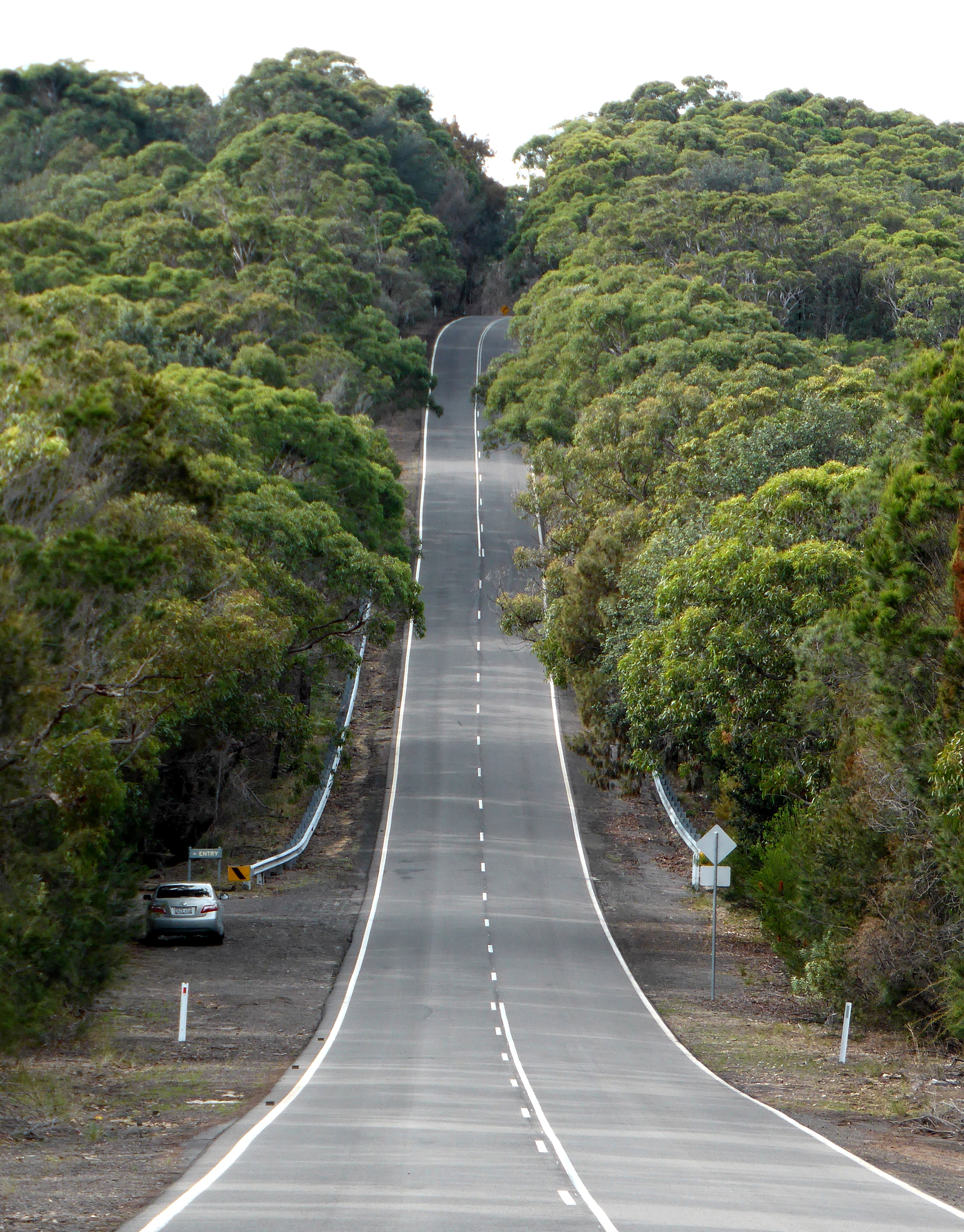
I can say now that I am incredibly pleased that I made the effort, the West Head Road is a spectacular triumph of a cycling road on a quiet sunny week day in winter. I saw perhaps a dozen cars, far more cyclists, the road surface was spectacularly smooth and rolled up down and around the contours for about 20km in each direction.As I approached its north end and the head itself the peninsula narrowed offering great views over the sea inlets on either side and then ended in the West Head lookout itself.

West Head Lookout bike ride

I enjoyed a very pleasant twenty minutes or so just taking in the views and taking pictures before I retraced my steps. This really is an amazing route, not to be ignored just because it is a dead end. It is one of the highlights of my Sydney trip.

Mona Vale Road cycle path SydneyI could say I am really pleased about the other 45km of the ride through the suburbs. I am pleased for my fitness and because I was out on the bike. However in all honesty it was really hard riding on many of those roads because the hills are ferocious and the traffic is really busy. There’s no escape from the noise and the fumes anywhere. Mona Vale Road may suit Sydney’s head case cyclists, but it isn’t for me if I could avoid it. I kept hoping that I would discover the secret back roads that the local riders use for scenic cycle touring but in that part of the city the back roads don’t seem connect because of the steep sided valleys so bikes are using the same corridors as the cars and freight.

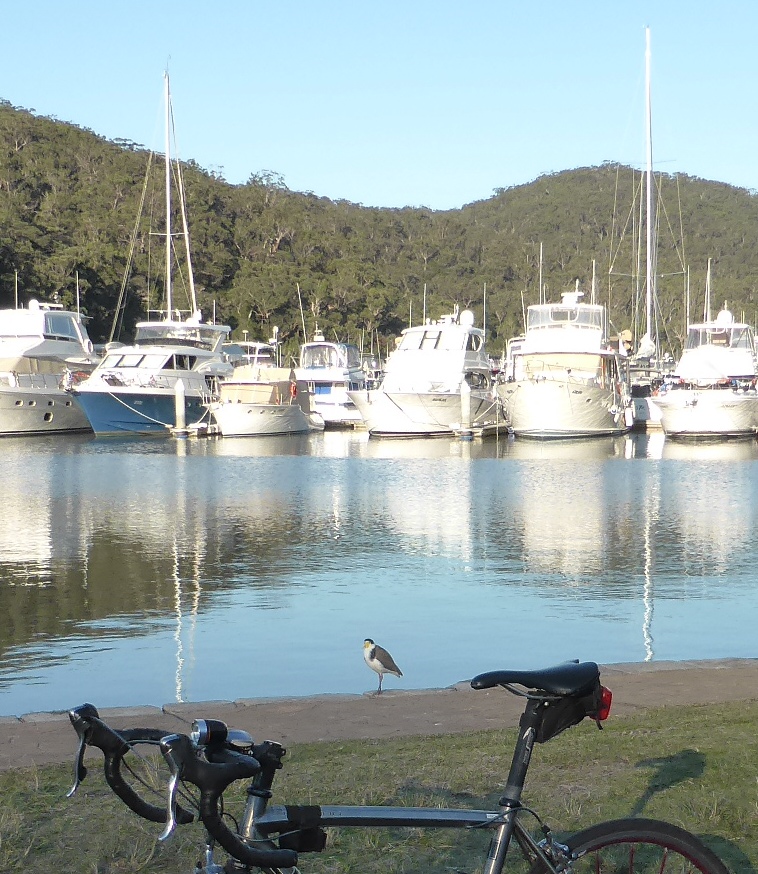
That explains why my final offering for the “three great rides” was a car assist, after a lunch at the beach I got dropped off to complete the third leg of my valleys’ triple. This time it was back into Ku-Ring-Gai Chase for the Bobbin Head ride. I started at St. Ives and had a fantastic long descent of about 3km down to the sea at Bobbin Head, right at the heart of the national park. This secluded inlet is only home to an exclusive set of moorings on the water and a visitor area on shore, otherwise it is a silent green haven with steep sided valleys cutting it off like walls on all sides. It was almost deserted apart from a few fishermen and occasional passing cyclists.

Bobbin Head bike ride Sydney

This ride is apparently popular for local clubs because it isn’t just a dead end, it climbs up to Hornsby on a similar long shallow climb which conveniently has been spray painted with 500 metre intervals all the way up.  (3km I can report).

Bobbin Head Road Sydney

Again I just thrashed the final 25 minutes from Hornsby and rode the final kilometre into Beecroft on the pavement to avoid the trucks but it wasn’t enough to diminish the pleasure of the overall ride.

Conclusions?

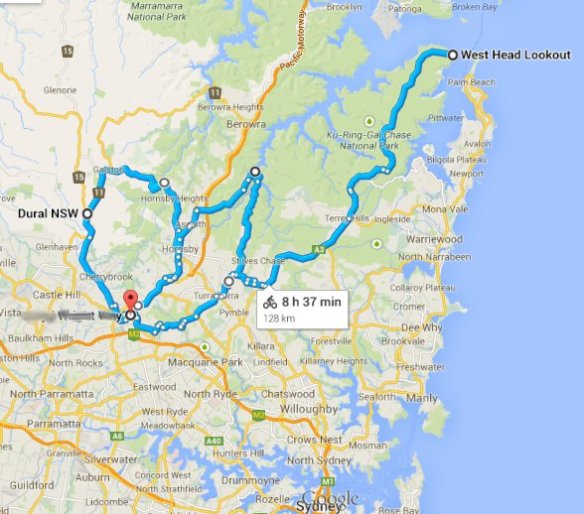
There is probably a way of combining these rides into a spectacular set of touring and training routes that would be one of the most outstanding cycle routes you could imagine anywhere. (I have put them all together in this Google Map) Unfortunately from my perspective the horrible access roads currently make them rather exclusive to serious cyclists who feel comfortable on busy roads or those who drive out to the national park.

three great rides in Sydney

As a set of shorter rides each can be exceptional, especially the West Head ride which is a superb ride by any definition. Possibly the ferries that link some of the beaches could be the “missing link”, as could access by mountain bike which opens up a lot of tracks and trails, I didn’t quite work that out in the time I had. If I lived there maybe I would work it out.

However that doesn’t stop me saying that I am really glad I did these three rides, the chance to ride in the Ku-Ring-Gai Chase National Park was a cycling high spot on this holiday.

West Head view point

Melbourne provides all the ingredients for a great bike ride – good company, great route, brilliant weather.

Gallery

This gallery contains 18 photos.

One thing was absent for seven days during my recent trip to in Melbourne. Cycling. Catching up with family and friends is always special. We explored some lovely settings. We consumed large quantities of excellent food and drink. But my … Continue reading

Flat tyre frustration cannot diminish the beauty of Gippsland

Gallery

This gallery contains 7 photos.

Another of my short gallery posts from Australia, this time leaving Melbourne to visit Fish Creek, two hours south-east from central Melbourne in the farming region of South Gippsland. This could so easily have been a cycling post. Having arrived … Continue reading

Melbourne’s diverse lifestyles – Patterson Lakes

Gallery

This gallery contains 11 photos.

Next in my mini-series of the Melbourne suburbs where family and friends now live. By contrast to yesterday’s post on the country suburb of Yarrambat this time we go back to the waterside and the boating heaven of Patterson Lakes. … Continue reading

Melbourne’s diverse lifestyles – Yarrambat

Gallery

This gallery contains 10 photos.

I always understood that Sydney is Australia’s glamour city in terms of tourism but Melbourne is the constant winner in terms of lifestyle. From this trip we certainly found that our family and friends in Melbourne have developed amazing variety … Continue reading

Transported by a time machine – bicycling back to old times in Melbourne.

Melbourne Australia

A simple bicycle journey took me back 28 years. And at the same time it helped change my negative reaction to 21st century Melbourne.

Before arriving everyone who has been to Melbourne in recent years  told me “You’ll be amazed how much it has changed”. I cast an interested eye over media and travel stories from Melbourne and I sensed that the city had successfully regenerated itself, especially acclaimed developments on the south bank of the River Yarra which had opened up a neglected city zone.

I guess gentle Adelaide was a bit of a false introduction to today’s Australia because on arrival in Melbourne I was shocked by the new freeways, the link roads, the intrusiveness of the new city centre buildings and above all else by the traffic. And when we reached our friend’s house we took a walk down to our old haunts of Chapel Street but they no longer felt like a friendly environment of cafes and small shops but a wall-to-wall temple of consumerism and never-ending traffic, even on a Sunday.

I couldn’t even cheer myself up by playing “When I see an adult on a bicycle I do not despair for the future of the human race” because I didn’t see any cyclists and only a few lonely bikes chained up to lamp-posts – never a good sign. (close to “desert” on my “Utrecht” cycle parking scale).

My gut reaction was really negative. What had become of the Melbourne I so enjoyed? Was it crushed by cars and buildings?

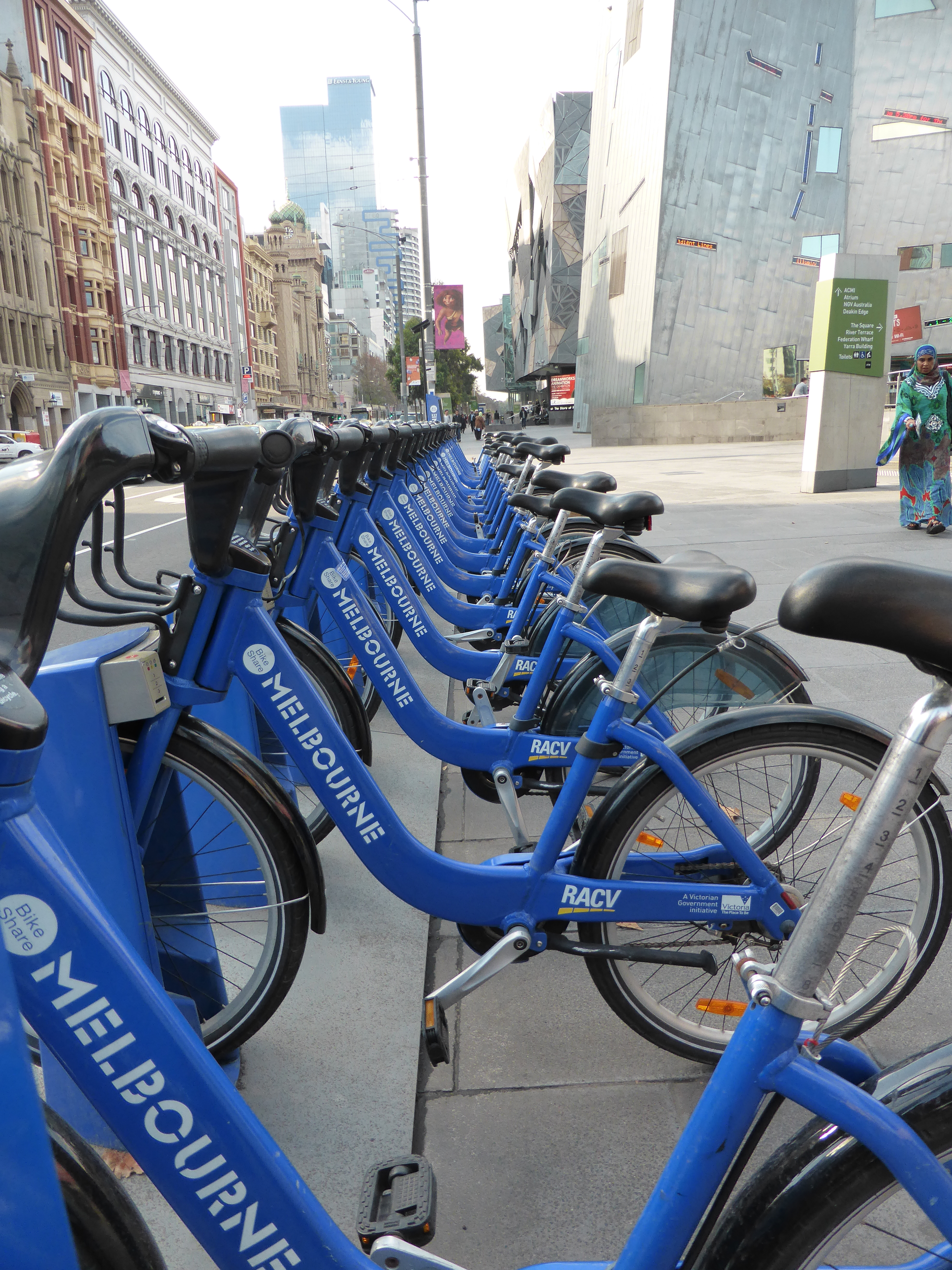
So I needed a pick-me-up. The way to do that was to take a tram up to the city, hire one of Melbourne’s public hire bikes and set off towards the area I used to live to see if the beach-side suburbs had survived the so called “improvements”.
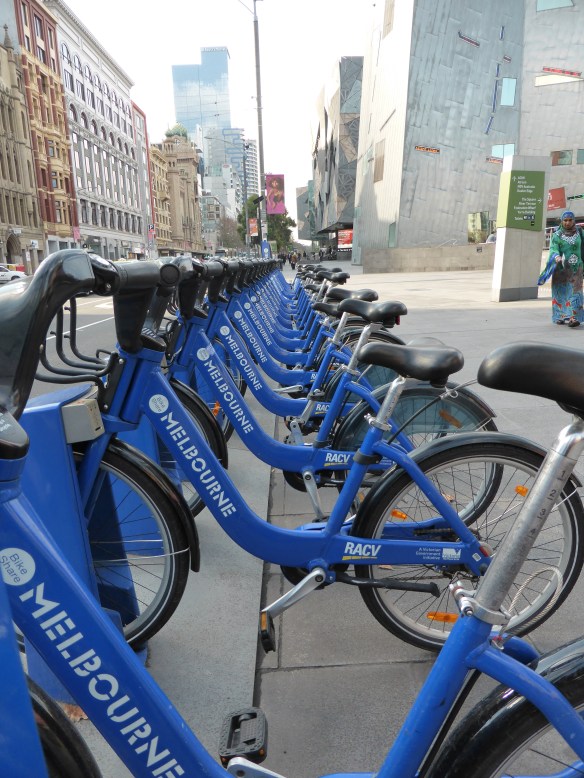
Melbourne Pblic Bike sharing scheme

I started from the bike hire at Federation Square and quickly picked up the car free restaurant and café areas of the South Bank which were obviously colourful and vibrant and a huge improvement on the past. Then I managed to pick up a shared use path which followed the tram route out to Port Melbourne.

When I popped out on the sea front in front of the ferry terminal it was clear that a more low-key gentrification is in progress here too with more refurbishments and new buildings, but on a human scale. On cue the sun came out and a hazy tranquillity descended over the sea. Much better!

Port Melbourne

Bay bike path MelbourneAfter a brief pause I set off south along the Bay cycle paths I had also heard so much about, the ones I wished had existed years ago because then I wanted to ride by the sea but was never able to find a continuous attractive route.

Within minutes I reached Kerford Road Beach and the years just dropped away. This was instantly recognisable. And so, so, peaceful, even the few cars cruising along the beachfront road could not hide the fact that this is an oasis of calm just a short distance from the city centre.

Kerford road beach

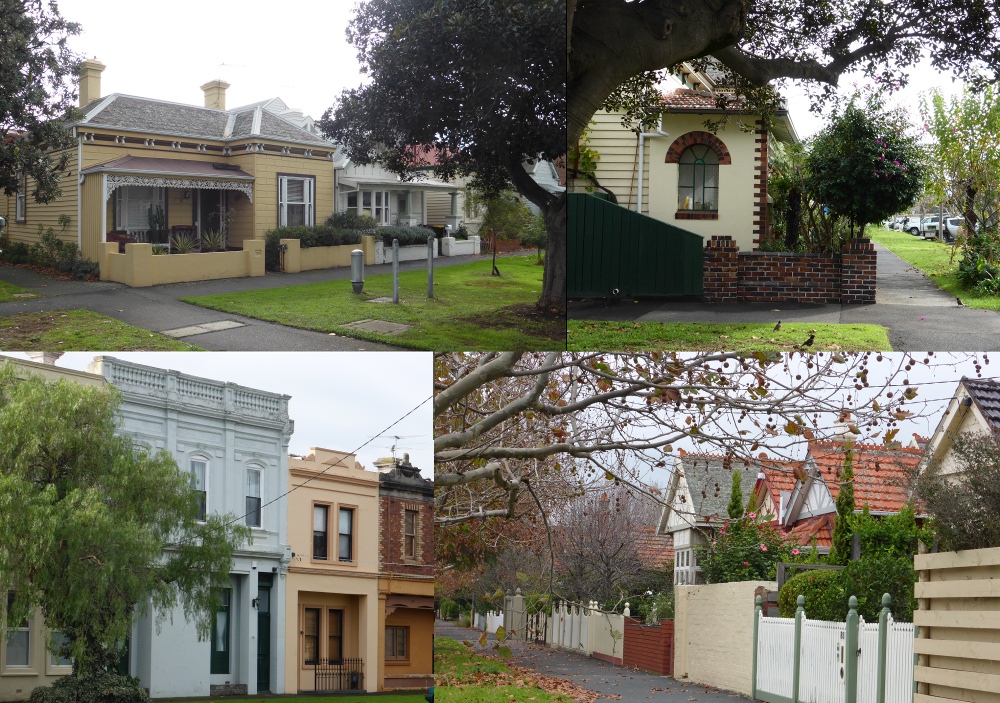
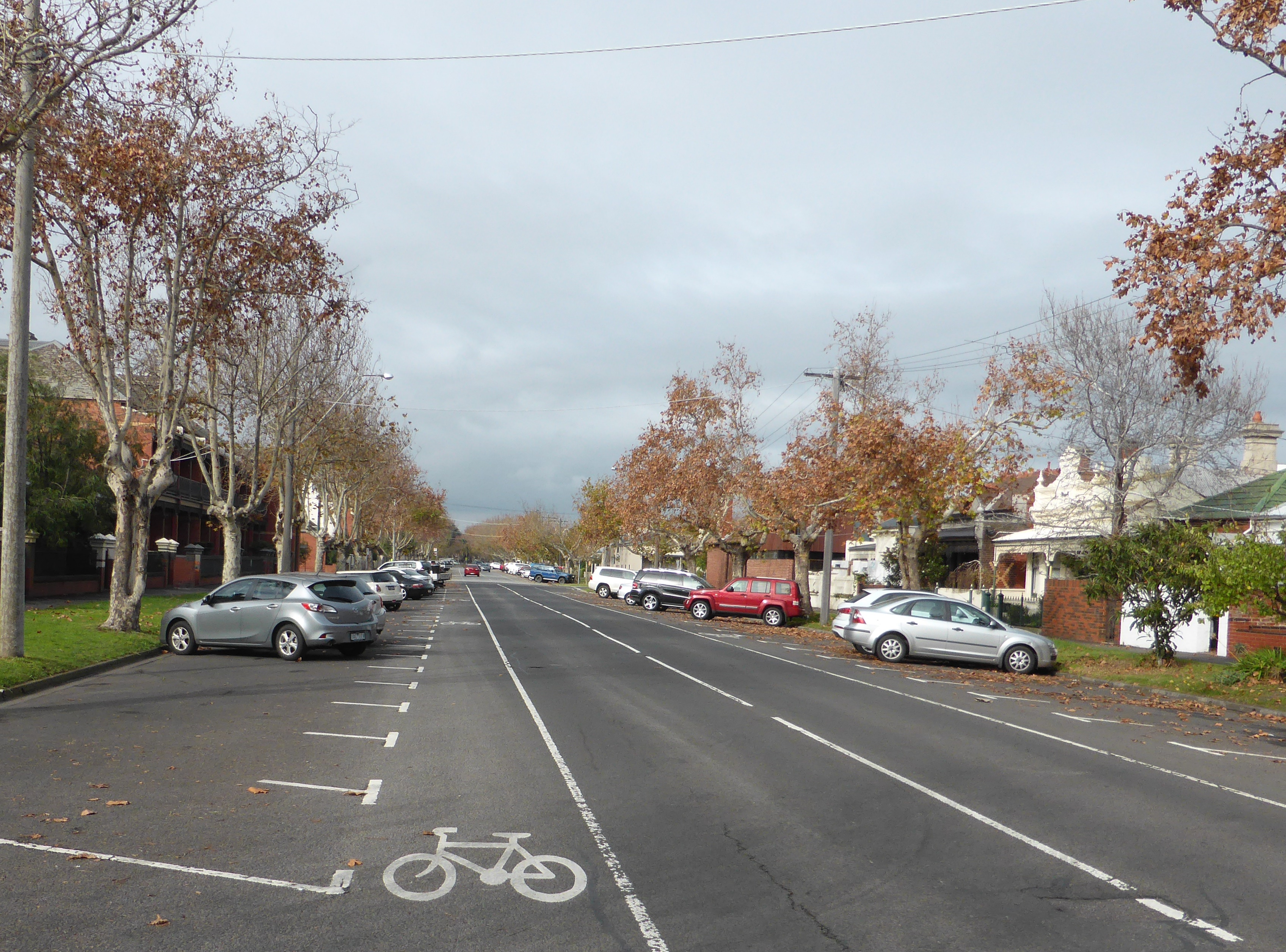
After soaking up the atmosphere I swung away from the beach to the residential streets where I once lived to discover an even more remarkable throwback. I am not sure what planning regulations protect this area but it was as if the neat rows of single story houses with their picket fences and verandas were unchanged from the 1930s, never mind the 1980s. The fact that nobody seems to have been allowed to knock them down and rebuild keeps them all low so the sense of huge wide streets is retained too. It was deathly quiet, I could hear the children in the primary school and the rattle of the Middle Park tram a street away.

Middle Park Houses Melbourne Richardson Street Middle Park

The houses in this area may be a bit small for the Australian dream but for a trendy, near-city lifestyle near the beach they have become like gold, I can imagine this community will fight tooth and claw to preserve what they have and so they should. Unsurprisingly the small parade of shops that used to be little more than a convenience store and a laundry are all rather boho and the trendy looking cafes could offer a coffee in whatever blend of bean and milk is in style this week.

Middle Park shops Melbourne

To complete my journey I then biked across into Albert Park, the protective green barrier that keeps Middle Park tucked away from the rampant development of Melbourne. The city is ever present on the skyline but this large park and its attractive curved lake have been an escape for city dwellers for 150 years. It is still covered in the sports pitches, playgrounds and barbeque points that made it a green escape for the area. I walked to work through this park, something I regarded as a real treat then.
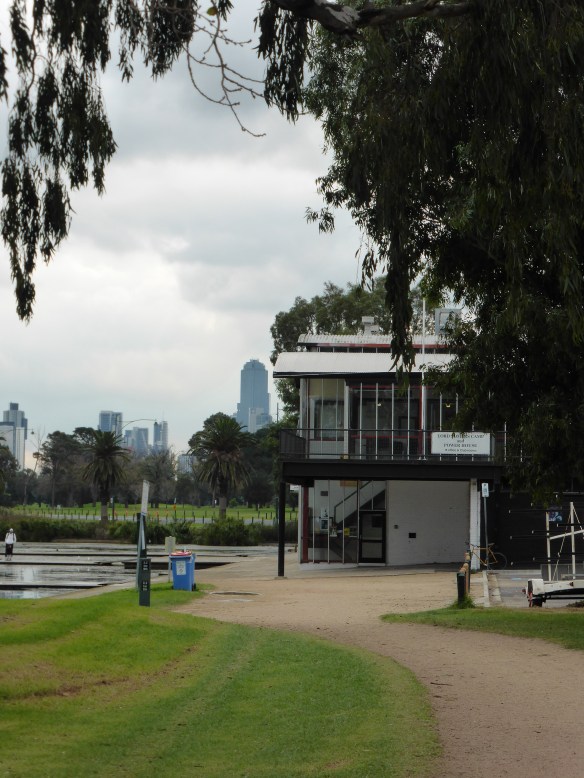
Lord Somers Camp and Powerhouse Albert Park Lake Melbourne


Melbourne skyline over Albert park Lake

I had expected Albert Park to be damaged by its current role as the home of the Australian Formula 1 Grand Prix but it was not immediately obvious as the main features of the park are still the lake and sports pavilions. The only “monstrosity” I discovered at one end was the Formula 1 paddock which is a horrible lump of grey. I find it hard to believe that Australia doesn’t have one architect of note who could have done something sympathetic in this setting.
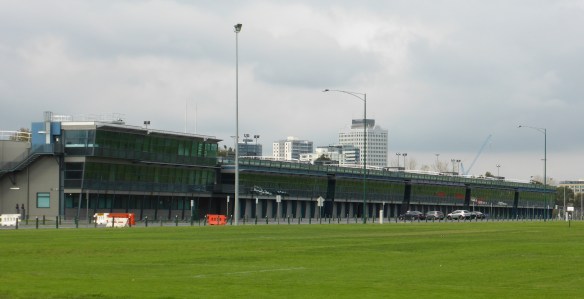
Formula 1 Grand Prix Paddocks Melbourne

Cadbury Schweppes House MelbourneBeyond the park are Queens Road and St Kilda Road, the noisy arterial roads that runs south from Melbourne’s central district with a long line of high rise offices and apartments that have highly valued views over the park and beyond to the sea. I used to work in St Kilda Road and our 14 storey office block had the most amazing 360 degree panorama, something to make work interesting almost every day, although as a junior sprog I never got remotely near one of the privileged window seats. A few buildings crowd around it now but I bet the top floor is still in demand.

Once I had completed a lap of Albert Park Lake I was completely refreshed and I drifted back through Middle Park to the beach front where I had my bonus dolphin encounter before riding back to the city. I was much more tolerant of the noise, traffic and congestion on my way out because I felt uplifted by my bike ride and my journey back in time.

I am not sure that three twenty-somethings all on their first salary could afford to rent in Middle Park now.  But I have to reflect now that I was so lucky to find a house share in this area as a naïve young bloke new to Melbourne. Even back then I could have lived in the bustling city centre or a happening suburb but the first advert I spotted put me this gentle neighbourhood a short walk from work, park, rugby club and beach.

I am so glad it is still there now and I hope Albert Park and Middle Park will be protected for years to come. If they are I despair a lot less about the future of the human race in Melbourne.
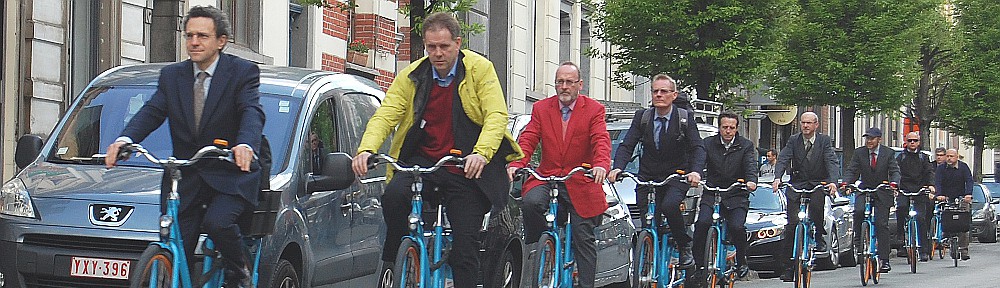
Cycling with dolphins.

Bicycle and dolphin Melbourne
Not two words often combined – cycling and dolphins.

I have had not one but two encounters with these beautiful creatures and both times it happened while cycling. I am sure some readers come from places where they are common but for me they are an extraordinary treat, a fascination from nature programmes on TV since childhood.

On Monday I took a Melbourne bike share bicycle out from the city to revisit the area I lived nearly 30 years ago when I was working in the city. I was returning along the beachfront cycle paths in Middle Park when I spotted the few people on the beach were staring out to sea and taking photos. I couldn’t pick up what it was while riding but I assumed an interesting boat or some divers so I stopped against the beach wall.

Dolphins Middle Park Beach Melbourne

I was absolutely delighted when I realised that there was a small family of dolphins, two adults and a youngster, circling around about 200 metres off shore. The water was millpond smooth on the almost windless afternoon so every ripple was visible. Sadly they never jumped right out of the water but I spent nearly 15 to 20 minutes watching and trying to coincide my photos with the places they surfaced. I was told there were dolphins in the bay when I lived here before but despite coming to this beach to run or swim for much of that year I never saw them. They cannot be that common off these beaches because their appearance was reported in a local paper the next day so I felt even more privileged.

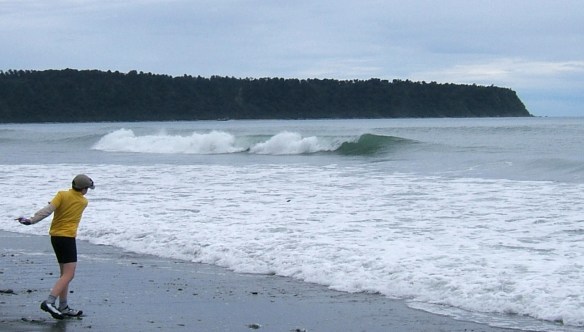
My mind was also taken back nearly nine years to my previous dolphin encounter which remains one of life’s cycle touring highlights. My son Ben and I had a special cycle tour down the West Coast of New Zealand’s South Island in December 2005 when he was 14 years old. On the longest day’s ride from Fox Glacier to the Haast Pass the road passed right along a beach and we decided this was the place for our lunch stop. Obligatory stone throwing and larking about ensued before we tackled the sandwiches sitting on the low sea wall. (Bruce Bay I think)Bruce Bay New Zealand

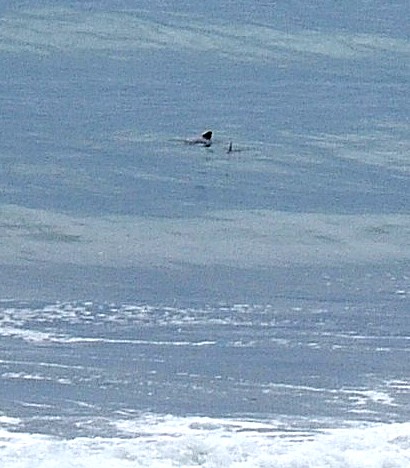
However the notorious West Coast sandflies soon discovered their own free lunch and despite the prodigious amounts of deterrent spray we were about to give up when we had our magic moment. A little group of black and white dusky dolphins started surfing in the waves. They clearly seemed to be playing as they returned time after time in ones and Dolphins New Zealandtwos to race in just under the wave crests. Then as quickly as they had come they disappeared with just a departing fin and a splash on the surface.
On both these occasions I really feel I would not have stopped if I had been in a car or on a tour bus and I would not have recognised the dolphins at driving speed.

Slow travel with the ability to stop and start almost anywhere is part of what makes cycling so special and I treasure my wildlife encounters almost as much as my human ones. I also perhaps wish I carried a bigger, higher quality camera when I am photographing animals because they are even more difficult than cyclists for reasonable images.

But the quality of the photos cannot take away the memories and dolphin encounters remain rare and precious moments in my cycling life.

I Do Not Despair’s final musings on Adelaide, our Velo-city Global 2014 host.

Central Adelaide seen from the Torrens River

Time flies at Velo-city, and it goes even faster when we have to dash off for a tour of long neglected friends and relatives around Australia and New Zealand.

So before I am swamped by the hustle and bustle of Melbourne and Sydney here are my final visitor’s reflections on Adelaide.*  The most common description of Adelaide I hear from Australians is that Adelaide is “just a big country town” which is something of a put down from its big brash neighbours. But as a country boy myself that isn’t a put down, it’s a commendation.

There is undoubtedly a grain of truth in the description. At its heart Adelaide remains a very accessible and relatively relaxed city. Its design helps, the 19th century utopian layout with green spaces and a circular park around the compact central district create a nice atmosphere. That’s the impression I really remember from when I first went there in the 1980s, work trips that sometimes involved a weekend break in the city. The city is working incredibly hard to keep, or maybe recreate that feeling, as a modern liveable city with improvements to the city open spaces, pedestrian streets and eating quarters where people want to spend time. I liked it then and I liked it this time.

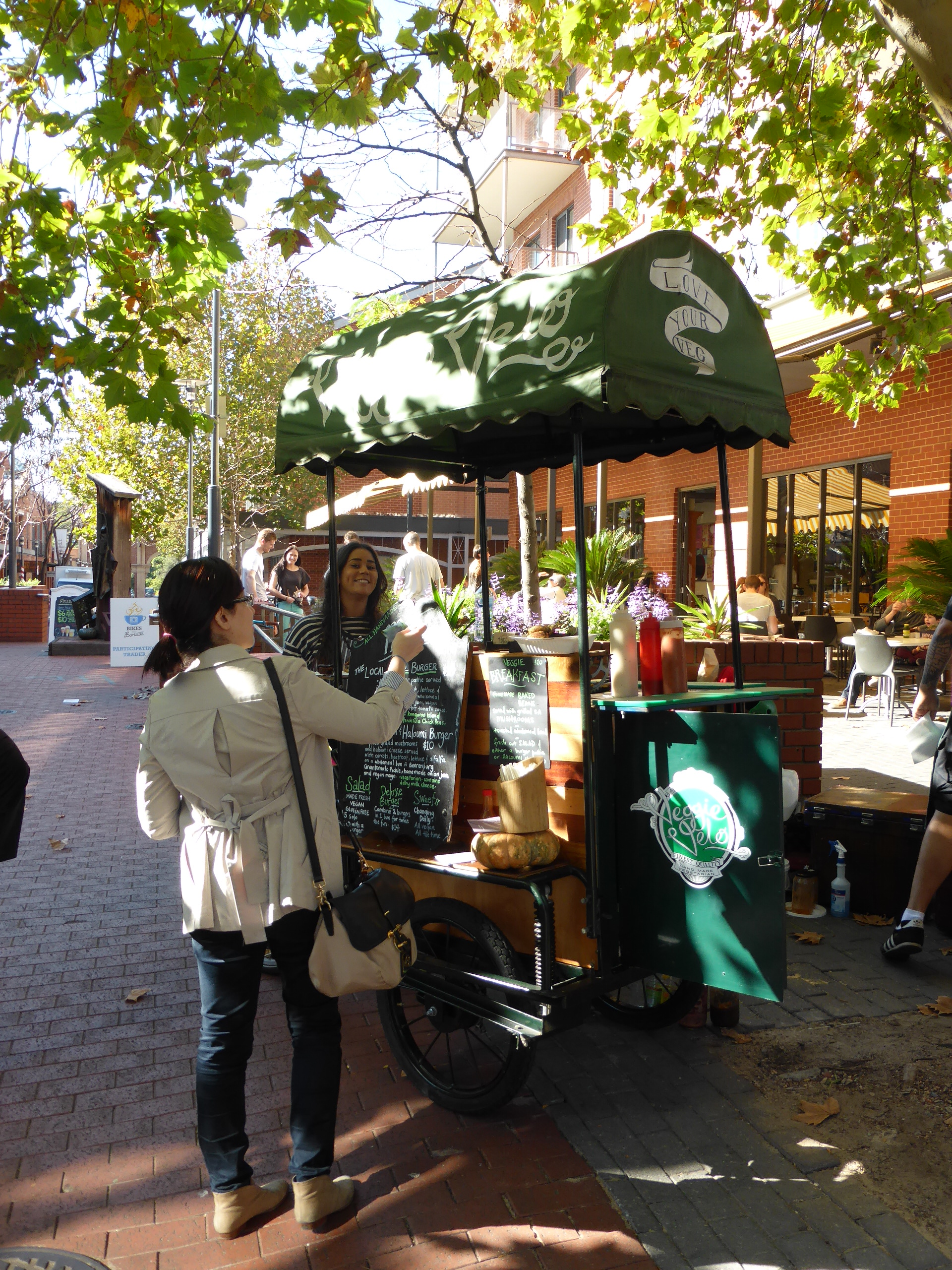
Veggie Velo Adelaide

There are also still quite a lot of those 19th and early 20th century buildings that we can call “colonial” style, from government buildings to churches, pubs and shops. They are unmistakeably Australian and a vital part of the city character.


Franklin Hotel Adelaide Hindley Street Adelaide

However these are somewhat swamped by the modern buildings that are allowed to dominate the skyline and create the impression of much narrower streets, especially on the gloomier days.

Adelaide Post office Haighs Chocolates at the Beehive Adelaide

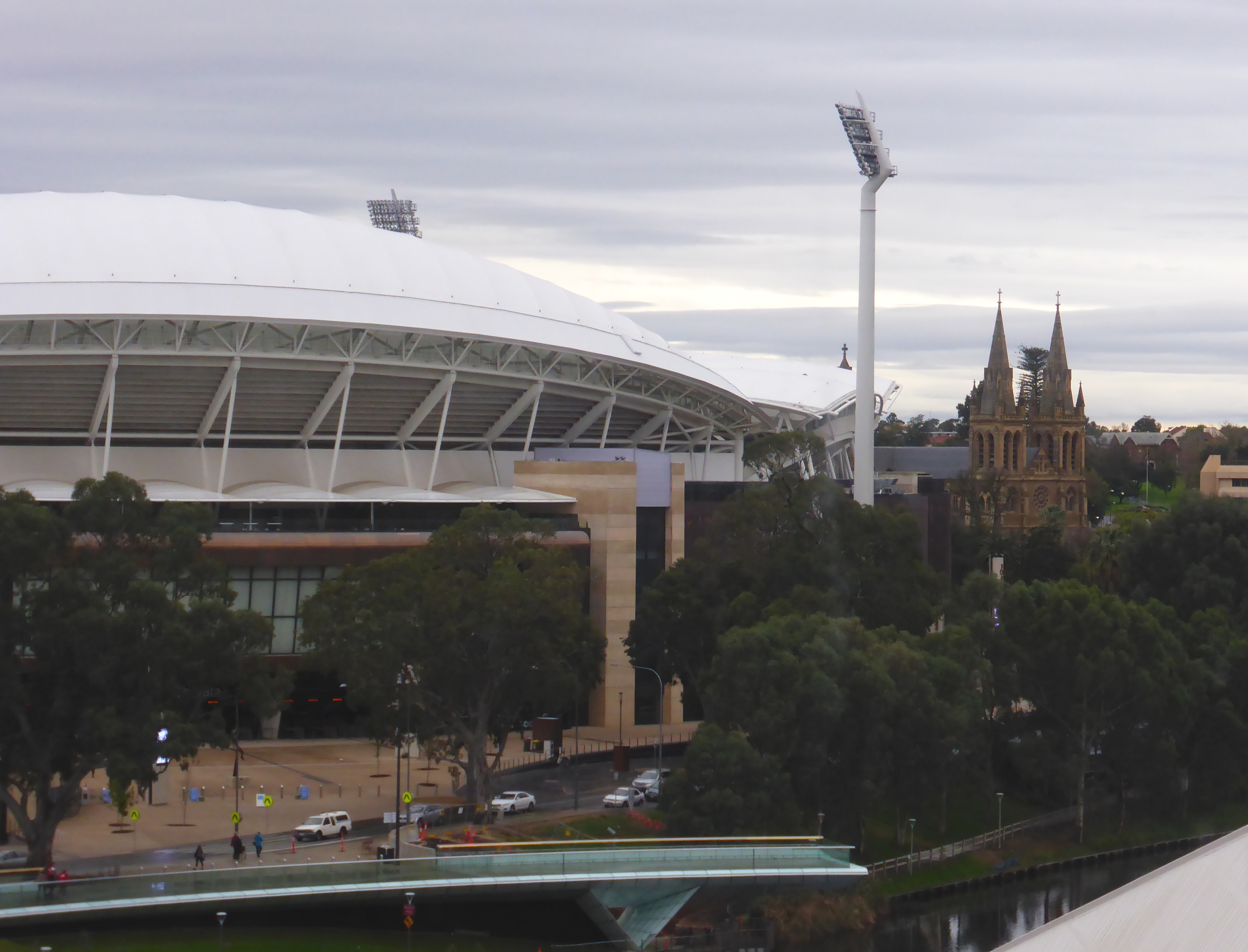
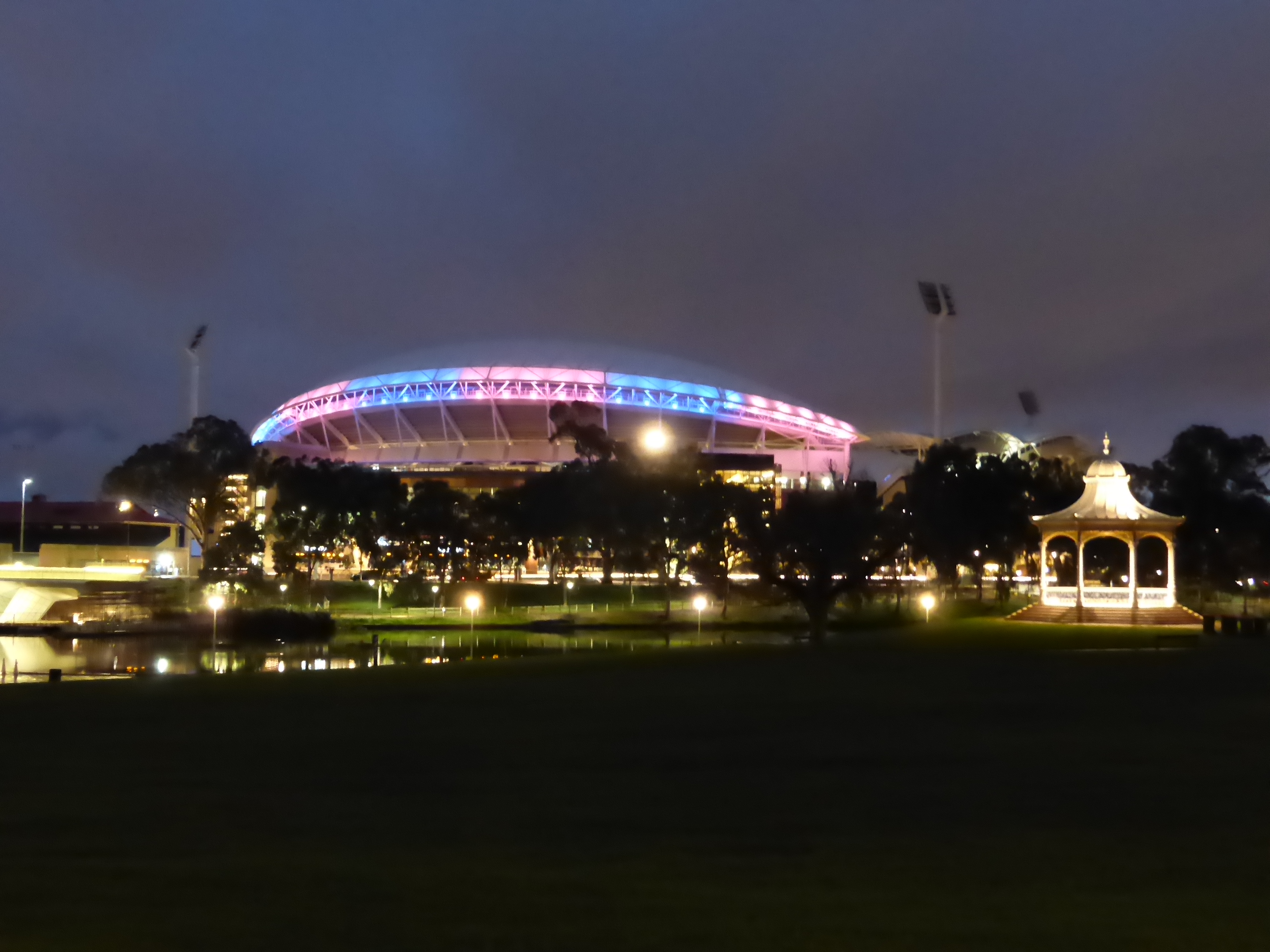
Biggest shock of all was to see the Adelaide Oval dominating the banks of the River Torrens to the North. I recall a traditional green painted cricket ground that nestled into the parkland and was an attractive companion to the nearby cathedral. Now it is a monster, but one that attracts up to 70,000 footie fans (Australian Rules Football) every weekend and is a major contributor to the city economy. As a fan I like these great cathedrals of sport, however I have to say that it just seemed a bit intrusive compared to what I remember.

Adelaide Oval and Adelaide cathedral Adelaide Oval at Night

The cycling environment reflected the city.

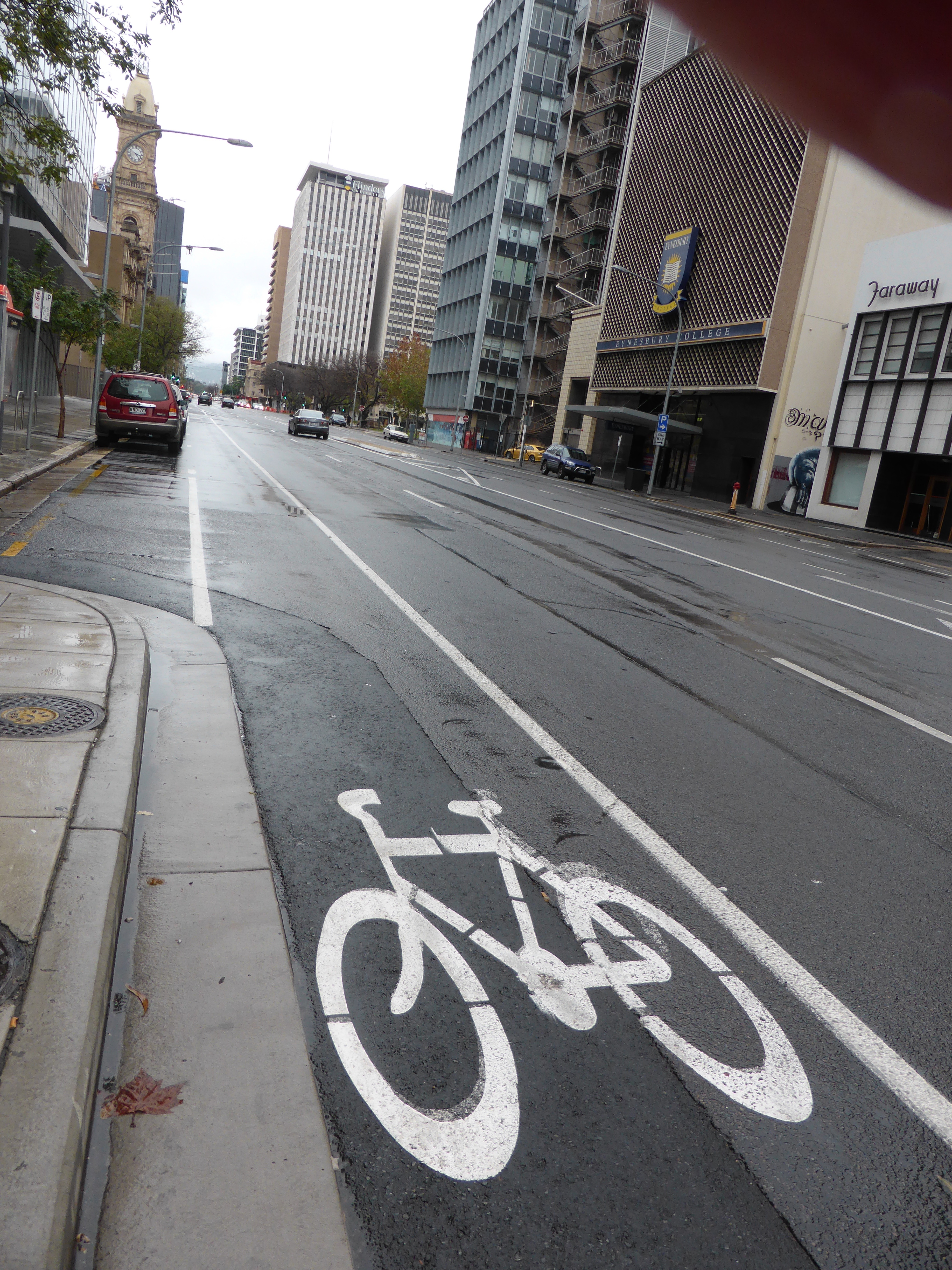
There is a huge amount of space for cycling and it would be so easy to grab a lane in most streets but at the moment that is not a political reality. The city Mayor and the state government of South Australia both understand the need to do something about the impact of cars on the city and to deliver the liveable city they want. But with big wide streets and low traffic levels compared to many other cities the imperative for change in travel behaviour isn’t there yet. The one segregated cycle lane in the centre lane has yet to be completed due to the anti-cycling pressure, but there are at least other facilities which can act as the forerunners for change.

Adelaide cycling Cycling Adelaide

I found it quite easy to ride most of the time and I think the traffic really wasn’t especially aggressive compared to many other cities I have ridden in. And the traffic levels really were very light, except for a brief burst in rush hour and the hours after the footie on a Saturday night.

However the huge roads with multiple lanes did make it almost impossible to work out how to turn right and I spent frustrating amounts of time stuck at traffic lights which made progress painfully slow. Some of our colleagues from countries that have superb infrastructure found it intimidating and it certainly isn’t conducive to nervous cyclists because of the difficult junctions.

Bike brekkie sea of lycraConfirming that impression the cycling levels were apparently low and completely dominated by sporty looking cyclists. You can see from my photos that I hardly ever had a cyclist as a backdrop. It was autumnal and rainy on some days – but none?  At the weekend along the Torrens there were lots of families but even in the city the number of riders in day clothes was almost non-existent. The mass ride for Velo-city was called the Bike Brekkie Ride and was meant to attract the city cycling community. If the turnout was typical it showed that the city really doesn’t have an underlying daily cycling culture.

Mayor and CEO of Adelaide on the Bike Brekkie RideThe Mayor and the Adelaide City CEO almost stood out in their day clothes. I was riding along in my shirt and jacket and felt like I had completely met the brief “to stand out in the crowd”, I even attracted comments to that effect.

And the cycle helmets really, really do not help. It is almost impossible in my mind to remove the “warrior” impression portrayed by almost cyclist I saw just because they were forced to wear a plastic lid. Normalised cycling remains a bit of leap of faith at the moment, it is going to take a lot more efforts to get to that point. However the sport and leisure base is strong so that should give confidence that there is an underlying demand waiting to be tapped.

On balance I would say that Adelaide is meeting the challenge of modernity and liveability in a way that I can really identify with. For those that know their British cities it reminds me of Cardiff – with many of the amenities and lifestyle options of a capital city but in a manageable package. I lived happily in Cardiff for 10 years so I could certainly do the same in Adelaide and it was a great place for a visit.

If the on line chatter after Velo-city is anything to go by so did our many other visitors.

*There are numerous reflections and commentaries on the Velo-city conference itself on other sources. I have linked to a number of them from my Twitter account  @maynekevin and our ECF web site has a daily summary on our news pages here

Some of my other favourites are the Australian ones by Steven Fleming ; Bicycles network and ABC television.

Adelaide town hall welcomes velo-city


Torrens River Linear Park – Adelaide’s green cycling gem

Gallery

This gallery contains 13 photos.

“So what did you think of Adelaide?” will be the obvious question as we move on around Australia and then back home in a few weeks. Especially as I haven’t been here for nearly 30 years. The honest answer might be … Continue reading

Coffee and cycling? Bikes and baristas in Adelaide to kick off Velo-city 2014

Bikes and Baristas

My kind of place.
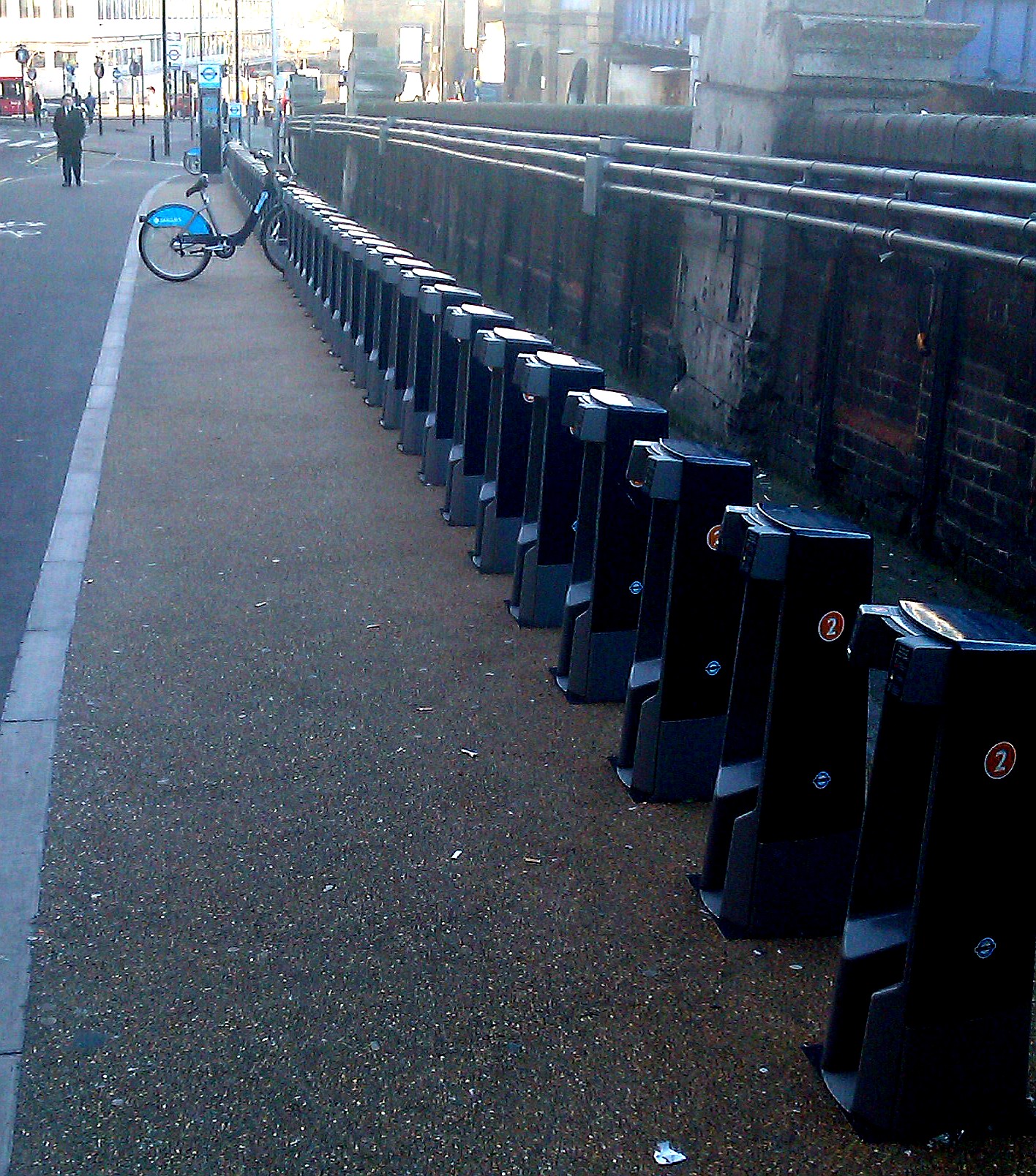
Off to the distinctly hip East End of Adelaide for a coffee at the “Bikes and baristas” Saturday event as part of Velo-fringe.

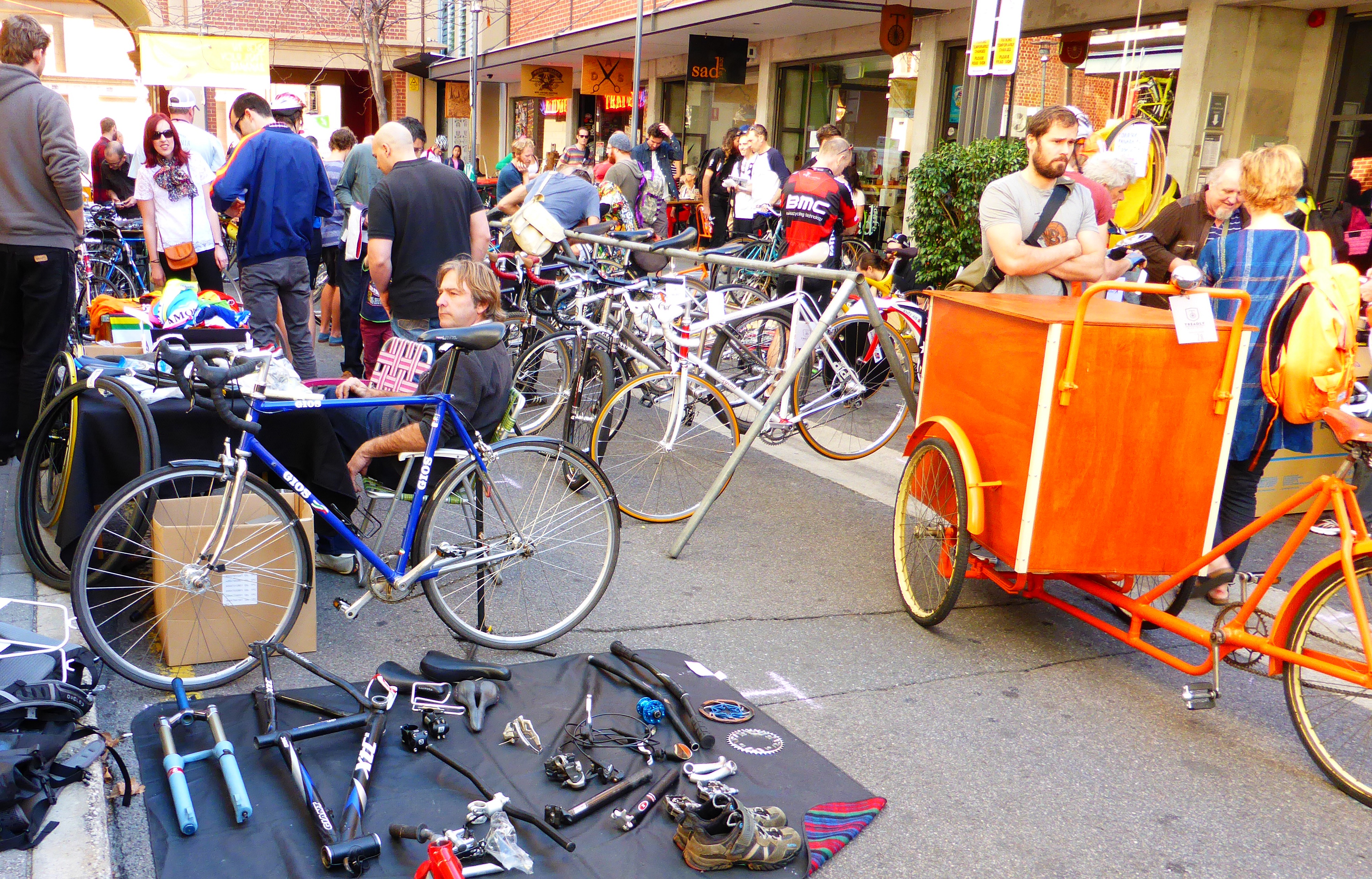
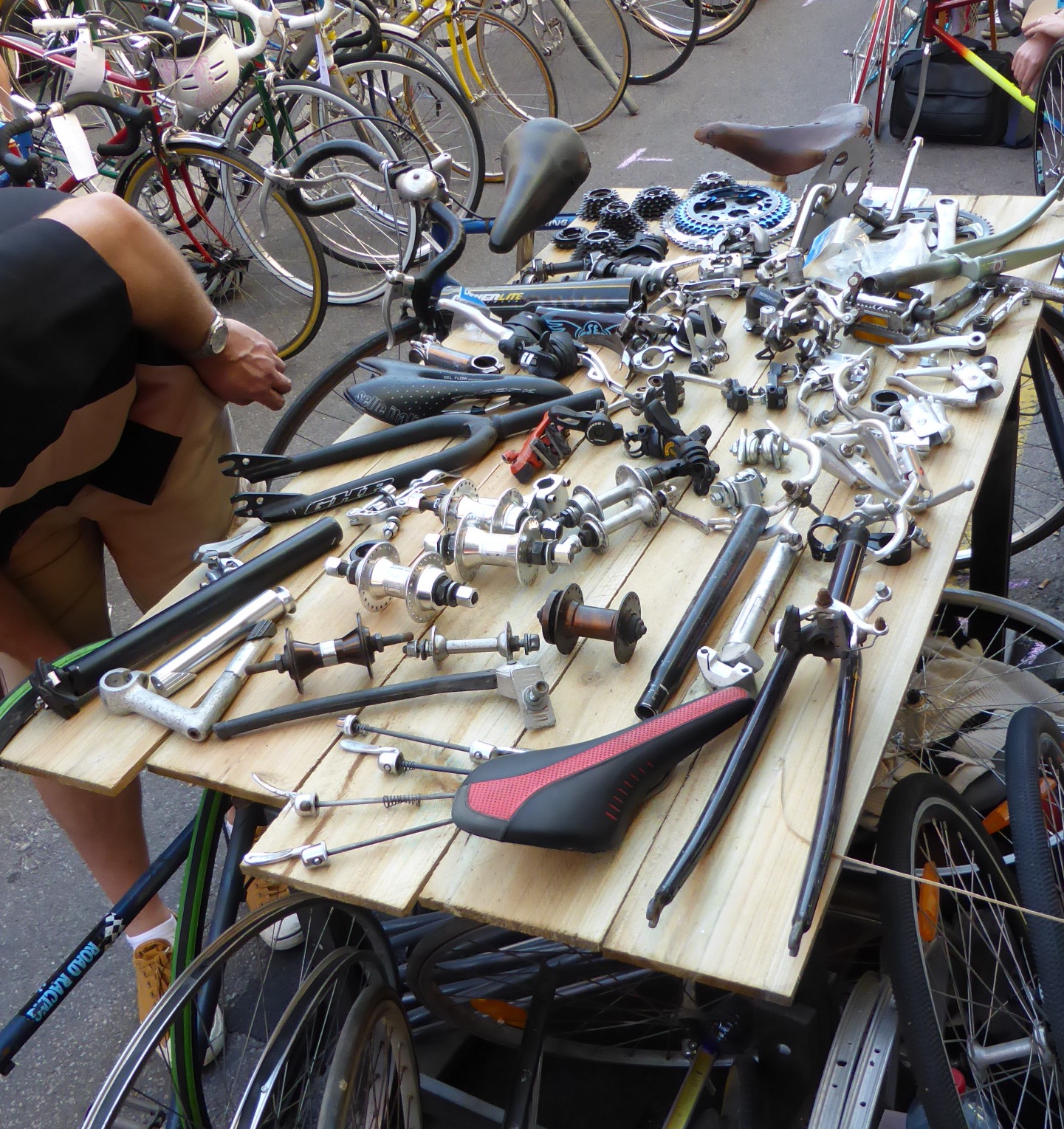
And joy – a bike jumble. Old bike bits, renovations, upgrades, fixies and lots of steel bikes.

Bikes and Baristas street Market Velo-city 2014 Adelaide

Sadly luggage limitations stop me cashing in. (And the watchful eye of my travelling companion). Indeed I might have made a killing with my personal collection of 1960s and 1970s European cycling rubbish had I but known.

But a very cool start to the week if you like that kind of thing. .And great coffee!

Bike sale Bikes and Baristas Adelaide Velo-city 2014 Bicycle jumble sale Velo-city 2014 Adelaide

The “Utrecht scale” – a new standard for cycle parking

Utrecht cycling

I have a new proposal for how to measure quantities of bikes. It is called the “Utrecht scale” and it is based on the “ocean of bicycles” I described several weeks ago.

I had some hopes of my own. I suggested then that we needed a new measurement for cycle parking. The “Mayne scale” would be based on how long it took to walk the length of the bike park. In the case of Utrecht, it would be top of the scale with over 8 minutes from end to end. When cyclists rule the world we will need a new vocabulary, just like eskimos were supposed to have 40 words for snow and maybe my scale could have become as established as Richter, Geiger or Beaufort. But the Mayne scale is not to be.

No. For for the international comparison of bicycle numbers only the “Utrecht scale” will do now. A scale based on oceans, seas, lakes and puddles will tell us all we need to know about numbers of parked bikes.

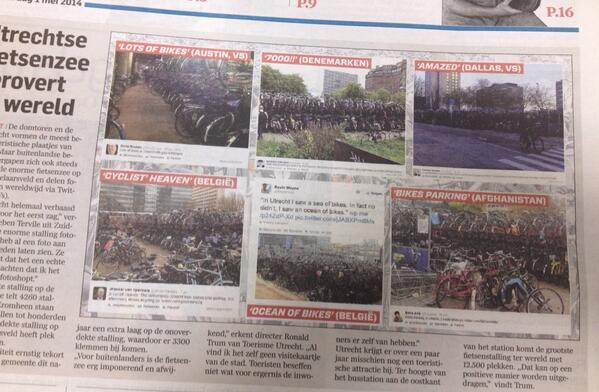
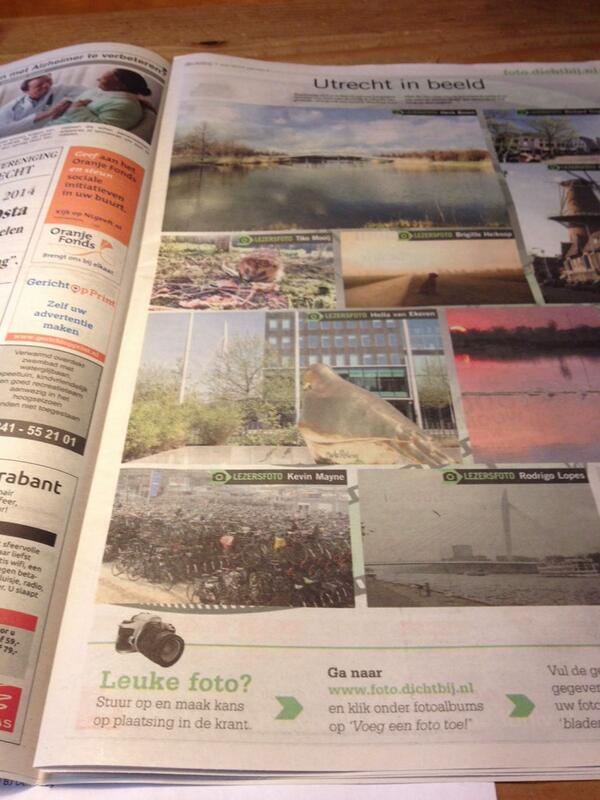
It was a simple phrase that started it. I wrote “In Utrecht I saw a sea of bikes. In fact no I didn’t, I saw an ocean of bikes.” And then I linked it to this picture and sent it off on social media.

sea of bikes Utrecht

The rest, as they say, is history.BmiEOFeIEAAqnyw

By the following weekend it had made two local papers and the traffic on this blog had reached heights I could hardly have imagined even a week earlier.


We even made a news story about cyBnAowqGCIAEJ7b7cle parking making the news on the ECF web site.

But it was not only Utrecht. Since then people keep sending me their cycle parking pictures from around the world and using the phrase “sea of bicycles” whenever they meet a big quantity of bikes.

The first phase of the huge new underground cycle park in Utrecht opened this week, taking the first 2000 bikes off the streets. So as a legacy of those amazing displays of bikes that may soon be no more, and for the proud people of Utrecht who love their cycle parking here is my first attempt at the “Utrecht scale” for cycle parking.

Ocean of bicycles

Bikes as far as the eye can see. Over 20,000 bikes. Take some emergency rations before you go and look for your bike, this may take some time. Example? Utrecht!

Utrechts bicycle parks

Sea of bicycles

A concentrated mass of bikes. More than 5000 in one place. You may need a guide and some time to get in and out of here. Example? It seems to be almost any Dutch station, but increasingly Flanders including Bruges and Ghent.
Cycle Parking Ghent Station


Cycle parking Bruges station

Lake

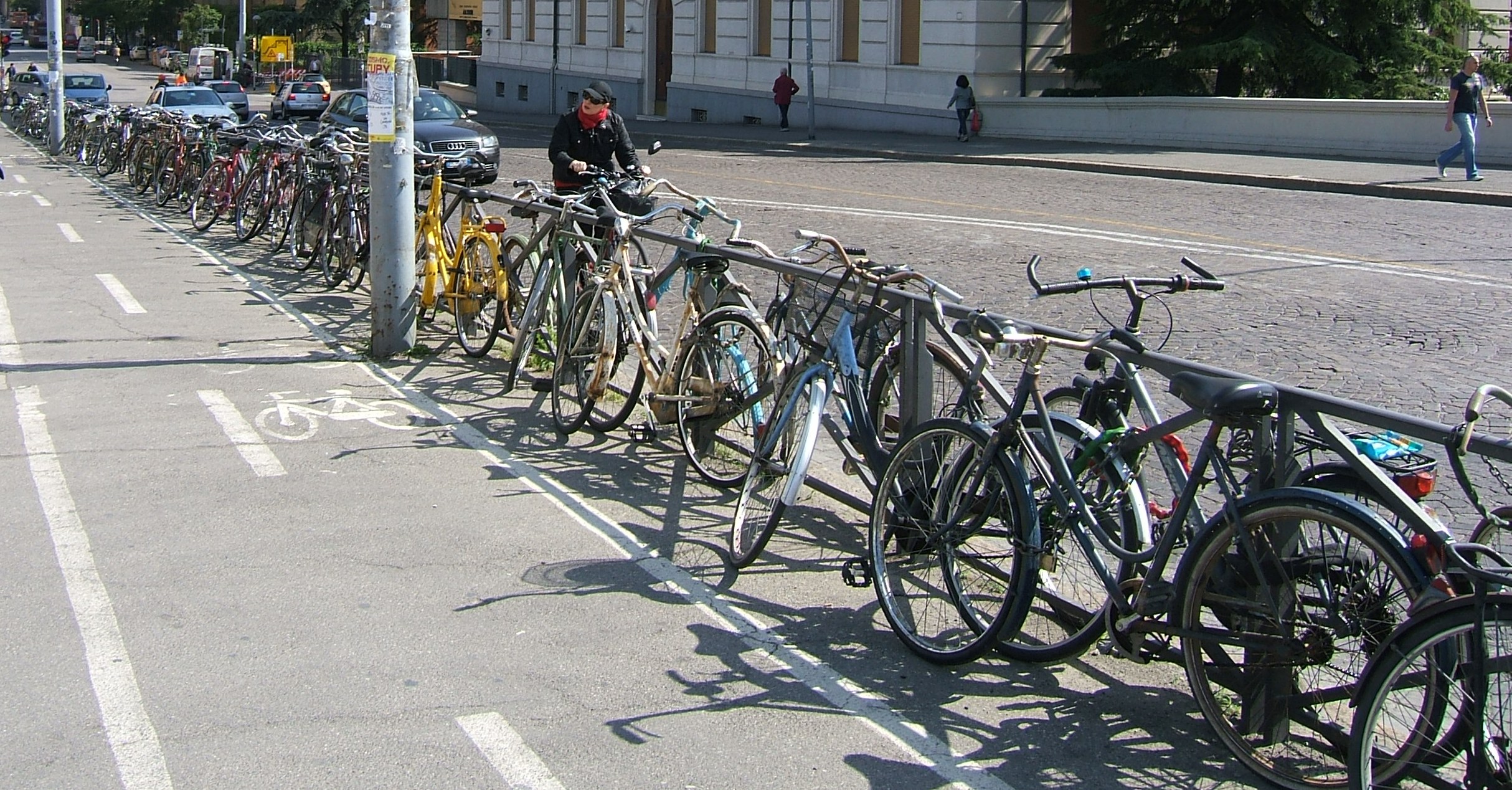
Now the minimum standard for any decent cycling town is to have 1000 bikes at main hubs like universities and railway stations. An honourable mention now to Bologna, Italy which has the biggest lake of rusty old student bikes round their railway station that I have ever seen.

Bologna Station Bike Park

Bike_parking_Bologna

Pond

Every village should have a pond. Ducks on the water, somewhere for children to paddle and for animals to drink. So every small area of shops, every park, every street corner should have at least a pond of bike parking to cater for local needs. Examples? Hopefully everywhere, but Copenhagen is a perfect example of putting the parking on every corner, including cargo bikes.

Copenhagen corner street parking

Canal

A level especially created for Amsterdam. Or any other city where the bikes are not parked together in a massive body but instead flow through the streets like the waterways that run through the city.

canal of bicycles Amsterdam

Puddle

Well you couldn’t get very wet in that could you? Just one or two bikes? Berlin – could do better!

Cycle Parking Berlin 1

Muddy puddle

As above, but with mountain bikes! From Whistler, where else!

Whistler Bike park, cycle parking

Frozen puddle – Memmingen, Germany, at minus 14 degrees centigrade.

Bike covered in snow in Memmingen

To complement the Utrecht scale I did think of some other useful phrases with a watery flavour

Tsunami of bicycles – what happens when everybody in Utrecht tries to get on their bikes at the same time.

Utrecht cyclists

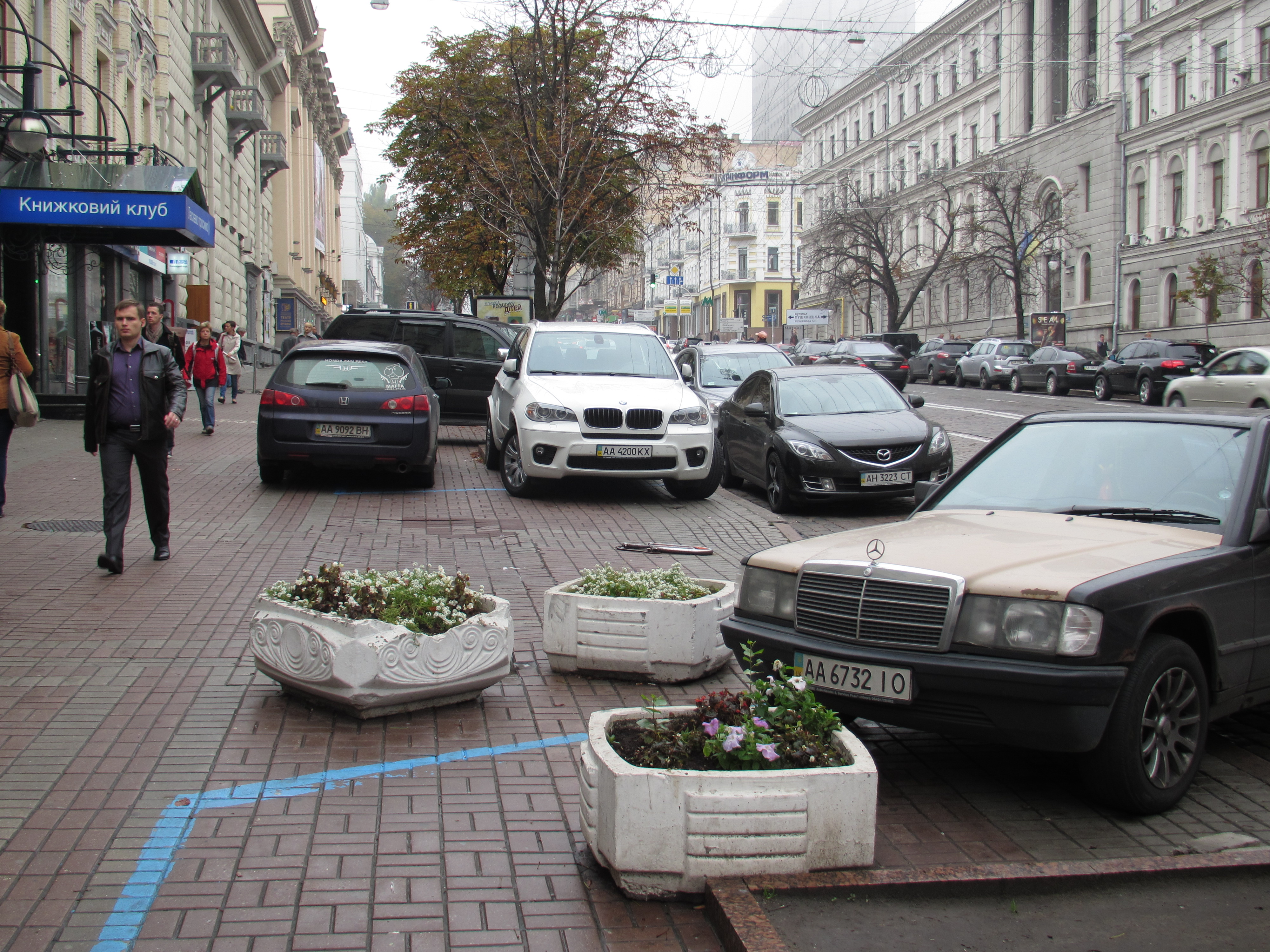
Desert – Trying to find any evidence of bicycle life here is pretty hard.

pavement parking central Kiev Ukraine

Splash – several bikes thrown together informally, the basis for much of the cycle parking in Salzberg, Austria.

Linzergasse Salzburg Austria

Dried up river bed – speaks for itself.

desert of bicycles

Reservoir – 700 Bixi bikes waiting for Velo-city 2012 delegates to arrive – Vancouver.

Velo-city 2012 Bike Fleet

So now then readers – does this work for you? And what would your watery terms for cycling be?

To finish – my favourite watery cycling photo. I look forward to your comments!

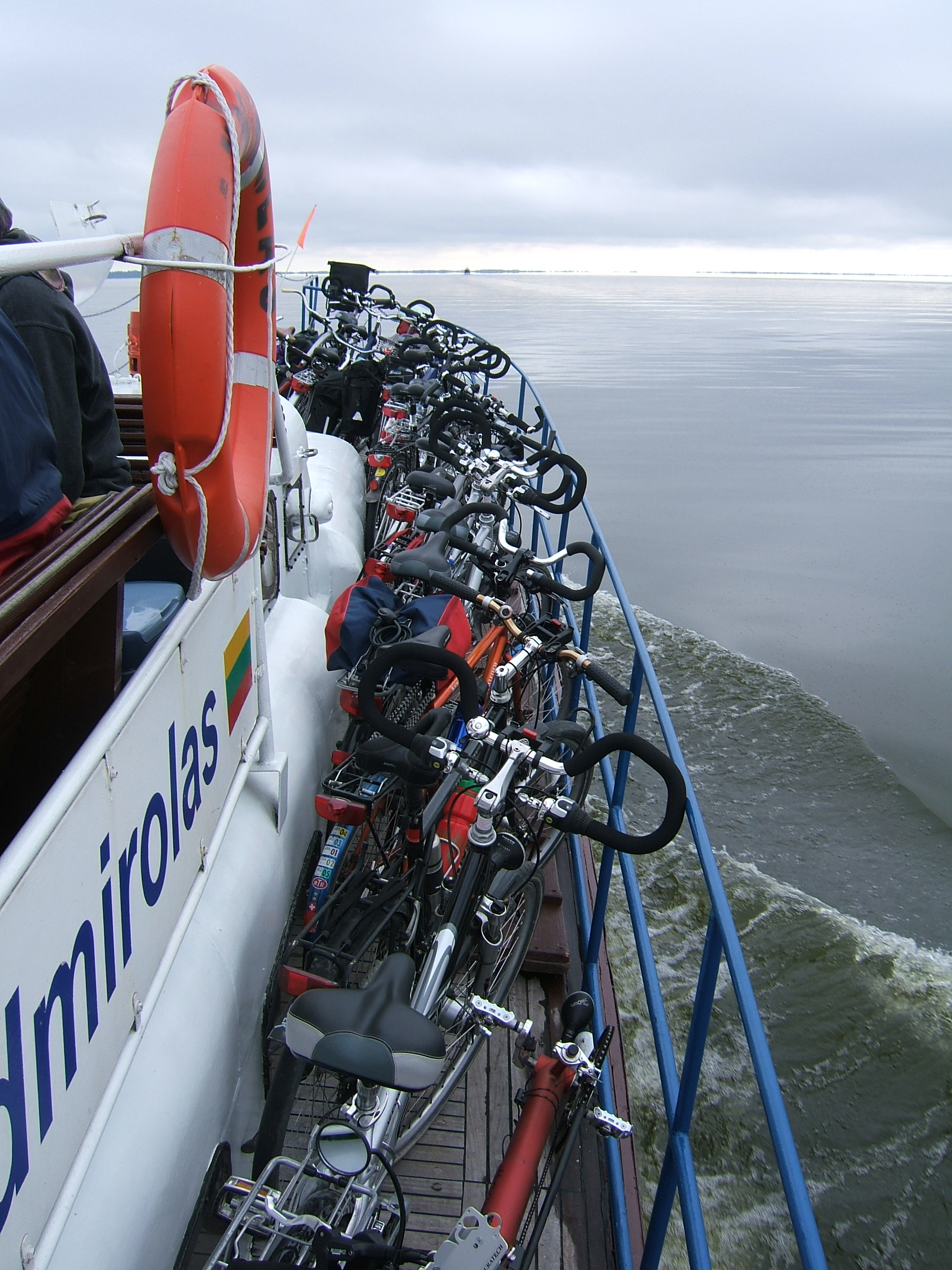
Coronian Lagoon, Lithuania