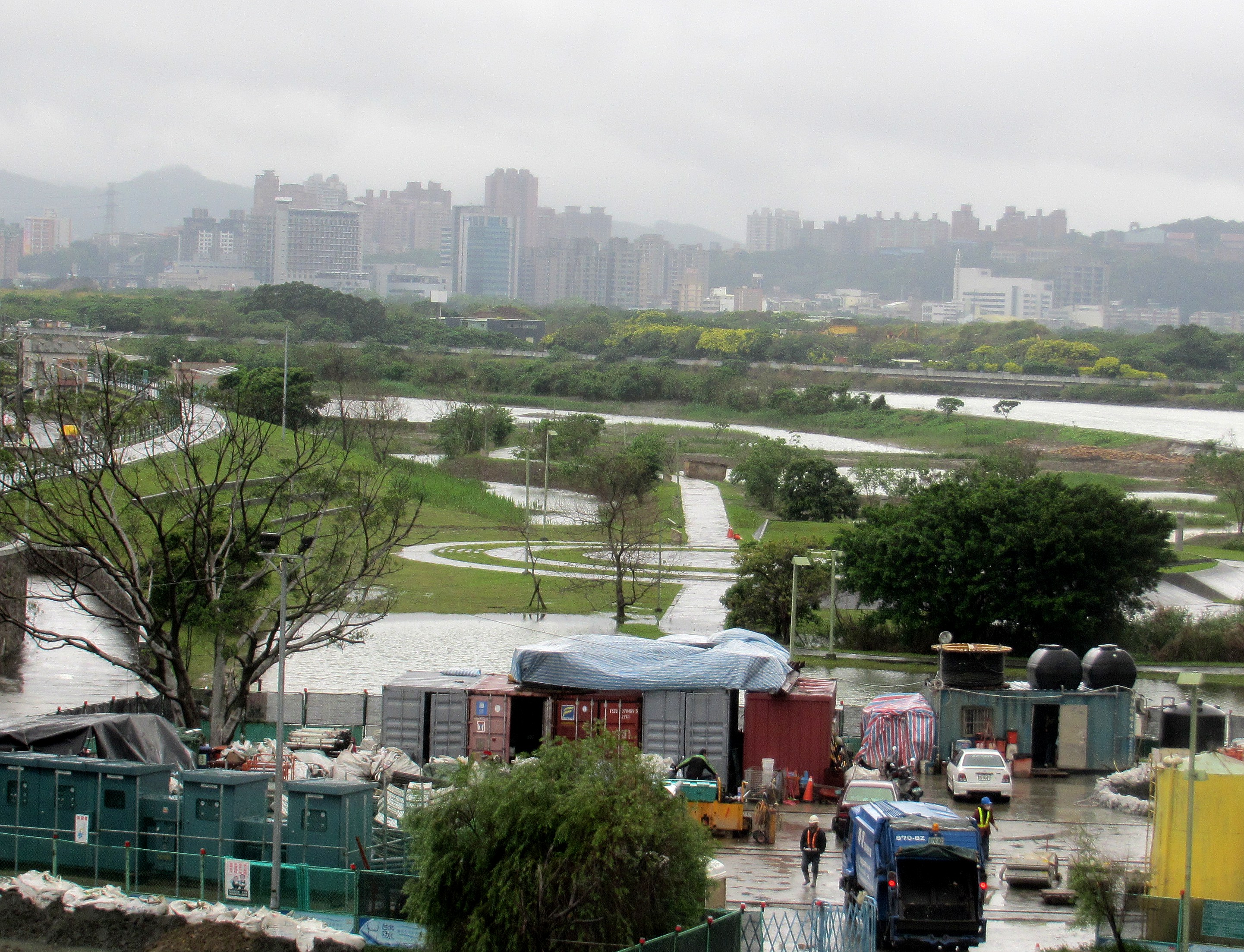
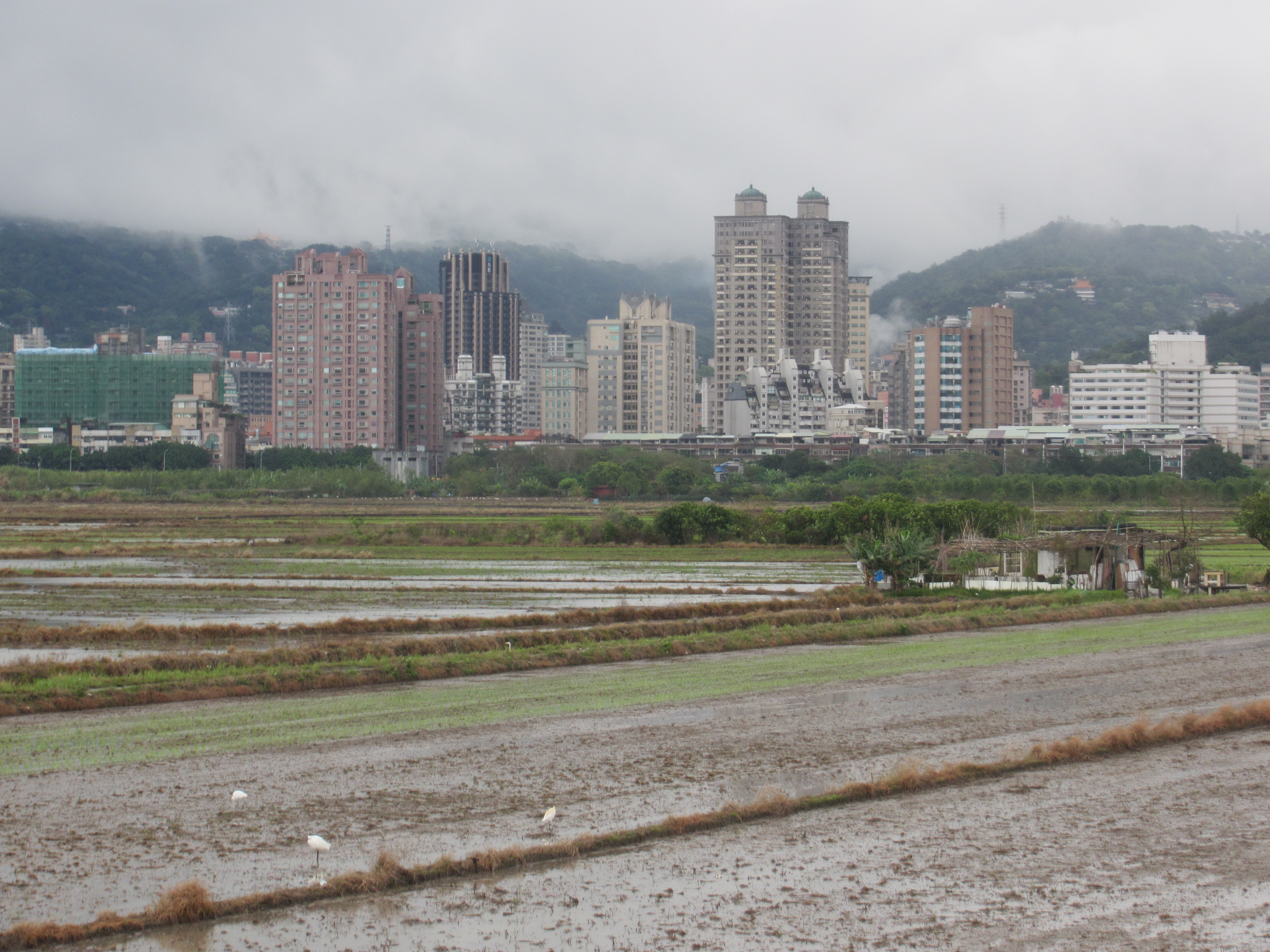
Follow the arrows for a Belgian magical mystery cycle tour

Gallery

This gallery contains 17 photos.

My last Sunday in Belgium before I head off for Australia and New Zealand for Velo-city 2014 and some overdue holiday. So it was fitting that the weather turned on a spectacular day, the Walloon countryside was beautiful and we … Continue reading

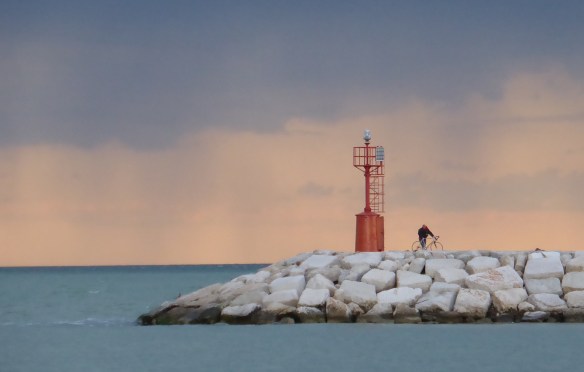
A perfect moment – when I just think “I want to be that cyclist”. Rimini, Italy.

Photo by Kevin Mayne

Ever had that that moment when you look out and you see a cyclist in just the perfect place?

Tuesday evening, Rimini Harbour on Italy’s Adriatic coast. Looking out along the harbour walls I saw this cyclist positioned against the darkening skies, far from the noise of the town. He stayed there motionless as we passed by, clearly soaking up the sea air.

Magical.

More to come from one of Italy’s busiest cycling towns over the coming days.

“Grand” cycling day out in Dublin – with the Danes, Russians, Dutch, Austrians….

Gallery

This gallery contains 12 photos.

The joys of the bike rides we have at our ECF meetings are their multi-national flavour and a chance to explore a new country. This year our excellent AGM hosts from Cyclists.ie had organised three completely different day rides to … Continue reading

When I see a cute dog on cycle basket I do not despair for the future of cycling in Dublin

Stepping outside my hotel at the ECF AGM in Dublin I cannot help but smile.

Aren’t cute pets what the internet was invented for?

Dog on cycle basket Dublin

And just nearby the Dublin bikes are waiting for action in front of the historic Christchurch on a lovely spring morning.

It’s going to be a good day.

Dublin bikes, Christchurch


The Blue Bikes are coming

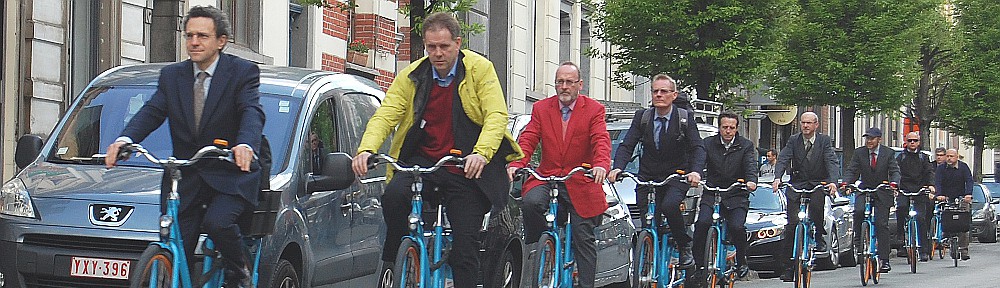
Blue bike convoy in Brussels

Superb photo by my colleague Chloe of us leaving our offices on Rue Franklin for a recent study tour of Brussels by Blue Bikes.

I am slightly worried by our serious expressions – all these British cyclists having to ride on the right?

Background story here

Utrecht station cycle parking is absolutely astonishing. See it before it disappears underground.

sea of bikes Utrecht

Recently I went to Utrecht in the Netherlands. My mind is still slightly overwhelmed by what I saw, so despite the delay I just had to post this. With a health warning. As I write this I have a feeling that any “normal” people discovering this blog will wonder how somebody could get excited about parked bicycles.

All I can say in my defence is that I have spent most of my life as a cyclist and the past 15 years in cycling promotion.  The scene at Utrecht station ranks as an extraordinary moment, I am still reflecting on it three weeks later. So maybe I don’t publish 50 photos of parked bikes, but I have to share.

In Utrecht I saw a sea of bikes. In fact no I didn’t, I saw an ocean of bikes. The visual impact of these walls of pedal powered machinery painted a picture in my mind that is hard to let go.

Utrechts bicycle parks

I came out of the station and saw the cycle parking. And the cycle parking. And more cycle parking. I have seen Dutch, Danish and Flemish railways stations before. I have seen the 6000 bike multi-storey bike park in Amsterdam. But I have never, ever seen anything like the number of bikes in around Utrecht station.

I was so astonished I decided to start at one end and time how long it took me to walk to the other end because I couldn’t take it in any other way. Six minutes. Enough said. We have to measure cycle parking here in minutes of walking time.

Start - minute zero

Start – minute zero


2 minutes - still going

2 minutes – still going


Only another 3 minutes to go

Only another 3 minutes to go

Let me explain the background to these impressions.

Because most of my work is supporting countries and groups where daily cycling is struggling my trips to the Netherlands are actually quite rare, despite its proximity to Belgium. This was my first time in Utrecht. That in itself feels almost impossible, everywhere you go on the international cycling scene there seems to be someone from Utrecht. It is the home of the Dutch Cycling Union, Fietsersbond, so lots of my colleagues come from here, but also there are city staff, Utrecht regional staff, university academics studying cycling and cycling consultants so Utrecht gets a lot of exposure and it features in a lot of study tours. Other bloggers wax lyrical about it. So I felt I should know it.

Cycle paths in Utrecht

Utrecht can call itself one of the “capitals” of Dutch cycling culture with an amazing 50% of trips in the inner city by bike and 30% overall. In a population of about 300,000 that’s one hell of a lot of cyclists. The city centre itself was lovely, sleepily coming to life in the spring sunshine.

Utrecht in the morning

It was just full of bikes and people were meeting, studying and going about every element of life by bike.

Utrecht centre cycle parking

Unfortunately my brief visit was not enough to see much of the city’s celebrated cycling infrastructure or the cyclist traffic jams at rush hour. However I was really pleased to cycle out to the Fietsersbond offices on one of the Blue Bikes on hire from near the station and Saskia, the Deputy Director of Fietsersbond took me around a little of the cycling sights.

Utrecht cycle routes

But at the heart of the tour was the station, where many routes converge on this overwhelming sea of parked bikes.

Utrecht cycling

Saskia showed me several more parks that I hadn’t even noticed in the morning. More people were measuring their cycle parking by time too, the time it was taking them to find their bikes. I can nearly bike to my nearest station in Belgium in ten minutes, I cannot imagine spending at least another ten minutes looking for parking. That’s like being a car driver!

This parking is full Cycle Parking Utrecht

When we returned to the station it was approaching 5pm so the traffic on the cycle paths was beginning to build. The area is currently a massive building site so lots of the routes were temporary which apparently causes short term chaos each time a section is rerouted but the hordes soon settle down to the new pattern.

Utrecht cycling traffic congestion

But this redevelopment will also create the jewel in the crown of Utrecht cycle parking. Part of it is the new city hall with all the civic functions in one modern building. And below the building is a pyramid of sorts, a ziggurat of concrete steps. And inside it will be the world’s biggest bicycle park. 30,000 bicycles moved to one location.

New undergroup cycle store Utrecht

It is something I really look forward to seeing. I often tell city officials – “Whatever number of cycle parking places you think you need – double it”. Now I have seen Utrecht I suspect even 30,000 places may not be enough here. Because when I see this number of bicycles in one place I realise the extraordinary role cycling plays in this city.

However I have just one sneaking thought. Wouldn’t it be amazing to keep those bikes up on the surface as an extraordinary symbol of cycling? Possibly not if you are a city manager, but I felt privileged to see Utrecht’s sea of bicycles in such a prominent position before they disappear underground. I hope this post gives you a taste before they bury it!

Another beautiful spring day in Wallonia – what else could I possibly want to do with my morning off?


Belgium Wallonia Lasne Geoff Mayne

Riding the lanes with Dad and dog.

Doesn’t get any better!

Paris Roubaix – I Do Not Despair experiences the “Queen of the Classics”

Paris Roubaix 2014 Arenberg dust Arenberg Paris Roubaix 2014

“I didn’t really understand the point. Putting a race over all these all tracks just so they can race over cobbles. But now I have seen all this I know it has to be preserved.”

The words of my father as we joined the crowds to watch the Paris Roubaix bike race at the legendary Trouée d’Arenberg, the Arenberg Trench.

Occasional observers of cycle sport probably know that the way the fans watch cycling is to set off for the big hills so you can see the decisive moments and the riders spread out over a distance, just like I did last week at the Tour of Flanders. At Paris Roubaix there are no hills, their symbolic place in the race is taken by notorious stretches of old cobbled farm tracks and minor roads in the north of France. A hundred years ago when the race was founded they were the standard road surfaces but today sections have to be discovered or “restored” to retain the integrity of the route. Restored means “made lumpy, muddy and brutal to cycle on”.

Today the Arenberg is one of the stars of the show. This was a former service road to the old mines of Wallers-Arenberg, discovered hidden in forest by a former rider who not only lived nearby but had worked in the mines. When local roads were improved and made too easy Paris Roubaix diverted over this section and a legend was born.

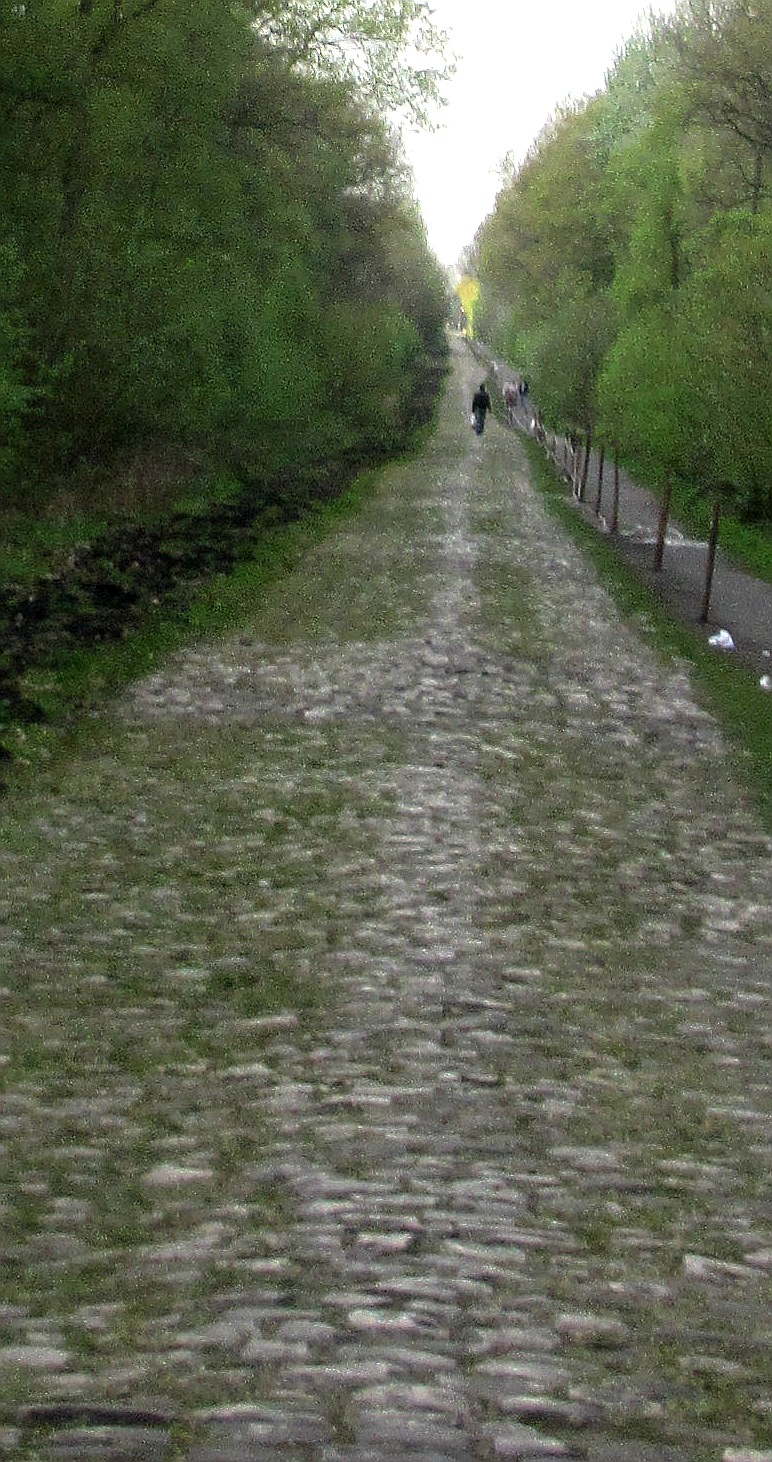
The route is traffic free all year round and shaded by trees so moss grows on the stones creating havoc in wet conditions. The closeness of the fans and the trees gives it the appearance of a tunnel, heightening the impact. It was actually kicked off the race route for a few years because it became too dangerous for even Paris Roubaix but the local community rallied round and paid for the stones to be restored.

It isn’t the decisive moment in the race because there is still 100km to go but it is known as the place where the main action starts. So when I was choosing a place for us to watch our first Paris Roubaix I had no doubt at all where I wanted to be, I have seen it on TV so many times I wanted to be part of that atmosphere.

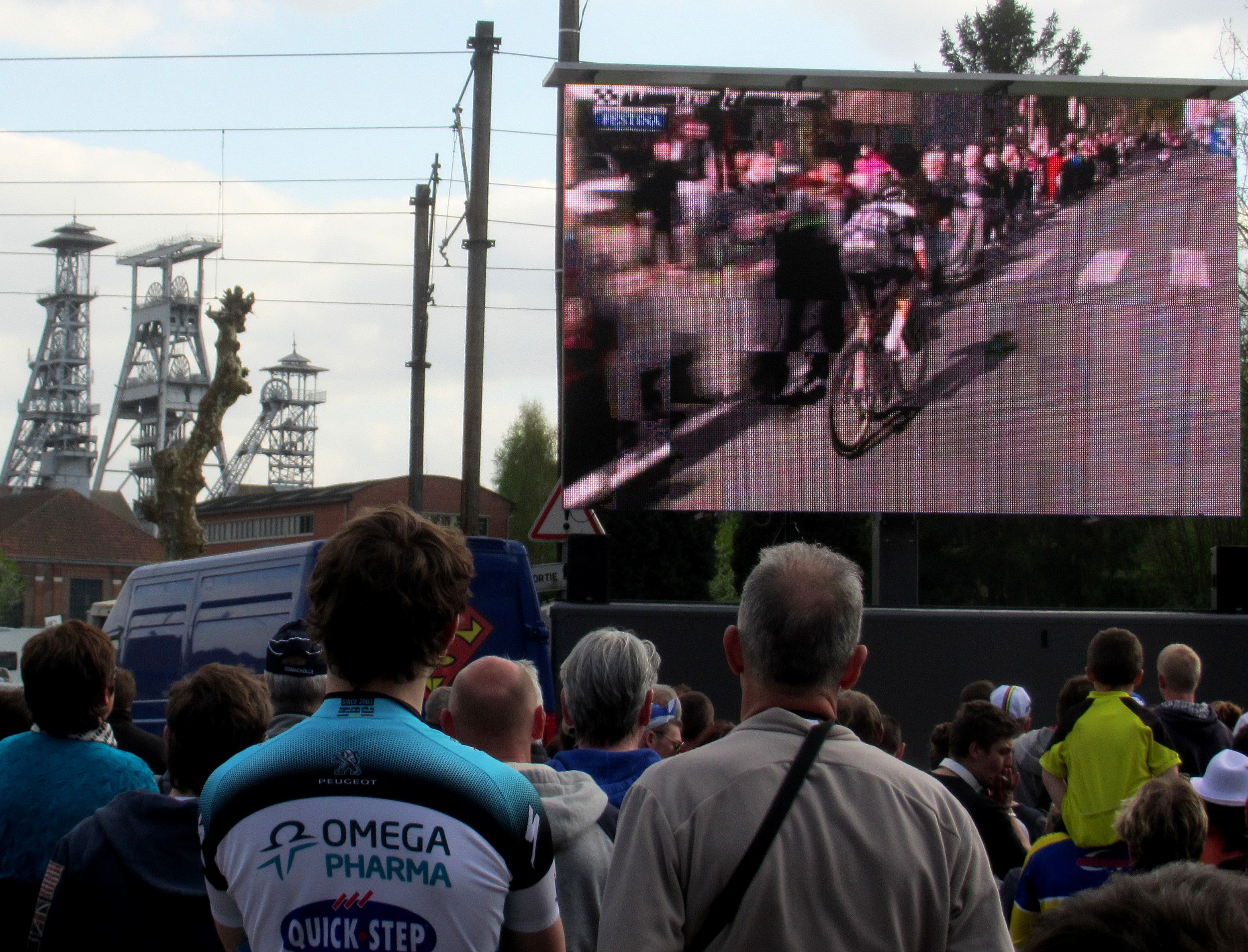
When my research found that there is also a fan village run by the community with the obligatory food, drink, hospitality area and big screen the decision was confirmed, we could watch the race come through and then follow it through to the finish on the screen. The backdrop is the mining museum which celebrates the heritage of the area.

Watching Paris Roubaix at Arenberg

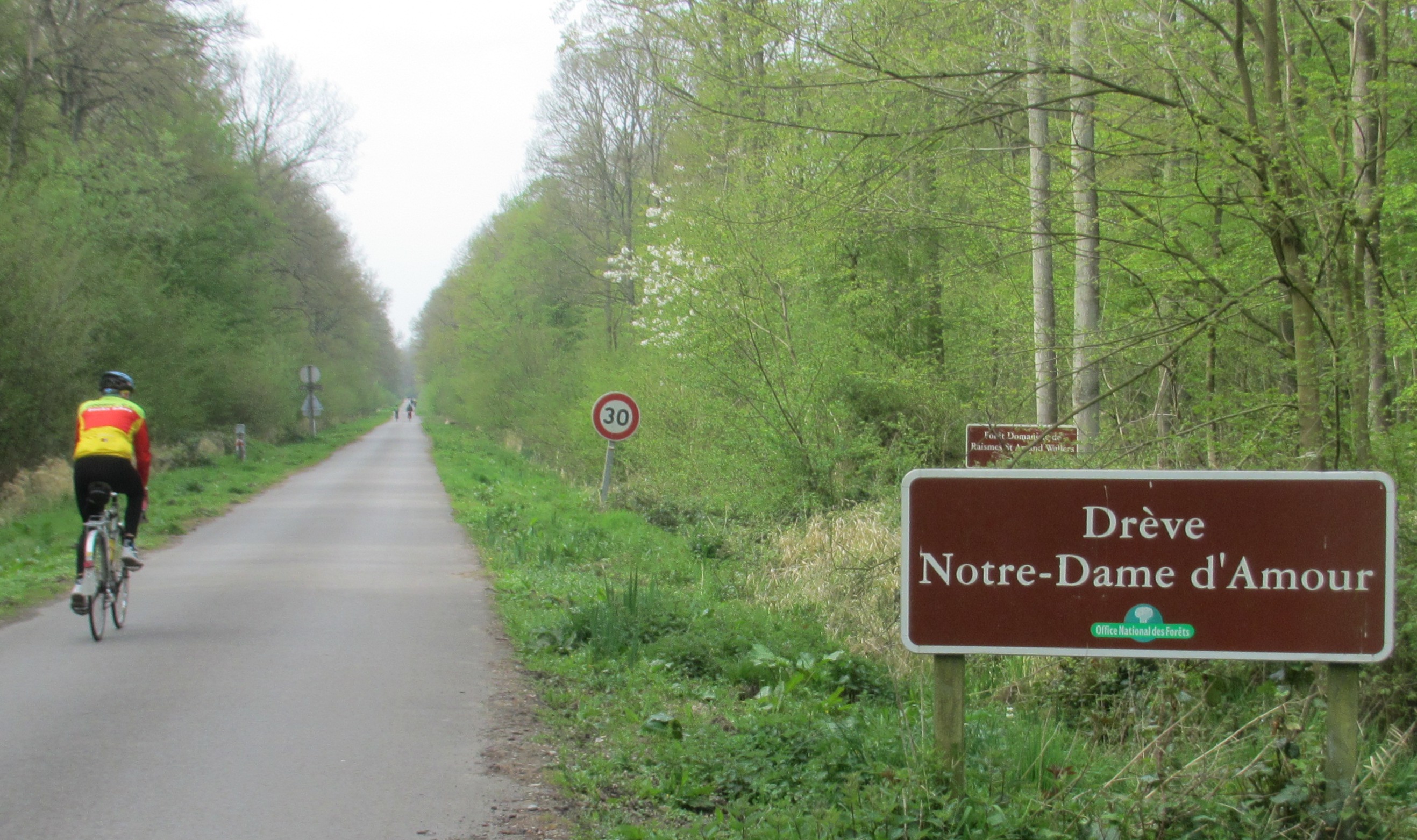
We parked about an hour’s ride away and pedalled our way around and through the forest on some delightful car free roads and tracks until we popped out of the trees onto the course.

Foret de rasmes France

entrance to the Arenberg paris Roubaix

From here the spectators walk along the 2km of arrow straight road that form the route, or as we did they thread their way through the surrounding forest on foot and on bikes.

Paris Roubaix 2014

Almost by luck we found a great spot. Almost 2km from the fan village there are slightly fewer spectators and the line at the barrier was not as deep, plus we came out by an official service area which meant there was a bend in the barriers.Waiting for Paris Roubaix 2014

By standing on the corner of this bend we had an almost unobscured view right down the course which was great in itself, but what we realised was that desperate riders being battered by cobbles will seek any sort of refuge and even 20 metres of smooth path is a huge temptation so they would actually be riding straight at us for a few seconds.

And then the atmosphere built up rapidly to an explosion of colour, noise and yellow dust.

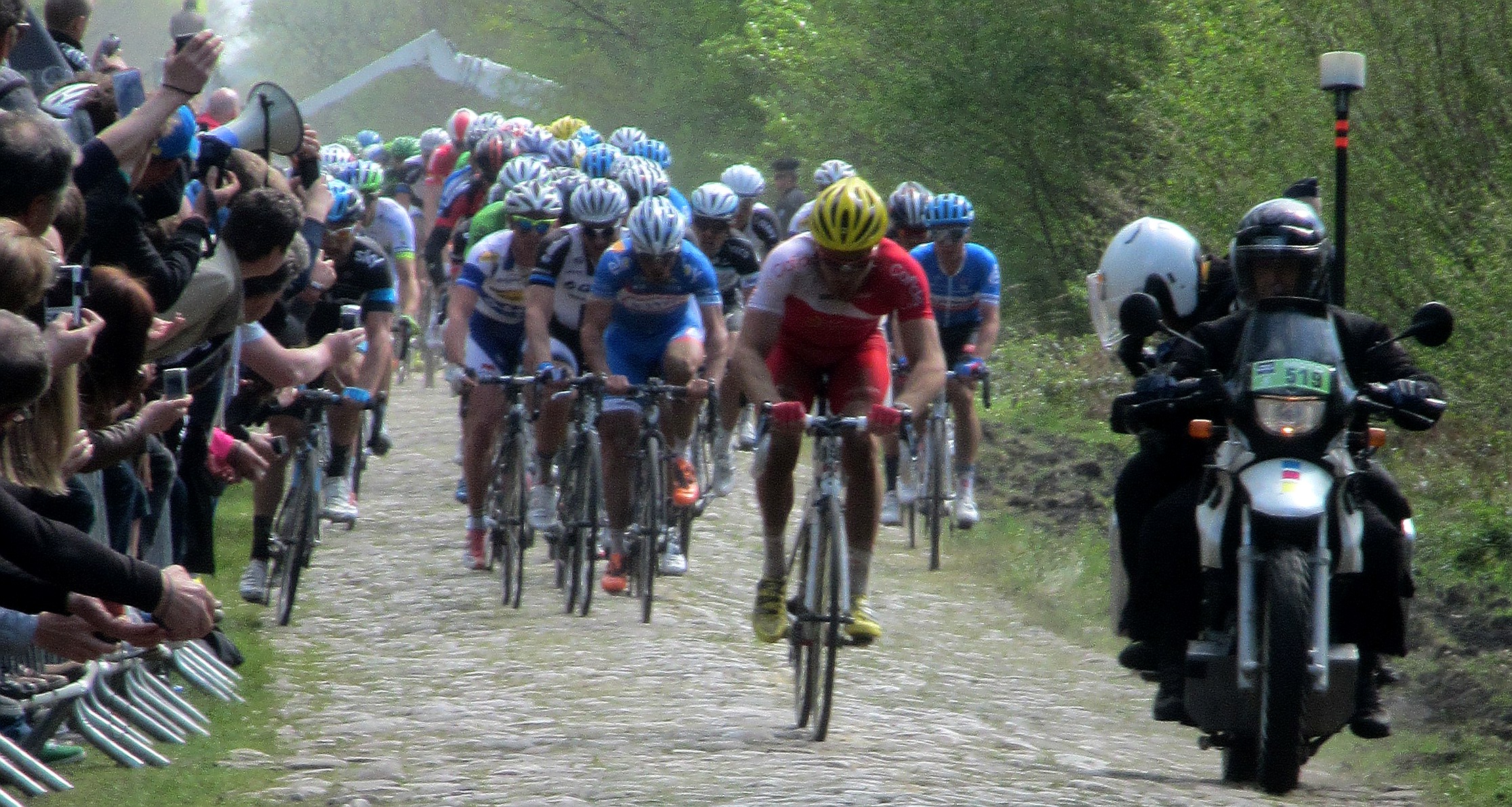
First a few service cars slewing sideways on the cambered cobblestones, then the police outriders on special trials motorbikes used only for this event. The arrival of the TV helicopter overhead says the race is upon us and the first three riders in a breakaway group hammered by, grimacing as their bikes bounced and clattered over the stones.

This is however just an hors d’ouvre. Two minutes behind the breakaway comes the peloton and there are 100 riders going flat out, probably over 45km per hour despite the cobbles, the dust, the slight uphill. At the front the leaders’ team riders were grim faced, spread across the road hammering out an incredible pace each hoping that the centre ridge or one of the gutters is marginally smoother.

Paris Roubaix Peloton 2014 Arenberg Close up Paris roubaix cyclists

And at the back of the string the body language was one of complete desperation with riders going through hell just to follow the wheels of the hard men while being hammered by the surface. Noticeably many of the long tail were the small riders who suffer horribly in these conditions compared to the big power men at the front.

Paris Roubaix 2014 Arenberg

And all the time the dust, made worse for the later riders by the team cars trying to get through to people with punctures and mechanical failures caused by the terrain.

Within minutes it was over and the noise subsided to the excited chatter of the crowd as they melted back into the woods to trudge to their cars and head for home to watch the final two hours on TV. We expected a huge crowd to gather at the big screen however we were going completely against the flow as most French people left, having had their moment and knowing that there was still over an hour to go to find a place to watch. This meant that the crowd down at the fan village had a strong international flavour with the Belgians loudly cheering “Mr Paris-Roubaix”, Tom Boonen, and even a lot of Brits giving a shout when Bradley Wiggins featured in the final kilometres. Final shout of the day was left to the Dutch when their man Niki Terpstra broke away to win the race.

A lovely and unexpected feature was when Terpstra crossed the line our whole crowd just broke into applause. A huge appreciation of what we had seen, and knowledge that Paris Roubaix has never been won by a poor rider.

And then my final treat, if you can call it that.

With the forest quiet except for the service crews clearing the barriers and bagging the rubbish the Arenberg Trench was going back to sleep for another year. The crowd were clearing off towards their cars and I realised I had the whole road to myself. Time to ride the Arenberg!

Arenberg Trench Paris Roubaix

Dad made it very clear that he wasn’t going to ride the cobbles, but the side path was now open so he could ride on the smooth section while I went for it.

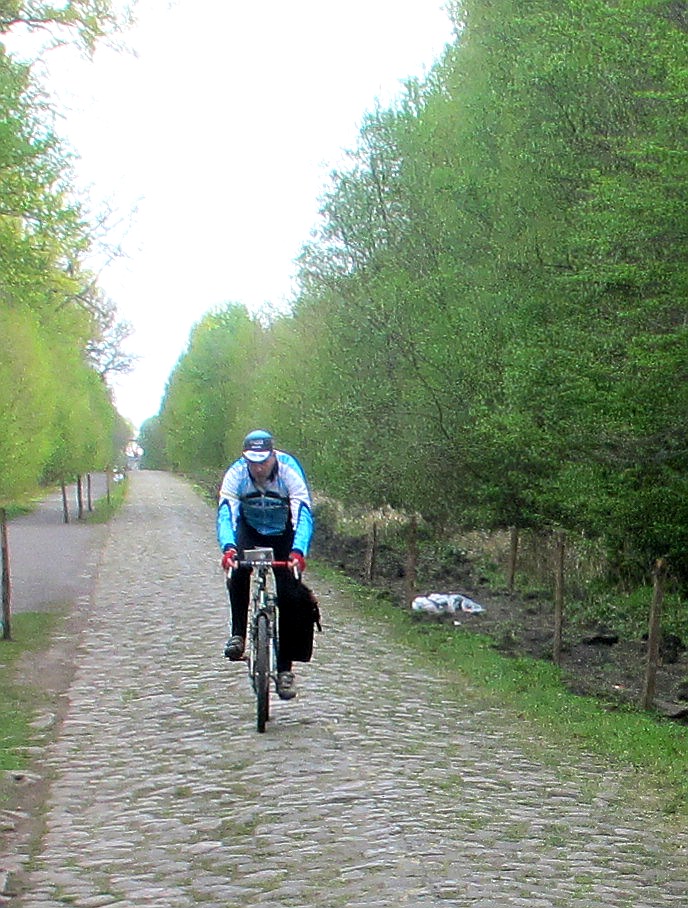
What a ride. I stuck it into the biggest gear I could turn and just hammered down the centre ridge as hard as I could, which was not very hard at all. More of a wobbly plod in fact. I could say I have ridden worse cobbles in Belgium. I could say I know some roads round my home with bigger potholes. But kept up for 2km, slightly up hill much of the way, funnelled into a relatively narrow width it feels unrelenting. I was puffing and sweating like I had just climbed a mountain for ten minutes.

Cycleottignies a Paris Roubaix

Then I imagined the riders doing 45kmph, after 150km, with another 17 sections of pave to come. They are super-human at times.

On 9th July Tour de France fans will see these roads in a special 1st World War commemorative stage from Ypres to Arenberg. The occasional watchers of the TV coverage may wonder what all the fuss is about but those who have seen the “Hell of the North” will know that they are witnessing something special. The favoured Tour riders who hate these hard roads of the north and spend these weeks of the cobbled classics riding in Spain and Italy could suffer a lot on a day like this.

For my part I will be glued to the coverage because I can say “I was there”. Another unique cycling experience added to my collection.

What an extraordinarily diverse machine the bicycle is. I do not despair!

Watching the Tour of Flanders by bike – great day out

Kevin and Vincent at the Koppenberg

Tpor of Flanders riders Haaghoek

I was not sure how to watch the Tour of Flanders this year. As I was going on my own I had concluded that this was probably a good day for a long spring ride from home. I would then rest at a vantage point and ride home, making perhaps my first 100 mile ride for a long time.

But with a couple of days to go Vincent from Ghent was on the email – “any plans for Sunday? I will probably bike from “hotspot” to “hotspot” between Oudenaarde and Ronse. In this way I can work on my personal condition and watch the race.”

I probably should have looked a bit more closely at the “work on my personal condition” part of the invitation as Vincent is a faster rider than me, but the prospect of company and somebody to map out a route between vantage points was too good to miss. I also knew that it would be great to ride with real fans, local riders with a passion not only for the Flemish riders but “their race”, the culmination of a season of Flanders mini-classics on their roads which build up over several weeks and culminate in the Ronde.

The arrangement was quickly made that I would go by train to Ghent, meet the guys and we would ride down to the course. This is relatively easy in Belgium because once you have bought your 24 hour bike ticket you have unlimited access to the rail network for the bike, it is not the lottery experienced in many countries. So I could plan to jump on a train home from any number of stations in the area without hassle.

Watching the race

The Tour of Flanders is one of the most spectator friendly races in the professional cycling calendar. Many of the great bike races flash by from place to place and the only way to watch is to chase the race by car or soak up the atmosphere and watch the rest of the race in a bar.

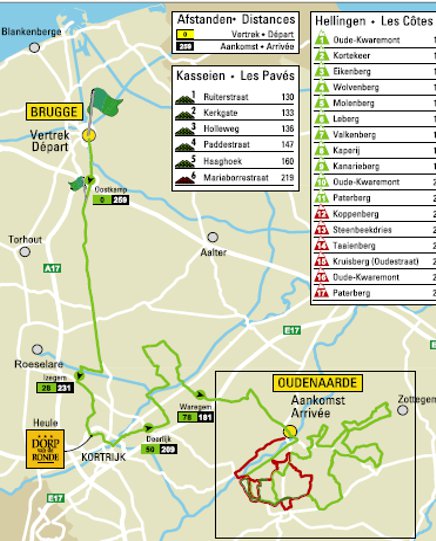
Official Route Map (from Flanders Classics)

Official Route Map (from Flanders Classics)

With the Tour of Flanders the organisers give flat West Flanders a taste by sending them off into the flat country for 100 or more kilometres, then they bring the race into the Flemish Ardennes and pack 150 km of racing into a small range of steep sided hills just 20km long by 10km wide. This is done by a complicated set of loops and laps which mean that cars find it hard to move almost anywhere in the network of lanes but by bike it is easy to plot a route to see the race several times if you have some local insight.

The organisers also cater for the spectators brilliantly by running shuttle buses up to three spectator villages with food, bars and big screens at the main vantage points. It is quite unique in sport, the crowd encouraged away from the towns into fields beside tiny villages. And instead of grumbling about the inconvenience and the intrusion the local communities fill many of the gardens with their friends, get out the beer and the barbeque and welcome their race.
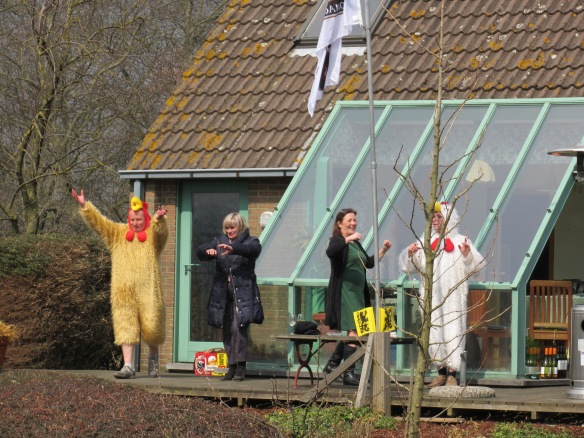
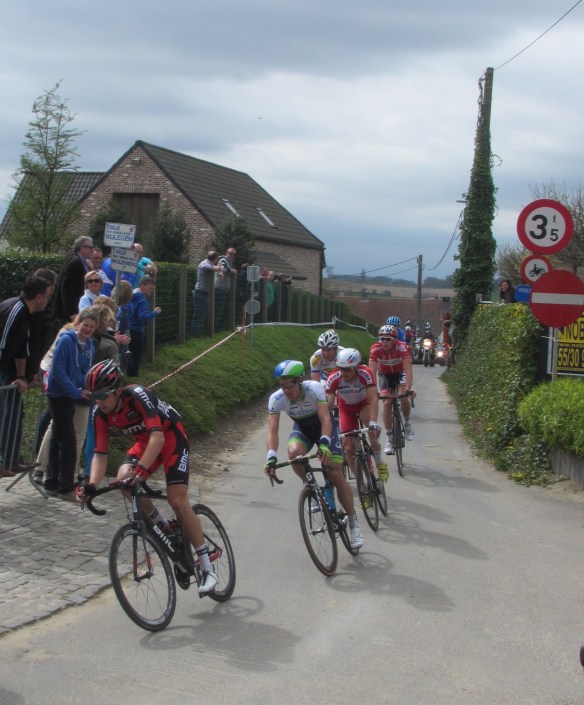
Tour of Flanders

(I published several posts last year from the Paterberg that can be found under the Tour of Flanders tab below)

Our route

Our ride was a bit of a mini version of the race route which I have crudely sketched on to the map below (Blue line) By starting from Ghent we would mirror the elites by riding straight into the stiff south westerly breeze. Near to Oudenaarde we swing south into the hills to the Molenberg. From there apparently there was just enough time if we hurried to catch them again on the cobbled section at Haaghoek before a 10-15km ride to the Oude Kwaremont where we should see them twice and watch the race unfold on the big screen. About 80km/50miles I estimated for that part, my whole day was around 75miles/120km.

Tour of Flanders our route

Tour of Flanders Molenberg

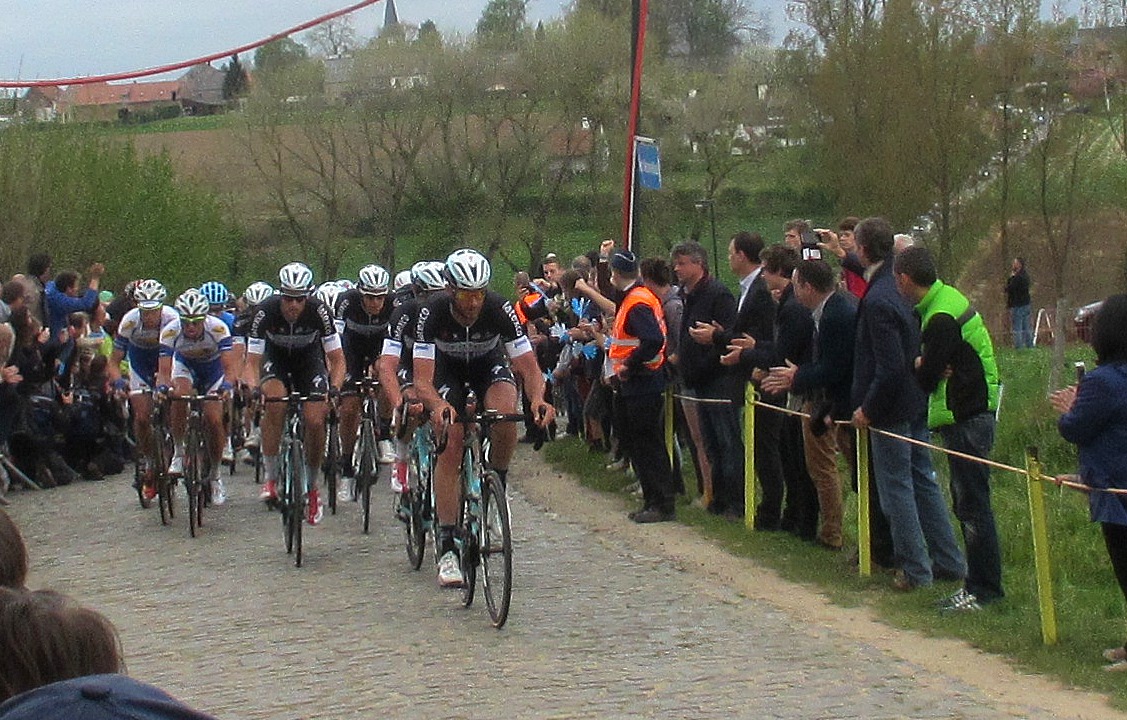
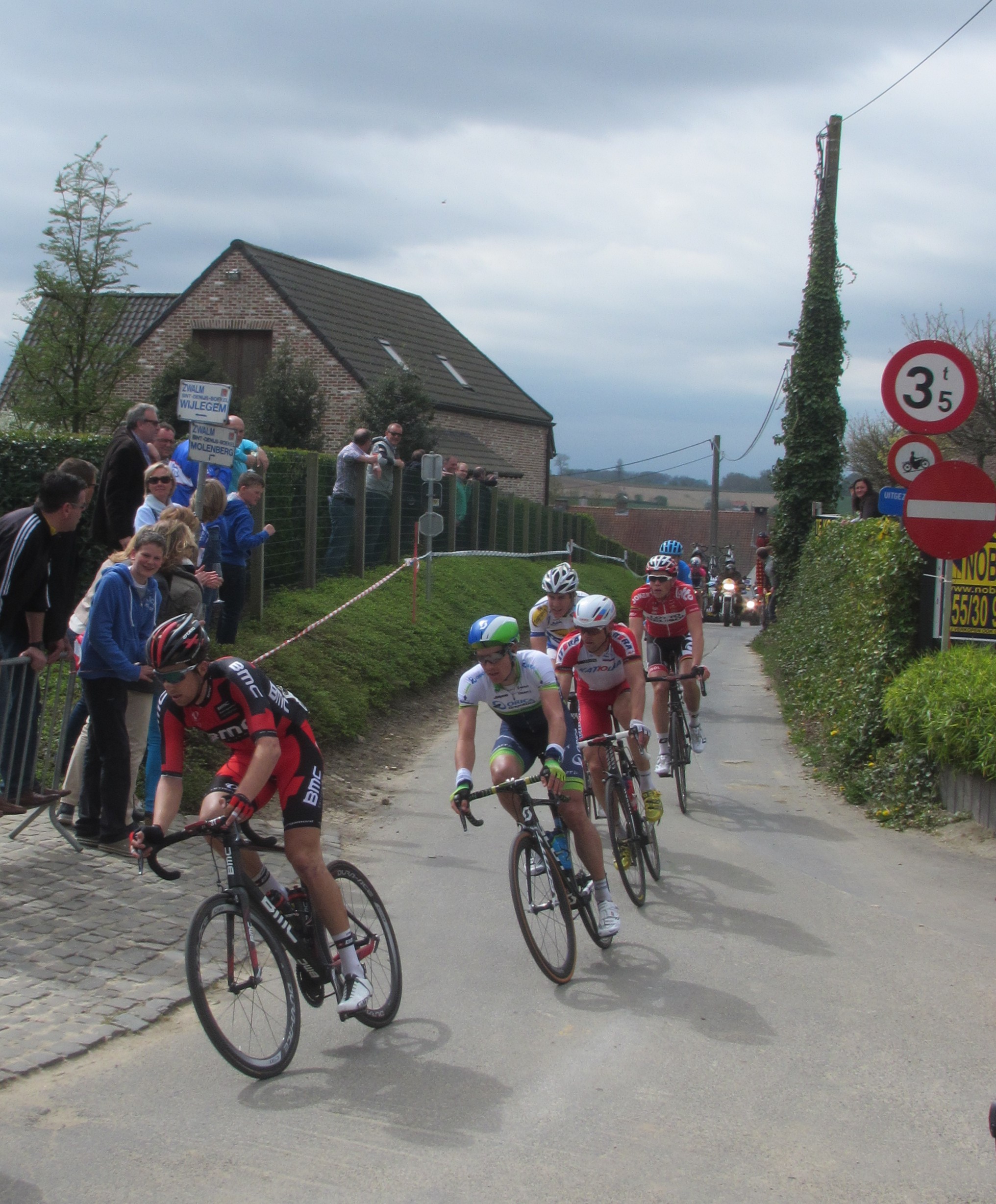
This route was really good because I would never have chosen the Molenberg or Haaghoek to watch, I just didn’t have the knowledge of what to expect and they come early in the action. As it turned out they gave me some new experiences because the top of Molenberg was a tiny lane with the bunch funnelled down right in front of people’s gardens whereas the section at Haaghoek was a wider cobbled road across a shallow valley with a great view of the whole race cavalcade rattling down the stones and sweeping up in front of fans two deep on the railings.

The Oude Kwaremont is at the other end of the spectrum, one of the famous and decisive climbs with just 20km to go in the race. I have ridden it and it is nowhere as steep as the Paterberg or the Koppenberg but it just seems to go on for ages, all cobbled. It is ridden 3 times and at the end it is a great place to see the favourites impose themselves. For that reason it is of course popular, with a big spectator village at the top and you have to fight for a view at the roadside, but then we can all watch the finale.

Oude Kwaremont summit

Our ride.

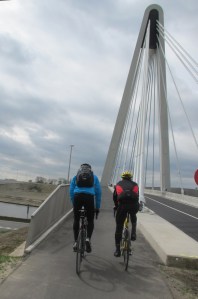
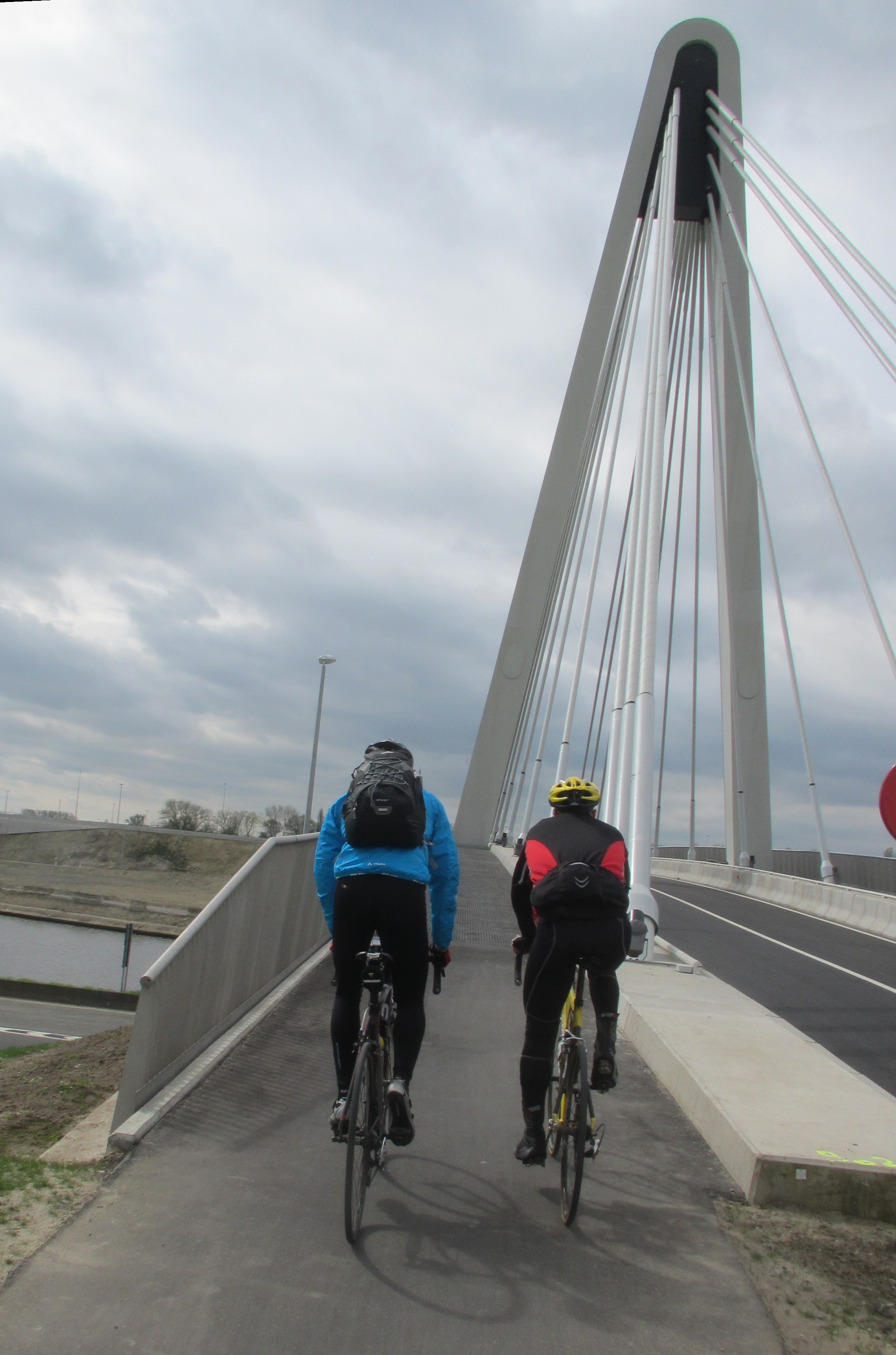
Cyclists Suspension bridge GhentTo get out of Ghent we nipped through the suburbs and then up and over a superb new cyclists suspension bridge which has been built over the motorway as part of the access to a new football stadium. The stadium itself has an impressive mobility plan which encourages local fans to come by bike with lots of cycle routes and cycle parking.

We quickly joined the flat car free route beside the Scheldt river (hope of the infamous ribbelstroken) and soon knocked off the kilometres towards Oudenaarde. I was already grateful for the company given the surprising strength of the wind, especially when I realised that my original plan would have seen me riding 50 miles into this on my own.

IMG_4018Leaving the riverside we were quickly zig-zagging through a maze of lanes that I would never have found on my own and relatively rapidly came up a tiny side road to the top of the Molenberg. Everything seemed very quiet, then suddenly the final climb was covered in parked cars, telling us the race route must be nearby. Great navigation because we popped out right at the top of the village and joined a mix of locals and visitors by the roadside, all being handed flags with the black lion of Flanders.

The next part of the ride was the hardest because after standing around for half an hour we suddenly had to dash across several small folds in the landscape and by the time we reached the top of the final one my legs were groaning and my lungs gasping to keep up with Vincent and Wouter. We actually got to ride a very short stretch of the course just ahead of the race as we cut through but we were mainly on some lanes which looked lovely with the spring blossom everywhere, a year ago I watched under snowflakes and spring seemed quite distant.

A good crowd was gathered at Haagenhoek because of the excellent views and the extremely well placed bar where the party of Dutch cargo bikers were refuelling.

Tour of Flanders Haaghoek

We weren’t there long before the race came through so this time I didn’t stiffen up so much before we were back on the bikes to ride a longer section to the Kwaremont. Again the benefits of local knowledge were apparent, would I have gone down an apparent footpath between two houses without Vincent leading? No chance!

Short cut to Tour of Flanders

Cycle touring path near OudenaardeThe stiff wind was still in our faces but by now it was clear that Wouter is a strong rider into the wind so I was happy to be tucked up behind them when we cleared the lanes and joined an excellent cycle route that ended up on an former railway line that sliced across the open fields in the flat valley of the Scheldt. This was a good way of taking in the topography of the area because as we rolled west the hills of the Flemish Ardennes were lined up to our left and we could look across and spot the bergs, knowing the riders were out there somewhere sweeping up down and around the fiendish final 100km of the race. Our route cut right across the foot of the awesome Koppenberg that completely defeated me earlier in the year so we stopped for a photo-call to prove we were there, but maybe another time for the climb.

Shortly after the foot of the Koppenberg we were into Berchem, the small town below the village of Kwaremont which looks down over the valley. We were running a bit tight for time to get up the climb before the riders so the suggestion was a detour to watch the field come down the new main road which bypasses Kwaremont. This turned out to be inspired because again we saw another aspect of the race that none of us had seen before. The bunch was jockeying for position before the key climb which means that they spread out across the whole road and descended past us at just extraordinary speed. (80kmph/50mph at least) Given that they were only a few metres from a road narrowing and a sharp right hand bend the sight was even more terrifying. As bike riders ourselves we appreciated how much skill and confidence in each other the pros must have to do that. The day was dark, gloomy and threatening rain so the lights of the cars and motorbikes only emphasised the impression.

Tour of Flanders Kwaremont

Once they were past us Wouter suddenly suggested that if we were quick we might actually catch them again at the top of the hill because they had to go down, through Berchem and up the long cobbled climb while we “only” had to go up the main road to the top. My legs were aching again from the combination of riding and standing so the other two soon left me behind even though the slope was not steep. However I was soon bumping my bike across the field with the big screen to get to the barriers and see the bunch in time.

We were then able to hang out, refuel (essential frites) and watch the race unfold on the big screen. Then with just 20km to go it was a rush to get a great spot by the barriers and hopefully see the decisive moment, then back to the screens to watch them climb the Paterberg and then the run in to the finish at Oudenaarde.

Tour of Flanders on the big screen

The race

The race itself was a cracker. For the first time in three years the two strongest riders of recent years were both fit and the Flemish were very excited about Tom Boonen’s prospects. There were also a host of strong riders from what might be called “the new generation” sniping at the heels of the favourites and several of them are Belgian.

The break of the day went away early and held on for a long time but it was clear that on home soil Boonen’s Omega Pharma Quickstep team meant business, they were massed at the front every time we saw them and the crowds were getting very excited.

Look its Tom Boonen at Tour of Flanders

In the final 30km it was the new generation that appeared charge and home fans were excited to see Greg van Avermaet of BMC pulling away in front of us on the Kwaremont with his Quickstep shadow Stijn Vandenbergh, also Belgian, and more excitingly for the locals he was from a village nearby.

Belgians attack on the Oude Kwaremont

But ominously a pair of riders came up just behind them and one of them was Spartacus, Fabian Cancellara towing Sep Vanmarcke who had pushed him so hard in last year’s Paris Roubaix.  In the final 20km we almost saw Van Avermaet get away on the Paterberg and the other Belgians took it in turns to attack but they could not shake off the Swiss master. Every Belgian attack was greeted by cheers and shouts, but to a huge groan from the crowd Cancellara took the sprint from the three Flemish young pretenders.

However what I liked is that even as we walked away the talk turned to what a great race it had been and respect for Cancellara. Not only because he is a great rider but because it is clear he respects the race and its traditions. One press report I saw said that he even apologised to the host Belgian broadcaster in his post-race interview for beating three Belgians! A real nice guy by all accounts and one of my favourite riders. (Click here for a video of one of his greatest descents – awesome stuff)

In summary?

I am sure I had something complicated to say, but it’s all here. Put simply – every bike fan should come to the Tour of Flanders at least once. And if you can do it riding in the company of knowledgeable Flemish bike fans you will enjoy it all the more.

Thanks Vincent and Wouter – great day out.
Many ways to watch the Tour of Flanders

There are many ways to watch the Tour of Flanders.

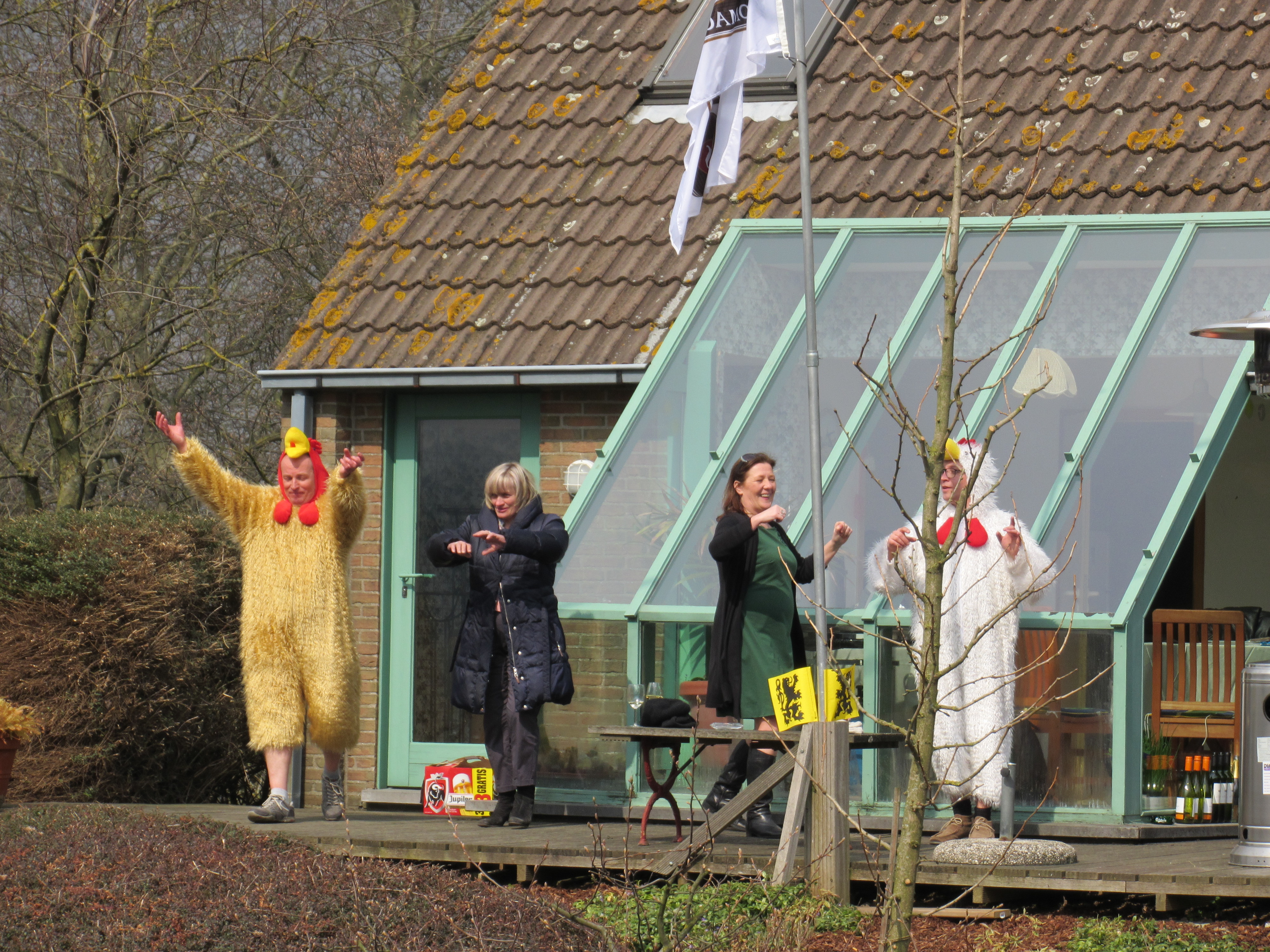
Stand in your garden and go “Oh look, its Tom Boonen”

Look its Tom Boonen at Tour of Flanders

Or

Watching the Tour of Flanders

There were even the Dutch guys who brought a lorry load of delivery bikes to cycle between bars.

Tour of Flanders Bakkiefietsen Tour

I was invited by Vincent Meerschaert and friend Wauter to join them on their 100km dash between the bergs, which is almost certainly why my legs ache so much this morning.

So we got to take in some superb Flemish cycling infrastructure such as the brilliant new suspension bridge near Ghent,

Cyclists Suspension bridge Ghent

Arrow straight touring routes

Cycle touring path near Oudenaarde

And to hang around the legendary spots like the Koppenberg and the Oude Kwaremont to take in the atmosphere and see the race unfold.

Kevin and Vincent at the Koppenberg

I will post a few more photos and a more about the ride, but it is fair to say I had a great day out once again with the Belgian cycling fans. It is an amazing sport that we have which lets everybody feel so close to the riders and become part of the race. Surely Flanders is one of its spiritual homes.

Tpor of Flanders riders Haaghoek


Now our bikes have got an obesity problem. Fat bikes the trend at Taipei Cycle Show 2014

Photo by Kevin Mayne

When I go to the big bike shows I try to have a wander round and see if there are any trends that catch my eye. After a while the sea of alloy and carbon can become overwhelming so the eye is only drawn to superb design or something quirky.

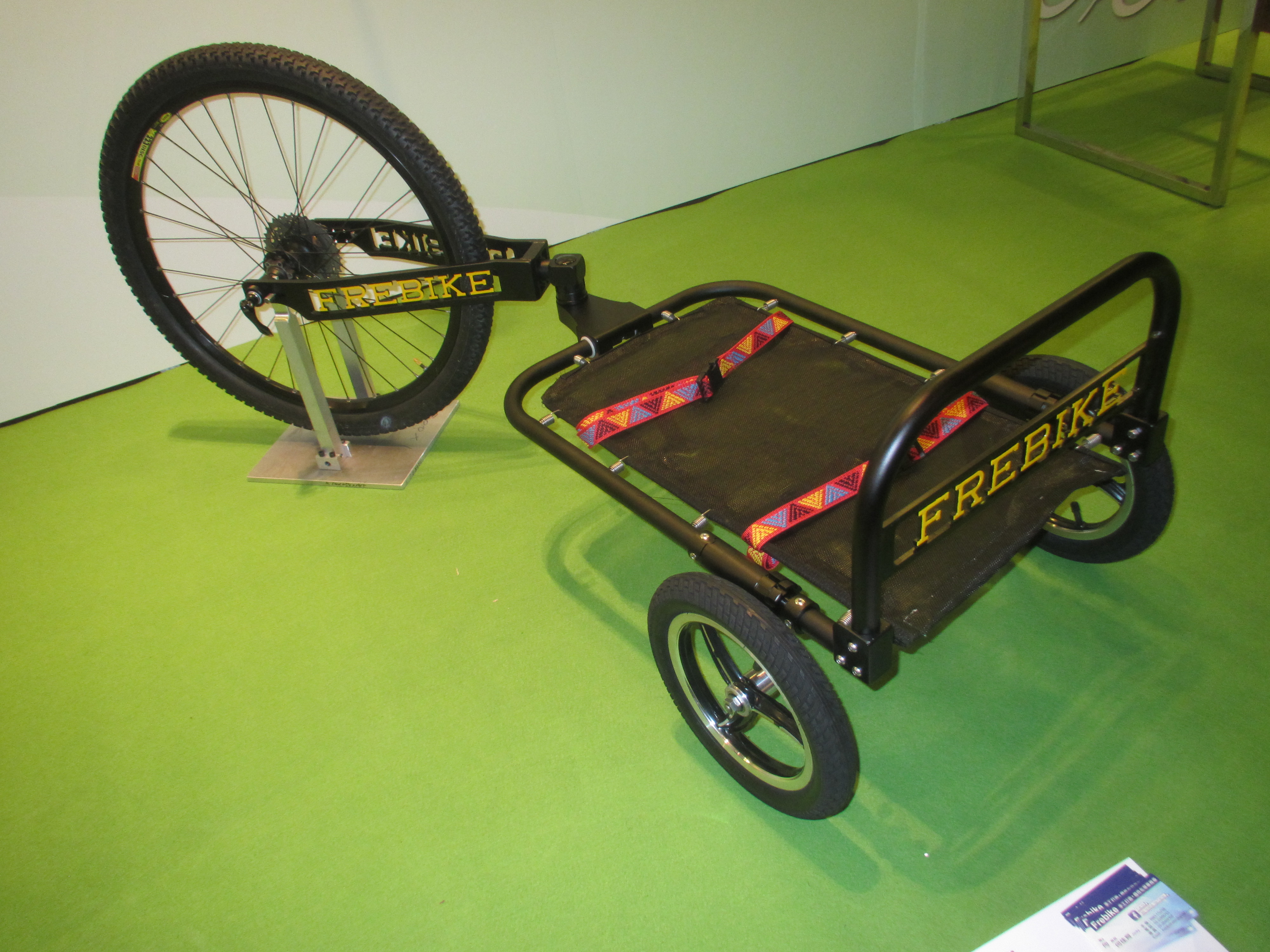
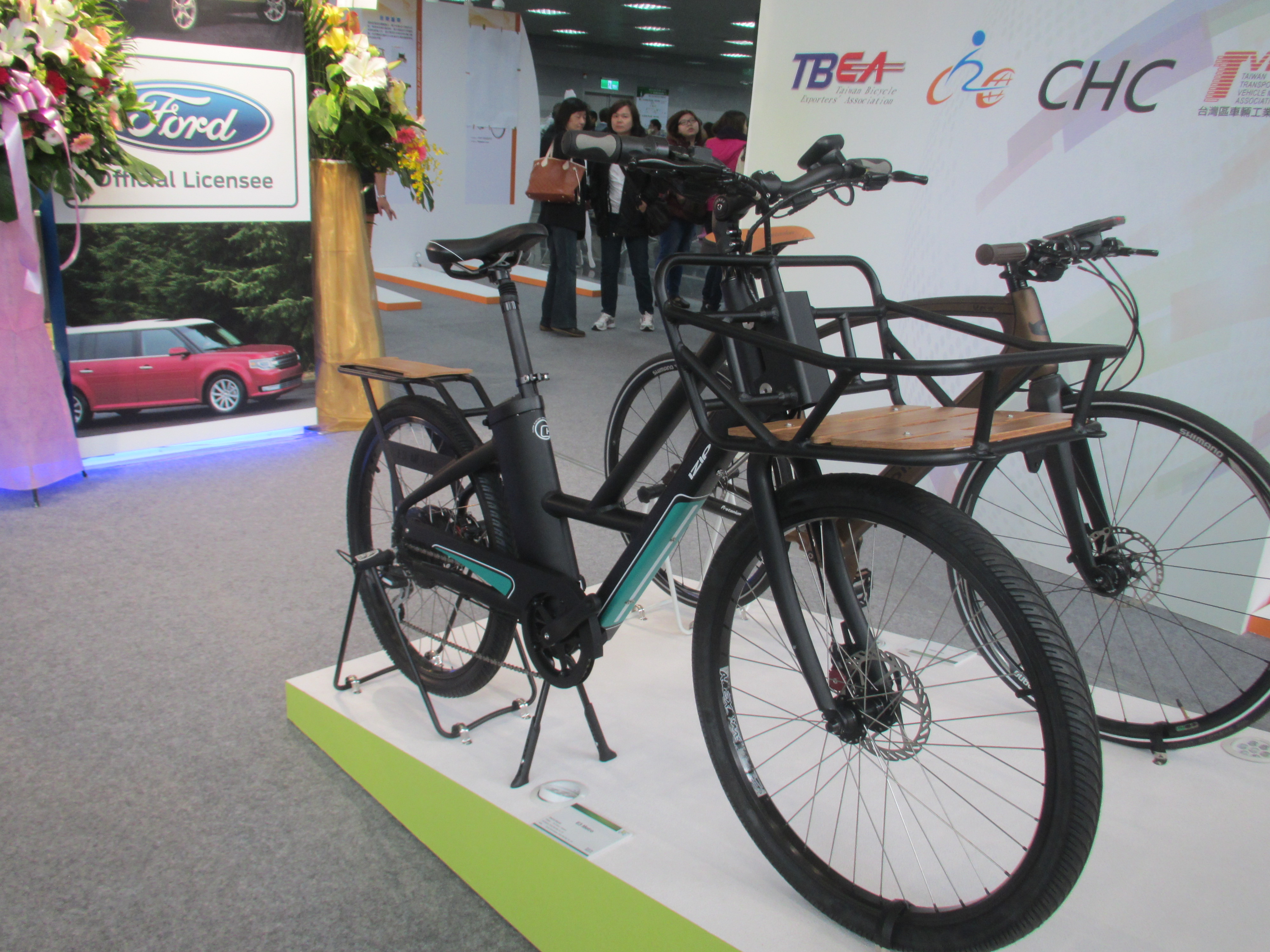
Cargo trailer At this year’s Taipei Cycle Show I was actually on the lookout for signs that the growing interest in cargo bikes in Europe might be backed up by the companies who make so many of the elements of our bikes. With the Asian heritage for carrying loads by bike I always believe Taipei should be a good place for research. However this year I was almost completely disappointed apart for two items in the Design Awards section – a small trailer and a stylish pedelec (IZIP E3 Metro) with load carrying front and rear.

Photo Kevin Mayne


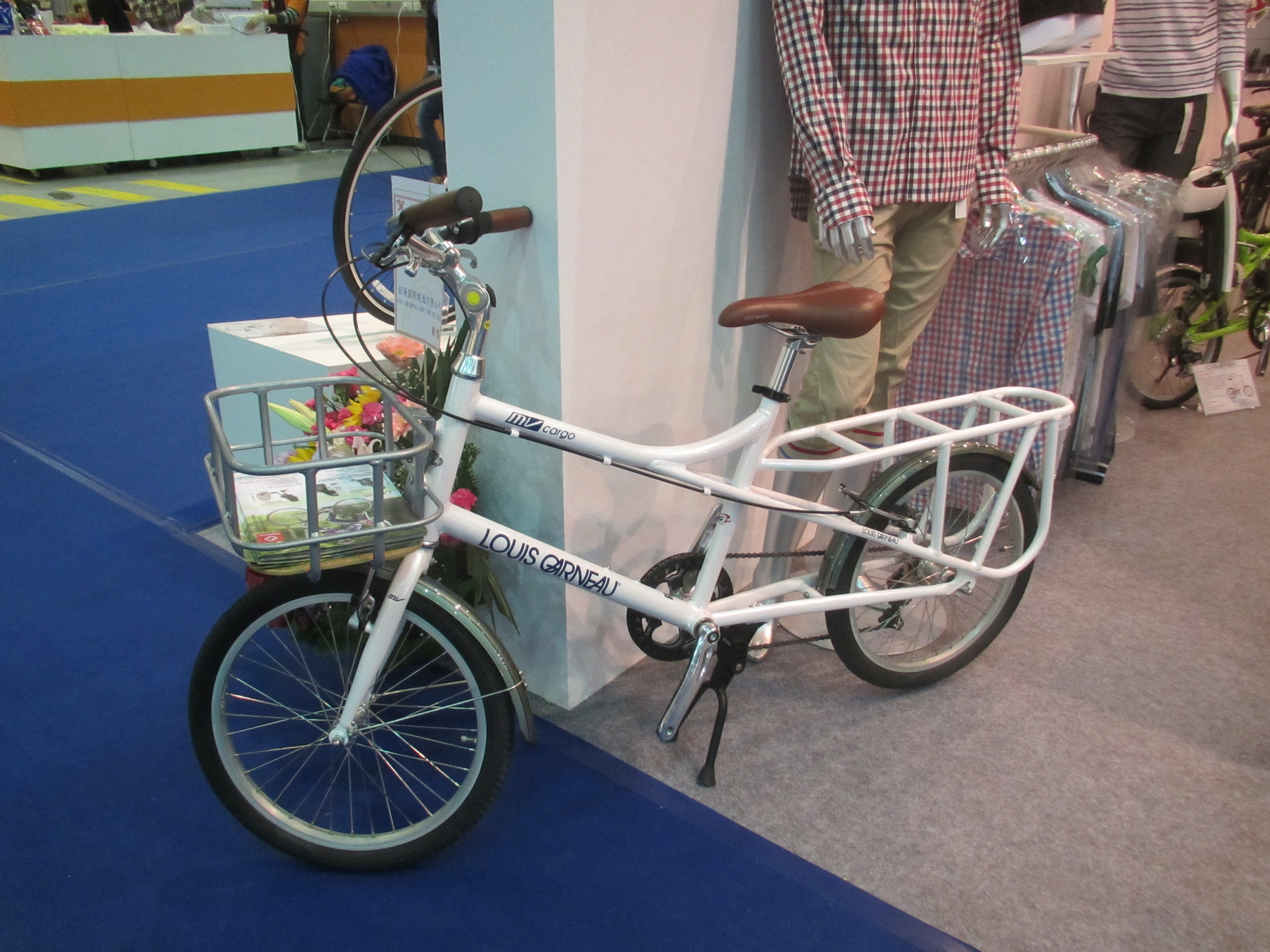
There was also a very cute Louis Garneau bike with basket which I liked.

Photo by Kevin Mayne

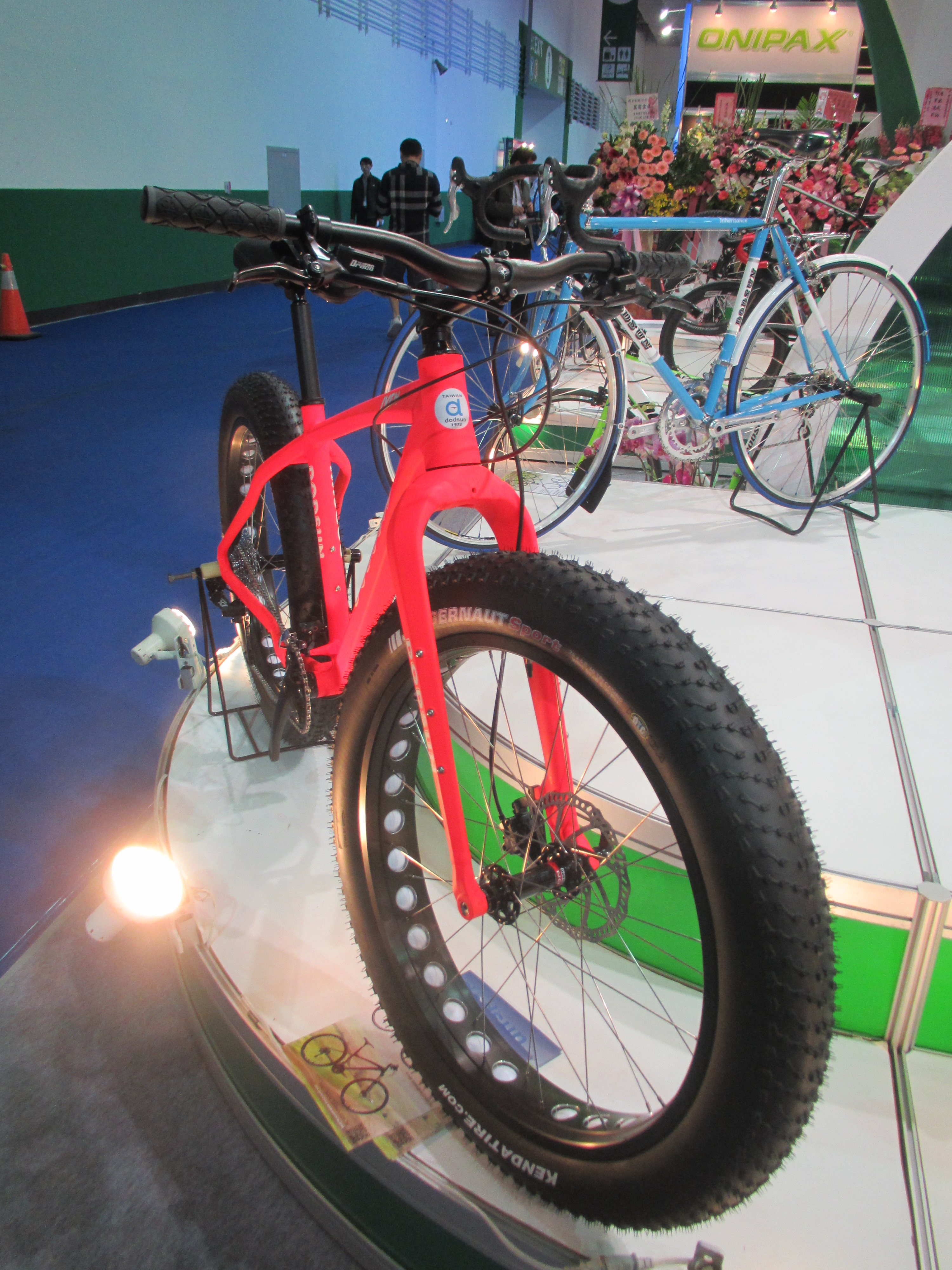
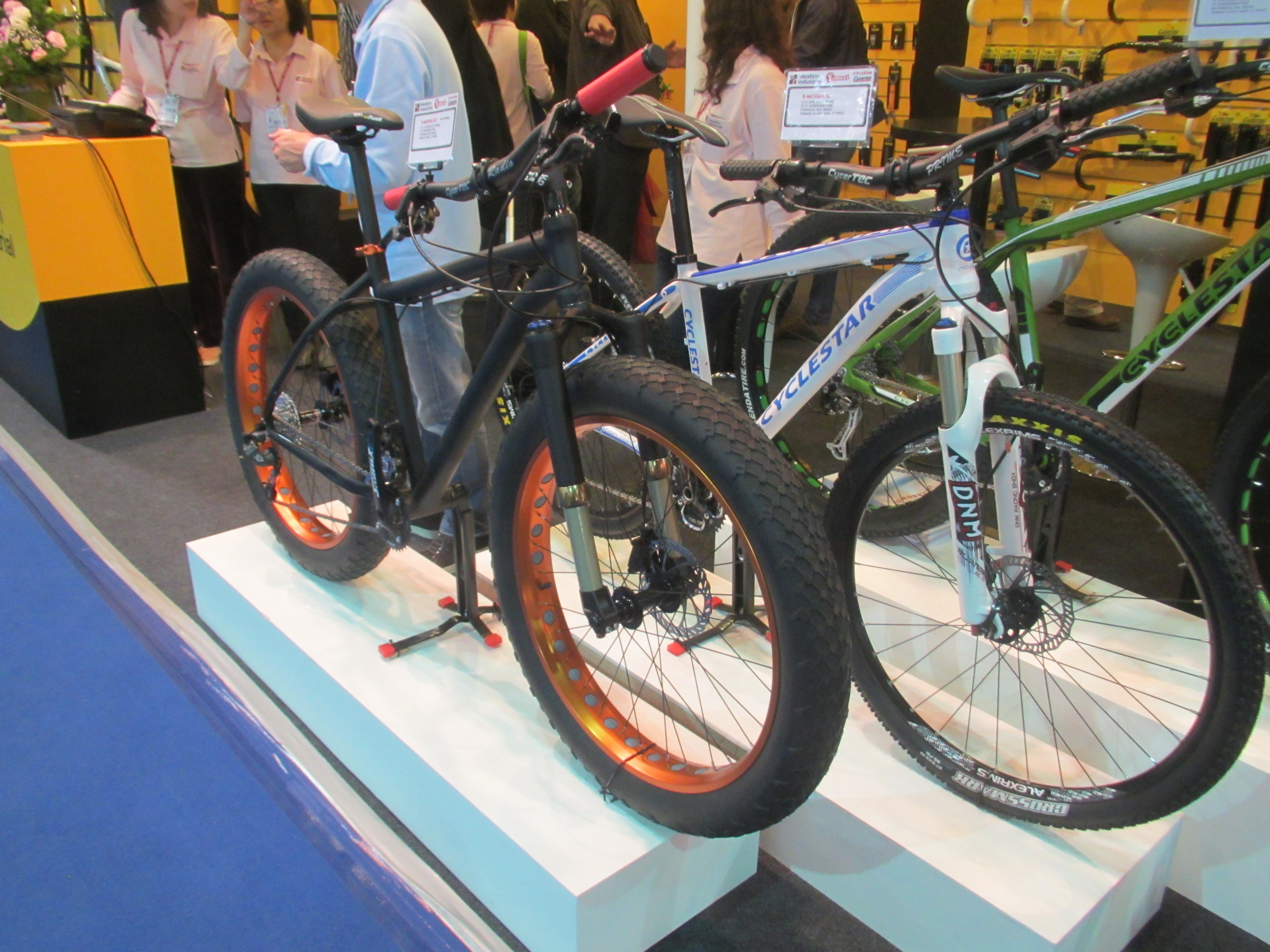
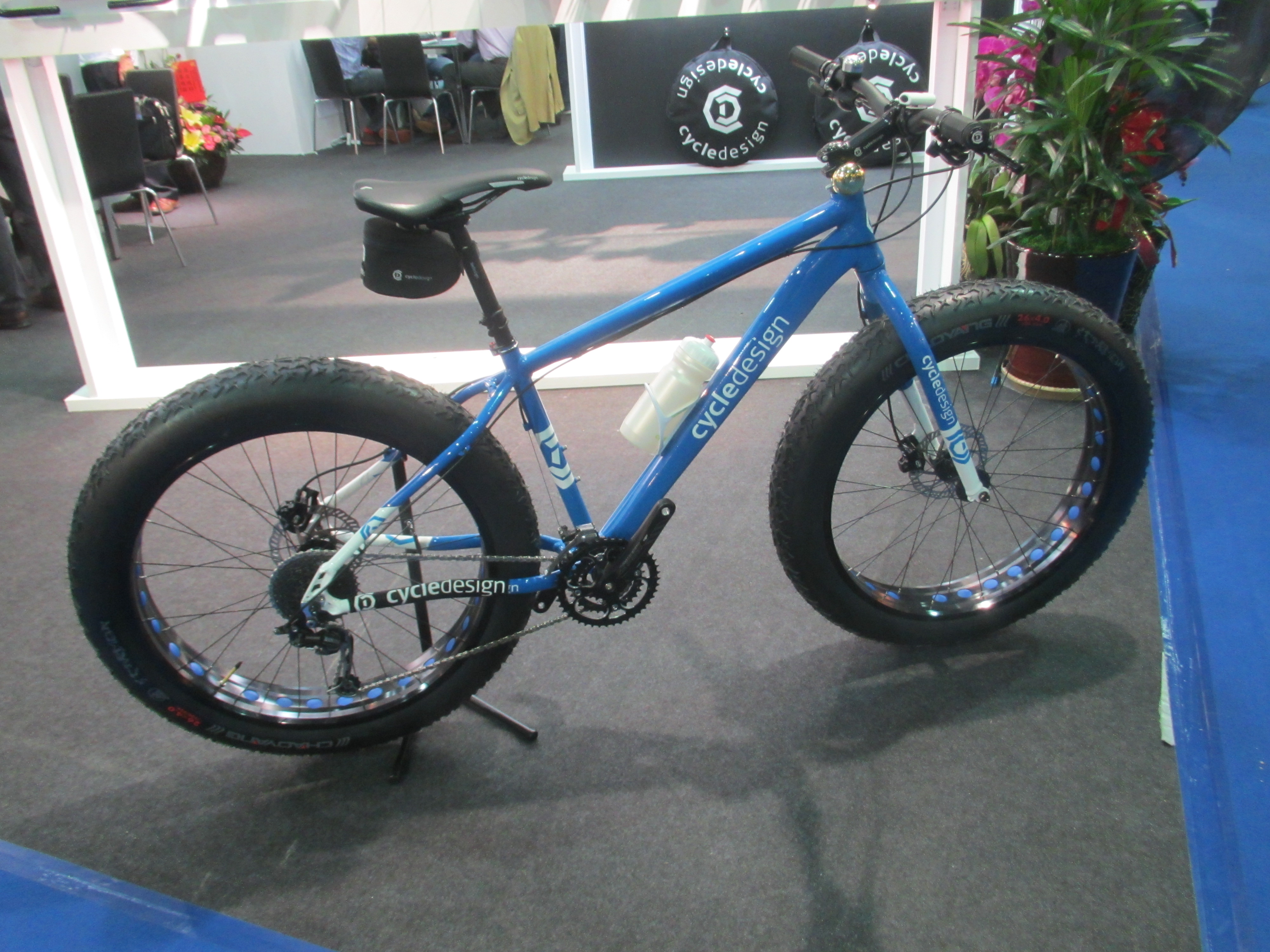
However I was struck by one trend that is massive in every dimension. While last year the fat bike was a novelty on a few stands this year they were absolutely everywhere, it appears that the Taiwanese manufacturers think this is one of the trends their US and European importers are going to run with for a while so many had designs on show to prove they could meet the demand.

Taipei Cycle Show

Photo by Kevin MayneA have read some reviews and stories about fat bikes and I can clearly see the attraction in the countries where snow lies feet deep for months on end, or if you have a convenient sandy desert or beach to hand. They would be fantastic to hire for a fun day out at a bike park. But a mainstream part of the market? Not convinced.

But I have a sneaking suspicion that fat bikes are largely created to meet Rule 12 of the Velominati, that is to say

“The correct number of bikes to own is n+1.

While the minimum number of bikes one should own is three, the correct number is n+1, where n is the number of bikes currently owned. “

A bike that satisfies the need for the cyclist who has everything? Now that might work.

Taipei Cycle Show


Mayne rides to solo victory in the Fleche Waltonne

Trevor Mayne Photo Geradline Walker

Even those who don’t follow cycling as a sport recognise the victory salute of a winning rider as he or she crosses the line, preferably having dropped your breakaway companions and soloed to the line with time to sit up and do the full arms raised salute. Someone may even take your photo in victory.

A much smaller number of people know what that actually feels like, even within the sport. I never did it in about 20 years of racing and I am pretty sure that I am not going to now. Oh sure, I dreamt it a few times and I have certainly felt like I lived every pedal stroke when cheering a favourite rider to a win on the TV. But to actually feel it? I wish.

So full credit to my brother Trevor. He still races to a high standard in the UK and in his 50th year he set himself the goal of winning a road race. He has accumulated a whole range of awards and trophies in time-trialing in the past few years but said his season’s goal was a road race.

Well he only went and did it in the first event of the season.

As the report of Leicestershire’s Fleche Waltonne says:

C/D Race

The wind played havoc in this race and after only 1 lap the field was significantly strung out. A break of 5 established itself quite early containing Paul Caton Trevor Mayne and Karl Moseley amongst others. Mike Twelves attacked from the pack to try and bridge to the leaders , and got within 10 seconds of them before reinforcements from behind came up , these riders included strongmen, Andy Eagers and Jon Stephenson. Eventually, a very strong group of 6 were well clear of the rest.

In a move that was a copycat of the A B race, Trevor Mayne attacked in Walton village with just over 1 lap to go. Trevor, an expert timetrialist, pushed on alone to a fine victory by around a minute and a half.


Words from http://lvrc.org/race_results.asp?r=1072&y=2014

All credit to him. And putting any sibling rivalry aside I am not only very proud of his successes, but in this instance more than a little envious – because that’s the way to do it.

The only cautionary note is that having completed his season’s target in the first month of the year his excuses for avoiding DIY tasks have significantly diminished. Peaked too soon maybe? However I clearly need the training, so I’m off out on my bike. Maybe I need to practice my victory salutes a bit, just in case.

Dream on.

Ahhhh, good to be back in the comfort of the peloton. The club cycle touring season kicks off in Belgium

Photo Kevin Mayne

After its winter break the Belgian cycle touring season kicked off again on the first weekend of March. Unlike the UK where I have done most of my cycling the clubs here don’t ride through the winter.

So this means that the March rides are a bit if a “get to know you” and find out who spent the winter doing the kilometres and who were doing the kilogrammes. And it brings a little trepidation, a slight return of cyclingclubaphobia until I have checked that that I can fit in to the club.

I missed the first two weeks in Taipei so this was my first ride of the year with my ambition to drop into group 2 and hide quietly in the slipstream. With the hazy sunshine I was optimistic that there might be a good few riders out so I could chose my level. And wow – 75 starters resplendent in the new club kit.

There were about 35 in group 2 and my hopes worked out quite well, because in a stiff breeze the enthusiasts that had been riding regularly were happy to take the lead, and the big lads provided what might less politely be called a solid wall of Belgian beef that provided excellent shelter!.

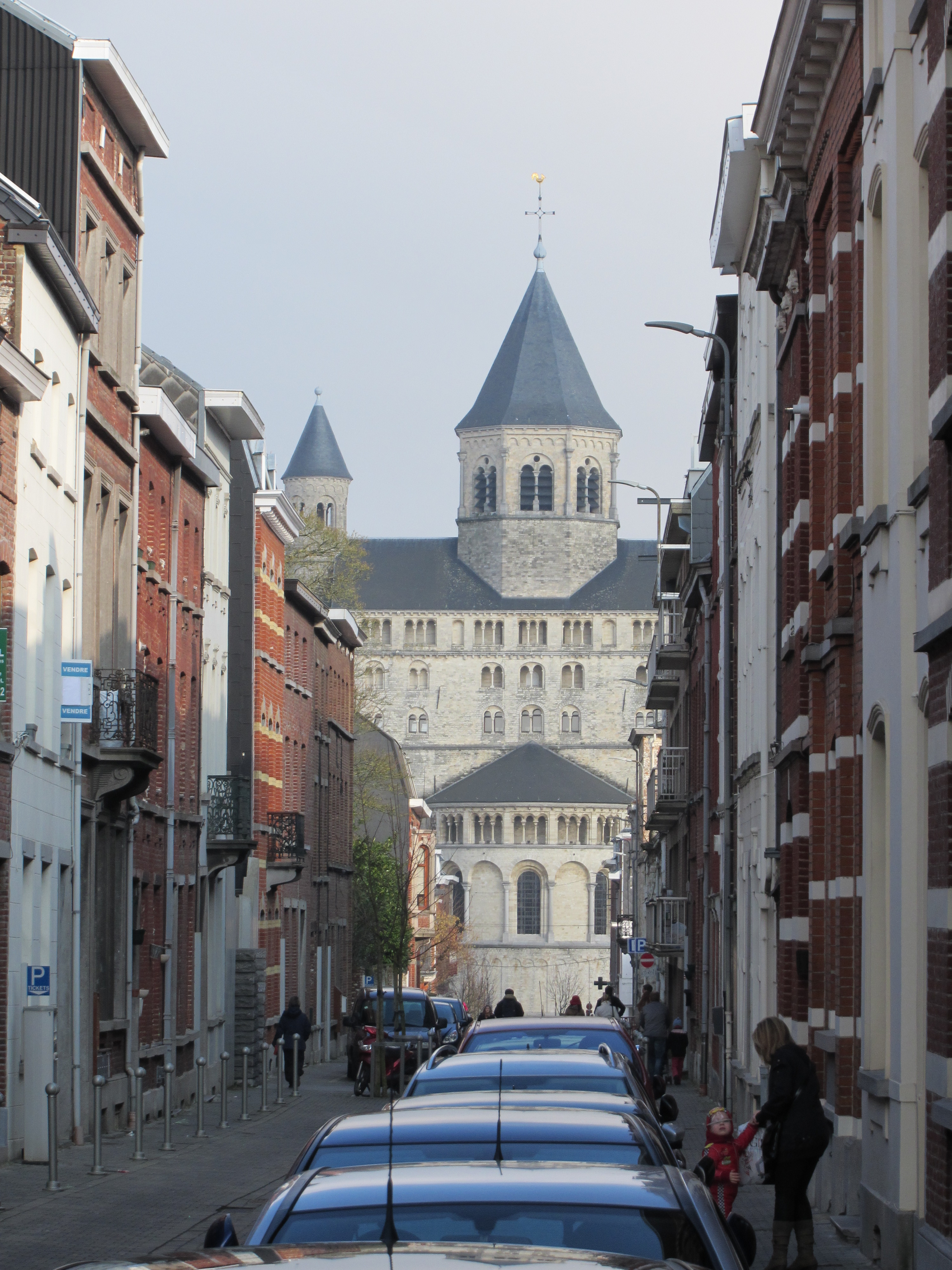
Collegiate Church of Saint Gertrude NivellesWonderful spring day, I could have stopped and taken hundreds of views of blossom and open fields as we skimmed the open countryside. In Nivelles the splendid Church of St Gertrude was ringing out its bells with great energy as if to welcome us, or just to celebrate the day.

Good to have the first club ride under my wheels.

Cycleottignies March 2014

Wet, steamy, green, welcoming. It must be the 2014 Taipei cycling experience

Photo Kevin Mayne

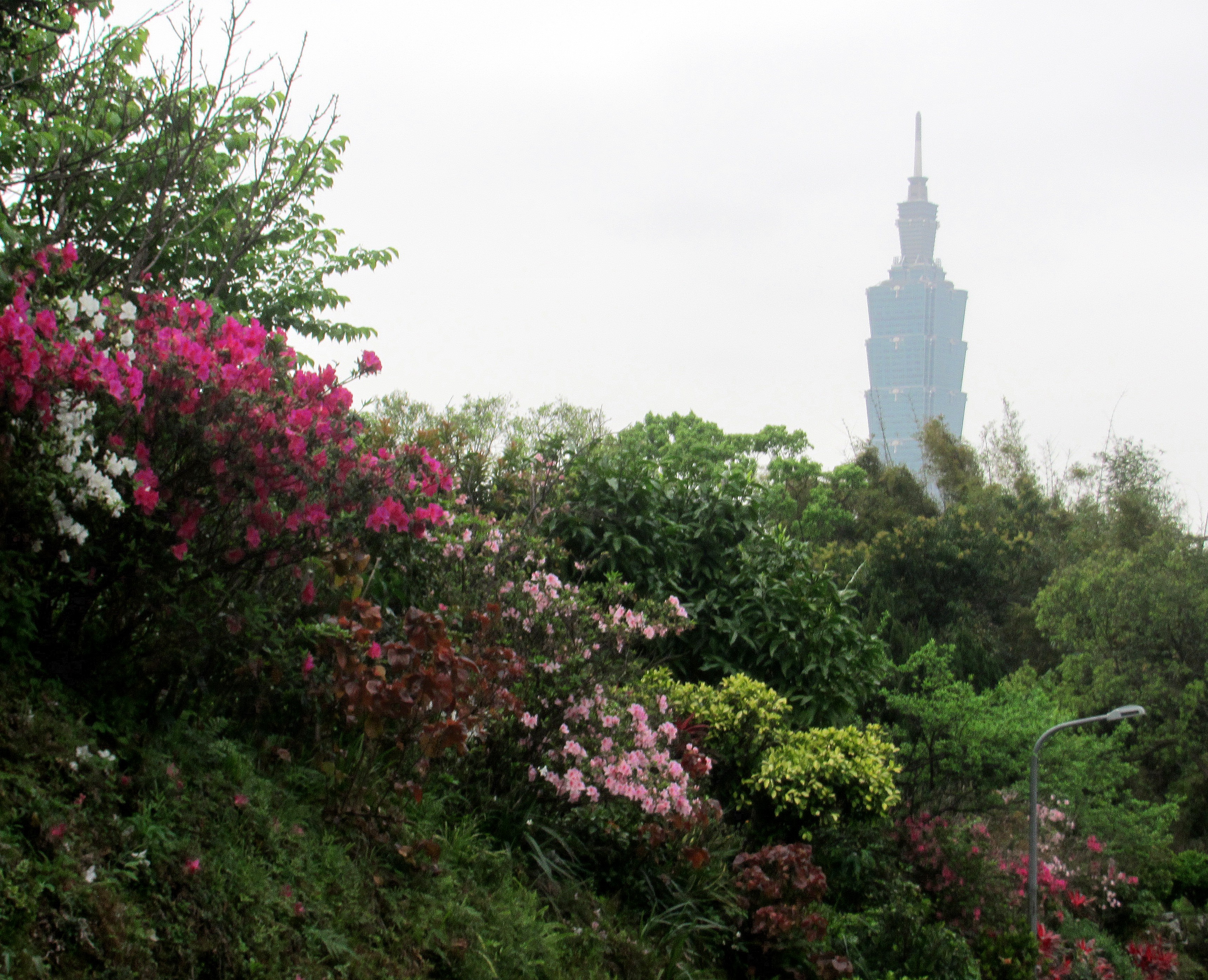
I managed to get out for three decent bike rides on this year’s visit to Taipei, however it was a very different experience to last year. The defining factor this year was water. The downpours which hit us on almost every day could certainly have killed off my enthusiasm, but instead provided a backdrop to this year’s explorations. In the previous two years I didn’t get up into the forested hills that sweep down into the city on all sides and are the product of all that rain. They go up over 1000 metres from sea level within the city boundaries and apparently cover almost half the land area which must make it one of the hilliest and greenest capital cities in the world.

Through this year’s rides I became more aware of how this landscape links with the city and how much the residents value green space and plants which burst into life in the warmth and humidity of the island. And my very final stop on the trip was the steamiest of all – the hot springs district of Beitou which deserves not only a comment as a ride destination but will get a small post of its own to follow this one.

tern social 2014

Not all things are publishable however. Our friends from Tern Bicycles put on their Thursday social ride again this year. It was social. It was a ride. As ever their bikes are comfortable and smart with some nice features. But it hammered down with rain. I have a lot of photos that look rather too much like this, and very few that look like the one below,

Tern social Taipei

Their Facebook page has a much better selection, but you get the story. But good company and a bike ride are always highlights in the Idonotdespair world, so I enjoyed it and as ever the clothes dried out. Eventually.Thanks to the Tern team.
My two other excursions were better for sharing and learning about Taipei.

Monday Youbike Bimble

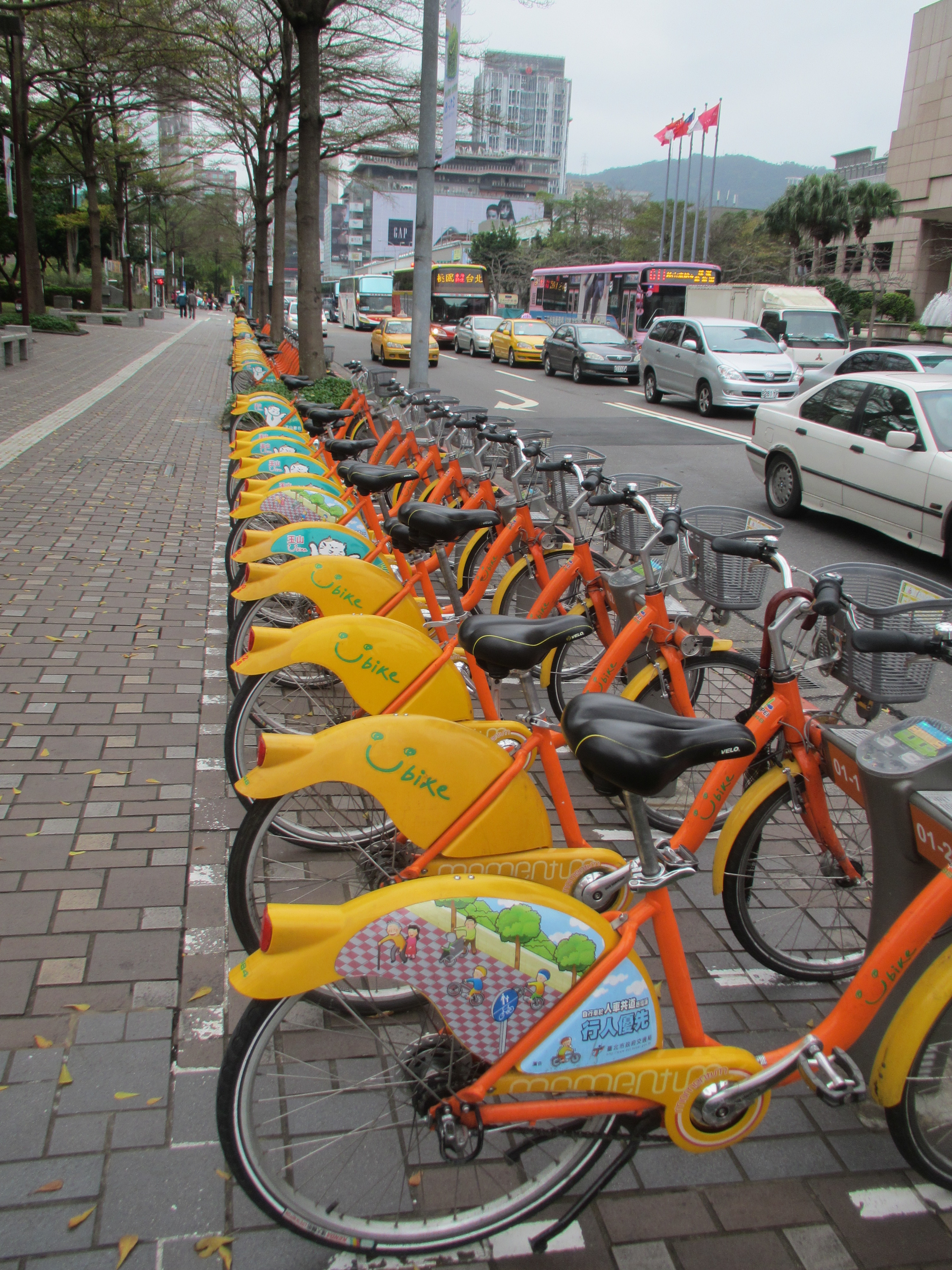
Youbikes of TaipeiA brief gap in the showers before the Taipei Cycle Show allowed me to grab a Youbike and set off from my hotel. Last year I experienced the city and the riverside cycle paths so my ambition this time was to try and get into the hills I could see from my window.

Xinyi district is mostly known to travellers as the administrative centre, shopping and property hot spot of Taipei, focussed around the City Hall and Taipei 101, for several years the world’s tallest building and an icon of Taipei. The area has modern malls, offices and busy roads. There are cycle lanes and Youbikes too, which is handy.

Taipei 101 and cycle paths

Xinyi district TaipeiBut within just a very short distance by bike the very new developments end and disappear into a maze of residential alleys and back streets which rear up into the steep slopes and verdant forest of the hills. Out of curiosity I heaved myself up some of these steep ramps to the bemusement of the residents who were clearly not used to seeing tourists round here. There are also a number of waymarked and well signed walking trails that were leading up to the mountain tops which showed a considerable local demand for enjoying these green spaces. The Fuyang Eco Park was busy with walkers and joggers, plus it gave me the backdrop to my lovely moment with a Grandfather teaching his granddaughter to ride (see earlier post)

What immediately caught my eye is the way the buildings seem to just merge into the hills, only stopping at the steepest of overhangs.

Houses on hills Taipei

Taipei hillside houses

Plants and houses Taipei

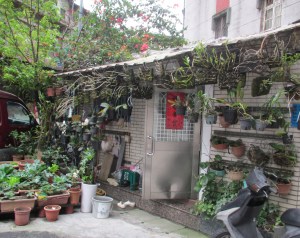
And not only is the greenery outside, there is clearly a passion for plants with every balcony and doorway having a range of healthy looking plants in pots. Where there was a flat spot these would often be flourishing vegetable patches or in the middle class gardens there were beautiful flashes of colour from decorative foliage and flowers.

Gardens of Taipei Taipei Gardens

It is such mixture in a small area. Small industrial plots, temples, shacks, apartment blocks and expensive villas catering for all levels of society. Given a different bike and a stronger constitution I might have climbed more of the side streets, but a three hour bimble around the different areas was full of variety.

The traffic was also well behaved too, the streets are narrow and busy which has a traffic calming effect which I appreciated.

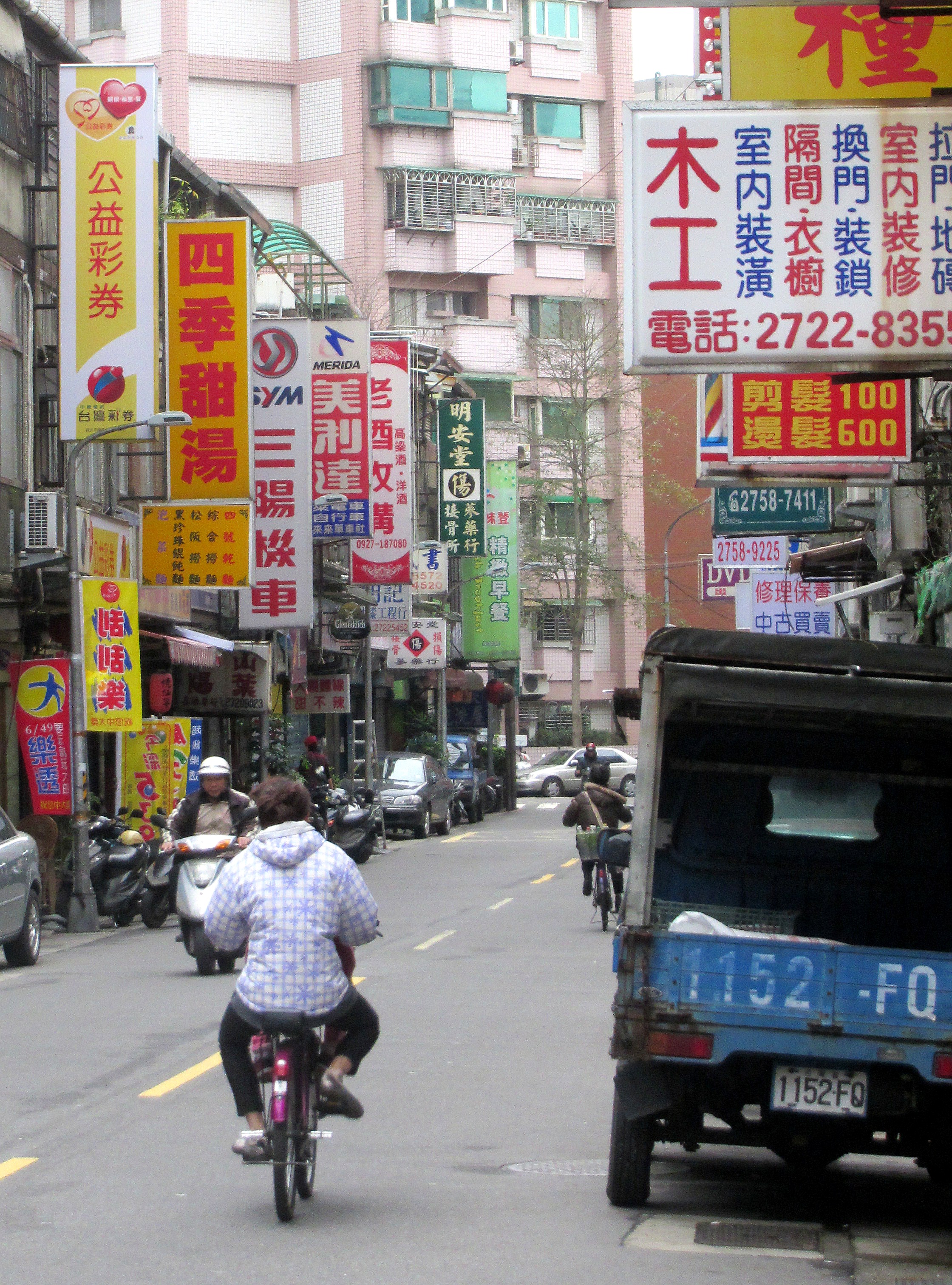
Cycling Taipei alleys


Saturday touring ride.

My second memorable ride was on Saturday, the day we left. We were invited out by our new friends at Formosa Lohas Cycling Association www.flca.tw to come and see how they organise their touring rides. The club is relatively new but is making strong progress with a mix of promotional activities for cycling, especially based on cycle touring, events and cycling education for children. As my regular readers know I am very fond of cycling clubs and within minutes of chatting to Development Director Demi Huang and her colleagues it was immediately clear that we were kindred spirits, chatting away about rides, routes and advocacy for ages.
Formosa Lohas Cycling Association and ECF

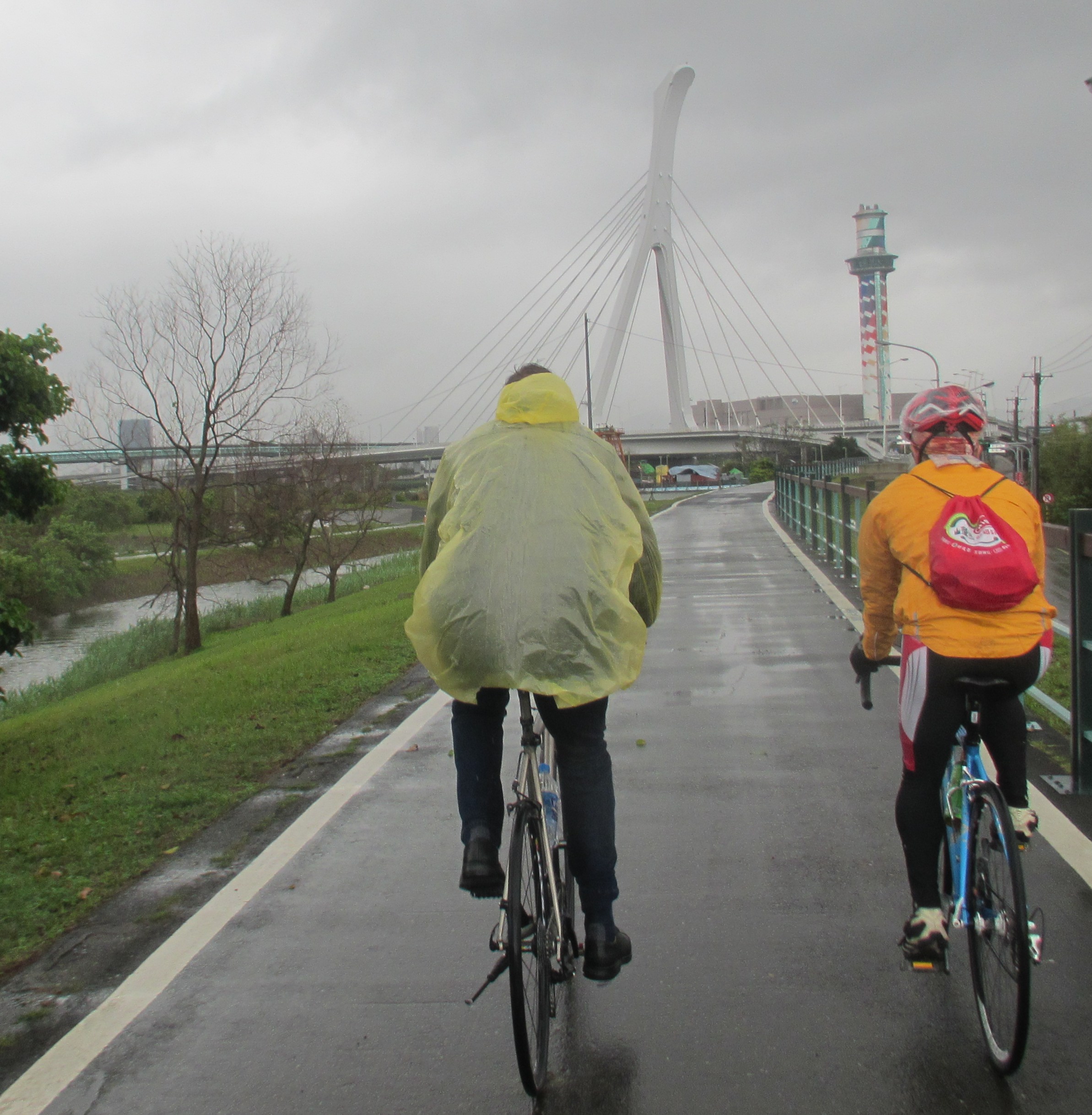
Demi offered us a ride with some of the club’s experienced Tour Guides and we suggested a half day starting in Taipei so that we could also pack our bags and prepare for departure. To be honest, the omens were not good because the rain just bucketed down all morning, but at least it wasn’t cold so Bernhard and I were up for the ride.

Cycle route map TaipeiGathering point for a small but hardy group was down on the riverside cycle path where we were kitted out with two nice sporty looking machines with straight bars. Guide James explained our route, a loop of about 20km around the river banks, then up to “Hell Valley” and the Beitou Springs area. The convenient planning board shows that we were to go out into the teeth of the rainstorm and then take a more sheltered line up to Beitou.

The opening kilometres were certainly exposed because our route was not down at water level like other sections of the path that I rode last year. This section sits right up on top of the typhoon defences and looked down on the homes and businesses behind the wall. The views were expansive, but decidedly murky. Clearly Bernhard was at home, this could almost be a Dutch dyke path.

Riverside cycle route Taipei

Beyond the walls were mud flats and reed beds that are now popular for bird watching. It was hard to imagine our hosts description of the rivers as the centre for trade with waterside wharves everywhere. Today it is a world closed off from the city.

Once round the confluence of the two rivers we had the wind behind and swept towards a very impressive suspension style bridge. We were struck by the cycle ramps, huge cycle lanes and segregated sections for bikes, scooters and cars.

Taipei cycle path and bridges Suspension bridge Taipei Bikes bridge and clouds Taipei

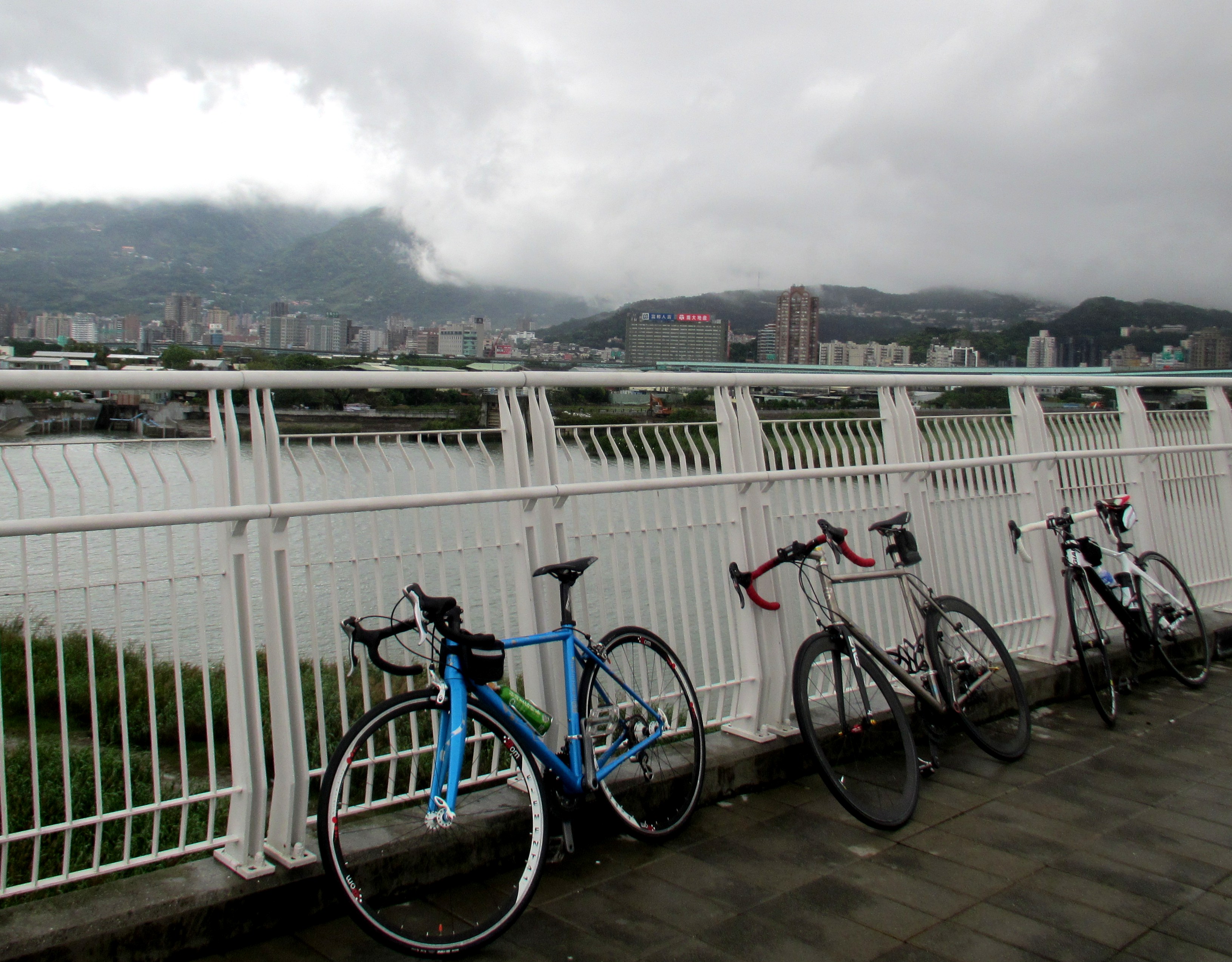
The view from the bridge was interesting too, it gave an impression of how committed the local authorities are to high quality facilities along these river paths. We could see a fun mountain bike park already completed and under construction a water filled park being landscaped to fit the land space between typhoon defence and river. Clever use of buffer land which will also improve flooding resilience. Now if only other countries were that sensible.

mountain bike track in Taipei New riverside park in Taipei

Rice paddy field and vegetable garden TaipeiThe benefits of local guides were apparent when we swung away from the river bank and headed north through a series of embankments and small roads. Our guides called this “our secret route” and it was a treasure. Almost vehicle free but taking us through something like a garden zone of rice fields and market gardens cutting right into the heart of the city. Several people I have talked to spontaneously started talking about the Taiwanese love of fresh fruit and vegetables and the expertise of their farmers, certainly the quality of the fruit and veg at meal times is outstanding. We were rewarded with herons and cranes foraging in the rice fields as we passed, oblivious to our presence.

Paddy fields with white birds Taipei

It was almost a shock to pop out of the quiet lanes into urban hustle but we had been brought almost to the heart of Beitou by our guides. A gentle climb took us up to a range of sights in this popular visitor area.

The true finish of our ride was the thermal valley itself, which was a mass of steam and smells of sulphur where the hot water gushes up from the volcanic rock at a temperature of almost 90 degrees. All around us streams carried away hot water to be piped into the hotels and bath houses which have been a feature of the area since Japanese occupation from 1895-1945. The main bath house, now a museum, was built in 1913.

Beitou Thermal valley

Our day finished with steaming hot baths in a hot springs hotel and a delicious meal with our guides, but more of that in my next post.

For now let me just say that once again the friendliness and hospitality of our Taiwanese hosts was unbeatable. The Formosa Lohas guides were knowledgeable and courteous cycling guides and I am absolutely sure that one of their multi-day rides around Taiwan would be a great holiday. James was clearly an experienced leader and Bike Lin (yes that is his name) is the author of two well-regarded tour guides about cycling in Taiwan so I am not surprised they are getting more and more enquiries from around the world. They are going to be popular and welcomed members of the ECF cycling family too.

In summary – another week in Taipei which turned out to be far more than rooms full of bikes on show. Increasingly the international travel media is saying that cycling in Taipei is one of the country’s visitor highlights. I am not going to disagree.

Velo-city Global: Taipei on the rise

A copy of an article I have just written for the ECF web site.

Original article here with better formatting

Cycling Taipei riverside pathsThe Velo-city Global series of cycling conferences took a big step forward last Friday, 7th March 2014. As the countdown for Velo-city Global 2014 in Adelaide began, ECF’s managing team traveled to Taipei to attend the first workshop leading up to the next Velo-city Global in 2016. ECF Director of Development, Kevin Mayne, explains how the Velo-city series can transform Taipei, promote inter-city exchange and push for a holistic improvement in cycling conditions. 
ECF President Manfred Neun

ECF President Manfred Neun

The first workshop in Taipei was a unanimous success.  As ECF President Manfred Neun pointed out: “Our new partners in Taipei are not only keen to develop cycling in their city but they have shown they want to work with cities everywhere. Each Velo-city conference benefits from being part of a family, I have talked to many people who say they are afraid to miss one because the content is evolving so fast. The Taipei delegation to Adelaide will now be part of that strong momentum.”

It certainly appears that Adelaide and Taipei will have a lot to talk about together and to share with colleagues from around the globe. Both are “climber cities” in cycling terms, working their way up from relatively low mode shares to establish cycling as mainstream mode of transport. However both have developed a strong leisure and sport cycling base in recent years that gives encouragement that there is a pent up demand for cycling.

Taipei’s strengths showed at the workshop

Collaboration: At this first event the city already attracted support from the Commissioners for Transport for the six largest cities in Taiwan, representing a population of over 16 million people. ECF’s Manfred Neun set out a ten point cycling agenda for them to consider over the next two years which could return the human dimension to transport in any city. Also speaking was Lloyd Wright from the Asian Development Bank giving a strong regional perspective and two well-known Taiwanese figures from ECF’s academic network “Scientists for Cycling” Professors Jason Chang of National Taiwan University and Hsin Wen Chang of Chung Hua University.

ECF Secretary General and Velo-city series Director Bernhard Ensink with Jason Chang Hsin and Wen Chang from the cities panel

ECF Secretary General and Velo-city series Director Bernhard Ensink with Jason Chang Hsin and Wen Chang from the cities panel

Commitment: This workshop was only the first in a series of events in the two year run up to Velo-city 2016. It was launched by the Mayor Hau Lung-Bin and well backed by his team and the large cities. The city also seems determined to show what it can do in the transport sector as it already has a very successful mass Rapid Transit (MRT or metro) and has achieved what few others have done in providing a single ticketing system for all its public transport including the fast growing Youbike public bike sharing system. These were political commitments driven from the top.
Strong political will: This workshop and many more to come are launched by Mayor Hau Lung-Bin and well backed by his team and the large cities

Strong political will: This workshop and many more to come are launched by Mayor Hau Lung-Bin and well backed by his team and the large cities

Industry leaders push for more leisure cycling…

Collaboration and commitment also sum up some of the cycling achievements of Taipei and indeed the whole of Taiwan in recent years. Up to 10 years ago the flagship of Taiwanese cycling was its world leading bicycle manufacturing sector but industry figures recognised that a lack of a cycling culture in home markets was undermining their capacity to “learn by doing”.

The first developments were partnerships in leisure and tourism with a mix of cycle touring routes, riverside cycle paths, mass participation rides and visible leadership by the top companies such as Giant. All this was a close collaboration with cities, tourism authorities and other public bodies. A national cycling master plan was created to support this change.

…but Velo-city is a opportunity to crystallize measures and coordinate change

Daily cycling is however a very different challenge but it is now one that the six cities seem committed to take on board with Taipei and the largest city of the south Kaohsiung in the vanguard.

The usual concerns of budget, space and safety were all highlighted at the workshop. They are all facing a real challenge of where to put their cycling infrastructure because the instinct is to grab space from the pavements and share space with pedestrians. In many places the sidewalks are broad enough to accommodate cycle paths but there is some way to go in public education for it to succeed.

Taipei cycling achievements

-In the last year cycling mode share in Taipei is up 30% to 5.5%, a figure many European capital cities still cannot match.

-The Youbike bike sharing is hitting usage figure that match with the world’s best, over 10 uses per bike per day.

-Almost uniquely for a low mode share city the cycling revolution in Taipei is female. Elsewhere in the world climber cities struggle to attract women cyclists until they have created safe segregated cycle networks. In Taipei women are 50% of the cycling population and a majority of Youbike users.

-Noticeably helmet wearing levels are low. This suggests a younger generation of women don’t feel intimidated as they make cycling part of their daily lives. Middle aged men in lycra (MAMILS) they are not.

From Taipei to Adelaide: Infrastructure and other hot trends in cycling policy

What has pushed their thinking toward using pavements is not just cars. Like so many other Asian cities -and even some European ones- it is scooter culture that has been the response of the population to both congestion and limited incomes. On Taipei’s streets this is a highly challenging environment for the nervous cyclist. ECF gently encouraged our hosts to be bolder and think about taking space from cars, not pedestrians.

lady cyclist and scootersThe mix of fast moving traffic on broad streets presents the other lesson that Taipei will want to learn and share with cities all over the world – junction design for cyclists. The latest thinking in infrastructure development is always a hot topic at Velo-city, Adelaide will just be the next step in an ongoing debate. In Taipei now most cyclists cross with pedestrians using the walk signals at traffic lights but the conflicts and accidents remain high. In ECF’s presentations and other speakers’ comments the successes of the Netherlands, Copenhagen and New York were mentioned as case studies for comparison

Our trip to Taipei was summed up by ECF’s Secretary General who is also Velo-city Series DirectorBernhard Ensink said “Velo-city series is in good hands, we have groups of cities with strong ambitions and distinct identities in Adelaide, Nantes and Taipei. Our new partner Taipei is already thinking hard about its agenda and will send a strong delegation to Adelaide. I am really looking forward to working with them all.”