Taiwan – Taipei and Taichung rides with the Formosa Lohas Cycling Association

Gallery

This gallery contains 21 photos.

I promised I would flesh out my two earlier posts about riding in Taiwan with a bit more of the story of the rides. This was a special opportunity for me because despite this being my fourth trip to Taiwan … Continue reading

Taiwan touring day 2 – Taichung mountain circuit

Gallery

This gallery contains 5 photos.

I am assured that the three peaks of the mountain circuit from Taichung are the measure by which all local riders are judged, with the local clubs and pro-groups regularly thrashing round in a form of survival of the fittest. … Continue reading

Brilliant day’s cycling in Taiwan – brief report

Taiwan Bike tour

There will be time for better edited, clearer photos.

There will be more time for ride and route information.

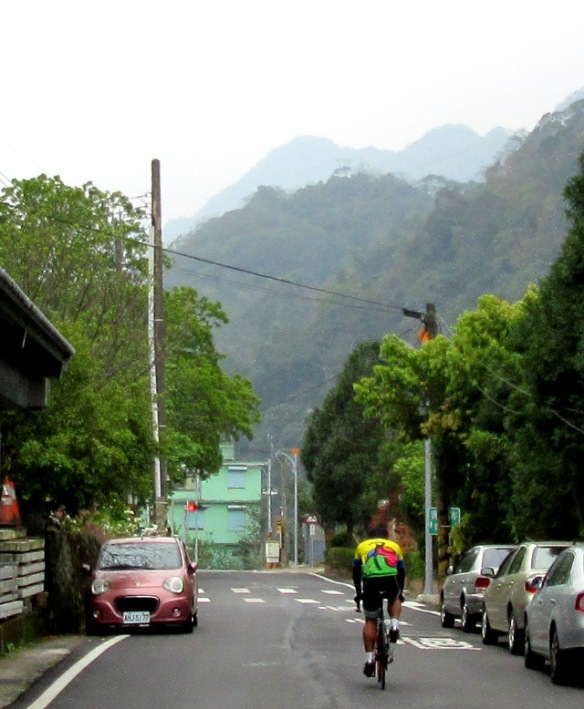
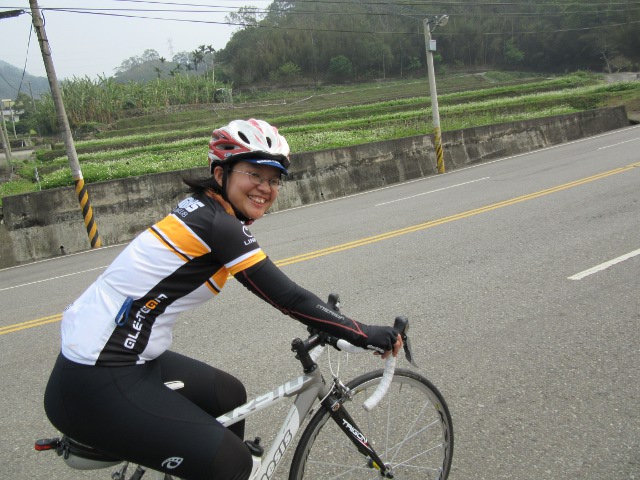
And there will be special thanks to my friends at the Formosa Lohas Cycling Association who delivered me a great day cycling today. Over 140 km south from Taipei to the smallish town of Dongshi near the bigger city of Taichung.

But as I sit in my hotel room tonight I can reflect on great company:

FLCA ride taiwan

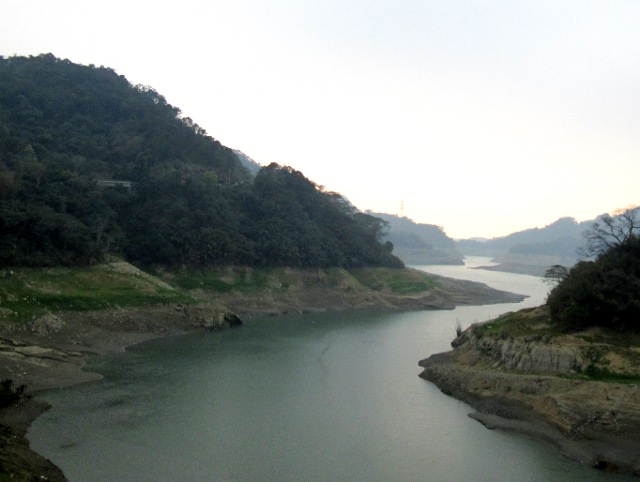
Super riding and some great views;

reservoir view Taiwan cycle tour

Use of a very tasty titanium road bike that I really would like to own;

Phil's bike

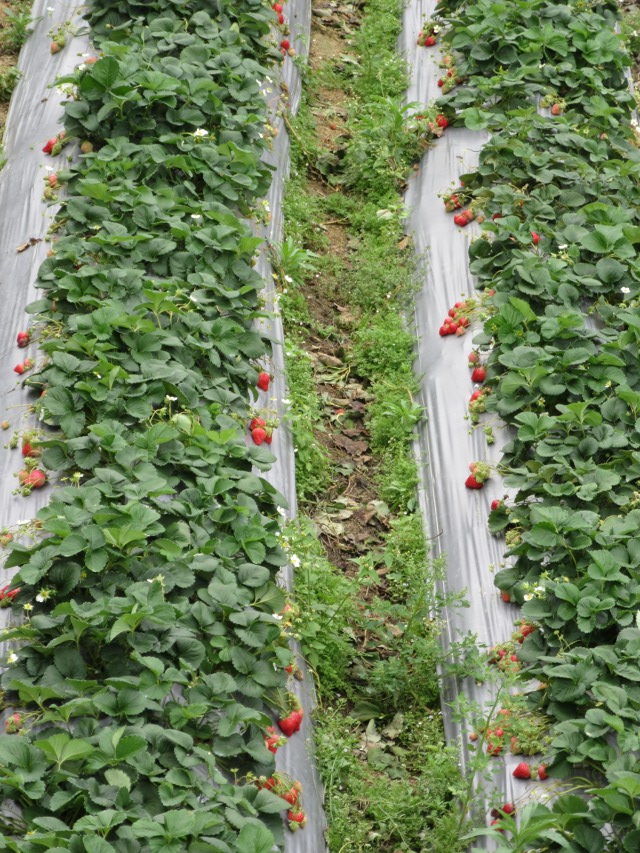
Riding through the strawberry harvest (in March);

Strawberry harvest taiwan

But above all else…….. the food.

I must have sampled thirty dishes today, most of which I have never tried before. At some point I will try an inventory but I will just capture a touch of the variety with the Hakka style hot pot, the excellent steamed meatball in a dumpling and the incredibly weird drinkable jelly tea.

Traditional Hakka style hot pot Taiwan

Steamed dumpling meatball Taiwan


Wierd jelly drink Taiwan

No danger of losing any weight on this tour.

And tomorrow I am told we hit the mountains for real. As if my legs don’t ache enough.


I just want to keep riding

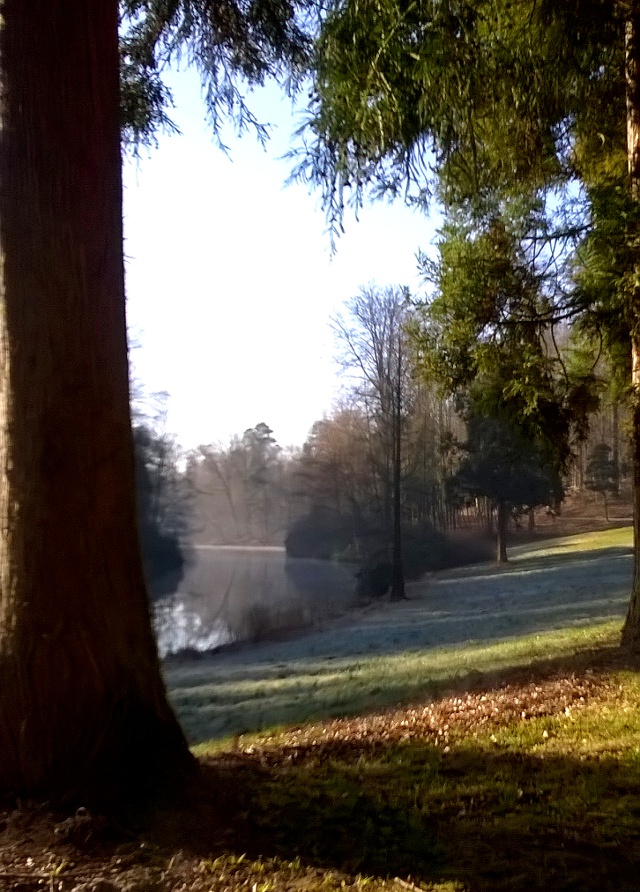
Solvay park morning March 2015

Today I leave for what is now the fourth of my annual trips to Taiwan for the Taipei Cycle Show. Added attractions this year are the Asian Cycling Forum, a big step on the road to our Velo-city 2016 Conference in Taipei and a very special weekend cycling with the wonderful Formosa Lohas Cycling Association team who are going to take me out for a couple of long days in the centre of the island.

It may be the rainy (drizzly?) season but it will be warm and muggy compared to Belgium.

However before I leave I had some personal errands to do so I decided to do them by bike early this morning and then cycle hard for an hour so my body is nicely jaded and I might just sleep on the plane tonight, a process that never comes easily to me.

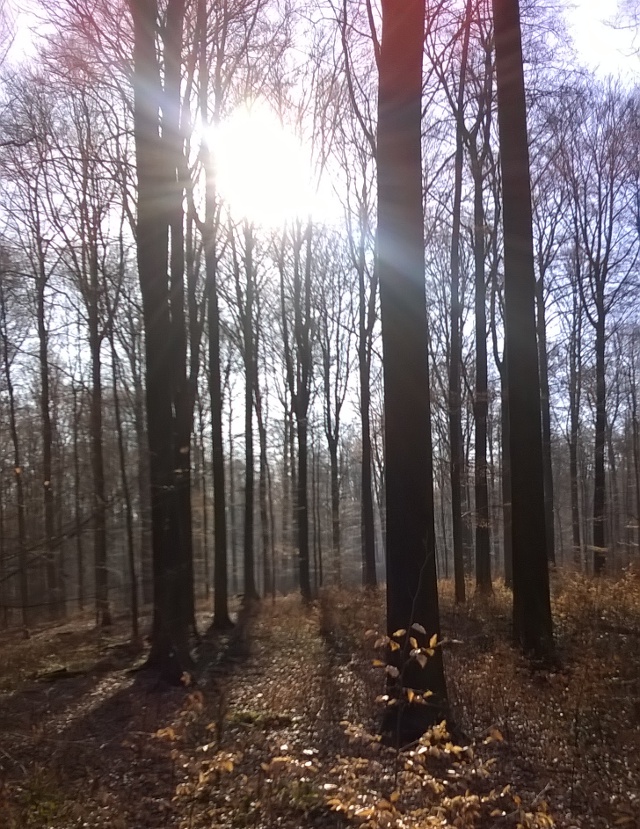
This was a sharp but wonderful contrast to what I am expecting in Taipei. As I left the house there was a very sharp frost and the first 70 metre drop to the valley below left me gasping in shock. But the place was bathed in sharp morning light which began to warm everything with a golden glow. An hour later as I rode through the woods I felt this was going to be the perfect day to spend the whole day riding,

Belgian woods March 2015

I just wanted to set off on a huge adventure on my two wheeled companion and “not come back till tea-time” as we might have said in a children’s book. What a waste to be stuck in a metal tube for hours.

Taipei will be wonderful again, stand by for lots of blogging. But I have unfinished business with these spring mornings in Belgium.

Great days out – more fantastic mountain biking in Belgium

Gallery

This gallery contains 18 photos.

Belgian cycling delivered another wonderful day’s riding last week. I went south to the hills and valleys around Namur to ride a mountain bike event called VTT de Malonne that showcased some of the best of the landscape, countryside and historic … Continue reading

A new cycling bookshelf

My Dad moved house towards the end of last year which caused me a bit of a crisis.

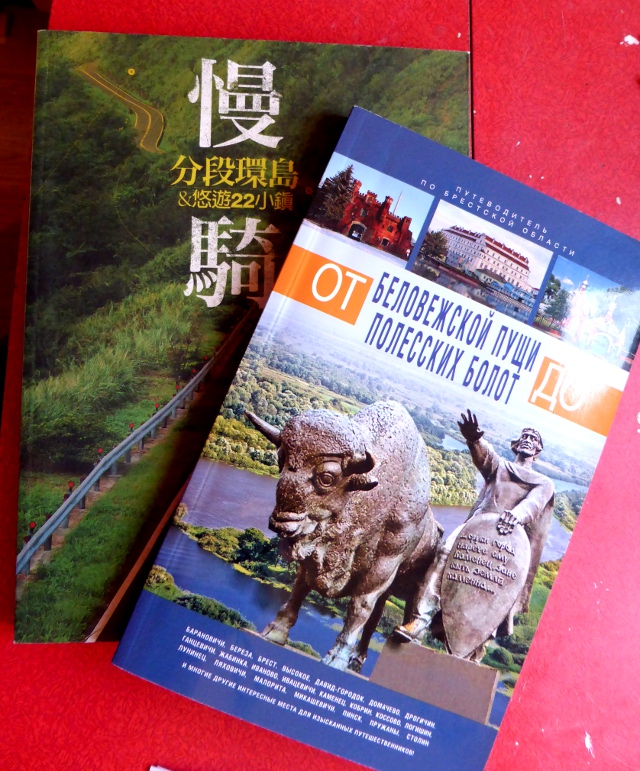
Nope, nothing to do with the man or the move. But as he was “downsizing” he told me was clearing out some bike stuff, his old maps and some of his bike books. I cannot imagine losing one of my books, in any shape or form, I keep them all. If you need a cycling guide to Belarus written in Russian I can oblige, not to mention a volume on cycling in Taiwan in Mandarin.Photo Kevin Mayne

I can’t read them, but they were given to me by fellow cyclists and I convince myself that on some occasion I can look at the pictures and daydream.

Dad has accumulated a lot of stuff over the years and some of it is unique, and probably collectable. At minimum I would want it to go on Ebay so anyone with an interest can pick them off. However that’s not exactly Dad’s area of expertise and definitely not the thing to start when in the throes of a house move. In that situation the book collection was destined for the local charity shop where it probably wouldn’t sell and would end up in a skip. This was indeed a crisis.

I made a dash over to Bungay a couple of weeks before his move was due and “saved” a part of the collection, in particular the books. We sat together and I worked through the pile until I had identified about 20 items that I felt were impossible to miss.

It was a diverse selection. Firstly there were the recent books that I surprisingly had not accumulated myself or had read and passed on. These included Ned Boulting’s entertaining “How I won the yellow jumper”, the bicycle passion of Rob Penn’s “It’s all about the bike”, David Byrne’s pedalling philosophy and wry observation in “Bicycle Diaries” and the book I think is the most best autobiography of a pro bike rider I have ever read, Laurent Fignon’s “We were young and carefree”.

Photo Kevin Mayne

Then there were some absolute classics of their kind that are far too collectable to be dumped. In particular there were several of the wonderful 1940s Harold Briercliffe touring guides to England which inspired a modern BBC TV series “Britain by Bike” by presenter Clare Balding and a reissue of the books, but these are originals.

Photo Kevin Mayne

And who could not love a volume that is priced in proper old money, three shillings and sixpence, and features pictures of people doing “Scientific Cycle Training” with weights in gym clothes. Without their bikes? I bet that didn’t sell too many copies at the time.

Photo Kevin Mayne

Collecting the books was fine until I got home and contemplated my own situation.

The existing collection of about 40 books that has occupied its own dedicated space for the past few years and adorns the top of my rarely updated “Library” of book reviews page on the blog. (That ignores the shelves of travel and tourism books and the cupboards full of maps, which is quite another story!)

Cycling Books

However doing a lot of cycling visits means that volumes like the guides to Belarus and Taiwan are not the only books I have picked up.  I have accumulated a shelf overflow in the last couple of years that were piled all over the place. Together with the collection from Dad’s place it was time for an accompanying new bike book shelf.

I was a bit surprised to discover that a quick tour round the house found another 20 volumes and the new shelf is itself almost full. Which leaves me the prospect that I either start accumulating e-books, or I have to find another 40 books to justify the next shelf. What would you do?

Short reviews:

Since I collected the books I have read and browsed a few of them. Here are two in particular that I have thoroughly enjoyed and are already inspiring thoughts for the blog.

“It’s all about the bike” Rob Penn

I mentioned this a couple of times in my recent blog posts about my own bike restoration project, so I won’t repeat the way the book helped me frame those posts.

What I really liked about this book is the feeling of travelling with a kindred spirit, someone who cares quite a lot about bicycles, but cares far more about the spirit, passion and craftsmanship of the people who make the machines we might take for granted.  This is writing about manufacturing as others write about art, his description of legendary builder Gravy lacing a wheel in California evokes the sense of a musician tuning the finest of violins. If you think this is about bike parts you have missed the point.

Photo Kevin Mayne

“Bicycle Diaries” by David Byrne

If your affinity to cycling is a sort of urban cool then David Byrne could be your adopted high priest, as he is for many cycling advocates in the US. His band “Talking Heads” combined a really eclectic mix of musical influences from the mid 70s to the 1990s as well as making a concert film “Stop making sense” that highlighted their experimental styles.

Byrne himself was the band’s lyricist and front man together with working in film, on the stage, producing World Music artists, painting, drawing and creating installation art. In the New York arts and music scene he can only be called a powerhouse.

And all that time he was riding his bike, during a period when he was probably one of the very few cyclists in New York. Now he is feted for his commitment to the cause and was invited by the city to design some cycle parking stands that reflected places in the city including his dollar sign for Wall Street.  Last year I discovered his lovely “Poem for Cyclists” which is a lovely short film connecting lots of cycling clips, I cannot watch it without smiling.

That is the background to “Bicycle Diaries” from 2009 which is a collection of writings inspired by his bike rides around the world. To me it reads just like my favourite cycling diaries and blogs. It isn’t really about the cycling. It is full of the thoughts that actually go through his head while riding. Musings on society, urban development, architecture, transport, philosophy and culture flow from rides around various places in the US, London, Istanbul, Berlin and many other cities. Occasionally he comments on how bad a city like Istanbul can be for cycling, but clearly after New York he isn’t fazed by much so he is willing to ride everywhere.

It is particularly fun to get his take on cities I have visited and see how he picks up feelings about the city from his bike too, so this book must rate as a particularly good addition to my new bookshelf, a and one I can see myself dipping in to for city writing ideas again and again.

Those two make such a good start to the new collection. Many more reading days to come.

Transformation. The joy of cycling through a changing season

Photo Kevin Mayne

Suddenly I feel the seasons may have changed. I feel uplifted. Recharged.

It’s not like it never happened before. It will happen all over the Northern Hemisphere in the coming weeks. But I am having my relationship with the countryside refreshed, personally and privately, deep in the Belgian woods.

I “cycle to work” every day. That can either be a ten minute ride to the local station or what we really call the “ride to work”, 25km across the rolling valleys that criss-cross the countryside to the south of Brussels, of which at least 45 minutes is spent on peaceful forest tracks through the Forêt de Soignes/ Zoniënwoud before the bustle of the Brussels rush hour.

This year I am trying very hard to get a bit fitter over the winter (for reasons which will become clear in a few weeks) which has meant I have ridden the longer distance many more times than usual. It has been a long, hard winter in the woods. The dark forced me to stick to one simple route where I know every bump and hollow but I still feel like I have been squinting into the dark trying to avoid holes and fallen branches forever, it has been hard to relax and roll.

Two weeks ago I went off to Munich for several days which was an even colder experience, but enjoyable none the less.

When I came back to Belgium it was like a switch had been turned. It was only a week away but things had changed. Suddenly and unexpectedly the light had just crept though the magical time shift where the whole of my forest ride was in daylight. Maybe only a soft dawn light as I enter the woods but enough to see without the lights, to relax and pedal without nasty surprises in the dark.

Photo Kevin Mayne

Secondly we had a week where the morning temperatures rose quickly above freezing. They may have dropped again this week, but that one week was enough. No green shoots have come through the carpet of golden beech leaves left from the autumn, but nature got the message. From the sombre silence of winter the birds have just burst in to life.

Photo Kevin Mayne

Over the winter my only accompaniment has been the owls. The area is alive with what we call tawny owls in English, the source of the classic owl sound as the males “tu-whit” and the females “tu-whoo” in reply, a seamless exchange that comes across as a single call.

Now it is the turn of the day birds to rediscover their energy. Blackbirds, robins and all the woodland birds are bursting with song, a true dawn chorus. Every valley seems to have a woodpecker hammering energetically at the mighty beech trees that line the paths. The owls have been replaced by the top predator of the daylight as buzzards can be heard mewing as they circle above the tree tops.

The absolute beauty of it is that the days have been still, cold and crisp. Despite the fact that I cannot see them I can hear every note, every peck.

As if in response to their enthusiasm I feel uplifted myself. The ride has been transformed from a trudge to a pleasure.  Instead of wanting to get it over and done with I find myself adding 10, 20 even 30 minutes to my route by adding extra loops deep into the woods.

Photo Kevin Mayne

Alone, except for the birds and the deer.

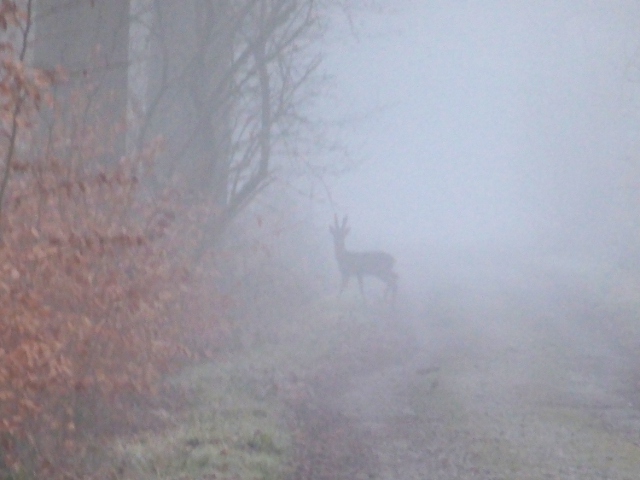
Because the deer will be my other constant companions for the coming months. While I ride around dawn they are bold and foraging close to the paths. I know they have been there too in the dark as I occasionally hear them bouncing away over the dry rustling leaves, but I never see them. Nobody else comes this way at this time so they have not been scared away from the paths and the silent approach of the bike doesn’t seem to alert them until I am quite close. So now in the mists of dawn we carefully watch each other from a comfortable distance.

Photo Kevin Mayne

The first weeks of a new season and I am bursting with life too. The transformational impact of a simple bike ride.  Like the birds and animals I know it’s going to be a great spring, because I can feel it.

Bike story: Cycling reminiscences provoked by the restoration of my fixed wheel friend Freddie Grubb 11773. (Chapter 2)

Photo Godric CC

Chapter 2 Roller Racing and Record Breaking

In Chapter 1 of the story of my restored Freddie Grubb I wrote about its life in the Godric Cycling Club, a small but successful cycling club based around the Suffolk towns of Bungay and Beccles, an area known as the Waveney Valley.

These are small towns in a rural area so the population catchment isn’t large and apart from the occasional footballer who has a trial with a professional team the area hasn’t turned out a line of sporting heroes to put it on the map. Therefore relative to its size the cycling club has been a bit of a standard bearer, turning out a regular crop of local champions and occasionally a national level competitor.

But in one field of cycling the Godric CC made an impression far beyond the reaches of the Waveney Valley, picking up not one but two world records. And my Freddie Grubb was part of at least one of those records, if not both.

That is entirely in keeping with the name that it carries, because Frederick Henry Grubb (b 1887) was one of the prolific record breakers of his era. www.nkilgariff.com lists 14 of his British records from 60 miles to 24 hours, mostly broken before he won two silver medals at the 1912 Olympics in Stockholm and then turned professional. He did not take to professional racing so he turned to bike building to exploit his fame.

Which brings us back to the record breaking story of this Freddie Grubb.

In chapter 1 I wrote about grass track racing in East Anglia which helped sustain use of fixed wheel bikes for many years. The other branch of the sport that carried on in splendid isolation in a few clubs around the country was roller racing.

Today most bike racers and even some enthusiastic hard tourists will have a turbo trainer at home. One of the most unloved instruments of cycling torture imaginable, I was delighted the day I decided I would never do that again.

Prior to turbo trainers we used rollers for indoor training and you still see riders warming up on them before races.

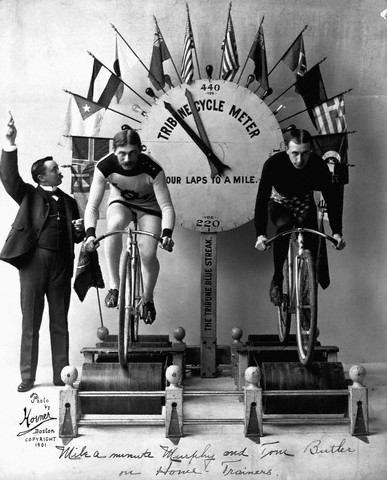
Much less common are the sets of racing rollers where two or four bikes were put onto special rollers connected to a measuring clock.

Inevitably it falls to cycling author Carlton Reid, author of “Roads were not built for cars” (reviewed in December 2014) to provide a comprehensive history of indoor trainers since the 1880s on his web site. He says roller-racing really took off in the 1930s and its popularity as entertainment continued until the 1950s. The great draw for riders is that the lack of wind resistance means you can fit a huge gear to your bike and routinely do speeds well over 50 miles per hour, with a world record of over 130 miles per hour. Short sprints are very fast and very furious. Hard to imagine now but the most famous venue for roller racing in the 50s was the Royal Albert Hall, perhaps the most prestigious concert hall in London.

Carton’s history matches my understanding because the founding generation of the Godric CC were all familiar with the roller races they had seen in the fifties, but quite quickly it had almost died out, not least because the equipment was very scarce. However (and I have no idea why) the Godric were a club that kept a roller tradition. In 1968 the club broke the world 12 hour roller relay record and in the early 70s a Bungay Modern School team from the club set a national schools record at 12 hours too.
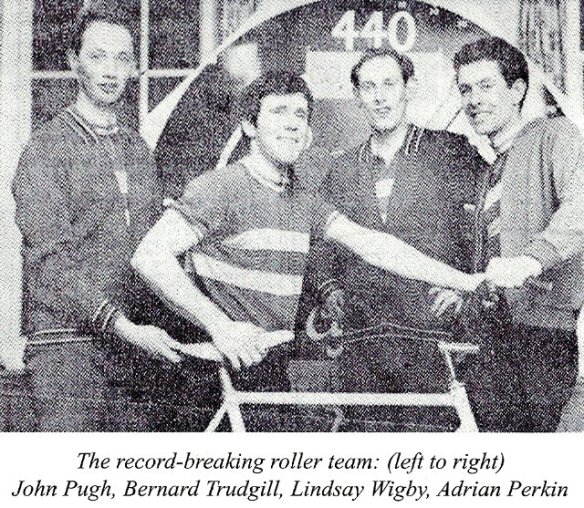
Godric CC World record Roller racing team 1968

I am not sure, and I really must ask Lindsay Wigby, whether the star of this story was used in the 1968 attempt, but Lindsay was in the team so it seems quite possible that my Freddie Grubb was a world record breaker in 1968.

The roller tradition suited these fixed wheel bikes well. Just like the grass track racing the bikes were only a tweak away from being ready to ride at all times. There were many lightweight narrow fixed wheels with racing tyres around because the bikes had been used for time trialling. The single front brakes could be slipped off and the bike was about ready, apart from the fact you had to turn your handlebars up.

Why? Well one might say “because everyone else did”. Like so many things in cycling this habit was part of roller riding lore and was mixed in practicality and probable bull dung. One reason given was that “it opens up your chest and you breath better”. Given that people were doing phenomenal speeds on the road bent like hair pins without apparently suffering from breath problems this seems about as likely as a sticky plaster on your nose helping you play football better. Much more realistically the upright position kept your weight firmly on the rear drive of the rollers. Because you tended to bounce about at high pedal rates this made sure every pedal stroke counted and kept you stable.

However roller riding did test the mechanical creativity of the riders in one way. If you want to ride steadily at over 50 miles an hour you need pretty enormous gears, and even then a high cadence is needed. In those days 11 tooth sprockets were not even available on geared bikes, a 13 was very daring indeed and the smallest fixed sprockets were occasional 14s. But because the Godric were a roller club there was a secret squirrel store of relevant bits, including the near mythological 8 tooth rear sprocket. Old roller riders had abtained huge chainwheels, usually made by TA of France, that could go up to 64 teeth. When combined with a 14 sprocket suitable gears could be reached.

The 8 tooth sprocket was a near myth because whenever it was discussed there was always some doubt about who had it last time and quite where it had come from. I was always told that it was a lawnmower sprocket that had been filed down to the correct width for a bike chain and then welded to the side of a conventional sprocket so it could be fitted. With this baby even a normal 54 tooth road chainset gave enormous gears. In legend it could be combined with one of the giant chainsets to reach record breaking speeds but only heroic men with thighs like tree trunks could get it moving. When I saw it you could only describe it as one of the ugliest and most functional pieces of equipment ever put on a bike.

Both Freddie Grubb and the 8 tooth sprocket definitely found their way to to a Guinness World Record in 1977.

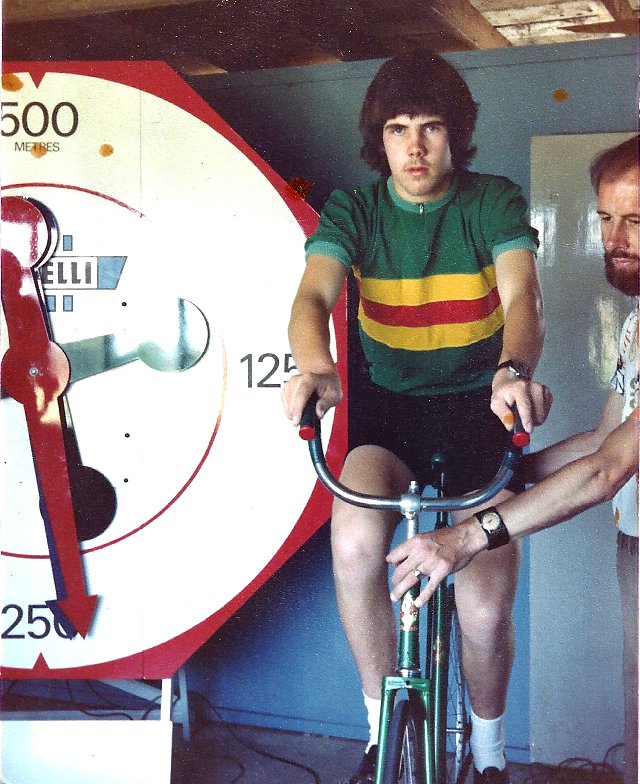
A team of four young guys from Bungay High School were set up to go for the schools’ record held by our clubmates. However we had a secret weapon. The club had been fundraising and bought a set of the newest, smoothest rollers ever made with bearings and drives of incredible quality from Cambridge firm Barelli.

Barelli almost deserve a blog entry in their own right. In the 1970s a high quality engineering firm based just outside Cambridge, England decided to make possibly the finest engineered pedals made in England, perhaps in the world at the time. They came with a lifetime guarantee and retailed from an amazing £50. But cyclists wouldn’t believe that a product was top quality unless it was continental, preferably Italian. So a nondescript industrial estate out on the Huntingdon Road gave its name to a special product. Bar Hill became “Barelli”.

But owner Geoff Chapman was also convinced that there was a place in cycling for the revival of rollers if they could be built to the same outstanding quality as his pedals. The very first prototype even featured electronic counting instead of a mechanical drive, a revolutionary concept that preceded the modern cycle computer by a good five years, but unfortunately couldn’t be made to run reliably. How do we know that? Because it was the set of Barelli prototype rollers that the Godric CC bought. Until a few weeks before the record attempt we had a lot of failures so Chapman replaced the electronics with a nylon drive cable in an oil bath, a design that still put the Barelli rollers low resistance into a different class to all the old sets.

They were, very, very quick as our trials had already proven. However we also had another secret weapon in the older club riders who had been there before and actually knew exactly how to plan a record schedule, especially ride manager John Pugh. I was actually number 5 in the squad in terms of ability and got in because my mate Dale blew up in the trial, but I got my chance from there.

I rode Freddie of course, and during the run up to the event the magical 8 sprocket was rediscovered and probably because I was the last choice for the squad the other guys had the huge chainsets and I had the 8 tooth. And here we are!

Photo Godric CC

So in a village hall near Bungay we set out as four 16 and 17 year olds to break the world record for adults, not just the school distance. And the rest, as you might say is history, as my Guinness World Record certificate will attest. 657 miles, a shade under 55 miles per hour for the whole 12 hours.

Guiness World Record Roller Cycle Racing

I have to admit I had a bit of a personal bad day. Nerves, a touch of asthma, I have no idea why but I had a shocker. I did my part for the whole day but I am very grateful that my much stronger team mates were absolutely on top of their game that day so we had a good margin over the old record.

We held it for about two years until a team of top adult riders from Hounslow Wheelers took it, but to be fair they didn’t smash our time into oblivion. We probably still hold the schools’ record because the discipline has become so rare, maybe one of the modern promoters could encourage a hopeful team to give it a proper thrashing now.

Freddie Grubb is a world record breaking bike. Not the celebrity of the bikes that have broken the world hour record on the track or the Fausto Coppi world championship Bianchi I saw at the Padua bike show in 2013, but there cannot be so many bikes out there that have this claim to fame. And like the first part of the story it is one wrapped up in the club life of the Godric.

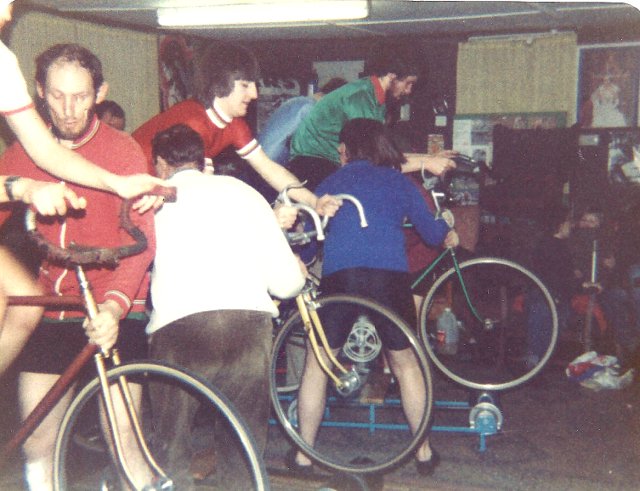
Roller racing Godric CC early 1980s

I carried on track and roller racing for another year or two (above in green) until I left for university at the age of 19, making it a part of cycling I too left behind. It has taken this restoration project to bring it all back.

Roller racing too has made a bit of a comeback too thanks to the public relations skills of companies like Rollapaluza and Goldsprint, they have really modernised with the right mix of noise, lights and music. if you get a chance to go to a roller night I recommend it.

Chapters 3 and 4 “Decline and restoration” here.
Bike story: cycling reminiscences provoked by the restoration of my fixed wheel friend Freddie Grubb 11773. (Prologue and Chapter 1)

Photo Kevin Mayne

Prologue

Late last summer a small ceremony took place at our house. Photographs were taken and an old friend took to the roads.

I dressed for the occasion. Traditional striped cycling jersey, matched with black shorts, white socks and a pair of old-school leather cycling racing shoes polished up for the event.

Photo Kevin Mayne

Freddie Grubb Fixie in Godric CC colours

I then rode on a circuit especially selected for the occasion, mainly flat but with sweeping undulations that encouraged my legs to spin the pedals smoothly. It should have been Suffolk, England, but the lanes of rural Wallonia made an excellent substitute.

Lanes of Lasne Belgium

This was the christening ride for my restored 1963/4 classic English fixed wheel bike, made by renowned London cycle maker Holdsworthy under the brand Freddie Grubb.

Some readers of idonotdespair.com may recall occasional mentions of my long term project to restore the bike, indeed one of my followers even contacted me to offer help finding the missing parts, he seemed quite frustrated that it was taking so long. Well I can tell you now Chikashi  that it is done.

Now I also feel the time is right to tell you the story of Freddie Grubb 11773 and to explain why this machine could no longer languish as a scruffy wreck at the back of my bike shed. A bike so ill-treated that one of my college mates renamed him “Grubbie Fred”, a nickname that stuck for years.

Freddie Grubb original

At the same time that I am writing this post I am reading the excellent “It’s all about the bike” by Robert Penn. Conceptually he is searching the world to build the perfect bike, his dream bike. That could be an incredibly boring except for bike fanatics, but in the hands of a good author it is a chance to weave together an entertaining collection of stories about the people and places from the history of cycling technologies, from the hoax Leonardo da Vinci bicycle to the founding fathers of mountain biking in Marin County California. And I realised that this is what I want to do with the Freddie Grubb.

The restoration has also made me think about a whole series of cycling places and memories that should be shared. That doesn’t mean a piece by piece breakdown of all the parts on the bike, rather it means spreading Freddie’s story over a few pieces that capture some of cycling’s past, and my own. Because this bike does have a story to tell and perhaps that is why I gradually became guiltier about its decline under my stewardship.

This bike has spent its life in one cycling club, and mostly in one small area. It is a representation of a certain time and place, the fading tradition of fixed wheel bikes in East Anglian cycling. And it is one of a tiny number of bikes on the planet that can claim to be a Guinness World Record breaker – and that does make it special.

Chapter 1. Godric CC and grass track racing.

In my mind this bike represents Godric Cycling Club, my club, the one I grew up with and formed my cycling experiences. (I wrote about the Godric earlier this year here)

I bought the frame sometime around 1973 or 1974 when I had become a gangly teenager and grown out of whatever previous fixie Dad had knocked up for me, and I had a little bit of money saved from my paper round.

I bought it from older club colleague Ross Mullenger, who I think was selling some bits because he had drifted away from regular club riding. It probably cost about £15. I learned later that it was already a club hand-me down from Lindsay Wigby, long standing family friend and club member. It was only when researching the provenance of the bike for the restoration that I identified it as a Freddie Grubb Comet probably made in 1963 or 1964. The brilliant www.nkilgariff.com has a complete history of the Holdsworth and Freddie Grubb marques and even has a catalogue of the 1964 Comet on line.

Freddie Grubb Comet catelogue on http://www.nkilgariff.com

I then went back to Lindsay to ask if he had got it as an original because he was riding with club then.

He filled in the gaps by telling me the original owner was Pete Gilding, one of the few Godric names I didn’t know, but someone who had been actively racing with the club at that time. A quick dip into the published club history and I found a picture of Pete with my Dad after they won the impressive Norwich CU grass track team pursuit shield in 1958.Images by Godric CC

Too early for my bike to have been one of the winning steeds, but a great link to the origins of the Freddie Grubb because they would all have been using grass track bikes like mine, perhaps handed round in just the same way.

But I now knew that this is a one-club bike which throughout its life has carried the green colours of the Godric CC. Hence my selection of the green, yellow and red banded Godric cycling shirt for the christening ride. And here we are, a photo of another Godric ride and in the middle is that sprouting teenager in blue stripy bobble hat with the green bike. It must be around the time I bought the frame and first fitted it out. Previous owner Lindsay is three places to the right in black.

Photo Godric Cycling Club

Elsewhere a teenager buying a fixed wheel bike in 1974 might raise a few eyebrows, but it really would not be a surprise for anyone who was in Norfolk or Suffolk club cycling. Many riders round there had a “fixed” or “track bike” set up for road riding despite the fact that their use as club riding bikes had almost died out across the rest of the country. (We never called them “fixies”, that is an entirely modern phrase).

Because no, the couriers and hipsters did not take fixies straight from track racing to the road in the last 10 years. In British cycling the racing scene excluded mass start road racing until the late 50s and cyclists in most racing clubs thrived on a mixture of time trialling and club riding with occasional diversions into grass track racing and roller racing. Most time trialling was done on fixed wheel bikes that could be converted from one use to another with a change of wheels. These were not the steep angled, aerodynamic track machines used on today’s velodromes, these were machines that could fit mudguards one day and race the next.

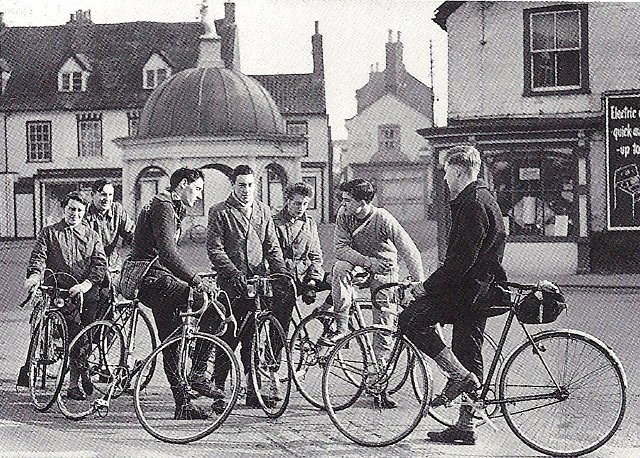
Godric CC on fixies 1950s

I think this tradition carried on much longer in Suffolk and Norfolk than almost anywhere else for a number of reasons, not least of which could be that it is one of the flattest places in the country so a simple single gear is really not a handicap for spinning around the countryside. Almost the first “proper” bike Dad put me on was a fixed wheel, not least because it would be ”good for my pedalling.” They were also a lot simpler to maintain and a lot less prone to problems on mucky roads so they were popular winter road bikes, often referred to as the “hack bike”.

Another possible reason fixies stayed on in our area was that we still had opportunities to race on fixed bikes while other parts of the country converted almost completely to road riding using 10 speed derailleurs. In particular there was grass track racing which only survived in a handful of places across the UK. East Anglia was one of the hotbeds and as a child in the 60s I can remember being taken to a whole series of carnivals and rallies where the cycling crowd would come together.  I probably rode my first bike race in the kiddies’ handicap events at a grass track meeting. The adults would pull out another pair of wheels with rubber studded tyres, put them in their fixed bike and race round a single white line painted on the field, sometimes with fields of 20-30 riders. Hopefully it was a nice cricket ground or school sports field, at worse it could be like riding in slow motion across a lumpy paddock.

By the time I bought the Freddie Grubb in 1974 many of the meets had died out, but we could still expect to race several times a year on grass and we would train every Wednesday on our club track at the Ditchingham Meadow sports grounds. So it was essential that I had a track bike of my own.

Photo Beccles and Bungay Journal

This photo is one of my favourite cycling pictures, taken by the local paper at one of our regular races in Bungay, probably our club championship in about 1976/77. I love the sense of competition and motion in the two riders at the front. Andy Warne being shadowed by Richard Avery, probably about to try and pounce for the win. I am the white helmet in third and that’s about as far forward as I got in most races.

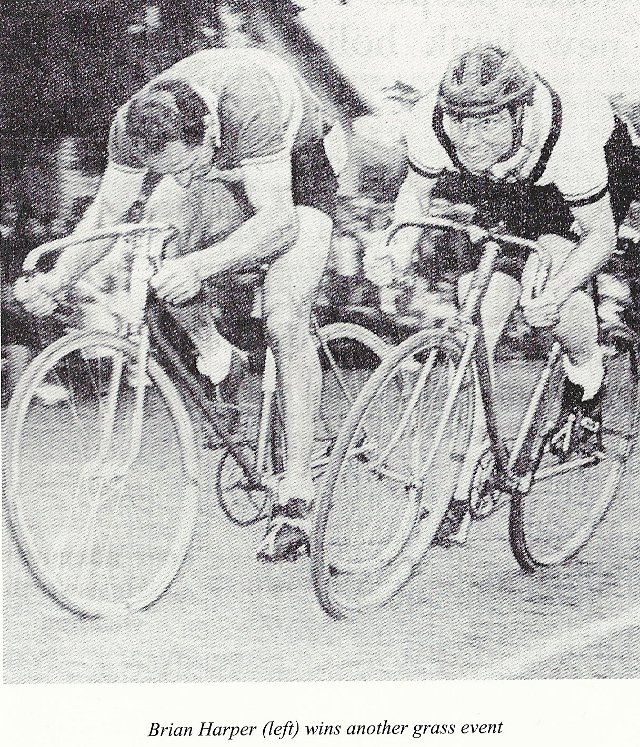
Brian Harper Godric CC winning grass track race 1960sActually Freddie and I did sneak an Area Championship win once with some highly tactical riding. In the short one-lap race I got the perfect draw for the final, number 1 on the inside. I then asked canny track star Brian Harper (right) to be my pusher off, the builder with the strongest arms in cycling. As we waited on the start line Brian whispered in my ear “I am going to push on the whistle, don’t wait for the gun”.

Spectators would have observed a metaphorical greyhound race where the rabbit shot out ahead of the dogs before they even moved. Somehow the judges neglected to call it a false start, just as Brian had guessed. Jet propelled by Brian’s shove I had a ten yard head start at the first corner which was reduced to the width of a tyre as four of us hit the finish line 400 yards later, but I held on for a very rare win.

All I can say is “track craft”. Anything goes in grass track racing.

Chapter 2 “Roller Racing and record Breaking” here

Chapters 3 and 4 “Decline and Restoration” here

Part 2 of my guest post for DiscoveringBelgium.com “New Year’s Revolutions: The Best of Belgian Cycling for 2015”

Part 2 of my guest post for Denzil Walton’s www.discoveringbelgium.com has been published today.

Last week it was all about places for you to ride.

This week its “Watching cycling with the Belgians – beer, frites and the most passionate fans in the world” 

I have suggested some of the best cycling to watch this year including the Six Days of Ghent, the great settings for cyclocross races and  of course the road classics.

An extra bonus for 2015 is the Tour de France which comes to Wallonia in July.

www.dicoveringbelgium.com

For links to my own accounts of visiting the various races mentioned click the tabs at the bottom of the page.

Thanks again Denzil for the opportunity to spread the word and for the great ideas on your blog.


A song to be played while repairing bikes: – “Shipbuilding”.

Wheelbuilding

When I am working in my bike shed there is a song that sometimes comes suddenly when the music payer shuffles the tunes, then becomes an earworm that stays with me for the rest of the day. It is a special song anyway, but I give it a little cycling twist when I am working on my bikes.

It is the beautiful and moving 1983 song “Shipbuilding”, written by Elvis Costello and Clive Langer and first recorded by English singer songwriter Robert Wyatt.

On first impressions this can be taken as a song of optimism. The words talk of possibilities from a new job

A new winter coat,

And shoes for the wife

And a bicycle

On the boy’s birthday

Of course, a bicycle for the boy, who couldn’t love that idea as a symbol of hope?

However the song has a dark side. Because the “Shipbuilding” in the title is the possible return of shipbuilding and repairing to the British shipyards of Scotland, Northern Ireland and the North East of England, places that had been hardest hit by recession in the 1970s and early 1980s. The rumour that there might be shipbuilding again came because Britain was sending a military task force to the Falkland Islands, a war that would be fought mostly at sea.

And it is those self-same suffering industrial areas that supplied the much of the British forces at the time. Woven through the lyrics are the pains of war,

They’ll be reopening the shipyard
And notifying the next of kin once again

So Costello had actually written a protest song that reflected the impact on the people who not valued by the Thatcher Government, but were now needed both to fight and rebuild the ships. A painful reminder of one of the most challenging periods of our not so distant past and one where I cannot help but be in sympathy with Costello’s words.

He says in interviews that he wasn’t being alarmist or morbid, but he also says they were possibly the best lyrics he ever wrote, reflecting the complexity and depth that he put into a short “pop” song. “Diving for dear life, when we could be diving for pearls….”

I have added below Youtube links to both versions, you can enjoy the sparseness of the Robert Wyatt version or the virtuoso jazz trumpet on Costello’s own recording that for me just adds to the poignancy. (Email readers may have to visit the original blog post on http://www.idonotdespair.com for these links to work)

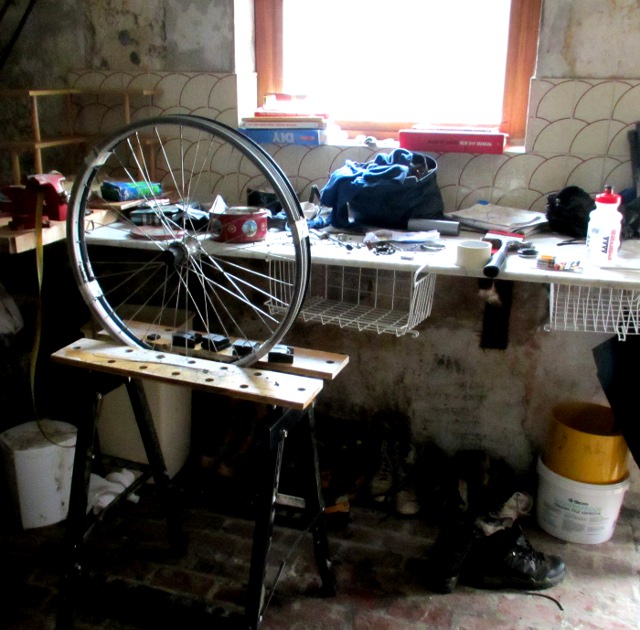
I sing these words out loud when I am working, if nothing else because I can. But I do have my own special version that has emerged from the bike workshop. Last year when I was making my first attempt at removing and replacing a wheel rim when the song came on and almost without thinking I replaced the words “shipbuilding” with “wheelbuilding”.

Dropouts 3And I have carried the idea ever since that this song can become a true song of hope when old areas of industrial decline get a glimmer of optimism because they are re-opening old bicycle factories to satisfy the demands of a new society.

Listen, enjoy, reflect and maybe in your bike shed you will sing of wheelbuilding too. I hope so.


My guest post on discoveringbelgium.com has been published. “New Year’s Revolutions: The Best of Belgian Cycling for 2015”

This is quite fun, Late last year I was invited to contribute a guest post on cycling for the blog www.discoveringbelgium.com and the forst part has been published today.

Denzil Walton is a freelance wrote and author of some good books of walks in the towns around the Brussels area. He has an excellent blog which has a diverse range of Belgian content from walking to crafts, history and countryside.

He asked me for some ideas on cycling content and I suggested that I quite liked the idea of a New Year piece with some of the cycling things I want to do and see in 2015.

I suspect some of my Belgian cycling friends will rush to tell me about dozens of great rides that I missed, but this was written with a bit of a visitor’s perspective. There will be room for lots more stories on this blog – maybe you just need to invite me for more bike rides.

Anyway here it is, in the first of two parts, with Blue Bikes, city rides, the Limburg Fietsparadijs, Pays de Famenne, and the Forêt de Soignes/Zoniënwoud.

discoveringbelgium.com

Riding The Ronquières Inclined Plane. One of the world’s largest canal-boat lifts – by bike – from the inside!

Wednesday’s bike ride was enjoyable enough because of the cycling.

But there was one other feature that made the day memorable, not least because it came upon me completely by surprise and gave me unprecedented access to a Belgian transport landmark.

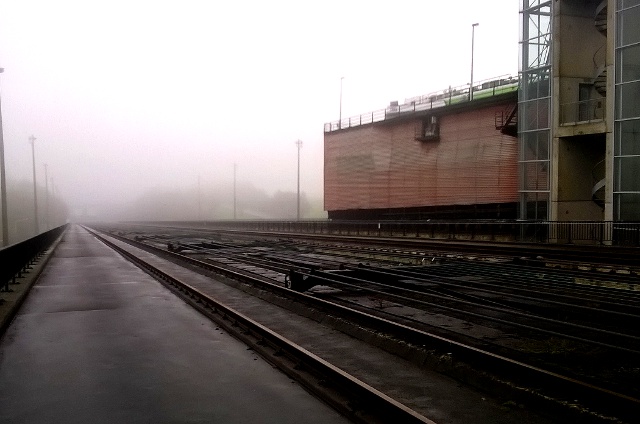
I was cycling along the Charleroi-Brussels Canal that makes up Ravel 1, one of the longest off-road cycle routes in Belgium. It was deserted and a thick mist had come down so there was a sense of riding along a narrow closed corridor.

Photo Kevin Mayne

I got my first surprise when I realised I had started cycling out onto a huge viaduct with the ground disappearing away to the mist on my side. As someone who sometimes suffers from vertigo this was more than a little un-nerving but the infrastructure was big and wide so I was quite relaxed.

Photo Kevin Mayne

Then out of the mist came the shape of a lock gate so I cycled up to the edge for a look, but the view made me stop in amazement. There was no lock gate. In fact there was not even a canal. Below me there was a something resembling a huge railway yard sloping into the distance, with not a drop of water in sight.

Then I realised that projecting down the hill was a boat sitting in a massive tank of water. The tank was on wheels and it was waiting to descend the slope.

Photo Kevin Mayne

I had stumbled onto The Ronquières Inclined Plane, a boat lift that can carry up to 5600 tonnes of water and boats between the two levels of the canal almost 70 metres apart in height. It is a notable local landmark and visitor attraction but I hadn’t paid enough attention to the maps to realise that it was on this section. Taking 8 years to build in 1968 it replaced 18 lock gates and is still the largest boat lift of its kind in the world.

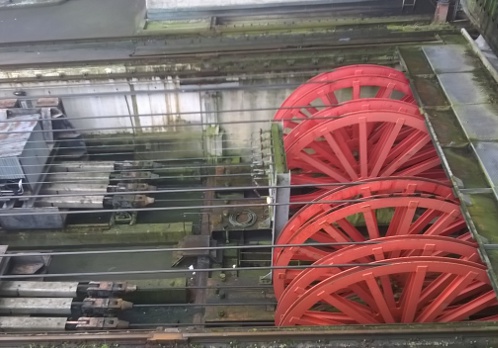
After a few minutes taking in the view of the long slope disappearing in to the mist I rolled my bike down only obvious route out, a steep ramp down the side of the structure. To my amazement I popped out almost under the giant tin bath carrying the boat, right beside the huge cables that pulled and lowered them down the ramp.

Photo Kevin Mayne

Photo Kevin Mayne

It was canal infrastructure on an enormous scale, made all the more impressive by realising the weight of water that was above me. I was having a close encounter with one impressive piece of engineering.

I was a little surprised to discover the cycle route ran right down by the works but I enjoyed the descent, it was amazing.

Photo Kevin Mayne

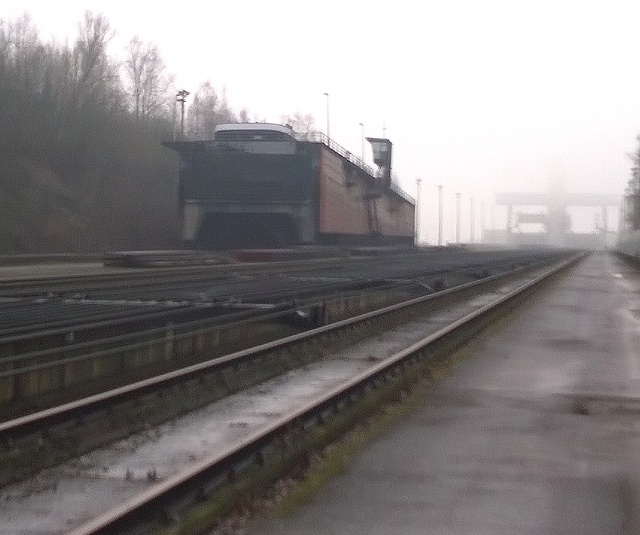
I now know that it is over 1400 metres long, which is why I could hardly see the end in the mist. However there was a shock at the bottom when I found it came to a complete dead end against a huge wall and some locked gates. Ooops, I had the dawning feeling I was not meant to be there and I had come into a part of the works that was really not for visitors. And now I had to climb back up the 1400 metres of steep incline, although it did give me a spectacular and imposing sight view of 5000 tonnes of boat and water creeping down from above me.

Photo Kevin Mayne

I puffed my way almost back to the top when I noticed a side gate where I was pleased to throw my bike over the top and get out on to a service road and back to ground level. From there I was able to ride round the sides of the embankment and reappear at the bottom and look back up to the top shrouded in mist once again, only this time from the right side of the fences. And in all that time I never saw a human being and I was never challenged by a security guard or anything. A remarkably laid arrangement that gave me a privileged access.

Photo Kevin Mayne

In the summer it is possible to ride a cruise boat up and down the lifts and to go into a panoramic tower that looks down over the spectacular works and the surrounding countryside but I rather enjoyed the way this monster came to me out of the winter mist. I may not have had a railway set as a child, but I am a bit of a sucker for spectacular engineering and by chance I had a very special view of Le plan incliné de Ronquières.

Now I know it is there I may well go back, but I very much doubt I will get anywhere near the workings. As well as my dull and misty photos the incline has its own supporters association with some spectacular photos and a fuller history, I shall read up on it properly before I go next time!

Sampling three types of Belgian long distance cycle touring routes in one January day.

Gallery

This gallery contains 14 photos.

I promised myself at least one long touring ride over the Christmas break and yesterday was “the day”. It didn’t start out with a blog post in mind, but it turned into an interesting taste of Belgium’s long distance cycling … Continue reading

How embarrassing, a New Year’s Day bike fail. I had to get the rescue squad out! 2015 can only get better.

New Years Day in Wallonia

I was thoroughly enjoying my icebreaker ride for the year. Nothing was stirring on the club message board and there was still a lot of ice and snow about so I set off for a solo ride using my mountain bike again.

Bright sunshine over Wallonia on New Years Day

It was a lovely day. Where the sunshine had reached the soil we had warming conditions with melting snow turning to mud while elsewhere the bitter cold was keeping a firm grip.

Icy trails in Lasne Mountain biking

Chapelle du Try au Chenes New Years day 2015

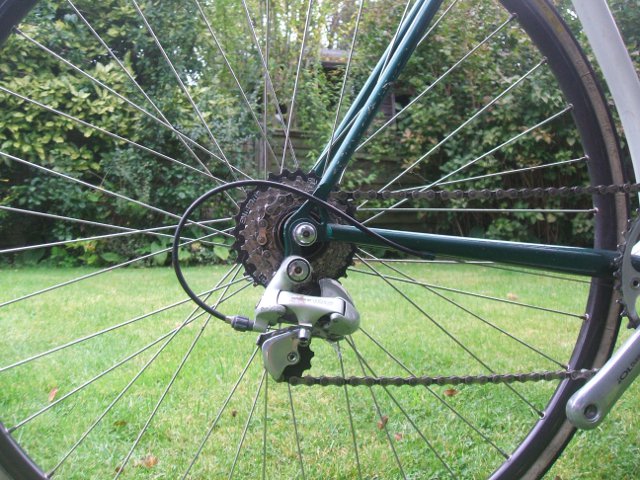
All was going nicely until my rear derailleur disintegrated 10km from home. That shouldn’t be a problem, I just shortened the chain to ride home on a single gear. Except that the chain splitter decided to snap too, leaving me without a working bike.

New Years Day Bike fail 2015

Some cursing may have taken place.

Then I ate humble pie and phoned home.

Maybe I have got my bad luck out of the way for the year already. Hope so.