The unprepared tourist – an afternoon cycling in Berlin

Brandenburg Gate Deutschebahn call bike

Last week I paid my first visit to Berlin. Fortunately around my schedule of meetings I had a few free hours to myself for an afternoon and the freezing rain relented just enough to make sightseeing a realistic opportunity.

I was horribly unprepared to be a tourist having done almost no prior reading. When I checked my usual source on such matters Tripadvisor’s main recommendations were all places that needed at least an hour each to do them justice. Given that my knowledge of Berlin is entirely made of fragments from spy movies and occasional news footage, not the soundest of starts.
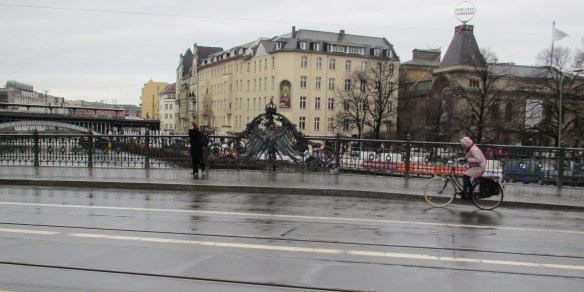
Solitary woman cyclist Berlin

So it should come as no surprise to any reader of this blog that I hired a bike and pottered about with my camera just trying to get some impressions of the city.

I was able to top up my knowledge by chatting to colleagues the following day so I was at least able to answer some of my immediate questions, but here is a brief snapshot of thoughts and feelings from a first afternoon cycling and sightseeing in central Berlin.

First orientation issue – am I in East or West Berlin? I am starting from the middle (Mitte), but checking the map tells me I am in the former East because the Berlin Wall actually encircled the old centre like a bump in its alignment. Not obvious to my eye which was which or that the East had been the poor half because my walk down Friedrichstrasse to hire a bike passed parades of shops and offices indistinguishable from any modern city.

Once a bike was obtained from one of Deutsche Bahn’s many bike hire stations I realised that the layout was very compact and it was a matter of minutes to turn down the main street of East Berlin Unter den Linden and head for the must see monument, the Brandenburg Gate. (above)

Not only an impressive monument but important for my orientation because this was one of the symbols of divided Berlin and I could follow the former line of the Berlin Wall from here, especially as so many tourism landmarks appeared to be along its route.

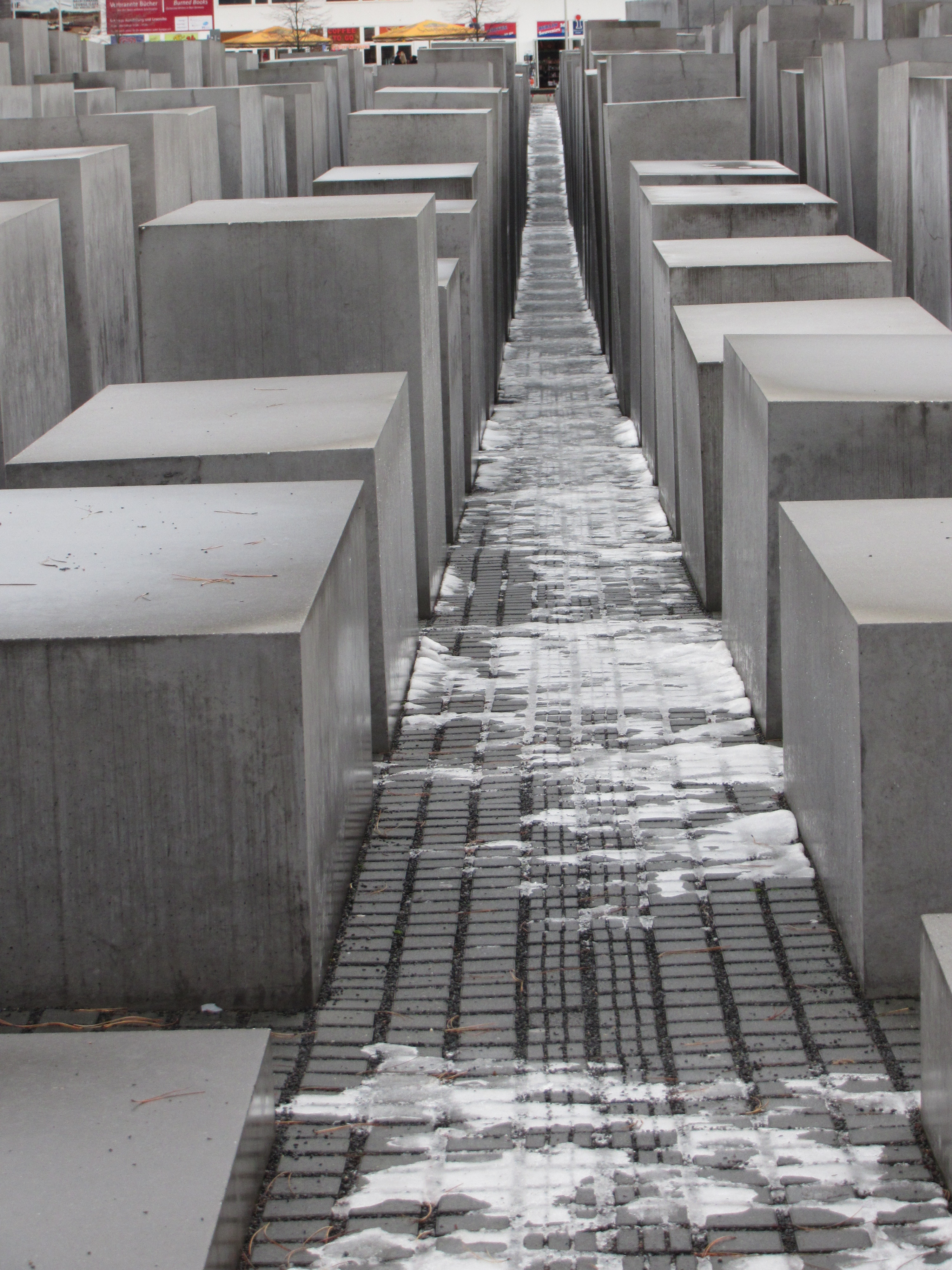
It turned out to be quite an odd ride, as if the city doesn’t quite know what to do with its legacy, or indeed it’s cycling. Heading south from the Brandenburg Gate towards Potsdamer Platz the road was obvious but almost all suggestions of the wall’s existence were gone. Instead the first landmark was the Holocaust Memorial, a sombre grey feature of large blocks laid out in a grid, completed in 2004. A moody place in the overcast sky and slushy snow.Holocaust Memorial Berlin
At PotsdamerPlatz I encountered my first evidence of the wall with some retained segments placed on the square covered with interpretation materials about the wall and its legacy. This explained more about what I was, or indeed was not seeing. In the transition after the wall came down many sections were demolished leaving the wide open spaces that used to be the former killing zone, the space left for the guards to see anybody trying to cross. Some are still undeveloped over 20 years later and appear as waste land, some quickly got developed or incorporated into road schemes and a few make the site of memorials and museums.

As I left Potsdamer Platz the cycle lane on the pavement disappeared, the road narrowed and I appeared to be on a very ordinary city street with no indication of history. My map said I was following the wall and should take the first left into another very nondescript small side street heading for the famous Checkpoint Charlie and a site called “Topography of Terror”.  It was all very quiet, few cars, few tourist trappings and not unpleasant cycling at all.

I quickly knew I was on the right road because a much longer section of original wall came up beside me. Behind it was a flat plain containing a low grey modern building and some open building foundations. No signs, no obvious clues as to what was going on until I found that “Topography of Terror”  was the site of the core of former Nazi control in Berlin, the seat of the Gestapo and the Propaganda Ministry and the building footings I could see were Hitler’s Bunker and Gestapo rooms. I found out later that the surface buildings had been demolished by Allied bombing during the war and its proximity to the wall meant it was just left as open space for over 40 years. Another uncomfortable memory to be incorporated into the city and the museum was perhaps suitably understated.Berlin wall NiederkirchnerstrasseDisplay Board Topography of Terrors Berlin

Its neighbour across the street could hardly be more of a contrast!Berlin
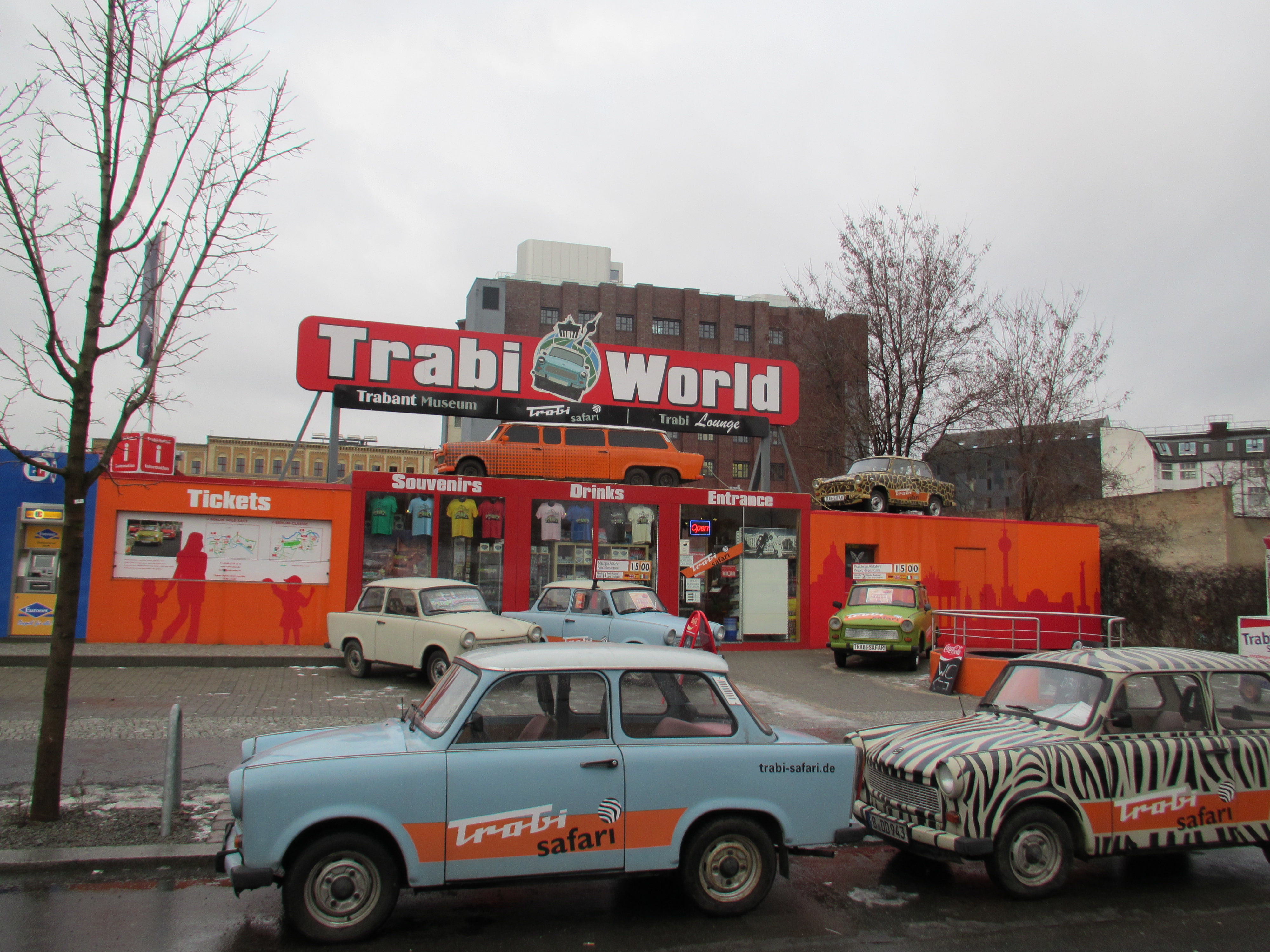
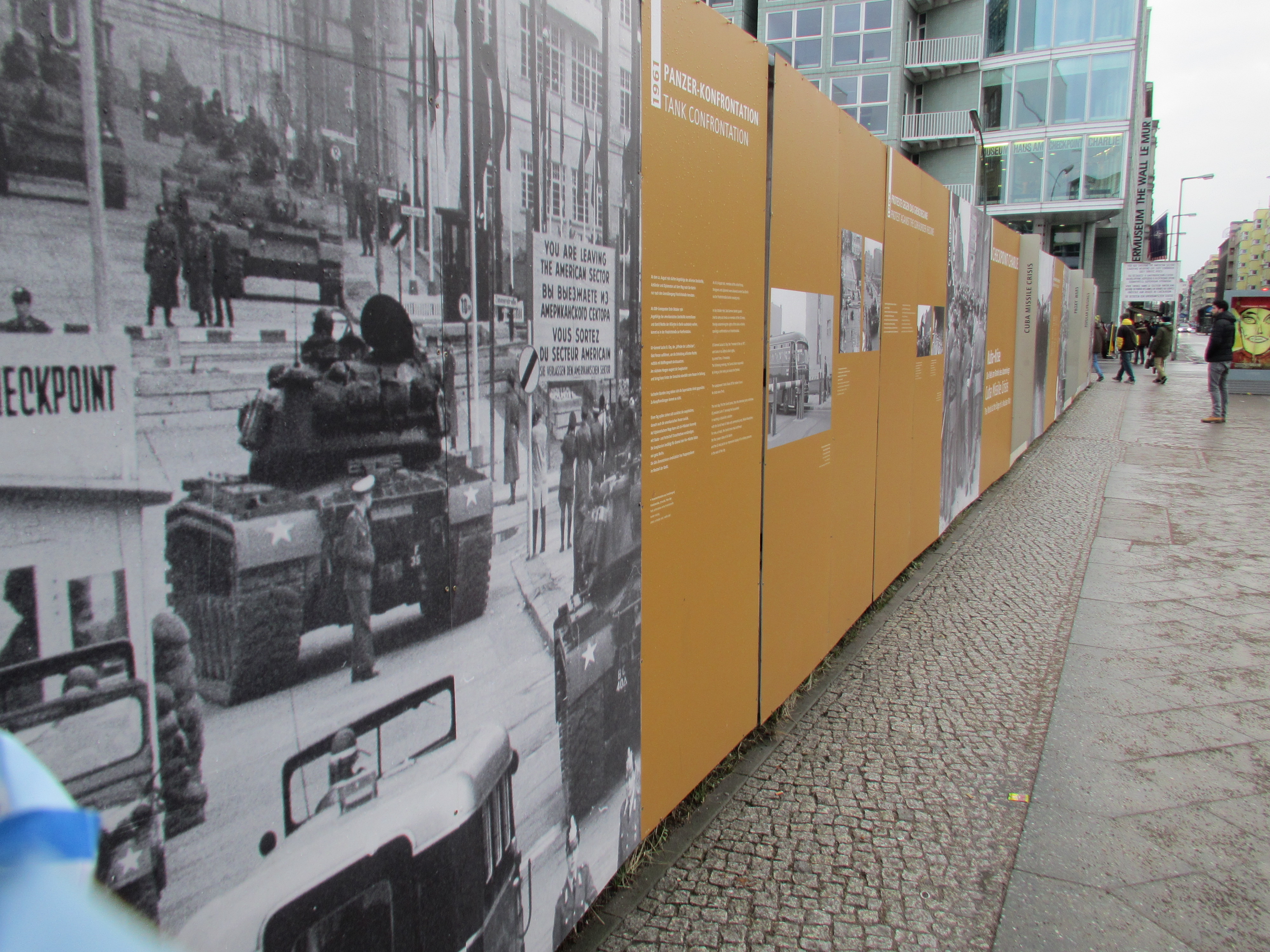
Shortly beyond was Checkpoint Charlie, the main gateway between the American and Russian sectors which had appeared in many iconic Cold War images and is certainly more of a tourist hot spot now.  visiting Berlin by bike

The motif of the wall was used well to provide photographic displays on the approaching streets which gave the history of divided Berlin in news photographs and information boards.Berlin wall displays
But yet again nearby was one of those ambiguous memorials that really set me thinking – this time the museum of the infamous STASI, the East German secret police.Berlin
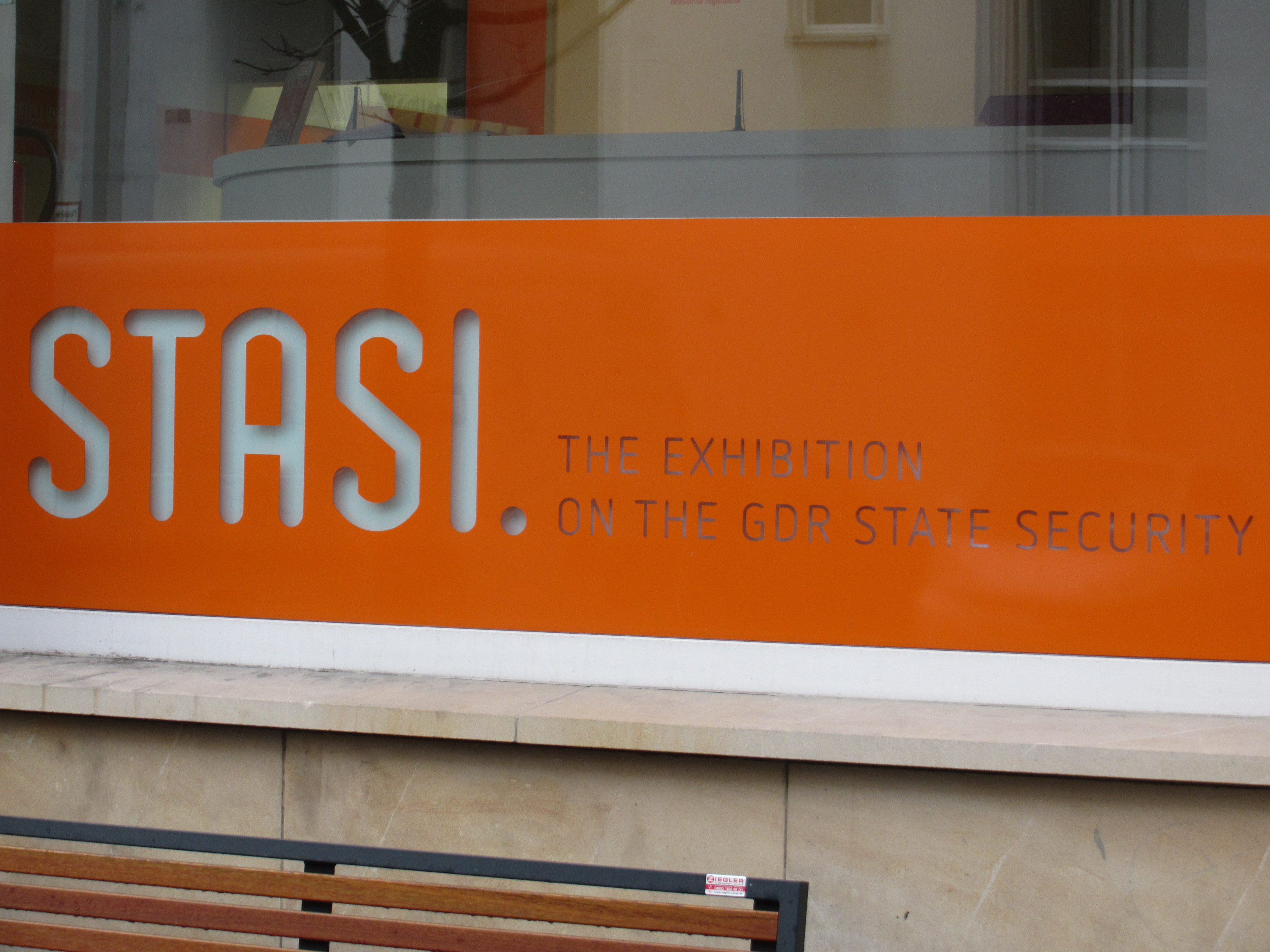
I spoke to a colleague later about these many memorials to difficult subjects. He said that because Berlin had stagnated for so long after the war there had been no systematic attempt to “move on” and certainly no civic regeneration programme to remove evidence of difficult subjects. And then after reunification it became recognised that Berlin should not be allowed this past so the city had begun to establish them as part of education and reconciliation. I had the feeling it was a sort of pact – you can become the capital city again but you cannot be allowed to forget.

There is certainly no avoiding the subject of the wall. I had assumed that when I left the central area some of the references would go diminish but later that evening on the S-bahn railway I learned about the ghost stations where North-South trains ran under East Berlin from two sectors of the West but didn’t stop at the pre-war stations. And the sections of that line that ran almost along the wall with platforms only open on the West side.

Back to my ride. Having passed Checkpoint Charlie I had my fill of wall sites so I swung North East to see more of the older city. First I followed a relatively large road across to Alexanderplatz which was a pretty nondescript public space in the growing gloom but I was then able to pick up the banks of the River Spree and circle around the hugely impressive Museum Island. What actually caught the eye here too was the amount of building going on, this looks like a city going though a construction boom.Museumsinsel BerlinRiver scene Berlin

I then used the river bank to retrace my steps back to a building I wanted to see, the Reichstag.  The historic parliament building became the seat of German government again when its modern dome designed by British architect Norman Foster was finally built into the older frame. Reichstag Berlin

Around it I discovered a huge modern civil service quarter built on the river bank and a series of waterways and parkland which looked really nice environment. If I had been organised I would like to have booked a visit to see the inside of the Reichstag because everything I have heard about it looks amazing. But for now the space in front of the Reichstag was vast, open and increasingly cold so I didn’t linger, I needed to keep moving.

From the Reichstag it was a quick trip through the Tiergarten park back to the Brandenburg Gate and the return of the bike to its hire station as the gloom came in.

Fascinating place – so many questions about the attitude to history, to culture, to monuments and a potentially days to spend. That is without touching the arts, culture, nightlife and even some of the suburbs – so many other things form which the city is known.

And what about the cycling?

Well I found as many oddities about cycling in Berlin as I did about the city itself.

I had been told that about 13% of trips in Berlin are made by bike. That’s in line with the German average which means well above the rest of Europe and especially the places I usually ride. But I have convinced myself I am getting the hang of this mode share business, I am beginning to be able to see what the differing levels look like.
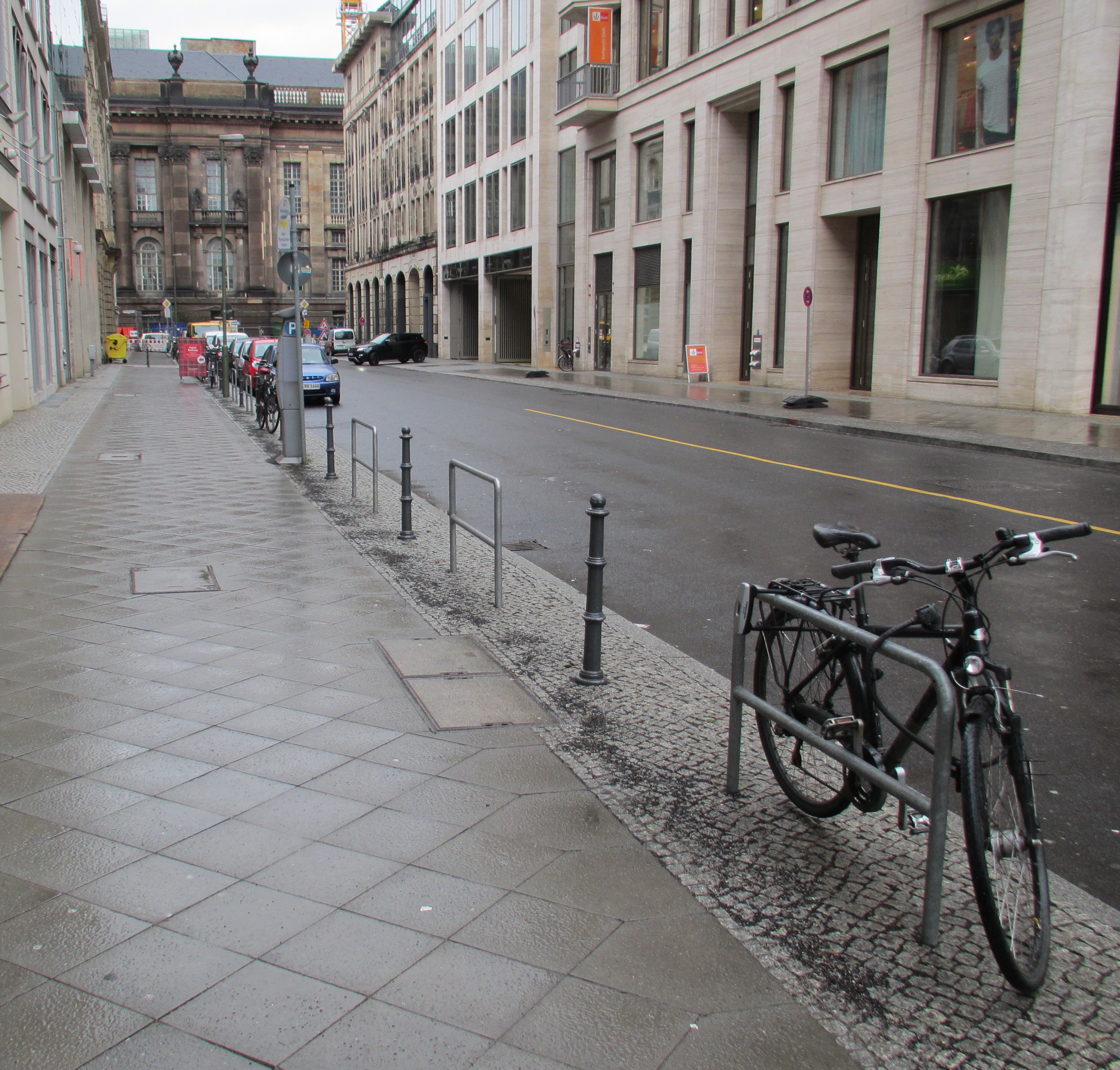
empty cycle parking - February in BerlinBut in Berlin I couldn’t. Whether on my ride or looking at the rush hours I couldn’t see the significant flows I was expecting. Cyclists visible on most streets, yes, but not huge numbers. There were lots of bikes parked round the city but in fact much of the cycle parking was empty. So maybe the weather meant that cycling was quite seasonal I asked? Apparently not, but perhaps I was in the wrong place because the levels of cycling are highly dependent on the routes in from certain suburbs.

Fixie rider Checkpoint Charlie Berlin

Just like everywhere else in Europe it is the middle classes and intellectuals who cycle the most and in Berlin it is the areas where the alternative cultural movement established itself in the sixties that cycling levels are highest. If this is the case then it might explain why cyclists in the city centre really did feel quite isolated.

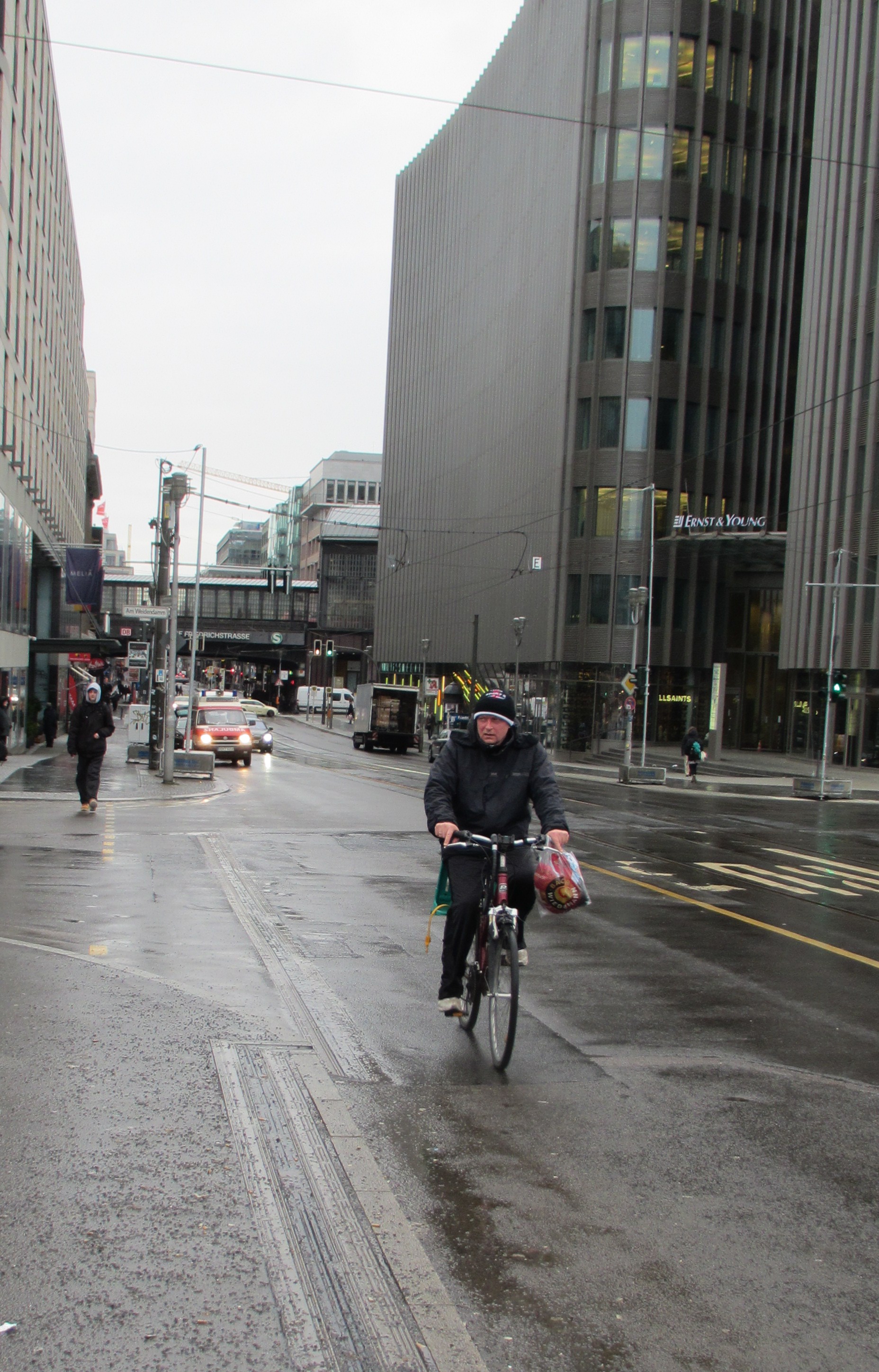
However in the city centre what I could see was that other indicator of cycling health. Women on bikes are universally recognised as a sign that the population thinks cycling is safe. However maybe they think they are not quite safe enough because I did notice that nearly all the women wore the dreaded cycle helmets – but none of the men!Friedrichstrasse Cycling Berlin

Cyclist Berlin 1The other thing that will be a bit confusing for many cycling advocates was the lack of segregated cycle routes. The vast majority of cycling I did was on the carriageway – I could have been in Brussels or London. That certainly contradicts the message that you need a big segregated network to get cycling levels above 10%. However I rarely felt worried, the drivers were largely respectful of the cyclist and the cycle lane – now that is a big difference. Possibly my view was distorted by the time of day, I was just before the afternoon rush hour, but even the following morning I felt general traffic volumes in the city were really low compared to most large cities in Europe. Maybe Berlin drivers are less stressed than their equivalents stuck in traffic across the world? I still instinctively believe that cycle lanes are just one way of changing the relationship between rider and driver and Berlin seemed to support the notion that respectful driving is a valuable way to create a cycling environment too.

So Berlin by bike?

Flat, compact, interesting, well behaved drivers, loads of bikes on hire. Something I definitely want to do again. But better prepared and able to use the Call Bike system properly, jumping on and off to visit the main attractions properly!

Cycle commuters are the happiest commuters – but I’m not there yet

A great research titbit from the ever excellent Bike Portland made me realise now is the time to share my Bike to Work problem. “Cycling Commuters are happiest” whizzed round Twitter last week.

Graph of “commute well-being” from a presentation poster by Oliver Smith, Portland State University

This is exaggerated by the fact that those most likely to moan about cyclists are the least happy – lone car drivers. Great for the promotion of cycling and we all knew it really, didn’t we? (And does it confirm the stereotype that all cyclists are just that little bit smug about their transport choice!)

But currently I am not happy with my bike to work. I am seeking a special set of conditions that make my ride “Just so”.

The scene is set by my first week of living in Belgium. I realise that in the ECF office as in much of Europe I am also a much rarer beast than in the UK, while I am a daily cyclist I also have roots in sport, most of my colleagues here are largely transport cyclists and while the daily commute is a great thing to do (and thereby should make them happier) it is just a commute, to be done as efficiently and quickly as possible. One of my colleagues expressed her confusion about my travelling habits because on my second week after moving I rode 24km to the office, appearing as a sweaty mess and heading off to the local gym for a shower. “But” she said, “you have just paid for your season ticket on the train, why ride all that way?”

Automatically I gave her the same answer I have been giving for nearly 20 years. “Oh, it keeps me fit, keeps my weight down and it sets me up for going out with a local cycling club when I get a bit fitter”.

But in in hindsight I realise that my stock answer just isn’t true anymore. While I value the fitness what I miss more than anything else what I need is a ride where I can settle to a steady rhythm and then completely disengage my brain from the process of riding. Over 10 years of my last commuting route in England there were numerous occasions when I would arrive at the work bike sheds and realise that I had no recollection whatsoever of the last hour.

What happened in that missing hour was like a piece of mental magic. I sort, order, conjure and create until the most difficult of problems began to rearrange themselves into manageable form. So many presentations, speeches, projects and problems sorted themselves during those rides that I rely on those moments for my mental wellbeing. And the reverse is true, without the necessary therapeutic hour my mind becomes crowded and even my sleep can be interrupted by the competing threads.

My trusty commuting bike is also built to meet these objectives. Recovered from scrap the Giant Granite is a rigid mountain bike frame with drop bars added for road riding and my favoured Schwalbe Marathon Plus tyres so I am never going to be troubled by punctures. But neither am I going to be troubled by the need for speed, add a couple of full panniers and I slow myself down enough to ensure I don’t get to work too quickly. (Oh and by the way it is deliberately ugly, dirty and distressed to deter thieves – honest)Mountain bike converted to road

There is all sorts of medical evidence that exercise reduces stress and people who walk and cycle to work arrive more productive and alert, I am sure I am getting the benefit of all those things on my ride. But I can get many of those by riding the 5km to the station too or on a weekend ride. What matters on my long commute is that the riding itself is completely automatic for just the right period of time.

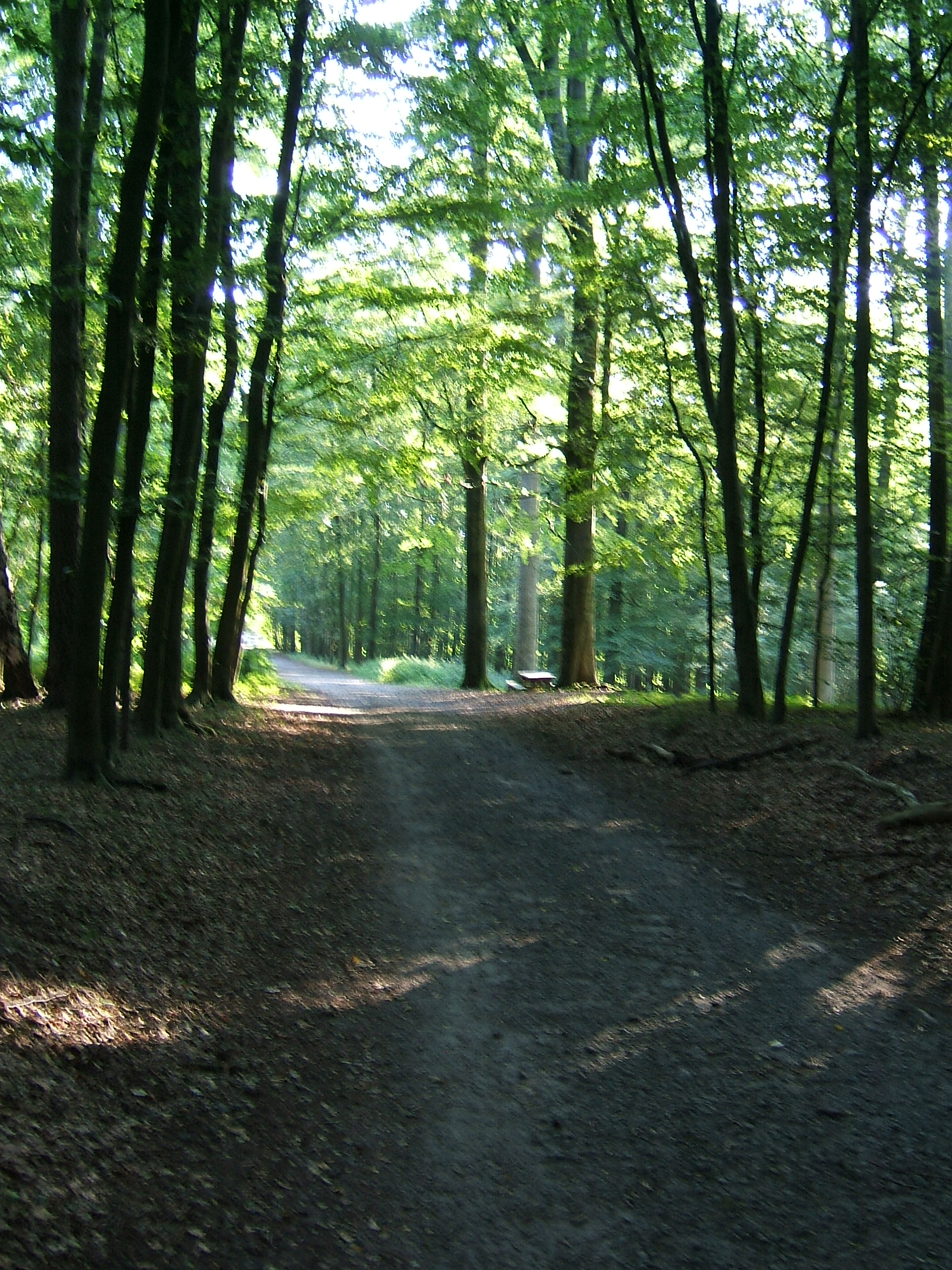
Brussels Belgium Chemin Des TumuliiSo why I am not happy with my Belgian ride yet? The distance is about right – I can finesse the route to get my favoured 90 minutes and fitness will certainly come, there are five hills of varying sizes which I can charge up if I want to. And it has the makings of a great combination. First 8km on quiet country roads while the traffic volumes are low. Then into Foret de Soignes where I have about 9km on forest tracks and car free service roads before the final 7km is a zigzag though the southern suburbs Watermael-Boitsfort and Etterbeek to the EU district at Schumann.

I have a horrible feeling that this ride is just too diverse. I have to think too much. When I get to Brussels I am not yet confident enough to ride without full concentration. The forest tracks are actually in excellent condition but not enough to relax during periods of falling leaves, rain, snow and ice. I am begging for a dry spell when I can try just cruising.

Just maybe the conditions, travelling away and spells of illness mean I am just being too impatient, I haven’t done the ride enough to make it automatic, to switch off completely. Maybe a bit of route fettling will see me right, but something has to give. Wouldn’t it be a cruel irony if I have got myself this beautiful route and I find myself heading back to the typical horrible cycle lanes by the main road so I can create the cycle commute I need for my well-being?

Let’s end with a reminder of how great it could be ……… I live in hope.Brussels

Climate change stops play

My sort of new discovery this year has been the Belgian passion for cyclocross – or perhaps I should say what I have discovered is live cyclocross on the TV and the extensive coverage of the results in the mainstream media, even pushing back the all consuming monster that is football. (Cyclocross tab below to see other posts)

I can’t help but feel sorry for the organisers is this week’s World Championships in Louisville Kentucky. First time in the 43 years of the championship that they have left Europe. US Cycling is in desperate need of a lift after the nightmares of Armstrong and cyclocross is quietly growing as a new branch of the sport so it could be a real celebration of the sport for them.

So how about this for the news:

Louisville, KY – February 1, 2013. Forecast data from the National Oceanic and Atmospheric Administration (NOAA) project that high water levels in the Ohio River will cause Beargrass Creek to flood the low lying areas of Eva Bandman Park in Louisville, Ky, in the early hours on Sunday morning and that water level will continue to rise for the next 48 hours.

That is such a shame for the organisers, now they are relying on a special barrier and moving everything to today, Saturday.

Having seen Niels Albert, Sven Nys and the rest compete in mud so deep they couldn’t ride and on ice that put even the best on their backsides I have a sneaking suspicion that they could and would ride in snorkels and flippers if asked. My money would be on Albert, he’s the tallest.

The sort of good news is that Belgian TV will now show all four events on the one day – about four hours of coverage. Bad news for me is that I’m going to have to improvise – today is the day my other sporting passion kicks off – Rugby’s 6 Nations tournament also involves lots of blokes thrashing about in the mud but as I posted last year only at the very end of the series does it begin to overlap with cycling. Having to make such choices this early in the year really is unfair!

UCI’s live Youtube feed should do it, then I can capture both as I did for Milan San Remo last year.

Oh well, it does mean lots of time to get the ironing done.

Two more brilliant cycling videos to inspire your year

I don’t have the time or the patience to spend much time following cycling links in other media. So I like to give credit when other bloggers or Tweeters turn up something good, I rely on them for all my film links.

Over at Cyclestuff Simon Nurse seems to have a never-ending source of cycling art and other material, his blog is well worth following. Thanks to one of his recent posts I discovered another of those jaw dropping mountain biking films where someone with a touch of vertigo like me just winces, but is drawn back to the screen like a moth to a flame.


And then at Charlie Bucket Cycles in Montreal Andybuk has posted a longer video of the Haute Route 2012, a multi-stage amateur race through the Alps, even including a time trial up Alpe D’Huez. Oh yes I’d love to do that but I guess that sort of fitness is a bit of a long way off. It is 45 minutes long so its one for a large mug of tea and maybe a second slice of cake after you have completed appropriate training!

Time to support the musicians of Mali

I would like to offer a recommendation as I look out of the window onto melting snow.

While you are reading blogs and doing your emails or whatever it is you claim to be doing when you are in front of your computer click on the Youtube link below and leave this music running in the background. Feel the warm heat of the desert blues blow over you, soak up the magical music of Mali.

And as you do so now consider that music is now banned in two thirds of the country that can make a reasonable case to be the birthplace of the blues.

Reflection on the music was particularly provoked recently because the Glastonbury Festival which has featured a lot of African music in recent years announced a couple of weeks that Rokia Traoré will be its first act this year and now a group of Malian artists have got together to release a peace record.

I know very little of the regional politics of the area but for years I have really enjoyed the sounds of Malian artists such as Miriam and Amadou so I find it a real shock to imagine music being supressed in the country and it makes me even more angry to feel that this should be done in the name of any religion.

The world cannot afford to lose this music. If you happen to click on a link and enjoy the sounds I hope you might be inspired to buy some music or forward a link to some music lovers and help keep it alive.

All credit to the journalists of the Guardian who have really made an effort to keep the story of the music alive. To get a feel for the whole range of Malian music and the political context read some of these articles.

Music is vital to political struggle across Africa – not just in Mali

Banning music in Mali is outrageous, not least because it’s crucial to the country’s wellbeing “The banning of music is hideous anywhere, but in Mali of all places it seems somehow sacrilegious”

Ian Birrell today – 27th January


 Mali’s magical music

Music is central to Mali’s identity – and yet the conflict there has led to it being widely banned. Here, African and western artists pick their favourite tracks from this most musical of nations

18th January.


Fatoumata Diawara gathers Malian supergroup to record peace song

Group calling themselves Voices United for Mali, featuring Amadou and Mariam, Oumou Sangaré, Bassekou Kouyaté, Vieux Farka Touré, Toumani Diabaté and many others, release song called Peace in response to country’s troubles

18th January


Mali: no rhythm or reason as militants declare war on music

Islamist militants are banning music in northern Mali, a chilling proposition for a country where music is akin to mineral wealth

23rd October

Half a power cut – how is that possible?

Candles

Here’s a “life in Belgium” post about something that has me completely confused.

Tonight we have our second partial power cut.

This means that some lights go out, most, but not all of the plugs. But the lights that have gone off are not completely off, they are glowing intermittently.

Outside it is the same. One side of our street and the associated street lamps are in darkness for about a 100 metre length while the other side of the road appears untouched.

We are speculating that one of our neighbours is pulling such an enormous load off the grid they are draining all our juice, perhaps running a dope factory on overdrive because of the cold or drilling for oil under the cellar. I have a degree in physics which doesn’t make me an electrical engineer but I do know this isn’t normal.

Minus 7 tonight and the central heating is off too.

Answers on a postcard…………………

Mountain bikes are made for snow

Brabant Wallon

Ever since the entry of mountain bikes into mainstream cycling they have offered a new dimension to winter riding – snow riding!

When the roads are downright dangerous the chance to escape across the fields or ride on untreated minor roads with extra grip and wide handlebars is great fun.

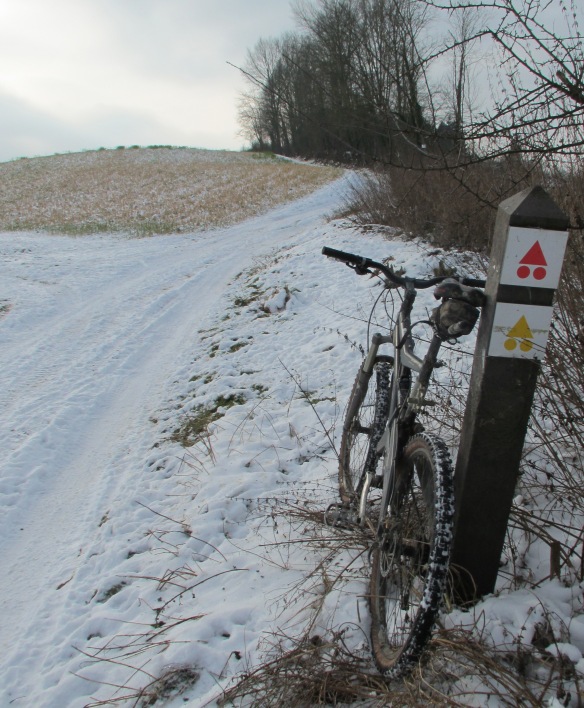
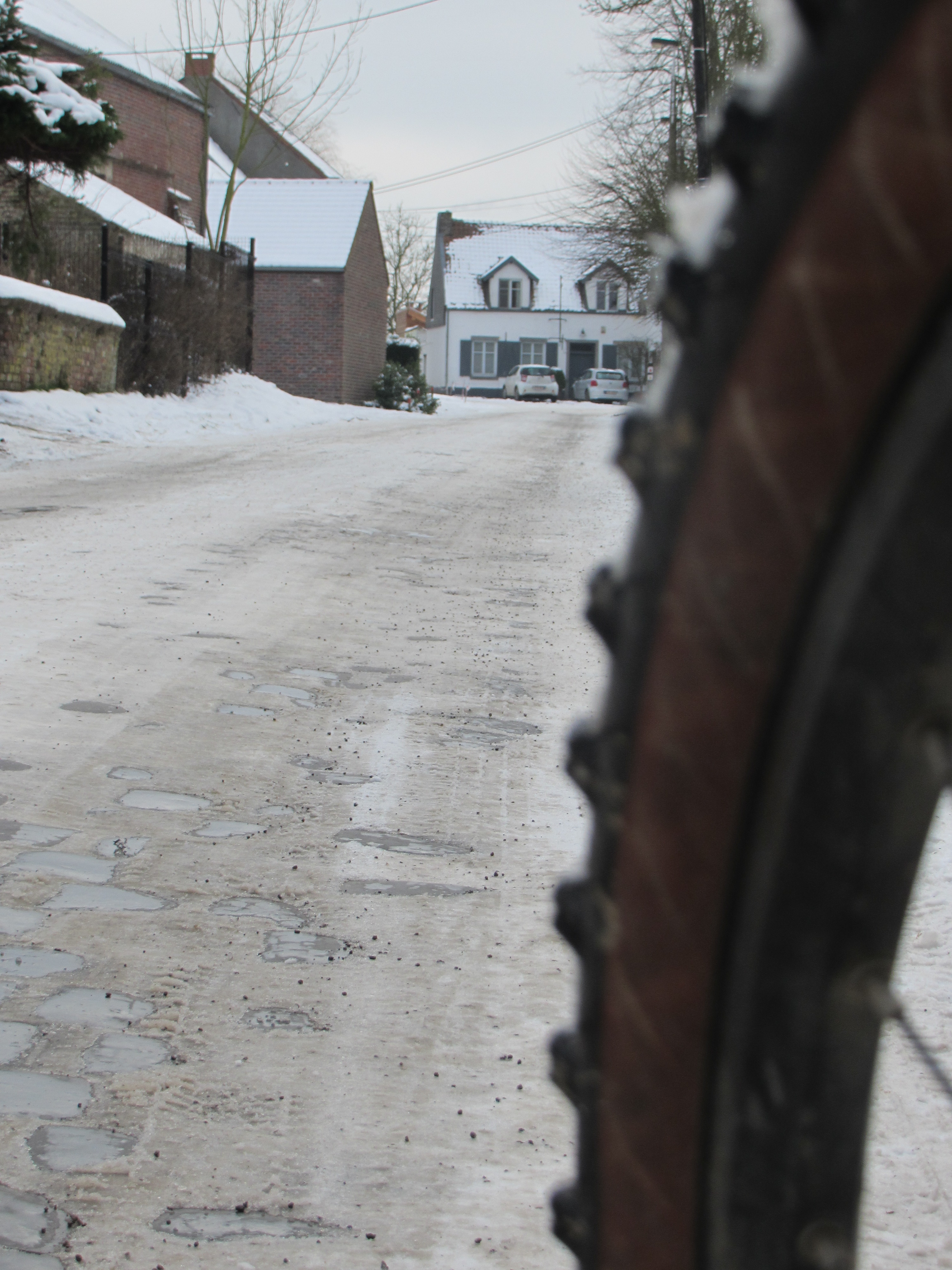
Brabant Wallon BelgiumWhere I am now living in Belgium we have a fantastic network of paths, farm tracks, cobbled roads and minor lanes so I couldn’t resist getting out today for what seemed like my first longer ride in ages. The snow actually flattens out the cobbles to some extent which is great.

And a real treat today. There is nothing like a sign at the edge of a field that just points out to the middle that beckons and says “ride me”. And in this case it was on pristine snow with only the footprints of rabbits and foxes. The snow was really soft which made it hard going but I thoroughly enjoyed it.

Snowy ride Belgium

Bike to Heaven

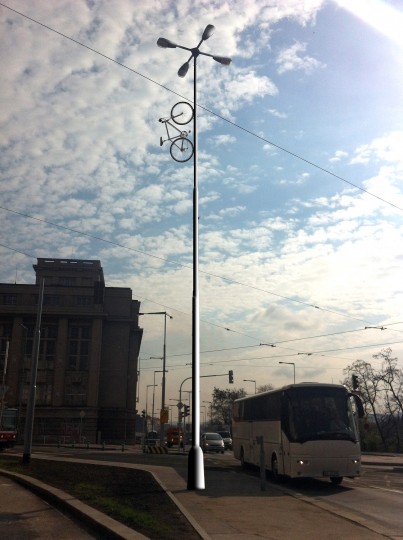
Memorial to Jan Bouchal Prague

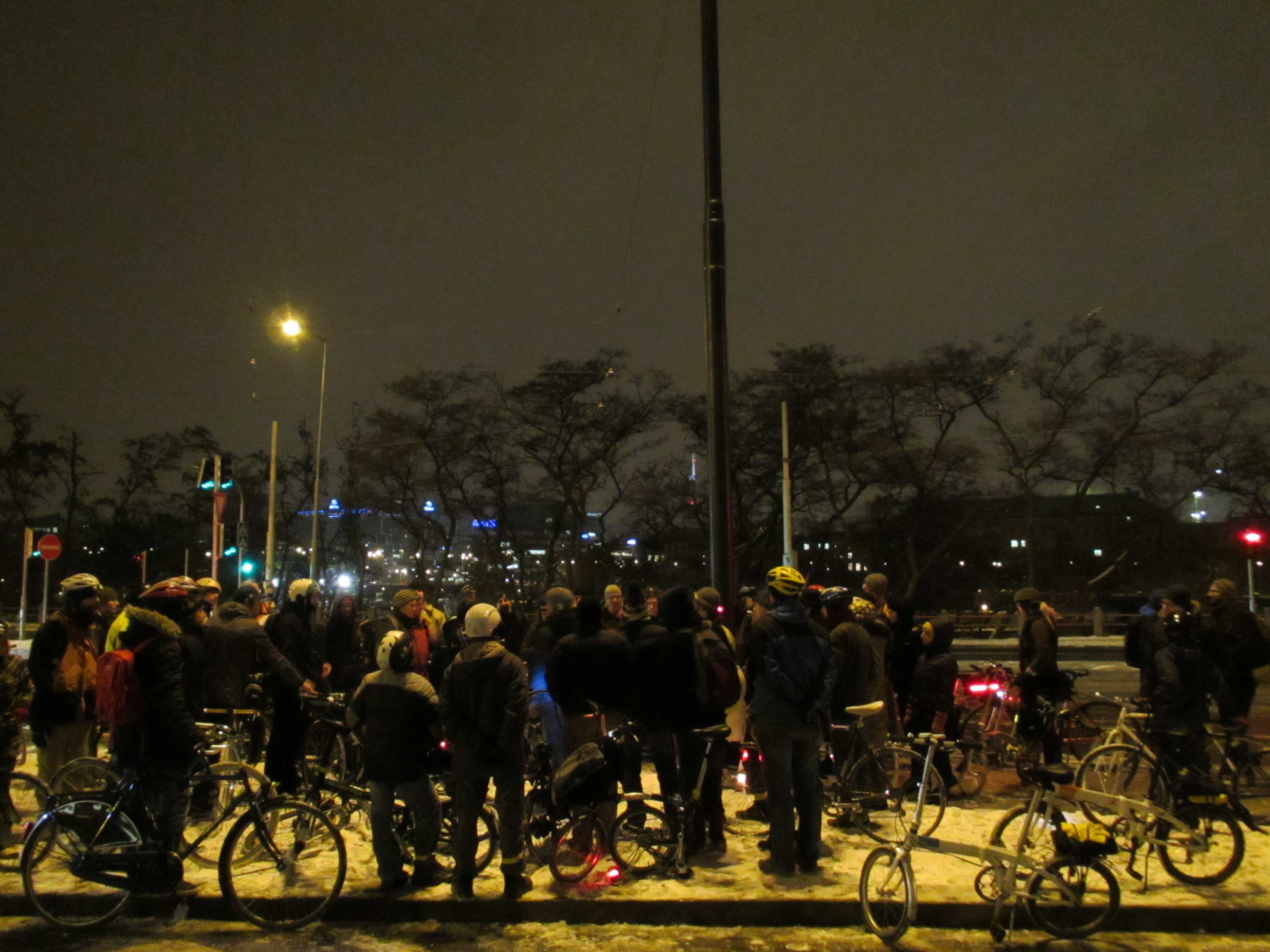
On a relatively undistinguished junction in Prague a small but moving ceremony took place Thursday night. Under gently falling snow around seventy people gathered around a white bike mounted on a lamp column and a small group of candles.

Memorial to PupThe group consisted of local cycle activists, critical mass riders, walkers and supporters of sustainability group Auto*Mat. Speeches of friendship were made with quiet dignity and a minute’s silence was held, bareheaded in the cold near the banks of the Vltava River.

Every January for seven years they have gathered on this corner  to commemorate the life of one of their friends and colleagues Jan Bouchal, killed by a car on this corner in 2006. But this year the gathering had special meaning. After six years of campaigning the city council finally remodelled the junction to make it safer for cyclists and this year they have agreed to a permanent memorial to “Pup“ as he was known.

An open competition has been held amongst local artists to create a design and following a public fundraising campaign the design will be permanently installed on the spot. Echoing the spirit of the ghost bikes that have become a symbol of unnecessary cyclists deaths around the world a suspended bicycle will rotate around the column high in the air, called “Bike to Heaven”.http://www.auto-mat.cz/2013/01/pupuv-pomnik-jiz-na-jare-podporite-jeho-vznik/

I was invited because I was in Prague working at a conference to share the findings of the BICY Project, a three year project to develop cycling in central Europe. Daniel Mourek, our Czech ECF board member invited us to ride with the local critical mass and share the occasion with them, something of an honour to be a guest on their occasion.

But it was easy to feel at home with this group. As in so many countries and cities where cycling and sustainability is hard to promote the activist community is tightly bound and the cyclists fill a tribal niche. On the critical mass I recognised the forerunners that I have seen all over the world, riding fixies, cargo bikes, folders and recycled bikes in a number of designs. Prague is not an easy cycling environment. On average only 2% of local traffic is cyclists which in winter means almost none are seen on the streets and it is a battle to get the council to do positive things for transport cyclists. The city centre should be a great place for cycling as it is largely traffic free but I saw only a single cyclist while I was there apart from the group I was with.

Critical Mass Prague
In this tough environment Jan Bouchal was a real leader of the group, one of the founders of the Auto*Mat and it was clear by the way he was described as “our friend” that he was a very valued person. I wish his friends every success in their campaign to raise the money they need for the memorial but even more so I wish them every success in their campaigns to make Prague a cycling city.

Memorial for Jan Bouchal Prague

In praise of Nicole Cooke, a real champion

Racing cyclist Nicole Cooke announced her retirement today. Multiple world champion and memorably Olympic Road Race champion at Beijing in 1988

Tonight I heard her giving an excellent interview to the BBC in which she is her usual robust self when describing her views on drug cheats and the impact they have on other riders’ careers. (link below) In the week that Lance Armstrong appears to trying to salvage his reputation on the sorry ground of the Oprah show I think we should salute a real star of our sport.

I am biased about Nicole because I have been following her career for long time and I know that she really is an old school champion, one who made her way up through the sport just before the British Cycling machine started producing champions with almost conveyor like regularity.

Back in the 1990s I was living in Cardiff and I restarted my club riding and racing career with the Cardiff Ajax Cycling Club, then a long standing club with a nice family atmosphere. Down in the schools category a name started to appear regularly – a twelve year old girl was beating all the boys at cyclocross and started winning national championships in unbeatable style. Within a year she was getting a national reputation. I recall Cycling Weekly magazine commenting that most of the senior men could learn a bit from watching her bike handling.

But along with her racing supportive parents Tony and Denise had brought up her and her brother as all round cyclists with a real appreciation of the pastime as well. They had cycled to school and been on cycle touring holidays too but Nicole was always a ferociously competitor and outgrew the gentle riding and school category years ahead of her time. Scarily bright too, doing exams early so they didn’t clash with her racing and a good speaker at social functions and prizegivings.

I have memories of the 15 year old Nicole handing out a thrashing more than a few times at any discipline. A 100 mile February reliability ride in freezing rain and snow, most of the top local riders left my group for dead. While we old men were dying in the café the “youngster” was going the whole way with the lead group – perhaps ideal preparation for that horrible day in Beijing ten or so years later?

Or later that summer when she was given special dispensation to ride outside her youth category with the local senior men as a bit of training. I was well dropped when I pulled off the circuit to watch the race finish, but even by then I had been terrified trying to follow her wheel round some of the corners on the old airfield circuit. Everyone else sort of rode round the corners, Nicole just hauled her bike round in a juddering arc, unforgiving on bike and rider. Not only did she ride with the seniors just below elite level and stay with them all race, she burst from the pack to win the bunch sprint embarrassing some quite handy individuals into the bargain.

She then became our club icon, followed by everyone and gradually a champion respected by everyone throughout the cycling world. Junior champion at every discipline, me shouting at the Eurosport coverage in each victory. Then the Commonwealth Games put her on the national stage, coming from behind after missing a corner after a typical piece of mad and fearless descending.

And that was her style. A colleague of mine at CTC Mick Ives also ran a pro cycling team which Nicole rode for a junior and he said she was relentless and unforgiving on herself and her equipment, driving herself to the limit, probably racing and training too much. Actually now I write this I realise how much she sounds like our other champion Beryl Burton who I have written about quite a bit in the last year or so. (tagged below)

I guess I was one of those who probably believed that she was destined never to quite get the world or Olympic titles she deserved, especially with the coming career of the similarly amazing Marianne Vos. But as if the Olympic title wasn’t enough the sheer bloody mindedness with which she outsprinted Vos for the world title in the same year was the one that had me almost break furniture as I jumped in the air.

That was probably her last brilliant year and it has been tough going since then with injury and team problems, not to mention internal tensions in the British team as her status waned but she remains high on my list as a rider that I would never tire of watching, there was always a possibility that she would do something in almost every race.

She deserves a successful retirement now and the continued respect of our whole cycling world. If she gets her moment in some sort of truth and reconciliation process after all the current rubbish in men’s cycling she will be a force to be reckoned with because she will not hold back.

Respect.

Links – Nicole Cooke on Wikipedia     BBC Radio interview 

Not cycling – need some inspiration

Oreti Beach, Invercargill, New ZealandBeen a bit unwell, not riding my bike much except to the station.

Weather grey and horrible.

Maybe a bit of inspiration on line? No, the twittersphere and blog world are full of Lance Armstrong and his forthcoming appearance on Oprah.

I just need a couple of memories to cheer me up.

Number one above is for the bucket list I am slowly compiling. Something everyone must do is ride your bike on a remote beach. Even better let it be Oreti Beach near Invercargill, New Zealand. Ride some of the singletrack trails on nearby Sandy Point (world’s most southerly singletrack?) and then roll onto the hardpacked beach when there is a wind whipping up the whitecaps from the Southern Ocean.

Number 2 – mountain biking in Spain. Just because I love this photo and remember being there.

Near Amer, Girona, Spain

The Kingdom of Bicycles in video – flashback to an earlier China

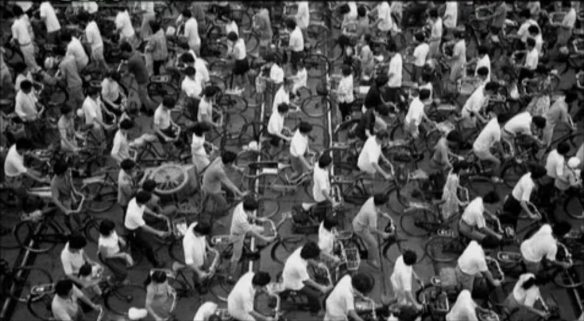
Kingdom of Bicycles StillThis post originates from one of those unexplainable coincidences that life throws up. And once they have occurred I know I just have to talk about it.

I was thinking about a “bucket list” post for New Year, reflecting the many cycling experiences I would like to have or to share. I know it has been done many times, but it is a great concept.

On my “done it” list was one item that I feel is probably now impossible to replicate and I was going to challenge readers to suggest an alternative. In 1985 I had the privilege of hiring an upright black bike and riding the streets of Peking with my father. (Now more correctly called Beijing of course).

The only way I can capture the feeling today is to imagine a flock of black birds. The flock wheels and turns, seemingly at random, but somehow the birds do not collide and as a collective the flock becomes a thing of beauty. We two clumsy westerners were almost certainly a break in the harmony, but it didn’t stop it being a magical experience.

I have cycled the rush hours in Amsterdam and Copenhagen but it doesn’t feel the same even today. Maybe it was the touch of the exotic, the scale of the streets, huge highways full of bikes, or perhaps that there were so few cars in 1985 Beijing that the cyclists felt like kings. We certainly weren’t pinned to the side of the road in token lanes, we were the traffic.

I had gathered these few thoughts together in my head as part of this possible “bucket list” post when out of the blue Patrick Keating from Velocapital Partners circulated a report on cycling traffic in China, together with a link to this lovely film from China Central Television English Language service. It is 25 minutes long, so take a glass of something or more appropriately a cup of tea and enjoy the film and photography.

http://english.cntv.cn/program/storyboard/20120124/112052.shtml

Of course much of that cycle traffic has gone now and the rush for cars has driven cyclists off those boulevards in Beijing. Even in 1985 we found the centre of Shanghai to be so congested it was almost gridlocked by buses and taxis and by all accounts the transition in Beijing was rapid. Sadly I haven’t been back since 1985 but I doubt any experience can replace that day. However the film was a great reminder.

By the way Julian – riding your Flying Pigeon in Brussels doesn’t even get close. Sorry mate.

Happy New Year – not despairing in sunny Belgium

Brabant Wallon BelgiumA year ago I wrote my first blog post, a New Year’s resolution to give blogging a chance.

A grand total of three people viewed it, all of whom were undoubtedly family members.

A year later I can hardly believe how much pleasure I have got from the process and how much I have learned about writing and taking photographs for other people to read. I had intended to write about cycling but it has been a lot of fun to add some diversions into food and travel.

Thanks to everyone for reading, for commenting and for just generally being polite enough to take an interest in my posts. And above all else thanks to the cyclists I have met across the world who have been such an inspiration. I genuinely do not despair every time we meet.

And because your favourites seem to be the bike rides and photos I can use my twelve month anniversary to share a few images from my annual reaffirmation of my cycling credentials, the New Year’s Day Ride. A few more readers this time!

This year’s was a solo. My wife and I walked our dog for a couple of hours in the wind and rain this morning, predicting that this was going to be the best we would get for the day.

However just after lunch the clouds cleared and a dazzling winter sun broke through which encouraged me to keep up my tradition that the year hasn’t started until the first ride. And just as in the last few rides it was a temptation to wander and take in the lanes around my new home in Belgium.

Today I didn’t set out for a specific destination so the significant memory today is just light. Fierce, glaring, reflecting off the roads and lighting up the buildings. At times I could have done with sunglasses and I was almost worried about the effect it could have on drivers. I have heard rather too many excuses about being dazzled at the scene of serious accidents to entirely relax when even I cannot see properly. However the drivers today were few and far between which made it very relaxing.Near Ceroux Brabant Wallon Belgium

So I was able to enjoy the sunlit village green at Ceroux, the extraordinary sunlight off the roads and the beautiful avenue of trees above at Ruart. The avenue reminded me of the art of David Hockney which I enjoyed so much in April, I am sure he would have made much of it.Brabant Wallon Belgium

Peugeot Prologue bikeAnd the riding itself was great, a stiff wind but I deliberately took my trusty winter road bike so I could enjoy spinning lighter wheels and narrow tyres up and around the rolling landscape. It’s a survivor this one, every time I have a new year plan to throw it out somehow it survives another twelve months. £75 for the frame about twelve years ago, the seatpin and chainset stuck solid, the frame rusting in places. But it is always comfortable and familiar and I can ride it across winter roads without a care. Just what I needed.

Happy New Year to all.

Christmas Eve cycle ride – cobbles and battles

WaterlooChristmas Eve was one of the few times since I started working in Belgium that I have been for a bike ride that was “just a spin”, a proper touring ride through the local lanes.

Previous rides have almost all had a purpose – exploring areas to live, visiting houses and more recently plotting routes to work or to local services. I feel as if I have been waiting weeks for free time to coincide with some gaps in the rain or snow and it just happened to be the afternoon of Christmas Eve.

I decided to cut though the lanes in the general direction of Waterloo, partly because the network of roads look interesting on the map and also because I wondered how much I could ride around the historic site of the 1815 battle.

It was really refreshing to be pottering about and with time to take some photos. When I returned three impressions were left on my mind.

Firstly I was good to be moving at bike speed through the villages and hamlets rather than by car so I could enjoy the vernacular architecture glowing in the winter sunshine, especially the white painted farmhouses which dot the fields and the solid brick churches marking the village centres.Lasne, BelgiumPlancenoitLasne

Waterloo Chemin des CosaquesBattles are not really my thing but I want to know more about my new home and the Battle of Waterloo is by far the biggest deal in this region, undoubtedly one of the most pivotal battles in European history. The main Waterloo battlefield is actually south of the town itself and include the communes of Braine L’Alleud and Lasne while the events leading up to the battle stretch many kilometres away to Wavre and Genappe, right across the area I am now living.

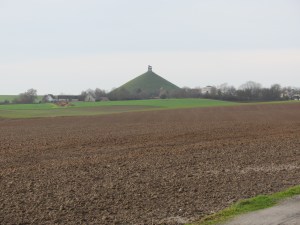
I was first aware that I had hit the battlefield proper when I came across the first of many roads named after the troops and leaders of in the battle. And then bouncing across the cobbles and potholes I looked up from my concentration on the road ahead to see the Butte de Lion, the huge pyramid -like mound built by William 1st of the Netherlands to mark the event.Waterloo Belgium

It isn’t the most attractive memorial in the world but it is certainly a major landmark in the surrounding agricultural landscape which only dips away gradually. At least around its base there is only a limited amount of tourist exploitation while the older buildings mark their association with the flags of all sides and not much other adornment.

Waterloo BelgiumHowever the thing that really struck me was that I could ride right up beside the monument and then head out across the fields on my bike, I am sure in most countries this would be closely guarded and only accessible by paying customers. Alongside the path were interpretation boards in multiple languages which set out the main features of the battle. I was able to swing across the ridge defended by the British against the French cavalry charges accompanied by several joggers and the car we collectively pushed out of the mud in a burst of international collaboration.

Battlefield path WaterlooSo I can mark that one down as somewhere to bring cycling visitors with an interest in history, a bike is a really good way to move around the big area covered by the battle and get a sense of the topography.

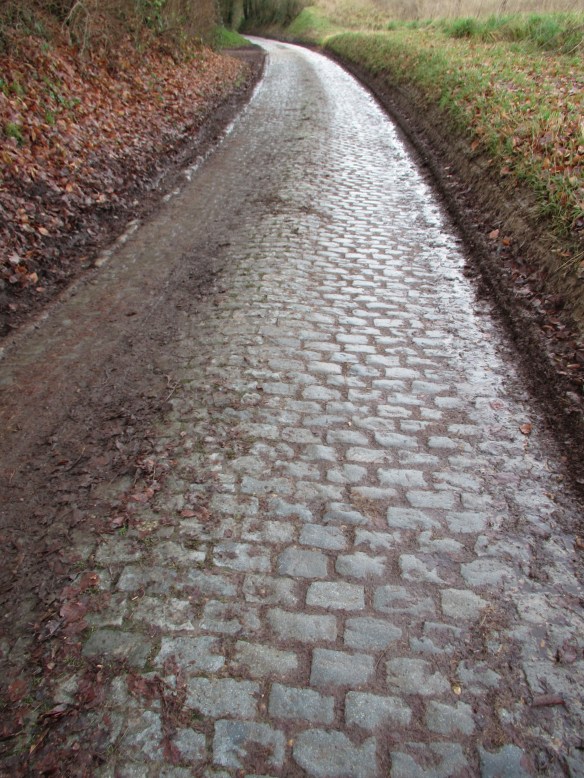
Ah, but there is a catch. My third and final discovery was the state of the roads in this direction. I may have moaned a bit about rough cycle paths earlier in the year but for the first time on this trip I hit some of the real stuff, proper domed pavé with deep ruts down either side. Front lamp lasted about a minute before it had to be removed but the rest of the bike and I rattled bumped and bounced all over the place with little semblance of control or momentum. Only a relatively short section fortunately but it caught me by surprise.

Cobbles of LasneLater I tried my best to imitate Tom Boonen, going full bore down the centre crest on a similar section which seemed to work better but it was tough keeping it going and no fun at all when momentum was lost. A few of the minor roads are theoretically smooth now but when the tarmac wears away the thinly covered cobbles are exposed and make impressive potholes, a tricky combination after all the wet weather.Waterloo cobbles

In other areas the cobbling is more decorative, in fact it looks like it is used as a sort of traffic calming because many of the road junctions and village entrances had short sections in just the right places to discourage car speed. These more modern sections are relatively tame for a cyclist and in general the drivers show a lot of respect to cyclists, certainly better than in Brussels.

All in all I loved my return to pottering about the lanes and the discovery of the countryside, the history and even those cobbles. I look forward to much more, but for the moment I was refreshed for Christmas.

A cycling country for hard riders – where cyclocross is a major sport

I always knew Belgium was mad for cycle sport and that it is the main home of the winter variant of the sport – cyclocross. It’s a much older offroad cycle sport than mountain biking, carried out on adapted road bikes.

But I have been highly entertained as for the second week in a row I have bumped into cyclocross on live TV as a major event of the day and the Dutch speaking radio station I had on while cooking a meal led with the cross results as the lead sports headline. A nice bonus, I had been anticipating watching some of the Belgian road classics later in the spring but I had forgotten all about the cyclocross.

Today showed why this has always been an event for hard riders, historically mainly men. The kind of rider who likes to keep a clean bike and mechanical perfection would recoil in horror from the pouring rain, the ankle deep mud and the grinding sand. Perfectly suited to the image of Belgium as the country of riders on and off road who like conditions really horrible.

Today’s Superprestige series race at Diegem had the added twist of being run off under floodlights and street lamps only enhancing the sense of being closed in by the storm. And despite the conditions it appeared to attract a good crowd. All the pictures are on copyrighted sites so I won’t put one here, but try here for some good ones.

I loved cross when I was a kid, I was absolutely useless at it because I lacked the power and strength to be any good. But when it turned really horrible I was always worth a few extra places just because it put off some of the speed merchants. So in the middle of the wettest winters ever in northern Europe I am very happy to be tucked up indoors and to salute the kings of the mud. I guess before the season ends I had better get myself out there and actually watch one.

Cyclists’ Christmas greetings from around Europe

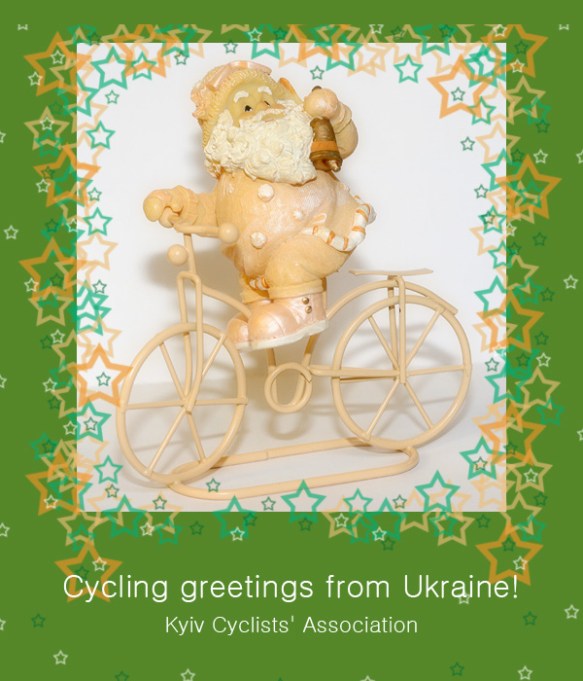
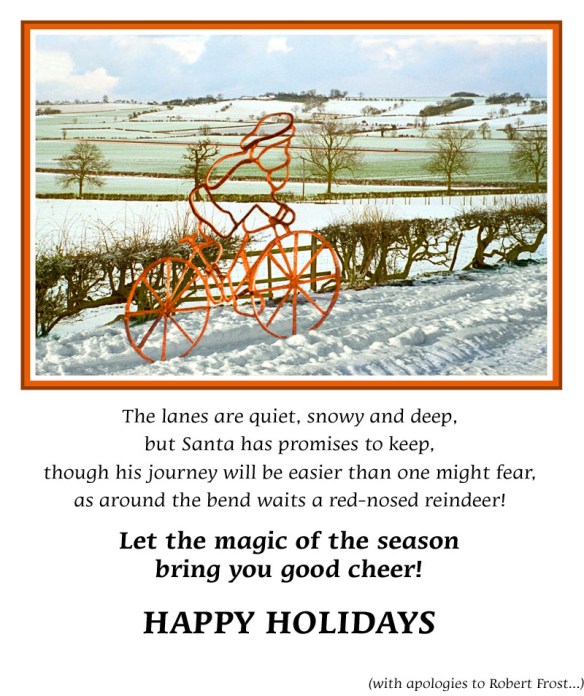
Magyar KerekparosklubIt has been really nice to get a mixed selection of cycling themed Christmas greetings popping into the inbox. Now I can steal one or two to make my own Christmas message.

I’m sure the general standard is getting higher every year, but there will always be a case for a bunch of cyclists dressed as Santa on their way to a party, at least in Stevenage! And Copenhageners just can’t help showing off their levels of cycling can they?

My personal favourite is the one above from the Hungarian Cyclists Club. I think the wording is just perfect, it sums up my philosophy of cycling completely and is the perfect antidote to those who bring their tribalism to our great pastime, transport and sport. Goodwill to all cyclists from me.

Best wishes for the season.

Ukrainian Cyclists AssociationSanta's Cycles StevenageLedbury Xmas e cardCopenhagen Christmas 2012