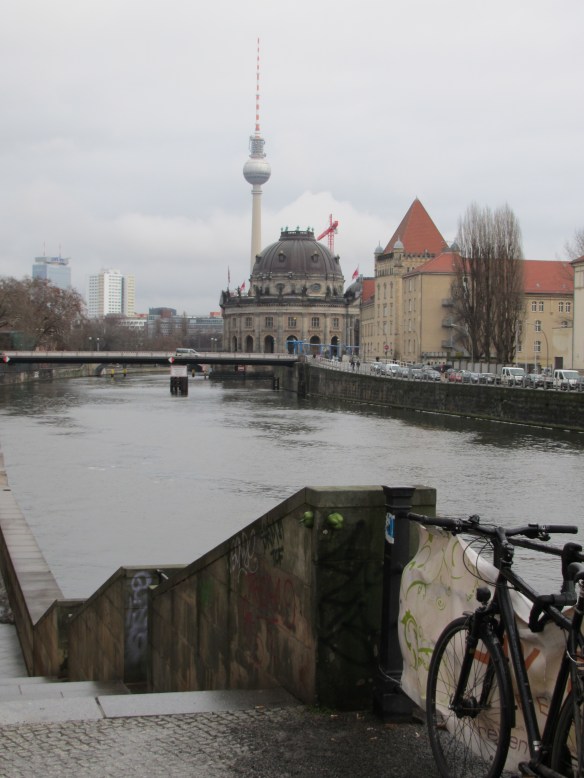
My Eurobike hotel room – in Weingarten Abbey, Church and Shrine of the Holy Blood, Weingarten, Germany

One of the great pleasures of travel is when you are given a totally unexpected treat.

I have just spent the week at Eurobike, the great bike industry frenzy at Friedrichshafen on the banks of Lake Constance. That in itself is a bike lover’s indulgence of which there will be more later. But this year I got a bonus.

As far as I knew our German colleagues had booked us into some sort of college near Ravensburg which was offering a good package for the week. I thought no more of it, and I had certainly not checked anything other than the directions when I arrived at Ravensburg train station.

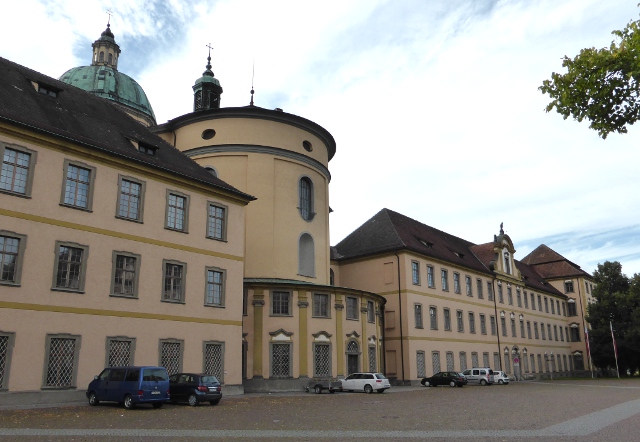
When the taxi driver pulled up on the forecourt of a huge church complex overlooking the neighbouring town of Weingarten I was quite convinced I must have misread something, until I was warmly welcomed at the Conference Centre in the Benedictine Abbey and Basilica of Weingarten, the largest Baroque church north of the Alps and an important religious site for over a thousand years.

Photo Kevin Mayne

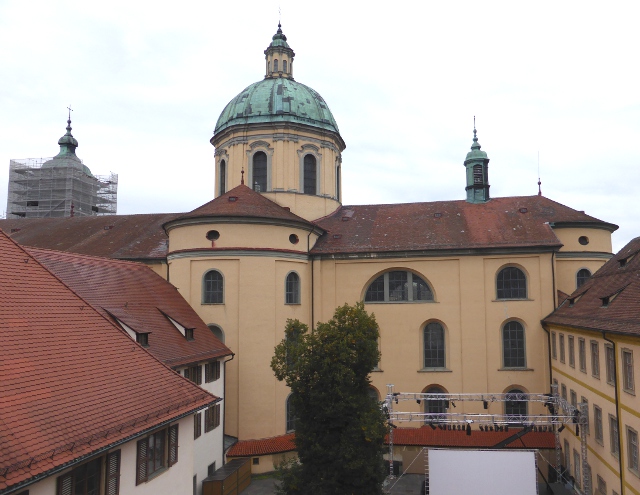
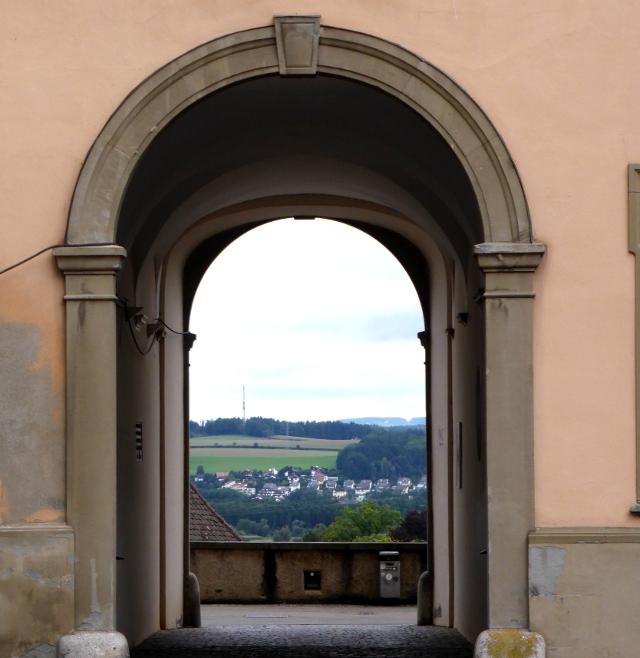
One wing of the former Abbey is now a training centre and conference suite for the Diocese. So that is why I found myself throwing open my room window to discover I had a view over a courtyard and the great dome of the Basilica, nicknamed “Swabia’s St Peter’s”. It may have been a bit cloudy and gloomy but the setting lifted me up after ten hours of train travel.

Photo Kevin Mayne

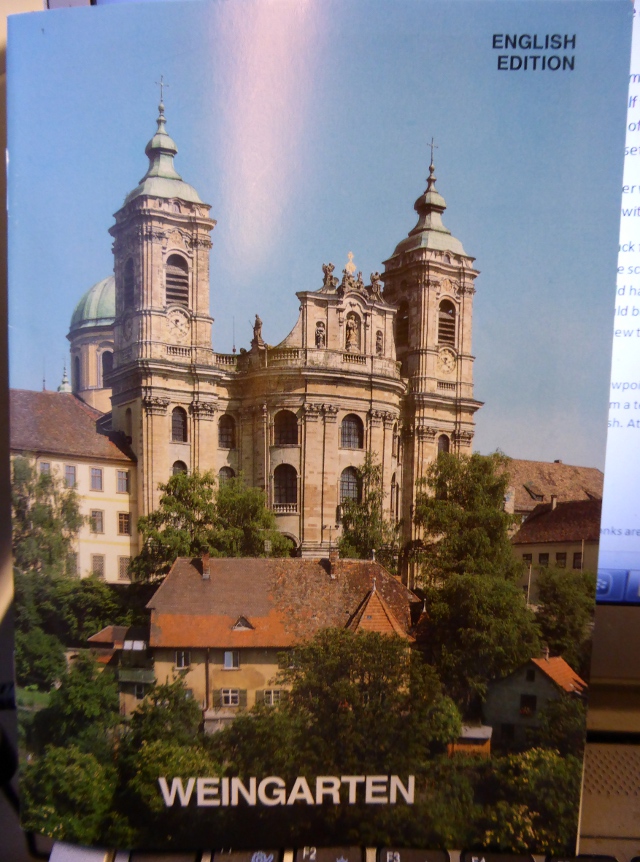
The next evening after work I was able to wander the grounds and discover more about where I had ended up, especially with the help of a little guide book I bought in the Basilica.

Photo Kevin Mayne

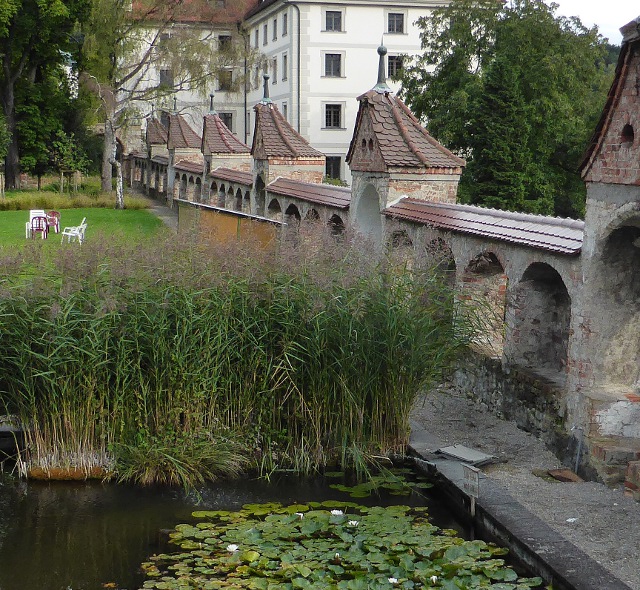
It was hard to step back far enough to get a clear view of the buildings because they were constructed on a huge scale and the Basilica itself was flanked by two large wings, each around a courtyard which would have formed the cloisters of the abbey when it was at its peak. From ground level this inner perspective was of one of somewhat severe and austere walls, probably not what it was like before its final phase of building in the 18th Century.

Photo Kevin Mayne

Photo Kevin MayneThe only way to see its original style and scale properly was looking up from the town below. Unfortunately ugly restoration work and grey weather deprived me of that view this time so I had to rely on the image from the guide book to help me imagine it.

Looking out from that viewpoint at the front of the church I did have an excellent view down over the town itself, looking from a terrace that has been planted with vines to recognise the town’s name – “Wine garden” in English. At dusk groups of young people gathered here to chill out, have a beer and watch the sun set.

Photo Kevin Mayne

Photo Kevin Mayne

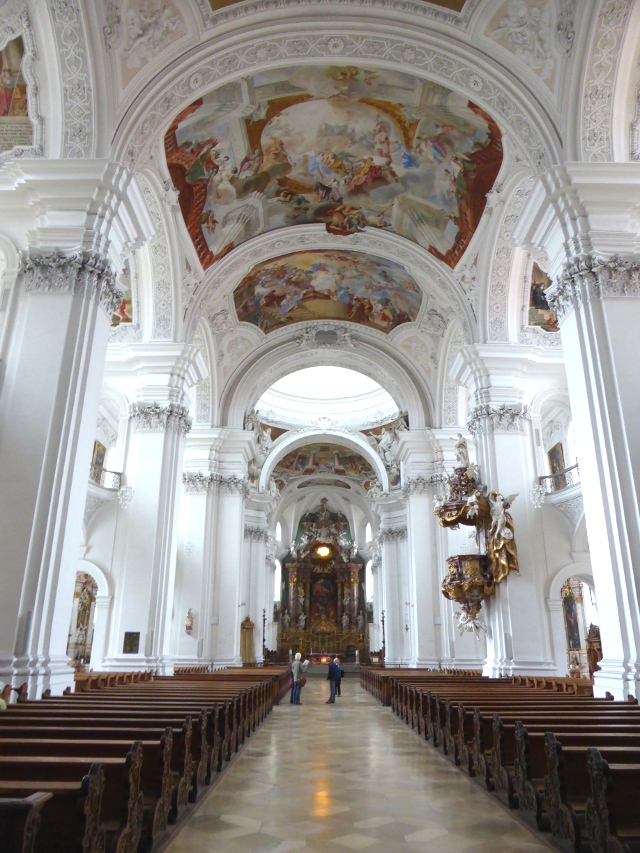
Inside the Basilica there is a totally different perspective. Firstly I could really sense the scale which I had found it hard to identify from outside. Apparently it is over 100 metres long and the dome goes up over 60 metres.

Photo Kevin Mayne

And there was certainly nothing plain about the inside, the white masonry made it seem light and bright and contrasted with the splashes of gilding and paint in all the alcoves and up onto the ceiling.

Photo Kevin Mayne

I have no particular religious affinity with any of the churches and temples I visit when I am travelling but particularly in Europe these buildings are a vital part of our landscape and heritage, it was a rare treat to be able to say I was staying in the “spare room” at the Weingarten Abbey.

There is however a footnote to my tale.

One of the nice features of my first night was to see the courtyard in front of my room being used as an outdoor cinema for the town, a great setting with a nice atmosphere, towers above and bats flitting around. It is apparently a summer season feature of Weingarten and a nice symbol of the multi-functional use of the complex by the regional government who now own it.

Photo Kevin Mayne

But the volume was incredibly high and I did wonder to myself just how long they might be going on when I wanted to go to bed. It was nice when it stopped, but only then did I appreciate that the cinema sound had to overcome the church bells which rang out every 15 minutes. We had a discussion later amongst our group whether they actually continued all night; the lighter sleepers were convinced they did. From the third floor, not so far from the bell tower itself I can categorically say they chimed 12 times at midnight and for sure they were going again at 5.30am.

I think we have to assume that the bells are part of the setting. Personally I am not complaining, but I am not so sure about some of the others!

Further post-script – last year’s accommodation wasn’t bad either – this is a great area to visit. Click here for more about my stay in Ravensburg.

Ruins and reconstruction – a moving visit to Christchurch – New Zealand’s earthquake city

Gallery

This gallery contains 17 photos.

Christchurch is the major city of the South Island of New Zealand, an attractive place that I have visited a few times. It is one of the most anglicised places in the Southern Hemisphere, designed with parks and squares around … Continue reading

Hanmer Springs New Zealand – a place of rest, relaxation and recovery for over 150 years

Gallery

This gallery contains 16 photos.

After the hustle and bustle of Sydney we set off for the South Island of New Zealand for a complete change of pace. Before heading to my wife’s home town in the far south of the country we decided to … Continue reading

I Do Not Despair’s final musings on Adelaide, our Velo-city Global 2014 host.

Central Adelaide seen from the Torrens River

Time flies at Velo-city, and it goes even faster when we have to dash off for a tour of long neglected friends and relatives around Australia and New Zealand.

So before I am swamped by the hustle and bustle of Melbourne and Sydney here are my final visitor’s reflections on Adelaide.*  The most common description of Adelaide I hear from Australians is that Adelaide is “just a big country town” which is something of a put down from its big brash neighbours. But as a country boy myself that isn’t a put down, it’s a commendation.

There is undoubtedly a grain of truth in the description. At its heart Adelaide remains a very accessible and relatively relaxed city. Its design helps, the 19th century utopian layout with green spaces and a circular park around the compact central district create a nice atmosphere. That’s the impression I really remember from when I first went there in the 1980s, work trips that sometimes involved a weekend break in the city. The city is working incredibly hard to keep, or maybe recreate that feeling, as a modern liveable city with improvements to the city open spaces, pedestrian streets and eating quarters where people want to spend time. I liked it then and I liked it this time.

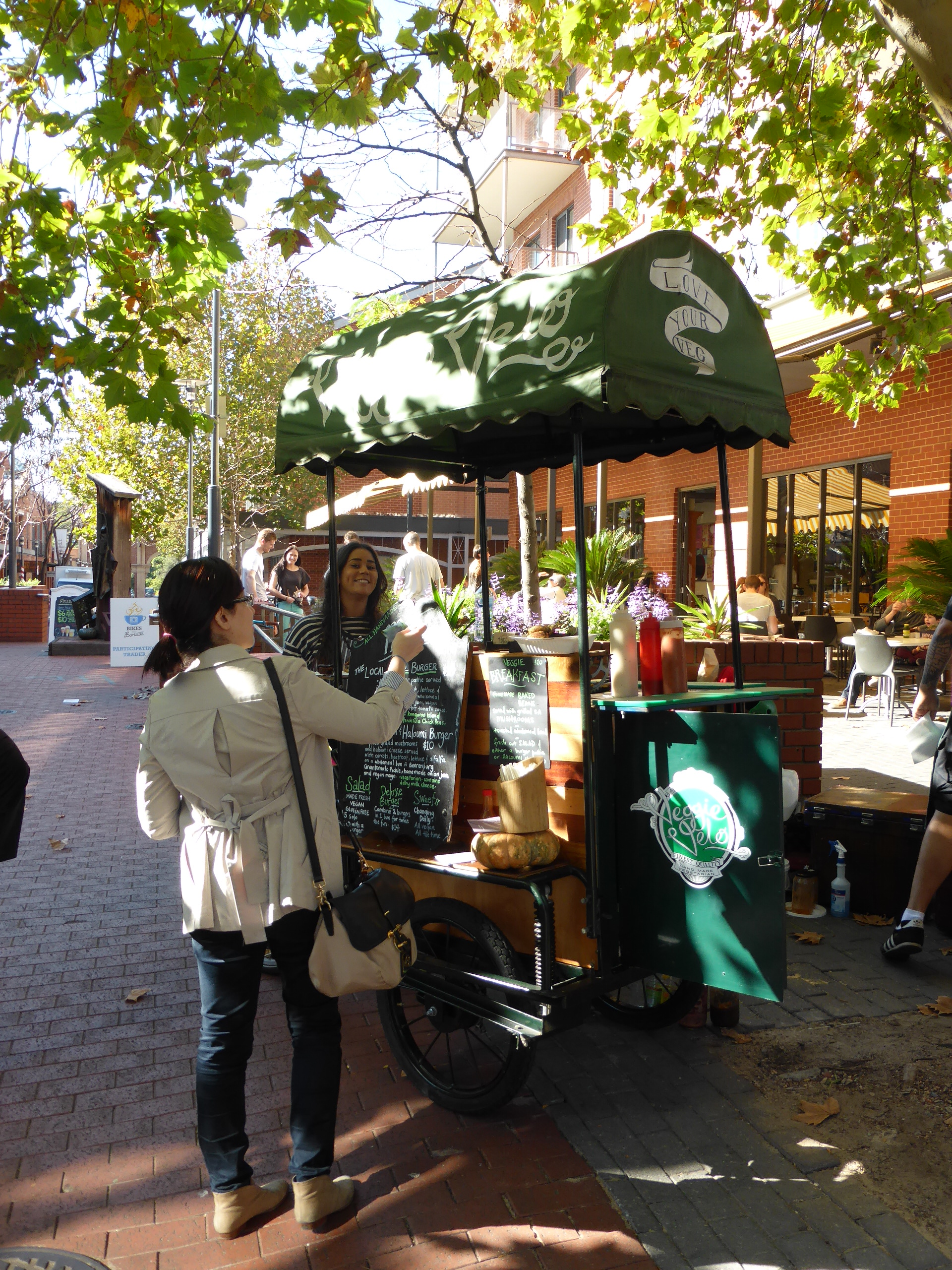
Veggie Velo Adelaide

There are also still quite a lot of those 19th and early 20th century buildings that we can call “colonial” style, from government buildings to churches, pubs and shops. They are unmistakeably Australian and a vital part of the city character.


Franklin Hotel Adelaide Hindley Street Adelaide

However these are somewhat swamped by the modern buildings that are allowed to dominate the skyline and create the impression of much narrower streets, especially on the gloomier days.

Adelaide Post office Haighs Chocolates at the Beehive Adelaide

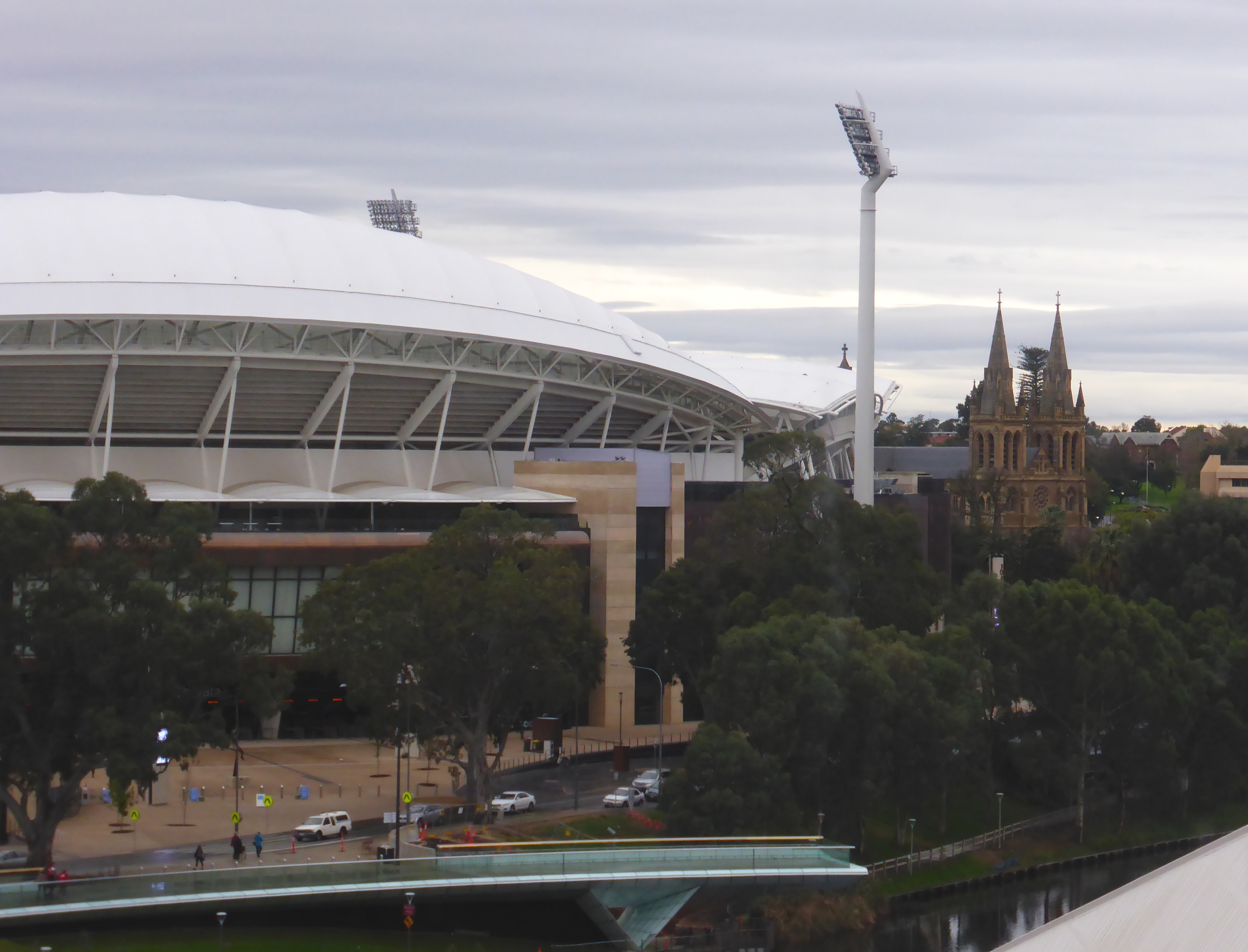
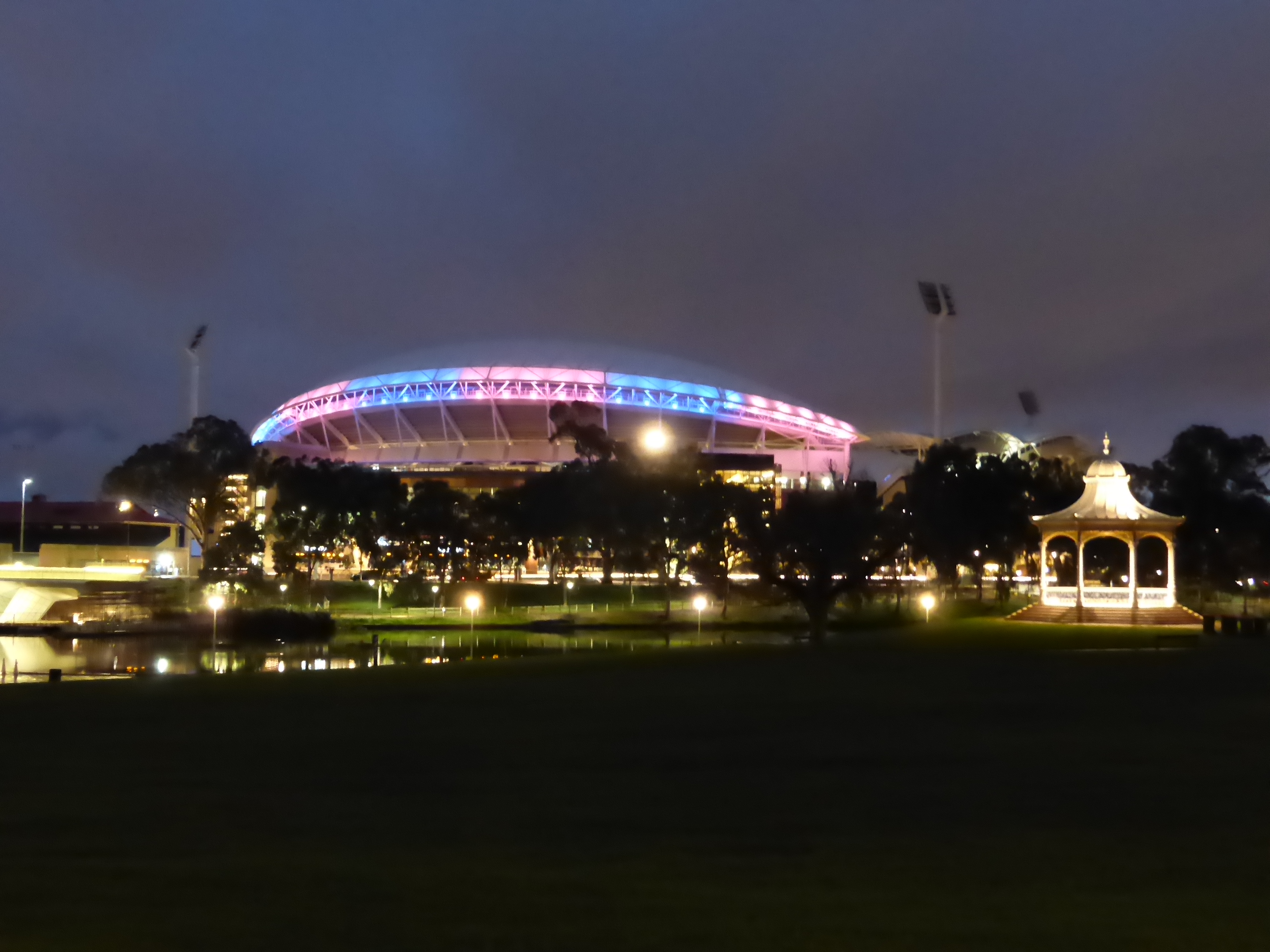
Biggest shock of all was to see the Adelaide Oval dominating the banks of the River Torrens to the North. I recall a traditional green painted cricket ground that nestled into the parkland and was an attractive companion to the nearby cathedral. Now it is a monster, but one that attracts up to 70,000 footie fans (Australian Rules Football) every weekend and is a major contributor to the city economy. As a fan I like these great cathedrals of sport, however I have to say that it just seemed a bit intrusive compared to what I remember.

Adelaide Oval and Adelaide cathedral Adelaide Oval at Night

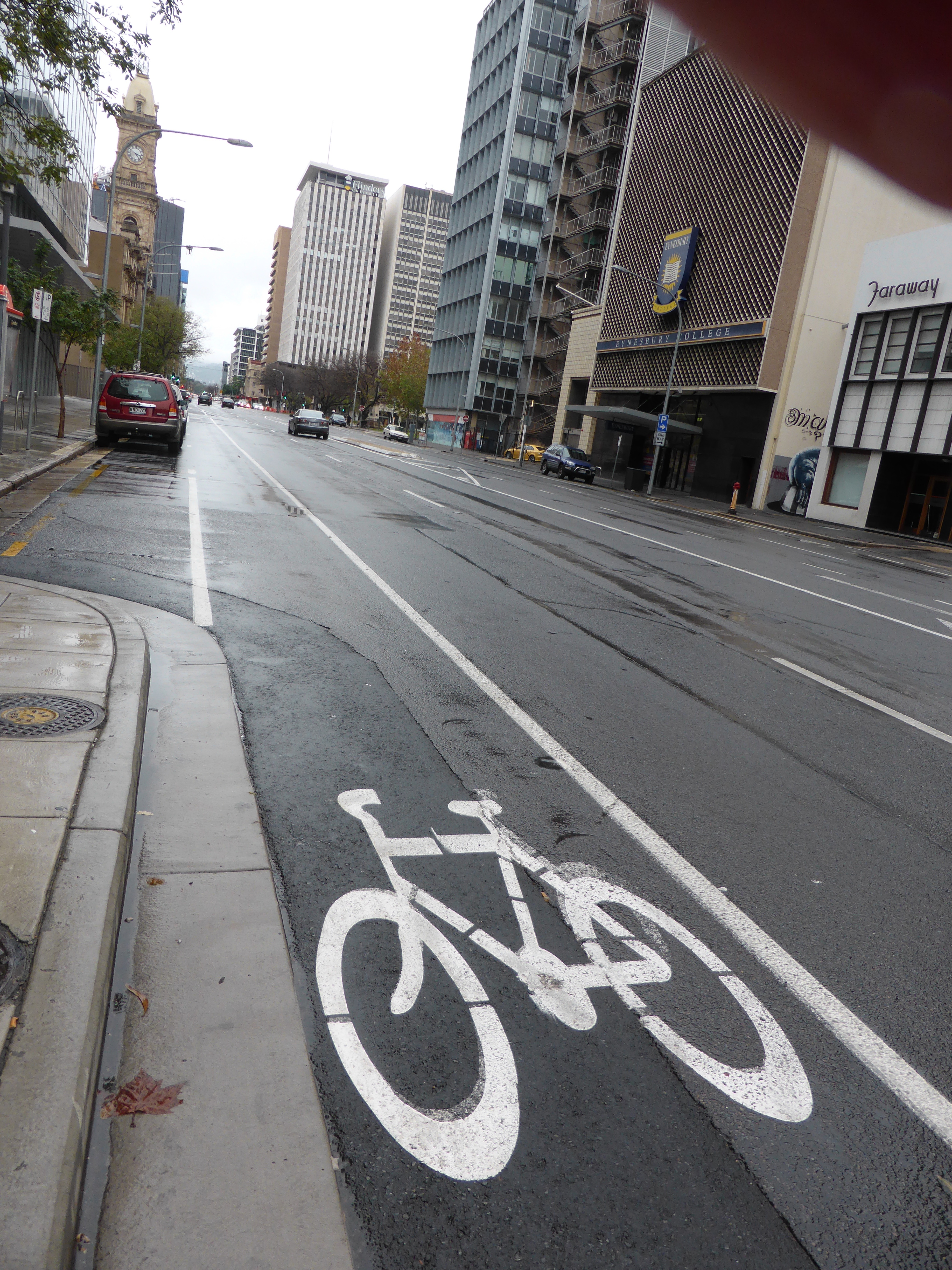
The cycling environment reflected the city.

There is a huge amount of space for cycling and it would be so easy to grab a lane in most streets but at the moment that is not a political reality. The city Mayor and the state government of South Australia both understand the need to do something about the impact of cars on the city and to deliver the liveable city they want. But with big wide streets and low traffic levels compared to many other cities the imperative for change in travel behaviour isn’t there yet. The one segregated cycle lane in the centre lane has yet to be completed due to the anti-cycling pressure, but there are at least other facilities which can act as the forerunners for change.

Adelaide cycling Cycling Adelaide

I found it quite easy to ride most of the time and I think the traffic really wasn’t especially aggressive compared to many other cities I have ridden in. And the traffic levels really were very light, except for a brief burst in rush hour and the hours after the footie on a Saturday night.

However the huge roads with multiple lanes did make it almost impossible to work out how to turn right and I spent frustrating amounts of time stuck at traffic lights which made progress painfully slow. Some of our colleagues from countries that have superb infrastructure found it intimidating and it certainly isn’t conducive to nervous cyclists because of the difficult junctions.

Bike brekkie sea of lycraConfirming that impression the cycling levels were apparently low and completely dominated by sporty looking cyclists. You can see from my photos that I hardly ever had a cyclist as a backdrop. It was autumnal and rainy on some days – but none?  At the weekend along the Torrens there were lots of families but even in the city the number of riders in day clothes was almost non-existent. The mass ride for Velo-city was called the Bike Brekkie Ride and was meant to attract the city cycling community. If the turnout was typical it showed that the city really doesn’t have an underlying daily cycling culture.

Mayor and CEO of Adelaide on the Bike Brekkie RideThe Mayor and the Adelaide City CEO almost stood out in their day clothes. I was riding along in my shirt and jacket and felt like I had completely met the brief “to stand out in the crowd”, I even attracted comments to that effect.

And the cycle helmets really, really do not help. It is almost impossible in my mind to remove the “warrior” impression portrayed by almost cyclist I saw just because they were forced to wear a plastic lid. Normalised cycling remains a bit of leap of faith at the moment, it is going to take a lot more efforts to get to that point. However the sport and leisure base is strong so that should give confidence that there is an underlying demand waiting to be tapped.

On balance I would say that Adelaide is meeting the challenge of modernity and liveability in a way that I can really identify with. For those that know their British cities it reminds me of Cardiff – with many of the amenities and lifestyle options of a capital city but in a manageable package. I lived happily in Cardiff for 10 years so I could certainly do the same in Adelaide and it was a great place for a visit.

If the on line chatter after Velo-city is anything to go by so did our many other visitors.

*There are numerous reflections and commentaries on the Velo-city conference itself on other sources. I have linked to a number of them from my Twitter account  @maynekevin and our ECF web site has a daily summary on our news pages here

Some of my other favourites are the Australian ones by Steven Fleming ; Bicycles network and ABC television.

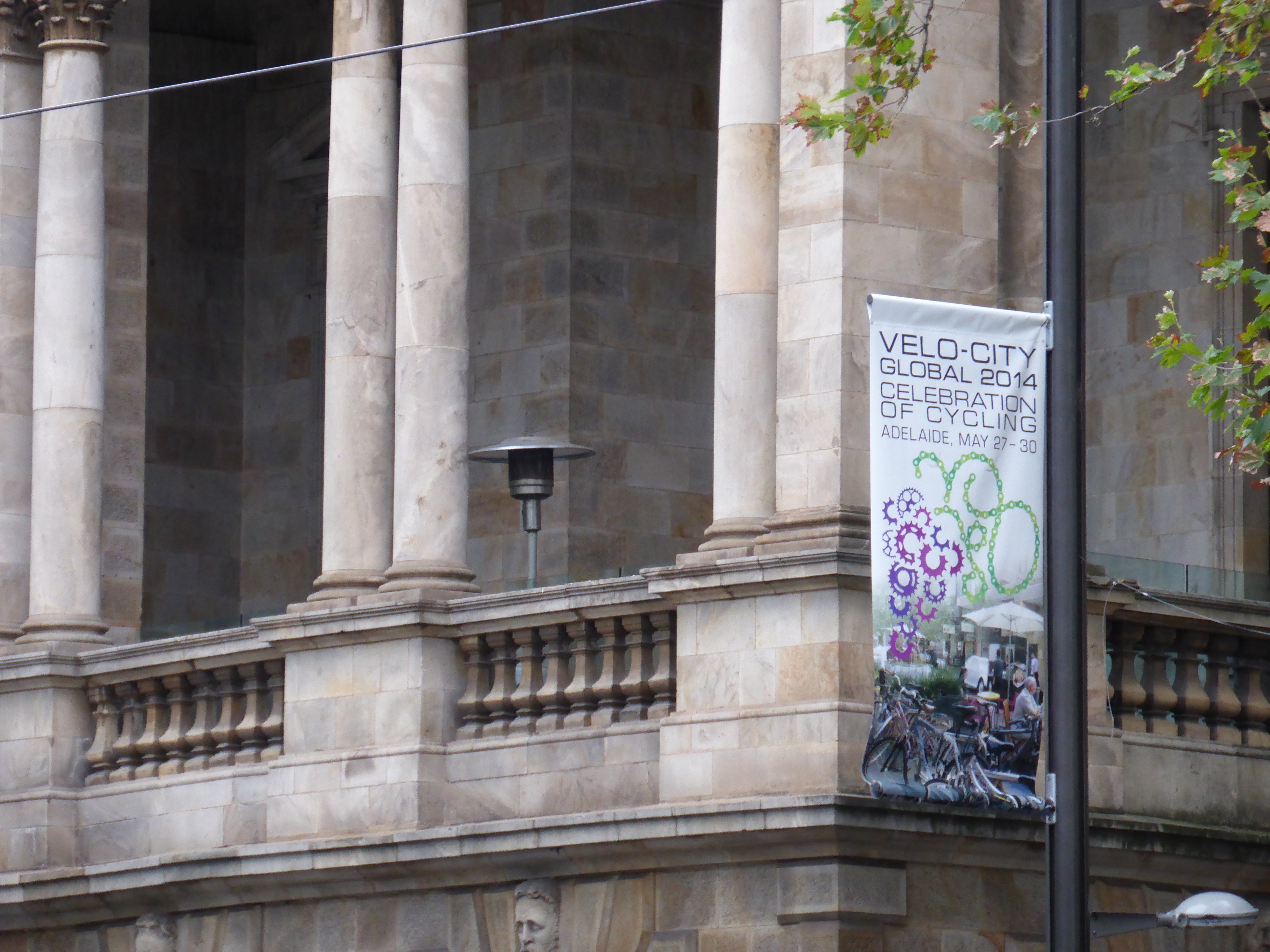
Adelaide town hall welcomes velo-city


Is this the finest railway station in the world?

It’s been a bit of UK week. Speaking about UK cycling at a public enquiry by video link on Monday, then the slightly odd feeling of being a returning visitor to London on a lovely spring day yesterday. Only six months away, but it did feel strange.

I’ve got a couple of posts that will come from both those experiences but first a travel thought.

So many visitors that arrive in London by Eurostar train just head for the underground (the Tube) so they leave their arrival station without ever stepping outside. Because I walk and cycle I always get to take in the wonderful Victorian buildings of St Pancras station which I regard as the finest railway station I know, an opinion apparently shared by travel writer Simon Calder who apparently called the redeveloped terminus  “the world’s most wonderful railway station”.St Pancras Station London

Yesterday the low afternoon sun picked out the gothic detailing almost perfectly. I have never stayed at the Renaissance Hotel which took over the refurbished Midland Grand Hotel in the main frontage but one day I am going to treat myself. However even if you are just visiting London don’t dash off to the West End or the City without appreciating London St. Pancras.

For the history of this great station the Wikipedia entry is here

Spring at last – a beautiful day in Budapest

Danube Budapest Hungary

Searing bright light, forcing me to squint, making sightseeing almost painful.

And it was absolutely wonderful. After weeks of overcast cold weather this spring day in Budapest was like a huge injection of life.

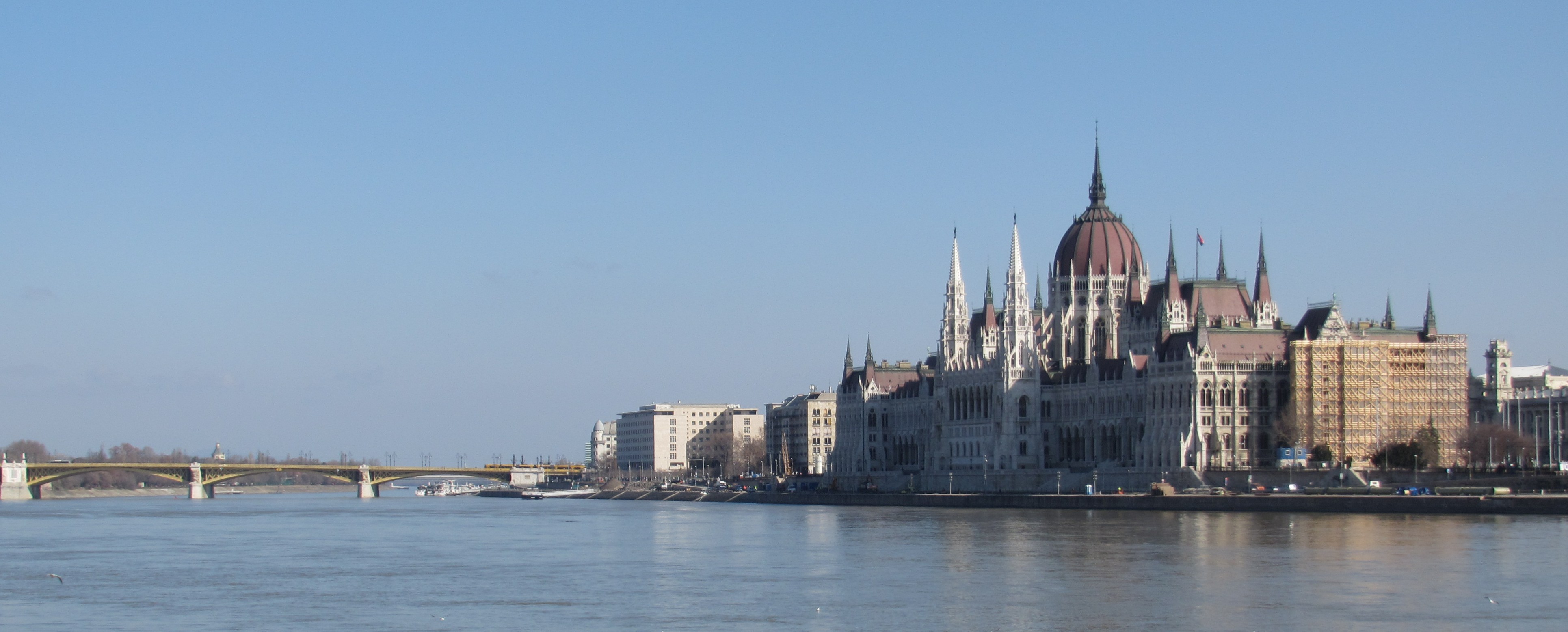
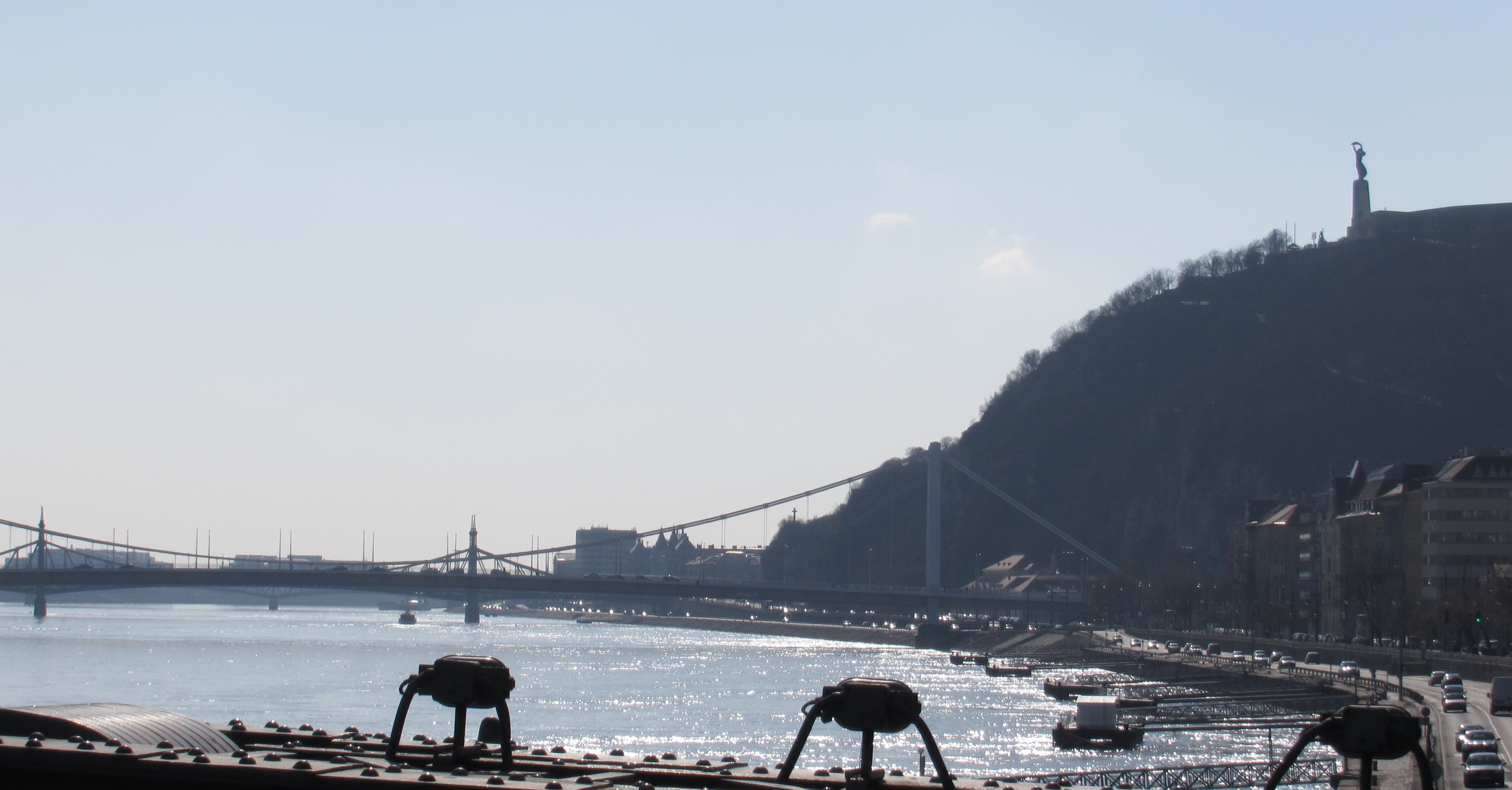
I wrote on Friday how much the Danube always impresses me. But now in the stunning sunlight with the architecture of Budapest on either side I just didn’t want to stop wandering and taking photos. Almost a shame that I had to go and talk cycling!Parliament Building Budapest Hungary Danube Budapest Hungary Church by Danube in Buda Hungary

Last time I was here was December 2008. It was freezing, overcast and we spent quite a bit of our time cycling in the dark. But even then I remember being impressed by the buildings and bridges of several eras overlooking the water, but today they were resplendent in spring sunshine.Chain Bridge and Buda castle Budapest Buda Castle, Budapest Hungary


As well as the riverside I had a short time to go into the centre too and I enjoyed the quiet squares just beyond the busy thoroughfares. These grand buildings and statues are typical of these central European cities that were once part of one of Europe’s greatest empires.

Budapest Hungary

Hungarians are a warm hospitable people too, with an extraordinary compulsion to fill visitors with enormous quantities of food. It doesn’t get much better for a hungry cyclist.

If you’ve not been, go.

The unprepared tourist – an afternoon cycling in Berlin

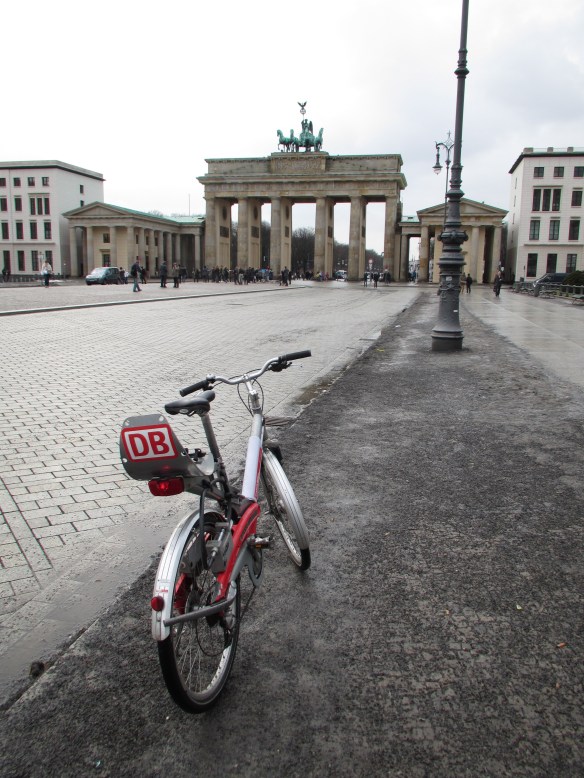
Brandenburg Gate Deutschebahn call bike

Last week I paid my first visit to Berlin. Fortunately around my schedule of meetings I had a few free hours to myself for an afternoon and the freezing rain relented just enough to make sightseeing a realistic opportunity.

I was horribly unprepared to be a tourist having done almost no prior reading. When I checked my usual source on such matters Tripadvisor’s main recommendations were all places that needed at least an hour each to do them justice. Given that my knowledge of Berlin is entirely made of fragments from spy movies and occasional news footage, not the soundest of starts.
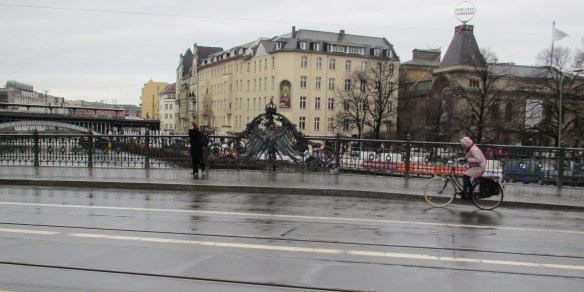
Solitary woman cyclist Berlin

So it should come as no surprise to any reader of this blog that I hired a bike and pottered about with my camera just trying to get some impressions of the city.

I was able to top up my knowledge by chatting to colleagues the following day so I was at least able to answer some of my immediate questions, but here is a brief snapshot of thoughts and feelings from a first afternoon cycling and sightseeing in central Berlin.

First orientation issue – am I in East or West Berlin? I am starting from the middle (Mitte), but checking the map tells me I am in the former East because the Berlin Wall actually encircled the old centre like a bump in its alignment. Not obvious to my eye which was which or that the East had been the poor half because my walk down Friedrichstrasse to hire a bike passed parades of shops and offices indistinguishable from any modern city.

Once a bike was obtained from one of Deutsche Bahn’s many bike hire stations I realised that the layout was very compact and it was a matter of minutes to turn down the main street of East Berlin Unter den Linden and head for the must see monument, the Brandenburg Gate. (above)

Not only an impressive monument but important for my orientation because this was one of the symbols of divided Berlin and I could follow the former line of the Berlin Wall from here, especially as so many tourism landmarks appeared to be along its route.

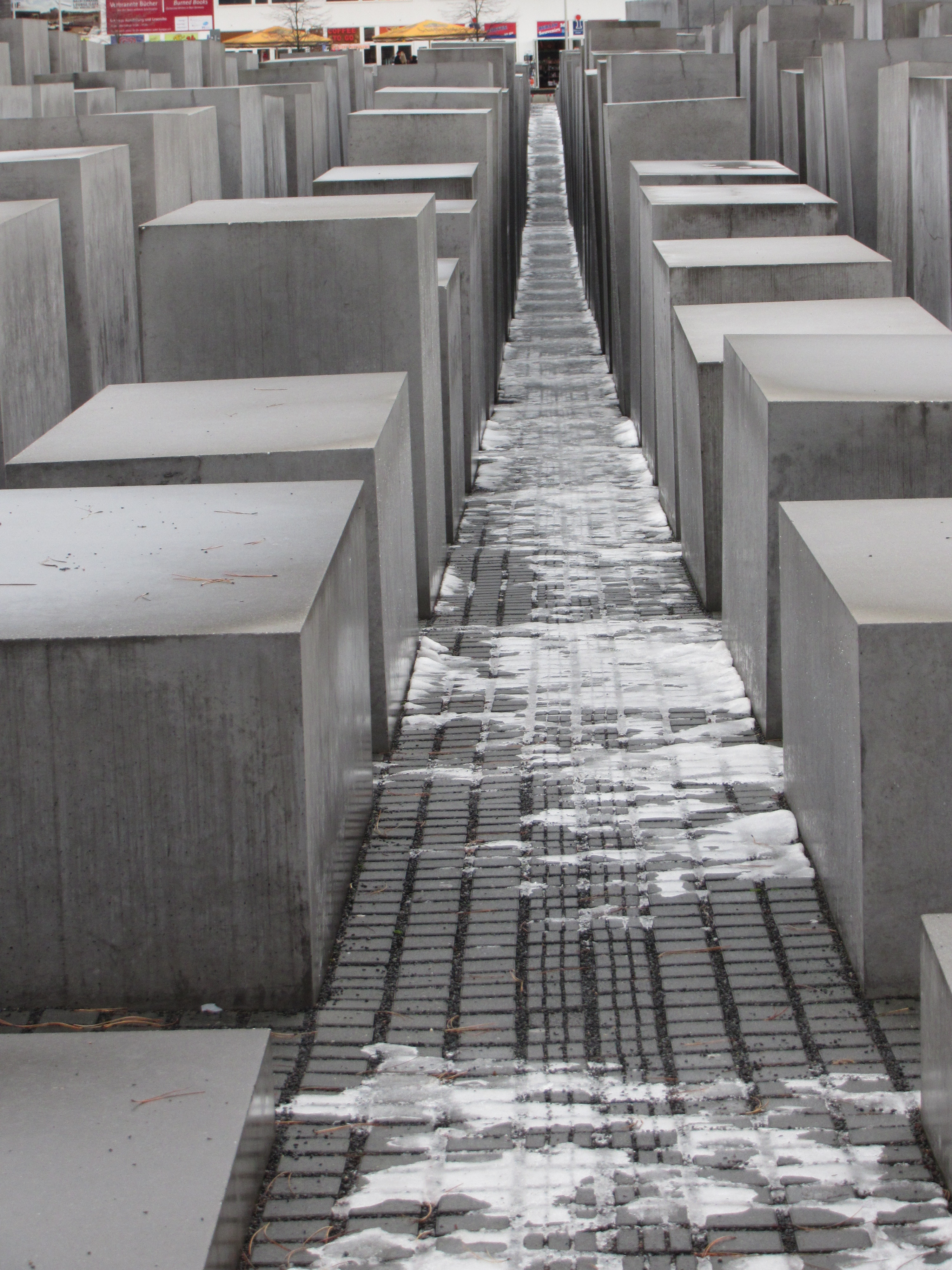
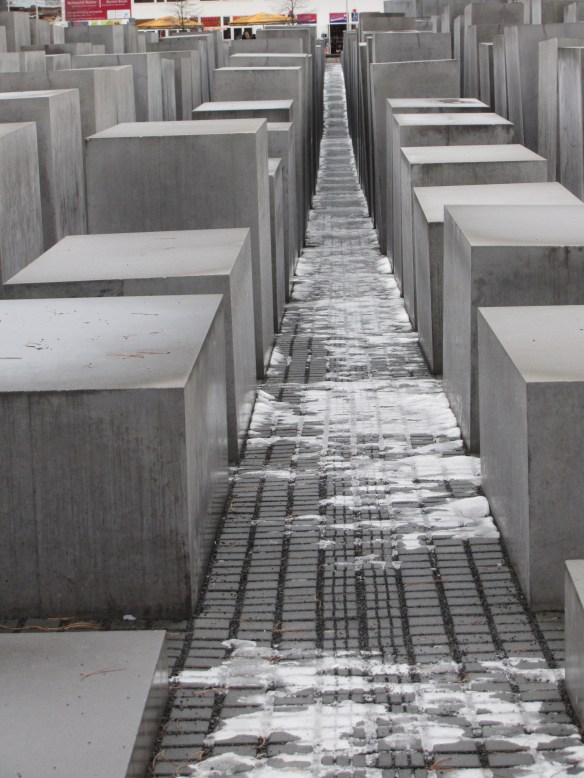
It turned out to be quite an odd ride, as if the city doesn’t quite know what to do with its legacy, or indeed it’s cycling. Heading south from the Brandenburg Gate towards Potsdamer Platz the road was obvious but almost all suggestions of the wall’s existence were gone. Instead the first landmark was the Holocaust Memorial, a sombre grey feature of large blocks laid out in a grid, completed in 2004. A moody place in the overcast sky and slushy snow.Holocaust Memorial Berlin
At PotsdamerPlatz I encountered my first evidence of the wall with some retained segments placed on the square covered with interpretation materials about the wall and its legacy. This explained more about what I was, or indeed was not seeing. In the transition after the wall came down many sections were demolished leaving the wide open spaces that used to be the former killing zone, the space left for the guards to see anybody trying to cross. Some are still undeveloped over 20 years later and appear as waste land, some quickly got developed or incorporated into road schemes and a few make the site of memorials and museums.

As I left Potsdamer Platz the cycle lane on the pavement disappeared, the road narrowed and I appeared to be on a very ordinary city street with no indication of history. My map said I was following the wall and should take the first left into another very nondescript small side street heading for the famous Checkpoint Charlie and a site called “Topography of Terror”.  It was all very quiet, few cars, few tourist trappings and not unpleasant cycling at all.

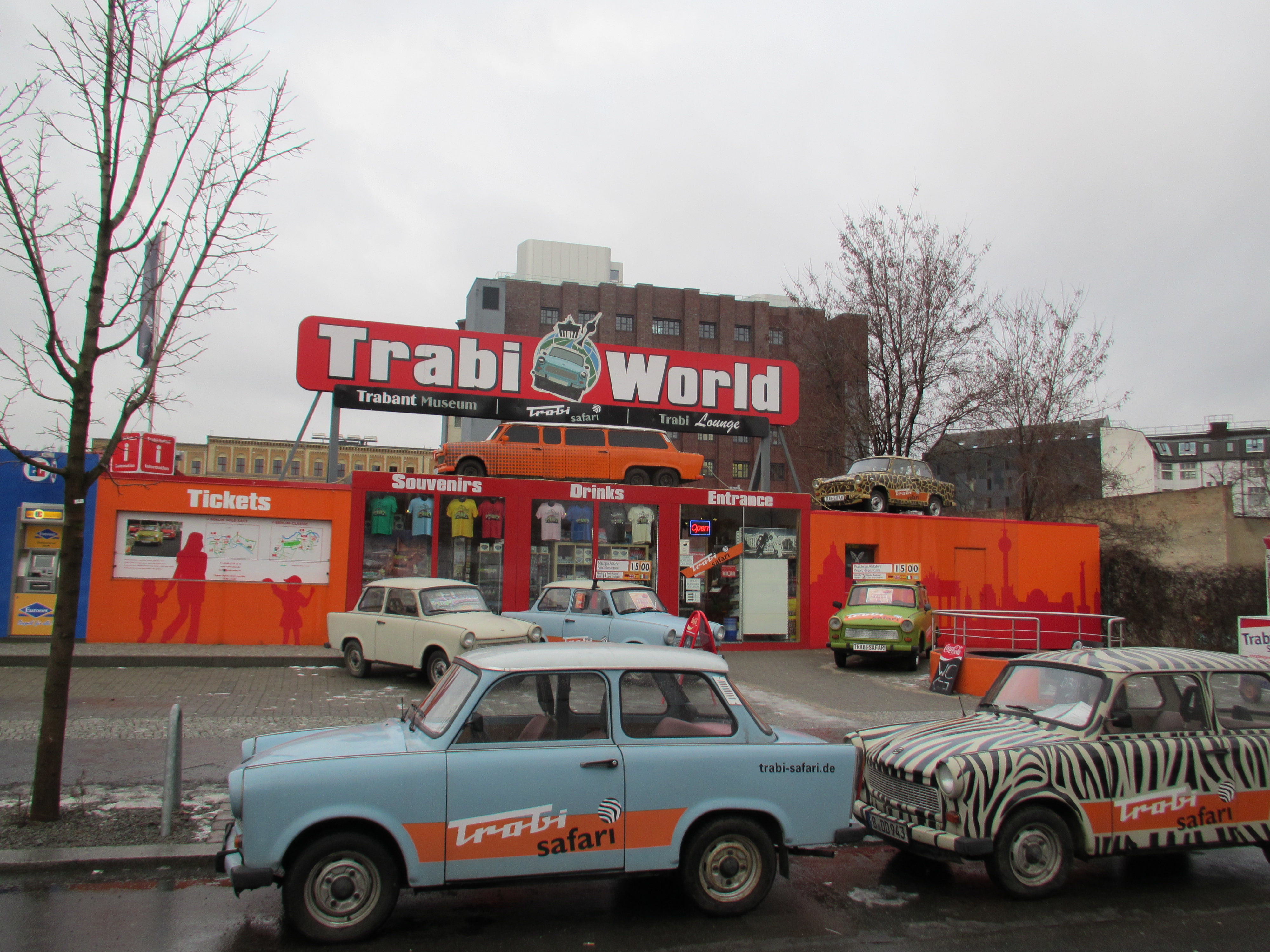
I quickly knew I was on the right road because a much longer section of original wall came up beside me. Behind it was a flat plain containing a low grey modern building and some open building foundations. No signs, no obvious clues as to what was going on until I found that “Topography of Terror”  was the site of the core of former Nazi control in Berlin, the seat of the Gestapo and the Propaganda Ministry and the building footings I could see were Hitler’s Bunker and Gestapo rooms. I found out later that the surface buildings had been demolished by Allied bombing during the war and its proximity to the wall meant it was just left as open space for over 40 years. Another uncomfortable memory to be incorporated into the city and the museum was perhaps suitably understated.Berlin wall NiederkirchnerstrasseDisplay Board Topography of Terrors Berlin
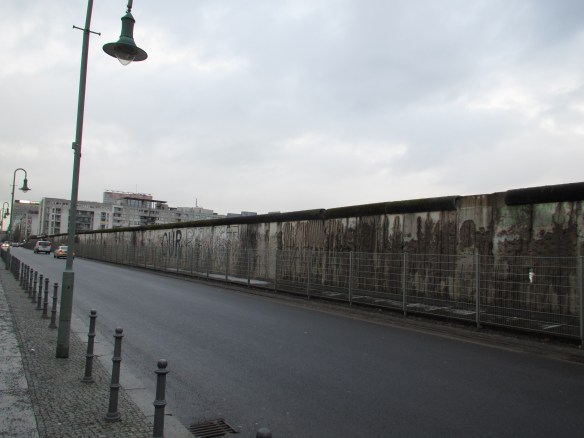
Its neighbour across the street could hardly be more of a contrast!Berlin

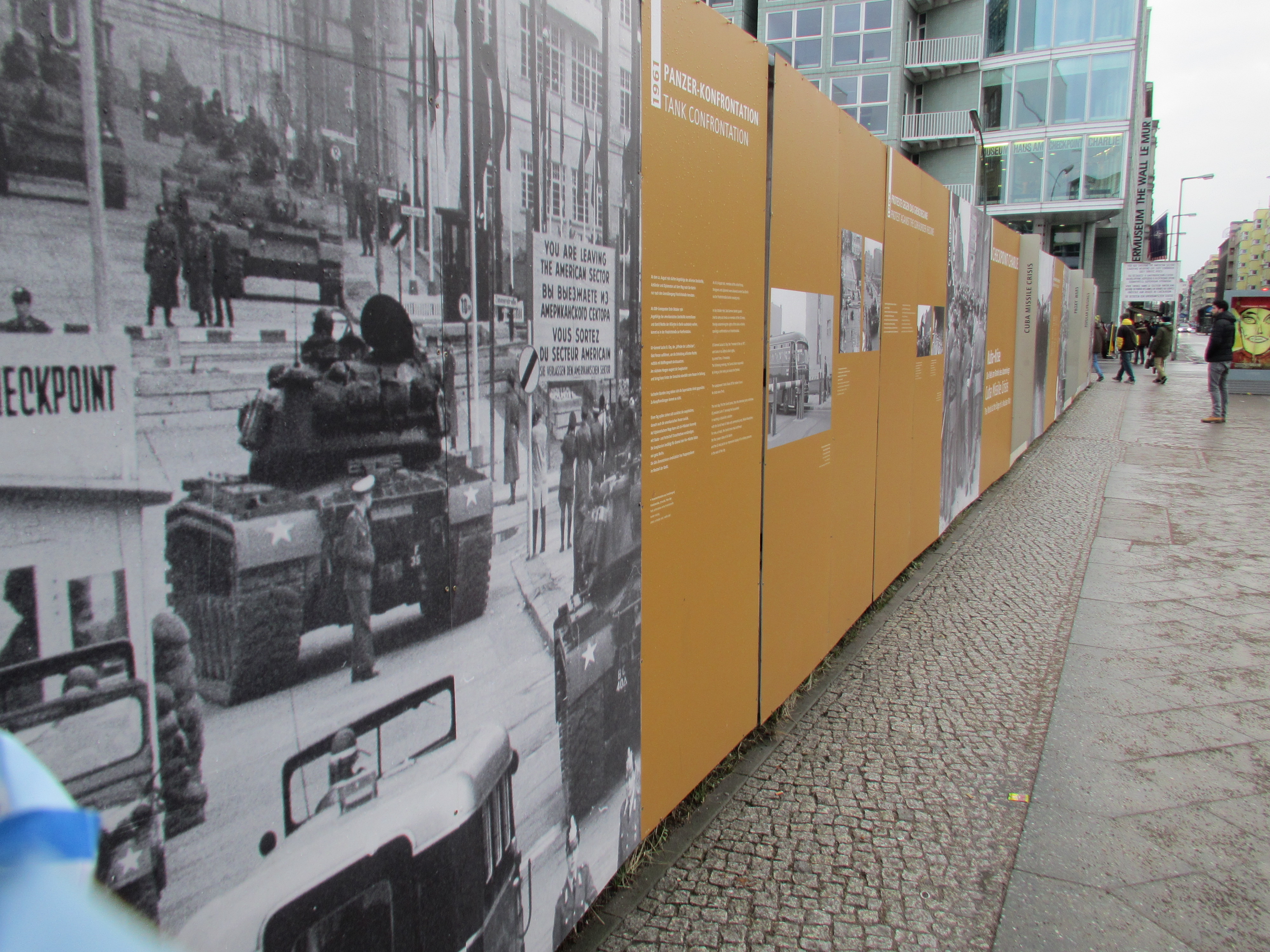
Shortly beyond was Checkpoint Charlie, the main gateway between the American and Russian sectors which had appeared in many iconic Cold War images and is certainly more of a tourist hot spot now.  visiting Berlin by bike
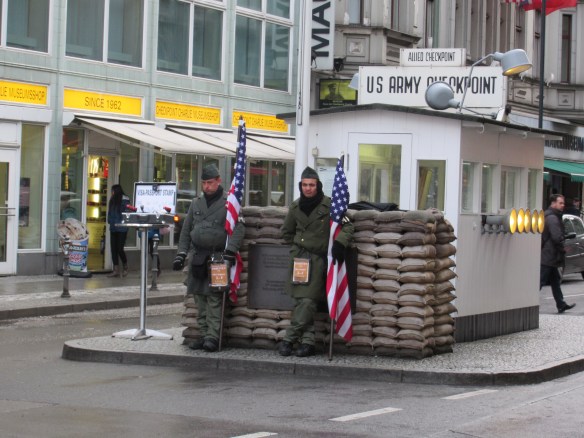
The motif of the wall was used well to provide photographic displays on the approaching streets which gave the history of divided Berlin in news photographs and information boards.Berlin wall displays

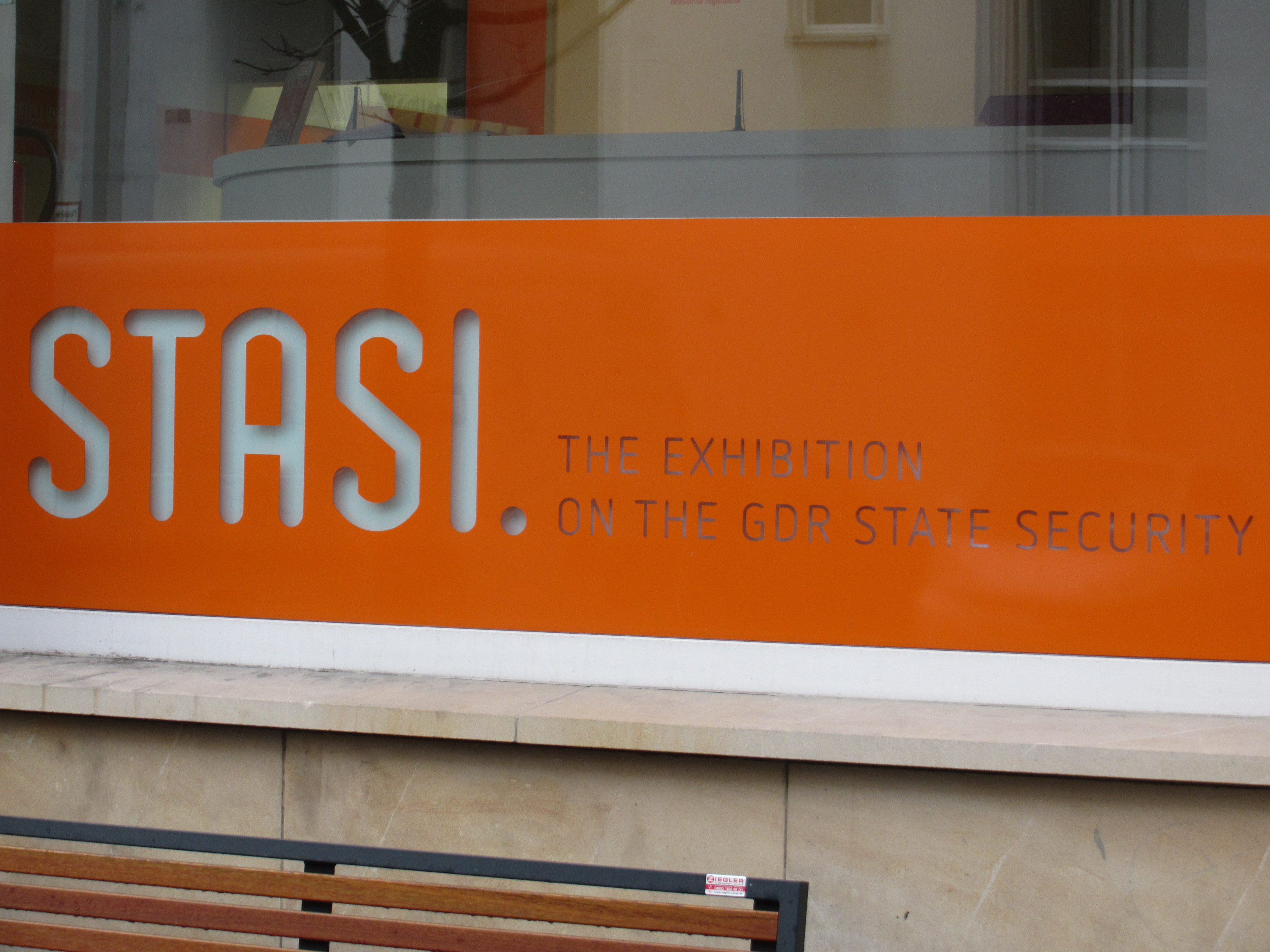
But yet again nearby was one of those ambiguous memorials that really set me thinking – this time the museum of the infamous STASI, the East German secret police.Berlin

I spoke to a colleague later about these many memorials to difficult subjects. He said that because Berlin had stagnated for so long after the war there had been no systematic attempt to “move on” and certainly no civic regeneration programme to remove evidence of difficult subjects. And then after reunification it became recognised that Berlin should not be allowed this past so the city had begun to establish them as part of education and reconciliation. I had the feeling it was a sort of pact – you can become the capital city again but you cannot be allowed to forget.

There is certainly no avoiding the subject of the wall. I had assumed that when I left the central area some of the references would go diminish but later that evening on the S-bahn railway I learned about the ghost stations where North-South trains ran under East Berlin from two sectors of the West but didn’t stop at the pre-war stations. And the sections of that line that ran almost along the wall with platforms only open on the West side.

Back to my ride. Having passed Checkpoint Charlie I had my fill of wall sites so I swung North East to see more of the older city. First I followed a relatively large road across to Alexanderplatz which was a pretty nondescript public space in the growing gloom but I was then able to pick up the banks of the River Spree and circle around the hugely impressive Museum Island. What actually caught the eye here too was the amount of building going on, this looks like a city going though a construction boom.Museumsinsel BerlinRiver scene Berlin

I then used the river bank to retrace my steps back to a building I wanted to see, the Reichstag.  The historic parliament building became the seat of German government again when its modern dome designed by British architect Norman Foster was finally built into the older frame. Reichstag Berlin

Around it I discovered a huge modern civil service quarter built on the river bank and a series of waterways and parkland which looked really nice environment. If I had been organised I would like to have booked a visit to see the inside of the Reichstag because everything I have heard about it looks amazing. But for now the space in front of the Reichstag was vast, open and increasingly cold so I didn’t linger, I needed to keep moving.

From the Reichstag it was a quick trip through the Tiergarten park back to the Brandenburg Gate and the return of the bike to its hire station as the gloom came in.

Fascinating place – so many questions about the attitude to history, to culture, to monuments and a potentially days to spend. That is without touching the arts, culture, nightlife and even some of the suburbs – so many other things form which the city is known.

And what about the cycling?

Well I found as many oddities about cycling in Berlin as I did about the city itself.

I had been told that about 13% of trips in Berlin are made by bike. That’s in line with the German average which means well above the rest of Europe and especially the places I usually ride. But I have convinced myself I am getting the hang of this mode share business, I am beginning to be able to see what the differing levels look like.

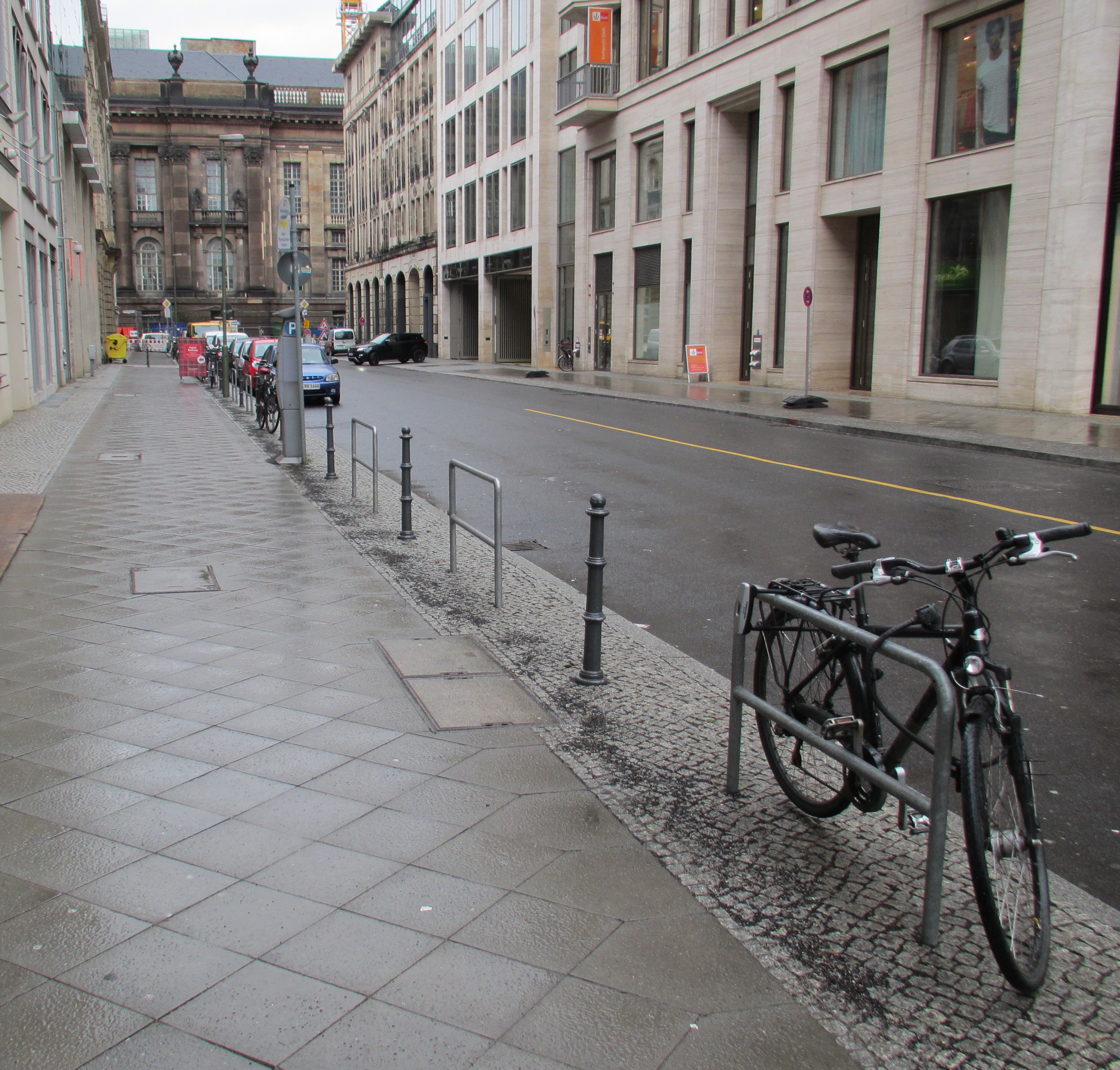
empty cycle parking - February in BerlinBut in Berlin I couldn’t. Whether on my ride or looking at the rush hours I couldn’t see the significant flows I was expecting. Cyclists visible on most streets, yes, but not huge numbers. There were lots of bikes parked round the city but in fact much of the cycle parking was empty. So maybe the weather meant that cycling was quite seasonal I asked? Apparently not, but perhaps I was in the wrong place because the levels of cycling are highly dependent on the routes in from certain suburbs.

Fixie rider Checkpoint Charlie Berlin

Just like everywhere else in Europe it is the middle classes and intellectuals who cycle the most and in Berlin it is the areas where the alternative cultural movement established itself in the sixties that cycling levels are highest. If this is the case then it might explain why cyclists in the city centre really did feel quite isolated.

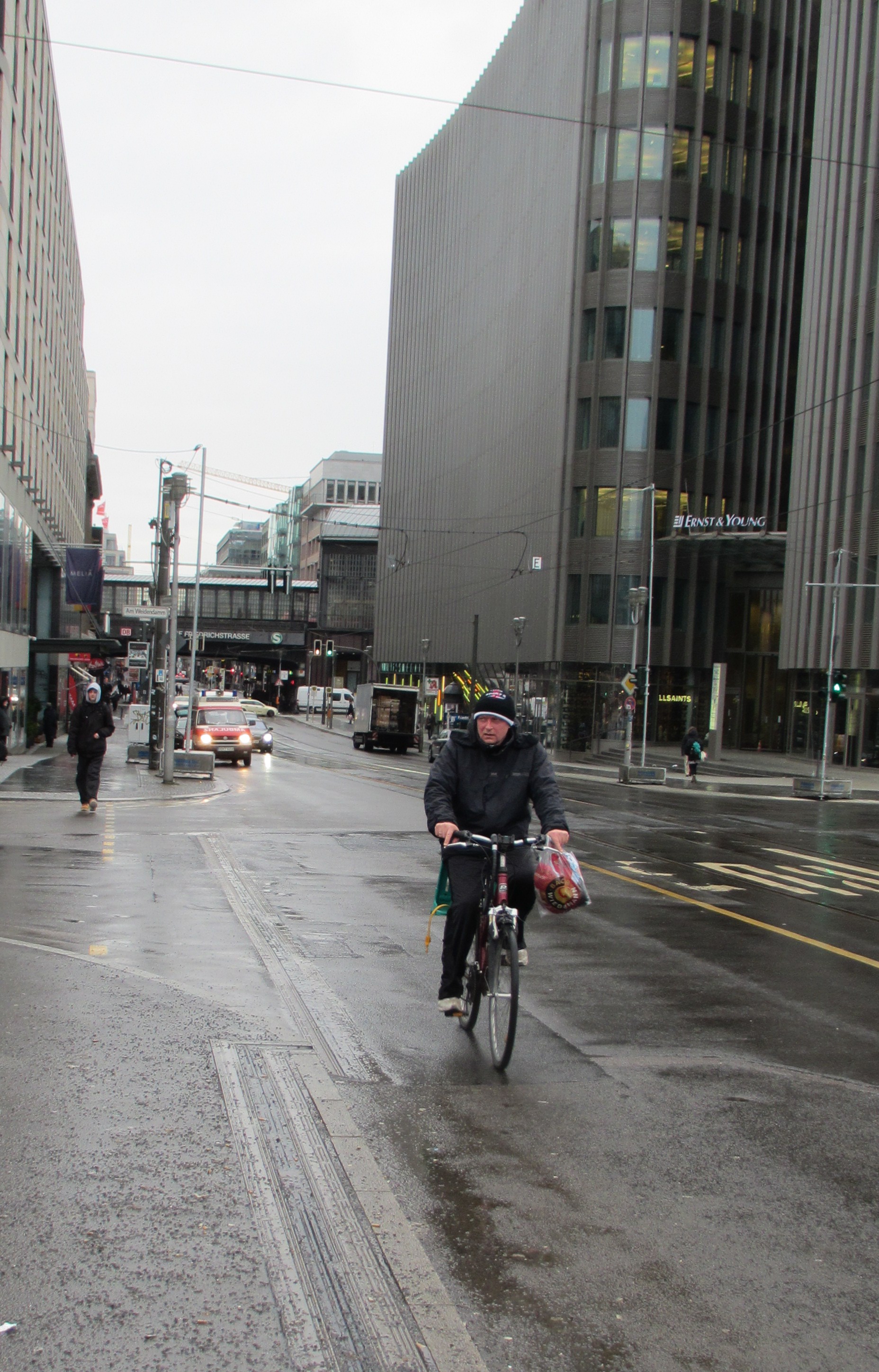
However in the city centre what I could see was that other indicator of cycling health. Women on bikes are universally recognised as a sign that the population thinks cycling is safe. However maybe they think they are not quite safe enough because I did notice that nearly all the women wore the dreaded cycle helmets – but none of the men!Friedrichstrasse Cycling Berlin
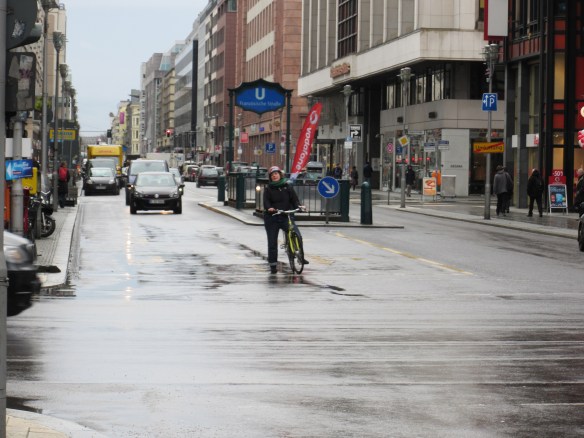
Cyclist Berlin 1The other thing that will be a bit confusing for many cycling advocates was the lack of segregated cycle routes. The vast majority of cycling I did was on the carriageway – I could have been in Brussels or London. That certainly contradicts the message that you need a big segregated network to get cycling levels above 10%. However I rarely felt worried, the drivers were largely respectful of the cyclist and the cycle lane – now that is a big difference. Possibly my view was distorted by the time of day, I was just before the afternoon rush hour, but even the following morning I felt general traffic volumes in the city were really low compared to most large cities in Europe. Maybe Berlin drivers are less stressed than their equivalents stuck in traffic across the world? I still instinctively believe that cycle lanes are just one way of changing the relationship between rider and driver and Berlin seemed to support the notion that respectful driving is a valuable way to create a cycling environment too.

So Berlin by bike?

Flat, compact, interesting, well behaved drivers, loads of bikes on hire. Something I definitely want to do again. But better prepared and able to use the Call Bike system properly, jumping on and off to visit the main attractions properly!
Christmas Eve cycle ride – cobbles and battles

WaterlooChristmas Eve was one of the few times since I started working in Belgium that I have been for a bike ride that was “just a spin”, a proper touring ride through the local lanes.

Previous rides have almost all had a purpose – exploring areas to live, visiting houses and more recently plotting routes to work or to local services. I feel as if I have been waiting weeks for free time to coincide with some gaps in the rain or snow and it just happened to be the afternoon of Christmas Eve.

I decided to cut though the lanes in the general direction of Waterloo, partly because the network of roads look interesting on the map and also because I wondered how much I could ride around the historic site of the 1815 battle.

It was really refreshing to be pottering about and with time to take some photos. When I returned three impressions were left on my mind.

Firstly I was good to be moving at bike speed through the villages and hamlets rather than by car so I could enjoy the vernacular architecture glowing in the winter sunshine, especially the white painted farmhouses which dot the fields and the solid brick churches marking the village centres.Lasne, BelgiumPlancenoitLasne

Waterloo Chemin des CosaquesBattles are not really my thing but I want to know more about my new home and the Battle of Waterloo is by far the biggest deal in this region, undoubtedly one of the most pivotal battles in European history. The main Waterloo battlefield is actually south of the town itself and include the communes of Braine L’Alleud and Lasne while the events leading up to the battle stretch many kilometres away to Wavre and Genappe, right across the area I am now living.

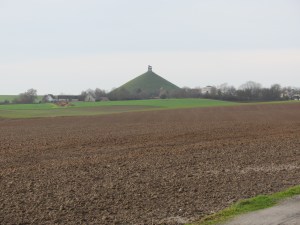
I was first aware that I had hit the battlefield proper when I came across the first of many roads named after the troops and leaders of in the battle. And then bouncing across the cobbles and potholes I looked up from my concentration on the road ahead to see the Butte de Lion, the huge pyramid -like mound built by William 1st of the Netherlands to mark the event.Waterloo Belgium

It isn’t the most attractive memorial in the world but it is certainly a major landmark in the surrounding agricultural landscape which only dips away gradually. At least around its base there is only a limited amount of tourist exploitation while the older buildings mark their association with the flags of all sides and not much other adornment.

Waterloo BelgiumHowever the thing that really struck me was that I could ride right up beside the monument and then head out across the fields on my bike, I am sure in most countries this would be closely guarded and only accessible by paying customers. Alongside the path were interpretation boards in multiple languages which set out the main features of the battle. I was able to swing across the ridge defended by the British against the French cavalry charges accompanied by several joggers and the car we collectively pushed out of the mud in a burst of international collaboration.

Battlefield path WaterlooSo I can mark that one down as somewhere to bring cycling visitors with an interest in history, a bike is a really good way to move around the big area covered by the battle and get a sense of the topography.

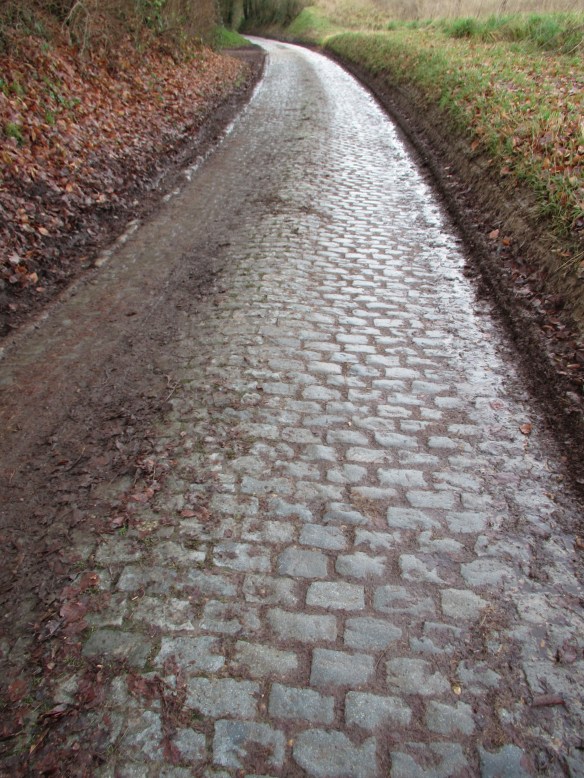
Ah, but there is a catch. My third and final discovery was the state of the roads in this direction. I may have moaned a bit about rough cycle paths earlier in the year but for the first time on this trip I hit some of the real stuff, proper domed pavé with deep ruts down either side. Front lamp lasted about a minute before it had to be removed but the rest of the bike and I rattled bumped and bounced all over the place with little semblance of control or momentum. Only a relatively short section fortunately but it caught me by surprise.

Cobbles of LasneLater I tried my best to imitate Tom Boonen, going full bore down the centre crest on a similar section which seemed to work better but it was tough keeping it going and no fun at all when momentum was lost. A few of the minor roads are theoretically smooth now but when the tarmac wears away the thinly covered cobbles are exposed and make impressive potholes, a tricky combination after all the wet weather.Waterloo cobbles

In other areas the cobbling is more decorative, in fact it looks like it is used as a sort of traffic calming because many of the road junctions and village entrances had short sections in just the right places to discourage car speed. These more modern sections are relatively tame for a cyclist and in general the drivers show a lot of respect to cyclists, certainly better than in Brussels.

All in all I loved my return to pottering about the lanes and the discovery of the countryside, the history and even those cobbles. I look forward to much more, but for the moment I was refreshed for Christmas.

Quirky hotel in Stockholm deserves a mention

Gamla Stan Stockholm Old TownI have been very rude about some hotels encountered on my travels this year (click hotels tag below for more!) but to be fair I have had a good run lately.

All credit to the Hotel Sienna in Verona and the Dream House Hostel in Kiev which were excellent and really cyclist friendly.

However I just had to write about the Lord Nelson in Stockholm.

It is a tall narrow building in the old city fitted out with maritime themed antiques, especially those linked to the 19th century British navy. Yes that is a ship’s wheel on the first floor and the corridor to the rooms feels like a ship’s deck with its blue and brass theme and portholes.Gamla Stan Stockholm Old Town

Gamla Stan Stockholm Old TownBreakfast should have been served on deck, but actually was in a blue and wood panelled based on a cruise liner’s bar.Gamla Stan, Old Town Stockholm Sweden

Each room is designed as a cabin, which is a neat trick for disguising that the rooms are tiny, but I thought it was great.

Just to capture the mood here it is in black and white, feels really period apart from the TV. Apparently their chain in Stockholm called the Collector’s Hotels and Apartments; if you go there I recommend them. Actually I doubt they have room to store a bike, but in this case they are forgiven.Gamla Stan, Stockholm Old Town

A cyclists view of Stockholm in autumn

Gallery

This gallery contains 16 photos.

I went to Stockholm a few times in my business career. I can honestly say I don’t remember anything except an amazing boozy harbour cruise at mid-summer. But charging into meetings and dashing around in cabs left me with no sense … Continue reading

Yevpatoria, Crimea. Impressions, contrasts and amazing light

Beach sceneI am in Yevpatoria, which is a holiday resort on the Black Sea in Crimea, Ukraine as the first stage of a two part trip to Ukraine promoting cycle advocacy. Tomorrow I’m on the night train to Kiev which according to Lonely Planet is one of the top 10 things to do in Ukraine, so that should be fun.

We are here because the Black Sea is one of the primary holiday destinations for what was the old Soviet Union because of its climate and beaches and has loads of infrastructure for tourism. It still attracts a big summer market of Ukranians and Russians but this leaves a lot of hotel capacity off season so it is a great spot for a conference about cycling and cycle tourism. So I’m here representing ECF with one of my colleagues trying to help the local cycling movement share some ideas from around Europe.

As “I not despair” is my private blog I’ll stick to my rules about not mixing the work stuff, our agenda is here and I have been tweeting from the conference on @maynekevin so you can find out more there.

But to the Yevpatoria today. Most British people only know some vague reference to the Crimea as a disastrous war which involved Florence Nightingale’s revolution in hospital treatment. This post is just some thoughts, photos and musings about my first two days in Ukraine, in fact my first visit to any part of the former Soviet Union. It has been great to walk and get hold of a bike to tour around this moderately sized but ancient city which I gather has a very distinctive feel compared to much of Ukraine.

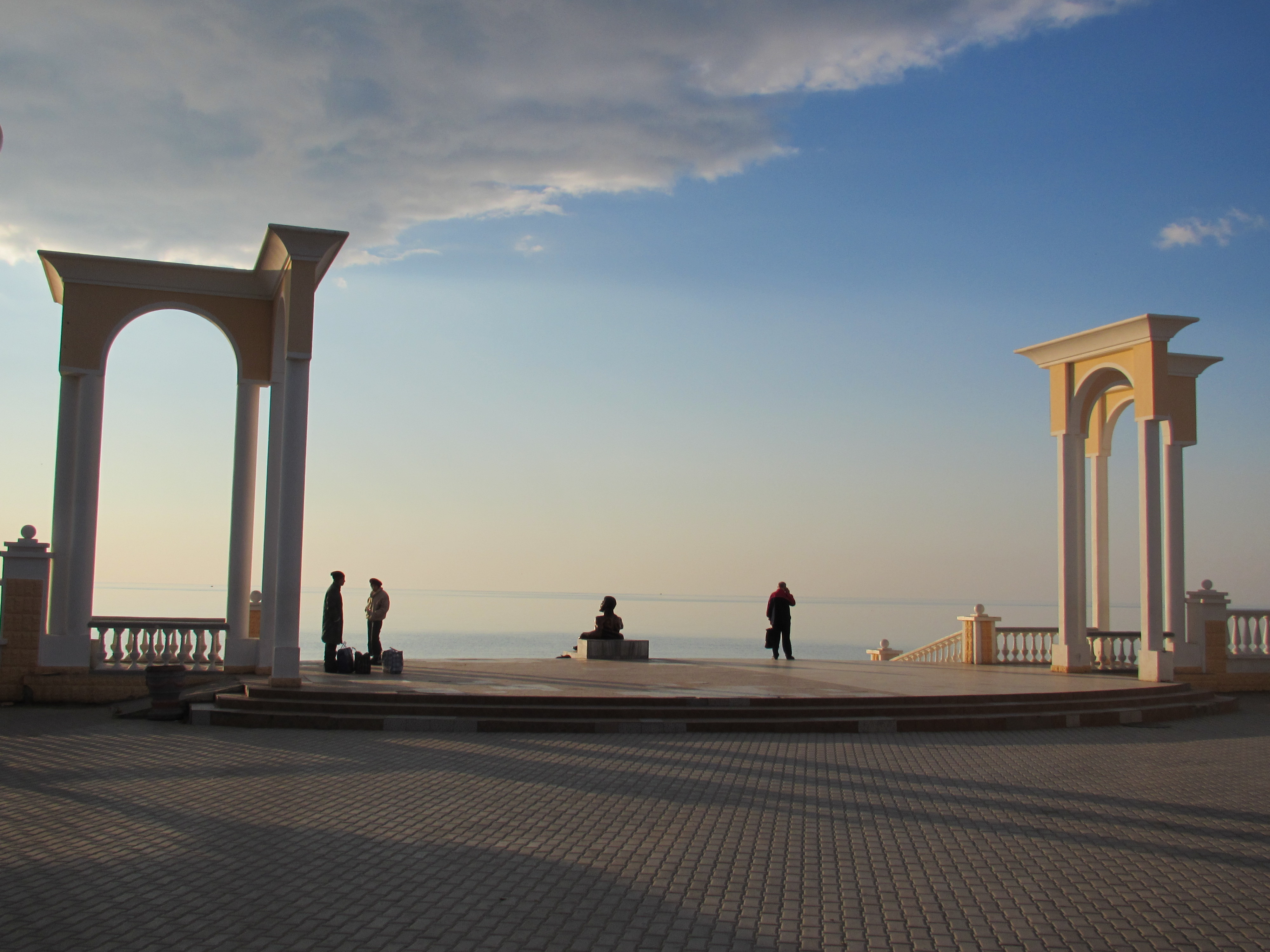
Imperial hotelWhat this place certainly delivers on is balmy autumn weather, it is just glorious outside and the first impression in the morning is to look from the balcony of my hotel across to the tree lined promenade to a still and silent sea with warm sunshine around.

The second impression is then silence. This is a seaside resort out of season and just about a ghost town. When our taxi arrived the first night I’ll swear we never saw another vehicle and even in the morning I can walk or cycle whole blocks without seeing a movement except the odd stray dog.

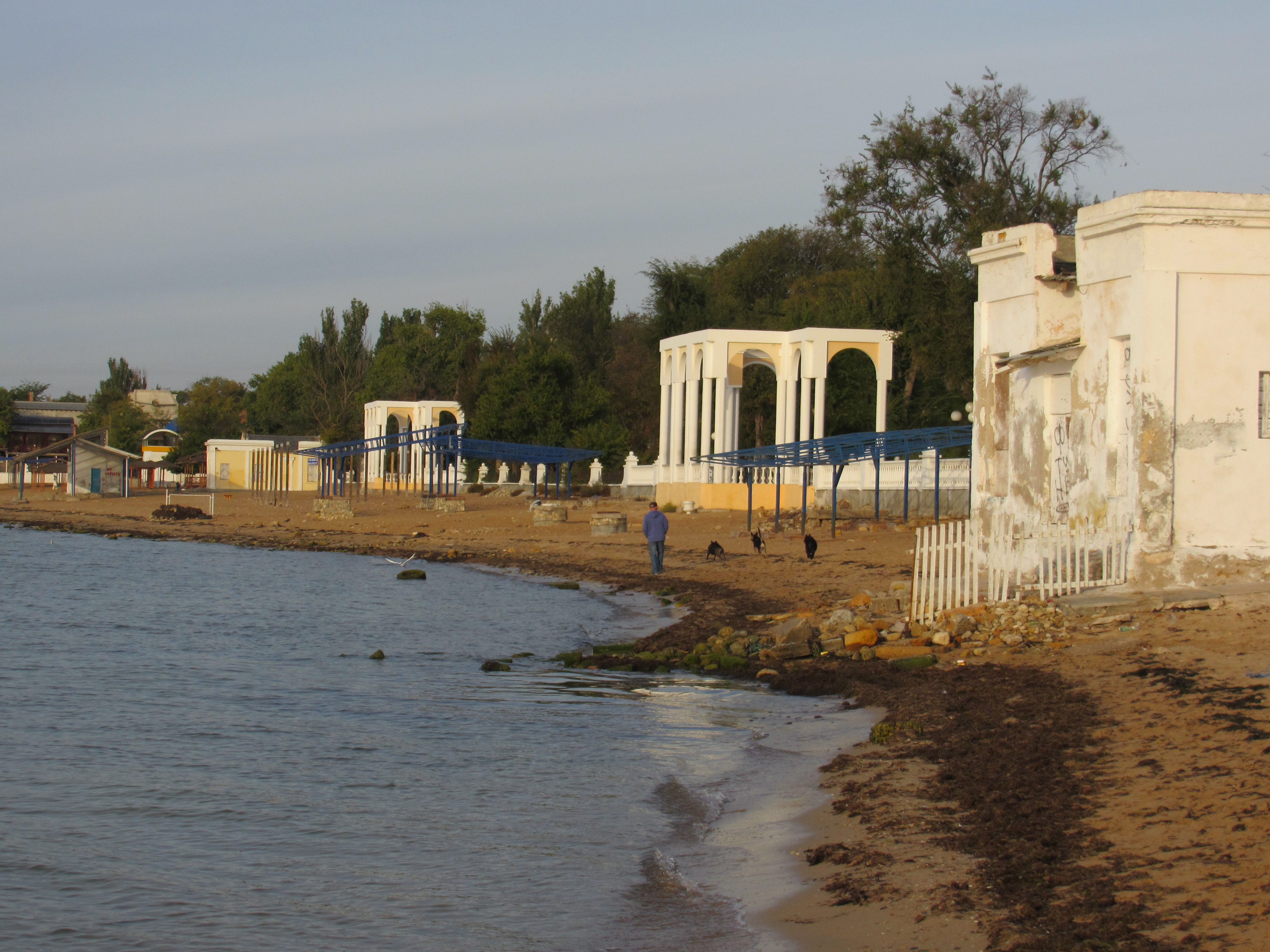
Down on the beach there is a gentle quiet broken by the occasional gull and some older folks who come down to the sea to swim, probably every day.

Electric Trolley or Tram carThe main town is a bit busier but it is very easy to wander or cycle out into the streets without fear. The ancient electric trams are a delight rattling their way about town.

Everywhere there are contrasts. Some of the facilities are decrepit and crumbling, others obviously well cared for.

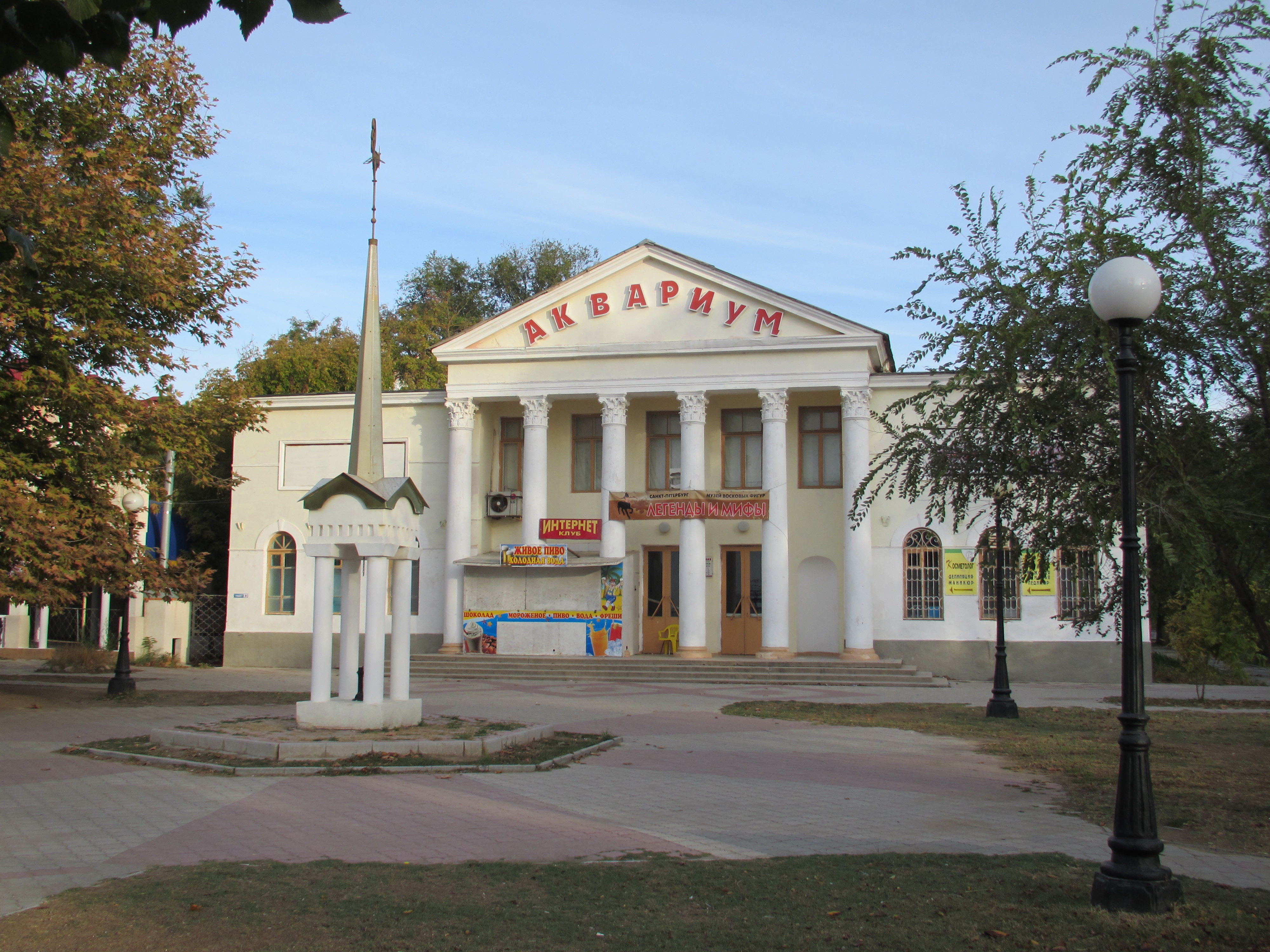
Some of the hotels appear to be modern and discrete while others would not look out of place in Blackpool or other garish seaside resort of your country. The architecture runs from authentic to garish seaside fake that seems universal the world over. I didn’t realise that the 1930s fake Mediterranean/Spanish white architectural look that runs from the north of England across the English speaking world to Australia (St Kilda?) and across to the US was actually so universal in seaside towns it was adopted here too but there is no doubt that some of the styling has that heritage.

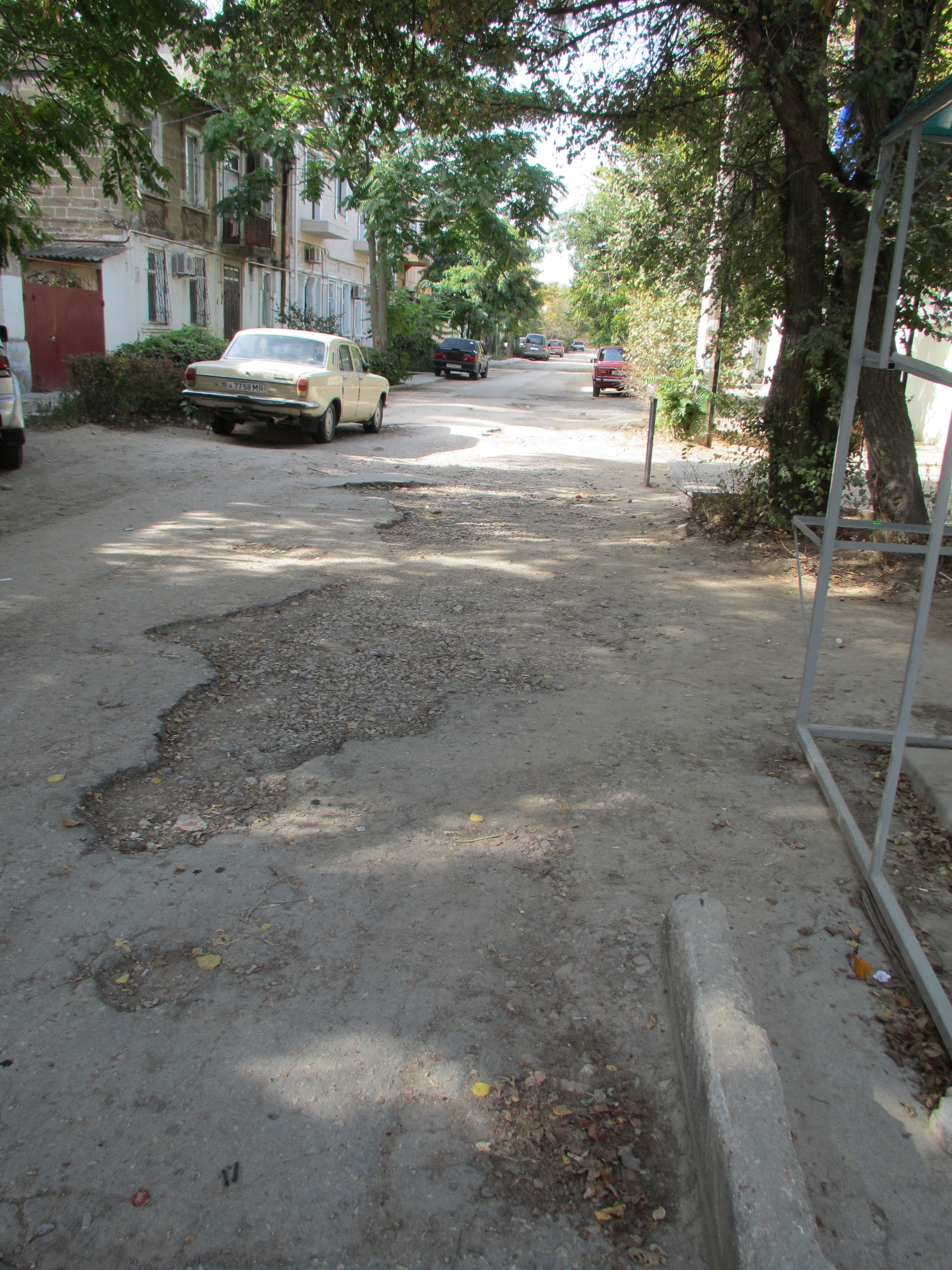
White houseGeenery lined streetSome streets are well kept and well used while others are a joined mess of potholes that played havoc even with mountain bikes.

Brutalist styling, then masses of greenery and lots of dusty parks and open spaces in between with banks of plants and hedges along the roads.

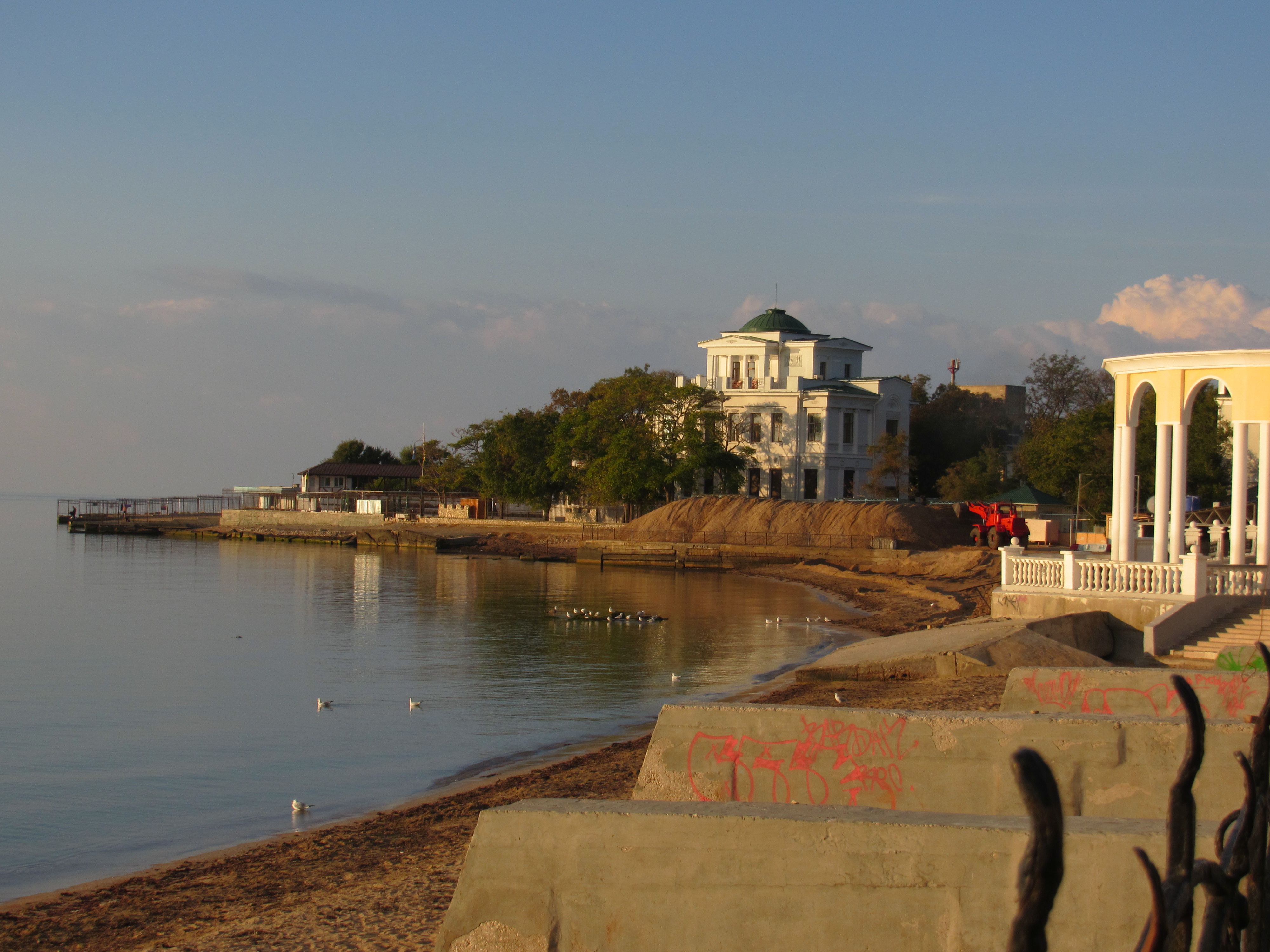
Derelict building and wastelandThis morning I cycle out to the Eastern edge of the town along the sea front and I was struck by this contrast. To my right a building waiting to be condemned set amongst wasteland and scrub. To my left a section of beach and a lovingly cared for beach hut used by the beach attendant which almost glowed in the early morning light.Beach attendant's hut

And the morning light on the sea front is amazing. It just has that golden glow that makes whites stronger and colours brighter, brilliant for photography.Beach scene

As ever I am grateful to friends Google and Wikipedia for a bit of research into Yevpatoria which  helped on my two trips away from our beachfront haven into the main town. We also had the guided tour from a local tour guide last night which was great apart from the somewhat significant flaw that we had 40 people on bikes and the tour guide was on foot. I’m also ever so grateful to the Ukrainians like Olga who stepped in to translate at key moments!

What a heritage. In one paragraph the Wikipedia potted history runs from Greek settlement in 500BC to settlement, invasion or occupation by Khazars, Cumans, Mongols, Khans, Tartars, Ottomans, Russians, British, French, Turkish, Germany and the spiritual residence of a branch of Judaism called Crimean Karaites. Just shows the strategic importance of the Crimean Peninsula to the Black Sea and all the countries around it.

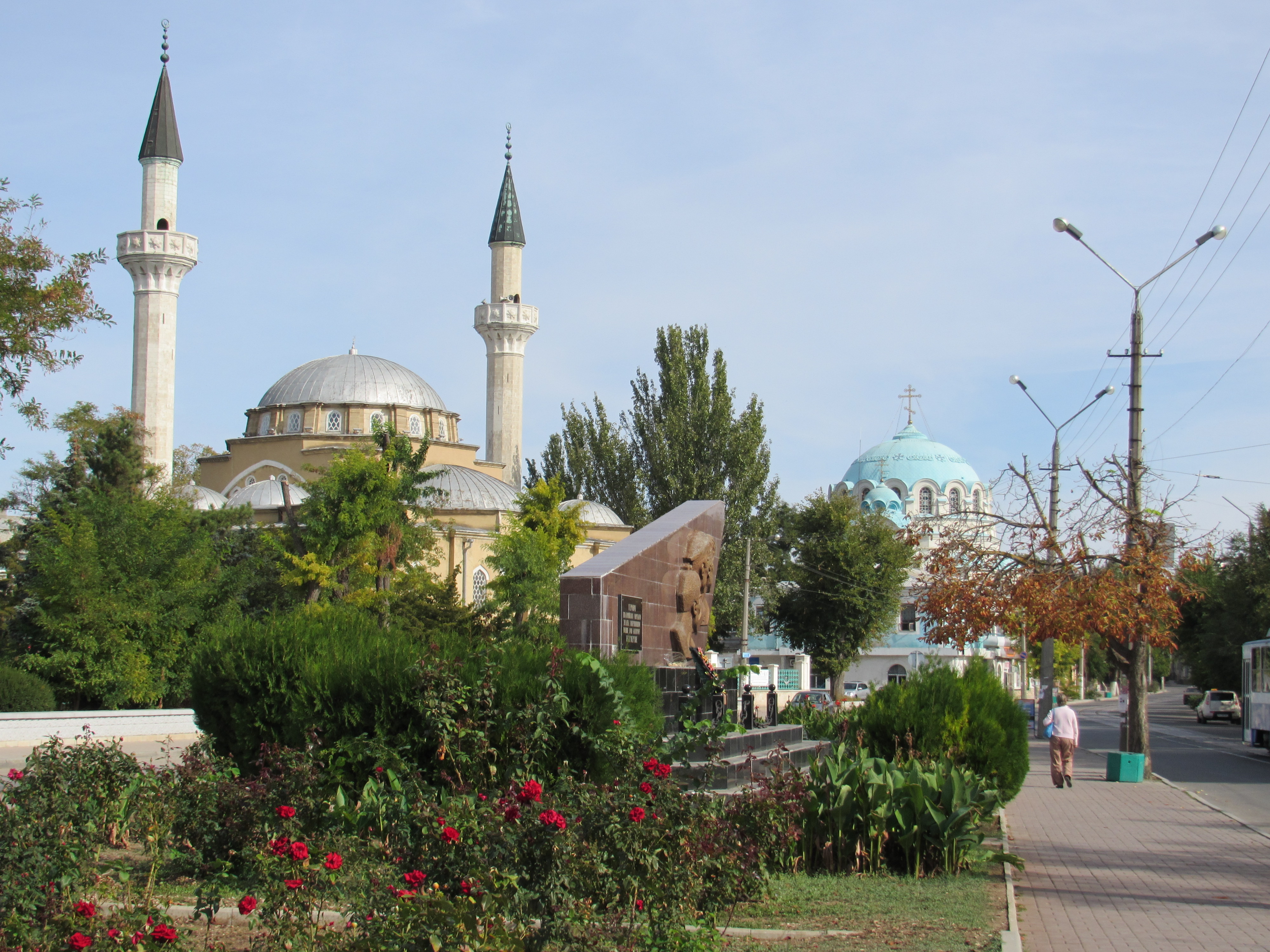
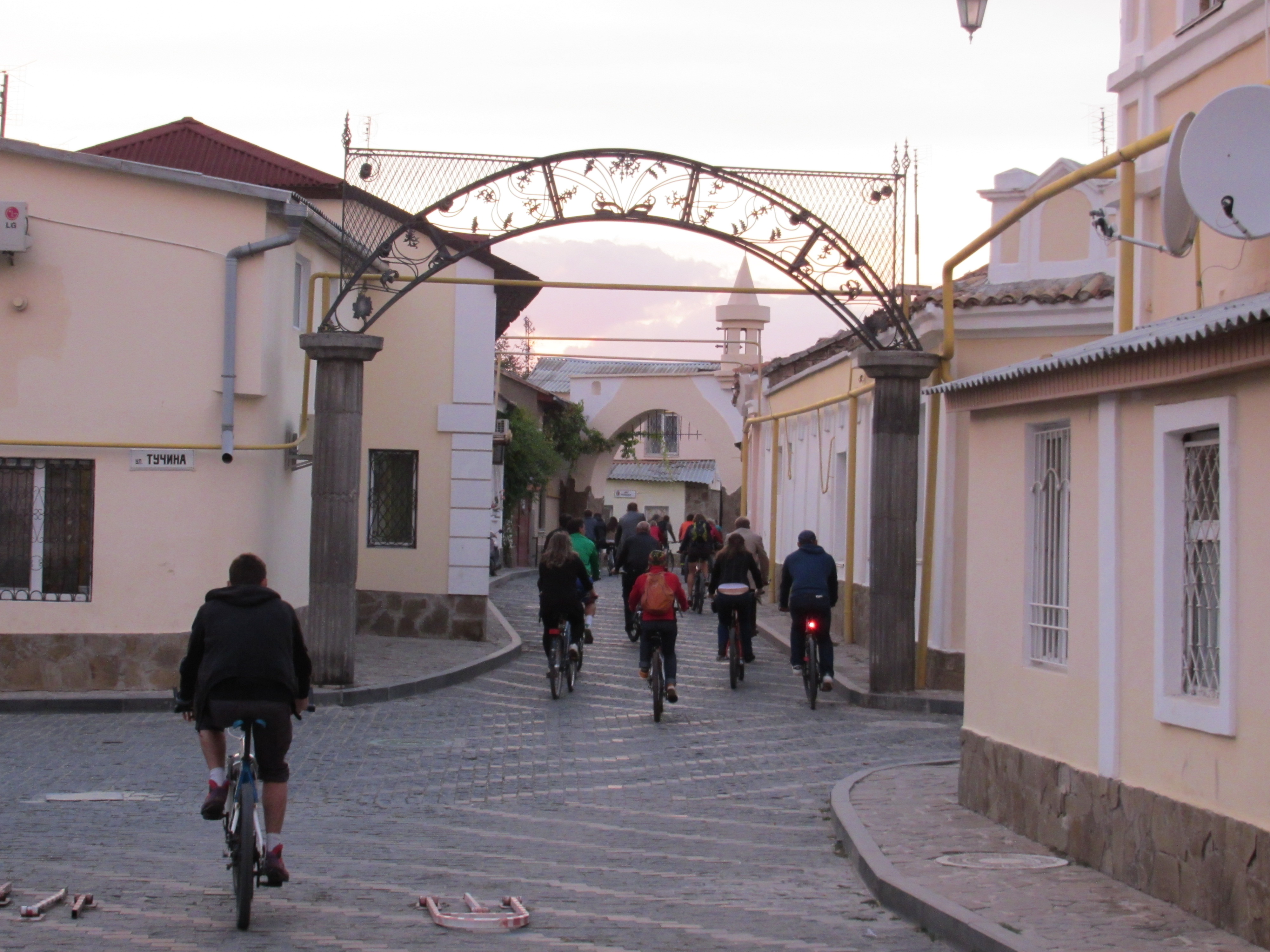
This melting pot of cultures has left a wonderful assortment of religious buildings which stand out as a contrast to the tat and simulation of the beach areas. St Nicholas Cathedral, The 400 year old Juma Jami Mosque, the recently resorted historic quarter of the Karaites known as Little Jerusalem with the restored Kenassa or temple as its main feature. These buildings are in the best condition of anything in town, even the repair scaffolding in the cathedral was being dusted by one of the ever present women with a brush that seem to be in every street. For all the challenges of infrastructure and economy this is a fascinating place to visit.
Mosque and cathedralEntrace to Little Jerusalem