Hovis bread advert recreated in Kiev

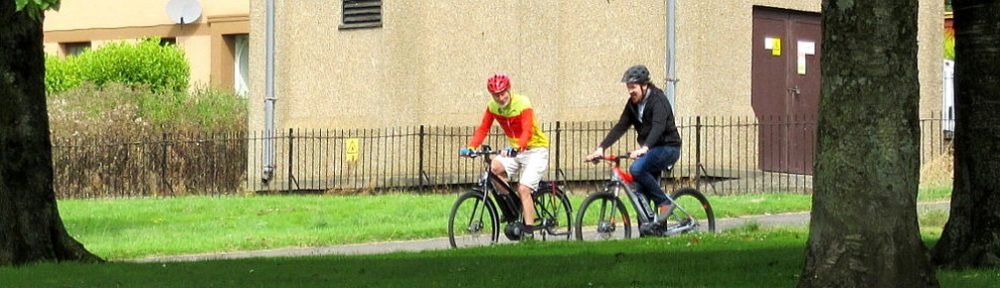
Just for my British followers. Having cycled up Andriivsky in Kiev I realised that only one photograph could do it justice. For those from outside the Uk this advert is part of our cycling heritage, it advertises bread. It has been recreated a number of times using celebrated cyclists including Chris Boardman and most recently Victoria Pendleton. In both cases – its a great hill.

Kevin Mayne recreating Hovis advertGold Hill Shaftsbury England

Although I have to say Ira from the Kiev Cyclists’ Association campaign does it better justice than me, better bike, more style.

Ira Bondarenko Kiev Cyclists' Association

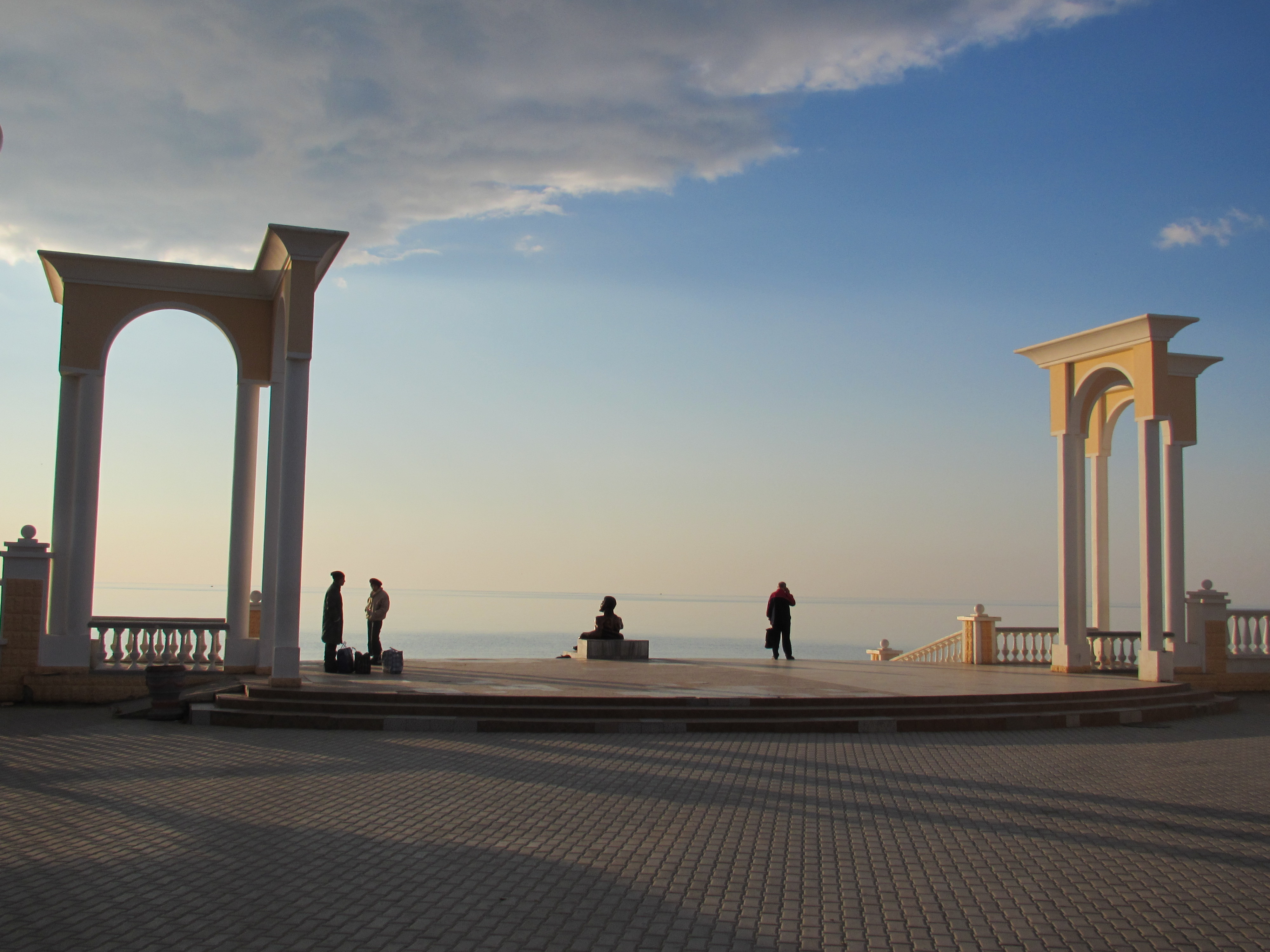
Yevpatoria, Crimea. Impressions, contrasts and amazing light

Beach sceneI am in Yevpatoria, which is a holiday resort on the Black Sea in Crimea, Ukraine as the first stage of a two part trip to Ukraine promoting cycle advocacy. Tomorrow I’m on the night train to Kiev which according to Lonely Planet is one of the top 10 things to do in Ukraine, so that should be fun.

We are here because the Black Sea is one of the primary holiday destinations for what was the old Soviet Union because of its climate and beaches and has loads of infrastructure for tourism. It still attracts a big summer market of Ukranians and Russians but this leaves a lot of hotel capacity off season so it is a great spot for a conference about cycling and cycle tourism. So I’m here representing ECF with one of my colleagues trying to help the local cycling movement share some ideas from around Europe.

As “I not despair” is my private blog I’ll stick to my rules about not mixing the work stuff, our agenda is here and I have been tweeting from the conference on @maynekevin so you can find out more there.

But to the Yevpatoria today. Most British people only know some vague reference to the Crimea as a disastrous war which involved Florence Nightingale’s revolution in hospital treatment. This post is just some thoughts, photos and musings about my first two days in Ukraine, in fact my first visit to any part of the former Soviet Union. It has been great to walk and get hold of a bike to tour around this moderately sized but ancient city which I gather has a very distinctive feel compared to much of Ukraine.

Imperial hotelWhat this place certainly delivers on is balmy autumn weather, it is just glorious outside and the first impression in the morning is to look from the balcony of my hotel across to the tree lined promenade to a still and silent sea with warm sunshine around.

The second impression is then silence. This is a seaside resort out of season and just about a ghost town. When our taxi arrived the first night I’ll swear we never saw another vehicle and even in the morning I can walk or cycle whole blocks without seeing a movement except the odd stray dog.

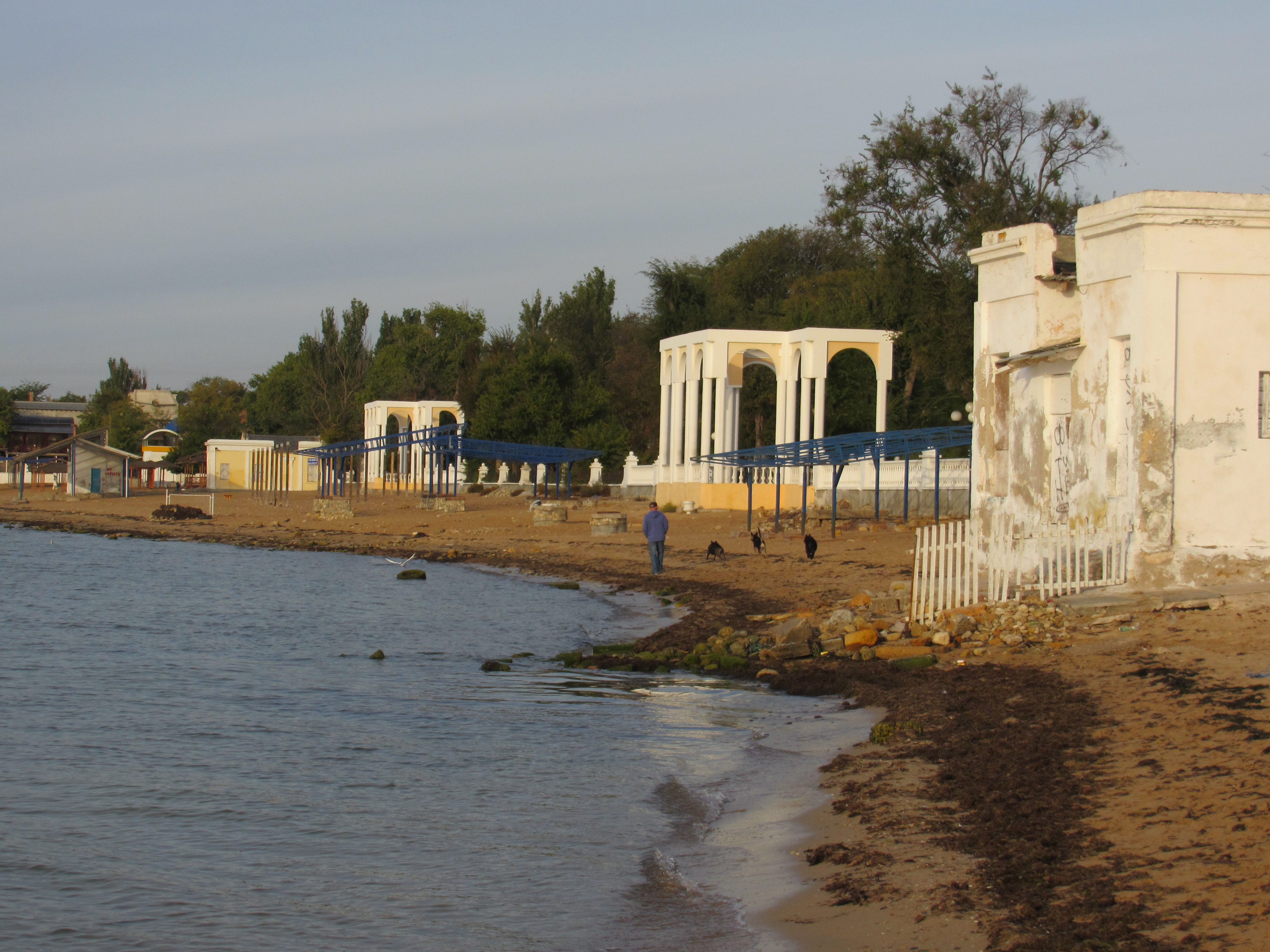
Down on the beach there is a gentle quiet broken by the occasional gull and some older folks who come down to the sea to swim, probably every day.

Electric Trolley or Tram carThe main town is a bit busier but it is very easy to wander or cycle out into the streets without fear. The ancient electric trams are a delight rattling their way about town.

Everywhere there are contrasts. Some of the facilities are decrepit and crumbling, others obviously well cared for.

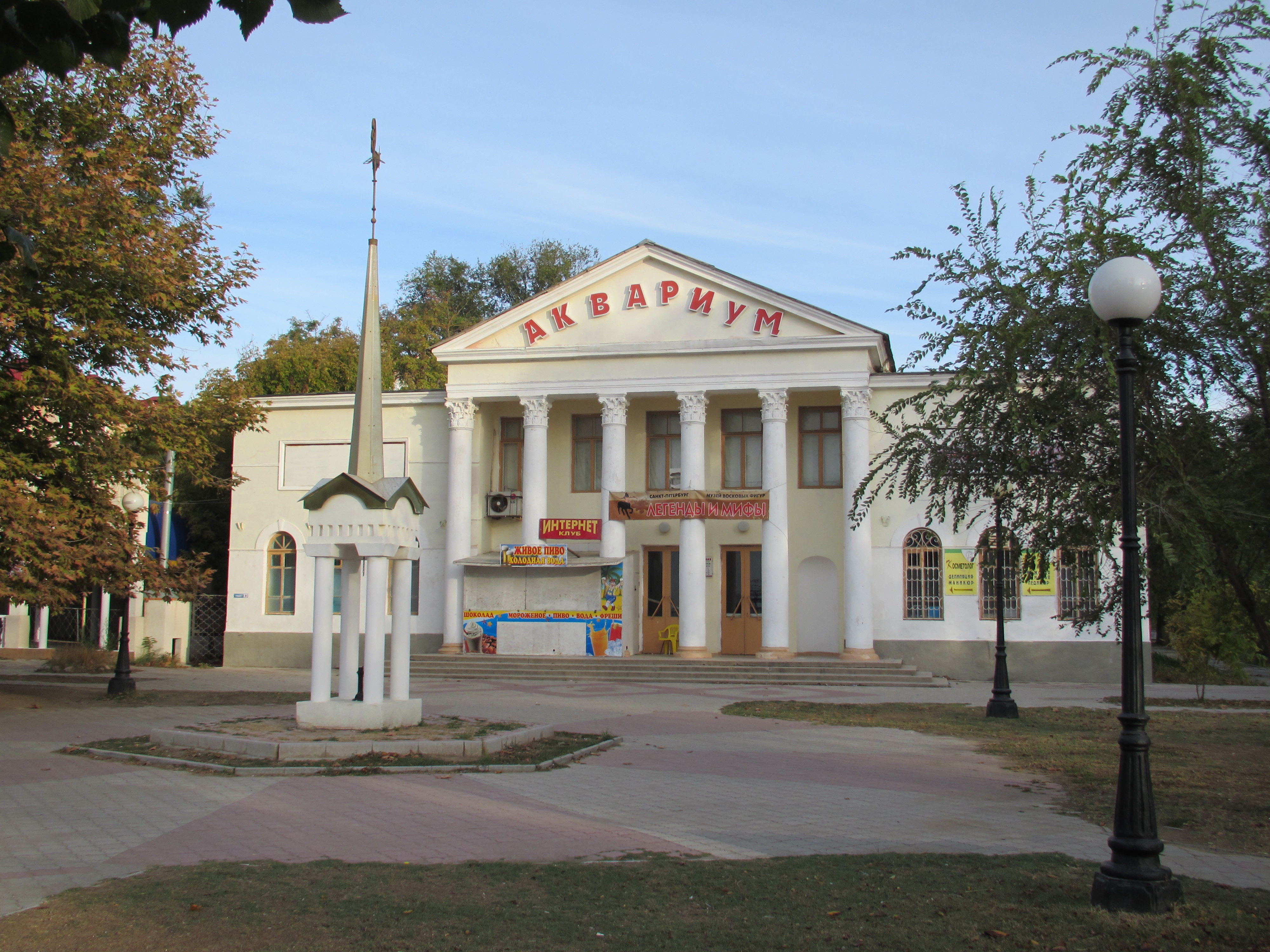
Some of the hotels appear to be modern and discrete while others would not look out of place in Blackpool or other garish seaside resort of your country. The architecture runs from authentic to garish seaside fake that seems universal the world over. I didn’t realise that the 1930s fake Mediterranean/Spanish white architectural look that runs from the north of England across the English speaking world to Australia (St Kilda?) and across to the US was actually so universal in seaside towns it was adopted here too but there is no doubt that some of the styling has that heritage.

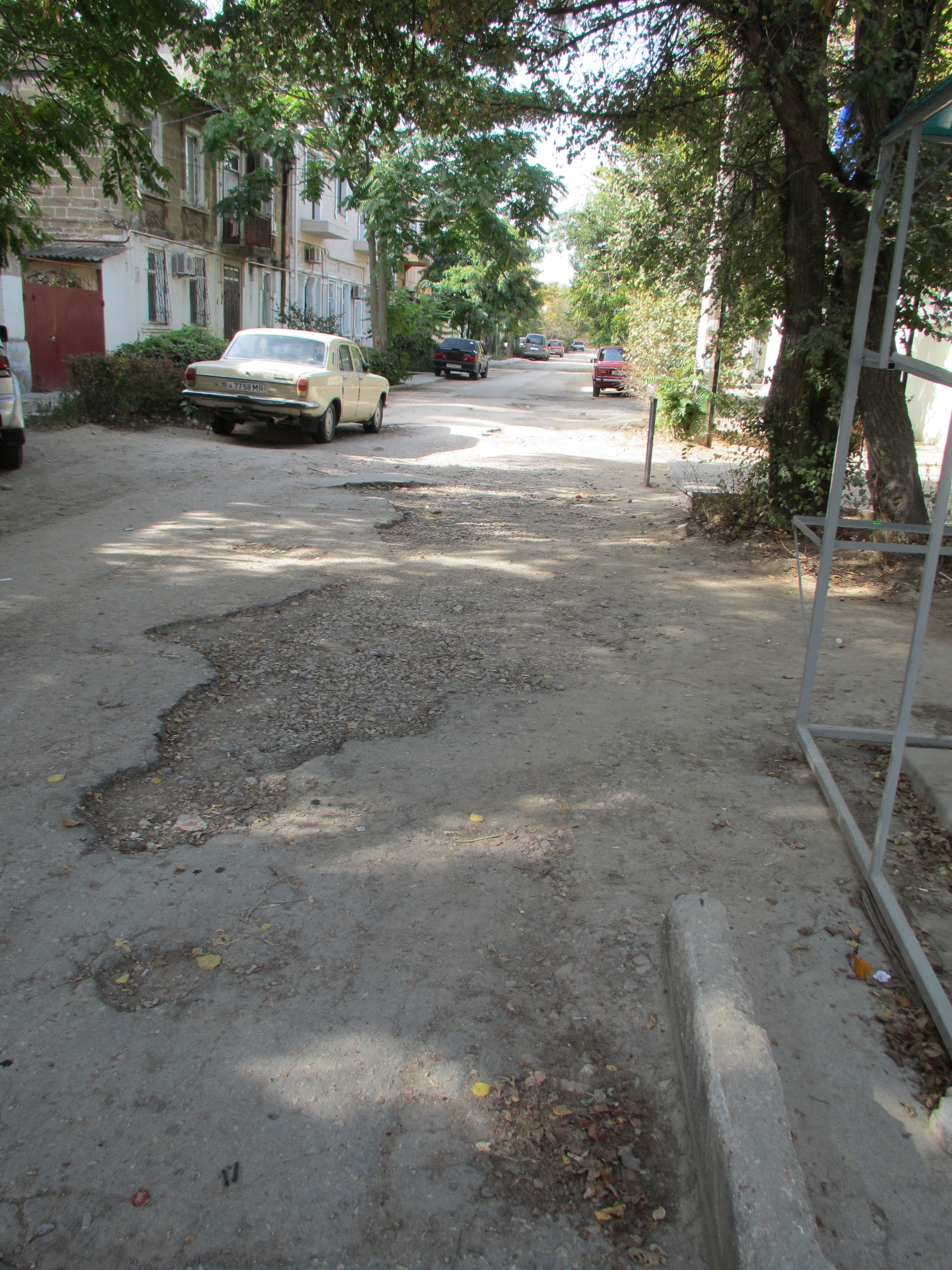
White houseGeenery lined streetSome streets are well kept and well used while others are a joined mess of potholes that played havoc even with mountain bikes.

Brutalist styling, then masses of greenery and lots of dusty parks and open spaces in between with banks of plants and hedges along the roads.

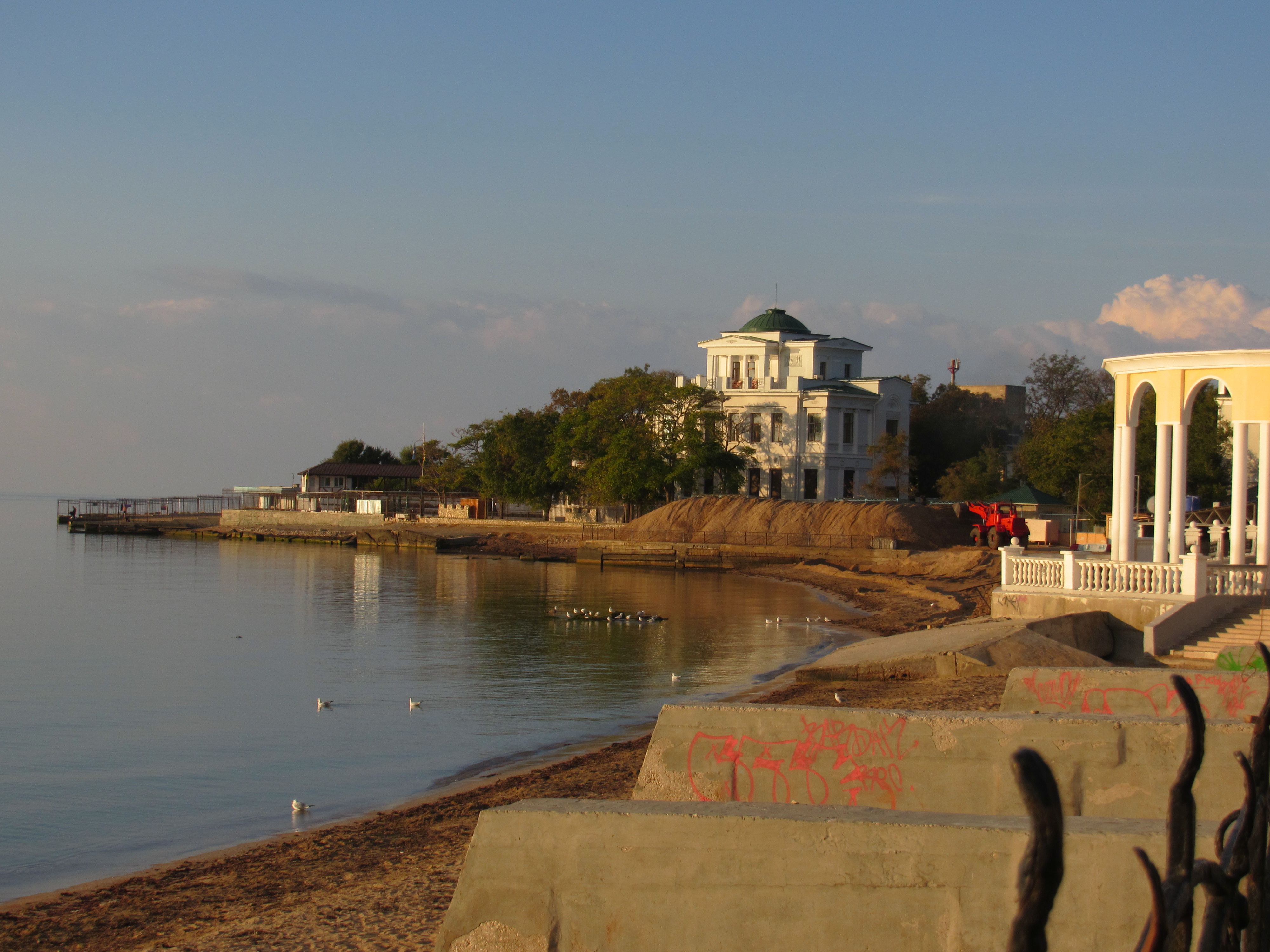
Derelict building and wastelandThis morning I cycle out to the Eastern edge of the town along the sea front and I was struck by this contrast. To my right a building waiting to be condemned set amongst wasteland and scrub. To my left a section of beach and a lovingly cared for beach hut used by the beach attendant which almost glowed in the early morning light.Beach attendant's hut

And the morning light on the sea front is amazing. It just has that golden glow that makes whites stronger and colours brighter, brilliant for photography.Beach scene

As ever I am grateful to friends Google and Wikipedia for a bit of research into Yevpatoria which  helped on my two trips away from our beachfront haven into the main town. We also had the guided tour from a local tour guide last night which was great apart from the somewhat significant flaw that we had 40 people on bikes and the tour guide was on foot. I’m also ever so grateful to the Ukrainians like Olga who stepped in to translate at key moments!

What a heritage. In one paragraph the Wikipedia potted history runs from Greek settlement in 500BC to settlement, invasion or occupation by Khazars, Cumans, Mongols, Khans, Tartars, Ottomans, Russians, British, French, Turkish, Germany and the spiritual residence of a branch of Judaism called Crimean Karaites. Just shows the strategic importance of the Crimean Peninsula to the Black Sea and all the countries around it.

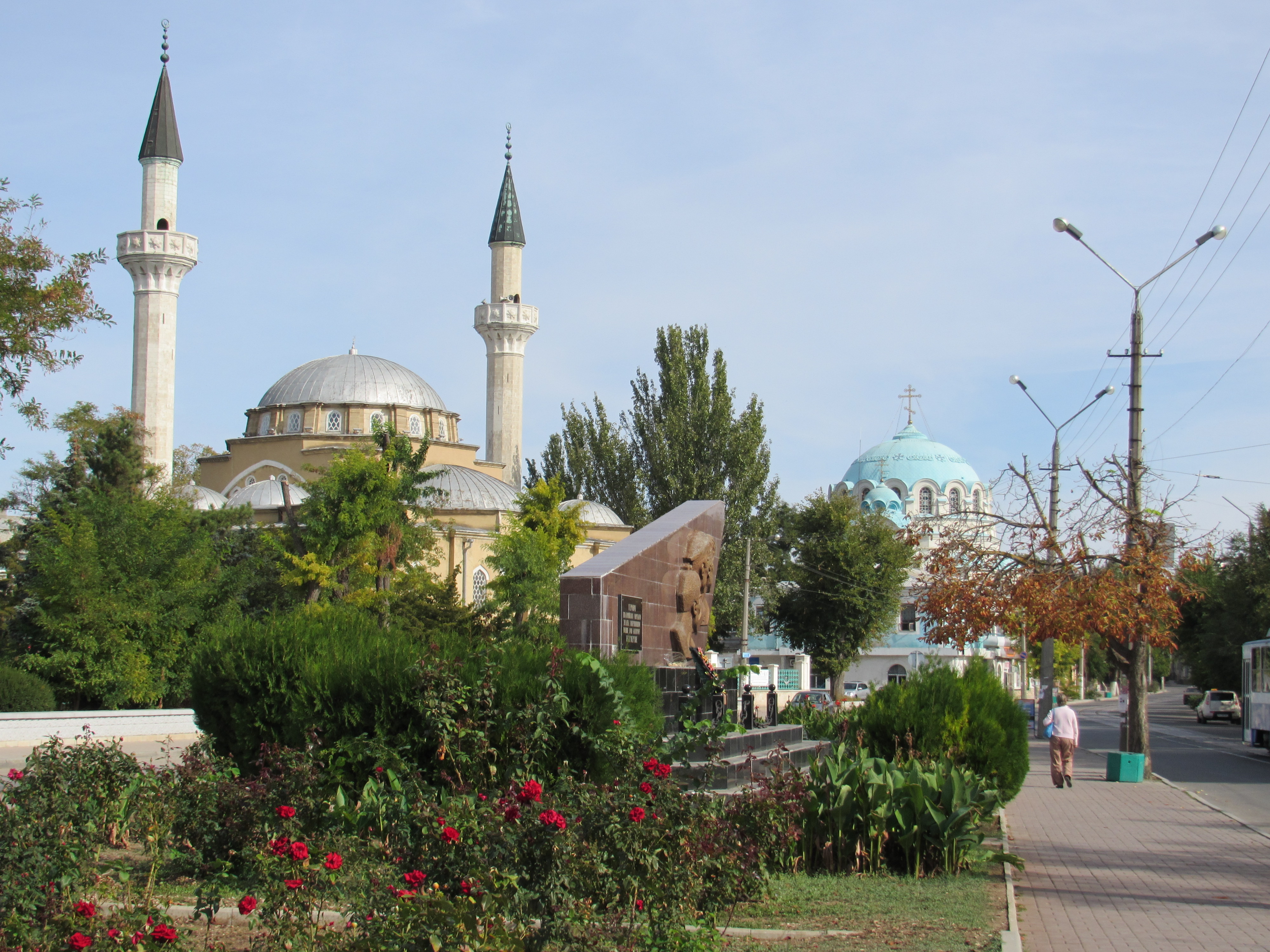
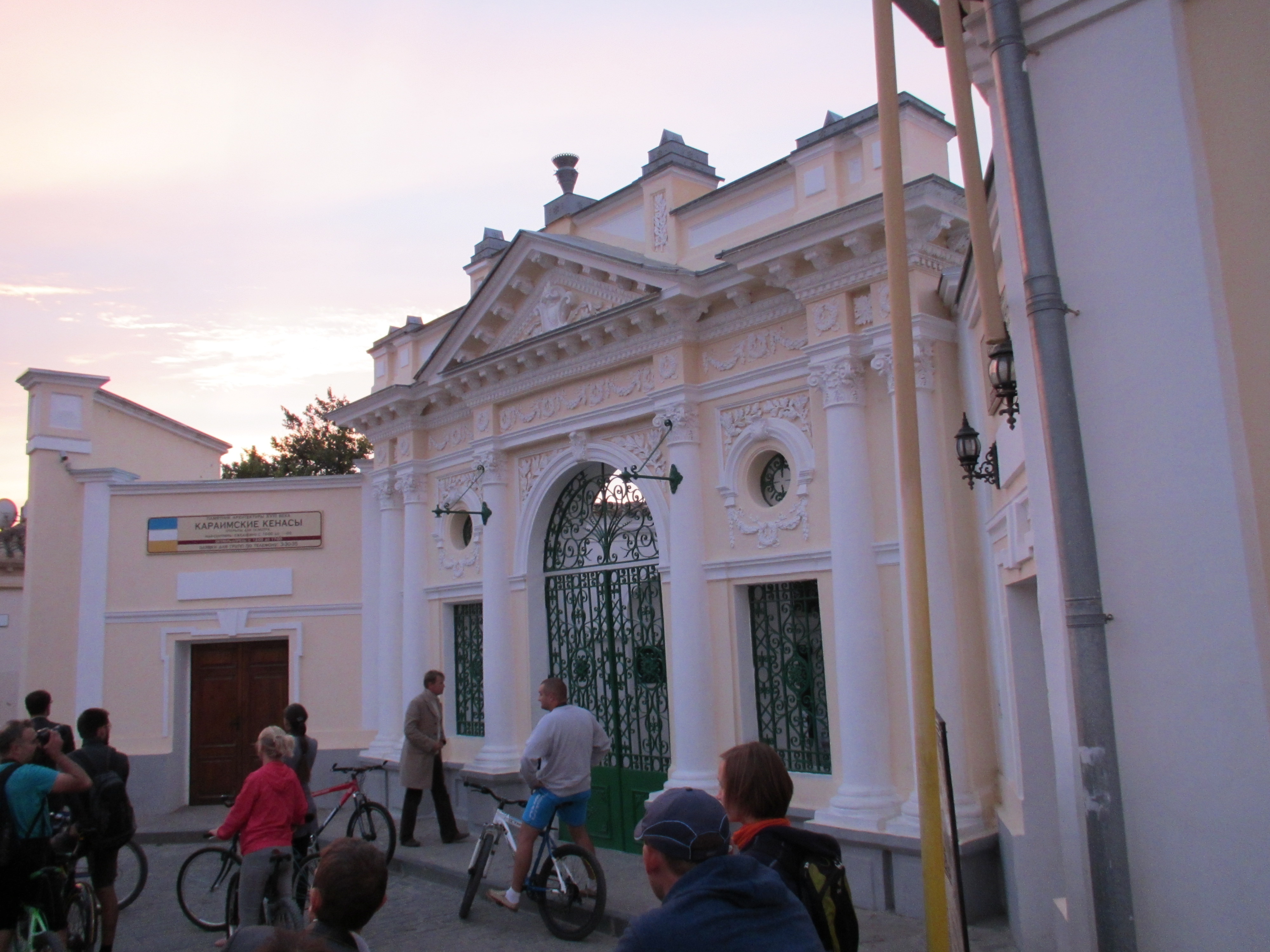
This melting pot of cultures has left a wonderful assortment of religious buildings which stand out as a contrast to the tat and simulation of the beach areas. St Nicholas Cathedral, The 400 year old Juma Jami Mosque, the recently resorted historic quarter of the Karaites known as Little Jerusalem with the restored Kenassa or temple as its main feature. These buildings are in the best condition of anything in town, even the repair scaffolding in the cathedral was being dusted by one of the ever present women with a brush that seem to be in every street. For all the challenges of infrastructure and economy this is a fascinating place to visit.

Mosque and cathedralEntrace to Little Jerusalem

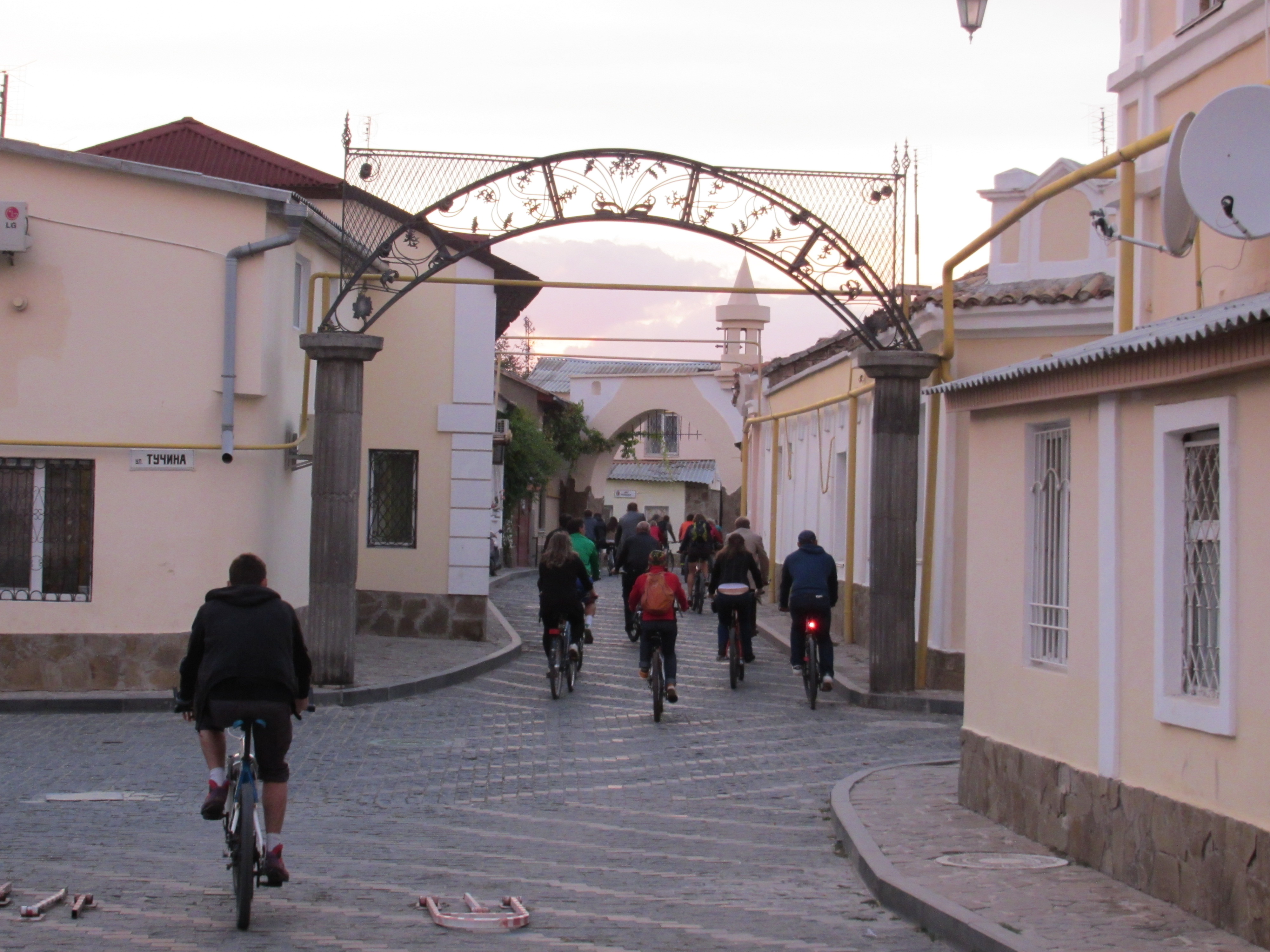
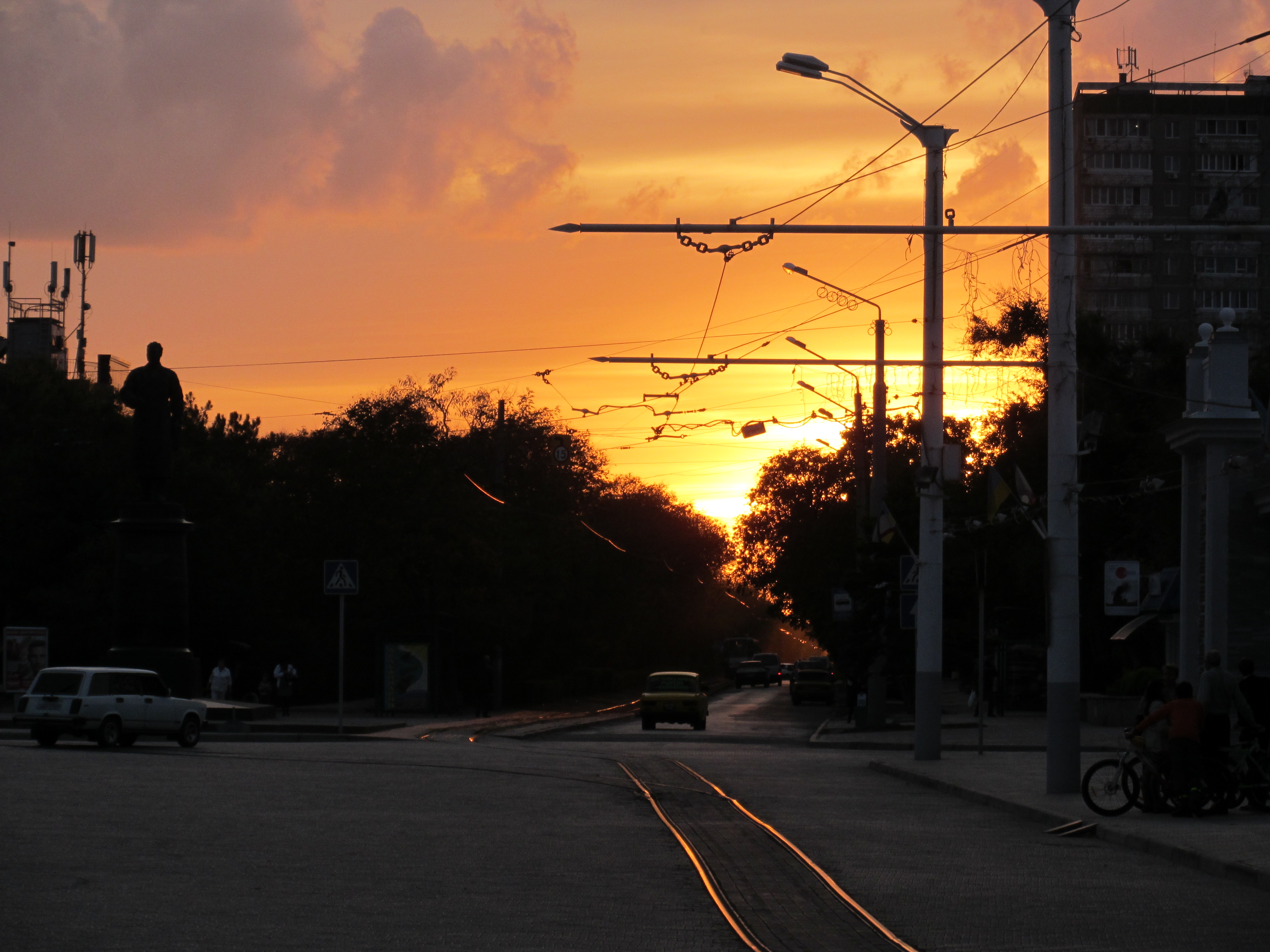
Sunset cycle tour Yevpatoria, Crimea, Ukraine

No time for a detailed blog post today, but just back from a sunset tour of Yevpatoria with the rest of the Veloforum delegates.

Fascinating.Veloforum Cycling 2012

Veloforum Cycling 2012

veloforum cycling 2012Veloforum 2012Veloforum 2012 Cycling TourVeloforum 2012 Cycling at Little Jerusalem

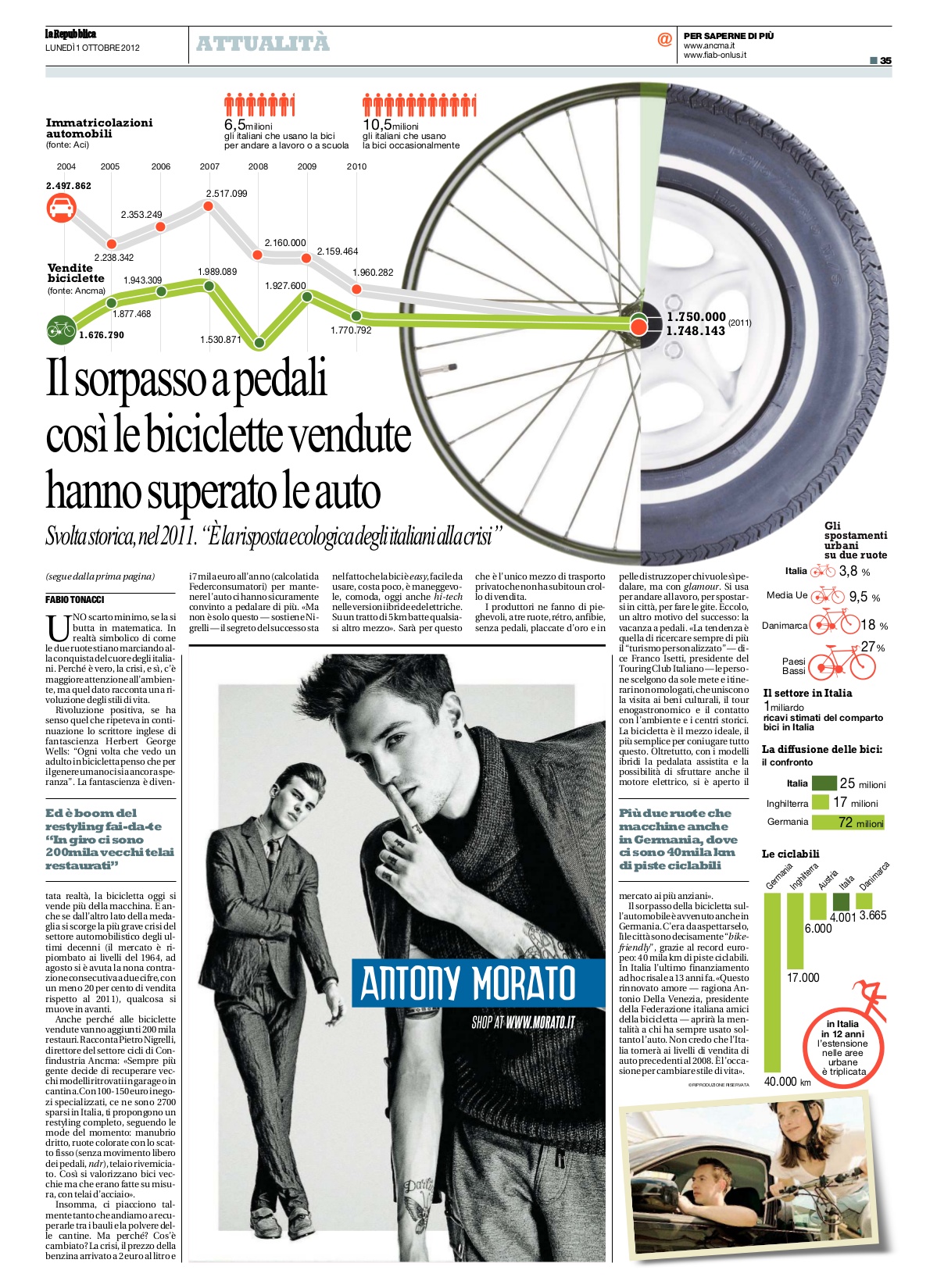
“I do not despair” makes it into Italian national media

Hey “I Do Not Despair” made it into national Italian news about cycling. Sadly I think my two appearances on stage at Italian bike shows were not the cause for the use of the quote that headlines my blog. But it was good news all the same.

National newspaper La Repubblica reported yesterday that in recently published figures 2011 bike sales beat car sales for the first time since the second world war. “Le biciclette sorpassano le automobili”. Print version below, with good graphic.

But more importantly for “I do not Despair” I learned H. G. Wells might have said “Ogni volta che vedo un adulto in bicicletta penso che per il genere umano ci sia ancora speranza.”

Although Google Translate doesn’t offer the word “despair” anywhere I was really pleased to see the quote in use, it felt so topical after my recent trips to Italy.

I hope the Italians are able to use this momentum too, The President of my hosts FIAB is quoted saying “I do not think that Italy will return to the levels of car sales prior to 2008. It is an opportunity to change lifestyle” Because this is almost old news in northern Europe, even less confident British cyclists bought about a million more bikes than cars last year.

Lots more work to do in Italy!


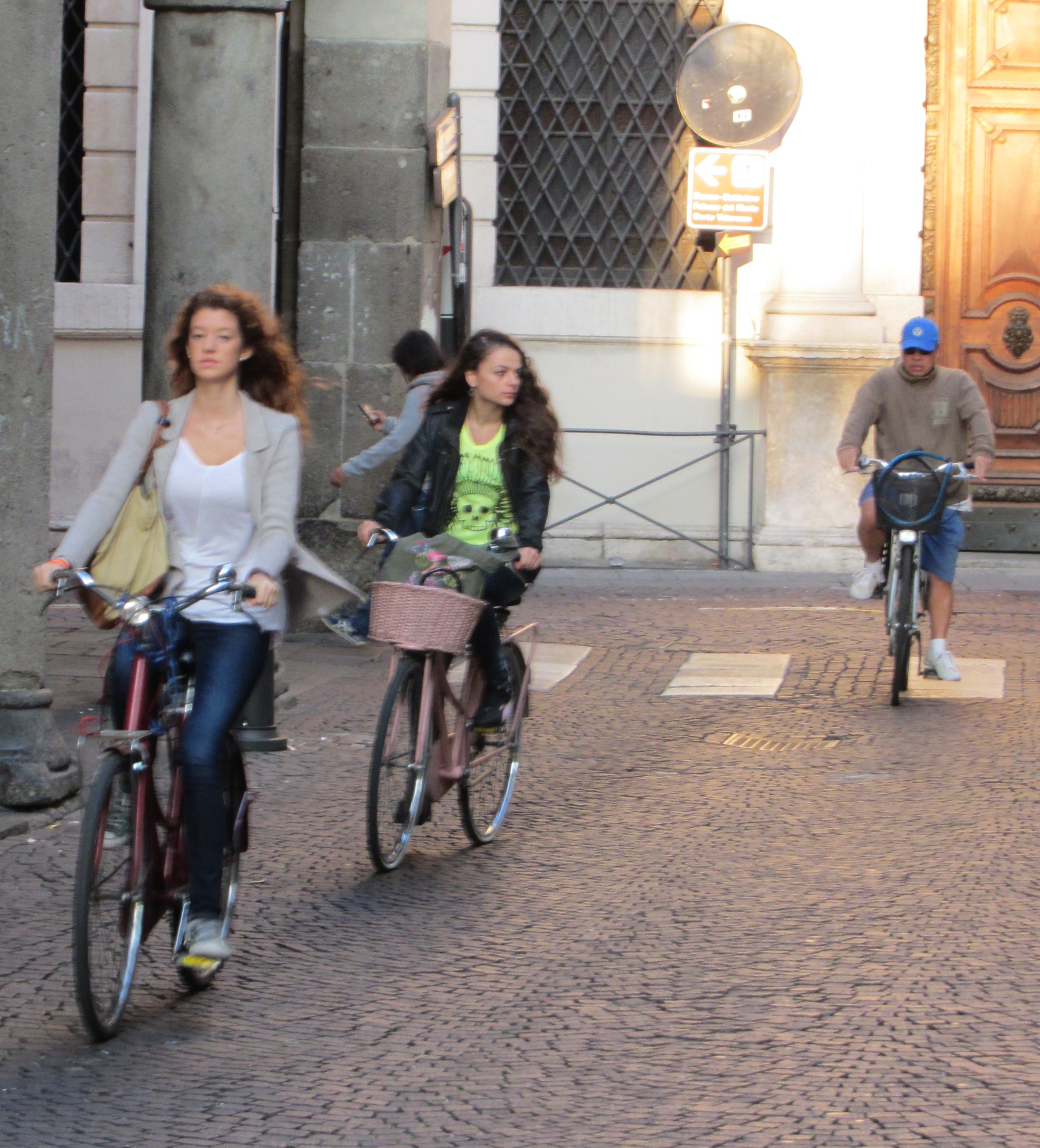
Padua is a great place to be a cyclist – and with added Cycle Chic

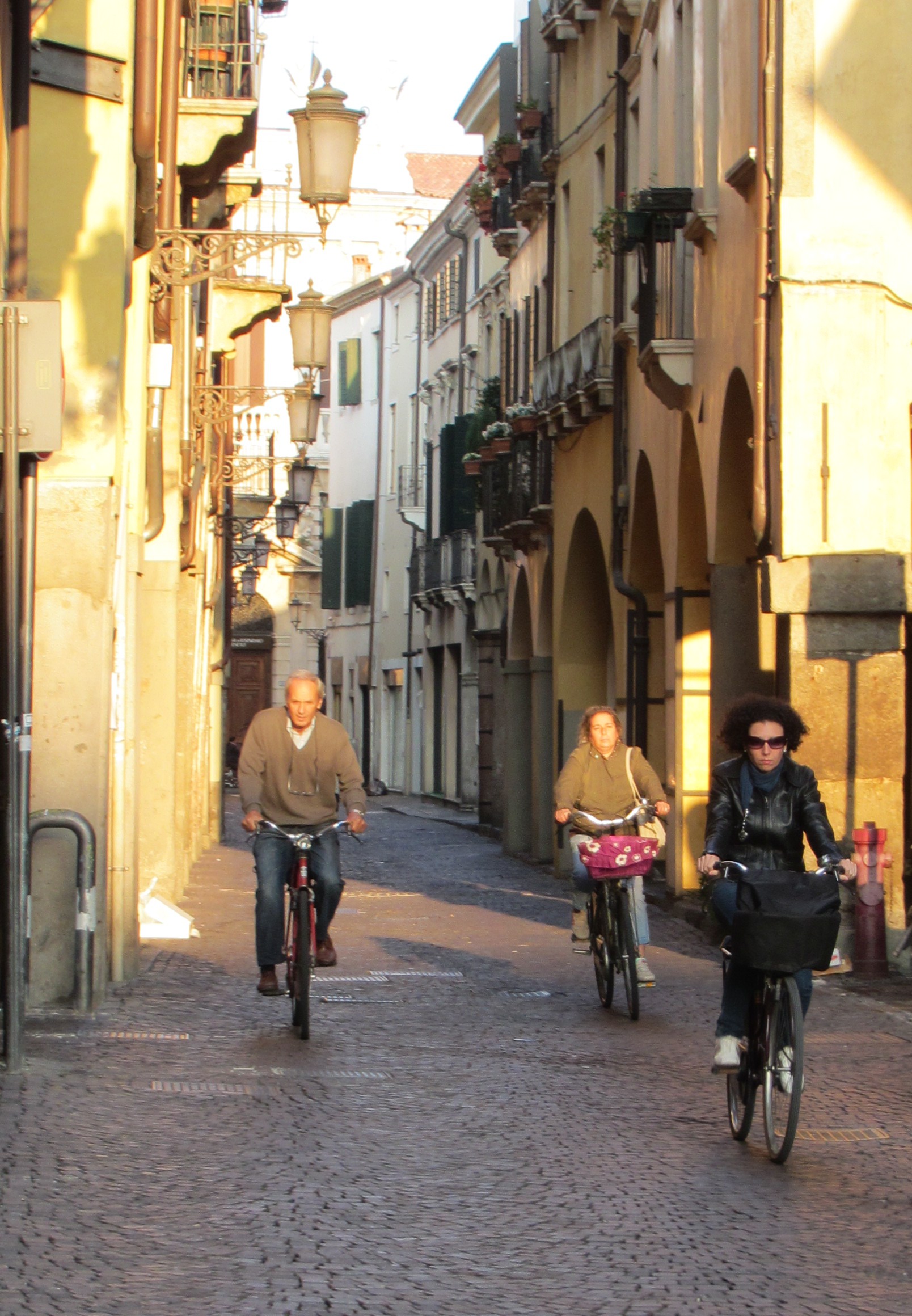
Padua cycle rideAlthough it is much less well known than some of its more famous neighbours Venice and Verona I think Padua is a great place to ride a bike and should make a good stopping point for any passing cycle tourists or advocates interested in seeing a fully traffic calmed city in Italy. (Thinks out loud “Padua for my English readers or Padova out of respect for its proper name? No idea – use a bit of both.”)

Last week in Verona I was lucky enough to be guided and helped by the cycle tours organised by local volunteers but here in Padua the local FIAB volunteers were flat out proving cycling fun for children visiting the Padova Expobici cycling show so I was a bit more on my own.

However they did provide the equipment, a mountain bike that was a reasonable steed for the cobbled streets throughout the city centre. Unfortunately when I first collected it from the hotel baggage room it had a flat which did lead to one of the most entertaining misunderstandings of my ventures into Italian.

My hosts asked me to bring the bike to the children’s try out area at the show where the volunteers had said they would stick in a new tube. So of course along I pop pushing the bike and wander up to the desk. Unfortunately the chap on the desk was the one person not in the know and he was convinced I was a 50 year old juvenile who wanted to play on the kids track! I was sent off to play with the big kids despite all my attempted explanations.  It was all resolved with considerable amusement a bit later by the rest of FIAB Padova.

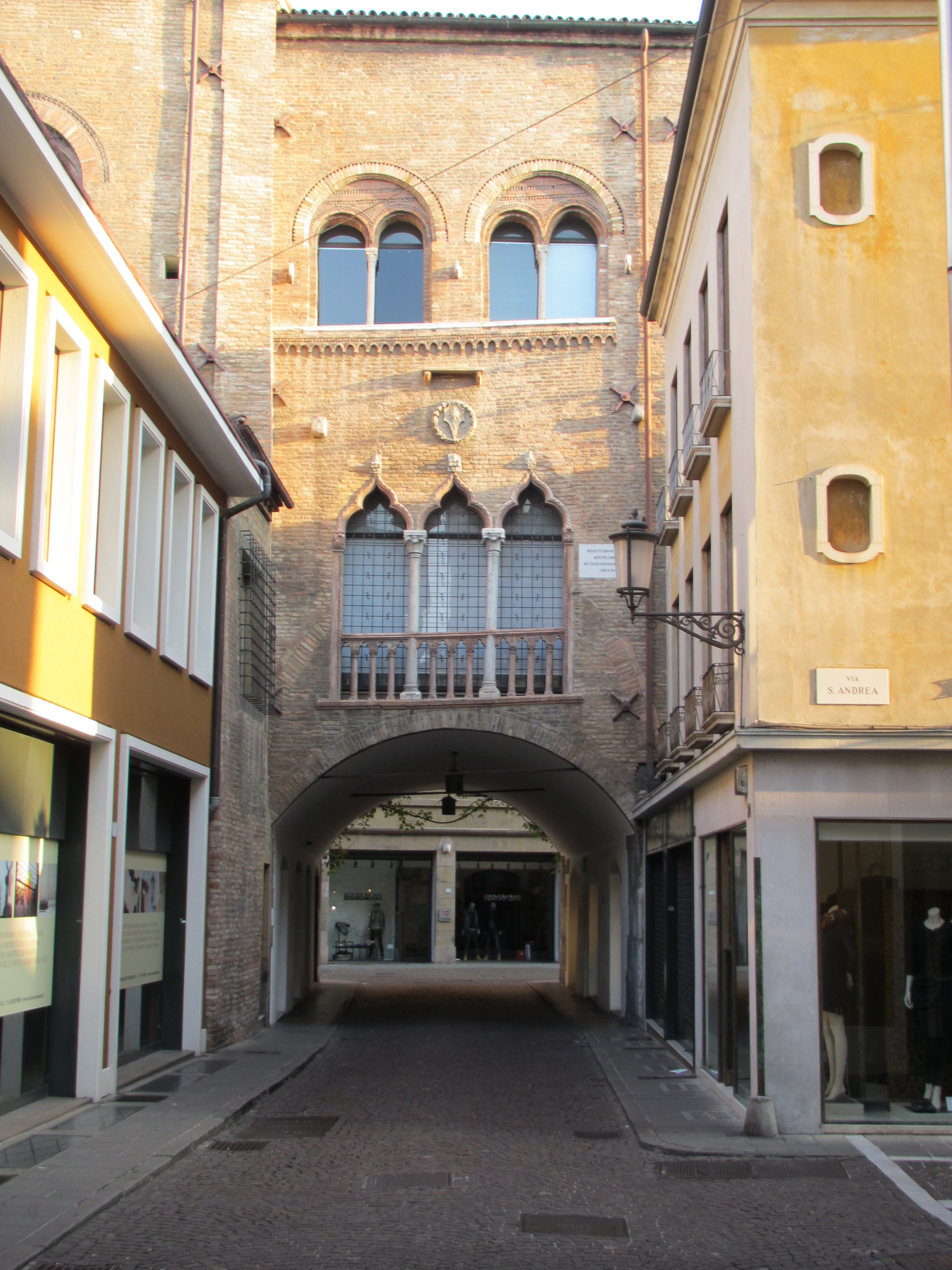
Arch in PadovaAnyway back to my trips into the city.

The photos here come from two excursions into the town which I fitted around my work at the Expobici. On Saturday morning when the flat tyre was discovered I walked the city which led to my early discovery of the great contrast with Verona that I blogged about last week.

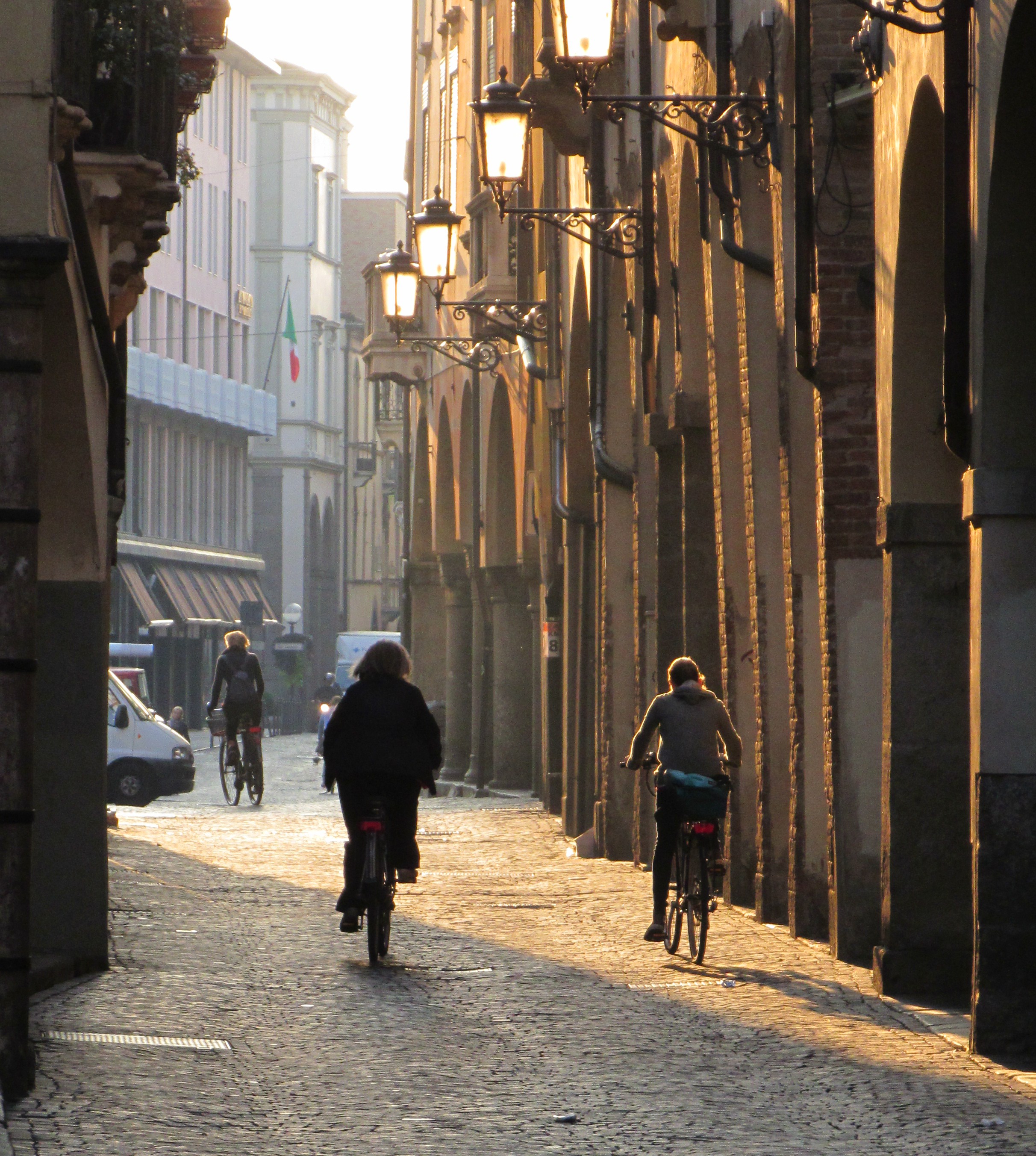
I keep mentioning in my posts how much  I like mornings, there is something quite different about a city waking up, especially when the dominant noise is the rattling of bicycles and the shouts of the market traders , not to mention the fact that you can actually smell pastries and coffee everywhere.Padua cobbles

On Saturday evening I also had a ride into town but unfortunately no time for photos as I was off to dinner with my hosts. This gave me a ride through the city from north to south and a great chance to zig zag around the narrow alleys and short cuts. However I was stopped in my tracks when I emerged into Piazza Prato della Valle. It is the most enormous open square that I have ever seen in a city of this size. I was immediately reminded of Plaza de Espana in Seville but this seemed even bigger.

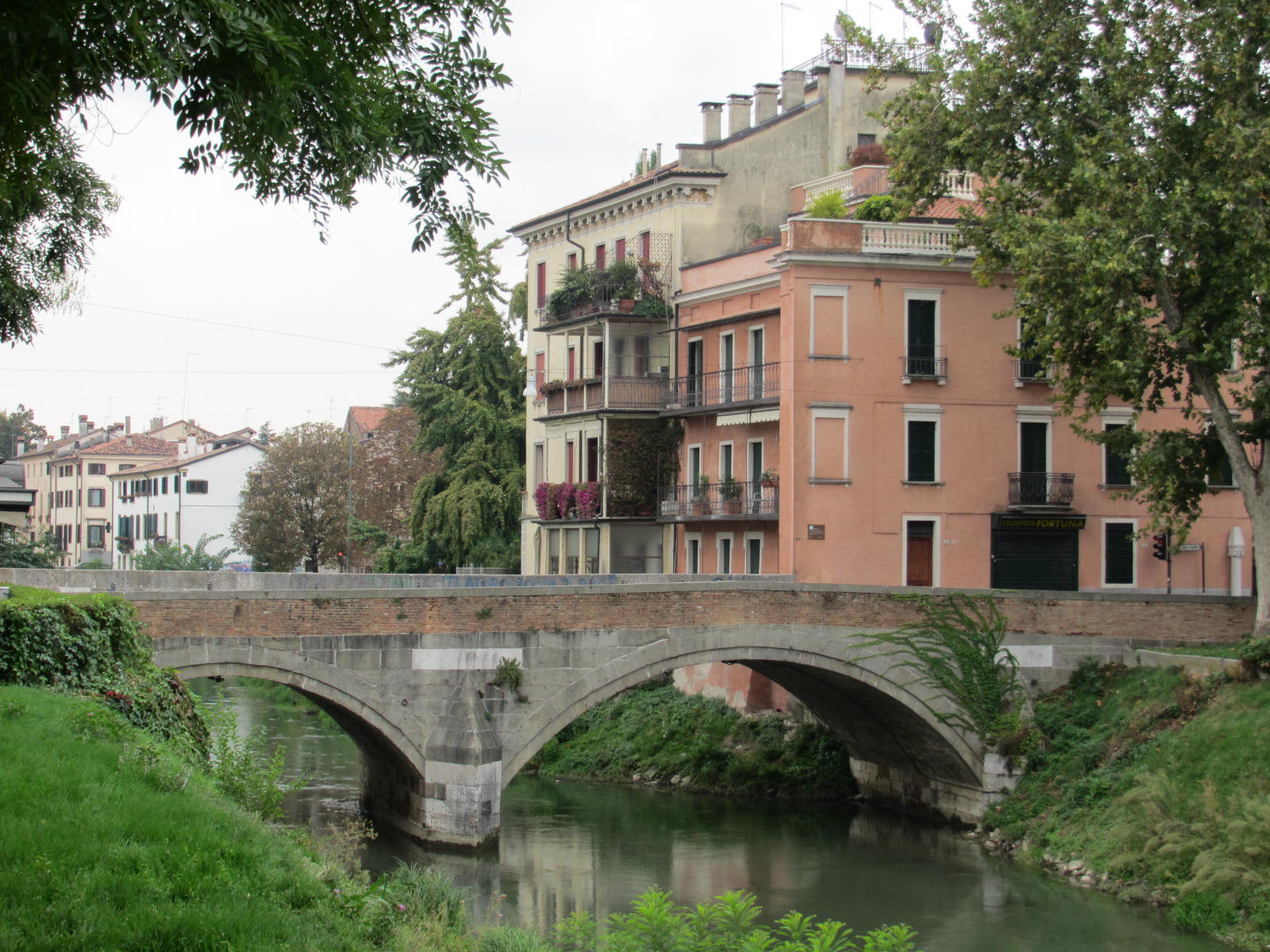
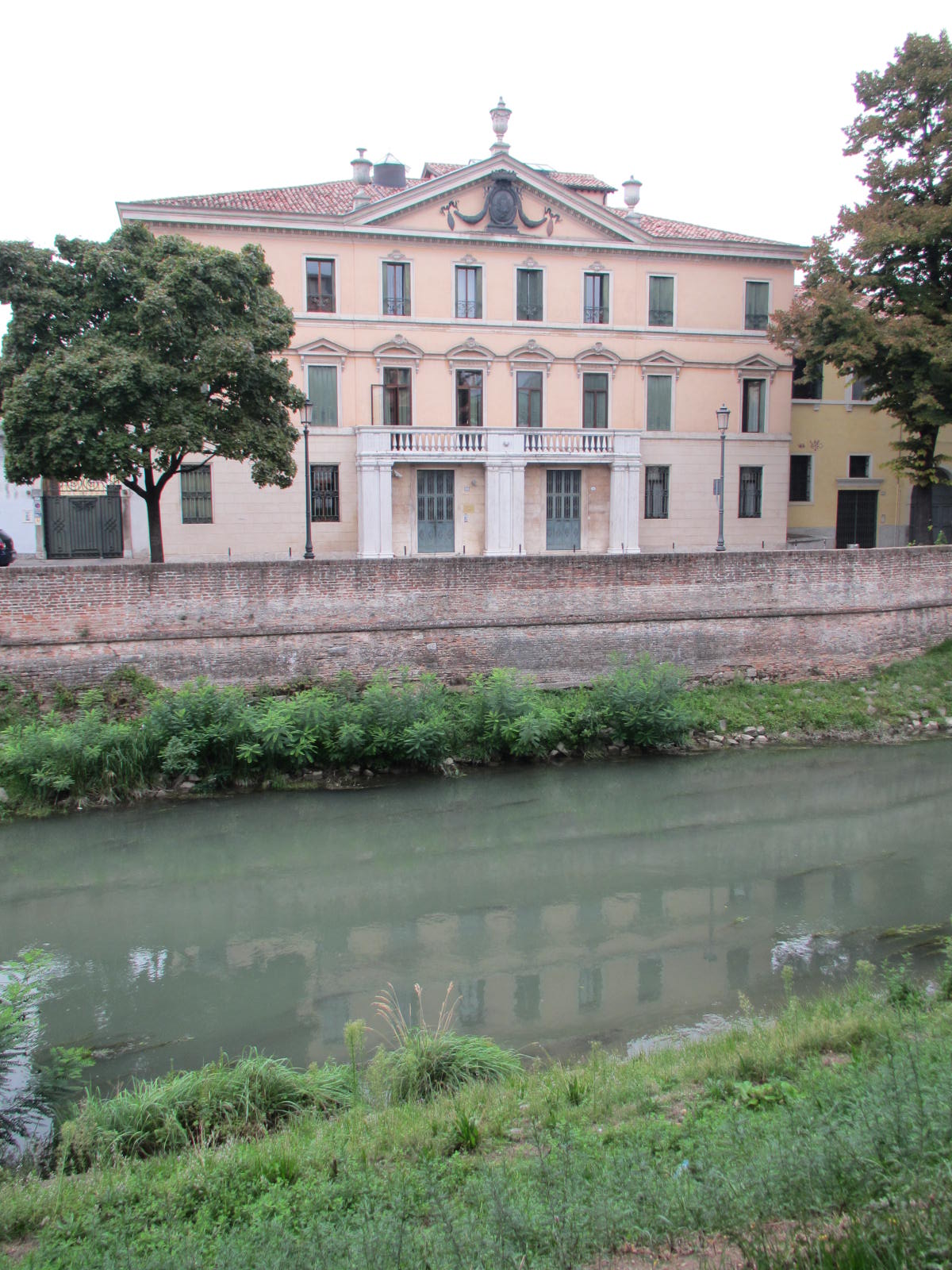
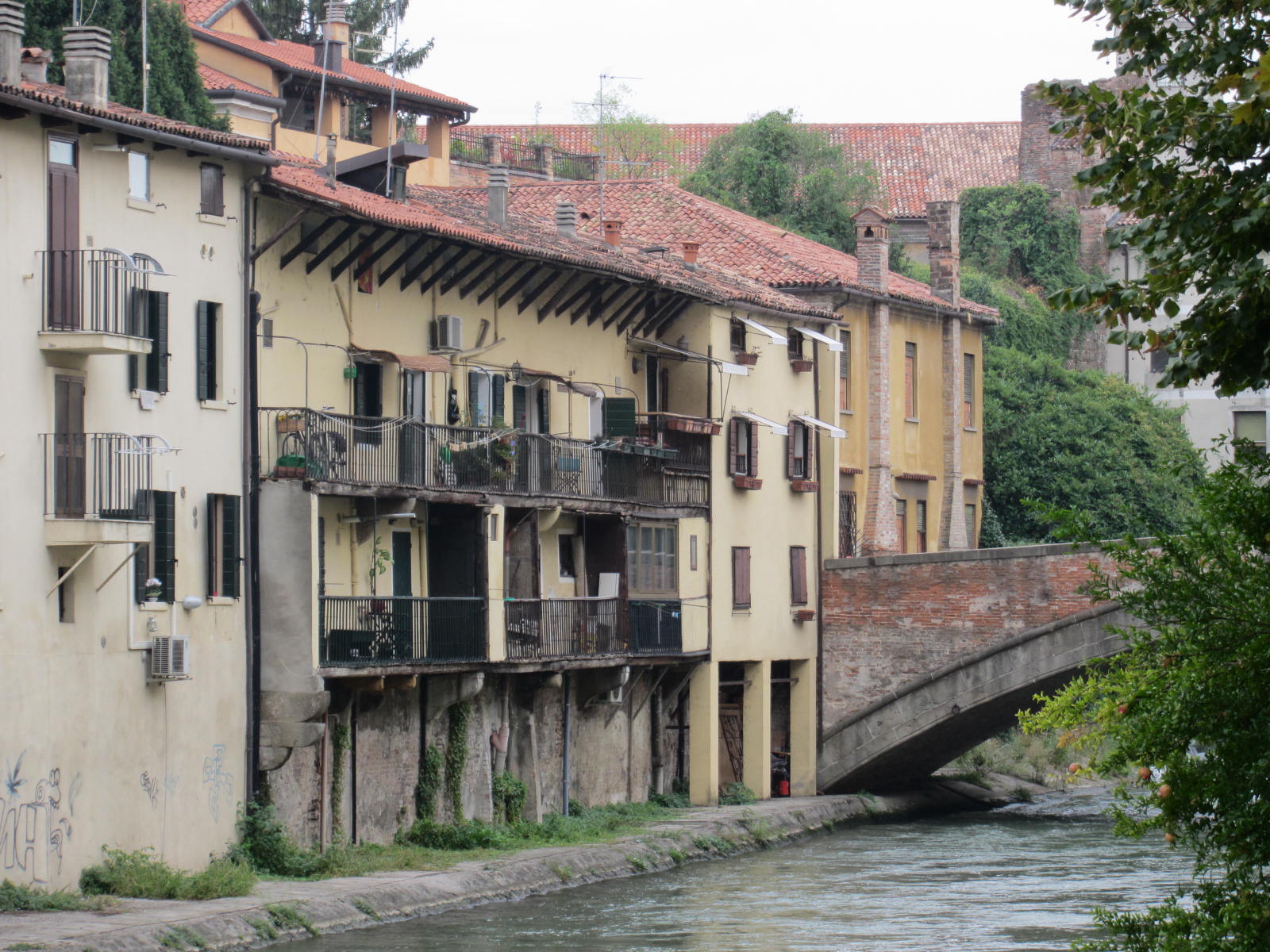
This gave me the itinerary for my Sunday morning ride because I really wanted to see the Piazza in daylight, even if the morning was a bit gloomy. But this time because I had a bike I was able to take a slightly longer route and I decided to circle around the branch of a river which serves as a historic moat around the inner city. Riding along waterways you often see bits of architecture and heritage that survive from different eras and the water itself can be great. Turned out that Padova was no exception, the western branch of the river took me along quiet streets with some gorgeous old bridges, buildings and perspectives on the city.Padua cycle ride by river

padua architecturePadua housesPaduapadua by bikeWith time running out I swung back towards the centre of the city along the ample cycle lanes and came to Piazza Prato della Valle again. The translation is “Meadow of the Valley” so I can only imagine that at one time this was a vast open space leading to the river. Today it is a formal square with a ring of water features, statutes and seats in the middle and a vast open expanse of walking and cycling space. At one end Abbazia di Santa Giustina is a huge church and abbey but even it seems lost in the corner of the open space.Padua

The cyclists mooching through the square just showed the scale, they looked tiny and even a club group of 20 road riders turned out in immaculately matching club colours could not make it look busy.Cycling Club group Padua

A check on Wikipedia after returning tells me this is indeed the largest square in Italy, some claim when you consider something like St Peter’s in Rome.

Great place to ride a bike. And on a human level some final thoughts. When Venice was a city state Padua was its university town, a tradition it keeps up today. So the first thing I noticed about the cyclists and pedestrians was the large numbers of young people, something cycling shares with other great university centres, surely something we must keep building on throughout the world. Padua

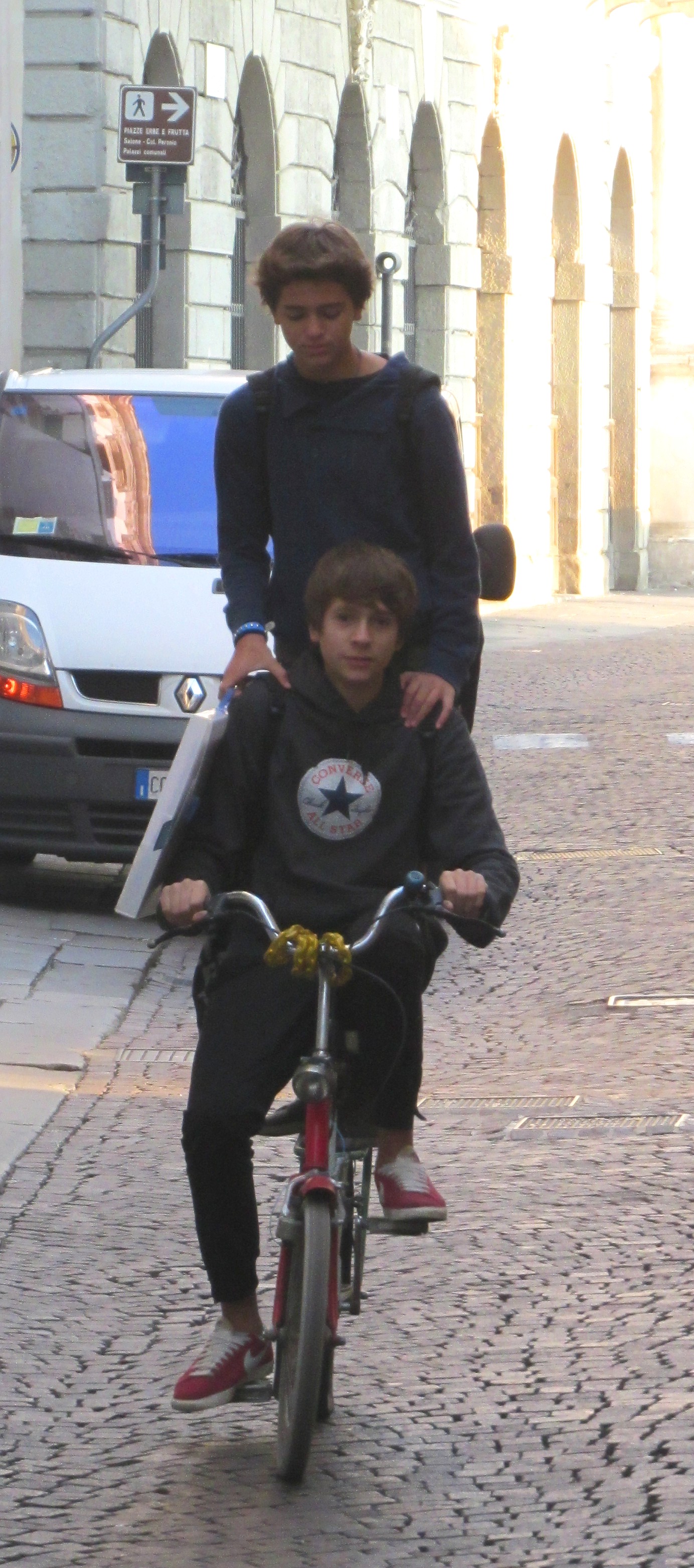
And also in keeping with the great cycling centres of Amsterdam and Copenhagen I am sure that a significant majority of the cyclists I saw were women. Padua

PaduaAs advocates we are always told that when you make your cycling cities female friendly you are on the right path, Padua cycling culture must be a great example because it is young, female and wearing ordinary clothes.. The Cycle Chic movement writ large, excellent.

Now if only the cycling shows could understand that ….. But that is another story.

Verona cyclists – thanks for the hospitality

BikeI have been pretty rude about the politics of transport in Verona in my previous post, especially when compared to Padua which has taken a completely different path.

However in typical contrary style the negative conditions for cycling have resulted in a strong cyclists’ movement with the Verona branch of Federation Italiana Amici della Bici (FIAB) having its largest branch in the city, over 2000 members.

It also has a really strong sports cycling tradition too having hosted the world cycling championship twice in modern times. (2004, 1999)

I was there to work at the EICA trade fair and to have meetings with some of the national leadership of FIAB but the local members were such excellent hosts I have to give them a write up, especially as they gave me a great insight into their city, warts and all.

Bike VeronaFirst up was Giorgio, president of the branch who turned up at my hotel first thing on Saturday to provide me with a bike for the weekend and set me off to the show. As I have written many times, it’s not about the bike and the fact that he gave me his careworn town bike with its rattles and pannier meant that I wasn’t too worried about where it got locked up or how I rode it.

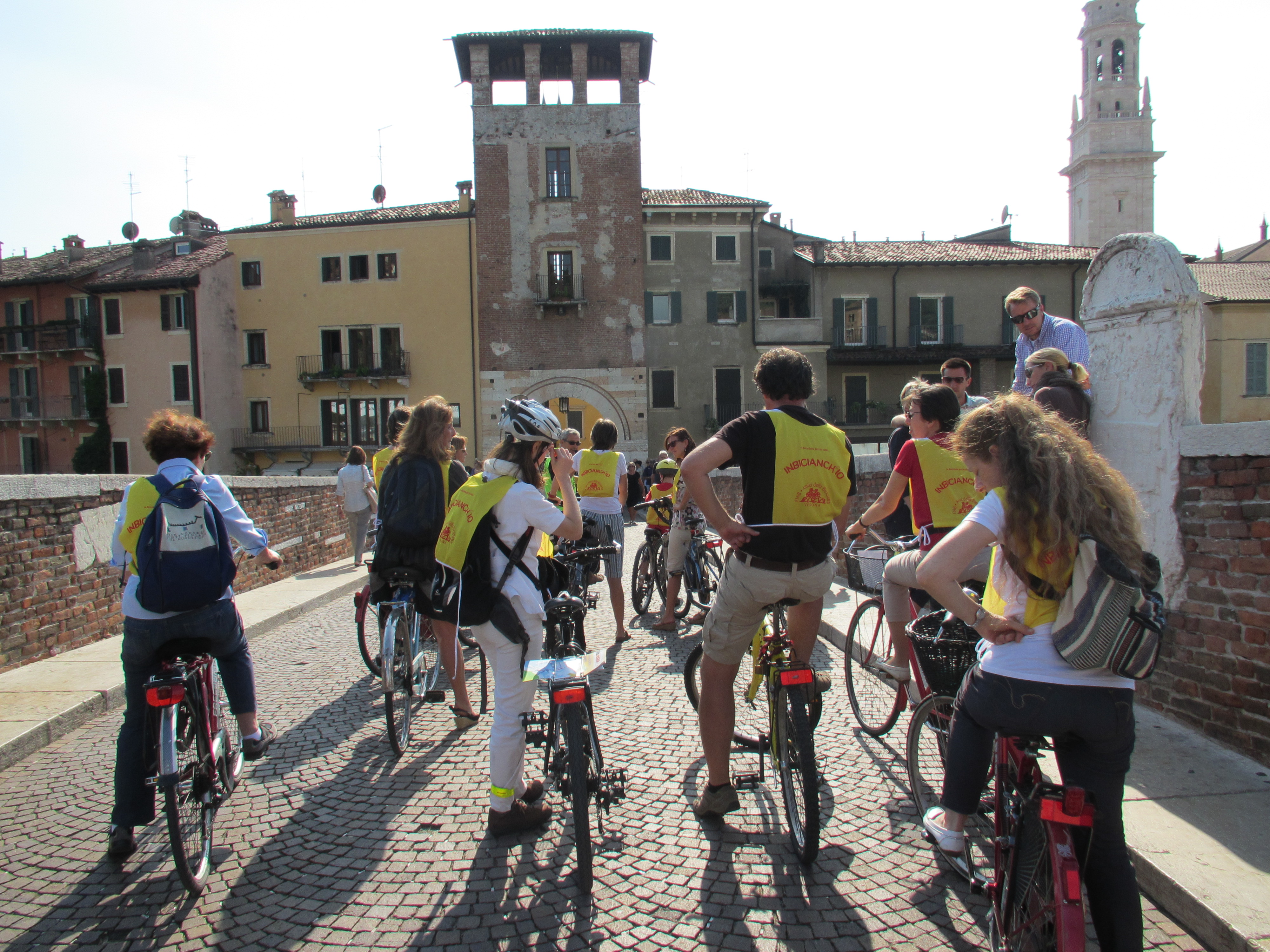
In the afternoon I was invited down to the city centre to meet the local branch who were launching the first weekend of European Mobility Week by holding a series of guided rides. No prospect of a Car Free Day here so this was an exercise in grabbing the city’s attention. I could soon see why this group was well established in the city. The agenda for the day was to invite different professional groups to come for a guided ride at a set time in the day, either professions that were supportive of the group or some groups of friends. Simple, but so effective because it encourages existing networks to encourage their friends and contacts to come along.

I went out with the teachers and thirty minutes later our tour was followed by the bio-architects, which apparently translates organic architects, a new trend in the profession. (Means nothing to me either!)

The ride itself was a tourist tour but it was also to boldly go through the streets in bunch and be proud to be cyclists whether it was on the one or two pedestrianized streets or out into the busier roads. That was made clear by the bibs with slogans we were asked to wear, and because Paulo our guide had a PA rigged up to his bike. I assumed this was because he was going to give us a tour. Oh no, he was using the PA to shout to the crowds, not just us. My Italian is non-existent but it doesn’t take much to hear the word “bici” repeated with great enthusiasm and to get warm smiles from the pedestrians to see that the man is a natural entertainer.FIAB

A nice ride, repeating some of the areas I had walked the previous day, but great fun from the saddle and with company. Oh and here’s a thing (not one for my wife). I had to ask why the group of teachers were all women? I was astonished to be told that all teachers in Italy are women. I checked that this didn’t just mean primary schools like many countries but I assured that almost all teachers in Italy are female without really being able to understand why.

The professional groups idea was certainly a success, a group of up to 20 every half an hour meant that there was a steady flow of people through the day learning about cycling in Verona.

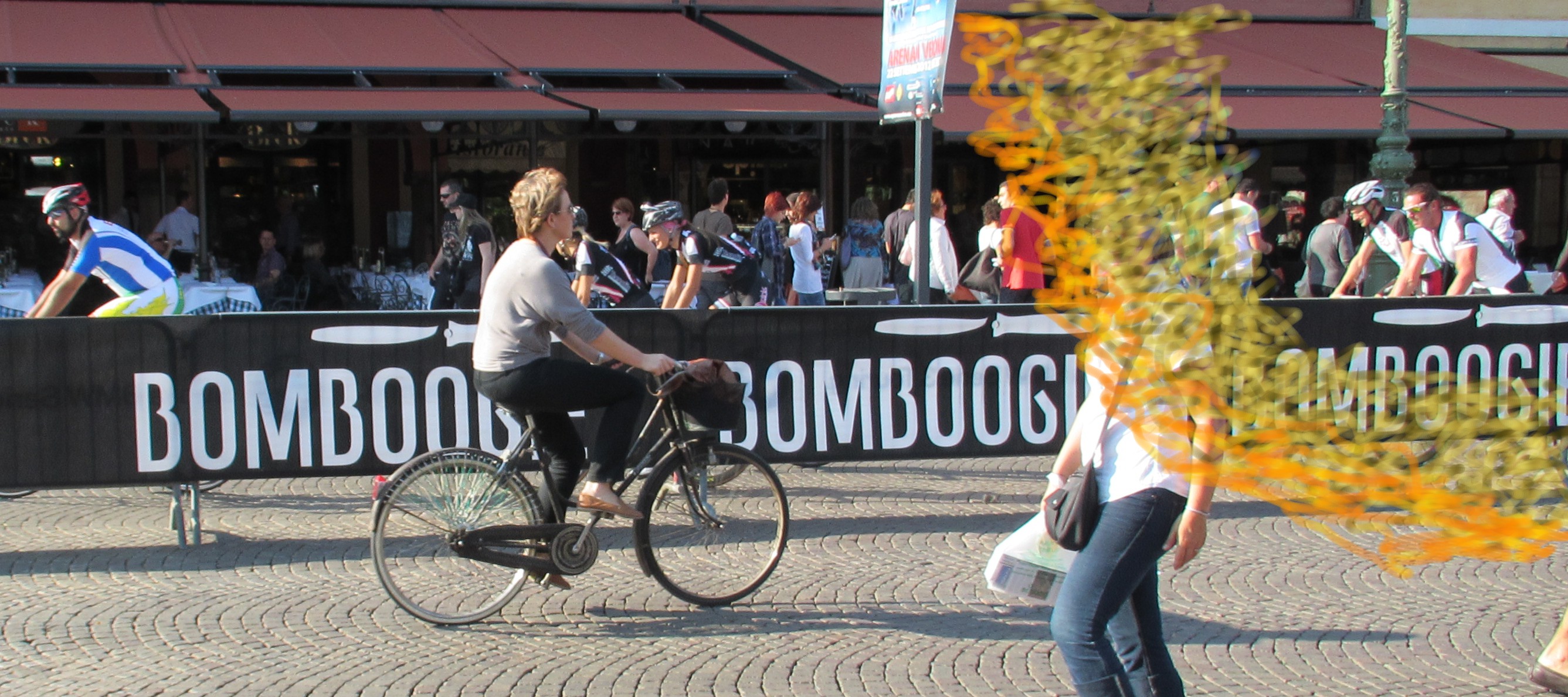
There were also quite a lot of cyclists around in the town and I was just generally snapping a few as a backdrop to for a blog post. I was just snapping this chap when I realised a group of sports cyclists were passing by in the background – none other than the bike show test ride coming back from their spin with Mario Cipollini who as if to order had popped into the corner of the frame. The test circuit let show visitors take a huge range of road, electric and mountain bikes out for a spin of up to 15km around Verona returning through the main square.

Mario Cippollini

Who’s this just passing by on his bike?

As well as the group rides I was also told I had been invited out to a concert in the evening by one of our local hosts. “Concert” I ask, “what sort of concert?” Nobody actually knew, other than it was going to be at a building called Lazzaretto outside the city. From what I could briefly glean on my smart phone I thought it was some sort of restored stately home. About the music, no idea.

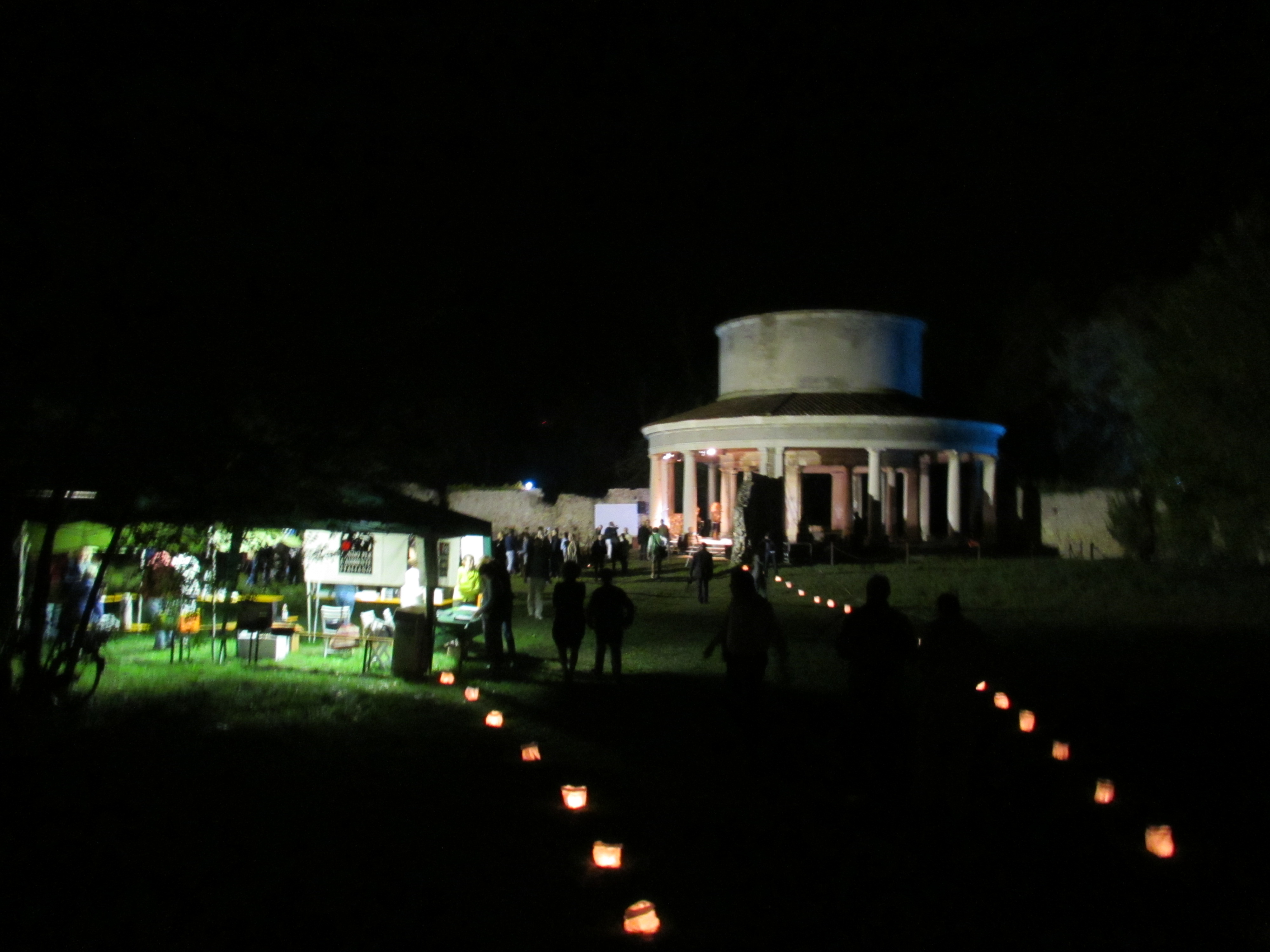
So that’s how I ended up at a sort of modern jazz outdoor concert for the Italian National Trust to promote the fact that they had acquired the grounds and ruin of a former isolation  hospital and military base that had been partly blown up by anarchists. “Concerto in Bronze” had a celebrated percussionist beating out music on the bronze statues of Gino Bogoni while a dancer and narrator telling the story of the sculptor’s life. I had the introductory speech by the National Trust translated so I learned a bit about the rotunda that had been at the heart of the old hospital. But I didn’t understand a word of the narration and I have to admit that a grown man lying on a bronze statue shaped like a melted bar of chocolate hitting it with his fists stretches my definition of music.

Verona

But how can I top sitting in open parkland with a slight chill in the air surrounded by people who really cared about the place we were in and the city they live in, listening to tawny owls hooting in the trees around us. Magical.

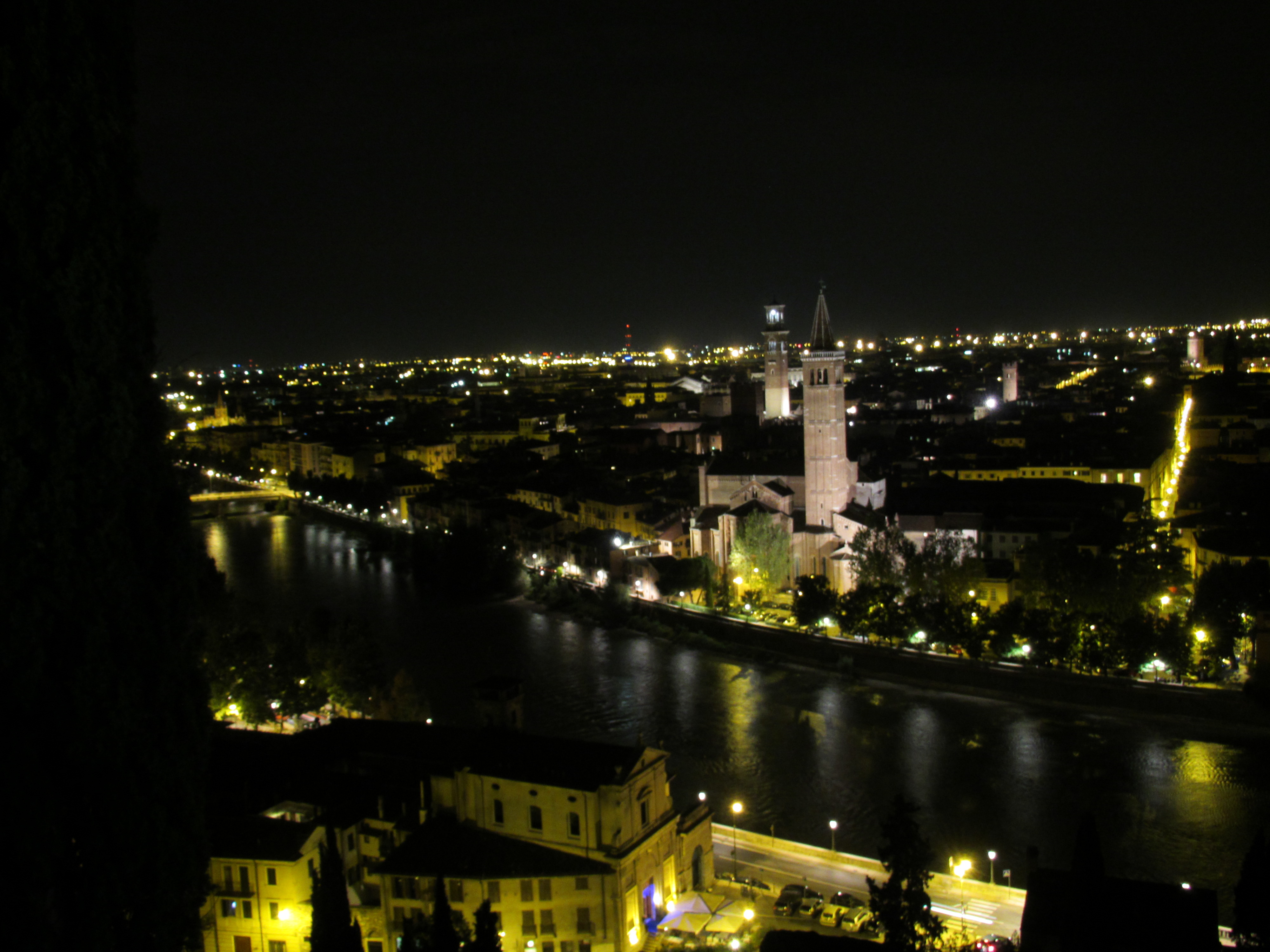
And on the way home I was treated to a trip up to the terraces of an old castle which sat above the Roman theatre I had been on earlier in the day. Fantastic views of the city from above.

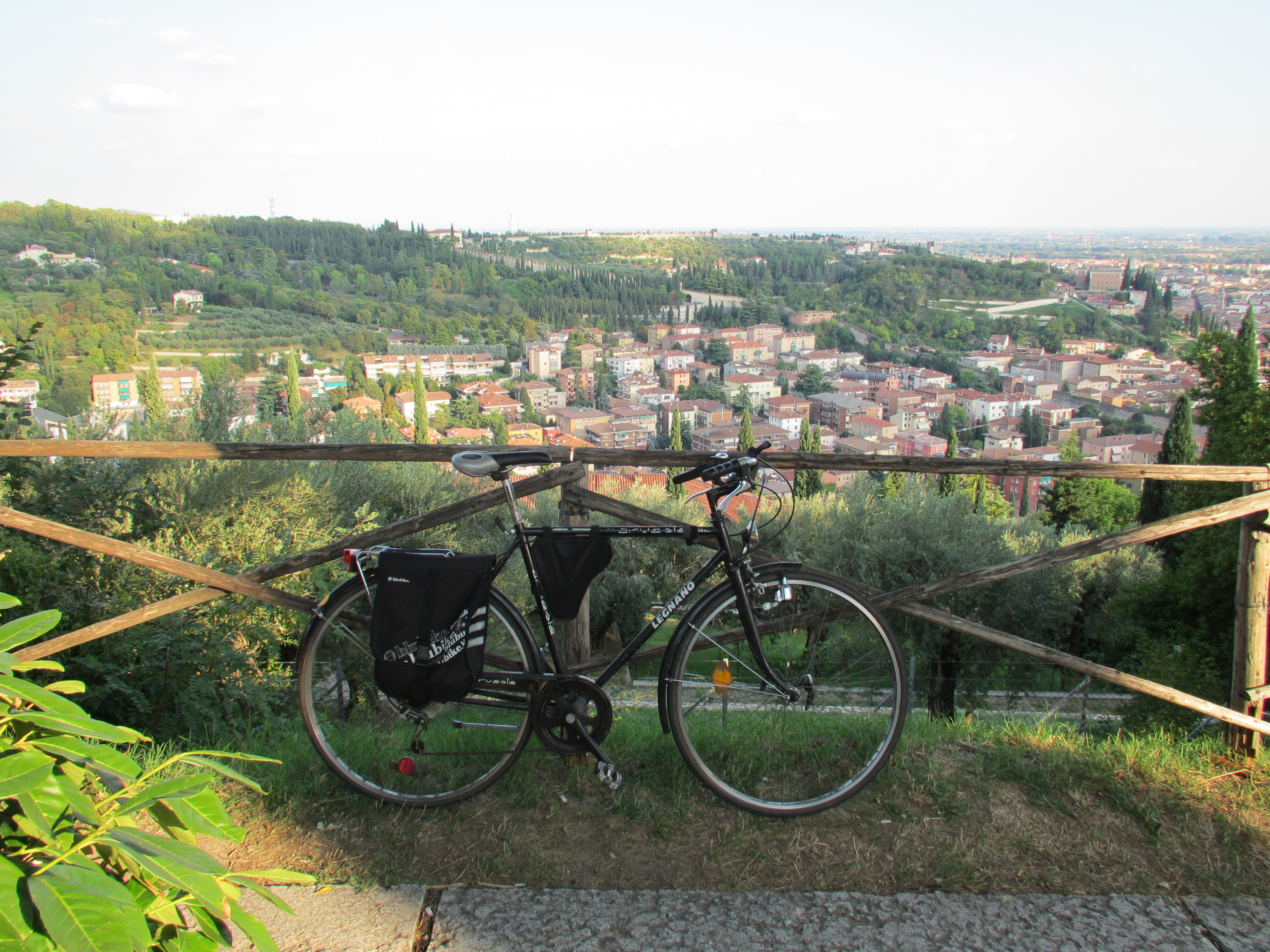
On Sunday the lure of the test ride circuit and the views from the castle drew me and I couldn’t wait to get out in the early evening and do a proper tourist ride. Even better I was told that the circuit was actually part of the world road race circuit used twice in the past. I was soon zigzagging up the hairpins on a good climb out of the city, bit of a challenge on the single chainwheel of Giorgio’s bike but certainly rideable.

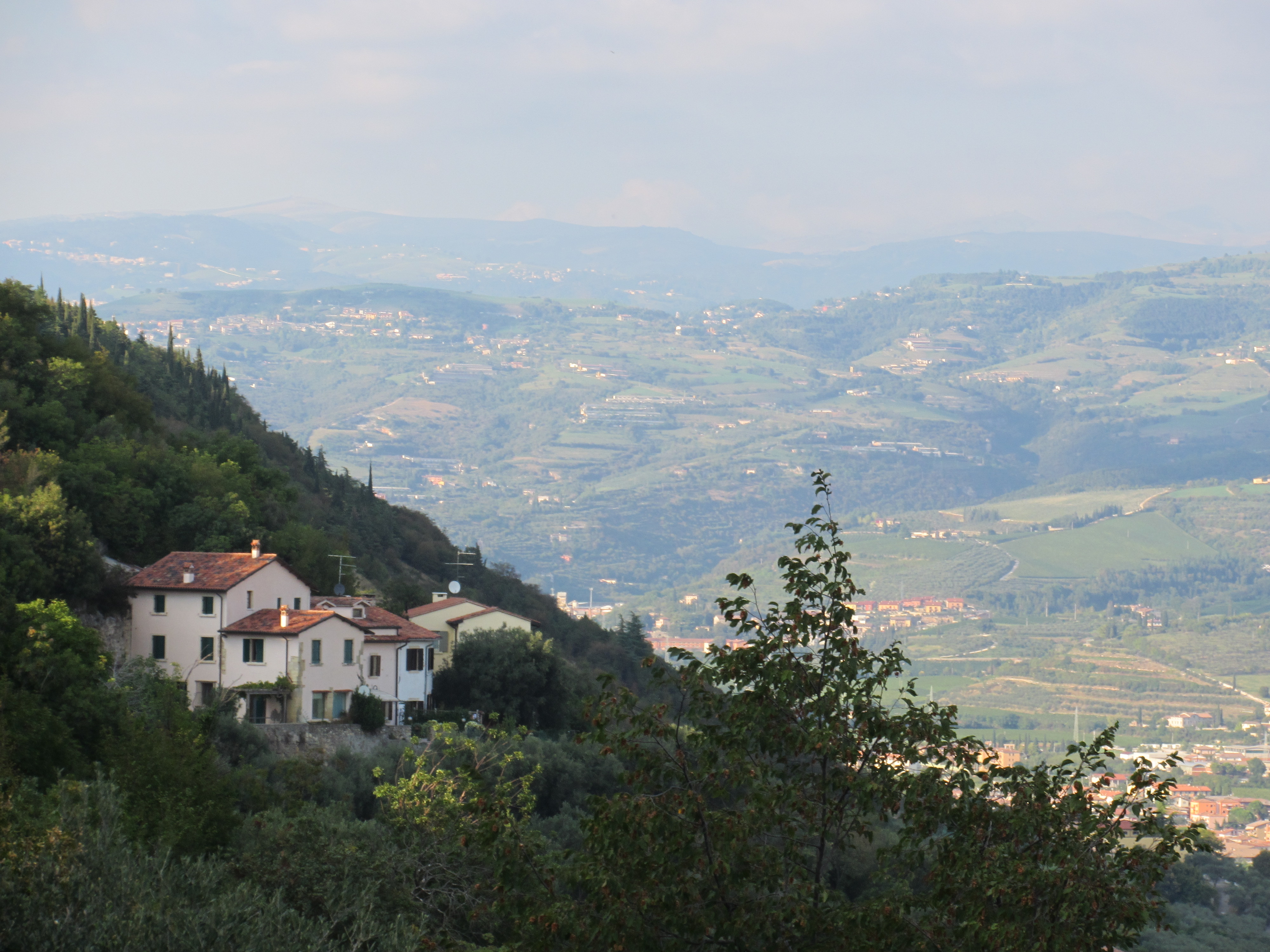
Before long I was up to a good height and able to look over to the valley beyond as well as great views back over the city itself. On one side the old city with its mediaeval roofs and Roman origins, but it was easy to see on the other valley why this is also a strong industrial area too.

The road itself kept the higher ground and looped round above the city until I came down to the Santuario Madonna Di Lourdes, a domed church set high above the city and one of the most distinctive sights on the city horizon.

View from Santuario Madonna Di LourdesVeronaIt was a stunning spot and I got some great views from its terraces, including a nice view back across to the previous climb. But even here I could not resist a mental rant that they just could not keep cars out of what should have been an oasis of silence.

However the café behind the Stantuario did offer a very tasty espresso and tiramisu, a classy step up on the coffee and cake at home.

Then a great descent into town at 50kmph before rolling back through the old streets.

In fact, I enjoyed it so much I went back again in the early morning for an final spin, a bit cloudier than the previous day but still a lovely ride.

Thanks to all the FIAB members in Verona, your hospitality made it a very special visit. I wish you every success in your frustrating battle to create a cycle friendly city.

A tale of two Italian cities – removing the tyranny of the car transforms the visitor experience

Padova cyclingI am currently processing a whole sequence of photos and stories about my visits to the two Italian cities of Verona and Padua (Padova).

But here is an opening thought. They are only 50km apart, they share many aspects in common in terms of size, culture, antiquity. But in just one aspect of policy one has been returned to us as a liveable, likeable vibrant city. The other is being strangled to death by laissez faire.

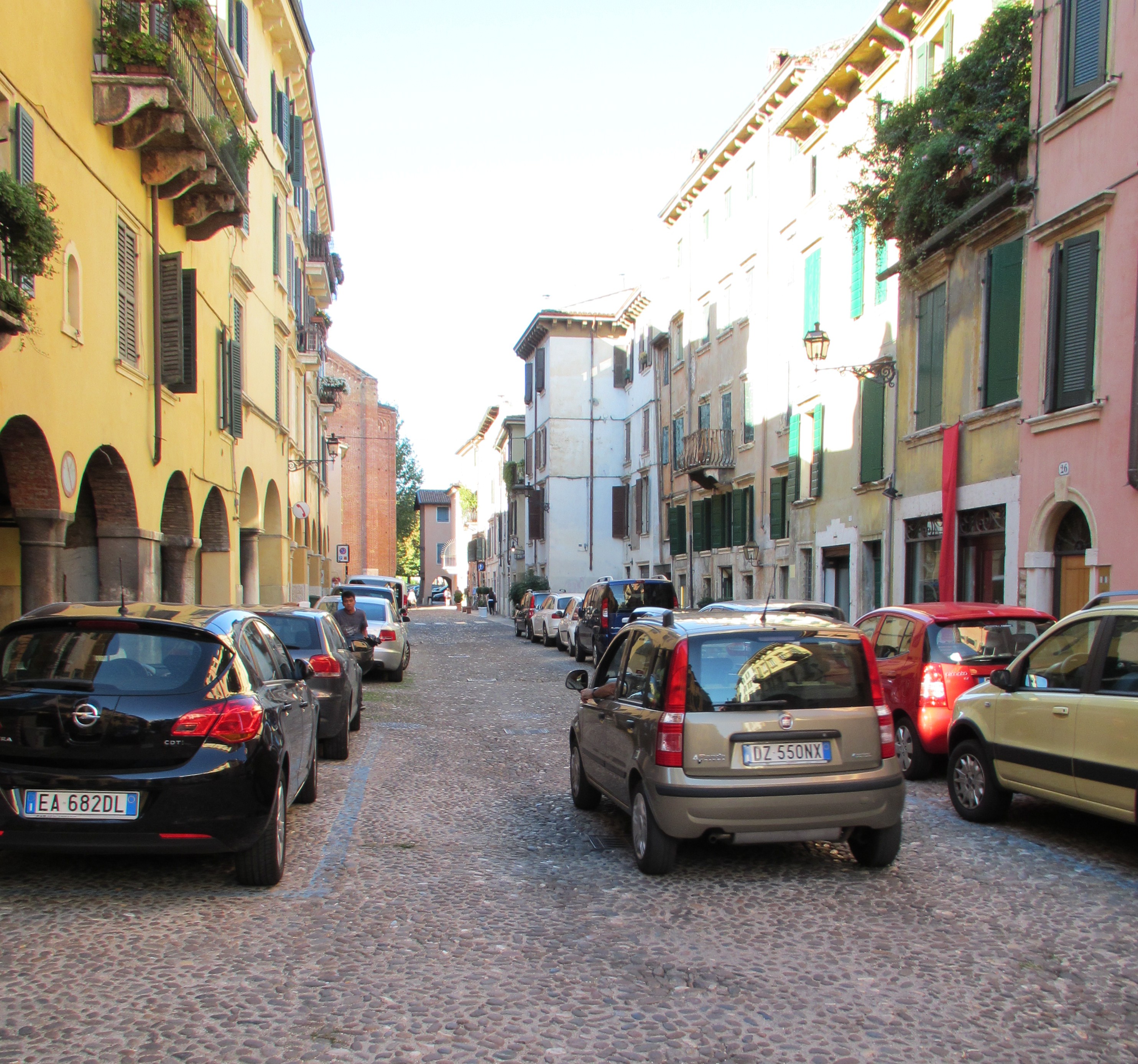
Verona is still gripped by the absolute tyranny of the car. There has been almost no attempt to restrict the disfigurement of the city by congestion, parking, noise and fumes. The restricted area in the city centre for motorised traffic is tiny and any priority given to alternatives is minimal. There are almost no cycling and bus lanes. All but one main square has full access to cars all day.

But of course in true “I do not despair” spirit this doesn’t stop me finding cycling in and around the city being an uplifting feeling, not least because it is a beautiful place, but by far my best moments were quite roads and corners, where I could find them.

A week later Padua. Nowhere near as celebrated as Verona internationally and with much fewer tourists.

Yesterday morning I wandered into the city early on foot and last night I was able to shoot around the streets on a borrowed bike from my local hosts.

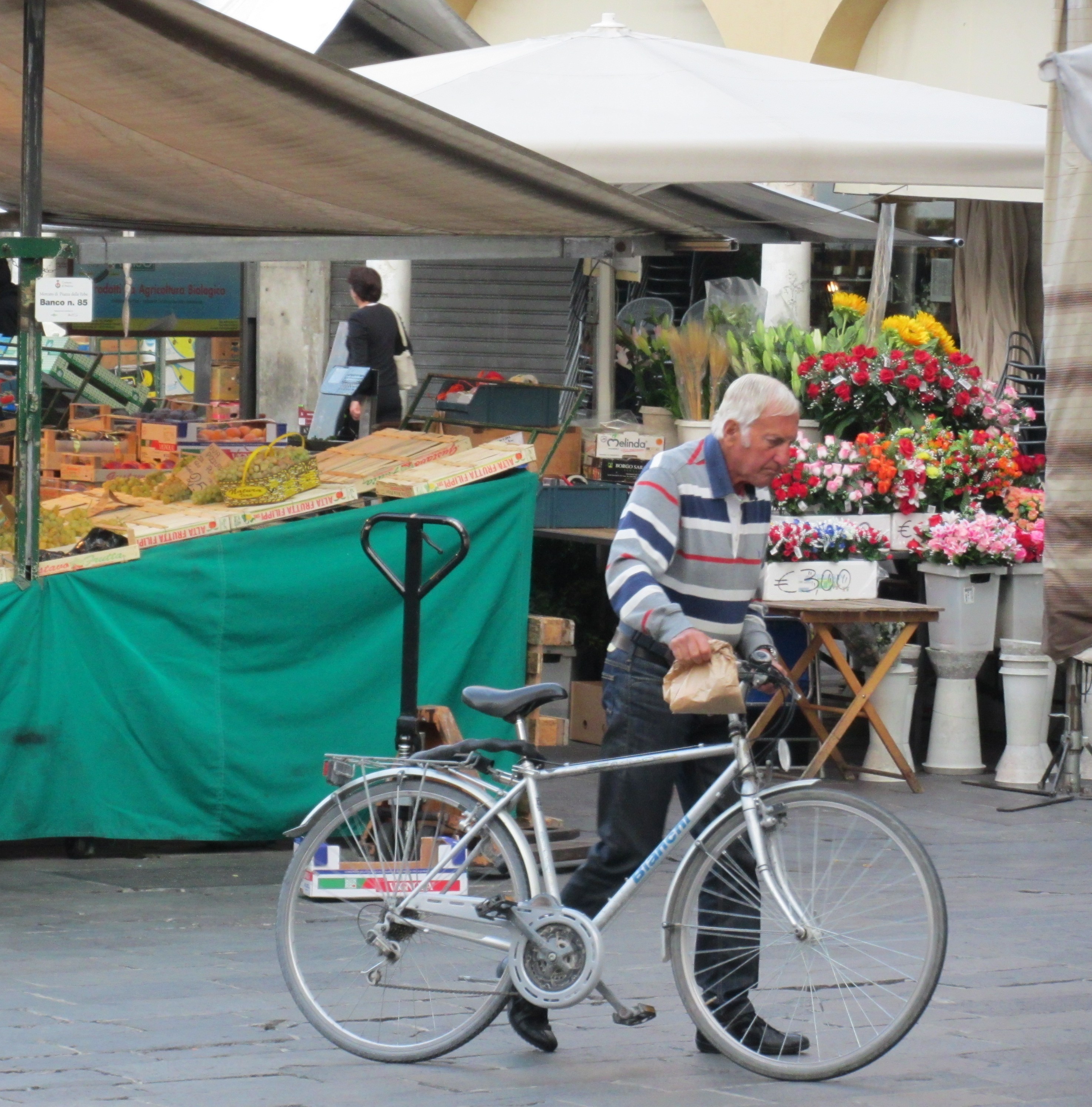
Immediately outside the hotel I came across the first of 150km of cycle paths. And then once I had slipped past the boundary of the old city walls I was almost immediately into the extensive pedestrianized centre. It isn’t entirely car free, there are designated through routes and access is allowed to some areas. But at 8 o’clock on a Saturday morning the contrast is just incredible.Padova market

The streets were not silent – oh no. But the sounds were precious. Firstly people talking – as they walked and cycled and opened the many market stalls. But best of all the almost permanent sound of rattling metal – bicycles on cobbles – the endless array of cheap town bikes that dominate the Italian domestic cycling market bouncing their way around the streets.

It reminded very much of my trip to Bologna in May, again not such a celebrity city as Verona but one where civic pride manifests itself in giving the streets to its people and its visitors. As an international advocate for cycling and sustainability the most important lesson I keep being given is that we spend a lot of time addressing national and even international policies that affect cycling. But within the same country, the same funding climate, the same road laws, the same culture local political will is the determining factor in whether a city wants to be liveable or not.

I will be posting a few more highlights from my visits in the next week or so, but I’ll complete this post with two photographs.

Both are cathedral squares. Which one would you like to spend time in?


Wandering Verona – first impressions

I wandered Verona in the late afternoon – still probably 25 degrees temperature and a glaring sun.

Odd mixture of a place – the main central attractions were interesting enough, but slightly lost in people and traffic, not least the terrible tourist trap that is Juliet’s house and balcony.

But on the banks of the river Adige I found some wonderful spots – the old roman theatre clambering up the hillside with multiple layers of medieval development on top of the roman base. Views across the river to St Georgio church and a tower way up on a hill beyond. The Castelvecchio with its calm inner courtyard and then access onto the delightful walled bridge the Ponte Scaligero which was wonderfully picked out in the evening light and thronging with walkers and cyclists using it to get home. If I lived here I would go a long way round to use this traffic free route on my way home to avoid the busy streets.

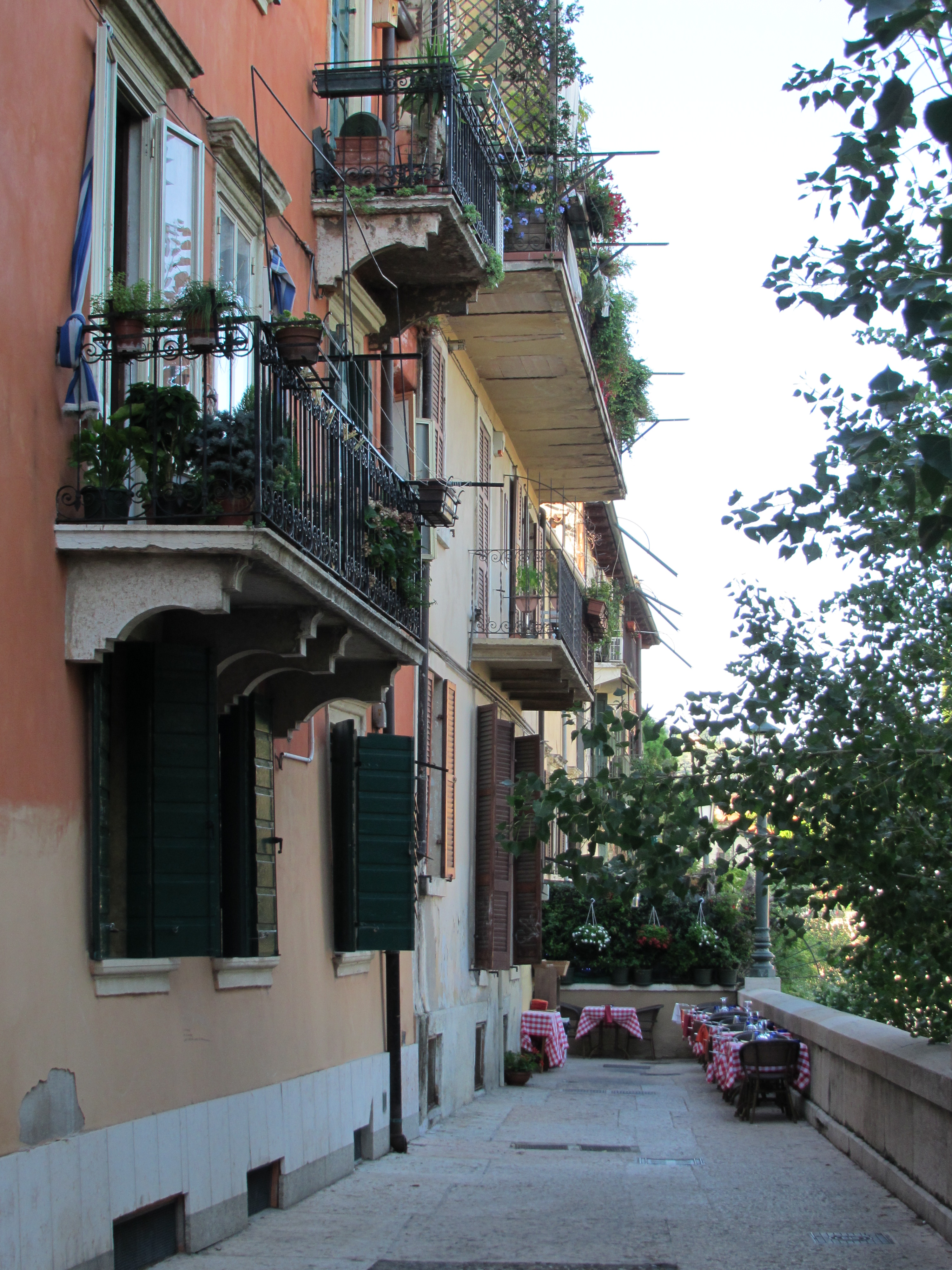
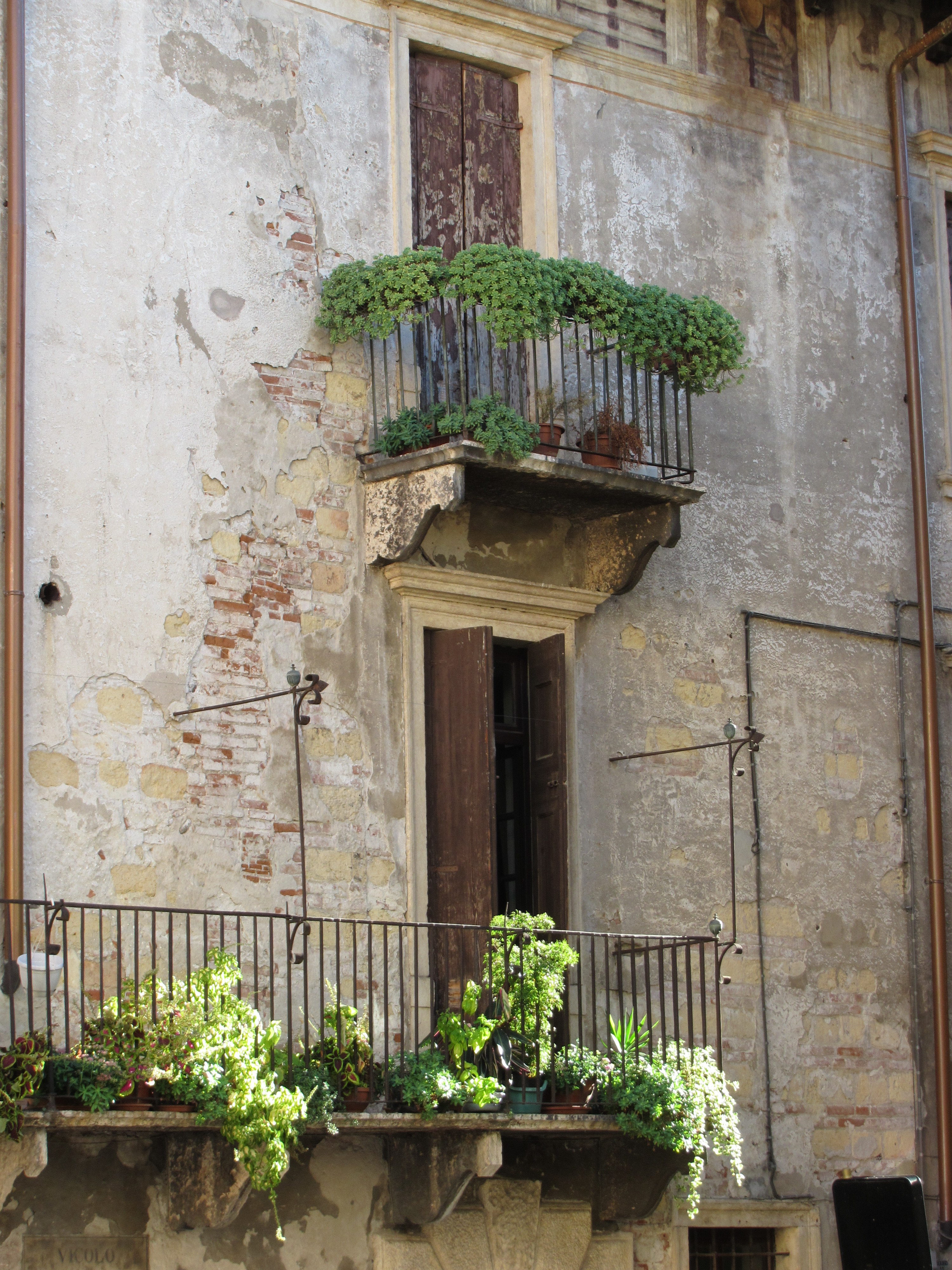
View across River AdigeAnd of course as always in Italy the gems. Tucked away in side streets are tiny scenes of calm, balconies and porticoes with tables to eat and swathes of greenery.

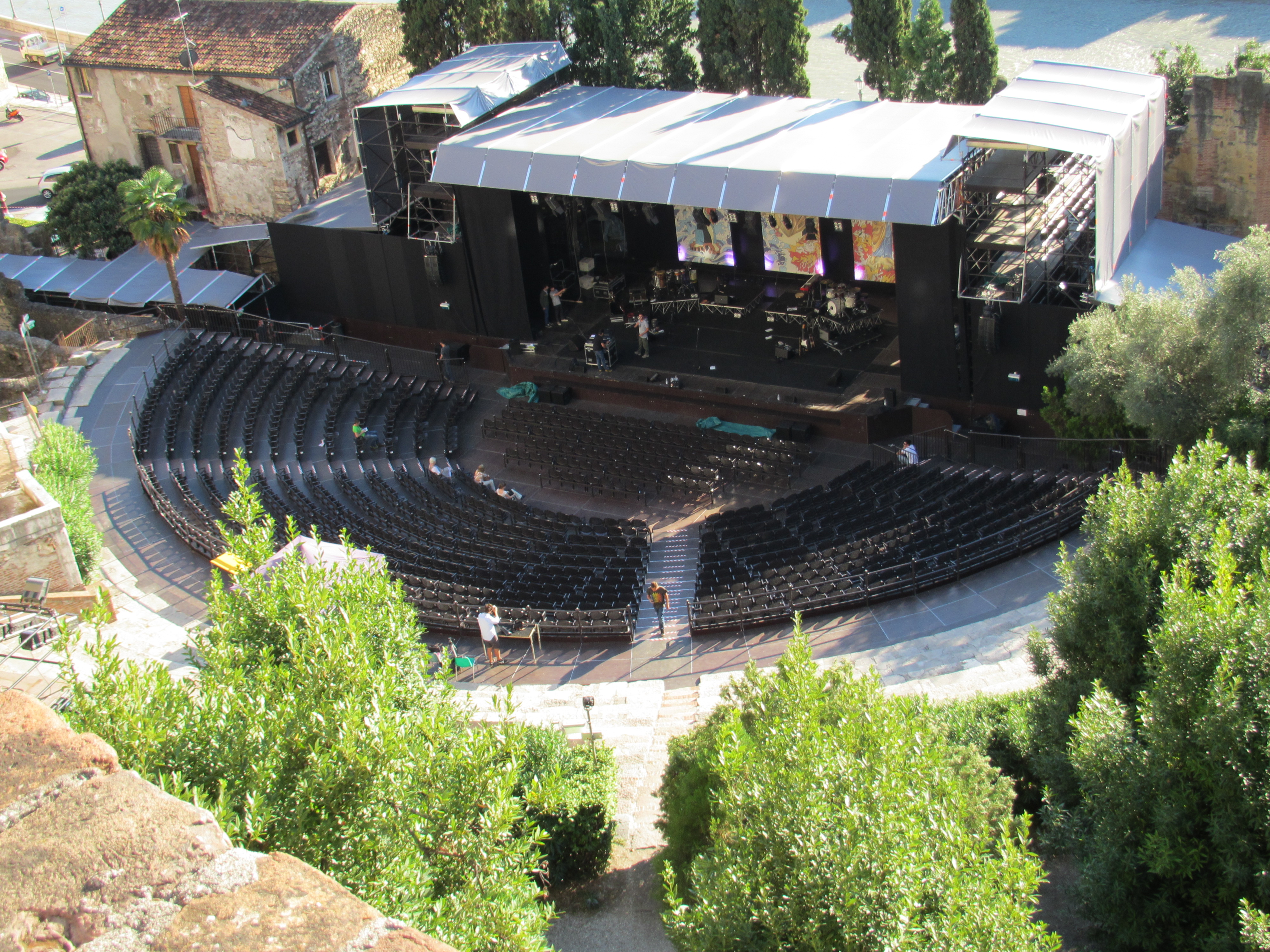
My favourite so far? The Roman Theatre is set up as an amphitheatre for plays and music and while I was wandering up its many layers a band was doing sound checks and playing odd tracks through the speakers. The sound was muffled outside, but as I climbed up the many chambers, cloisters and secret gardens the perfect acoustics of the theatre forced it to well up and drifted through windows, around corners and into private corners where I was almost alone and away from the city. Precious.

Verona

When you open the shutters in an Italian hotel room it is essential that…

Hotel Siena

….the sky is blue, the rooftops are red and the street is bustling with noise.

Welcome to Verona, city of Romeo and Juliet.

More from the weekend at the EICA bike show to come later.

Book review – Travels of a cyclist in Syria – Mary Russell’s “My home is your home”

Back in June I travelled to Dublin to speak at the Dublin Cycling Campaign Conference which had a special focus on gender issues.

http://www.maryrussell.info/index.htmMost of the day we were intensely discussing the politics of cycling in all its forms, but just before lunch all us policy wonks stood down and we were introduced to a tiny Irish woman who could hardly see over the lectern. The sparkling eyes and the streak of pink die in her grey hair suggested a feisty character and this was quickly confirmed when she began to tell some anecdotes from her 2011 book “My home is your home, A journey round Syria”. Highly topical in some sense because of the increasing gravity of the situation in Syria but she entertained us by talking about her travels and her attitude to cycling.

It was the perfect antidote to the seriousness of the rest of the day and she had the room smiling and laughing as we finished our morning. I was therefore especially pleased when Damien O Tuama the conference organiser gave me a signed copy of the book as a thank you for coming.

I actually read it ages ago and have had the blog post stored up in my head for most of the summer, but as I have confessed on my library page I do find it hard to squeeze the reviews into the blog.

Sadly however Syria has remained more than topical all summer, something that Mary alluded to when she spoke.

The book itself isn’t a cycling book in the way that other writers use travelling by bike to guide their narrative. Mary Russell is much more a cyclist who happens to use and enjoy a bike as transport when it suits, but equally uses taxis, buses and camels to get around. The two things that shine through the book are Mary’s enthusiasm for the people of Syria and her determination to bring the history of Syria’s culture to life by visiting the towns and buildings that feature in the stories of historical figures.

So we learn about poet Abu ‘ala Ma’Ma’arri whose work is thought to inspire Dante and a bike ride round Tadmor is an excuse to learn about Zenobia, Queen of the Syrian Desert,  or rather as Mary concludes in her delightfully down to earth manner “the Maggie Thatcher of her day”. I guess it is the insularity of my English education that almost none of the figures she writes about were familiar except for cliches in the murderous crusades of medieval times. What the book does is seek out museums, homes, mosques and sites associated with these figures, some of them almost unknown in the towns that host their historical legacy so Mary is forced to become a detective in almost every city to find her characters.

We even have a romantic heroine in Jane Digby, scandalous figure of 19th Century court life in England, Bavaria and other countries who at 47 finds the love of her life Sheikh Abdul Medjuel El Misrab, 17 years her junior and a nomadic chief. A visit to her former home in Damascus reduces Mary almost to tears.

Mary is in turn funny, mischievous, determined and scholarly and I am sure other readers will equally enjoy the prospect of tiny feisty Mary on her travels. Such a great sadness that the only reason I now hear of these previously unknown towns and cities is as casualties mount on the news. Read this book to find out what the world is losing to this inhumanity as well as to enjoy Mary Russell’s personality.

Links

Mary Russells web site here

To hear Mary Russell’s talk and all the other presentations at the Dublin Cycling Campaign Conference click here


My best day’s photography ever? The light of Venice

My old camera died last week, probably battered to death by the constant bashing in and out of pockets when cycling. A sad end to a regular companion of nearly eight years, but I can never say that I didn’t get value from it. Birthday coming up, so the present is decided.

It seems amazing to me that I have only been blogging for less than a year and already I can see a change in my photography, thinking of more interesting approaches and images than I did before so I can describe my travels. I feel quite embarrassed when someone asks about how I took a shot or what camera I use because I really cannot compare to the work that I see on the web and I am using a small eight year old camera. But there are shots from earlier years that I am quite pleased with and I thought I might put together a self-indulgent set that deserve to join more recent ones in the blog to close the door on that camera.

However when I was looking I came across just one set of shots that stood out above the rest and deserved a post of their own. So indulge me – RIP Fujifilm Finepix E550.

Spring three years ago I went to Venice for the first time.

We arrived on a horrible wet day and stayed in a hotel on the mainland. In the evening we took the train over to the island city. I must admit I was completely underwhelmed as our hosts dragged us through a maze of dark, rainy and graffiti strewn alleys to a restaurant and then back in the evening. Clearly a place that was over-rated and ruined by its own reputation.

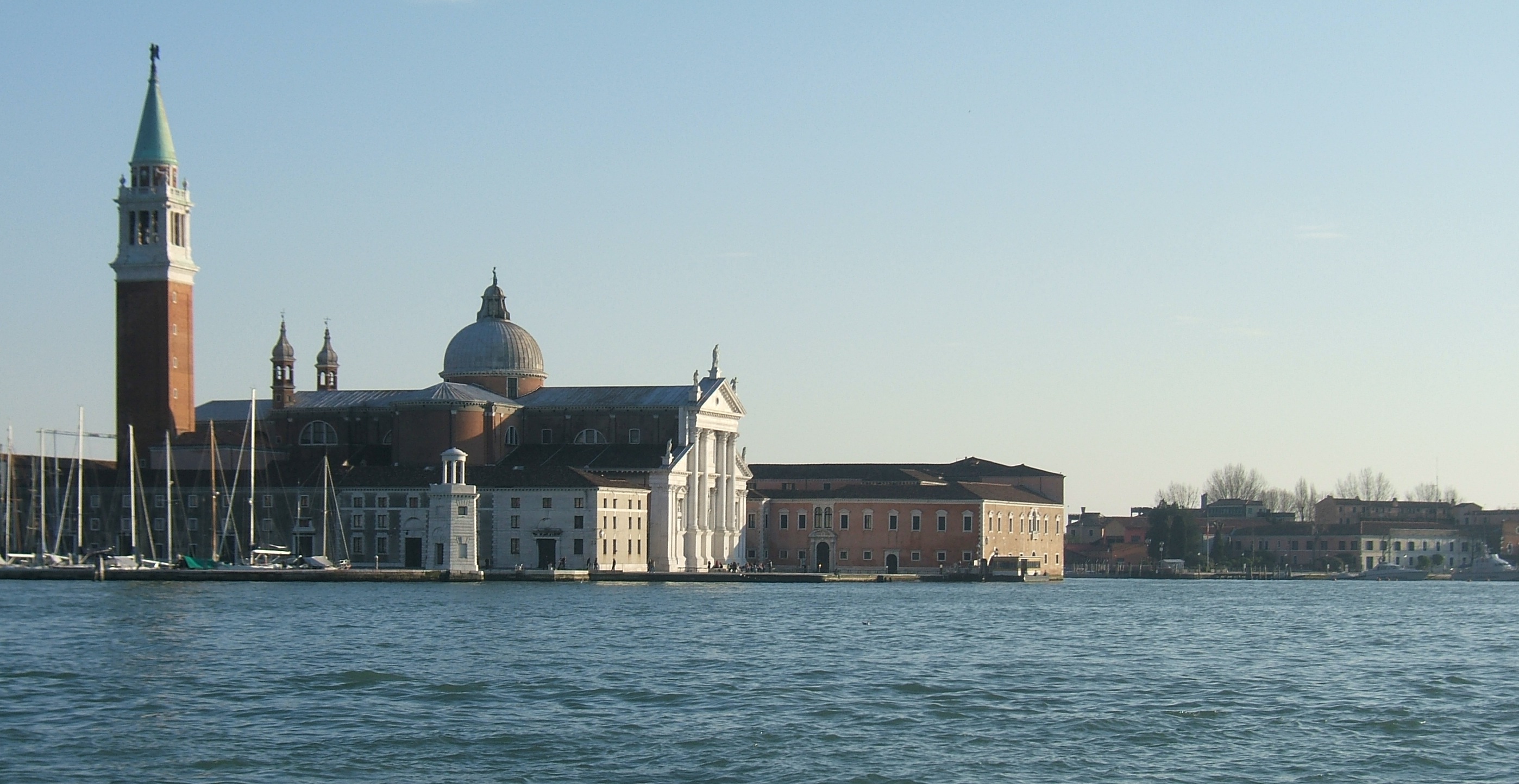
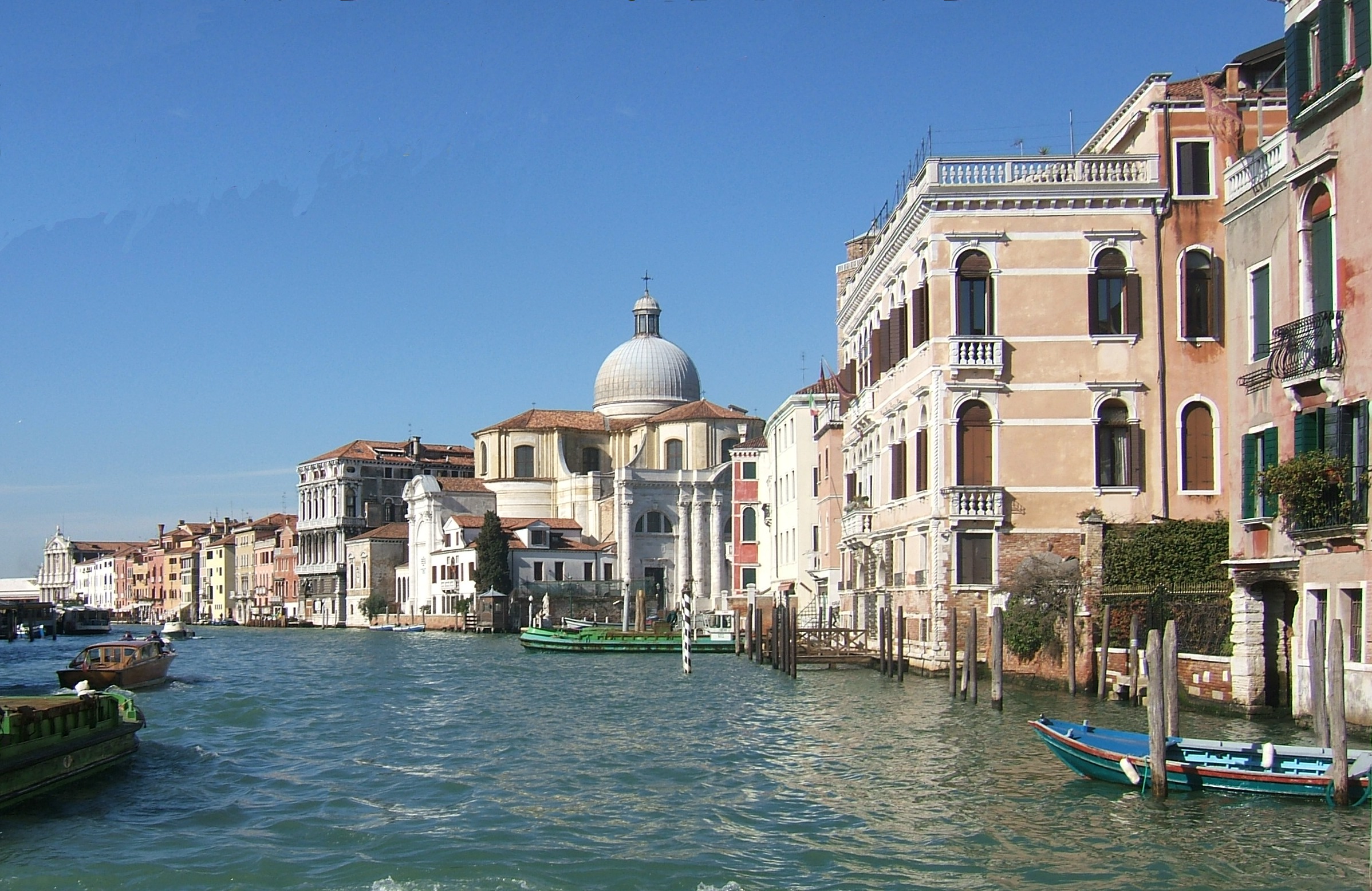
However I went back on the Saturday morning with a free day and the most extraordinary light burst from a cloudless sky, especially out on the ferries from the Grand Canal into the surrounding lagoon. From a photographic point of view the best opportunities I have ever seen, and a small chance to capture why Venice is “Serenissima, Queen of the Adriatic”. Possibly my best day with a camera. So far?

VeniceVenice Grand CanalVenice

Bodensee, Allgäu, Southern Germany, bicycles and crimes against cycling

Test ride carbon fibreI am at the Eurobike trade fair for work. Mostly bike fairs involve being plunged into a morass  of competing booths and emerging blinking into the light after three or four days in complete exhaustion. Click the “Cycle Shows” tab below to catch a different flavour of the shows I have experienced since taking on my new job.

SwitzerlandBodensee ferry and bicyclesBut Eurobike has a treat in store. By an accident of history Europe’s largest bike show ended up in the town of Friedrichshaven on the shores of Lake Constance, the Bodensee in southern Germany. The industry types who have been coming here for 20 years or more moan and groan about the lack of access and hotels and the traffic jams because the town isn’t set up for a show in this scale.

But – but, but, but. You have to get here. And in many people’s case this means coming via Zurich. Two hours on Swiss Railways, then the ferry across the Bodensee from Ramshorn or Konstanz. As you cross the ferry you can also see the evidence of the booming cycle tourism culture building in the area, each time I come I see more and more cyclists – much better than my first lonely ride as a student visitor in 1984.

And you get to stay out in the small towns of the Allgäu with family run hotels in immaculate settings with restaurants set out on the traffic free market squares.

And demo day? A 30 minute bus ride up into a tiny town in the Allgäu hills where 2000 bike shop owners, business people and hangers-on like me get to try out hundreds of bikes on waymarked trails.

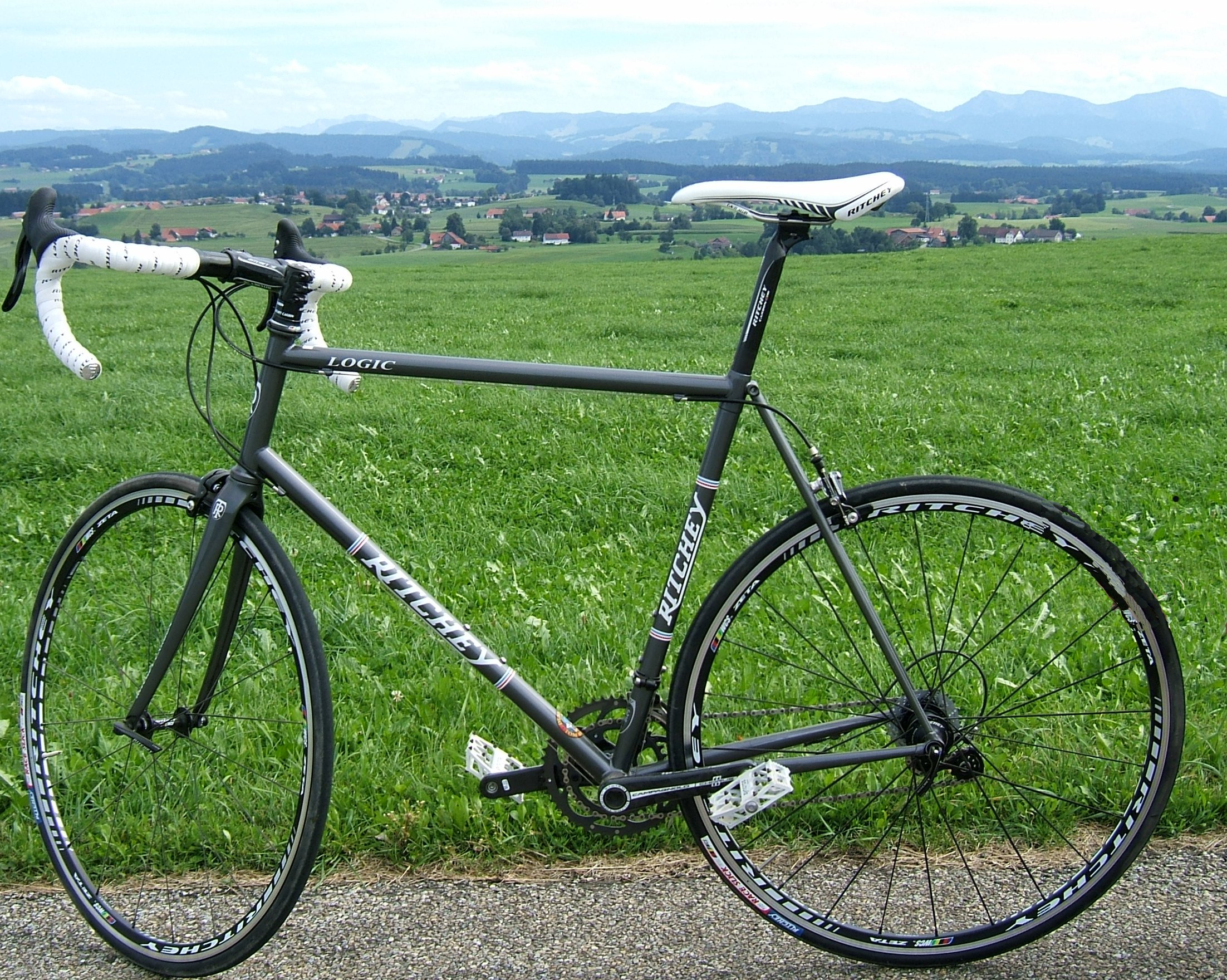
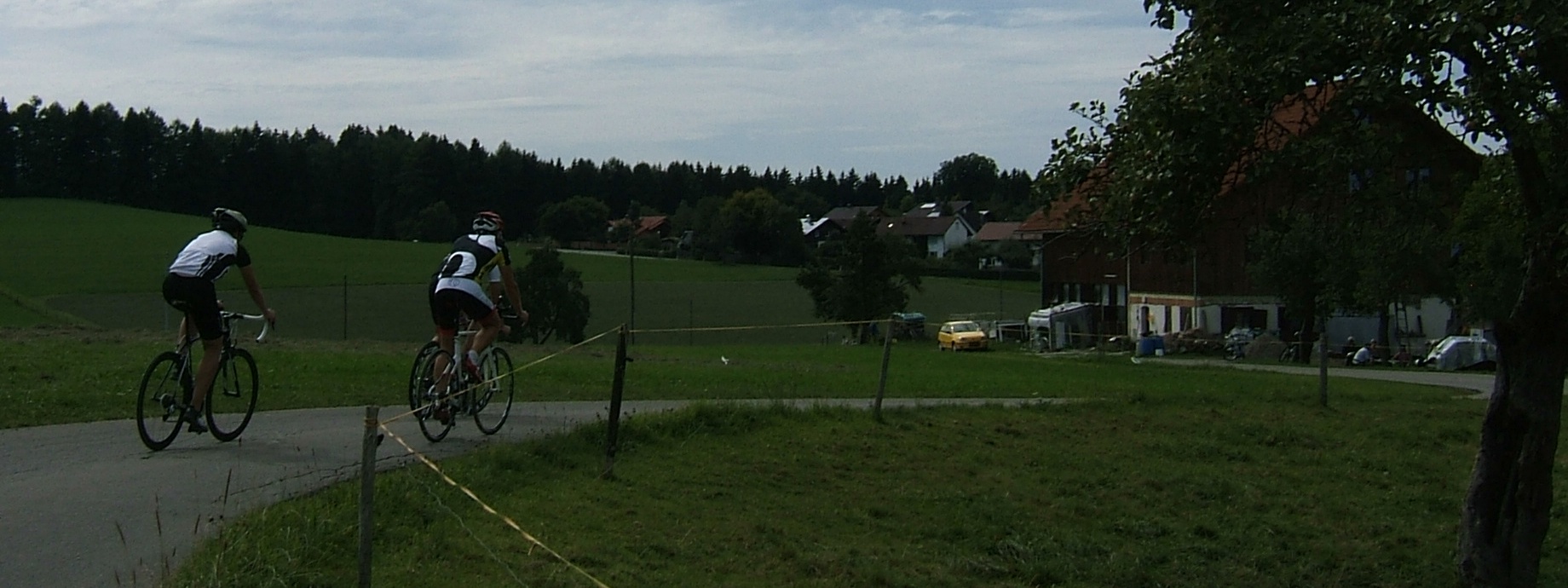
What’s not to like – especially as this year we were treated to roasting hot temperatures. We took two really nice road bikes from Ritchey out onto the road route which gave some lovely images of rolling hills, beautifuly kept farms and very smooth roads. We also tested two of the new range from Tern which were very impressive, and much more relevant to real life in Brussels!Allgau scenery

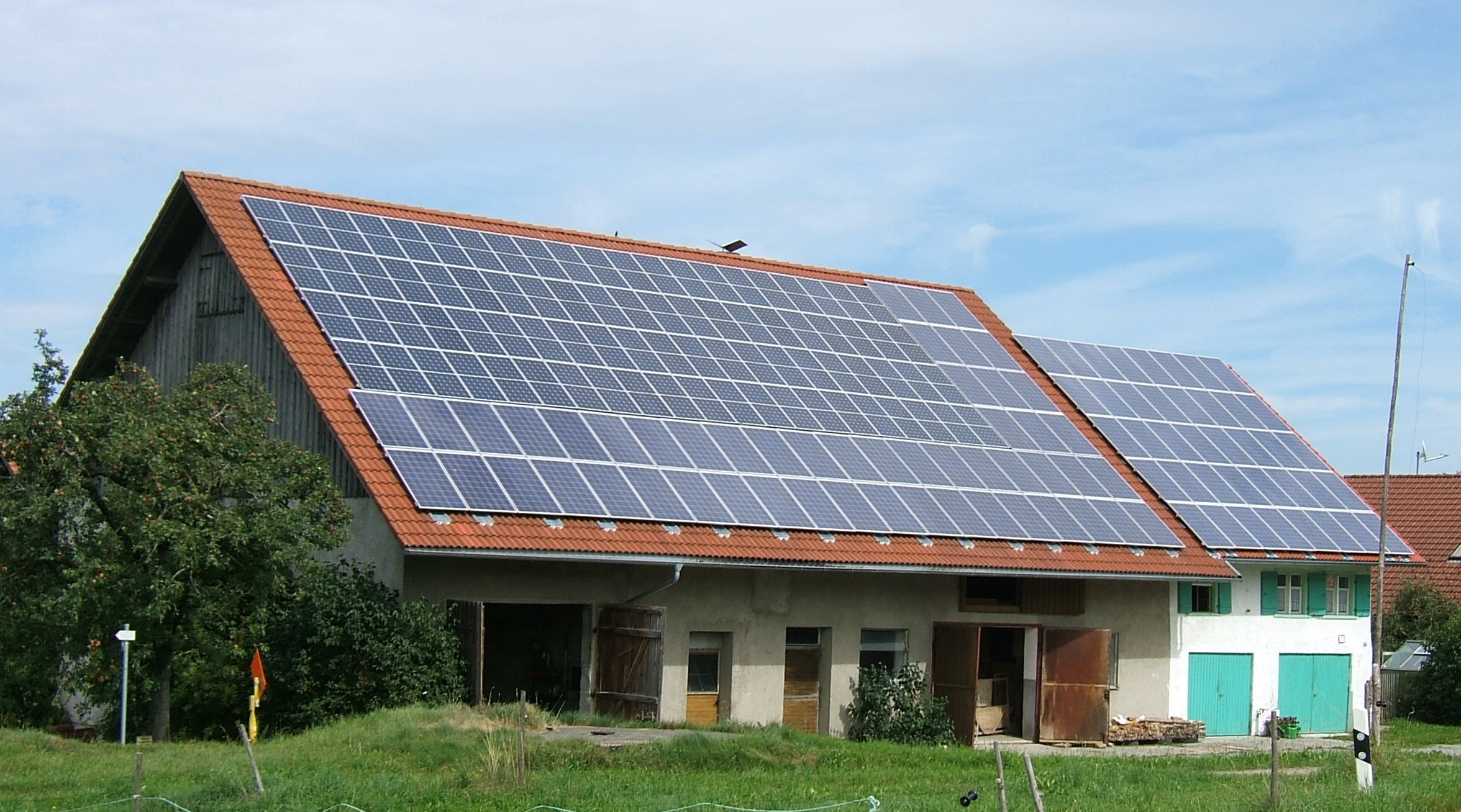
Allgau sceneI also noticed that even the smallest settlements had a lot of solar panels – showing just how far ahead of most of the rest of the world this aspect of German life is. All in all a picture of civilised living.

However what is unforgivable is the Australian who conformed to national stereotype and brought only flip-flops to a cycling demo day. (They are called “thongs” to Aussies – please avoid confusion with a piece of string pretending to be underwear, which could in fact be a worse sight on a bike).

Actually an even worse crime was committed here- actually trying to justify the “thongs” by telling the staff on the booth that Cadel Evans dresses like this at the weekend. Sorry – no, Cadel has some class.

Brussels had a lazy Sunday morning on Wednesday. So let’s go cycling!

BrusselsThe first part of last week I was working in Brussels, but I was completely thrown by discovering a Belgian public holiday on Wednesday when I had planned to work. I still can’t get out of my British habit of assuming all public holidays are on Mondays and I certainly haven’t got any knowledge of Belgian holiday dates in my head yet.

However this prospect quickly turned to optimism because the weather was forecast to be great, I was staying close to a good route out of the city – and best of all Brussels likes a lie in:

Even on normal work days I find this is a city that is slow to get started. The urban commute is squeezed into a relatively narrow window and very few people even consider early starts in their workplaces. I anticipate Brussels folks being really shocked by the number of suits already at the main London stations by 7am on most weekdays, let alone 8 or 9. I am almost always the only cyclist on the roads before 8 here and when I have been here on weekends and public holidays I know that the lie in is always extended, even better during school holidays.

I love early morning bike rides so I was up and away on Wednesday knowing that the place was going to be deserted and I could come back and knock off a few hours undisturbed work too.

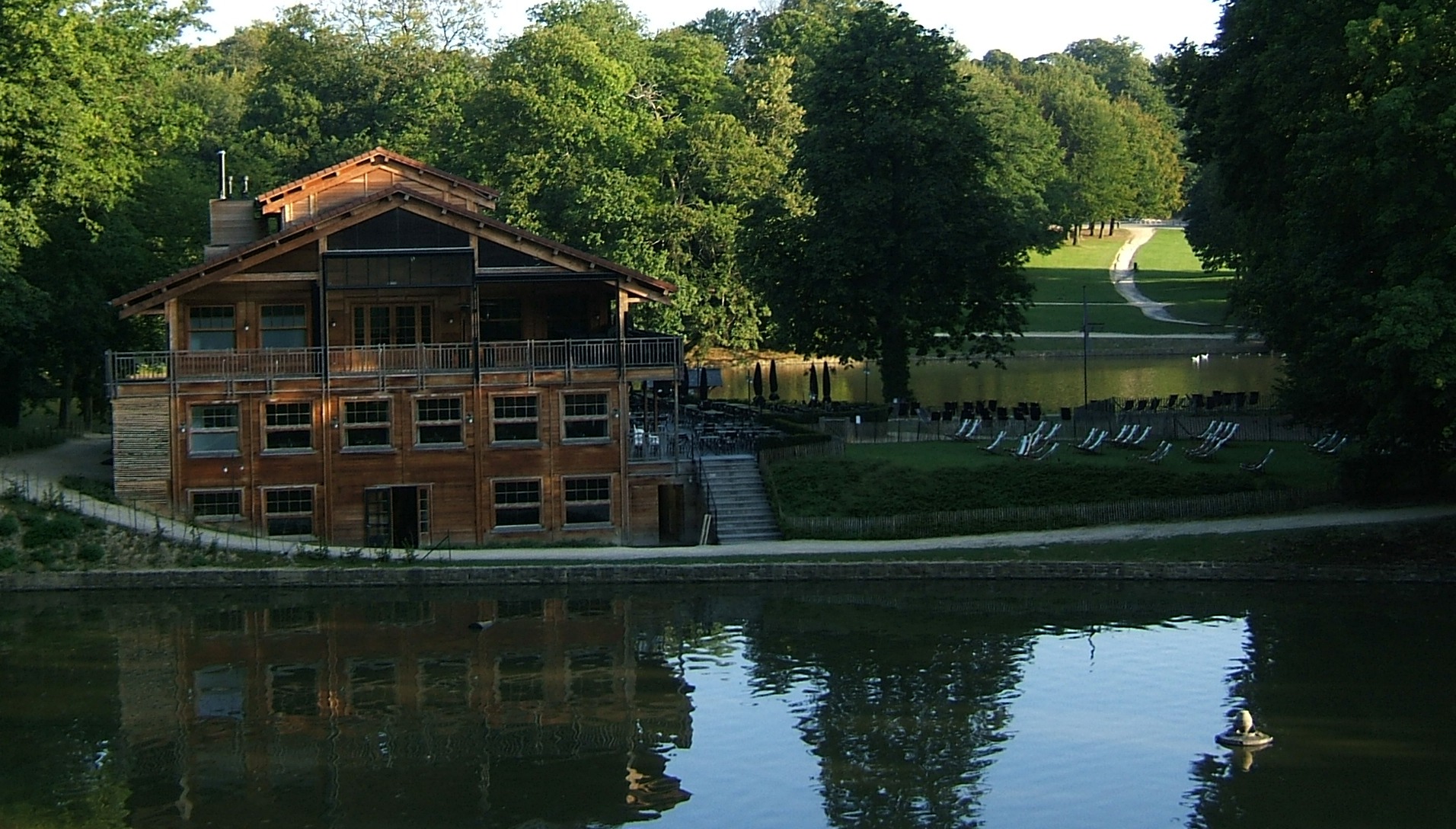
Bois de la Cambre, BrusselsFirst heading south through Bois de la Cambre which is a popular and attractive large park. Crazily its perimeter roads have been allowed to become part of a car commuting racetrack on weekdays, but at least they are closed on public holidays and weekends so they were very welcoming today.  The park pavilion Ucclewas optimistically offering its deck chairs to all comers, but it would be several hours before they were needed.

The mansions of the wealthy that edge the park and the surrounding routes to Forêt de Soignes looked appropriately exclusive in the morning light, but I also felt exclusive to have a four lane boulevard almost Avenue Franklin Roosevelt, Brusselsto myself – extraordinarily quiet for a big city.

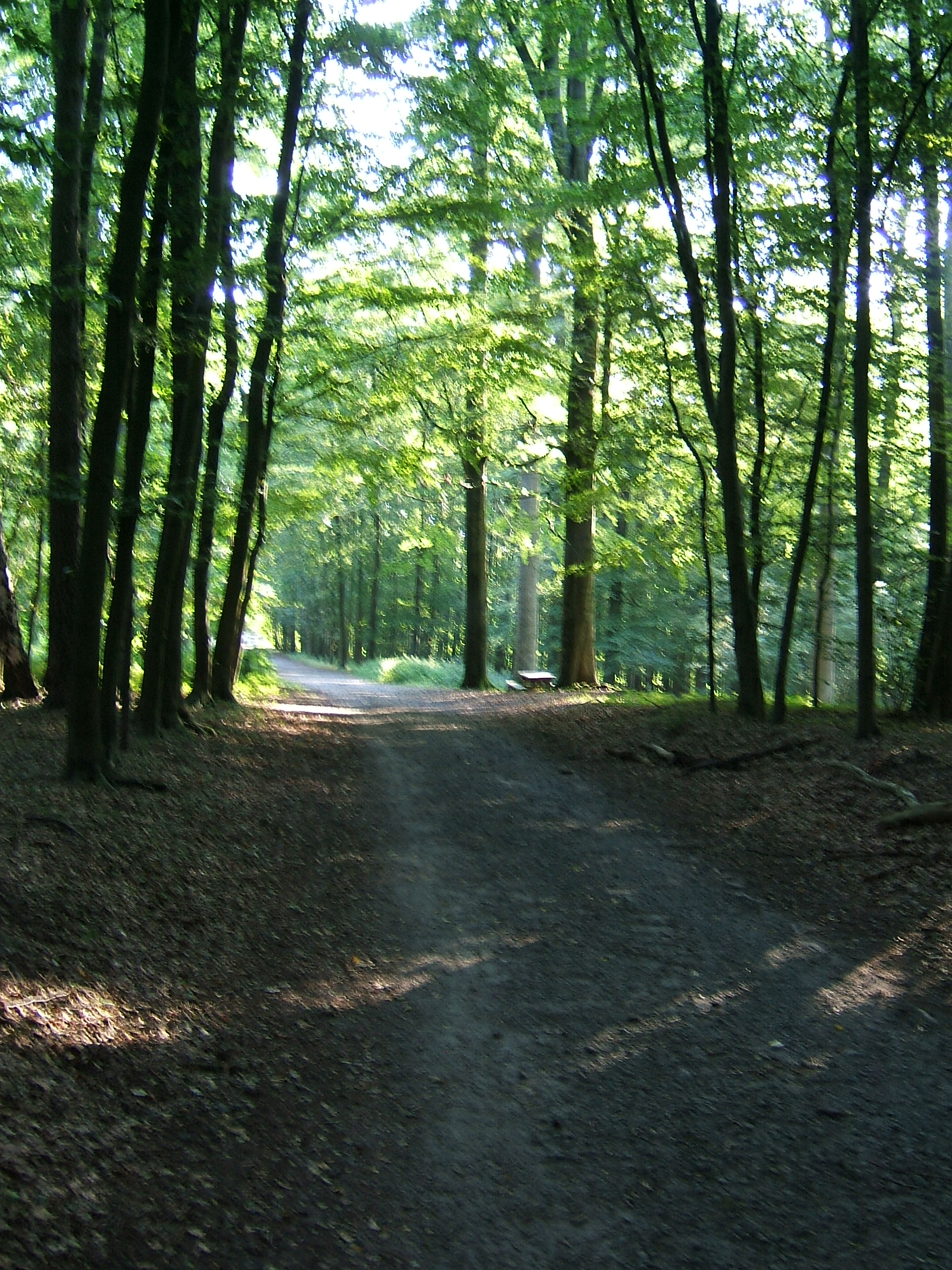
And then into the forest (Zoniënwoud in Flemish). I have quickly discovered this area for morning and evening rides since I started working here. It is great that just 6km from the centre of the modern capital city this area there is a forest of over 4000 hectares, stretching across the southeast of the city as a green belt. It is disturbed only by a few roads and unfortunately the motorway which does bring some resented noise to the tranquillity. Wikipedia  tells me that like many such forests it has been eroded over the years, not least by Napoleon but now I am told it is one of the successes of Belgian political gridlock – the forest is split over the regions of Flanders, Brussels and Wallonia and nobody is going to let Brussels expand into their territory.

Brussels Greenway signI can strike out through the woods on the signposted round Brussels greenway and a number of other better surfaced tracks, or as much as my small wheeled folding bike will allow I like go off on the dirt tracks and side paths discovering dips, hollows and tranquil ponds in ancient woodland settings. I do get some funny looks from the mountain bikers, not too many small wheelers in here.

On Wednesday after well over an hour of bouncing around I returned to a recent discovery, the smooth asphalt surface of the Dreve des Tumuli, a beautiful car free route that swoops and climbs through the forest contours back to the edge of the city and my ride home.Brussels forest

On this day I had seen almost no one except a few dog walkers but as I returned it was approaching 9am and the first cycle tourists were beginning to wander out sleepily.  By the time I got to Bois de la Cambre the jogging community was in full flow. Maybe it was to avoid the later heat, or just an ingrained daily habit which gave them the best of the day – but where are the cyclists? Perhaps by lunchtime many more will be out in Forest de Soignes along with the walkers and families however I am told it is rarely crowded.

But on Wednesday it was nice to believe it was almost exclusively mine. Thanks Brussels.

Googlemap of the area below

Cycle Touring in British Columbia – notes and reflections

British ColumbiaI was quite disappointed with the lack of resources on the web when I was researching my recent cycle tour in British Columbia. It was only a short trip in summer so the risks of getting anything significantly wrong were quite low but it was quite a frustrating process.

Putting “cycle touring” or “bicycle touring” British Columbia into search engines most of what I found was commercial tour operators or tourism sites that then provided no content or links to mountain biking centres. This may be linked to how few cyclists I actually saw. It was the height of summer and I only saw three tourists despite the amazing routes I was riding.

Half a dozen useful comments might have alleviated some angst, so for what it is worth here are the things I wish I had known before I set out, written down to help any future travellers, in particular those more used to touring in Europe. It is not at all a definitive guide, it would be great if someone in BC gave some thought to this, it would really help.

Route planning – roads

My biggest fear was the fact that the bulk of the route seemed to offer nothing but main roads including Highway 1 which in any country probably indicates a very major route.

I spend time online and looking at maps to see if there were alternatives because I was quite concerned and I really couldn’t find any advice. Certainly most of the bike routes online seemed to use main roads so I guessed I would be OK.

In reality I didn’t have much to worry about for three main reasons.

  • Firstly the traffic volumes were really pretty low by European standards except for a couple of sections. Without the RVs (recreational vehicles or campervans) some sections would have been almost deserted.
  • Secondly the wide shoulders on most routes were an excellent cycling route.
  • Thirdly the behaviour of Canadian drivers. I have never cycled anywhere where the drivers gave a lone cyclist such a wide margin when passing – remarkable. In particular truck and commercial vehicle drivers in the similarly deserted South Island of New Zealand could take a big lesson from the Canadians.
BC Highway 1However I will give this a health warning. There were some busy sections I cycled near Kamloops and Kelowna, but in both cases there were alternatives near these larger towns. My section of Highway 1 was bypassed by an alternative new route and when the two sections recombined it was much busier. The short section of a major truck route on Highway 97 North/South just north of Cache Creek indicated that this might not have been so much fun had I chosen to follow it for a long distance. And some colleagues reported that they felt that the provision of a cycle route alongside the 4 lane highway from Vancouver to Whistler just did not look safe because of vehicle speeds, but the person who rode it didn’t complain and I felt it didn’t look too bad from the bus.

However in general I would strongly say that even these specific examples were manageable and the rest were amazingly quiet and I really don’t know why I worried.

Second health warning – I wonder what this is like nearer to winter, because I guess snow could fill the shoulders even if the road is ploughed for vehicles.

I would also flag that there were really no alternatives except dirt roads in many cases. For example I spent a lot of time looking at alternatives from Cache Creek to Kamloops to avoid Highway 1. I thought it might be possible to go to Ashcroft and follow dirt roads to Savona. But I looked at several sources on paper and on line but I never really did work out whether the road went through, and one mystery line turned out to be a railway, not a road!

From the plane on my way back to Vancouver I got a much better understanding of the wide network of dirt roads in the back country because the dry weather had dried them to a yellow sand or clay colour which contrasted to the forest well. However I would not have wanted to risk them without very good mapping and a satnav or compass, and a full mountain bike because there was not a flat section in sight.

Maps and routes

I bought a map of Southern British Columbia from Amazon before I left for some route planning and stupidly managed to lose it but it was okay for planning. (British Columbia South: ITM.113)

So in Vancouver I looked for some alternatives. It was a complete disaster. The one and only map shop in Downtown Vancouver had closed and the alternative shops had a rubbish selection of town maps or maps on a huge scale that did not give enough detail for cycling. I thought I might do better in Whistler, but for an outdoor town the selection was to my eyes still really poor.

The only maps that appeared anything like the detail I would expect were a couple of atlases calling themselves “Backroads” atlases aimed at 4 Wheel Drive vehicles or Trail motorbikes. However the atlases did not cover all of my routes and would have cost me over $50 for limited benefit.

In the end I navigated using Google Maps, Bikely and pages torn from tourist guides for each region. This was of course possible because of my first point above – I was sticking to the main roads and so very large scale maps were all I needed. And in reality the maps on sale tended to meet that need – a country where the long distances mean people need big maps just to travel between population centres, or detailed local maps for the back country trails used to get into the woods or hills. Neither of these really work for the cycle tourist, but in hindsight I was not significantly disadvantaged by a lack of maps.

Real credit must go to online bike route website Bikely. Almost every road I wanted to ride had been covered by someone who had done it before so maps and profiles were available. It occasionally took some detective work to isolate just the section of road I needed and combine it with others to get an overall profile. But other sections were a perfect match, another rider doing just the same section. The key elements I needed were the confidence that the main roads were rideable and the route elevation profiles which told me the climbing. I also found mapping site geokov map maker which was great for topography.http://www.bikely.com/listpaths/by/nozza

The other thing I didn’t really find online but I now know exist are some interesting long distance cycle routes which might well have been good to try and incorporate had I known. Simple but bonkers fact is that the Trans-Canada Trail web site does not contain the word “touring” anywhere so will never be found in a search engine looking for cycle touring routes.

Sea to Sky TrailIn Whistler I discovered that the Sea to Sky route which comes from Vancouver is being extended beyond Whistler and is intended to go on and link up with other Trans-Canada routes which form a greenway network across Canada. The section to the East of Whistler is going to be an offroad trail running away from the main highway. However it will be much slower than the road route because it climbs more and the surface is rougher but it will be great for those looking for leisurely and scenic riding.http://www.kettlevalleyrailway.ca/

I also found that I was riding close to an amazing cycle route called the Kettle Valley Trail which is part of a whole network of former railway lines. The “trestles” or wooden railway bridges and tunnels have in many cases been restored and apparently provide some great cycle routes. There are published guides and histories which would have made a good pre-read and I could have aimed to include some of them in my route had I found them beforehand. Doh!

Planning services

This route was in Southern British Columbia which is the relatively densely populated part of the province. Despite that there were long sections that had absolutely no services. I could easily have made some big mistakes and left myself without food and drink because these sections did include access to camp grounds and provincial park centres but unlike similar venues in other countries most of these had no public services such as shops or cafes. The ubiquitous RVs may partly be to blame, even campers travel with a week’s supplies on board.Sign near Pemberton British Columbia
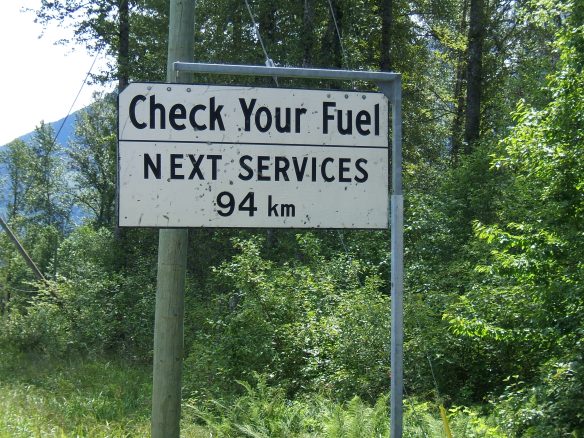
However I am told the real reason even quite big and popular camping grounds have no services is because the season is so short and it isn’t commercially viable to open a business based on just a few weeks’ sales. Therefore I carried extra food and even put a filled a Camelback bladder with extra water in my panniers for a couple of legs.

The best guide I found was the web site Mile by Mile which actually specified what was available along a number of the roads I used but I would suggest caution because opening times can be a bit hit and miss too.

Bikes

The roads I used were in excellent condition and could be tackled on almost any road bike.  I only experienced a couple of dirt roads and generally they were good too, but steep, up to 13% gradients.
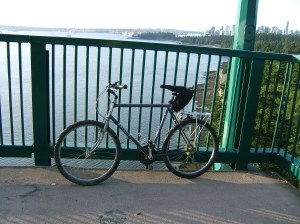
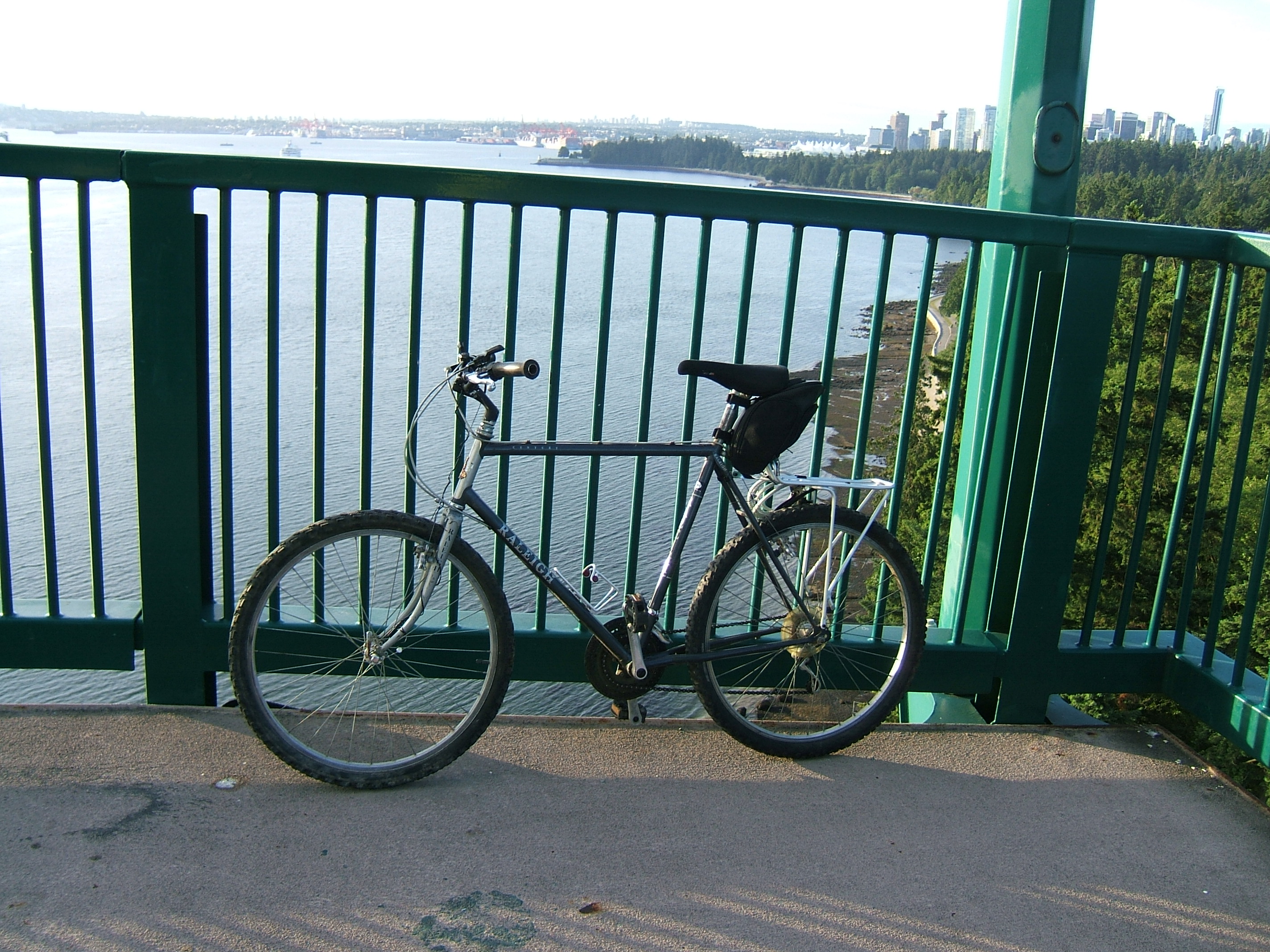
MTB as cycle touring bike However I would strongly recommend consideration of a 26 inch wheeled mountain bike set up as a road tourer. The roads are steeper than continental Europe with 10-13% encountered on several occasions so the lower gears of the MTB would be useful. I was over-geared on the bike I bought, I should have got the freewheel changed as it was probably only about a 25 tooth on a road triple which wasn’t enough. But perhaps more importantly the BC mountain bike scene is vibrant and you will find spares and repairs much easier to find, even in small towns. If you are going to buy a second hand bike as I did the range of MTBs on offer is much wider too.

That doesn’t mean foregoing dropped handlebars, I have regularly adapted them on to MTBs but I used some bar ends to get a different handlebar position.

Accommodation

I stayed in motels booked through web sites apart from the Alta Vista chalet run by Bear Back in Whistler. No real plans to carry camping gear around or buy it in Vancouver.

The advantage of the motels were:

  • That the rooms are large and mostly ground floor and I could take my bike inside all of them.
  • Clothes washed either in the shower or in washing machines daily and dry overnight by using the preferred wringing them out in a towel technique – always works with a plentiful supply of towels.
  • Microwave, tea/coffee, fridge in every room so I could buy and store food, saving money on meals all the way unless I fancied buying out. Although really stupidly the rooms don’t provide plates, knives and forks so I had to buy a plastic set. The probable reason (and downside) is that the selection of foods in the average small supermarket or convenience store was generally really unhealthy and the type of stuff microwaved in a burger bun. I relied on granola and milk in a cup (or several cups) as the most reliable breakfast, topped up en route.

Alta Vista Chalet would be worth using as a base (if not booked out) even if you are passing through Whistler on tour. It is a little cycling mecca – everyone on the staff and visitors is a cyclist, there is a really good workshop in the basement and the food is of the type and quantity that we love!