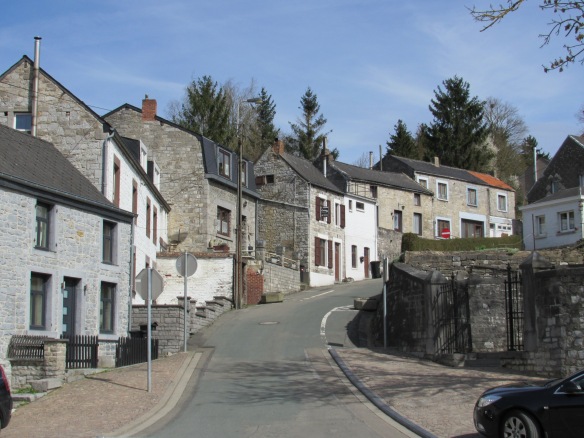
Many ways to watch the Tour of Flanders

There are many ways to watch the Tour of Flanders.

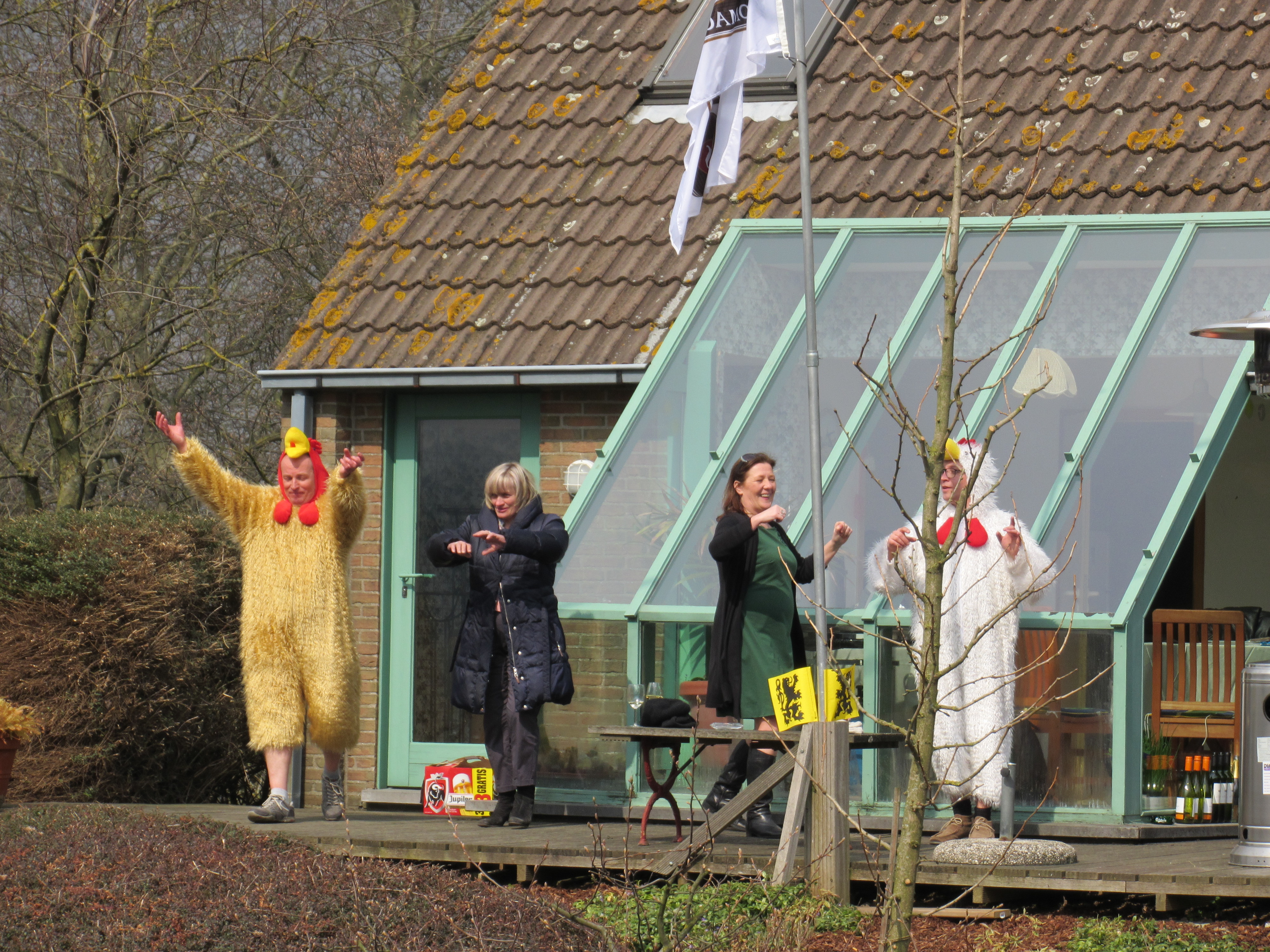
Stand in your garden and go “Oh look, its Tom Boonen”

Look its Tom Boonen at Tour of Flanders

Or

Watching the Tour of Flanders

There were even the Dutch guys who brought a lorry load of delivery bikes to cycle between bars.

Tour of Flanders Bakkiefietsen Tour

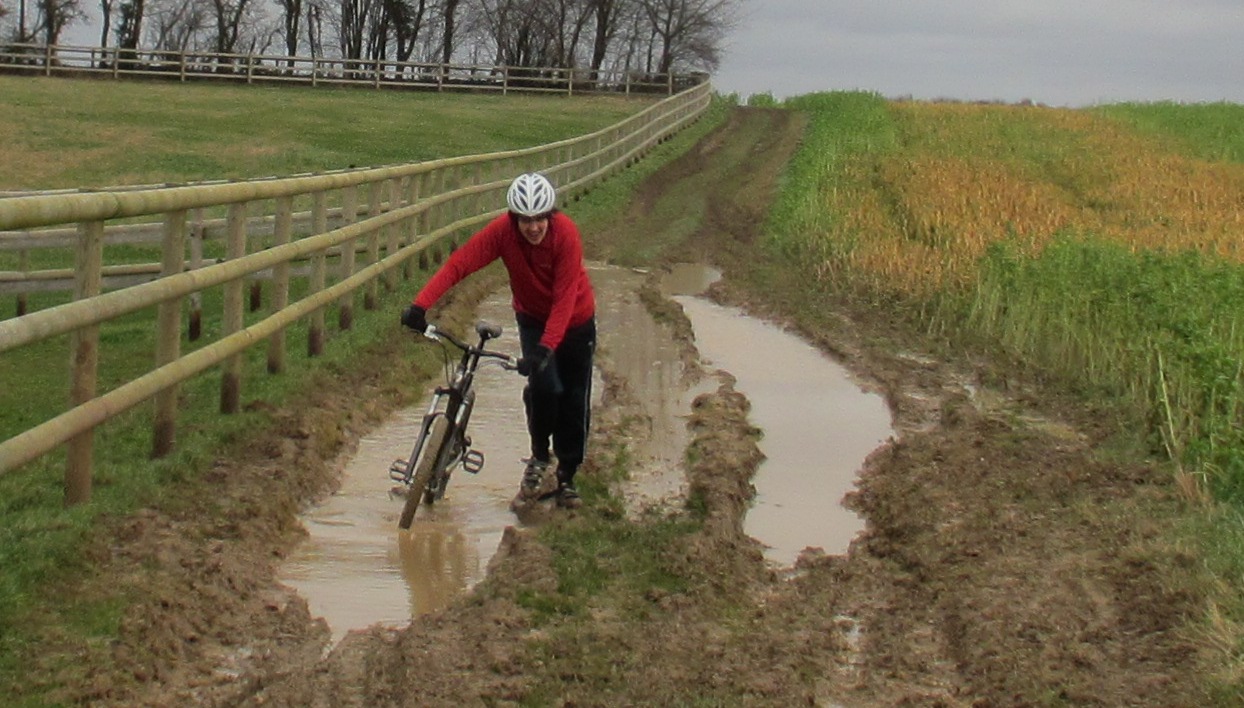
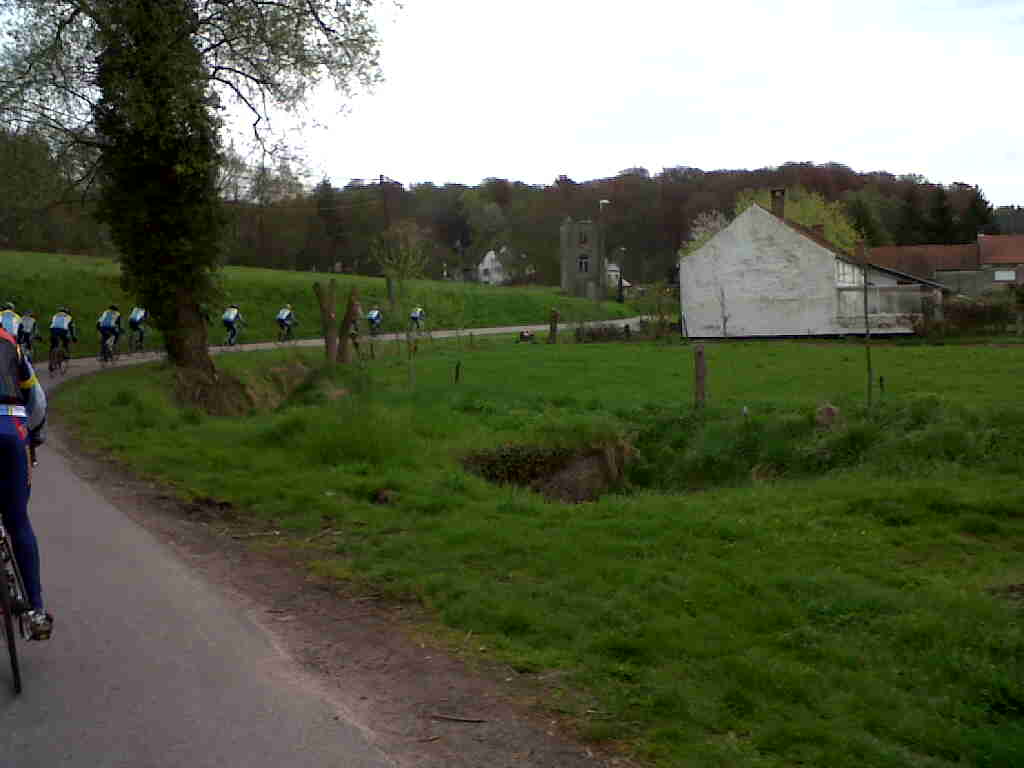
I was invited by Vincent Meerschaert and friend Wauter to join them on their 100km dash between the bergs, which is almost certainly why my legs ache so much this morning.

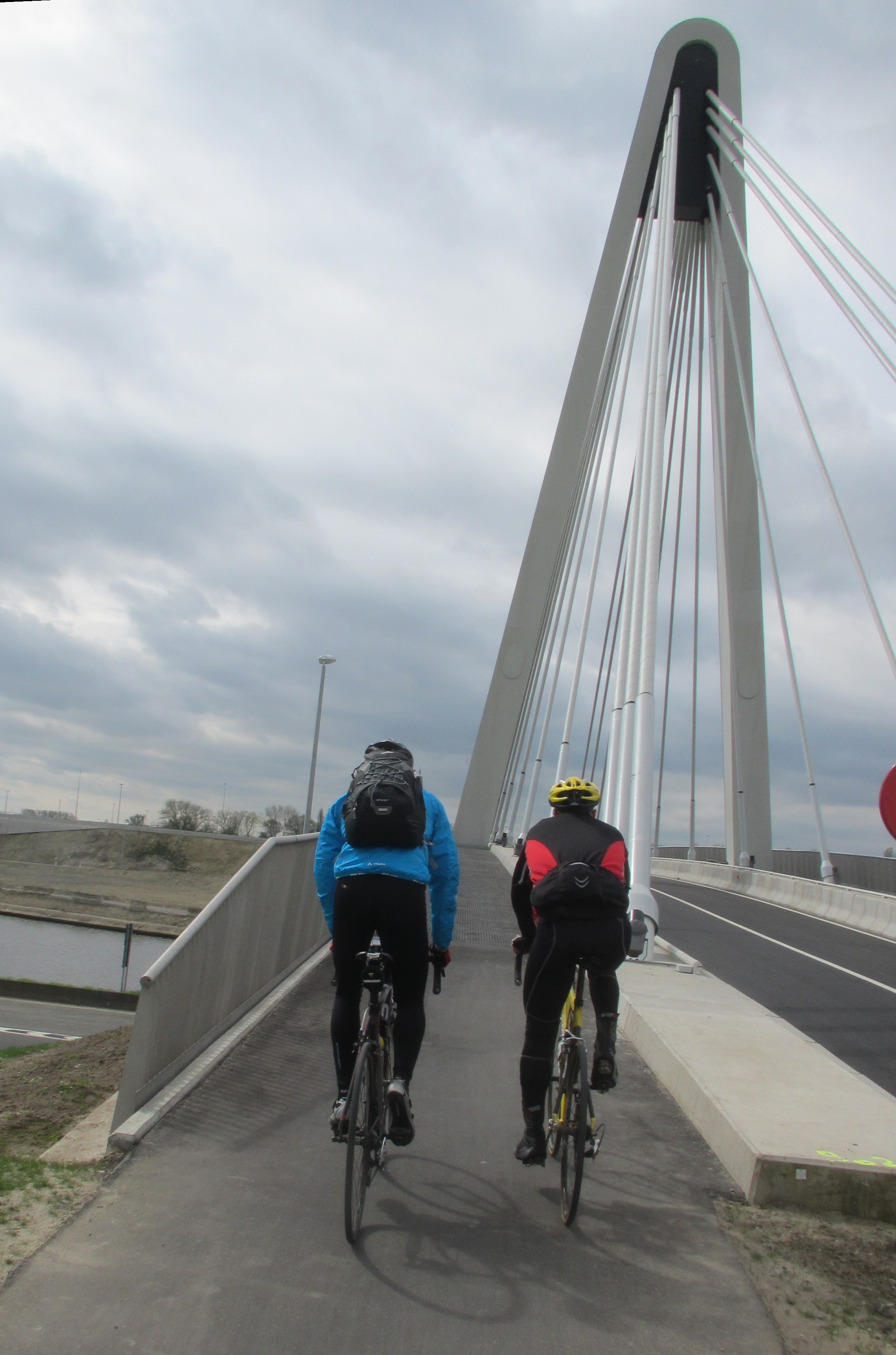
So we got to take in some superb Flemish cycling infrastructure such as the brilliant new suspension bridge near Ghent,

Cyclists Suspension bridge Ghent

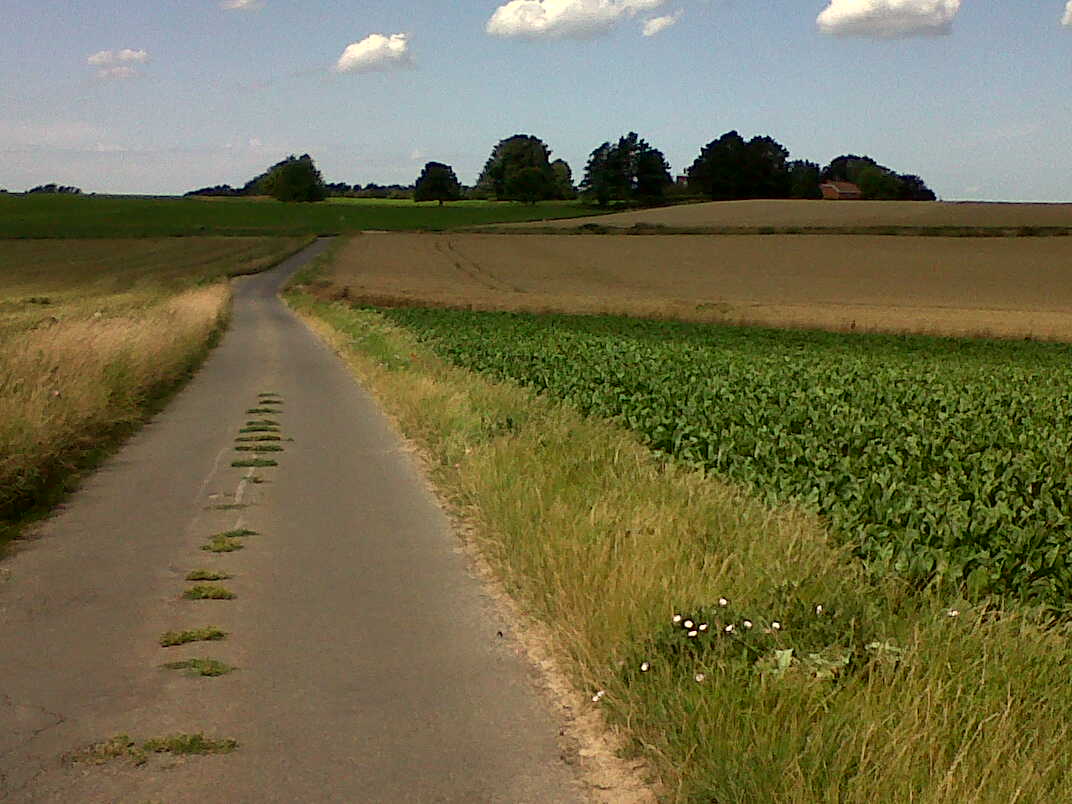
Arrow straight touring routes

Cycle touring path near Oudenaarde

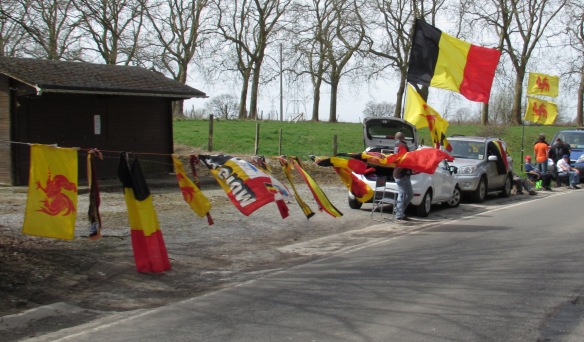
And to hang around the legendary spots like the Koppenberg and the Oude Kwaremont to take in the atmosphere and see the race unfold.

Kevin and Vincent at the Koppenberg

I will post a few more photos and a more about the ride, but it is fair to say I had a great day out once again with the Belgian cycling fans. It is an amazing sport that we have which lets everybody feel so close to the riders and become part of the race. Surely Flanders is one of its spiritual homes.

Tpor of Flanders riders Haaghoek


The sequel – After “10 best things about being a cyclist in Belgium” the “5 worst”

Belgian cobbles

Thanks for all the positive feedback about my previous “Ten best things about being a cyclist in Belgium”.

If a visitor wanted to gently tease our Belgian hosts about some of the less attractive features of riding here you could line a reasonable consensus around at least four of the list below. And as an ex-pat Brit I am putting in a special plea for the cyclists’ café stop.

  • Ridiculously bad road surfaces
  • Compulsory cycle lanes
  • Unfathomable driving
  • So called touring routes that don’t exist
  • No tea stops

Ridiculously bad road surfaces

Cycling Wallonia

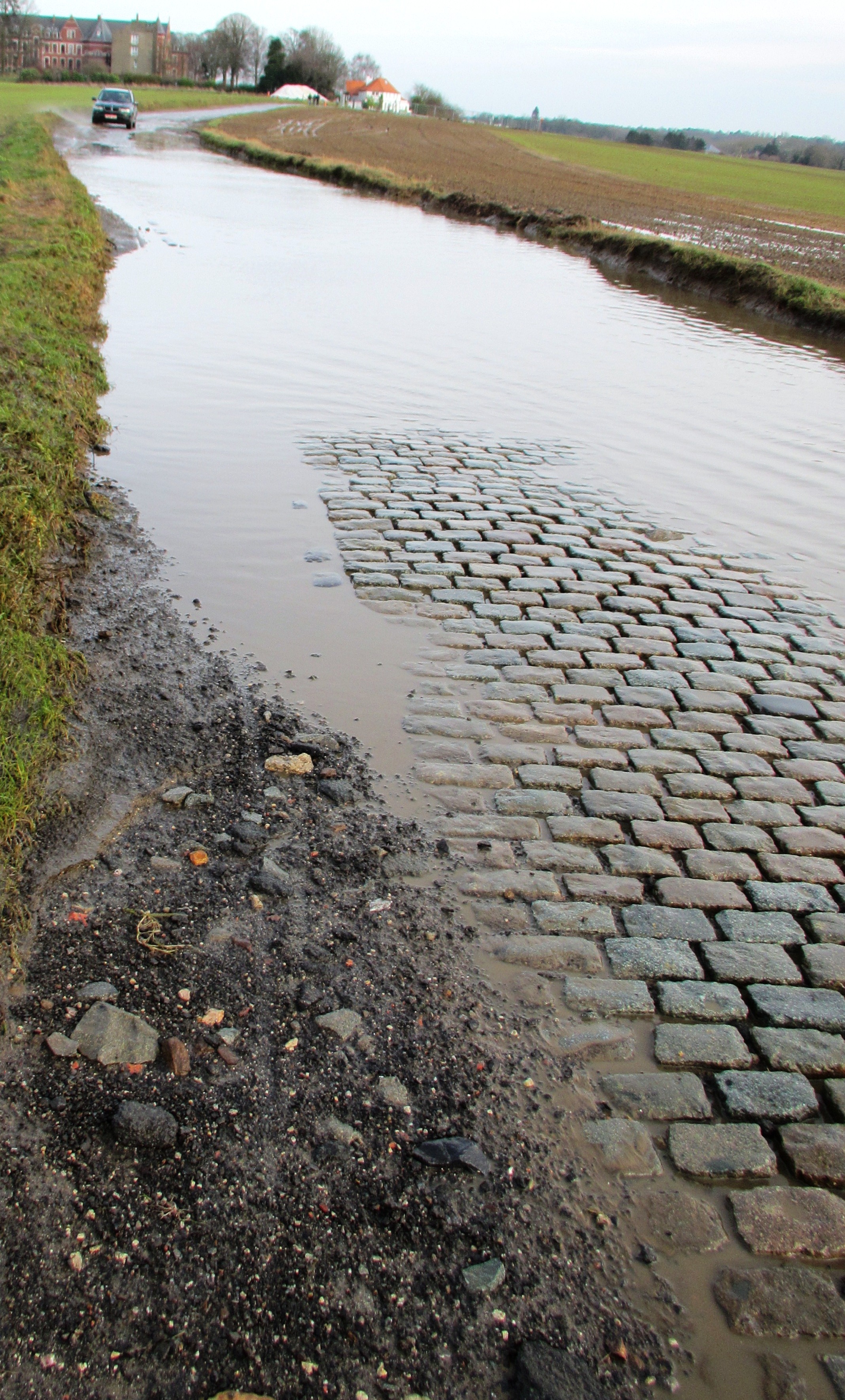
A road defect reporting tool like the wonderful www,FillThatHole.org.uk would be seen as some sort of joke here, overwhelming local authorities by the sheer volume of holes and degraded surfaces in Belgium.

Waterloo cobbles

I put it down to the starting point. If 200 year old cobbles are acceptable as road surfaces then it seems that anything else is a bonus. I come back from rides with the local club with my neck and shoulders aching from the battering despite the fact that the group leaders make big detours to avoid all the worst stretches of pavé in the area. And I have already had my first nasty crash on the holes, the only thing missing from my set is a bent rim or two, but I am sure it is to come.

Waterloo Belgium

And this carries over to unswept and unrideable cycle paths, pavements and road edges. Yet I hear almost no complaints and there does not seem to be a wave of litigation from crashed cyclists and motorcyclists to force the authorities into action. It is how it is, apparently.

I had sort of assumed that the cobbles themselves are somehow wired into the Belgian DNA and that by living here you gradually hone a riding technique that works for you and it all becomes rather straightforward, a bit like living in the mountains.

In reality it appears that while practice means local riders have less fear of the worst pave than tourists what they really develop is a sixth sense for avoiding it, either by taking another route or by riding anywhere except on the carriageway itself.

One of the most amazing racing sights I saw on TV last year was a mid-ranking professional event held between the spring classics called Flèche brabançonne – the Brabant Arrow/Brabantse Pijl. A full field of top riders, won by Peter Sagan, second Philippe Gilbert, so serious stuff. As they entered Overijse for the finish circuit the entire pro peloton bunny-hopped up onto the pavement led by the Belgians to climb a cobbled hill in what was clearly a planned move.

Impressive bike handling indeed. Wonder what the pedestrians think?

Compulsory cycle lanes

Brussels cycle lane

Going with the really bad road surfaces and some of the unrideable cycle lanes comes a parallel problem. The cycle paths, when present, are obligatory. Absolutely stupid, unenforceable rule.

No matter how badly surfaced, no matter how many pedestrians wander all over them, despite the fact that there is no provision for clearing them in snow we are supposed to use them. Fortunately most drivers don’t seem too bothered that cyclists don’t tend to use them much because they are frankly dangerous so I don’t bother much of the time.

Although I was shouted at by an angry cyclist not so long ago. Maybe he works for the municipality.

An old post on the subject here

Unfathomable driving

Belgique

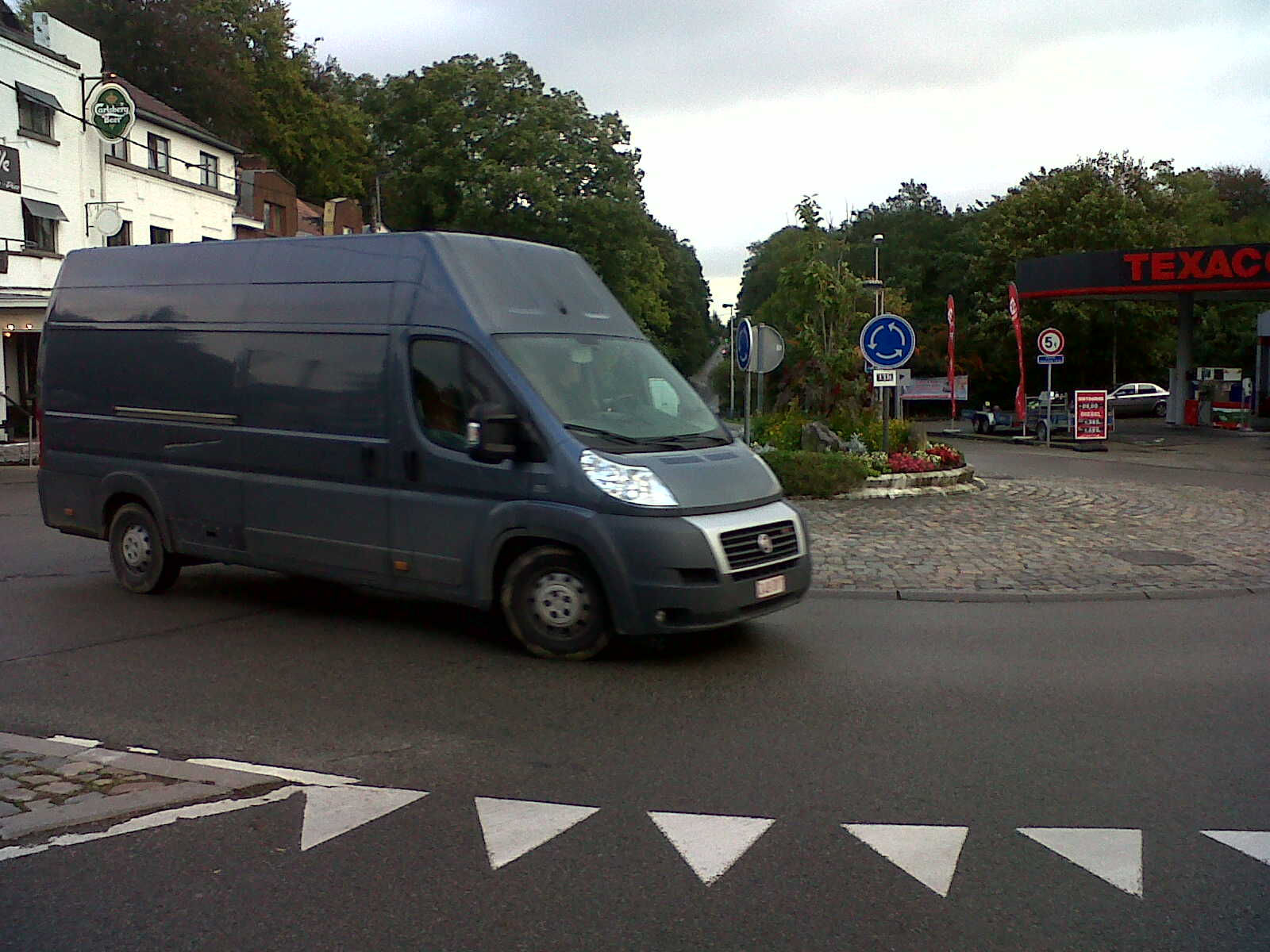
I refer you to my post on roundabouts. Still got no idea what they are doing. Interestingly some readers assumed my post was a general rant about how bad roundabouts are for cyclists around the world.

It wasn’t. I have cycled, walked and driven all over the world and there is something uniquely odd about a Belgian motorist faced by a roundabout. Incomprehensible.

So called touring routes that don’t exist

Wallonia

Just to say that in Wallonia the maps tell me that there is a whole network of cycle touring routes stretching across the province.

Boucle d'Ophain Braine l'Alleud BelgiumNo there isn’t. Except maybe in somebody’s head. The riding is fantastic, but out there on the roads there is just nothing to support you by way of signs or markings. I am on my third set of published maps and I haven’t found one yet that actually exists on the ground. Local circular routes around a single commune yes. Walking and MTB networks – brilliant. Fietspunt in Flanders – fine.

Personally I probably don’t need signed routes, I’ll just use my maps. But let’s not pretend OK? Because it us useless for everyone else.

No tea stops

The ceremonial process that transcends the cycling club ride or the cycle tour.

The place where legends are made and debated, seasons are digested, rides are planned and friendships made.

The coffee stop. The cyclists’ café. It is as much part of a British club cyclists’ DNA as the cobbles are to the Belgians. The Eureka, Tommy’s, the Dalesman, the Riverside, Top of the Town are part of our heritage. The bikes lined up from the multiple clubs are a symbol of our community.

Cyclists Cafe stop

Around 11am on a Sunday morning my body almost shuts down and I go a little lightheaded for lack of caffeine and cake. Then they don’t stop, except maybe for a quick pee behind a hedge.

The tea stop is a fine tradition Belgium – one worth investing in!

So that’s it. 10 great things about Belgium, and 5 moans. I hope that puts it all in balance, I am not despairing.

Ten best things about being a cyclist in Belgium

Watchng the Fleche 2

A year ago we moved to Belgium. 

By way of an anniversary post and a thank you to my new country here are my musings about the best things about cycling here so far.  

Next week I might throw in a few pet hates, although the scales are overwhelmingly positive for the first year in this great cycling nation.

In no particular order this British cyclist’s “Ten best of cycling in Belgium” are

  • Belgian National DaySocial cycling
  • The Classics
  • Tracks and trails of Wallonia
  • Long summer evenings
  • Being strange
  • The ever changing Belgian countryside
  • Belgians like a lie in
  • Bike fans
  • Somewhere near to everywhere
  • My bike shed

1. Social cycling – you are not alone.

Recreational and sports cycling in Belgium is overwhelmingly a collective activity. At the weekend you can hear the groups of cyclists passing our house not by the tyre swoosh but by sounds of talking and laughing. I have commented that I love the sense of community in the small towns and villages of Belgium that carries over into the cycling, everywhere I go I see people riding together.

It’s not just the big pelotons of club cyclists in the touring and racing clubs.

Cycleottignies

It’s the scouts.

Belgian scout ride

It’s the youth clubs.

Chateau Solvay La Hulpe cyclisme

It’s the senior citizens on a Friday night near Ghent.

Friday night in Flanders

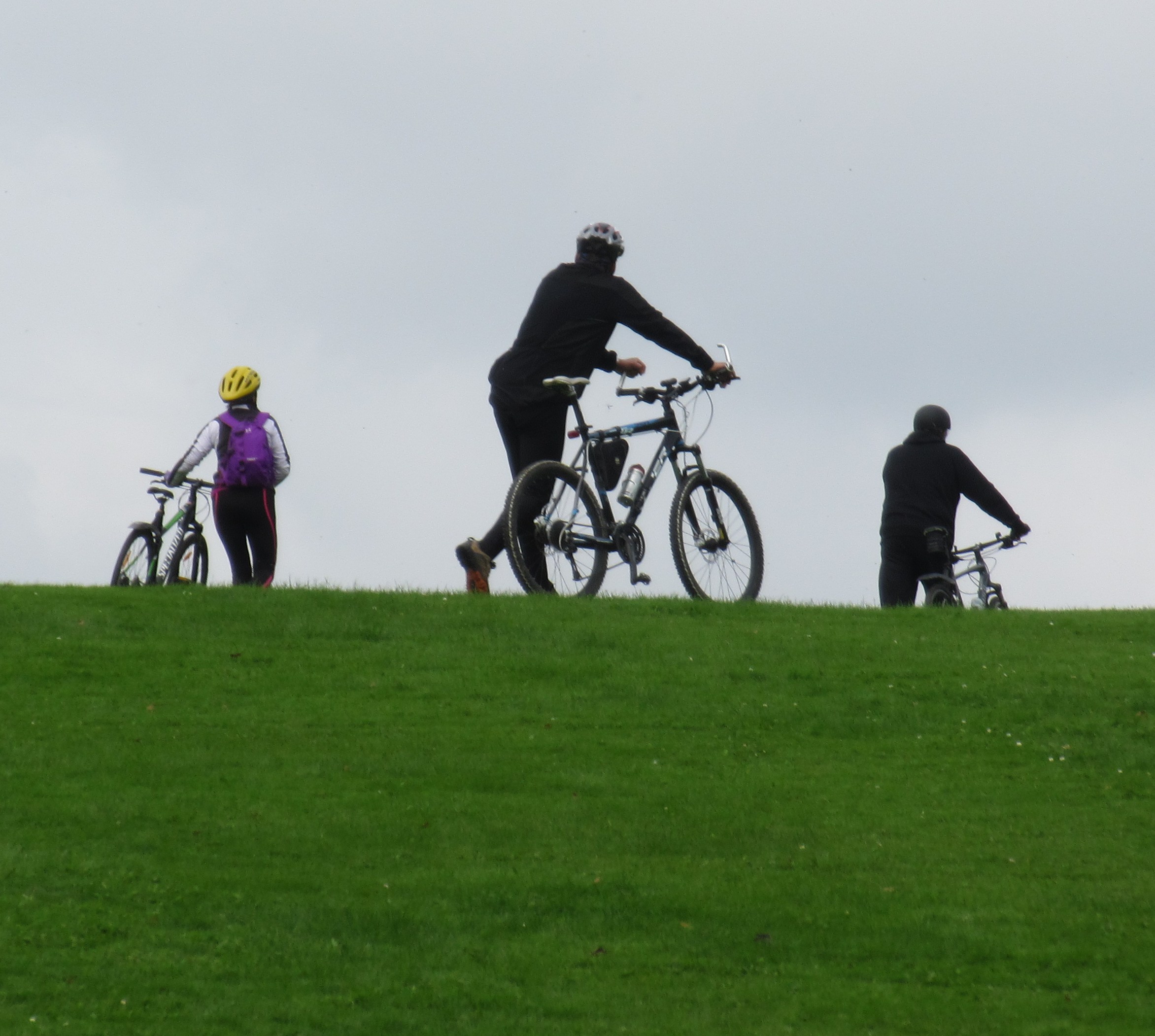
It’s just a couple of friends riding their mountain bikes.

Solvay park VTT

It’s the randonnée à vélo for families that every village and town puts on for its jour de fete.

Child cycling Solvay Park La Hulpe

2. The Classics

fans 5

The chance to experience the Tour of Flanders (Ronde van Vlaanderen), Fleche Wallonne and Liege-Bastogne-Liege are just fantastic days out for a bike fan.

All the legends – beer and frites, fan clubs, cobblestones and star riders come together in an atmosphere I have never experienced before after a lifetime of going to bike races.

Liege Bastogne Liege Sprimont 5

minor places Fleche Wallonne

And by pure chance this year I took the best cycle racing photo I will ever take on the Patterberg – Spartacus (Fabian Cancellara) making the winning move against Peter Sagan.Ronde Van Vlaanderen Paterberg

Hard to repeat that, but I’ll be back again this year for my next fix.

3. Tracks and trails of Wallonia

Brabant Wallon

For the mountain bikers this time. Every commune in our area has hundreds of kilometres of farm tracks, forest trails and cobbled roads that together make an amazing network of rides for mountain bikers. Where I live in Lasne the brilliant folks at Lasne Nature have signposted 250 kilometres of the trails into circular routes from 5-15km in length, all of which can be joined together to give great rides.

Beaumont Lasne

Belgium, Brabant Wallon

And this continues for village after village.

It isn’t rugged and mountainous, it isn’t the flowing singletrack of a purpose built trail centre but it is an endless source of riding. Add an unexpected and freak layer of snow for four months last year and it was plenty tough enough for hard riding too.

Brabant Wallon

4. Long summer evenings

Ben Mayne Chapelle St Lambert

An unexpected bonus. I didn’t think I would notice the time difference between Belgium and the UK. It seems a minor point but because Belgium is an hour ahead of the UK in clock time but geographically just a few minutes ahead this is like having a whole extra hour of daylight in the evening.

In the summer this means the evenings just seem to go on for ages. When I was a little boy I used to resent being sent to bed while it was still light in the summer. Now I can commute home in the light so much later or go ride my bike after work. We have had some just lovely riding evenings, even well into the autumn.

5. Being strange

IMG00779-20131126-0836When I had made a lycra-clad appearance in our office for the second or third time a colleague said to me “you are a bit strange”.

While I decided whether to be offended or not he quickly qualified himself. He said he had never met anyone in who worked in cycling who also enjoyed cycle racing and sport or was prepared to commute in from outside Brussels. I was a bit thrown, I had come to Belgium to be part of this glorious cycling heritage and I was being portrayed as a bit of freak.

In the UK I have always been around sports cyclists even when I was working in transport and tourism and many of my colleagues carried a passing interest or a background in the sports world.

ECF lunch rideBut in some areas of Belgium, especially Flanders and in the EU district of Brussels what I think of as the Dutch/Scandinavian sub-culture is really strong and it is daily transport cycling, in normal clothes on normal bikes that holds sway. It is really great to be part of this multi-national community in the mornings, taking their kids to school, going to the shops and generally giving cycling status as a proper transport mode in front of the EU political classes, unlike in much of the English speaking world where cyclists can still be distinguished as a sub-culture by sport or hipster dress codes.

Segregated cycle path Ghent

For me to be “the strange one” is a statement that cycling has healthy prospects in Belgium.

6. The ever changing Belgian countryside

Houtain le Val

Friday night bike ride Flanders

I have written many blog posts about the changing light and weather of Belgium over the past 12 months. I don’t know what I expected, but I don’t think it was steep-sided valleys covered in beech trees or ever changing farming landscapes. The differences across the country from West Flanders to the Ardennes pack a lot of scenery into a small country.

IMG_2822

Belgium farming and forestry practices have a big part to play in maintaining this landscape as does the maintenance of the historic buildings and villages despite it being the battleground of Europe.

Mist, trees and moon, evening in Belgium

There is a big push towards organic and pesticide free farming here which means that farmers have returned to traditional practices like crop rotation and green manures. In the fields just around our house we have seen wheat, barley, sugar beet, maize, potatoes, and parsnips just this year, all mixed up with fields of cows, sheep and horses and lots of coppices of deciduous trees. And in addition to the fields themselves this wide variety enables bird and animal species that are declining in other countries to flourish. Not the large monocultures of Britain or France or the horticultural factories of the Netherlands here.

Snowy ride Belgium

It means that even familiar roads can take on a new feel from month to month, the sense of being part of the rhythm of the land is palpable. More examples of posts here, here and here, or just chose the Belgium tab to the right.

7. Belgians like a lie in

Just 30 kilometres from the capital city, the heart of Europe. And a group of cyclists can ride for two hours on a Sunday morning and not see a car moving. 

Wallonia Cycle Touring

Or a public holiday in mid-summer when the parks and woods are empty for hours, making them a personal playground.

Brussels forest

Sundays especially are like a throwback to an earlier time. The shops are not supposed to open and tranquillity regulations ensure that mowing the lawn and noisy DIY are banned.

Thank you Belgium. Don’t bother getting up, I’m going out on my bike.

8. Belgian bike fans

Tour of Flanders IMG_0707 beer 1

Cycling matters here. Or more precisely cycle sport matters here. Especially in Flanders.

Every branch too, not just the impressive heritage of road racing. I mean, where else can cyclo-cross be on the TV every Saturday and Sunday all winter and Sven Nys be a national superstar. Do you even know the name of the national cyclo-cross champion in your country? I don’t. It is in the news, the television and even the gossip. Earlier this year I blogged about how the Prime Minister of Flanders got pulled into a dispute about cycling facilities while he was away on a trip to the Tour de France, everybody is sucked into the cycling world.

I loved my trip to the Tour of Flanders Museum in Oudenaarde to absorb the legends, to the classics to celebrate with beer, frites and people in birdie suits.

Centrum Ronde van Vlaanderen Ronde Van Vlaanderen Centrum

And amazingly this even carries over in to driving behaviour. Drivers have a remarkable tolerance for anyone in lycra out in the countryside, they seen to be prepared to wait for ages for individual riders or in groups. Maybe less so in the rush hour in Brussels, but I have certainly noticed that when I ride like a posing roadie I get a lot more space. If only they knew just how un-Belgian my riding actually is I might not get the same respect.

9. Somewhere near to everywhere

Ittre Walloon Brabant

Flanders Cycle route signs

While I was in Poland last week at the COP 19 Transport Day I met a very dour Belgian railways official. When I said I used the service every day politely he asked me “how do you find it?”

He was genuinely shocked when I said I thought it was a good network with cheap prices and how pleased I was that it carries bikes on almost every service. He turned to his companion from the European rail association and said “See, I have to come to Poland to find a satisfied customer.”

Wallonia

Yes some of the trains are old and tired. Yes the strikes are a pain. But I cannot be fed up in a compact country, covered masses of country lanes, varying terrain, varying history, even different languages, all seemingly within about an hour’s travel in any direction and the chance to let the trains do the work.

And beyond the borders more great cycling countries to sample, all within such easy reach. Luxembourg, Germany, France, the Netherlands……

Luxembourg Old town and Kirchberg

10. My bike shed

Ok, you can’t enjoy this with me. It’s my space.

Kevin Mayne's Bike Shed

All I wanted was a shed, or a garage. When we started looking at apartments in Brussels we quickly realised that space was going to be at an absolute premium so I started reluctantly selling off some of my old bikes and bits. But having decided against city life and headed for the countryside I raised my hopes slightly that the shed would be a bit bigger.

When I visited a former farm in Lasne that we had previously ignored off as too small, too remote and without any storage in the particulars it was a very long shot.

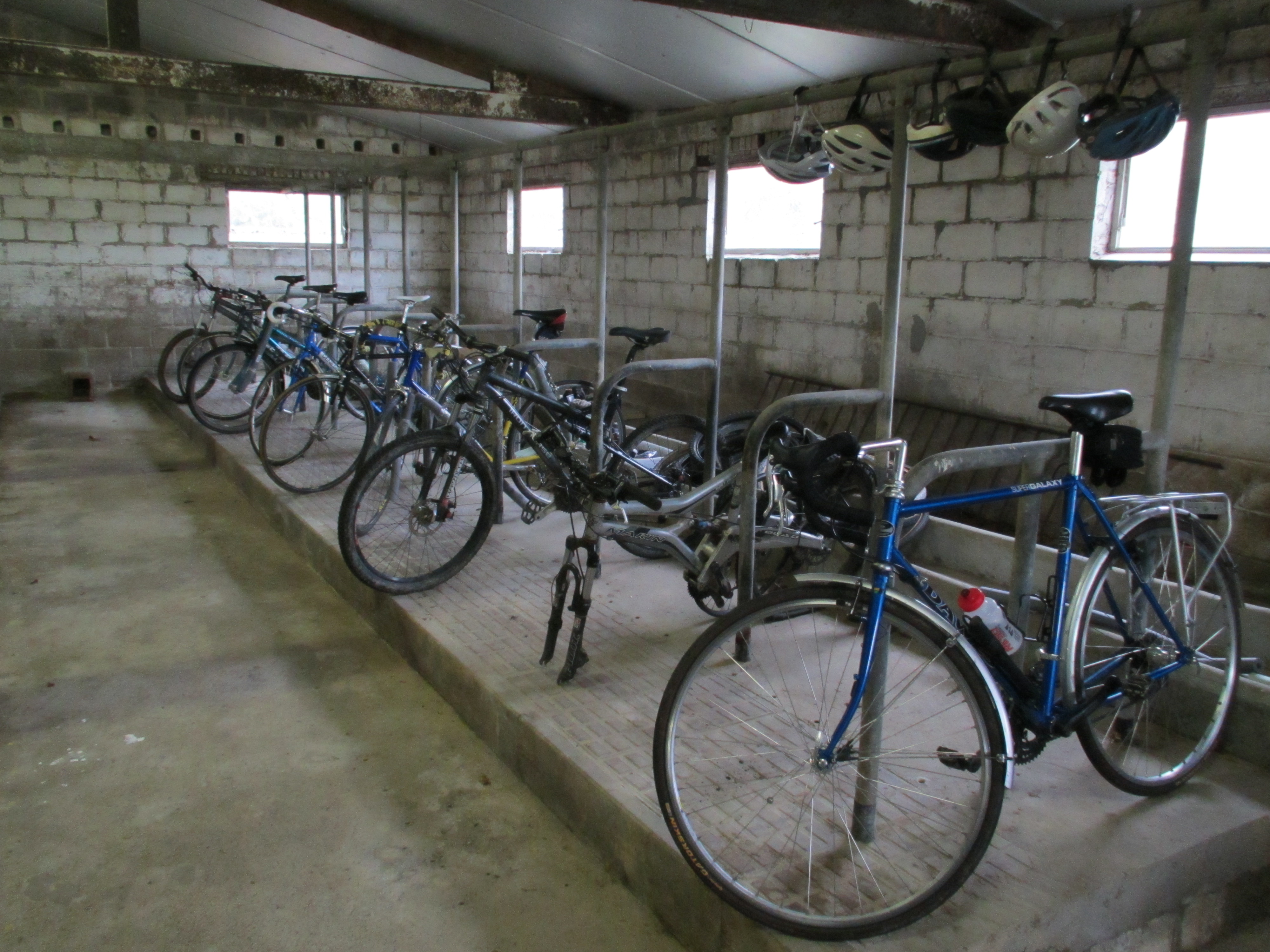
Ok the house was fine. But seconds after entering the former milking shed I just burst into a smile that has barely left my face ever since. And now it has been properly equipped with its new livestock it has a similar effect on visitors, although mainly they just bursting out laughing.

Mysteriously the bikes seem to like it here, for it appears their numbers are growing. When the rental finishes it is going to come as an almighty shock, but for now it’s in my top 10 reasons for loving being a Belgian cyclist.

Thank you Belgium.

A year ago I wondered what life might bring. The answer? I do not despair!

Cycling, sculpture and a local hero. Glenkiln, near Dumfries in Scotland

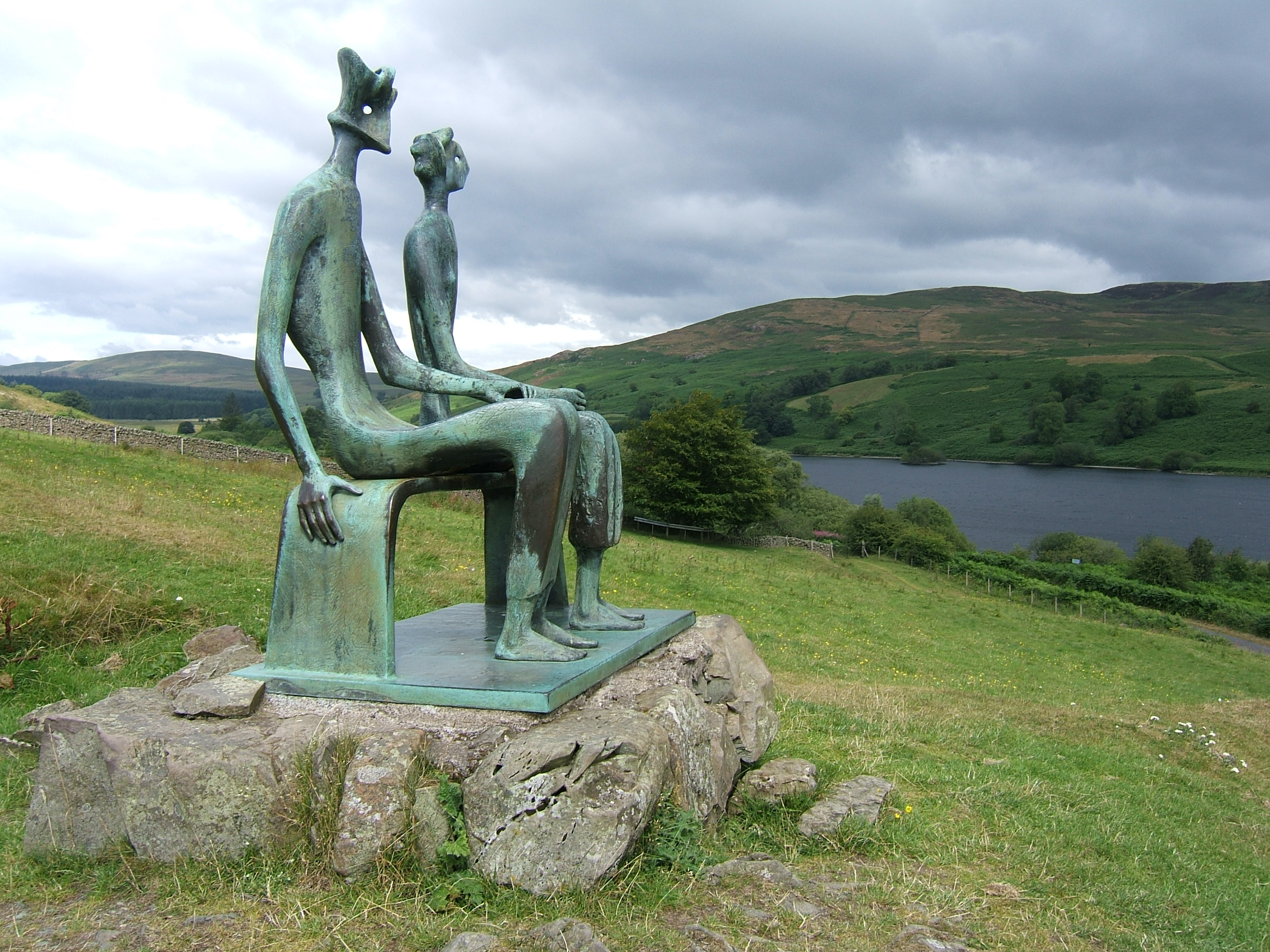
Henry Moore King and Queen Glenkiln

Having written about the Yorkshire Sculpture Park last week I was reminded of one of my best experiences of cycling and sculpture some years ago, BB. (Before Blogging)

It gives me an excuse to share some old thoughts that would never see the light of day without that prompt and to pay tribute to someone who I think is one of cycling’s unsung heroes.

Dumfries CTC Birthday Rides 2006Dumfries in Southwest Scotland can with some justification lay claim to a reputation as one of UK cycling’s tourism best destinations. With a local authority who woke up early to the potential of cycle tourism there are a good network of road routes including numerous National Cycle Network Routes, there is incredible mountain biking with five of Scotland’s flagship Seven Stanes trail centres in the area, it lies on many people’s Land’s End to John O’Groats route (the UK’s End to End). It also claims to be the place where the pedal driven bicycle was invented by Thornhill blacksmith Kirkpatrick Macmillan in about 1839. OK, that last one is disputed by some commentators but that doesn’t discourage the locals from celebrating their man.

There were many people who can claim credit for the rise of the area as a cycling John Taylorvenue but as each element is explored the name of a local volunteer called John Taylor always comes up. He was actually an Englishman who moved to the area to work as a forester but spent much of his life campaigning for cycling. Among other things his work gave Seven Stanes Mabiehim a unique opportunity to scout the forest for riding sites when mountain bikes were barely invented. I remember the Seven Stanes Development Officer saying that when he first got to the Forestry Commission offices in Dumfries he found a set of maps of centres and routes that had been drawn up by John years before, almost all of which could be part of the new centres.

On road he campaigned tirelessly for safety and routes across the whole Dumfries and Galloway area while the Kirkpatrick MacMillan cycle rally was conceived and run by John for many years.

And even though he started to struggle with his health and hearing in later life he would cycle 20 miles from Castle Douglas to Dumfries in all weathers to get the train to Edinburgh for national meetings, especially when he represented cycling during the negotiations of Scotland’s world leading access legislation which opened the countryside to users of all types. Without John there was always the risk that cycling might have been frozen out as it was in England’s Open Access law.

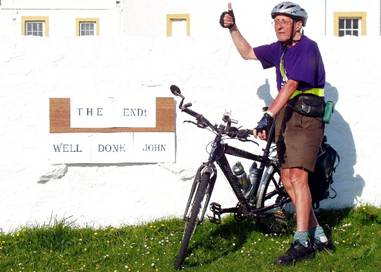
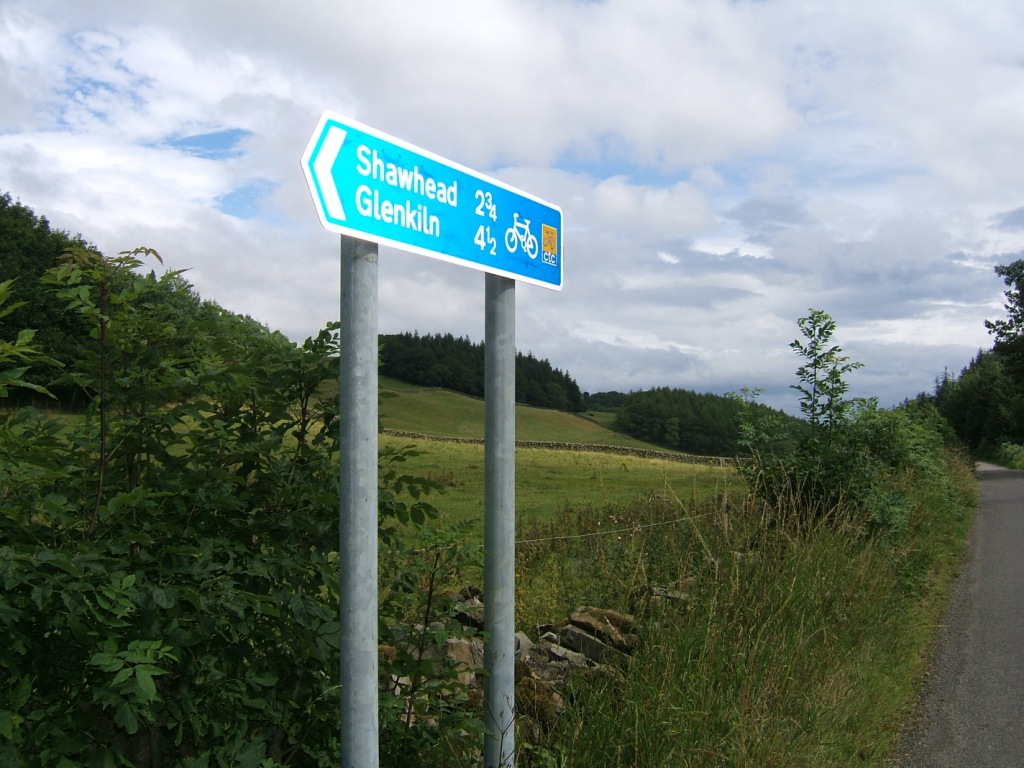
CTC Glenkiln cycle routeAnd so to the Sculpture Trail. When we came to Dumfries in 2006 for the annual CTC festival of cycle touring “The Birthday Rides” there were a great group of volunteers who hosted the event but it was John who had mapped out the hundreds of miles of routes for us. During the planning I was approached by one of the cycling promotion staff from the local authority who said that they has a new route in development that they wanted to open during the event and they had decided to brand it the CTC route “in honour of John”.

The CTC Glenkiln Loop is a 23 mile route up into the hills to the Northwest of Dumfries Dumfries_CTC_Signswhere there is almost a secret valley around the Glenkiln Reservoir. Up in the open moorland local landowner Sir William Keswick placed works in the  by August Rodin, Henry Moore, and Jacob Epstein which were commissioned for their location in the 1960s

Sadly one of the Henry Moores was stolen last year by metal thieves for its value in bronze but when I rode up there in 2006 I discovered that modern art in a natural setting could be a stunning backdrop to a bike ride.

Henry Moore Standing Figure Glenkiln

Henry Moore Two Piece Reclining Figure No.1 Glenkiln

My personal favourite is another Henry Moore. “King and Queen” is in a majestic setting overlooking the valley which is why I put it at the top of this post as my feature image.

John Taylor died in 2009 aged 79. As we stood in the pouring rain at a green funeral site in the hills above Kirkcudbright I couldn’t help but feel that he was at home. The Glenkiln cycle route is but one of his many legacies for cycling. RIP John.

Cycle touring revolutions – Cycling in Lower Franconia

Franconia Germany

River Main cycle route Germany

I was in Schweinfurt visiting the German training and development centre for SRAM recently.

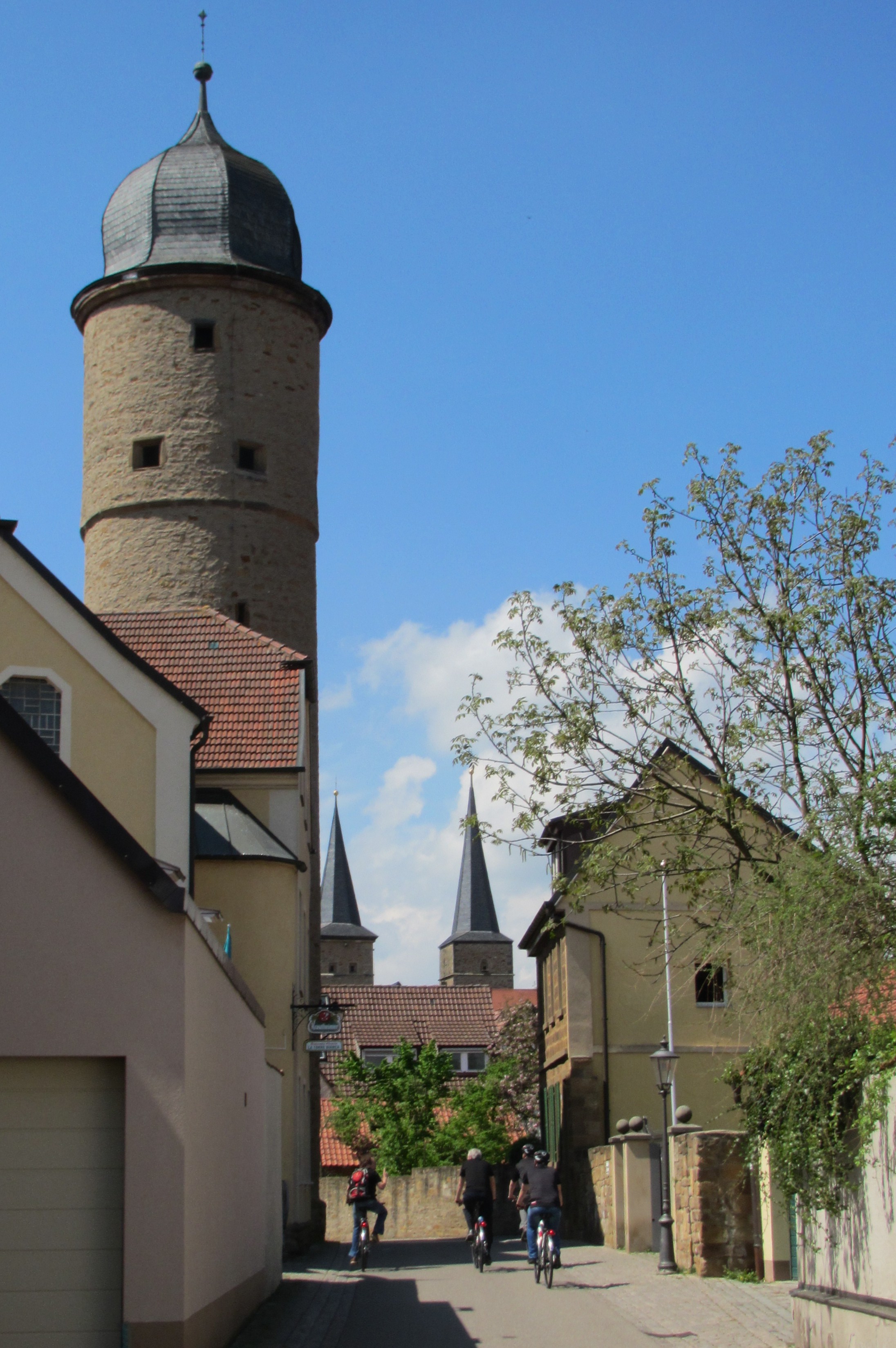
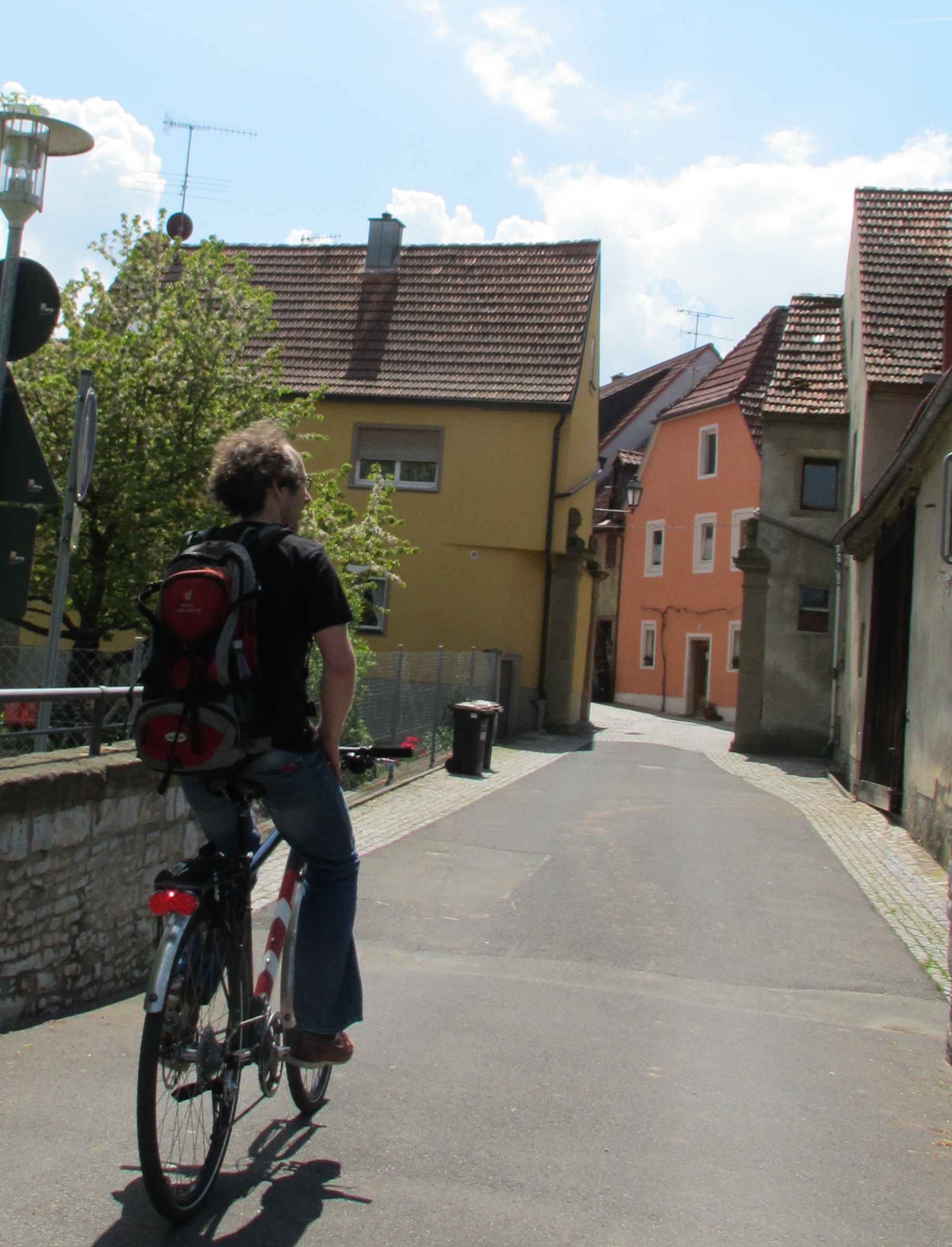
My main reason for being there was to talk about cycling advocacy to SRAM’s urban cycling event. However at the end of the two day event we had a few hours before I had to get my train back to Belgium so we were offered a social test ride for a couple of hours. As the weather was delightful and spring-like it would be rude not to, wouldn’t it? So this was an opportunity to take in another region I knew nothing about – Lower Franconia, almost in the centre of Germany.Franconia Germany

My recent cycle touring in Germany has been limited to a few sessions around the Bodensee (Lake Constance) where I had seen the evidence of the boom in leisure cycling in Germany. But here I saw other dimensions of that boom that had been less apparent in the summer holiday throngs in the south.

We were taken a short distance out of Schweinfurt into the countryside to a delightful area around Gerolzhofen and the popular rural area of the Steigerwald which has attractive villages and delightful countryside.

Germany cycling

Gerolzhofen Germany

Cycle touring Germany

Lower Franconia Germany

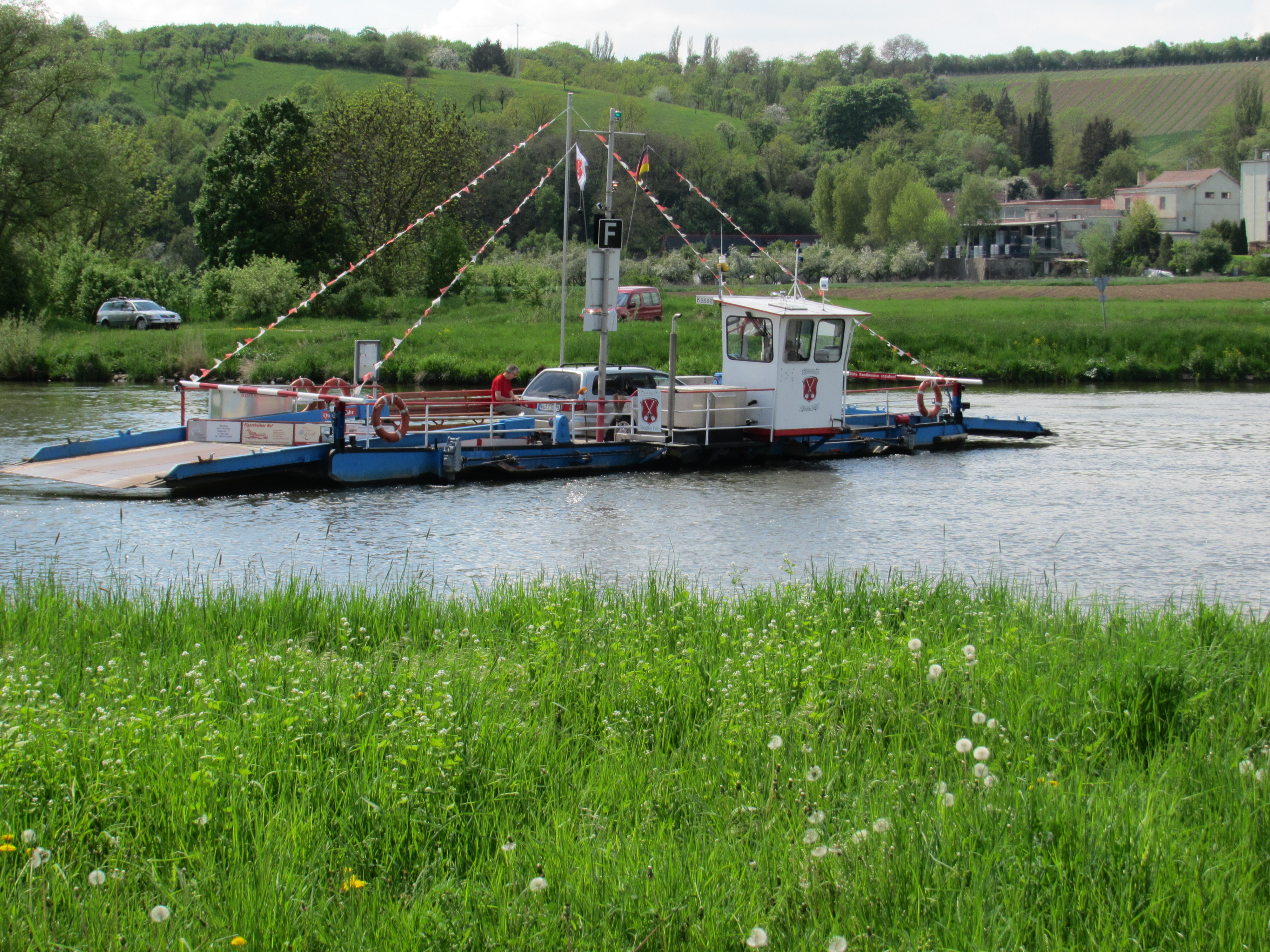
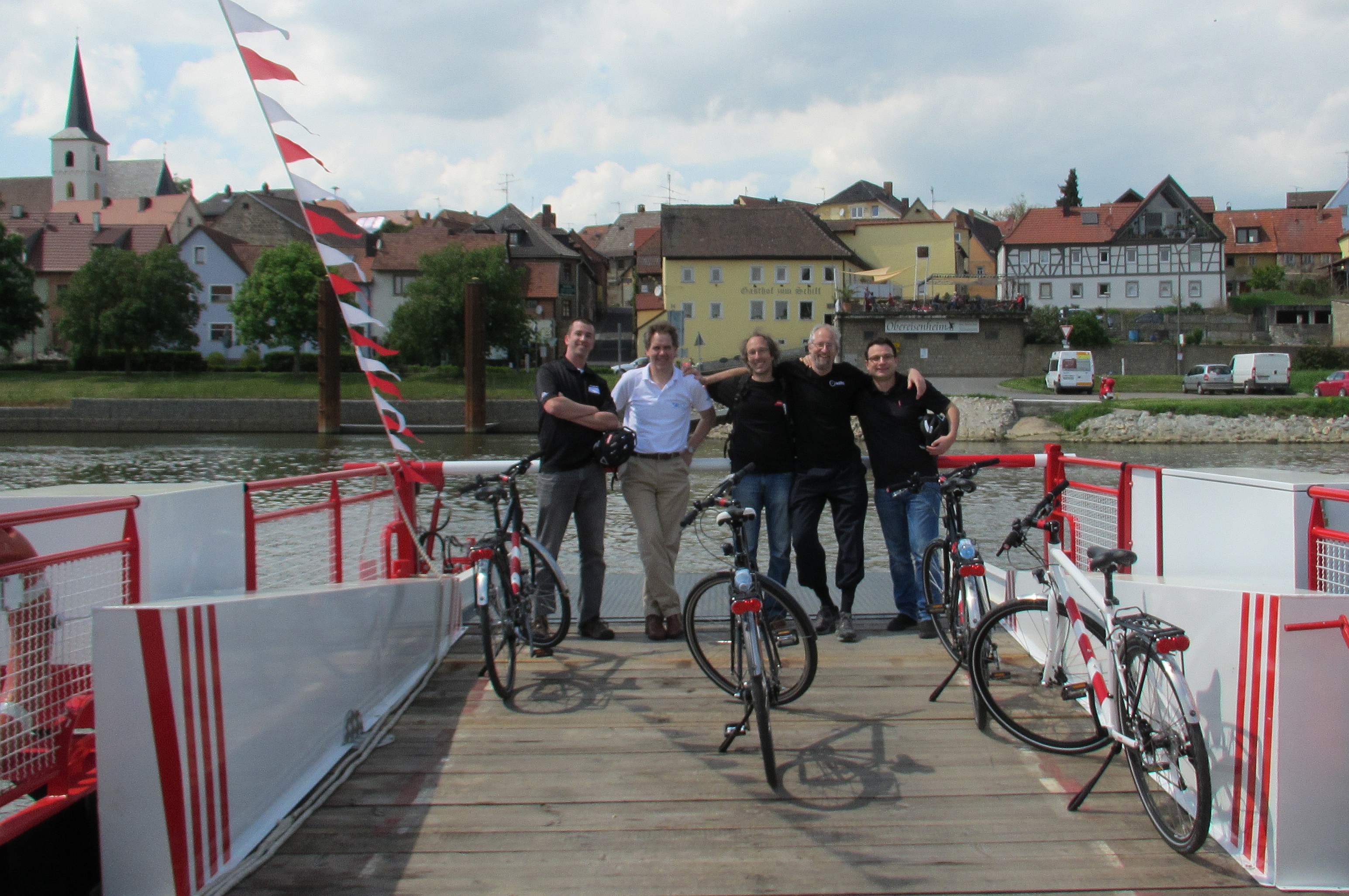
Cycling Franconia GermanyFrom there we were able to sample the impressive network of  segregated cycle tracks and minor roads for a couple of hours until we ended up crossing the River Main by ferry and enjoying a snack in a terrace café overlooking the river and its busy cycle route in Obereisenheim.

I was hugely impressed by the number of cycle tourists I saw and the facilities we used but on a working day the people who were out were almost universally older (let’s say seniors to be polite). I had heard about Germany’s grey cycling revolution but I had never seen it personified, it was extraordinary that a busy cycle route could be 90% one demographic.Germany cyclingGerman cyclists in Volkach 2Cycle touring Germany

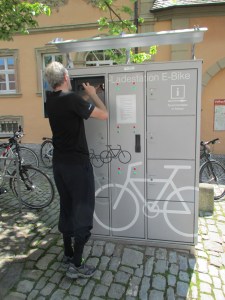
And the next revolution was what they were riding. I have blogged before about the way E-bikes have taken over at the German trade shows and I know that in the last couple of years they have taken a huge slice of the market, but I hadn’t seen where they were being used. Now I could see it writ large – nearly 50% of the bikes we saw were E-bikes, often in pairs. And the lovely little town of Volkach had adopted it so much they had put an ugly E-bike charging station in the middle of their attractive town square.Cycling bikes Franconia Germany

Franconia Germany

It seemed a bit incongruous, a glorified luggage locker in a medieval square, but it further reinforced the point that if you want elderly German cycle tourists that means catering for the new E-bike phenomenon.

Cycling Franconia Germany

Volkach Franconia Cycling

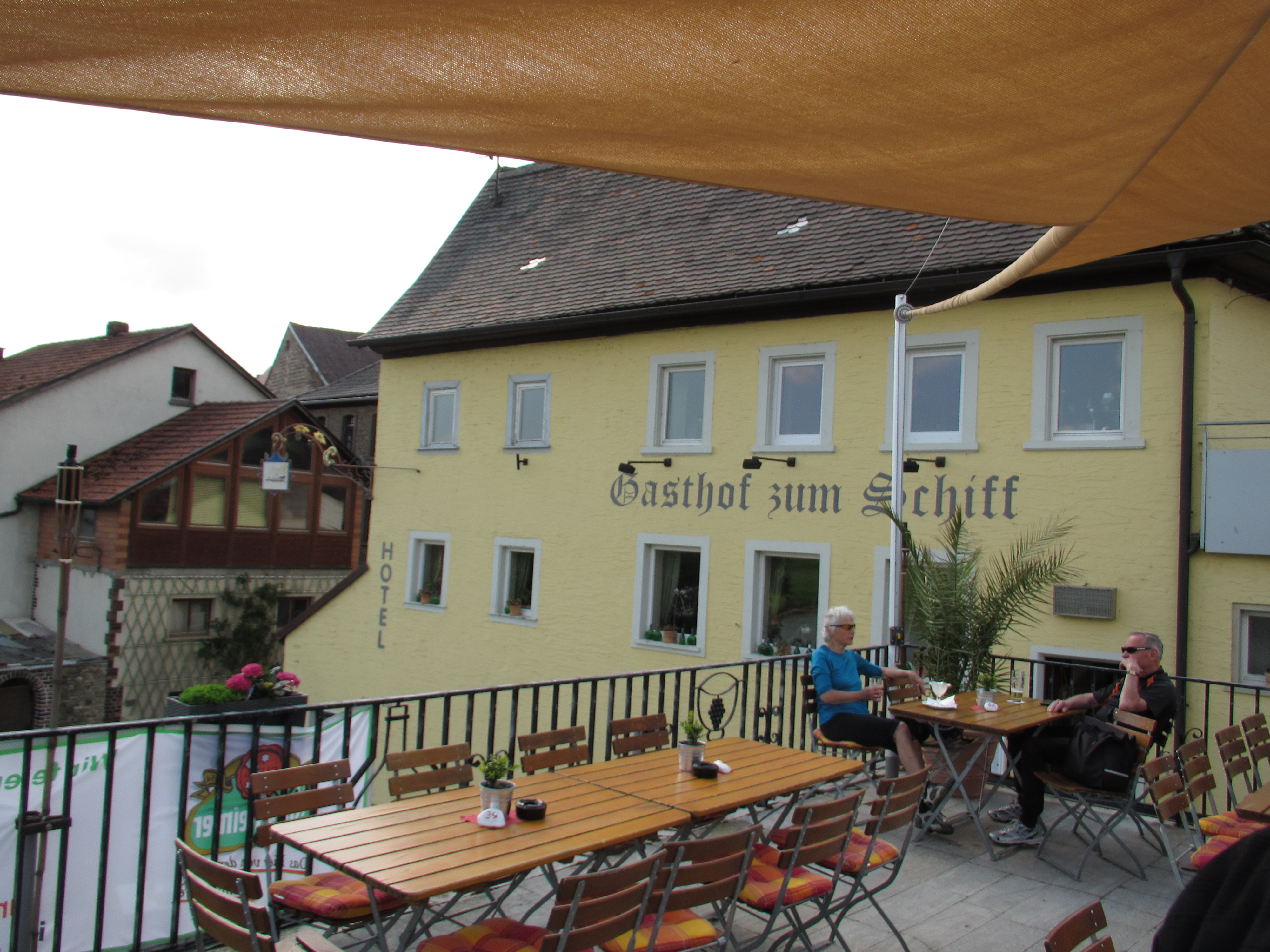
In fact the café we ended up at down on the River Main only had one customer type the whole time we were there. Cyclists. I know numerous studies have been done showing the economic value of cycle tourists in rural areas but if we could count the percentage of turnover for the Gasthof zum Schiff in Obereisenheim it would indeed be impressive.Cycling Franconia

All in all an excellent afternoon out, great scenery, nice company and the chance to see a number of cycling trends all brought to life in one place. There is little wonder that cycling is growing solidly in Germany, they really have so many positive things happening they all seem to complement each other.SRAM Urban days cycling group

“Who is going to push the Englishman?” – Embarrassment on a Belgian cycling club ride

“Qui va pousser l’anglais?”

The call went out across the clubrun today as the group had to slow up to wait for me again as I grovelled up the road behind them.

I wrote about cyclingclubaphobia several weeks ago, that irrational fear of being embarrassed on your first cycling club ride – being left behind, the bike falling apart, falling off – all that good stuff which never really happens.

It did today. A couple of weeks ago it happened to everyone else, this week it happened to me. Last time it was Cyclottignies medium speed group that supplied all the novelties I associate with club cycling, not least managing to lose the ride leader completely halfway through.

Where did he go?

Where did he go?

This week the problem was unfortunately entirely of my own making. About 40 people were gathered at the station where we meet but there was considerable discussion about the fact that they didn’t have a leader for Group 2, the ride I was aiming for. Then Francois arrived and after some boisterous negotiation in French he was press-ganged into action. Within minutes he was off and I pulled away with about a dozen riders.

However after about five minutes reality dawned. This group was just a bit too organised, a bit too lean and oh heck I have joined the fast group by mistake and I am going to look pretty silly if I turn back now.  Two weeks ago I rode with group 2 and the pace was actually pretty civilised (around 15mph) so if maybe they were a mile or so faster per hour I could just about hang on?

Apparently Francois had been bullied into leading Group 1 so someone else could lead Group 2. I really do have to improve my French if I am going to do this regularly.

The plan worked well for almost an hour and a half. I was hanging on quite well and definitely not embarrassed, so I started to relax. Then I rode straight into the back of the man in front when we made a sudden stop because I decided to absent my brain for a moment. The imprint of my brake lever on his backside wasn’t entirely well received. They know I don’t speak much French but I do know “murder” for some strange reason.

However after that stop the guys in the front decided that it was time the pace went up some more and for the next hour I was grovelling and yo-yoing off the back. They were awfully nice about it and Francois kept telling me I should come back to Group 1 next week because I’d soon get used to it. These are the “cracks” he said, the fast men.

The chap I had hit did get his own back with the call for someone to push me home. I hung on for another 20 minutes to make it up to about three hours and then as soon as I saw a road sign that I recognised I made my apologies and left them to it while I sneaked off to make my way home in a very tired manner. I’m not surprised I was a bit knackered, it was only my third ride with the club and according to my computer I had added 3mph to my usual speed.

I will be back again but I think this time Group 2 should be Group 2. I have no intention of being pushed home and I think I need to hide up for a few weeks to overcome my embarrassment.

Cycling across Wallonia shows that Belgium isn’t just a low country, it is an upside down country.

Wallonia

A few weeks ago I took a day off work to ride much of the way across my newly adopted home region of Wallonia – the French speaking bit of Belgium. I was headed south to Huy to watch the Fleche Wallonne cycle race (post here) but what I also wanted was to stretch my cycling boundaries and explore. And in doing so I was able to unravel a previous confusion about the cycling landscape and prove to myself that cycling in Wallonia is indeed upside down.

I also found brilliant riding. I don’t think I have never met anyone who has told me about touring round Belgium so I had no idea what to expect when I came here. A few people had done trips to the WW1 battlefields over in Flanders and I know the odd person who has made the pilgrimage to the big bike races but I just don’t recall “cycle touring in Belgium” being a common discussion point amongst my UK cycling community.

People seeking flat and cyclist friendly riding go to the Netherlands. And to our south France is the biggest cycle touring market in Europe, possibly the world. But as in so many other things dear Belgium gets, well a little bit lost.

On this particular day I experienced two, maybe three very distinctive landscapes which in their own right would provide part of a brilliant tour, both of which show off some of the distinctive elements of Wallonia. It isn’t perfect, cyclists don’t get anywhere near as much help with routes as in Flanders, the Netherlands or France and some of the road surfaces are abominable, but there is no reason for southern Belgium not to be a great cycle touring destination.

Above all else it is completely deserted. Again I have say it, come here fellow cyclists, it is so quiet. A normal Wednesday, a weekday when people are going about their business, the commuter routes into Brussels were as congested as ever and yet I rode for hours and hours on apparently empty roads, hardly seeing a car except when I crossed busier main roads. Belgium cycle touring
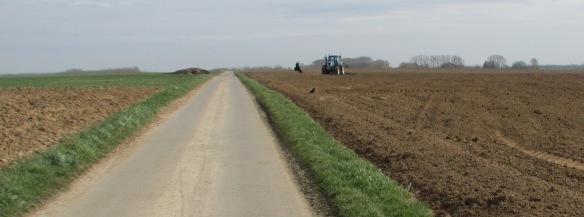
Farmers were busy, but apparently nobody else.

And there is a tolerance for cyclists that far exceeds any experience I have had in the UK, and is a complete contrast to Brussels. Maybe it is the lycra, as if lby ooking like a sporty cyclist you seem to spark a certain recognition in the Walloons, but whatever it is I love being treated like a valuable property not an inconvenience.

Upside down country?

I knew that I was heading for the hilly bit of Belgium. Not massive climbs but clearly from descriptions of the Ardennes and the profiles of the bike races it was going to be an area of steep sided hills. Not so different from Brabant Wallon where I live, but probably steeper and bigger. As I like hilly country for cycling I was looking forward to it.

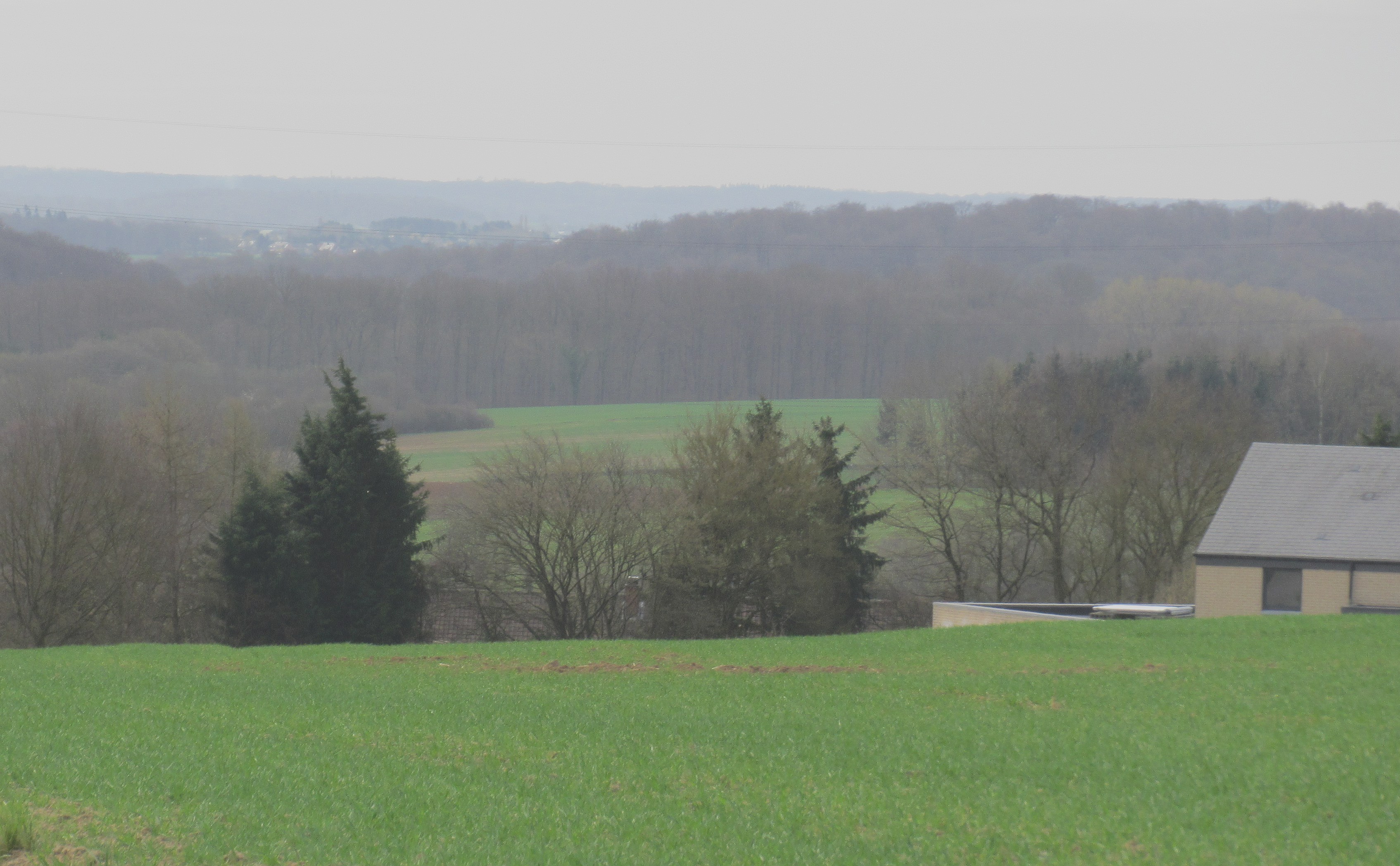
But what I didn’t know much about was the terrain in between, a 50-60km section between the main towns of Wavre and Namur. My previous excursions had touched on flatter terrain and open farmland, but the maps didn’t show any transition to the Ardennes which was a bit odd, I assumed it must start to climb somewhere.

That was almost how it turned out. I had half a ride on gently rolling but exposed farmland. And then I hit the valleys at the very edge of the Ardennes and I was suddenly plunged into steep sided gorges with rock walls and dark stone cottages that could have been plucked out of the English Peak District or the French Perigord Nord.

But the key to understanding the Walloon landscape revealed itself to me as I made that transition. I hit valleys, not hills.

When that realisation dawned suddenly I could make sense of a whole lot of landscapes, not only on that day, but around where I live south of Brussels. I appear to have got this whole region upside down.

I haven’t studied the geology in a text book, so go with me here, it might make sense to a cyclist.

Through Northern France and into Belgium is a wide coastal plan that gradually rises as it heads inland. There are ripples and lumps and bumps, but this is largely flat country. Further north in the “Low Countries” it stays close to sea level however further inland from the coast this plain rises to 100, maybe 150 metres above sea level. In the East in what is now the Ardennes the plain must have been pushed up by geological forces higher and forms a plateau around 700 metres high, but still these are not really mountains thrust up into the landscape, it’s geology was pretty flat when it was laid down.

So there should be no real hills.

Except that there are rivers, which have cut downwards into the soft soils and rocks over thousands of years. So instead of ups, there are downs. Instead of peaks we have flats, when you complete a big climb you end up back on the flat land. It is like the reverse of everywhere I have ever cycled, when you come off a flat section you go down, then you climb back up. That is a right pain if you feel like a bit of freewheeling after a long hill climb!

Where I live in there are many small rivers like La Lasne, Smohain, l’Argentine and La Mazerine, each of which has carved out one of our steep valleys 50-70 metres deep. This makes it feel like constant climbing if you have to travel north to south as I do every time I ride to Brussels.

On my cycle tour across Wallonia I started with a few of these dips and climbs of Brabant Wallon however I was quickly into the an area without significant streams or rivers, so when I climbed out of the last valley to Mont St Guibert there was nearly 50km of gently rolling flat farmland in front of me which will appeal to any lover of cycle tourism on tiny agricultural roads between old farms and sleepy historic villages. Think the Netherlands, think East Anglia, think the Vendee depending on your previous cycling experiences. Dramatic it isn’t, delightful it is. Walloon villageThe little towns and villages like Chastre, Walhain, Grand Leez,  Waret-la-Chausée just slipped by with the spires of their churches and manor houses making attractive punctuation points on the horizon. Wallonia Manor house
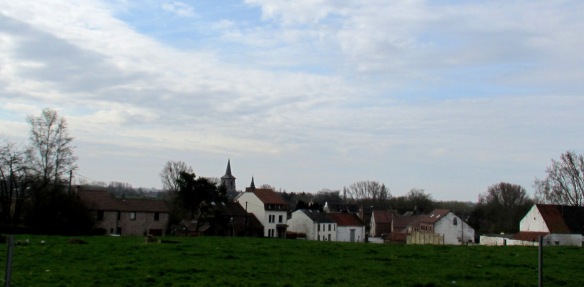
However it is pretty exposed and a nagging headwind really took the edge of my pace, I would really rather have had some variety at times.Cycle touring Belgium
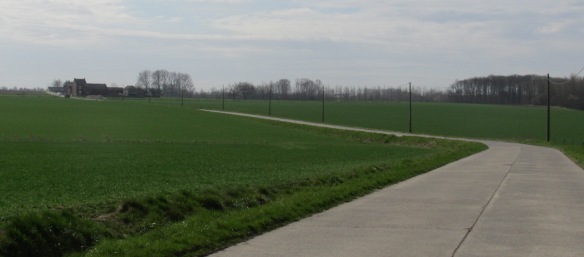
I only really understood how this fitted together with the Ardennes this when I reached the valley of the Meuse just east of Namur and a great vista opened out in front of me. But instead of looking up as I had expected to the forthcoming hills I looked across?

Ahead of me the plain could have continued climbing gently and eventually reach the 600 metres of Belgium’s highest point. But it was deeply cut by the many rivers and streams feeding into the Meuse and what I could see from my vantage point was not a series of hills but a tumbling mass of valleys.Belgium cycle touring
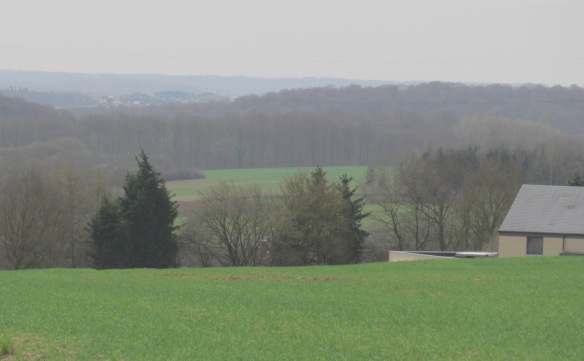
The hills of the Ardennes are hills of sorts, but their main shape comes from crossing the valleys, not climbing hills. They do end up a lot bigger than around Brussels because the plain has been rising all the way so the valleys can cut deeper over time, but the much of the landscape is still just open and flat, just that it is 200-300 metres above sea level. This became even clearer when later in my ride I kept climbing out of the valleys and discovering more wide open farming land at the top instead of the peaks of hills I had expected. But the depth of the valleys makes them like another place. The houses are built of stone not brick, the sides are heavily wooded and the villages are just cute as anything, especially as spring blossom was just appearing.

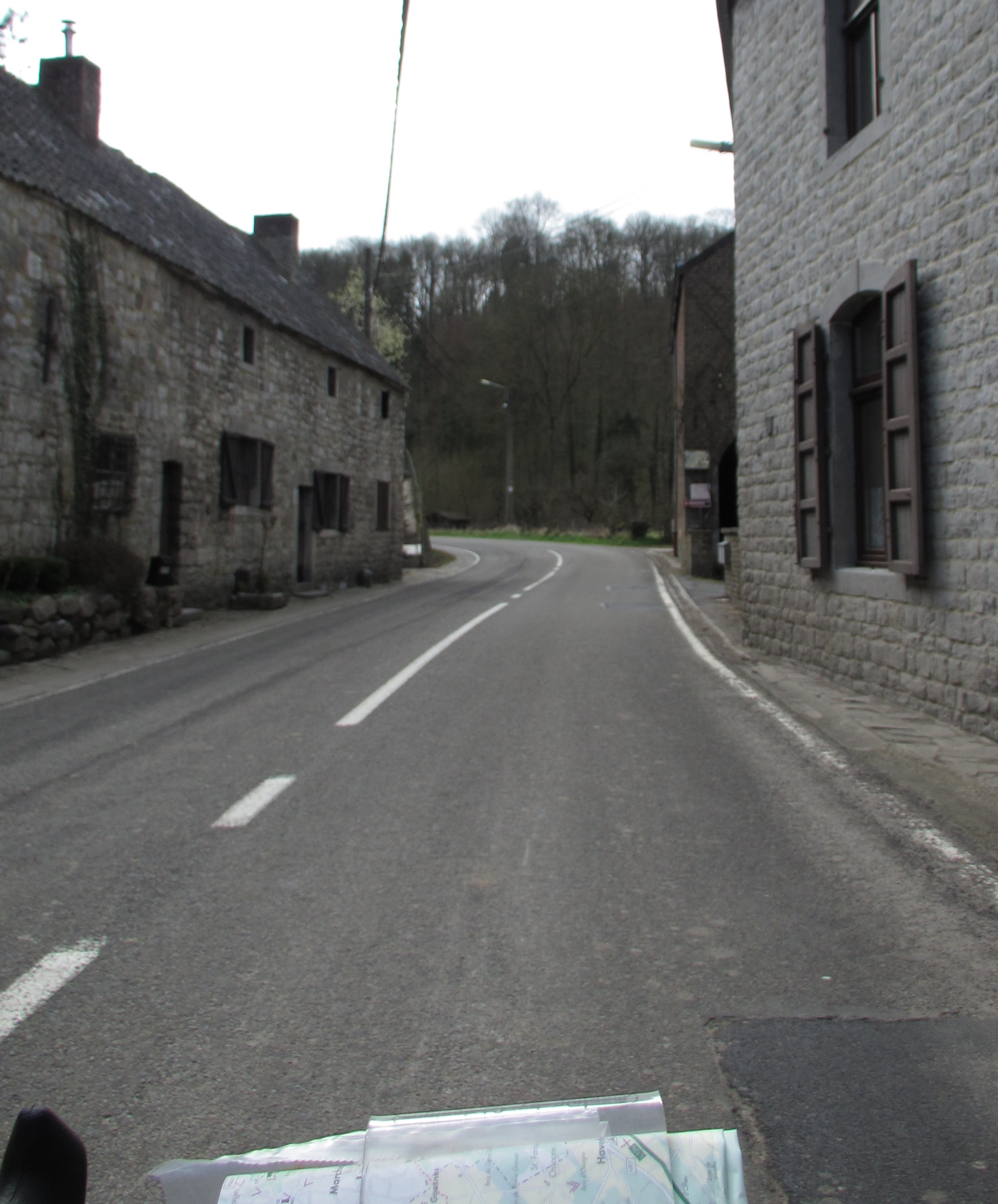
The exception to the cuteness was the valley of the Meuse which forms the boundary of this new area. Initially I dropped very fast and steeply down a lovely side valley alongside a stream, passing mills and cottages in dark stone which reminded immediately of the English Peak District.Cycle touring Wallonia
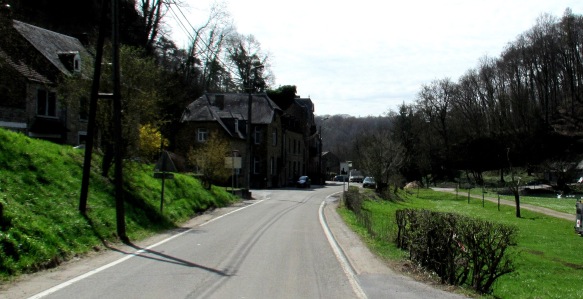
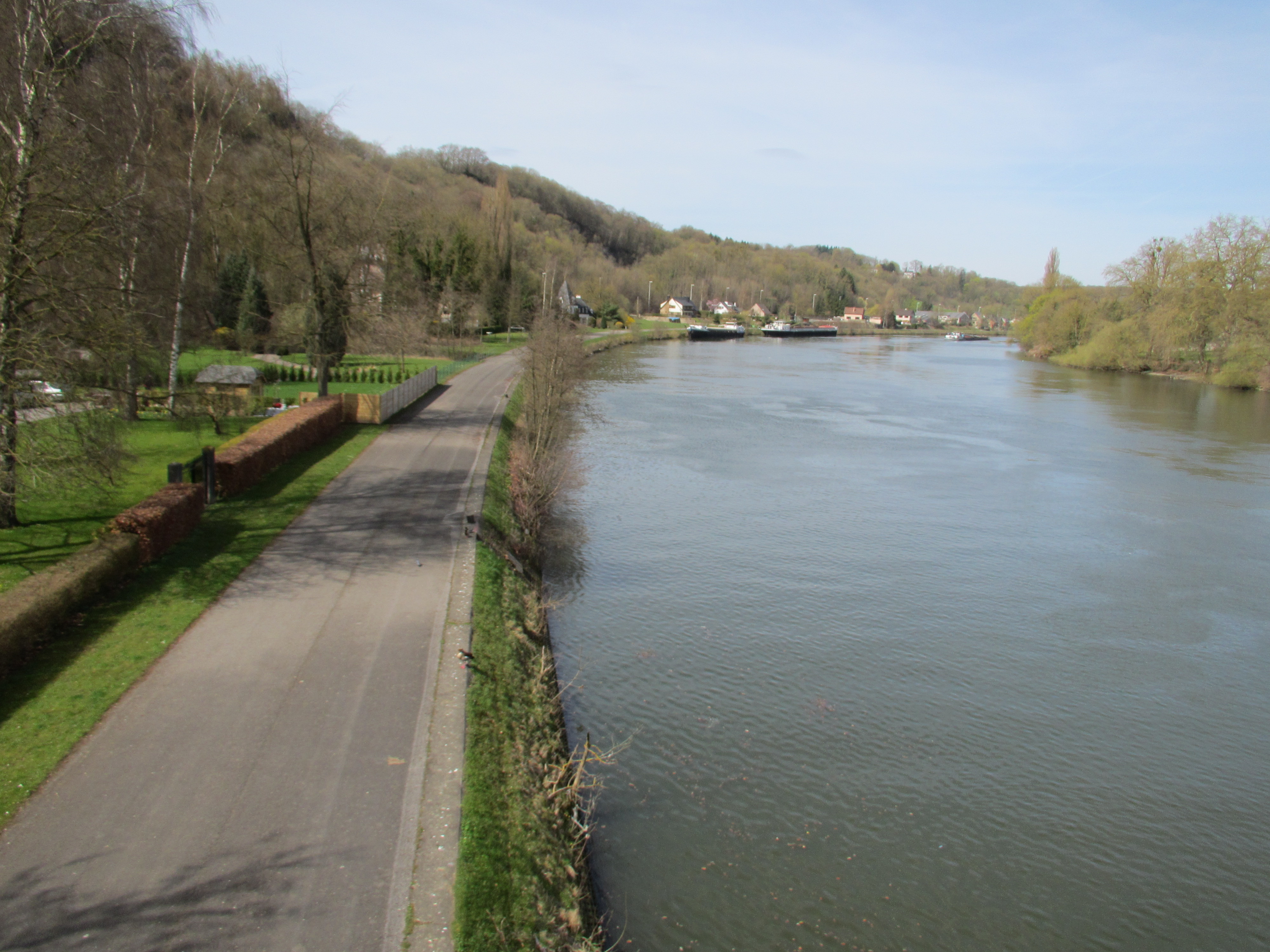
At the end it was almost a shock to burst out onto the side of the Meuse. This is a big river, one of the workhorses of Europe and it suffers from its heritage as an industrial canal with big cement works, railways, boat moorings, main roads and a railway line all exploiting its history as transport corridor, especially on the northern bank where the main towns in this section are. The south bank looked a lot pleasanter thank goodness..Cycle touring Belgium
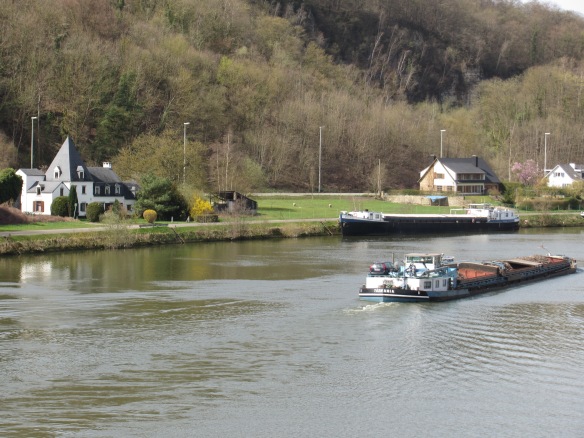
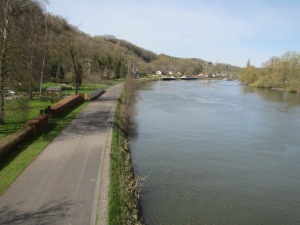
Ravel  WalllonnieI only rode a few kilometres along the only busy road of my day until I could get to the first bridge and across into the quiet countryside again. However I had noticed on the maps that there is a Meuse cycle route and when I rode over the bridge at I could see a flat riverside path winding away into the distance which clearly was the sort of long distance car free route that crosses Europe by the great rivers. So even a third sort of cycle touring was on offer had I wanted just to nip along the river to Huy on flat car free trails.

But I had come for the Ardennes, or at least the edge of the Ardennes, so I had planned a further30km route south of the Meuse and the route of Fleche Wallonne, circling round and come back to Huy from the south, arriving at the top of the Muy de Huy with about 100km under my wheels. I had expected constant climbing and descending but the reality was quite different.

As with the earlier section of the ride I was quickly into a network of minor roads with hardly any traffic on them. South from Namèche I was able to wind my way gradually up a lovely valley past Faulx les Tombes for several kilometres.Ardennes stone cottages
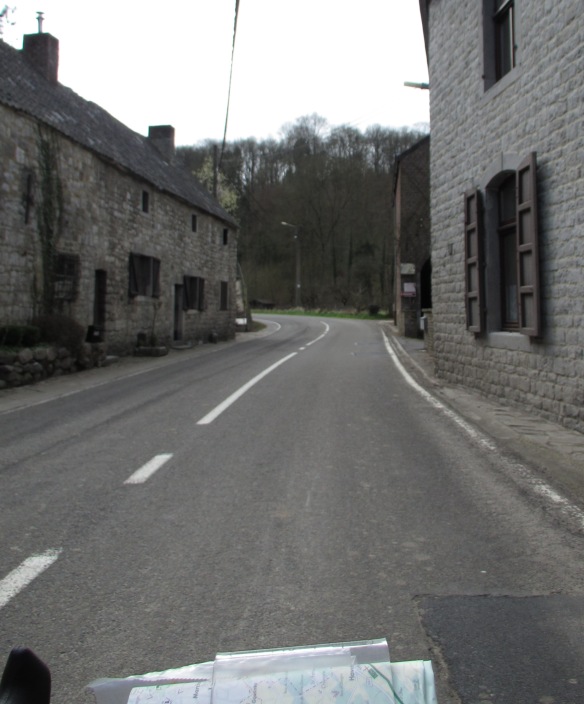
Cycle touring Belgium

I didn’t gain much height but then I turned east and climbed fairly vigorously up Gesves which it turns out is very much a plateau town, looking across high open farmland. I was getting pretty tired at this point and as I was at the top of one of my main climbs of the day I really rather hoped for a nice sweeping decent.

In fact I then had another flattish ride of about 15km northeast on plateau landscape, not what I had expected at all. However I was rewarded when I approached Modave because there was a great decent down and I made my first encounter with the Fleche Wallonne route. A relatively short steep climb out the other side took me back onto the plateau and I was finally working my way in towards Huy. Once again it was deceptive, I appeared to be riding towards a village on a low hill above the farmland. When I encountered the race publicity caravan just south of Huy it seems impossible to imagine they had just come up one of the most famous climbs in cycle racing.Fleche Wallonne caravan
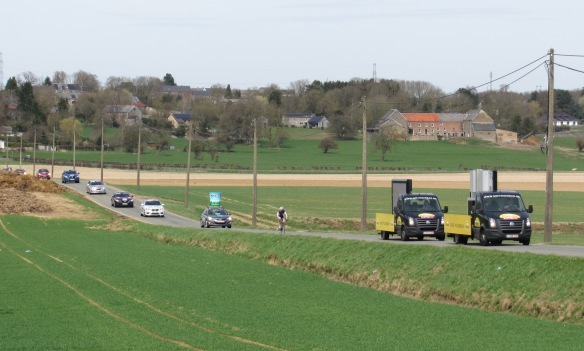
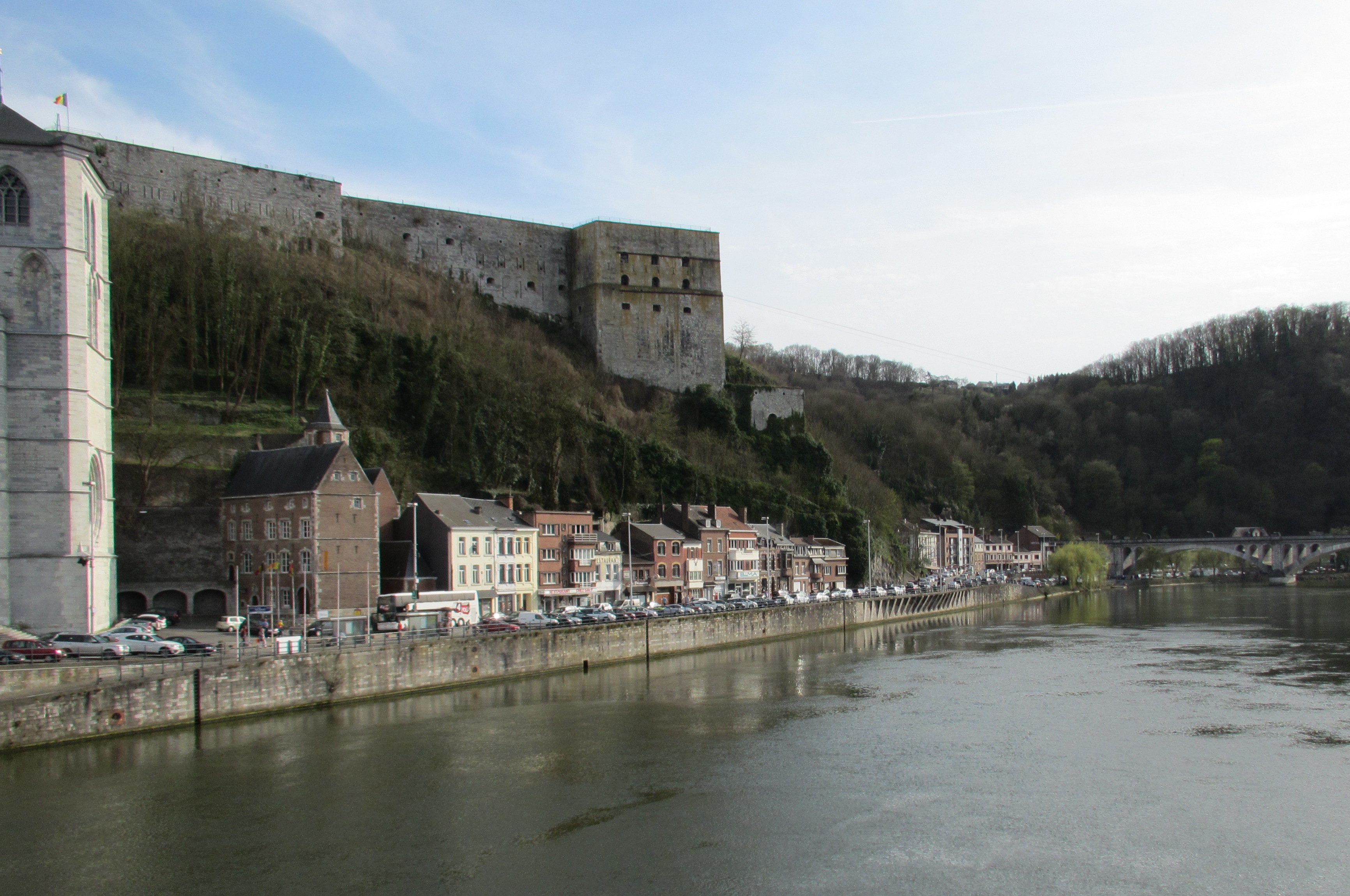
Only when I got to the very top of Mur de Huy could I see that the road effectively “fell off a cliff” falling steeply down through the suburbs and then at the bottom the town is a bustling place by the Meuse. You can get a good impression of the Mur de Huy from here just by looking up at the hill behind the town.Huy
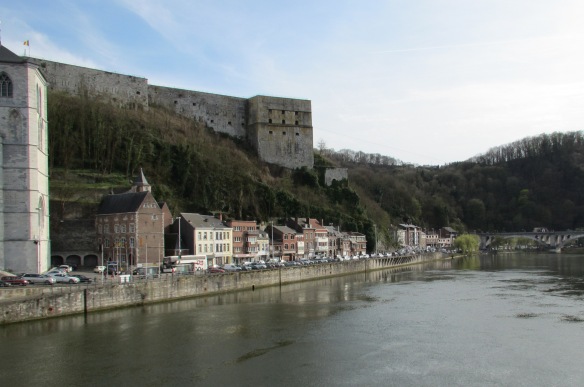
The distinction between the plateau and the valleys is so contrasting it is almost like two worlds, even the architecture and the building materials are different between high and low, as are the farming patterns and woodlands.
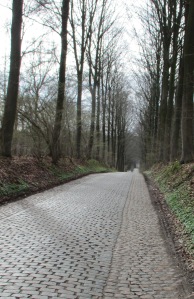
Cycling BelgiumThose low traffic volumes, driver respect and contrasting terrains should make Wallonia one of cycle touring’s undiscovered gems instead of something just for the Belgians and a few bike race fans. Maybe it suffers from the fact that it does offer “a bit of everything” because someone describing just one part of my ride on this sunny spring day would had told a completely different story to the next person. The downside is certainly that it isn’t easy to navigate, the theoretical Randonnee á Velo shown on some of my maps have no signposting whatsoever so you need to be confident with a map and reasonably well organised to decide if you wanted to stick to a hilly scenic ride or a meander through the lanes. And Belgiumthe Belgians have an extremely relaxed attitude to what constitutes a road for cyclists, in some cases we are talking almost cart track. However that is always preferable to a kilometre of cobbles, that really does knock back your energy and your speed, however it is so much part of the infrastructure there is just no way of knowing until you get there what you are going to be offered. Cycle lanes are almost redundant except by the main roads but they were generally reasonable quality and occasionally real gems.
All in all a brilliant day’s exploration, topped off with beer, frites and bike racing. It doesn’t get much better than that does it? Do come a visit Wallonia, there is something for every sort of cyclist here, even if it is upside down.

@30daysofbiking – how was it for you?

I last posted on 30 days of biking back on the 14th of April.

That doesn’t mean I stopped riding, it just means I ran out of steam on the blogging. It’s a great concept and it probably lends itself to the 140 characters of Twitter but I assumed my readers will probably run out of patience if I write “went to the station again” for the 15th time in a month. And it’s not as if I haven’t ridden a bike almost every day since too.

The bigger problem however was that I completely ran out of time to blog, I have had some pretty good content but I haven’t had time to do it justice. So while I am catching up with those posts I have looked back at the second half of the month and pulled out just a few highlights to close out the sequence, even if it is late. Almere and Paris were the travel highlights, but I have already blogged about those.

What was really great was being forced to note as I went along why even daily cycling is so uplifting, especially when you live out in the countryside and spring brings changes almost every day. This has been especially true this year, the late cold winter has compressed spring into a ferocious burst of energy and all of that broke during the 30 days of April.

So glory number one from the end of the month is blossom, bursting out all over.Genval Belgium Lasne Belgium

And number two is the rediscovery of touring. At last the weather has been good enough to do proper touring rides and I managed three or four of those, both local explorations, another club ride with Cyclottignies and my big trip across Wallonia. I ended April a lot fitter than I started it!Cyclottignies Club ride Brabant Wallon Lasne Houtain le Val

Finally there was one other big beneficiary of my determination to ride every day. He is a lot fitter too. When I might have just nipped out for a walk instead Murphy got lots of great cross country rides even after work and we explored a some great new local lanes off the Lasne Nature maps although not without a few barriers.

Belgium

Anyway I managed to ride every day except one in April, probably more than I would have done without the incentive of the challenge. So Murphy and I thank the 30daysofbiking guys in Minneapolis, great idea. We’ll be back next year.

To see how the rest of the world fared click here