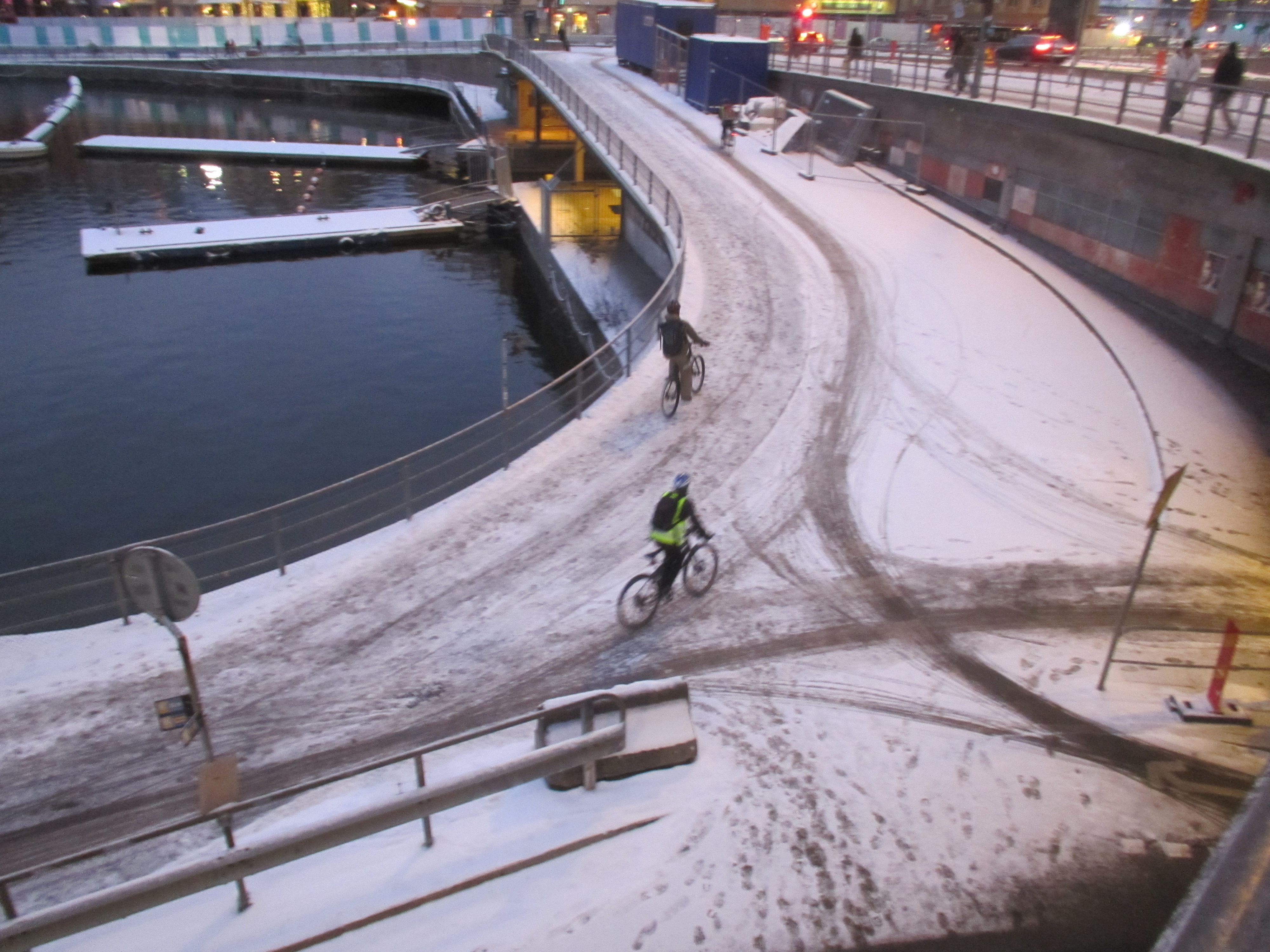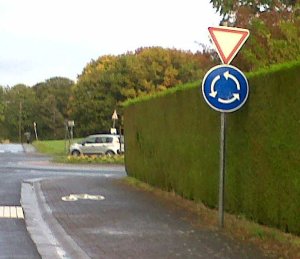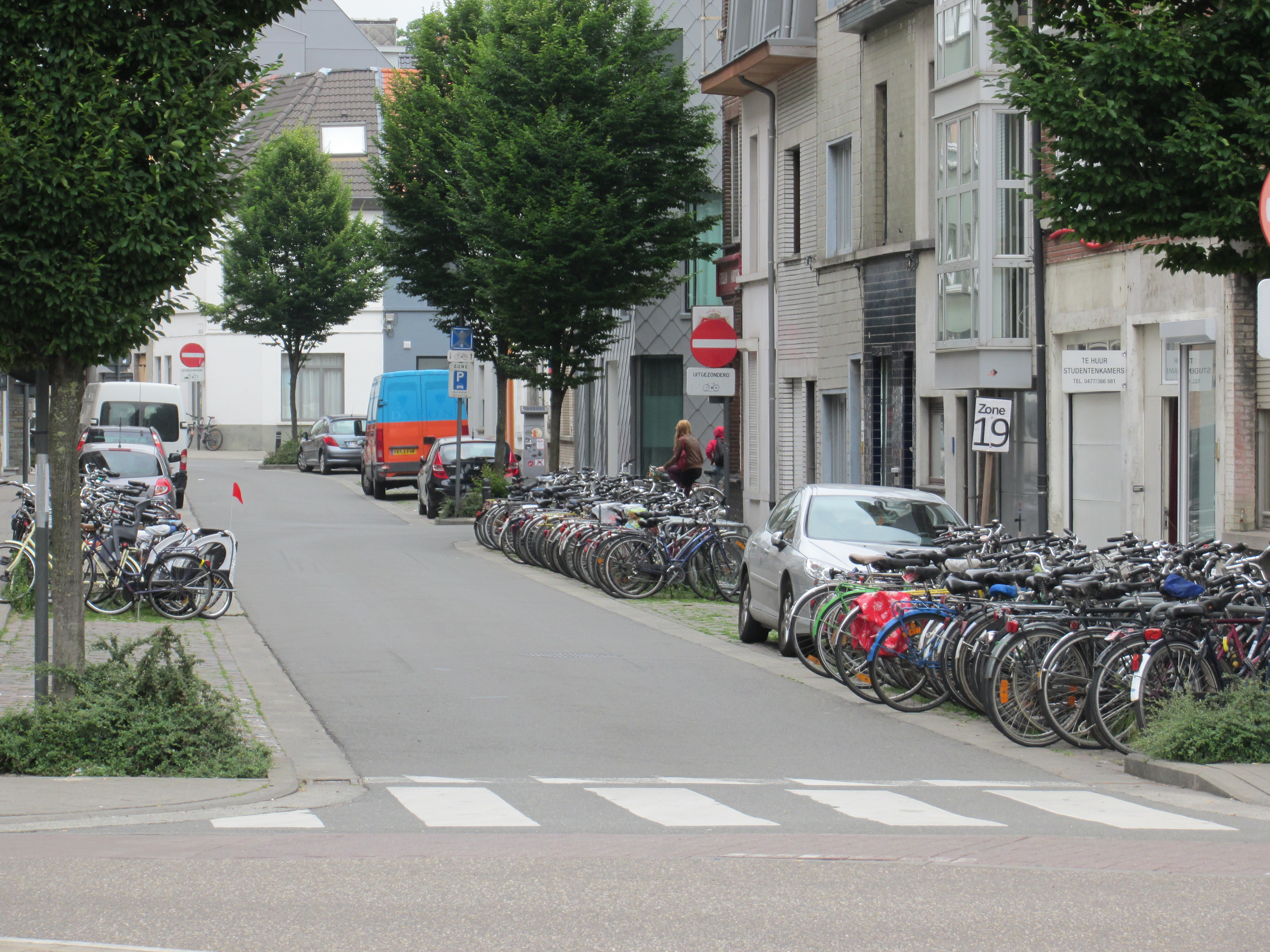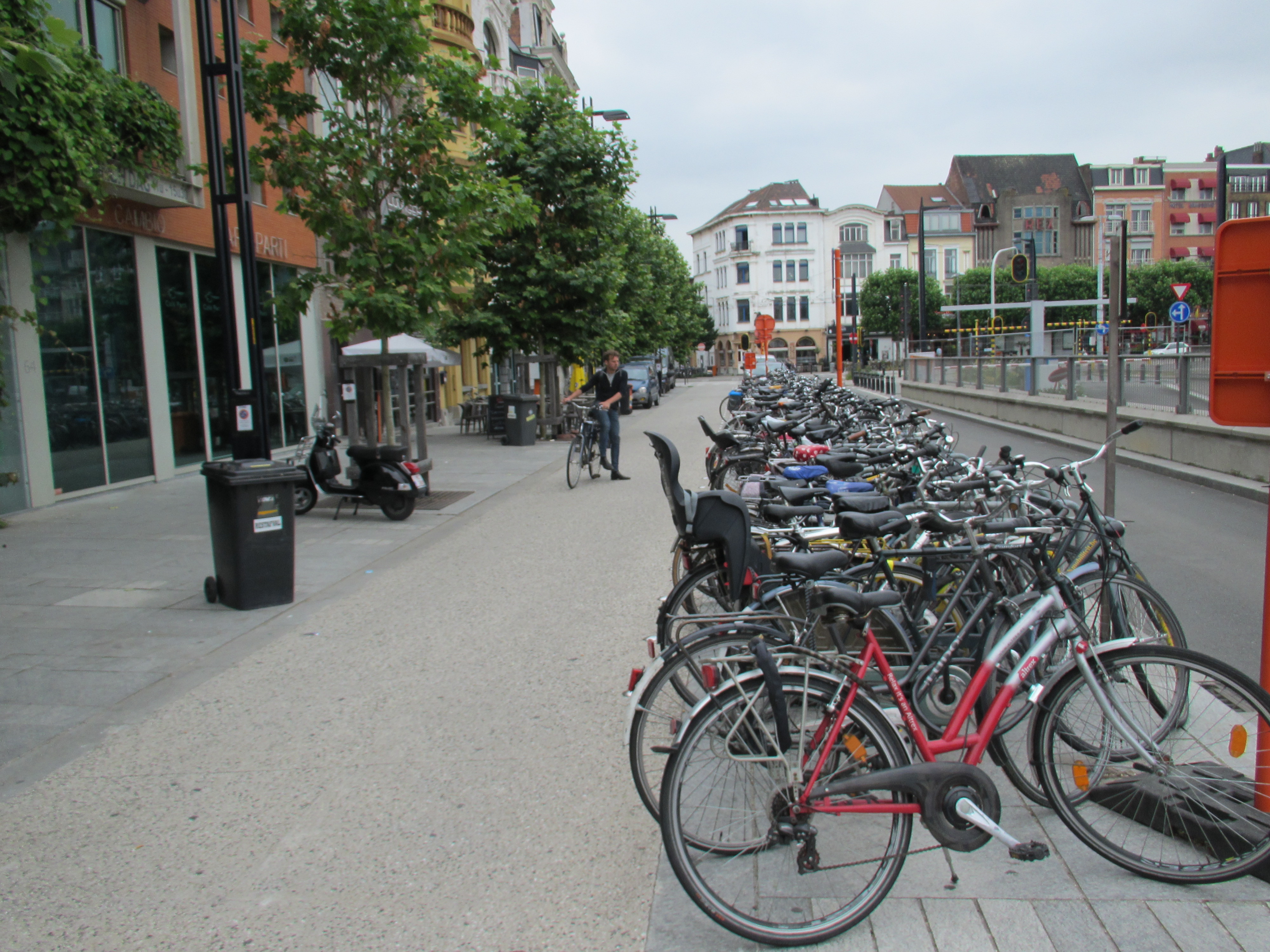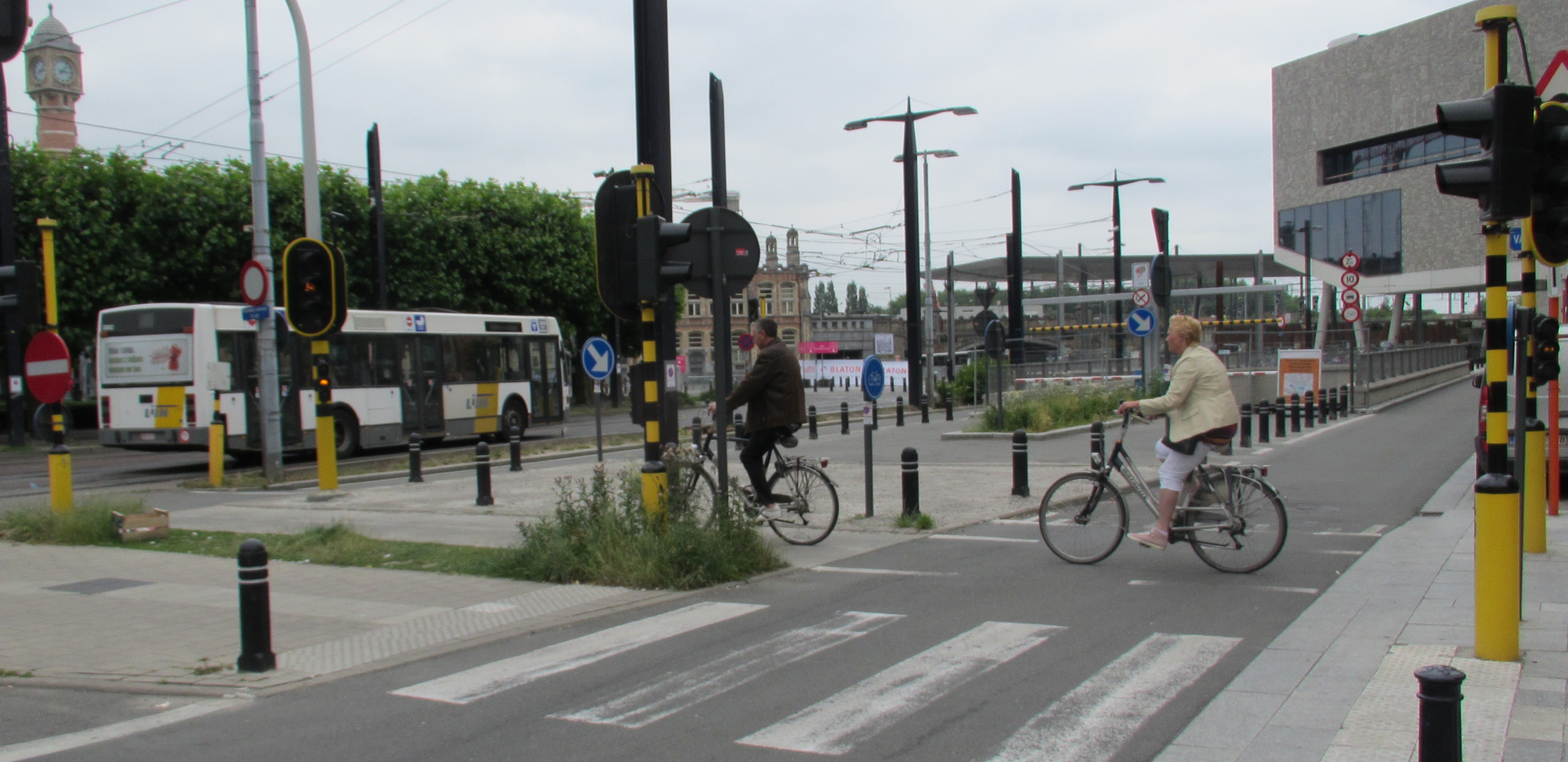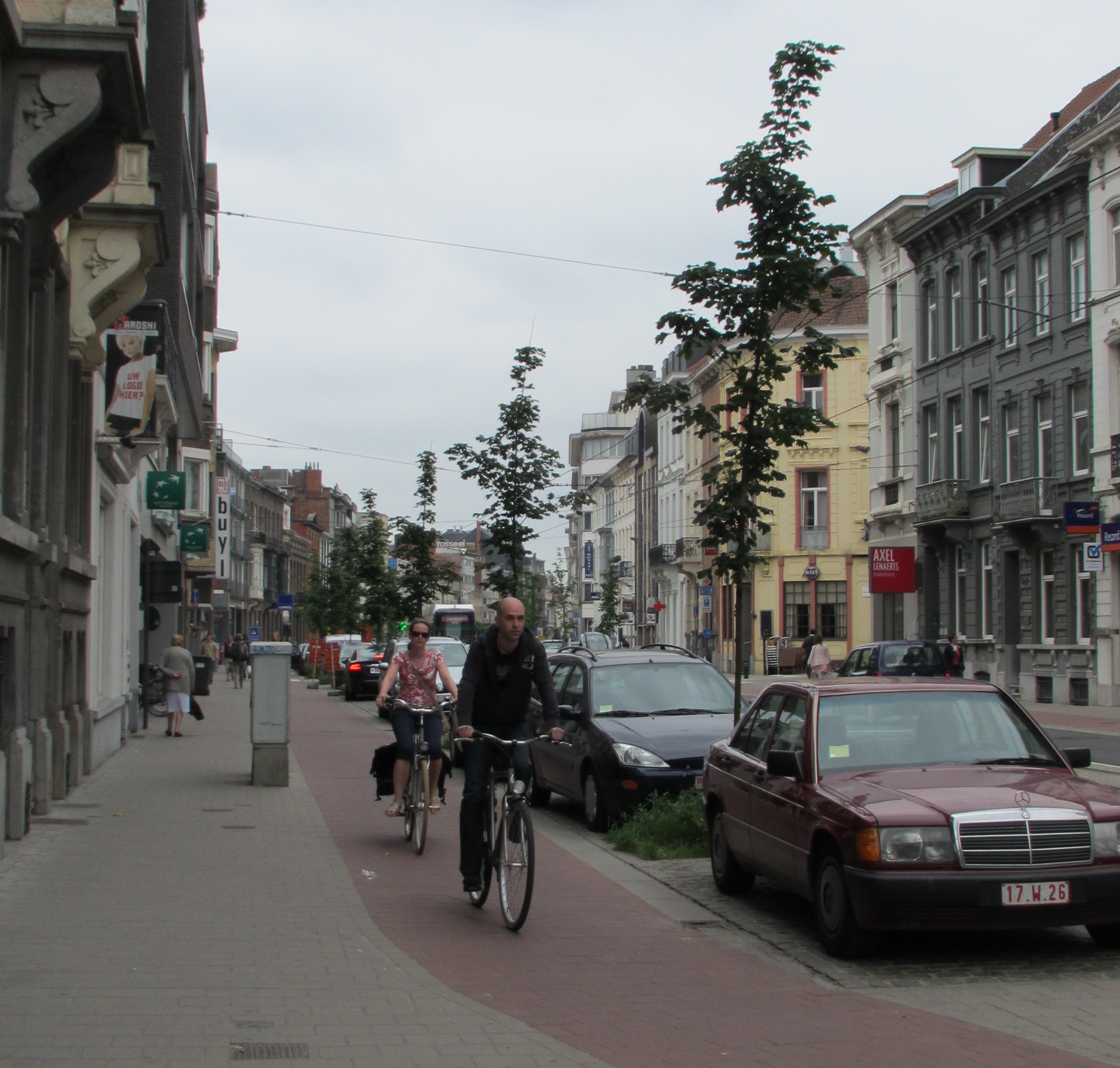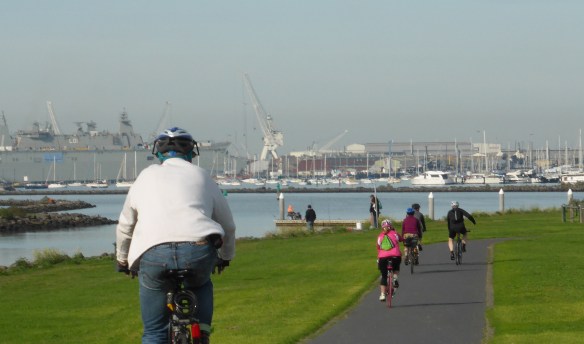
Yet another “what were they thinking” moment – a beautiful Belgian cycle route with a bonkers twist.

Cycle route to lasne

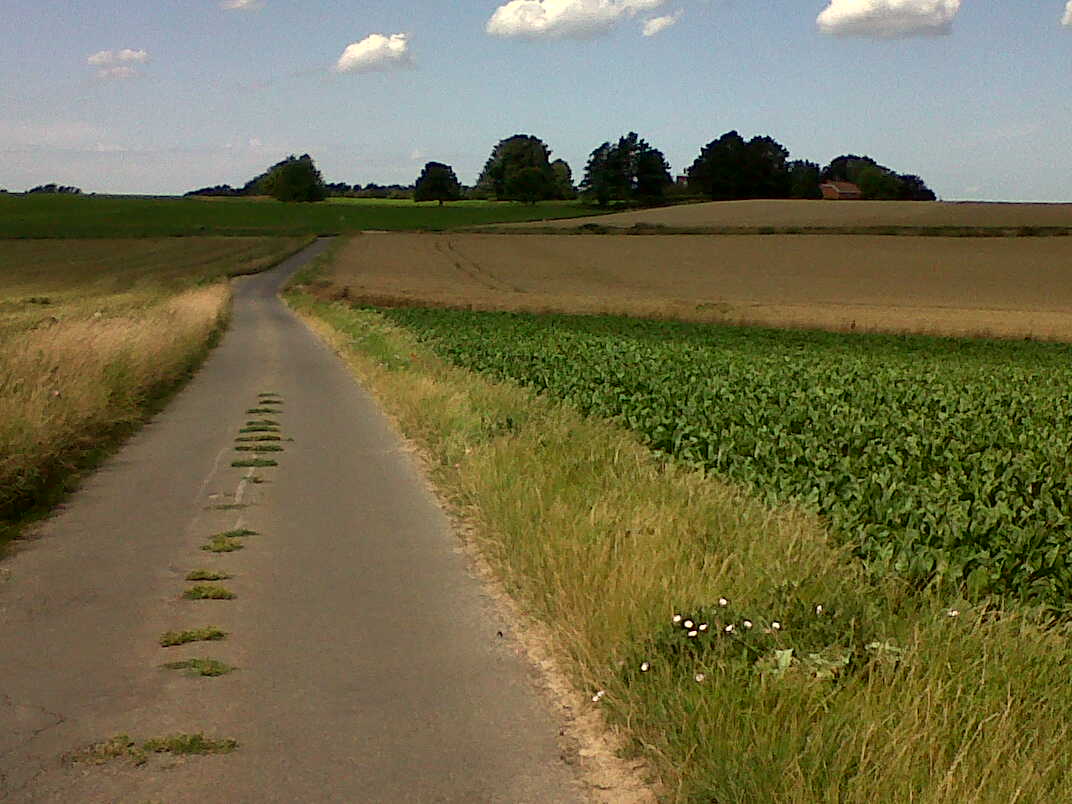
Close to where I live there is just one cross country cycle leisure route that mimics the best farmland routes that I found on my recent tour in Flanders.

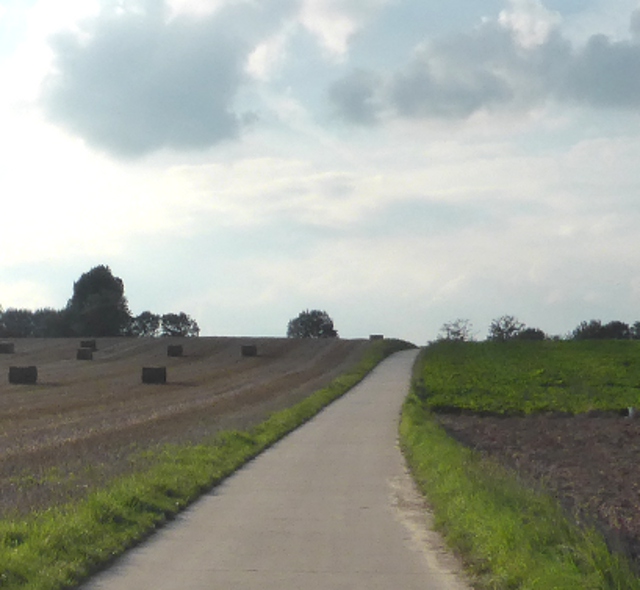
Lasne cycle route signFrom the Ottignies suburb of Mousty there is a former farm track that has now been covered by a perfectly smooth surface to make a car free cycle route, signposted to our town of Lasne, seven kilometres away.

It runs up across the open farmland with wide open views that I thoroughly enjoy, especially on these late summer evenings when the sun is low and yellow.

Looking towards Mousty on the cycle path

And then.

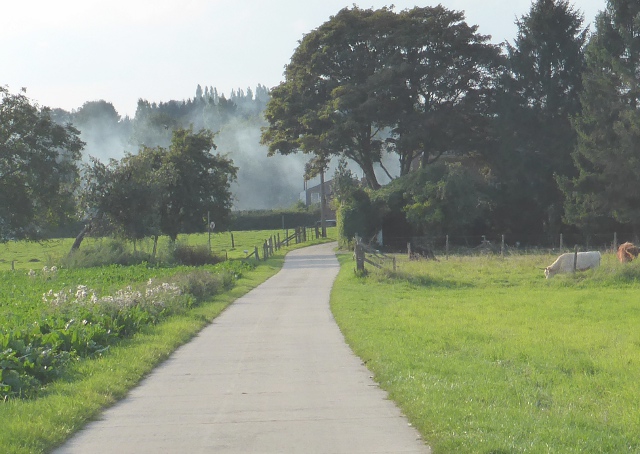
After winding through a few cottages we come to a small valley.

Mousty Lasne cycle path

For some unimaginable reason the planners decided to go straight down, so steeply that they then had to insert barriers which theoretically might stop unsuspecting cyclists shooting out without warning onto a Route Nationale (main road) at the bottom.

Steep hill on the Lasne Mousty cycle route

However as there is no indication that the RN is there, why would you stop? Assuming that you can ride down at all. I will just about ride down it on a day when the path is clear and dry. Which isn’t very often, because it is tree lined and usually covered in leaves or damp, so I have to walk.

From the bottom looking up it is just possible to believe that the barriers are there to aid pedestrians in fixing their climbing ropes before tackling the ascent. It certainly isn’t rideable except for the most competent of mountain bikers.

Cycle path from Mousty to Lasne

So at some point, somewhere, somebody thought it was a good idea to make a cycle route from a slippery descent with tricky chicanes and a blind entrance onto a main road. Even when they had an alternative which could take about an additional kilometre and connect to the rest of their network, actually bypassing the valley completely.

Given that the commune of Ottignies Louvain-la-Neuve is actually one of the more cycle friendly municipalities round here I say it again “what were they thinking?”

Sighs deeply,

Not despairing Down Under – I do not despair’s reflections on a cycling month in Australia

Bike at West Head Lookout Sydney

Photo Kevin Mayne

So Aussie is done. 28 days, 3 cities, about 20 bike rides and many more trips by train, tram, ferry and car.

And like all travellers I will come back to the question “how was it?”

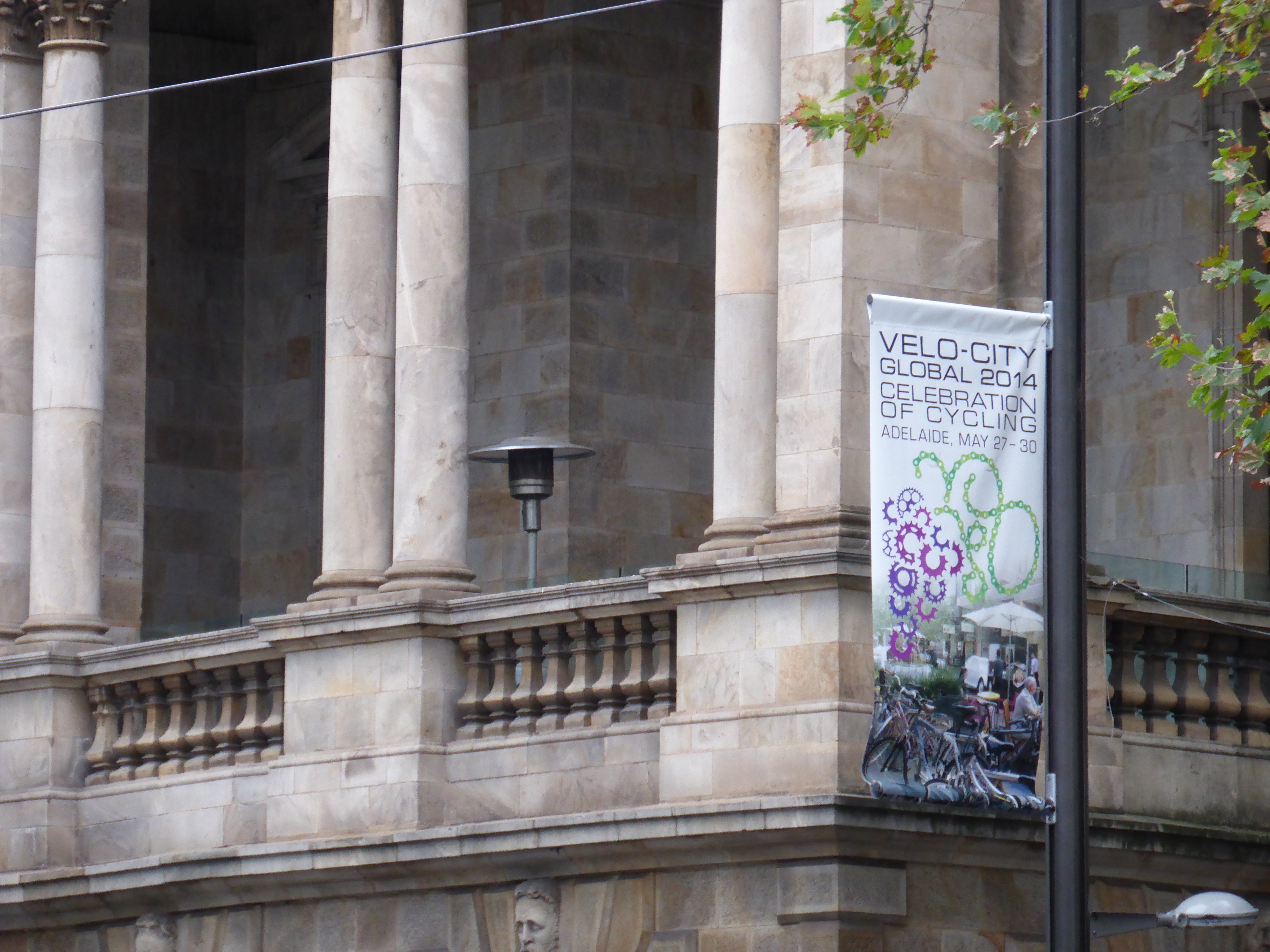
Of course I am going to say “brilliant” – because what will stick longest in the memory will be the high points. Velo-city Global 2014 was full of inspirational people and I met many more en route. And I had some excellent rides that will always be fond memories.

I had hopes for a strong cycling presence on the streets because I had heard that there has been something of a renaissance of cycling levels, especially in Melbourne and Adelaide.  But when I reflect further on my overall impression of cycling and cycling culture in the three cities I visited I am more inclined to say “curious” and even “challenging” because there are many aspects that present our Australian cycling friends with big challenges.

First the good news.

If there is going to be great cycling in cities the opportunities don’t fall in to place by accident. Things happen because there is some mix of advocates, politicians and technicians who have vision, passion and influence. And faced by the challenges of their cycling culture they are willing to stand up and be different, starting to promote cycling as a mass activity not just a sport.
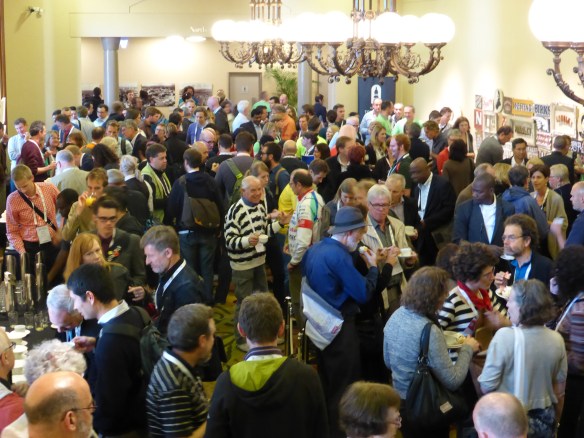
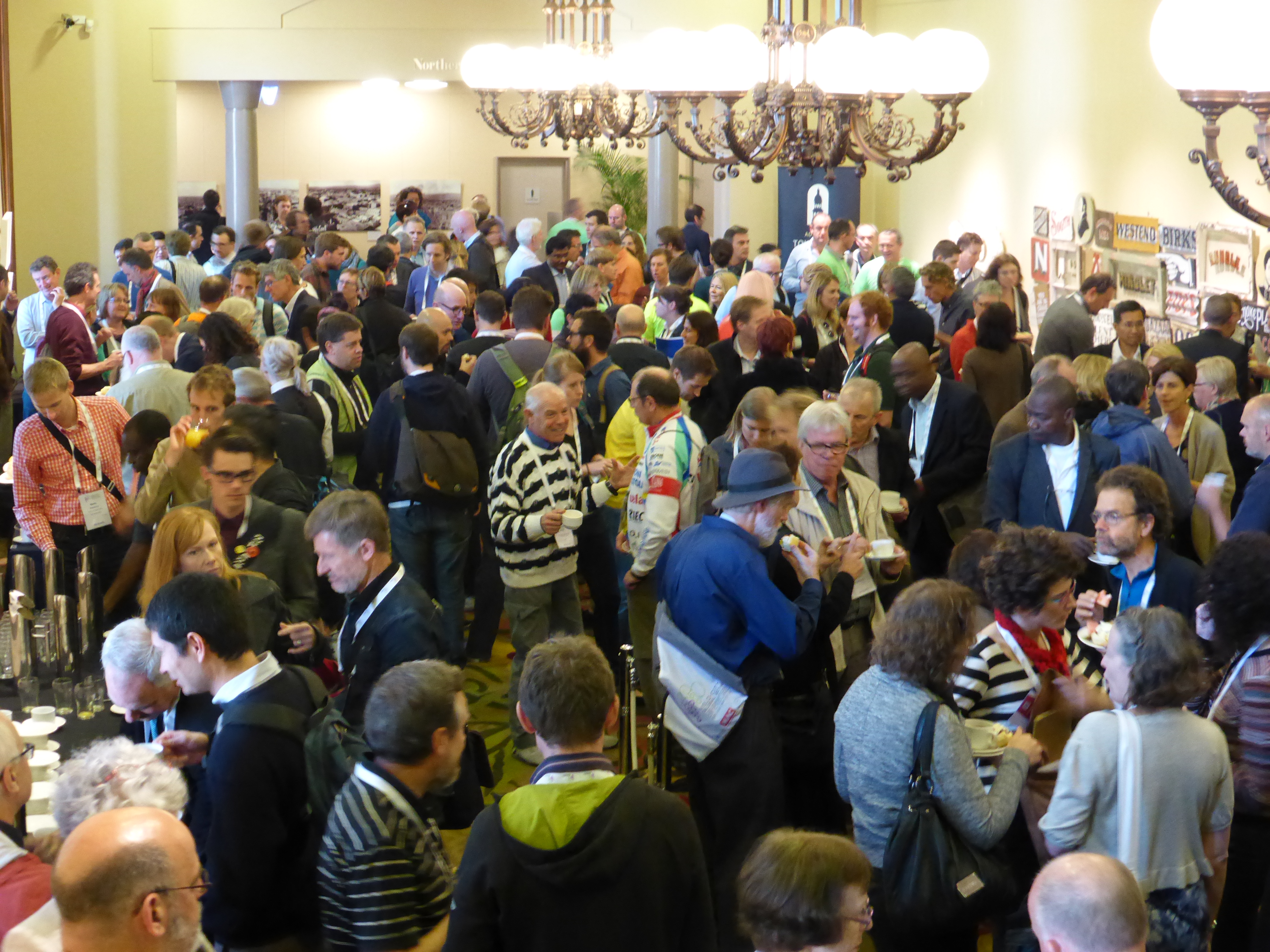
Velo-city crowd

There is no doubt in my mind that those people were at Velo-city and across Australia. Politically our Adelaide host was Lord Mayor Stephen Yarwood who was a role model on the podium and at events like the Big Bike Brekkie where he seemed more like the Europeans by turning up in his day clothes and just riding.
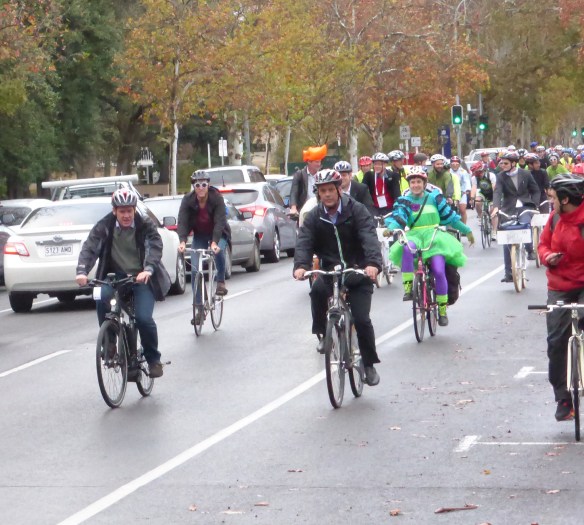
Mayor and CEO of Adelaide on the Bike Brekkie Ride

Most advocacy organisations in Australia are not huge and are heavily reliant on events to boost membership and pay the bills. But Bicycle Victoria is per capita possibly one of the biggest cycling advocacy organisations in the world with over 40,000 members from a population of just 5 million, hugely impressive. The other organisations are no less passionate if perhaps not as big.

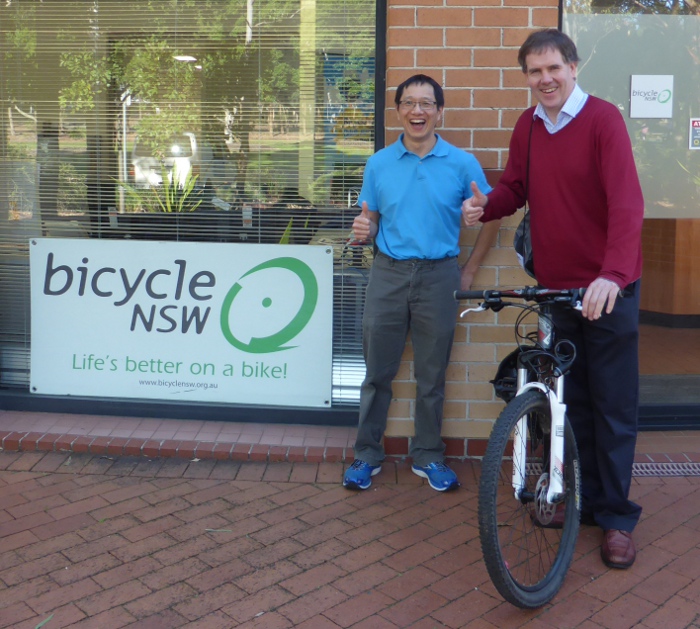
Bicycle New South Wales

The other community we met were the local promoters, entrepreneurs and activists who were great fun and great to be around. And of course in that community a huge shout out to Tina McCarthy our ride host in Melbourne. Her boundless energy and enthusiasm is infectious.

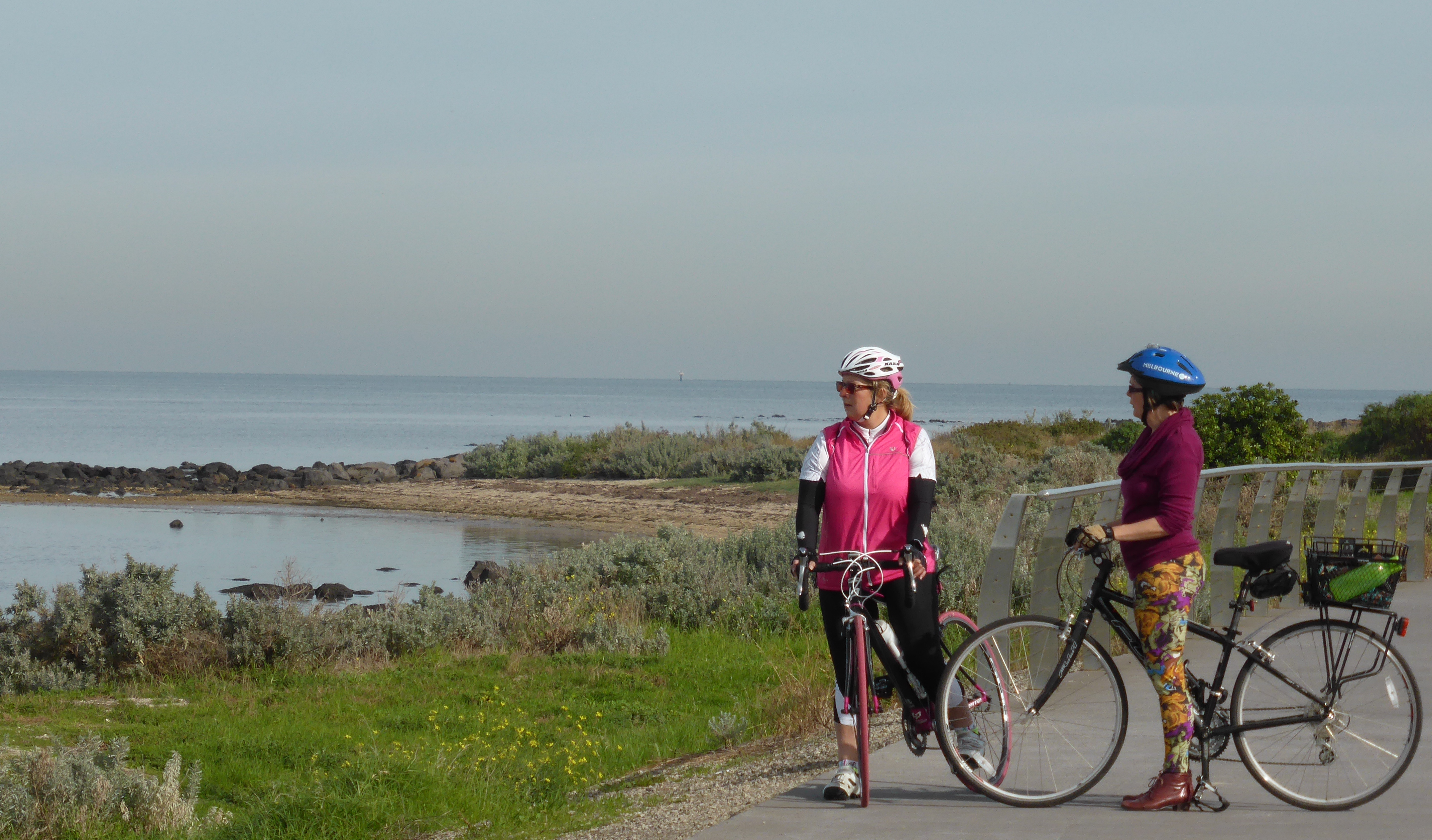
Altona ride in Melbourne

There are lots more people I could mention and many more who I didn’t meet but heard about and read their valuable contributions to the Velo-city discussions. I have no doubt that I was among friends and fellow travellers on the road to more cycling and I have to thank them for being great hosts.

The second bit of good news is that things are happing on the ground. At the moment the amount of really high quality cycling infrastructure is very limited so the signs have to be considered “green shoots”, especially because the quality infrastructure in the cities is far from established. The one high quality cycle route in Adelaide was only part finished and already there is a vote at the state parliament to try and get rid of it.

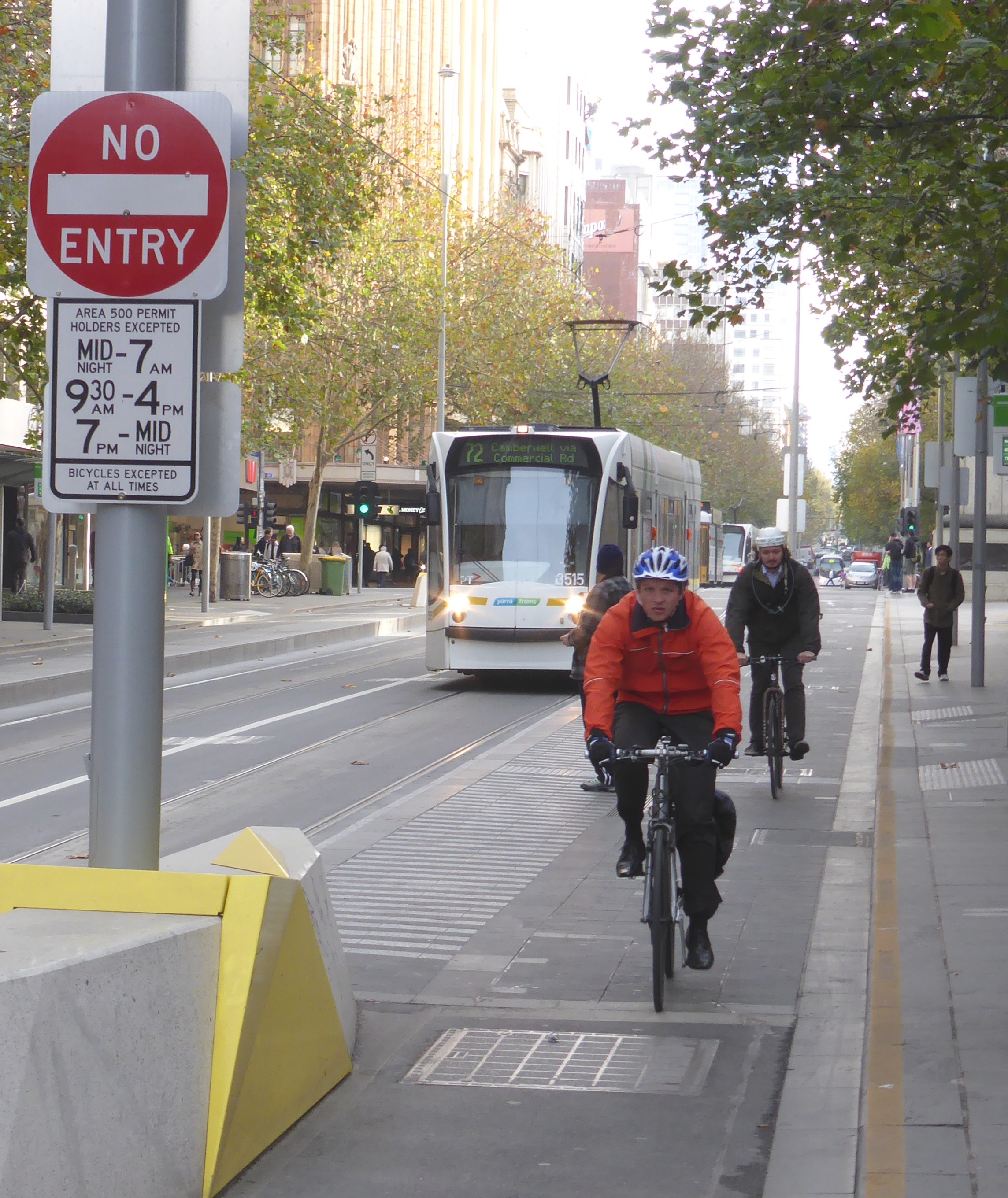
However in central Melbourne I saw that the much more established infrastructure was working because there were many more riders and some of them were not the usual suspects in lycra, this felt much more like a cycling city with a wider selection of riders.

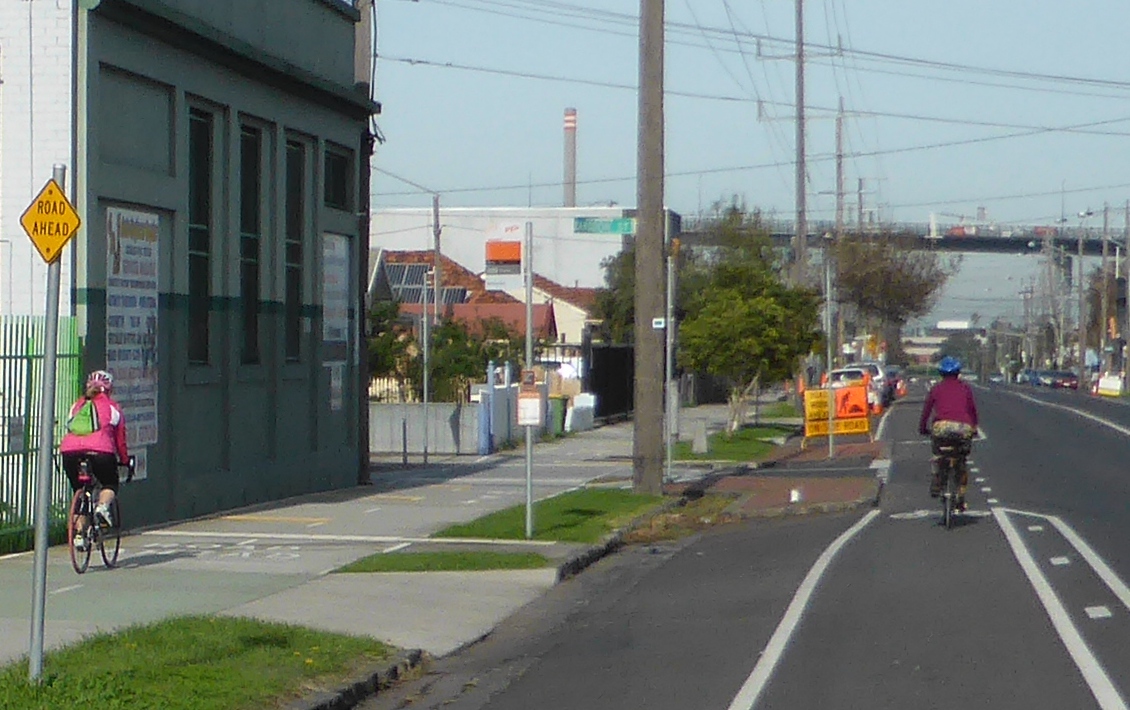
Partly protected cycle lane in Melbourne Cyclists in Melbourne

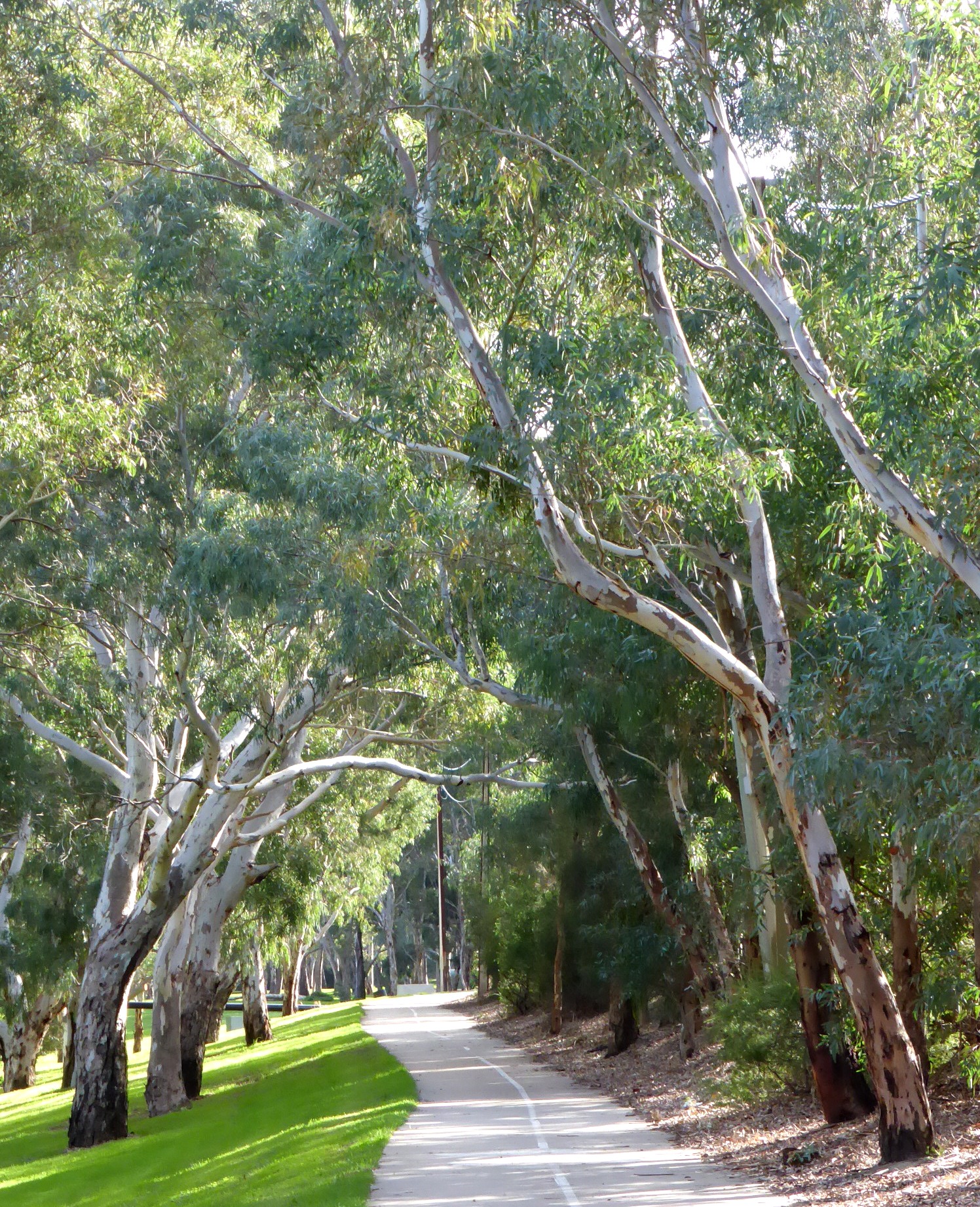
The urban leisure infrastructure is well established and well used. I have posted how much I enjoyed the River Torrens route in Adelaide, the round the bay routes in Melbourne and the Olympic Park in Sydney.
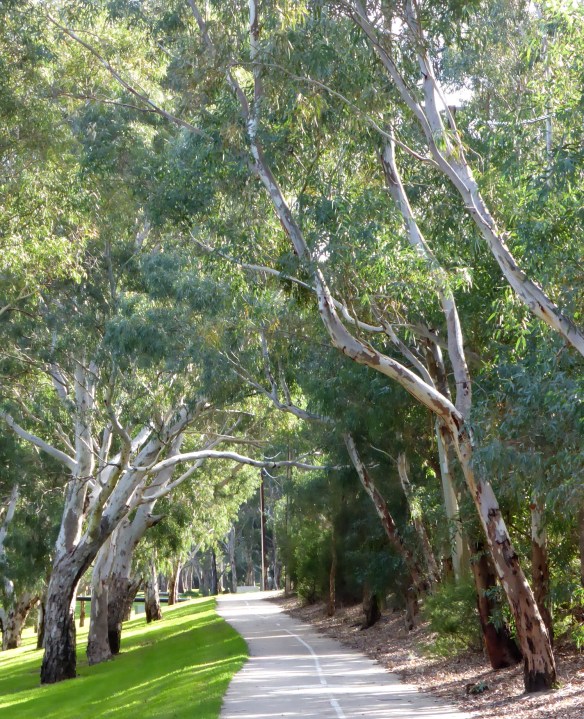
Avenue of Gum trees River Torrens Linear Park Adelaide

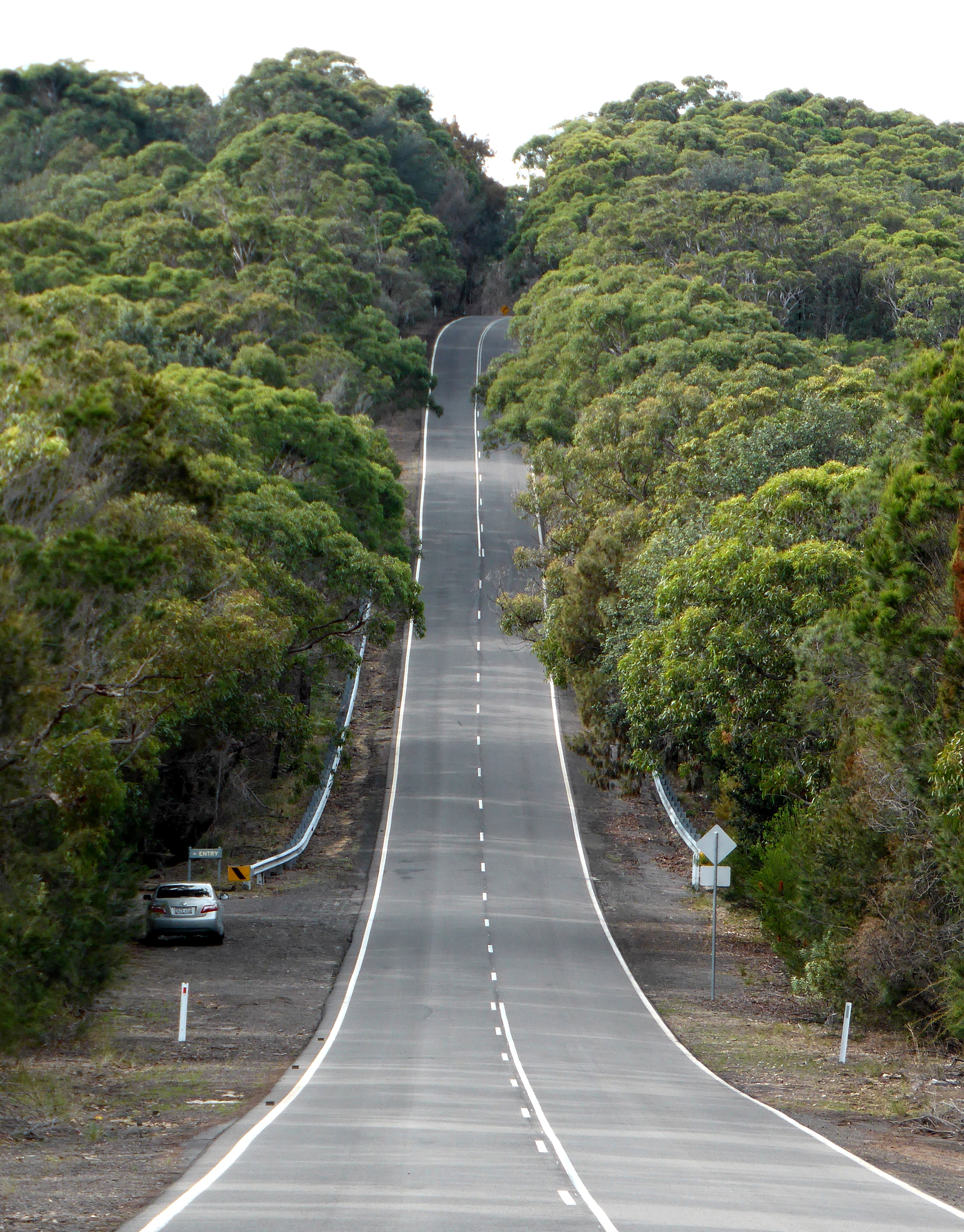
As well as the urban routes I will long remember my ride out to West Head in Sydney’s Ku-Ring-Gai Chase National Park, it was spectacular.Hills on the West Head Road Sydney

And these leisure routes were being used, there was a steady drip-drip of cyclists on all of them.

So on reflection I can report that these three Australian cities gave the impression that they could be joining the international group of “starter” cities that have begun their cycling revolution and could move up to next level where cycling starts to take a proper place in transport.

But, but, but……

This revolution currently looks different to anywhere else I have been. It isn’t Dutch or Danish, that’s for sure, but it is also different from the other low level cycling countries I have visited.

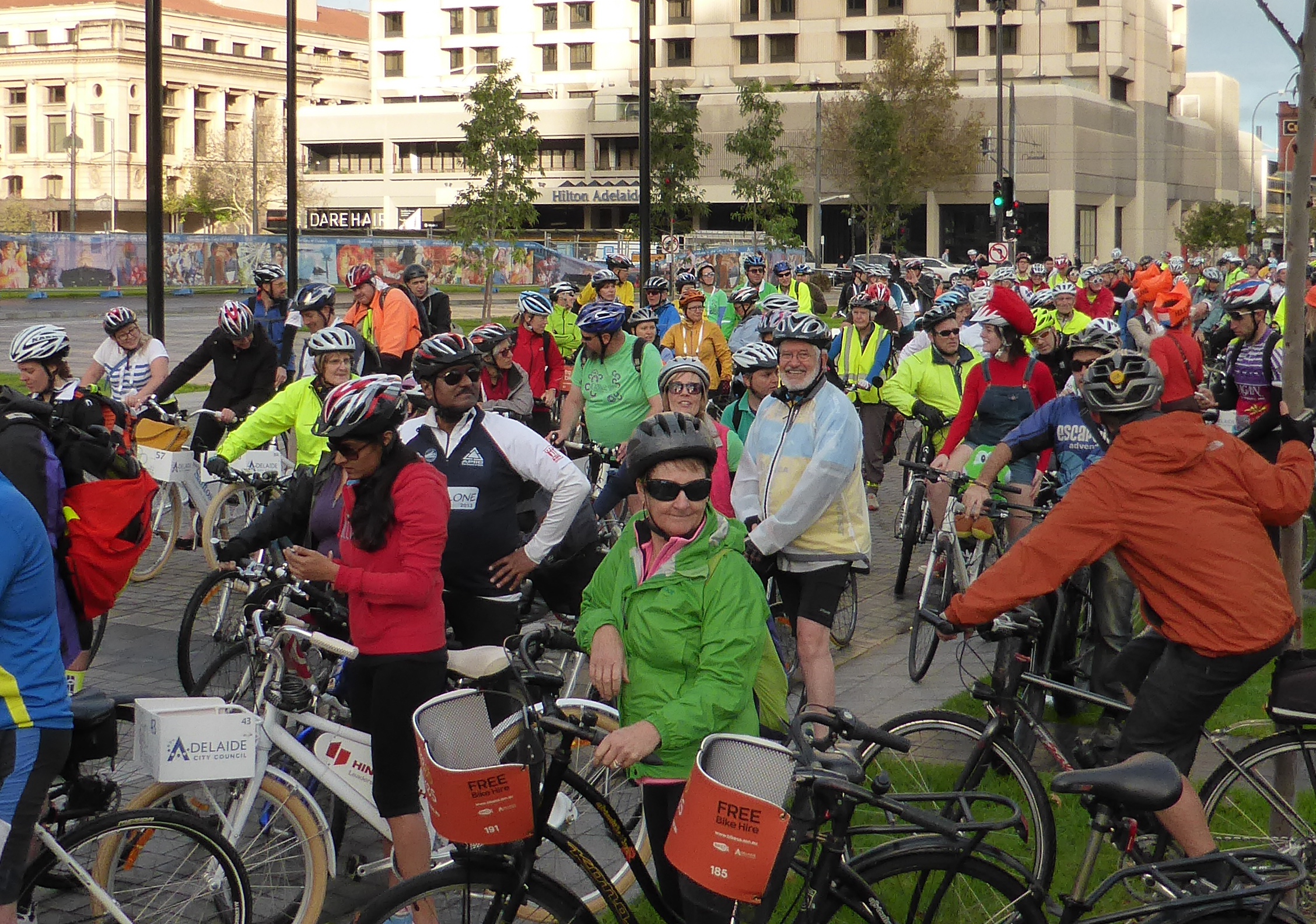
Just as Australia is inhabited by different looking animals as far as I could see Australian cycling culture is really all about different looking people, manly MAMILs  (Middle Aged Men in Lycra). Yes there are hipsters on fixies. Yes there are some women and young people and even people in day clothes just pottering about on bikes. But it seems to me that they are having almost zero impact on the understanding, reporting and promotion of cycling. Throw in the image of the Prime Minister thrashing about on a road bike with his mates to show his machismo and you can see what cycling promoters are up against. The Bike Brekkie in Adelaide was supposed to promote city cycling and most people turned up in lycra. Doh!

The start - bike brekkie Velo-city 2014

Some of the Australian advocates were also getting just a bit frustrated with the European delegates who they said were “obsessed with helmets”.  Having spent a month here I think I understand that much better. Helmets really don’t matter as much if the vast majority of cycling is a sport you dress up and something you do as an “activity” because you could take away the helmets and not much else would change. So the helmet issue is really the tip of a much bigger iceberg, the problem that so few people have any concept of cycling as a daily activity, as a normal mode of transport for short trips. I may have photographed a few people in Melbourne in normal clothes but when i observed evening rush hour the vast majority of riders were dressed for sport, not travel.

And I am really not sure some of the advocates are actually helping this situation either. I reported on the “extremist” cycling infrastructure in my last post, but it is much more than that. For example almost all the advocacy organisations rely hugely on leisure events for their income. That means their image, their web sites, their brochures and their exhibition stands are covered in images of people who look like cycle racers on fancy bikes and wearing lycra, sunglasses and helmets. To me the idea that these organisations represent what we would recognise as daily cycling just seems to get lost.

The other reason any possible cycling revolution looks different to me is because Australian cities really are really challenging places to promote cycling. As an English cyclist I didn’t enjoy cycling much 30 years ago when I lived in Australia and I still find the city layouts and transport patterns alien. In the central business districts there are grid pattern roads around huge tall modern buildings. Wide multi-lane highways leading right across the cities.Adelaide Post office

And then there are the suburbs, spreading and sprawling over a huge footprint because of the amount of space commanded by both houses and the huge wide roads that links them and the many out of town shopping malls. Car use and car parking dominated every aspect of the streetscape then and it is much worse now. In Sydney that is worse because it is steeply hilly, and hot.
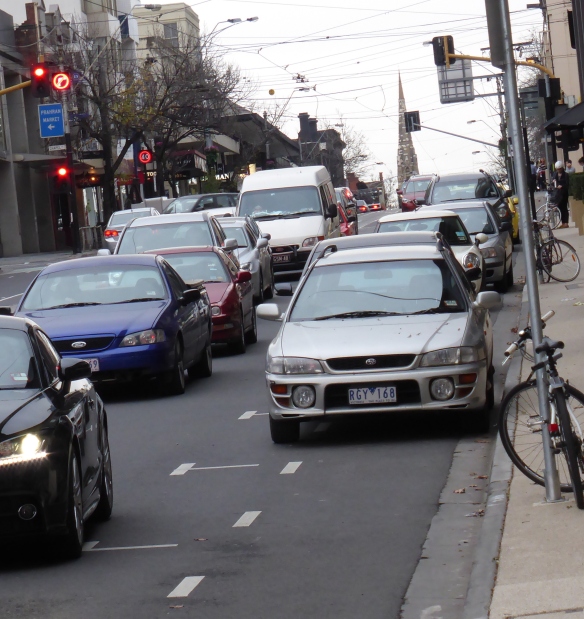
Tookak Road cycle lane

Because of the colonial heritage I know some people thought Australia would be a version of Britain or Europe, just a long way away. In transport terms Britain is the easy comparison to make: they speak English, they drive on the left and they have failed to grow cycling for 30 years. Pretty obvious really. But wrong.

To my eyes there is almost nothing European about this urban form, it seems to have shaped itself on similar lines to North American cities which have developed over a very similar time period. In much of Europe we constantly battle over space, here there is almost too much of it and the cities have run amok. The few cities we have like this are more likely to be in Eastern Europe than anywhere else.

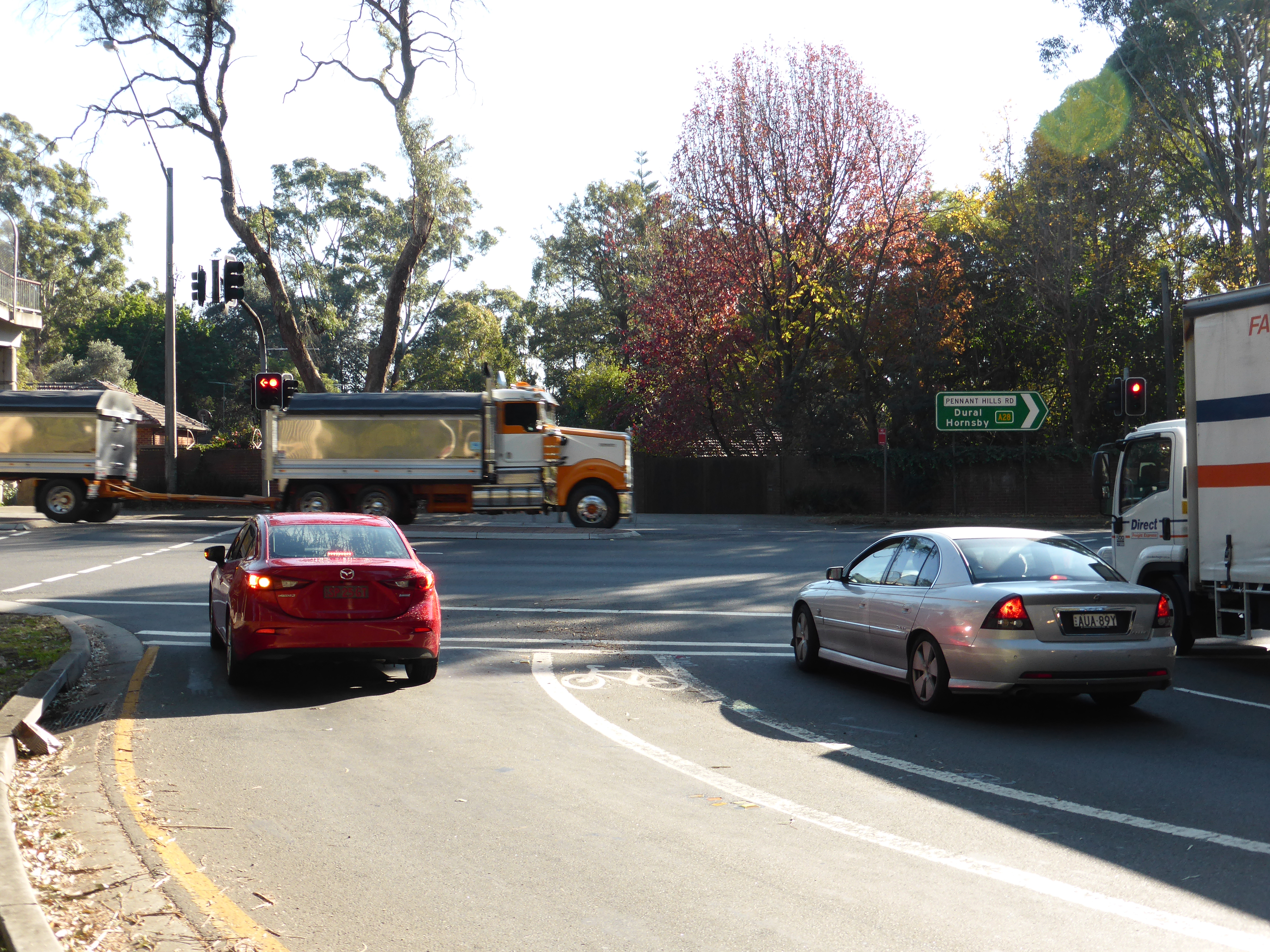
So whenever you cycle on road in Australia you have to be able to cope with extended distances because of the urban sprawl and I had to cross or turn on big multi-lane highways several times on every ride, a process that varied from challenging to terrifying, in particular in Sydney.

Beecroft Road Pennant Hills Road cycling facility

That is an impossible for all but the brave and it strikes me that without comprehensive national or state strategies for junction management cycling in Australia will be forever stuck with just the most fearless of cyclists. The existing on-road cycle lane network is frankly worse than useless as I wrote here.

I’ll make just one final observation that I found seriously disturbing.

One of the most important motivations for getting people cycling and keeping them cycling is the fact that cycling makes you feel better. It is fun. It makes us smile. We know there are mental health benefits of cycling. We know that according to research the health benefits outweigh the risks by factors as much as 20:1.

But probably because of the compensation culture in Australia parts of the cycling world somehow seems to have let their lawyers squeeze the joy out of cycling.

Take this sign beside a beautiful, smooth, car-free cycle track.

Trail safety notice Williamstown

Or this wording on the web site of a cycling organisation.

Welcome

Whatever happened to joy, spontaneity, freedom……..?

And when the cycle helmet discussion flared up in the media in Adelaide I was astonished to see on television that instead of the usual trauma doctors that we always debate with the entire debate in favour of helmets was being conducted by accident compensation lawyers.

It was all deeply depressing.

So what do I conclude overall?

From this evidence promoting cycling as a mass activity in Australia looks like a doomed enterprise. The advocates are probably right, the cycle helmet compulsion that we Europeans see as a huge barrier is actually as more a symptom of an underlying culture where cycling is a sport and leisure activity operating in a suffocating legal climate.

One international expert at Velo-city was so frustrated by all the lycra, the helmets and the accepting attitude of the advocates he said to me “I give up on this country”.

I disagree. Against the background of cycling in Australia the change agents at all levels demand our respect, our support, maybe even our sympathy and certainly our encouragement because every bit of progress that they make to “normalise” cycling is a bigger victory than it would be almost anywhere else.

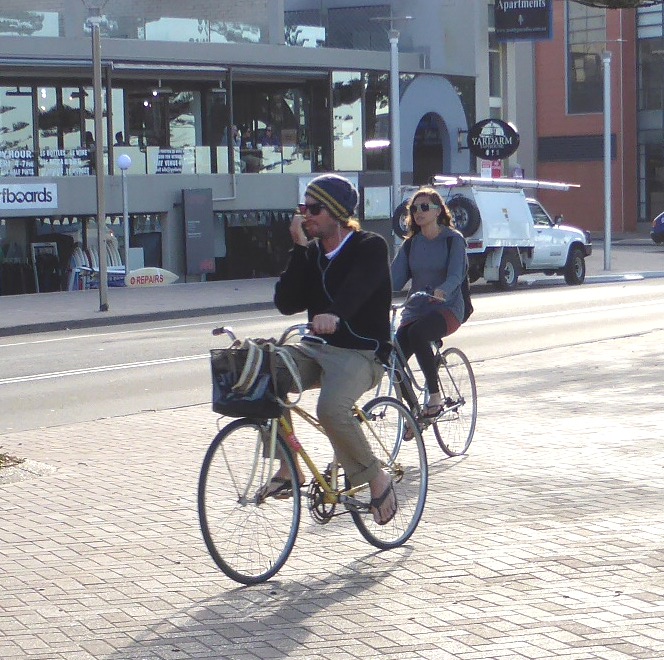
And it can be done. The new lanes are going into the centre of the cities despite the opposition. And almost at the end of my trip I went out to Sydney’s seaside suburb of Manly. I found bikes at the ferry terminal like at a European station. And I found a whole community of laid back people just pottering about on bikes, carrying surf boards and children and generally living a bike friendly life. No special clothing, almost no helmets.
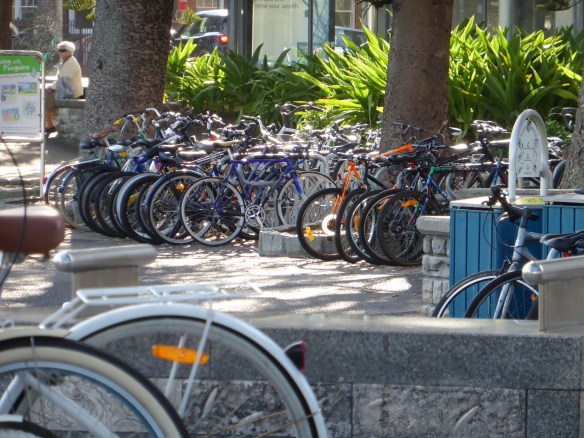
Bikes at the Manly Ferry terminal lady cycling with dog in Manly Cyclist with child at Manly Cyclists in Manly

It was lovely, a breath of fresh air, a real cycling treasure. If here, why not everywhere in Australia? C’mon Australia, every cycling day could and should be like this.

I do not despair.

The worst of Australia’s cycling infrastructure – “dooring zones” and part time cycle lanes

Useless cycle path in Sydney

I Do Not Despair is about being positive about cycling, travelling to places by bike and enjoying the company of cyclists.

But sometimes I just see things that make me ask “What were they thinking?” In Australia I had some great rides but I found many examples of cycling facilities that seemed spectacularly ill-conceived and designed.

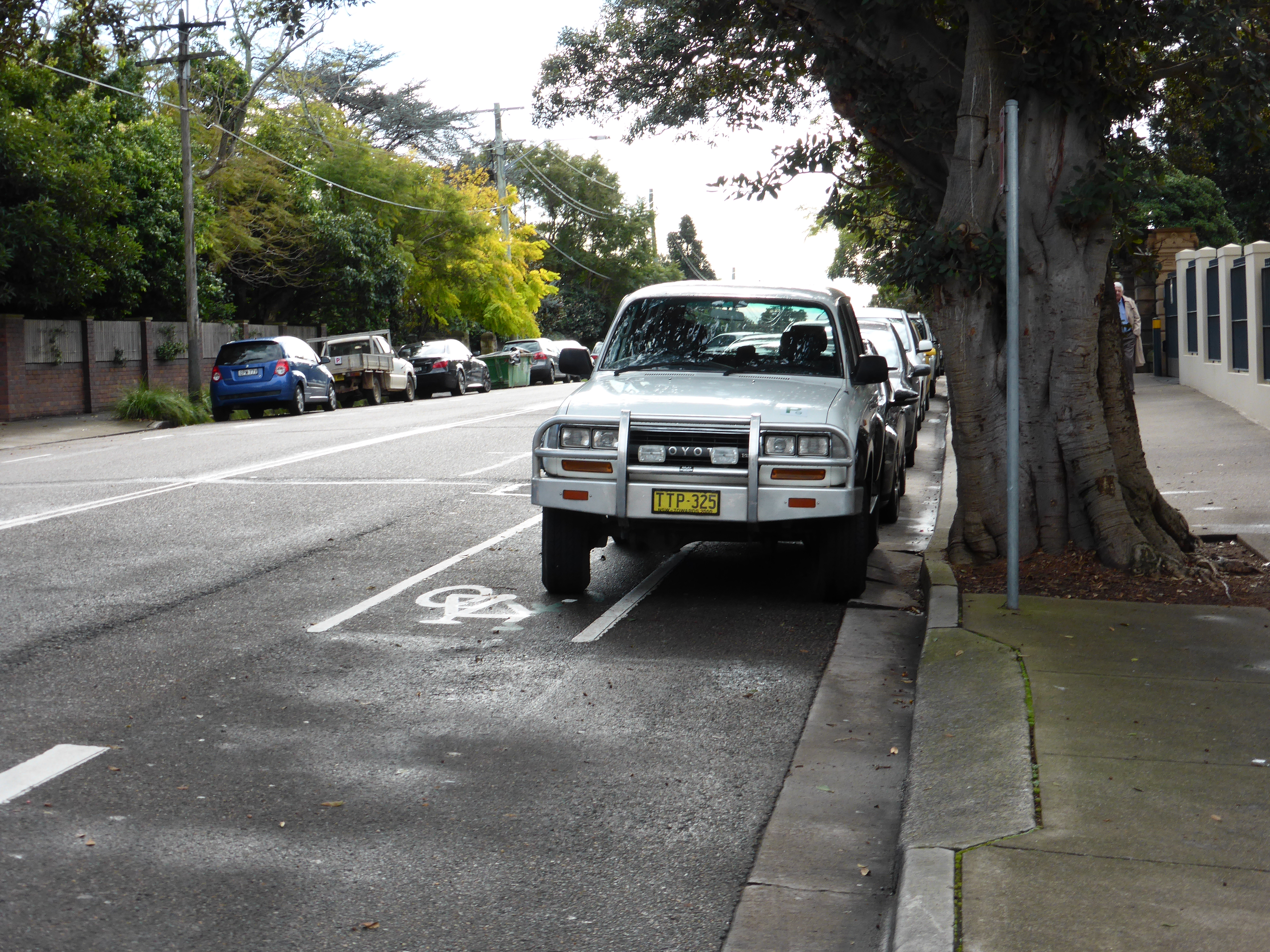
In both Melbourne and Sydney the most common example was “dooring zones” and in Melbourne they were joined by “part time” cycle lanes.  They probably have some other official term in the minds of the people implementing them but these were my phrases, although I could have called them a lot worse.

I think they fail the test for cycling provision in the most important way of all. They are of absolutely no benefit to anyone – there is no “design user” and as far as I can see no road safety benefit at all. In fact even worse, these sorts of facilities create user conflict and badly educated cyclists which in the long run makes the cycling experience worse for everyone else.

Highly experienced vehicular cyclists don’t need them because they are confident riding on roads and should be riding out in the middle of a carriageway to protect themselves from close passing cars. New or less confident cyclists get absolutely no benefit whatsoever because they offer almost no psychological or real protection from busy traffic, leaving the cyclist exposed and afraid. And if that is the case they are a surely waste of public time and resources?

Dooring zones.

Sydney

Let me take the “dooring zones” first. During side chats at Velo-city and even more in my reading of Australian cyclists social media and blogs I kept coming across lots of comments about “dooring”, the highly dangerous practice where a car user opens the door of a parked car into the path of a cyclist.

Most regular cyclists know about this one.  I have had it happen twice in fourty years of riding and got away with minor injuries but I know of some horror stories. And there is no doubt dooring plays on your psyche when you ride again, indeed many people never go back to riding, but after a near miss or two you learn to keep your distance.

Cycling AdelaideI saw one or two examples of bike lanes outside parked cars in Adelaide, but generally they were wide enough to allow the user to ride well outside any risk. I couldn’t really understand the high profile concern about the subject among the Aussies.

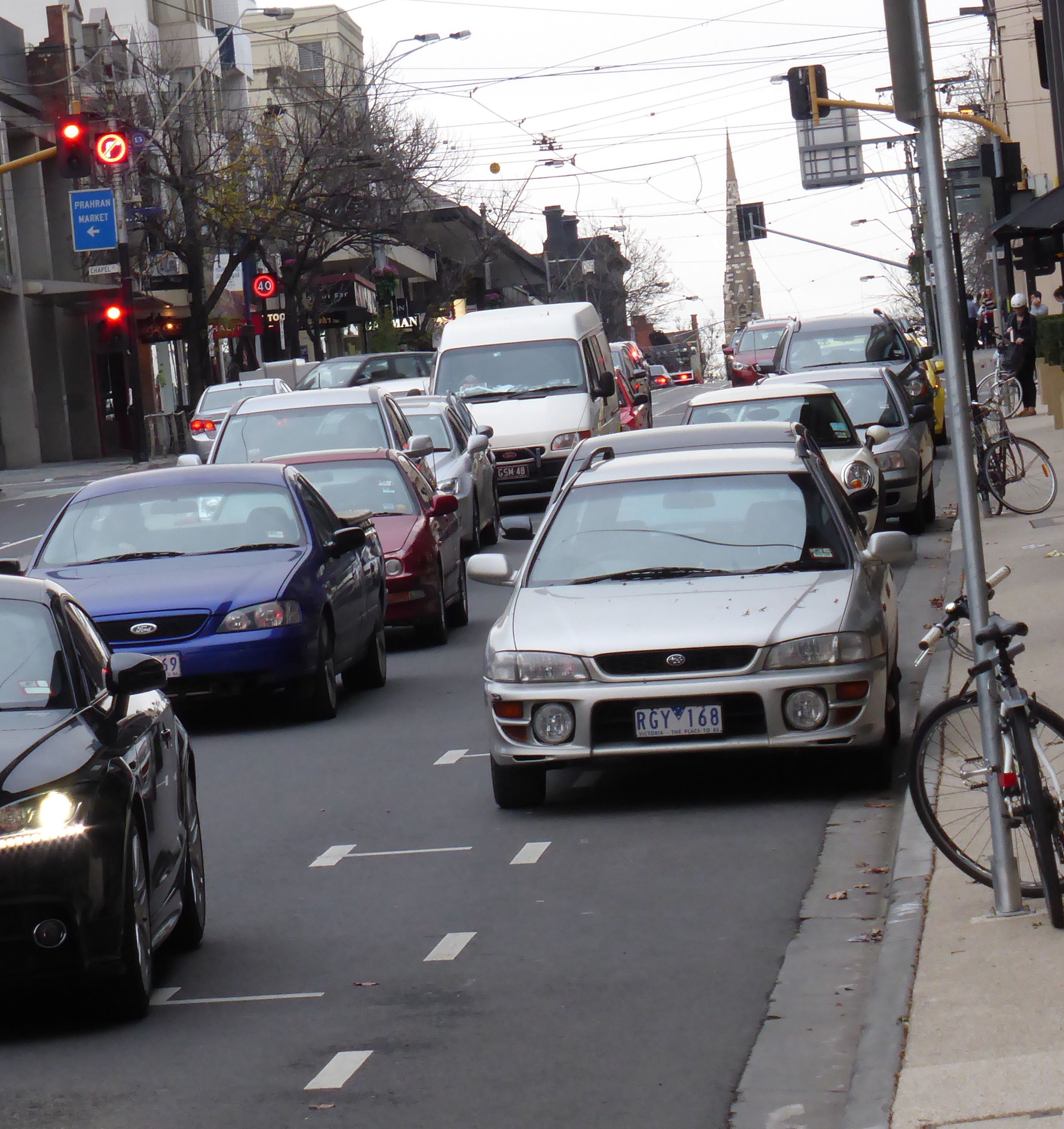
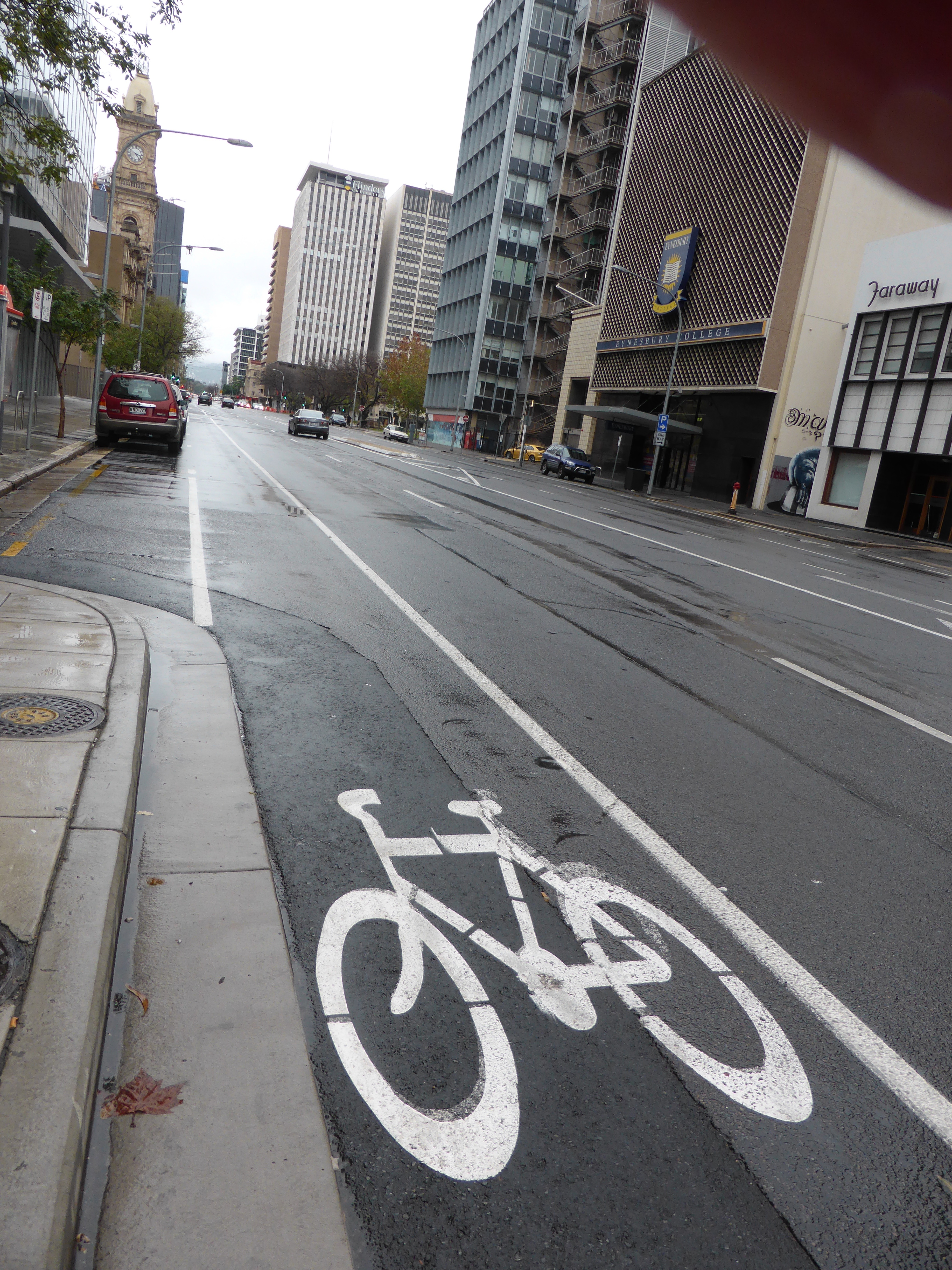
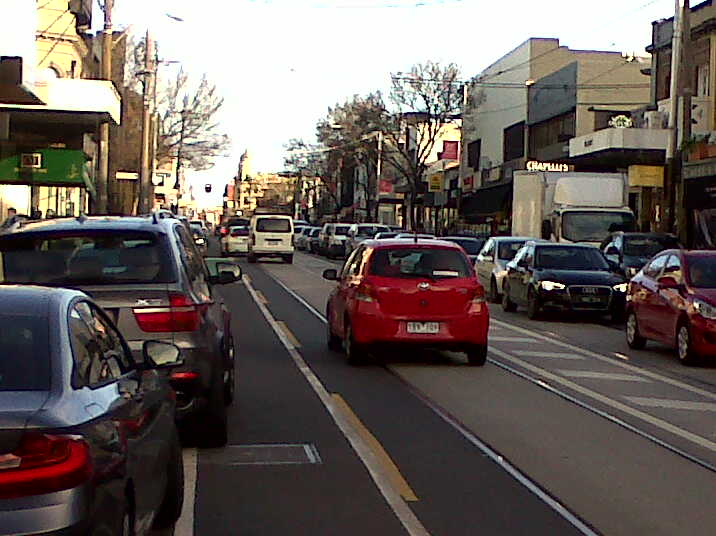
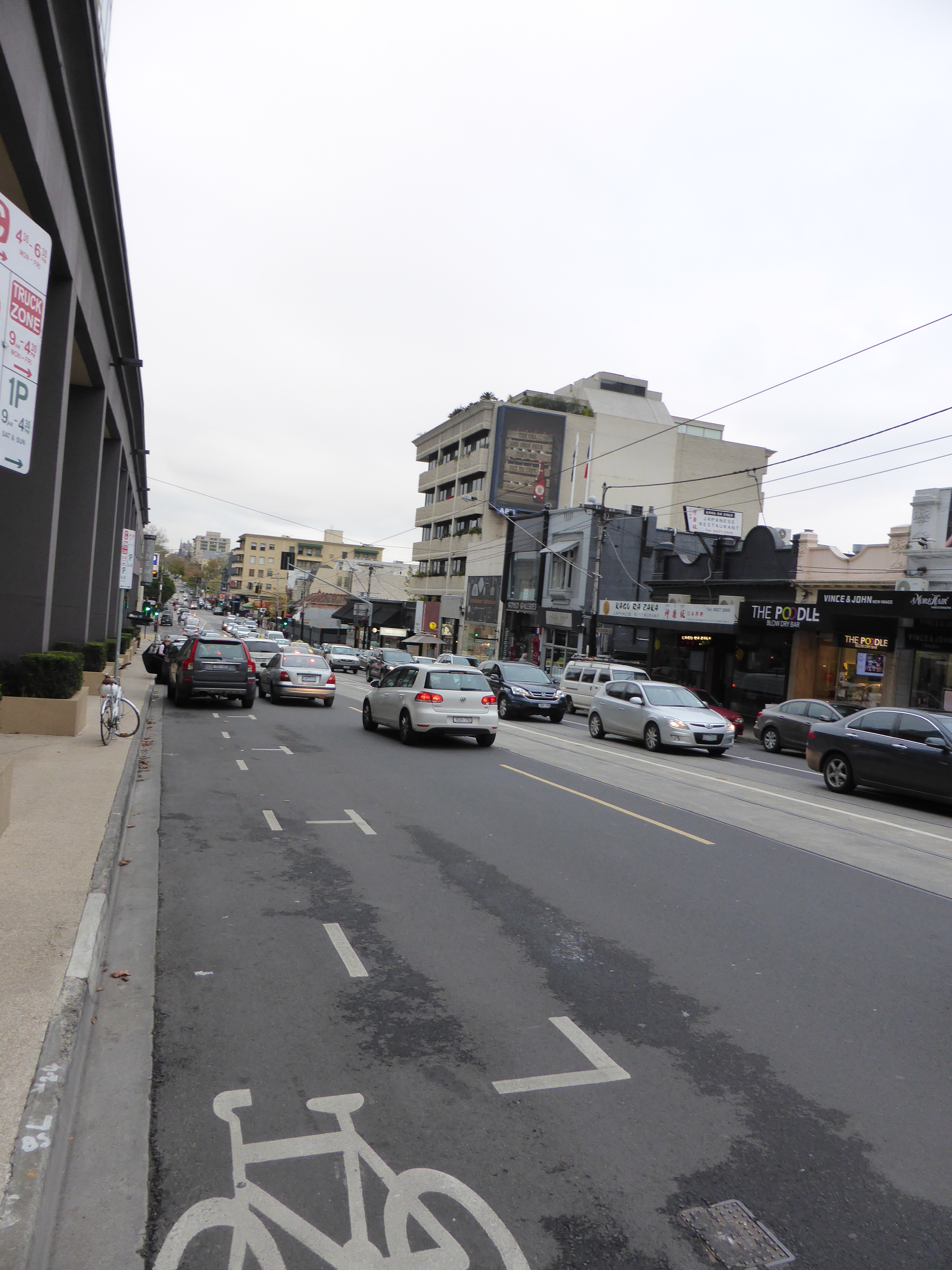
Then I got to Melbourne and I was astonished to see with “dooring zones” on my very first day and subsequently I saw them all over the place. Then on many of the roads I cycled in Sydney they were like a plague and of consistently dangerous designs.

Melbourne cycle lane - dooring lane on Chapel Street

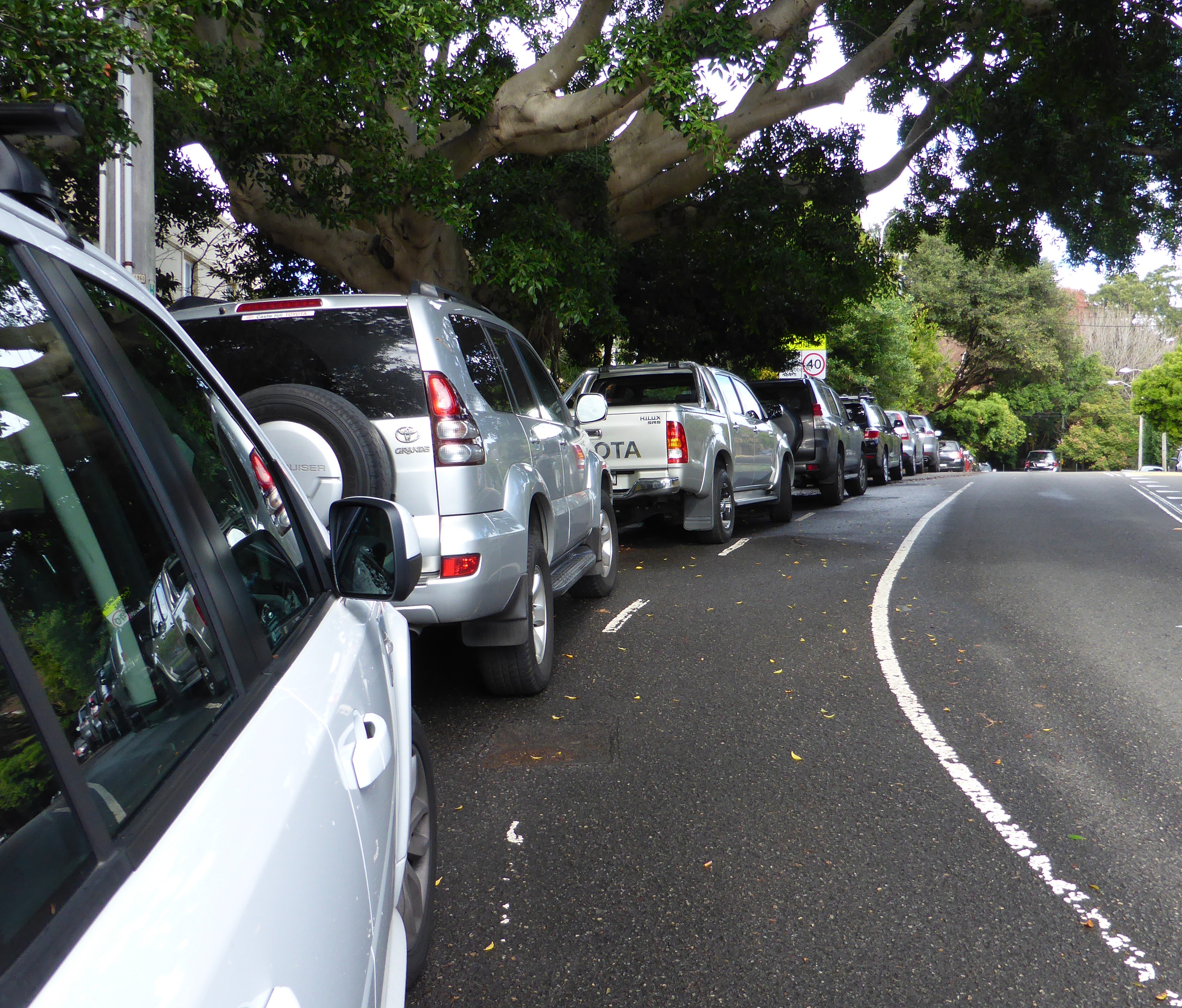
In Sydney I didn’t only find a defined cycle lane outside the parked cars, in most cases the bike lane was just a parking lane, only slightly wider than usual. This means a great space some of the time but an unpleasant slalom course around the parked cars that are present most of the time, again risking the ire of motorists on the main lane who don’t know how to interpret my moves when I had to pull a bit wider round the vehicles (which was most of the time.) I got shouted and hooted at a couple of times. No pictures? Sorry, too busy surviving.

No wonder this is a major topic among Aussie advocates, these are appalling, almost to the point of being lethal. Why motorists and cyclists alike have not succeeded with legal cases against the councils involved for causing risk and harm to road users is beyond me.

Putting a bike lane right up against the side of parked cars, and indeed allowing it to be further narrowed by cars parking badly is an official signal to cyclists that this is where they are supposed to be, despite the fact that this is completely and utterly wrong practice in every sense.  And to compound the problem any sensible cyclist who avoids the risk of dooring by moving out into the main lane is seen by motorists as being “in the wrong place” invoking further antagonism between users. It could only be worse if this were somewhere like Belgium where the bike lanes are compulsory.

I even found one dooring zone retained on the roads when a reasonable quality separated lane cycle lane had been built adjacent, so somebody must think they a continued place in cycling. I don’t get it.

Parking lane cycle lane Williamstown Melbourne

Part time cycle lanes.

Tookak Road cycle lane

Crazy design number 2 is the part-time cycle lane. I first discovered these on Toorak Road in Melbourne. At first couldn’t work out what I was seeing, I could see a cycle lane but it was covered in parked cars. So naturally I assumed this was an old fashioned parking enforcement problem, a lack of political will to enforce the rules. Ok we all get those, but this looked particularly bad.

Then I saw a sign that said the parking was prohibited at rush hour, opening up a third lane on the inside of the road and enabling the cycle lane to appear. As if a magic rabbit has been drawn from a hat the cyclists are now welcome and indeed encouraged on this road, but only if they are prepared to take on two or three lanes of rush hour drivers who are the real and intended beneficiaries of the removed parking.Toorak Road Melbourne part time cycle lane

So in the eyes of the transport planners there must be two presumed states of cycling here. There is the 22 hours per day cyclist who needs no cycling facilities. And then for 2 hours per day these poor lambs suddenly are given a bit of paint and a metre of the lane. This is of course complete and utter nonsense, cyclists don’t just exist two hours per day and they don’t need bad protection in rush hour, they need good facilities, or continue with none at all. These stupid lanes were just no use to anyone.

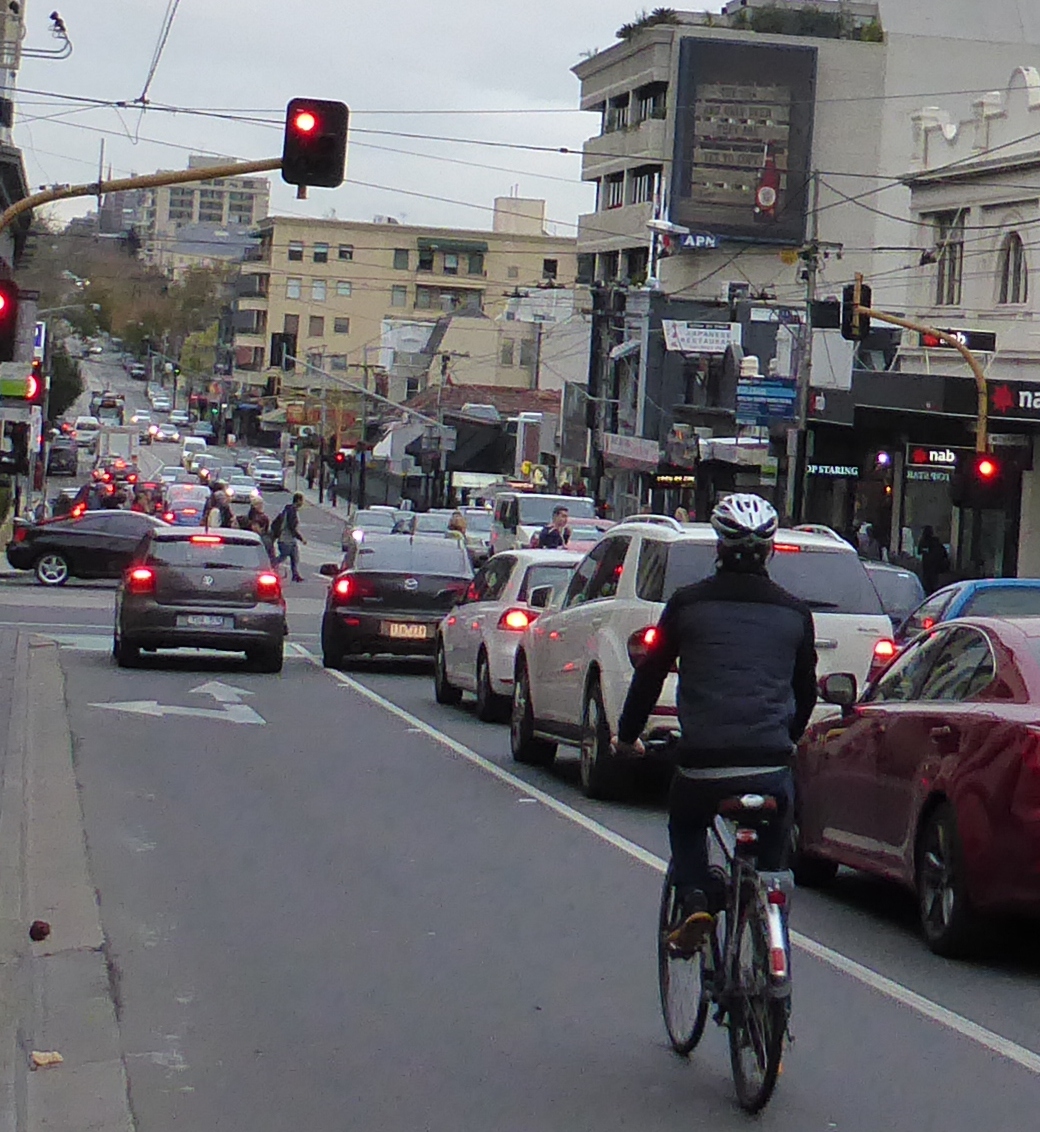
As far as I could see they were sensibly being ignored by the few cyclists using these roads who were generally confident and took the whole lane to keep themselves safe from motorists trying to squeeze by.  I saw nobody who I could categorise as a less confident cyclist. The photo below is a perfect example.

Melbourne

I would regard the positioning of this cyclist as exemplary for this sort of multi-lane road. But look ahead and his lane disappears actually into nothing, while underneath the cars there is a paint line that supposedly will push him to the left during rush hour. Useless and dangerous.

In conclusion?

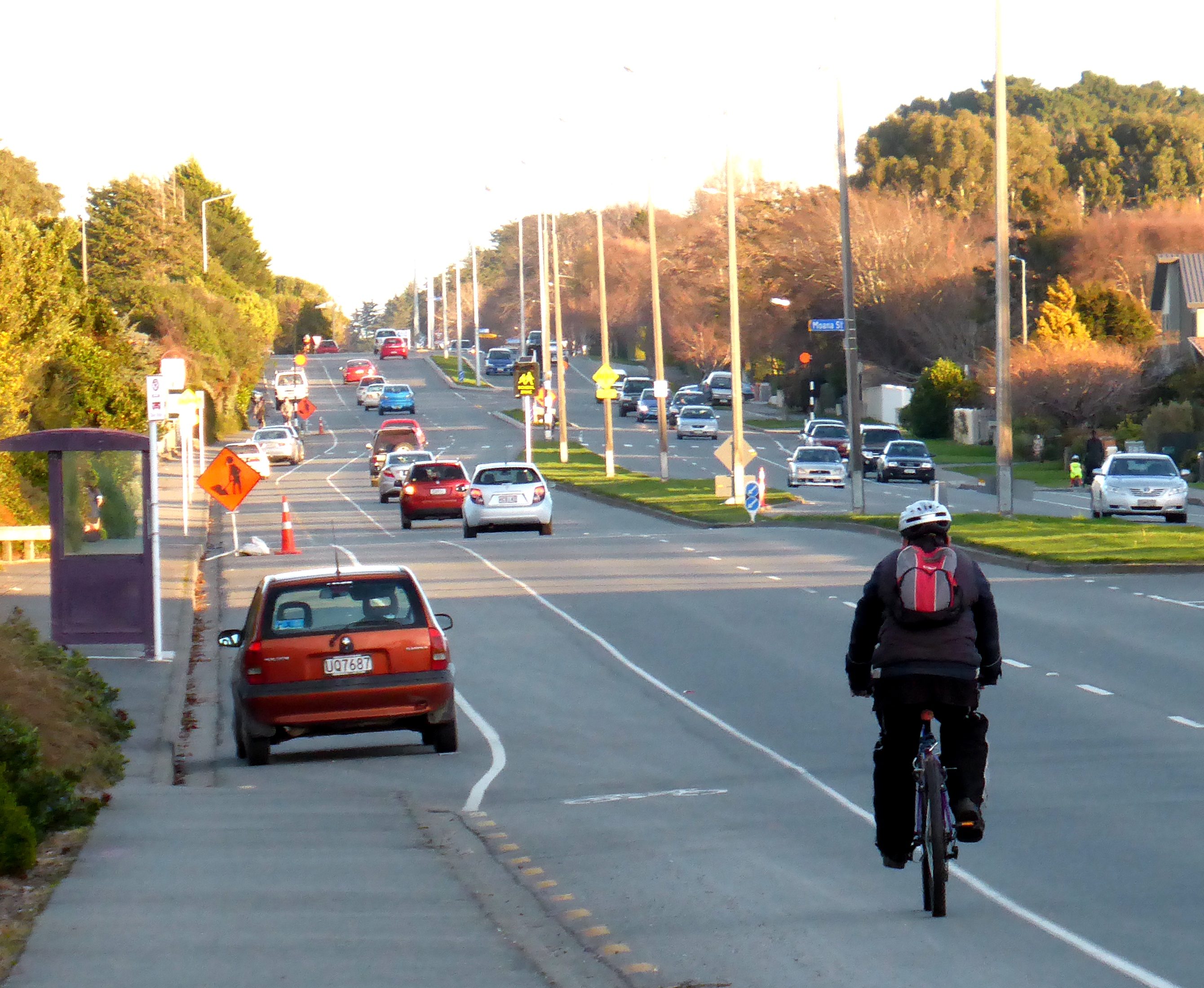
I know there are many out there in cycling advocacy who have become absolutist about cycling facilities and will condemn any and all cycling facilities without complete segregation as useless. I don’t share that view, I see that cycling is growing where the relationship between vehicle traffic and cyclists is managed through a mixture of measures such as car free areas, cycle lanes, speed control, traffic laws and in some cases just culture. For example in other Australian cities and in the last few days in New Zealand I have seen similar cycle lanes outside parked cars, but they had much greater width, the passing cars had wider lanes and they were travelling much more slowly. I found the cycle lanes a positive support and they were being used by much less experienced cyclists than the lycra types and occasional hipsters in the big Australian cities. example here:

Photo by Kevin Mayne

But I cannot see how anybody in Melbourne or Sydney could possibly better off with the dooring zones and part time cycle lanes I saw.

Sadly I believe they probably make the environment for most cyclists much worse. Some high quality facilities are being installed in the centre of both cities but it doesn’t take away the problem of what you have to ride through to get there, after all a safe cycling trip is only as good as its weakest link.

The question remains. “What were they thinking?” I do despair – sometimes.

Coming next “Cycling on Freeways”. Seriously.

I Do Not Despair’s final musings on Adelaide, our Velo-city Global 2014 host.

Central Adelaide seen from the Torrens River

Time flies at Velo-city, and it goes even faster when we have to dash off for a tour of long neglected friends and relatives around Australia and New Zealand.

So before I am swamped by the hustle and bustle of Melbourne and Sydney here are my final visitor’s reflections on Adelaide.*  The most common description of Adelaide I hear from Australians is that Adelaide is “just a big country town” which is something of a put down from its big brash neighbours. But as a country boy myself that isn’t a put down, it’s a commendation.

There is undoubtedly a grain of truth in the description. At its heart Adelaide remains a very accessible and relatively relaxed city. Its design helps, the 19th century utopian layout with green spaces and a circular park around the compact central district create a nice atmosphere. That’s the impression I really remember from when I first went there in the 1980s, work trips that sometimes involved a weekend break in the city. The city is working incredibly hard to keep, or maybe recreate that feeling, as a modern liveable city with improvements to the city open spaces, pedestrian streets and eating quarters where people want to spend time. I liked it then and I liked it this time.

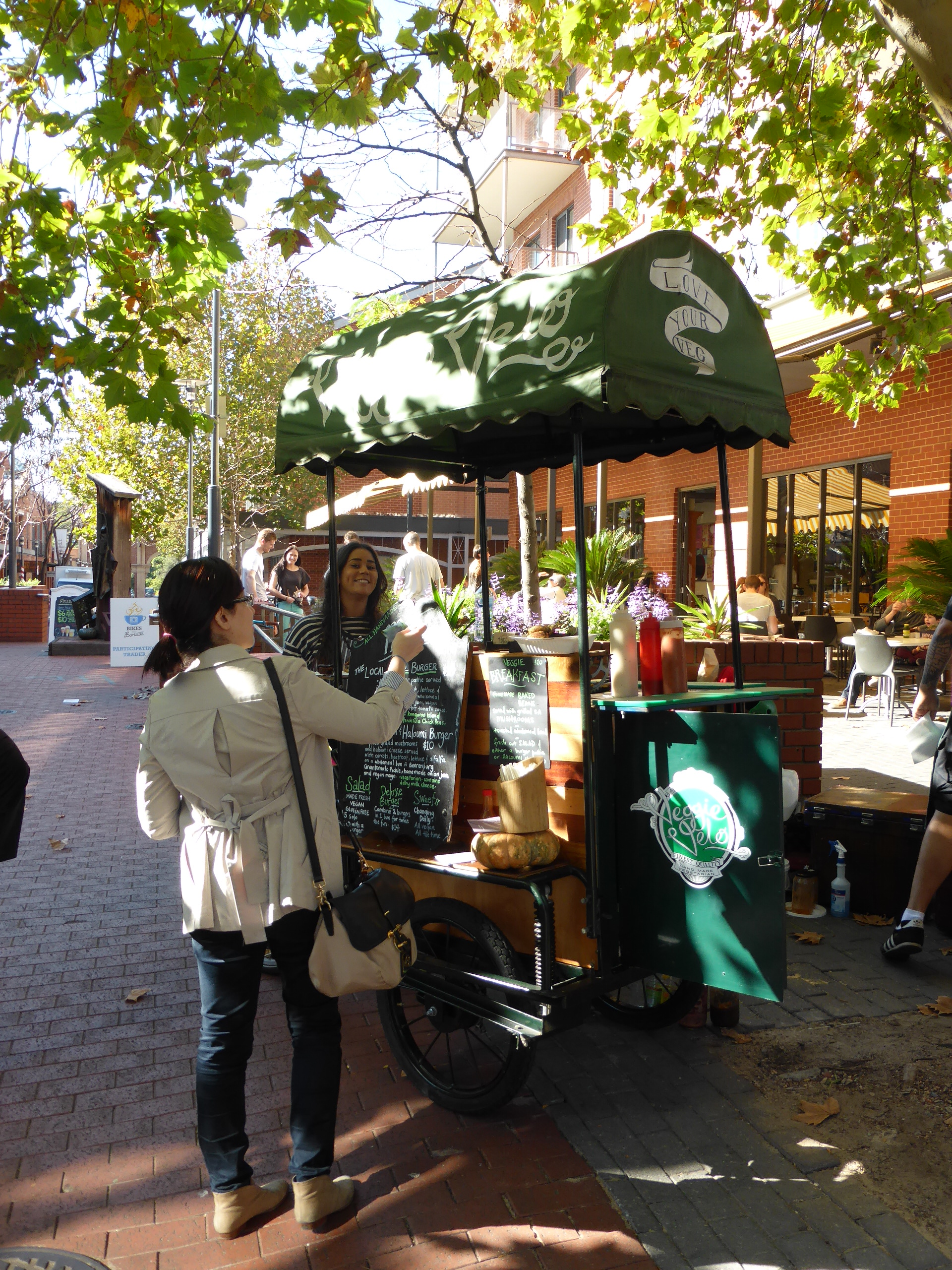
Veggie Velo Adelaide

There are also still quite a lot of those 19th and early 20th century buildings that we can call “colonial” style, from government buildings to churches, pubs and shops. They are unmistakeably Australian and a vital part of the city character.


Franklin Hotel Adelaide Hindley Street Adelaide

However these are somewhat swamped by the modern buildings that are allowed to dominate the skyline and create the impression of much narrower streets, especially on the gloomier days.

Adelaide Post office Haighs Chocolates at the Beehive Adelaide

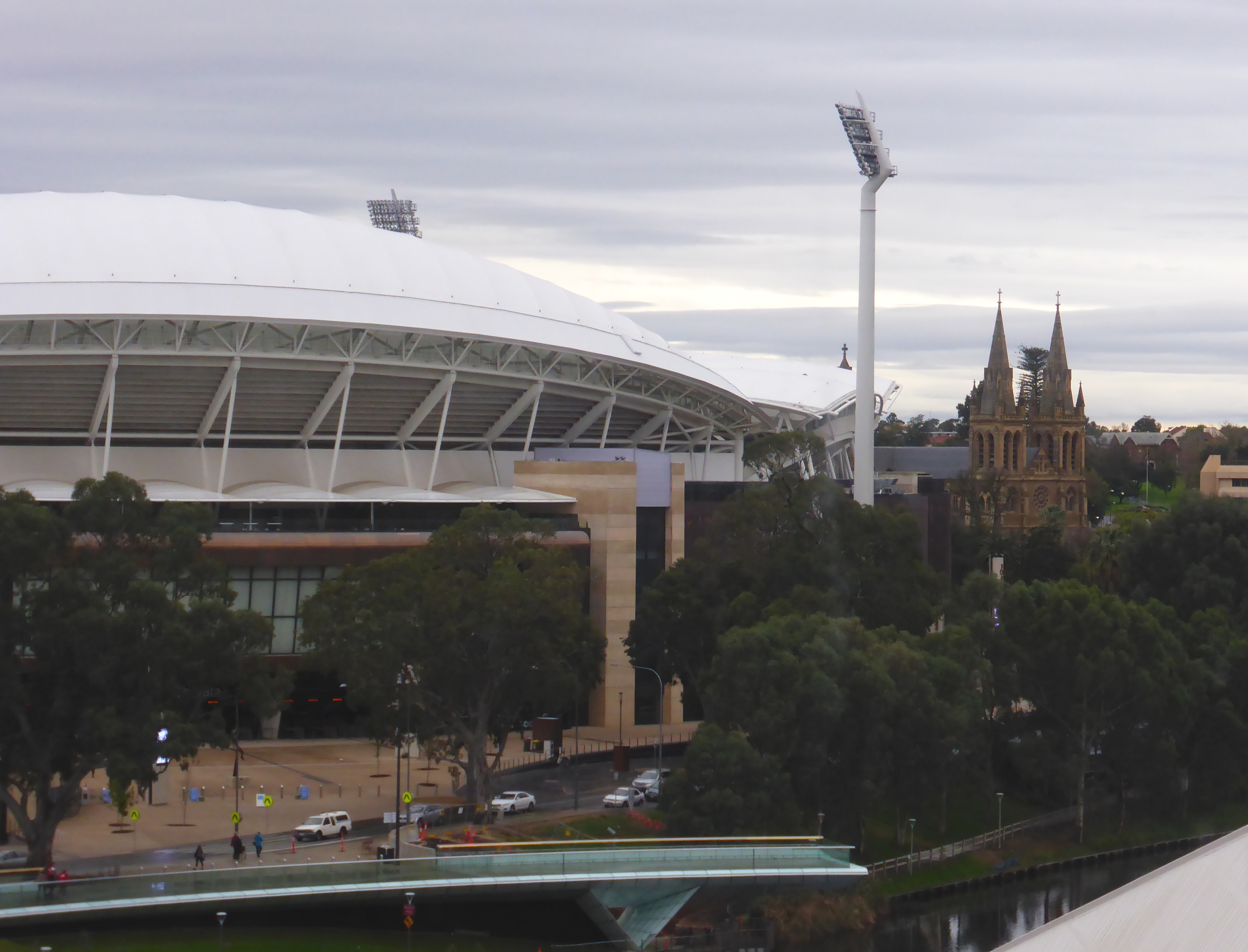
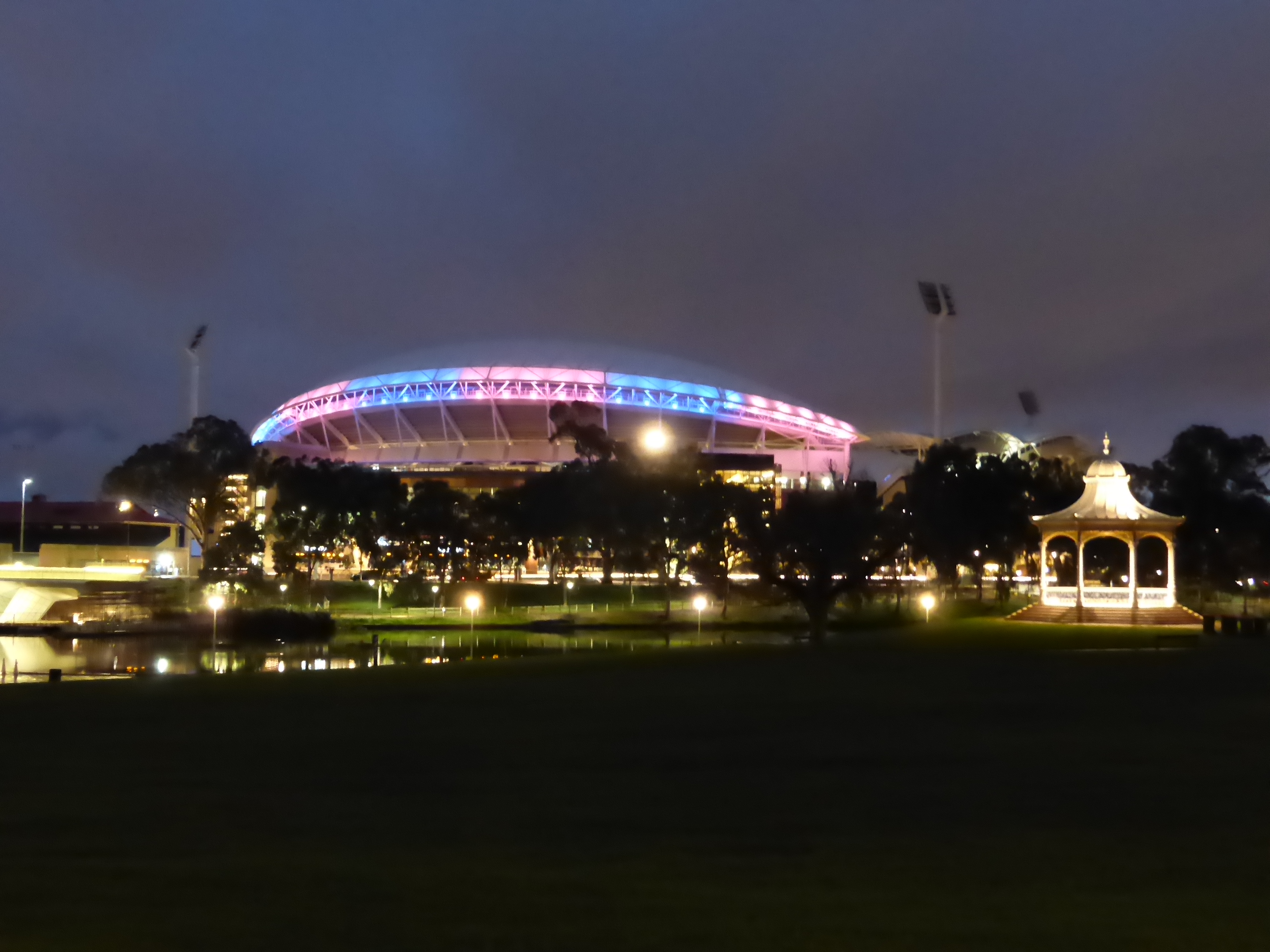
Biggest shock of all was to see the Adelaide Oval dominating the banks of the River Torrens to the North. I recall a traditional green painted cricket ground that nestled into the parkland and was an attractive companion to the nearby cathedral. Now it is a monster, but one that attracts up to 70,000 footie fans (Australian Rules Football) every weekend and is a major contributor to the city economy. As a fan I like these great cathedrals of sport, however I have to say that it just seemed a bit intrusive compared to what I remember.

Adelaide Oval and Adelaide cathedral Adelaide Oval at Night

The cycling environment reflected the city.

There is a huge amount of space for cycling and it would be so easy to grab a lane in most streets but at the moment that is not a political reality. The city Mayor and the state government of South Australia both understand the need to do something about the impact of cars on the city and to deliver the liveable city they want. But with big wide streets and low traffic levels compared to many other cities the imperative for change in travel behaviour isn’t there yet. The one segregated cycle lane in the centre lane has yet to be completed due to the anti-cycling pressure, but there are at least other facilities which can act as the forerunners for change.

Adelaide cycling Cycling Adelaide

I found it quite easy to ride most of the time and I think the traffic really wasn’t especially aggressive compared to many other cities I have ridden in. And the traffic levels really were very light, except for a brief burst in rush hour and the hours after the footie on a Saturday night.

However the huge roads with multiple lanes did make it almost impossible to work out how to turn right and I spent frustrating amounts of time stuck at traffic lights which made progress painfully slow. Some of our colleagues from countries that have superb infrastructure found it intimidating and it certainly isn’t conducive to nervous cyclists because of the difficult junctions.

Bike brekkie sea of lycraConfirming that impression the cycling levels were apparently low and completely dominated by sporty looking cyclists. You can see from my photos that I hardly ever had a cyclist as a backdrop. It was autumnal and rainy on some days – but none?  At the weekend along the Torrens there were lots of families but even in the city the number of riders in day clothes was almost non-existent. The mass ride for Velo-city was called the Bike Brekkie Ride and was meant to attract the city cycling community. If the turnout was typical it showed that the city really doesn’t have an underlying daily cycling culture.

Mayor and CEO of Adelaide on the Bike Brekkie RideThe Mayor and the Adelaide City CEO almost stood out in their day clothes. I was riding along in my shirt and jacket and felt like I had completely met the brief “to stand out in the crowd”, I even attracted comments to that effect.

And the cycle helmets really, really do not help. It is almost impossible in my mind to remove the “warrior” impression portrayed by almost cyclist I saw just because they were forced to wear a plastic lid. Normalised cycling remains a bit of leap of faith at the moment, it is going to take a lot more efforts to get to that point. However the sport and leisure base is strong so that should give confidence that there is an underlying demand waiting to be tapped.

On balance I would say that Adelaide is meeting the challenge of modernity and liveability in a way that I can really identify with. For those that know their British cities it reminds me of Cardiff – with many of the amenities and lifestyle options of a capital city but in a manageable package. I lived happily in Cardiff for 10 years so I could certainly do the same in Adelaide and it was a great place for a visit.

If the on line chatter after Velo-city is anything to go by so did our many other visitors.

*There are numerous reflections and commentaries on the Velo-city conference itself on other sources. I have linked to a number of them from my Twitter account  @maynekevin and our ECF web site has a daily summary on our news pages here

Some of my other favourites are the Australian ones by Steven Fleming ; Bicycles network and ABC television.

Adelaide town hall welcomes velo-city


Utrecht station cycle parking is absolutely astonishing. See it before it disappears underground.

sea of bikes Utrecht

Recently I went to Utrecht in the Netherlands. My mind is still slightly overwhelmed by what I saw, so despite the delay I just had to post this. With a health warning. As I write this I have a feeling that any “normal” people discovering this blog will wonder how somebody could get excited about parked bicycles.

All I can say in my defence is that I have spent most of my life as a cyclist and the past 15 years in cycling promotion.  The scene at Utrecht station ranks as an extraordinary moment, I am still reflecting on it three weeks later. So maybe I don’t publish 50 photos of parked bikes, but I have to share.

In Utrecht I saw a sea of bikes. In fact no I didn’t, I saw an ocean of bikes. The visual impact of these walls of pedal powered machinery painted a picture in my mind that is hard to let go.

Utrechts bicycle parks

I came out of the station and saw the cycle parking. And the cycle parking. And more cycle parking. I have seen Dutch, Danish and Flemish railways stations before. I have seen the 6000 bike multi-storey bike park in Amsterdam. But I have never, ever seen anything like the number of bikes in around Utrecht station.

I was so astonished I decided to start at one end and time how long it took me to walk to the other end because I couldn’t take it in any other way. Six minutes. Enough said. We have to measure cycle parking here in minutes of walking time.

Start - minute zero

Start – minute zero


2 minutes - still going

2 minutes – still going


Only another 3 minutes to go

Only another 3 minutes to go

Let me explain the background to these impressions.

Because most of my work is supporting countries and groups where daily cycling is struggling my trips to the Netherlands are actually quite rare, despite its proximity to Belgium. This was my first time in Utrecht. That in itself feels almost impossible, everywhere you go on the international cycling scene there seems to be someone from Utrecht. It is the home of the Dutch Cycling Union, Fietsersbond, so lots of my colleagues come from here, but also there are city staff, Utrecht regional staff, university academics studying cycling and cycling consultants so Utrecht gets a lot of exposure and it features in a lot of study tours. Other bloggers wax lyrical about it. So I felt I should know it.

Cycle paths in Utrecht

Utrecht can call itself one of the “capitals” of Dutch cycling culture with an amazing 50% of trips in the inner city by bike and 30% overall. In a population of about 300,000 that’s one hell of a lot of cyclists. The city centre itself was lovely, sleepily coming to life in the spring sunshine.

Utrecht in the morning

It was just full of bikes and people were meeting, studying and going about every element of life by bike.

Utrecht centre cycle parking

Unfortunately my brief visit was not enough to see much of the city’s celebrated cycling infrastructure or the cyclist traffic jams at rush hour. However I was really pleased to cycle out to the Fietsersbond offices on one of the Blue Bikes on hire from near the station and Saskia, the Deputy Director of Fietsersbond took me around a little of the cycling sights.

Utrecht cycle routes

But at the heart of the tour was the station, where many routes converge on this overwhelming sea of parked bikes.

Utrecht cycling

Saskia showed me several more parks that I hadn’t even noticed in the morning. More people were measuring their cycle parking by time too, the time it was taking them to find their bikes. I can nearly bike to my nearest station in Belgium in ten minutes, I cannot imagine spending at least another ten minutes looking for parking. That’s like being a car driver!

This parking is full Cycle Parking Utrecht

When we returned to the station it was approaching 5pm so the traffic on the cycle paths was beginning to build. The area is currently a massive building site so lots of the routes were temporary which apparently causes short term chaos each time a section is rerouted but the hordes soon settle down to the new pattern.

Utrecht cycling traffic congestion

But this redevelopment will also create the jewel in the crown of Utrecht cycle parking. Part of it is the new city hall with all the civic functions in one modern building. And below the building is a pyramid of sorts, a ziggurat of concrete steps. And inside it will be the world’s biggest bicycle park. 30,000 bicycles moved to one location.

New undergroup cycle store Utrecht

It is something I really look forward to seeing. I often tell city officials – “Whatever number of cycle parking places you think you need – double it”. Now I have seen Utrecht I suspect even 30,000 places may not be enough here. Because when I see this number of bicycles in one place I realise the extraordinary role cycling plays in this city.

However I have just one sneaking thought. Wouldn’t it be amazing to keep those bikes up on the surface as an extraordinary symbol of cycling? Possibly not if you are a city manager, but I felt privileged to see Utrecht’s sea of bicycles in such a prominent position before they disappear underground. I hope this post gives you a taste before they bury it!

Wet, steamy, green, welcoming. It must be the 2014 Taipei cycling experience

Photo Kevin Mayne

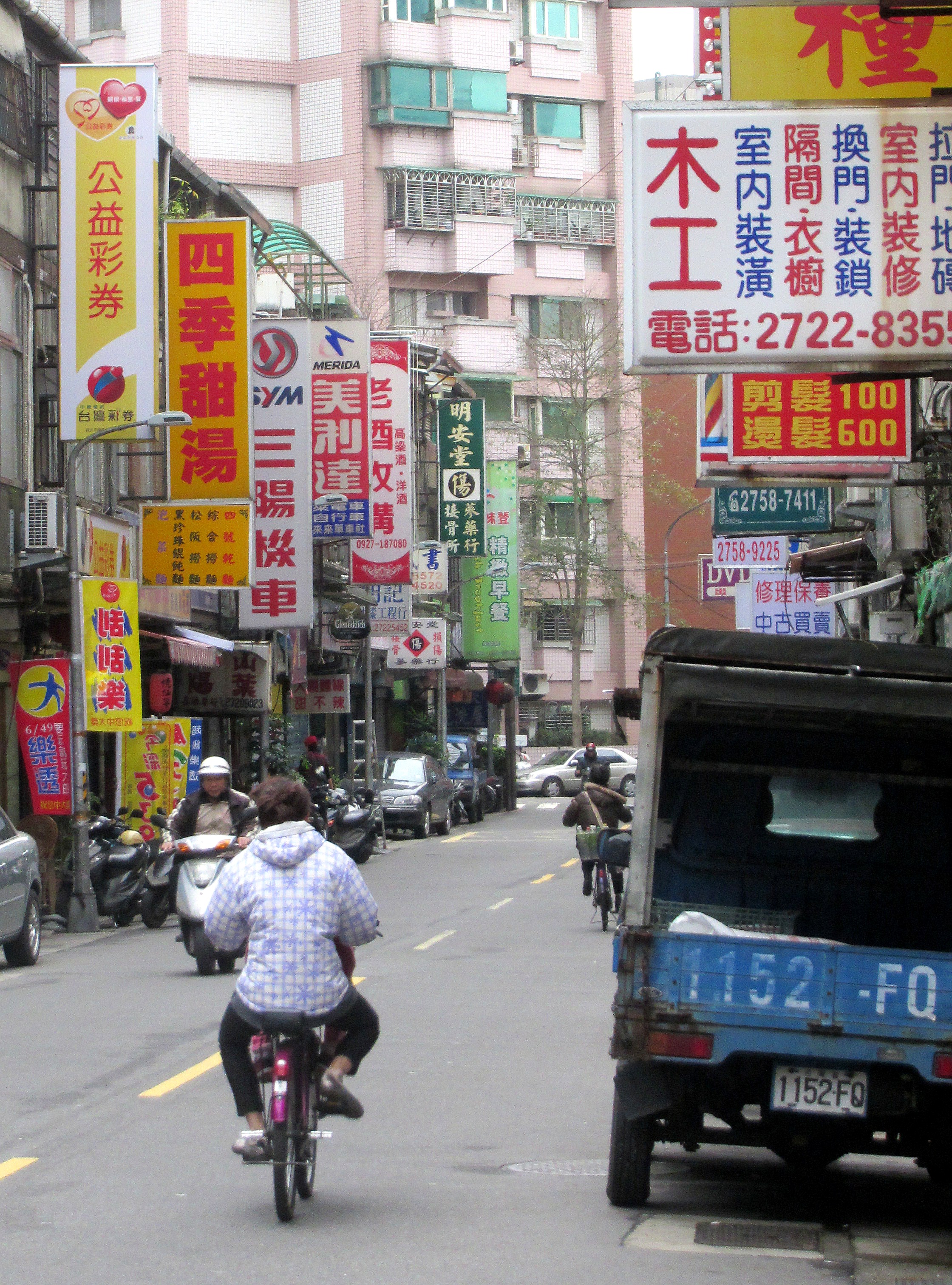
I managed to get out for three decent bike rides on this year’s visit to Taipei, however it was a very different experience to last year. The defining factor this year was water. The downpours which hit us on almost every day could certainly have killed off my enthusiasm, but instead provided a backdrop to this year’s explorations. In the previous two years I didn’t get up into the forested hills that sweep down into the city on all sides and are the product of all that rain. They go up over 1000 metres from sea level within the city boundaries and apparently cover almost half the land area which must make it one of the hilliest and greenest capital cities in the world.

Through this year’s rides I became more aware of how this landscape links with the city and how much the residents value green space and plants which burst into life in the warmth and humidity of the island. And my very final stop on the trip was the steamiest of all – the hot springs district of Beitou which deserves not only a comment as a ride destination but will get a small post of its own to follow this one.

tern social 2014

Not all things are publishable however. Our friends from Tern Bicycles put on their Thursday social ride again this year. It was social. It was a ride. As ever their bikes are comfortable and smart with some nice features. But it hammered down with rain. I have a lot of photos that look rather too much like this, and very few that look like the one below,

Tern social Taipei

Their Facebook page has a much better selection, but you get the story. But good company and a bike ride are always highlights in the Idonotdespair world, so I enjoyed it and as ever the clothes dried out. Eventually.Thanks to the Tern team.

My two other excursions were better for sharing and learning about Taipei.

Monday Youbike Bimble

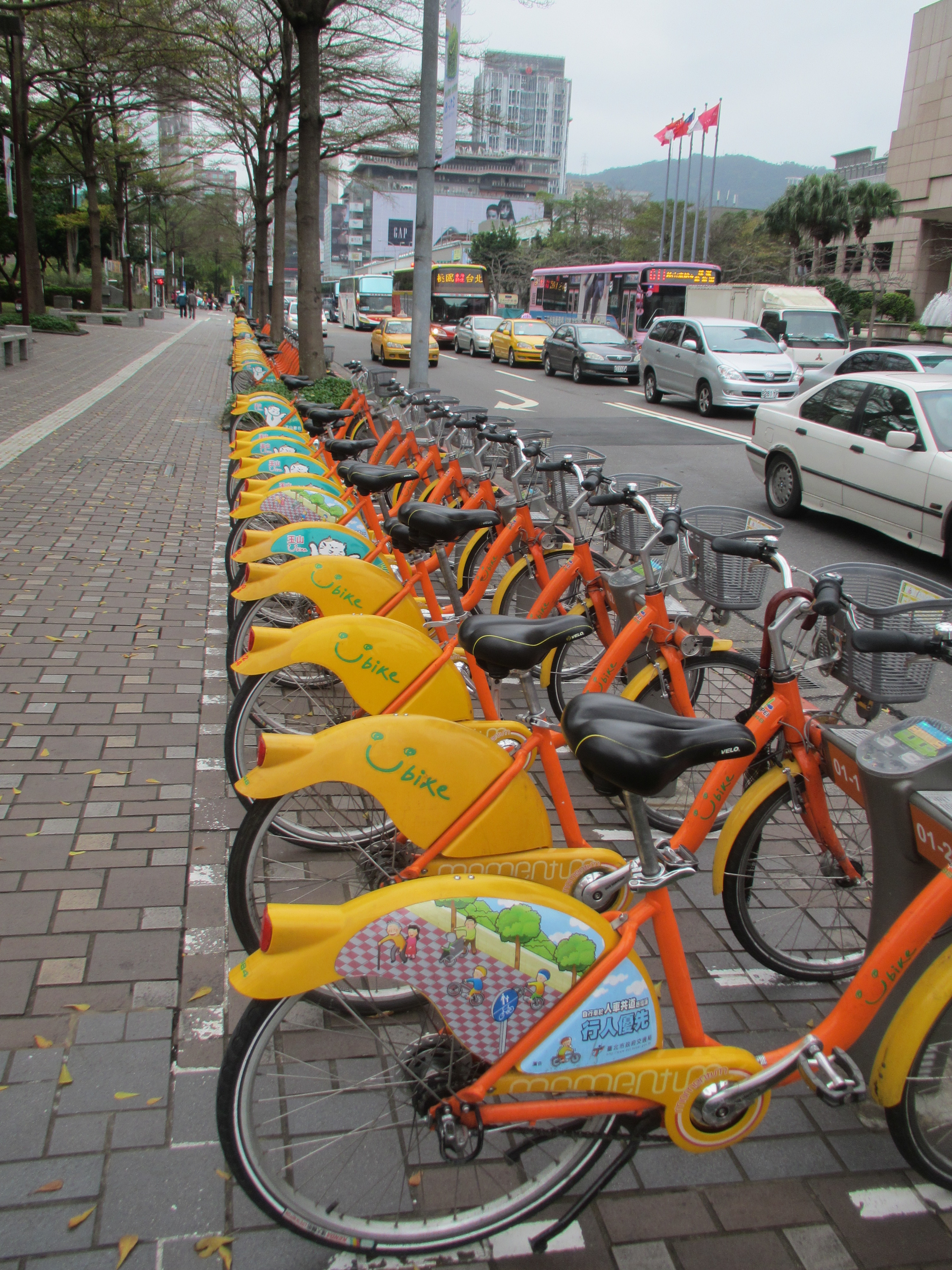
Youbikes of TaipeiA brief gap in the showers before the Taipei Cycle Show allowed me to grab a Youbike and set off from my hotel. Last year I experienced the city and the riverside cycle paths so my ambition this time was to try and get into the hills I could see from my window.

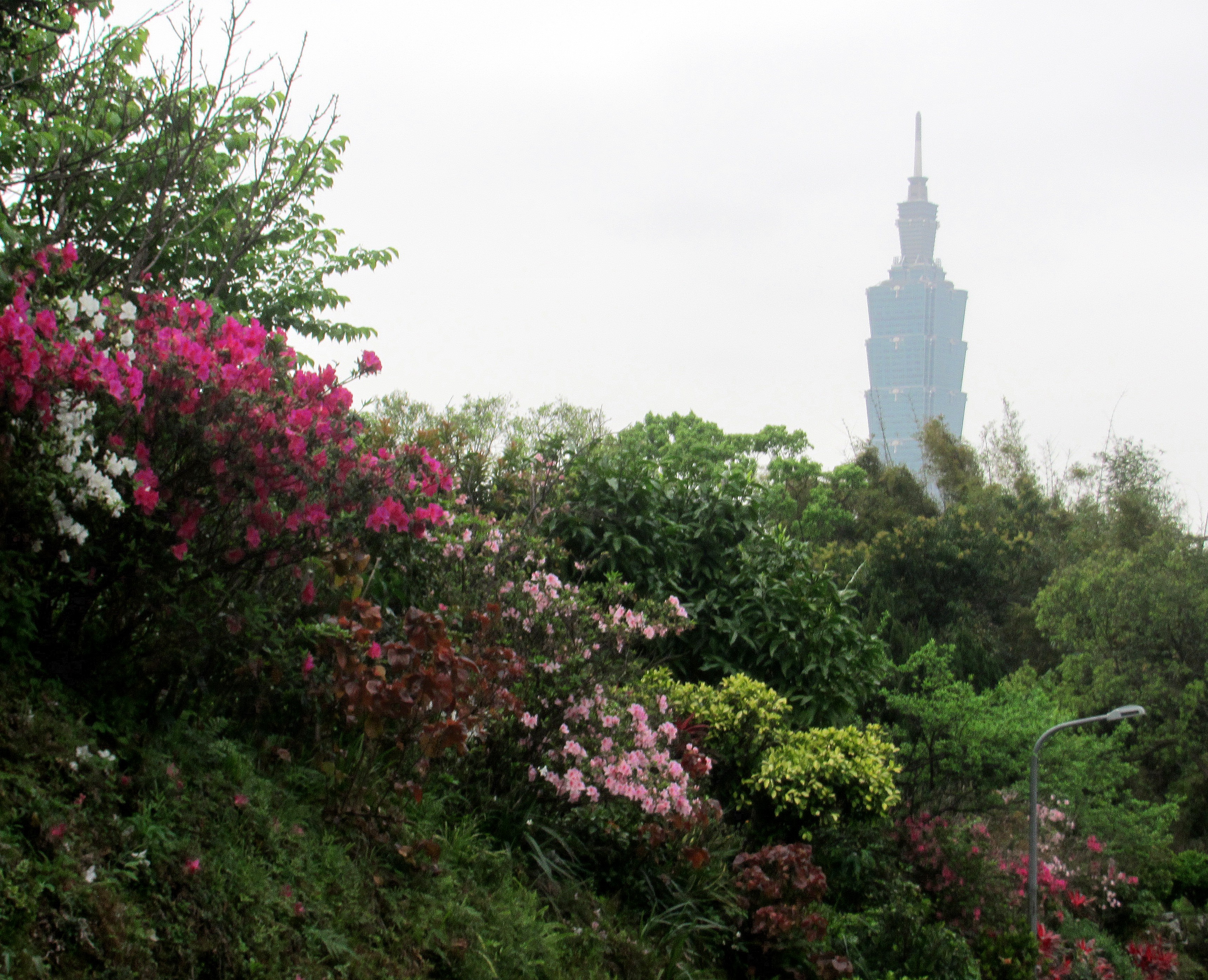
Xinyi district is mostly known to travellers as the administrative centre, shopping and property hot spot of Taipei, focussed around the City Hall and Taipei 101, for several years the world’s tallest building and an icon of Taipei. The area has modern malls, offices and busy roads. There are cycle lanes and Youbikes too, which is handy.

Taipei 101 and cycle paths

Xinyi district TaipeiBut within just a very short distance by bike the very new developments end and disappear into a maze of residential alleys and back streets which rear up into the steep slopes and verdant forest of the hills. Out of curiosity I heaved myself up some of these steep ramps to the bemusement of the residents who were clearly not used to seeing tourists round here. There are also a number of waymarked and well signed walking trails that were leading up to the mountain tops which showed a considerable local demand for enjoying these green spaces. The Fuyang Eco Park was busy with walkers and joggers, plus it gave me the backdrop to my lovely moment with a Grandfather teaching his granddaughter to ride (see earlier post)

What immediately caught my eye is the way the buildings seem to just merge into the hills, only stopping at the steepest of overhangs.

Houses on hills Taipei

Taipei hillside houses

Plants and houses Taipei

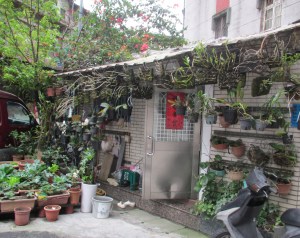
And not only is the greenery outside, there is clearly a passion for plants with every balcony and doorway having a range of healthy looking plants in pots. Where there was a flat spot these would often be flourishing vegetable patches or in the middle class gardens there were beautiful flashes of colour from decorative foliage and flowers.

Gardens of Taipei Taipei Gardens

It is such mixture in a small area. Small industrial plots, temples, shacks, apartment blocks and expensive villas catering for all levels of society. Given a different bike and a stronger constitution I might have climbed more of the side streets, but a three hour bimble around the different areas was full of variety.

The traffic was also well behaved too, the streets are narrow and busy which has a traffic calming effect which I appreciated.

Cycling Taipei alleys


Saturday touring ride.

My second memorable ride was on Saturday, the day we left. We were invited out by our new friends at Formosa Lohas Cycling Association www.flca.tw to come and see how they organise their touring rides. The club is relatively new but is making strong progress with a mix of promotional activities for cycling, especially based on cycle touring, events and cycling education for children. As my regular readers know I am very fond of cycling clubs and within minutes of chatting to Development Director Demi Huang and her colleagues it was immediately clear that we were kindred spirits, chatting away about rides, routes and advocacy for ages.

Formosa Lohas Cycling Association and ECF

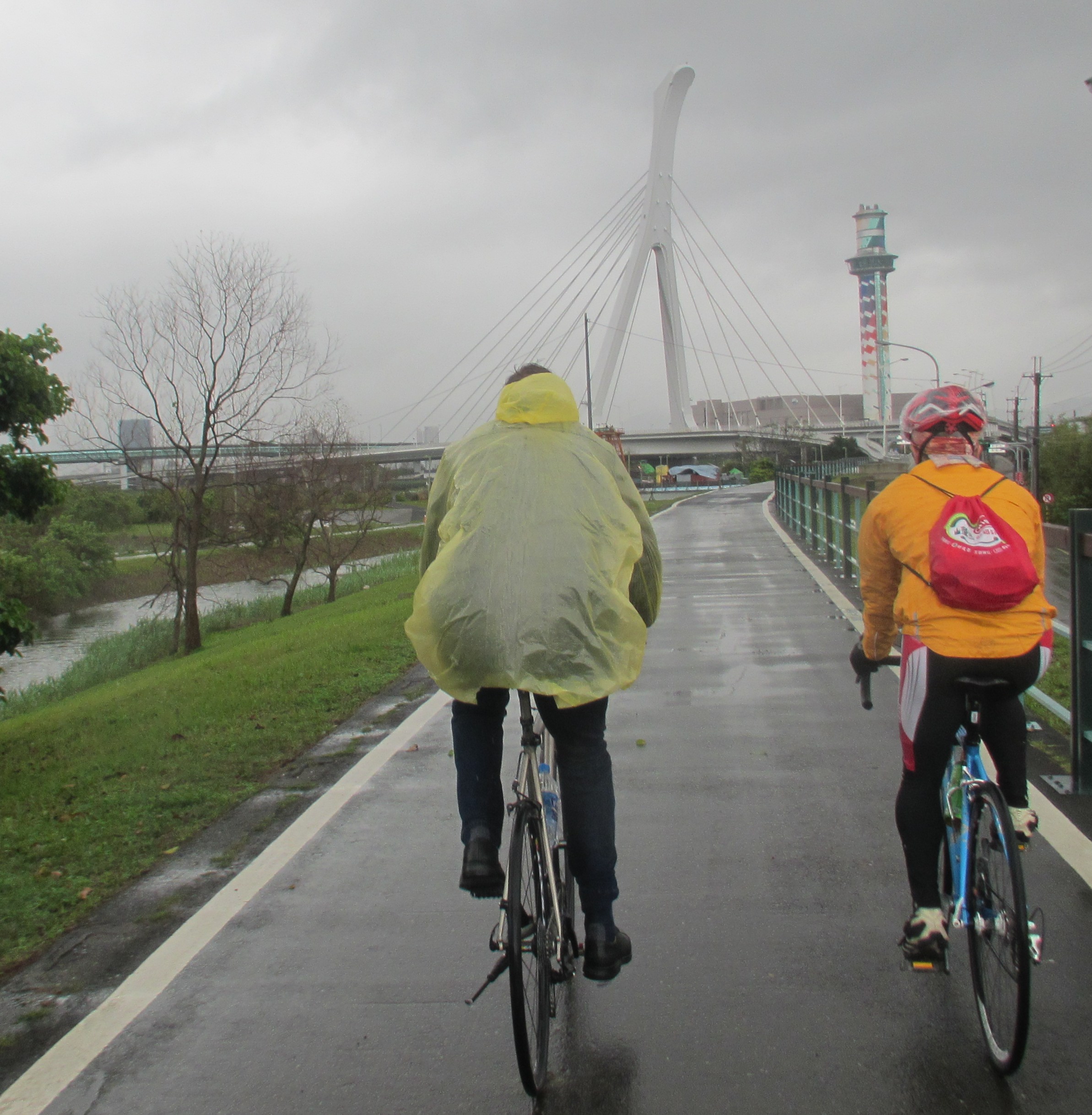
Demi offered us a ride with some of the club’s experienced Tour Guides and we suggested a half day starting in Taipei so that we could also pack our bags and prepare for departure. To be honest, the omens were not good because the rain just bucketed down all morning, but at least it wasn’t cold so Bernhard and I were up for the ride.

Cycle route map TaipeiGathering point for a small but hardy group was down on the riverside cycle path where we were kitted out with two nice sporty looking machines with straight bars. Guide James explained our route, a loop of about 20km around the river banks, then up to “Hell Valley” and the Beitou Springs area. The convenient planning board shows that we were to go out into the teeth of the rainstorm and then take a more sheltered line up to Beitou.

The opening kilometres were certainly exposed because our route was not down at water level like other sections of the path that I rode last year. This section sits right up on top of the typhoon defences and looked down on the homes and businesses behind the wall. The views were expansive, but decidedly murky. Clearly Bernhard was at home, this could almost be a Dutch dyke path.

Riverside cycle route Taipei

Beyond the walls were mud flats and reed beds that are now popular for bird watching. It was hard to imagine our hosts description of the rivers as the centre for trade with waterside wharves everywhere. Today it is a world closed off from the city.

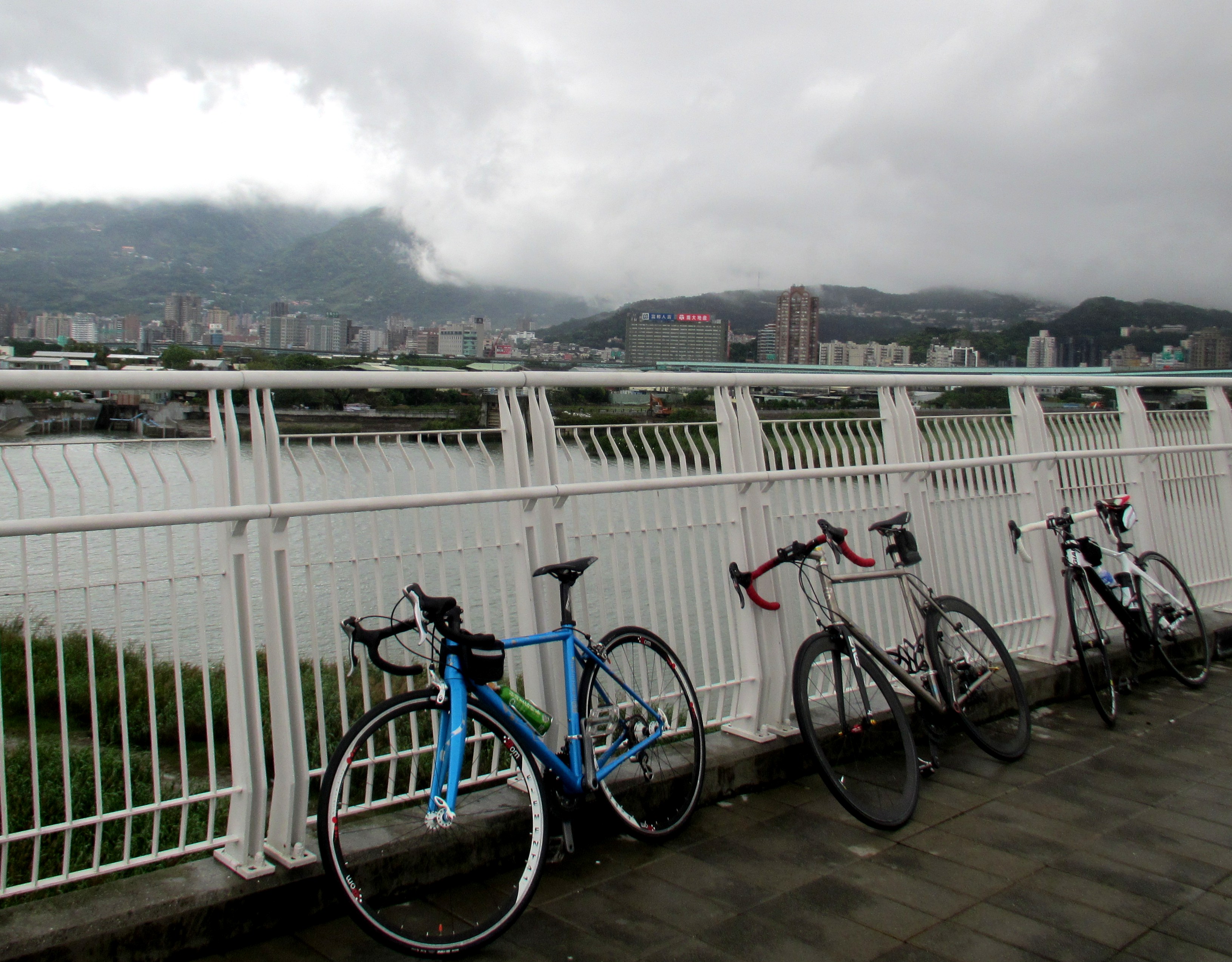
Once round the confluence of the two rivers we had the wind behind and swept towards a very impressive suspension style bridge. We were struck by the cycle ramps, huge cycle lanes and segregated sections for bikes, scooters and cars.

Taipei cycle path and bridges Suspension bridge Taipei Bikes bridge and clouds Taipei

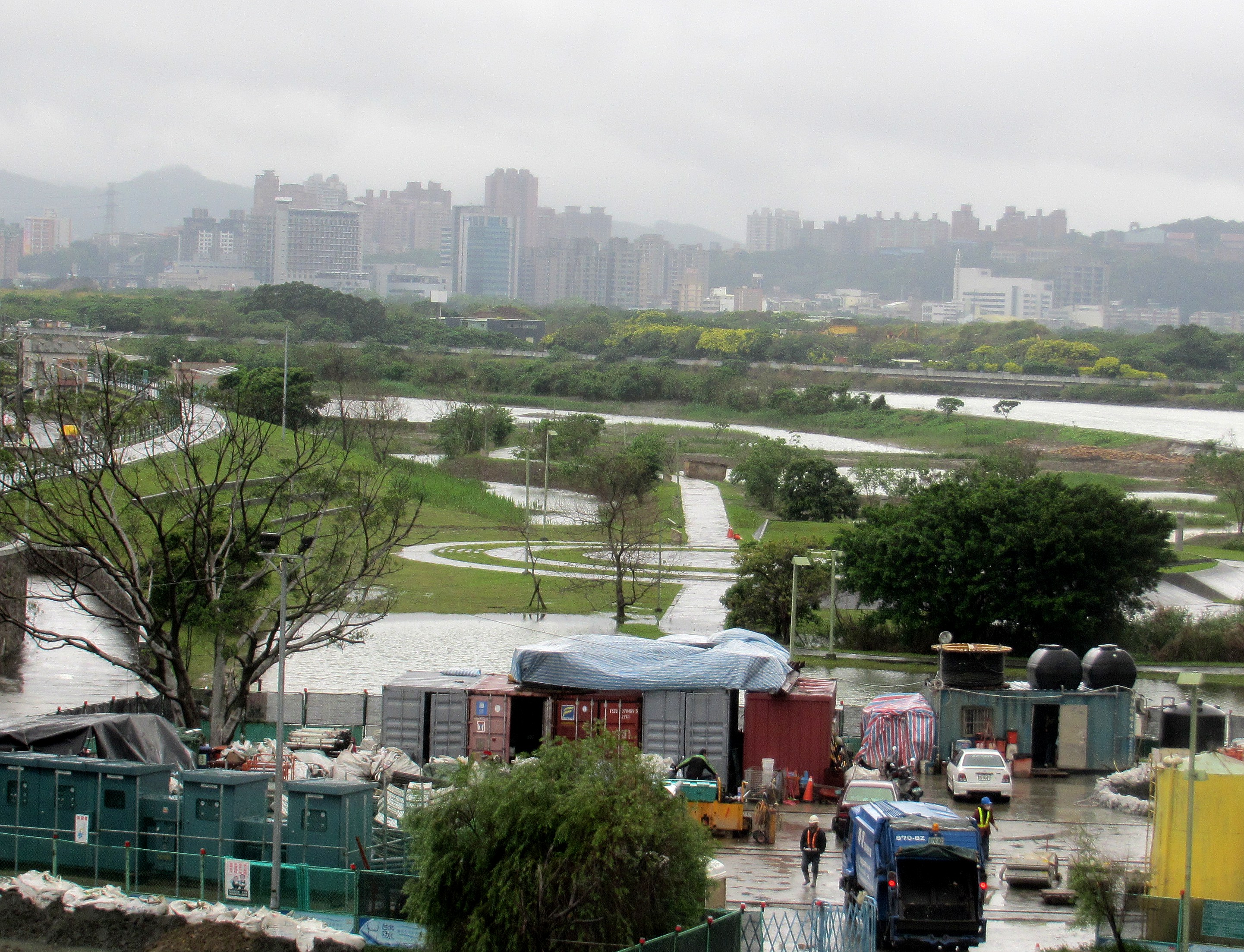
The view from the bridge was interesting too, it gave an impression of how committed the local authorities are to high quality facilities along these river paths. We could see a fun mountain bike park already completed and under construction a water filled park being landscaped to fit the land space between typhoon defence and river. Clever use of buffer land which will also improve flooding resilience. Now if only other countries were that sensible.

mountain bike track in Taipei New riverside park in Taipei

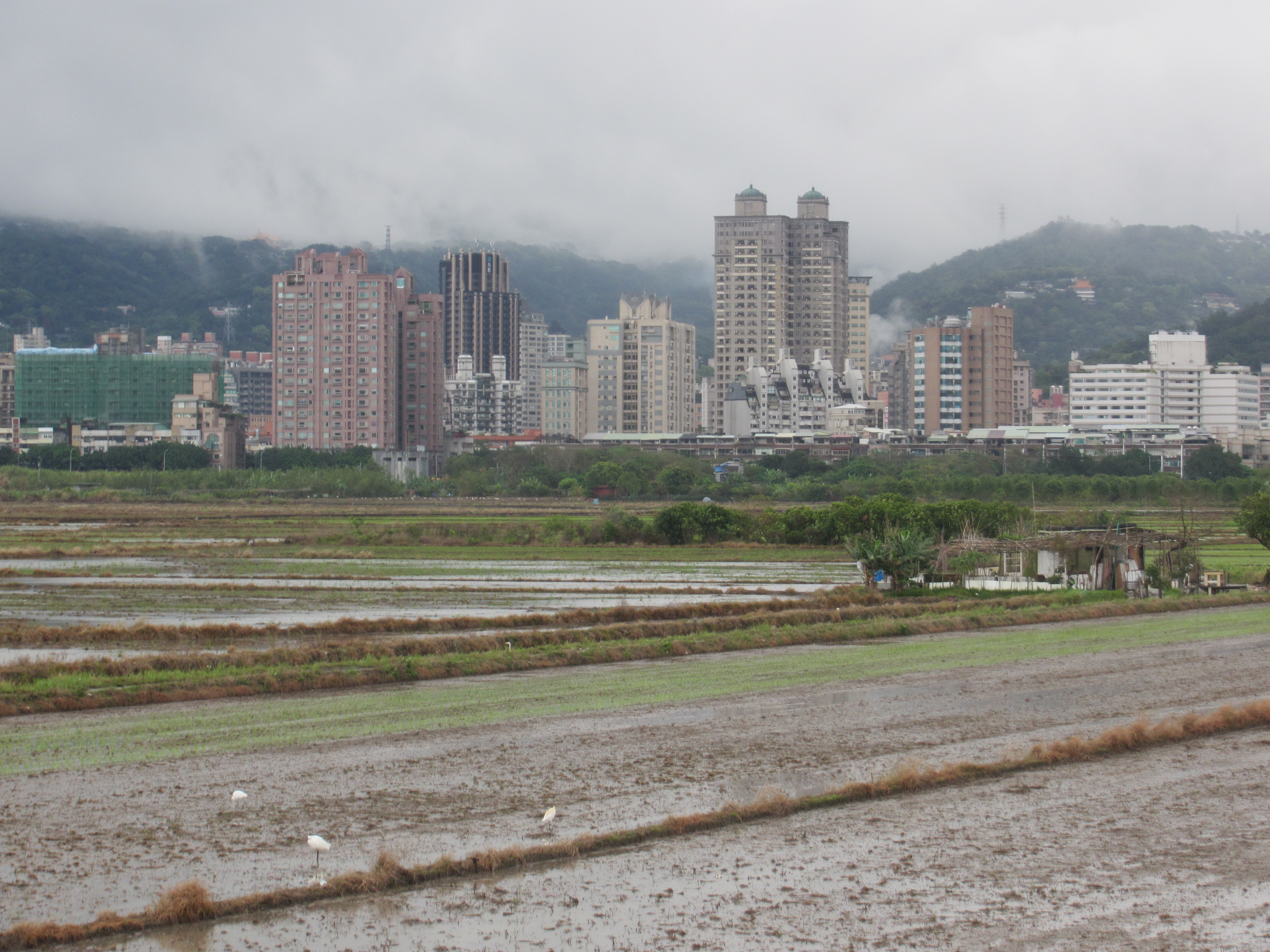
Rice paddy field and vegetable garden TaipeiThe benefits of local guides were apparent when we swung away from the river bank and headed north through a series of embankments and small roads. Our guides called this “our secret route” and it was a treasure. Almost vehicle free but taking us through something like a garden zone of rice fields and market gardens cutting right into the heart of the city. Several people I have talked to spontaneously started talking about the Taiwanese love of fresh fruit and vegetables and the expertise of their farmers, certainly the quality of the fruit and veg at meal times is outstanding. We were rewarded with herons and cranes foraging in the rice fields as we passed, oblivious to our presence.

Paddy fields with white birds Taipei

It was almost a shock to pop out of the quiet lanes into urban hustle but we had been brought almost to the heart of Beitou by our guides. A gentle climb took us up to a range of sights in this popular visitor area.

The true finish of our ride was the thermal valley itself, which was a mass of steam and smells of sulphur where the hot water gushes up from the volcanic rock at a temperature of almost 90 degrees. All around us streams carried away hot water to be piped into the hotels and bath houses which have been a feature of the area since Japanese occupation from 1895-1945. The main bath house, now a museum, was built in 1913.

Beitou Thermal valley

Our day finished with steaming hot baths in a hot springs hotel and a delicious meal with our guides, but more of that in my next post.

For now let me just say that once again the friendliness and hospitality of our Taiwanese hosts was unbeatable. The Formosa Lohas guides were knowledgeable and courteous cycling guides and I am absolutely sure that one of their multi-day rides around Taiwan would be a great holiday. James was clearly an experienced leader and Bike Lin (yes that is his name) is the author of two well-regarded tour guides about cycling in Taiwan so I am not surprised they are getting more and more enquiries from around the world. They are going to be popular and welcomed members of the ECF cycling family too.
In summary – another week in Taipei which turned out to be far more than rooms full of bikes on show. Increasingly the international travel media is saying that cycling in Taipei is one of the country’s visitor highlights. I am not going to disagree.

I do not despair re-visits Copenhagen. Where cycling has become traffic.

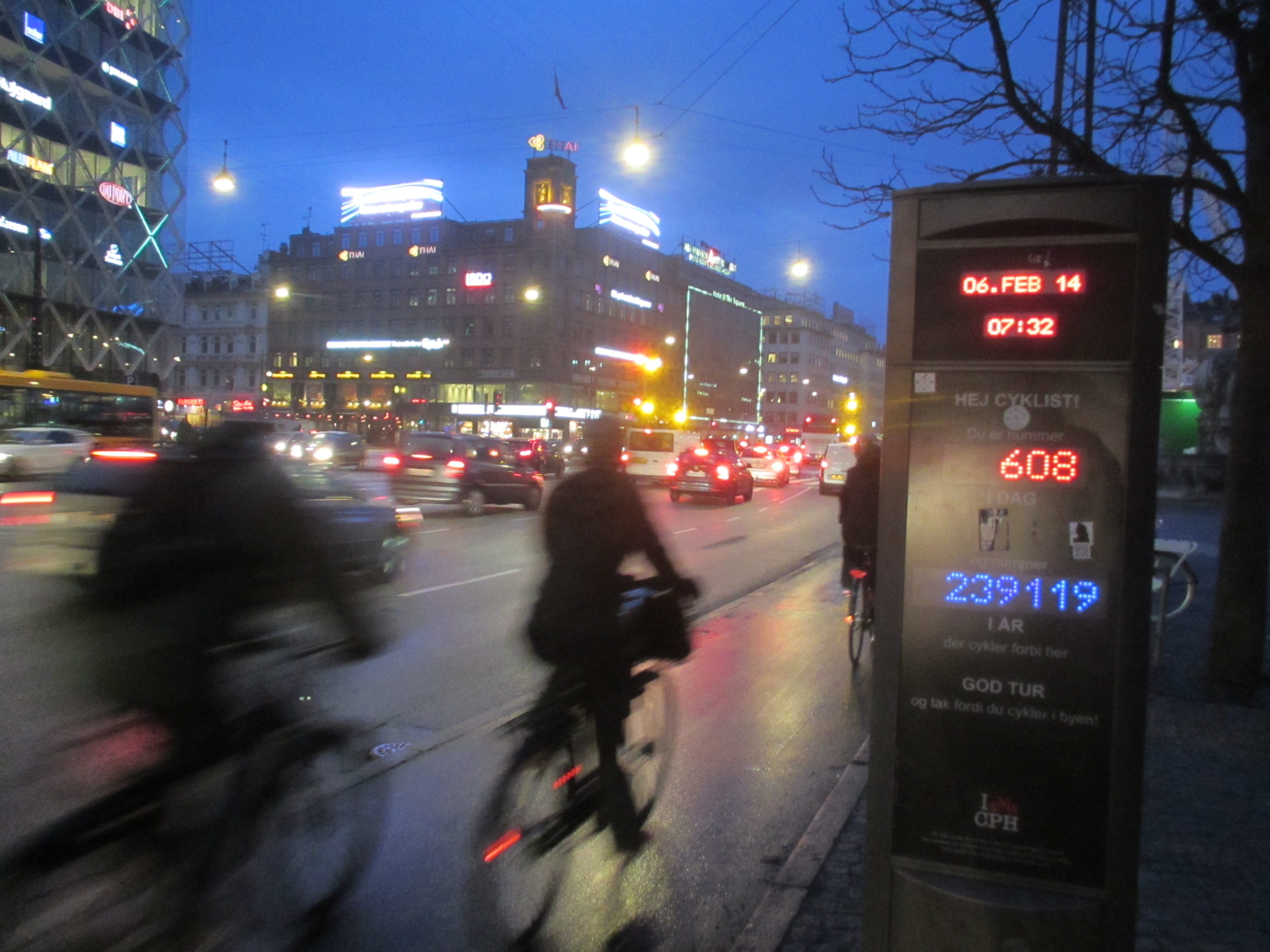
Copenhagen cyclist counter

Cycling Copenhagen

On Thursday I went to Copenhagen for a brief visit, whizzing in one night and then leaving just a day later. Back to back meetings, but even from this brief visit I was inescapably drawn onto the streets to get my fix of Copenhagen cycling. Let’s face it, I am a cycling geek. Who else would get up an hour earlier than needed so they can just go out into the dark and stand by the cycle lanes? My wife occasionally thinks I may be a bit creepy, standing by the road just sort of stalking the cyclists with my little camera. But I am sure the Danes are probably used to it, especially in Copenhagen.

Copenhagen

Amazingly since starting this blog this is my first visit to one of cycling’s great capitals and one of my favourite cities. I certainly don’t need to go there to support cycling or the cyclists’ movement, like many other visitors I go to learn and be inspired. In 2010 it was the host for one of the best Velo-city conferences when I had the enormous pleasure to be there with over a thousand delegates and then stayed on a for few days with my son to do some chilling and cycling. The instant I mentioned I was going to Copenhagen this week his immediate reaction was “I’m jealous” which pretty well sums up how we feel about the place. If HG Wells was truly uplifted by every cyclist he saw then Copenhagen would be like his wonder-drug.

It also seems a little low key for me to be blogging about Copenhagen when it is the home and inspiration for one of the most followed and influential cycling blogs Copenhagenize. Mikael Colville-Andersen is undoubtedly one of the sector’s most successful communicators and has done a great job with his evangelical work to take the success of cycling in Copenhagen to the rest of the world.

But here are a couple of thoughts that I have felt on previous visits to Copenhagen and which hammered themselves into my mind once again as I observed the amazing flows.

The first thing about Copenhagen cycling is the volume. Of Europe’s major cities its only competitor is Amsterdam where a similar 30% plus of daily trips are made by bike. But in Copenhagen it seems to me that the cycling traffic seems more concentrated leading to huge numbers being recorded on the roadside cycle counters. I was out at 7am and already several hundred had made their way along Hans Christian Andersen Boulevard. Then as I wandered the area around the City Hall and Tivoli Gardens and watched for nearly an hour the numbers just grew, hoards of Vikings looming out of the dark with their ubiquitous flashing white front lights. By 8am congestion is building up around the main junctions with cyclists tens deep waiting to move on. And this is cold, gloomy mid-winter.

Cyclists morning Copenhagen Cyclists queue Copenhagen Hans Christian Andersen and cyclists Copenhagen

The second thing I always see in Copenhagen is the speed of the cyclists, whether I am riding, walking or watching. To a Brit brought on almost cycle free streets the first terrifying experience you get on every trip to Copenhagen is the moment you absentmindedly wander onto or across a cycle lane and a Dane comes zooming out of nowhere tingling their bell at your stupidity.
But then I just stand and watch, realising that these people dressed in ordinary day clothes on sensible utility bikes are absolutely flying. A colleague told me he averages 20km per hour to work for every day despite numerous traffic light stops. He doesn’t regard himself as at all unusual and he certainly doesn’t require special clothes or a fancy bike. Even the macho male/sensible female split doesn’t apply here, the women seemingly ride just as far and fast and if my experience is anything to go by they are just as grumpy about idiot tourists in the cycle lane as the blokes.

IMG_3524They have even implemented a traffic management system in Copenhagen called the Green Wave which allow the 35,000 commuters on the Nørrebrogade to cruise through synchronised green traffic lights at exactly 19.3km per hour. How cool is that. But I bet anywhere else that would be less than 15kmph. But away from the green wave the frequent traffic lights mean that the cyclists look like they are hunting in packs as they jump between the lights in swarms.

Copenhagen cycling rush hour

I am sometimes asked about the difference between the Danes and the Dutch. There are many things one could say, but if I want a short answer I say “about 30 degrees”

Danish or Dutch? You work it out

Danish or Dutch? You work it out

Why 30 degrees? Because I reckon Dutch cycling style can be summed up by a gentle lean back in the saddle into a relaxed position about ten degrees from vertical, suitable for chatting, texting, eating, smoking or just about anything else, the bicycle itself is forgotten. That’s why they are sometimes called “wheeled pedestrians”.

Not the Danes. Danish cyclists lean forward, earnestly pumping the pedals, pulling the handlebars and zooming to the next junction. Maybe 20 degrees tilt forward, but rarely backwards. Look at this wave pulling from the traffic lights. One second they are resting and chatting then the young women are up out of their saddles heaving away like a pro peloton in case they get swamped from behind.

Copenhagen cyclists group Speedy cyclists in Copenhagen

Given their intolerance of bad cycling as well it seems that they behave …… just like car drivers! They even have their own version of trucks in the cycle lanes, the cargo bikes, just to complete the analogy. If we look to the future this could be it, bicycles as proper, full on traffic with speeding, congestion and road rage. Perhaps we should be careful what we wish for. I hope not, and even the Danes acknowledge that some of this behaviour is due to congestion and it is time to increase capacity on the bigger routes in the near future, their super-highway network.

I could blame their speed for the fact that this blog post also suffers from the curse of the camera. My camera is great for stuffing in my pocket and travelling but sadly it is useless in half light, especially with motion. So given streets full of flying Danes the poor thing struggled terribly during my pre-breakfast wandering. So my apologies for the blurry crowd effects this week!

Some Stockholm cyclists are hardier than me, despite conditions on the roads

Kevin Mayne photo

I am so over winter already. We have had two wintry days here in Belgium. Last week, day 1, I fell off on the ice. Today, day 2, I arrived at the station like a soggy snowman.

Which seems a very good starting point for my final round of Stockholm photographs. Despite being mainly there on a non-cycling holiday I was of course very curious to discover how the hardy Swedes coped with the first snows of winter and sub-zero temperatures.

Benchmark for this sort of thing is considered to be the Danes who apparently set the record for cycling further and on more days of the year than any other cyclists in Europe. But in terms of cycle use Sweden is right up there in the first division and the city authorities in Stockholm have some ambitions to catch up with not only their Danish neighbours but also the other leaders in Sweden like Malmo and Vaesteras.

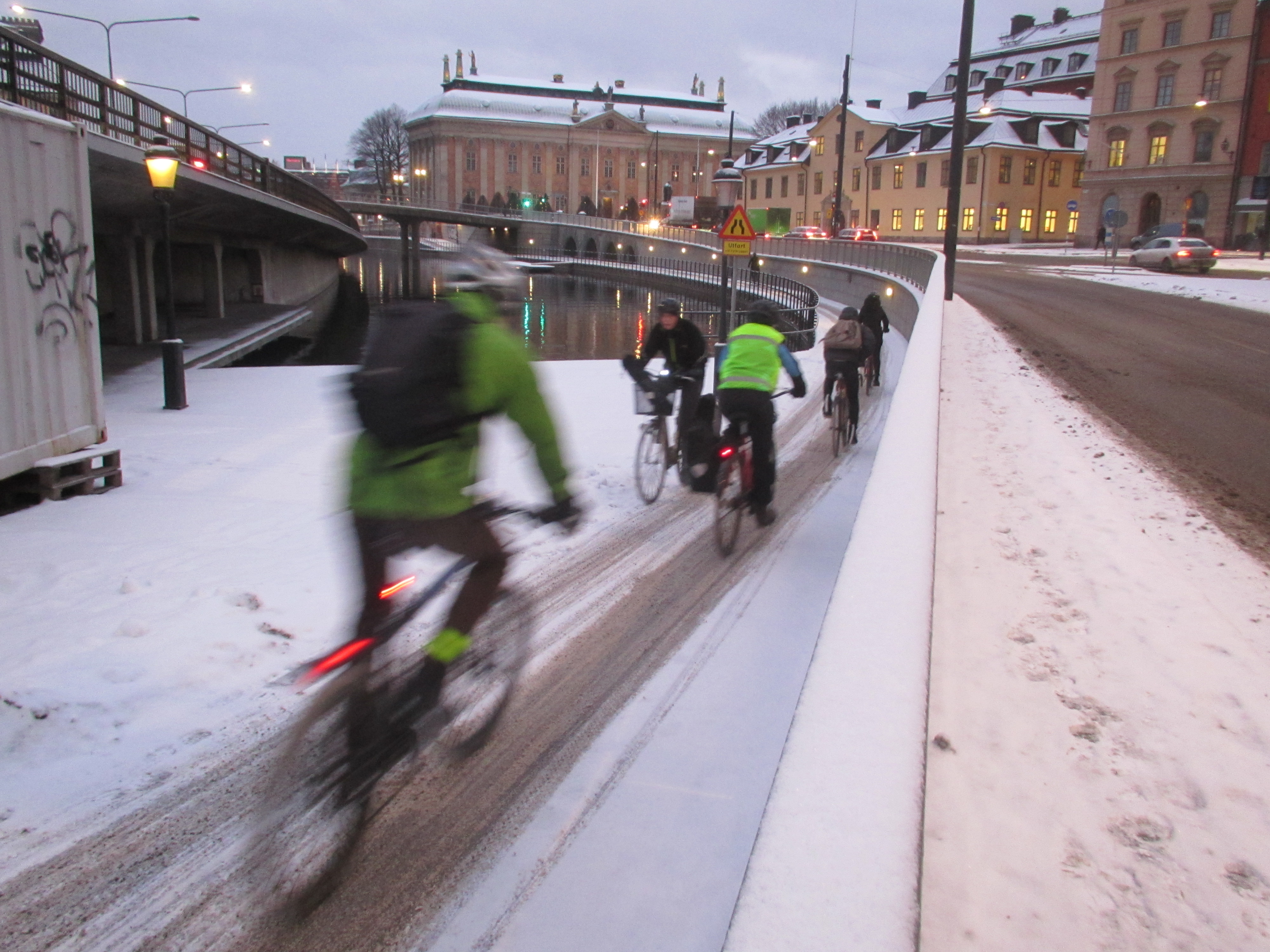
Bicycle counter StockholmHowever I have to say that my impressions were really mixed which kind of matches what I found when I was there at other times of year, some things were quite well done and the cyclists who were riding seemed very confident on the snow. But I didn’t need to see the many parked bikes with snow on the saddles to tell me that numbers were well down. I could see it on the cycle paths and the cyclist counter by the town hall had counted a very sorry 300 riders by 9am. That might be good in a UK or US city with 1% mode share, but that is terribly low for an ambitious cycling capital.

Photo by Kevin Mayne

So what’s the problem?

Well of course the competition is good, Stockholm’s metro is extremely good and well used. On a snowy day it is an easy option.

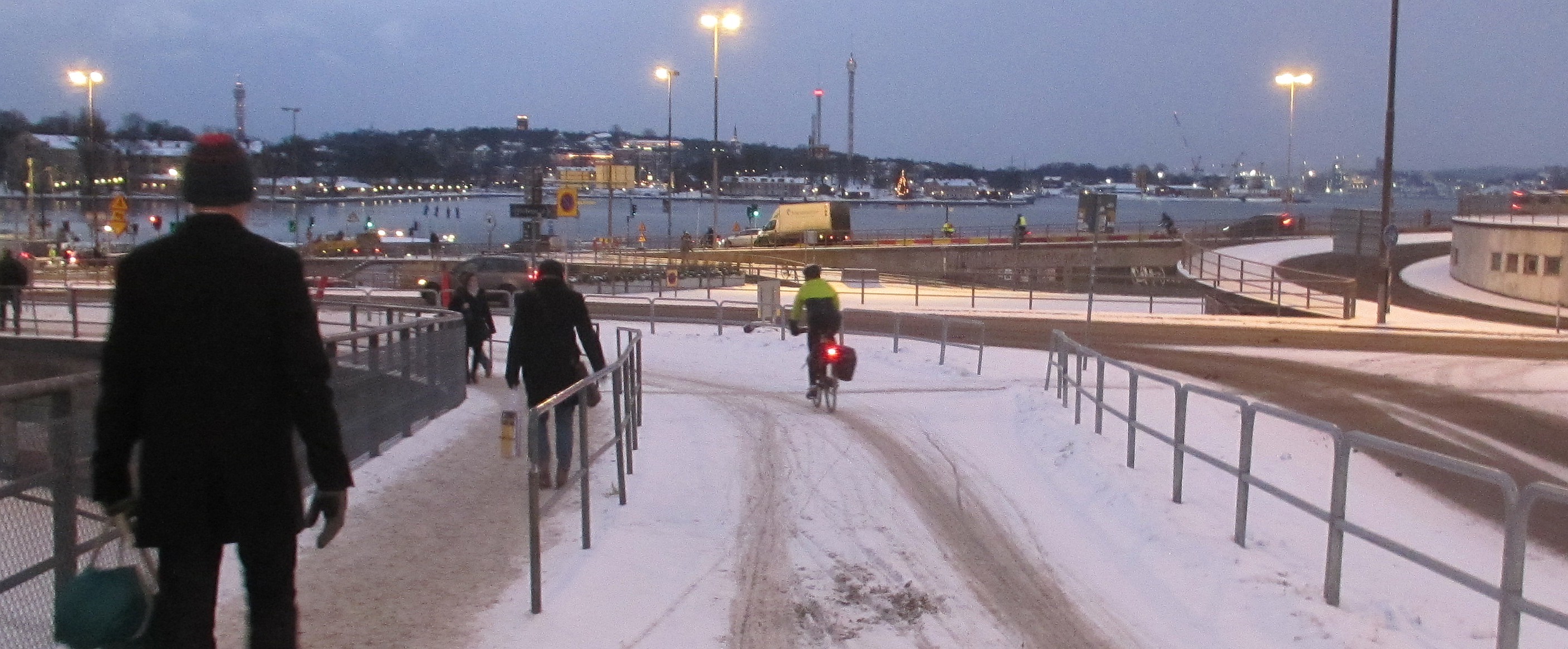
But the most noticeable thing were the cycle paths themselves and the behaviour of the riders. I think the paths had been swept, as had the pavements. But poorly, the snow seemed to be compressed to form a smooth surface as if the sweepers were compacting not clearing. Then there was a layer of gravel which is the ubiquitous snow topping for grip in much of Scandinavia because there is too much snow. But cycle tyres and even our walking shoes just went through to the slippery surface.

Icy cycle path Stockholm

Finally the clearance must have been happening in the early morning before rush hour, but by the time we went out there was a layer of snow on top of the swept paths so the cyclists largely created their own channels in the fresh snow.

Slussen cycle paths in Stockholm

Cyclist Sodermalm snow Stockholm

In those conditions I was perhaps surprised just how many cyclists were picking their way gingerly around the city. I could see clearly how lacking in confidence many were. On the first day I would say they were predominantly fit looking younger men but over the whole week we did see more and more older people and women coming out, however the balance was not what it was in the summer.

Stockholm cycle path Cyclists on Sondermailm Stockholm Sweden Descending Slussen cycle paths in snow Stockholm Cyclists on snow Slussen Stockholm

Would I have ridden on it? Frankly after a couple of recent falls and not bouncing as well as I did in younger years I seriously wonder whether I would have done. The sheer inconsistency of the surface beneath the snow looked seriously dangerous to me. Most likely I would have been riding because I would have sorted a bike with MTB tyres or studs. But without that I think I might have joined the rest of the sensible Swedes and taken the metro. Sorry Stockholm, half marks from me for the snow work.

But all credit to those who were out there, they did make some good sights in the snow. And it was certainly better than Wallonia or Britain!

Photo Kevin Mayne

The sequel – After “10 best things about being a cyclist in Belgium” the “5 worst”

Belgian cobbles

Thanks for all the positive feedback about my previous “Ten best things about being a cyclist in Belgium”.

If a visitor wanted to gently tease our Belgian hosts about some of the less attractive features of riding here you could line a reasonable consensus around at least four of the list below. And as an ex-pat Brit I am putting in a special plea for the cyclists’ café stop.

  • Ridiculously bad road surfaces
  • Compulsory cycle lanes
  • Unfathomable driving
  • So called touring routes that don’t exist
  • No tea stops

Ridiculously bad road surfaces

Cycling Wallonia

A road defect reporting tool like the wonderful www,FillThatHole.org.uk would be seen as some sort of joke here, overwhelming local authorities by the sheer volume of holes and degraded surfaces in Belgium.

Waterloo cobbles

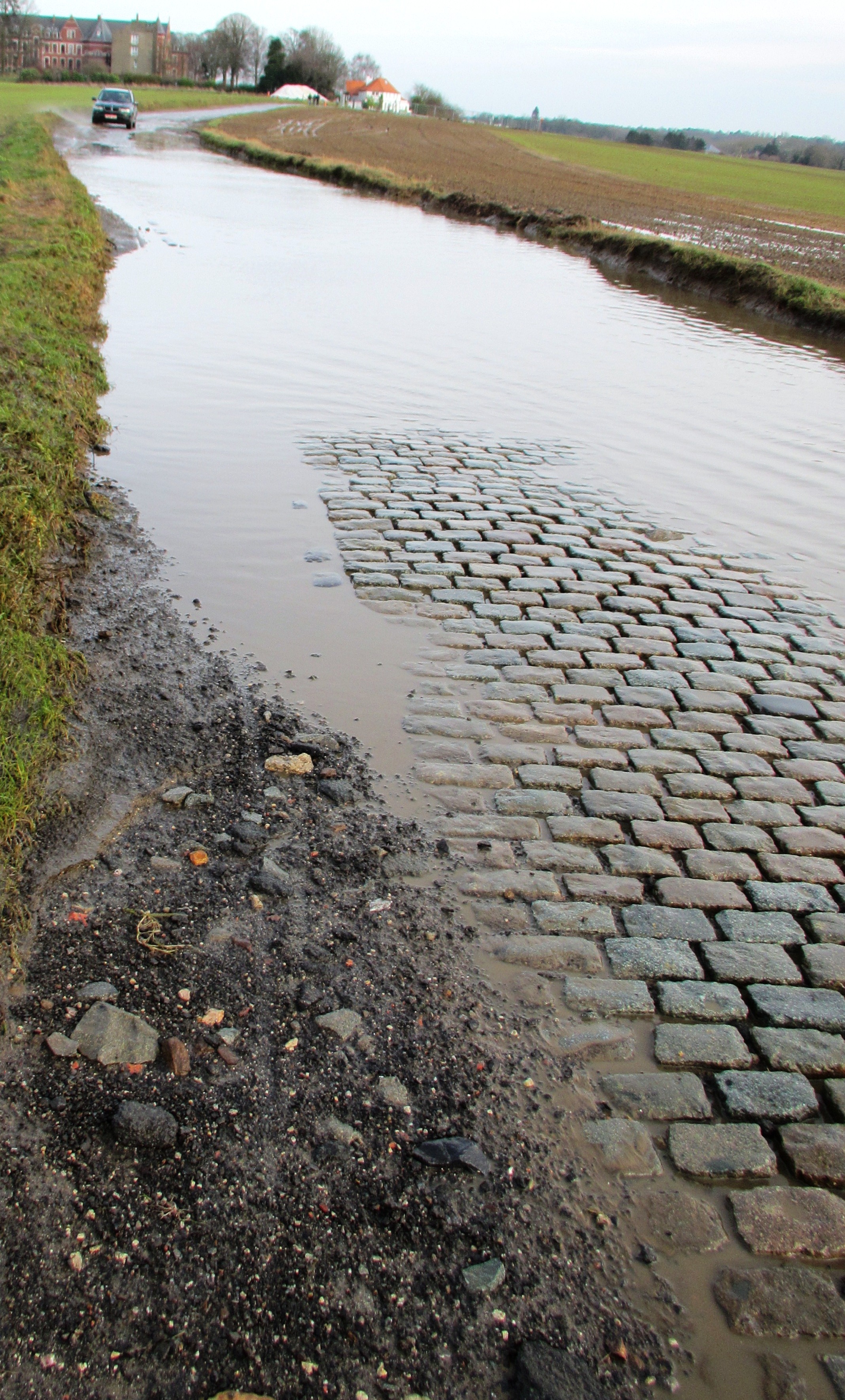
I put it down to the starting point. If 200 year old cobbles are acceptable as road surfaces then it seems that anything else is a bonus. I come back from rides with the local club with my neck and shoulders aching from the battering despite the fact that the group leaders make big detours to avoid all the worst stretches of pavé in the area. And I have already had my first nasty crash on the holes, the only thing missing from my set is a bent rim or two, but I am sure it is to come.

Waterloo Belgium

And this carries over to unswept and unrideable cycle paths, pavements and road edges. Yet I hear almost no complaints and there does not seem to be a wave of litigation from crashed cyclists and motorcyclists to force the authorities into action. It is how it is, apparently.

I had sort of assumed that the cobbles themselves are somehow wired into the Belgian DNA and that by living here you gradually hone a riding technique that works for you and it all becomes rather straightforward, a bit like living in the mountains.

In reality it appears that while practice means local riders have less fear of the worst pave than tourists what they really develop is a sixth sense for avoiding it, either by taking another route or by riding anywhere except on the carriageway itself.

One of the most amazing racing sights I saw on TV last year was a mid-ranking professional event held between the spring classics called Flèche brabançonne – the Brabant Arrow/Brabantse Pijl. A full field of top riders, won by Peter Sagan, second Philippe Gilbert, so serious stuff. As they entered Overijse for the finish circuit the entire pro peloton bunny-hopped up onto the pavement led by the Belgians to climb a cobbled hill in what was clearly a planned move.

Impressive bike handling indeed. Wonder what the pedestrians think?

Compulsory cycle lanes

Brussels cycle lane

Going with the really bad road surfaces and some of the unrideable cycle lanes comes a parallel problem. The cycle paths, when present, are obligatory. Absolutely stupid, unenforceable rule.

No matter how badly surfaced, no matter how many pedestrians wander all over them, despite the fact that there is no provision for clearing them in snow we are supposed to use them. Fortunately most drivers don’t seem too bothered that cyclists don’t tend to use them much because they are frankly dangerous so I don’t bother much of the time.

Although I was shouted at by an angry cyclist not so long ago. Maybe he works for the municipality.

An old post on the subject here

Unfathomable driving

Belgique

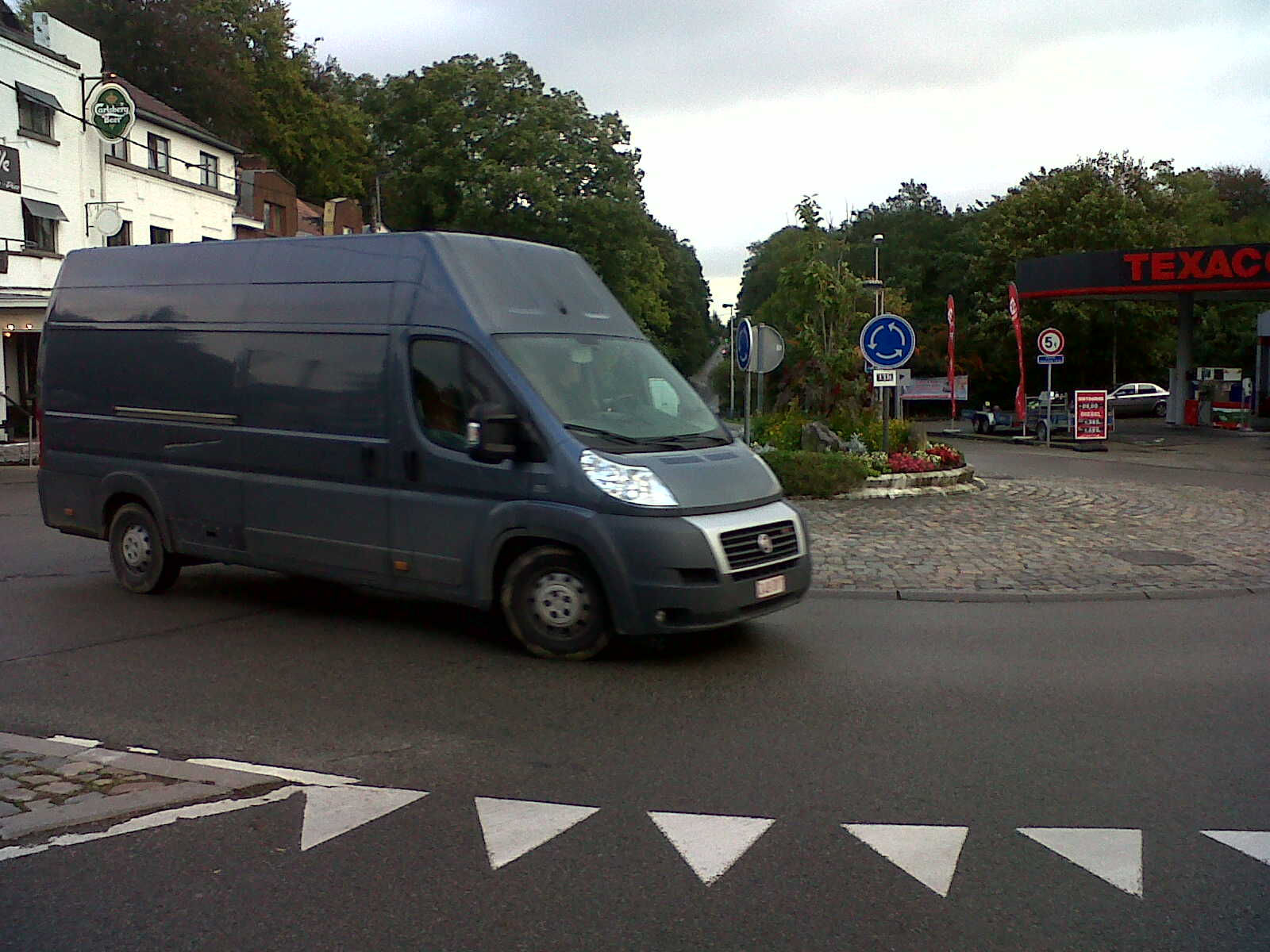
I refer you to my post on roundabouts. Still got no idea what they are doing. Interestingly some readers assumed my post was a general rant about how bad roundabouts are for cyclists around the world.

It wasn’t. I have cycled, walked and driven all over the world and there is something uniquely odd about a Belgian motorist faced by a roundabout. Incomprehensible.

So called touring routes that don’t exist

Wallonia

Just to say that in Wallonia the maps tell me that there is a whole network of cycle touring routes stretching across the province.

Boucle d'Ophain Braine l'Alleud BelgiumNo there isn’t. Except maybe in somebody’s head. The riding is fantastic, but out there on the roads there is just nothing to support you by way of signs or markings. I am on my third set of published maps and I haven’t found one yet that actually exists on the ground. Local circular routes around a single commune yes. Walking and MTB networks – brilliant. Fietspunt in Flanders – fine.

Personally I probably don’t need signed routes, I’ll just use my maps. But let’s not pretend OK? Because it us useless for everyone else.

No tea stops

The ceremonial process that transcends the cycling club ride or the cycle tour.

The place where legends are made and debated, seasons are digested, rides are planned and friendships made.

The coffee stop. The cyclists’ café. It is as much part of a British club cyclists’ DNA as the cobbles are to the Belgians. The Eureka, Tommy’s, the Dalesman, the Riverside, Top of the Town are part of our heritage. The bikes lined up from the multiple clubs are a symbol of our community.

Cyclists Cafe stop

Around 11am on a Sunday morning my body almost shuts down and I go a little lightheaded for lack of caffeine and cake. Then they don’t stop, except maybe for a quick pee behind a hedge.

The tea stop is a fine tradition Belgium – one worth investing in!

So that’s it. 10 great things about Belgium, and 5 moans. I hope that puts it all in balance, I am not despairing.

“You couldn’t make it up” cycling moment in Warsaw

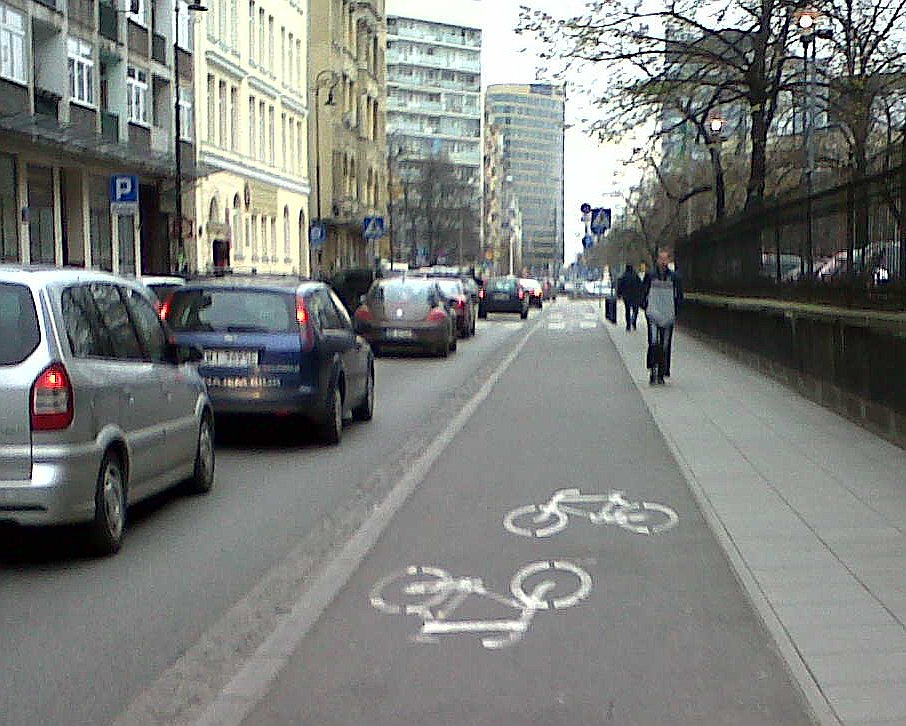
Cyclist crossing Warsaw

On my way to today’s transport side meeting of the COP 19 climate negotiations I made a nice discovery.

After a shaky moment or two I discovered a whole network of segregated cycle lanes to the South of Warsaw city centre, eventually heading down towards some the embassies and grand houses on Belwederska. Even a few reasonable junction treatments. Nice to feel welcomed I always say.
segregated cycle lane Warsaw

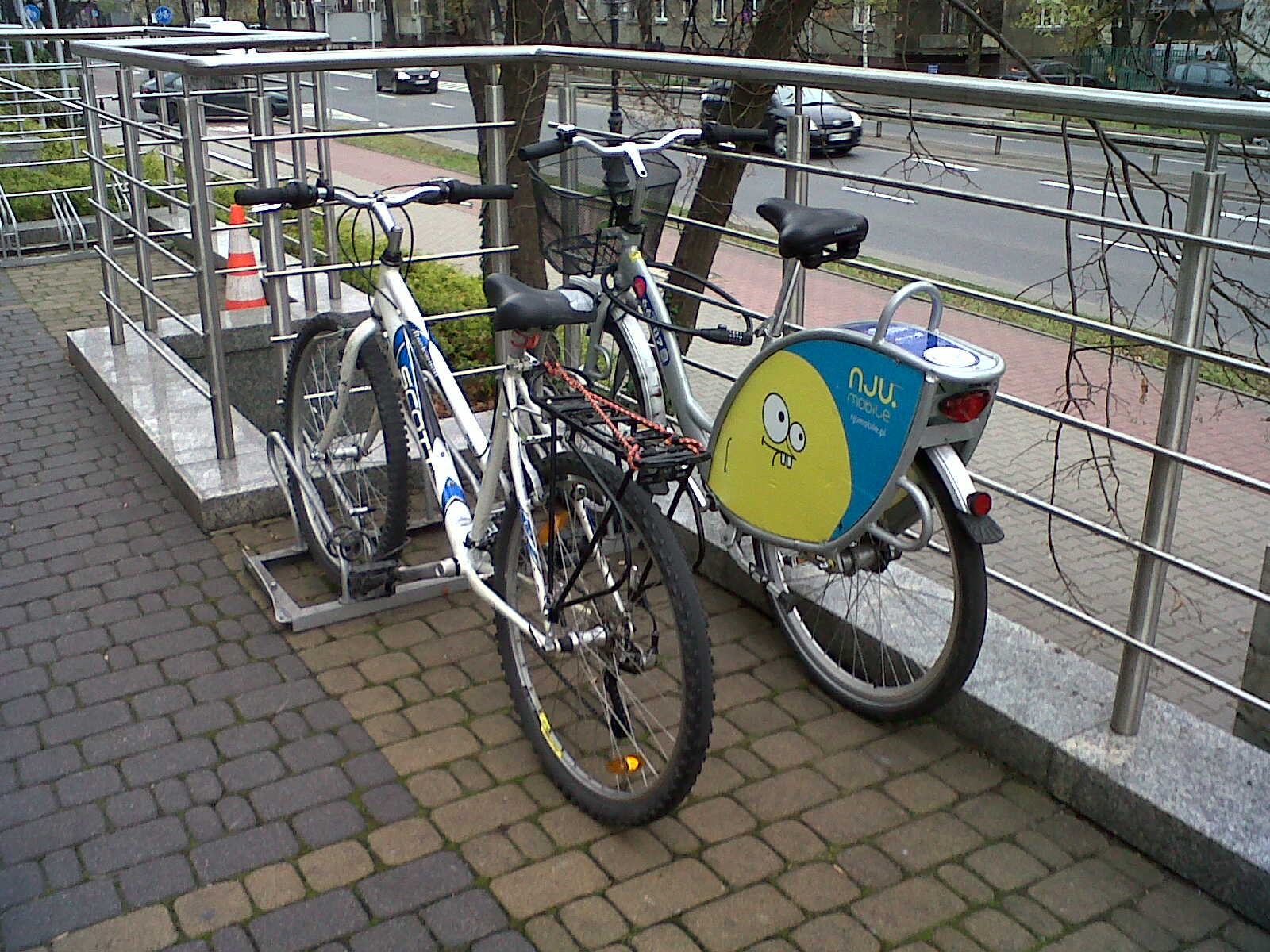
And at the Hyatt Hotel a very nice security guard spotted me looking lost and guided me proudly to the hotel’s cycle parking. Hey, don’t knock it, this isn’t Amsterdam.

Hyatt Hotel Warsaw cycle parking

However the trip home gave me one of those stupid moments I always remember and will quote for years.

I was riding in the cycle lane when I spotted a van ahead. I grumbled internally and said “it would be ironic if it’s a police van guarding some Climate Summit VIPs”

12 of the buggers no less.

COP 19

I don’t know if they take too well to irony in the Polish Police service. One cop saw my camera and started to work his way down the line towards me so I scarpered.

Climate Ride tomorrow. Looking forward to it.

Transport reality in Warsaw at #COP 19

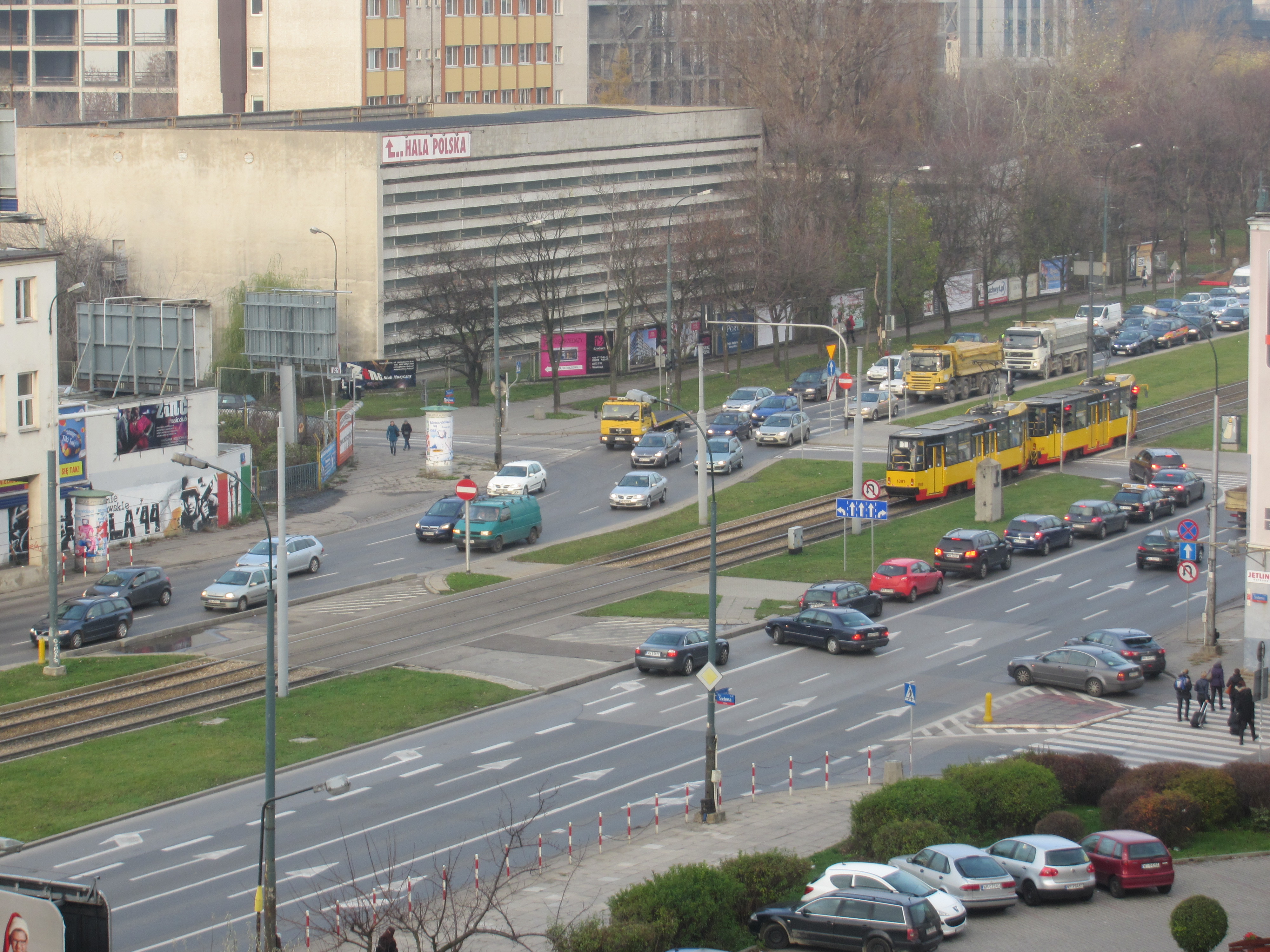
After yesterday’s gloomy evening cycle into the old centre of Warsaw this morning dawns bright and clear.

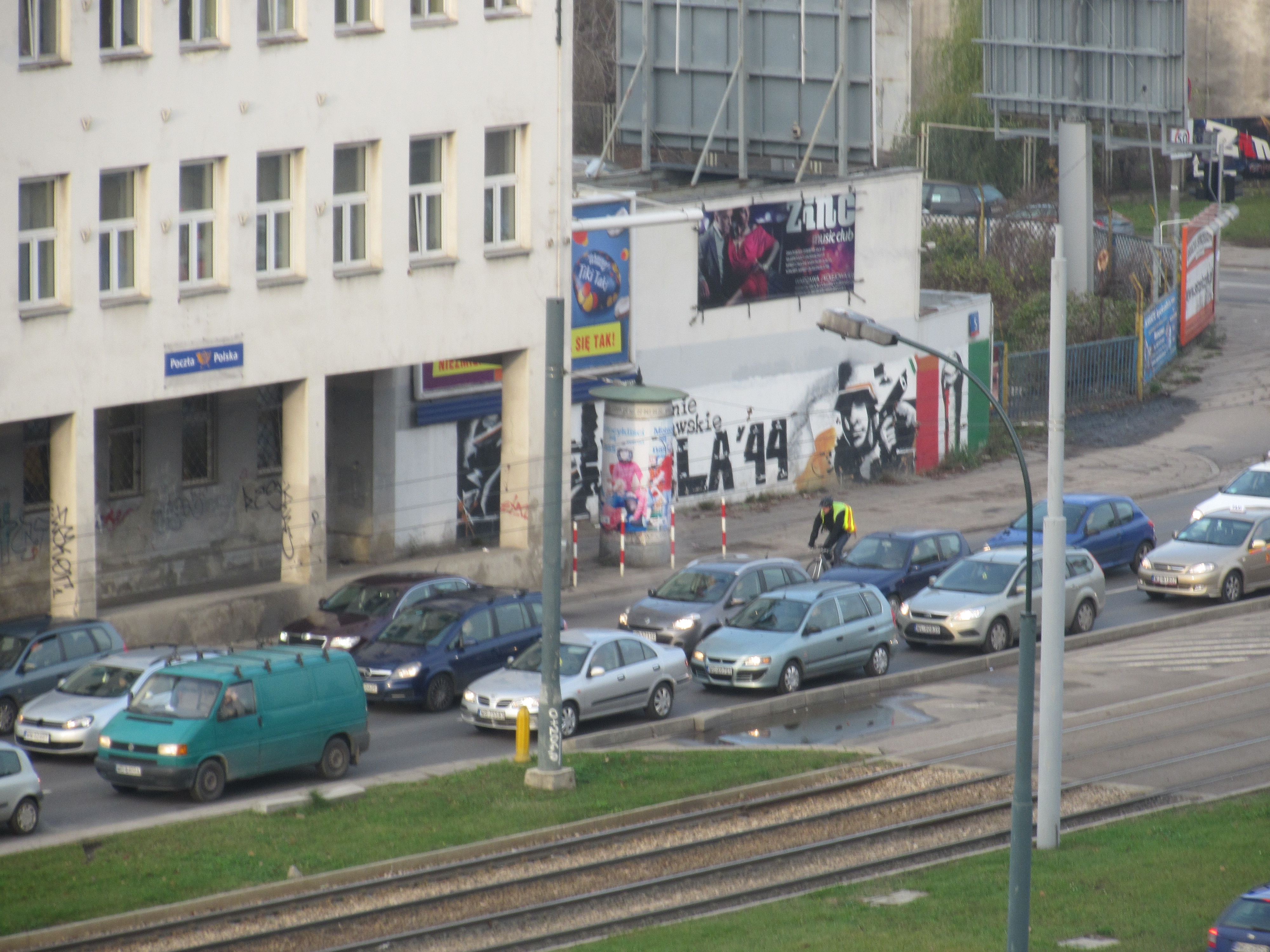
And with it my hotel room offers a more realistic perspective on rush hour, and the bold cyclists of Warsaw. A scene we could repeat in so many countries.

COP 19 Cop 19

Road bikes and fixies the only ones out there on the boulevard, although to be fair I have seen that other indicator species the cheap mountain bike on the side streets.

Those riders walk across or use the pavements when faced by these big roads.

But look at all that space – it is certainly possible to imagine that cycling infrastructure could be fitted in here. Tomorrow we can ask the politicians!

Meanwhile in a country far far away*. Driving school, Lesson 6. Roundabouts, rond punt, ronde-point

As imagined in a local driving school.

Belgique

Instructor:

You have done really well in our previous lessons so today we are going to have a special lesson.  Today we are going to learn roundabouts.

Now there are two rules to roundabouts that you must never forget.

Rule one. There are no rules. In fact it is important that you adapt your behaviour to the circumstances so that in all situations you are able to do just what you want without other people messing up your driving rhythm.

Pupil:

That’s not a rule! Give me a proper rule that I can follow. What’s rule 2?

Instructor.

All driving at roundabouts is subject to the Laws for state secrecy. Under no circumstances should any citizen ever allow any other driver to know where you are going next.

Circulate rapidly always giving the impression that you are going to take the next exit, then just when they think you have made your choice carry on round another one or two exits just to be on the safe side.

Pupil.

What about the indicators?

Instructor.

NO. NO. NO. Indicators are used by foreigners only. Let anyone see you using an indicator and they will think you are English, then you will get no respect at all. It’s like the roundabouts with more than one lane. Don’t get in the habit of choosing the same one each time for each manoeuvre because people will expect us all to do the same and then where would we be, Germany?

Pupil.

Any special instructions if I see pedestrians and cyclists?

Instructor.

ronde point

Sigh. You are not following this are you? The crossings round the roundabout are part of a statistical study. Those people waiting are not really trying to cross, they are sampling the behaviour of motorists to see how many stop. Apparently the samples to date show that it is entirely random. Which is as it should be, or people like me wouldn’t be doing our jobs.

Although you do need to be careful if you ever drive North, the Dutch keep stopping for them and it messes everything up, the cyclists get a bit pushy and expect to be taken seriously. That needs stamping out.

Clear?

Pupil.

I think so. Can we go and practice now?

Instructor.

Yes I think we should. If this goes well next time we can book you in for our special offer lesson. It lasts five hours and it is called “finding a parking space in Brussels”.

*May be Belgium

Ronde Point Albert Mayne

*Substitute Wallonia/Flanders at your peril.

PS: We have our own roundabout here – but that is another story!

I am part of a United Nations led global cycling conspiracy – allegedly. Fun podcasting in LA

A few weeks ago I enjoyed the experience of becoming a cartoon. Now I became a podcaster and discovered I was part of a global conspiracy all at the same time.

I enjoyed this media experience when I joined a great bunch of cycling promoters to become part of the Biketalk podcast series on Los Angeles  KPFK 90.7 FM via a phone-in earlier this week.

It was quite US focussed as the main aim was to discuss how bike lanes can get rolled out across the US, especially for the frustrated co-host Josef of Flying Pigeon cycle shop in LA who has clearly been hitting some really nasty brick walls in his local advocacy.

I’ll therefore forgive one of my co-speakers who suggested 80% of Europe was no fun to be a cyclist because we don’t have segregated cycle lanes everywhere, but you get the drift.

This could become a regular series – I’ll keep you posted.

Josef’s blog and link to the podcast here

A tale of two more cities – worlds apart

About a year ago I wrote my Tale of Two Italian Cities post about how two cities just 50km apart could be so different were in attitude and approach to cycling.

I had a similar experience last weekend.

On Friday I got on a train from Brussels and travelled 40 minutes North.

On Monday I got left from the same station and travelled 40 minutes South.

In both cases I didn’t really have an opportunity to travel into the city centre so I had to draw my conclusions about cycling from the immediate vicinity of the station. You might do so too.

Go North

Cycle Parking Ghent Station Cycle parking Ghent station 4 Cycle parking Ghent station 3 Cycle parking Ghent station 2 Segregated cycle path Ghent Cyclists Crossing near Ghent station Cycling Infrastructure Ghent

Go South

Cycle Parking Gare Lille EuropeCycling Infrastructure Lille Lille cycling infrastructureMaybe it is time to regain a little friendship from my colleagues in Flanders, for the apparent cycle friendly mecca is indeed Ghent.

The struggling cycling metropolis to our South is Lille, in France.

L'ville bike sharing LilleTo its credit, it does have L’ville, an extremely good Bike Sharing system at the station, operated and supported by Decathlon cycling subsidiary B’Twin which is based in the city.

Personally I enjoyed my ride in the sunshine despite being limited to the industrial outskirts of the city but it is perhaps symptomatic of the limited progress by France as a transport cycling nation that the provision was very disjointed and there was such a woefully low expectation about cycle parking at this major transport hub.

Front page news – white stripes, wheeled terrorists, the Tour de France and the Prime Minister. Only in Flanders?

Last Friday I was taken to the front line of a full on cycling row that has erupted in Flanders, finally forcing the Prime Minister who was on a foreign trip on to the front pages of De Standaard to insist that he “would be looking in to it”

I have to share this storm in the tiniest of teacups because I don’t think we would see anything like this anywhere else except in the cycle sports mad world that exists around Ghent. And the story also has the dumbest punchline.

The background to the story is common enough. The community in Gavere, about 10km south of Ghent have complained that the “wheeled terrorists” have taken over their riverside and that they are constantly afraid. We have heard that before in many countries, most recently in the UK where there is a simmering row about the numbers of cyclists on canal towpaths or around the Olympic Road Race circuit at Box Hill.

However the difference here is the scale and the political fallout as the “terrorists” hit back.

Scheldt River path Gavere Flanders

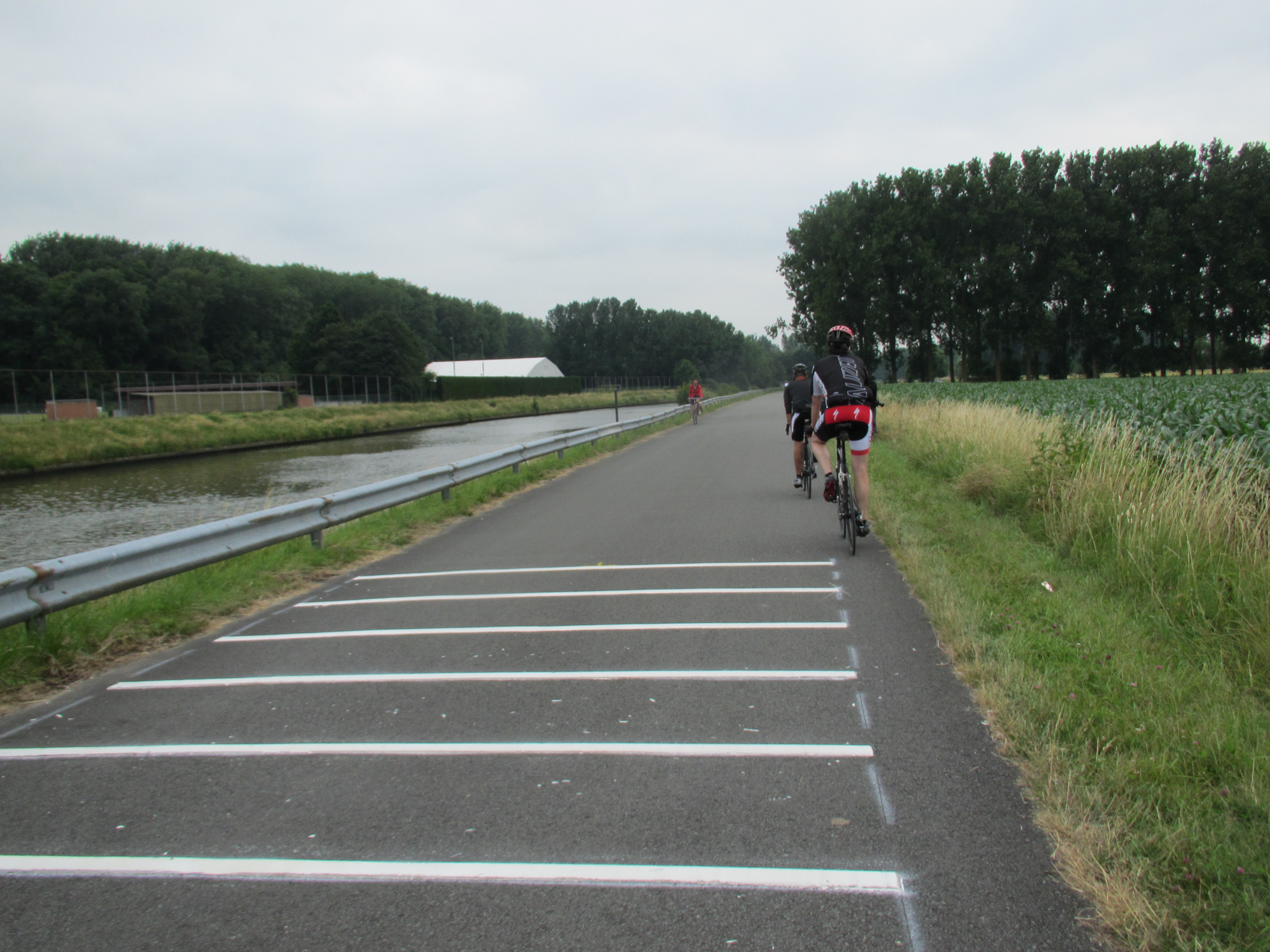
The battleground is a long wide and perfectly smooth traffic free path that follows the Scheldt south from Ghent for miles making a perfect environment for cycling and walking.

But its strengths are its weakness.

The smooth asphalt is a beautiful temptation for roadies to fly along at speed and the width means that the sort of club groups that are common in Belgium can travel down it in big echelons, especially at the weekend. And we are talking big, I see groups of 30-50 riders where I live and round Ghent I guess numbers are huge.

And speeds are high, as we rode the three of us were doing close to 20mph at times and we were passed by faster groups.

So out of the blue a series of white “rumble strips” – the now notorious ribbelstroken have appeared across the path.ribbelstroken

The first row was apparently whether they were initiated by the municipality or by Waterwegen en Zeekanaal (waterway and sea canals) who manage the navigation. Had the mayor of Gavere exceeded his authority? Or does the fact that they are spread over a wider area implicate the navigation managers?

But regardless of the origins of the work the sports cyclists were soon up in arms that anybody would mess with their training route. With their influence it soon hit the pages of De Standard and ribbelstroken became a new hot topic. While we were out for a ride there was another newspaper photographer out for the evening getting background shots and pictures of the offending strips. His presence prompted a stop for a lively debate by the roadside.

By Monday it had got to the Prime Minister of Flanders Kris Peeters, far away in France on a visit to Le Tour. Another distinctly Flemish twist, when was the last time your Prime Minister nipped off to see the Tour in another country? Well it was all above board, he was there as a guest of DCM, the Flemish company that co-sponsors the Vacansoleil pro bike team in the tour, not a jolly of course.

He probably thought he was away from domestic concerns but in France he had the misfortune to be ambushed by Vancansoleil pro Thomas De Gendt who it turns out likes to use the offending route for his speed training.

I have to say that the prospect of one of the world’s top riders doing 50kmph down a riverside path probably confirms every local citizen’s worst prejudices about wheeled terrorists, but he certainly got the Prime Minister on the spot. So by Monday the ribbelstroken were right up there on the front page news of De Standaard right beside the pictures of Chris Froome and within the day the Mobility Minister was out there riding her bike up and down the towpath with the local cycling groups.

The punchline?

Well it looks like the Mobility Minister was discrete in her words when she said “It was not as dramatic as I had heard.”

Not dramatic? It was pathetic!

This is a country with some of the finest cobblestones on the planet. Cyclists go out of their way to race over the rumbly stuff. It is the world centre of cyclocross. And frankly Belgian road surfaces can at times be almost third world. Anybody who remotely considers himself to be a serious cyclist around Ghent should be laughing at the pathetic little ripples on the path.

In line skaters – yes, big disruption. Wheelchair users – definitely an issue. So yes the strips will be cut back to allow movement round the ends.

Ribbelstroken GevereBut the self-promoting hardest bike riders in Europe? Come on chaps, give us a break! Even the senior citizens ride didn’t bat an eyelid.

But the hard men of Ghent have spoken, apparently the experiment will not be continued.

Ahhhhh,